China Resources Beer CEO Hou Xiaohai in Conversation with Orienspace's Yao Song: Building Rockets and Brewing Beer Both Require Innovation | Z Talk
Yao Song's WeChat Moments signature: "Today is the youngest day of your life."
Z Talk is ZhenFund's column for sharing insights.
Orienspace was founded in 2020 and is a leading commercial aerospace company in China. Cofounder and Co-CEO Yao Song graduated from Tsinghua University's Department of Electronic Engineering and previously founded DeePhi Tech, an AI chip company. At age 25, he sold DeePhi Tech for $300 million. At 29, he crossed into commercial aerospace and cofounded rocket company Orienspace. In 2021, ZhenFund invested in Orienspace's angel round.
Earlier this year, Orienspace's self-developed Gravity-1 commercial carrier rocket successfully launched, setting multiple records in the commercial aerospace sector.
Recently, Yao Song joined Hou Xiaohai, Chairman of China Resources Beer, to discuss commercial innovation. He shared his understanding of the underlying logic of technological innovation in commercial aerospace, trade-offs between interests, and building corporate culture. Below is the full interview.
By Tan Tian

Key Insights
-
Despite being a new company with new commercial and technological approaches, there are many novel elements in the rocket sector, but it still fully follows fundamental business thinking and logic.
-
Some people say the consumer goods industry can be done over again. What they mean by "redoing" is rebuilding from first principles. In China's modernization process, many commercial fields present massive opportunities to reshape and elevate products.
-
I've been thinking about what my first principles are, and I finally concluded: to ensure that when I'm old and near the end of my life, looking back on my life, I have no regrets.
-
Competitive drive, curiosity, love of new things, willingness to change, resistance to sticking with the old — these are all good genes for innovation.
-
For young entrepreneurs, they may bet on trends and cutting-edge areas in their commercial development, but the risk is that they may not pay enough attention to common sense, and sometimes lose because of it.
Below is the conversation:
01
Rockets and Beer Both Require Innovation
Q: Today's guests are Yao Song, Cofounder of Orienspace, and our old friend Hou Xiaohai, Chairman of China Resources Beer. This is a fascinating pairing — Yao Song builds rockets, Hou Xiaohai makes beer. What sparks will fly when a rocket builder and a beer maker sit down to compare notes on innovation?
Let's start with Yao. You essentially deal with innovation every day — it's your main business. On January 11 this year, you successfully launched Gravity-1, a major milestone in China's commercial rocket launch history.
Yao Song: Our company was founded in June 2020, so it's less than four years old. The first development project we launched after founding was the Gravity-1 rocket, based on an all-solid-propellant bundled configuration, filling a technical gap in domestic all-solid bundled carrier rockets. After three and a half years of R&D, we successfully launched on January 11 this year. The maiden flight carried a 3.5-ton payload including three meteorological satellites — a very rare achievement.
This successful launch set many records: technically, we set the record for the largest all-solid carrier rocket payload capacity in human history, China's current record for the largest payload capacity among private commercial rockets, and China's first bundled private commercial rocket, among roughly ten-plus technical records.
What I'm particularly proud of is the new commercial elements we injected into this industry. For example, we were China's first private commercial rocket company to livestream a launch — 70 million people watched our rocket launch livestream online. We were also the first to dare to invite a band to perform at the rocket launch site, hoping this could become a carnival, a great commercial event in the future.
Our customer was also very satisfied this time. We achieved extremely high precision, missing our target orbit by only 40 meters. All our commercial partners were thrilled, and our technical team achieved a major breakthrough.
Overall, on January 11 this year, the company stepped up to a major new level.
Q: Hou, did you know much about rockets before this?
Hou Xiaohai: I didn't know much about rockets. I only knew about figures like Elon Musk launching rockets. Of course, in Chinese people's memory, rockets have always been closely tied to national rise and ethnic rejuvenation. The older generation made important contributions in rockets and satellites, enabling China to rank among the world's leaders.
I'd heard of commercial rockets, but this is my first time seeing one up close. Listening to Yao's introduction just now — this company achieved so much in such a short time, and from rocket technology to shaping the launch scenario to turning rocket-building and commerce into something consumers and ordinary people can watch, share, and experience together — this is tremendous innovation.
Of course, Yao mentioned many technical innovations and multiple world records. So I feel that from your company to your business model to your product to your core technology, it's all innovation — a complete innovation system.
Yao Song: Thank you.
Q: People may not know much about rockets, but many have some concept of beer. Yao, what's your understanding of beer? Did you think beer could be innovative?
Yao Song: Until last year, I thought beer was simple — something people drink when they go out for meals and skewers. I personally like drinking beer. However, when hosting a VIP guest last year, I learned there are premium beers priced at several hundred or even over a thousand yuan. So I discovered beer isn't just a daily drink of a few or ten-plus yuan per bottle — it has many new possibilities, including different flavors and new products.
Hou Xiaohai: Yao realized beer has broken through its traditional ceiling, with prices reaching 100-plus, 200-plus, or even 1,000 yuan. This is a kind of innovation for the product.
Q: Yao spoke more from the perspective of products on the market about his understanding of innovation in the beer industry. As an industry insider, Hou, can you talk about what real changes and innovations have happened in the beer industry in recent years?
Hou Xiaohai: In the old world, innovation in beer was relatively limited. From processes, flavors, packaging formats to branding, it basically followed Western models with some adjustments for Chinese tastes — that's how it developed.
Because the beer industry grew very rapidly in the past, quickly reaching massive scale, starting from 2012 to 2013, we entered a new world — a new stage of high-quality development.
In this era, consumer demand for innovation has become very urgent, because they see existing products as too traditional, lacking change, unable to satisfy their demands for higher quality and better experience. Therefore, in the new world, innovation in beer has become a competitive capability in industry development.
From the perspective of beer innovation, first is product innovation. In the past our products were simple "big green bottles," then gradually became more refined and premium, with packaging paying more attention to aesthetics and environmental concepts.
In terms of product quality, the body started incorporating more ingredients, with many craft beers and zero-alcohol beers emerging, and many product categories being innovated to satisfy consumer needs.
Regarding price, beers we used to drink might cost just three to five yuan, but now there are more premium beers, including those at hundred-yuan or thousand-yuan price points. Like Tsingtao's Yishi Chuanshuo and Snow Beer's Li — they carry traditional Chinese brewing culture, are high-end, with unique brand images and distinctive flavors. These are product innovations.
Second is management model innovation. Traditional beer brewing and sales methods have changed significantly. Through the shift to intelligent manufacturing and digital empowerment, many new transformations have emerged in management innovation, creating many new models.
Furthermore, business models are also innovating. In the past we sold beer as finished products; now we might open beer halls, experience centers. For example, Snow Beer's "JOY BREW" pubs and Tsingtao's 1903 Beer Halls — business models are starting to change. These are all manifestations of innovation.
02
The Underlying Logic of Innovation
Q: Both rockets and beer have innovation, but there are significant differences. Rocket innovation requires solving many technical challenges, daily wrestling and balancing with innovation itself, requiring enormous work. Beer industry innovation is difficult because it's a very traditional industry, where finding breakthrough points for innovation is equally hard.
The two guests differ greatly in age and experience, representing two generations of entrepreneurs innovating in different industries. I'd like to understand how the underlying logic of innovation differs.
Yao, please go first. In your high-tech-intensive industry, what are the fundamentals and basic logic of innovation? Do you encounter all the same problems Elon Musk encounters?
Yao Song: Indeed, we encounter the same problems Elon Musk does, because technology itself is globally connected — chips are chips, software is software.
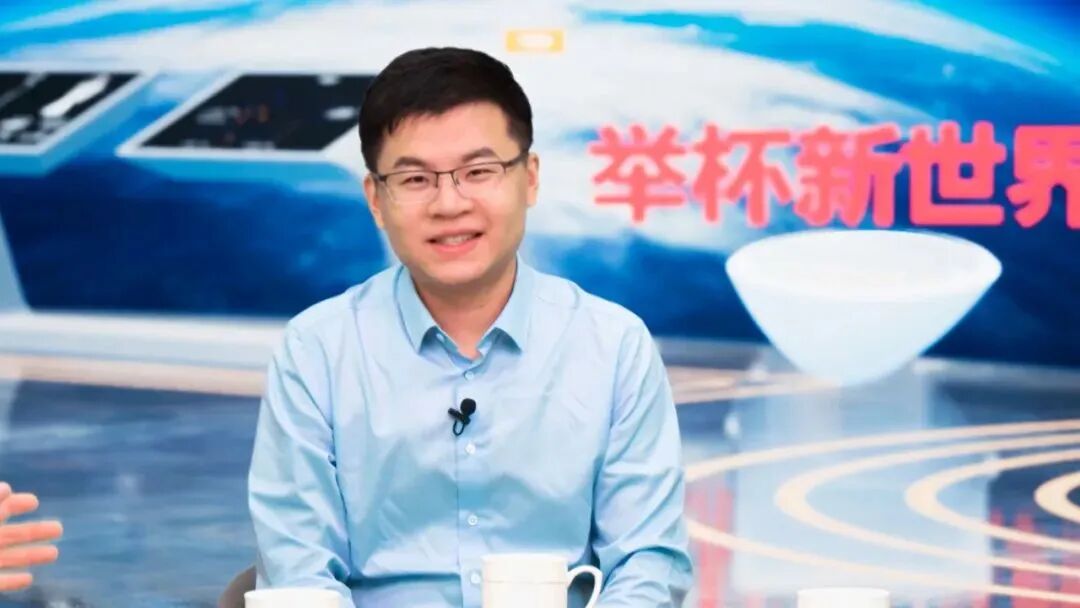
Yao Song
To answer the characteristics of innovation in our industry: First, it's built on a solid foundation, a foundation laid by China's aerospace industry over the past sixty to seventy years. For example, the core reason we could build this rocket in just over three years and achieve so much is that many of our suppliers are aerospace institutes — our main engine was provided by an aerospace institute, including our production processes. This foundation exists.
Second, a major characteristic of innovation in our industry is that it's completely new territory. Much of what we do is innovative, because past development was mainly oriented toward national strategic directions like national security.
Beyond technological innovation, our company has several levels of innovation:
First, cultural innovation. Our company is the only one in the entire industry with fully open-plan offices. I don't have an office either — I lead by sitting at a workstation, hoping to break down the obvious barriers between different levels and make communication more efficient. We're also one of the few companies in the industry to build our own high-performance computing cluster. Previously people developed on desktop computers, with confidentiality as the highest priority, so communication between colleagues might not be very smooth. Now, whether in Xi'an, Wuxi, Beijing, or Yantai, we're all connected to our private cloud high-performance computing cluster, enabling online collaboration with greatly improved computing performance.
This is the first type — bringing in advanced technical culture, technical concepts, and commercial enterprise culture.
Second, innovation in overall business thinking. Previously rocket models were developed when the state had missions, the state initiated projects, and then institutes began work. But with commercial rockets, we're essentially a company like SF Express or Deppon Logistics — we need to find differentiation. Where are your customers? What are their needs? What costs will they accept? From these angles, we redefine rocket requirements.
For example, Elon Musk initially defined a completely new set of requirements for the Falcon 9 that could meet the early deployment needs of satellite internet. Later, for the larger second-generation Starlink constellation and Mars ambitions, he defined Starship — the largest rocket in human history. So for a company like ours, we need to fully integrate product thinking and customer thinking into our vehicle design. That's a form of mindset innovation as well.
Finally, as I just mentioned, there genuinely are many areas of technical innovation. For instance, we've developed an entirely new in-house rocket booster separation mechanism that may cost only one-tenth of what conventional approaches do, dramatically improving commercial efficiency. Our self-developed high-performance onboard computer will eventually support entirely new algorithms for various reusable rocket applications.
The biggest challenges here are twofold: First, a rocket is a complex systems engineering project that essentially covers every engineering discipline — electronics, automation, fluid dynamics, solid mechanics, precision instruments, mechanical engineering, and more. Every role is needed, and it requires extraordinarily broad knowledge to glue all these innovations together.
Second, rocketry is an industry with extremely high reliability requirements, much like food safety. If one part out of tens of thousands fails, it can lead to complete "vehicle destruction and loss of life." So how to push innovation while balancing reliability metrics, cost, and other factors — that balance is something we need to get right.
Q: It's an integrated form of innovation that demands very comprehensive capabilities. You can't have any weak links.
Yao Song: Exactly. And even if you excel at one particular point, that doesn't necessarily mean your overall rocket capability is strong. It requires systematic innovation across many, many points.
Q: You summarized it well — rockets require systematic innovation capability. Then for the beer industry, what kind of innovation is needed?
Hou Xiaohai: Rocket innovation gave me two major insights. First, it follows fundamental business logic: starting from user needs and considering competitors. Because others are also building rockets, including Elon Musk and others. The key is who needs to use your rocket — they find innovation points from user demand.
Additionally, he shaped a different business model. How is his rocket different from others? Is it more economical, more efficient, more technologically advanced, better at meeting customer needs? The entire technical backbone is also working on differentiation and creating unique value. These are all critical for business.
Q: This is universal logic.
Hou Xiaohai: Right. Even though the company is new, the business and technology are new, and rocketry has many "new quality" elements, it still completely follows business thinking and logic. It's just that in this particular domain, it's been pushed to the extreme, to the best, or to something very systematic and complete.
For the beer industry, the logic is the same. Our innovation first comes from consumer demand. Consumer goods ultimately need to satisfy consumers. How to make consumers like and continue consuming your product — that's the fundamental need for innovation.
Second, can the business model be more economical, faster, with higher efficiency and effectiveness? This is where we can continuously innovate in commercial practice and transformation.
Third, from the beer product itself, innovation in the "old world" was simple change — switching packaging, ingredients, or adjusting alcohol content. But in the "new world," it's reinvention. Starting from the product manufacturing and design logic, through excavating consumers' true inner needs, continuously building demand models, and using these as the main elements to design products.
This kind of innovation is completely reinvention-type. Including how we've changed production innovation. We no longer see each brewery as independent; we view all breweries nationwide as one big workshop. Manufacturing innovation is completely different from the past — not simple change, but systematic and comprehensive reinvention. This is one factor in beer industry innovation.
So I believe rocket innovation is "new quality" innovation, involving both "new" and "quality," consistent with the concept of new quality productive forces. The beer industry, meanwhile, goes from "change" to "speed" — also undergoing new innovation, also seeking newness and quality, but achieved through change and speed. Rockets represent the newest, highest-quality innovation.
Q: So rocket innovation is integrated innovation, while beer innovation is actually reinvention. Because after all, many things in beer are solidified, so you need to break that foundation and then reinvent.
Hou Xiaohai: That's why some people say consumer goods industries can be "redone." What they mean by "redo" is reinvention from the origin point. Because current technology and consumption concepts, and the Chinese modernization process we're in — with high quality, informatization, digitalization as the backdrop, and trends like consumption upgrading, food safety, and green environmental protection — there are massive opportunities in many business domains to reinvent and improve product quality.
03
Curiosity Is the Source of Innovation
Q: Let's return to the starting point of the story. How did each of you embark on this path of innovation? The innovation journey is long and difficult, with many shortcuts available. For example, Mr. Yao, you had excellent credentials. After selling your first chip company, you achieved financial freedom in your twenties. Why think of building rockets? Wouldn't being an investor be better?
Yao Song: My WeChat Moments signature is "Today is the youngest day of your life," and I've used it for six or seven years. Musk often mentions "first principles" — what is the most fundamental underlying principle of doing something? After selling my first company, I kept thinking about what I should do in the future, what the most fundamental principle was.
I spent two years, including communicating with many old classmates and senior alumni, and finally concluded: making sure that when I'm old, at the end of my life, looking back, I have no regrets. That was my first principle at the time.
I'm someone who thinks very long-term, so I thought: investment always feels like retreating to the sidelines. I'd see many friends, really want to help them, give them sincere advice, but they didn't have my experiences and couldn't absorb my input. I'd see many friends take many detours. If I only did investment, I might regret it.
There were other options at the time — doing something small, redoing chips and selling another company, or continuing to work at the large foreign company that acquired us. But that felt like life would have no new experiences, just repeating what I'd done in previous years. So in the end, I hoped to do something new, something big, that could demonstrate personal value and also have value for society and humanity.
At the time I considered many directions — besides aerospace, there was gene editing, genetic engineering, general artificial intelligence, and so on. Among these choices, I'd been a space fan since childhood, a military enthusiast. Aerospace was a childhood dream. I also happened to encounter an excellent technical team, and we could do this together. So it clicked, and in 2020 I founded this new company.
Q: You had an aerospace dream from childhood. Did your parents or family work in aerospace-related fields?
Yao Song: Not really. Both my parents were rural college students who later entered the civil service system. But my father bought me many popular science books when I was young, like One Hundred Thousand Whys and Hunan Publishing's First Push series — a very famous popular science series launched in the 1990s. He bought the complete set.
So from a young age, I started reading these books — things like A Brief History of Time and What Is Life. I couldn't understand them at the time, but I found them fascinating. For concepts like black holes, I didn't understand either, but I'd read them repeatedly. Also, I'd been browsing military forums since childhood. My father was also a military enthusiast; he bought me many picture books about firearms, tanks, and fighter jets. So yes, I genuinely had these interests from childhood.
I believe being able to transform hobbies and interests into work is an especially joyful thing.
Hou Xiaohai: The origin of Mr. Yao's innovation comes from his innate talent. He had a passion for technology from childhood, and at the appropriate moment, his innovative spirit would burst forth. Moreover, he's unwilling to take the conventional path, unsatisfied with repeating the past, always wanting to leave value in life.
The entrepreneurial directions Mr. Yao just mentioned — gene editing, general artificial intelligence, rockets and aerospace — these are all important domains that can change humanity. His dream is to change humanity. Actually, I feel many entrepreneurs do this: not wasting their years, wanting to accomplish something in life, having no regrets, contributing to humanity, making themselves proud. This is a very powerful motivation, and I believe it's an important driving force behind his continuous innovation.
Q: Returning to Mr. Hou, you came from a marketing background — that was your comfort zone. Why later step out of that comfort zone onto a path of product innovation? Wouldn't continuing to find ways to sell beer better be more within your wheelhouse?
Hou Xiaohai: From my perspective, I've been very competitive since childhood and also unwilling to take repetitive paths — somewhat similar to Mr. Yao. I don't like doing work without disruptive value. I quickly lose interest in things I'm very familiar with or have already done, feeling they don't mean much, and I'm not very willing to continue. This is a person's character and inner pursuit, possibly a foundation for innovation.
Additionally, I always want to surpass, always want to change, always thinking why things can't be done differently, how not to be conventional. So when rockets were mentioned earlier, I was immediately very interested.
So I believe competitiveness, curiosity, liking fresh things, willingness to change, unwillingness to be conventional — these are all good genes for innovation, excellent supporting forces for innovation.
Q: So later you did much innovation in the beer industry, perhaps connected to some thinking from your starting point.
Hou Xiaohai: Right, exactly. I believe beer can have different forms, different sales methods. I feel enterprise organization and culture can completely undergo more innovation to make the enterprise better and business more competitive.
I'm very willing to experiment in this area. I feel very happy in practice, and it fills me with energy. This is the way to combine personal interests and dreams with work and career. It's also connecting personal interests and satisfaction with what one does, so the motivation for innovation flows continuously.
04
Innovation Must Break Through Cultural Barriers
Q: Mr. Yao, when you truly embarked on the rocket-building path, the difficulties must have far exceeded expectations. In this process, were there moments when you felt there were nearly insurmountable obstacles?
Yao Song: I believe entrepreneurs and founders are definitely innate optimists; otherwise they wouldn't choose this path. Even when encountering seemingly insurmountable obstacles, our mindset is always to find ways to cross them, not to feel they can't be crossed. And after experiencing the first startup and those difficulties once thought insurmountable, one's mentality becomes more stable. We believe that if this thing itself has value for everyone, we have the confidence to get through it.
I think our greater difficulty lies in the fact that our technical team members come from different national research institutes, each with its own unique culture and style. We need to integrate these different cultures and then form a unified corporate culture for our enterprise. This is a very difficult hurdle to overcome. But we've done quite well in this aspect so far.
Another challenge is that over the past year or so, many financial investment institutions have become more cautious. But the rocket industry is very capital-intensive and a long-term industry. Facing the current slowdown in the IPO market and retreat of financial investment, how do we continue pushing projects forward? This is a problem that needs solving. Facing these issues, we believe we must proactively adjust in advance to adapt.
Including in recent years, at gatherings with entrepreneurs and founders, people complain about various problems. But I believe: since you chose this path, don't always dwell on those obstacles. Instead, do your best to find solutions, proactively adjust as much as possible to adapt to the constantly changing environment and rhythm.
Q: You just mentioned a particularly difficult problem — how to build cohesion among colleagues from different research institutes, especially when they may be older than you. Without that, all innovation lacks a foundation. How did you overcome this?
Yao Song: We actively broke down traditional hierarchy. Everyone sits at open desks, including myself, the chief designer, and the CFO. At first some people weren't used to it — some asked if we could add screens, because they were accustomed to private offices. But we needed to actively dismantle these old habits.
Of course, some people genuinely couldn't adapt to our culture. For example, we once had two deputy chief designers. One was unwilling to lead by example — he only wanted to pass orders down the chain, direct subordinates, and report upward to the chief designer. We felt this style didn't suit us. After discussion, he showed no willingness to change, so we had to negotiate his departure. The other deputy chief designer was unwilling to teach colleagues. Though individually very capable and able to deliver excellent work himself, he didn't want to show others how it was done. We felt this style also didn't fit, so we negotiated his departure as well.
Now we've established a strong culture, and our cultural keywords were actually voted on by our core engineers themselves. This excellent culture has attracted talented people from other companies, especially technical practitioners who already have technical ideals and deeply respect engineering culture. So our culture has become a powerful competitive advantage within the commercial aerospace industry.
Q: Mr. Hou, you currently hold a leadership position at a state-owned enterprise. Imagine if you joined a private company like this one, where all your titles and ranks no longer mattered, all the光环 around you disappeared, and you'd be sitting in an open workspace — could you adapt?
Hou Xiaohai: Honestly, I'm personally quite adaptable. Even if I could adapt, I might not necessarily feel satisfied. Jumping out of a familiar, comfortable work environment and rules into a new world with different styles, management approaches, and organizational rules — that's genuinely a huge challenge. Hearing Mr. Yao's sharing just now, what he mentioned about removing barriers, establishing rules, and using culture, mechanisms, and principles to unite people — that's an excellent approach to integration.
Q: Mr. Hou, when you're pursuing innovation, do you also need to break through this cultural barrier?
Hou Xiaohai: I believe innovation in traditional industries involves several points:
First, past innovation typically required multiple departments, technologies, and professional functions to complete together. But past management methods tended to only handle one's own affairs. Once collaboration was needed, people became unadapted — lots of disputes, poor cooperation. This requires breaking down organizational barriers and establishing channels, through new organizational forms like project teams, development teams, and innovation teams to achieve penetration. This is also a problem we encounter.
Second, any breakthrough involves risk; innovation involves risk. No one wants to bear risk, especially in traditional organizations where people usually avoid it. So how to get people willing to take risks is also very important for us. We need innovation mechanisms, mechanisms that tolerate failure in innovation.
Third, the more traditional the industry, the weaker the innovation culture and mindset. People have done things this way for so long — why change? They don't see the need; the existing way works fine. I believe making innovation a cultural characteristic of the organization and enterprise, making technology a revered direction — this is extremely difficult. The more traditional, the harder it gets.
Though you're a new enterprise, much of your business model, technology, and many of your people aren't new. For example, Mr. Yao built upon the long-term development of China's rocket industry to create a representative of new quality productive forces. So it must use national resources, talent, technology, and research institutions — but these people are still traditional, still with traditional ways, thinking, and practices. Much of what exists comes from our country's past traditional system, and it doesn't work in the commercial realm. Because commerce requires rapid movement, cost control, high efficiency, and risk management — areas where the traditional system may not emphasize as much, or at least where commerce can push to greater extremes.
05
Balancing Long-Term Goals and Short-Term Interests
Q: So you must master a skill — breaking colleagues' mindset of "the old way was fine too." When we discuss innovation, it faces a very practical matter: how to find balance between grand long-term goals and short-term commercial interests. Reading Elon Musk, I found he constantly worked at this balance; otherwise he couldn't have reached today. Mr. Yao, have you faced similar challenges?
Yao Song: Our industry has both significant advantages and considerable challenges. Decision-making here is relatively straightforward because, unlike many traditional industries that must grope forward in unknown territory, conducting small experiments before major adjustments, the aerospace industry already has pioneers like Elon Musk. His SpaceX has set a benchmark for global commercial aerospace, providing us abundant experience. He's roughly 15 years ahead of us, so much of our strategic thinking can reference his decisions. That's the good aspect of this industry.
But this also creates problems: he's 15 years ahead. Should we follow his current thinking, or his thinking from 5 years ago, or 10 years ago?
Currently there are 5 private companies in China with complete qualifications to conduct rocket launches. Some choose to follow Musk's current innovation path — for example, Musk's Starship uses liquid oxygen methane, a more innovative, environmentally friendly fuel enabling rocket recovery and reuse up to 100 times.
For me, I believe we shouldn't simply follow his current achievements and ideas, but should return to his starting state and learn from his decisions then. For example, in his first 20 years Musk launched the Falcon 9 rocket, which used liquid oxygen kerosene as fuel. I feel we should make Falcon 9 our target, not directly pursue his current Starship project, because our commercial aerospace engine level and rocket capabilities are far from catching up to Falcon 9. Our recently launched rocket is already the largest among domestic private commercial rockets, but its payload capacity is only 1/3 of Falcon 9's. So aiming at Falcon 9 first might be more grounded. This involves a trade-off.
Another trade-off is the cost of electronic equipment in rockets. These electronics may account for 20% of total cost, which many might find hard to imagine. For example, a chip worth $10 in a phone might have an aerospace-grade counterpart worth $100,000 in a rocket — this is completely normal.
So we developed our own high-performance onboard computer based on industrial-grade or automotive-grade chips. We chose a gradual approach. For our first several launches, to ensure success, the main system still used purchased aerospace-grade chips, but we used our self-developed system as backup. After multiple flight experiments, if the self-developed system performs well without any failures, then I might consider gradually replacing the main system.
In systems engineering, I lean toward gradual, incremental innovation rather than leapfrogging beyond our domestic comprehensive capabilities to chase an overly ambitious dream.
Q: That's a very pragmatic choice. If capabilities and goals don't match, compared to using the seemingly ideal fuel, how much cost savings does using existing fuel provide?
Yao Song: Actually the core issue is technology maturity. China's development of liquid oxygen kerosene rockets dates back to the 1980s, so talent pipelines, including supply chains from aerospace institutes, are quite mature. Liquid oxygen methane, as far as I know, only began pre-research domestically in 2006 and hasn't reached industrialization, so there's still a clear gap in technology maturity.
Q: Does consumer goods innovation face similar dilemmas? Or in consumer goods innovation, even if innovation fails, the costs might not be too high.
Hou Xiaohai: Consumer goods innovation may differ from the rocket industry. Rockets require very deep technical accumulation; if there's a leapfrog development, it may be quickly eliminated by the market due to insufficient technical support. So each stage needs strong, abundant momentum.
But consumer goods innovation can "intercept" or rapidly move to the forefront. We see emerging brands like Zhong Xue Gao, ChaYanYueSe, Nayuki, Luckin Coffee, Pinduoduo, and others — their business ecosystems rapidly transformed traditional retail.
So from the consumer goods perspective, innovation should be based on the most cutting-edge technology, the most advanced digitalization or informatization of human wisdom, then rapidly create a new model or new product. This is a major difference from tech industry innovation.
Consumer goods innovation is relatively easier to achieve. The larger the company, the slower the reaction often is, because the longer-established the company, the more cautious it becomes about innovation. The tech industry is the complete opposite — the further technology advances, the tighter resources become. By the time we finish, Musk has moved on again. We're still in catch-up mode, not surpassing mode.
Consumer goods innovation can directly overtake, but this model has its risks — new technologies and new models emerge endlessly. Consumer goods are like a kaleidoscope, infinitely varied. You might think an innovation is great, then a newer innovation replaces you. So you see, many new consumer and new retail brands now face greater challenges. Much past innovation shows no sign of commercial victory, no sight of profitability.
For example, the new energy vehicle industry keeps innovating, but if it can never achieve profitability, the commercial essence is lost. So different industries have their own challenges; different industries' innovations have their specific models, methods, and paths.
Q: Finally, let's do a quick-fire round. First question: please both complete this sentence — "In innovation, what I fear most is..."
Yao Song: In innovation, what I fear most is not accepting failure. Because without failure, without risk, there is no innovation.
Hou Xiaohai: In innovation, what I fear most is not innovating. What I fear most is losing to the era.
Q: Second question — you two are entrepreneurs from different generations. Please evaluate each other. Mr. Yao, how do you view the previous generation of entrepreneurs?
Yao Song: If we count entrepreneurs born before the 1980s as the previous generation, I believe they摸索ed out a set of rules and systems for operating enterprises under China's economy — this was extremely difficult exploration. But their issue may be that their education level wasn't as high, and they didn't come from technology backgrounds, so they may not continuously focus on and invest in technology like Bill Gates or Musk.
Q: Mr. Hou, how do you view the younger generation of entrepreneurs?
Hou Xiaohai: Young entrepreneurs have a sense of technology, global vision, and new knowledge and intelligence — these aspects are excellent. So for young entrepreneurs, they may bet on trends and the cutting edge in business development. But the risk is they may not pay enough attention to common sense, sometimes losing because of common sense. If young entrepreneurs learn more about the past, study the essence of business, and combine it with their international vision and innovative spirit, they will do even better.
Q: Final question — who are your personal benchmarks? Can be within or outside your industry.
Hou Xiaohai: I personally admire historical figures, because their perseverance in spirit, wisdom in handling major affairs, and views on life are all worth learning from.
Yao Song: I admire a version of Musk that doesn't do drugs or shoot off his mouth.
Q: A relatively clean version of Musk. But actually, without those flaws, Musk might not be today's Musk.
Yao Song: Right, he might not have made the choice to keep founding companies. But in China, as a role model for young people, I think one should still set a good example, whether in work or lifestyle.
Recommended Reading