In My Prime: How Game Science Made *Black Myth: Wukong* | Z Talk

When you decide to do what you truly love, good things follow.
Z Talk is ZhenFund's column for sharing ideas and perspectives.
At 10 a.m., the domestic AAA game Black Myth: Wukong officially launched. Since August 20, 2020, when Game Science released its first 13-minute trailer, the studio has unveiled new gameplay demos on this date every year, each time to massive anticipation.
The article below was written when that first trailer broke into the mainstream. Back then, Feng Ji was still somewhat anxious, worried about being overhyped. "I'm just that kind of person — it's hard for me to feel happy before something actually happens." Four years later, on another August 20, after countless players' long wait, "it has happened." Black Myth: Wukong had already surpassed 400 million yuan in pre-sale revenue, with peak concurrent players on Steam exceeding 1.4 million.
From biomedical engineering at Huazhong University of Science and Technology to lead designer on Asura, from leaving Tencent with six colleagues in 2014 to found "Game Science," to the 2018 greenlight of Black Myth: Wukong — looking back at Feng Ji's own journey to the West through this article, we might more deeply understand that "when a person decides to do what they truly love, good things will come."
By Zhu Jiayin. Originally published on ChuApp.
Prologue
February 25, 2018. Feng Ji flew from Shanghai back to Shenzhen. It was already evening when he arrived. He took a cab from the airport to the office. On the way, he felt it was time to make a decision.
Feng Ji called the other partners and asked them to come in for a meeting about what to do next. At 2 a.m., Feng Ji wrote three paths on the whiteboard in the conference room. "The first path is for everyone to go all-in on a single-player action game. The second path is to make a trendy RPG+SLG mobile game. The third path is to split into two teams — one team makes mobile games, while five or six people are pulled out to prepare a single-player action game."
Everyone chose the third path.
Before leaving for Feng Ji's call, Yang Qi posted on Weibo. He knew what Feng Ji was going to say. He'd been waiting for this call. He wrote: "Starting the new year by doing something colossal. Ten years in the industry feels like it was all leading to this day. Going out for a meeting in the middle of the night, and the trees in the whole neighborhood are softly calling my name..."

Yang Qi's Weibo post from that day
01
On August 16, 2020, I sat in Feng Ji's office. He told me the story above. Then he thought for a moment and told me that 2 a.m. meeting wasn't really a "turning point."
"It wasn't that dramatic," Feng Ji said to me. "We'd been discussing it for a long time before that. And that day I was looking through our 2016 business plan — you know, you have to write those things for fundraising — and I found that a third of it was about how we were going to make single-player games. I'd completely forgotten. Then I checked our chat logs... It was really true."
Feng Ji is the founder of Game Science. In 2014, he and several longtime colleagues who had worked together on Asura left Tencent to form the studio.
Game Science's early projects were all fashionable titles of their time. Yang Qi's art style was intense and distinctive; Feng Ji knew how to make games feel more sophisticated. Their strategy was to identify the most popular genres on the market, then add top-tier art, worldbuilding, and story. War of the Hundred Generals was a card game. Art of War: Red Tides was a "real-time competitive game." Red Tides Auto Chess... was an auto battler. The project launched right when auto chess was hot, and player numbers were decent. But then auto chess seemed to be suddenly forgotten — all auto battler numbers were declining, and theirs were too.
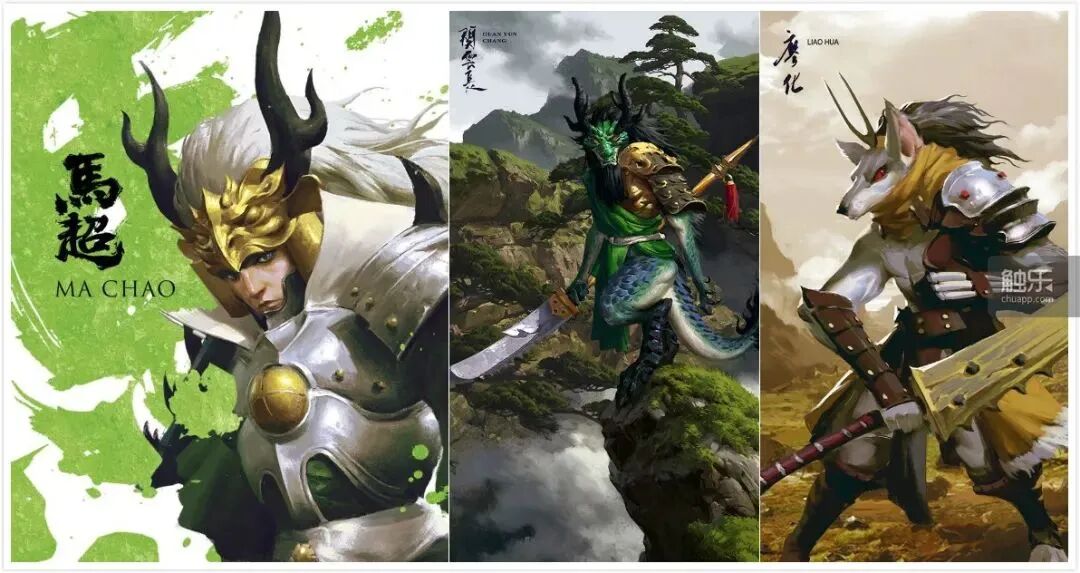
War of the Hundred Generals featured highly distinctive character designs
In November 2017, two months after Red Tides officially launched, the partners felt that RPG+SLG seemed like a project that could make money quickly. So they began developing an RPG+SLG game. The new game used the Red Tides universe, with space as its battlefield. Feng Ji served as lead designer; Yang Qi, Game Science's co-founder, as art director.
By early 2018, Yang Qi had already drawn quite a few concept pieces for this new game, and Feng Ji had done some preliminary design. But Feng Ji felt the game didn't have much juice. "I also felt like I couldn't take it anymore — you know what I mean?" Feng Ji said to me. "By 'couldn't take it,' I mean the game we were making wasn't something I wanted to play."
"We all felt we'd make single-player games eventually, sooner or later, but we always felt the timing wasn't right, always felt it wasn't the moment — like, if we had a big pile of money, or... anyway, we wanted to wait for the right timing," Feng Ji explained.
But Yang Qi didn't want to wait anymore. "Once during a meal, Yang Qi firmly insisted we had to do this," Feng Ji told me. "He said you can always find a reason not to start — not enough money, not enough people, conditions lacking in every way... If you keep waiting like this, you might never begin. But he felt that if we didn't do it now, the company might not even be attractive to him anymore... So, we started seriously discussing it."
That afternoon, I met Yang Qi in Feng Ji's office. Compared to Feng Ji, his demeanor was calm and detached. He seemed accustomed to removing himself, evaluating himself and the whole affair from a third-party perspective. He pulled his mask down to his chin and smoked cigarettes with fruit-flavored burst beads. We talked while smoking.
I asked Yang Qi why he was so adamant about this. He said easily: "We'd waited for a while, after all. We'd made some other games, because you have to live — you have to survive first."
I asked him again.
He thought for a moment, then told me quite seriously: "Because I feel like I can't keep making games this way for many more years... My body can't take it. Before, I could go several days straight without any problem. Now I need to sleep after one all-nighter. And a person's creative life is finite. A person's golden creative period might only be a few years — when you have experience, physical stamina, and your brain is still nimble... That's your most precious time. If you don't make something good during this period, you might not get another chance in this lifetime..."
After deciding to make a single-player game, Yang Qi was "visibly energized." At the time, Game Science didn't yet have a Hangzhou studio; all developers worked on the second floor of the Shenzhen office. After that meeting, they cleared out a small corner on the first floor for this project, and Yang Qi moved down the next day. This made Feng Ji feel good. As Game Science's founder, he felt responsible to the others who had "come out together." He also wanted to see his friends doing things with full enthusiasm — or even just being emotionally full would be enough.
02
Game Science's Hangzhou studio sits in a startup industrial park on the outskirts of the city. The park is newly built, with scattered Hui-style buildings — white walls, black tiles. I walked into the park one scorching summer afternoon. Probably because the pandemic wasn't over yet, almost all the buildings were empty. Some workers were maintaining the roads.

Game Science's new office in Hangzhou
"They said there'd be a Starbucks and everything, but because of the pandemic, nothing's moved in yet," Feng Ji said to me, pointing at a clearly unopened row of buildings ahead.
Game Science has a four-story building here. I arrived around 2 p.m. — that was when their workday was just beginning. The lights were off inside. Almost everyone was lazily slumped in their chairs, looking like they could fall asleep at any moment. Screens showed either animations, game videos, or some incomprehensible but impressive interfaces. None of the windows had curtains. Some had pieces of cardboard taped to them with clear tape, to block direct sunlight.
"Haven't had time to install curtains yet," Feng Ji said, leading me upstairs. The second floor was a common area — a few treadmills and stationary bikes in the corner, some tables and chairs in the middle. The third floor was empty, with a 70-inch display on the wall and a few wooden swords and two shields in the corner. Feng Ji told me they do preliminary inertial motion capture here, as reference for more precise optical motion capture later. The fourth floor was Feng Ji's office, though he said he didn't spend much time up there.
The single-player team moved to Hangzhou in December 2018. Feng Ji likes Hangzhou's atmosphere — the pace isn't as fast as Shenzhen's, housing prices aren't too high, "people can endure the patience it takes." As a relatively mature development company with sufficient experience, Game Science avoided most risks in the game development process. Their core creators had worked together for years and knew each other's capabilities intimately. They were familiar with development pipelines and had experience shipping successful games. They consistently controlled project scope, maintaining a very small team with rich experience and strong chemistry.
Initially, there was no disagreement about what kind of game to make. Everyone defaulted to a weakly online, combat-focused, cold-weapon melee action game. Of course, there were debates about specific style, but the broad direction never changed. They talked every day — over meals, at their desks. The game's style, character traits, and many details gradually reached consensus. At the time, Feng Ji was obsessed with Dark Souls; Yang Qi preferred Monster Hunter. The consensus was to make an action game with "very oppressive enemies," "intricate level structure," and "mysterious, fragmented storytelling."
Before this, Game Science had used Cocos and Unity — both engines were simple, with low learning curves. For the new project, the most suitable choice was Unreal. So everyone started learning Unreal from scratch. Feng Ji learned how to move the camera. Yang Qi tried building scenes and adjusting lighting. Another designer, "Village Chief," started building whiteboxes — "where to place blockers, how to set up invisible walls."
In May 2018, the pre-production team built their first basic scene to experiment with the most fundamental hit feel, AI, and combo mechanics. After that succeeded, they decided to try making an experimental level to showcase "final visual quality." They chose Flower-Fruit Mountain. In yesterday's 13-minute Black Myth: Wukong gameplay video, you'll see a scene where the protagonist advances through clouds, a dragon accompanying him, with densely vegetated mountain peaks in the background — that's Flower-Fruit Mountain.
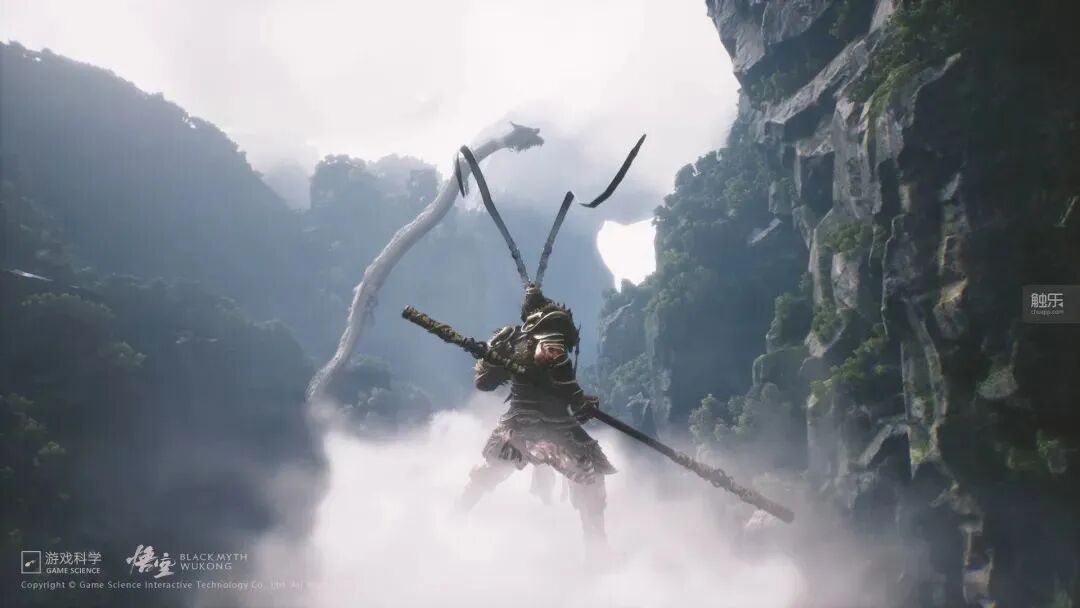
The Flower-Fruit Mountain Demo
By late 2018, the Flower-Fruit Mountain level had taken shape, with basic gameplay functionality in place. The protagonist spawns, exits a cave — heavenly soldiers are laying siege to the mountain. The protagonist fights through them, battles a celestial general, then ascends to the clouds to face waves of heavenly troops under the gaze of the Four Heavenly Kings.
"One hundred thousand heavenly soldiers coming at you in waves, the staff transforming into something completely over-the-top..." The team showcased this level at their 2018 year-end party. Some of this footage appears at the end of the video; the heavenly soldiers' movements look somewhat unnatural now, Feng Ji told me, and they plan to redo this section.
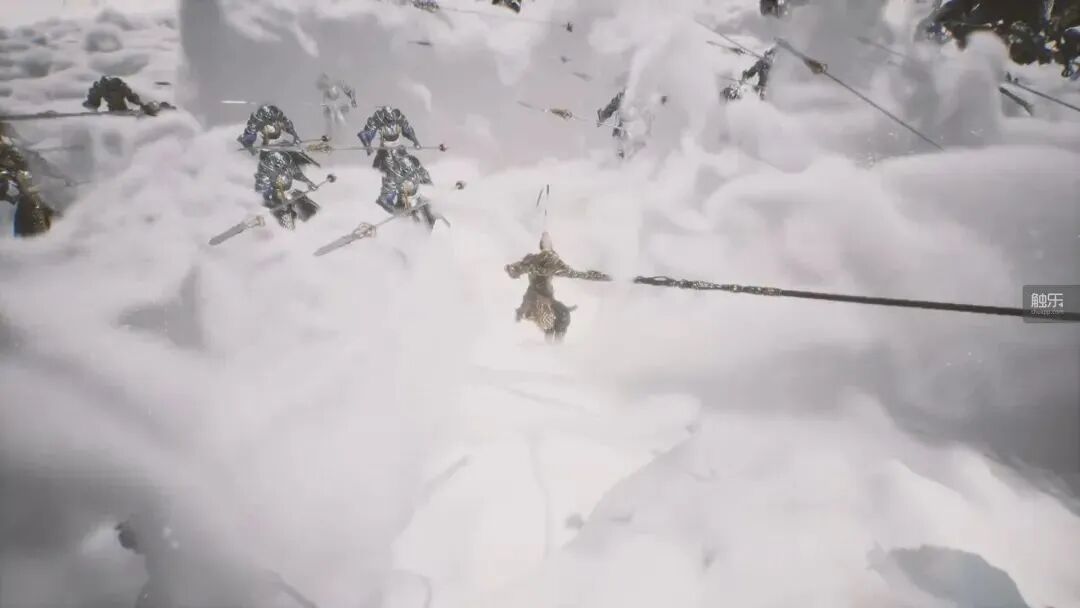
In the demo, Sun Wukong's Ruyi Jingu Bang can extend to great lengths
In 2019, the team grew to around 20 people, with the goal of "delivering a complete level experience." After discussion, they decided the level should at least "reach the quality that players would experience in the final game." They named this level Black Wind Mountain. In Journey to the West, Black Wind Mountain appears in the chapter "The Guanyin Temple Monks Plot for the Treasure, the Black Wind Mountain Demon Steals the Cassock." In the original novel, this marks the first proper demon Sun Wukong encounters on the pilgrimage — and it's also the main content of the gameplay demo you saw in the video.
03
Despite their preparations, the production difficulty of Black Wind Mountain exceeded most people's imagination.
"When you actually start doing it, you realize how incredibly hard it is to make a level with narrative weight, one that players can emotionally invest in," Feng Ji told me. "You have so many things you want. Should the monster talk to you? What's it doing when you're not around? Why should you fight it? Shouldn't there be some buildup before you encounter it?"
All these "wants" tie into technology and industrial pipelines. In the current era, for a high-investment commercial game, creativity is no longer the decisive factor — execution is. And in reality, "execution" means multiple simultaneous workflows, each of which needs to remain as controllable as possible in terms of both efficiency and quality.
If you want to create a short engine-generated cutscene, the rough pipeline goes like this: first a narrative designer writes the script, then 2D storyboards are drawn, then simple polygon models without textures are used to build a basic level layout (since there are no textures, everything is white — developers call this a "white box"). With the white box in place, you create an animatic. If you need close-ups of characters' faces, that involves motion capture — first using inertial motion capture equipment for a rough performance, then putting it in the game to check the feel. If the mood is off, you scrap it and start over. If it works, you submit it for optical motion capture to generate the final product.
During game development, countless production pipelines advance in parallel. The larger the game, the more advanced the technology, the greater the unpredictability. And if things spiral out of control — whether in quality or efficiency — the result is disaster.
They treated Black Wind Mountain as a minimum viable model. The team dared not expand to large-scale production until everything was proven feasible. Feng Ji did some serious math for me: "Take optical motion capture — one studio, 60 cameras, a team of dozens serving you, the daily cost is 200,000 to 300,000 RMB. And if you say, sorry, haven't figured it out yet, let's not do it today — you still have to pay."
Feng Ji showed me a playable build of Black Wind Mountain on-site, and I played through it myself — the build wasn't entirely stable, with occasional crashes. He seemed a bit nervous, constantly reminding me that "the feel is far from tuned to optimal," "some abilities aren't finalized," "numbers still need tweaking," "this really isn't final quality, lots of details are still missing."
I was already amazed enough. There was no difference between the demo video and the real-time gameplay. I heard that one streamer got quite excited after watching the demo, telling a friend with feeling: "The Chinese 3A game has arrived!"
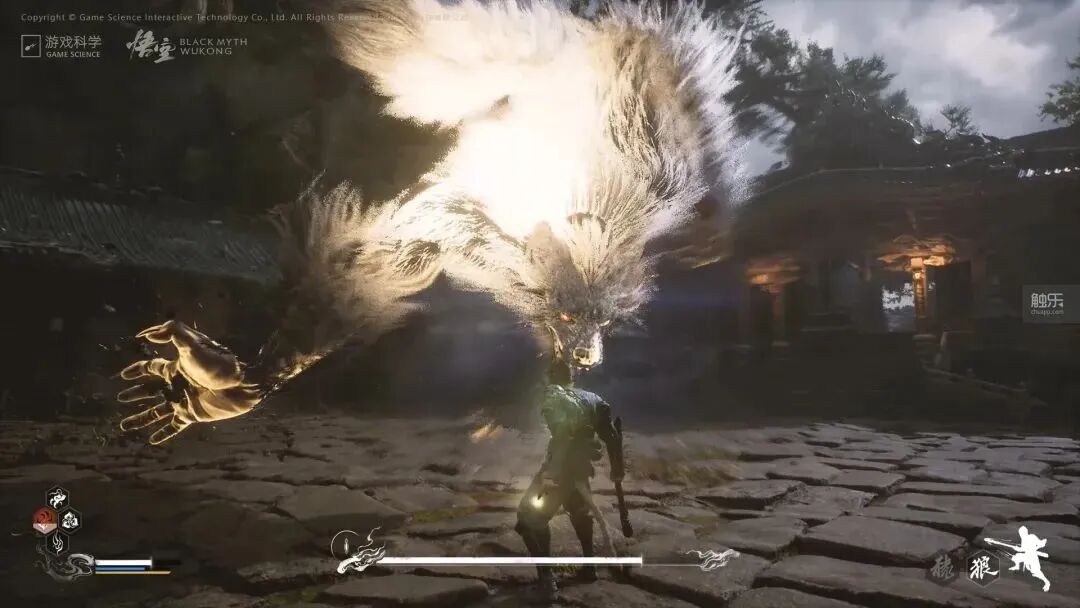
The Black Wind Mountain boss fight in the demo
But Feng Ji didn't want to invoke the term "3A." On one hand, he felt the label might invite attacks; on the other, he found the definition imprecise to the point of uselessness — "What do you mean by 3A? Sure, we know what each A stands for, but the actual definition... it's incredibly vague."
"At least one of them is spending a lot of money," I said. "Can you reveal the development cost?"
"You can calculate it this way: for one hour of player experience — not getting constantly stuck or dying, but relatively smooth gameplay..." Feng Ji told me, "the development cost per hour is 15 to 20 million RMB."
04
If you frequent Zhihu, you'll regularly encounter a series of questions related to "China" and "3A" — things like "Why doesn't China have 3A games?" or "When will China have 3A games?" and also "Does China even need 3A games?"
These questions brim with hopeful aspirations and some frustrated puzzlement — we have the world's largest gaming company, we have such a profitable games industry — so why don't we have 3A?

Discussions about "domestic games" and "3A" never fail to attract massive attention
Sometimes I feel that for many people (myself included), "3A" is like an Olympic gold medal. It crystallizes a whole host of things behind it. Anyone who's spent more than a year in the games industry can easily rattle off "what we're still missing compared to 3A." But sometimes, you can't know exactly what you're missing until you actually start doing it.
If you watched that 13-minute trailer carefully, you'd notice that as the protagonist, the monkey is silent most of the time — no voice, no dialogue, no facial close-ups — none of the characters have facial expression close-ups. This inevitably makes the combat motivation feel underexplained. Feng Ji said this is actually a standard "technical problem."
"There's an unconfirmed rumor that at Naughty Dog, the ratio of artists to technical artists reached 1 to 1," Feng Ji told me. You can think of technical artists as "people who are strong in both tech and art" — not precise, but not entirely wrong either. Specifically, technical art (TA) provides technical support to the art team, improving both quality and efficiency. Put more plainly: if a task requires close collaboration between tech and art, you need a technical artist.
"Why do we want to find technical artists? One reason is we absolutely must crack narrative," Feng Ji said. "Motion capture involves lots of transition, environmental interaction, and alignment issues. Remember the fight with Lingxuzi, the wolf, at the end of the video?"
"I remember."
"Actually, our earliest design had the protagonist transform into a giant ape for a spectacular execution. The wolf pounces from the roof, the giant ape catches it, grabs its teeth with his hand, slams it to the ground, then pounces on it." Feng Ji said, "Sounds cool, right? Well, the moment the hand grabs the teeth, they clip through the model. We couldn't get the protagonist to stand in a stable position, so the teeth would protrude through the fingers."
"Technical artists solve these kinds of problems," Feng Ji said. "They can align models, even determine what material each model has. At a more advanced level, tooth material could actually make flesh material bleed when inserted... but we couldn't do it. We spent two months, gave up, and changed the ending. We lost several months to this design and ultimately couldn't solve it."
So I never got to see that shot. Though Feng Ji said they don't want to give up — they'll make that execution happen eventually.
Feng Ji told me a legend: at Naughty Dog, every artist's desk has a single button. Press it, and a technical artist comes over to ask what problem the artist is facing. "Is it the particle emitter? Does the fluid feel off? Is it an interaction with the scene issue? I'll fix it right here."
Game Science understands the importance of technical artists, but they don't have enough of them. Not just Game Science — there aren't many mature technical artists in China period, and "the ones that exist are all at big companies like Tencent and NetEase."
But some problems did get solved. In the trailer, the monkey picks up a blade called "Crimson Tide." Feng Ji told me that wasn't a pre-scripted animation. The monkey can walk up to it anywhere, grip the blade, pull it from the ground, and tuck it into his ear. The key part is walking up and pulling it out. To make this action that most people wouldn't even notice look smooth and natural, the team spent roughly two to three months.
Feng Ji stood up to demonstrate for me. "You've played The Last of Us Part II, right? I felt despair after playing that game... Did you notice the character animations? Like, I'm sitting here, the game prompts you to press a button, you pick something up — no matter where you are, whether facing it directly or at an angle, the animation always looks natural?"
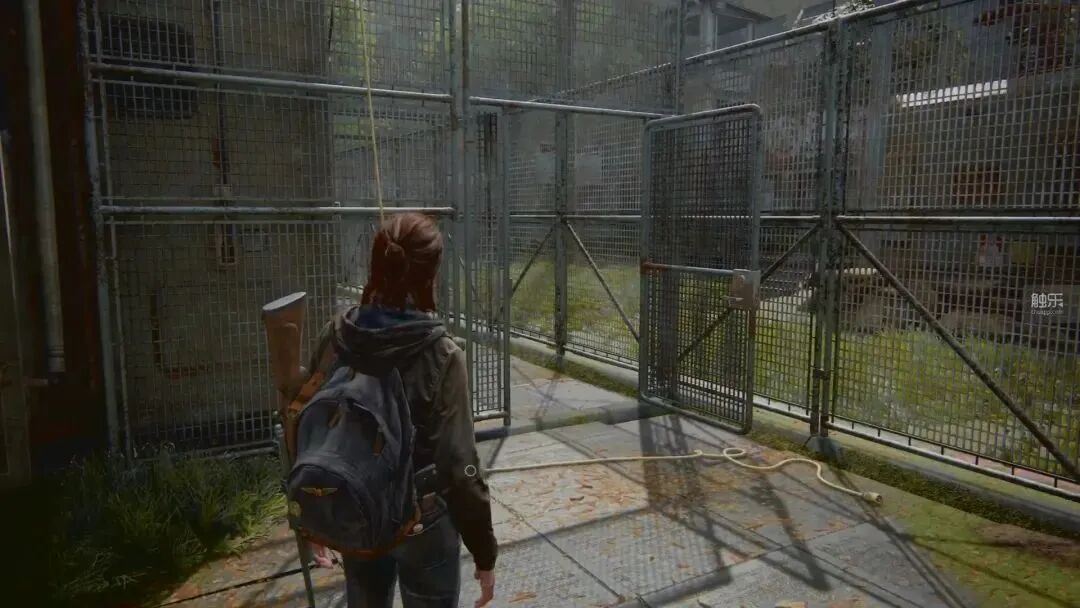
The Last of Us Part II features rope physics with extremely high fidelity, whether coiled in the player's hand or stretched taut
I strained to recall this unremarkable in-game detail. Feng Ji continued. "We initially thought we just needed to capture more actions. Later we discovered that character orientation, especially foot orientation, is incredibly subtle. If you only capture the frontal action, what happens when the object is to the side? Do you turn? But smooth turning has no source material, and programmatic blending looks weird — there are ways to make it not awkward, like brute-forcing it: I make 32 actions just to pick up this blade, covering all directions. But in the game you're not just picking up blades, you're opening doors, grabbing hammers. If every action gets multiplied by 32, the production cost and resource load become unacceptable."
Feng Ji went on, "So we researched solutions, looking at public talks major studios gave at GDC. Then we found that Ubisoft had proposed a solution called 'Motion Matching.' The most powerful thing about this technology is that we only need to record a batch of fundamental character movement data following a set of rules, and without any animator trimming, Motion Matching can automatically generate a complete set of fluid, natural character movement."
I asked: "Is this library open source?"
"There are some open-source versions online, but they're very immature. We brought it to production-grade quality... We reverse-engineered Ubisoft's various implementation details, and in places where Ubisoft didn't reveal the specific methods, we figured out our own solutions — like what standards to follow when designing the entire motion set, how to support all kinds of weird walking animations..." Feng Ji said. "But if you compare it to Assassin's Creed: Odyssey, or aim even higher, benchmark it against God of War or The Last of Us, you'll find you're still not as good as them. Their foundational motion libraries and corresponding mathematical algorithms are basically a black box to you. But that's also their moat."
I asked him, "If you build all of this out, will it become your moat too?"
"Of course." After saying this, he added, "But they have iterations across many generations of products. There's no shortcut for that."
05
They still had to keep making choices. For instance, game style — should they make a Monster Hunter-style game? Or a God of War-style game? Or a "Soulslike"? And they found that each style corresponded to different priorities and granular details. If they studied God of War, development focus would need to go toward spectacle and execution sequences. If they studied Monster Hunter, they'd first need to solve the problem of large-scale enemy animations. If they wanted to make a Soulslike, they'd have to handle character progression and duel-style combat — every direction had its challenges, and what the team most wanted to pin down was the overall feeling this game would ultimately give players. They wanted to determine: "How will players describe this game?"
This troubled them for a while. Later, Feng Ji figured it out: "When you benchmark against a very specific product... you naturally risk becoming a second-rate game. Even if you pay homage brilliantly, players will naturally feel you're a second-rate game."
They began consciously distancing themselves from those best-in-class works. "I admit, they may be the current optimal solution for action games," Feng Ji told me. "But we must keep our distance from these games." They didn't want players to directly associate any design with a specific game. So they abandoned weapon parrying in favor of "Copper Head and Iron Arms," used the golden cicada for stealth.
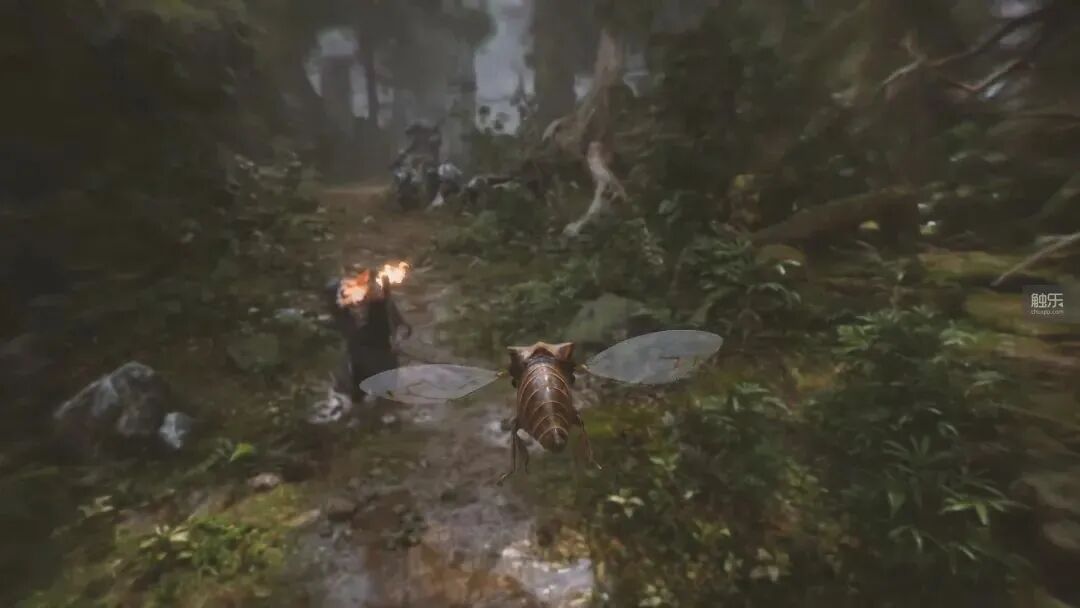
In the demo, Sun Wukong transformed into a golden cicada won't be detected by ordinary grunts
Level design was another problem. Feng Ji had once been obsessed with the "Soulslike" interconnected level design — the so-called "hakoniwa" design that almost specifically refers to the sandbox-like levels achieved through highly precise design in Japanese games. But by late 2019, as development progressed, the team realized Black Myth: Wukong wasn't suited to hakoniwa-style level design. After discussion, the team ultimately decided that to convey the grand epic feeling of Journey to the West, using multiple levels with fast travel to represent a real open world would be more appropriate, and each map could therefore have more flexible design freedom.
But Feng Ji also reserved the right to "create a certain hakoniwa feel within individual maps." "Of course I'll respect the art team's requirements for realism. In Dark Souls, many scenes are churches where you can do lots of loops, up and down, but in a forest you can't强行 do lots of stairs or elevators, right? So it depends on the specific case — Black Wind Mountain can be more flat, Thunderclap Temple can be more deep... but I still want to retain a certain openness, players can still explore within the map."
Feng Ji was eager to tell me about the game's worldbuilding and overall style, but I decided not to reveal too much here. Before seeing the final presentation, I couldn't offer too much evaluation either. This game isn't a reproduction of Journey to the West, and they don't want to continue the confrontational, challenge-everything edgy style of Asura.
They sometimes don't really want to bring up Asura, and seem somewhat worried about what players might say if they associate this game with that one. But they still want to connect this game to their first work, Asura. For instance, in the promotional video, the final subtitle reads: "After the White Bone, Journey to the West Again."
"Know why we say this?" Feng Ji told me. "Asura players have a meme: 'After the White Bone, no more Journey to the West.' We had planned 5 chapters at the time, Chapter 3 was called 'Farewell, Madam' — madam refers to Lady White Bone — our story only got to Chapter 3, before that there were cinematic animations, voice acting, all quite good, but at Chapter 3 it abruptly stopped. After that everything became text mission descriptions. So players said of us, after the White Bone, no more Journey to the West."
The "Farewell, Madam" CG in Asura left a deep impression on players
On August 20, when the video was released, Yang Qi wrote on Weibo: "(This subject matter) has been a burden of ours for over ten years. Many colleagues don't say it out loud, but everyone knows this knot in our hearts is hard to avoid. It's an honor to be able to show our current development progress at this stage today. We will go all out in the future, hoping we won't disappoint you again in the end."
I asked Feng Ji on WeChat: "Can you ask Yang Qi for me, why did he use the word 'again'?"
Feng Ji replied: "He probably feels Asura had regrets." Then he added, "I do too, but I don't have much resentment."
I asked: "Resentment toward whom?"
Feng Ji said: "Mostly toward myself. I wasn't brave enough back then."
06
I showed part of the article I'd written to a friend. I told the friend, "I don't want people to think doing this was grueling... like some 1980s reportage literature."
"It's fine," the friend said. "Still feels a bit bitter, not too severe."
"Then I'll revise more," I said. "I'm just afraid someone might think they're suffering, when actually they're not suffering at all — they're thrilled out of their minds."
When chatting with Feng Ji and Yang Qi, I asked them: After the video went public, what were you most worried about?
Feng Ji said he was most worried the video wouldn't get its due response, that it would sink without a trace. Yang Qi worried that after the video went public, many companies would come poaching people. But as a bystander, what I worried about most was public doubt and attacks against them — suspecting this was CG, was animation, was a scam; accusing them of playing on nostalgia, selling vaporware, playing the victim.
As of the morning of August 21, Yang Qi's teaser Weibo had been reposted nearly 100,000 times, almost all praise and acclaim
You can't blame players. Every doubt corresponds to at least several past cases. Players have been deceived by inexplicable marketing, grew angry, then became cynical, believing that offering trust and enthusiasm is a dangerous thing. Meanwhile, "nostalgia" has become a pejorative through overuse. As if there's some template: when we say certain people have decided to pursue their ideals, we must express the choices and sacrifices they've made, including some lofty and sorrowful keywords, some typical moments, like a lone figure walking toward the sunset.
But Feng Ji and Yang Qi showed no signs of anguish, frustration, inner turmoil, or sacrifice. Feng Ji was animated and glowing when talking about this game. He'd start from one point and keep branching out, continuously associating like a Wikipedia rabbit hole, going further and further. Because of this, I had to keep examining myself: does this article capture the joy of their immersion in it? You know, when people are doing what they love, almost everything they see is joyful.
At the end of our conversation that day, for some reason, perhaps because of something said, or some trigger, our talk took a strange turn.
"Yang Qi once told me, if we crawl on our knees now, we can reach a mountain of gold and silver — that is, make big money. If crawling on our knees could lead to success, I'd kneel with you right now. You don't need to convince me, I really want to make money. The problem now is, you tell me which path can definitely make money through this kneeling approach?
"I truly couldn't answer him," Feng Ji told me. "Many people today point to a product and ask me, if we just learn from it and amplify our strengths, can we succeed? But you also know, many people have stronger execution and resources than you — what makes you think you can compete with them? So in the end what you can rely on is your own intuition — you have to move yourself first. Only when your own intuition is strong can you more easily move users. If you're not sensitive to something yourself, let's set aside ego and all that — if you're not sensitive, your iteration speed will lose to those who love this thing more than you do. Then what makes you think you can succeed?"
But even so, they may not ultimately succeed. Game development is a long-term sustained engineering effort, and a game of this scale especially so. The current promotional video still has many problems — for instance, they've been quietly developing for two years, growing from 7 people to the current 30. Going forward, they need at least two more years of development, much work remains, many more people will join this team, and many things will happen.
After the video's release, Feng Ji began feeling somewhat anxious. He told me on WeChat that he was a bit worried about being hyped up too high. "It's just that I don't have real security yet..." he said. "I'm just that kind of person — it's hard for me to feel happy before something actually happens."
I told him he'd get used to it — this wasn't just pure well-wishing. Actually, in my view, perhaps he didn't realize it yet, but things had already happened. All this praise and wonder was part of it, the reward the team deserved.
I still want to believe this. When people decide to make what they truly love, good things will come.
07
In the days before the trailer's release, Game Science had been continuously posting teaser posters on their official Weibo. One per day, each poster paired with a few lines or a short poem. On August 19, the day before the trailer's release, Game Science's accompanying text for the poster was: "I was so much older then, I'm younger than that now."
The "poster" was actually a video — accompanied by the crackling sound of a bonfire, a figure in front of the camera waves a fan, gazing at the flames
This line comes from American folk legend Bob Dylan's song My Back Pages. In this song, Bob Dylan offers unsparing criticism and mockery of his past actions (desperately, he was only 23 at the time). The song has 6 verses, each beginning with reflection on the past, followed by this line. The final two verses go like this.
In a soldier's stance
I aimed my hand
At the mongrel dogs who teach
Fearing not that I'd become my enemy
In the instant that I preach
My existence led by confusion boats
Mutiny from stern to bow
Ah, but I was so much older then
I'm younger than that now
Yes, my guard stood hard when abstract threats
Too noble to neglect
Deceived me into thinking
I had something to protect
Good and bad, I define these terms
Quite clear, no doubt, somehow
Ah, but I was so much older then
I'm younger than that now
Epilogue
At 7 PM on August 20, I arrived at a movie theater in Hangzhou. Feng Ji had told me earlier that all Game Science employees would be watching a movie together tonight — a team-building event, also a阶段性 celebration. He invited me to join, and told me he'd prepared a surprise for his colleagues — before the movie started, the theater would play the Black Myth: Wukong trailer.
As the time approached, Game Science developers trickled into the theater. They looked like ordinary college students, or any white-collar workers ground numb by work. You wouldn't think these people created this game. They all wore glasses, T-shirts and sandals, their faces expressionless, pulling out their phones at any opportunity.
I asked one of them: "Are you guys from Game Science?" He turned to me and said, "Yeah."
I asked casually, "Your video went out today and it's doing pretty well, right? How are you feeling?"
He looked me up and down warily, hesitated for a second, then said stiffly: "Ah... well... I have no comment." Then he walked away, slowly but firmly.
Feng Ji couldn't make it — he still had things to take care of. The moment the video dropped, his WeChat blew up with congratulations, inquiries, partnership requests... A Game Science admin staffer told me that several groups of people had shown up at the office that afternoon, including two groups of players. "They said they were nearby, got excited after watching the video, and just came over — we gave them a tour around the office," the admin told me.
Game Science had rented out a small screening room. Now about thirty people sat inside — these were the people who made this game. For a few hours that morning, they had been the stars of China's gaming community, but now you couldn't read anything from their faces.
But you could feel their excitement. They sat in their seats, phones out, surfing the web. Some were discussing the video's view count on Bilibili. One voice said: "It's already hit 5 million plays. Think it'll reach 8 million tonight?" Another voice answered: "You kidding? View counts don't grow linearly."
By the morning of the 21st, the trailer's views had surpassed 10 million.
There were two others nearby, designers I guessed, sitting not far from me. The two chatted while looking at their phones. One said to the other: "Someone commented that we should make the death screen look good, 'cause people are definitely gonna die a lot." The two chuckled. After laughing, the other said: "Well then we definitely gotta make it gorgeous!" And they chuckled again. After that, one said: "How about we just write: 'Victory and defeat are commonplace for warriors. Hero, please try again!'" The other clapped and said: "Yes! Retro!" They put down their phones and just grinned at each other.
The lights suddenly went dark. The Game Science logo appeared on screen, and a murmur rippled through the audience — but only for a few seconds, then silence. The trailer began playing, the one they had made, the one that had shaken the entire internet that morning, yet everyone sat perfectly upright, not a sound from the seats.
When the trailer finished, as I expected, the theater remained silent. At first there were a few scattered claps, but sensing little response, the applause quickly died. Silence hung in the theater. No one spoke, no one clapped, no one whistled — none of the expressions of excitement and joy you'd see in movies. I guessed this wasn't from being overwhelmed, and certainly not from numbness, but from shyness — these developers weren't used to expressing their emotions. Everyone just sat there. Until the house lights came back on.
The admin walked into the screening room and told everyone the feature would start in another eight minutes. The developers let out a few sighs, then the room went quiet again. After a while, a voice asked: "Can we play it one more time?"