Angry Miao Li Nan: The Battle for "Made in China" Mindshare in Global Markets Is the Blue Ocean Opportunity of a Lifetime for Gen Z | Z Talk

Chinese brands can win the battle for mindshare on the global luxury battlefield.
Z Talk is ZhenFund's column for sharing ideas and perspectives.
The 2024 China Gen Z Youth Entrepreneurs Conference, hosted by wteam, recently concluded successfully in Guangzhou. The conference featured Li Nan, founder and CEO of Angry Miao and former CMO of Meizu, as a guest speaker. In 2021, Angry Miao released the world's first wireless, three-dimensional curved, split ergonomic keyboard — a product that took the tech community by storm. ZhenFund had previously invested in Angry Miao at its angel+ round.
Li Nan shared his insights on the new challenges and opportunities facing Gen Z entrepreneurs in today's mobile internet era, and expressed his hope that they would move beyond the market-share competition of "Made in China" to focus on building brand value and product quality, winning global mindshare, and creating greater profit margins.
The full text of his speech follows:
01
Riding the Mobile Internet Wave
Hello everyone, I'm Li Nan. The theme of my talk today is the new mission of Gen Z entrepreneurs. I won't be teaching you any specific skills today, but I do have the chance to shift one of your core beliefs. Drawing on my industry experience, I've distilled the lessons from the last massive wave — I hope to teach you one crucial thing from the mobile internet tide.
Right now, China is presenting a new mission to its next generation of entrepreneurs, one you may not yet be aware of. To understand a generational mission, we must look to history. History doesn't repeat, but it rhymes.
The massive commercial and technological wave of mobile internet began in 2007, marked by what we might call the "iPhone moment" — when Steve Jobs unveiled the first iPhone. The second-generation model sold between 700,000 and 1.4 million units, spawning countless great companies and founders: Apple, Samsung, Xiaomi, OPPO, VIVO, Huawei. During this period, Meizu Blue Charm grew to 15 billion RMB in sales over three years. However, I don't want to share methodologies with you, because I place Blue Charm in the losers' bracket — and it's the #1 loser in that bracket.
02
China's 1960s-Born Entrepreneurs
Won the Physical Battlefield
We left the phone industry in 2022. I'd like to spend one minute summarizing these 15 years of epic history for you.
In 2022, Apple accounted for 14% of global phone shipments by unit volume. Yet it's plainly visible that while Chinese brands command half the market, Apple captured 44% of sales revenue. One chart shows Apple taking 80% of profits in a trillion-dollar-plus market — with just 14% of shipments.
But I don't consider the founders of these Chinese brands failures. I believe each generation of entrepreneurs has its own mission, and the founders of Xiaomi, OPPO, VIVO — all born in the 1960s — had their historical mission.
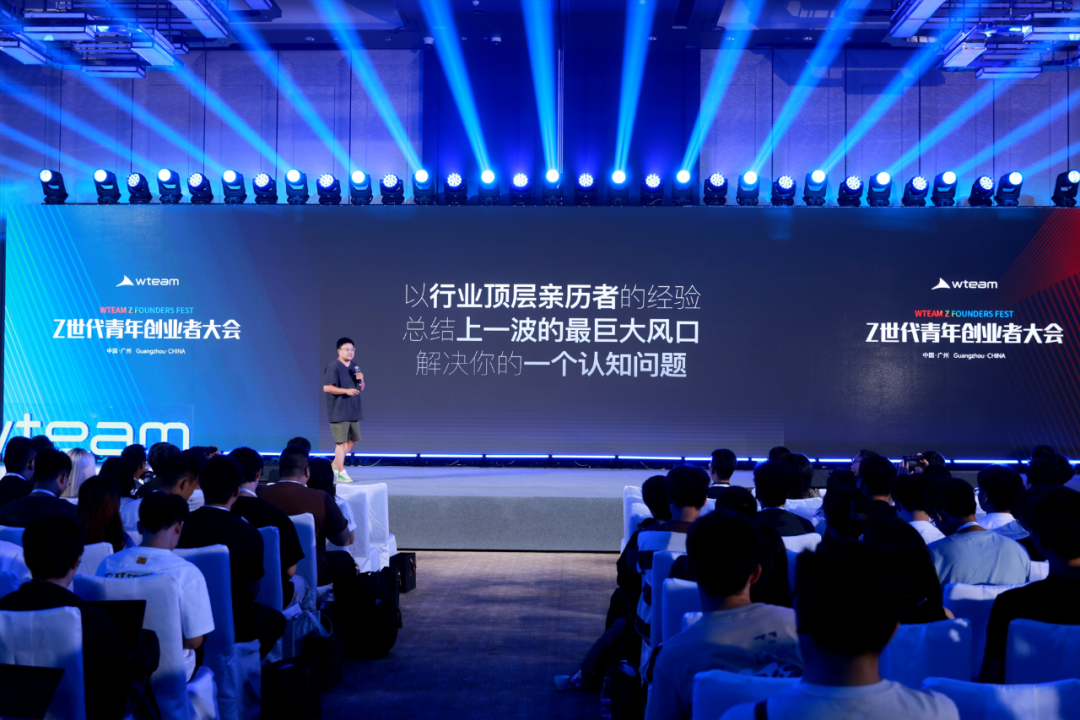
My summary for today: the emphasis of MADE IN CHINA was first and foremost on "MADE." So we won on shipments, and we over-delivered. This wasn't just in phones — it was nearly every industry. Before the US-China trade war, 84% of shoes consumed in America were made in China. That's why I say the 1960s-born entrepreneurs completed their historical mission.
So here's my question for you 2000s-born entrepreneurs: are you willing to spend your entire lives pushing that "84%" to "86%"? I believe you aren't. We respect Lei Jun, we respect all the 1960s-born entrepreneurs across every industry, but I don't recommend learning from them. Let's not turn "84%" into "86%" — because wasting an entire generation's time for such marginal gains simply isn't worth it.
The 1960s-born entrepreneurs delivered on MADE IN CHINA, but what didn't they deliver on?
According to "mindshare battlefield maps" from around 2020 in the US and UK markets, Japanese and American manufacturing stood for high quality, reliability, craftsmanship, impressiveness, fun, distinctiveness, trendsetting, fashion. Chinese manufacturing, meanwhile, represented unreliability, low-grade, mass production, cheapness. So the 1960s-born entrepreneurs fulfilled the historical mission of MADE IN CHINA — they won the physical battlefield, but lost the mindshare battlefield.
After leaving Blue Charm, I founded Angry Miao. We don't chase 20 billion RMB in annual scale — in three years we did just 50 million RMB, with half our users in America. In 2021 we released the world's first wireless, three-dimensional curved, split ergonomic keyboard. What we cared about: does it have quality? Is it crafted with care? Is it something we can be proud of? Does it understand art? Does it embody a lifestyle? Is it on-trend?
I don't believe my 50 million is incomparable to that 20 billion, because we proved that a Chinese brand can win on mindshare in the global luxury, high-end battlefield. Today, we are the global luxury keyboard, with 5% market share. We proved this is possible.
03
Changing MADE IN CHINA's Mindshare Battlefield
Requires an Entire Generation
Yet if only we've achieved this, it's clearly not enough. Because China needs countless people to solve the problem of "changing MADE IN CHINA's mindshare battlefield" — and this isn't a new problem.
In 1958, there was a company in Tokyo originally named Tokyo Telecommunications Engineering. Its founder believed it had to change its name, because global consumers couldn't pronounce it, and without that, products couldn't be sold worldwide. Why sell worldwide? Because they wanted to change the global consumer perception of Japanese products as "poor quality."
I was delighted to read this. This isn't China's new problem — it's Japan's problem from the 1960s. Japan solved it, and you can see the results on the mindshare battlefield: today Japanese brands are seen as more reliable, pioneering, distinctive, on-trend.
What did Tokyo Telecommunications Engineering rename itself to? It became SONY. Its founder was Akio Morita, and Sony ultimately spent nearly 50 years winning the mindshare battle. Today, Japanese products are no longer seen as poor quality. So what we're doing is what Akio Morita did back then. If we want to change MADE IN CHINA's mindshare battlefield, it will take an entire generation.
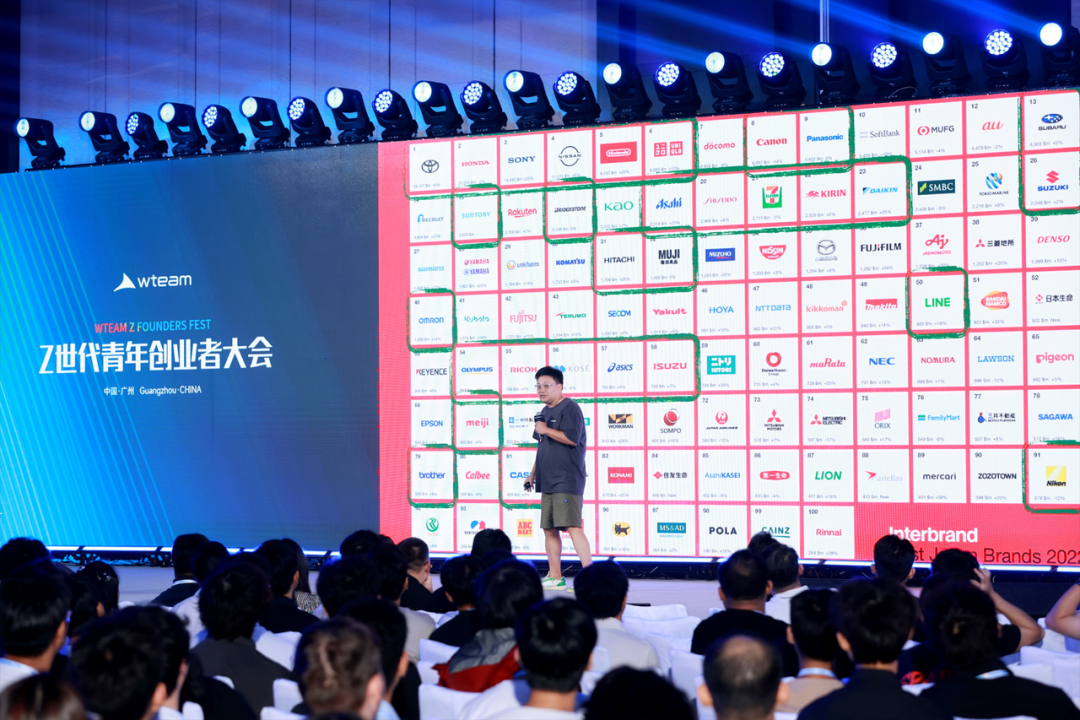
Akio Morita wasn't fighting alone. In Japan's 2022 top brand rankings, we see countless high-quality, design-forward, pioneering, distinctive consumer brands.
We see Interbrand, one of the world's best-known brand consultancies. We see SONY, which makes the best DSLRs. We see Nintendo, which makes the best games... Japanese manufacturing commands premium mindshare because there were countless people like Akio Morita, an entire generation, who went out and created better brands.
And speaking of Gen Z — Yohji Yamamoto, HUMAN MADE, these were created by young Japanese people, and these brands too are quality-driven, pioneering, distinctive, on-trend. So Akio Morita wasn't alone, this was the choice of a generation or even two generations of entrepreneurs, and it transformed the global consumer mindshare map for Japanese brands.
04
Chinese Brands? It's on Gen Z Now
But look at China's 2023 top 50 brands — do you see anything similar?
Applying the same mindshare map: among those that qualify as "high quality" and "reliable," are any crafted with devotion? Any fun ones? Any distinctive? Any pioneering, design-forward, impressive, on-trend, fashionable ones? Not a single one.
What do you see here? I see a massive opportunity and a calm blue ocean that history is handing you. This is the real blue ocean, the truly massive opportunity. Because China must solve this problem.
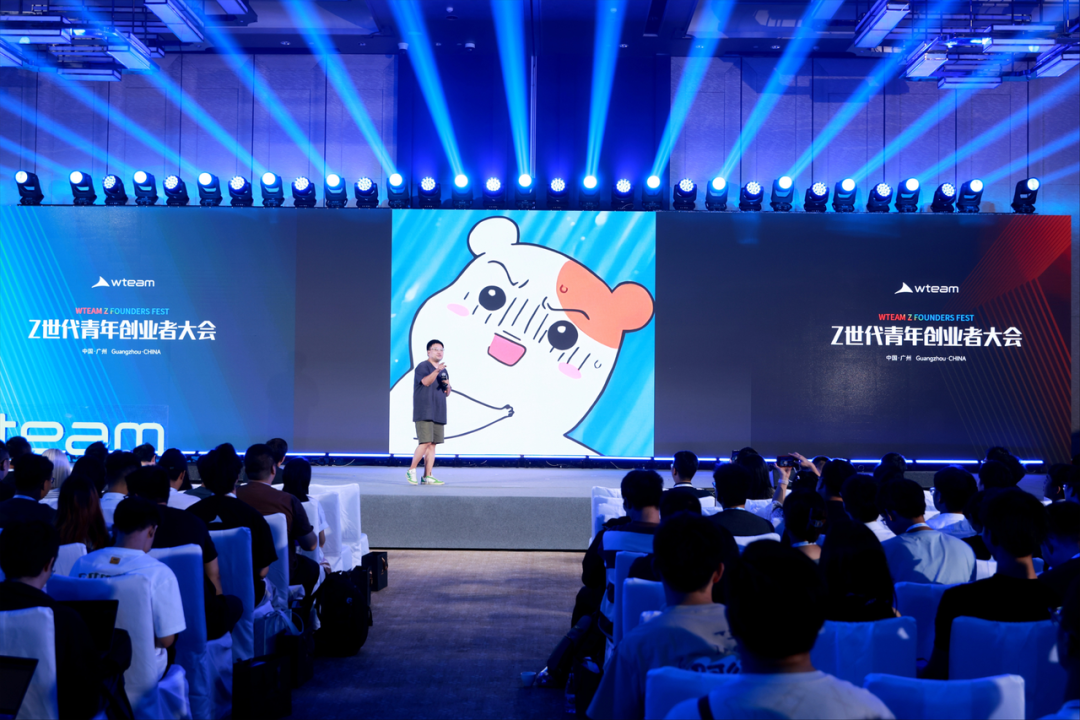
Looking at China's 2023 top 50 brands, the 1960s generation wasn't good at this, and not many from the 1980s generation have cracked it either. So stop delivering 60-point products at half the price — it'll get you market share, it'll get you more shipments than Apple, but Apple gets 80% of the profits. Instead, deliver 90-point products at double the price.
The future is no longer about market share — your era is no longer about market share. The market share war has been settled by the 1960s generation; the future is the mindshare war. And the mindshare war will bring greater returns than today's market share war. Go look at Xiaomi's valuation on the Hong Kong stock exchange, then look at Apple's valuation on the A-share market — you have the opportunity to capture 80% of profits in your industry as a leading enterprise.
So everyone, the returns are there, and they're massive. Chinese brands? It's all on you!
Recommended Reading