Running Nonstop Until You Can’t: The Costly, Anxious Race of Large Model Competition
Model capabilities are converging, competition is accelerating, and the cost of trying to stay ahead keeps rising.
Kill Zone | Faith | Iteration Speed | Distillation

Intro
Li Hua (pseudonym) is an R&D engineer at a second-tier foundation model company. He describes his job as driving a "giant tractor" — low pay, scarce compute, "ten people standing around one tractor every day, pulling their hair out."
By his account, when ChatGPT 5.4 dropped in March, his team still hadn't caught up to 5.3. Chasing frontier models had become his daily routine for the past six months.
A year earlier, StepFun founder Daxin Jiang had told media that whenever OpenAI released something new, their strategy was to match it within six months. The industry consensus now: six months is obviously too long.
Li Hua's prediction — second-tier foundation model players will shrink further. There are already signals; some teams at his company have been cut.
For the entire foundation model industry, 2026 is an excruciating year. Looking back, the hardest part isn't breaking any single benchmark — it's whether massive spending can buy enough of a lead.
This is AI Nao's Keyframe series — we use visual explainers to unpack important shifts in the AI era. After Unitree's IPO, how do you price embodied AI? | Keyframe
In this issue, we look back at the 2026 foundation model race and try to answer:
What does it cost to keep chasing between models? What becomes the moat for large models?
3.4 Months
What's the shelf life of a foundation model today?
The dozen or so industry insiders AI Nao interviewed generally agreed: about three months.
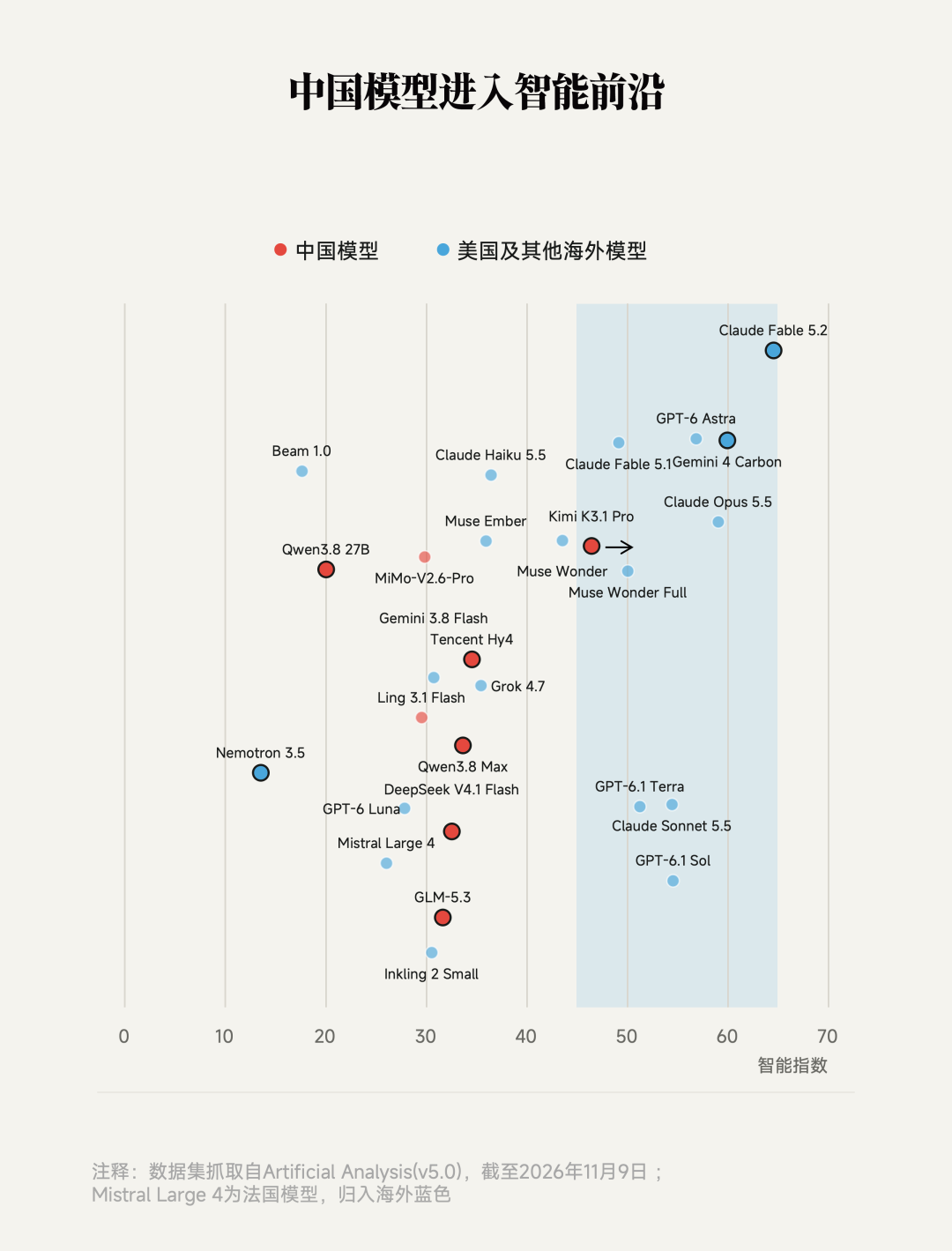
Artificial Analysis, an independent AI benchmarking firm, shows that the average time for Chinese models to catch up to American ones this year has shrunk to 3.4 months — down from 6.5 months a year ago.
The window has compressed to a single quarter. A company barely converts its lead into products and contracts before competitors surface with comparable scores.
In July, Moonshot AI released K3 — seen by the industry as the moment Chinese models entered the "globally strongest" tier. Artificial Analysis rated Kimi's intelligence index at 57, putting its overall capabilities on par with Claude Opus 4.8 and GPT-5.5.
Almost simultaneously, American vendors counterattacked on price.
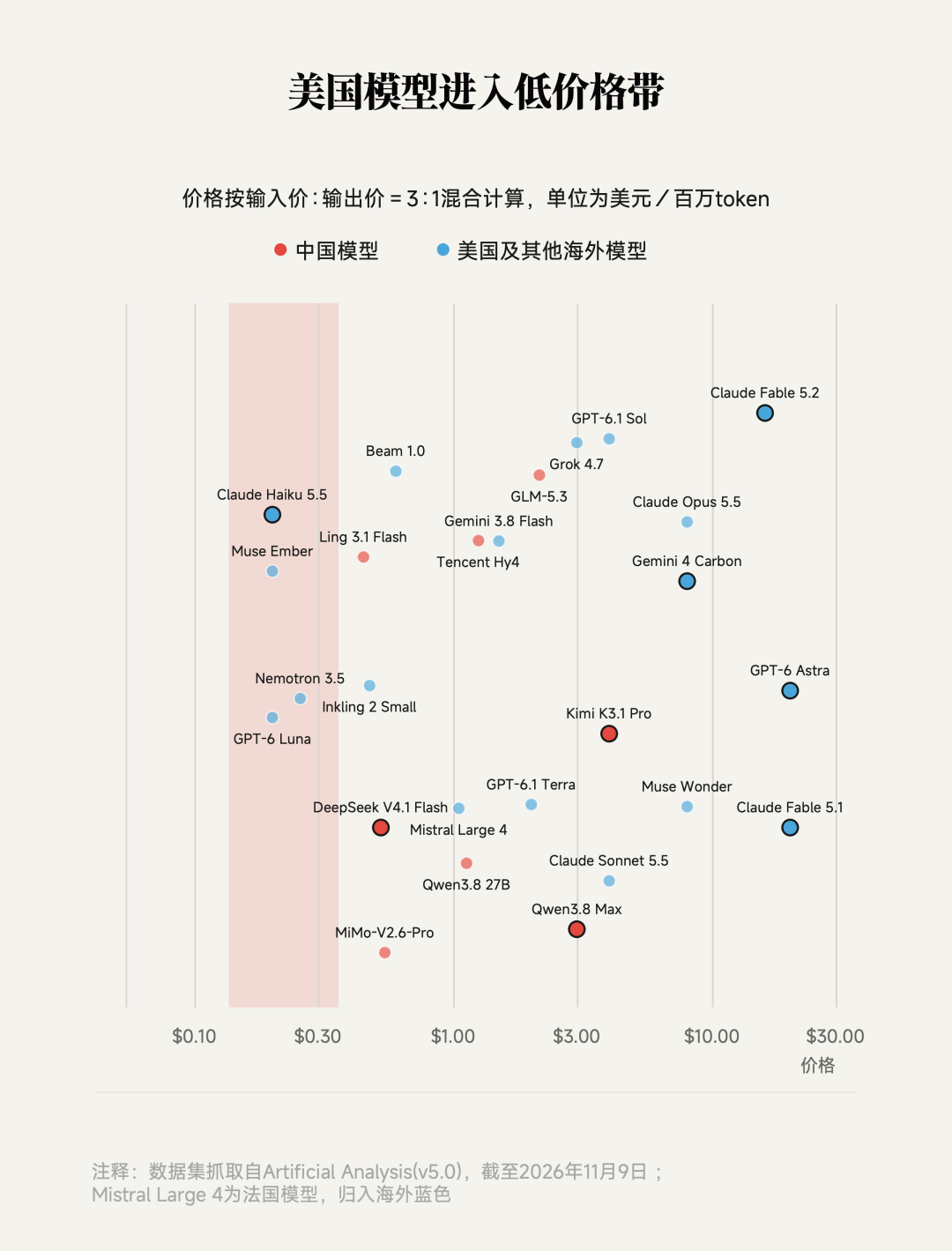
The pattern for years had been: U.S. models with stronger capabilities, higher prices; Chinese models winning market share through rock-bottom API pricing.
But a new dynamic emerged: U.S. vendors started slashing prices on lightweight models aggressively, using low costs to capture high-frequency, repetitive calls that don't demand peak capability.
OpenAI's GPT-6 Luna API, for instance, is priced at $0.10 per million input tokens and $0.50 for output; Anthropic's Claude Haiku 5.5 matches this rate when prompts stay under 100,000 tokens.
By contrast, DeepSeek V4.1 Flash — long the value champion — lists public pricing at $0.30 input and $1.20 output during peak hours, $0.15 and $0.60 off-peak.
China-U.S. foundation model competition has shifted from two relatively parallel tracks to head-on, multidimensional rivalry.
Capability = Revenue
For model companies, how good your model is shows up most directly in revenue.
Before releasing GLM-5 in early February, Zhipu AI's ARR was roughly $100 million. The new model doubled that metric within weeks.
K3 had the same effect. Per Bloomberg, Moonshot AI's annual recurring revenue crossed $1 billion in August after July's K3 launch — up from just $300 million two months prior in June.
Note: According to the latest tally from Epoch AI, a U.S. AI research institute, the combined AI-related revenue of China's six leading AI companies equals roughly one-tenth of OpenAI and Anthropic's combined total.
A commercialization lead at a top model company told AI Nao that business performance is almost tightly coupled to model capability. She put it bluntly: "One strong model version, revenue spikes fast. Two weak versions in a row, revenue drops just as fast."
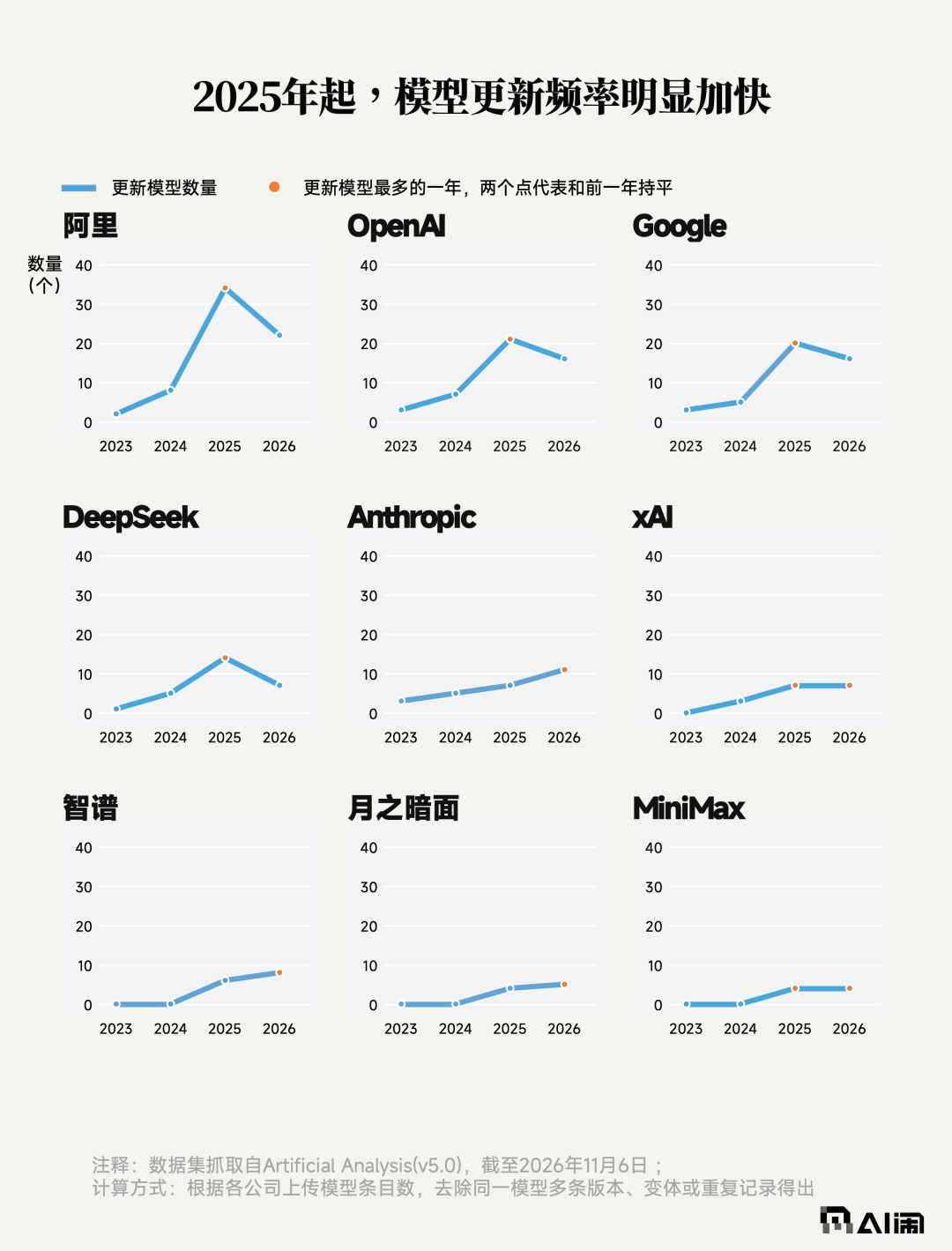
Model capability remains a critical variable for revenue and customer choice. The pace of frontier competition is visible in recent release frequency. Over eight days this July, four labs dropped frontier models.
Anthropic's release cadence accelerated from roughly quarterly in 2025 to monthly in 2026. On November 9, they shipped Claude Fable 5.2.
Meanwhile, competition spilled out of labs into policy. To defend their edge, U.S. companies began aggressively accusing Chinese firms of "distilling" their models.
With leads lasting only months, anything that could shorten catch-up time was treated as a threat.
After K3's release, White House OSTP Director Kratsios accused Moonshot AI of distilling Anthropic's Fable model during K3's development. Treasury Secretary Bessent followed up, suggesting sanctions against Moonshot AI and even potential Entity List placement.
In September, Anthropic published a threat intelligence report alleging Moonshot AI used 5,380 fake accounts in a proxy network to forward nearly 300,000 Kimi user queries to Claude over ten days, extracting chain-of-thought reasoning for training.
Interviewees estimated that distillation — once a cheap, low-risk shortcut to replicate overseas model capabilities — was no longer viable this year. Costs have risen 5-10x, with extreme cases hitting 20x.
Distillation is no longer a low-cost, low-risk shortcut.
Even "Release Dates" Are Competitive Strategy
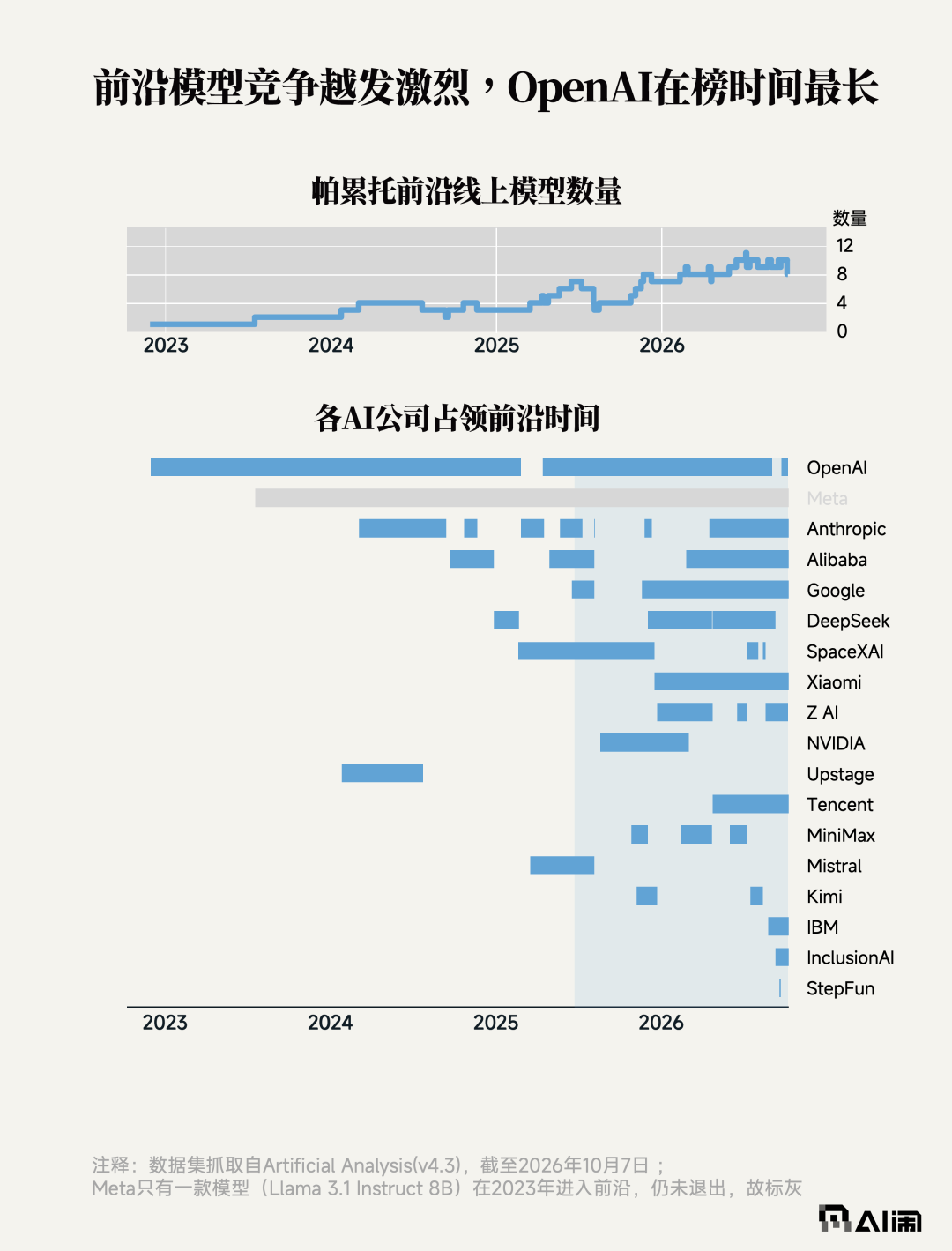
In recent months, the industry has coined "kill zone" for how quickly model advantages evaporate: a new model launches, ranks high, then gets pushed down by the next release cycle.
Over the past half-year, Zhipu AI, Alibaba's Qwen, StepFun, and Xiaomi have all emphasized performance-cost balance in their model launches; "Pareto optimality" here means improving one metric without significantly sacrificing another. Each DeepSeek flagship update resets developer and customer expectations on "good enough, worth switching?"
Wang Pu (pseudonym), who works at an inference services provider, said that in the mid-to-low price band, domestic model vendors typically release new models about two weeks ahead of DeepSeek — ensuring that by the time DeepShip drops, they've already completed a round of developer conversion and customer signings.
Wang Pu judged from backend traffic data that switching costs for individual users are basically zero. For enterprises, they're higher — "as short as one to two weeks, as long as half a year." "Customers and users have no loyalty to models."
The pressure on model companies thus isn't just being caught from behind, but converting any lead into lasting premium pricing.
Fan Zhang, founder of Yoolee AI, argues that platform pricing power typically comes from virtuous cycles: more users, more feedback and connections, more useful service. WeChat connects people to people; e-commerce platforms connect buyers to sellers. Today it's trivial to clone the exact same software, but without the network, there's no starting the cycle. Search engines like Baidu and Google have network effects too — more users, more click feedback, more accurate results.
Zhang is a serial entrepreneur in AI; his previous company was acquired by Zhipu AI, after which he joined as COO. In 2025 he founded Yoolee AI to explore converting general-purpose large models into enterprise-specific intelligence.
He believes general-purpose models haven't yet developed network effects of comparable strength. Vast quantities of daily conversations get logged by service systems, but can't necessarily be legally or directly used for foundation model training. And the same questions being asked repeatedly don't necessarily make the model answer better next time.
Anthropic and others are exploring long-horizon agentic tasks — letting models act across multiple steps and improve from outcomes — but whether such loops can form sustainable product advantages remains to be seen.
Large models — at least so far — have no network effects. Or more precisely, the user scale of foundation models hasn't yet stably converted into the self-reinforcing networks characteristic of traditional platforms.
In the long run, technical barriers get erased quickly too.
Investment Multiples Keep Rising
If models have no moats, why are the top few still standing relatively firm?
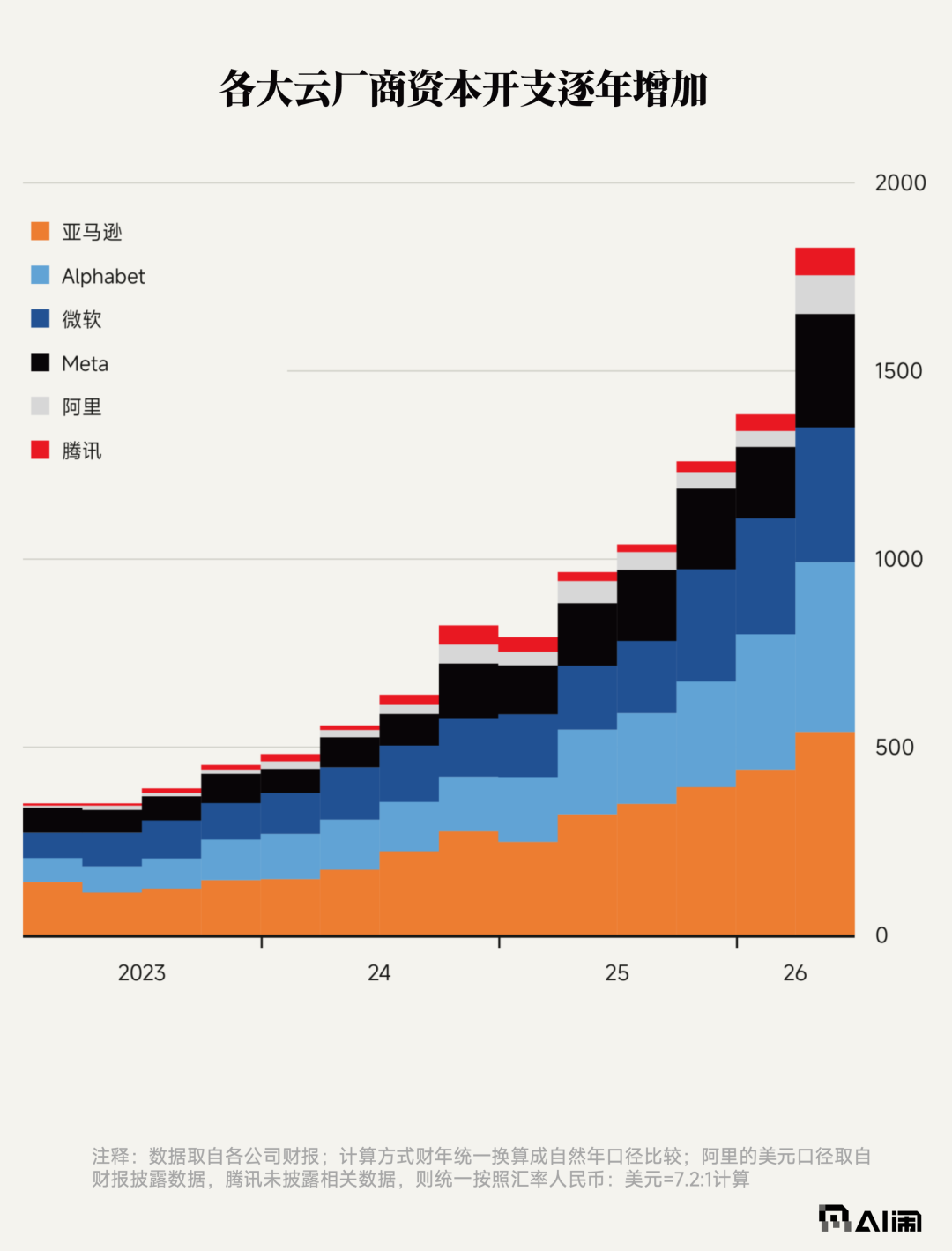
Many interviewees believe the more real threshold today is the resources required to enter this business at all: compute, data, capital, and the engineering systems to turn them into stable models. "The capital required is enormous."
After ChatGPT launched in late 2022, hundreds of models registered for approval in China, sparking the "hundred-model war." But only ten truly made it to the table: six startups — DeepSeek, Zhipu AI, Moonshot AI, ModelBest, StepFun, and 01.AI — plus four tech giants: ByteDance, Tencent, Alibaba, and Baidu.
An investor who previously backed a foundation model company predicted: no market can sustain ten foundation model players; resources are finite. "In the end, probably two or three survive."
Li Hua, the R&D engineer at a large model vendor, likens today's competition to "cyber civil engineering."
After a technology explosion comes a long industrial iteration phase, where everyone runs experiments in established directions.
At this stage, compute, data, and the full infrastructure stack — data pipelines, training environments, evaluation environments, inference environments, plus simulation environments for agents — form the industry's foundation.
The first layer of foundation is "compute and infrastructure."
As early as 2019, High-Flyer Quant invested nearly 200 million RMB to build its deep learning training platform "Firefly 1," with roughly 1,100 GPUs across nearly a basketball court's worth of space. Two years later, it spent 1 billion RMB on "Firefly 2," packing in about 10,000 NVIDIA A100s — server room alone approaching ten basketball courts.
Entering 2026, model bills have grown far more expensive.
SemiAnalysis, a U.S. AI industry research firm, estimated in its report China's AI Infrastructure Boom that ByteDance's China data center capacity is roughly 5.3 GW, Alibaba's about 3.9 GW, Tencent's about 2.4 GW.
Per public reports, leading startups like Zhipu AI and DeepSeek have compute plans around 1 GW — roughly corresponding to tens of thousands to over 100,000 high-end GPUs running at full load simultaneously.
By Bloomberg's conversion, a 1 GW data center in the U.S. costs approximately $30.7 billion, or about 200 billion RMB — roughly 200x the cost of "Firefly 2" back then.
The second layer of foundation is "data."
This year, training data requirements have exploded exponentially, with quality demands rising in tandem.
OpenAI began hiring software engineers and mathematicians to "manufacture data from scratch": engineers write programs solving complex logic problems; mathematicians calculate things like "how tall is a pyramid of one million basketballs."
OpenAI also purchased tens of thousands of Mac minis and Mac Studios within months — no monitors or keyboards, straight into server rooms — dedicated to RL training for computer-operating agents. This single capability likely cost hundreds of millions to over a billion dollars — at such scale that it directly moved Apple's earnings: fiscal Q3 2026 Mac revenue hit $10.4 billion, up 29% year-over-year, outpacing iPhone growth.
A data collection services provider told us the entire industry is now "extremely data-thirsty." "Data currently on the market probably meets about one percent of model demand."
The third layer is the "full infrastructure stack" of model production environments and team experience: how to recover when a 10,000-card cluster fails, how to adjust data ratios, how to do regression testing after model upgrades to ensure old capabilities don't regress. These can't be open-sourced or copied — more like an organization's "muscle memory."
One investor estimated that each full model iteration costs roughly double the previous one. Accordingly, resource investment scales up multiplicatively each round.
On next-generation model scale, market rumors circulate that Moonshot AI is developing an ultra-large model at 5-6 trillion parameters; Zhipu AI's next generation is in the 5 trillion range; DeepSeek is currently training a new model at roughly 2 trillion parameters, with Wenfeng Liang stating at a recent investor meeting that the company plans to push models to 8 trillion parameters next.
Kate (pseudonym), an R&D engineer at a small model company, told AI Nao: "It's not that we don't want to follow — we simply don't have the conditions to."
Faith Divergence
Another unquantifiable factor shaping competition: founders' AGI faith.
ByteDance founder Yiming Zhang now works out of Zhongguancun's Dinghao Tower, sitting among frontline researchers. Multiple interviewees consider Seed the domestic player most focused on "fundamental research" — still investigating pre-training data efficiency, scaling laws from small to large models, and other underlying questions. Seed also has among the highest concentrations of foundation model talent.
In Fan Zhang's view, "the founder is the first principle." Funding, hiring, alliances — all can be built. "Only a founder's faith and values cannot be constructed or purchased."
A founder's faith in technology ultimately rests on insight into that technology.
Thus, the divergence among the "six tiger cubs" of foundation models looks more like a divergence of faith.
In early 2025, Kai-Fu Lee saw scaling law slowing and made an investor-style judgment: application explosion and commercialization shakeout would coincide, and 01.AI's opportunity lay in finding PMF for To B large models.
Chuan Wang believed Baichuan needed tighter focus, so he bet on medical AI. He tried to find a middle path between realism and idealism — the intersection of general-purpose and vertical applications.
So in 2025, both companies simultaneously abandoned foundation model R&D.
An informed source cautioned against simply reading these choices as "conservatism causing them to fall behind": cash on hand, model capability, and customer opportunities at the time all constituted real constraints. "Abandoning AGI and ultimately falling behind are mutually causal; from that moment's perspective, it was a rational choice."
MiniMax founder Junjie Yan lived through AI bubble 1.0 at SenseTime. That experience taught him that companies with technology but no revenue structure struggle to survive. So "commercialization" is baked into MiniMax's DNA. He pursues models and products simultaneously, betting on both language and video models — but spreading bets across multiple lines also dispersed MiniMax's resources, leading some to criticize Yan as a leader who won't commit.
Zhipu AI was the earliest domestic player to persist in coding and the first to do on-premise private deployment. Zhang, who previously worked there, recalled Zhipu pouring massive budgets into buying GPUs: "From a lean startup perspective, wouldn't you buy incrementally?" It looked like an un-"scientific" decision path. This July, Zhipu AI founder Jie Tang announced new plans: over the next two years, advance the "Touch High" initiative — challenging current physical and algorithmic limits of technology, not pursuing short-term application monetization. "Professor Tang must see something I don't."
Moonshot AI founder Zhilin Yang was among Jie Tang's most prized students. The advisor-advisee relationship meant shared technical lineage and similar taste. Yang entered Tang's lab in his sophomore fall semester; the basics of "how to find problems, run experiments, write papers" were taught hands-on by Tang. He's equally a committed AGI believer. Kimi has publicly discussed multiple times their preference for "obsessive," "crazy-doing" people.
Zhang characterizes the spending by top model companies as: "You have to believe like a maniac, unconditionally, to have a chance — and speed is the only option."
"Keep running until you can't run anymore."
But faith doesn't directly convert to victory. Technical leads are indeed shortening; they must land as infrastructure, customer relationships, and organizational capability. Otherwise, even the most steadfast idealism risks becoming an expensive war of attrition.
Data visualization | AI Nao