Qiming Venture Partners' Alex Zhou: Riding the Tech Wave to Find AI's Commercial Inflection Point | WAIC 2026
Stick to the "half-step ahead" investment methodology, and only invest within your circle of competence.

Editor's Note
On July 19, the 2026 World Artificial Intelligence Conference (WAIC) "Qiming Venture Partners · Entrepreneurship and Investment Forum — From Compute Origin to Application Evolution" hosted by Qiming Venture Partners was successfully held at the Shanghai World Expo Center. In the opening keynote titled "Riding the Tech Wave: Finding the AI Inflection Point," Alex Zhou, Managing Partner of Qiming Venture Partners, first mapped out the historical trajectory of AI evolution. In his view, technological evolution has driven the marginal cost of an ever-expanding range of capabilities sharply downward, and the speed, intensity, and ferocity of AI's development have surpassed any previous technology wave in humanity's centuries-long industrial and information revolutions. Qiming Venture Partners attempts to survey the AI landscape from a "helicopter perspective," capturing live signals across four sectors: models, embodied intelligence, infrastructure, and applications. This article is an in-depth report from PEDaily, republished with authorization on the Qiming Venture Partners WeChat official account.
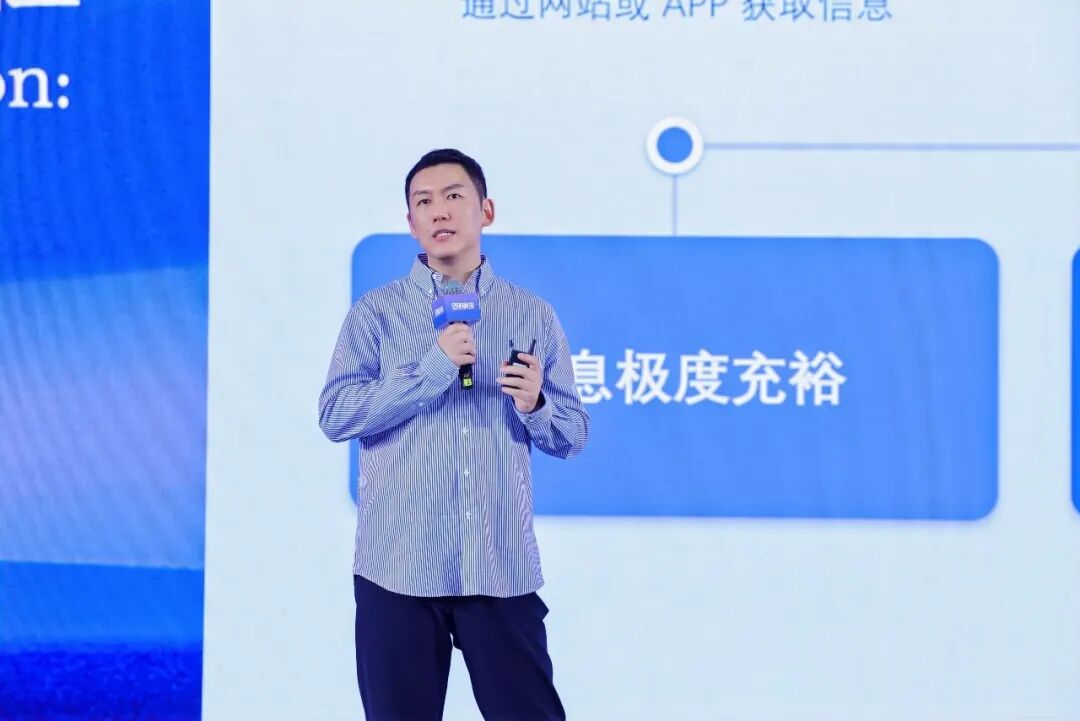
Where is the tide of AI industry flowing? On July 19, at the 2026 WAIC "Qiming Venture Partners · Entrepreneurship and Investment Forum," Qiming Venture Partners unveiled its Top 10 AI Outlooks for 2026, covering foundation models, embodied intelligence, AI infrastructure, and AI applications. The firm has done this for four consecutive years, and it has effectively become an industry bellwether. What the outside world may not know is that this leading VC has accumulated over 100 AI investments, with total committed capital of 12 billion RMB. Behind star projects like Zhipu AI, Biren Technology, StepFun, Keling AI, and Galaxy Universal, Qiming Venture Partners' presence looms large. Not long ago, Alex Zhou sat down with PEDaily for a conversation. "The crazier the times, the more we must heed history's lessons; the noisier the times, the more important philosophical thinking becomes." Witnessing the current AI spectacle firsthand, Zhou's words carry restraint and calm.
01
"I Receive Embodied Intelligence Pitch Decks Every Week" — Zhou's Observations
"Over the past year, embodied intelligence has killed more of my brain cells than anything else," Zhou remarked to PEDaily. As one of the earliest institutions to deploy capital in this赛道, Qiming Venture Partners has backed too many memorable projects to count: UBTECH, Yunji Technology, Galaxy Universal, Yuanling Robotics, Tashi Zhihang, and more.
Just recently, Zhou notched a string of IPOs from Biren Technology, Zhipu AI, Aixin Yuanzhi, and Yingying Valley. Precisely because of its long and deep cultivation of the赛道 — and the vastly larger sample of companies it has engaged with than most peers — Zhou's perspective cuts deeper.
Watching primary and secondary market attention flood into embodied intelligence, Zhou believes the core reason is that this may be the first industry in history to simultaneously command both massive market volumes: the shipment scale of smartphones, layered with the per-unit price of passenger vehicles. He did some quick math: assuming industry maturity, annual shipments could reach 1 billion units, with average selling prices around $30,000 (roughly 200,000 RMB) — placing this among the largest赛道s in two to three centuries of commercial history.
Regarding secondary markets' strong expectations for embodied intelligence companies, Zhou sees this as an inherent characteristic of public markets. When the first one or two companies in a major赛道 go public, scarcity alone grants them supernormal capital premiums — visibly expressed in stock prices and market caps that defy conventional logic. "The rush of embodied unicorns toward IPO is fundamentally about capturing this scarcity premium."

The spectacle is fresh in memory. According to incomplete statistics from the Qiming Venture Partners team, nearly 370 domestic embodied intelligence startups were founded in just the past two years, and to this day the team still receives two to three new pitch decks weekly.
Zhou candidly notes that the赛道 has become so crowded that many companies are increasingly indistinguishable, with increasingly homogeneous profiles: on one hand, founding teams cluster around university professors, "young prodigies," autonomous driving veterans, and AI model researchers; on the other, technical approaches converge on VLA or world models, while application scenarios overlap in industrial logistics, commercial services, and humanoid robotics.
He judges that without key breakthroughs in embodied intelligence — particularly without convergence on technical approaches — the industry will struggle to achieve scalable scenario deployment, ultimately relegated to dispensable demo projects. Once commercialization falls short of expectations, even successful listings could see market caps retreat to the low tens of billions, likely triggering another round of primary-secondary valuation inversions. "All we can do now is continue actively capturing every new project, ensuring comprehensive information gathering and persistent tracking of industry dynamics."
Zooming out to the global picture, embodied intelligence has now ascended to a main battlefield in great-power competition. After years of observation, Zhou has found that China's advantages concentrate in three areas: data, deployment scenarios, and hardware supply chain.
He revealed that several leading American tech giants are procuring data from Chinese companies — itself telling evidence of their own data inadequacy. By contrast, one embodied intelligence data platform company in Qiming Venture Partners' portfolio, merely four months post-founding, already holds orders in the billion-RMB range.
Moreover, China is home to manufacturing leaders like CATL and BYD, with abundant physical factories available for collaborative R&D, harboring vast industrial deployment scenarios. American leaders like Figure AI, by comparison, must travel to Europe to partner with BMW.
Most critically, among American embodied intelligence companies, only Figure AI and Tesla possess in-house full-system hardware capabilities. By Qiming Venture Partners' calculations, a humanoid robot comprises roughly 1,200 components, with over 90% of the supply chain concentrated in China's Yangtze River Delta and Pearl River Delta regions. "This enables domestic embodied companies to iterate simultaneously on both the physical body and the model — if a model algorithm doesn't match hardware execution, they can connect with suppliers and adjust within two weeks."
In conversation, Zhou also touched on the recently feverish world model space, with roughly 30-plus companies piling in. But he stated plainly that world models are not an entirely new赛道. These recent startups, compared to earlier companies following VLA technical approaches, show no fundamental difference in commercial deployment. "In other words, world models have merely been hyped into a hot concept in primary markets."
02
"Half a Step Ahead"
Latest Major Bet: Keling AI
This is precisely a telling microcosm.
Mapping it out, Qiming Venture Partners' AI deployment runs nearly the full industry stack: from chips bearing computational load, to foundation models driving innovation, through robots and vertical applications receiving technology transfer, extending to frontier convergence zones like life sciences — a systematic investment atlas has taken shape.
In fact, Qiming Venture Partners' systematic AI positioning began as early as 2013, when it successively backed future stars like Unisound, Megvii, UBTECH, and WeRide. Before GPT-3's emergence in 2020 and ChatGPT's global detonation in late 2022, the portfolio had already landed on critical nodes in the AI value chain: Zhipu AI, StepFun, Shengshu Technology, Infinigence AI, and Infinite Light Year.
PEDaily obtained a data set — to date, Qiming Venture Partners has accumulated over 100 AI investments, with total committed capital of 12 billion RMB, covering the full AI industry chain, making it among the most active investors in AI in China and even Asia.
As peers have observed, Qiming Venture Partners' AI investments seem to consistently get ahead of every critical inflection point, ultimately reaping time's rewards when the industry erupts.
This is no accident. Qiming Venture Partners has long emphasized a "half a step ahead" investment strategy — the golden window for tech investing typically appears when the "technology breakthrough point" is visible but the "market ignition point" has not yet arrived — requiring precise positioning between these two moments.
The firm's bet on Zhipu AI stands as the most vivid embodiment. As early as May 2020, when GPT-3 was released, Zhou and his team recognized that Scaling Law had been validated, technical approaches were converging, and the technology breakthrough node had arrived. At that time, ChatGPT had not yet launched, "large models" was virtually unheard of domestically, and "All in AI" was nowhere in venture capital discourse.
But based on acute judgment, Qiming Venture Partners co-led Zhipu AI's Series B1 round in December 2021, and added to its position in subsequent rounds. Today, Zhipu AI has become an undeniable global AI name, with its valuation at one point surpassing 1 trillion HKD.
Zhou cautions that investing before the technology breakthrough point is highly dangerous for investment institutions, as this stage is better suited to national laboratories for exploratory research. Even if an investor bets on the eventual winning technical approach, exit timelines could stretch to ten or fifteen years, far exceeding normal investment horizons.
He recalled a case from his Silicon Valley days: a hydrogen fuel cell company now valued above $70 billion. But regrettably, it was invested in by his previous firm in 2002; after more than a decade of accompaniment, they exited entirely, never reaching hydrogen's commercial explosion.
Over the past year, video model technology has achieved step-function growth. Specifically, new-generation video models like the globally viral Seedance 2.0 adopt MoE architecture with significantly enhanced intelligence, now supporting 4K resolution. Consequently, numerous Hollywood productions, or major brand advertisements for Coca-Cola and McDonald's, contain segments fully or partially AI-generated, relying on models' high-definition generation capabilities.
"Especially with world models empowering video generation — achieving object motion, collision effects,还原真实物理规律 — this was completely unpredictable a year ago."
In Zhou's view, the video model market is rapidly expanding, and at scale the division of labor will further specialize, with clear differentiation emerging in each player's commercial focus. Among leading players, two categories exist: three global tech giants — ByteDance's Seedance, Kuaishou's Keling, and Google's Veo; and a legion of converging startups, with each achieving roughly tenfold growth in business and revenue.
This赛道 also exemplifies Qiming Venture Partners' "half a step ahead" approach to perfection. As early as early 2024, Qiming Venture Partners participated in Shengshu Technology's angel round series, making an early move; the company recently completed a $500 million Series B+ round.
Almost simultaneously, Kuaishou's video generation large model Keling AI closed a financing round of nearly $3 billion, with post-money valuation potentially reaching $18 billion, with Qiming Venture Partners also appearing among its backers. On this investment, Zhou candidly admitted the valuation was extremely high, not a traditional VC project.
The reason for Qiming Venture Partners' firm commitment lies in its constructed competence circle in video generation: "The Keling team's understanding of video generation gave me confidence, and I firmly believe Keling's future returns will exceed everyone's expectations."
03
Top 10 AI Outlooks for 2026
Standing in the torrent of the AI era, some changes have far exceeded Zhou's expectations.
First, AI compute power. Currently, the overall market heat and incremental growth, and the speed of paradigm shift from training to inference demand, are deeply impressive. Zhou revealed that one domestic tech giant's compute budget ultimately landed at over 50 billion RMB last year, while this year's budget is six times that amount.
He emphasized that whether it's the wave of new-generation AI chip companies in primary markets, or secondary market hype around HBM memory and optical communication赛道s, all these booming trends are fundamentally driven by massive compute demand — the underlying logic is interconnected.
Second, the development speed of model technology itself, and the rapid consensus forming around models. He recalled that at last year's WAIC, Qiming Venture Partners' Top 10 Outlooks highlighted coding capability as important; today, code capability has become the core competitive dimension of large language models.
Correspondingly, AI application development has fallen short of Zhou's expectations: "The opening moves aren't what I envisioned last year." In 2025, he had been full of anticipation that this year would see AI empowering thousands of industries, with several promising 2C applications emerging as potential new Tencents, new ByteDances, new Alibabas. But from today's vantage, no 2C application has emerged that truly excites.
On this, Zhou conducted internal post-mortems. He noted that the first generation of AI applications founded a few years ago, mostly represented by conversational tools and emotional companions like Character.AI, are now showing fatigue, with the industry mired in product homogenization competition. User growth no longer matches the breakneck pace of prior years; overall growth in the past year has been sluggish. "The core issue is actually quite simple: the user growth and traffic logic of the internet era simply doesn't work for 2C products in the AI era."
"So, where to deploy the next check?" With 2026 more than halfway through, this is the question every investment institution faces. One of this year's WAIC highlights was Zhou, on behalf of Qiming Venture Partners' AI investment team, once again releasing the Top 10 AI Outlooks, including:
Foundation Models
Outlook 1: In the next 12-24 months, top-tier models will internalize most "external" capabilities, including task planning, tool use, multi-agent collaboration, and partial harness engineering capabilities.
Outlook 2: Multimodal models will further evolve toward interactive world modeling, becoming the critical technical path for AI to gain environmental perception, long-horizon planning, and large-scale deployment in the physical world.
Embodied Intelligence
Outlook 3: Leading robotics companies' effective data will leap from "ten-thousand-hour scale" in 2025 to "million-hour scale" in 2027, with human first-person perspective data dominating absolutely.
Outlook 4: Dexterous hands will see accelerated development; tactile-sensing dexterous hands will gradually mature with continuous cost reduction, forming high-low pairing with two-finger gripper solutions, and achieving gradual scaled penetration in complex manipulation scenarios.
AI Infrastructure
Outlook 5: AI compute demand center of gravity shifts to inference; storage, advanced process, and advanced packaging capacity are tightening at every layer. AI infrastructure will face structural shortage for the next two years, and compute asset reserves will be elevated to core strategy for AI enterprises.
Outlook 6: AI infrastructure will enter system-level competition, with competitive dimensions covering chips, interconnect, cooling, power supply, and other critical links. Within two years, new-architecture compute chips and super-node large clusters are expected to emerge, achieving low-cost, high-efficiency token production.
Outlook 7: Safety and trustworthiness will join product efficacy and token cost as the three key variables affecting enterprise AI large-scale deployment. Trustworthy AI will upgrade from optional to mandatory.
AI Applications
Outlook 8: In the next 12-24 months, AI application business models will accelerate away from internet-era freemium logic, shifting toward outcome-based and value-based pricing. The core metric for evaluating AI companies will shift from user scale to commercial value created per unit of intelligence cost.
Outlook 9: In the next 12-24 months, AI application commercialization will focus on vertical scenarios and high-paying users; efficiency-side (save time) will lead consumption-side (kill time) in breaking out first. As token costs continue falling and interaction paradigms innovate, phenomenal AI consumer applications will gradually emerge.
Outlook 10: In the next 12-24 months, AI-native organizations will move from concept to empirical validation, with a cohort of enterprises achieving several-fold per-capita output over traditional organizations.
"This year I've seen many irrational investment behaviors around me, all driven by market heat and FOMO." To this end, Zhou frequently stresses internally the importance of adhering to the "half a step ahead" investment methodology, operating only within one's competence circle: "Maintaining investment discipline is particularly important."
History has proven countless times that only by adjusting posture timely and accurately can one traverse turbulent time cycles. Now, a new act is opening in Chinese AI investing.
Source | PEDaily
Author | Bo Liu
Past Reviews
Qiming Weekly | Qiming Venture Partners Portfolio News Vol.26, 2026.8.18

Founded in 2006, Qiming Venture Partners currently manages 11 USD funds and 7 RMB funds, with total assets under management reaching $9.5 billion. Since inception, the firm has focused on investing in early and growth-stage outstanding enterprises in Technology and Healthcare.
To date, Qiming Venture Partners has invested in over 580 high-growth innovative companies, of which over 210 have listed on the NYSE, NASDAQ, Hong Kong Exchanges and Clearing, Shanghai Stock Exchange, and Shenzhen Stock Exchange, or exited through M&A and other means. More than 80 portfolio companies have become recognized unicorns or super-unicorns.
Many Qiming Venture Partners portfolio companies have grown into the most influential companies in their respective fields, including Xiaomi (01810.HK), Meituan (03690.HK), Bilibili (NASDAQ:BILI, 09626.HK), Zhihu (NYSE:ZH, 02390.HK), Roborock (688169.SH), Hesai Technology (NASDAQ:HSAI, 02525.HK), UBTECH (09880.HK), WeRide (NASDAQ:WRD, 00800.HK), HyperStrong (688411.SH), Insta360 (688775.SH), Unisound (09678.HK), Biren Technology (06082.HK), Zhipu AI (02513.HK), Gan & Lee Pharmaceuticals (603087.SH), Tigermed (300347.SZ, 03347.HK), Zai Lab (NASDAQ:ZLAB, 09688.HK), CanSino Biologics (688185.SH, 06185.HK), Schrödinger (NASDAQ:SDGR), MicroPort EP MedTech (688617.SH), Sanyou Medical (688085.SH), Amoy Diagnostics (300685.SZ), GenScript ProBio (688520.SH), Insilico Medicine (03696.HK), Hope Medicine, Yuanxin Technology, MediLink Therapeutics, LaNova Medicines, StepFun, and others.