Qiming Venture Partners | WAIC Qiming Venture Partners Entrepreneurship and Investment Forum—The Evolution from Computing Power Origin to Application Success Held in Shanghai

As one of the most forward-looking and influential venture capital firms in artificial intelligence, Qiming Venture Partners has hosted this forum for four consecutive years. It is also the only forum at this year's World Artificial Intelligence Conference initiated by a venture capital firm, designed to showcase and explore the latest breakthroughs in AI's evolution from underlying computing power to industrial application — all through the lens of innovation.

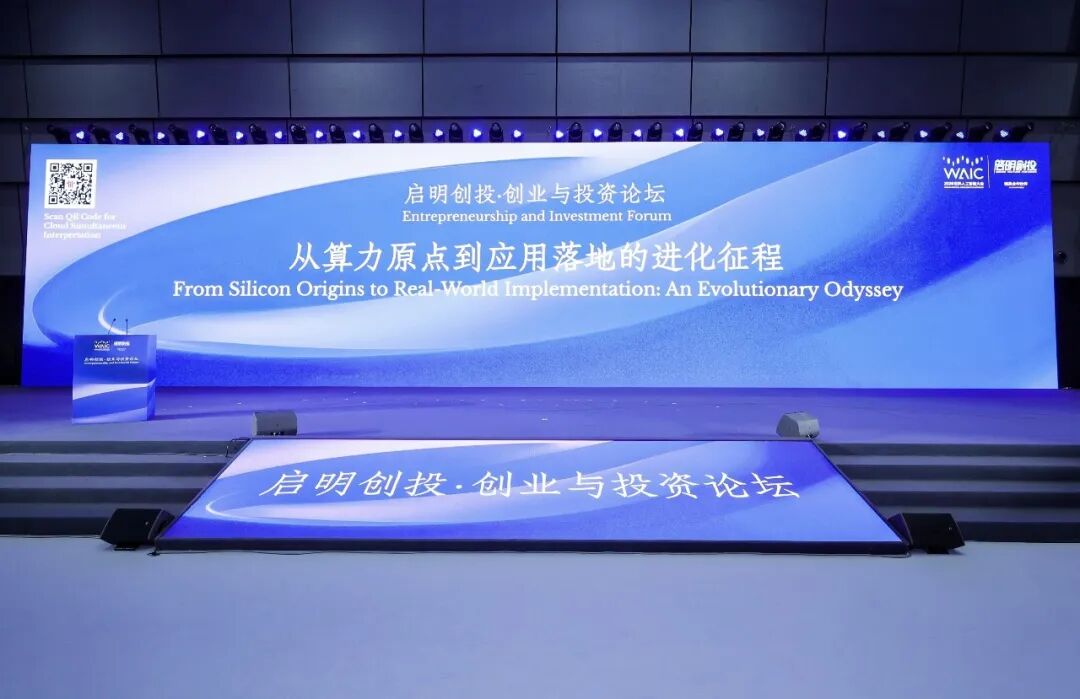
On July 19, the 2026 World Artificial Intelligence Conference (WAIC) "Qiming Venture Partners · Entrepreneurship and Investment Forum — The Evolutionary Journey from Compute Origins to Application Deployment," hosted by Qiming Venture Partners, was successfully held at the Shanghai World Expo Center.
This forum focused on the cutting-edge dynamics of AI in entrepreneurship and investment, bringing together top scientists, innovation leaders, and seasoned investors. It featured three keynote speeches, one in-depth dialogue, one panel discussion, and the release of three major core outputs. Together, participants decoded the paradigm shift of the large model era: exploring how the industry can move beyond mere parameter chasing toward extreme exploration of real-world scenarios, cost reduction and efficiency gains, and closed-loop business models. As one of the most forward-looking and influential venture capital institutions in AI, this marked Qiming Venture Partners' fourth consecutive year hosting the forum, and the only session at this year's WAIC initiated by a VC firm, designed to showcase and examine the latest breakthroughs in AI's journey from underlying compute to industrial deployment through an innovation lens.
Qiming Venture Partners began systematically investing in AI in 2013. To date, it has accumulated over 100 AI investments totaling 12 billion RMB. Through full-industry-chain coverage spanning underlying compute, foundation models, multimodal technology, Embodied Artificial Intelligence, and vertical applications, Qiming Venture Partners has successfully identified and accelerated multiple innovation benchmark companies, witnessing AI's entry into an era of intelligence explosion.
In his opening keynote titled "Crossing Technology Waves: Finding the Commercial Inflection Point in the AI Era," Alex Zhou, Managing Partner at Qiming Venture Partners, first mapped out the historical trajectory of AI evolution. In his view, technological evolution has dramatically driven down the marginal cost of increasingly capable systems. The speed, intensity, and magnitude of AI's development have already surpassed any technology wave in centuries of industrial and information revolutions. Qiming Venture Partners attempts to take a "helicopter view" of the AI landscape, capturing live signals across four major segments: models, Embodied Artificial Intelligence, compute, and applications.
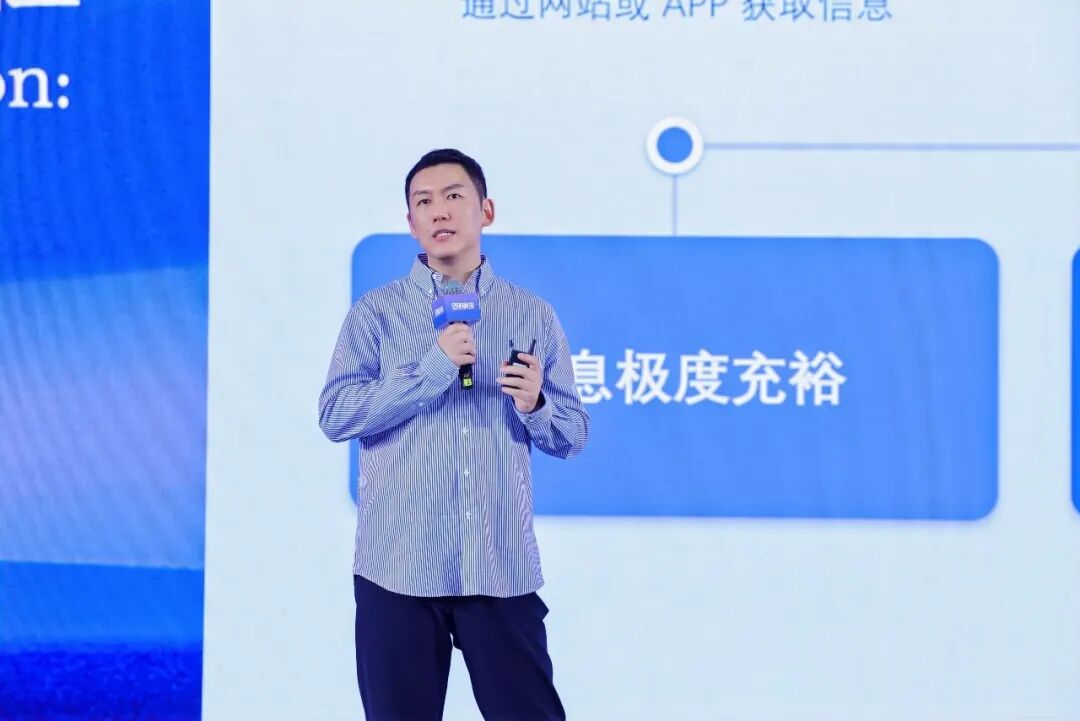
Alex Zhou, Managing Partner at Qiming Venture Partners
Looking back over the past year, Zhou observed that market consensus has rapidly formed around three major areas in the AI industry.
At the foundation model level, China's leading large models have continued closing the gap with US frontier models. The lag between top Chinese and American models has now narrowed to roughly two to three months. Overseas usage of Chinese models continues to climb, with daily token consumption growing 3,000-fold in just two and a half years — fitting Jevons paradox, where declining model costs instead unlock exponential compute demand. Meanwhile, the model layer is experiencing an unprecedented capital dividend period, with primary and secondary markets moving in tandem to accelerate investment in leading AI model enterprises.
In Embodied Artificial Intelligence, China holds advantages across the entire industry chain. At the hardware level, a full-size humanoid robot over 170cm tall contains roughly 1,200 components; aside from CPUs and GPUs, over 1,000 other parts can be manufactured in China. Beyond hardware advantages, China also possesses vast application scenarios across the most complete industrial categories, data collection advantages, and reserves of algorithm and engineering talent. Over the past two to three years, more than 300 companies have emerged in this space, with several surpassing 10 billion or even 20 billion RMB in valuation. The industry is heading toward intense competition.
At the compute level, the first wave of domestic compute pioneers solved the "eating enough" problem. Now, multiple new technical-route AI chips are entering from inference and other points to tackle the "eating well" challenge. Storage, advanced process nodes, and advanced packaging capacity remain in tight supply, with compute reserves upgrading to core strategic assets for enterprises. Competition no longer centers on single chips alone, but extends to the full system dimension of interconnect, cooling, and power supply. Meanwhile, security and trustworthiness are no longer optional add-ons — they now stand alongside product performance and token cost as the three core metrics for large-scale AI deployment.
In contrast to these three areas of consensus, the "opening moves" of AI applications have diverged from expectations. Zhou believes that although China is the world's fastest-growing market for generative AI applications, with 515 million users, commercialization has lagged market expectations. The traditional internet and mobile internet model of "scale first, monetize later" no longer applies — AI user expansion continuously increases token costs, with no marginal cost advantage. Merely improving experiences on existing businesses won't create something big; only business models that reconstruct supply-demand relationships can birth phenomenon-level products. "In the next stage, AI will move from technical feasibility to sustainable value. Building a sustainable commercial ecosystem is the core prerequisite for phenomenon-level products," Zhou stated.
Subsequently, Zhou and Qiming Venture Partners Executive Director Hu Qi jointly released Qiming Venture Partners' 2026 Top 10 AI Outlooks:
Foundation Models
Outlook 1: In the next 12-24 months, top models will internalize most "external" capabilities, including task planning, tool use, multi-agent collaboration, and partial harness engineering capabilities.
Outlook 2: Multimodal models will further evolve toward interactive world modeling, becoming the key technical path for AI to gain environmental perception, long-term planning, and large-scale deployment in the physical world.
Embodied Artificial Intelligence
Outlook 3: Effective data at leading robotics companies will leap from "ten-thousand-hour scale" in 2025 to "million-hour scale" by 2027, with human first-person perspective data dominating absolutely.
Outlook 4: Dexterous hands will see accelerated development; tactile-sensing dexterous hands will gradually mature and continue cost reduction, forming high-low pairing with two-finger gripper solutions and achieving scaled penetration in complex manipulation scenarios.
AI Infrastructure
Outlook 5: The center of gravity for AI compute demand is shifting toward inference. Storage, advanced process nodes, and advanced packaging capacity are tightening at every layer. Over the next two years, AI infrastructure will face sustained structural shortages, with compute asset reserves upgrading to core strategy for AI enterprises.
Outlook 6: AI infrastructure will enter a system-level competition stage, with competitive dimensions covering chips, interconnect, cooling, power supply, and other key links. Within two years, new-architecture compute chips and ultra-node large clusters are expected to emerge, enabling low-cost, high-efficiency token production.
Outlook 7: Security and trustworthiness will stand alongside product performance and token cost as the three key variables affecting enterprise AI large-scale deployment. Trustworthy AI will upgrade from optional to mandatory.
AI Applications
Outlook 8: In the next 12-24 months, AI application business models will accelerate away from the freemium logic of the internet era, shifting toward outcome-based and value-based pricing. The core metric for evaluating AI companies will shift from user scale to business value created per unit of intelligence cost.
Outlook 9: In the next 12-24 months, AI application commercialization will focus on vertical scenarios and high-paying users. The efficiency side (save time) will lead the consumer side (kill time) in breaking out first. As token costs continue declining and interaction paradigms innovate, phenomenon-level AI consumer applications will gradually emerge.
Outlook 10: In the next 12-24 months, AI-native organizations will move from concept to empirical proof, with a batch of enterprises achieving several-fold per-capita output compared to traditional organizations.
As a world-leading multimodal model and world model R&D team, Shengshu Technology open-sourced the first unified-architecture world action model based on video generation large models in 2025. Luo Yihang, Co-founder and CEO of Shengshu Technology, shared his team's latest explorations in multimodal generation and world models in his keynote speech "General World Models: Bridging Virtual and Physical, Foundation for Physical Intelligence."
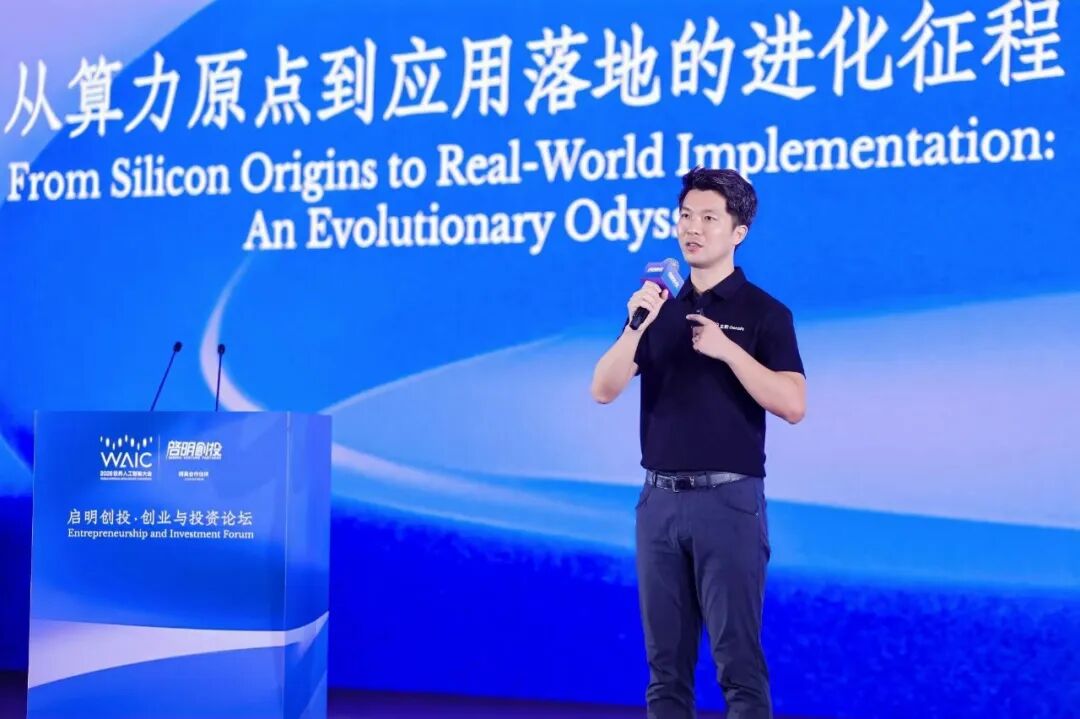
Luo Yihang, Co-founder and CEO of Shengshu Technology
"AI is moving from understanding and generating the digital world to understanding and acting in the real physical world, and world models are the core foundation of this transformation," he stated. "Shengshu Technology is the world's first company to achieve unified general world models for both digital and physical worlds, building general world models from understanding to generation to action, providing intelligence for digital creation and physical action."
Facing the production-grade Agent era, foundation model development is shifting from pursuing capability ceilings to a new stage that balances inference efficiency, engineering reliability, and deployment costs. In his keynote speech "The Convergence of AI Infrastructure and Model Capabilities," Yibo Zhu, Co-founder and CTO of StepFun, stated that entering the Agent era, the core objective of AI infrastructure is shifting from merely reducing inference costs to simultaneously pursuing optimal intelligence, speed, and cost.
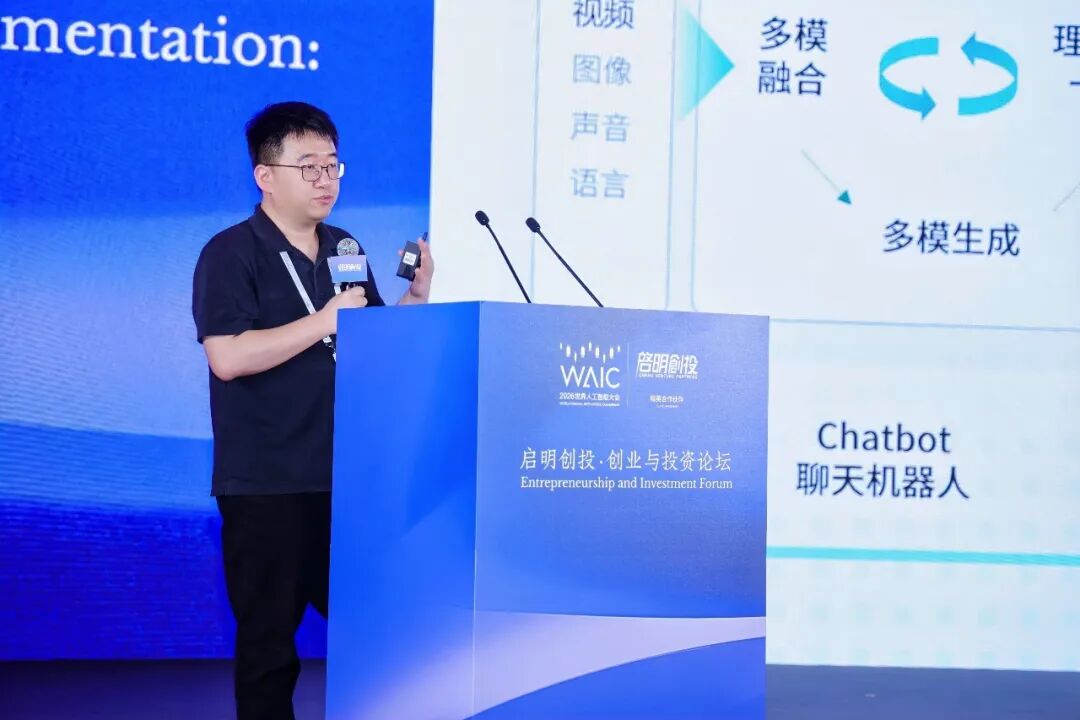
Yibo Zhu, Co-founder and CTO of StepFun
He believes that as token demand grows rapidly and model scales continue expanding, relying solely on compute expansion is unsustainable. The industry needs to drive co-design of models, systems, and chips to unlock more intelligence per unit of compute. For intelligent terminals, infrastructure must further support edge-cloud collaboration, long-running environments, and more — enabling efficient coordination between real-time edge execution and complex cloud inference to become the key foundation for true large-scale Agent deployment.
Subsequently, Tang Wenbin, Founder and CEO of Yuanli Lingji, announced the latest global progress of RoboChallenge, including the latest results from the Embodied Foundation Model Leaderboard, achievements from real-robot challenges at top international academic conferences including CVPR and ICRA, and the latest progress on EAI Bench officially launched at the Geneva AI for Good Global Summit. He also announced a new batch of RoboChallenge international organizing committee members and ecosystem partners. Relying on an open, shared real-robot evaluation platform, connecting models, embodiments, developers, and industry partners, they aim to jointly build a global open ecosystem for Embodied Artificial Intelligence and drive China's Embodied Artificial Intelligence technology, standards, and ecosystem onto the international stage.
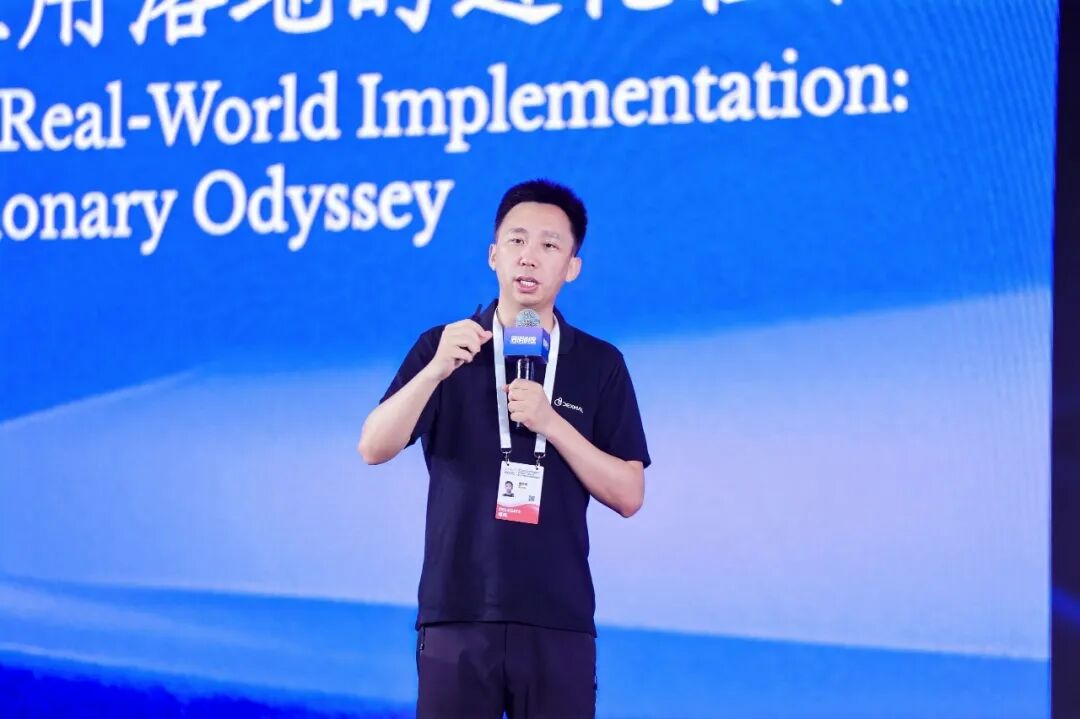
Tang Wenbin, Founder and CEO of Yuanli Lingji
"Yuanli Lingji, together with Qiming Venture Partners, will build RoboChallenge into a public-interest, neutral evaluation platform for Embodied Artificial Intelligence," Tang Wenbin stated. "We insist on driving innovation through evaluation and promoting standard construction through openness, actively facilitating deep industry-university-research collaboration. We want more scenario parties to clearly see the technical boundaries of current embodied models, accelerating the push for robots to enter reality."
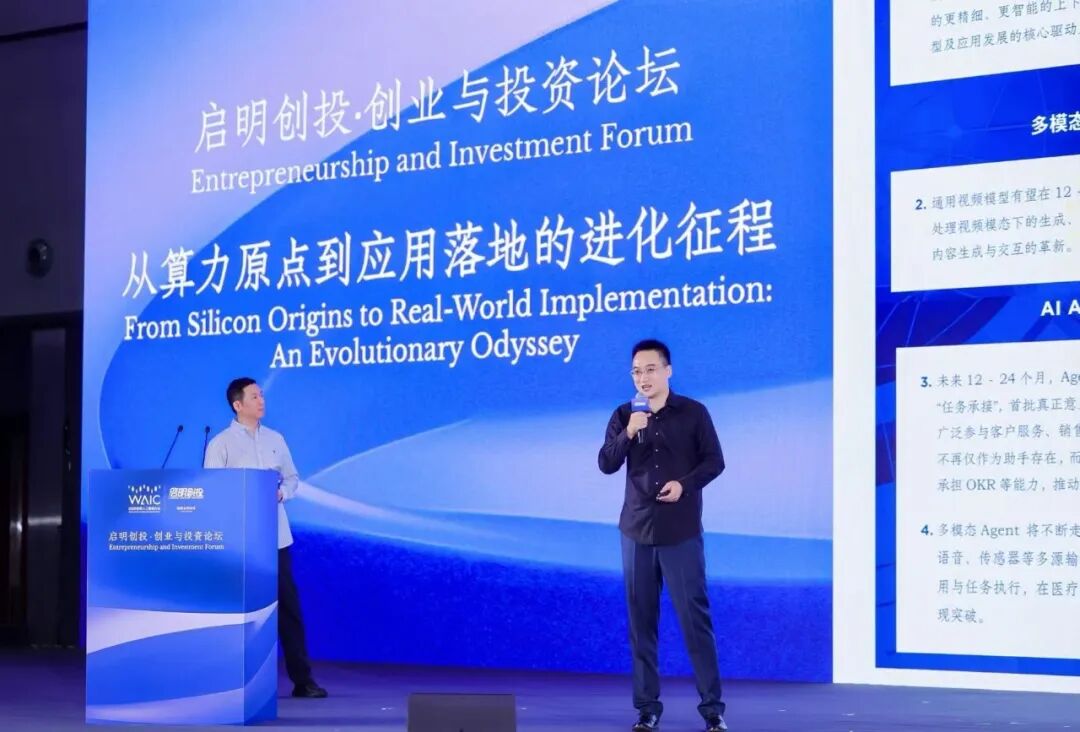
Jieti Medical, as a domestic leader in invasive brain-computer interfaces, has had its brain-computer interface system enter the National Medical Products Administration's "green channel" for innovative medical devices. In a dialogue with William Hu, Managing Partner at Qiming Venture Partners, Zhao Zhengtuo, Founder of Jieti Medical, shared the latest progress in brain-computer interfaces.
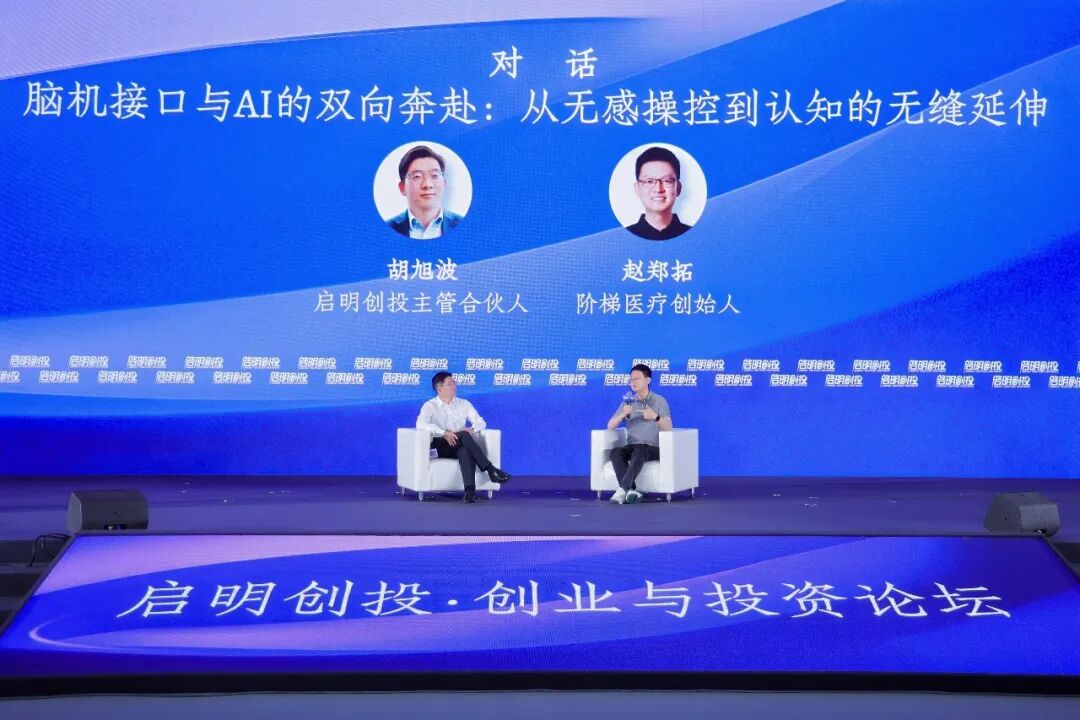
William Hu, Managing Partner at Qiming Venture Partners, and Zhao Zhengtuo, Founder of Jieti Medical
He believes that brain-machine interfaces (BMI) are the "critical hub" for breaking through human biological limits and enabling efficient human-machine connection. He offered a highly industry-valuable insight: brain-computer interfaces will become a key data source for the evolution of Embodied Artificial Intelligence. Through extreme engineering of the invasive pathway, Jieti Medical enables subjects to precisely control physical devices through thought — not only replacing impaired functions, but also making it a trainer for the "brain" of Embodied Artificial Intelligence, efficiently producing scarce high-precision control data from real-world scenarios. He predicts that in 8-10 years, as invasive brain-computer interface systems achieve "earring-grade" miniaturization and reduced invasiveness, this technology will likely enter ordinary people's lives.
Currently, AI technology iteration continues accelerating, with industrial application scenarios fully deploying. Opportunities and challenges accompanying technological innovation are becoming increasingly diverse and complex, and global AI governance is entering a development process of rule refinement, model innovation, and comprehensive collaboration. Wang Dong, Executive Director of Peking University's Institute for Global Cooperation and Understanding and Professor, on behalf of the research team, released the report "The International Landscape of AI Governance." Supported by Qiming Venture Partners and grounded in the broader trend of global digital transformation, this report provides solid theoretical support and practical reference for bridging governance gaps between countries, building multilateral dialogue bridges, and building international consensus on safe AI development.
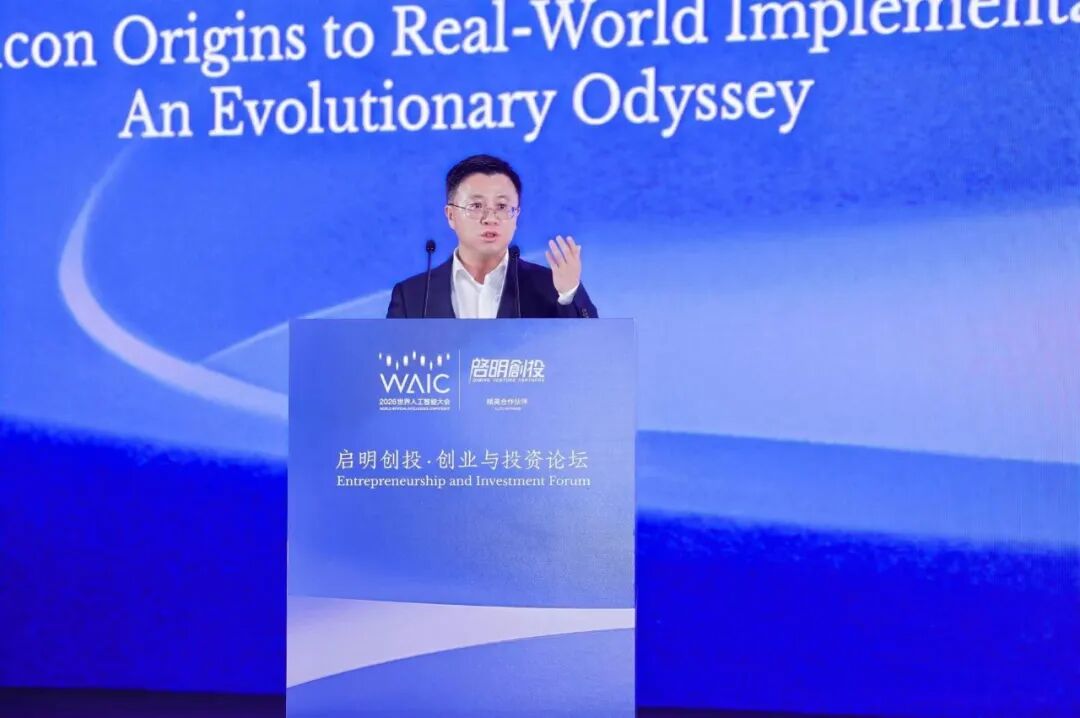
Wang Dong, Executive Director of Peking University's Institute for Global Cooperation and Understanding and Professor
The report first categorizes current AI risks into systemic risks, malicious use risks, and malfunction risks, and proposes three types of governance tools for these risks: ethical guardrails, technical guardrails, and regulatory guardrails. Through comparing regional governance similarities and differences, the report finds that current global AI governance exhibits characteristics of "converging principles, diverging paths." Looking ahead, the international community should promote dynamic governance models that can adapt to rapid technological iteration, while forming a global AI collaborative governance system that balances innovation vitality with safety and controllability. The research team hopes that while clearly presenting global consensus, divergence, and development trends in AI governance, this report will provide useful reference for China's participation in and leadership of relevant international governance, as well as rule dialogue and cultural exchange.
In the panel discussion "AI Compute Reconstruction: The Innovation Path of AI Chips from Cloud to Edge," Chen Nan, Executive Director at Qiming Venture Partners, served as moderator. He was joined by Chen Zhijian, Founder and CEO of SpacemiT; Wu Qiang, Founder and CEO of Houmo AI; and Liu Ruiju, General Manager of Edge & Terminal Computing Product Line at Axera, three leaders of AI chip companies riding the edge compute wave. They systematically decoded how edge compute ignites qualitative intelligence transformation in hardware including robots, consumer terminals, and automobiles, kicking off the second half of the campaign for AI's comprehensive takeover of the physical world.
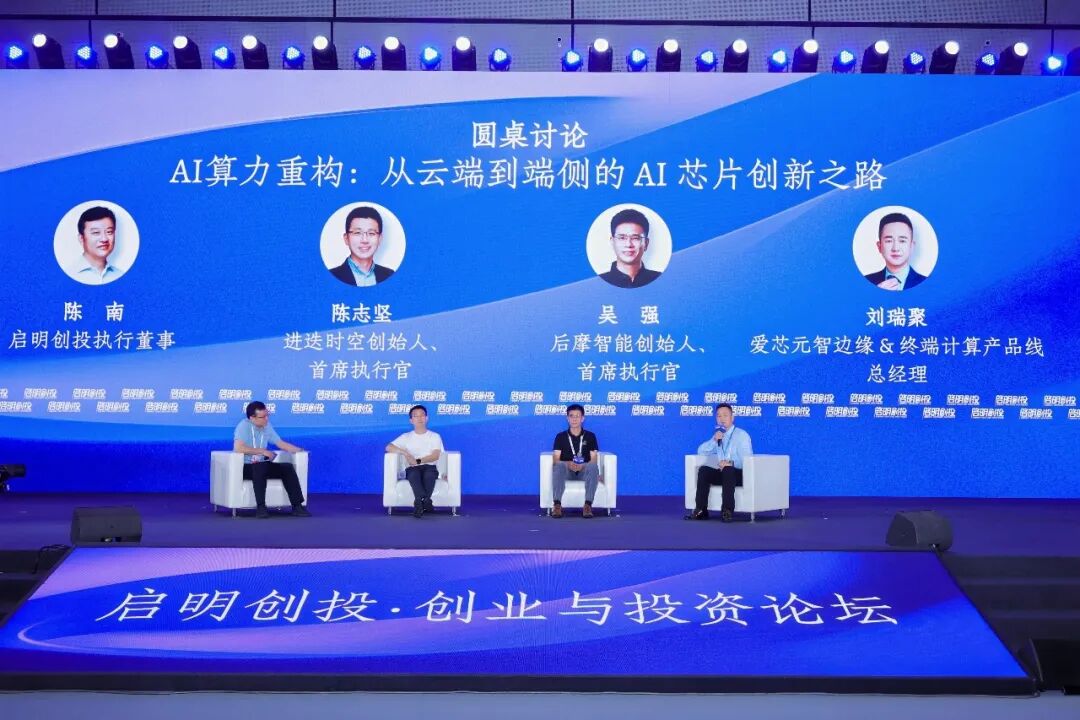
Chen Nan, Executive Director at Qiming Venture Partners; Chen Zhijian, Founder and CEO of SpacemiT; Wu Qiang, Founder and CEO of Houmo AI; and Liu Ruiju, General Manager of Edge & Terminal Computing Product Line at Axera
Chen Zhijian, Founder and CEO of SpacemiT, stated: "Edge-cloud integration is reconstructing the AI compute landscape, and the open RISC-V architecture may become the key path for domestic chips to break through global competition. Over the next 5-10 years, cloud and edge compute will not develop in isolation — humanoid robots and local offline large model inference will open high-value incremental markets on the edge side. The opportunities in this wave of AI compute are unprecedented. Domestic chip companies have the potential to leverage massive local scenarios to complete technology and ecosystem accumulation, producing domestic semiconductor design leaders comparable to international heads, achieving global breakthroughs from edge to data center across all scenarios."
Wu Qiang, Founder and CEO of Houmo AI, believes that large models are currently accelerating migration from cloud to edge, spawning massive new must-have application scenarios. However, running billion-parameter large models locally places extreme demands on chip compute, power consumption, and cost — "high compute, low power, low cost" has become an impossible triangle, creating structural development opportunities for edge AI chips. Addressing industry pain points, Houmo AI focuses on large model edge AI chips, using compute-in-memory innovative architecture to fundamentally solve data movement bottlenecks, crack the industry triangle contradiction, and help large models land in various intelligent terminals. With domestic edge AI industry developing rapidly and broad market prospects, Houmo AI will leverage its core technology advantages and rich product deployment experience to fully drive domestic edge AI industry into the world's top tier.
Liu Ruiju, General Manager of Edge & Terminal Computing Product Line at Axera, stated that as an edge and terminal AI inference chip company, Axera builds a "perception + compute" AI compute foundation with self-developed NPU and AI-ISP core technologies, accumulating deep deployment experience and user-friendly toolchains across fragmented markets through multiple generations of iteration. The key to edge-side competition lies in effective compute under cost, power consumption, and size constraints, not extreme compute. Relying on the positive cycle of "scenarios - data - models - compute" brought by China's massive industry chain and consumer market, the company will continue launching high energy-efficiency chips, empowering Embodied Artificial Intelligence, AI Agents, and more, letting AI truly land across thousands of industries. In the future, edge compute companies that meet industry needs will inevitably be in China.

On the evening of July 19, Qiming Venture Partners' AI investment team invited entrepreneurs, investors, industry experts, and ecosystem partners in the AI space to an "AI VC Truth-Telling Afterparty." The event specially invited 10 seasoned industry guests to engage in "soul-searching Q&A" around core topics including "the future of AI applications," "balancing growth and cost," and "online social in the AI era." Guests shared their industry observations and market judgments, with different viewpoints colliding. Over 120 participants also gathered for active interactive discussion, creating a lively atmosphere.
PAST REVIEWS
Qiming Honors | 5 Qiming Venture Partners Investors Named to 2025 Forbes China Midas List
Qiming Venture Partners was founded in 2006. Currently, Qiming Venture Partners manages 11 USD funds and 7 RMB funds, with total assets under management reaching $9.5 billion. Since its founding, it has focused on investing in outstanding early and growth-stage companies in Technology and Healthcare.
To date, Qiming Venture Partners has invested in over 580 high-growth innovative companies, of which more than 210 have listed on the New York Stock Exchange, NASDAQ, Hong Kong Exchanges and Clearing Limited, Shanghai Stock Exchange, and Shenzhen Stock Exchange, or exited through M&A and other means. Over 80 companies have become recognized unicorns or super-unicorns in their industries.
Many companies in Qiming Venture Partners' portfolio have grown into the most influential companies in their respective fields, including Xiaomi (01810.HK), Meituan (03690.HK), Bilibili (NASDAQ:BILI, 09626.HK), Zhihu (NYSE:ZH, 02390.HK), Roborock (688169.SH), Hesai Technology (NASDAQ:HSAI, 02525.HK), UBTECH (09880.HK), WeRide (NASDAQ:WRD, 00800.HK), HyperStrong (688411.SH), Insta360 (688775.SH), Unisound (09678.HK), Biren Technology (06082.HK), Zhipu (02513.HK), Gan & Lee Pharmaceuticals (603087.SH), Tigermed (300347.SZ, 03347.HK), Zai Lab (NASDAQ:ZLAB, 09688.HK), CanSino Biologics (688185.SH, 06185.HK), Schrödinger (NASDAQ:SDGR), MicroPort EP MedTech (688617.SH), Sanyou Medical (688085.SH), Amoy Diagnostics (300685.SZ), GenScript ProBio (688520.SH), Insilico Medicine (03696.HK), Hope Medicine, Yuanxin Technology, MediLink Therapeutics, LaNova Medicines, StepFun, and others.