Qiming Stars | WeRide and Shenzhen Bus Group Launch B888 Autonomous Bus Route
As Shenzhen's first L4 autonomous bus route cutting through a bustling central business district, the new B888 line faces an extraordinarily complex traffic environment. Safely and efficiently navigating dense streams of motor vehicles, non-motorized traffic, and pedestrians represents a high-caliber demonstration of WeRide's autonomous driving technology.

Recently, Qiming Venture Partners portfolio company WeRide (NASDAQ: WRD) announced a partnership with Shenzhen Bus Group to officially launch Shenzhen's first L4 autonomous bus route — the B888 line (hereinafter referred to as the "B888 New Route") — in Luohu District. This also marks Shenzhen's first autonomous shuttle project operating in a bustling downtown area.
The B888 New Route runs between Luohu Port and MixC World Food, with citizens able to book free rides through the "Shenzhen Bus Travel" mini-program. The upbound and downbound routes span approximately 6.6 km and 4.3 km respectively, taking about 30-35 minutes, passing through core commercial and cultural landmarks including Guomao, Diwang Tower, Grand Theater, and MixC World. Starting from Luohu Port, Shenzhen's gateway to the outside world, the route offers domestic and international travelers an excellent window to experience the world's most cutting-edge autonomous driving technology.
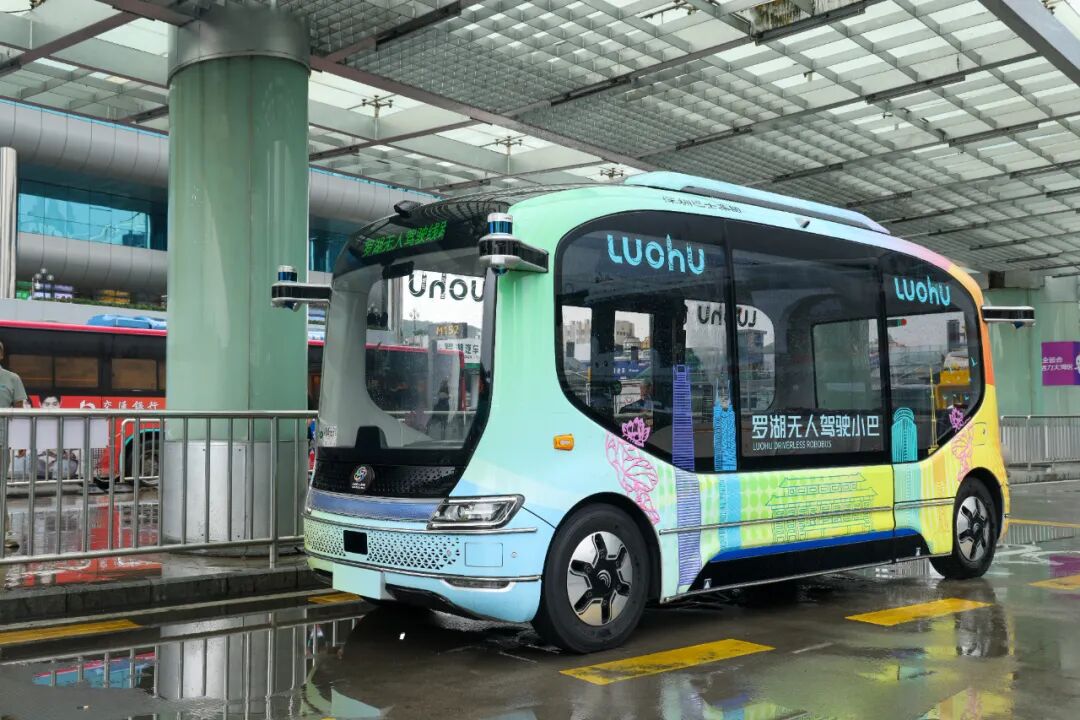
As Shenzhen's first L4 autonomous bus route traversing a busy CBD, the B888 New Route faces an extremely complex traffic environment. Achieving safe and efficient operation amid dense motor vehicle, non-motor vehicle, and pedestrian flows represents a high-caliber demonstration of WeRide's autonomous driving technology. The WeRide Mini Robobus integrates more than 20 sensors including LiDAR and high-definition cameras, enabling 360-degree perception with no blind spots and detection range of up to 200 meters. It can accurately identify lane markings and traffic signs, precisely detect traffic light states, handle special scenarios such as occluded, flickering, or newly added lights, and strictly obey traffic regulations.
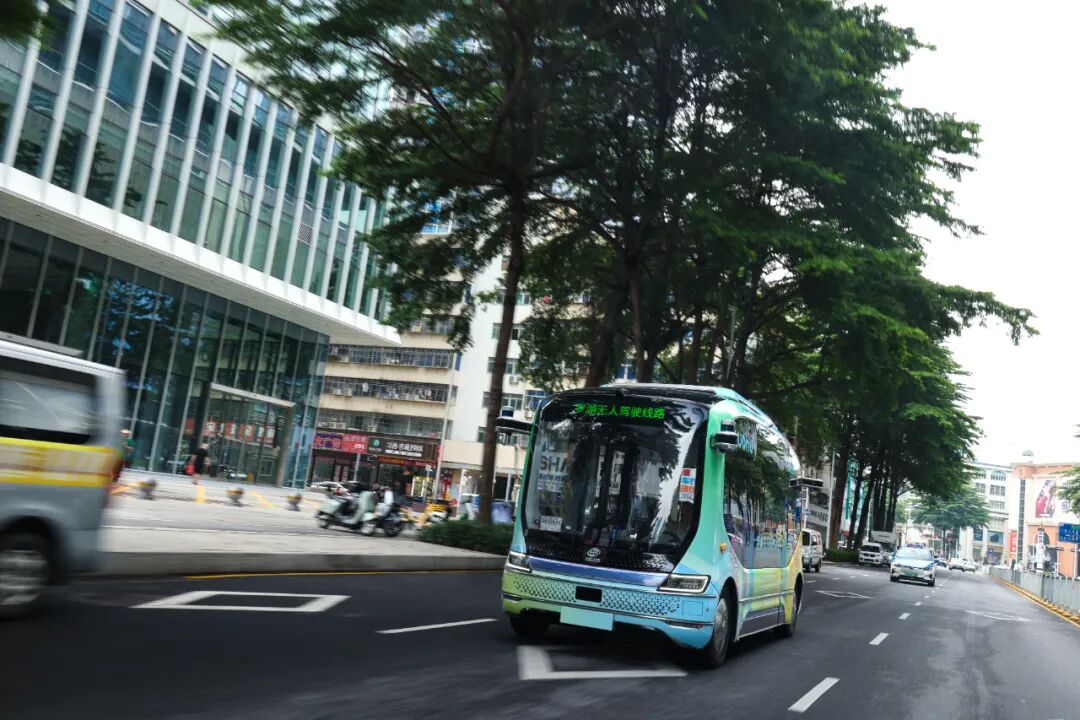
In interactions with other road users, the WeRide Mini Robobus can predict the movement trajectories of various obstacles in advance, then plan its own direction and acceleration/deceleration decisions to achieve efficient and safe interactions. Even at challenging intersections such as Jia Bin Road crossing and Renmin South Road junction — which pose significant difficulty for human drivers — the WeRide Mini Robobus navigates with ease.
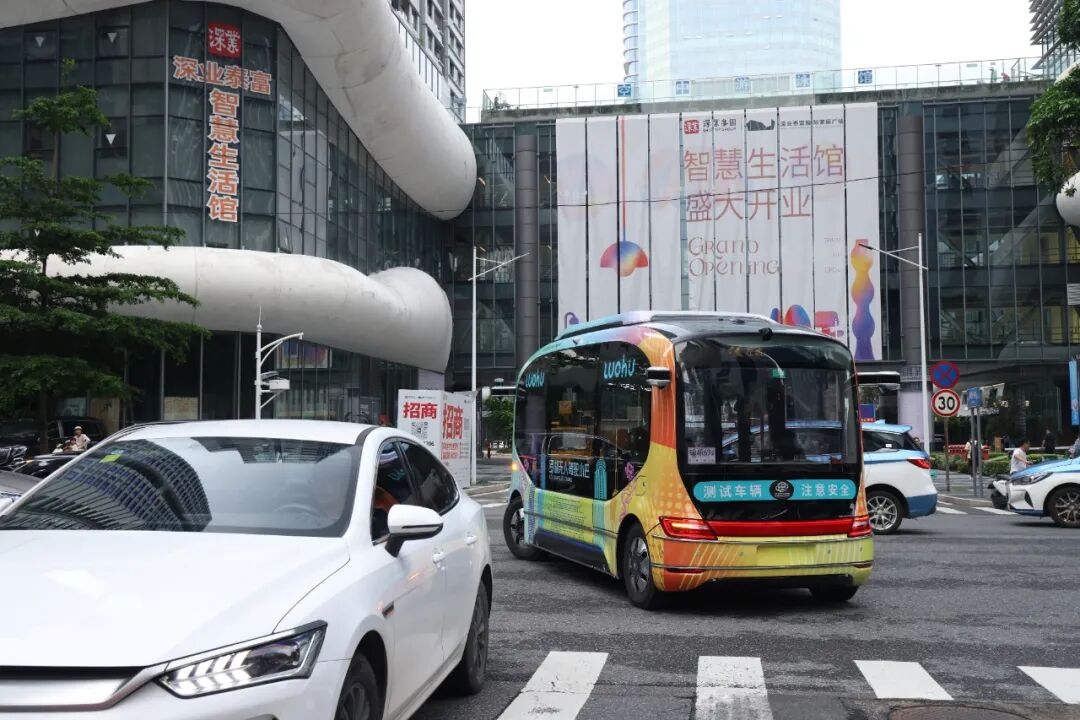
The WeRide Mini Robobus smoothly completes an unprotected left turn at an unplanned intersection
For passenger boarding, the WeRide Mini Robobus can enter pull-over mode in advance based on stop locations, dynamically adjusting its parking strategy in real time according to surrounding conditions to ensure it stops at the optimal position for passenger access without obstructing traffic. Furthermore, as an L4 autonomous vehicle, the WeRide Mini Robobus employs redundant designs across sensors, computing units, chassis-by-wire, and algorithms, with backup systems that remain operational in extreme circumstances to ensure maximum safety.
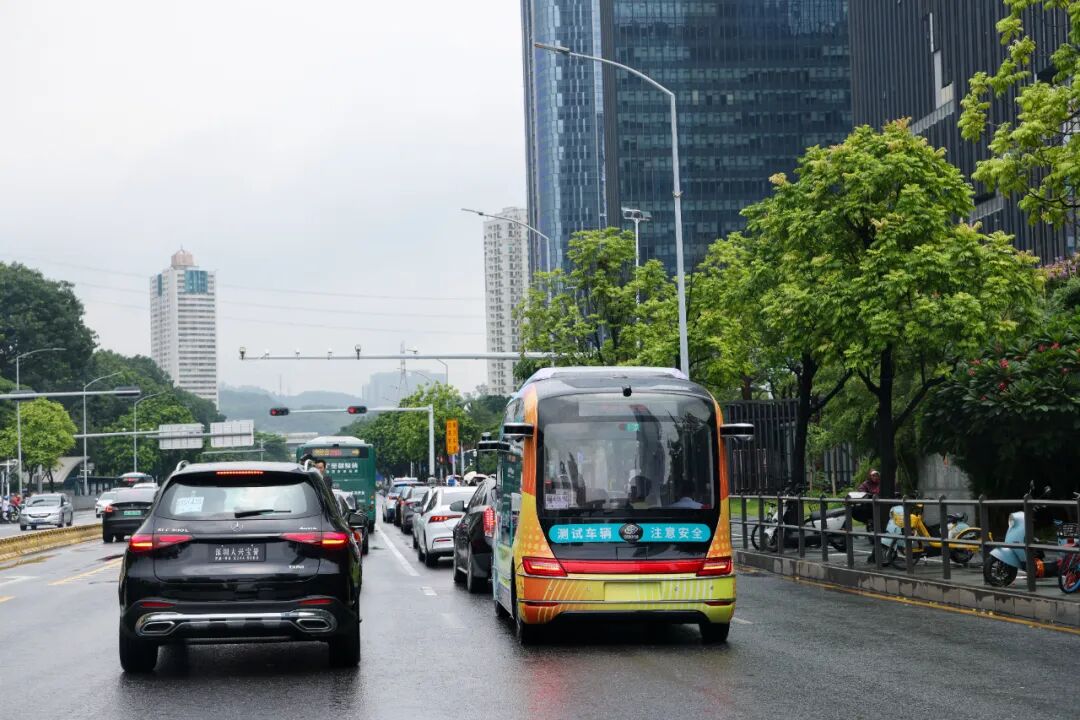
The B888 route is a key project in Shenzhen's implementation of the "20+8" industrial cluster strategy and the High-Quality Development Implementation Plan for Intelligent Connected Vehicles, demonstrating more possibilities for smart transportation in Shenzhen.
The WeRide Mini Robobus has currently been deployed for testing and operation in nearly 30 cities globally, including Shenzhen, Guangzhou, Beijing, Singapore, Abu Dhabi, Riyadh, Paris, and Zurich. Going forward, WeRide will continue to work closely with public transportation partners worldwide to further expand the regular application of the WeRide Mini Robobus in diverse scenarios including core urban areas, residential neighborhoods, and tourist attractions, accelerating the integration of autonomous driving technology into more cities and serving more users.
Past Highlights
Qiming Stars | WeRide Named to Wealth China Tech 50 2025

Founded in 2006, Qiming Venture Partners currently manages 11 USD funds and 7 RMB funds, with total committed capital reaching $9.5 billion. Since its inception, the firm has focused on investing in outstanding early- and growth-stage companies in Technology and Healthcare.
To date, Qiming Venture Partners has invested in over 580 high-growth innovative companies, of which more than 210 have listed on the New York Stock Exchange, NASDAQ, Hong Kong Exchanges and Clearing Limited, Shanghai Stock Exchange, and Shenzhen Stock Exchange, or exited through M&A and other means. More than 80 portfolio companies have become recognized unicorns or super-unicorns.
Many Qiming Venture Partners portfolio companies have grown into the most influential companies in their respective fields, including Xiaomi (01810.HK), Meituan (03690.HK), Bilibili (NASDAQ: BILI, 09626.HK), Zhihu (NYSE: ZH, 02390.HK), Roborock (688169.SH), UBTECH (09880.HK), WeRide (NASDAQ: WRD), Insta360 (688775.SH), Gan & Lee Pharmaceuticals (603087.SH), Tigermed (300347.SZ, 03347.HK), Zai Lab (NASDAQ: ZLAB, 09688.HK), CanSino Biologics (688185.SH, 06185.HK), Schrödinger (NASDAQ: SDGR), MicroPort EP MedTech (688617.SH), Sanyou Medical (688085.SH), Amoy Diagnostics (300685.SZ), Berry Genomics (000710.SZ), Sinocelltech (688520.SH), Yuanxin Technology, Insilico Medicine, MediLink Therapeutics, LaNova Medicines, Zhipu AI, StepFun, Biren Technology, among others.