Qiming Venture Partners' Alex Zhou: Zhipu AI's Successful IPO Is a Huge Confidence Boost for China's Long-Term Sectors
Qiming Venture Partners adheres to a "half-step ahead" investment methodology: positioning itself before a major wave coalesces into explicit consensus, yet not so early that it enters purely unconverged scientific exploration. This demands deep industry understanding from the firm and a powerful "radar" network to capture convergence signals.

According to IPO Zaozhidao, Beijing Zhipu Huazhang Technology Co., Ltd. (hereinafter referred to as "Zhipu AI") officially listed on the Main Board of the Hong Kong Stock Exchange on January 8, 2026, under the stock code "2513," becoming the "first global large model stock."
Since its founding, Zhipu AI has received support from dozens of well-known institutions, industrial capital, and local government state-owned assets. Among them, Qiming Venture Partners jointly led Zhipu AI's Series B1 round in early 2022 — nearly a year before ChatGPT's release ignited the global large model wave. It was this funding that enabled Zhipu AI to complete the R&D breakthrough of its first 100-billion-parameter large model, GLM. Qiming Venture Partners continued to support the company's development in Series B2 and B4 rounds. Under the HKEX's Chapter 18C, Qiming Venture Partners is a senior independent investor of Zhipu AI.
Additionally, according to IPO Zaozhidao, throughout Zhipu AI's development, Qiming Venture Partners has adhered to a "holistic mindset." Across several funding rounds, given that strategic investors were significant to Zhipu AI but with limited allocation, Professor Jie Tang and Zhipu AI CEO Zhang Peng discussed with Alex Zhou, Managing Partner at Qiming Venture Partners, hoping that Qiming Venture Partners would continue to follow on as an early investor to give market confidence, while also wanting to reserve more allocation for strategic parties. "We understood and supported this decision. Sometimes, 'lending a hand' at the right round demonstrates a long-term partnership with entrepreneurs more than simply pursuing allocation," Zhou said.
Regarding Zhipu AI's successful IPO today, Zhou expressed: "The Zhipu AI team combines unwavering conviction in their technical approach with a mature ability to consistently translate cutting-edge research into commercial products — a combination that gives us confidence they will go far. This listing is not only an important validation of China's underlying AI innovation path, but also sends a positive signal to the entire tech investment field: the market will ultimately recognize and reward teams that persist in long-term investment and commit to solving fundamental problems. We look forward to Zhipu AI using this listing as a new starting point to continue leading innovation and application in large models."
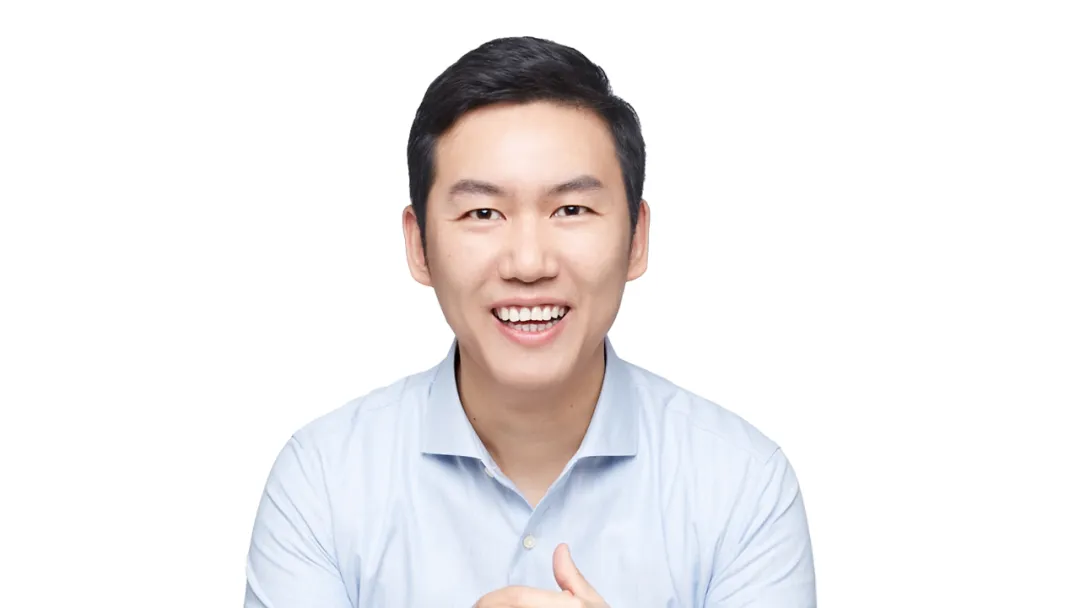
Alex Zhou, Managing Partner of Qiming Venture Partners
01/
Qiming Venture Partners Has Been Tracking Large Model Development Since 2020
The Zhipu AI Team Insists on Starting from Business Problems and Using Technology to Break Through
Zhou revealed that Qiming Venture Partners' investment team began continuously tracking large model-related technologies and products from 2020. "In mid-2020, OpenAI released GPT-3. At the time, it was still super, super niche — nine out of ten people hadn't heard of OpenAI. But we studied the GPT-3 paper and compared it with the previous-generation NLP technology we had invested in, and found it incredibly impressive. The core failure of the previous generation was generalization — every customer needed a customized model. GPT-3 showed us a glimmer of light in the darkness; this might really be a fundamental solution."
Thus, Qiming Venture Partners' investment team systematically searched for similar teams in China and the United States. However, Zhou candidly noted that the U.S. side was bustling, but after talking to various teams in China at the time, they couldn't find anyone focused on doing similar work. It wasn't until the 2021 BAAI Conference released the "Wudao 2.0" model that Qiming Venture Partners' investment team connected with the core team behind it through BAAI — the team led by Professor Jie Tang at Tsinghua University — and learned that they were exploring commercialization at a company named "Zhipu."
"After talking, we found that we were the first investment institution specifically seeking them out for the 'pre-trained large model' technical direction. The conversation was incredibly engaging, especially since my team member Qi Hu (note: currently Executive Director at Qiming Venture Partners) had deep knowledge of underlying models and asked many critical questions. We led that round in early 2022, and they used that money to build China's first commercialized large language model, the beginning of the GLM series," Zhou said.
Zhou still remembers that the first in-depth conversation with Zhipu AI's core management team was at an office near Tsinghua University's main gate. "We first talked with CEO Zhang Peng and President Wang Shaolan for two hours. Zhang Peng said at the time, 'Finally, two investors who can talk in depth.' Later, Professor Tang rushed over, originally planning to just say hello and leave, but ended up sitting down for another two hours."
"What left a deep impression was that they were no longer just a lab project at that point; they had clear entrepreneurial structure: Shaolan handling commercialization, Zhang Peng leading the engineering implementation of the first-generation model. We discussed many practical challenges, such as how to solve data annotation problems and how to achieve commercialization闭环. These in-depth discussions made us feel they were a team seriously thinking about product落地 and commercial prospects from day one, not just doing academic research," Zhou added. "The market capability and business acumen this team demonstrated as a whole were very unique. They didn't keep their technology in an ivory tower, but actively collaborated with top tech giants, constantly pursuing commercial milestones, with the goal of obtaining more resources to scale their models and achieve their AGI vision. This combination of 'technical conviction' and 'business pragmatism' was very rare at the time."
Zhou also reflected that two details from that four-hour deep conversation remain vivid in his memory. First, Zhang Peng, who was responsible for engineering, very specifically discussed how to handle latency challenges for tens of thousands of queries per second after model deployment. This showed Qiming Venture Partners that Zhipu AI was working backward from real commercial scenarios to derive technical requirements. Second, when Qiming Venture Partners raised the core failure of the previous generation of NLP companies — the data annotation and generalization problem — the Zhipu AI team systematically elaborated on their unsupervised learning approach and data processing insights. "This showed they not only understood the technology, but also had profound reflection on the pain points of the previous generation's industry, and believed new technology could solve it. This mindset of 'starting from business problems, using technology to break through' is precisely the trait of outstanding tech entrepreneurs."
02/
The 2B Path Is Currently Easier to Form a Healthy Commercial闭环
The Wave of Large Model Application落地 Has Just Begun
In Zhou's view, the core reasons why Zhipu AI has become the highest-revenue large model company in China are threefold:
First, insistence on underlying technological innovation. "When we invested in early 2022, they already had their own innovative thinking on model architecture and data strategy, a depth of daring exploration that was very rare at the time. More importantly, they consistently directed the vast majority of R&D investment (over 70%) toward computing power and foundational R&D, persisting in investment in larger-parameter models even under loss pressure. This conviction in their technical approach is the foundation of their long-term competitiveness."
Second, a clear and continuously validated commercialization path. "They planned the dual-wheel drive model of 'API calls + private deployment' very early on. In the early stage, they validated value by serving tech giants while simultaneously laying out an open platform. Now, high-客单价 private deployment and rapidly growing MaaS platform revenue constitute a robust financial foundation."
Third, the ability to efficiently integrate resources. "In the early days of computing power scarcity, they secured precious training resources through multi-party collaboration, ensuring the R&D process. This demonstrates the team's extremely strong execution capability and resource network."
Meanwhile, Zhou also pointed out that the 2B-focused development path may look traditional, but the chain is clearer. The core challenge lies in深入行业, understanding customers' real workflows, and providing stable, reliable solutions that can integrate into existing systems — this requires patience and industry know-how. "Zhipu AI started by serving tech giants and then expanded to government and enterprise customers, taking a validated 2B path. Both 2B and 2C require time, but at this stage, 2B may be easier to form a healthy commercial闭环."
Additionally, Zhou believes that Zhipu AI's "young, open exploratory lab culture" is also a key driving factor in the company's success today, with the most direct impact being innovative vitality and talent attraction. "In 2022, when few people were paying attention to large models, numerous PhDs and postdocs from Tsinghua, MIT, and CMU were drawn to join Zhipu AI by its vision and technical atmosphere. They didn't come for high salaries, but because they believed they could accomplish something here. Under this culture, there are no rigid factions or hierarchies; a group of talented young people can speak freely and use logic and experiments to derive the company's technical direction. This reminds me of early OpenAI and current DeepSeek. It allows the company to continuously absorb fresh blood, maintain sharp sensitivity to technology frontiers, and avoid being constrained by past successes or fixed business models."
When discussing greater expectations for Zhipu AI after becoming the "first global large model stock," Zhou emphasized that the wave of large model application落地 has actually just begun.
Zhipu AI's future keys lie in: first, continuously pushing models from "usable" to "good to use," especially achieving breakthroughs in reasoning capability and cost; second, going deep in vertical domains such as finance and government affairs, providing higher value-added industry solutions; third, leveraging post-listing brand and capital advantages to accelerate global market expansion, particularly in regions like the Belt and Road with strong demand for independent innovative models; fourth, vigorously building a developer ecosystem, attracting more developers through high cost-performance APIs and toolchains to form an ecosystem moat.
"The listing itself is not an endpoint, but provides a more efficient financing platform. This enables them to invest more firmly and without后顾之忧 in next-generation model R&D, converting first-mover advantage into long-term technical代差."
03/
Validating the Value of Qiming Venture Partners' "Half-Step Ahead" Methodology
Boosting Confidence in the Development of China's Long-Cycle Tracks
Zhou further pointed out that Zhipu AI's successful listing, on one hand, validates the value of Qiming Venture Partners' "half-step ahead" methodology, and on the other hand, gives the market tremendous confidence — proving that persisting in frontier technological innovation can gain capital market recognition in China.
Regarding the future development of the large model industry, Zhou believes the market is large enough that it won't be a zero-sum game; the future will be a百花齐放 landscape. "Different models will demonstrate advantages in specific scenarios or industries. The 2B and 2C paths will be explored in parallel: 2B requires深耕 industry know-how, while 2C must cross new challenges in balancing user experience and cost."
"More importantly, Chinese AI innovations represented by Zhipu AI and DeepSeek are gaining global attention and recognition. This opens new space for the entire ecosystem and also means Chinese teams will participate more deeply in global technology competition. The listing is just a new starting point; the real test ahead is making good use of capital market resources to accelerate innovation and ecosystem building."
From another perspective, this is also a tremendous confidence boost for the primary market.
"In the past, many investors were more accustomed to entering in the 'second half' after technology application落地 and model clarity, accustomed to looking at显性 data like DAU and renewal rates. For companies like Zhipu AI that are in the 'first half' of technological innovation and require long-term investment, the market had many doubts," Zhou said. "This successful listing clearly tells the market: persisting in underlying core technological innovation, even if short-term massive investment leads to losses, as long as the path is correct and the team is strong, the capital market will give recognition and value reassessment. I believe this will make more investors dare to bet at earlier stages based on deep judgment of technology trends, encouraging more entrepreneurs to devote themselves to hardcore technological innovation. This is a very important positive signal for China's next development in long-cycle tracks like AI, robotics, and semiconductors."
As one of the most active investment institutions in China's AI sector, Qiming Venture Partners adheres to the "half-step ahead" investment methodology: deploying before a major wave forms显性 consensus, but not介入 too early in completely unconverged scientific exploration. **This requires Qiming Venture Partners to have deep industry understanding and build a powerful "radar" network to capture convergence signals.
"Specifically on directions, we will focus on: inference optimization and edge deployment (making models lighter, faster, and cheaper), multimodal and embodied AI (the combination of AI and the physical world), AI-driven scientific discovery (applications in biology, materials, and other fields), and AI-native applications that can form commercial闭环," Zhou introduced. "Regarding teams, we prefer founders who combine technical depth with business sensitivity. We don't just look at background光环, but more importantly whether they can maintain focus and continuous iteration amid rapidly changing waves, and have strong willingness and ability to transform technology into products."
Source | IPO Zaozhidao**
Author | Stone Jin
Previous Reviews
Qiming Perspectives | Alex Zhou, Qiming Venture Partners: Promoting China's Technological Innovation Through Investment Qiming Stars | Zhang Peng, Zhipu AI: To B or To C Doesn't Matter, First-Class Companies Create Universal Demand Qiming Honors | 5 Qiming Venture Partners Investors Named to 2025 Forbes China Venture Capitalists 100 List

Founded in 2006, Qiming Venture Partners currently manages 11 USD funds and 7 RMB funds, with total committed capital reaching $9.5 billion. Since its establishment, it has focused on investing in outstanding early and growth-stage companies in Technology and Healthcare.
To date, Qiming Venture Partners has invested in over 580 high-growth innovative companies, of which more than 210 have listed on the New York Stock Exchange, NASDAQ, Hong Kong Exchanges and Clearing Limited, Shanghai Stock Exchange, and Shenzhen Stock Exchange, or exited through M&A and other means, with more than 80 companies recognized as unicorns or super-unicorns in their respective industries.
Many Qiming Venture Partners portfolio companies have grown into the most influential companies in their fields, including Xiaomi (01810.HK), Meituan (03690.HK), Bilibili (NASDAQ:BILI, 09626.HK), Zhihu (NYSE:ZH, 02390.HK), Roborock (688169.SH), Hesai Technology (NASDAQ:HSAI, 02525.HK), UBTECH (09880.HK), WeRide (NASDAQ:WRD, 00800.HK), HyperStrong (688411.SH), Insta360 (688775.SH), Unisound (09678.HK), Biren Technology (06082.HK), Zhipu AI (02513.HK), Gan & Lee Pharmaceuticals (603087.SH), Tigermed (300347.SZ, 03347.HK), Zai Lab (NASDAQ:ZLAB, 09688.HK), CanSino Biologics (688185.SH, 06185.HK), Schrödinger (NASDAQ:SDGR), MicroPort EP MedTech (688617.SH), Sanyou Medical (688085.SH), Amoy Diagnostics (300685.SZ), Sinocelltech (688520.SH), Insilico Medicine (03696.HK), Hope Medicine, Yuanxin Technology, MediLink Therapeutics, LaNova Medicines, StepFun, and others.