Qiming Star | Insilico Medicine's Feng Ren: Building the Pharma Company That Best Understands AI
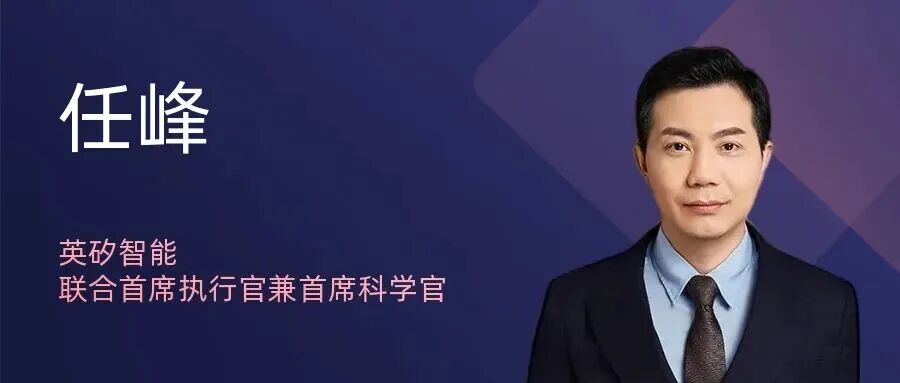
"We position ourselves as an AI-enabled pharmaceutical company — the pharma company that understands AI best."

Editor's Note: AI-driven drug discovery has recently reclaimed the spotlight in tech and venture capital circles: large model companies are acquiring AI pharma startups and launching their own drug programs, multinational pharmaceutical firms are deepening partnerships with AI drug companies, and CRO/CDMO players are seeing rapid growth in AIDD (AI-driven drug design) orders. Beneath all this buzz lies one ultimate question: can AI-designed drugs deliver value at scale in clinical trials? Insilico Medicine, a Qiming Venture Partners portfolio company, stands at the forefront of this question — its Rentosertib, with an AI-discovered target and AI-designed molecule, completed first-patient dosing in its China Phase III trial in September 2026, making it the world's first AI molecule to reach Phase III and marking AI pharma's transition from "proof of concept" to "proof of value." In this exclusive interview, Feng Ren, Co-CEO and Chief Scientific Officer of Insilico Medicine, shares his systematic assessment of Rentosertib's development progress and prospects, the company's path to sustainable profitability, and more. Facing the entry of AI tech giants, he states bluntly that the greatest moat supporting AI pharma companies' valuations going forward will be their product pipelines, not AI technology itself: "We position ourselves as an AI-enabled pharmaceutical company — the pharma company that understands AI best."
The following is the original report from China Fund News, republished with authorization on the Qiming Venture Partners WeChat official account.
As the world's first AI molecule to enter Phase III clinical trials, Insilico Medicine's Rentosertib is the most closely watched pipeline in the AI pharmaceutical industry.
In September 2026, Rentosertib's China Phase III clinical trial completed first-patient dosing. The trial is led by Professor Xu Zuojun of Peking Union Medical College Hospital, with academician Zhong Nanshan serving as co-principal investigator.
This milestone marks AI pharma's transition from "proof of concept" to "proof of value," with the market shifting from narrative-based pricing to pricing driven by pivotal clinical data — entering the "data readout moment."
At the recently convened 11th Pharmaceutical Innovation and Investment Conference, Feng Ren, Co-CEO of Insilico Medicine, sat down for an exclusive interview to elaborate on Rentosertib's R&D progress and prospects, the decisive factors in AI pharma's second-half competition, and Insilico Medicine's path to sustainable profitability.
Feng Ren defines Insilico Medicine as "the pharma company that understands AI best." In his view, if the Phase III clinical trial can validate Rentosertib's efficacy in improving patients' lung function, it stands to deliver a disruptive treatment option and become the first "AI molecule" to reach commercialization.
Feng Ren believes the decisive factors in AI pharma's second half will hinge on who can use AI to rapidly advance new drug development programs and commercialization progress; the core assets supporting Insilico Medicine or any other AI pharma company's future valuation will be its product pipeline and programs — this will be the greatest moat.
01/
Sprinting to Become the First "AI Molecule"
China Fund News: Could you introduce the status of Rentosertib's Phase III clinical trial? If it succeeds as you expect in 2029, what changes will occur in the AI pharma industry? And if the data falls short of expectations, what would be the impact?
Feng Ren: Rentosertib is a TNIK inhibitor for idiopathic pulmonary fibrosis (IPF), the world's first innovative candidate drug to use AI to identify a novel target, employ AI to design a novel structure, and advance to Phase III clinical trials. If successful, it would be analogous to Moderna's recent cancer vaccine Phase III success — a monumental event for the industry, a "DeepSeek moment" for AI pharma. Specifically, it would validate the entire AI pharma technical pathway, demonstrating that AI can not only help discover entirely new targets but also design entirely new molecules, and validate their efficacy and safety in large patient populations at Phase III scale.
If the data falls short, we'd need to examine why, because drug development is inherently high-risk — the success rate for novel targets is only 1-5%, and even with 3-5x improvement through AI empowerment, most will still fail. If it's a safety issue, the target itself remains sound but the molecule may have certain flaws; if it's an efficacy issue, the target may not be most closely linked to the indication. We'd also need to assess the degree of shortfall — if some effect is observable, it proves the drug does provide some disease improvement.
Meanwhile, we've made robust contingency plans. On the safety front, beyond the oral formulation, we've also developed an inhaled dosage form that delivers drug directly to the lungs for faster onset and reduced toxicity.
China Fund News: What commercial expectations does Rentosertib carry?
Feng Ren: Idiopathic pulmonary fibrosis, the indication Rentosertib targets, is a rare disease affecting over 700,000 patients globally, often called "the cancer that isn't called cancer." Currently three drugs are approved, with nintedanib generating over $4 billion in annual sales in 2025.
But all three drugs only slow the decline in patients' forced vital capacity — they cannot reverse it. This means these medications merely decelerate lung function loss rather than improve it. Based on Phase IIa study data, our Rentosertib has demonstrated potential to improve forced vital capacity.
So if we can replicate these results in Rentosertib's Phase III clinical trial and validate its lung function improvement efficacy, we would deliver a disruptive treatment option for patients and potentially replace all existing drugs in this space — representing enormous market opportunity.
02/
Sustainable Profitability After Turning Profitable
China Fund News: For Insilico Medicine, turning profitable in the first half of 2026 was a milestone, but true sustainable profitability requires milestone payments exceeding upfront payments. How far is Insilico Medicine's current revenue structure from this goal?
Feng Ren: The company's first-half profitability was driven primarily by increased BD upfront payments, but our BD scale this year has made breakthrough progress compared to previous years — signed deals totaled nearly $7 billion in the first half alone. Looking at the full year, the probability of profitability is high, as we'll continue doing new BD deals with additional upfront payments, including some milestone payments. Our recently announced collaboration with Servier, though early-stage, has already brought in several million dollars in milestone payments.
From the current perspective, both the quantity and quality of our BD deals continue improving, because we've accumulated an increasingly robust pipeline with faster progress, creating more licensable assets. Meanwhile, with endorsements from multinational pharma partnerships with Eli Lilly, Servier, Takeda and others, the barrier to signing deals with major pharma companies is further lowered.
So from this angle, future revenue sustainability exists. From a longer-term perspective, certain projects we out-licensed in 2022-2023 may gradually enter Phase III starting next year; by 2028-2029, these drugs may gain approval, and the company can begin receiving sales royalties. Once sales royalties commence, company revenue becomes relatively stable with year-over-year growth. Therefore, with rolling BD collaboration income and sales royalties as foundations, the business model will gradually prove out, revenue volatility will decrease, and sustainability will strengthen.
China Fund News: What did multinational pharma companies value when partnering with AI pharma companies five years ago, and what are they focused on now?
Feng Ren: The entire industry's drug R&D logic is changing. Previously, multinational pharma companies were mostly interested in me-better or best-in-class fast-follow projects with relatively limited innovation — partnering with Chinese companies was about expecting improved efficiency and R&D speed.
But now multinational pharma companies increasingly want first-in-class programs or pipelines with greater creativity, rather than focusing on speed and cost competition as they did five years ago.
In this context, Insilico Medicine is increasingly favored by multinational pharma. Because we don't merely have a molecular generation and optimization platform — we also possess PandaOmics, a target discovery engine that other AI pharma companies lack, which leverages patients' multi-omics data to help identify novel and validated targets for disease treatment.
Currently, most AI pharma companies focus on molecular design and generation. Therefore, benefiting from our advantage in target discovery capabilities, our BD quantity and scale this year lead by a considerable margin, because this value is gradually being recognized by major pharma companies, though not yet by domestic fund managers. AstraZeneca's October strategic drug discovery collaboration with AI pharma company insitro, with a $40 million upfront payment, was precisely about having insitro leverage its internal data to help identify novel targets.
03/
Core Future Assets: Product Pipeline and Programs
China Fund News: In AI pharma's second half, what will be the decisive competitive factors?
Feng Ren: First, who can use AI to rapidly advance new drug development program progress; second, commercialization. This commercialization doesn't mean selling drugs, but rather how to make your technology platform recognized by other companies, to get orders, to make them willing to buy your programs. These two aspects are the decisive competitive factors in AI pharma's second half — they have relatively little to do with clinical team strength or how much money you have.
Going forward, AI pharma companies that don't perform well on both fronts may gradually have to leave the table. Because programs can be transferred out, and clinical research can be assisted by more experienced partners. The key is having an AI platform that others recognize, while producing sufficient pipeline to ensure these programs can be out-licensed.
China Fund News: Compared to 3-5 years ago, what major changes have occurred in AI pharma's competitive landscape?
Feng Ren: Previously our industry was called the pharmaceutical industry — AI pharma was merely a pharmaceutical industry matter. But now AI tech giants are also deeply involved.
Because artificial intelligence is urgently seeking the best commercial application scenarios. The first large-scale application scenario, coding, is approaching a plateau, and now it's searching for a second good application scenario — thus zeroing in on biomedicine. This will drive increasingly rapid AI technology iteration in the life sciences domain.
Under these circumstances, although AI-native pharma companies currently maintain relatively better vertical models and can sustain a period of leading advantage, this won't last long, because AI tech giants have entered.
Therefore, we may no longer be able to compete with them on models alone, and need to re-evaluate our business model or development foundation. We believe that the core assets supporting Insilico Medicine or other AI pharma companies going forward will be their product pipelines and programs — that is, whether you have programs at various clinical stages, how many preclinical candidate compounds (PCCs), how many Phase I, how many Phase III (stage-gated programs), and better yet if products are approved from Phase III. This may be our greatest, truest moat relative to tech giants, and the greatest moat supporting our future valuation — AI technology will no longer be our biggest moat.
04/
Being the Pharma Company That Understands AI Best
China Fund News: How does Insilico Medicine differ from other AI pharma companies?
Feng Ren: First, we have broader AI technology coverage. Beyond the molecular design that the industry generally deploys, Insilico Medicine's self-built solutions also span target discovery, clinical development, and scientific research, driving value across the entire drug development lifecycle.
On pipeline progress, our most advanced candidate has already completed dosing in Phase III clinical trials, with significantly better innovation — it's the world's first AI-driven innovative drug with a novel target and novel structure. Additionally, Insilico Medicine has nominated 35 preclinical candidate compounds (PCCs) since 2021, of which 13 have obtained clinical trial (IND) approvals.
In external partnerships, we have both software licensing collaborations and pipeline out-licensing, plus drug discovery partnerships, building a rich and diversified business model.
China Fund News: In a few years, all pharmaceutical companies may broadly become AI pharma companies. If so, Insilico Medicine's "AI pharma company" label would lose differentiation. What will Insilico Medicine's identity be then — will the company's ultimate form be a pharmaceutical company, or an AI platform company?
Feng Ren: A pharmaceutical company. In five years, definitely a pharmaceutical company. We can see that Chinese enterprises' AI adoption is increasingly pervasive, and technology evolution is accelerating — maintaining continuous technological leadership is very difficult, so we cannot remain a platform company indefinitely.
Source | China Fund News Reporter | Yin Zhenmao
Dialogue | William Hu of Qiming Venture Partners Talks with Feng Ren of Insilico Medicine: How AI Is Driving Next-Generation Drug Discovery Qiming Perspectives | Kan Chen of Qiming Venture Partners: Investing in Insilico Medicine Four Years Before OpenAI Took Off, Vast Prospects for AIDD Platforms Qiming Stars | Global AI Pharma Leader Insilico Medicine Successfully Lists on Hong Kong Stock Exchange | Bilingual

Qiming Venture Partners was founded in 2006. Currently, Qiming Venture Partners manages 11 USD funds and 7 RMB funds, with total assets under management reaching $9.5 billion. Since its inception, it has focused on investing in outstanding early and growth-stage companies in Technology and Healthcare sectors.
To date, Qiming Venture Partners has invested in over 580 high-growth innovative companies, of which more than 210 have listed on the New York Stock Exchange, NASDAQ, Hong Kong Exchanges and Clearing Limited, Shanghai Stock Exchange, and Shenzhen Stock Exchange, or exited through M&A and other means. Over 80 portfolio companies have become recognized unicorns or super-unicorns.
Many Qiming Venture Partners portfolio companies have grown into the most influential companies in their respective fields, including Xiaomi (01810.HK), Meituan (03690.HK), Bilibili (NASDAQ:BILI, 09626.HK), Zhihu (NYSE:ZH, 02390.HK), Roborock (688169.SH), Hesai Technology (NASDAQ:HSAI, 02525.HK), UBTECH (09880.HK), WeRide (NASDAQ:WRD, 00800.HK), HyperStrong (688411.SH), Insta360 (688775.SH), Unisound (09678.HK), Biren Technology (06082.HK), Zhipu (02513.HK), Gan & Lee Pharmaceuticals (603087.SH), Tigermed (300347.SZ, 03347.HK), Zai Lab (NASDAQ:ZLAB, 09688.HK), CanSino Biologics (688185.SH, 06185.HK), Schrödinger (NASDAQ:SDGR), APT Medical (688617.SH), Sanyou Medical (688085.SH), AmoyDx (300685.SZ), Sinocelltech (688520.SH), Insilico Medicine (03696.HK), AusperBio, Yuanxin Technology, MediLink Therapeutics, Leads Biolabs, StepFun, and others.