Qiming Star | Hesai Technology's David Li: Focus on In-House High-Performance Products and Continuously Improve Operational Efficiency
Each generation of products demands radical innovation and heavy upfront investment to strike a balance between lower costs and high performance.

Editor's Note: Recently, Hesai Technology (NASDAQ: HSAI), a Qiming Venture Partners portfolio company, announced that cumulative deliveries of its JT series have surpassed 100,000 units — achieving this milestone in under five months since the product's January launch, making it the fastest lidar product in the robotics sector to reach this mark. The ability to scale production efficiently stems from years of commitment to in-house chip development and proprietary manufacturing lines, continuously fortifying Hesai's core competitive moat.
In an interview with China Entrepreneur magazine, Hesai Technology founder and CEO David Li discussed the company's development journey, industry position, and future plans. He emphasized the significance of independent R&D to the company's growth — not only improving product performance and reducing costs, but also ensuring supply chain security. He also stressed the critical role of speed and efficiency in business operations. Regarding overseas market expansion, Li noted that Hesai Technology holds advantages over international competitors through its supply chain capabilities, delivery capacity, and relentless drive.
This article is republished with authorization from the Qiming Venture Partners WeChat official account, with edits and abridgments.
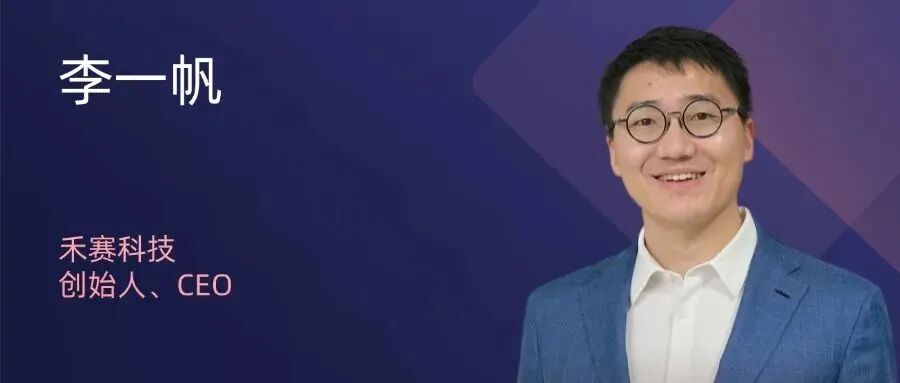
David Li, Founder and CEO of Hesai Technology
Photo | Xiao Nan
Hesai Technology founder and CEO David Li changes his Lark signature every year or two. His current one reads: "Deliver bad news first." He wants people inside the company to proactively share bad news rather than hide it. "This is to improve efficiency and enhance information authenticity," he says. If you were to catalog his signatures, most relate to improving efficiency. For example: being honest and realistic when facing a problem is the lowest-cost approach in the long run; use group chats instead of direct messages...
This is also an important "weapon" that has allowed Hesai Technology to establish itself and become a leader in a blank-slate field over its 11 years of existence.
Hesai Technology was founded in 2014. In the second half of 2016, it pivoted to the Robotaxi sector, landing top-tier clients including Zoox, Aurora, Baidu Apollo, and WeRide (Editor's note: a Qiming Venture Partners portfolio company). In 2020 and 2021, Hesai Technology entered the robotics and passenger vehicle markets.
According to the latest 2025 report from international authoritative research firm Yole Group, Hesai Technology has ranked first globally in automotive lidar market share and global L4 autonomous driving lidar market share for four consecutive years, and remains at the top of the global passenger vehicle market.
But Hesai Technology is still accelerating.
In February this year, Hesai Technology deepened its partnership with BYD, with its lidar to be installed in more than ten BYD models, with mass production and delivery in 2025.
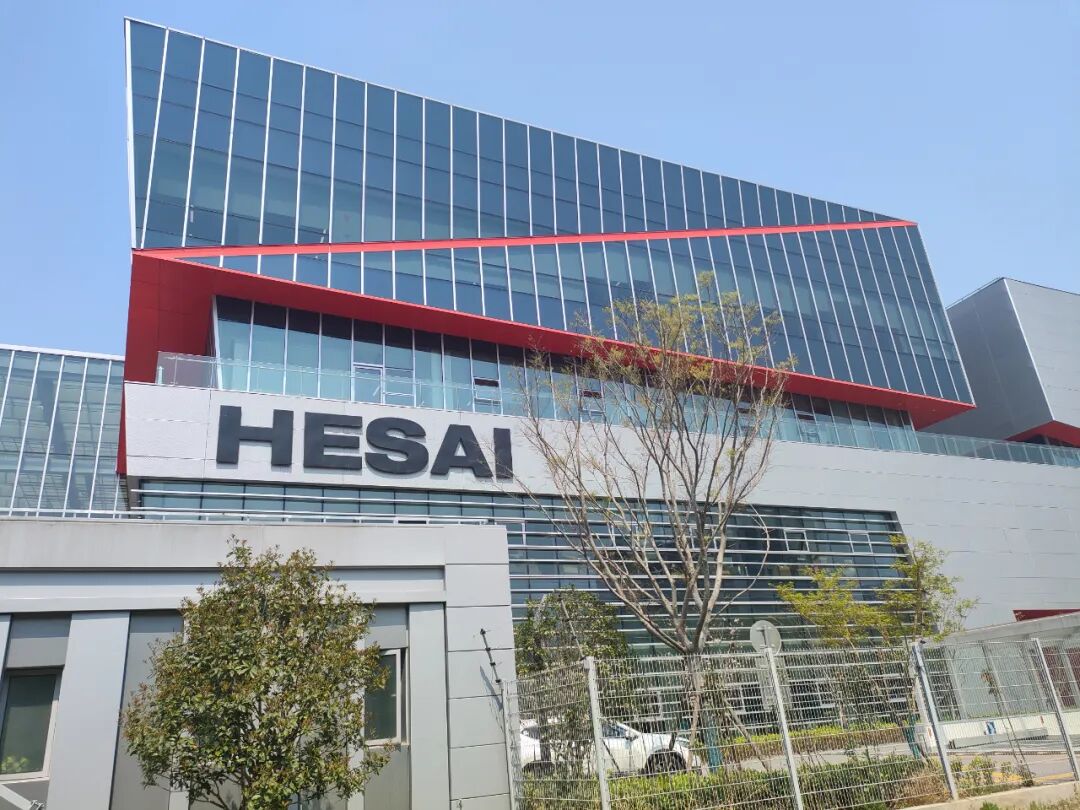
Photo | Wang Wentong
On April 21, at Hesai Technology's headquarters in Jiading, Shanghai — the Maxwell Global Intelligent Manufacturing Center (hereinafter "Maxwell," named after the British physicist and mathematician) — Li unveiled new products and solutions in rapid succession: the ETX, AT1440, and FTX lidar products, the "Qianli Eye" lidar perception solution compatible with L2-L4, and announced strategic partnerships with truck autonomous driving company KargoBot, spatial intelligence company Manycore Tech, and robotics company Vbot.
On April 25, the Performance Requirements and Test Methods for Automotive Lidar (GB/T 45500-2025), which Hesai Technology led and spearheaded as the first drafting unit, was officially released and implemented.
As numerous OEMs have come to regard lidar as a safety component for intelligent driving and pushed lidar down into the 100,000–150,000 RMB vehicle market, Hesai Technology's room for growth continues to expand. According to Gasgoo Automotive Research Institute data, overall lidar penetration in China's new energy vehicle market is expected to exceed 20% in 2025.
Against this industry backdrop, expanding profit margins and improving efficiency have become the main themes of Hesai Technology's operations.
Hesai Technology's 2024 financial report showed a net loss of 102 million RMB for the year. Under Non-GAAP accounting standards, full-year net profit was 13.7 million RMB, making it the first and only lidar company globally to achieve full-year profitability on a Non-GAAP basis, with profits primarily coming from overseas and robotics businesses. For 2025, Non-GAAP profit is projected to grow to 350–500 million RMB.
Hesai Technology CFO Fan Peng stated that the company has recently placed greater emphasis on expense control, strengthening budget management across various cost categories.
"Hesai Technology has already reached a globally leading position. The next stage should be about how to further improve efficiency and create greater value for shareholders," Fan said.
01/ From Zero to 2 Million Units Capacity
Hesai Technology's debut in the lidar industry was with laser sensors for detecting hazardous gases and air quality.
This was a market of just 405 million RMB at the time, and Hesai Technology consequently struggled to raise funding. In 2016, Hesai Technology launched the world's first drone-mounted gas safety inspection system, the HS-5000, and in early 2017 was shortlisted for the Prism Awards (presented by the International Society for Optics and Photonics, known as the "Oscars of photonics") based on this system.
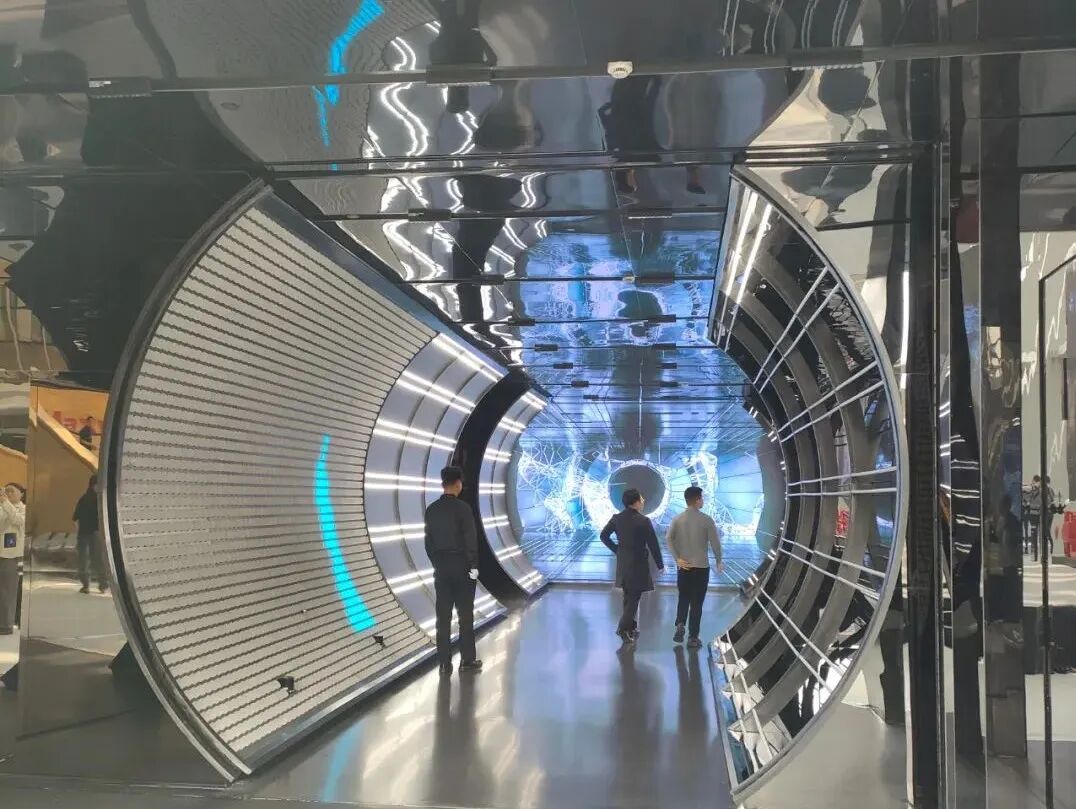
Photo | Wang Wentong
Thereafter, Hesai Technology gradually gained traction, making continuous investments in self-developed chips.
In December 2018, Hesai Technology released the Pandar40P lidar product, which used waveform analysis technology to enhance anti-interference capabilities. Waveform analysis technology refers to analyzing the waveform signal of laser reflections from objects during each measurement, interpreting target objects' material properties, morphology, motion state, and environmental conditions.
Li explained that this technology was developed because early autonomous driving clients were concerned about noise and false braking during road testing. Hesai Technology was the first in the industry, and remains the only lidar supplier to offer this technology. To this end, the company specifically developed a chip capable of 20 billion operations per second, which was deployed in the more affordable ATX product launched in April 2024.
"If from the start we only wanted to build a $200 lidar, there are some things we would never have done, and we wouldn't have these technology accumulations," Li said. According to him, Hesai Technology's in-house development ratio for core components exceeds 90%. Through self-development, product performance has been improved while costs have been reduced, making the supply chain more secure.
From 2017 to present, Hesai Technology has released four generations of self-developed chips. Building on this foundation, Hesai Technology has launched the Pandar, XT, AT, FT, JT, and ET series lidar products, evolving from mechanical lidar to pure solid-state lidar, with applications spanning autonomous driving, ADAS, and robotics.
For lidar, manufacturing is part of R&D. To some extent, building proprietary factories costs more than contract manufacturing, but Li believes that more important than cost reduction, proprietary factories give Hesai Technology faster closed-loop iteration capability. In other words, cost matters, but speed and efficiency matter more.
How do you build a factory for a lidar that no one has seen before? Li's answer: learn from other manufacturing companies such as Bosch Group, Baidu, and semiconductor industry enterprises, then combine with lidar's industry-specific characteristics.
"You can never simply copy something already mature in the industry, because by the time it's mature, you've already missed your opportunity," he said.
Currently, Hesai Technology has two major factories in Shanghai and Hangzhou, named after physicists Maxwell and Hertz respectively. The former handles cutting-edge product R&D and manufacturing, while the latter handles mass production, with projected annual capacity of 2 million units by year-end 2025.
Maxwell has a floor area of 52,000 square meters, with investment of nearly 1 billion RMB, and officially began operations at the end of 2023. Drawing on Tesla's early approach of co-locating R&D bases and manufacturing plants, Maxwell brings together the full-stack chain from lidar design, R&D, testing, and production.
Unlike traditional execution-oriented production lines, Maxwell features dedicated "R&D production lines," built jointly by R&D and manufacturing teams as prototyping platforms. New lidar products are prototyped to mass production standards, with both teams jointly defining every step of the mass production process. The manufacturing team also conducts DFM assessments (Design for Manufacturing, a methodology to optimize design schemes during the product design phase to ensure efficient, low-cost, high-quality mass production) together with the design and R&D team.
Additionally, Maxwell houses a Bayesian Reliability Test Center and the industry's first 200-meter comprehensive lidar test track. The former is dedicated to comprehensive systematic testing and validation, capable of executing multiple automotive-grade test standards including ISO, IEC, CISPR, and GB/T. The latter can significantly improve road testing efficiency and quality through highly realistic construction of urban and highway environments and weather conditions.
02/ From $20,000 to $200
When focused on the early Robotaxi market, Hesai Technology faced mainly European and American competitors, with industry leader Velodyne being one of the mountains that had to be crossed.
At the 2017 Baidu Apollo supplier conference, both Hesai Technology and Velodyne were present. At the time, to better photograph Velodyne's product, the photographer placed Hesai Technology's Pandar40 underneath Velodyne's product.
At the World Internet Conference a year later, the tables had turned — Hesai Technology replaced Velodyne as Baidu Apollo platform's core supplier based on the Pandar40's reliability and rapid response capability.
Around 2020, Hesai Technology decided to enter the passenger vehicle market. To break in, Li needed to find suitable domestic clients.
At that time, Li Auto's R&D team was developing a new intelligent driving system for the Li L9 and wanted a better-performing lidar.
Hesai Technology's 64-line lidar (a lidar's "lines" refer to laser density; generally, higher density yields more precise reflected images) was already the best-performing on the market, but Li Auto set a higher bar — upgrade the 64-line product to 128 lines without changing cost or volume, while also considering reliability in complex weather, lidar detection range, point cloud density, and other aspects.
"It's like turning a four-cylinder engine into an eight-cylinder while keeping volume and cost unchanged — the internal optimization has to be pushed to the extreme," Li said.
Beyond the product itself, Li Auto was deeply involved in Hesai Technology's testing and evaluation system, requiring Hesai's lidar to pass more than 50 automotive-grade tests (including waterproofing, vibration, salt spray, etc.), with product development cycles compressed from the three years typically required by international manufacturers to around 1.5 years.
Hesai Technology's solution was to integrate discrete components onto several compact chips, solving volume and cost challenges while delivering substantial performance improvements. "The way to truly meet the demands of a new-generation company is to understand what it worries about most and what products it needs most at this point in time. We're pushing each other to do harder things and improve together," Li said.
In August 2021, AT128 was officially launched. Beyond being standard equipment on various Li Auto models, AT128 was later deployed on Xiaomi Auto, Changan Automobile, and SAIC's Rising Auto brands. Starting with AT128, Li realized that lidar had transformed from a functional component to a safety component, meaning greater market potential but also higher cost requirements.
In 2023, Hesai Technology and clients began jointly exploring ATX's product definition, ultimately reaching consensus: to install this lidar product on 150,000 RMB-class vehicles, costs needed to drop to around $200 — a 99.5% price decrease from 2019 products, with even better performance required.
Li summarized that from early mechanical lidar to AT128, prices fell 100-fold, and from AT128 to ATX, prices fell another two to three times. "Each generation of products requires enormous innovation and upfront investment to achieve balance between cost reduction and high performance," Li said.
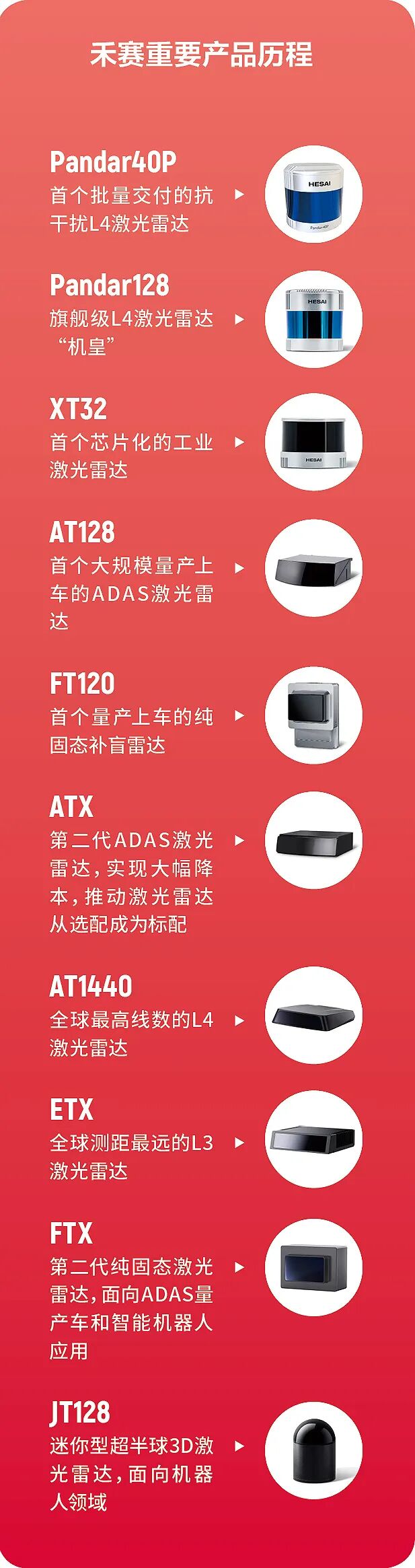
Chart | Xiao Li
In overseas markets, Hesai Technology's client list continues to grow.
On March 12, 2025, Hesai Technology announced a multi-year exclusive design win with a top European OEM, providing high-performance ultra-long-range lidar for its next-generation automotive platform, covering multiple models across its fuel and new energy vehicle lines. This is a multi-year long-term collaboration extending beyond 2030, the largest order to date in the overseas pre-installed mass production lidar sector, and Hesai Technology's first mass production vehicle client in Europe.
"This client wasn't won by running to Europe for a few meetings — we've had a team working on small projects there for a long time," Li said.
Working with overseas clients requires years of investment to build trust and communication.
Take another overseas OEM as an example: Hesai Technology has worked with them since 2018, going through Robotaxi projects, various POC projects (proof-of-concept, the process of building a simplified prototype or experimental model before formal development or implementation to validate core functionality and technical feasibility), with each project taking a full year to deliver.
Additionally, according to China Entrepreneur, BMW executives visited Hesai Technology as early as 2017. In recent years, Li has maintained a rhythm of meeting with several major European OEMs every month or two, updating European clients whenever the company makes progress in products and technology.
In his view, Chinese lidar companies are somewhat like China's national table tennis team — having competed intensely domestically to become world champions, they are naturally formidable on the global stage.
"The vast majority of overseas competitors are not in the same league as us in terms of supply chain capability, delivery capacity, and fighting spirit — this is our opportunity," Li said.
03/ From Passenger Vehicles to Robotics
David Li pursued his PhD in robotics at the University of Illinois Urbana-Champaign in the United States, and after graduation worked as an engineer at multiple Silicon Valley tech companies. He is also a social media adept, operating his own accounts, and once became Renren.com's top-ranked travel blogger based on his legendary cross-America journey.
Co-founder and Chief Scientist Sun Kai majored in mechanical engineering and minored in electrical engineering during his PhD at Stanford University, with research focused on frontier laser technologies.
Co-founder and CTO Xiang Shaoqing earned dual master's degrees in electrical engineering and mechanical engineering at Stanford University, and after graduation worked at Apple headquarters and Samsung headquarters, responsible for circuit system design and product concept R&D.
Since founding the company, Hesai Technology's three co-founders have always worked in the same office. This was deliberately arranged by Li to enable faster company decision-making — "basically, by the time something leaves our office, it's already decided."
Beyond top-level decision-making, to align employees quickly, the company holds livestream meetings every month or two, two centralized strategy meetings annually, and an annual company-wide offsite in November, usually held on the steps on Maxwell's first floor.
On February 19, 2023, Hesai Technology successfully listed on the Nasdaq Stock Exchange. The company held no celebration internally; instead, each employee received a portable charger designed by Li.
To better manage the company, Li has also been learning from other entrepreneurs. Such as Elon Musk.
"Musk has many forward-looking concepts that we need to learn from. For example, he tries to attend most strategy and engineering meetings. His recognition of the importance of obtaining authentic information is higher than almost any manager I've seen," he said.
Inspired by this, Li reads hundreds of internal reports weekly, most of which are employees' daily or weekly reports. When he spots problems, he comments directly on the reports, then has subordinates discuss and resolve them on their own. Although there's much repetition and it adds to his workload, he cares more about whether he can get complete information.
Beyond Musk, Li also draws from Xiang Li's thinking on organization and strategy, Chuanfu Wang's thinking on group strategy, cost control, and vertical integration, and others.
In 2025, to continue improving operational efficiency and expanding profit margins, Hesai Technology has set its sights on the robotics sector.
Latest data shows that in the robotics market, Hesai Technology's monthly deliveries have exceeded 20,000 units, with clients spanning over 40 countries globally.
Li judges that the robotics sector's growth potential far exceeds that of passenger vehicles, reaching a 10 billion RMB market scale by 2029. "A person can't drive two cars simultaneously, but can have many robots working for them at the same time," he said.
To this end, Hesai Technology needs to collect high-quality data and transfer its accumulated automotive-grade capabilities to robotics. "Robotics demand is boundless. Through this year's efforts, we hope Hesai Technology can open up more new scenarios," said Liu Xingwei, VP of Hesai Technology's Robotics Perception Business.
Source | China Entrepreneur
Author | Wang Wentong
Editor | Ma Jiying
Past Reviews
Qiming Weekly | Qiming Venture Partners Portfolio Company Financing and Updates Vol. 19, 2025
Founded in 2006, Qiming Venture Partners currently manages 11 USD funds and 7 RMB funds, with total assets under management reaching $9.5 billion. Since its inception, the firm has focused on investing in outstanding early and growth-stage companies in the Technology and Consumer (T&C) and Healthcare sectors.
To date, Qiming Venture Partners has invested in over 580 high-growth innovative companies, of which more than 210 have listed on the New York Stock Exchange, Nasdaq, Hong Kong Exchanges and Clearing Limited, Shanghai Stock Exchange, and Shenzhen Stock Exchange, or exited through M&A and other means. Over 80 companies have become recognized unicorns or super-unicorns in their respective industries.
Many Qiming Venture Partners portfolio companies have grown into the most influential companies in their fields, including Xiaomi (01810.HK), Meituan (03690.HK), Bilibili (NASDAQ: BILI, 09626.HK), Zhihu (NYSE: ZH, 02390.HK), Roborock (688169.SH), UBTECH (09880.HK), WeRide (NASDAQ: WRD), Gan & Lee Pharmaceuticals (603087.SH), Tigermed (300347.SZ, 03347.HK), Zai Lab (NASDAQ: ZLAB, 09688.HK), CanSino Biologics (688185.SH, 06185.HK), Schrödinger (NASDAQ: SDGR), MicroPort EP MedTech (688617.SH), Sanyou Medical (688085.SH), Amoy Diagnostics (300685.SZ), Berry Genomics (000710.SZ), GenScript ProBio (688520.SH), Yuanxin Technology, ClinChoice, Belief BioMed, Biren Technology, and others.