Qiming Perspective | Duane Kuang: AI Investment Outlook Is Broad
2025 will mark an inflection point for AI applications. In the AI 2.0 era, investment in AI infrastructure still has significant room to grow, explosive growth in AI applications is on the horizon, and the investment landscape for AI applications will become increasingly diverse and vibrant.

At the core forum of the 2025 Zhongguancun Forum Annual Conference's "AI Theme Day" — "AI Future Forum: Innovation, Investment, and Globalization" — Duane Kuang, Founding Managing Partner of Qiming Venture Partners, delivered a keynote speech titled "Broad Prospects for AI Investment," offering an in-depth analysis of investment trends and future directions in artificial intelligence. Kuang believes that 2025 will mark an inflection point for AI applications. In the AI 2.0 era, significant gaps remain in AI infrastructure investment, explosive growth in AI applications is within reach, and the future of AI application investment will be remarkably diverse.
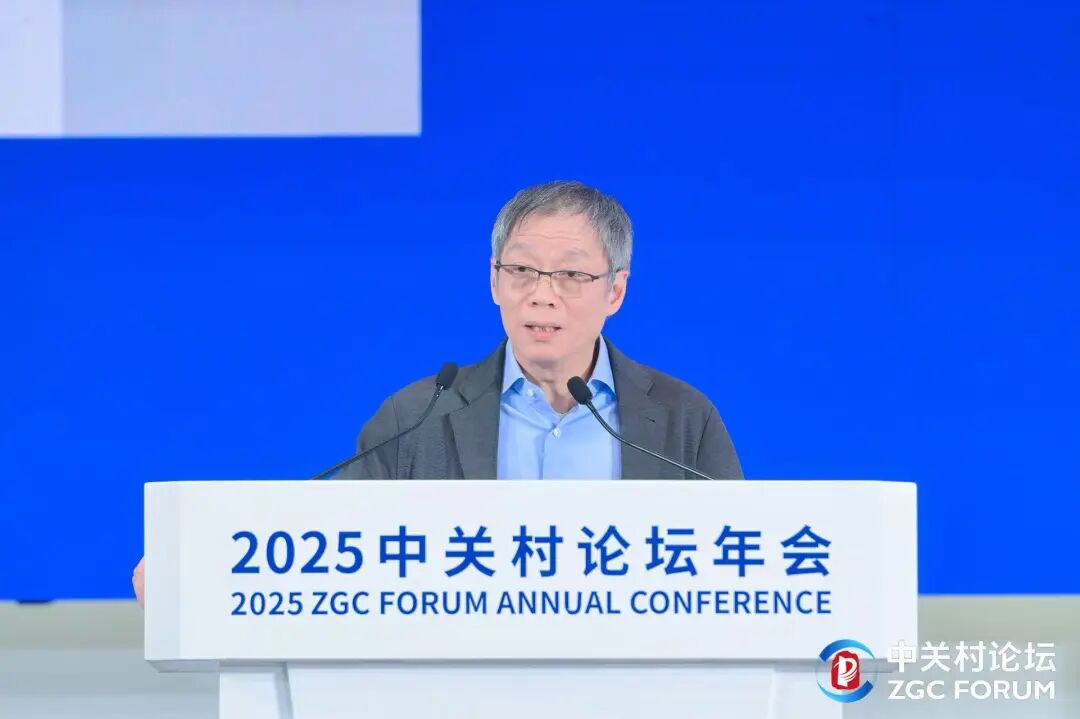
Duane Kuang, Founding Managing Partner of Qiming Venture Partners
The following is a transcript of his remarks:
Qiming Venture Partners began paying attention to artificial intelligence as early as 2013, and has since invested in numerous companies along the way. The impression of this new generation of AI is so overpowering that people tend to think AI essentially began with ChatGPT. But that's not the case. Many of the opportunities, companies, and accumulated expertise we're seeing in AI today trace back to the AI 1.0 era.
During the AI 1.0 era, China already had quite a few AI companies worth paying attention to — companies doing genuinely excellent work. In the platform space, for instance, Megvii and Unisound were representative, breakthrough enterprises in different vertical domains. AI at that time was already capable of empowering certain verticals, including software, robotics, embodied intelligence, autonomous driving, and more — with many promising experiments that remain highly relevant and important today.
The arrival of the AI 2.0 era may seem, in hindsight, as though Chinese AI suddenly emerged out of nowhere one particular Spring Festival. That is, one exceptional company, after a period of sustained effort, made the world aware of China's capabilities in artificial intelligence — DeepSeek. But behind DeepSeek lies nearly a decade of development across China's entire AI industry. And during the AI 1.0 era, China's AI application scenarios were arguably the world's most advanced, most abundant, and most commercially viable.
So-called AI 1.0, viewed through the lens of the technology adoption curve, refers to that generation of AI powered by deep learning. Deep learning and today's large models are intimately connected. So during the AI 1.0 period, we also invested in some excellent companies — whether platform companies, semiconductor firms, AI imaging companies, or AI-assisted drug discovery enterprises.
Moving this timeline forward to around 2020, when society at large wasn't paying much attention, we observed the gradual development of transformer technology — from a simple research paper to laboratory experiments, then to the development of models around OpenAI's GPT-3.
As a venture capital firm, Qiming Venture Partners hopes to support and accelerate technological development. But throughout the process of technological evolution, different institutions play different roles: research institutions can make their most important contributions before technological breakthroughs occur; as an early-stage VC firm, we believe the most appropriate and suitable entry point is what we call "half a step early" — a full step too early carries excessive risk and you might not survive, while half a step too late and you're merely adding flowers to brocade.
This "half a step early," illustrated in this chart, means entering when a technological breakthrough has become relatively solid — the technology has achieved a certain breakthrough, it's time to publish papers — but is still far from market inflection, not even having entered a true demonstration phase. After investing in AI 1.0 companies, our team continued to carefully track the overall development of AI, technological directions, and emerging paradigms. When we realized that this new transformer-based direction and approach had gradually accumulated solid validation, we believed it was time to commit decisively to relevant companies. We invested relatively early in companies such as Zhipu AI and Infinite Light Year — meaning we had already backed certain companies before the ChatGPT explosion — and subsequently made a series of investments in this space, including Shengshu Technology. More recently, we've been investing more heavily in embodied intelligence projects, such as Galaxy Universal.
As I just mentioned, DeepSeek's emergence this year represents a crucial milestone for the development of China's entire AI industry. This milestone doesn't necessarily mean Chinese AI technology suddenly leaped forward because of this single event; as I noted, it's the result of gradual, years-long effort by many contributors. But DeepSeek's launch and global success highlighted several factors. Most importantly, this technology gave people greater confidence that it could actually be deployed. Another crucial point — its costs had reached a viable level. In the preceding 12 to 18 months, we had been examining large model applications, and frankly, commercial deployment was simply too expensive.
We believe DeepSeek's launch is highly significant for the practical deployment of AI 2.0 applications. We also believe AI will see tremendous development across many vertical domains — as many leaders from the financial sector have already noted in their remarks. I'll share three examples:
The first is in education. AI applications in education are particularly well-suited to this generation of AI and worth anticipating, because it can generate content and personalize instruction — something previous AI tools couldn't accomplish. Current generative AI, with its powerful interactive capabilities, can continuously generate new lesson plans based on new knowledge emerging from student interactions and deeper understanding of the learner. We're already seeing applications in this domain, and we've invested in a highly meaningful AI education company, Yuaiweiwu, which has achieved substantial improvements in both optimizing training processes and student engagement.
The second example is the integration of AI with hardware — which happens to be a tremendous advantage for AI 2.0's development in China. Within the several sub-domains of AI-hardware integration, the first direction is autonomous driving. Many autonomous driving companies have been founded for over a decade, and during the AI 1.0 era, both China and the United States had numerous driverless vehicle enterprises. But this generation of AI can provide crucial support for the ultimate practical deployment of autonomous driving technology, particularly by offering a strong foundation for solving many long-tail scenario problems. So AI 2.0 will be a tremendous catalyst for the entire autonomous driving industry. We believe that in the coming period, autonomous driving technology will deploy in major cities globally, with particularly rapid development in China. The second direction is embodied intelligence, which we've been discussing extensively lately and which is also highly promising. The third direction is intelligent hardware. Intelligent hardware has seen numerous attempts by various companies in the past; a prominent recent example was Meta and Ray-Ban's AI glasses experiment last year, which became quite popular in the West. I believe China's capability in consumer products is very strong, and in the integration of AI with intelligent hardware, we'll soon see many interesting new products emerge. This includes an AI-headphone integration company that Qiming Venture Partners recently invested in — it functions as ordinary headphones while also providing translation, meeting transcription, and other capabilities, an AI-empowered intelligent hardware product.
To summarize several key points: First, investment in AI infrastructure still holds many opportunities in China. In recent years, as investors, we've focused more on infrastructure investment. Infrastructure investment and applications always mutually reinforce each other, and today, this infrastructure investment has reached a level that can fully support genuine application deployment, so we're now focusing more on application-layer investment. Second, 2025 will be an inflection year for applications, which is worth anticipating — especially since Zhongguancun has tremendous advantages and capabilities; during the Mobile Internet era, many leading app companies emerged here, all successful examples of mobile-native applications. Third, the future of AI application investment will be remarkably diverse. When will we see the birth of AI 2.0-native applications? I believe the companies incubated by this opportunity will certainly be super-scale enterprises worth anticipating.
Past Coverage
Qiming Perspectives | Duane Kuang, Qiming Venture Partners: AI Investment in China Is Not Overheated, and Should Attract Capital from Around the World Qiming Stars | Multiple Qiming Venture Partners Portfolio Companies Appear at 2025 Zhongguancun Forum Annual Conference and Win Multiple Awards Qiming Honors | Qiming Venture Partners Ranks 5th in Zero2IPO's 2024 China Venture Capital Firms Rankings and Wins Four Additional Major Awards

Founded in 2006, Qiming Venture Partners currently manages 11 USD funds and 7 RMB funds, with total assets under management reaching $9.5 billion. Since its inception, the firm has focused on investing in early and growth-stage outstanding enterprises in Technology and Consumer (T&C) and Healthcare sectors.
To date, Qiming Venture Partners has invested in over 580 high-growth innovative companies, of which more than 210 have gone public on the New York Stock Exchange, NASDAQ, Hong Kong Exchanges and Clearing Limited, Shanghai Stock Exchange, and Shenzhen Stock Exchange, or exited through M&A and other means. Over 80 portfolio companies have become recognized unicorns or super-unicorns.
Many companies in Qiming Venture Partners' portfolio have grown into the most influential players in their respective fields, including Xiaomi (01810.HK), Meituan (03690.HK), Bilibili (NASDAQ:BILI, 09626.HK), Zhihu (NYSE:ZH, 02390.HK), Roborock (688169.SH), UBTECH (09880.HK), WeRide (NASDAQ:WRD), Gan & Lee Pharmaceuticals (603087.SH), Tigermed (300347.SZ, 03347.HK), Zai Lab (NASDAQ:ZLAB, 09688.HK), CanSino Biologics (688185.SH, 06185.HK), Schrödinger (NASDAQ:SDGR), MicroPort EP MedTech (688617.SH), Sanyou Medical (688085.SH), Amoy Diagnostics (300685.SZ), Berry Genomics (000710.SZ), Sinocelltech (688520.SH), Yuanxin Technology, ClinChoice, Belief BioMed, Biren Technology, and others.