Qiming Venture Partners' Duane Kuang: Embrace and Navigate Cycles, AI Will Be an Ultra-Long Technology Cycle
Our primary focus is the technology development cycle, and we structure our investments around this cycle as the central thread.

The venture capital industry currently finds itself at a moment full of complex variables: on one hand, the "K-shaped recovery" has become a footnote to the unevenness of industry rebound; on the other, cycles are not single-dimensional linear movements but complex systems woven from multiple intersecting factors.
Against this backdrop, Duane Kuang, founding managing partner of Qiming Venture Partners, delivered a keynote speech titled Embracing Cycles, Navigating Cycles at the 20th China Investment Annual Summit. He argued that we are each day in the upward phase of certain cycles and the downward phase of others — much like how the Northern and Southern Hemispheres experience opposite seasons. Therefore, cycles cannot be defined in sweeping, generalized terms.
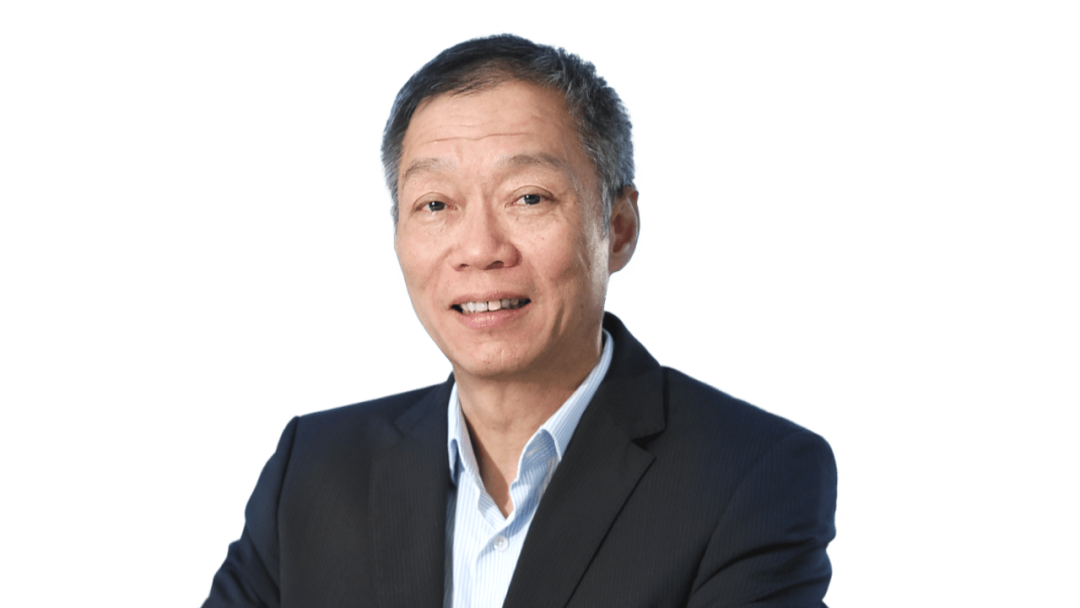
Duane Kuang, founding managing partner of Qiming Venture Partners
Yet when facing different cycles, Qiming Venture Partners' strategy remains "using the technology development cycle as the main thread" for portfolio construction. From large language models to multimodal AI, and onward to Embodied Artificial Intelligence, investment decisions should follow the curve of technological progress rather than over-indexing on short-term capital market fluctuations.
At the same time, artificial intelligence represents a world-transforming technological revolution, not a fleeting tech fad. Kuang believes AI will be an exceptionally long technology cycle. The industry has already entered a virtuous cycle where "more input yields more output," and investment opportunities will only grow more numerous and more expansive. At the specific direction level, although leading companies have already emerged, AI technology still holds vast room for breakthroughs. Beyond innovation in AI technology itself, there are opportunities in truly new industries created by AI, new innovations, new consumer applications, novel drug discovery, and new materials development.
The following is a transcript of his remarks, compiled and edited by ChinaVenture, and republished with authorization on the Qiming Venture Partners WeChat official account.
This year's China Investment Annual Summit theme is the "K-shaped curve," signifying the unevenness of recovery — a theme closely related to another word we often use: cycle. Today I hope to explore cycles with you and share some of our understanding.
We often hear the phrase "navigating through cycles." But in discussing cycles, we tend to be far too general. When things feel bad, we vaguely assume we're in a down cycle; when things feel good and the market is hot, we assume we're in an up cycle. In reality, we are each day in the upward phase of certain cycles and the downward phase of others, just as Earth's seasons vary — December is winter in the Northern Hemisphere but summer in the Southern Hemisphere. So one cannot blanket-state that December means pulling out the winter coat to prepare for hibernation.
01/ Cycles Are Not Single-Dimensional and Cannot Be Generalized
What cycles are relevant to our industry? I've listed several here, including the technology development cycle, the macro environment cycle, the capital market cycle, the talent and entrepreneurship cycle, and the institution's own development cycle. For example, for technology investment firms like ours, the technology development cycle matters enormously. Technological development always follows this pattern: early-stage theoretical research, then as technology matures it moves toward the market, the market feeds back whether this level of technology can truly deliver commercial value, followed by further research to refine the technology, then the technology re-enters the market in a new form, leading to market explosion and widespread adoption, then market saturation, then new technology replacing old, new applications replacing old, and so on in endless cycles. Whether it's computers evolving from mainframes to PCs, or the internet, Mobile Internet, and artificial intelligence — all follow this pattern.
Other cycles include the macro environment cycle. Economies move from cold to hot, from overheating to overcooling — both Western and Chinese economies experience this, and governments implement counter-cyclical measures to prevent excessive impact on ordinary people, yet cycles remain inevitable despite intervention. Beyond economic cycles, there are political-economic cycles: when enterprises are surging ahead, governments tend to focus more on equity; when societal development momentum is lacking, governments focus more on efficiency. Alongside these come capital market cycles intimately connected to our industry — everyone here feels this deeply. The Shanghai Composite Index reclaiming 3000 points was on September 26, 2024, closing at 3000.95; yesterday's close was 4085.
Talent has cycles too. Chinese STEM graduates form waves of studying abroad, and the number of H-1B visas issued by the United States affects whether these outstanding talents remain in America. Those who stay join major tech companies, develop into core talent, then "break away" — whether returning to China or starting businesses in the US — and this too follows cycles. Of course our investment institutions themselves have development cycles, including the impact of generational transitions and so forth.
So when we say "navigating through cycles," which cycle exactly are we "navigating"?
02/ Using the Technology Cycle as the Main Thread, Deploying Steadily
From Qiming Venture Partners' practice over the past 20 years, I have several observations to share. It should be noted that every institution makes different choices; there is no single correct answer, and our approach may only suit us.
First, we focus most on the technology development cycle, and we use this cycle as our main thread for deployment. For example, after investing in the previous generation of AI enterprises centered on neural networks and deep learning, we continuously tracked AI technology's evolution. When transformer technology emerged and gradually gained industry attention, especially with GPT-3, we became convinced that a new generation of AI technology had arrived. This generation is quite interesting — many limitations we encountered while investing in the previous generation of AI, whether in successful or failed companies, seemed resolvable. So at this juncture we invested in Zhipu AI. After ChatGPT's release, as large language models began heating up in China, we invested in StepFun. Later, we believed multimodality was a new frontier and invested in Shengshu Technology. Meanwhile, we believed AI for the physical world would see similar leaps, and invested in a series of companies including Tashi Zhihang and Sharpa. These investments were all deployed along the main thread of technology development, with no direct connection to navigating capital market cycles, nor any direct connection to whether capital markets were hot or cold at the time.
From historical perspective, capital market cycles typically run 2–5 years; it's rare to see more than 5 years of sustained downturn. Yet a technology company needs at minimum 5 years from founding to IPO, with most taking longer. Therefore, the capital market conditions at investment time and exit time won't fall in the same cycle. From another angle, even if capital markets are depressed at investment time, as long as the company develops healthily, there will always come a day when capital markets recover. Based on this view, we try to maintain a relatively steady pace of deployment, unless during certain periods we simply cannot find good targets in our familiar sectors.
Meanwhile, fundraising and exits are highly correlated with capital market sentiment. Looking at ChinaVenture data, last year's fundraising saw over 20% recovery compared to 2024. Whether in number of new funds or amount raised, I believe 2026 will be better than 2025. Last year's IPO count also improved over 2024, led by Hong Kong listings. I believe Hong Kong's momentum will continue in 2026, with domestic A-share IPOs increasing as well. Taking Qiming Venture Partners as an example, from January 1 to today we already have 5 portfolio companies listed, including Zhipu AI and Biren Technology.
03/ Embracing Cycles, Doing Our Own Work Well Is How We Navigate Them
Speaking of cycles, what everyone cares about most is of course the AI cycle — has it overheated? Here are my views: I believe artificial intelligence is a world-transforming technological revolution, and we are in the early stages of an exceptionally long technology cycle. The technology itself still has many areas to refine, and the new applications it can enable have only just begun. Throughout last year I called at various occasions for China to increase investment in AI. My reasoning was, first, my optimism about AI's inherent potential, and second, my firm belief that China will certainly be an important participant in this massive technology wave. US investment in AI is 10 to 20 times China's; US equity investment is over $280 billion versus China's $12 billion — a 23-fold gap. US infrastructure investment is also roughly 10 times China's. These gaps are abnormal and will certainly change. I'm pleased to see these gaps beginning to narrow recently, with Chinese enterprises and social capital dramatically increasing investment. I believe in certain technology domains, leading companies have already emerged. Without major paradigm shifts in technology, the winners are relatively clear. Therefore, blindly investing in the 7th-place company in the same sector is worse than gritting one's teeth and investing in a leading company with higher valuation but clearer industry position.
But as I just discussed, there remain many unsolved problems in the technology domain. If you don't want to "chase highs," then you must have the ability to judge where the next technological breakthrough will come and which team has the capability to achieve it. For example, can any team break through in AI's autonomous learning and self-evolution? Will Embodied Artificial Intelligence's generalization capabilities see a scaling law-like breakthrough? Data centers still have many technical hurdles, inference costs remain high — will there be hardware or architecture breakthroughs? Might there even be a technical framework that reaches AGI more readily than large language models? These are merely innovation opportunities within AI technology itself, not yet touching on truly new industries created by AI, new innovations, new consumer applications, novel drug discovery, new materials development, and so on.
Regarding the AI cycle, one thing is relatively certain: we have already crossed the fundamental question of whether AI will generate massive economic returns. That is, we should no longer doubt whether these investments will pay off, whether humanity's enormous investments will ultimately go to waste. We have entered a virtuous cycle where "more input yields more output," and because of AI's self-improving capabilities, its development will only accelerate. Based on this judgment, I believe AI investment opportunities will also grow more numerous and more expansive.
To summarize my views: cycles are not to be feared, cycles are not controllable, and if we do our own work well, we can certainly navigate through cycles.
Source | ChinaVenture
Compiled by | Chen Mei
Past Reviews

Founded in 2006, Qiming Venture Partners currently manages 11 USD funds and 7 RMB funds, with total assets under management reaching $9.5 billion. Since its establishment, the firm has focused on investing in outstanding early- and growth-stage companies in Technology and Healthcare innovation.
To date, Qiming Venture Partners has invested in over 580 high-growth innovative companies, of which more than 210 have listed on the New York Stock Exchange, NASDAQ, Hong Kong Exchanges and Clearing Limited, Shanghai Stock Exchange, and Shenzhen Stock Exchange, or exited through M&A and other means. Over 80 portfolio companies have become recognized unicorns or super-unicorns.
Many Qiming Venture Partners portfolio companies have grown into the most influential companies in their respective fields, including Xiaomi (01810.HK), Meituan (03690.HK), Bilibili (NASDAQ: BILI, 09626.HK), Zhihu (NYSE: ZH, 02390.HK), Roborock (688169.SH), Hesai Technology (NASDAQ: HSAI, 02525.HK), UBTECH (09880.HK), WeRide (NASDAQ: WRD, 0800.HK), HyperStrong (688411.SH), Insta360 (688775.SH), Unisound (09678.HK), Biren Technology (06082.HK), Zhipu AI (02513.HK), Gan & Lee Pharmaceuticals (603087.SH), Tigermed (300347.SZ, 03347.HK), Zai Lab (NASDAQ: ZLAB, 09688.HK), CanSino Biologics (688185.SH, 06185.HK), Schrödinger (NASDAQ: SDGR), MicroPort EP MedTech (688617.SH), Sanyou Medical (688085.SH), Amoy Diagnostics (300685.SZ), SinoCellTech (688520.SH), Insilico Medicine (03696.HK), Hope Medicine, Yuanxin Technology, MediLink Therapeutics, LaNova Medicines, StepFun, and others.