Qiming View | William Hu: China's Innovative Drug Industry Is Experiencing a Collective Breakthrough
Qiming Venture Partners' current investment focus is on driving China's innovation onto the global stage and making it an integral part of the worldwide innovation ecosystem.

Recently, William Hu, Managing Partner at Qiming Venture Partners, sat down with Yicai for an interview. He analyzed the key drivers behind China's innovative drug industry's shift from "cold" to "hot" over the past year — namely, that Chinese biopharma companies' products have gained genuine recognition from the industry, especially global pharmaceutical giants — and noted that international investors are also beginning to pay attention to Chinese innovative drugs, including some Hong Kong-listed biotech firms. When asked about the recent wave of BD (business development) deals, he credited China's solid and reliable clinical data, lower costs, and higher R&D efficiency, predicting that as China's overall R&D system continues to mature, more true global first-in-class therapies will emerge from Chinese companies. The next 5-10 years, he said, will be a good time to invest in China's innovative drug sector.
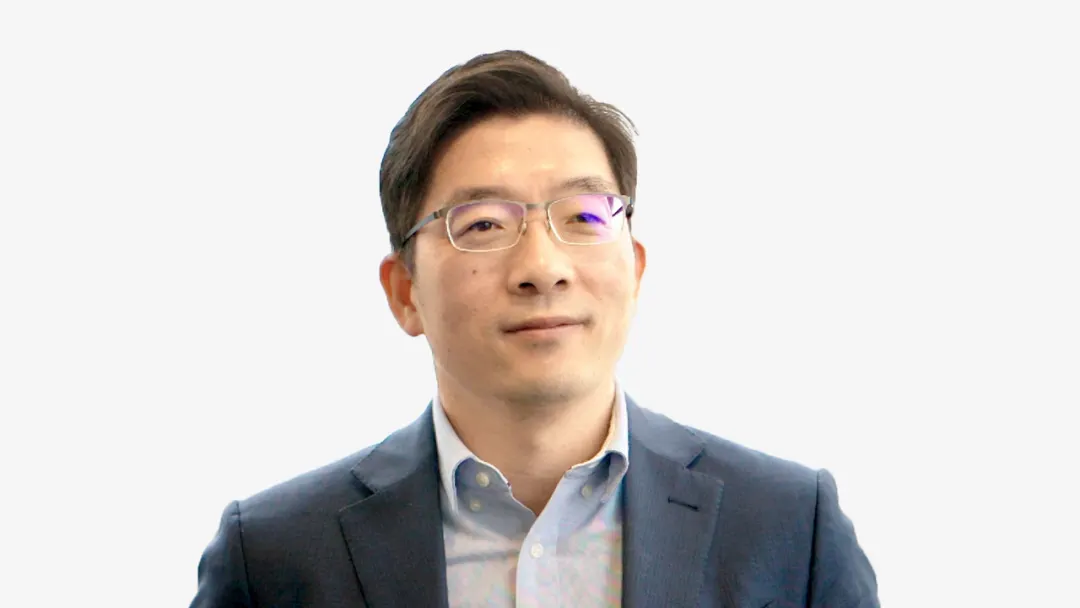
William Hu, Managing Partner at Qiming Venture Partners
Hu shared Qiming's investment strategy over the past year: deploying capital at reasonable valuations into companies where the firm has strong conviction in both the product and the team, with innovative drugs and innovative medical devices as the core allocation directions, alongside AI applications in healthcare. He emphasized that unmet clinical urgency, data quality, and technical moats are critical criteria for identifying true innovation; Qiming's current investment focus is on using capital to help Chinese innovation go global and become an integral part of the worldwide innovation ecosystem.
The following is an edited transcript of the conversation.
01/
Chinese Innovative Drug Companies Gaining Global Recognition
— The Core Driver Behind the Industry's Turn from "Cold" to "Hot"
Yicai: A year ago, investment in China's innovative drug sector was still pretty "cold" — the primary market was largely frozen, and the secondary market wasn't moving either. But since entering 2025, there's been a sense that "the money is back." So how does the sector feel to you this year? Do you think the water is warming up?
William Hu: Yes, you're actually quite precise about this. The innovative drug industry has undergone major changes over roughly the past year. Many Hong Kong-listed biotech companies have repeatedly hit new highs, with gains of 2x, 3x, even over 5x in some cases. I think the most important driving factor here is that Chinese innovative drug companies — their products have gained genuine recognition from the industry, especially global pharmaceutical companies. The global pharma world has realized that Chinese innovative drug companies can actually develop truly excellent products. I think this is a very significant change. Especially starting in the second half of last year, a batch of Chinese innovative drug companies released head-to-head clinical data, and some of it was quite stunning. The industry discovered that Chinese companies could actually perform this well. So some major overseas pharmaceutical companies have also begun partnering with Chinese innovative drug firms.
At the same time, some international investors previously focused their innovative drug investments mainly on the Nasdaq and NYSE — very few paid attention to Chinese innovative drug companies. But during this wave, we later heard that especially in the first half of this year, they regretted not participating in Hong Kong-listed Chinese biotech IPOs and missed out on this opportunity. So now they're also directing considerable attention toward Chinese innovative drugs, toward Hong Kong-listed innovative drug companies, which is quite positive. If some major international investment institutions and professional investors allocate a portion of their capital to Chinese innovative drug companies, to Hong Kong stocks, and perhaps eventually to A-shares, this would be very constructive for building a healthy ecosystem.
02/
Good Data, Low Costs, High Efficiency
— China's Innovative Drug Industry's Key Competitive Advantages
Yicai: Over the past year, Chinese innovative drug companies have celebrated multiple "highlight moments," with innovation achievements flooding overseas. These BD deals range from tens of millions to billions, even over ten billion dollars. What's your take on this phenomenon? What's driving it at its root?
William Hu: The biggest root driver is that Chinese innovative drug companies' R&D capabilities have genuinely been recognized by the industry. Historically, China had virtually no innovative drugs, so you can see that as Chinese biotechs' innovative capabilities grew in recent years, the outside world was initially skeptical. I remember long ago, when one Chinese innovative drug company wanted to license out a product to a major foreign pharma company, the partner first took it overseas and reran the clinical trials themselves. They found the data held up well, with good efficacy even in European and American populations. So this credibility was built up bit by bit. It wasn't a single breakthrough but a collective one, and perceptions of Chinese innovative drug companies shifted dramatically. Eventually, these major companies felt that if they didn't come to China and partner with Chinese innovative drug companies, they would miss an opportunity.
Actually, beyond good data, Chinese innovative drugs have a major advantage in very low costs — our R&D efficiency is much higher than others', which means that for the same asset, if a major pharma partners with a US innovative drug company, they might need to pay $1 billion, but partnering with a Chinese company might only cost $500 million. It's easy math — saving $500 million directly boosts reported profits. So as long as they confirm your product is good, their decision isn't that complicated.
Frankly, in 2021, at the stock market peak, people were enthusiastic about Chinese innovative drug companies, but there wasn't yet sufficient data to support this. So at any sign of trouble, investor sentiment turned negative. But over the past few years, from 2022 to 2025, the industry produced a concentrated batch of good data, and I think this data has made the investment thesis very solid. So I believe the next 5-10 years will be quite a good period for investing in China's innovative drug sector. People now view Chinese innovative drugs as a norm — you don't wonder whether they can do it or not, they definitely can. The question is which company can do it, what's the probability, how much did they spend to develop this compound, and how good is their product compared to others. The question of "can they even do it" no longer exists.
03/
Overseas Partnerships Are a Relatively Positive Signal
— Often Resetting Valuations for Listed Biotechs
Yicai: From a capital markets perspective, BD deals have become a positive valuation factor for innovative drugs — companies that strike BD deals almost always see their stock prices rise. This resembles previous valuation "windfalls" like PD-1, vaccines, and GLP-1. How long do you think this BD-driven trend will continue?
William Hu: As long as there's a BD deal, valuations rise. I think there are two reasons. First, Chinese innovative drugs were undervalued before the second half of last year — many investors were silent and not investing. So a BD deal essentially confirms for investors that this company can do business with the best, largest global pharma companies. Once this is confirmed, investor enthusiasm ignites. Hong Kong-listed Chinese biotechs have risen 10x over the past year — which means a year ago, they were trading at just 10% of current prices. Can you imagine that, just one-tenth the price? How much has the company actually changed in this year? Not much, really. So it's more that investor perception of this matter has changed dramatically — BD deals act more as a catalyst.
But some investors, like sector-focused funds, take a more comprehensive view. Because a BD deal means you've likely licensed out the rights to your compound — the upside is you no longer bear R&D costs and receive an upfront payment. But from another angle, if the drug becomes very successful, most of the downstream profits go to the partner, and you only get a share. So whether a BD deal is good or bad for the company — some professional investors might actually argue that by selling something this good, you're capping your future valuation. Overall, I think BD deals have become quite nuanced. It's not simply that BD is good or bad — you need to look at the entire transaction structure. But broadly speaking, I still view BD as a relatively positive signal.
04/
Seizing the Low-Valuation Window to Invest Aggressively
— Focused on Innovative Drugs and Medical Devices
Yicai: Whether the market is hot or cold, Qiming Venture Partners, as a leading Chinese VC, has always maintained high deployment frequency. In January-May alone this year, you've already invested in over a dozen projects in healthcare. Could you share the logic and considerations behind these investments?
William Hu: Actually, we invested most heavily over the past 12 months. In the first half of last year, we made a decision: we believed 2024 would be an excellent time to invest in innovation. The reason was that valuations were quite reasonable then. Second, we strongly believed that Chinese innovation was quite formidable. So I told our healthcare team internally to seize that window last year and quickly invest in companies where we had strong conviction in both the product and the team. So if you look back over the past 12 months, from around May-June last year to May-June this year, we were probably among the global healthcare funds with the largest investment amounts. Over 12 months, our deployed capital was around $500-600 million.
In terms of investment directions, we currently focus on two major areas: innovative drugs and innovative medical devices — these are our most important allocation directions. A smaller portion goes to AI applications related to healthcare.
05/
R&D System Maturing
— China Poised to Produce More Global First-in-Class Therapies
Yicai: We believe there are still many underappreciated "good seedlings" in pharmaceuticals and medical devices. Just as bispecific antibodies were once overlooked, but through Chinese companies' exploration and breakthroughs, this direction's innovative value has become globally recognized. Are there other new opportunities you're currently watching?
William Hu: Yes, China still has much excellent innovation, some globally leading, whether in new drugs or devices. We used to think most Chinese innovation was "me-too" or "me-better" — taking what others had done and optimizing it. But now we're finding that some doctors are genuinely very creative, and many Chinese doctors are quite closely connected to clinical practice. For example, in March this year, we just completed an investment in Pulnovo Medical — in the device space, they innovated a global first-in-class product, developed by a Chinese doctor. We very much hope to help promote such innovative products globally to benefit more patients. A core element here is that once China's overall R&D system is established, doctors' ideas can be more efficiently translated into products. Including in vivo CAR-T, we're also currently investing in a project. I believe in the coming decade, we will definitely see more true global first-in-class therapies emerging from Chinese companies.
06/
"Expectation Gaps" Between Industry and Capital Markets
— The Key Is Building High Moats and Meeting Clinical Needs
Yicai: We've repeatedly discussed innovation — so how do you define "innovation"? Is it about being original, first-in-class, or optimized improvement? Additionally, capital markets and industry sometimes don't reach consensus on pharmaceutical companies' innovative achievements and clinical data. Something industry views positively, capital markets may not "buy into." How do you manage this consensus gap and its risks in your investment process?
William Hu: The ideal scenario is, of course, clear clinical need — large, urgent unmet need — combined with a truly unique product. We first look for clinical need, for better products needed to solve medical problems, then examine whether the product's data can meet that need, and then whether it's distinctive, unique, something few others can do — what we'd call high barriers to entry, hard to replicate. These factors are all quite important.
Actually, the so-called divergence between capital markets and industry stems from differing expectations. A company says its product is excellent with huge potential, it can sell this much — but others in the industry may disagree, saying it definitely won't sell that much because competition is fierce. Only time can prove this; it's largely a judgment about broad direction. For us as investors, for our LPs — say we invest in 10 companies — there's a portfolio concept.
07/
Going Global Doesn't Mean Becoming a Multinational
— First, Become an Important Part of the Global Innovation System
Yicai: Qiming Venture Partners' core thesis is "China Innovation, Global Value." In recent years, more and more pharmaceutical companies have stated ambitions to become MNCs (multinational corporations) — something very rare ten years ago. Even leading companies like Hengrui Medicine wouldn't typically say they wanted to be global pharma companies. So how do you define "global value"?
William Hu: Yes, we proposed "China Innovation, Global Value" several years ago. Our current investment focus is on using capital to help Chinese innovation go global. But going global doesn't necessarily mean becoming a multinational corporation. We believe the first step is to become an important part of the global innovation system. For example, what companies are doing now with overseas BD deals — developing a compound through Phase I clinical trials, then selling it to a major overseas pharma at a certain price — I think this is step one. The vast majority of Chinese innovative drug companies can move in this direction without issue. As for whether any of them want to become globally operating companies, meaning building sales teams worldwide, that's quite a substantial undertaking. I don't believe most innovative drug companies need to go that far; more will become important parts of the global innovation system.
You'll see more and more Chinese innovative drug companies developing good drugs, whether through their own efforts or through partners, making these medicines available globally to benefit patients worldwide. And some companies have the capability to become global majors within a ten-year window, thereby truly changing the global innovative drug and medical device industry landscape. Among the world's top ten innovative drug or medical device companies, perhaps one or two names will be Chinese companies. This is something we strongly believe in.
Source | Yicai
Authors | Zou Ting, Zhao Yiwen, Xu Zhengwei, Lu Jun
Past Coverage
Dialogue | Doing "Top-of-the-Pyramid" Surgical Robots

Qiming Venture Partners was founded in 2006. The firm currently manages 11 USD funds and 7 RMB funds, with total assets under management reaching $9.5 billion. Since inception, Qiming has focused on investing in early and growth-stage outstanding companies in Technology and Healthcare sectors.
To date, Qiming Venture Partners has invested in over 580 high-growth innovative companies, of which more than 210 have listed on the New York Stock Exchange, NASDAQ, Hong Kong Exchanges and Clearing, Shanghai Stock Exchange, and Shenzhen Stock Exchange, or exited through M&A and other means. Over 80 portfolio companies have become recognized unicorns or super-unicorns.
Many Qiming Venture Partners portfolio companies have grown into the most influential companies in their respective fields, including Xiaomi (01810.HK), Meituan (03690.HK), Bilibili (NASDAQ:BILI, 09626.HK), Zhihu (NYSE:ZH, 02390.HK), Roborock (688169.SH), UBTECH (09880.HK), WeRide (NASDAQ:WRD), Insta360 (688775.SH), Gan & Lee Pharmaceuticals (603087.SH), Tigermed (300347.SZ, 03347.HK), Zai Lab (NASDAQ:ZLAB, 09688.HK), CanSino Biologics (688185.SH, 06185.HK), Schrödinger (NASDAQ:SDGR), MicroPort EP MedTech (688617.SH), Sanyou Medical (688085.SH), Amoy Diagnostics (300685.SZ), Berry Genomics (000710.SZ), SinoCellTech (688520.SH), Yuanxin Technology, Insilico Medicine, MediLink Therapeutics, LaNova Medicines, Zhipu AI, StepFun, Biren Technology, and others.