2026 AI Year-Opener: The Year of R | A Conversation with Yusen Dai of ZhenFund
History rewards those who take the first small step into the fog.
The times reward those who take the first small step into ambiguity.
👦🏻 Podcast interview: Koji
🥷 Edited and curated by: Crossing
🧑🎨 Layout: NCon

🚥 Around this time last year, Crossing and "Seriously Speaking[1]" did a crossover episode. I had a year-opening conversation with Yusen Dai, Managing Partner at ZhenFund, where we boldly predicted that 2025 would be the "critical year for AI" and the "Year of Agent." A year later, looking back, those predictions have largely played out — from DeepSeek to Manus, from the Ghibli moment to Doubao, AI applications have truly exploded.
We're back this year!
I've also taken on a new role this year: I've started as a Venture Partner at ZhenFund, while continuing to engage with AI founders from the dual perspective of a content creator and angel investor — observing, thinking, and learning on the front lines.
In this conversation, we talked for over two hours, from the internship email Xing Wang once wrote me, to Yiming Zhang muttering about optimizing those dozen-odd seconds while compiling code; from the investment thesis of "how to find Yao Ming in the AI era," to the "resilience" founders need most; from the loneliness of being a Number One, to the happiness of being a Number Two.
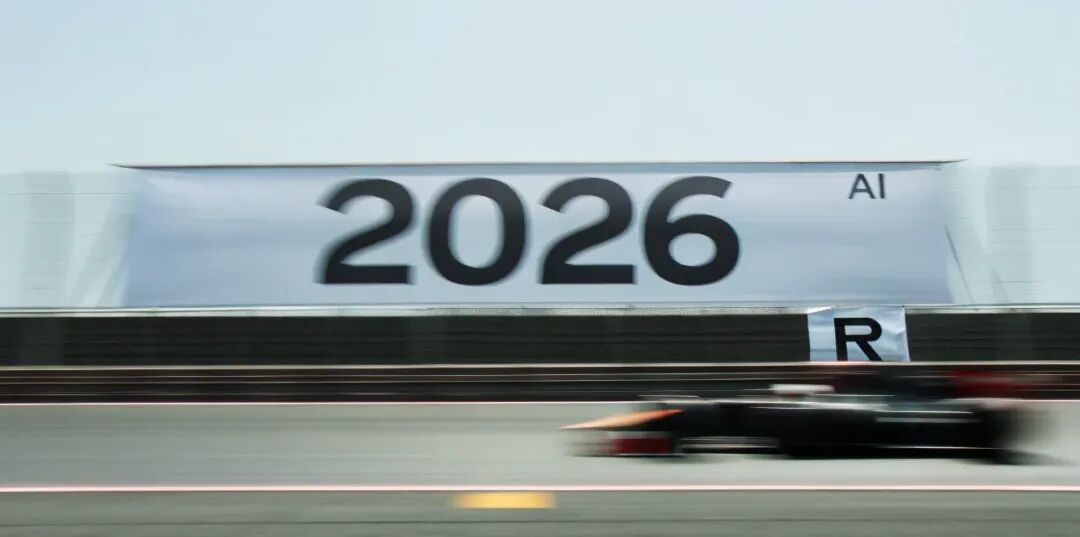
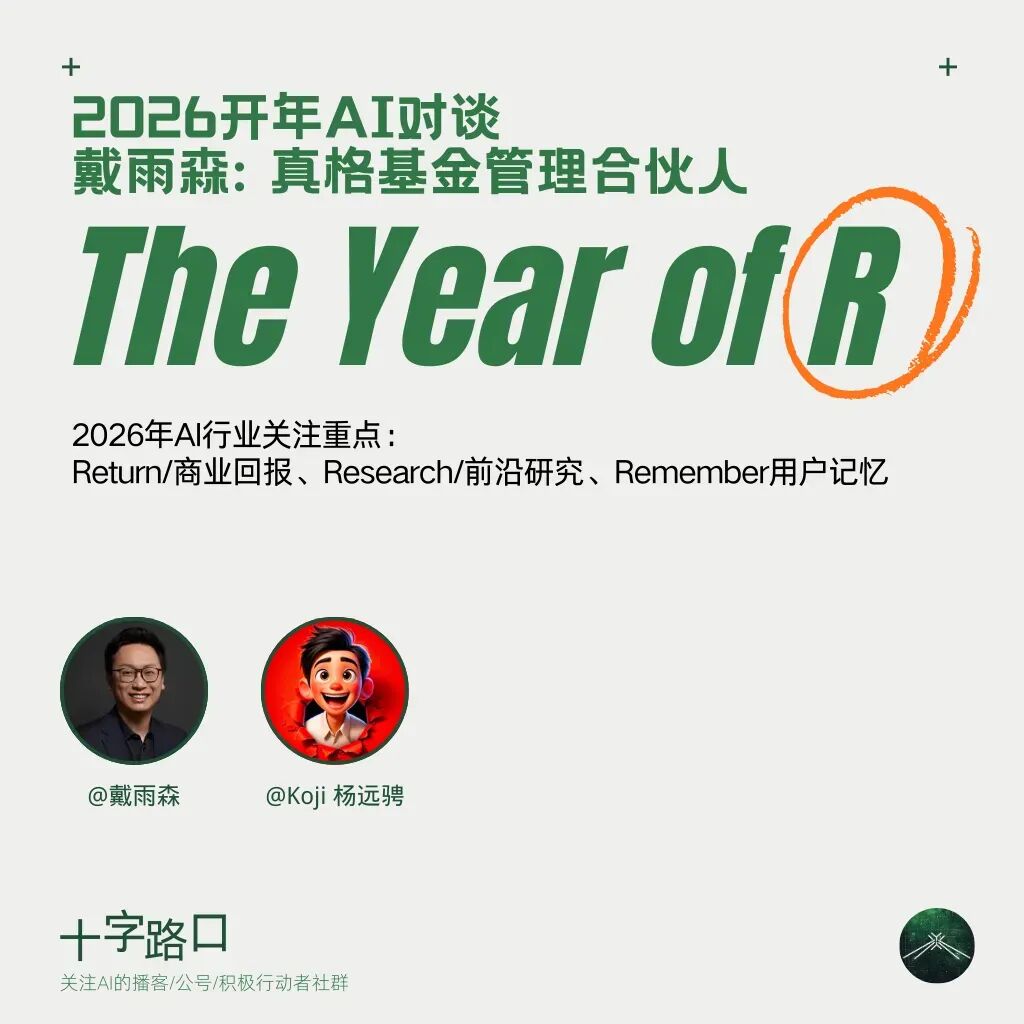
🟢 Most anticipated is Yusen's forecast for 2026 — he proposes that next year will be AI's "Year of R," with the following 3 Rs becoming key focuses for the AI industry in 2026:
- Return (commercial returns): As investment scales up, people will pay more attention to AI's real returns. Quality of growth matters more than speed of growth.
- Research (frontier research): Current AI research paradigms are hitting bottlenecks; new breakthroughs are needed to unlock the next phase.
- Remember (user memory): Memory will become a key differentiator for AI applications. Proactive Agent could be a 10x opportunity.
Finally, we also shared our happiness scores for the year, our AI product of the year, podcast of the year, and those books that helped us temporarily forget about AI.
We hope this conversation gives you some inspiration. If you're building in AI, or have an idea that excites you, we'd love to chat.
Listen on WeChat:
Listen on Xiaoyuzhou:
👦🏻 Koji
This year, standing on the front lines, I've felt all kinds of energy bursting forth from China's AI entrepreneurship. Today, Crossing once again welcomes Yusen Dai, Managing Partner at ZhenFund, who is similarly active in observing, thinking, and investing on the front lines. Like last year, we're doing a year-opening conversation. Hello Yusen, welcome to Crossing.
🧑🏻💻 Yusen
So happy to have another chance to chat with Koji. Though honestly, Koji and I pretty much talk every day, haha.
Looking Back at 2025: Year of Agent
👦🏻 Koji
We've known each other for nearly 20 years, from Web 2.0 to mobile internet, and now to AI — we've lived through three waves together. So Yusen said this year's opening conversation can't just be me interviewing him; I have to face his interrogation too.
🧑🏻💻 Yusen
Hahaha, yes! It really should be a dialogue. I'll also be asking you about many things I've wanted to discuss over our 20 years of knowing each other.
👦🏻 Koji
But before I accept your interrogation, I'll interrogate you first. Let's talk about how you see 2025 and 2026.
🧑🏻💻 Yusen
Let's first review last year's opening conversation. What did we talk about then?
🔗 For those interested, you can check out last year's content:
👦🏻 Koji
First, many people at that time thought ChatGPT might be AI's iPhone moment, but you believed we were still in the BlackBerry era.
So my first question today is: In 2025, do you think we've left the BlackBerry era?
🧑🏻💻 Yusen
When we talked last year, many felt AI applications were still on the eve of vigorous development.
We've always seen a main thread in AI's evolution: advances in model capabilities unlock application opportunities. So while ChatGPT itself was already stunning, we saw that many opportunities poised to take off by late 2024 still needed model capabilities to advance just a bit further.
So the big judgment then was that ChatGPT alone wasn't enough to bring us into AI's iPhone era — we needed further progress in model capabilities.
👦🏻 Koji
Right, that's also why we said 2024 was still the BlackBerry era.
🧑🏻💻 Yusen
In 2025, we did see an explosion of application scenarios driven by major improvements in model capabilities. This improvement began with o1, which OpenAI released in October 2024, introducing the Thinking Time Scaling paradigm.
With its emergence, progress came very quickly. In the span of a year, models may have leaped from far below human level to PhD-level intelligence on GPQA benchmarks, to scoring above 80 on SWE-Bench (which measures real-world programming tasks), surpassing humans — even strong humans.
So early in the year, Coding saw a clear explosion. Products like Cursor became essential tools for programmers, even beginning to change how many junior programmers work. Then came Coding Agents, like Claude Code and Codex — products that went from nearly zero to potentially reaching $100 million ARR in just a year.
👦🏻 Koji
Besides AI Coding, another area that made leaps in 2025 was AI Agent.
🧑🏻💻 Yusen
Yes, in the Agent domain. This was also a major judgment from our year-end 2024 conversation: 2025 would be the Year of Agent.
In early 2025, Manus and Genspark — two General Agent applications we invested in — gained massive global attention.
Actually, Claude Code, which came later, I also see as a typical L3-level Agent, enabling AI to complete tasks autonomously.
👦🏻 Koji
Besides them? What other startups?
🧑🏻💻 Yusen
We're indeed seeing all kinds of Agent startups emerging, with many interesting products. But since we call it the "Year of Agent," that means this isn't something solved in just one year.
Karpathy later called this the Decade of Agents, which I think is very accurate. Agent is fundamentally a product that helps users autonomously call upon resources and solve problems — it needs a relatively long evolution.
👦🏻 Koji
Besides Manus and Genspark, what other Agent breakthroughs matter?
🧑🏻💻 Yusen
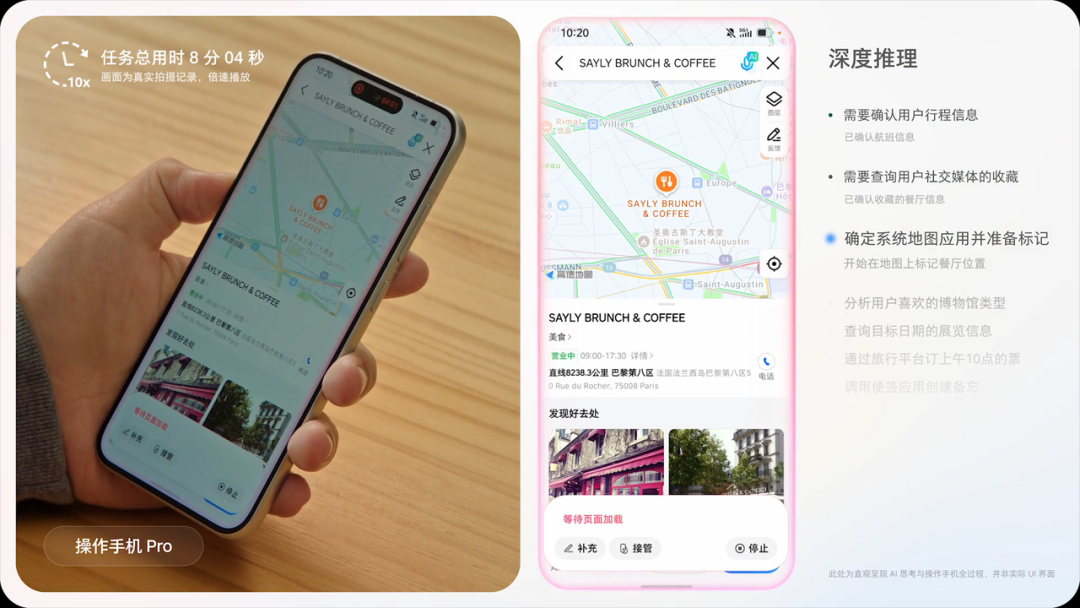
Doubao's recent launch of Doubao, I think, is a very important experiment. While it's more of a technical preview than a fully mature product, you can already see how different the experience becomes when AI is more tightly integrated with phones to complete tasks.
So from this perspective, calling 2025 the Year of Agent — I think that's fair.
👦🏻 Koji
Hahaha, last year's opening dialogue was titled "The Critical Year for AI, the Year of AI Agent." Lucky we didn't get our faces slapped.
Looking Back at 2025: Multimodality
🧑🏻💻 Yusen
Additionally, we've seen clear changes in the multimodal domain.
Early in the year, GPT-4o showed everyone that when image generation and text models combine well, it unlocks many new use cases. I remember during that period, everyone was generating Ghibli-style avatars — it was called the "Ghibli moment."
👦🏻 Koji
You only realize in retrospect how rich this year actually was. When you mentioned the "Ghibli moment," I suddenly realized that happened this year. In a daze, it feels like several years ago already.
🧑🏻💻 Yusen
I was just thinking about that too. I used to think it happened last year, but when I checked the date, I realized it was April this year.

👦🏻 Koji
After the "Ghibli moment," a lot of important things happened in the multimodal space.
🧑🏻💻 Yusen
Right. Later on, with NanoBanana and more recently NanoBanana Pro, each iteration pushed AI image generation to new milestones. This is different from the earlier era represented by Stable Diffusion and Midjourney, which was mainly about aesthetics. Now, models are much stronger at following instructions and at carrying and expressing information within images.
When NanoBanana Pro came out, a lot of people started making infographics.
And through this process, people gradually realized that image generation isn't just for designers — it's a capability for conveying large amounts of information through highly refined and accurate visuals.
This is incredibly meaningful, because a picture is worth a thousand words.
👦🏻 Koji
What breakthroughs in video generation impressed you the most?
🧑🏻💻 Yusen
Sora 2 and Veo 3 also showed everyone how video generation is evolving. When instruction following improves, fidelity gets higher, and you can generate audio and video together directly, many new use cases get unlocked. When Sora 2 launched, everyone was generating all kinds of Sam Altman-related videos.
👦🏻 Koji
Sam Altman himself is basically a traffic magnet. At the time, the vast majority of viral Sora 2 clips were parodies of him.
🧑🏻💻 Yusen
Another very hot area lately is AI-generated comic dramas. While realistic live-action short dramas might still need some time, in the comics space, there's already a huge volume of AI-generated content being consumed by humans.
At the same time, industry applications are advancing quickly. In the United States, for example, there's Harvey and Legora in legal, Sierra and Decagon in customer service. In China, we've invested in projects like Yuaiweiwu for AI plus education, and Black Lake for AI plus manufacturing.
People are gradually discovering that as models get stronger, their integration with specific industries becomes increasingly valuable — and this kind of innovation typically requires teams with real industry experience.
So you can see that AI is no longer confined to general-purpose chatbots, coding, and image generation. It's steadily penetrating every industry.
Taken together, I believe that in 2025, we've moved out of the BlackBerry era and into the iPhone era of AI. In other words, applications are beginning to explode at scale — and all of this is being driven by the continuous improvement in model capabilities.
Three Key Technical Breakthroughs: Reasoning, Coding, and Tool Use
👦🏻 Koji
Looking back at what happened this year, you can see there were three critical technical breakthroughs: reasoning, coding, and tool use.
Early in the year, we were discussing how these three breakthroughs would likely catalyze a lot of new changes. One discovery that really excited us was the emergence of Devin.
You also mentioned at the time that Devin might be the first truly usable Agent product. We felt it was extremely important, and inspired by it, we made the bold call in our headline that 2025 would be the Year of the Agent.
So looking at the full year, do you think Agent development has met expectations? Or has it actually exceeded them?
🧑🏻💻 Yusen
Overall, I'd say it met my expectations. Of course, everyone's expectations are different to begin with.
First, there have indeed been a number of landmark products. From Devin to Manus, to Claude Code, and ByteDance's Doubao mobile assistant — each represents something significant in its respective domain. From the "Year of the Agent" perspective, this much holds true.
But as we said earlier, "year one" means you don't solve everything in one year. I strongly agree with Andrej Karpathy and others who've said that Agents will need more time.
We can see from the self-driving analogy that the progression from L2, where the AI merely assists, to L3, where you can fully hand control to the AI and disengage your attention, has taken longer than many expected. Because in this process, the AI needs to take responsibility and demonstrate stronger proactivity — this doesn't happen overnight.
👦🏻 Koji
The self-driving analogy is interesting.
🧑🏻💻 Yusen
A lot of companies are calling what they do "Agent," but we've always had a clear definition — not everything qualifies. The word Agent comes from agency, and the core is subjective initiative. The key is autonomy: truly saving people time.
In other words, the AI can take a human goal, autonomously break down the task, plan which tools to use and what path to take to solve the problem, then adjust its own approach after calling tools and receiving feedback, trying different solutions until it determines whether the task is complete. Only this highly autonomous form counts as a true Agent.
Some products use workflows to build a rigid process where the AI follows steps methodically. But once the problem changes even slightly, the AI doesn't know what to do — that doesn't count as an Agent.
👦🏻 Koji
So you think there aren't that many true Agent products?
🧑🏻💻 Yusen
Yes, there aren't that many true Agent products out there.
Right now, it's still in what we often call the "crossing the chasm" framework — the early market, mainly adopted by innovators and early adopters.
To truly cross the chasm and reach mainstream users, we need continued progress in both model capabilities and product form. It's still the same thread we keep coming back to: advances in model capabilities drive improvements in product capabilities.
Everyone is continuing to invest around data and model training, so development in this direction will be fast. But I think it still needs a few more years.
Demis, the head of DeepMind, said in a recent interview that he thinks next year we might see AI Agents capable of completing most of what we do on our computers. That's a very interesting timeline from a central figure in the industry.
You can imagine: a white-collar worker sitting in front of a computer or phone — a lot of what they do is fairly routine, like ordering takeout. These kinds of workflows have clear rules and are relatively easy to label and replicate through data learning.
There are many such scenarios. I think it's reasonable to expect that next year, AI could complete these kinds of tasks to 70 or 80 percent, even 80 or 90 percent quality.

👦🏻 Koji
A year ago at this time, we were still talking about PMF all the time — product-market fit.
The reason people kept bringing it up was that many hadn't truly found PMF and were wondering whether, beyond chatbots, AI could actually create new entrepreneurial opportunities and business value.
But my own feeling is that in the last six months, PMF has virtually disappeared from our vocabulary. It's no longer mentioned repeatedly, and the reason is clear — this year has seen many products that have proven both user value and business value, and this too is a result of technological unlocking.
🧑🏻💻 Yusen
At the beginning of this AI wave, the first thing everyone discussed was: you spent all this money training models, but will anyone actually use them? Is there PMF? How fast can models convert into products?
The second question that came up repeatedly was business value — will users actually pay for products like this?
We've been gradually solving the "will anyone use it" problem, and now we can also see that more and more people are willing to pay for the value AI delivers. So PMF and willingness to pay are being solved simultaneously.
The third question is whether you can actually make money — what are the profit margins? This question is also entering the stage of being solved.
What's the Next Opportunity Unlocked by Models?
👦🏻 Koji
And we've seen that the emergence of much user value and business value is directly tied to the unlocking of underlying model capabilities.
For example, Sonnet 3.5 unlocked AI coding, which made Cursor possible. Later, o1's reasoning capabilities and Anthropic's breakthroughs in long-horizon planning are what made Agents like Devin, Manus, and Genspark possible.
So Yusen, how would you predict what trend might be unlocked next by model capabilities?
🧑🏻💻 Yusen
I see two directions.
The first is what we just discussed: Agentic. As AI gets better and better at using the tools we use every day — browsers, various software — this path is already becoming visible.
We've seen Manus and Genspark as first steps, and ByteDance's Doubao mobile assistant is also pushing in this direction.
As we continue to scale data along this route and make models stronger so they can complete more tasks, right now maybe only 10 or 20 percent is unlocked. But once we get to 80 percent, there's an enormous amount AI will be able to do.
👦🏻 Koji
Right, there's actually a lot of upside here.
🧑🏻💻 Yusen
The second trend is something that's become very clear in the past six months: images, text, video, audio, and other modalities being integrated into a unified model for understanding and generation.
Because humans themselves are multimodal-native in how we understand the world. We see things, hear sounds, understand text, and then interact with the world.
Humans are also producing this content. In the past, these different types of content were typically handled by separate models. But now we're seeing, for example, Gemini 3, a model that's natively multimodal in a very deep way. When text understanding and image generation are combined, you get things like the infographics generated by NanoBanana Pro — the results are remarkably good, and this alone dramatically expands AI's application scenarios. At the same time, its visual understanding capabilities are also very strong.
👦🏻 Koji
How strong is NanoBanana Pro's visual understanding?
🧑🏻💻 Yusen
There's a benchmark called ZeroBench — it consists of 100 visual understanding tasks that aren't that difficult for humans, but that AI currently basically can't do at all.
On this benchmark, current models score around 5 points, out of 100. But I expect that within about a year, leading models will be able to hit 60, 70, or even 80 points. That would be a massive leap forward.
Elon Musk has said that humans are machines that constantly receive visual input — a pixel machine. Vision is the highest-bandwidth way we have of understanding the world.
So I believe the capabilities unlocked by multimodal integration, and the product opportunities that emerge from it, will be a very important trend. And so far, we haven't yet seen a truly breakout, natively multimodal product.
Whether it's Cursor or Claude Code, at their core people are still using multimodal capabilities within a chatbot framework. For generating video, generating images — most people using NanoBanana Pro are still doing so within the Gemini chatbot interface.
There's actually a tremendous amount of new interaction paradigms and new product opportunities here that remain to be genuinely explored.
Has the "Phase Transition" Happened?
👦🏻 Koji
Around this time last year, something quite interesting happened. I recorded a podcast episode with Xiao Hong. It was right at his tenth创业 anniversary — he had just shut down the browser project he was working on, and had happened to see Devin, which got him extremely excited and ready to launch Manus.
That podcast episode still hasn't been released. We wanted to find a more meaningful point in the future to put it out, so most of the content needs to stay confidential, and we'll leave a bit of suspense. But at the time, Xiao Hong kept returning to one judgment — he felt certain that 2025 would see a "phase transition," and those were his exact words: "phase transition."
Looking back now, do you think that phase transition in 2025 has actually happened?
🧑🏻💻 Yusen
I think the phase transition has already happened, and in AI, phase transitions are themselves the norm.
I've used this analogy before: AI capabilities are a bit like boiling water. Before you hit 100 degrees, you can only make coffee. But the moment you reach 100 degrees, you unlock the steam engine. From a temperature perspective, it's a continuous process. But from a results perspective, it's a phase transition — a step change.
Ilya mentioned in a recent podcast that AI development can be divided into scaling periods and research periods. You first get a paradigm breakthrough through research, then you scale — a bit like continuing to improve model capabilities after the water has boiled; then when the next paradigm emerges, you start "boiling water" again. So phase transitions are essentially the process of research continuously advancing and progressively unlocking new capabilities.
👦🏻 Koji
That boiling water analogy is really vivid and spot-on!
🧑🏻💻 Yusen
If you look at phase transitions from the user side, what you see is things that people could only imagine before suddenly becoming doable.
Take Agent. People have been thinking about this direction for a long time. In 2023 there was a project called AutoGPT, which used GPT-3.5 or GPT-4 at the time, trying to get the model to think, execute, and reflect on its own, forming a feedback loop to complete some tool-using agent tasks.
But back then "the water hadn't boiled" — model capabilities weren't sufficient, so it couldn't really run, and remained more of a concept. It wasn't until around Sonnet 3.5, or when 3.7 reached a certain threshold, that applications like Devin and Manus were truly born.
👦🏻 Koji
That boiling water analogy is really vivid and spot-on!
🧑🏻💻 Yusen
On one hand, model capabilities reaching a certain level is crucial. On the other hand, you also need truly AI-native products that can present these capabilities well, for people to actually perceive the results of this phase transition.
Because users ultimately don't use models themselves — they use products. This is also why we've always emphasized the importance of applications: no matter how strong model capabilities become, they need good products to carry and present them.
👦🏻 Koji
The value of product managers remains extremely important in the AI era.
🧑🏻💻 Yusen
And it's not just in agentic capabilities — multimodal is undergoing phase transitions too. People have been thinking about how to generate content that's increasingly close to the real world. Take generating people, for example — whether images or video, increasingly lifelike, increasingly consistent.
This year, people have clearly seen this phase transition happening, and it's unlocked a lot of very interesting new scenarios.
Products That Have Recently Excited Me
👦🏻 Koji
In Q4 this year, you also invited me to start as a Venture Partner at ZhenFund.
So at ZhenFund, I've also been seeing firsthand what more entrepreneurs are building, and what VCs are discussing and thinking about internally. We'll complain together about bubbles in the industry and some irrational phenomena, but more often, we're actually marveling together at new technologies, new products, and the continuous emergence of a new generation of entrepreneurs.
Right now, at this very moment we're recording this podcast, I want to ask you: has there been anything recently that's excited you? Or something approaching the same magnitude of excitement as when Devin appeared last year?
🧑🏻💻 Yusen
Let me start with something relatively smaller.
There are two AI applications I use every day now. The first is ChatGPT, because I've been using it since day one, and it's accumulated a huge amount of memory about me over time. So now when I chat with it, I increasingly get this feeling of "it really gets me."
The second is a very early-stage company we invested in, called Typeless. The simplest way to understand it: it's a voice input method, but it's far more than just an input method.
👦🏻 Koji
I've also found that I can't live without Typeless now!
🧑🏻💻 Yusen
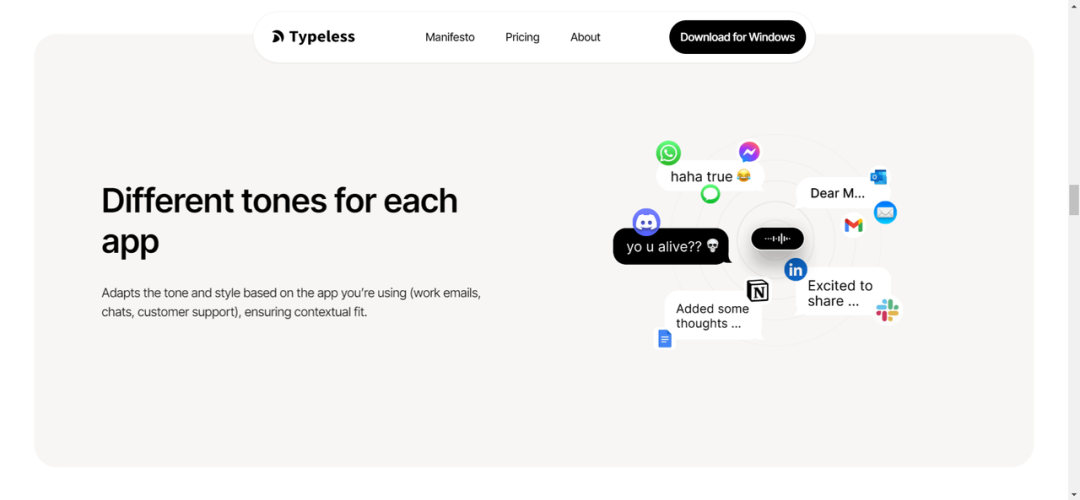
Let me briefly introduce Typeless. You can assign a key on your keyboard, and when you press it, you can just speak directly to your computer. After you finish speaking, it first filters out filler words, then begins to understand what you said.
For example, if you say, "I'm going to say three things next. First, a, b, c. Second, x, y, z," it automatically organizes this into a structured list: 1. something, line break; 2. something...
At the same time, it can switch tones for different application scenarios. For instance, the way you speak on WeChat versus in Lark for work is naturally different. It helps you adjust the same sentence into a tone more suitable for the current application context, and it continuously learns your own typing habits.
For example, I might say something and it initially adds a period at the end. But on WeChat, I don't really like adding punctuation at the end of sentences, so I'll delete that period. It remembers this habit and gradually learns the expression you actually want. The final text that comes out increasingly resembles what you would have typed yourself.
👦🏻 Koji
Haha, I also don't like using periods when typing on WeChat — feels like it makes me seem too serious, like an old man.
🧑🏻💻 Yusen
Hahaha!
👦🏻 Koji
Go on.
🧑🏻💻 Yusen
Right, at first glance, Typeless is an AI input method, but it's much better than any dictation tool you've used before.
The second point I want to make is that voice itself is a very natural interface for how we interact with computers. In the past, things like Alexa and Siri made many attempts, but when model capabilities weren't sufficient, AI wasn't smart enough to truly understand what you were saying and what you meant to express, so the experience was always somewhat mediocre.
👦🏻 Koji
Yes, my kid always says "Xiao Ai is so dumb."
🧑🏻💻 Yusen
But now, as model capabilities rapidly improve, I firmly believe that using voice to interact with AI will become something very natural, even somewhat magical. This isn't a grand thing in itself, but it's extremely practical, and I think there's a huge opportunity ahead.
👦🏻 Koji
You said there were two things that excited you. What's the second?
🧑🏻💻 Yusen
The second thing that's recently excited me is that I got access to Doubao. AI directly controlling your phone and doing things for you — this is a direction people have been anticipating for a long time, and not hard to imagine. But this is the first time we're seeing a product prototype that actually executes this pretty well.
I'm deliberately calling it a "product prototype" — that's also how the Doubao team describes it themselves. It's a preview version. Because it's still at a very early stage, not suitable for ordinary users, and has generated quite a bit of controversy as a result. But it can indeed complete tasks end-to-end — like ordering takeout for me, something that requires a certain degree of interpretive freedom, execution capability, and also handling of some corner cases.
👦🏻 Koji
I also used Doubao to pre-order 4 cups of Starbucks for tomorrow morning, to be delivered to the office at 10 a.m.
🧑🏻💻 Yusen
For me, this is like opening a window into the future. You can imagine that in a few years, AI will help you complete many things that you currently have to do yourself.
However, I must admit that the excitement right now isn't as strong as it was at the end of last year. At the end of last year, we very clearly saw that two massive directions — Coding and Agentic — were about to undergo major transformations.
This year, multimodal AI gives me a similar feeling — it's equally massive. But in my view, Coding and Agentic AI remain the two most important directions in the virtual world. Because these two things combined essentially let humans operate without friction in the digital realm. Doing things through code, doing things through software — that's basically everything we do on computers and phones, everything in the virtual world. So last year's sense of "a massive wave is coming" felt stronger.
This year feels more like many fields have completed the 0-to-1 leap. After bringing the water to a boil, everyone's now scrambling to build steam engines — it's an evolution from 1 to 10, and the feeling is different.
👦🏻 Koji
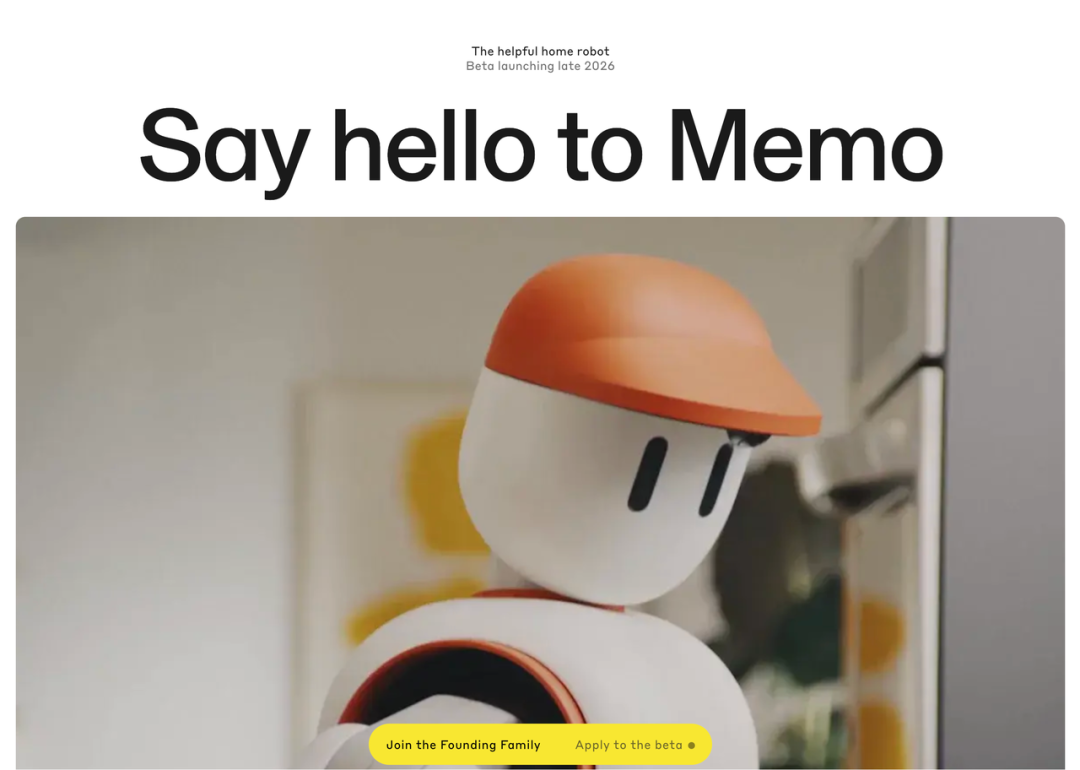
There's another product I really love right now: Sunday's embodied robot, called Memo. Sunday is a Silicon Valley company, but both founders are Chinese — Tony Zhao and Cheng Chi. They're building robots for home scenarios.
🧑🏻💻 Yusen
We absolutely love the Sunday team. We met Tony and Cheng back in 2023, before Tony released Aloha. We really wanted to invest in them, but couldn't close the deal due to factors outside the project itself — mainly geopolitical reasons.
👦🏻 Koji
What struck me most was the aesthetics. After seeing it, you feel it's completely different from the robots made by a thousand other embodied intelligence companies. This is probably the first robot I've seen that I actually want to buy and put in my home.
Looking closer, both of them had previously done research that led the industry.
🧑🏻💻 Yusen
Right. Even though we didn't invest, we could see several fascinating things about them. Let me add a few points.
First, Tony's Aloha and Cheng's UMI Gripper were both highly influential in shaping research and practical directions.
After Aloha's release, numerous teams adopted similar configurations to collect data and attempt generalization. UMI became almost the default configuration when people did gripper data collection.
So these two were researchers who were leading academia and industry. The two of them starting a company together is already a powerful combination.
👦🏻 Koji
When they launched Sunday, they also released a glove — a data glove that costs only $200. Its structure maps one-to-one with the robot's hand. I remember it only has three fingers, which is quite a different approach.
I think their release pushed embodied intelligence, a field that was hot but hadn't quite found its direction, a big step forward. I can see some very interesting breakthroughs in real-world deployment emerging from this.
🧑🏻💻 Yusen
I've been thinking about something lately. When Aloha first came out, they did a demo of a robot autonomously cooking stir-fry, which went viral.
This time with Sunday, they're proposing a different approach. They found some Airbnb settings and had the robot complete common American household tasks zero-shot — like putting bowls in the dishwasher, clearing tables, that sort of thing.
👦🏻 Koji
Also, I was most shocked that the Sunday robot can hold wine glasses without crushing them.
🧑🏻💻 Yusen
Right, it can hold two wine glasses at once without breaking them. I think they did an excellent job with that demo.
Speaking of demos or showcases, Manus, which we invested in this year, is also a typical example. They not only had outstanding demonstrations but actually had a usable product, so it spread very quickly.
This also reminds me of a recent documentary about Demis called Thinking Game. It takes us back to the AlphaGo moment — from the match with Lee Sedol to later with Ke Jie.
👦🏻 Koji
I also watched it twice, excellent. A friend told me she actually cried.
🧑🏻💻 Yusen
Haha, what I want to say is, when watching the AlphaGo matches with Lee Sedol and Ke Jie in the documentary, I thought about how every time such a demo or demonstration appears, there are two reactions: on one hand, it goes viral; on the other hand, there's a lot of skepticism — are you just doing this for hype, for attention, for PR?
But I've always felt that technological progress itself is continuously happening. For academia, for researchers, an important question is: how do you use media as a lever to help more people realize that technology has reached this stage? And to get people imagining what kind of value such technological progress will bring to the world, to users in the future?
Because research can't just stay in the ivory tower. It ultimately needs to create value for the world, for society, for users. And in this process, media as a lever is extremely important.
👦🏻 Koji
Tech demos make me think of the Wright brothers' first flight in 1903, which was also a very interesting "product launch." They were quite intentional about documenting key moments and capturing visually stunning photos, which sparked massive discussion.
So times change, but the pattern of how technology is presented to the public, how it captures attention, attracts more talent and capital into a new technology field — that hasn't really changed.
Are you trying to defend tech marketing here?
🧑🏻💻 Yusen
I think doing a good launch, showing your demo to the world, isn't so-called marketing or hype — it's about letting people truly see the future. This itself is a very core capability. The reason Steve Jobs' keynotes are still celebrated is the same.
In computer history, there's another classic example called "The Mother of All Demos." That was in 1968, when almost no one truly understood what a graphical interface was, yet they demonstrated complete GUI interaction.
(Note: On December 9, 1968, Douglas Engelbart gave a 90-minute live demonstration at the Fall Joint Computer Conference in San Francisco. Looking back, computer historians gave it this name — because that single demo essentially "previewed" the form of personal computing and human-computer interaction for the next half-century.)
Often, a good demo gives people a "time machine" feeling, letting you see through the present to the future ten or twenty years ahead. And when you truly see that future, you're more willing in the present to invest in it, to work for it.
So when I watched Sunday's demo, I felt that power again.
Koji's "Wudaokou Stories"
🧑🏻💻 Yusen
That was mostly you asking me questions. Let's switch.
People's impression of Koji now is mostly as co-founder of The Fair and founder of Crossing. But actually, Koji and I met in college around 2005 or 2006.
Our birthdays are only two days apart, quite a fate. (Editor's note: The day before the podcast recording was Koji's birthday, the day after was Yusen's, haha) Over these 20 years, we've had various collaborations that, in a way, mirror our journey through the internet, mobile internet, and now the AI era.
👦🏻 Koji
Time flies!
🧑🏻💻 Yusen
Let me start from college. We both really admired Xing Wang, calling him "Brother Xing." Later you wrote him an email and successfully got an internship as a product manager at Hainei.
Looking back, we obviously spotted a future titan very early. Why were you so bullish on Brother Xing back then?
👦🏻 Koji
People always say Crossing's content makes them anxious, always talking about how times change, how fast technology moves. Today let's just chat stories and gossip.
🧑🏻💻 Yusen
Bring it on!
👦🏻 Koji
In school, we were really the same — just spending every day on Xiaonei. Later when Brother Xing built Fanfou, we went from checking Xiaonei daily to checking both Xiaonei and Fanfou daily.
There was a very strong intuition: their products were simply "good"! Using them felt smooth. Many things just felt like they should be that way — no need to think, no need to learn. Later when I gained some theoretical knowledge, I learned this is called "good user experience."
Another thing that impressed me deeply: whether Xiaonei or Fanfou, they would put up posters in Beijing university dorm areas. Their posters were simply the best-looking at the time: copy, layout, aesthetics — all made me intensely curious about the product and naturally fond of the team behind it.
So looking back, I didn't necessarily have strong analytical abilities then — it was more intuition and emotion: I just liked the product, so I wanted to see what kind of people, in what kind of environment, made something like this.
If I had to summarize a takeaway: try to participate in things that your intuition tells you are "the most awesome," and get close to teams you feel are "the most awesome."
There was no motivational鸡汤 telling us to do this back then — it was more of a subconscious choice.
🧑🏻💻 Yusen
I was also a heavy user of Xiaonei and Fanfou. My Xiaonei ID was 3527 — they started from 1000, so I was the 2,527th user.
I think I started using it the day after it launched, so we all agreed back then that the product was good and addictive.
But from a "reading people" perspective, Brother Xing was only in his twenties then. By today's standards, that would be like an entrepreneur born in 1999 or 2000.
What did you observe in him that made you willing to follow and work with him? What founder traits still inspire us today? Which still hold, and which might need adjustment?
👦🏻 Koji
First, both Xiaonei and Fanfou were social media. Using social media meant we could more directly access and understand Brother Xing, see what he posted daily, what he was thinking about.
Looking back, two things made me feel he was especially impressive: first, his very strong bottom-up user thinking and product thinking. He was always thinking about what pain point this product was actually solving.
Second, he also had a very strong top-down strategic vision and foresight. Every now and then, he'd say something that struck us at the time as incredibly "next level."
I remember once in a café, Brother Xing told us that portals and search engines of the past were building "information highways," while what we were doing was building "human highways" — social media as infrastructure, connecting everyone, letting anyone get on the road at any time and access the convenience and commercial value that comes from connection.
That kind of elevated yet accessible expression — at the time, I listened with genuine admiration.
🧑🏻💻 Yusen
Interesting!
👦🏻 Koji
I can also share an email here. Before I officially started as a product manager intern, Brother Xing sent me a welcome email. Recently, to prepare for this podcast episode, I dug it up again and found it especially fascinating. I'll read some excerpts aloud.
🧑🏻💻 Yusen
Sure!
Brother Xing's Letter
👦🏻 Koji
First, he wrote:
"Hello Yuancheng, I'm very glad you're interested in interning at Hainei. Our team has ambitious plans and is doing something very meaningful and challenging: building the best Chinese real-person network, using technology to improve the lives of hundreds of millions." Reading this today, it suddenly connects to something we've been discussing recently: people assume that since we meet founders on the front lines every day, we'd encounter many "visionaries" who want to change the world. But that's not the case. Only in extremely rare situations do you meet a founder who will directly tell you to your face, "I want to build the best Chinese real-person network," or "I want to build China's most awesome AI product."
🧑🏻💻 Yusen
You really don't meet many people like that.
👦🏻 Koji
But Brother Xing was someone who had this phrase on his lips back then. The very first paragraph of the email he wrote to me, an intern, was this slogan.
🧑🏻💻 Yusen
What year was this?
👦🏻 Koji
🧑🏻💻 Yusen
Brother Xing was about 27 then — equivalent to a '98-born founder today.
👦🏻 Koji
Then in the email, he continued:
"For everyone interested in joining us, I want to emphasize that you need to be clear on three things. First, what is our company's goal? Do you identify with it? Suggestions for improvement are even better. Second, what is your personal goal? How do you plan to achieve it? Third, how can company goals and personal goals be aligned as much as possible? I believe only after clarifying these three points can collaboration have a solid foundation and not be a momentary impulse."
"If you want to do real work, hope to make real contributions and gain real rewards, then Hainei may be a very suitable place. We don't want to waste our precious youth. At a big company, you might go months without your work having any impact. But here, everyone's work must play a role. We must improve every day."
He wrote this because at the time I was still considering whether to intern at Microsoft or Google, and he wanted to offer a reference point for comparison.
Looking back now, I'm still quite moved. At the time, Brother Xing was ambitious on one hand, but I also felt he expressed a very positive, uplifting attitude that was quite infectious.
Actually, when I read the email back then, my mind was just going: "YES YES YES YES YES YES YES, stop talking, take me."
🧑🏻💻 Yusen
What Brother Xing said still holds true today. Any young person thinking of joining a startup should ask themselves: Do I want a big title, the brand name of a big factory, or do I want to do real work with real contributions and real rewards? Can company goals and personal goals align?
Of course we might say these things every day now, but this was nearly 20 years ago, so looking back, it really is quite moving.
👦🏻 Koji
And at the time, you felt like you could learn something new from Brother Xing every day.
After I joined, there's another small story. One day I was a bit emo, because as you know, back then people said we were copying America with Fanfou, Hainei, and Xiaonei — and to be fair, we were.
My work as a product manager involved spending huge amounts of time studying Facebook and Twitter. That day I probably got criticized on social media again, saying we were copying, not original, lacking innovative spirit.
Brother Xing saw I was a bit emo. At the time we were using an apartment in Huaqing Jiayuan as our office. He pointed out the window at the intersection in Wudaokou and said something like this: Look at the asphalt below, and the streetlights — none of those are our original inventions, but does that matter? What matters is whether users actually need it? Does it actually have value? And how can we build on others' inventions to do it better, to make it cheaper?
In that moment, my mood completely opened up. From then on, I never felt emo about "studying" Facebook and Twitter again, hahaha.
From another perspective, we were learning from and drawing on the most advanced experience. Someone else made something so awesome — why would you pretend not to see it? You should analyze it thoroughly, understand it clearly, and put it to use for us.
🧑🏻💻 Yusen
Learning isn't the problem. Learning poorly is the problem.
So how did you win over Xing Wang? Because he also has very high standards for people, and you were just a college student at the time. How did you join Hainei and become the only product manager intern?
👦🏻 Koji
Brother Xing had always been an idol of mine, and I always wanted more chances to get close to him.
One day there was an event at Tsinghua Science Park, and Brother Xing gave a talk. After he finished, he was standing on the side of the audience area. Not many people went up to him. Back then it wasn't trendy to add people on WeChat; he just stood there after speaking, looking a bit lonely, a bit introverted.
I thought: "My chance has come!" I had to go up and chat with Brother Xing. But what to say? Suddenly a lightbulb went off — I decided to go report a bug to him. At the time I was holding a BlackBerry, using Fanfou's WAP version, and had indeed encountered a bug. I rushed over and told Brother Xing who I was, then said I had a bug to report.
Brother Xing immediately got excited — what bug? Let me see!
🧑🏻💻 Yusen
He was very interested.
👦🏻 Koji
Right, looking back, I actually did something that would interest him.
Then during self-introduction, I discovered he actually knew something about me, because back then on Fanfou he had followed me too. I was quite the chatterbox back then, pontificating about everything, commenting whenever Google released something, so he had probably read some of my writing.
So I think on one hand it was about being proactive, but on the other hand, it's also important to share and express yourself more on social media. I encourage everyone today to post more on Jike, Twitter, Weibo, and Xiaohongshu.
🧑🏻💻 Yusen
Now this is called building in public. Back then, including with Manus's Tao Zhang and Wandoujia's Junyu, we were all part of that blog circle. We were all in our early twenties, pontificating every day — much of it nonsense, to be sure — but we really made a lot of good friends.
👦🏻 Koji
Yeah, I often miss the blog era and those carefree days wandering around Wudaokou.
Yiming Zhang, Muttering to Himself
🧑🏻💻 Yusen
When you were interning at Hainei and Fanfou, there was an engineer colleague who later started his own company. The company he founded is called ByteDance, and he is Yiming Zhang. So what was Yiming like back then?
👦🏻 Koji
The classic Wudaokou IT guy: plaid shirt, backpack, glasses. That was his look.
But on the other hand, at the time, my impression of him was: he was a very reliable engineer, very fast at building things. Another thing was, he especially loved asking questions, so every time I had to meet with him, I'd feel a bit of pressure.
Recently, an engineer who sat next to Yiming back then shared a small story with me: everyone was writing programs in C++, and each compilation took over ten seconds. Most people would zone out during those ten seconds, take a sip of water, or browse the web.
But Yiming wouldn't. He'd mutter to himself: "Ugh, these ten seconds, every time after I make a change I have to compile, what can I do with these ten seconds? How can I improve efficiency?" — He was even thinking about how to optimize away those ten seconds.
That was his style: wanting to use time and energy with extreme efficiency, constantly muttering "how do I change this, how do I change that," and the things he changed were usually right.
So looking back more than a decade later, like ByteDance's app factory, the crazy A/B testing — I think, of course this is hindsight — but you could already see the early signs.
🧑🏻💻 Yusen
Interesting.
👦🏻 Koji
His pursuit of extreme efficiency and deep thinking was rare.
Many people either think deeply but move slowly, or move quickly but think little. But looking back, Yiming thought deeply, moved quickly, and the results were also very good.
He could often immerse himself in this state for long periods. Outsiders might see him as grinding, as pushing hard, but from his own perspective, he probably just easily entered flow state and didn't feel tired himself.
Another colleague from back then shared with me that she occasionally took the subway home with Yiming, and on the subway Yiming was also constantly thinking. And Yiming was quite special — he didn't just think silently in his head, he especially loved to say it out loud, or ask it out loud.
Recently I came across an interesting metaphor called "turpentine." This comes from Picasso, who once said: "When art critics get together, they discuss form, structure, the meaning of art. But when real artists get together, they might just be talking about where to buy cheap turpentine."
This is also very much like my memory of just starting out as a product manager, building things with everyone. Back then we didn't spend much time discussing the future of social media, the future of mobile internet. We were more thinking: what did Facebook release? Can we learn from it?
🧑🏻💻 Yusen
Recently I've had a realization: form, structure, and meaning are important, and turpentine is also important. Some top-down grand narratives and some bottom-down grounded practicality — like Kant said, you need both "feet on the ground and eyes on the stars."
If you only discuss turpentine, ignoring form, structure, and meaning, that might limit a company's ceiling. But if you only discuss form, structure, and meaning, and don't know how to get your feet on the ground, can't even buy turpentine, then it's all grand narratives, all storytelling — and users won't like the product either.
So combining these two is probably what good entrepreneurs need to do.
How Would Xing Wang and Yiming Zhang Differ in the AI Era?
👦🏻 Koji
As angel investors, we really want to find the next twenty-something Xing Wang and Yiming Zhang. But if in the AI era there exists a "new generation Xing Wang" and "new generation Yiming Zhang," what similarities would you predict in them? And what would be different?
🧑🏻💻 Yusen
That's a question we're always asking ourselves: how do we find the next Xing Wang and Yiming Zhang, ten years from now?
Of course, it's also possible that ten years from now it's still Xing and Yiming themselves. Nothing we can do about that.
A lot of the time, this is a question of technique versus principle. The principle of entrepreneurship — the underlying traits that make someone an outstanding founder — are actually fairly consistent. Whether you're building McDonald's back in the day, building internet companies later, or building AI now, I think it's all pretty much the same.
👦🏻 Koji
Which parts are the same?
🧑🏻💻 Yusen
At ZhenFund, we often talk about several essential capabilities for founders.
First is learning ability. Entrepreneurship is a process of constant learning. You can't know everything from day one, so you need to be an extremely fast learner.
Second is leadership. That email Xing Wang sent you, and many of his conversations with you — those are all strong demonstrations of leadership. Finding excellent people, people whose values and goals align with yours. Because entrepreneurship isn't a solo act; it's a team sport.
Third is innovation. You have to do things differently. Even if you're building asphalt roads and streetlights for China, you have to build them in a way that fits China's market characteristics.
Fourth is willpower. Entrepreneurship is grueling. Whether it's persevering through hard times, or resisting small temptations to pursue something bigger — willpower matters enormously.
I find it hard to imagine that these underlying capabilities won't be needed in the AI era. I think they're the same.
👦🏻 Koji
What changes in the AI era?
🧑🏻💻 Yusen
But Chinese founders are also constantly evolving, and a lot of the "technique" level keeps upgrading.
If we divide internet entrepreneurship into stages, the first stage was probably 20 years ago, when we were just getting started. There really was a lot of "copy to China." The US had Facebook, Xing Wang built Xiaonei. And that's perfectly understandable — the US was more advanced then, so step one was building Chinese replicas.
Ten years ago, around 2015, there were more "distinctly Chinese" business models. Shared power banks, shared bikes, Xiaohongshu, Pinduoduo — these were unique opportunities created by China's market environment. But if you tried to take these products overseas directly, they often needed massive adaptation.
By 2025, what we're seeing is more and more Chinese founders going global from day one, building the world's first or among the first innovations right from the start.
👦🏻 Koji
Innovation has become more important.
🧑🏻💻 Yusen
Yes. For example, Manus — we've been talking about how it really is the world's first general agent. It feels completely different when you use it, and it was global-facing from the very beginning. Whether you're American, Brazilian, or Korean, you're using the same product.
Another example is Typeless — also global from day one. Voice input, whether in Chinese, Spanish, or Japanese, has fundamentally consistent underlying demand, so it's naturally international from the start, and can pursue genuinely world-leading innovation.
The same applies to hardware. Whether it's DJI, Bambu — these were all among the first or the very first innovations in their respective fields.
So the techniques will be somewhat different, but these underlying traits, these core capabilities — I think they remain the same.

👦🏻 Koji:
Do you think starting a company today has gotten harder, or easier? Because today there's more to learn, more tools, more experience. How do you see it?
🧑🏻💻 Yusen
I think entrepreneurship has definitely gotten harder — more competitive.
Twenty years ago, China's overall GDP was growing at around 8%. The macro growth was rapid. The internet was also going from 0 to 1 to 10, spreading from niche to mainstream. The demographic dividends of China's 1.3 billion people, and the global 8 billion — those two major era dividends have genuinely diminished, and we have to be honest about that.
At the same time, the major tech companies have gotten more intense too. Now it's "Yiming competing with you" — that competition is definitely fiercer.
But simultaneously, the quality of founders keeps improving. Back in our day, being able to look at what products were trending overseas already gave you a competitive edge. Now everyone sees the latest releases in sync with overseas, researching them in parallel.
Whether it's foundational knowledge or understanding of entrepreneurship itself, the information abundance is incomparable. I remember back then, just knowing VCs gave you an advantage. Xing Wang failed repeatedly in his early fundraising.
Now the capital market is more mature. VCs are recording podcasts daily, talking to founders, telling them what kind of founders we're looking for, what entrepreneurial experiences matter. Excellent entrepreneurs and product managers keep sharing continuously. From a learning perspective, there's vastly more material available.
So founder capability is also a rising-tide-lifts-all-boats process. Overall it's a kind of equilibrium: the environment is harder, competition fiercer, but peers are also more capable.
👦🏻 Koji:
Any other differences?
🧑🏻💻 Yusen
The innovation characteristics of AI and the internet are also somewhat different. Mobile internet was more about distribution channel innovation — taking internet technology and distributing it through a new channel.
But AI right now is still more about research and technological innovation. The distribution channels it leverages are already there — the channels of the internet and mobile internet.
So AI is somewhat more like the semiconductor wave of innovation. From the invention of integrated circuits, to Intel executing Moore's Law — though now we call it scaling law — it requires continuous heavy CapEx investment, massive research, and generational iteration. That's quite different from the internet.
This difference in nature also means the founder traits and difficulty levels will differ. So we can't simply say it's harder or easier — it's about the right person doing the right thing.
👦🏻 Koji:
What you'd call Founder-Market Fit — the match between founder and domain.
How to Build and Invest in an Era Without Maps?
🧑🏻💻 Yusen
We both started companies in the early mobile internet era. I was at Jumei International Holding Limited — we were an internet company that later made the mobile transition. You built Jiepang in 2010, one of China's earliest mobile internet apps.
Back then, everyone also felt the iPhone 4 launch created huge opportunity. Everyone knew mobile internet mattered, but there was so much uncertainty. No one knew what mobile internet would ultimately look like.
What was your founding experience like then? What's similar to today, and what's different? Share with everyone.
👦🏻 Koji
I've been reflecting lately on what's the same and different between 2009 and today.
I think the similarity is: this is a year where everyone can feel the opportunity, but no one knows the specific answer. It's an era without a map, without GPS, but where everyone knows there's opportunity — you have to run fast, you need to sprint. Against this backdrop, how should we build companies? And how should we invest?
My thinking is, in an era without maps, two things are almost never wrong. First, take action aggressively. Direction can be guessed, full of hypotheses, but action must be fast.
Second, go where excellent people cluster. Back in Steve Jobs and Bill Gates's era, they clustered together too. Throughout history, many tech waves have erupted from the same small place. Finding that place isn't hard — for example, attending an offline community event at Crossing, you've already taken a very important step, hahaha.
🧑🏻💻 Yusen
What about investing?
👦🏻 Koji
Speaking of investing in an era without maps — how should you invest? I think projects are genuinely hard to judge, but people are relatively easier to judge.
Like you just said, whether building McDonald's or Walmart, certain founder qualities don't change. For example, when we were talking about "turpentine" earlier, I was reminded of a story from the Walmart autobiography I've been reading lately. He said his kids really hated going on road trips with him.
Why? Family weekend road trips were popular back then, but his kids hated them because every time they passed through a small town, if there was a supermarket, he couldn't control himself — he had to stop and look at how shelves were arranged, how prices were designed. The kids would wait two hours every time, completely miserable.
I think that's the "turpentine" of that era — obsessing over how products are made, how service is delivered.
About a year and a half ago, when Crossing was just getting started, Tao Zhang came on the podcast. He particularly emphasized one phrase: get your hands dirty. Meaning don't just listen to others talk about AI — go use AI. Chat with ChatGPT. Use AI coding to build products yourself. Try Manus, let it complete tasks for you.
Number One vs Number Two
🧑🏻💻 Yusen
Because you started Jiepang in 2009 as number two; later you were an executive at Jumei; later you were number two at The Fair, number one at Tangdao, and now number one at Crossing. You've held different positions — what are the different experiences?
👦🏻 Koji
I think being number one is the hardest, because it's genuinely so ambiguous and lonely.
The number two role actually varies quite a bit. I think of myself more as a producer working with a director — handling logistics and coordination, that's roughly my positioning.
Being an executive requires the ability to get things done within a complex organization. At Jumei, we were the youngest US-listed company at the time, going public on the NYSE in just four years. So in that kind of organization, how do you communicate, how do you navigate complex relationships to make things happen — that's executive capability, not necessarily what you need when founding your own company.
But anyway, having these perspectives means that today, whether I'm creating content on the front lines or investing, I can relatively easily understand what people in different positions are thinking, what they're anxious about, what they're afraid of. This emotional-level understanding is still helpful to me now.
🧑🏻💻 Yusen
Which do you like best? Why?
👦🏻 Koji
I probably still like being number one best, because it's the freest, the most creative, and allows the most subjective initiative.
But if there's a team structure where I can freely create value as number two or three, with a number one above me sharing the ambiguity, loneliness, and pressure — that's actually pretty perfect too.
Yusen, I remember you mentioned in an article, in an interview, that you described yourself as someone with a "number two personality." How do you see the question you just asked me?
🧑🏻💻 Yusen
That's indeed a question many people have asked me.
After I left Jumei as number two, many people asked me, so are you going to be number one next? Are you going to become a serial entrepreneur, a veteran driver? Then I want to invest in you.
But I genuinely am someone who professionally plays the number two role. Number two at Jumei, and now number two at ZhenFund. In the end, it's actually a lifestyle choice.
I remember reading the interview with Xiaowan and Xi Cao yesterday, where he described what entrepreneurship feels like: you look back and realize there's no one behind you anymore — it's just you. Sitting in the number one seat means you're the last line of defense; at the end of the day, everything falls on your shoulders. So the top position is more exhausting, and often less fulfilling. Of course, the power is greater, the returns are greater, and if you succeed, the fame and rewards are greater too.
If your personality demands extreme power, returns, and influence, then you're suited for the number one seat.
But more importantly, you have to ask whether this is truly a lifestyle you enjoy.
👦🏻 Koji
What kind of lifestyle do you prefer?
🧑🏻💻 Yusen
After I left Jumei, I thought about this too. What I enjoy is working with a group of very smart people on something genuinely valuable, but I really don't want to manage a thousand people, and I don't have such strong ambitions for power and influence. So I want to do what I truly love.
As you just said, having a good team is also a kind of happiness. When you know you're not necessarily the best number one, you should go find the best number one, the best boss.
Just like when you joined Xing Wang. Of course, you later joined my team, which might suggest that boss wasn't such a great find, so you really should look for the most impressive boss.
👦🏻 Koji
Huh? The above is Yusen being modest — please judge for yourselves how much of that is true.
"Investing in People"
🧑🏻💻 Yusen
We've always said that "finding people, reading people" is ZhenFund's theme, and I think it's also a very important theme for you at Crossing — constantly engaging with practitioners in the AI space, many of them founders.
You're now a Venture Partner at ZhenFund too, so who among these founders has left a deep impression on you during this time? If you were to invest your own money in some of them, what characteristics would you look for?
👦🏻 Koji
I think everyone is an investor. For professionals, you're an investor too — because choosing which company to join, choosing who to work with, is actually the most important investment of your life. You're investing your time, and time is a non-renewable resource. The cost is far greater than investing money.
From this perspective, I could say I invested in Xing Wang, you invested in Leo Chen, and I also invested in you.
🧑🏻💻 Yusen
Hahaha, the returns on that one are mediocre.
👦🏻 Koji
Still pretty good — at least top 1 in 1,000.
After Jumei went public, we had a bit of money and did some early angel investing. For example, in 2015, I was fortunate enough to invest a small amount in Xiao Hong through Yuan Liu's introduction.
You asked which founders in the AI space have impressed me as an angel investor. I think the most important quality is resilience. Many qualities are timeless, but today I would pay special attention to resilience, for two reasons.
🧑🏻💻 Yusen
Which two?
👦🏻 Koji
First, in the AI era, iteration happens faster. This means founders and teams can build more products more quickly, but it also means failures will be more frequent.
Second, model evolution is rapid too. Everyone knows models can overwhelm applications, so the little castles and small successes you've built may quickly be flooded and rendered obsolete.
So in this era, the ability to experiment rapidly, accept the repeated failures that come with fast experimentation, adjust quickly, and rally your team to adjust and rebuild together — resilience becomes more critical than ever.
For example, we've shared multiple times how Xiao Hong led his team to build Manus: when the browser path was blocked, they quickly found a new opportunity, went all-in on Manus, and made the agent story work.
🧑🏻💻 Yusen
Beyond resilience?
👦🏻 Koji
Beyond that, there are two other qualities I believe are timeless.
One is product thinking. I think this is especially important today. When technology shifts, people easily fall into "hammer looking for nail" mode. You have to constantly remind yourself: am I solving a user problem? Is this something users actually need? Or do I just have this technology and feel compelled to use it? That's a very easy trap to fall into.
The second is timeless marketing capability. Especially in today's era of fragmented attention, doing marketing well has become particularly important.
So to summarize: resilience, product thinking, and marketing ability. The capabilities required don't differ much across eras — it's just the priorities that shift somewhat in today's context.
Yusen, in this wave of AI, you invested in Moonshot AI for large models, Genspark and Yuaiweiwu for applications and agents; ZhenFund also invested in Manus, Infinigence AI, HeyGen, Opus Clip, Typeless. We could name dozens — very impressive, and one could say the investments have been remarkably good.
So let me turn the question back to you: in the AI era, what kind of founders do you invest in? What's your own answer?
How to Find Yao Ming in the AI Era?
🧑🏻💻 Yusen
This is something we've been discussing internally at ZhenFund.
We often use Yao Ming as an analogy internally. There are many people in a room, and you need to find someone to play basketball — you might not know who's good. But if Yao Ming is in the room, you absolutely must not miss him.
Later I also discovered that the NBA has some incredible athletes under 5'7". I even went looking for footage to see how someone in the 5'4"-5'5" range plays in the NBA.
👦🏻 Koji
Any conclusions?
🧑🏻💻 Yusen
But clearly, Yao Ming isn't just about height. Even if someone isn't tall, if you've watched them play, you'll recognize that they're obviously very strong.
So it comes down to having seen enough entrepreneurs that when you encounter Yao Ming, you recognize him immediately.
In this AI wave, beyond the general founder qualities we just discussed, I've also summarized: what characteristics do the companies we've invested in that have developed well in this first phase of AI share?
👦🏻 Koji
Share — what are the characteristics?
🧑🏻💻 Yusen
First, AI is a technological revolution and technological advance, so excellent founders must have their own understanding and perspective on technology development.
Broadly speaking, if you're building a product using technology that's already very mature, you're probably too late; but if your product requires technology that won't mature for three to five years, you may become a martyr.
To be a pioneer means being one step ahead — building products that technological breakthroughs will support in 6 to 12 months. This requires founders to have judgment about the direction and pace of technology development.
One case is someone like Zhilin Yang, who is himself a technical powerhouse. In 2023, he judged that long context would be extremely important — that long context unlocks memory, which would become a crucial part of AI applications. This year he also made an early call to go agentic, so everyone saw K2's strong agentic capabilities. Another case is Xiao Hong. He isn't an AI technical authority himself, but first, Peak's joining was crucial, bringing understanding of frontier model development. Second, they initially wanted to build an AI browser, so they did extensive technical research and forecasting on how AI could manipulate browsers.
Based on this, Manus was able to do browser usage extremely well in a sandbox. It's a bit like when they started building Manus in October 2024, they anticipated that when Sonnet 3.7 launched a few months later, models would reach a new level in agentic tasks and using tools like browsers. So Manus's product form fit very well with the pace of technological progress at that time.
👦🏻 Koji
Mm, so the first point is: having your own judgment and perspective on technology development trajectories.
🧑🏻💻 Yusen
Second, AI products can now face global markets from day one. Large language models have solved the language problem. Applications targeting white-collar and knowledge workers — regardless of country — have broadly similar demand patterns.
So founders need to understand global markets and do product design and operations/promotion well. This doesn't necessarily require being a returnee or having done cross-border products before. Rather, a new generation of Chinese entrepreneurs often has excellent awareness of outstanding global products.
Many of us grew up reading biographies of entrepreneurs like Steve Jobs and Elon Musk, watching thought-sharing from investors like Peter Thiel. I believe the new generation of Chinese entrepreneurs' international capabilities — from product taste to operations and promotion — are collectively much stronger than in the past. Of course, this is still a process requiring learning and accumulation.
👦🏻 Koji
Keeping yourself at the table matters too.
🧑🏻💻 Yusen
Right, another great feature of AI is that new opportunities emerge every year.
If you're doing mobile internet entrepreneurship now, you might get one opportunity a year if you're lucky. It's like a card table that's barely dealing new cards anymore.
But AI is different. We just reviewed how much happened in one year — this card table deals 10 cards, 20 cards a year. For entrepreneurs, it's normal to draw a card and not play it well — just exchange it for another.
So you see Manus was Butterfly Effect's third product; Typeless was that team's third product, their previous one was called Max AI, also a browser plugin that competed with Monica. Later Monica went to do Manus, and Max AI became Typeless.
We recently invested in Biao — Pollo is probably only his second product in the AI era. His previous AI product was called Hix, and before that they did many cross-border applications.
Everyone is continuously flipping cards. As you keep going, you might flip over a big card that's truly yours.
At this point, the resilience we mentioned earlier matters a lot. I need to stay at the table. At the same time, I need to be sensitive enough to new opportunities, execute quickly, to have the chance to flip that card.

👦🏻 Koji
How do you view the challenge that foundation models pose to application entrepreneurs today?
Of course people are also discussing: as models become more and more capable, if what you're doing overlaps heavily with model capabilities, you'll face challenges.
For example, overseas, Cursor and Perplexity are excellent applications, very well executed, with high valuations too — but people worry: what you're doing is very close to what models provide, so will you ultimately be replaced?
So in the end, you need industry experience, industry data, distribution channels — capabilities that aren't in the model. Combine model intelligence with proprietary industry experience and data, plus distribution channels, to do what model vendors can't do.
For example, we've invested in Yuaiweiwu for AI plus education, Black Lake for AI plus manufacturing; in the United States we see Harvey for AI plus legal, Sierra for AI plus customer service. Combining with industry experience also makes for very good characteristics and moats.
👦🏻 Koji
In China, consumer electronics means hardware-software integration — another natural advantage for Chinese founders.
🧑🏻💻 Yusen
I think the key is still to find what this market and this team do best, to find those capabilities that aren't easily replaced by models.
This year, as model capabilities have advanced, AI applications have entered a stage similar to the iPhone era. So whether you're building software, applications, or consumer electronics and hardware, there are a lot of AI entrepreneurs out there right now.
Advice for Entrepreneurs Who Want to Be on the Podcast
🧑🏻💻 Yusen
I think Crossing is a great media platform for these entrepreneurs to engage with — even to showcase themselves.
You've talked to so many entrepreneurs this year and produced many episodes. If you were to give advice to entrepreneurs who want to appear on Crossing, or more broadly, who want to work with media, what would you say? What's the most common mistake they make?
👦🏻 Koji
First, I don't think you need to package yourself as super successful or super smart for a podcast. Don't treat it as a "everything's ready, time to reap applause" moment.
If I were to give entrepreneurs advice on appearing on podcasts, I think there are two main points.
First, start with the end in mind — be clear about your goal. Crossing is an industry media platform. Its value lies in bringing founders' ideas and products into the public discourse of the VC and startup community. So when people come on Crossing, their goals are usually either to reach VCs, to reach talent, or to build industry influence.
So you need to think through: why should anyone care about what you're doing? This is important. Don't just lay out 1, 2, 3 of what you've done. Instead, explain clearly: Why are you doing this? Why are you better positioned than others to do it? Why is now the right time? Make the meaning clear.
The second piece of advice is know yourself and know the other side. The "other side" here means media. You need to understand what media needs. Media needs influence and reputation, and both of these come from one core thing: the content itself has to be good content.
What is good content? I've always felt it can be summarized in three words: interesting, useful, resonant. If the perspectives and stories you prepare meet these three criteria, I'd be very happy to work with a founder to refine them into great content.
🧑🏻💻 Yusen
There's also this phenomenon: after Manus blew up, now almost everyone wants to shoot a video — sitting alone on a couch, presenting their product in English — and they all want to get on various podcasts. What do you think of this trend? What advice would you give them?
👦🏻 Koji
I think the saddest thing isn't saying the wrong thing or doing the wrong thing in your marketing. The saddest thing is working your ass off to build something, and nobody knows about it, nobody discusses it, nobody cares.
In that situation, there's no way to validate whether your product is even right; you can't attract talent, and you can't build any momentum.
So at Crossing, what I want to do is help early-stage founders get the industry to know what they're doing, and get their products seen by more people.
🧑🏻💻 Yusen
Being seen by more people is something with tremendous public value, social value.
The Era Rewards Those Willing to Take the First Step Into Ambiguity
🧑🏻💻 Yusen
Starting in the second half of this year, you've also participated in various ZhenFund meetings as a Venture Partner — regular meetings, strategy sessions, discussions, IC investment committee meetings. You've moved from always sitting on the entrepreneur's side of the table to now sitting on this side with me, seeing how we operate as an institutional fund, and naturally gaining more understanding of the VC industry itself.
For you, what's been especially fresh, something you hadn't expected? And what do you wish you'd known earlier when you were founding companies?
👦🏻 Koji
The one thing I most wish I'd known earlier is: the era really will always reward those willing to take the first step into ambiguity.
And this step doesn't have to be a big one like quitting your job to start a company. Often it's a small step.
🧑🏻💻 Yusen
Take action proactively.
👦🏻 Koji
Right. I've recently become fond of a small product called Plancoach. I discovered it when I was judging a Xiaohongshu hackathon this year. It's for treating procrastination.
At first, the developer was just slumped in front of his computer, his wife constantly nagging him to do the dishes, and he couldn't move at all. So he asked AI: what should I do right now?
The AI told him, your first step really just needs to be standing up. He had an epiphany in that moment:原来 the way to fight procrastination isn't through willpower, but through small actions that can actually be completed.
Later he turned this idea into an app and posted it on Xiaohongshu. That post got 260,000 likes. I've really never seen a single post with more likes than that.
So coming back to entrepreneurship. If you're planning to do AI entrepreneurship today, what's your small step? What's that first step into ambiguity that the era will reward?
Maybe it's adding me on WeChat and having a chat. I feel like entrepreneurs who've talked with me have all gained something, at least some emotional value.
🧑🏻💻 Yusen
Of course, that small step could also be following ZhenFund's official account. We have many events for interacting with and sharing with entrepreneurs. Often, it's these small steps that gradually become big steps down the road.
Entrepreneurship vs. Investing: Two Completely Different Ways of Life
🧑🏻💻 Yusen
So how do you see the job of being an investor now? You've seen what we do every day. What's your feeling?
👦🏻 Koji
I think investing is a particularly good job, especially when technological paradigms are shifting. Investing lets a person personally participate in the future, in all kinds of possibilities. I think it's one of the best ways to participate in the future.
I also think angel investing is actually quite similar to doing media. Every day you're searching, trying to capture those early, faint but very vital signals that others haven't noticed yet, and those amazing founders. To see them, get close to them, help them.
In this process, you gain yourself too — whether it's media influence or equity investment returns. So this thing has both emotional value and economic value. I think it's a particularly good job.
Yuan Liu said on a Crossing podcast before: An angel investor's glory, happiness, and value all come from discovering a product and a founder that nobody else has discovered yet.
But the process itself is also hard. It requires constant learning, and it's full of uncertainty. Especially in China, VC is also a fully competitive industry. But personally, I quite enjoy the process.
Yusen, you mentioned not long ago that you've been investing for almost ten years now — that's already longer than the time you spent founding companies. Having done VC for this long, how do you feel about this job?
🧑🏻💻 Yusen
It's a very different job and way of life.
👦🏻 Koji
Tell me more.
🧑🏻💻 Yusen
When I was founding companies, I always felt like investors didn't understand anything. When I started doing investing myself, I realized I really don't understand anything, yet I'm forced to constantly voice opinions, to pontificate — including right now, hahaha.
👦🏻 Koji
Hahahahahaha!
🧑🏻💻 Yusen
I've done both roles fairly deeply. The first obvious difference is that entrepreneurs need to go extremely deep on one thing. When I was doing Jumei International Holding Limited, I was probably one of the best people in China at selling cosmetics — but that's all I knew. Ask me to sell clothes, I wouldn't know how. You have to go extremely deep on one thing to have differentiation and value.
But doing VC, especially early-stage VC, you can chat about any topic. At dinner people might think you know everything, but in reality nothing is something you truly know.
If you really knew something as deeply as entrepreneurs do, we always say — then you should go start a company. That's why we say we don't really want to pontificate. Because the founders we back, whether it's Zhilin Yang doing models or Xiao Hong doing applications, understand their respective fields vastly more than we do.
We're more like a large language model, constantly absorbing the best data, then spitting out some tokens. But as everyone knows now, the LLM doesn't truly understand those tokens.
👦🏻 Koji
Dying at this analogy.
🧑🏻💻 Yusen
So don't take what investors say too seriously. If they really understood that much, they probably wouldn't be doing investing.
This is the difference between depth and breadth: going extremely deep on one thing versus knowing a little about many things. The latter, while not necessarily genuine understanding, does create opportunities for synthesis and cross-pollination. It's not entirely a bad thing.
👦🏻 Koji
Any other differences between founding and investing?
🧑🏻💻 Yusen
The second big difference is sense of purpose. When founding, your goals are extremely clear. For example, in these six months I need to launch the product. The progress bar is very clear: three months development, two months testing, one month launch, go to market. I'm working hard because I need to get definite things done with limited time and resources.
But doing investing, especially early-stage investing, it's very hard to have a progress bar. I can't say, in the next three months I will invest in a unicorn. I might meet one tomorrow, or I might meet one two years from now.
So you can't plan a progress bar. This kind of work isn't always the exhaustion of having too much to do — it's the anxiety of not knowing where the progress is. Fate is often not in your own hands. This isn't just true of primary markets, it's true of secondary markets too.
I can't say I bought this stock today and tomorrow it will definitely go up. I can only say, right now this looks like an opportunity with decent risk-reward.
👦🏻 Koji
Not seeing the progress bar is really anxiety-inducing.
🧑🏻💻 Yusen
Entrepreneurs are certainly anxious too, especially when they haven't found direction. But investor anxiety comes more from uncertainty. That's why investors easily get FOMO — fear of missing out on this wave.
I think entrepreneurs are doing a lot of creative work. You said something I really liked before: Criticism makes you look smart; creation makes you look clumsy.
👦🏻 Koji
That was originally from Cat Zhu at Dejavu.
🧑🏻💻 Yusen
Every day we're saying this product doesn't work, that plan is no good — but when you actually build a product yourself, even if it's just ten thousand users, there are really ten thousand people in the world using your product to create value. That's a hard and remarkable thing.
Whether entrepreneurs are doing 60, 80, or even 30 — as long as people are using it, people are willing to pay, it's incredibly impressive.
But in the process of constant creation, entrepreneurs do have less time to learn. When I was founding companies, I actually loved reading, but I didn't read that many books during those years. After switching to investing, I read a lot more books, and learned a lot from daily conversations with different founders.
But did I create anything? Probably not really. These are just different ways of life.
Whether you're founding a company, investing, or working at a big tech firm, fundamentally these are all lifestyles. What kind of life you want — that's what matters most.

👦🏻 Koji
What lifestyle would you encourage young people in the AI era to choose?
🧑🏻💻 Yusen
For young people, I'd still strongly encourage them to experience entrepreneurship first. The anxiety of investing — "shallow learning but high uncertainty" — is better felt after you've accumulated some experience.
So I still encourage young people to take that first step amid the ambiguity of the times.
👦🏻 Koji
What about you? Do you enjoy the work of investing?
🧑🏻💻 Yusen
Overall, I genuinely enjoy investing now. A huge source of fulfillment comes from being able to stand alongside the best founders at the earliest stages — growing alongside people who might define this era — and providing some small but genuinely valuable help when they need it most.
[Featured] 2026 Forecast: Year of R
Return (Commercial Returns)
👦🏻 Koji
What are your outlooks and predictions for 2026?
🧑🏻💻 Yusen
By late 2025, whether it's for our LPs, internal reviews, or just ourselves, we've done a lot of forecasting for next year. But first, a disclaimer: as I mentioned, investors don't really know anything, and AI is changing so fast — there will definitely be plenty of wrong takes and hallucinations in here. As Allen Zhang put it: everything I say is wrong.
👦🏻 Koji
So the statement "everything I say is wrong" is itself wrong, haha.
🧑🏻💻 Yusen
Since we're making predictions, people usually want it distilled into a single phrase or concept. I've been thinking that AI in 2026 could be called "The Year of R" — composed of three Rs.
👦🏻 Koji
What's the first R?
🧑🏻💻 Yusen
The first R is Return, commercial returns.
Over the past few years, AI has delivered significant application value, and the media highlights have been plentiful. Especially in the last six months, we've seen massive deals: who's committing $10 billion, tens of billions to buy compute and build data centers; or Meta poaching talent with $100 million annual compensation packages. Including the run-ups in NVIDIA, optical modules, storage — these hardware plays are really trading on the I in ROI, which is Investment.
ROI stands for Return On Investment. For the past three years, the market has been trading on this I. Why so much investment? Because people are drawn by the prospect of enormous Return.
Go back to late 2022, after ChatGPT's release — people were willing to buy so much compute, build so many data centers. There were two major sources of Return: first, AGI, which could solve countless problems and even pose threats to humanity; second, more pragmatically, AI applications could make serious money. The attraction of returns was immense.
But now Investment is growing ever larger, and when Return materializes and how much it actually delivers is getting more scrutiny. Only if your Return continues meeting expectations will it drive future Investment. So Return matters a lot.
👦🏻 Koji
What signals are you already seeing?
🧑🏻💻 Yusen
First, we're seeing some concerns about Return.
From the model perspective, progress in model capabilities drives AI applications to emerge and deliver value — that's the fundamental driver. It was precisely seeing model capability improvements that led people to form such grand expectations as AGI.
But we're also seeing: model capabilities are still advancing rapidly, yet if you look at the rate of improvement per unit of time, there's some deceleration. After the latest SOTA models launch — whether it's OpenAI 4.5, Gemini 3, or GPT 5 — compared to the previous generation SOTA models, perhaps six months ago or early this year, the magnitude of improvement is slowing. You can feel this from various benchmarks and user-side feedback.
👦🏻 Koji
But the money going into large model companies keeps increasing.
🧑🏻💻 Yusen
Right, and simultaneously, investment in large models is getting bigger, especially in the United States.
Once a model reaches 80 points, getting from 80 to 90 requires significantly more investment. Both compute and human investment are much larger. But under this heavy investment, frontier progress is slowing, while catch-up competitors can't be stopped. This year is particularly typical with Chinese open-source models, achieving 80% to 90% of frontier model capabilities at very low cost.
Now, after a SOTA model releases, within about six months, leading Chinese model companies will have an open-source version. For example, mid-year this year, when everyone saw the IMO gold medal results, both OpenAI and Gemini achieved them with general-purpose models. Recently DeepSeek released Math V2, also an open-source model capable of IMO gold medal results — just six months later, and with obviously much lower training costs. So the narrative of "simply overwhelming with scale, others can't keep up" has been challenged. On the model side, people are finding that there seem to be some growth bottlenecks in returns.
Second is on the application side. A few years ago, people were talking about the AGI vision, with aggressive predictions that AGI could be achieved by 2027. I remember there was even a 165-page long essay, Situational Awareness: The Decade Ahead, that projected this.
But now, people are gradually shifting from the narrative of "AGI's existential impact on humanity" to several realistic, predictable main threads.
👦🏻 Koji
Which threads?
🧑🏻💻 Yusen
The first thread is subscription models represented by ChatGPT: charging each user directly, maybe $20 now, or $200. But raising prices for ordinary users is difficult. Netflix's price positioning has barely changed from 20 years ago to now.
Previously, the expectation was: as models get stronger, I charge $20 this year, $200 next year, $2,000 the year after — you could keep raising prices like this. But the actual result: the intelligence that sold for $200 in previous years now only sells for $20, because token prices are dropping fast. If you charge $200, someone will charge $20 to compete with you.
Especially when everyone sees Gemini models performing well at cheap prices, and Google has deep pockets to wage price wars. So Chatbot subscription price increases are harder, and penetration is already fairly high. Knowledge workers worldwide are basically using various Chatbots, with most using free versions or solving many problems for $20. Competition is fiercer, pricing power has weakened.
👦🏻 Koji
Right, there's an invisible ceiling on subscription fees.
🧑🏻💻 Yusen
The second thread is large DAU. Products like OpenAI's, which now exceed 500 million DAU, will steadily progress toward 1 billion DAU soon. Historically, such large DAU internet products monetize through advertising and e-commerce: Google, Meta, ByteDance, Tencent all work this way. So OpenAI's expansion into e-commerce and advertising is getting lots of attention — this is also what OpenAI has been testing recently.
But the idea of large DAU products selling advertising sits in awkward tension with the AGI narrative. Because these are mature business models, largely about redistributing existing pie.
E-commerce reflects online penetration of social retail, and the pace of online penetration growth is relatively stable — even somewhat stagnant in the United States. Online advertising is also a proportion of online commercial activity value, not something that can suddenly double in a year. Much of this is zero-sum: what was originally at Meta, Google, ByteDance, now ChatGPT comes in to take a slice.
How much new value can it actually create? Questionable.
👦🏻 Koji
How to do advertising in a Chatbot — there's no answer for that yet today.
🧑🏻💻 Yusen
Right, and the pace may be slower than expected. Google launched in 1998, but didn't roll out AdWords until 2000, then AdSense in 2003, gradually forming a search-native advertising model. Facebook launched in 2004, but didn't introduce feed ads suited for social networks until 2007. Douyin launched in 2016, and its advertising exploration also took considerable time, roughly through around 2020.
Chatbots are similar now — you can't simply insert ads. Doing so could damage user trust in AI assistants, especially paid users' trust. So getting advertising and e-commerce right requires lots of trial and error; next year won't see simple fulfillment either.
👦🏻 Koji
Anything else?
🧑🏻💻 Yusen
The third thread is usage-based pricing represented by AI Coding. A big story is: if AI replaces much programmers' work, programmers are well-paid, there might be tens of millions or hundreds of millions of programmers worldwide at $100,000 per year — that's $10 trillion in wage value. Can AI capture some portion of this, say $3 trillion or $5 trillion?
But I have a different view: AI being able to replace much programmers' work doesn't mean it can earn those programmers' wages. Rather, it means things that used to cost a lot of money become less valuable.
👦🏻 Koji
That's true.
🧑🏻💻 Yusen
Because the price of intelligence — token prices — keeps falling. Once a task becomes less frontier, it quickly becomes a fixed subscription fee, say $20 or $100 per month; after some time, it may become nearly free, or even run on-device.
Only the most SOTA, most frontier tasks can sustain usage-based pricing, but even these rapidly homogenize. Simply put: things that used to be valuable become less valuable.
On one hand, it enables more people to become programmers; but simultaneously, it lowers the wages programmers can command. So many people are actually more worried about AI causing deflation: in the short term, it may reduce overall value.
👦🏻 Koji
What about B2B?
🧑🏻💻 Yusen
Right, the fourth part I want to discuss is also enterprise services — AI enterprise applications sold to large companies, like Harvey, Sierra. This year they've grown very fast, with some companies reaching $100 million, $200 million ARR.
But if you go back to the "crossing the chasm" framework: early markets spread quickly, but enterprise AI deployment isn't that easy. Even for something as universal and technically mature as Microsoft Office Copilot, enterprise adoption has fallen short of expectations. Large companies don't adopt new technology that quickly, so this segment still has a chasm to cross.
Overall, Amara's Law may well hold: we tend to overestimate the short term and underestimate the long term. I think many of the high expectations for returns in 2026 may end up falling short.
At the same time, with so much investment poured in, expectations for returns are running high. The gap between high expectations and slow deployment could affect market sentiment and capital commitment.
Satya has spoken about what AGI means: it has to accelerate GDP growth, even getting global GDP growth to 10% annually. Truly expanding the pie — that's real AGI. So if it's just reallocating existing internet advertising spend, that doesn't count as incremental value. AI creating new drugs, discovering new knowledge, raising human productivity overall, expanding the frontier — that's what gets closer to true AGI, or the incremental value that AI can bring.
👦🏻 Koji
So what does all this mean for founders?
🧑🏻💻 Yusen
Early this year, many companies were growing at negative gross margins. Cursor is the classic example — people say Cursor is basically reselling native tokens at a discount. The bet is that token prices will drop fast enough that your negative margins today flip positive later; growth matters most.
But something has shifted in Silicon Valley: people increasingly care about growth quality. When investing in applications, they'll look at whether the $1 of tokens you bought can be增值ed through your application into $2 sold to users. Even if your input cost is $10 today, when it drops to $1, can you create positive gross margins? Because token price declines are happening regardless.
So investors are increasingly focused on gross margins on revenue growth, user retention, cash flow. Are you acquiring lots of users who won't stick around, or can you retain them? How's the cash flow?
👦🏻 Koji
There are also companies doing this very well. Like Lovable.
🧑🏻💻 Yusen
Lovable is reportedly cash flow positive already, so it doesn't really need to rely on fundraising to survive. Then of course there's Midjourney, which has never raised funding, and in China there are companies like Plaud with very strong cash flow.
When people see this kind of quality growth, the question becomes: do you still need negative margins, pure burn-to-grow? This is a shift in investor narrative and mindset.
Research (Frontier Research)
👦🏻 Koji:
The first R in Year of R is Return. What's the second R?
🧑🏻💻 Yusen
The second R, which has come up a lot recently, is Research.
It's connected to the first R, Return, and to the slowdown in progress within the current model paradigm. Historically, AI has often worked like this: a research breakthrough reveals a scaling law, then everyone scales compute and data, and capabilities grow. But when scaling hits a bottleneck, new Research is needed to drive the next step forward.
👦🏻 Koji:
Ilya recently said too: we're now entering the Age of Research.
🧑🏻💻 Yusen
I saw Dario say something similar recently: AI capabilities are increasing, but the speed of economic returns may slow, or rather economic returns are quite uncertain — what's needed here are many research breakthroughs.
Demis also said recently: it may still take 5 to 10 years to reach AGI, but the path requires 1 to 2 breakthroughs, meaning paradigm-shifting research.
👦🏻 Koji:
What new research paradigm breakthroughs have you seen?
🧑🏻💻 Yusen
From the frontier research directions, Self-Play — this kind of continuous learning, self-iterative capability — is an important direction. So-called world models, the ability to understand the world through vision, through logical reasoning, are also important directions.
So the most cutting-edge researchers and thought leaders have strong expectations for a new paradigm shift, believing it's critical for AI to reach the next level.
👦🏻 Koji:
So you see Research as another key reason why next year is the Year of R.
🧑🏻💻 Yusen
The second manifestation of Research is a new investment trend in Silicon Valley: a wave of research-oriented companies have raised significant funding, collectively referred to as Neo Labs.
For example, Ilya's company SSI, and Mira's Thinking Machines Labs, whose latest funding round valued it at $50 billion. That's already more than the combined valuation of China's generative AI startups, since the major foundation model companies there add up to just over $20 billion.
There's also Reflection AI, and more recently Humans&, Periodic, Isara, and other Neolabs. My own summary is: these Neolabs hope to explore research-oriented, differentiated scientific paths from the leading model companies.
Because the leading model companies are now competing fiercely, already optimizing for specific scenarios: ChatGPT's consumer users, Anthropic doing coding and enterprise services, Gemini going multimodal — they all have clear optimization paths. The next wave of Research may need new organizations, new environments, unlocked under more relaxed conditions. Doing engineering and product is very different from doing research; you can't have too much time pressure or KPI constraints.
👦🏻 Koji:
Everyone wants to invest in the next OpenAI.
🧑🏻💻 Yusen
OpenAI's early years looked much more like a lab, without commercialization goals, not even a company — it was a non-profit. Exploration was bottom-up, research-driven. This is also a new trend in Silicon Valley investing.
Of course some criticize this: scientific research and VC investing aren't necessarily the same thing; you might pour in a lot of money without certain returns. But regardless, this is the trend we're seeing, and perhaps China may see this kind of company too.
👦🏻 Koji:
From the Research angle, there's another important question: what are the metrics for Research?
🧑🏻💻 Yusen
In the growth of language models, from early benchmarks like MMLU to SWE-Bench proposed by our Chinese researcher Shunyu Yao, these have been good standards for training and capability improvement, a bit like the gaokao setting the exam questions.
But now benchmarks are getting maxed out on one hand: 80, 85, 90 points, each additional point is incredibly hard. I discovered back at Tsinghua that some people could get a perfect score on the gaokao — that truly is impressive.
On the other hand, benchmark progress may not adequately reflect real model capability growth. For example, Gemini 3 Pro might score 78 on SWE-Bench for coding, Opus 4.5 maybe just over 80. The score difference is tiny, 2 or 3 points, but the actual user experience could be vastly different — definitely not just a 1% or 2% difference.
So how do we better measure model capability improvement? If you can't measure it, whether in pre-training or post-training, it's hard to judge if you're heading in the right direction.
Shunyu wrote a blog post called "The Second Half of AI Has Arrived — We Need New Benchmarks" that's very insightful for the current moment.
Remember (User Memory)
👦🏻 Koji
One is Return, one is Research. Year of R really is an interesting concept. What's the third R?
🧑🏻💻 Yusen
People always like to summarize things in threes, so I started thinking: I have Return, I have Research, can I find another R? Then I thought about what we're seeing as a key differentiator for applications: memory.
So if we're going to name a third R, it would definitely be Remember.
I think memory is a key differentiator for AI applications. We've also seen a claim (not yet verified): that because of this strengthening memory capability, ChatGPT's retention has developed a tail-up curve, a smile curve.
Some say this is mainly because GPT's model capabilities improved. But my own feeling is that memory improvements have genuinely elevated my user experience significantly.
I recently asked it a question: if I have a week off during Spring Festival, where would you recommend I go? The answer wasn't just generic — it genuinely understood my deep preference for remote, off-the-beaten-path places. The answer was better than when I asked Gemini, because after all I've been chatting with it for three years.
👦🏻 Koji
I asked ChatGPT the same question, and it gave me Yakushima, Japan, with solid reasoning — and that truly is a place I've very, very much wanted to go. I was stunned when it said that.
🧑🏻💻 Yusen
But today's memory is still basically retrieval-based. You can simply understand it as: the AI carries a large notebook, jotting down much of what you've chatted about; when you ask a question, it flips through this notebook, retrieves relevant content, then answers. This isn't true understanding.
What we mean by true understanding is: I already have a model of "you" in my head. I don't need to look at the notebook. I may not remember the exact words you said, but I understand better what choices and feedback you'll make. I feel this is also a battleground for research.
If this resembles what we now call online learning, perhaps each of us will ultimately interact with a model that belongs to us individually. I think there will be further advances here.
And when you have good memory, as models get stronger and stronger, there's now a major theme called Proactive Agent.
👦🏻 Koji
I also believe proactive agent-related products will appear at scale next year.
🧑🏻💻 Yusen
Right now, our use of AI is basically passive: I have to make requests, ask questions. But people are lazy. Like you said, the first step to overcoming procrastination is standing up — so the first step to using AI is asking a question. When we're not asking, can AI proactively serve us?
If we compare AI to an assistant, a good assistant definitely doesn't wait for the boss to call out, or they'd just sit there motionless. They'd proactively help solve problems. The boss has a meeting coming up, they prepare the materials in advance. Reading the room — that's what makes a good assistant.
So when Proactive Agent unlocks deep understanding of the user and deep understanding of user context, that could be a 10x opportunity extension.
So I think in 2026, among the key differentiators for applications, how memory gets built, how it gets used well, and the new product forms it enables — all very worth watching.
Coming back to this R: Return, Research, Remember. Anyway, VCs love forcing frameworks, so that's the three R's concept.
👦🏻 Koji
Alright, we can check back on how these three R's are doing when we talk again at the start of next year.
The Year AI Entered Daily Life at Scale
🧑🏻💻 Yusen
I also want to ask you: what's your retrospective on AI this past year? And what are your expectations for 2026?
👦🏻 Koji
I think when we look back ten years from now, 2025 will likely be seen as the year AI entered people's daily lives at scale.
This year, Doubao broke 100 million DAU, ChatGPT broke 500 million. Both products showed what's called a smile curve: early adopters downloaded, churned, then came back and reinstalled.
Two small stories recently. A friend told me he went to a dim sum restaurant in Guangdong, a huge space, maybe 80 tables. He looked up for a moment and realized that kids at five or six surrounding tables were all on their phones, all talking to Doubao. That image was pretty striking.
Second, my child is in first grade this year. The school asked for volunteer parents to come share, one topic being AI for the kids, so I signed up. To prepare, I did some research: how many first graders know about AI? The result was 100% — and they've all interacted with AI in different ways. These are six-year-olds.
🧑🏻💻 Yusen
The kids are living in an era where AI has existed since before they could remember.
👦🏻 Koji
On the question of future outlook, Yusen just said 2026 is the Year of R.
Recently at ZhenFund, Wang Qiang assigned us a short essay last month, asking each of us to write: What do you think 2036 will look like, ten years from now? Yusen and I both wrote essays, they'll be published on ZhenFund's WeChat account at year-end.
🧑🏻💻 Yusen
This essay, because it's a ten-year prediction, is basically just waiting to be proven wrong — but it's also a good thought experiment.
Overall, investing and entrepreneurship are about what kind of future you want, so you go do it, you invest in it, or if nothing else, you go work at a company that's making that future happen. I think this also connects to an investment approach Koji mentioned at the start, so it's quite interesting.
"Flying Cars"
🧑🏻💻 Yusen
What was the biggest shift in your thinking this year?
👦🏻 Koji
The biggest shift: if someone had told me three years ago what AI can do today, I wouldn't have believed it.
Think about it — if someone told you AI could answer any question you have, generate photorealistic images, or compose a song? No way, right?
Three years ago we were in the AI Four Little Dragons era of widespread despair. This reminds me of something on Founders Fund's website a few years back that stuck with me, roughly: Silicon Valley once dreamed of creating flying cars, but today we're content with Twitter, only 140 characters.
That expressed a prevailing sense of disappointment: technology hadn't delivered the future it promised, people were lying flat, scrolling Twitter all day. That's also when I went to sell pillows.
I just checked their website again — that line is long gone. Now the homepage rotates like a movie blockbuster, showcasing the futures they're betting on, the technologies, the companies they believe in, full of futurism and conviction.
I didn't expect this sudden reversal over three years: we've started believing in "flying car level" creative things again, we believe they might actually happen.
🧑🏻💻 Yusen
Interesting.
👦🏻 Koji
So I think in this era you still have to dare to dream big, dare to shoot for the moon. Right now, these ambitious, grand dreams are likely to get a lot of support — that's a huge change.
🧑🏻💻 Yusen
What do you think is currently undervalued?
👦🏻 Koji
What I still think is most undervalued right now is the power of China's open-source models.
Early this year, Yueguang Zhang did a closed-door sharing at MiraclePlus. He said for application entrepreneurs, it's not a fair competition. Why unfair? Because the models you're using aren't the model labs' SOTA models. This was before DeepSeek R1, when the gap between open and closed source was huge — he felt it was unfair because he couldn't access the best models to compete with others.
By mid-year, one investor said he wouldn't invest in applications until Qwen 3, similar logic.
But no one expected China's open-source models to come on this strong, reaching today's position in ten months. Looking back, there's a sense in which it makes sense: while models are still divided China vs. US today, that wall isn't so sharply defined — everyone's competing on the same field.
In the closed-source world, usually only first place, or distinctive second or third, has commercial value. Closed-source positions are clearly dominated by the richest, highest talent-density players: OpenAI, Anthropic, plus Google, Meta from Silicon Valley, including xAI.
Whether research frontier or capital reserves — like the six little dragons we mentioned earlier, plus all Chinese application companies, they don't even match the valuation of Thinking Machine, a single Neo Lab. They're far ahead.
But beyond closed source, open source is like our nuclear weapon. Six months ago you spent 500 million training a model, six months later I can likely use open source to study you and produce an equally SOTA model, destroying the technical advantage that 500 million bought you.
On one hand, open source fills certain gaps for us. On the other, open source has advantages: it's cheap, and because it's transparent it's safer, attracting many users.
Another especially key point: open source attracts talent powerfully. Think about it — if you can participate in something great and show your work to the whole world, that's hugely attractive to the best people.
But at a closed-source company, you likely won't get noticed. No one knows how amazing the thing you built is; at an open-source company, you can be seen.
🧑🏻💻 Yusen
What do you think is being overlooked?
👦🏻 Koji
There are really so, so many entry points for entrepreneurship right now.
Voice, video, Agent, also including proactive AI from improved memory capabilities, plus consumer electronics hardware-software integration — I personally feel there are many overlooked niche entrepreneurial directions. Anyway, welcome to come discuss startup ideas with us.
Our Picks of the Year
🧑🏻💻 Yusen
Something I've noticed in talking with Koji — he has a great trait: continuous, relentless learning. He knows about AI products that even many angel investors haven't heard of, and he's read an enormous amount.
So this past year, what AI product surprised you most?
👦🏻 Koji
The most surprising AI product, if we're talking AI product of the year, it's definitely Manus, far and away.
🧑🏻💻 Yusen
Same here.
👦🏻 Koji
If we're talking recently, there's a product also made by a Chinese team called Tunee AI, it's a music product.
I had it make a Christmas song using my daughters' names. When my daughters got that song, because it also came with an MV, they played it on loop on their iPad, singing along, even dancing around the room together. The song had their names in it, so they felt really connected.

I also compared it with Suno. I think the music generation quality is about the same.
So why did Tunee surprise me so much? I think it has very Chinese entrepreneur characteristics: especially heavy emphasis on short video. After you generate a song, it can make short videos for you in multiple ways, letting you distribute on Douyin and TikTok.
By contrast, Suno's short video feature requires paid subscription to use, and the short videos it generates currently only show lyrics.
So you see Suno today saying 200 million ARR, if I remember correctly, also leading in mindshare, but I think there are still many entrepreneurial opportunities — small innovation points from the user perspective.
🧑🏻💻 Yusen
What podcast influenced you most?
👦🏻 Koji
The most impressive podcast I've heard these past two weeks is still the Ilya episode. We also published a WeChat post at the time, summarizing ten takeaways from it.
For example, one is like Yusen mentioned with Year of R's second R, Research — Ilya also said this year will shift from Year of Scaling to Year of Research. We'll see many R&D paradigm breakthroughs, or rather, only R&D paradigm breakthroughs can get us to the next stage.
A second point that's especially interesting: Ilya strongly emphasized emotion. He gave an example, saying he read a story about someone who lost their emotions for some reason, and also lost certain abilities to act — like being unable to decide what socks to wear for an hour each day.
What he's getting at is this: emotion is essential to human intelligence and judgment. It's not a burden. Emotion functions like a value function in machine learning — it was critical to human evolution.
Looking back at AI, if AI is going to take the next step — become more efficient, more intelligent — we probably need to think about how to incorporate this emotional mechanism.
The third point is something everyone's talking about: whether AI will harm people. His take is that if future superintelligence can perceive itself as alive, as part of the living fabric of Earth, it will naturally start caring about living humans. Just like how humans instinctively feel more tenderness toward any small living creature. That's interesting too.
🧑🏻💻 Yusen
Elon Musk also had a podcast interview recently with the Indian founder of Zerodha. He said being interesting matters in the AI era, because he's always believed we're most likely living inside a simulation.
He said if you're running a simulation and nothing interesting is happening in it, you'll just turn it off.
So whether it's to help AI learn from us, or to keep AI from turning us off, we need to become more interesting. We need to make human society more interesting.
👦🏻 Koji
Speaking of interesting content, I think Crossing had two especially interesting episodes this year. One was with Abiao about The New SEO King — he runs Pollo AI. The other was the episode with Xiaopai. At the time he was #1 on the Claude API leaderboard. We were surprised to discover the #1 spot was held by a Chinese person, so we tracked him down and recorded an episode with him.
In the AI venture space, there are plenty of people everyone knows are brilliant — Kun Jing, Xiao Hong, Huaiting, Yueguang Zhang, Zhilin Yang, Shunyu Yao, Justin Lin. We could name dozens, maybe hundreds of entrepreneurs, researchers, and senior execs from major tech companies.
Recording podcasts with them would definitely be interesting and valuable. But the content would probably be more or less what you'd expect.
What made Abiao and Xiaopai's episodes different and interesting was this: they're extremely low-profile, completely outside the mainstream venture spotlight, yet incredibly capable. I'd even say they're the people using AI to its fullest potential, and the best at spotting and seizing opportunities in the AI era. They have methodology, and they're full of stories.
Mark Andreessen had a podcast episode with a16z before this too. The host pressed him: what do you think is the most scarce and valuable human resource in the AI era? His answer was intriguing: entrepreneurs who can use AI to amplify human creativity.
So I'll tease this: we've got an episode coming out that I think is even more interesting. The protagonist is a vocational school graduate who built a thousand-person AI manhua company in just a few months — going from a tiny team to a thousand people. This guest not only believes AI can help people dramatically change their fate, but has seen it happen for many people around him. That's the kind of entrepreneur he is.
🧑🏻💻 Yusen
What you just said reminds me of our Yao Ming analogy from earlier.
Some Yao Mings are obvious — they carry lots of labels and halos. Like the actual 7'6" Yao Ming, who gets noticed wherever he goes.
But the NBA also has players who are 5'7". They're not the tallest person in the room at first glance. But watch them play and you realize how agile, how skilled they really are.
So on one hand, people like Zhilin Yang, Xiao Hong, Kun Jing, Huaiting — you look at their backgrounds and they're obviously impressive. Xiao Hong sold his company for hundreds of millions in his twenties.
But people like Abiao and Xiaopai had never dealt with media before. Yet their results speak for themselves — even ranking #1 on a global leaderboard.
I want to echo that too: entrepreneurs who can use AI to amplify human creativity.
Because at least for now, getting AI to truly create — even to create a good joke — is still really hard.
👦🏻 Koji
Yeah, I haven't heard a genuinely funny AI joke yet either.
🧑🏻💻 Yusen
Right now AI is very good at replicating things that appear frequently in its training data. If the dataset has lots of Picasso paintings, it can reproduce Picasso. But when a new "Picasso-like painter" emerges, that's something AI has never seen before.
This ability to create out-of-distribution (OOD) data — that's what AI currently lacks.
From an original funny joke, to an original artistic style, to a truly original startup.
So in this process, humans often provide the finishing touch. AI can give people enormous leverage — hundreds of times, a thousand times. But the key is that humans have the agency, the creativity, and then use AI to amplify and execute that creativity.
So this combination, I think, is where humans may continue to hold value in the AGI era — at least through 2025 and 2026, while AI hasn't yet solved the creativity problem.
Happiness Index
👦🏻 Koji
Yesterday we saw that interview with Xi Cao and Xiaowan. Xi Cao mentioned that some institution once surveyed the happiness index of China's top entrepreneurs — most scored around 6.5. He felt like 6.5 might just be the truth of the world. Then we all shared our scores in the group. Yusen, I remember you gave yourself a 9. That high of a score — I'm happy for you.
🧑🏻💻 Yusen
I have been genuinely happier this year. Though of course, a 9 or an 8 means different things to different people.
When I was founding companies, my happiness was probably around 6.5 too. Because entrepreneurship means carrying a lot of responsibility, growing fast, not knowing how to do many things, facing lots of challenges. It's hard to be especially happy. Growth is painful — sometimes it's growing pains.
That's why we say entrepreneurship is first and foremost a lifestyle choice. Because if you're doing what you love, living the way you want to live, you're willing to endure the pain. If you don't like that life and it's painful, then of course you won't stick with it.
Why am I happier now? First, the environment and team. I'm investing at ZhenFund, which has a great team, lots of interesting projects and applications, and people to exchange ideas with. Family-wise, having kids has brought many happy moments too.
So whether it's work, career, or family — all of it brings a lot of happiness. And being able to help entrepreneurs, seeing lots of interesting things, without having to bear the pain of actually founding companies — that's also a source of happiness.
👦🏻 Koji
What's the missing point?
🧑🏻💻 Yusen
The deduction is mainly that I wish I spent more time exercising and taking care of family.
When AI dramatically boosts your productivity, a lot of the time you come back to your own small environment: have I made myself a better version of myself? Whether in terms of character, physical health, or family — I hope to do better.
But I do feel that in this era, Xi Cao is a fund founder, and the people we invest in are company founders — none of it is easy. As investors, we also try to help entrepreneurs be a bit happier.
Whether it's providing financial support, resource support, or sometimes just drinking together, patting them on the shoulder — that kind of emotional support. Investors may not be able to do much else, but at least we can do that.
What about you? What was your score? Was it 8?
👦🏻 Koji
- I think that's pretty good. If you asked me this time last year, it probably would've been much lower.
This year has been good: lots of things to do, people to love, family to take care of. I feel like many people need me.
What I'm doing now, I also quite like and am reasonably good at. There's short-term positive feedback, and long-term it feels like being a friend of time — something that can last.
So I quite cherish my current life, career, and friends.
🧑🏻💻 Yusen
Hope coming to ZhenFund raises your happiness score too.
Our Books of the Year
👦🏻 Koji
Our last question: Huiwen Wang always calls you a walking CITIC Press bookstore, so finally — recommend some good books you've read this year.
🧑🏻💻 Yusen
First, when Huiwen Wang calls me a walking CITIC Press bookstore, Yuan Liu always thought that was a dig at me. Because he feels like many books at CITIC Press won't stand the test of time — maybe you need to be a walking All Sages Bookstore to be truly sophisticated.
But I do tend to like books about technology, business, and history. I read about 100 books a year, so there are usually 5 to 10 I find especially worth recommending.
My top recommendation this year is A Brief History of Intelligence. I've recommended it to many people, including Shunyu Yao later on — I saw him mention it on Xiaojun Zhang's podcast too.
The author is a founder, quite young, in his thirties I think. He said he wanted to write the book he himself wanted to read. He starts from the birth of intelligence — sea slugs in the ocean, single-celled organisms — all the way to GPT-4. Very ambitious in scope.
And through five stages of intelligence development, he describes how intelligence emerged, with lots of interesting perspectives and insights.
For example, why did animals evolve from radial symmetry (like starfish, sea urchins) to bilateral symmetry with distinct head and tail? Why a head, why a tail? What does this tell us about intelligence?
I found this book absolutely brilliant. When I recommended it earlier this year, only the English version was available. Now I see there's a Chinese edition too — well worth reading.
👦🏻 Koji
One more!
🧑🏻💻 Yusen
Another interesting book I've read recently, Chinese title Chuanyue Pingxing Yuzhou (Through Parallel Universes). The author is an important physicist in parallel universe theory.
He gives a very comprehensive account of the origins and prospects of multiverse theory. The topic might seem sci-fi, but he approaches it rigorously from a mathematical perspective.
Regardless of whether the universe is the kind of mathematical reality the author believes in, or whether there are many parallel universes beyond our reach or observation, he has one line that's quite interesting: it's not that the universe gives meaning to life, but life — that is, us — gives meaning to the universe.
That was very inspiring to me. Because sometimes when the environment changes dramatically, we feel powerless against the tide of history, like individuals are too small to matter — what can we do?
But if this theory holds, every choice we make splits off a copy of the world, then every choice carries enormous significance. We want to live in a universe we consider better, a universe we want.
So no matter what the environment is like, what challenges or setbacks we face, we should always strive to make the universe a little more like what we hope to see.
I think this isn't just socially significant — it's actually a cosmologically reasonable interpretation.
After reading it, I felt like every choice in daily work and life gained a bit more meaning.
What about you? Any books you'd recommend?
👦🏻 Koji
Everyone keeps saying Crossing's content is too dense, so today I'm recommending something lighter!
Whenever I've had spare time this year, besides scrolling Xiaohongshu, I've been reading short stories.
I absolutely love Alice Munro. I've read all her short stories — over a hundred of them. She's probably the only Nobel Prize in Literature winner who wrote exclusively short stories. Short stories sit at the bottom of literature's prestige hierarchy, yet she never wrote a single novel and still won the Nobel.
Whenever I have a spare moment, I read one of her stories.
Another book I got into because of birdwatching. I've read a lot of bird books this year, and the most fascinating one is The Owl of the Far East.
It's about a bird enthusiast who spent five years, off and on, venturing into the forests of eastern Russia to find the world's largest owl — the Blakiston's fish owl: how he tracked them down, how he observed them. Fascinating stuff.
When you read it, you forget all about AI happening in the world. You're transported to a natural, calm, genuinely interesting world.
🧑🏻💻 Yusen
I want to share a quick story too. We were discussing AI-powered shopping recommendations the other day, and someone argued that AI is so knowledgeable, so well-read, that it can give you great recommendations.
I offered a counterexample: I recently came across something bizarre on Xiaohongshu — a toy car model. You know how there are model sports cars, sedans, trucks? What kind of car was this? A plesiosaur transporter.
It's an extra-long trailer truck carrying a plesiosaur — one of those dinosaurs with the insanely long neck.
Obviously this vehicle doesn't exist, since all we can dig up are bones now. But it's hilarious. The fact that there's a "dinosaur transport truck" — I bought the model.
I said, look at this: no matter how sophisticated AI gets, it'd be hard-pressed to predict that a tech investor would buy a plesiosaur transport truck.
So hearing you talk about that giant owl in the Siberian wilderness, I had the same feeling: sometimes the interesting stuff lies outside the distribution.
AI probably knows this owl exists too, but how would it know you love this particular owl on some frozen tundra? This very specific being in a vast primordial world — like the sense of happiness you mentioned earlier — that's probably one source of happiness too.
The more AI can do for you in the virtual world, the more happiness and joy that giant owl on a frozen tundra brings you in the real world might actually intensify.
👦🏻 Koji
Alright! Let's wrap up here for today.
Wishing everyone a happy life and fulfilling work in 2026. And hoping you all find more joy in putting down your phones and forgetting about AI.
Also hoping our own happiness scores hold steady and don't drop below 8. Happy New Year, byebye, see you next year!
🧑🏻💻 Yusen
Wishing everyone's happiness score goes up next year, and hoping to see AI give our happiness scores an extra boost too. Be a happy 8-out-of-10 person. See you next year!

References
[1] "此话当真" (Seriously Though): https://www.xiaoyuzhoufm.com/podcast/646f194853a5e5ea1408d97c