Amid the Hype Bubble of Embodied AI, He's Already Put Robots in 300 Homes | A Conversation with Zhang Yi, Founder / CEO of Weilai Buyuan
Don't chase the hype. Knock on doors first.
Don't Chase the Hype. Knock on Doors First.
👦🏻 Podcast interview: Koji
🥷 Edited by: Crossing
🧑🎨 Layout: Zeoooo

🚥 Embodied intelligence is rapidly sliding into a capital frenzy. Since the start of the year, at least five Chinese embodied intelligence companies — Galaxy Universal, Xinghai Tu, AI2Robotics, Spirit AI, and Independent Variable Robotics — have raised funding in the billions of yuan. When a billion yuan becomes the standard starting price for this track, it's hard not to feel the overwhelming sense of froth, as I'm sure many of you do.
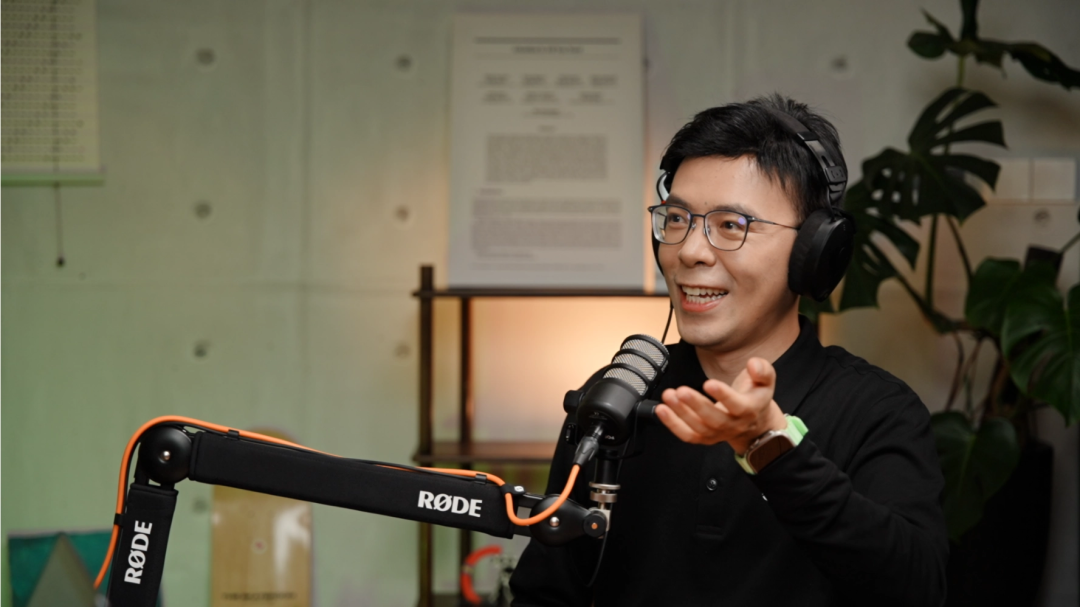
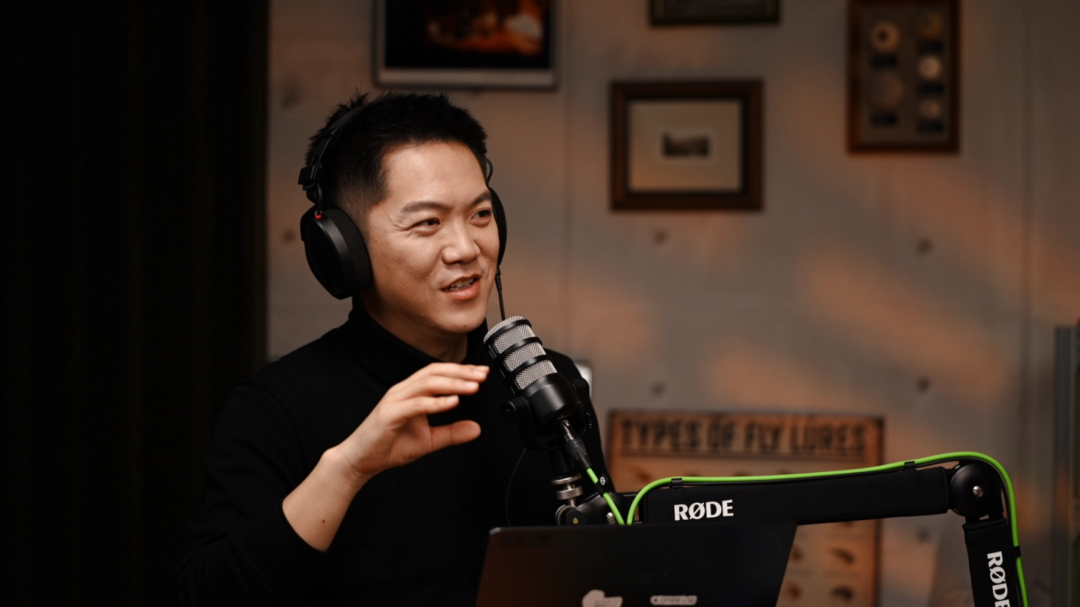
This week's guest on Crossing is Zhang Yi, founder of Weilai Buyuan Robotics. Four years ago, he decided to enter the robotics business. Back then, the market was silent. He thought he was choosing a path that was slow, difficult, and utterly ignored.
Zhang Yi previously founded Zhangmen 1-on-1, a listed company valued at $3 billion, and also experienced the "overnight reset" brought by the double reduction policy. We started from that cliff-like fall — it took a full half-month to confirm the double reduction was real; cutting a company of nearly 90,000 people down to under 1,000, a memory that has "faded" in his mind, though a patch of white hair still remains on the back of his head from the pressure of that time.
This time around, he's doing the opposite: three years of stealth without fundraising, first getting robots into 300 real households in Shanghai, using long-term collected scenario data to drive product iteration, and releasing the new-generation home robot F2 this week.
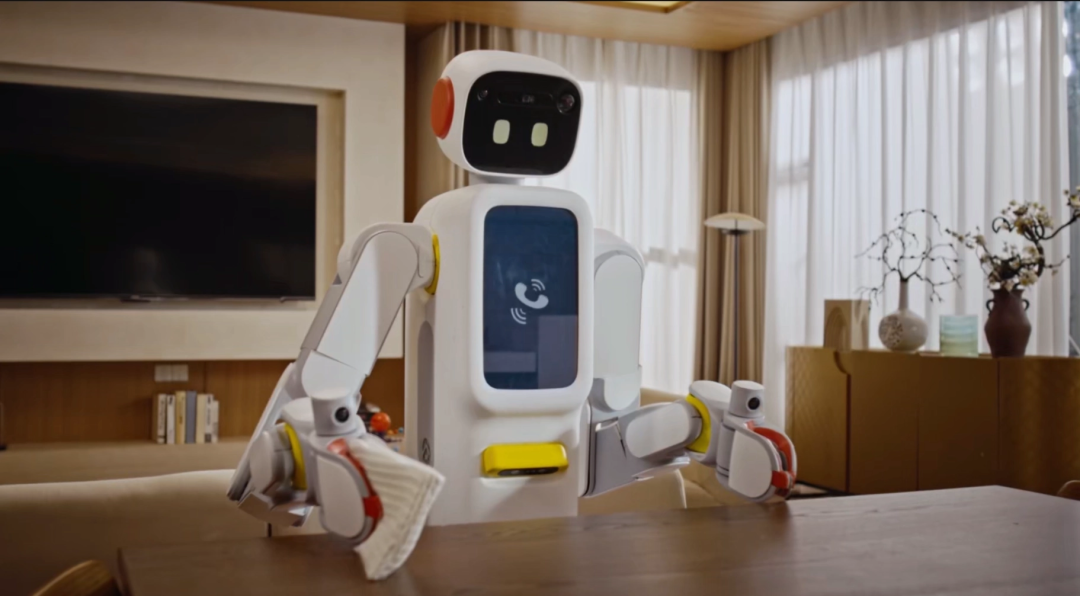
If you're interested in embodied intelligence, home robots, or any hard-tech entrepreneurship that needs to survive cycles, this episode is worth a listen.
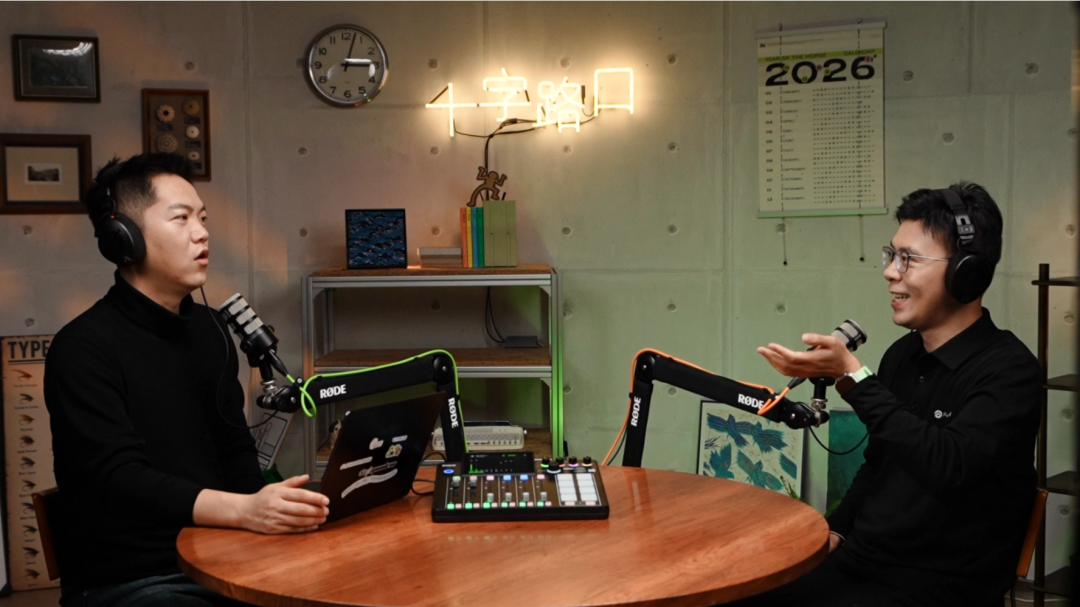
Listen on WeChat:
Listen on Xiaoyuzhou:

🎬 Video podcast now live on Koji's WeChat Channels, Xiaohongshu, Bilibili, YouTube, and other platforms
Rapid Fire
👦🏻 Koji
Let's start with rapid fire. How old are you?
👨🏻💻 Zhang Yi
👦🏻 Koji
Where did you go to school?
👨🏻💻 Zhang Yi
Shanghai Jiao Tong University.
👦🏻 Koji
MBTI and zodiac sign?
👨🏻💻 Zhang Yi
INTJ, Capricorn.
👦🏻 Koji
One sentence to introduce Weilai Buyuan and the F2 product.
👨🏻💻 Zhang Yi
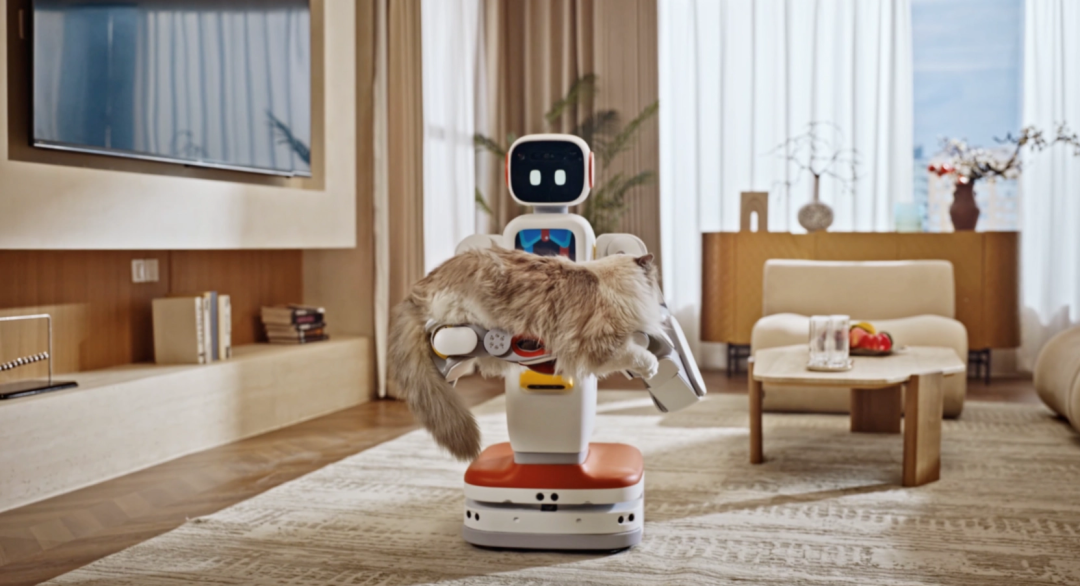
Weilai Buyuan is a company focused on general-purpose home robots. F2 is better-looking and more powerful than our previous F1, and it's the final robot form that will be delivered to customers.
👦🏻 Koji
Can you share your current fundraising situation?
👨🏻💻 Zhang Yi
We've raised three rounds total. At the very beginning, my team and I put in our own money. It wasn't until the end of last year that we actually started market-based fundraising. By then we were very certain the product could hit the market, could start user trials, and that trial users loved it — that's when we officially kicked off fundraising.
From the end of last year to now, we quickly raised two more rounds over a few months.
👦🏻 Koji
The product isn't officially on sale yet, right?
👨🏻💻 Zhang Yi
Currently it's open for rental, available by appointment in some Shanghai households.
👦🏻 Koji
Team size?
👨🏻💻 Zhang Yi
Mainly engineers, roughly 100 people.
👦🏻 Koji
What did you do before this startup?
👨🏻💻 Zhang Yi
Before this startup, I was in startups. Even earlier, during school, I was also doing startups while studying.
The Moment of Double Reduction
From $3 billion valuation to "complete blankness"
👦🏻 Koji
Today we're mainly talking about Weilai Buyuan and home robots. But before that, I'm especially curious — many friends around me lived through the double reduction, but you were probably among the most impacted. Your company was already listed, $3 billion market cap.
The moment the double reduction policy came out, where were you?
👨🏻💻 Zhang Yi
I was in a car with my team, on our way to visit a company that had done exceptionally well going overseas.
Some investors suddenly messaged asking, what's with this document? Is it real? The moment I saw the document, my mind went completely blank. My only thought was: "Is this real?"
👦🏻 Koji
Hard to believe?
👨🏻💻 Zhang Yi
A bit hard to believe.
👦🏻 Koji
When did you know it was real?
👨🏻💻 Zhang Yi
About half a month.
👦🏻 Koji
That long?
👨🏻💻 Zhang Yi
Yeah. At the time we wondered if this might just be a phase, so we cut some people first and watched as we went.
But after half a month, several core investors told me, this thing is real. That year our revenue was 10 billion yuan — think about it, a 10-billion-yuan company supporting that many employees, monthly burn is extremely high.
Once revenue stops but you maintain that burn, the whole company just explodes. Many investors said, you can't drag this out anymore. If you do, I wouldn't be sitting here today.
The situation did get very severe. In the remaining two and a half months, we cut from over 90,000 people to under 1,000.
👦🏻 Koji
After you confirmed the policy was real, what was the first meeting like?
👨🏻💻 Zhang Yi
We held a core internal meeting, but my memory of that most painful period has gotten a bit fuzzy. From 90,000-plus people down to under 1,000 — that memory has somewhat faded. I just remember, layoffs at that scale were extremely painful.
For me, the hardest part was saying goodbye to so many brothers. I still remember, we had over fifty branch offices nationwide, all quite large.
Some HR people, after seeing everyone off, would turn off the lights and leave alone. Layoffs at that scale weren't conventional subtraction anymore — it was meeting after meeting, me with core management, then they'd cascade down level by level.
👦🏻 Koji
What was the atmosphere in those meetings? Very solemn, or different from what you'd imagine?
👨🏻💻 Zhang Yi
Honestly, I completely can't remember the meetings I personally led.
I have a patch of white hair on the back of my head from that time. But for other people's meetings, they kept recounting them to me later, so those left a deep impression.
Many meetings were hundreds of people at a time, one after another, because you had to help everyone understand why this was necessary. Several core executives took turns speaking, and sometimes mid-speech, someone in the room would start crying.
👦🏻 Koji
Anyone who lived through the double reduction says that experience massively influenced their later life choices. What changes did it bring to your eventual choice to do robotics?
👨🏻💻 Zhang Yi
Any major upheaval in life triggers a lot of reflection, whether it's double reduction or something else.
As long as there are huge ups and downs, you start wondering: what's the meaning of life? What are we really striving for? Where should we go?
But if life has always been smooth, you might not have the time or inclination to think about these things. The reflection definitely influences your choices — after all, you need a long time to process these things.
Before I got into robotics, there was also a gap of over a year. That period involved an enormous amount of thinking, and only then did I make the decision.
Why Home Robots
"In 20 years, every household will definitely buy a robot."
👦🏻 Koji
How did that year of thinking eventually point you to robotics?
👨🏻💻 Zhang Yi
At the time I was somewhat lost, very sad, with no company to go to. I used to stay at the office until very late every day; during that stretch I really had half a year with nowhere to go, because there was nothing to do at the company.
Before deciding on something new, I spent a long time processing and thinking about the meaning of life. Later I figured it out: life should still involve participating in some transformation of the world — even creating just a tiny bit of contribution has meaning. At least for someone like me, looking back when I'm old, I won't regret this life. I still have to do something.
After I figured that out, I went to Silicon Valley for a while. I studied electronic and information engineering at Shanghai Jiao Tong University, and many of my classmates were working on AI in the United States. I talked to a lot of them.
I decided to work on robots for a few reasons:
First, ChatGPT was still at 3.0, not yet 3.5, but after looking at some of its real-world applications, I found it fascinating. I thought it might eventually combine with physical entities.
Second, this was my field of study. In school, I'd competed in smart car and electronic design competitions, and I felt I could draw on that knowledge.
Finally, I'd spent years in home services and had my own strengths — I understood children, mothers, fathers, all the members of a household.
Put these three together, and could I build a home robot? And at the time, I thought: if I start another company, it has to be bigger than before. Otherwise I won't have the motivation.
Home robots — every household buying one in a few decades — that's a high-probability event. So I looked around, including doing an EIR stint at ZhenFund where we reviewed various robotics companies together. After all that, I decided to do it.
👦🏻 Koji
You mentioned you had to do something bigger than before to feel motivated. Was there a pivotal moment when you decided, this is it, I'm going all-in on robots?
👨🏻💻 Zhang Yi
I forget who said this to me: "In 20 years, every household will definitely buy a robot." That shocked me deeply. I felt this was something deeply meaningful.
And it's meaningful precisely because no one's doing it now. What I want to do can't be something lots of people are already doing — otherwise my adding one more wouldn't matter.
This has foresight, and I believe that doing the right thing will eventually lead to good results. No one's doing home robots now, but this direction is undoubtedly correct.
Why "getting into hardware early" beats getting into AI early
The compounding from hardware-software integration comes from time, not money.
👦🏻 Koji
This sounds like "the hard but right thing." Embodied intelligence has exploded in the past year or two, especially after this past Spring Festival, with funding news coming one after another. You laid the groundwork four years early — what advantages did that give you?
👨🏻💻 Zhang Yi
Why did I choose robots over AI back then? Because the compounding from getting into robots early is greater than with AI. AI iterates too fast; it's purely software. Robots are hardware-software integration, and once you hit hardware, everything slows down.
Take Unitree — their R&D costs are tens of millions a year, not especially outrageous. But could you spend a billion now and build a robot with the same locomotion stability as Unitree? Impossible, or extremely difficult. It's not a money problem, it's a time problem.
Because it hits hardware. Robots don't just have a brain, they have a cerebellum and a body. So once you start early, you gain huge advantages in hardware refinement — lower costs, better stability, smoother less-jittery robotic arms.
So our plan was to spend three years heads-down, getting the product to consumer-grade, sufficiently ready condition before bringing it out.
👦🏻 Koji
Why "three years heads-down"? Supporting a team with your own money isn't trivial — what was the thinking?
👨🏻💻 Zhang Yi
Because home robots are somewhat ahead of their time. Even if you talked about it every day from the start, people might not get it — but eventually they will. So I didn't need to be the one educating the market alone; better to just build the product well.
For example, this year when we brought out the product, people said: "Wow, the productization level is really high." Looking around, no other company had achieved this level. I wanted to create that aha moment.
Second, I'd been through the ups and downs of one startup. If I were to raise funding again, I had to be absolutely certain this would work, or it would get very messy later.
So I needed three years to verify that this could truly reach consumer-grade, could be commercialized, and that by the time I came out to fundraise, we'd already have users trialing it with positive feedback.
Firmly committed to home to C
To B often ends in price wars; to C lets you trade experience for profit, then trade profit for the next-generation product.
👦🏻 Koji
Did you ever waver between industrial robots and home robots?
👨🏻💻 Zhang Yi
Not really. In my view, a lot of ToB technology doesn't end up with particularly high barriers — it ultimately becomes a price war, hard to profit. Take cleaning robots: the ToC companies have very high margins, but the ToB ones relatively struggle, especially domestically.
The ToC logic is: once your product experience is excellent, the brand is established. In this space, when your product quality is good and user experience is good, the brand itself generates premium.
That premium gives you profit to invest in R&D, to make better products, creating a virtuous cycle. I've always done ToC; this feedback loop suits me better.
👦🏻 Koji
After setting the direction, what was the first thing you did?
👨🏻💻 Zhang Yi
Hire people.
👦🏻 Koji
What kind of people?
👨🏻💻 Zhang Yi
First find co-founders, core engineers, plus hardware and embedded systems people.
👦🏻 Koji
When did you start seriously defining the product?
👨🏻💻 Zhang Yi
From day one, we were searching for product direction. I remember sending out five or six thousand surveys both domestically and in North America, doing lots of phone interviews — asking what they thought, what features would make them willing to pay, what would count as a ready state? We were constantly searching for that point.
The company is called "Weilai Buyuan" (The Future Is Not Far), but how far exactly — we wanted to pin that down too.
👦🏻 Koji
When did you have a clear, definitive take on the first version's features and selling points?
👨🏻💻 Zhang Yi
End of last year.
👦🏻 Koji
So that's just three months ago?
👨🏻💻 Zhang Yi
Right. Because before that, it was all R&D. You have a general direction, but you're not sure if it's right. Some say this is good, some say that's bad. Someone says folding laundry is worth 500 RMB, someone says vacuuming is worth 2,000 — you add it all up and it still doesn't cover the machine's cost.
We locked it in at year-end because in the second half of the year, our robots could already enter homes, with stability, cost, and generalization capabilities all reaching ready status, and user trial feedback was very positive.
👦🏻 Koji
How many households? What kind of households?
👨🏻💻 Zhang Yi
About 300, all in Shanghai.
👦🏻 Koji
When you sent robots into homes, how did you guide users? Give them a feature list to try one by one, or let them explore freely?
👨🏻💻 Zhang Yi
You summarized it well — we went through exactly those stages.
At first, we were confident about certain features and would tell users: you can only do these things. Later as we iterated and optimized, we encouraged them to explore freely. Now, many new features actually emerged from user usage — they suggested them to us.
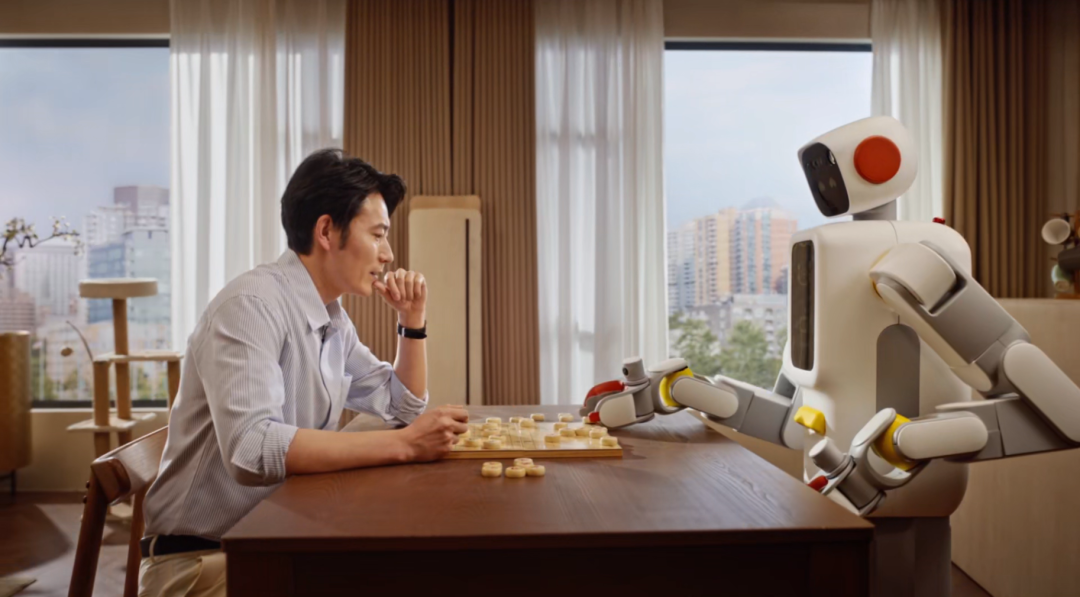
For example, chess. We didn't have this feature initially. Many users said: my kid stares at a computer screen playing chess for two hours, their eyes are ruined, can you do something about that? So we specifically strengthened the chess feature, and since we're gripper-based, we can play various kinds of chess. Another example you wouldn't expect: hide-and-seek.
👦🏻 Koji
Hide-and-seek?
👨🏻💻 Zhang Yi
Yes, kids love playing it, and they have a blast, play every day. We found this fascinating, so we specifically strengthened this feature. So this is a process of co-creation with users.
F2's real selling point: childcare + light housework, pricing the service not the product
If you only benchmark against nannies, robots will always seem expensive; once you benchmark against "premium childcare services," the value proposition changes entirely.
👦🏻 Koji
Can you introduce the F2 you're launching today? If I'm a target customer, how would you pitch it?
👨🏻💻 Zhang Yi
It has two core functions: childcare and light housework.
👦🏻 Koji
Childcare and light housework?
👨🏻💻 Zhang Yi
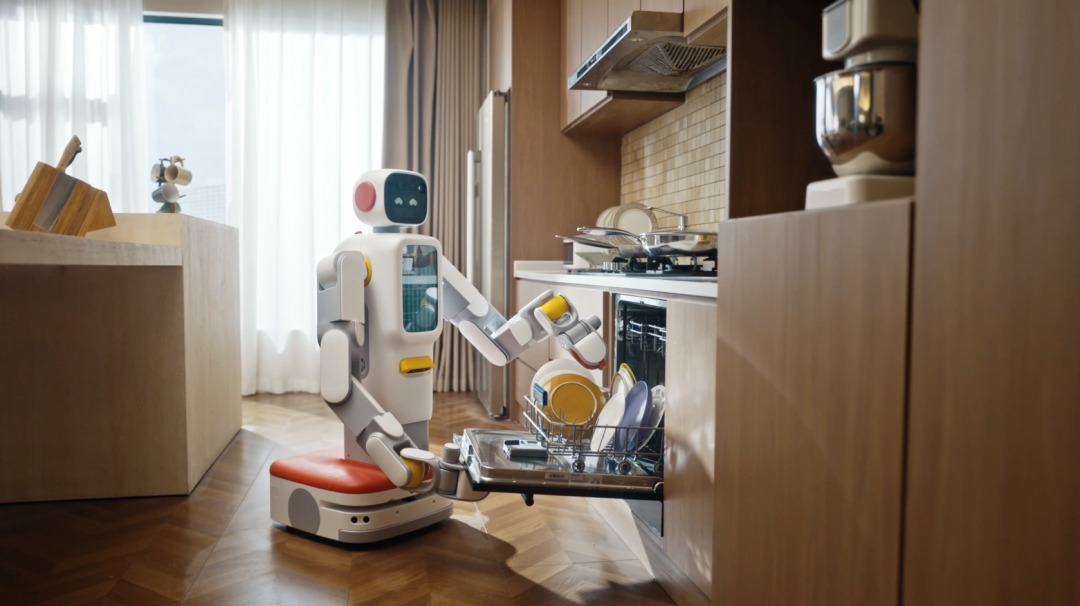
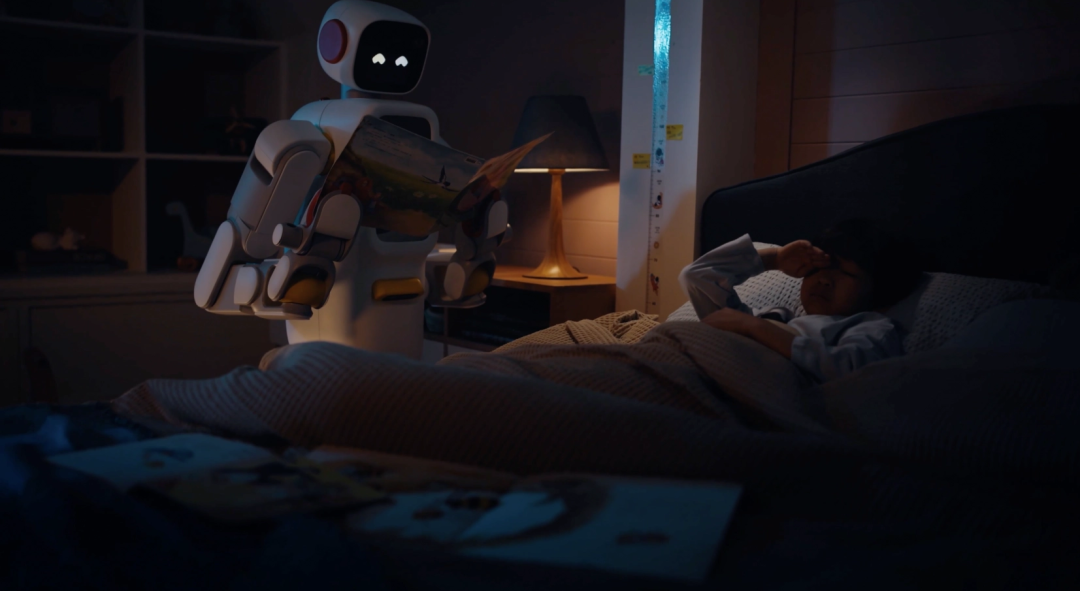
Yes, these are important needs. We work all day, come home exhausted, and still have to care for kids — it solves your evening problems. For example, reading picture books with your child, accompanying them on piano, practicing violin, playing chess with them, finding Lego pieces, plus playing hide-and-seek, shooting hoops — there's both active and quiet activities. When it's bedtime, it can tell stories until they fall asleep.
We initially considered elder care too, asking retired seniors: "Are you lonely? Let me keep you company." They said: "Just help me take care of my grandkids."
👦🏻 Koji
Not accompanying the elderly, but helping the elderly care for grandchildren?
👨🏻💻 Zhang Yi
Right. Of course, people over 80 are a different group — they may need more care and cooking functions.
👦🏻 Koji
You mentioned accompanying kids on violin — how does that work?
👨🏻💻 Zhang Yi
It recognizes music by ear, can judge whether you're playing correctly, and gives real-time corrections on fingering and posture.
👦🏻 Koji
Can you talk with it?
👨🏻💻 Zhang Yi
Of course.
👦🏻 Koji
From your observations, what age range of kids interacts best with the robot?
👨🏻💻 Zhang Yi
Kindergarten middle class through elementary school. Kids at this stage, on one hand, can wake up smart speakers themselves; on the other hand, they're not satisfied with just learning — they want to play games too, like playing "radish squat" with the robot, lots of ways to play.
Older kids can play chess, which is more advanced. At the same time, this creates a data flywheel: the more interaction, the more data the robot gets, the richer its brain becomes.
👦🏻 Koji
I recently bought my kids a robot dog that can also converse and execute commands, but they lost interest after an hour. How long do kids typically play with your robot?
👨🏻💻 Zhang Yi
When we first started putting robots in homes last year, we'd usually have to bring them back after a day or two. It wasn't that the kids didn't want to play with them — the machines just weren't stable enough and needed maintenance. Now we can leave them for a month or two before servicing. And during that month or two, users are still spending several hours a day with them.
I've always been a product manager at heart. To me, the core of a product is renewals and referrals. Whether your referral rate is 50% or 30% determines whether you live or die — not how many units you sold today.
Word of mouth is everything, and word of mouth depends on usage time and the decay curve. So when we see users still actively using the robot after a month or two, that's when we know we're onto something.
👦🏻 Koji
Will the future business model be monthly subscription or one-time purchase?
👨🏻💻 Zhang Yi
We're on a rental model right now because the product still needs to come back for upgrades and maintenance.
After official launch, we plan to offer two options: rental, which is currently around three to four thousand yuan per month, and purchase — or a lower purchase price with subscription fees to unlock advanced features, since some capabilities may consume cloud compute down the line.
👦🏻 Koji
Beyond education, another scenario you mentioned is light housework. What does that include specifically?
👨🏻💻 Zhang Yi
Things like tidying up toys, picking up trash — that's light housework, where robustness requirements aren't too demanding. Heavy housework, the classic example is the kitchen: too many bottles and containers, plus grease.
I think heavy housework is still a few years away, so we're starting with light housework. Through real home use, we accumulate more data and get the data flywheel spinning.
👦🏻 Koji
You mentioned earlier that users assign different values to different functions — folding laundry is worth 500 yuan, sweeping is worth 2000. Is that how you price?
👨🏻💻 Zhang Yi
I've found that pricing really depends on what you're benchmarking against. If it's just for doing chores, benchmarked against a housekeeper, it's actually not expensive. In Shanghai, a housekeeper costs seven to eight thousand a month and can handle both light and heavy chores. Your robot only does light housework, and the BOM cost might already be twenty to thirty thousand.
So we later realized that childcare is the core value proposition. For any product to make sense, it needs to offer better value than existing solutions. Try finding a nanny in Shanghai who can watch your kids, speak both Chinese and English, and play chess with them — you'd be hard-pressed to find one for thirty to forty thousand a month.
If our product can reach that level, then it's worth that price.
👦🏻 Koji
In the process of getting robots into homes, which features surprised you, and which ones were unpleasant surprises?
👨🏻💻 Zhang Yi
Plenty of pleasant surprises. "Playmate" was one we didn't discover in research. But once the robot was in the home, because it has arms, the ways to play became incredibly diverse. The kid's other toys don't have hands — this was the first companion with "hands" that could grab things for him.
A simple game, like tossing a little car out with a "whoosh" and fetching it back — younger kids can play that for two hours. The next day they'd invent something new. That surprised us and made us pay more attention to this direction.
There were unpleasant surprises too. For homes with pets, one family's dog couldn't sleep through the night because of the robot. The owner said, no way, the dog's sleep is non-negotiable. So we later specifically developed ways for the robot to interact with pets, and discovered that's an interesting direction too.
Things like training dogs, dispensing dog food, or playing with cats like a teaser wand. We later found out that animal daycare costs several thousand a month too.
👦🏻 Koji
In the world, goods are divided into products and services. Home robots look like products, but what you're really selling is a service?
👨🏻💻 Zhang Yi
Exactly right. Services are expensive and hard to standardize. But robots, through physical AI, can standardize many services.
Wheeled vs. Bipedal
A home isn't a lab: being usable, durable, and safe matters more than "looking human."
👦🏻 Koji
The conventional wisdom is that bipedal humanoid robots adapt better to complex home environments, but you chose wheeled. What was the thinking there?
👨🏻💻 Zhang Yi
Wheeled and bipedal each have pros and cons. But wheeled robots have major advantages in indoor scenarios: cost-effectiveness, safety, and stability are all very high. We've bought bipedal robots and robot dogs, and they're genuinely not well-suited for home use. For example, if you pick one up, its legs flail around, the force is unstable — it's somewhat dangerous.
Indoors, especially in the typical Chinese apartment with flat floors, wheeled robots are already very stable and can handle many tasks. They don't need to worry about balance — they're inherently stable as long as weight distribution is handled well. Plus the chassis has more space for larger batteries, so endurance is better too.
Our underlying architecture was designed this way from day one.
World Models and Data
What determines victory is the "real home data flywheel."
👦🏻 Koji
"World models" have been a very hot concept these past two months. What's your take?
👨🏻💻 Zhang Yi
World models have genuinely surprised me. Their Zero Shot capability — achieving several tens of percent robustness on things they've never seen before — was very hard to achieve with previous VLA models.
From this angle, they have real advantages. I'm talking about world models like NVIDIA's DreamZero.
For home robots, which need extremely strong generalization and encounter countless corner cases, the world model paradigm is definitely more forward-looking than VLA. We've also brought in a lot of world model talent these past two months.
Of course, it may not be the endgame either, since its robustness isn't at 100% yet and there's still a long road ahead. So at this stage, running both paths in parallel is what many companies are choosing.
World models have a certain reasoning capability — they can predict an object's trajectory, which is extremely powerful. And their training is lighter-weight, requiring only head-mounted camera footage of hand operations for demonstration, so they do have advantages.
But many results are still at the paper stage. We can only say the paradigm is more advanced.
👦🏻 Koji
You've chosen to self-develop many key components. Can you share more about that?
👨🏻💻 Zhang Yi
We self-developed extensively from the start, beginning with hardware and gradually becoming full-stack. Motors, torque sensors, joints, the entire arm, the gripper, the whole machine — all self-developed.
That's why the early phase took so long. And once hardware is self-developed, the algorithms have to be too, to fully integrate.
One of our self-development goals was to hit consumer-grade costs. Often you simply can't find cheap enough solutions on the market, so you have to build your own. For example, we needed joint bore diameters large enough to route more cables through — nothing like that existed, so we had to define and build it ourselves.
👦🏻 Koji
I remember you mentioned your self-developed joints cost around 1000 yuan, while third-party procurement might be 8000. How did you achieve that?
👨🏻💻 Zhang Yi
First, our customized requirements — like large hollow bores — had no off-the-shelf solutions, and customization is inherently expensive.
Second, and more importantly, most joints on the market are industrial-grade, while our home robot eliminates a huge amount of unnecessary specs. For example, I only need this much repeat positioning accuracy, this much payload capacity. We don't need to handle various heavy objects and complex scenarios like industrial robots do.
We cut every bit of excess performance, keeping only what's sufficient for home use. So costs come down naturally — because you're the first one entering homes, you know where the parameter boundaries lie.
👦🏻 Koji
Beyond cost, what other benefits does full-stack self-development bring?
👨🏻💻 Zhang Yi
The biggest benefit is having access to parameters everywhere. For example, with the current loop, you can know each joint's real-time status. With third-party solutions, they won't open many interfaces — you can't get the data you want.
But once we have all the data, we can do lots of optimization algorithms. Like why can some consumer-grade robotic arms achieve no shaking? Because they control all parameters and can tune to optimal.
👦🏻 Koji
Any pitfalls with full-stack self-development?
👨🏻💻 Zhang Yi
Of course. It takes enormous time, and some things you simply can't self-develop. Like reducers — the difficulty is immense. And depth cameras — you can't self-develop everything.
👦🏻 Koji
Which of your self-developed components was the hardest?
👨🏻💻 Zhang Yi
The driver, for example. In a palm-sized space, you need to integrate many high-density components while solving thermal management. Our hardware team spent a very long time tuning it to stability.
We also tried reducers early on, but discovered many process issues — like excessive porosity — and they were genuinely hard to manufacture, so we gave up.
👦🏻 Koji
Your gripper uses a two-finger design rather than a five-finger dexterous hand. That was a key choice too?
👨🏻💻 Zhang Yi
Yes. Mainly because right now, you can't find a five-finger dexterous hand anywhere in the world that can operate stably for more than two months. This problem will definitely be overcome eventually, but it's a process challenge — each joint is tiny, and with daily impact, it's genuinely more fragile than a two-finger gripper.
We've reserved interfaces, so if mature third-party hardware becomes available, we can swap it in quickly. But having us tackle dexterous hands ourselves would take a very long cycle. Many companies specialize in this, so we're not participating.
👦🏻 Koji
Embodied intelligence depends on data, and under the world model framework, data becomes even more important. Where does your data come from? Do you think data will become the deepest moat between different manufacturers?
👨🏻💻 Zhang Yi
Data is absolutely critical. You've seen all these data-focused companies emerge in recent months — NVIDIA and major domestic players are all buying data. The brain competition is fierce, but it's also fast to copy: a new model comes out, others may catch up in a month or two. So compared to data, algorithm barriers iterate faster.
But data accumulation is slow, especially robot data, which has been historically very scarce. Home scenario data is even scarcer, and difficult to collect.
I think this will ultimately determine a robot company's success or failure.
For the same task of folding laundry, I fold better than you because I've used more home data than you. So you must enter homes — only with real home data can the flywheel start spinning.
Data, and the data pipeline built around it, will ultimately become the deciding factor.
👦🏻 Koji
Do you think the next year or two will be the "decisive period" for data accumulation?
👨🏻💻 Zhang Yi
I divide data into three types.
The first is standard data — like repeatedly folding clothes in a data factory.
The second is corner cases. For example, the table for folding clothes is missing a leg, or it's wobbly, so things keep sliding off while folding. These scenarios vary endlessly — you can't simulate all of them in a factory. You only learn them in real homes. So I've always felt real scenarios are incredibly important.
There's also a third type of data that many people overlook today: data from interacting with living things. Interacting with people, with animals. You can't exactly find a kid in a factory to train an interaction model, right? But this matters — 80% of the scenarios in our homes involve interacting with people.
The way you interact differs across ages, genders, ethnicities, and it varies endlessly. How do you collect this data? You have to enter real-world scenarios. Otherwise, the data you collect might only cover 1% of the real world.
👦🏻 Koji
What you're doing sounds somewhat similar to Sunday AI in the United States. When they launched their product, what were your thoughts and takeaways?
👨🏻💻 Zhang Yi
We found it quite interesting. What surprised me was that a company in the United States would still do hardware. And I think they had some clever ideas — the camera placement, the exterior design, their approach to data collection.
But since the product hasn't gone on sale yet, it's hard to evaluate in practice. Still, you can tell they've put a lot of their own thinking into it.
👦🏻 Koji
They made a Skill Capture Glove to collect data. Do you have a similar solution?
👨🏻💻 Zhang Yi
We have this approach too. That's exactly why we want to enter homes — it's the best way to collect the most authentic corner cases, not staged ones. So we're very eager to get robots into homes, even if we have to rent them out at first.
👦🏻 Koji
Would you adopt an aggressive low-price strategy? Like selling at a loss just to get into as many homes as possible, because data is the future moat?
👨🏻💻 Zhang Yi
It depends on market conditions. But early on, we might price at cost, focus on serving seed users well, and get the flywheel spinning. Others might spend heavily to collect data, but we'd at least be acquiring it at cost.
👦🏻 Koji
Do you think someone will launch a "10-billion subsidy" campaign in the future? The capital market is so hot right now — everyone seems able to afford subsidies.
👨🏻💻 Zhang Yi
First, this isn't just an algorithm problem. Getting the full-stack software and hardware to consumer-grade takes time. Only when everyone reaches that level could large-scale subsidies become possible.
Second, while the market is hot now, I don't think it's reached that level of frenzy yet. I lived through the internet era — the funding amounts back then might have been an order of magnitude larger, and all in US dollars.
For example, a round used to raise $1 billion; now it might raise 1 billion RMB.
👦🏻 Koji
What was the most you ever raised in a round?
👨🏻💻 Zhang Yi
We weren't the biggest — a few hundred million dollars per round. But in online education back then, many people raised $1 or $2 billion in a single round. So I'd say the current frenzy hasn't reached that level.
But I do think if robot products are truly ready, and many people see our product and think it's good, that could trigger a new wave of enthusiasm.
👦🏻 Koji
How do you view the current funding climate?
👨🏻💻 Zhang Yi
First, there's definitely a bubble. Without a bubble, an industry struggles to take off. The bubble needs to run ahead of industry development to attract more talent and push the industry forward.
I've been through cycles. My feeling is that many industries must survive cycles. The bubble sits at the top of every cycle and eventually bursts.
But in robotics, if you look 20 years ahead, you can see a certain future: every company in the world will be a robotics company.
A convenience store owner is human, but all the employees underneath are robots. Companies that don't embrace robotics will be eliminated. This future is visible — it's only a matter of time.
The bubbles in between will rise and fall, but the macro trend will zigzag upward. So the key is surviving the cycles.
👦🏻 Koji
In your view, what do these robotics companies that have raised big money need to survive the cycles?
👨🏻💻 Zhang Yi
Surviving cycles isn't solved by raising $2 billion today. You have to be sustainable long-term, with your own business model. Otherwise, burning through several billion in a year is easy.
👦🏻 Koji
Returning to home robots — from today until they truly enter millions of households, what's the biggest obstacle?
👨🏻💻 Zhang Yi
If we're talking about entering every household, it has to be a truly general-purpose robot that meets everyone's needs. But this is an iterative process, and the core is data. Without enough data, you can't become more general-purpose, can't self-upgrade.
So the hardest first step is: who can get robots into homes first, and make people love using them, keep using them, and get the data flywheel spinning. Once the flywheel is spinning, much of what follows is a matter of time: model tuning, data accumulation.
But that first flywheel has to start turning.
👦🏻 Koji
At what scale does the flywheel count as spinning? 1,000 units? Or 1 million?
👨🏻💻 Zhang Yi
That depends on several factors, including model upgrades. For example, how much data does the model itself need? What quality of data? Can dirty data be used?
So it's related to model upgrades, data quality requirements, and the evolution of data collection methods.
👦🏻 Koji
Do you think consumers currently have concerns that need addressing? Like safety.
👨🏻💻 Zhang Yi
I think Chinese people have fairly high acceptance of new things — higher than Europeans and Americans. You saw when we played chess in the park before, we'd get surrounded by three layers of elderly people, and eventually security would have to come shoo them away.
👦🏻 Koji
You sent robots to play chess in parks?
👨🏻💻 Zhang Yi
Yes, many times. Sometimes the moment we arrived downstairs, wow, immediately a crowd of elderly people would gather around.
👦🏻 Koji
If I bought a robot and brought it home, could I take it out for walks?
👨🏻💻 Zhang Yi
If there are no stairs, yes. But curbs are tricky.
👦🏻 Koji
As long as there's accessible pathways, right?
👨🏻💻 Zhang Yi
Right.
👦🏻 Koji
Pretty interesting — there aren't currently any regulations restricting taking robots outside.
👨🏻💻 Zhang Yi
Right, just don't let it attract too big a crowd outside.
The Entrepreneur's Mindset
Anxiety makes strategy myopic: you win this month, but lose two years.
👦🏻 Koji
Before preparing this podcast episode, we spoke with your co-founder Louis. He said that after experiencing the "catastrophe" of the double reduction policy, your entrepreneurial style completely changed. Do you feel that way?
👨🏻💻 Zhang Yi
Perhaps it's changing toward a direction I should have been heading all along.
👦🏻 Koji
Weren't you heading in that direction before?
👨🏻💻 Zhang Yi
I was, but I was missing something. Going through these experiences helped me fill in that missing piece and become more complete.
👦🏻 Koji
What was it?
👨🏻💻 Zhang Yi
Two things. First is "persistence" — I now look further ahead at directions I'm confident in, and once decided, I persist more.
Second, I view "ups and downs" from a higher dimension.
👦🏻 Koji
What do you mean? That ups and downs don't affect you as much?
👨🏻💻 Zhang Yi
I sometimes view things from a third-person perspective, rather than getting completely immersed in them.
👦🏻 Koji
How do you do that?
👨🏻💻 Zhang Yi
It's brought by past experiences. I've always been prone to anxiety — I used to get very agitated when things happened. But after experiencing bigger storms, when I look at many things now, they're still difficult, but if I stand in the future looking back, I realize they were really no big deal.
But if you always stand in the present looking forward, things feel enormous, like the sky is falling. Now I shift my perspective, which lets me see more completely, more persistently, more clearly.
👦🏻 Koji
Placing yourself in the future to look at the present — does it give you that feeling of "the light boat has already passed ten thousand mountains"?
👨🏻💻 Zhang Yi
Exactly.
👦🏻 Koji
Is this mindset related to the double reduction experience?
👨🏻💻 Zhang Yi
Somewhat.
👦🏻 Koji
But some say entrepreneur anxiety is also a quality that drives them to pursue perfection and solve problems. If you become able to make peace with problems, do you worry that becomes a problem itself?
👨🏻💻 Zhang Yi
When I was in online education, some companies did grow bigger and better than us, and later I found some founders were indeed more composed.
When I'm anxious, my strategy becomes myopic — I choose the optimal solution for right now, not the optimal solution for two years later. The result might be winning this month, but losing two years later.
It's different now. I'll step back and think: OK, anxiety is one thing. Is there a solution to this? Yes. Then go do it. Once there's a solution, no more anxiety. Employees and executives are all scared of an anxious boss — if the boss attends some business school classes and comes back anxious, immediately wanting strategic transformation, talent transformation, the team gets terrified.
👦🏻 Koji
Can you give a concrete example? A short-term decision made out of anxiety that ended up losing the long game?
👨🏻💻 Zhang Yi
We were doing online one-on-one tutoring at the time, and we reached 70% market share in that space, far ahead of second place. Then a new model emerged: online large-class courses.
Many people said large-class was the more ultimate model because it had more users and higher gross margins. I wanted to do it too. But many shareholders would say: the one-on-one battle isn't even finished, and you're opening a new front? The competitors there are all strong — fighting on two fronts, won't you get overtaken by the number two in one-on-one? But other shareholders said: the large-class market is ten times bigger, the company's valuation could multiply several times over.
Opinions were extremely divided, and you'd get very conflicted. If you choose to fight on two fronts, you'll eventually find the new business definitely won't succeed, because others are pouring their whole selves into it.
So although you might win one battle, you could lose the bigger war.
👦🏻 Koji
If you had one sentence for entrepreneurs who've also experienced startup failure or similar setbacks, what would it be?
👨🏻💻 Zhang Yi
For entrepreneurs who've been through setbacks, I'd say: the setbacks or changes you encounter are often just forcing you to do something you truly should be doing.
You can't walk two paths simultaneously in life — you never know which is best. We can only believe that the choice we make in the present is the best one.
Even setbacks are helping us make choices. We must find inner coherence; only with coherence can we live better.
👦🏻 Koji
So failure might be an external force, helping you eliminate options and make choices?
👨🏻💻 Zhang Yi
I did think a lot about this in the past two years.
👦🏻 Koji
Do you regret your past entrepreneurial experiences? Is there anything that makes you think "if only I had..."?
👨🏻💻 Zhang Yi
I rarely regret things. Some people say "if only I had..." but I almost never do. Because there's no second choice in life. Even if you regret something and take the other path, how do you know there wouldn't be even more regret waiting there? So I've always believed that you have to trust the choices you make are the right ones. What's more important is finding that inner coherence.
My choices match my past, and they match the road ahead. No matter how low or miserable my current situation, I always look up — there are people doing so much better. Even if your company is worth 10 billion, there's always one worth 100 billion. That keeps you humble.
At the same time, I look down and remind myself I'm not worthless. You have to live in that state of coherence to live long and live well.
👦🏻 Koji
This connects to what you said earlier — being calmer now, able to make longer-term strategic decisions. It feels like you're a different person in this startup compared to the last one. Has the meaning of entrepreneurship changed for you?
👨🏻💻 Zhang Yi
Yes. Entrepreneurship is a form of spiritual practice. Of course, so is working a job, so is delivering takeout. The content of the practice just differs. From the first time I chose this path, I knew it would be a different kind of road, with different things to cultivate.
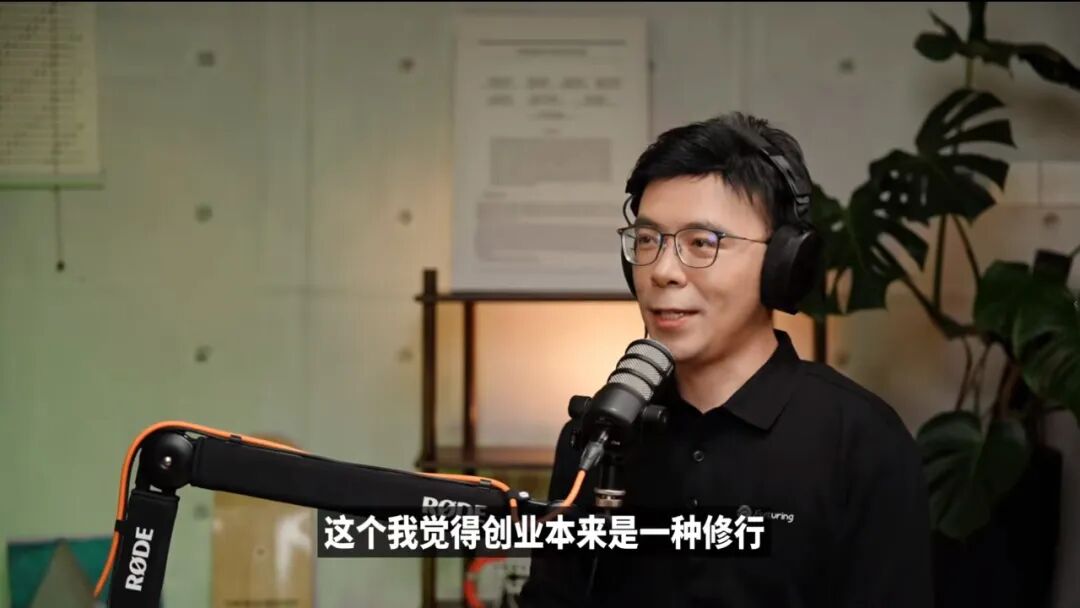
I did my graduate studies at SAIF — Shanghai Advanced Institute of Finance, one of China's top business schools, only recruiting top-ranked students from Tsinghua, Peking University, Fudan, and Jiao Tong. But I dropped out after one year to start a company. Many people didn't understand. I even had an offer from McKinsey & Company at the time, yet I chose to start a business instead.
But I made that choice. I knew it was a one-way street, that there would be plenty of trouble and failure, that the success rate was maybe 0.1%. But once you choose the distant horizon, you just push through wind and rain. I think every entrepreneur needs this mindset — you were never like everyone else to begin with.
👦🏻 Koji
If you had to name just one biggest change between this startup and the last, what would it be?
👨🏻💻 Zhang Yi
I see things more thoroughly and with a longer view now. Take capital bubbles — I think they exist. Capital behaves a bit like stock trading, rushing to wherever's hot, getting in and out quickly. But in the end, everyone returns to a more long-term mindset. I believe that's the healthiest approach.
👦🏻 Koji
If you could leave one message or make one wish for yourself ten years from now, what would it be?
👨🏻💻 Zhang Yi
I'd probably say to my future self: Ten years ago, I believed the "future is not far." By then, perhaps that "not-so-distant future" I once envisioned will have already arrived.
But I hope that ten years from now, I can still believe that an even more beautiful future is not far.
👦🏻 Koji
That there's always a beautiful future just ahead?
👨🏻💻 Zhang Yi
Yes. It gives people something to look forward to.
👦🏻 Koji
Wonderful. Thank you so much today, Zhang Yi. It's been a real pleasure. I also hope the "not-so-distant future" you're creating becomes a tangible reality for all of us soon — more robots in our homes, making our lives happier and easier. Looking forward to having you back.
👨🏻💻 Zhang Yi
Thank you.
👦🏻 Koji
Alright, bye.
Crossing is looking for independent writers to produce AI product and model reviews.
If you've written articles like "Hands-On with PixVerse C1" or "Hands-On with LibTV", please contact zeo0811@gmail.com. Your email should include: ① a brief bio, ② AI review articles you've written.
We offer competitive compensation. Looking forward to observing and documenting the AI era together 🎪