Field-Testing Skylark Short Drama Agent 2.0: Can We Really Say Goodbye to Gacha?

Tools can finally keep up with what creators intend.
The Tools Have Finally Caught Up to What Creators Want

👦🏻 Author: Yitao
🥷 Editor: Koji
🧑🎨 Layout: NCon

In mid-May, an AI short film called Zombie Cleaner went viral across the Chinese internet, racking up 46 million views and 2.22 million likes on Douyin alone.
Set in a post-apocalyptic wasteland, it follows a lone drifter clearing zombies from a ruined city. The lighting quality, camera work, and narrative pacing all approached professional cinematic standards. Commenters said they initially thought Dead Island had dropped a new release.
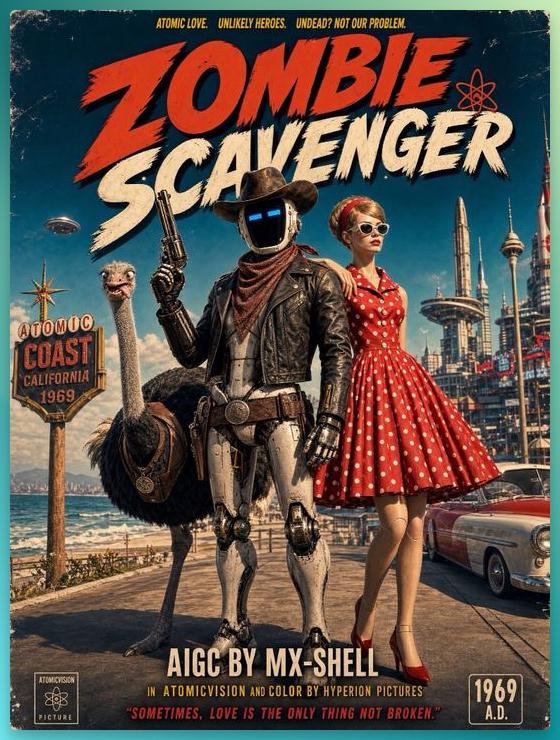
The person who made it is Liu Ziyu, handle "Mx-shell," 29 years old, from Yunnan, with a vocational school background in train operation and zero professional film training.
He spent 10 days and 3,000 yuan in token fees on ByteDance's Skylark platform to produce a short that got Hollywood producer PJ Accetturo reaching out on X for collaboration.
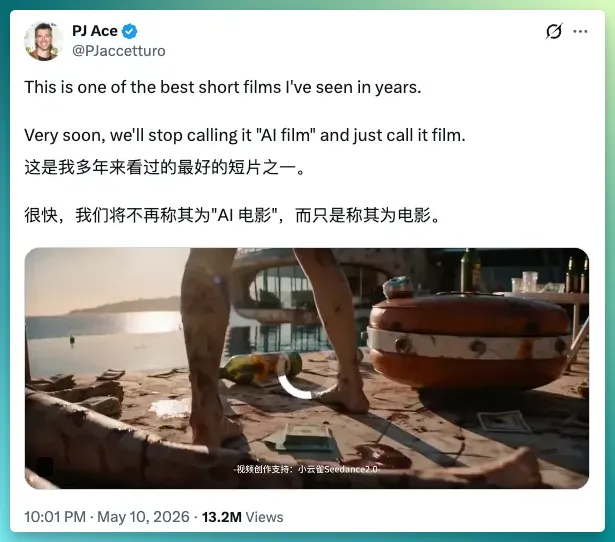
Then there's another AI short series in the cultivation fantasy genre: The Treasure Basin: The Trash Spirit Root Is the Real Boss, about a "waste" cultivator with a mixed spirit root who rises through the ranks using a magical treasure basin — 99 episodes, 470 million Douyin views.

Unlike Zombie Cleaner, this series didn't rely on a single burst of aesthetic brilliance. Its strength was consistent character continuity and sustained production rhythm.
One is a spark of individual creative vision; the other is an embryonic form of long-form industrial production. Both run on ByteDance's Skylark.
In late May, Skylark's short drama Agent updated to 2.0.
The keywords for this release: "controllable" and "professional." Creators can now control lighting, shot composition, and more like professional directors, completing the full short drama production pipeline within Skylark.

We happened to secure test access and ran through the full pipeline from script generation to final cut.
End-to-End Test: Running a Miniature Film Industry Pipeline With AI
Starting From Two Sentences, Building an Apocalyptic World
Let's begin with the script.
I chose Frederic Brown's work often called "the world's shortest science fiction story":
The last man on Earth sat alone in a room. There was a knock on the door.
On Skylark's homepage, I selected "AI Script Generation," entered Brown's two sentences, chose the visual style (Kodak warm yellow film retro), vertical 9:16 format, 5 episodes, and clicked "Generate Now."
The style library is one of 2.0's clear upgrades, supporting 100+ cinema-grade visual styles. These include Kodak warm yellow film retro, 90s realistic cinema, Korean cold-tone cinema, Japanese black-and-white film photography, and other classic styles, plus custom input support.
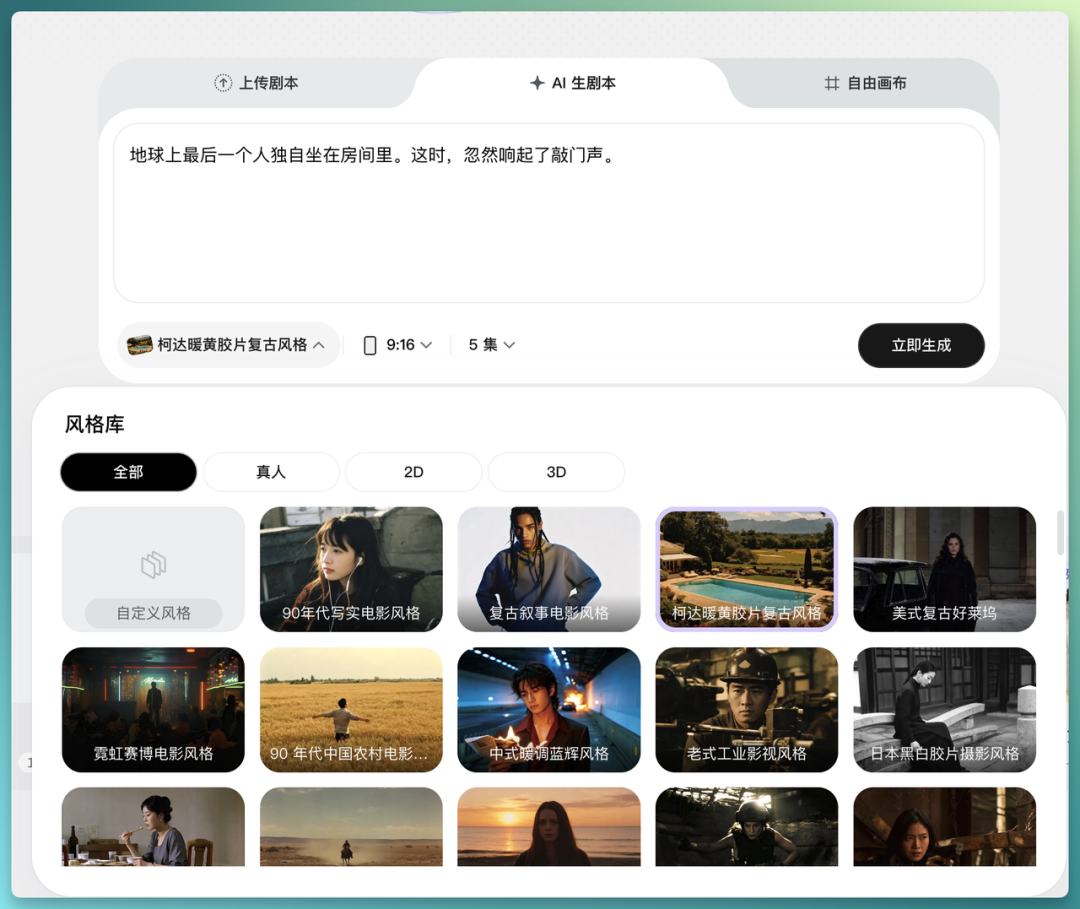
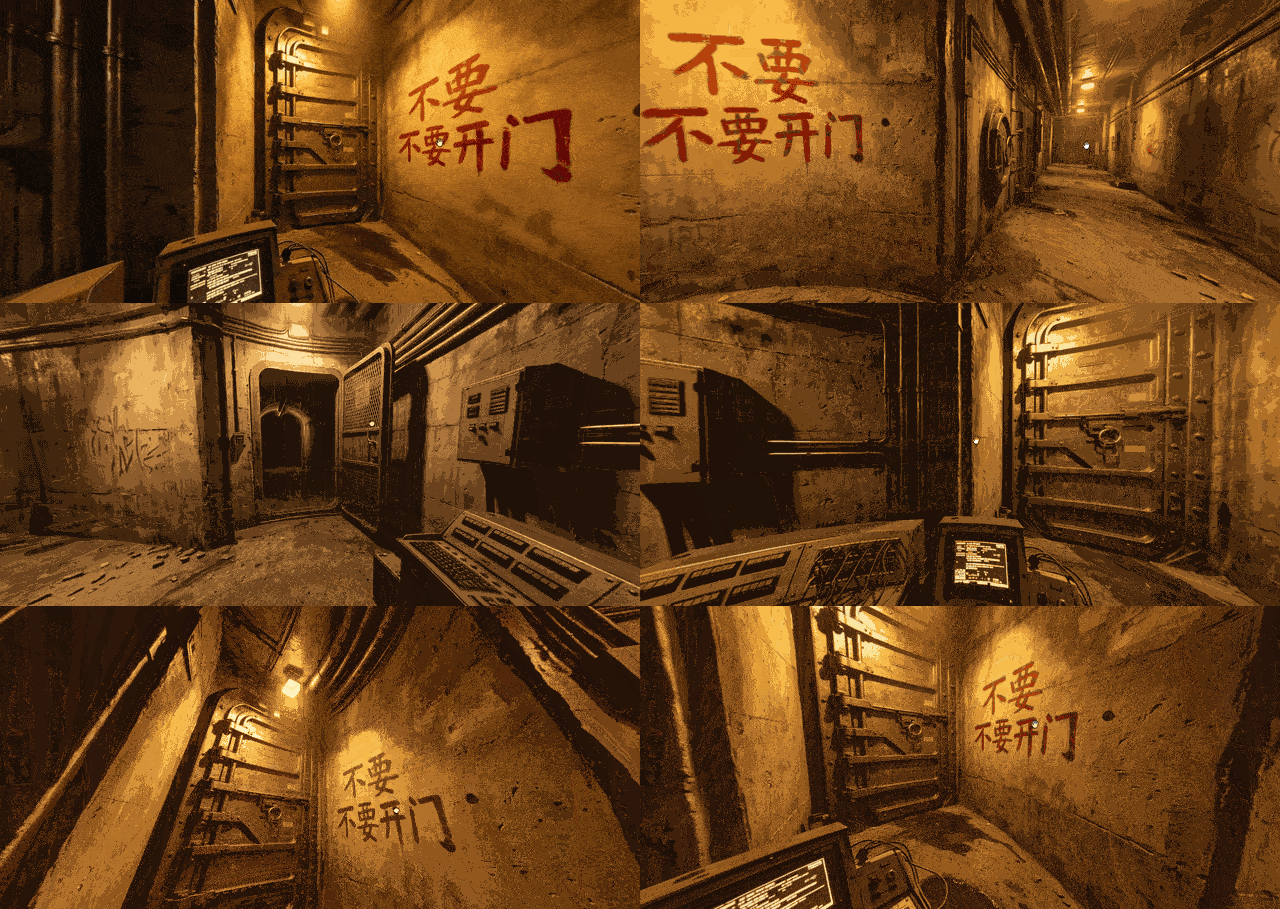
Take the "safehouse interior, gray fog intrusion" scene — the difference after switching styles is immediately visible:
Under Korean cold-tone cinema, the palette shifts to cool gray. The red "DON'T OPEN" text on the wall becomes especially jarring. The atmosphere is restrained, oppressive, documentary-like.
Under Kodak warm yellow film retro, the entire frame is wrapped in warm amber tones. The lighting shows clear halation and grain, like old film stock.
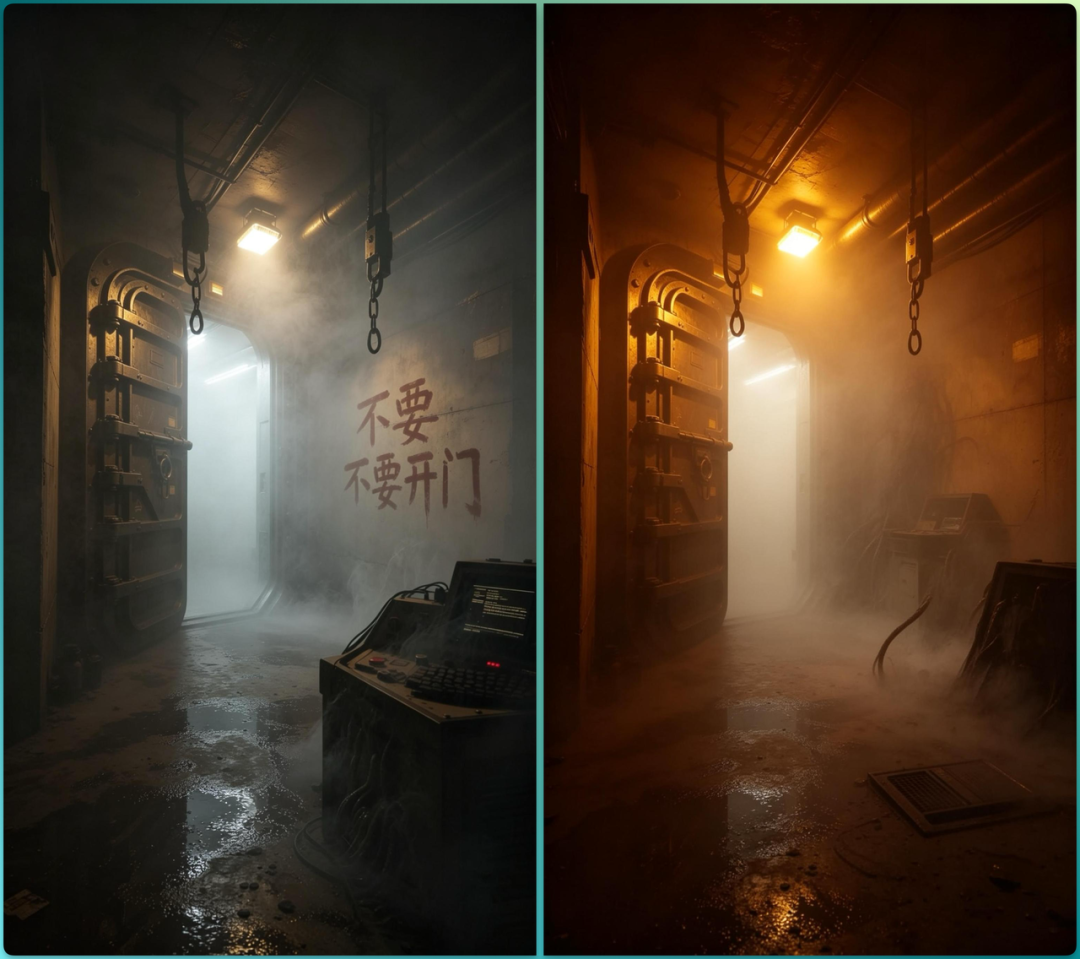
It's not just switching filters. Though the compositional elements remain identical — iron door, chains, control console, gray fog, wet floor — the emotional register of the visual narrative is completely different.
A few minutes later, Skylark delivered a 5-episode short drama titled Don't Open the Door.
The story type was classified as "near-future apocalyptic suspense + confined space survival." Core hooks: "unknown knocker identity reversal," "trust tug-of-war," "apocalyptic truth reveal," and "desperate symbiosis."
The protagonist is Lu Chen, 28, former urban emergency engineer, surviving alone in a safehouse for three years since the disaster. Three years ago, he opened the door to save an infected person, causing his companion's death. Since then, "don't open the door" has been his survival creed. A woman named Lin Ye suddenly appears outside, claiming to be a former biolab researcher with gray fog samples and escape coordinates.
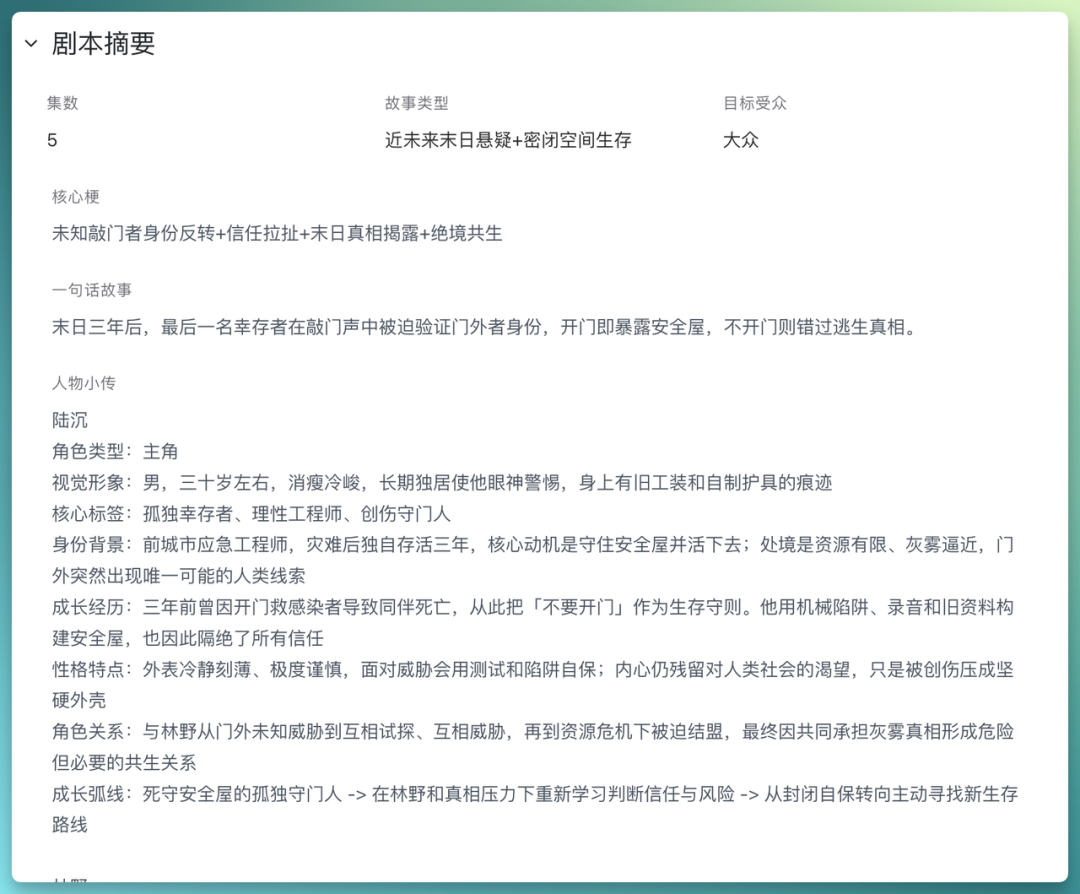
From two sentences of suspense, Skylark pushed the story toward an apocalyptic locked-room博弈. The narrative logic holds: each episode has clear information reveals and shifting trust thresholds, not simple "level-up" progression.
One detail worth noting: The script's character description for Lu Chen is extraordinarily detailed, covering facial features, clothing and gear, personality tags, and growth arc.
These aren't just text — they directly affect the quality of subsequent character image generation.
For episode count, Skylark Short Drama Agent 2.0 supports up to 100 episodes of script generation, with custom episode counts also available. For long-form serialization, this ceiling is already sufficient.

Goodbye to "Gacha," Hello to Real Character Assets
After script generation, you enter the asset library, where Skylark automatically parses the script and breaks out characters and scenes.
Don't Open the Door was split into 3 characters (Lu Chen, Lin Ye, Companion) and 9 scenes, from safehouse interior to wasteland streets. Each scene has multiple variants — "safehouse interior_facing door_night" and "safehouse interior_door opening flashback_disaster day" represent the same space at different temporal states.
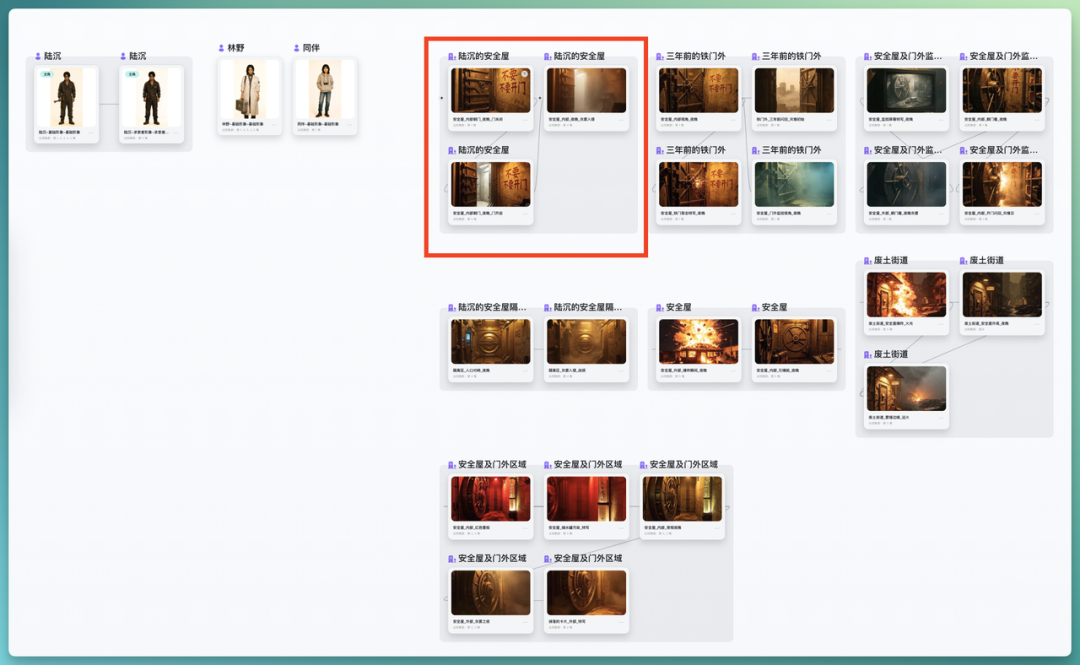
Clicking into Lu Chen's character card, you see both a base image and a "Seeker image" version. The former covers episodes 1-4's normal state; the latter is his transformed state in episode 5.
The same character has different visual presentations at different story stages, without needing to regenerate from scratch.
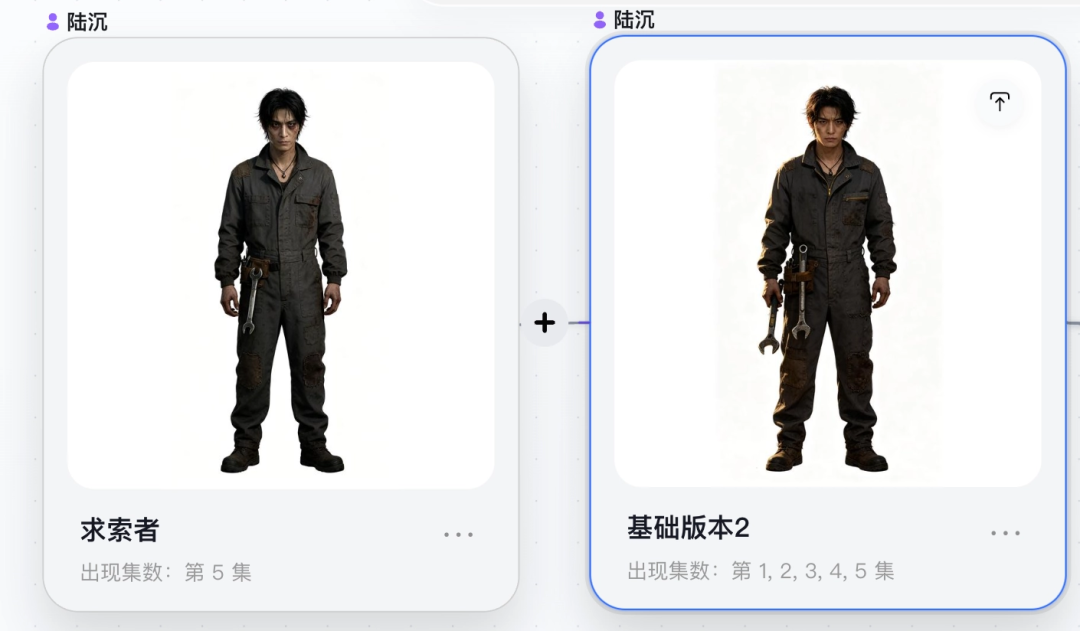
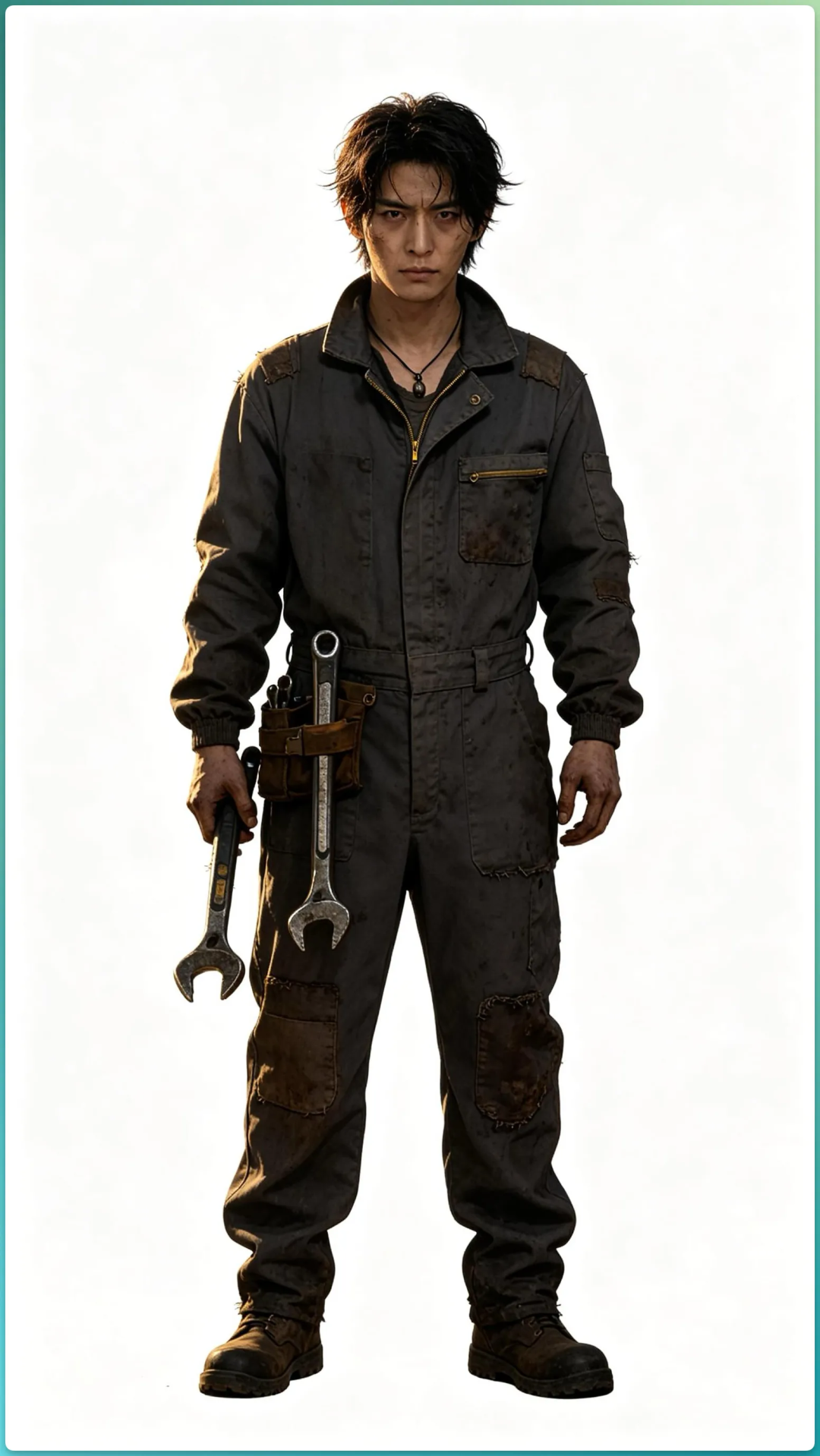
Character image quality exceeded expectations.
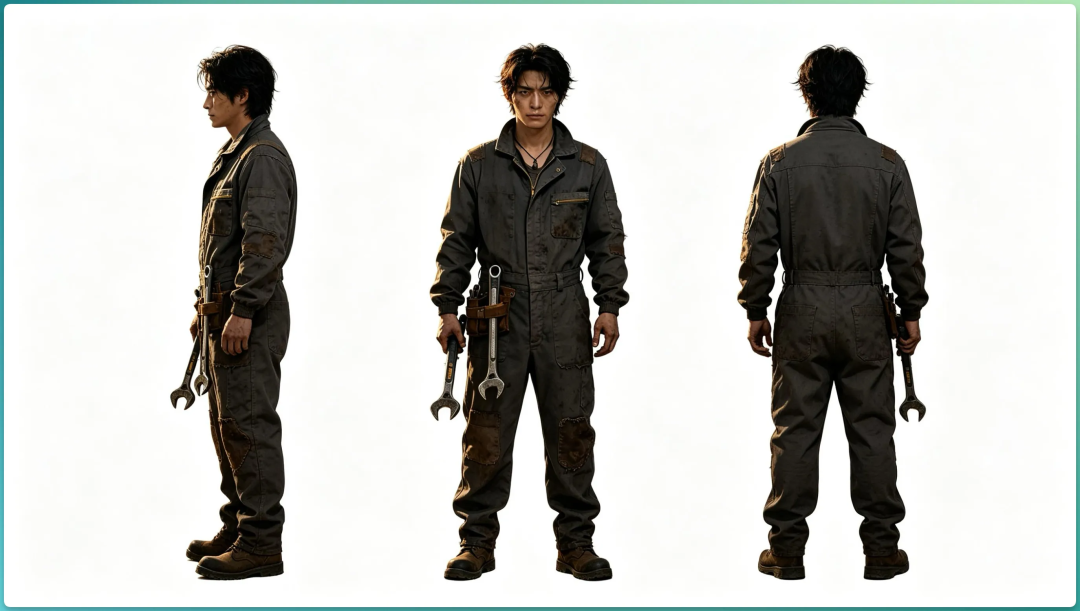
Lu Chen's face isn't the common "AI generic face." Cheekbones and jawline are clearly defined, eye sockets deeply set, carrying the exhaustion of long-term isolation. The worn patches on his dark gray work clothes, the tool pouch at his waist, the wrench in his hand — all these details match the script description.
Next comes the refinement stage in the canvas, where 2.0's biggest changes live. This is also where it most understands creator pain points, dramatically strengthening image controllability.
Above the character node sit three core tools: character three-view, lighting control, and camera control.
The three-view function directly generates front, side, and back full-body images of the character. The significance of this set: when the model calls Lu Chen in subsequent storyboard shots, it has a "locked reference" and won't swap faces just because the scene changes.
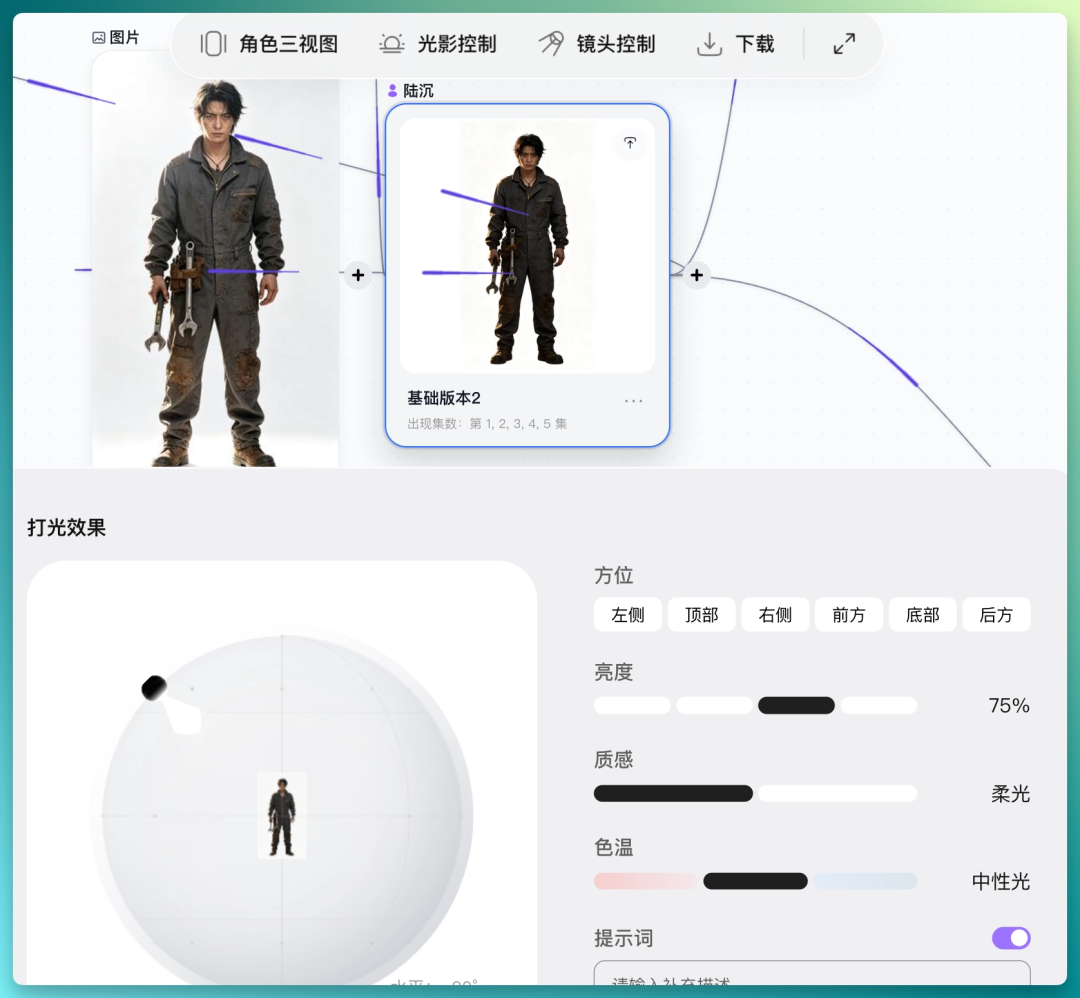
Lighting control provides finely granular parameter panels for direction (left/top/right/front/bottom/back), intensity, quality (hard to soft light), and color temperature (warm to cool).
After selecting parameters, it generates a new character image. For example, switching light direction from default to "front," intensity 25%, soft light, neutral color temperature, produces a Lu Chen with more even lighting and studio-style soft gradient background — completely different from the original's dark atmosphere.
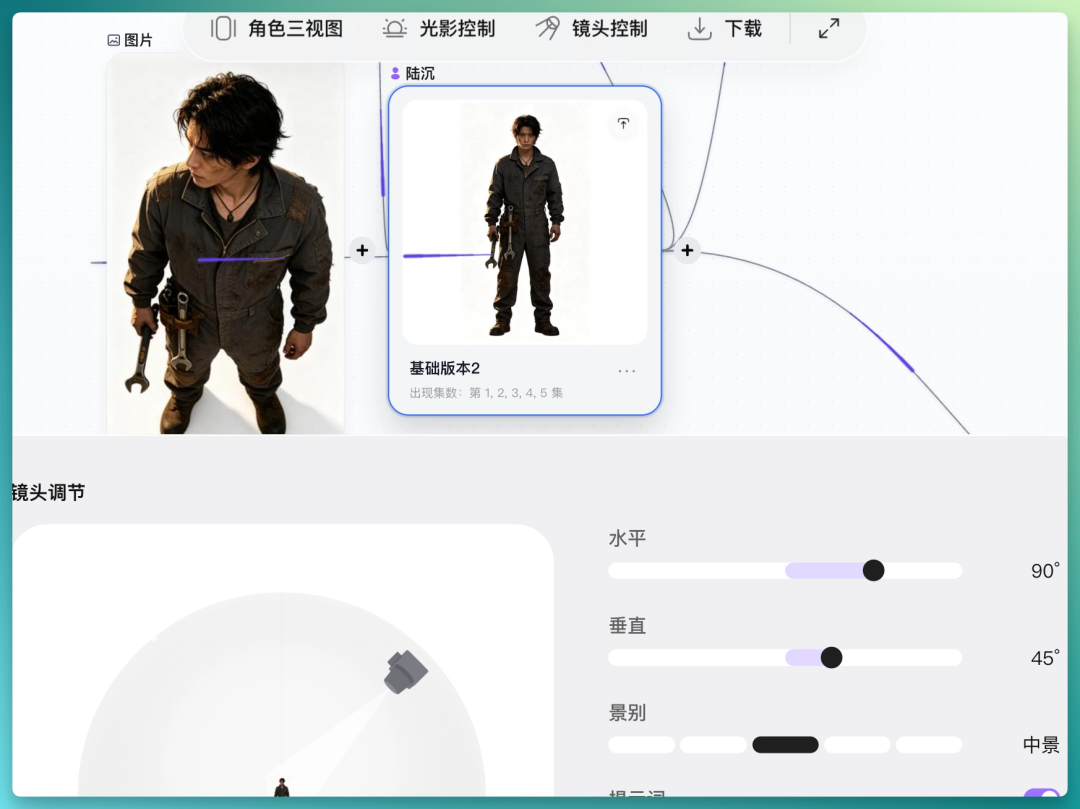
Camera control follows similar logic: horizontal angle, vertical angle, and shot scale (from extreme long shot to extreme close-up) are all adjustable.
Setting horizontal to 90° and vertical to 45° generates an overhead medium shot — clearly different from the original front full-body perspective.
All these generated character images with different lighting and angles can be "applied to character," becoming callable assets in the library. In subsequent storyboard shot generation, one-click reference.
The scene side has corresponding tools too. The 720-degree panoramic view can turn a scene into a fully rotatable panorama, with reference at any angle — for situations requiring multi-angle shots in the same scene, this is far more stable than repeatedly describing the same space through prompts.
Linking Shots With "@," Handing Control to Creators
When all assets are in place, the core storyboard operation becomes a simple symbol: "@".
Typing @ in the storyboard script editing box lets you one-click call pre-configured exclusive characters, scenes, and props.
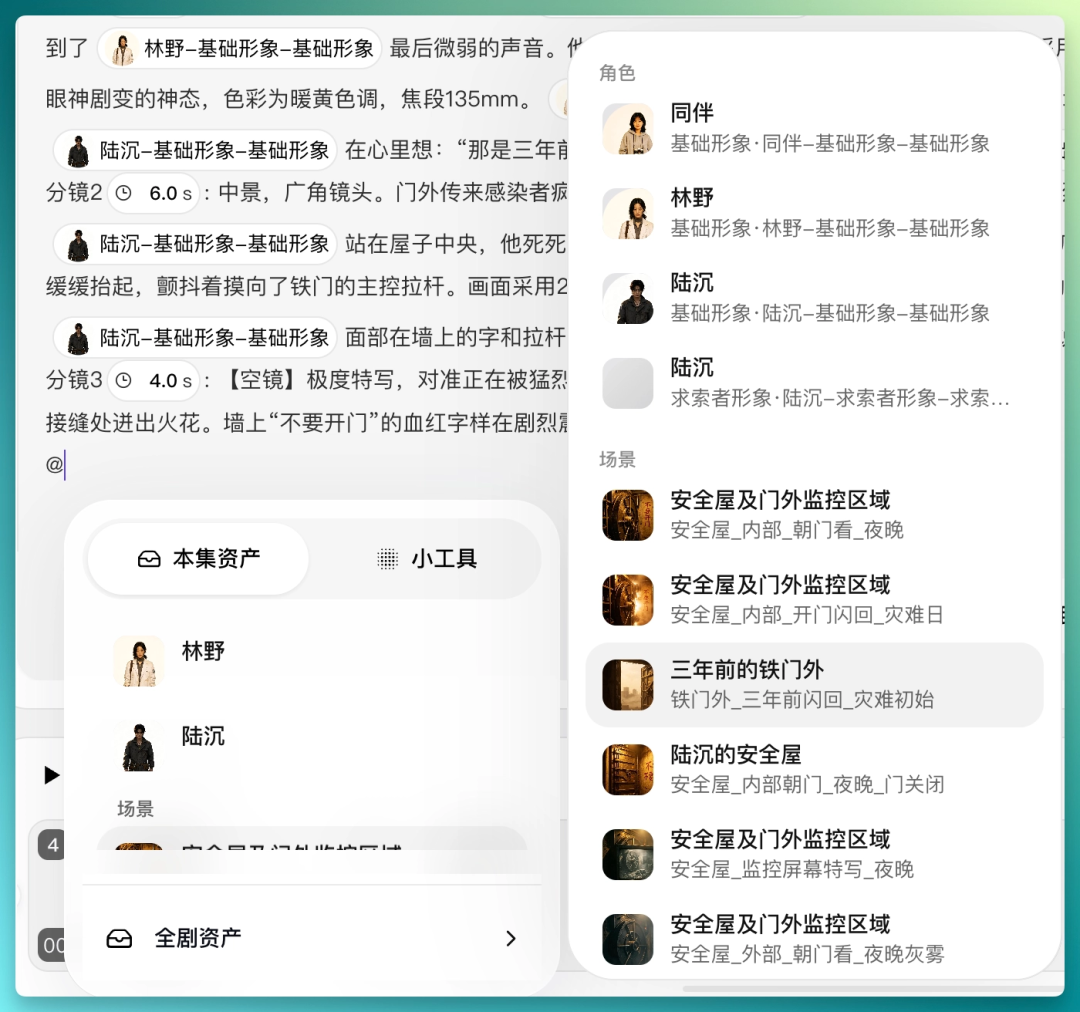
The elegance of this design: character visual changes can be directly bound to narrative turning points. The same character can have multiple image versions in the asset library, and different versions can be selected per shot as needed in the storyboard.
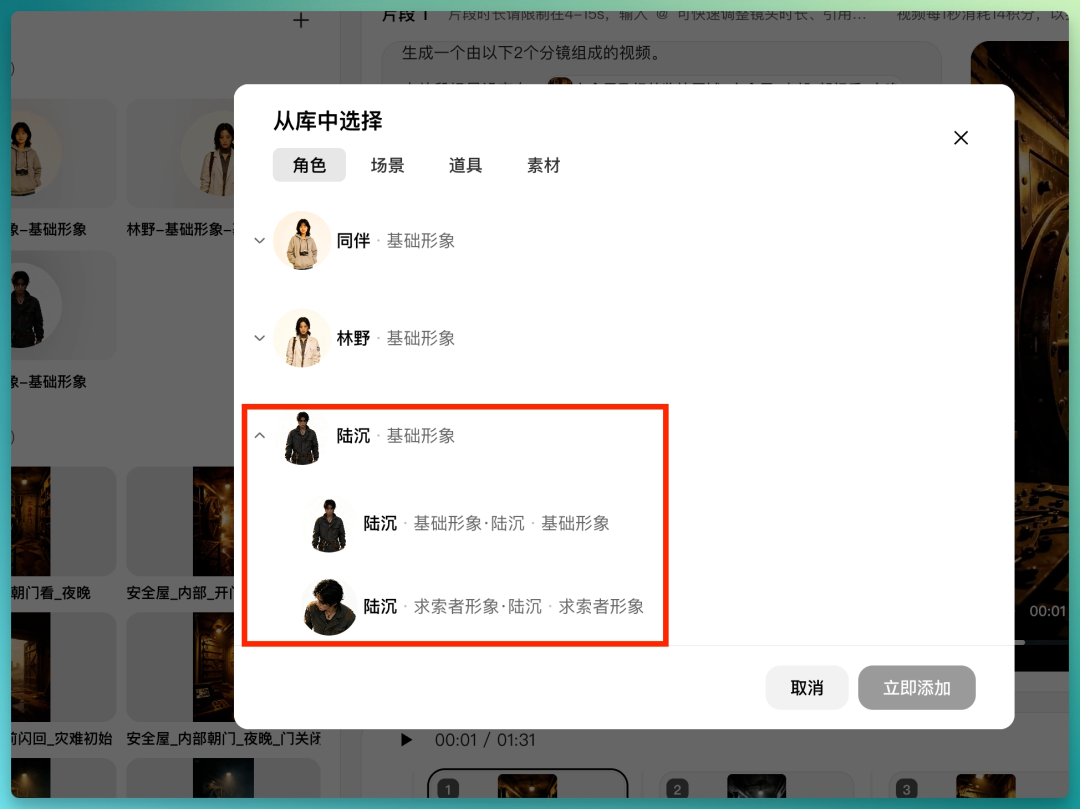
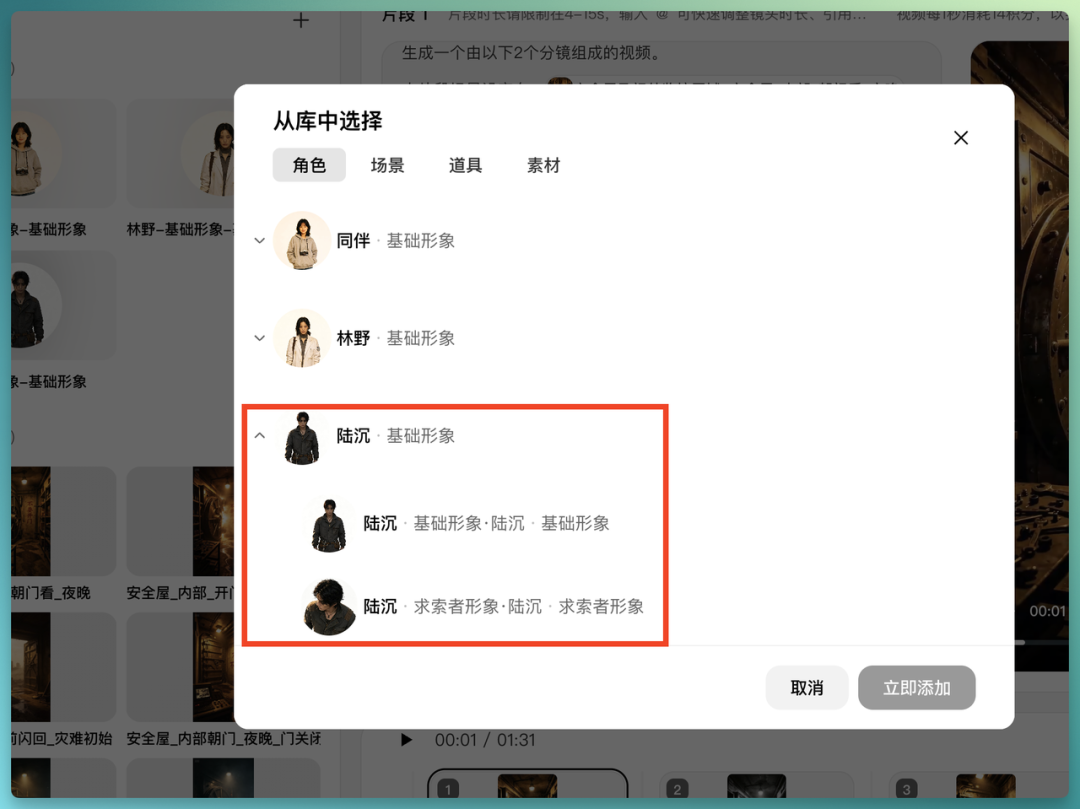
For example, if the male lead turns dark in episode 5, you can directly @ his dark version.
The storyboard script itself is sufficiently detailed: each segment consists of 2-3 shots, with each shot annotated for duration, shot scale, camera position, character action, image color, and focal length.
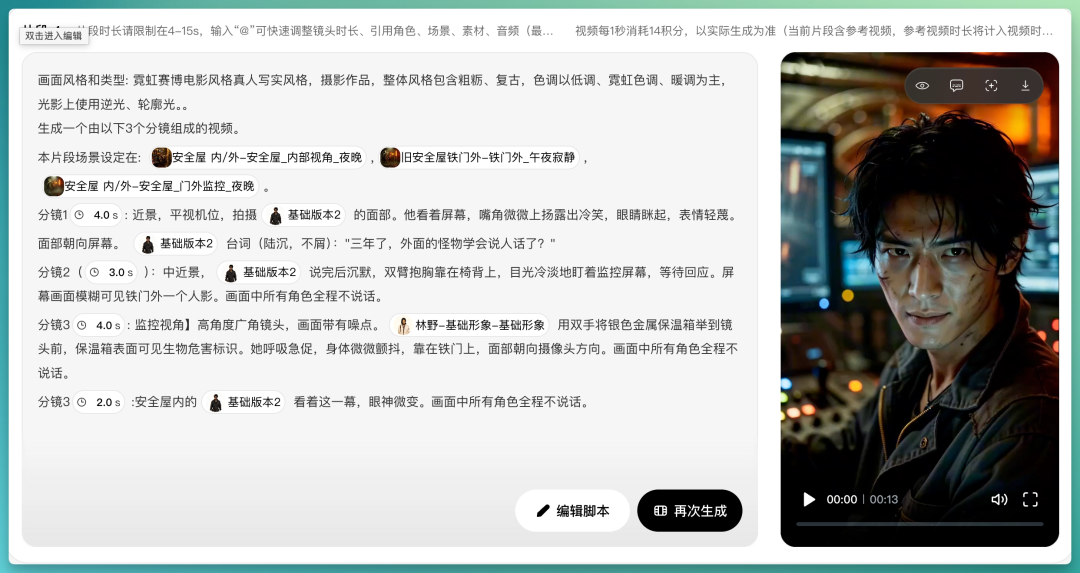
Clicking generate, the resulting footage genuinely carries cinematic quality.
The Kodak warm yellow tone runs throughout. The metallic texture of the safehouse interior, the diffusion effect of the gray fog, the light-and-shadow layering on Lu Chen's face — all maintain consistency with the canvas settings.
The entire short drama, from script generation to all storyboard video output, was completed entirely within the Skylark platform.
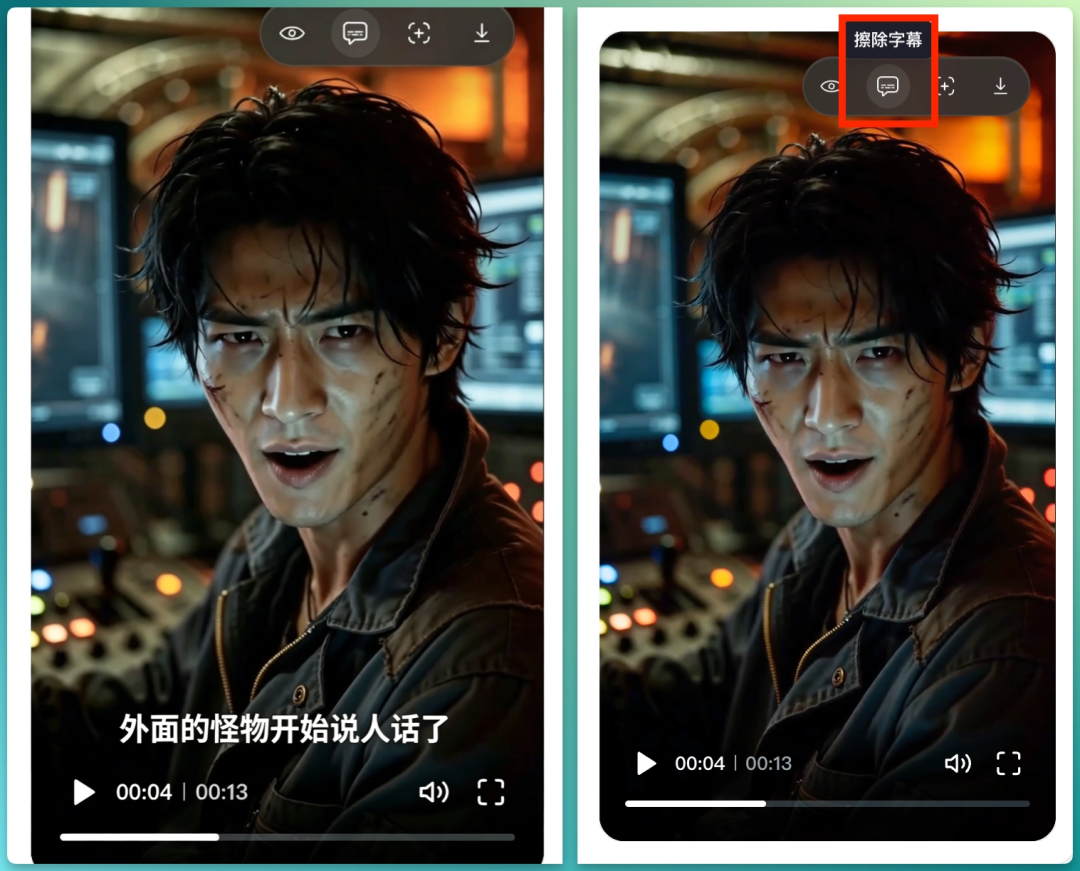
Generated videos sometimes come with default subtitles. Clicking the "erase subtitles" button above the clip video removes them in one go. This feature seems minor, but it's genuinely practical for creators who need custom subtitle styling or want to import footage into CapCut for post-production.
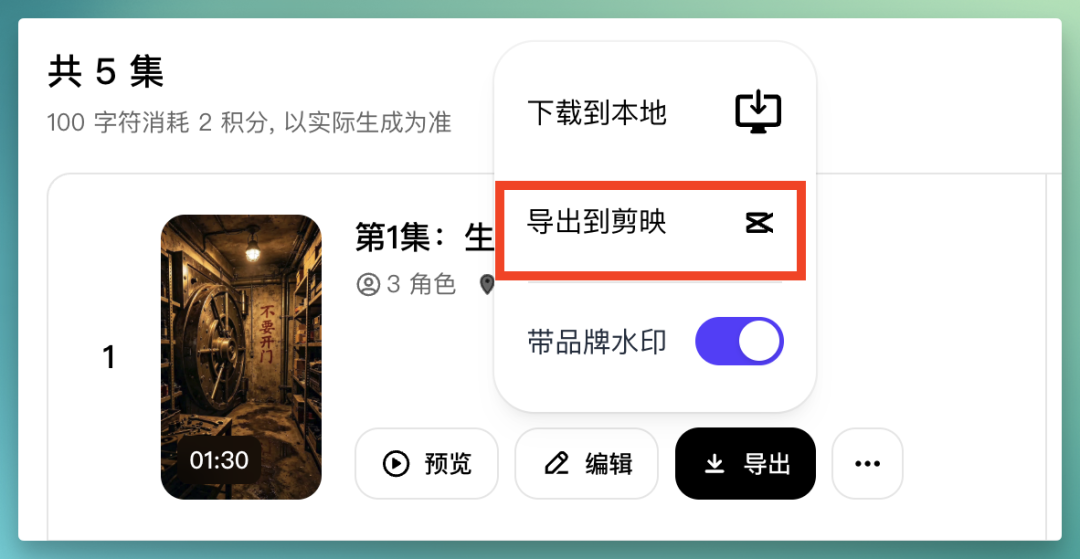
Skylark has also integrated with CapCut, so subsequent work can flow directly into it without repeated exporting and saving.
The Next Dividing Line for AI Short Drama Tools
After running through Don't Open the Door end-to-end, here are several assessments worth unpacking.
[1] What AI short drama creators lack most right now isn't better images, but control over images.
Mainstream AI video models have long since passed the threshold for single-frame image quality. The daily pain creators face is actually "AI uncontrollability." Characters swap faces when scenes change. Light direction is pure luck. Camera angles can't be precisely specified.
So creators spend enormous time on repeated gacha rolls and manual curation — essentially using brute-force enumeration in place of control. The root cause:
In most AI creative tools, creators have only one entry point for image control: the prompt. How much the model "understood," the creator has no way to intervene.
What Skylark Short Drama Agent 2.0 does is extract these professional dimensions from the fuzzy zone of prompts and turn them into independent parameter panels.
This determinism carries enormous value for short drama creators.
[2] When control is sufficient, creators finally have bandwidth to think about "what story do I actually want to tell."
Where a creator spends the most mental energy is actually in script-stage decisions.
Skylark pushed Frederic Brown's two sentences toward an apocalyptic locked-room博弈 — should I accept this direction? Lu Chen's arc from "lonely gatekeeper" to "active truth-seeker" — is this transformation sufficiently powerful? Does episode 3's trust reversal come too early?
These are creative decisions. These are what actually determine whether a short drama is compelling. In previous AI creative workflows, they were easily submerged because creators' attention was consumed by wrestling with tools.
When execution-layer determinism rises to a certain level, these decisions surface to become the focus of attention.
The essence of this determinism: the tools have finally caught up to what creators intend.
At bottom, AI model generation capability hasn't been the bottleneck for a while now. What creators actually need is a creative partner that understands their intent.
You don't need to explain "what I want" from scratch every time. Once parameters and assets are set, the tool naturally keeps pace with your rhythm. This is the role Skylark plays in the short drama scenario.
Liu Ziyu said something while making Zombie Cleaner:
Many people write their prompts too rigidly, but truly good images need to give the model some room to breathe.
This statement has a precondition: he already had control over the big picture, so he could afford to let go on details.
This test experience aligns completely with what he said: when you know parameters can land your intent, you stop spending energy wrestling with tools and start thinking about what matters more — the story itself.
[3] AI short drama is moving toward industrialization. And industrialization's prerequisite is assetization.
Zombie Cleaner and Treasure Basin represent AI short drama's current two forms.
- The former is artist mode: one person refining a single work through aesthetic intuition and repeated gacha rolls
- The latter is industrial mode: 99 episodes, 470 million views, requiring stable characters, reusable scenes, and decomposable production workflows
The leap from the former to the latter is AI short drama's own industrialization process.
The controllability discussed in point one solves the "single generation" problem. But industrialization must solve the "cross-scene, cross-episode" problem: Is the character in episode 1 the same person as in episode 50? Can assets be structured for management and calling?
Skylark Short Drama Agent 2.0's canvas + asset library + storyboard structure does exactly this: crystallizing single-generation controllability into a reusable asset system.
Once this infrastructure is in place, short dramas can support longer and more complex narrative structures — and thus gain more possibilities.
To lower the trial-and-error barrier, Skylark currently offers a special support program for quality creators, including credits and cash incentives.
When technology and compute are no longer barriers, creators can finally return their energy to the story itself.

Crossing is seeking independent contributors to write AI product and model reviews.
If you've written similar articles: Hands-On: PixVerse C1, Hands-On: LibTV, please contact zeo0811@gmail.com. Email should include: ① personal introduction, ② AI review articles you've written.
We offer competitive rates. Looking forward to observing and documenting the AI era together 🎪