Mashangfei: The Supply-Side Infrastructure for the Agent Era, Beyond Yiwu's AI Shops

Use AI to help one person run a business, then connect millions of businesses.
Using AI to Help One Person Run a Business, Then Connect Millions of Businesses

🙋♂️ Author: Yitao
🥷 Editor: Koji
🧑🎨 Design: NCon

Can a complete AI novice open an online Yiwu shop?
Not a vibe-coded product, but a real store plugged into actual commerce — one that completes transactions.
This is an experiment recently launched by CodeFlying. It gives each participant 200 RMB in trial credits to select products from real Yiwu suppliers, then uses AI to generate a personal shop in one click. When someone places an order, the Yiwu merchant ships directly. Users can complete a genuine business loop at nearly zero cost.
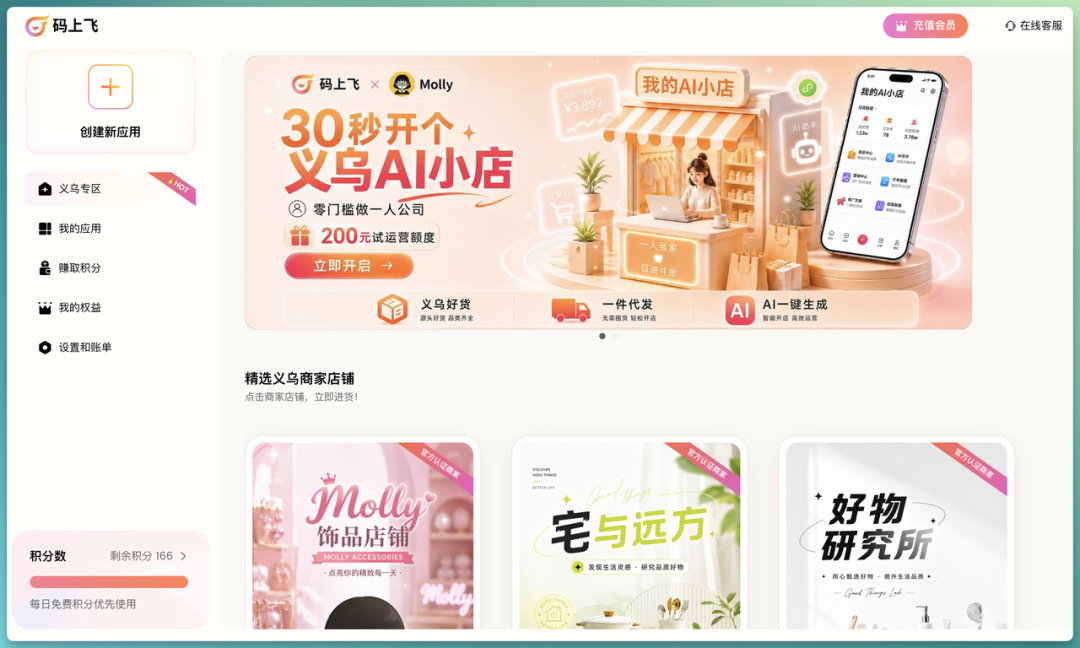
First, some background for readers unfamiliar with the company. CodeFlying is developed by Beijing Kuafu Technology, an AI company building "multi-agent systems for software generation" founded in 2023. It has completed four funding rounds to date, with investors including Huawei Hubble, MiraclePlus, Zhengxuan Investment, and Fosun RZ Capital, raising tens of millions of RMB in total. Its most recent Pre-A+ round closed in January 2026, also in the tens of millions.
Its core function can be explained in one sentence: describe what you want in natural language, and it generates a working online app that can display products, handle customers, and manage orders.
Most AI applications monetize through subscriptions or by making users more productive — essentially, making the strong stronger.
CodeFlying is trying something else: can AI directly help an ordinary person start a business?
To test this, I tried it myself.
A Hardware Factory Boss Cosplay
Here's the setup:
I run a local hardware accessories factory in Yiwu, specializing in hinges, handles, corner brackets, and drawer slides — furniture hardware with bulk customization available.
Step one: generate my Yiwu shop. I open CodeFlying's web interface and type my requirements:
I'm a hardware supplier in Yiwu, mainly dealing in furniture hardware like hinges, handles, corner brackets, and drawer slides, with bulk customization available. Build me an online store where customers can browse products and pricing by category, and submit inquiry forms directly.
About ten minutes later, the app is ready.
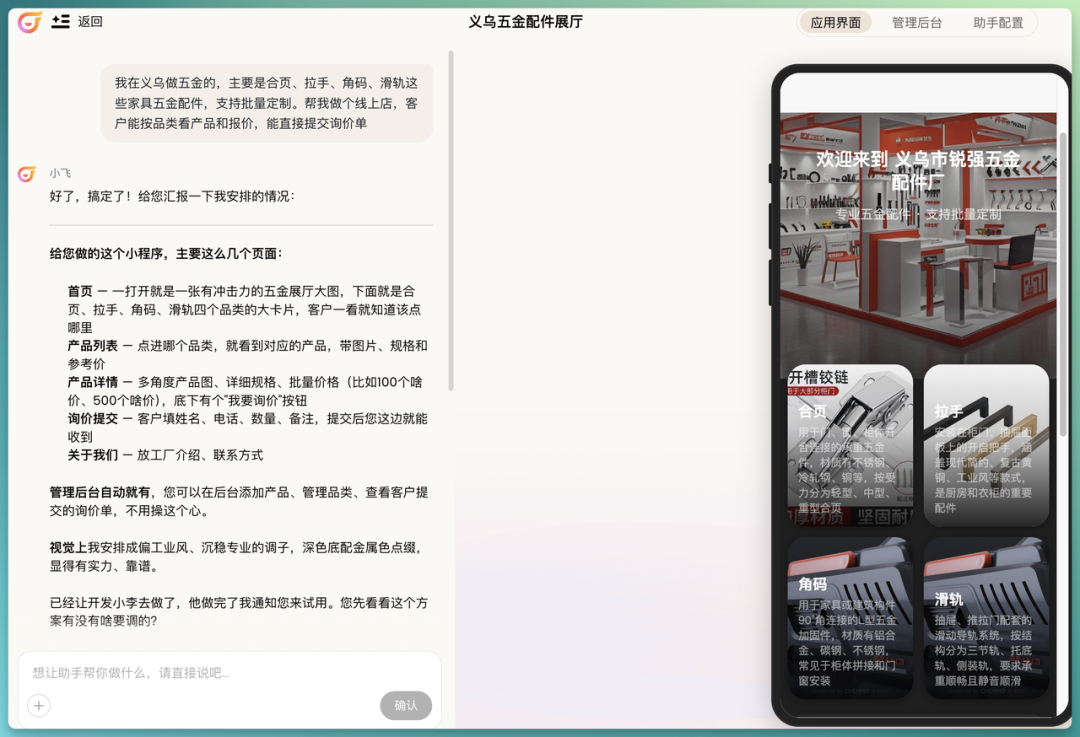
What comes out is a complete business application. The homepage features a large image of a hardware showroom, followed by the main product categories — hinges, handles, corner brackets, slides. Each product includes material descriptions, specifications, and reference pricing.
Tapping in brings up detailed product pages with multi-angle images and bulk pricing tiers (e.g., price for 100 units, price for 500 units), plus an "Request Quote" button at the bottom. When customers submit the form, it arrives in the backend.
Meanwhile, the system auto-generates an admin dashboard. Category management is structured, with each category having an ID, description, card image, and other fields — all editable directly in the backend.
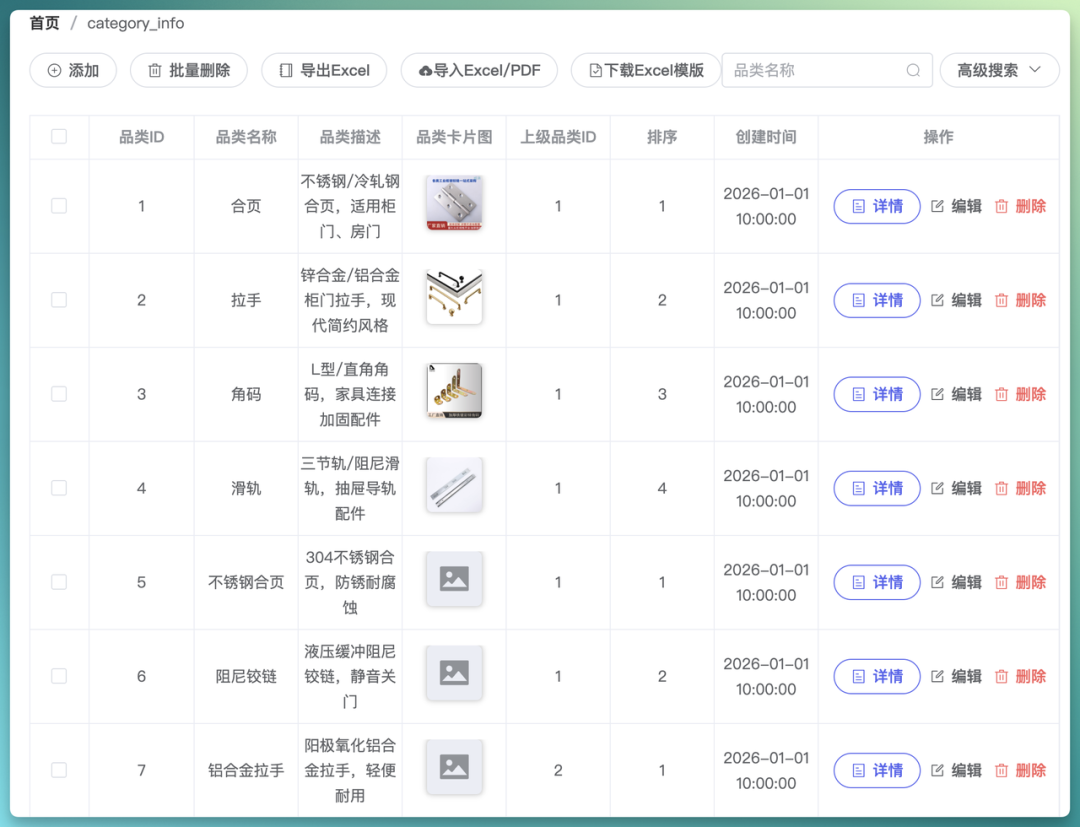
The completeness exceeded my expectations. Frontend, backend, data flow — all functional and deployable. This isn't just a vibe-coded demo.
But I'm not fully satisfied with the homepage aesthetics, so I add another instruction in the chat box:
Remove the descriptions below the accessories on the homepage, move the accessory names to the center of the images, and beautify the overall homepage design.
After the revision, the visual hierarchy is much cleaner. Category names overlay the images, making the entry points immediately visible.
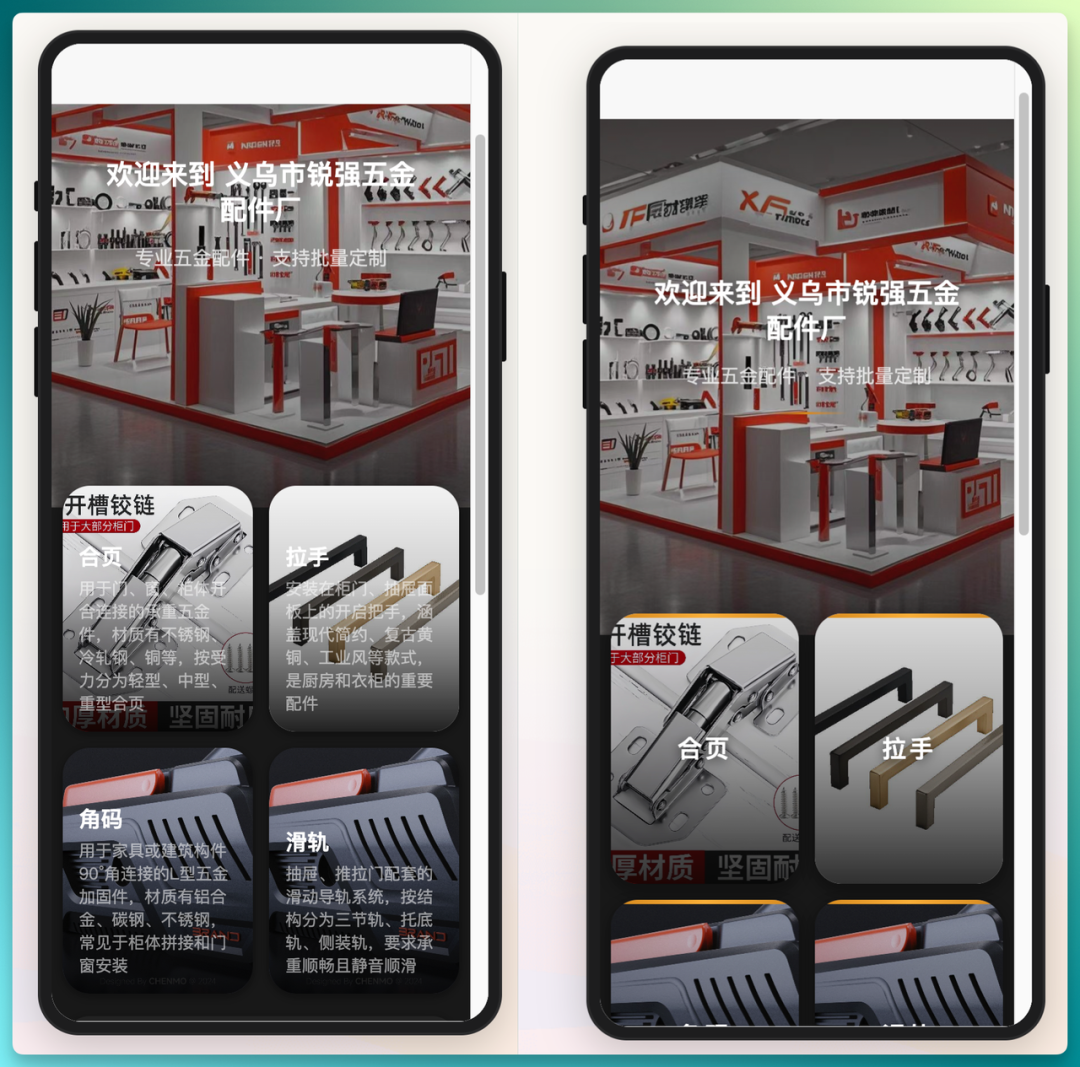
The key to this experience is "keep adjusting in natural language." For a factory owner with no technical background, this is incredibly convenient. Market conditions change daily — prices, product lines, everything shifts. If every tweak required finding a developer, the system would never stay usable.
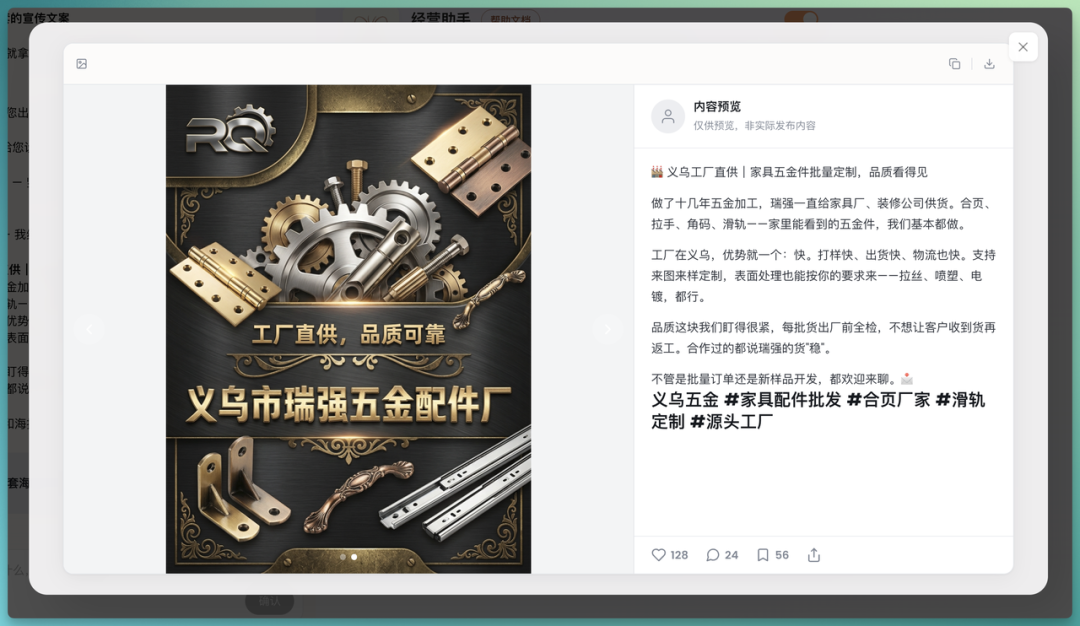
Generating the app isn't the end. CodeFlying equips each shop with a business assistant. I have it generate matching posters and copy based on the store information:
The poster quality is completely usable, featuring all the shop's main products.
The copy's tone hits the right notes, hitting the company's core selling points — materials, sampling speed, delivery cycles, custom orders from drawings. For a real small factory running sales, this stuff can go straight onto social media.
After generation and operations, customer service is another headache for small business owners. Doing it yourself eats up energy; hiring dedicated staff adds costs.
CodeFlying also provides AI customer service.
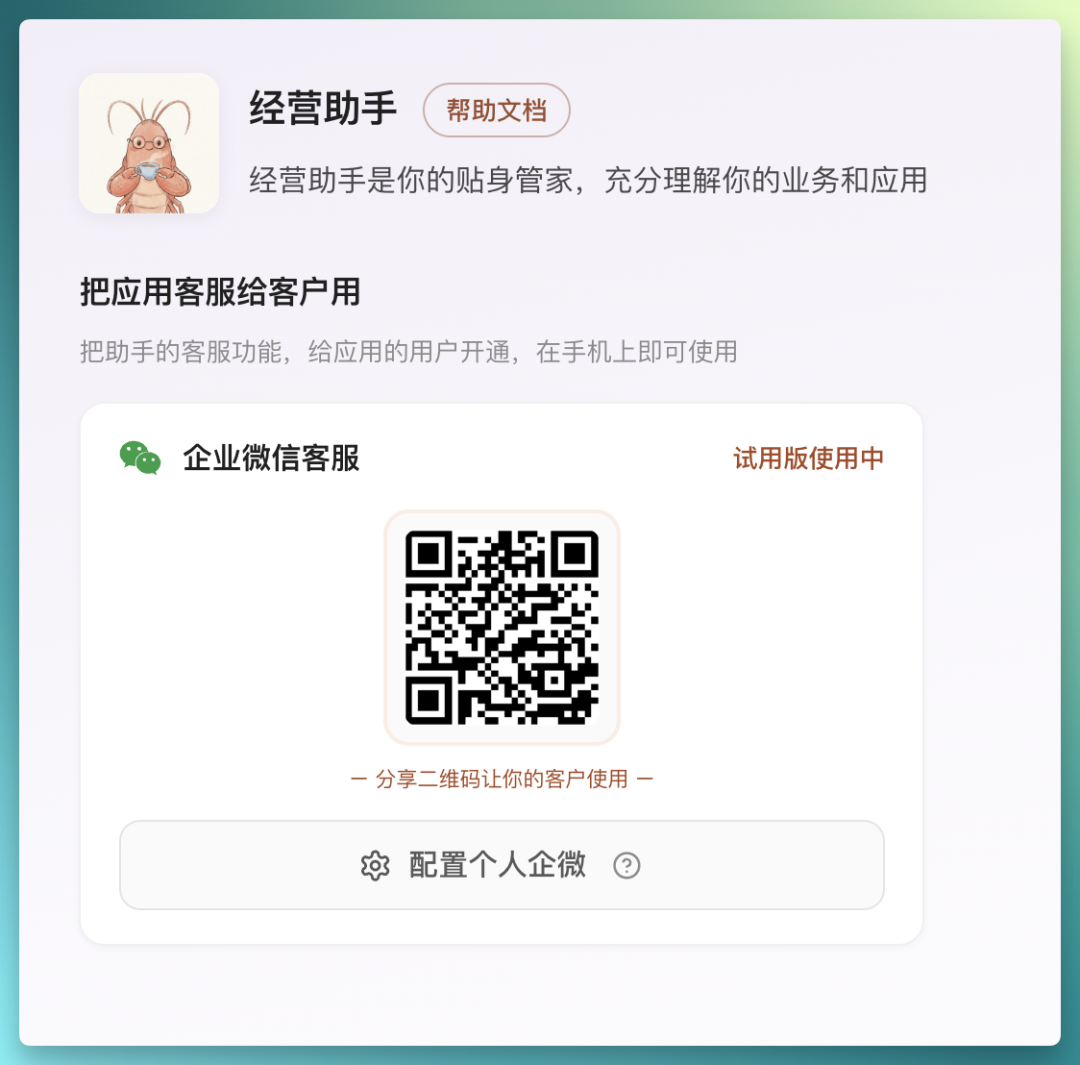
Scan a QR code to integrate the service into WeCom. Customers consult directly in WeChat, with AI handling responses automatically. Users don't need to switch between platforms — they manage business right in the chat window.
For small and medium merchants accustomed to "WeChat is my workspace," this is far more practical than a standalone management dashboard.
At this point, the online business system for this hardware factory is operational: frontend display, inquiry entry, backend management, AI for customer service and content generation, all deployable through WeCom. The entire process involved zero lines of code. From first prompt to full operation: about twenty minutes.
How Should We Read CodeFlying?
At the product level, CodeFlying has set itself a sweeping ambition: become the supply-side infrastructure for the Agent era. It calls this framework Agent B-to-A Infra — not competing for user entry points, but digitizing and agent-ifying real-world businesses so they can be discovered and invoked by personal agents in the future.
Is this narrative viable? I tried breaking it down.
First, the direction from tool to infrastructure itself holds up.
AI application monetization today remains overwhelmingly subscription-based: user count times conversion rate, with a visible ceiling. But if a product can embed itself in the transaction chain itself, its ceiling becomes the transaction volume and network value of the ecosystem.
CodeFlying's three-layer progression — generate, operate, connect — points exactly in this direction. Take my hardware factory example: once this system actually runs, all transaction information becomes structured, real-time, and machine-readable.
The logic holds: regardless of who wins the Agent entry point battle, those Agents will need to invoke real-world supply. Build out the supply side well, and you become an unavoidable link in that chain.
But from narrative to reality, several critical validations remain.
The Yiwu AI Shop is CodeFlying's first showcase. It validates that AI-generated business systems can enter real operational workflows — valuable proof that the product's completeness is sufficient.
But for a Business Agent Network to truly function, several key factors matter.
Node density is the first. Network value depends on scale. A few hundred hardware factories online versus tens of thousands are completely different propositions.
Tech stack is the second. When external personal agents actually start invoking this supply, can CodeFlying's interfaces and data connect smoothly? This remains to be proven.
That said, one number partially validates this direction's feasibility. CodeFlying's registered users are approaching one million, meaning it already has a potential million-level Business Agent supply pool.
Compared to the "build a hammer, then look for nails" approach, data grown from real scenarios at least shows the Business Agent Network's business logic works. The node density question already has a floor at the starting stage.
Additionally, there's a point mainstream discourse rarely addresses: current AI commercialization attention concentrates almost entirely on the user side, while the supply side is severely underestimated.
Open any AI industry publication — the hottest topics are always who built the better Agent, who captured the entry point, whose user numbers are up. But the precondition for an Agent helping you buy something is that someone put that thing where an Agent can find it.
CodeFlying chose to stand on the merchant's side. Hardware factories, clothing shops — these small businesses form the capillaries of Chinese commerce. The vast majority haven't been digitized, let alone agent-ified. Whoever can lay this infrastructure claims a position others can't bypass.
This story is still early, but directionally, it may represent the most overlooked dimension in current AI commercialization discussions.
The "Yiwu AI Shop" campaign is ongoing. If you want to experience what "AI-powered shop opening" actually feels like, visit codeflying.net.
After all, the first step in business judgment is getting firsthand feel.
Crossing is seeking independent contributors to write AI product and model reviews.
If you've written pieces like: "Hands-on with PixVerse C1", "Hands-on with LibTV", please contact zeo0811@gmail.com. Your email should include: ① personal introduction, ② AI reviews you've written.
We offer competitive rates. Looking forward to observing and documenting the AI era together 🎪