From Aha to AhaCreator: The "Operating System" for Creator Marketing Platforms Is Taking Shape

A New "Answer" to Influencer Marketing.
A New "Answer" to Influencer Marketing.
👦🏻 Author: Jingshan
🥷 Editor: Koji
🧑🎨 Layout: NCon

Influencer marketing has never been something you can just knock out easily. Sure, you can find a few creators, agree on a price, push the content live, and the numbers look decent. But the moment you try to scale, things get exponentially harder.
Sourcing, outreach, negotiation, sample shipping, deadline chasing, data reconciliation — stack all that up and it'll consume your entire team's bandwidth.
Back in late 2025, in our piece "Hands-On With Aha 2.0: Is It Really the Optimal Solution for Influencer Marketing?", we tested Aha 2.0, an AI-powered influencer marketing platform.
Put simply, it handed the entire influencer collaboration pipeline — sourcing, outreach, negotiation, information gathering, deadline chasing, asset licensing, data collection — over to AI to push forward continuously.
Recently, Aha extended its name to AhaCreator, rolling out another round of upgrades and feature additions across many workflows. We also connected with their user Zoer, who shared their real-world experience and provided some data screenshots (thanks, Zoer).
🚥 Through our teardown, the Crossing team identified 6 major upgrades. Here's our analysis.
Aha 2.0 First Nailed the Core Pipeline
Some context first: after launch, the product did manage to solve the core efficiency problem in influencer marketing — AI ran the full pipeline of sourcing, outreach, deadline chasing, and data collection, so brands no longer had to email creators one by one or chase down progress manually.
But in actual influencer marketing execution, there were still plenty of operational pain points that could be productized and further addressed.
Take pricing, for example. Previously the platform offered fixed rates. While the calculated prices were relatively fair, brands had limited room to negotiate further with creators.
Or consider the matching stage. Some brands had already mapped out their ideal creator profiles, while others wanted clearer data-driven guardrails upfront — things like follower count, audience age.
So this AhaCreator update essentially responds to these real operational needs in influencer marketing.
We've organized the upgrades into 6 points, paired with our own thinking and interpretation.
These 6 updates fall into 2 sections:
[1] "Influencer Marketing Plan"
[2] "Influencer Marketing Dashboard"
Starting with the "Influencer Marketing Plan" updates — these are more granular.
Part 1 | "Influencer Marketing Plan"
1) The Creator Pool Got Bigger, Expanding Matchable Supply
Anyone who's done influencer marketing knows a hard truth: the good creators are limited, and everyone's fighting for them.
The creators you work with? Your competitors are probably working with them too. When multiple brands keep showing up in front of the same creators and the same audiences, users get fatigued and conversions drop.
Bottom line: the ceiling of your creator pool often determines the ceiling of your influencer marketing performance.
This time AhaCreator made a significant expansion on the supply side.
Some concrete numbers: YouTube added 106,700 "10k+ creators" in developed markets, plus another 113,900 in other regions. Instagram, TikTok, and other platforms added another 74,600.
Another notable addition: vertical supply expansion.
This release added 783,000 AI and Consumer Tech vertical creators directly available for Campaign matching, specifically filling gaps in high-demand scenarios like AI tool reviews, productivity tools, and consumer tech products.
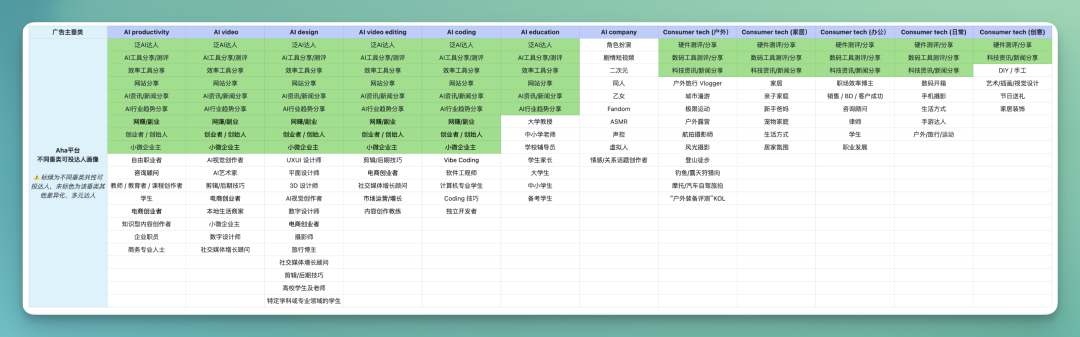
For brands, this means the proportion of "highly relevant creators" available for matching increases proportionally, giving you more options to choose from and laying groundwork for downstream operations.
2) Two New "Small Features" That Are Easy to Overlook but Quite Practical
When initially creating a marketing plan, two new features were added to enable more efficient collaboration workflows for creator content partnerships.
[1] First, for AI software products: creator account collection.
Many AI products run on subscription or credit-based billing. For creators to do reviews, brands need to set them up with trial access first. Previously this relied on back-and-forth DMs or emails — inefficient and easy to miss.
Now brands can set "need to collect creator account info" when creating a Campaign, and creators submit it when accepting the brief, eliminating the subsequent back-and-forth entirely.
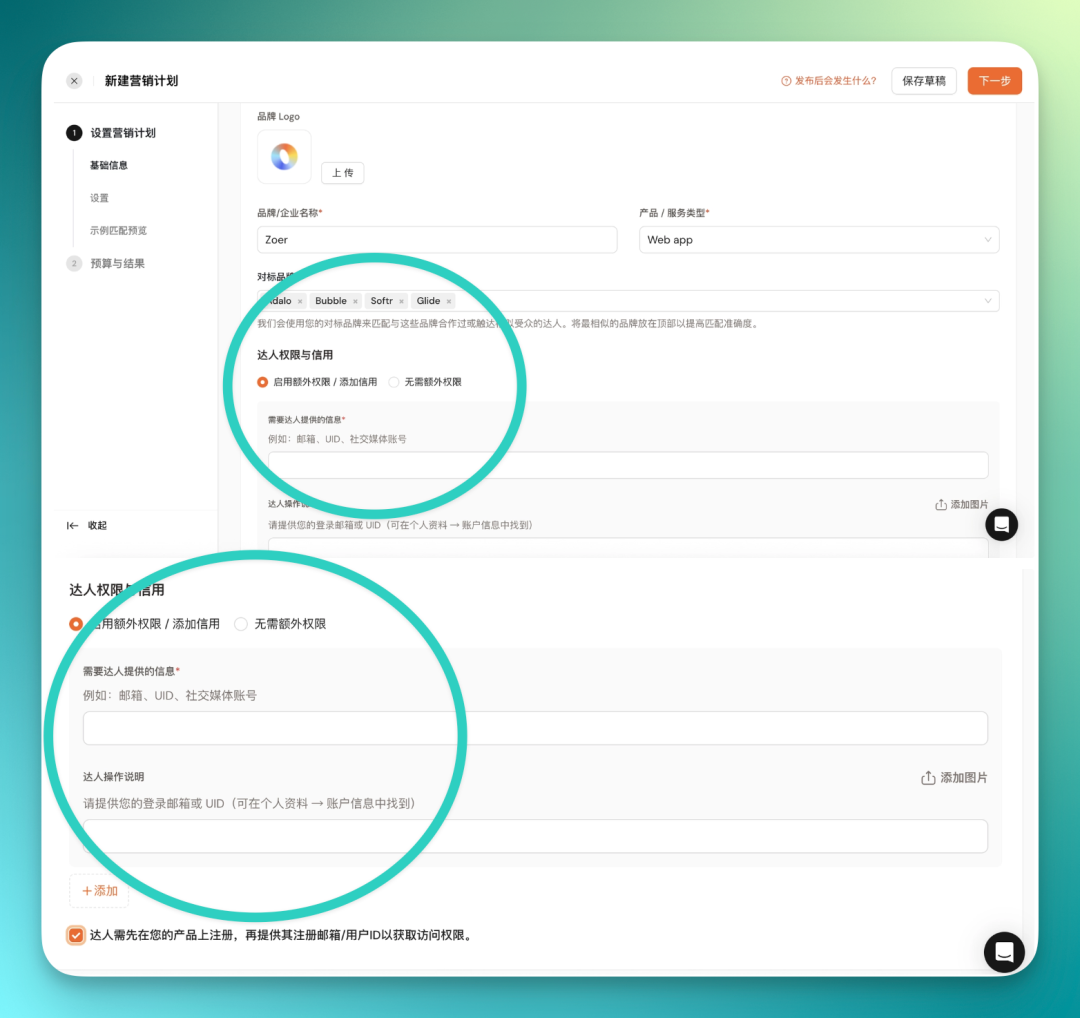
To illustrate this further, take VMEG.AI — they do AI Dubbing & Video Translation and have their own pricing structure. But during creator reviews, you obviously can't ask creators to pay out of pocket for credits. So brands need to proactively provide creators with product usage credits, memberships, beta codes, and other support.
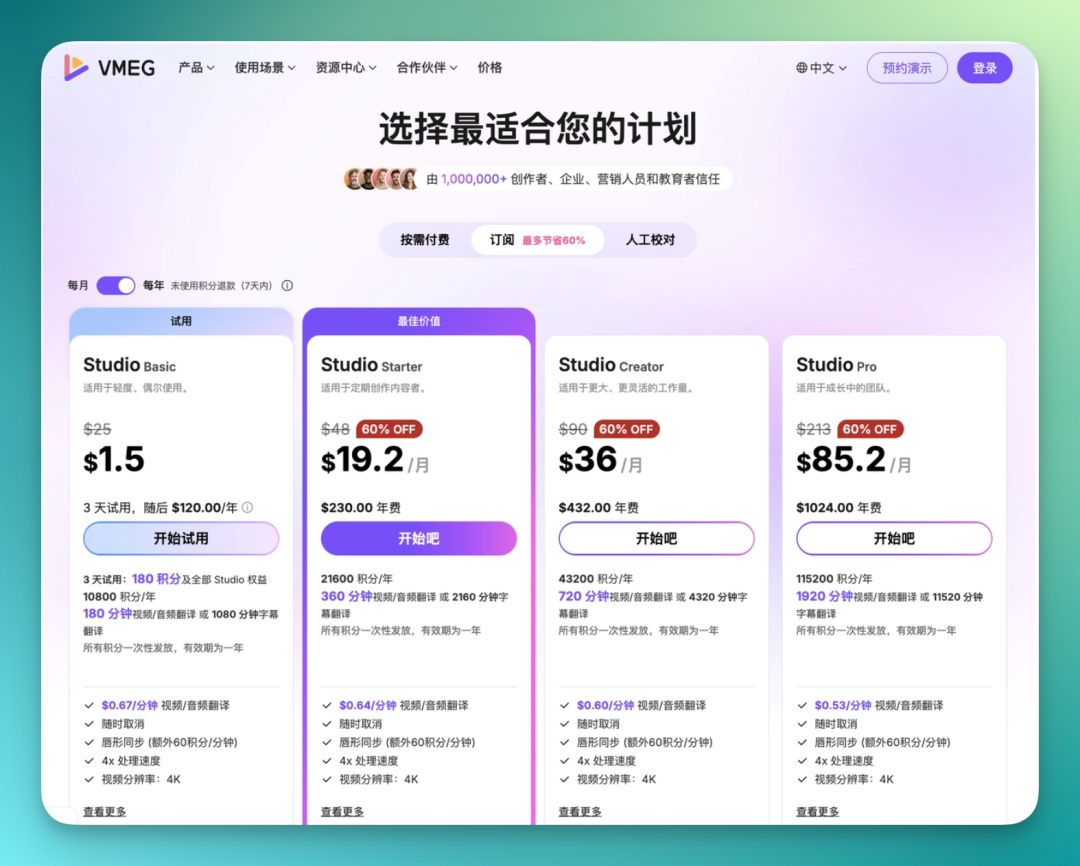
Previously brands had to reach out to creators one by one via email or DM to collect their registration/login accounts. Then wait for the creator to reply, add them to the whitelist, and finally tell them they could start content production. All that back-and-forth delayed content production significantly.
So the "creator account collection" step, while a small feature, delivers outsized efficiency gains.
Per their official case study, VMEG.AI has now executed 40 mid-to-long-tail creator collaborations through AhaCreator, with one creator driving 1M+ impressions on a $58 spend.
Check it out if interested: https://www.ahacreator.com/case-studies/VMEG
[2] Second, for physical products: multi-SKU sample shipping.
This is particularly useful for AI hardware products. For sample shipping scenarios, they provide a unified shipping info collection portal with logistics tracking; brands can view shipping and delivery progress in the dashboard to ensure content production stays on schedule.
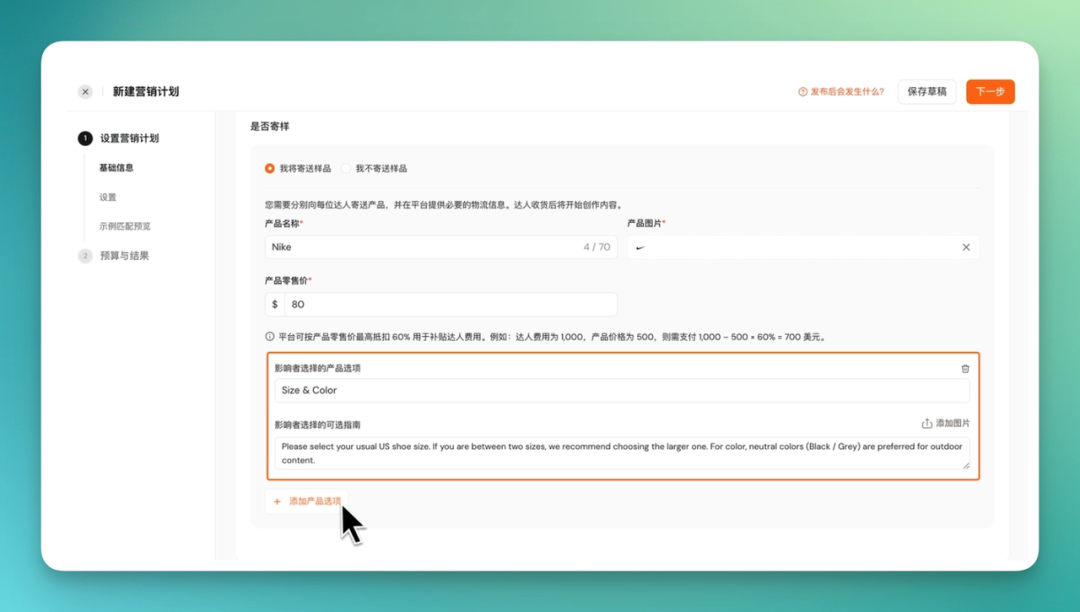
For info collection, previously brands could only enter a text block to explain product details. For merchants with multiple SKUs, it was hard to clearly communicate different specs and options.
Now AhaCreator lets brands configure multiple sample products and corresponding specs (size, color, model, etc.) in one go. Creators select their preferred version when confirming the collaboration, then proceed to shipping.
This eliminates a lot of rework from spec mismatches.
These two features look minor, but the execution efficiency gains are substantial.
3) Creator Matching Got More Dimensions, More "Attuned to You"
The "match creators" stage added 3 main dimensions: creator profile matching, competitor matching, and key data metric filtering capabilities.
Starting with creator profiles.
Anyone who's done influencer marketing knows: brands usually have a sense of what creator types work best. If you're building an AI writing tool, you probably know that productivity bloggers convert better than general tech bloggers.
Previously this knowledge stayed trapped in the team's heads, with manual screening for each selection. Now you can feed these judgments directly into the system.
For example, telling AI your brand/business overview and highlights:
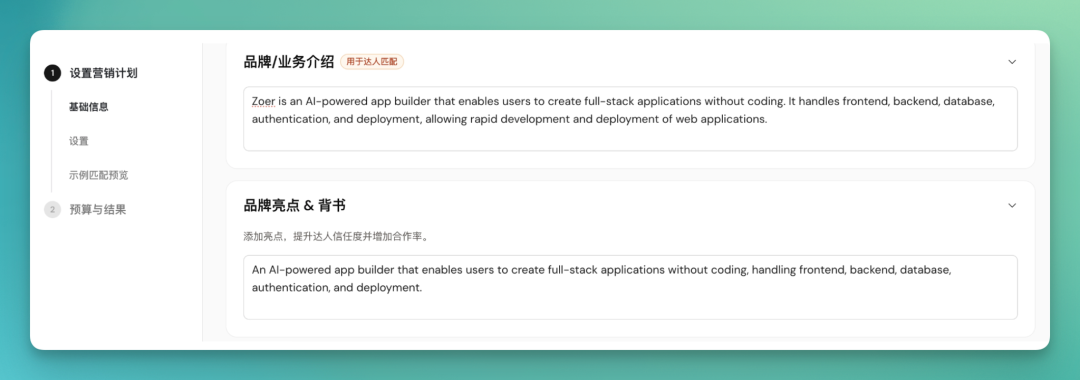
What your core selling points are:
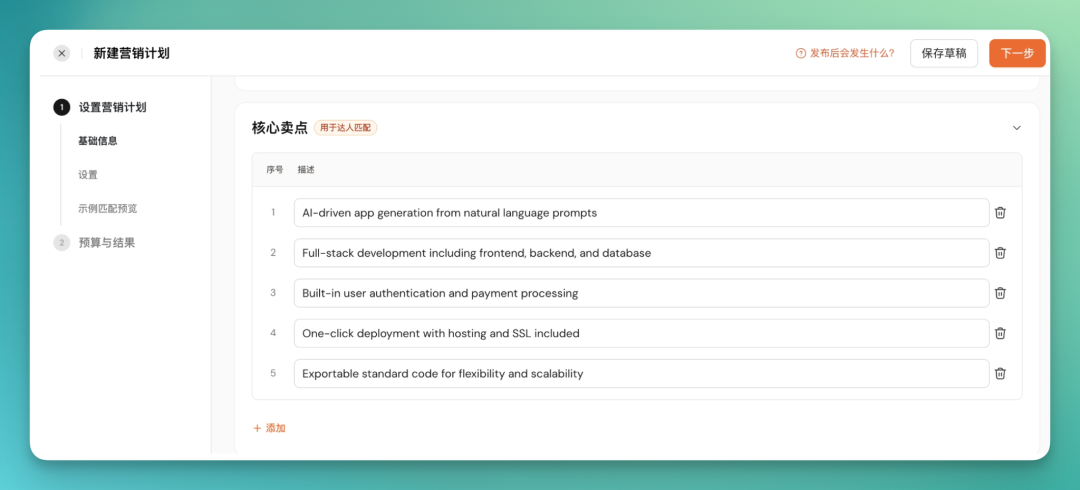
And your "desired creator profile" for subsequent matching:
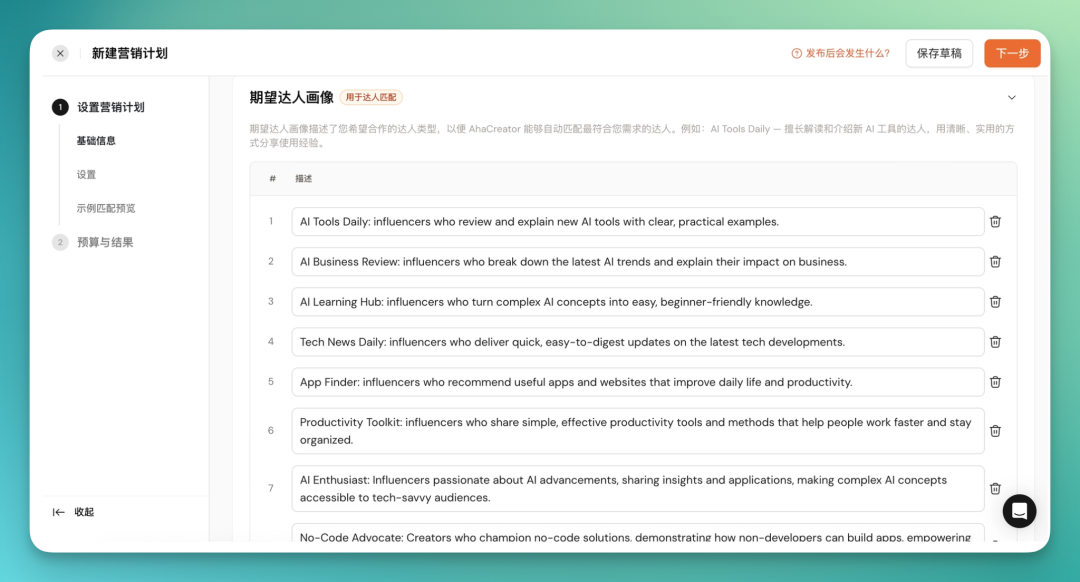
These profiles can get extremely granular. For example, you can directly input your target audience profile as "AI product enthusiasts, efficiency-focused users," then define what you mean by those two user types in the text box below:
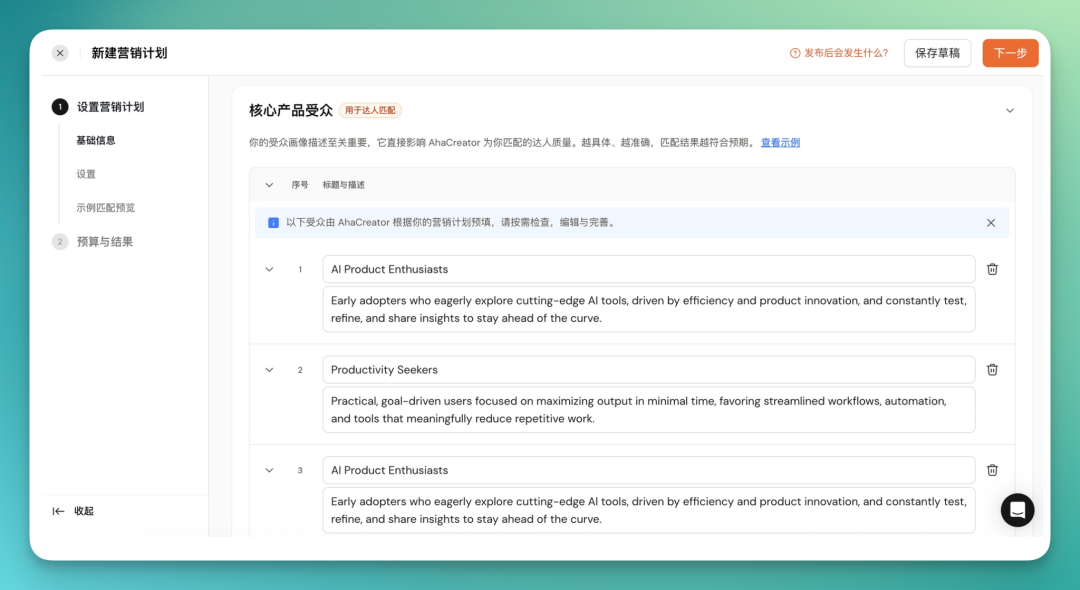
You can modify these profiles anytime, adjusting descriptions as your campaign progresses. Say after two weeks you discover tutorial-style creators perform exceptionally well — you can simply increase weighting for that direction.
Next up: competitor matching.
This feature lets brands select their competitors. During matching, the system pulls data on which creators those competitors have worked with, or references similar creator profiles and audience segments for additional context.
For brands just starting out with creator marketing, this functions as a cold-start accelerator. You don't need to figure out from scratch which creator types work; you can leverage existing industry data to get moving immediately.
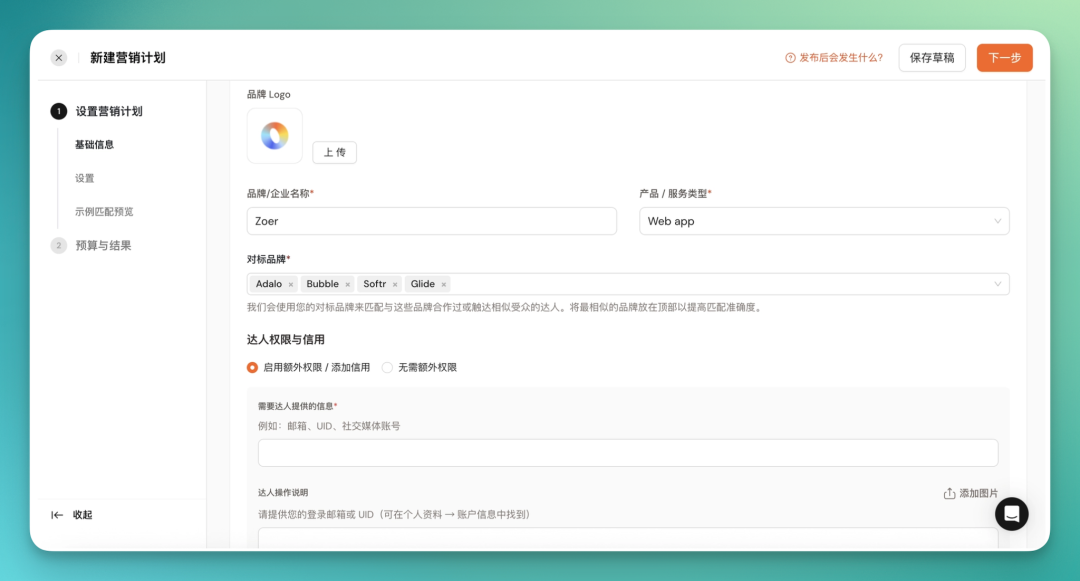
With creator profiles and competitor matching added to the mix, the AI now draws from far richer information when matching: product selling points, audience profiles, country, language, platform channels — plus creator profiles and competitor references.
Cross-referencing multiple dimensions like this produces more reliable recommendations, covering ground that manual searches simply couldn't.
Then there's more flexible campaign foundation settings. You can now choose from three matching modes (precision vs. broad, depending on business needs), with finer-grained filtering for platforms and countries.
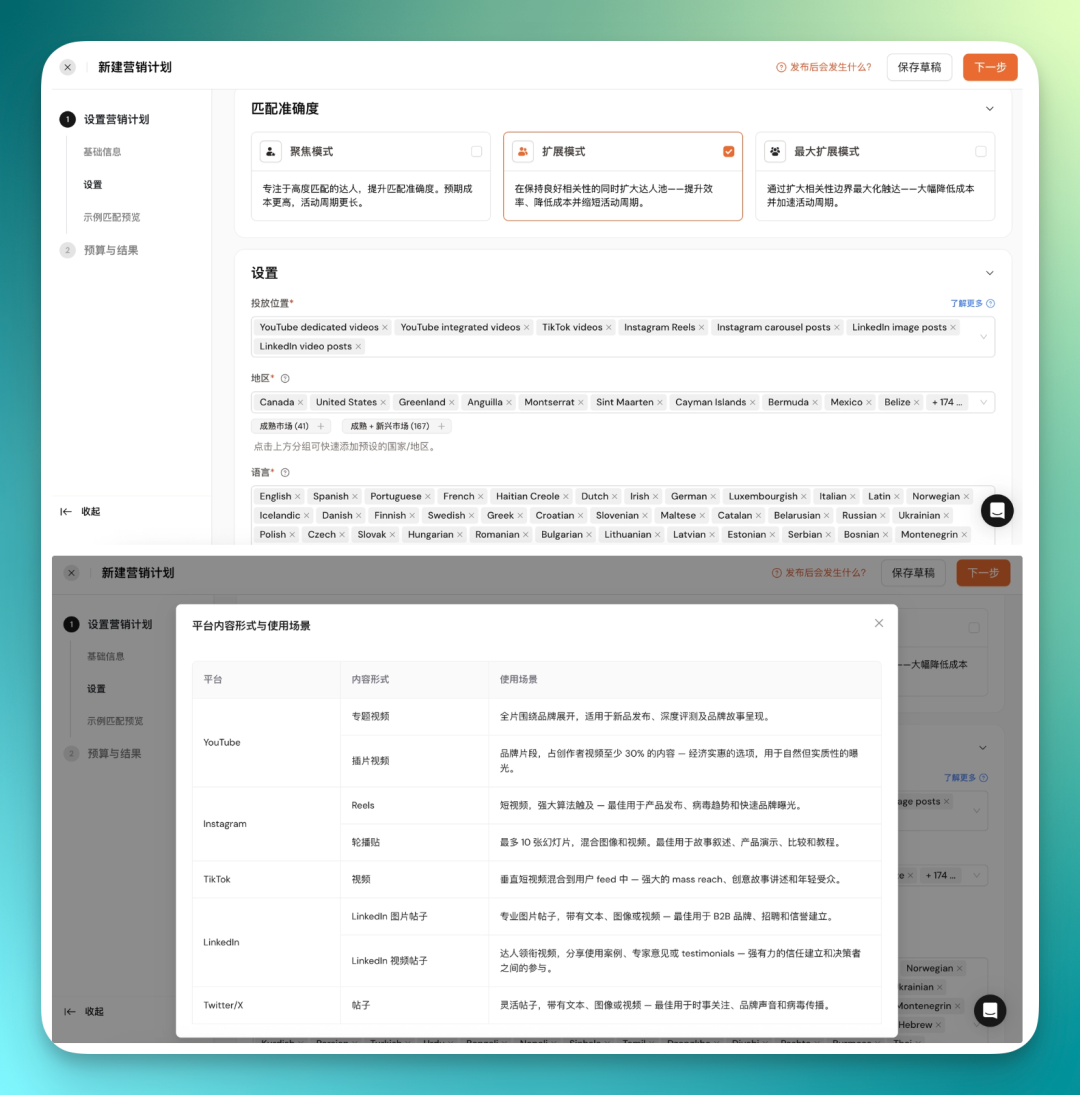
Campaign timing, product briefs, and other details are all customizable. You can also upload lists of previously successful collaborators, or a "blocklist" of creators you want to avoid.
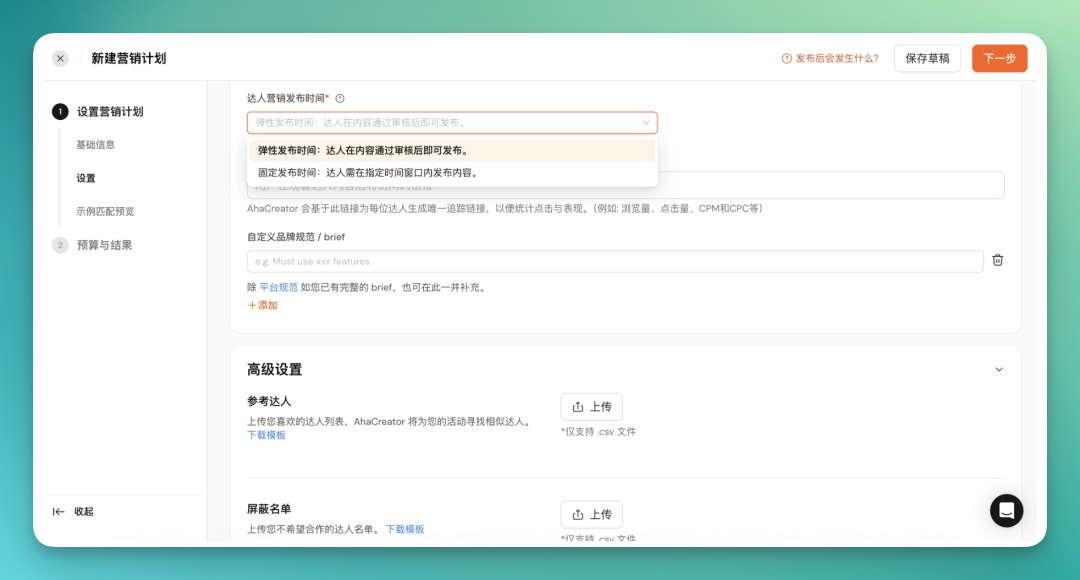
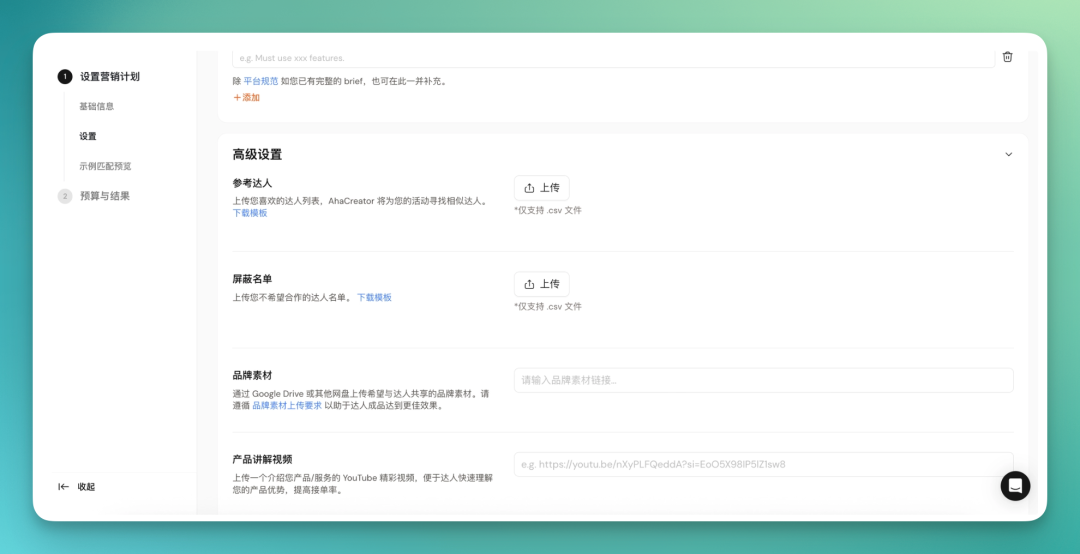
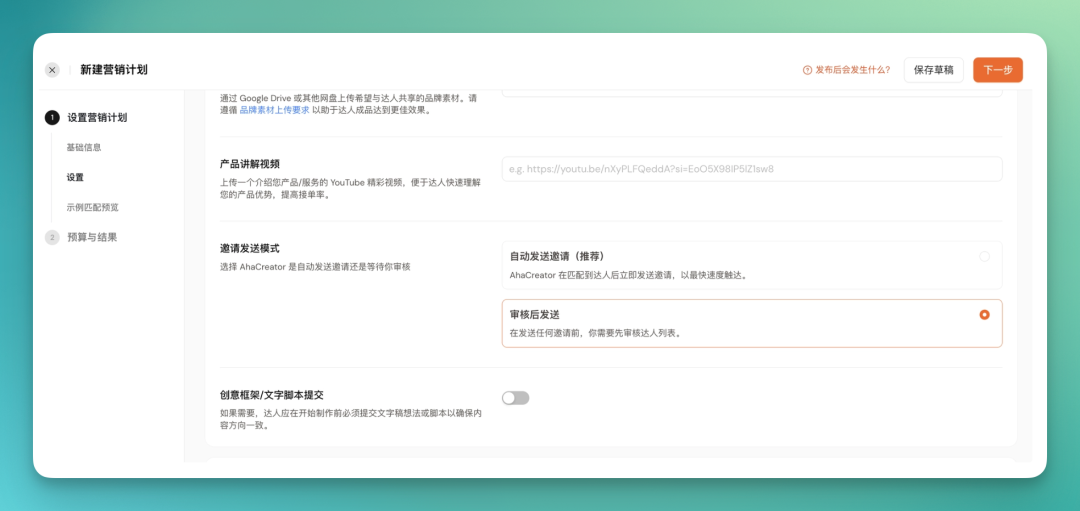
For creator outreach, there are now two sending modes at the setup stage. One has AhaCreator send invitations immediately upon matching; the more cautious option lets you review the full creator list before anything goes out.
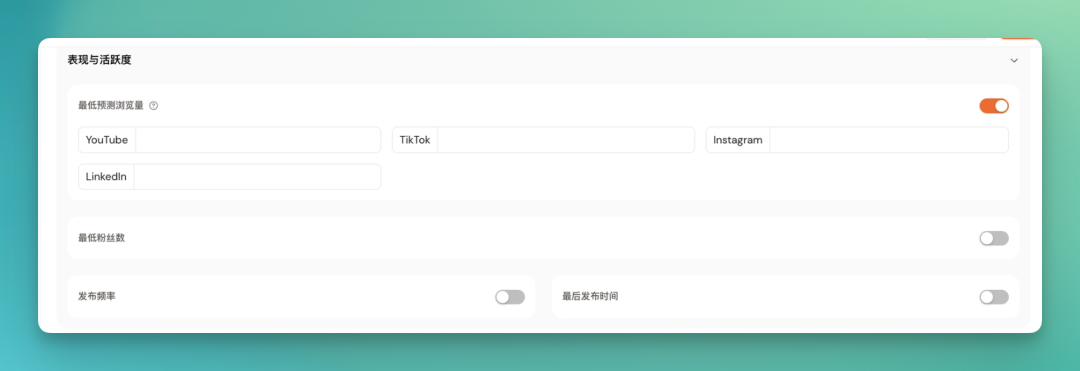
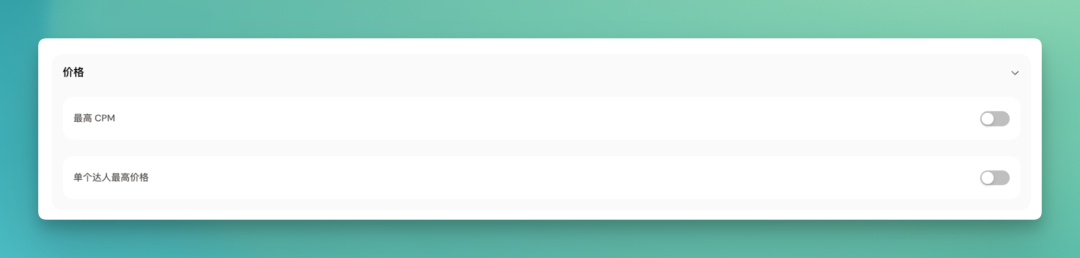
Beyond profiles and competitor matching, brands can now set three new filter categories on top of the existing platform, country, and language filters:
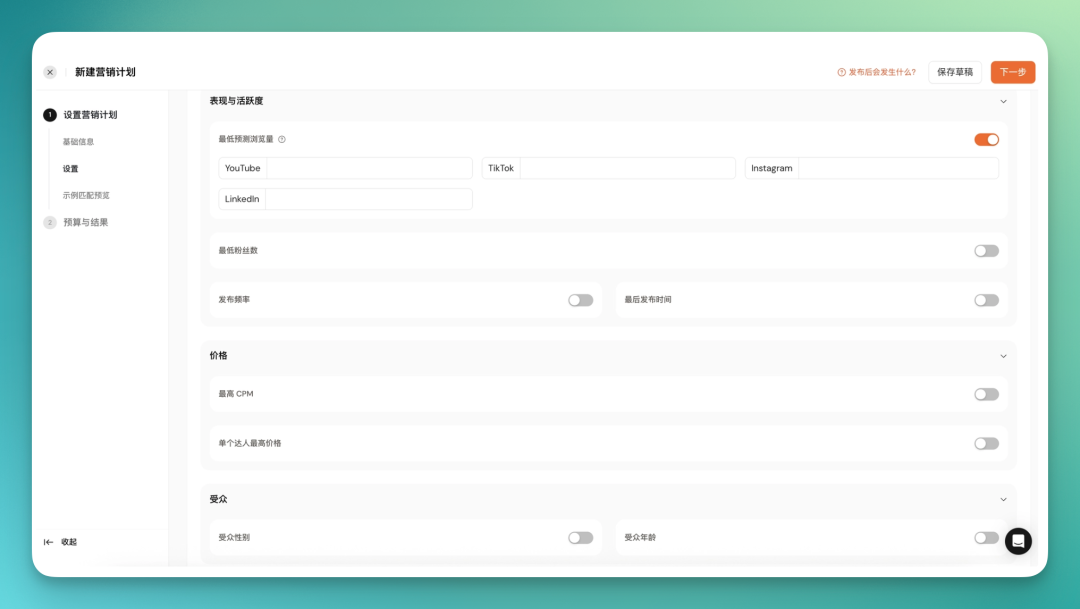
[1] Creator baseline metrics
Set minimum thresholds for views, follower count, posting frequency, even most recent publish date. A creator who hasn't posted in three months probably won't deliver a great collaboration experience — filter them out.
[2] Price boundaries
Set your maximum acceptable CPM or per-creator rate.
[3] Audience composition
Set basic requirements for creator audience gender and age. If you're selling women's fitness products, a creator whose audience is 70% male doesn't need to be in your results.

Once configured, the AI automatically validates and filters during matching. Creators who don't meet your criteria simply won't appear in your pending review list.
The benefit is straightforward: brands spend far less time weeding out unsuitable creators. Every recommendation you see has essentially already passed through a screening layer.
That said, stricter filters naturally mean fewer qualifying creators. How you set these likely requires balancing against your campaign objectives.
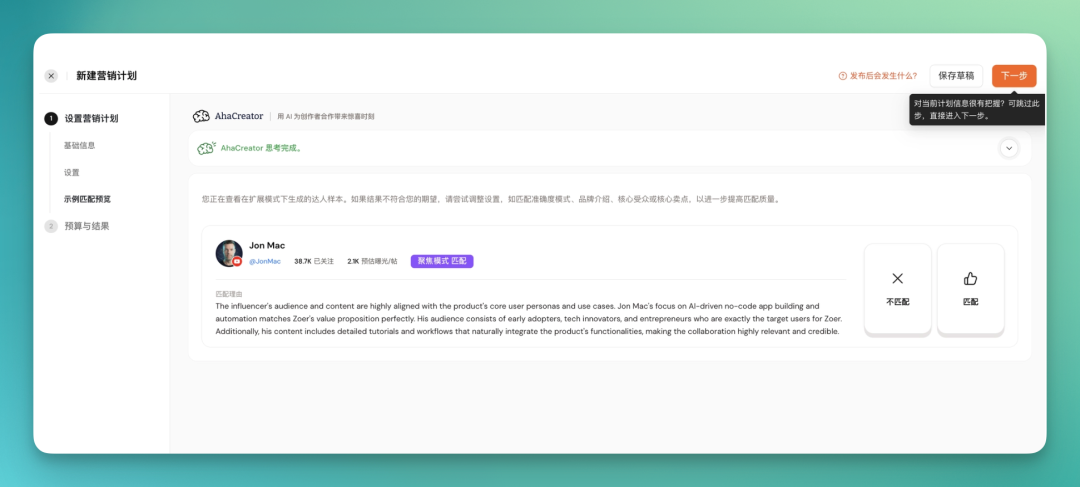
After completing the basic information and settings, the AI runs a small-scale test match based on all inputs, producing five sample creators for you to approve or reject. (This step helps tune the model; brands can also double-check their information entries):
At this point, the foundational setup for your creator marketing campaign is essentially complete. Next, you set your total campaign budget, confirm your account balance, and you're ready to launch:
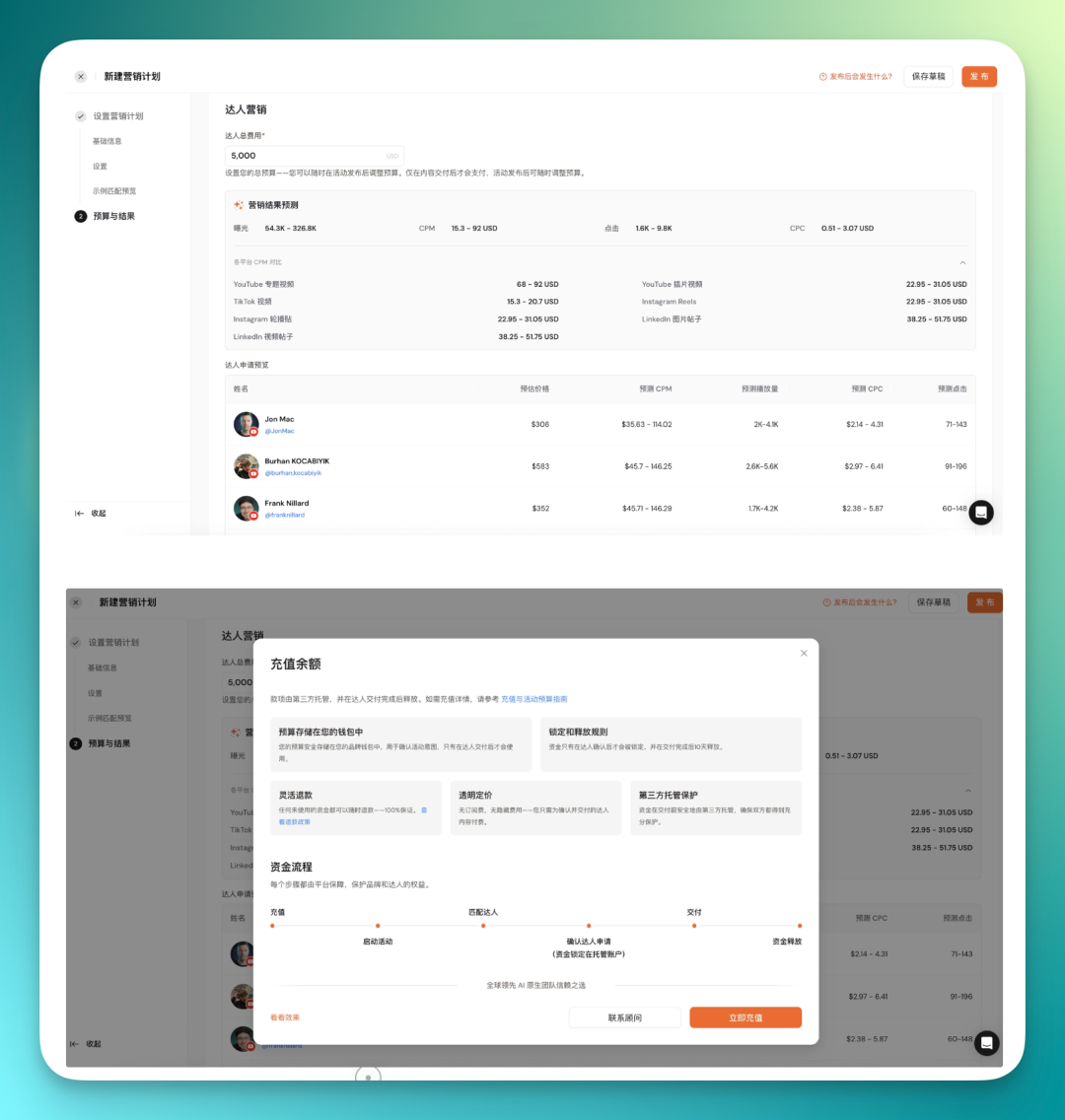
Companies like Zoer have already launched multiple creator marketing campaigns, using them to test performance across different countries and regions.
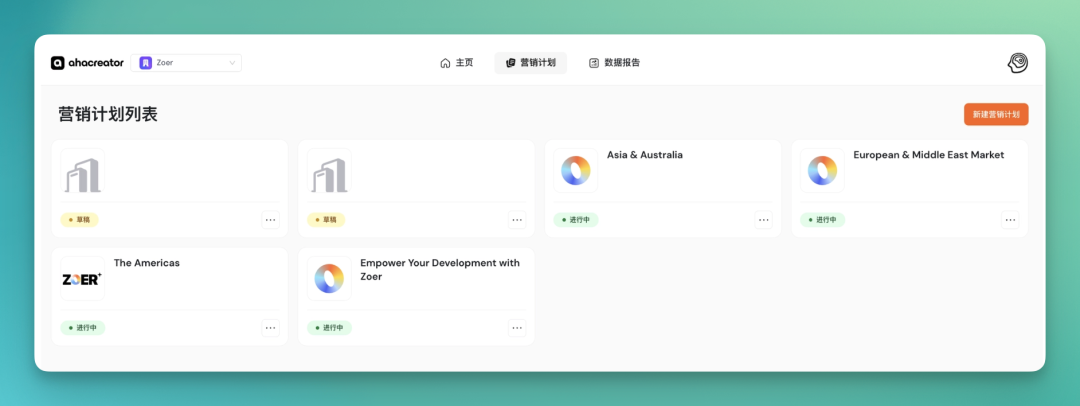
Now, a few updates to the "Creator Marketing Dashboard" — mainly around more granular negotiation and data controls.
Part 2 | Creator Marketing Dashboard
4) More data dimensions for evaluating creator fit
Once a creator marketing campaign is live, you can track overall performance in the AhaCreator dashboard — how many creators matched successfully, how many are in outreach, how many expressed interest — all displayed on the info page:
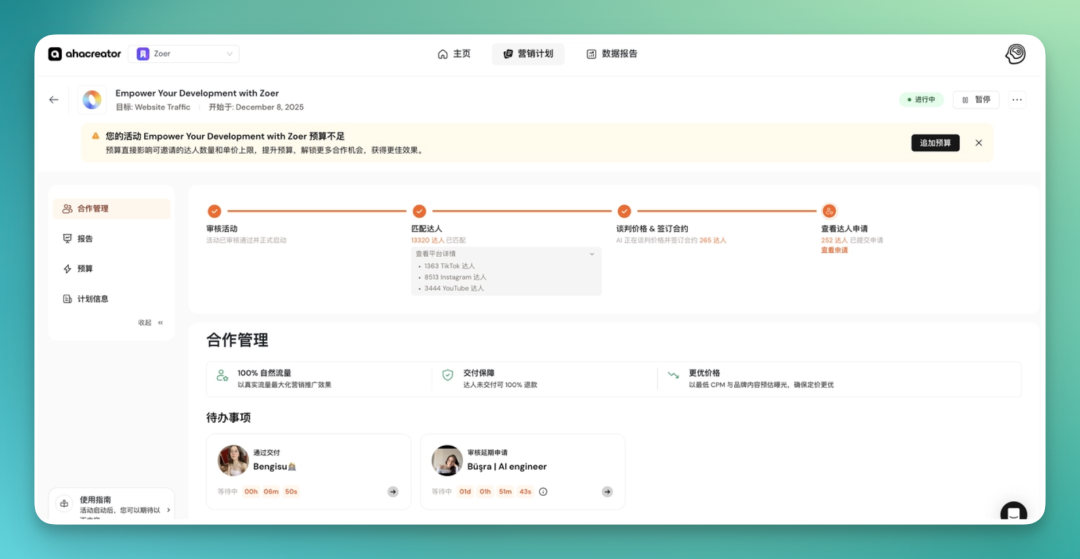
The "Collaboration Management" page is now further organized by current collaboration stage, with AI automatically moving creators between categories: new candidates, price negotiation, script development, content production, pending publish, published, cancelled.
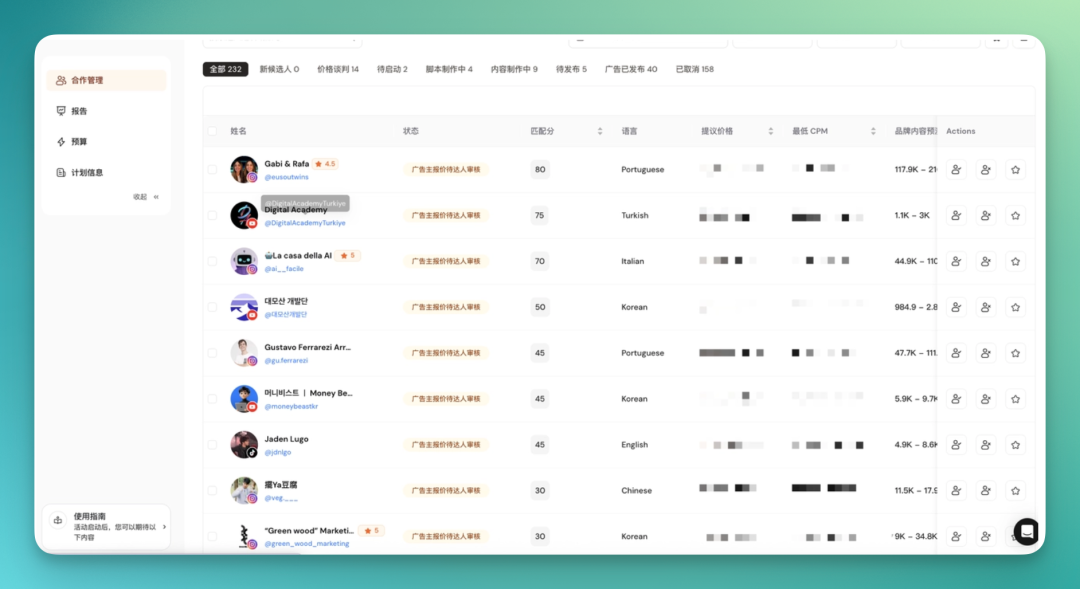
To evaluate whether a creator is truly right for your campaign, you can simply click their profile picture for more information and data.
Selecting creators ultimately comes down to judgment, and judgment quality depends on how much information you have.
Previously on AhaCreator, you mainly saw creator rates, predicted CPC, CPM, clicks, and impressions. Useful, but insufficient. Brands frequently had to jump to third-party creator analytics tools to check historical content performance, activity levels, engagement metrics — constant context-switching, significant time drain.
This update substantially enriches the creator detail page.
New multi-dimensional data for their last 20 posts: engagement rate, impressions, likes, comments, shares, downloads, and most recent publish date.
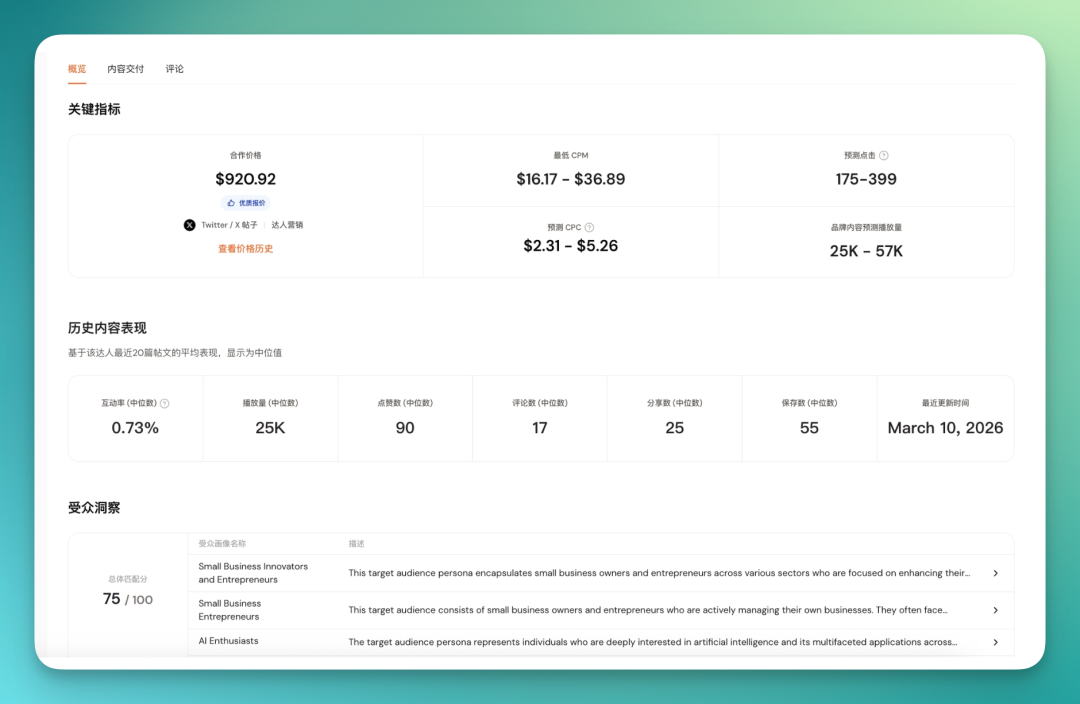
One detail worth highlighting: these engagement metrics all use the median of the creator's last 20 posts.
Why median?
Because creator performance data fluctuates wildly. A single viral video might hit millions of views, while everyday content barely cracks tens of thousands. Using the average, one outlier would skew the whole picture upward — looks great on paper, but you'll almost never hit that number in an actual campaign.
Median gives a more honest read of a creator's baseline performance — closer to what you'll actually get when you run the ad.
The platform now also shows audience-region match ratios based on the brand's target market:
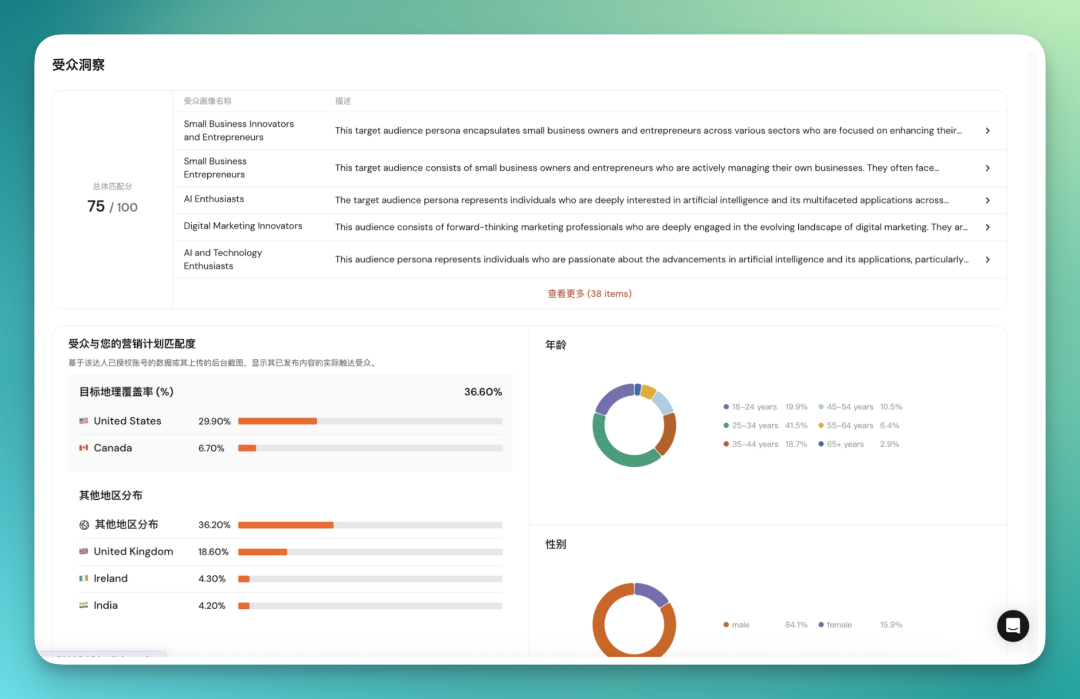
Say you're targeting North America — the system tells you what share of that creator's audience is concentrated there. This data comes from audience analytics shared via OAuth or screenshot uploads.
For influencer marketing teams, this means most creator evaluation can now happen entirely within AhaCreator, without constantly bouncing to external tools.
That alone speeds up decision-making considerably.
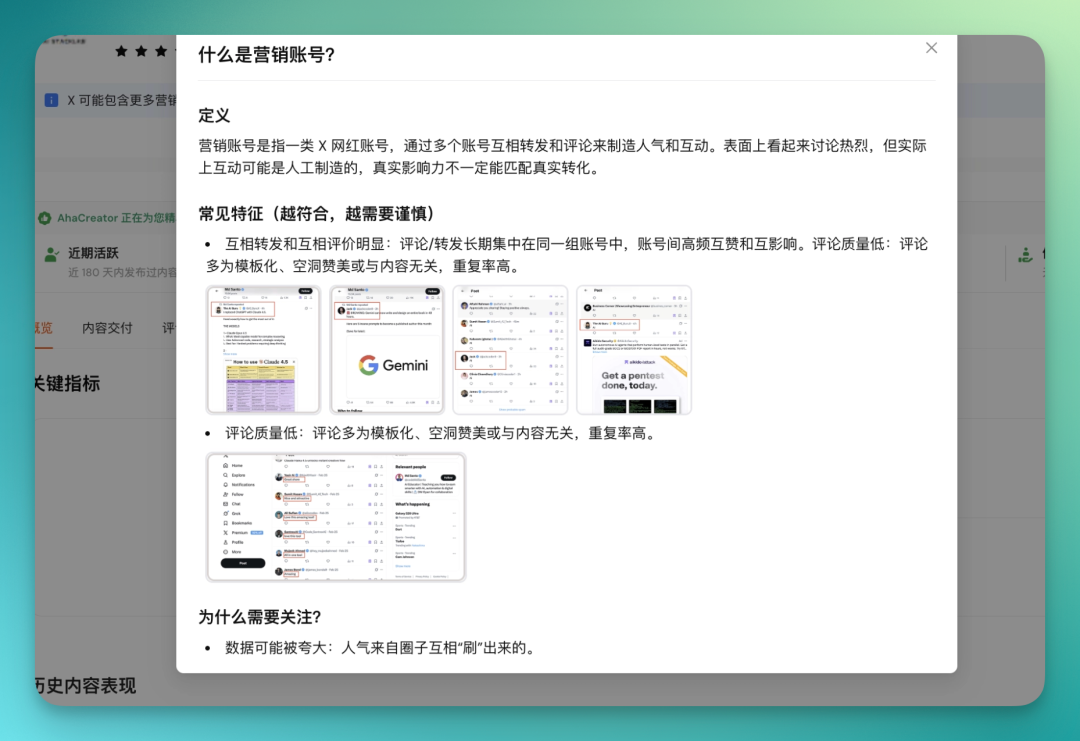
One more detail: because Twitter marketing accounts are notorious for collusion and inflated metrics, if a creator is from Twitter, the platform surfaces a "how to spot a marketing account" prompt:
- Creators and brands can finally negotiate pricing. This update, I think, is one of the most practically useful in AhaCreator's overhaul.
Previously, creator rates on AhaCreator were fixed prices generated by a pricing model. Fair, but rigid — neither brands nor creators had room to maneuver.
For example, when we tested Aha 2.0 last time, we reached out to an actual case: Manna. Back then, Aha 2.0's quoted collaboration price was essentially take-it-or-leave-it, set by AI:
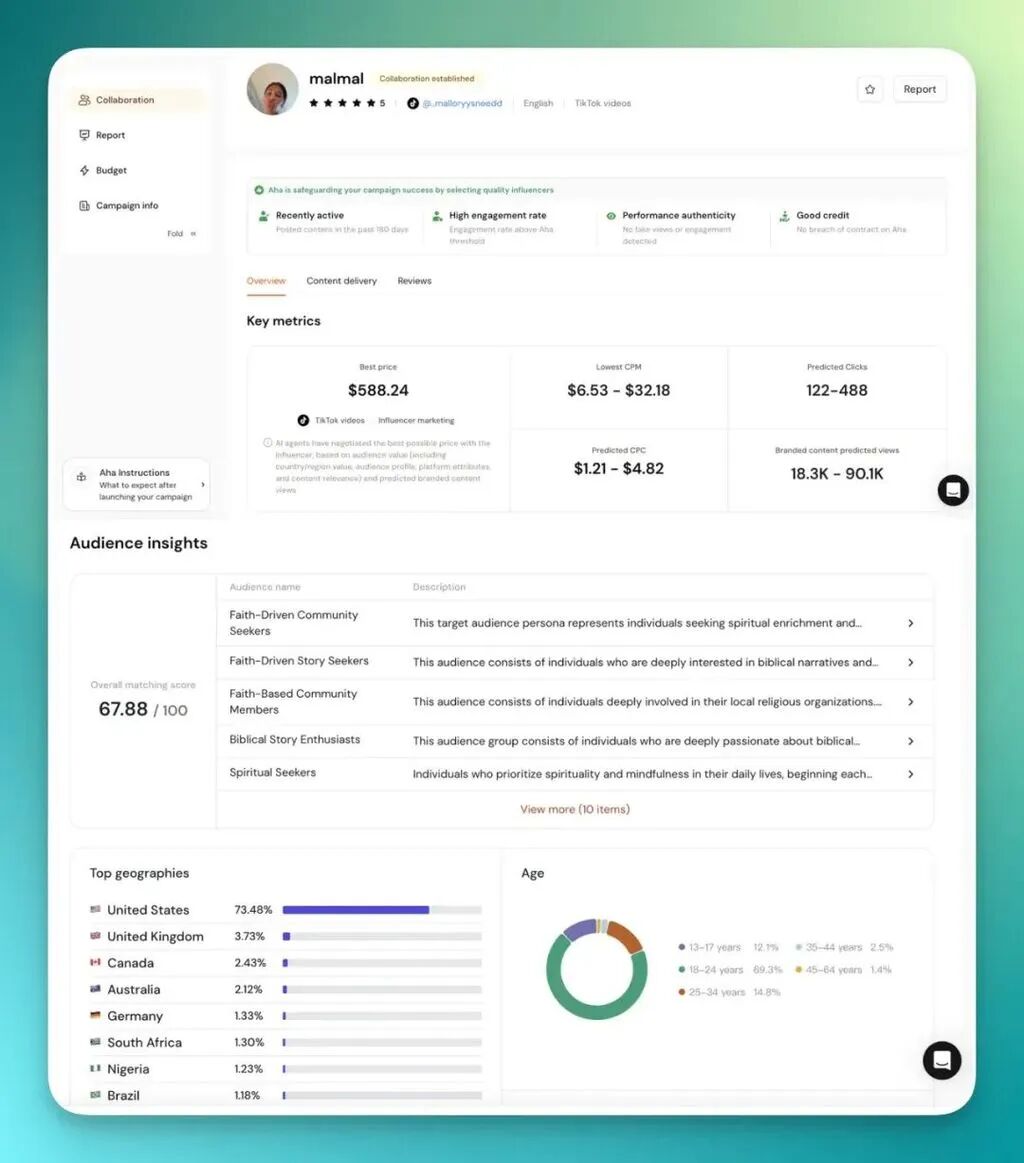
This created an obvious problem: some creators were a great fit — right content style, right audience — but the price killed the deal. For brands, that's pure wasted opportunity.
Now AhaCreator has switched to negotiated pricing.
The flow works roughly like this. During creator matching, the system leads with an initial quote:
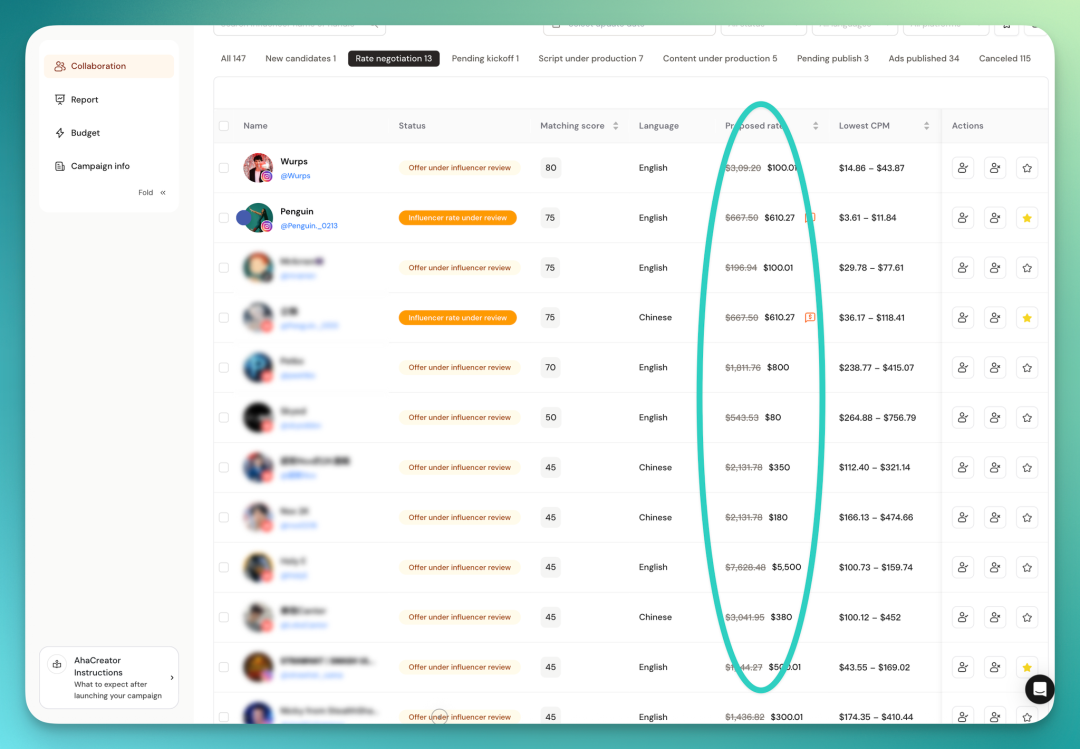
Brands see this quote. They can accept it outright, or initiate a negotiation on-platform:
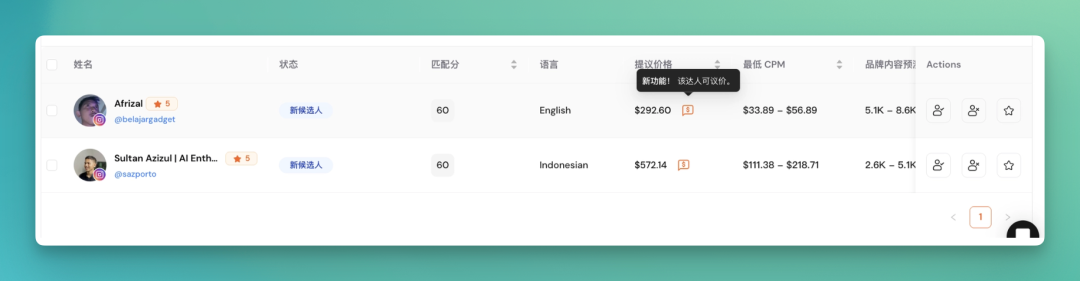
Just enter your target price and reasoning:
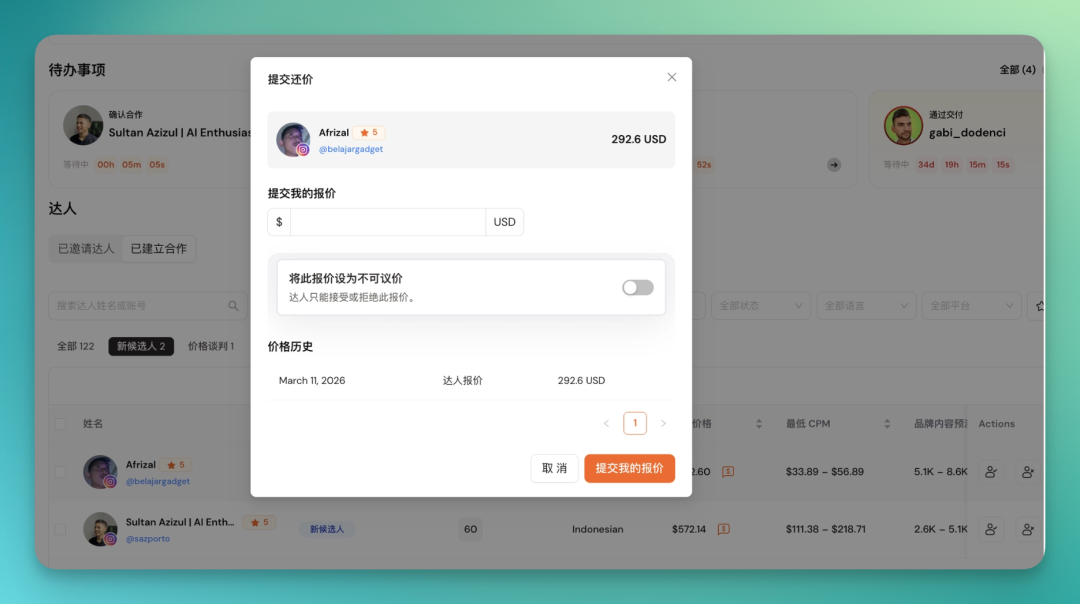
Then the AI takes that information and continues negotiating with the creator, helping both sides land on a mutually acceptable price within a reasonable range.
Throughout this process, brands don't need to send emails or negotiate with creators one by one. A few clicks, a number entered, and the AI carries it forward.
If a creator doesn't respond to a quote for an extended period, brands can edit their offer or add supplementary notes, and the system automatically triggers a new round of negotiation. This prevents deals from stalling out over a single failed round.
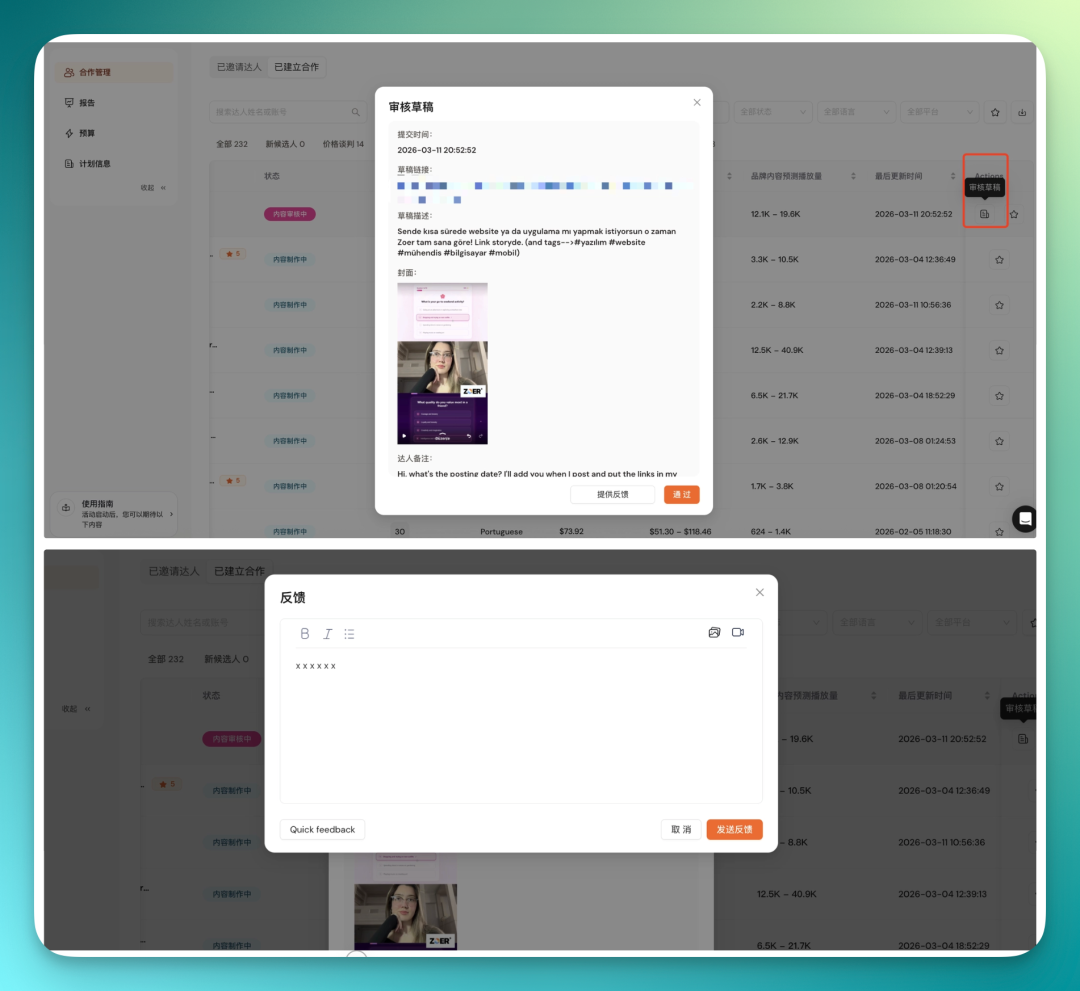
Once pricing is settled, creators can move into content production. Campaign owners can review drafts directly from the icon shown on the right side below — real-time review within the platform, with feedback sent instantly:
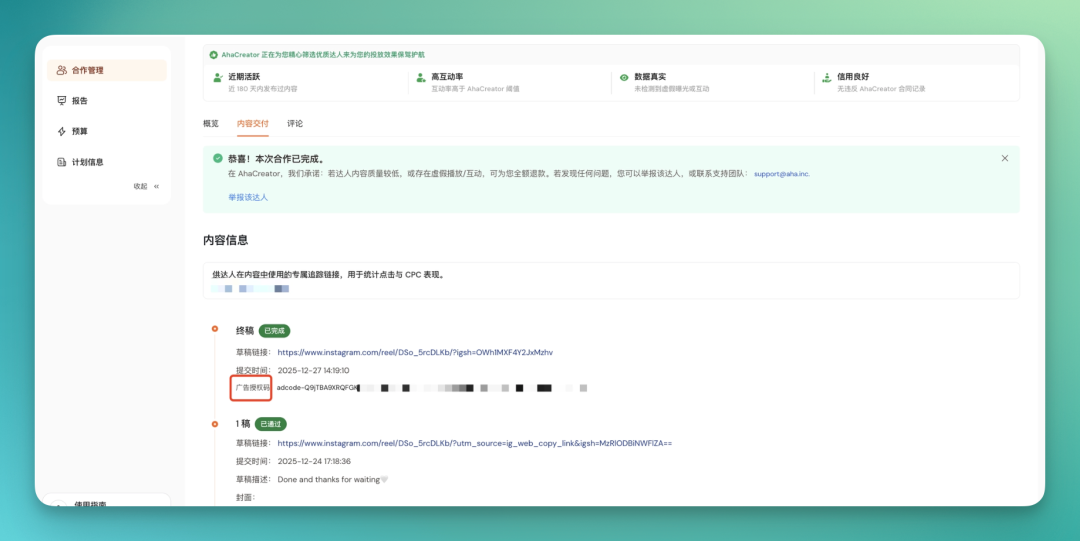
Paid amplification is also now integrated directly into AhaCreator's backend. Creators who reach final draft stage receive ad authorization codes alongside their published content, which can be used immediately for Meta and TikTok ads — no separate outreach needed.
Additionally, all creator content contracted through AhaCreator comes with creator asset authorization. You're free to use it on your official site, re-edit it for other ads. Compare that to brands handling partnerships themselves: securing usage rights typically means back-and-forth negotiation, sometimes an extra licensing fee on top.
- Post-campaign analysis, now with clearer metrics. Influencer marketing is only half done when the ads go live — the other half is review.
You need to know which creators performed, which didn't, where the money went, what to adjust next round. Without clear answers, influencer marketing never builds momentum.
In practice, most teams find this excruciating. Data scattered across platforms, manually collected creator by creator, then copied into spreadsheets for calculation. Just this step can eat days and breeds errors.
AhaCreator has upgraded its Report dashboard.
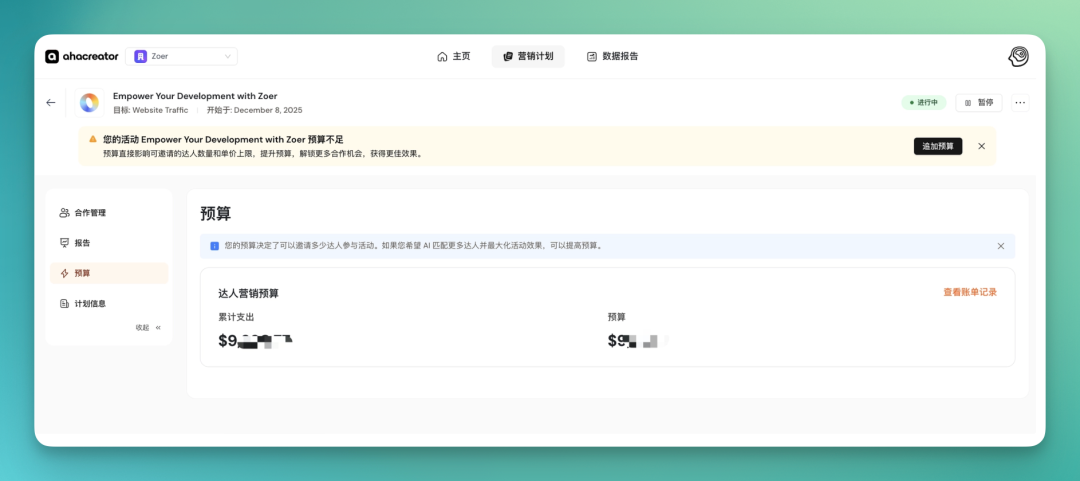
First, real campaign spend versus total budget is displayed in the backend — see exactly how much has been spent and how much remains.
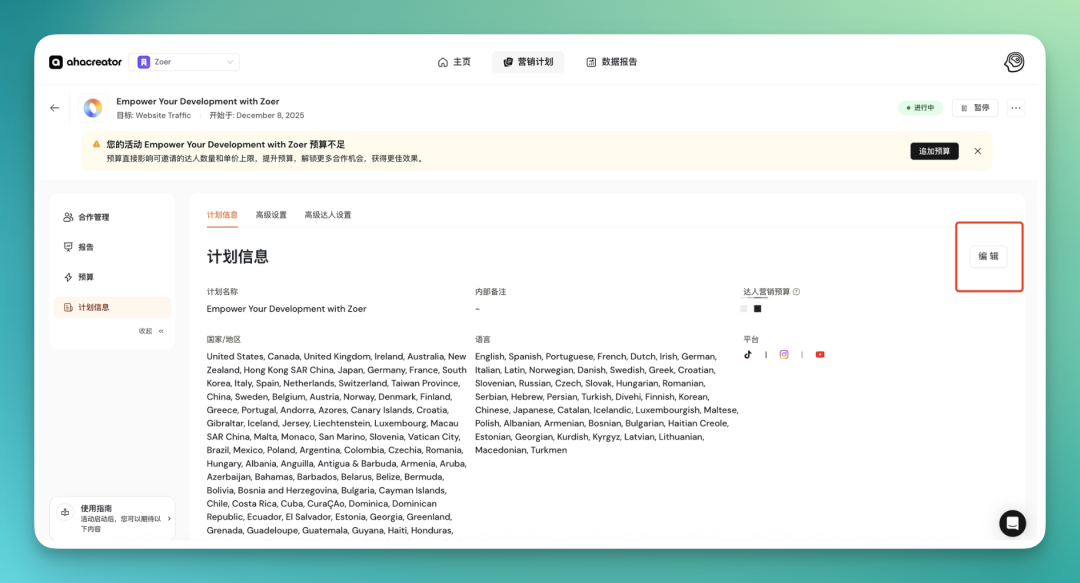
Campaign details are also editable:
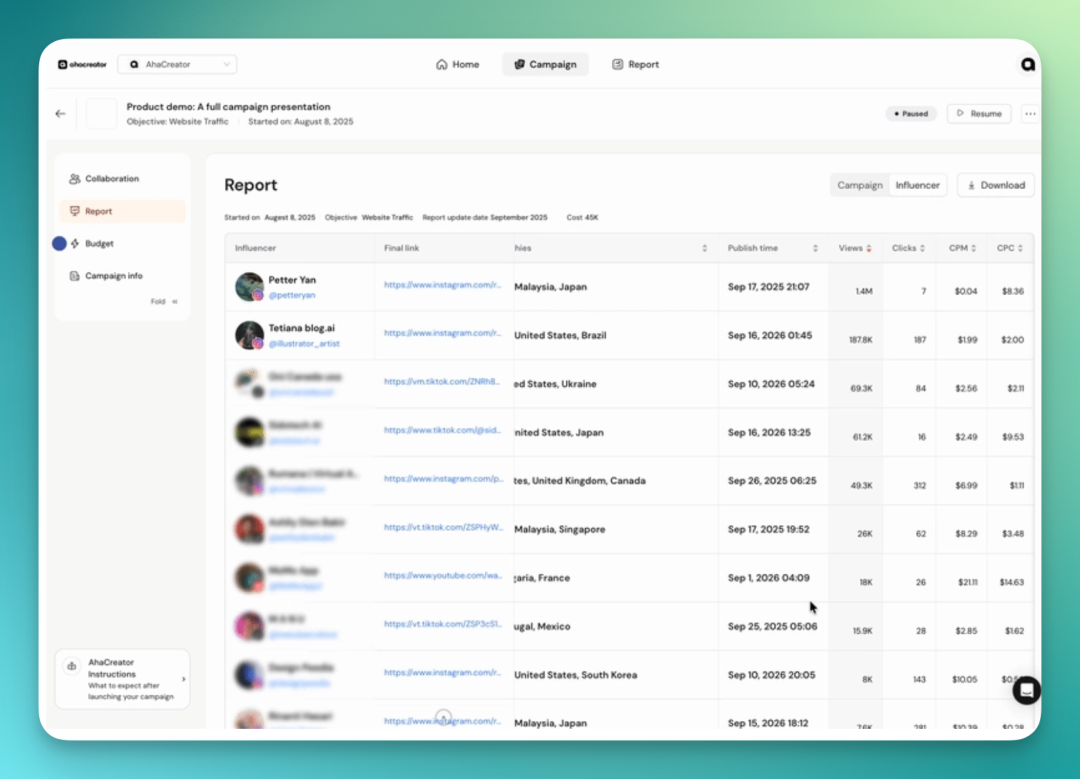
Second, key figures — creator views, clicks, CPM, CPC — can be sorted high-to-low with one click. On top of these, new dimensions have been added: creator collaboration price, content language, primary audience region. You can quickly identify top performers and decide whether to re-engage, scale up, or add them to a long-term pool.
All data supports one-click export.
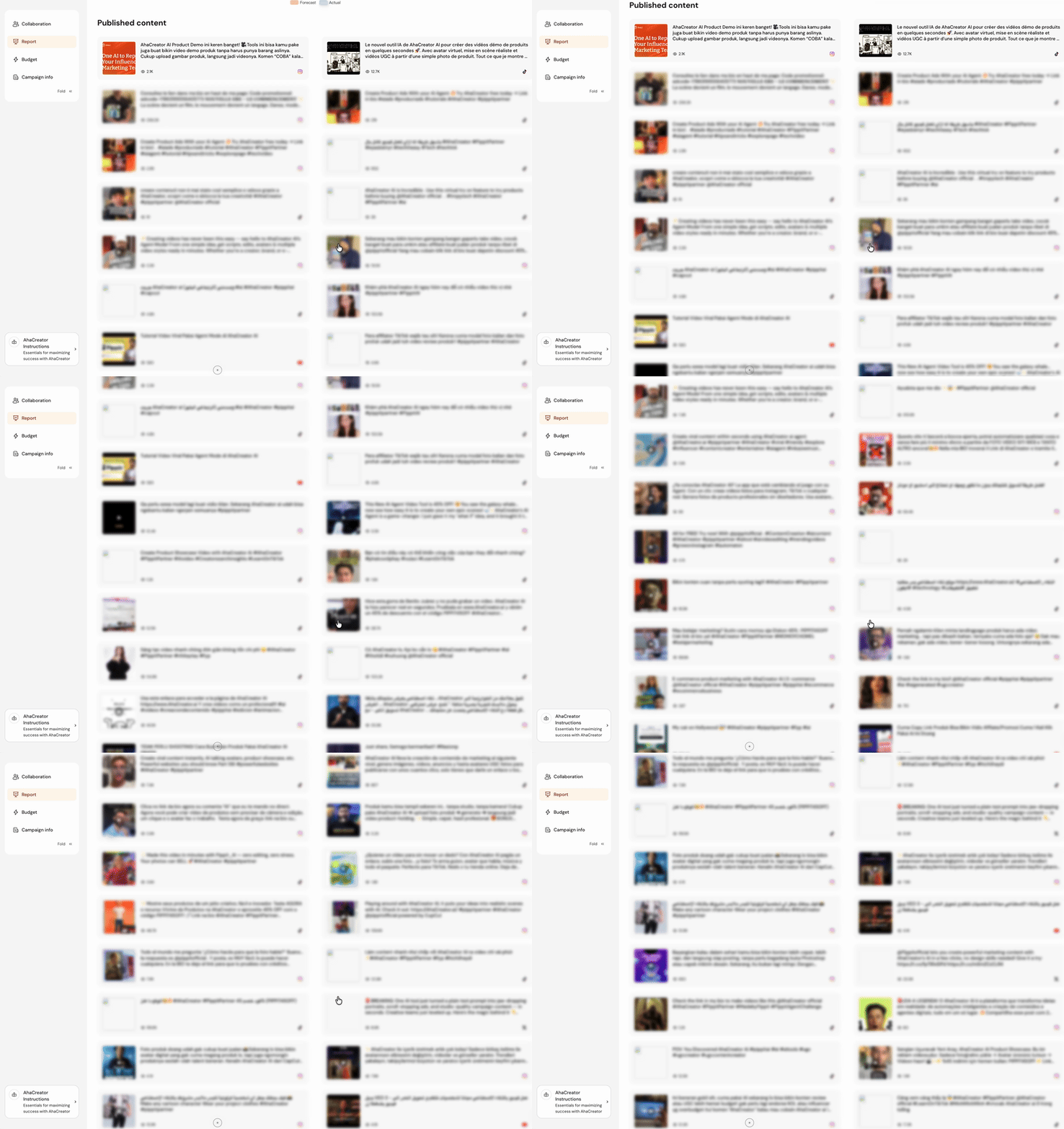
All creator-published content is also unified in AhaCreator's backend:
Overall, AhaCreator's value shows most clearly in scenarios requiring scaled creator deployment — dozens to hundreds of creators running in parallel, across multiple countries and platforms simultaneously.
Scale is the achievable outcome; exactly how to execute it, brands can customize entirely to their business needs:
For instance, Zoer uses AhaCreator for scaled mid- and long-tail creator deployment to test performance across different countries. Beyond that, brands can create separate campaigns to test TikTok versus Instagram performance. Or test different creator profiles, different audience segments.
AhaCreator can also be used to run UGC at scale. Partner with 100 small-to-mid creators, generate 100 product usage scenarios, build use cases that live permanently on your official site, and cultivate an atmosphere of organic endorsement.
For AI products fighting their way into global markets today, this should be genuinely useful.
Everything above has been from the brand's perspective when planning campaigns. But AhaCreator also has a dedicated creator-facing website and platform, with extensive end-to-end support for creators that, in turn, protects the brand experience.
A few examples:
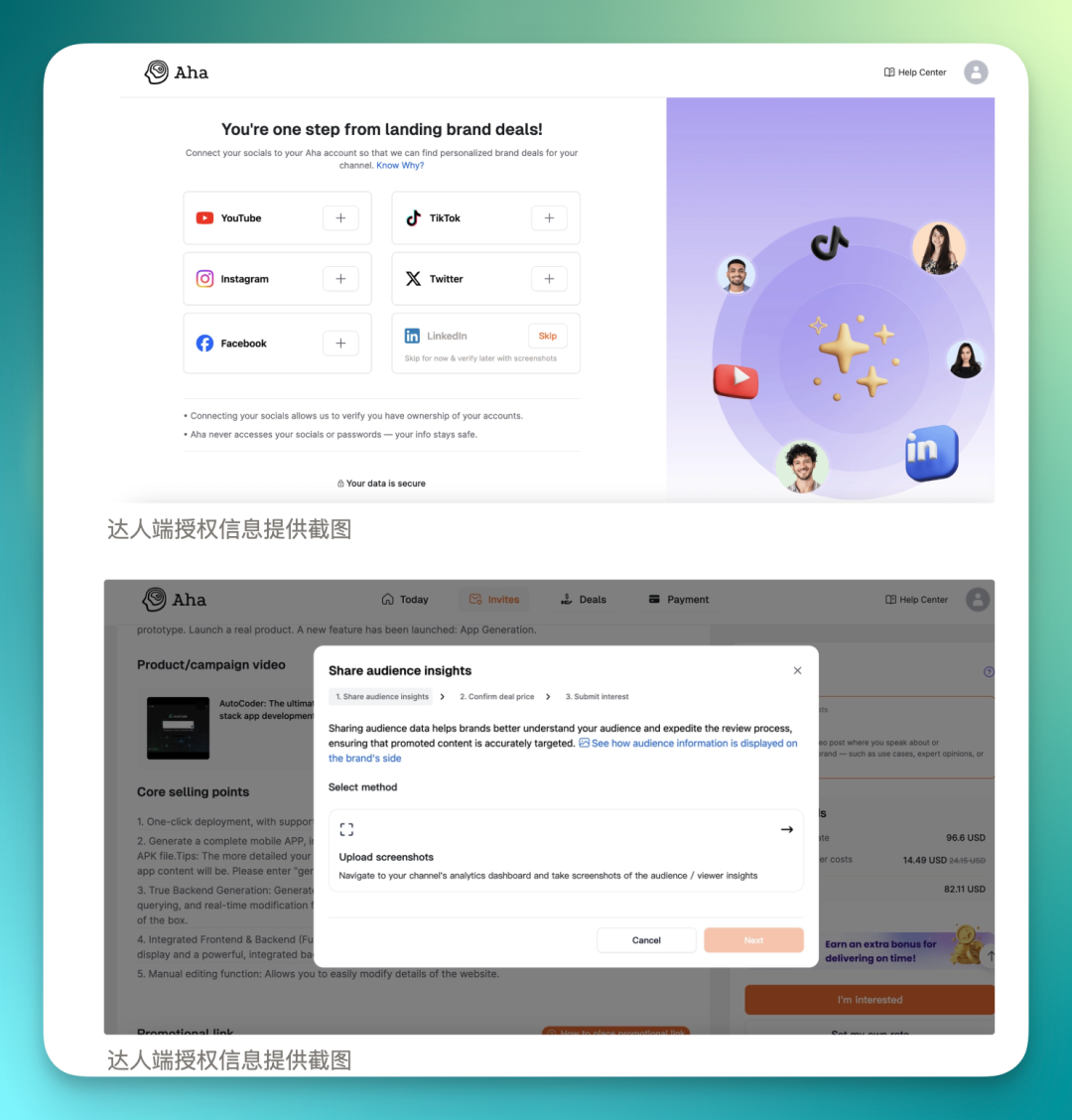
1) Before accepting orders, creators must complete identity verification and authorize first-party data from their social platforms.
So when brands browse creator profiles, the data they see — audience demographics, estimated impressions and clicks — all comes from real, verified creator data that can be used directly for evaluation and decision-making.
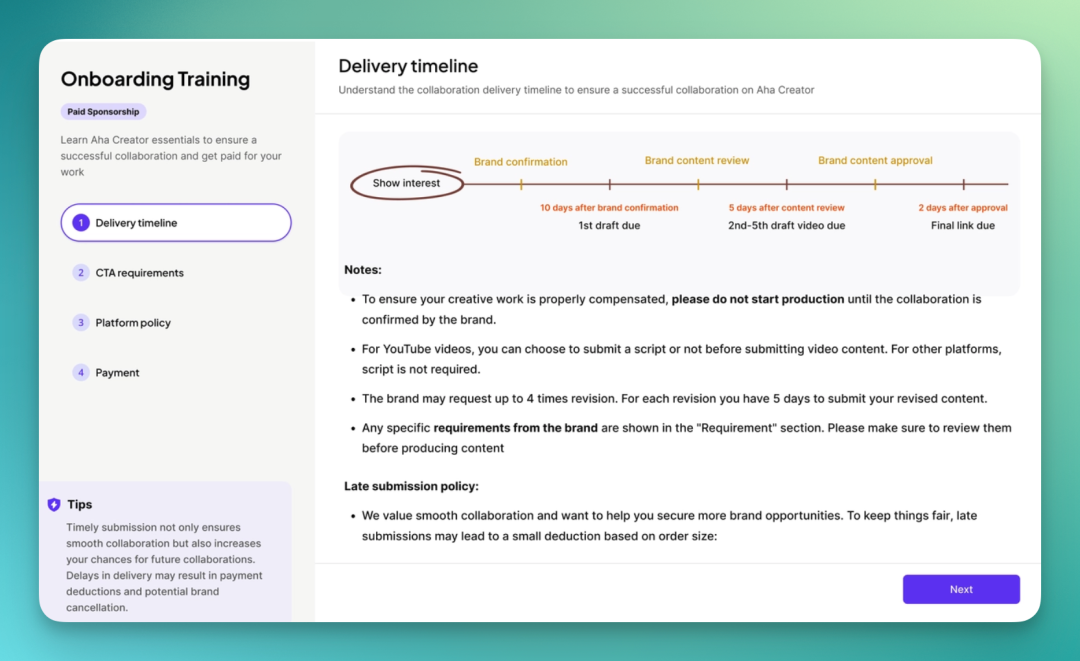
2) After accepting an order, the platform provides real-time education on submission timelines and optimal CTAs. This helps creators understand the collaboration workflow and produce content that meets brand requirements.
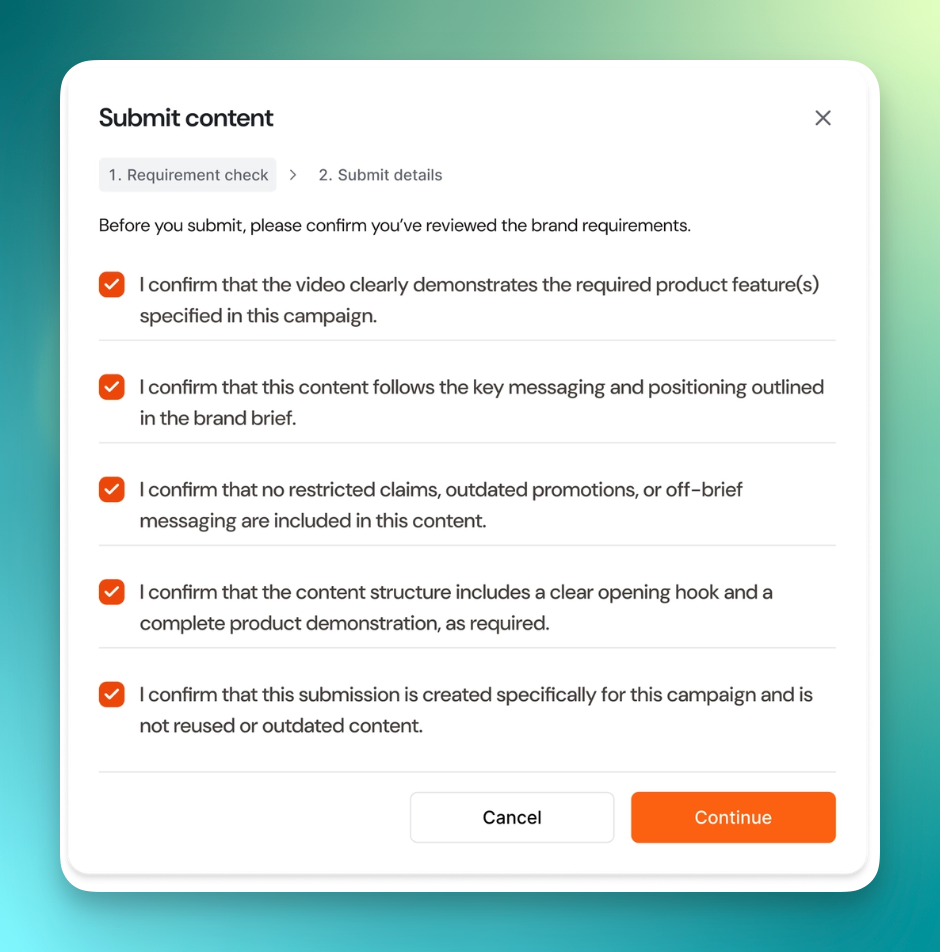
3) When creators revise content based on brand feedback and prepare to resubmit, key requirements are highlighted with explicit prompts that creators must confirm one by one before they can upload their revised draft links.
The brand side and creator side are two interlocking flywheels — only when there are more quality creators will the brand experience improve.
Overall, what AhaCreator has built here is giving brands finer-grained control over influencer marketing while letting AI continue to handle execution — upgrading and filling gaps at numerous points across the entire production chain.
🚥
Strategy, creative direction, and aesthetic judgment — these elements requiring human discernment should stay with the brand team. Sourcing creators, negotiating rates, chasing deadlines, and collecting performance data — this repetitive operational work is better delegated to AI.
From AhaCreator's perspective, this is what the division of labor should look like in the AI era.
If you're building a brand for global markets and thinking through how to transform influencer marketing from a "throw people at it" operation into a sustainable, long-term capability, AhaCreator offers one approach worth exploring.
AhaCreator platform: https://ahacreator.com