She Wants to Build a "Super Playground" for the AI Era | A Conversation with Roi: Founder / CEO of Mujian
People who are afraid to lose will never win the game.
Those afraid to lose can't win the game.
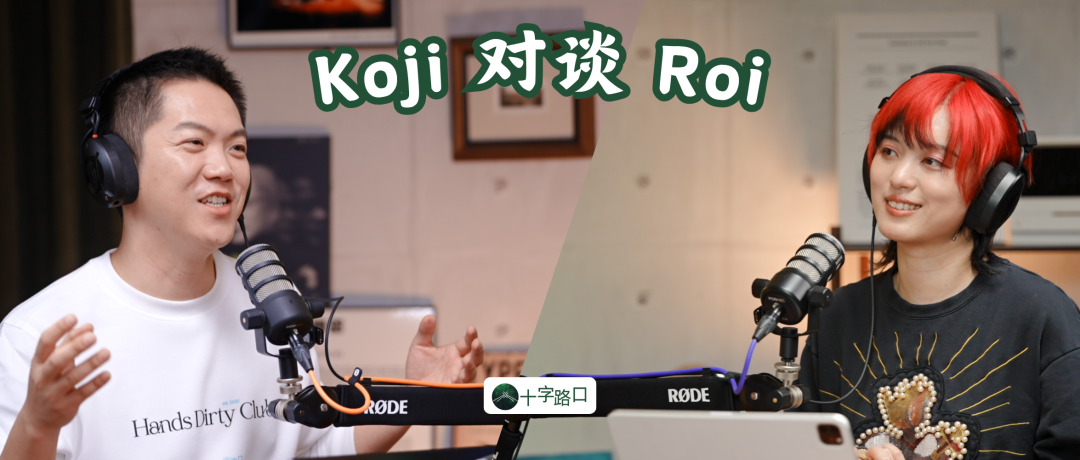
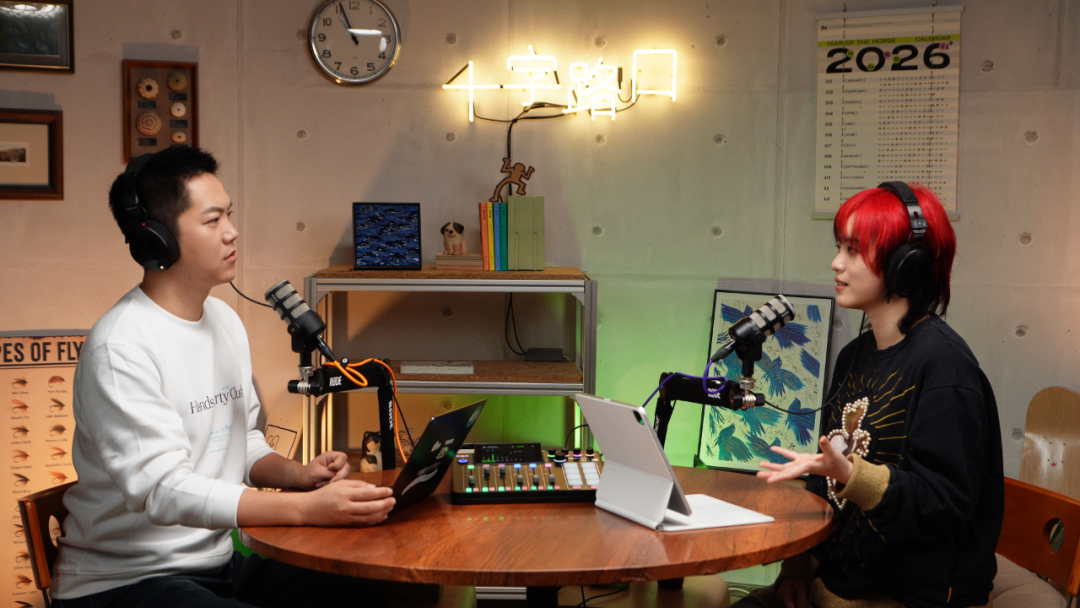
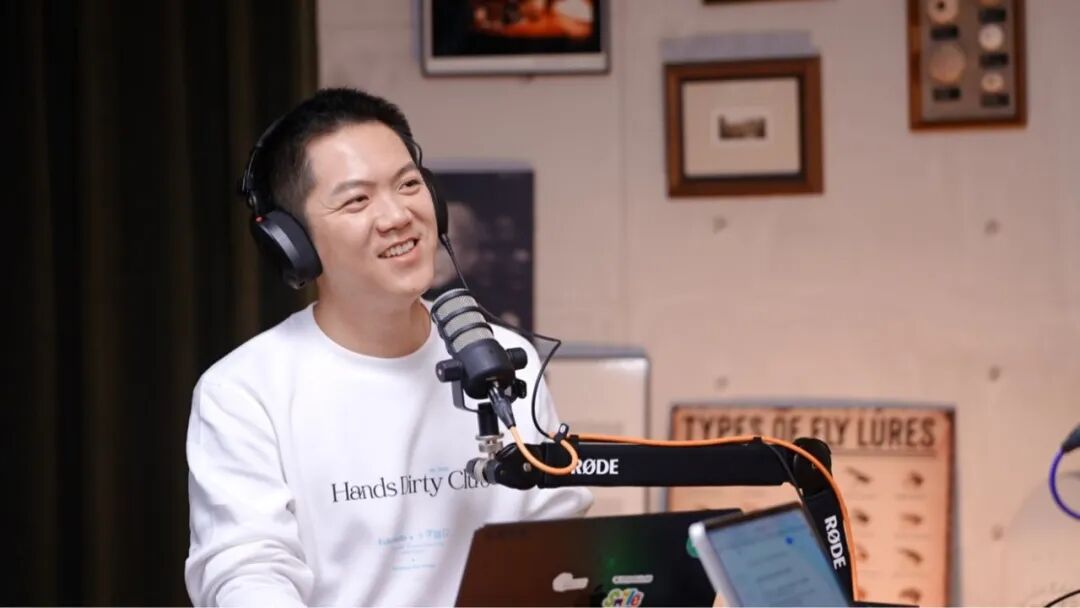
👦🏻 Podcast interview: Koji
🥷 Edited by: Crossing
🧑🎨 Layout: Zeoooo

🚥 This week's guest on "Crossing" is Roi, founder and CEO of Mujian, an AI interactive platform. Mujian recently closed two consecutive funding rounds, raising a total of tens of millions of dollars.
If Character AI represents the previous phase of the human-AI relationship — chatting, companionship, emotional projection — then what Roi wants to build is the next phase: not just talking to AI, but entering an AI-driven, constantly evolving world where you can find a lighter, more fragmented, more addictive kind of joy.
In this episode, we go far beyond Mujian itself. We want to use Roi and her entrepreneurship as a lens to explore an emerging question: when "chatting with AI" starts to feel stale, what will the next generation of AI consumer products look like?
More complex characters? More immersive narratives? Worlds that users can create, enter, observe, and manipulate?
And who will be the first to truly capture this wave of opportunity — professional developers, established game teams, or those AI-native creators who never learned to code but possess intense expressive and creative drive?
In Roi's vision, Mujian wants to become a "super amusement park" for the AI era — with dating simulators, livestream tipping simulators, celebrity simulators, stock market simulators.
If you follow AI consumer products, consumer-grade products, content platforms, gaming, Agents, or if you're asking yourself: beyond efficiency gains, can AI create new forms of joy? New creative ecosystems? New platform opportunities?
This episode should give you plenty to think about.

Listen on WeChat:
Listen on Xiaoyuzhou:

🎬 The video podcast is also available on Koji's WeChat Channels, Xiaohongshu, Bilibili, YouTube, and other platforms.
Rapid-Fire Q&A
👦🏻 Koji
Hi, I'm Koji. Welcome to this week's Crossing. Our guest today is Roi, founder of Mujian, an AI simulation and interactive content platform.
Hello Roi, welcome to Crossing.
👩🏻 Roi
Hello hello, long time no see — old friends here.
👦🏻 Koji
We have a tradition: a few rapid-fire questions to help everyone get to know you. Your age?
👩🏻 Roi
Do I have to say? Mentally I'm probably Gen Z, but physically I'm still a '90s kid — let's keep it vague.
👦🏻 Koji
Your alma mater?
👩🏻 Roi
Peking University and NYU, but I dropped out of NYU.
👦🏻 Koji
MBTI and zodiac sign?
👩🏻 Roi
For MBTI, I'm probably ENTJ out in the world and INTJ at home — split 50/50. Zodiac: sun in Pisces, rising in Leo, moon in Libra.
👦🏻 Koji
One sentence to describe your current company and product.
👩🏻 Roi
At our core, we've gathered what I think is the biggest community of AI enthusiasts and creators out there, and together we're trying to build a fun AI simulation and interactive content platform.
👦🏻 Koji
Can you share current revenue and profit?
👩🏻 Roi
We haven't been in cold start for very long, so no revenue and no profit — but we also haven't spent much.
👦🏻 Koji
Team size?
👩🏻 Roi
About 10 full-time people right now.
👦🏻 Koji
What did you do before founding this company?
👩🏻 Roi
After university, I spent a long time in games as a game producer, mainly working on female-oriented titles. Later I transitioned to gamified product management, working on social and education products at ByteDance.
Mujian Offers "Ideal Life Experiences"
👦🏻 Koji
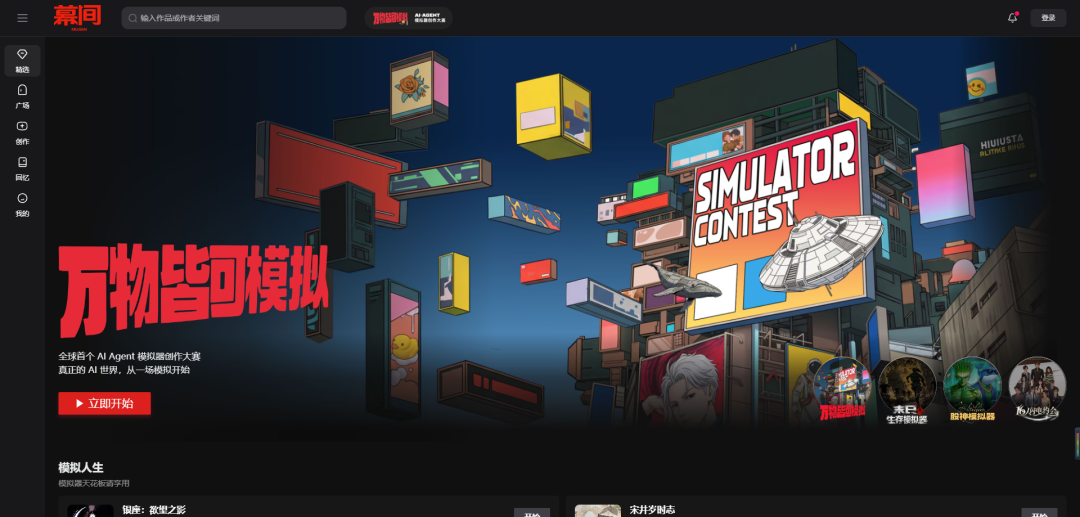
While prepping for this episode, I tried out Mujian and found lots of fun little products on there. There's one called "16-Person Speed Dating" where I can chat with 16 people for two minutes each, then pick someone to pursue further.
There's also a game where you travel back to the Song dynasty and interact with Su Shi and Li Qingzhao, and even an outrageous "Sugar Mommy Tipping Simulator." These are all user-created.
Can you describe what users are mainly doing when they open Mujian today?
👩🏻 Roi
In a sense, they're enjoying a kind of life they can't have in reality.
Why do I say that? Take that speed dating simulator — you can input your own identity, and the simulator generates 16 potentially compatible matches you might like, all randomly generated. In real life, you might never meet this many ideal prospects on dates, but in this fictional world, every single one is someone you'd find interesting. You can chat freely with all of them and eventually pick one to develop a relationship with. It's essentially an idealized experience that can't be achieved in reality.
That's mainly what people are doing. I feel like in the real world, you only get one life. Many people complain that "Earth Online" is a bad game because you can only play once — no restarts.
But with us, you can restart infinitely. You can date, or travel back in time to become an emperor. And if you want, someone even made "Become a Cockroach and Experience the Roach Life" — the more bizarre kind of simulation.
Three Paths for AI Interactive Products
👦🏻 Koji
Speaking of which, we should go back to the beginning. From C.AI to now, many different product variants have emerged. Mujian sounds like a more advanced, more complex variant. Can you give us an overview — from C.AI until now, what are the main variant types that have developed?
👩🏻 Roi
When we analyze C.AI, we define it as part of a larger roleplay direction. Currently, it's the category with the highest API usage outside of programming itself. Most products in this space now are deepening roleplay scenarios, and I see three main directions.
The first direction is extremely focused on the "role" itself. These products figure that if you can simulate a virtual, human-like character, you can substitute for real-world social behaviors — the core is fulfilling real human social needs and relationships. This is the familiar "companionship" track. These products generally don't keep interactions confined to the virtual world; many newer ones try to invade your real life, accessing your data to better emotionally connect with you and even provide utility value.
👦🏻 Koji
Including Natural Selection, Wuxian Valley, and so on?
👩🏻 Roi
Right. Actually, the earliest product in this direction was probably Replika overseas in 2023. It was 3D — you could customize a friend. Its concept was talking about life with you, giving reminders, setting alarms. It's just that Agent capabilities weren't as strong back then, so the simulated human interaction wasn't good enough. Products in this direction now are essentially an evolution of Replika.
The second type of product values the content generated through interacting with characters in roleplay scenarios — and this content tends to be narrative. So this direction moves toward interactive fiction, or with multimodal models, toward interactive dramas and interactive otome games.
I think the earliest and biggest attempt in this space was probably Mao Xiang (Cat Box). The experience is very much like an AVG game, almost like an interactive version of Tomato Novel. It lets you create multiple characters with strong story backgrounds, then you advance the plot by interacting with multiple characters — stuff like "The Fake Heiress's Counterattack."
👦🏻 Koji
That's the second type?
👩🏻 Roi
Yes. What we're doing, I think, is the third type. I'll use the word "simulation," or "simulator." This kind of experience requires Agent capabilities to reach a certain level before it becomes possible. It's not simply talking to an Agent character or having it make up a story. We need Agents that can constitute a system.
This system can simulate a certain social system or micro-structure from reality as I interact with it. But this structure is condensed, curated — everything in it is fun. Just by interacting with this system, I can continuously generate enjoyment. It's a bit like entering a more ideal world, or living an ideal life.
👦🏻 Koji
Speaking of AI interactive products and simulators, I can't help but think of another, more closely watched — or perhaps more ultimate — path today: world models, which use AI to directly generate complex 3D games. Google's Genie 3, for instance, and domestically there's Gambo. What's your relationship with them?
Roi
Let me break AI-generated games into three categories. First, Gambo and the AI game generation engine that Taptap has been working on recently — I think they're the same type. These products essentially treat AI as technology and tools, using it to generate fairly traditional game genres like platformers and bullet hell shooters. They're an AI evolution of traditional game engines.
The second category, world models like Google Genie 3 or Odyssey — I see them as interactive, playable models, but fundamentally they're still a model, not interactive content or a product. Their degree of productization is very low; all the productization exists just to demonstrate the model's capabilities.
I can see the enormous potential of such models, but compared to mature games, their playability is still quite low right now.
Koji
So at present it just generates a world framework, but how to actually play in it — that's still a very future-oriented question?
Roi
Yes. The core gameplay it offers right now is walking around with AWSD keys, looking around, switching perspectives. You can observe it, but you're not really interacting. I believe interactive capabilities will be added in the future, but there's still a long distance between that and becoming a truly playable product.
What we're doing, in a sense, is trying to turn models into fun products. So we'll be compatible with language models, multimodal models, and also world models. If world models develop to a stage where they can be practically applied, we'll definitely integrate them. We're a framework that can accommodate all models.
Which Is Closest to Breaking Out?
Koji
Of the three categories you just mentioned, which one do you think is already capable of producing games or interactions at a consumer-ready level today?
Roi
All three are still some distance from becoming consumer-grade.
The first category, while it can produce games — there are already so many good games in the world. Many games don't sell well not because there aren't enough games, but because there aren't enough good ones, and they're constrained by distribution. Steam releases tens of thousands of games a year; only a handful break out. The games being made now are still relatively simple and formulaic. Whether they can become hits — I think they're still missing something in terms of completeness and experience.
The second category, I think, is the furthest away. World models themselves are very new; whether in terms of experience or cost, they're too distant from consumer readiness.
I think simulators, especially text-based ones, are currently the closest to consumer-grade in the AI-native direction.
I mentioned this to you before — there are lots of people on Xiaohongshu selling these kinds of simulators, 30 yuan each, with some selling thousands or even tens of thousands of copies.
Koji
The "little phone" trend that's very popular on Xiaohongshu — is that essentially a simulator too?
Roi
Yes. The "little phone" simulates interacting with someone through a phone as a medium. We can do couple-like interactions with a virtual partner — chatting with them, ordering food delivery for them, sending them red envelopes, and so on.
Koji
Can you sell a "little phone" too?
Roi
Yes. I made one myself before, and lots of people joined the group asking how much it cost. I said it was free. They were surprised: "It's actually free?" I asked how much they'd be willing to pay, and they said: "I don't have much money, but I'd pay 30 yuan."
The Enemy of Loopit et al.: If ByteDance Can Build It in a Month, Why Should Your Platform Exist?
Koji
Recently a whole batch of products has emerged — Loopit, AIPPY, Rezona, and several others — with significant funding and market buzz. Their story is all about "becoming the Douyin of the AI era," but when you open them, they feel like mini-games.
What's interesting is that they say these aren't mini-games, but "micro-interactions." As a heavy participant in the industry, what's your take on these products?
Roi
I've tried them too — they're genuinely fun and quite addictive. But my concern about whether they can become "the AI version of Douyin" is: does this experience require a standalone platform?
Douyin itself already has mini-games. You're scrolling and you come across a game ad, tap it, and you're playing an H5 mini-game. This shows Douyin already supports this kind of interactive gameplay. Downgrading more complex H5 games into these micro-interactions should be very easy for Douyin. If they see value in this scenario, given ByteDance's efficiency, they could probably build it in a month.
That's my biggest concern about this track. It's not a new form of interaction, so where's your moat? Why do users have to play here rather than on a comprehensive platform like Douyin where they can simultaneously watch videos, play heavy games, and also enjoy light interactions?
Koji
Douyin also has a huge advantage with social mini-games. Starting from the "little flame" feature, Douyin's social dimension has become very strong.
I saw a shocking statistic: today 100 million DAU use Douyin's chat function, largely because people need to maintain their "little flame" streak. Platforms like AIPPY and Loopit currently have a hard time building social elements around their mini-games.
But if Douyin launches more social mini-games and micro-interactions, that would indeed be entrepreneurship along Douyin's extension.
Roi
Right. Douyin's gamified elements — the "play" aspect — are already very rich. Doing something similar, I think, falls entirely within its range.
Total Freedom Is Usually Not Fun
Koji
You mentioned Mujian is building simulators, and simulators make me think of some very primitive hand-rolled approaches — just throwing a setting at a large model and having a back-and-forth Q&A with it. That counts as a primitive simulator too.
What's the difference between what Mujian builds and this approach?
Roi
The Q&A simulation with a large model is essentially closer to the form of interactive fiction. I might give it an opening or some basic settings, then the user needs to do quite a bit of outputting, with fairly active input, to co-create with the AI and continue the story. The rules and boundaries here are very vague, or even nonexistent — you can do whatever you want. It's a completely free process of stimulating the model to output what you want.
Of course, for players, these purely prompt-based simulator works have a very high barrier to entry. They can't just casually interact and have fun.
In a sense, we're building on the extension of this. I think a single prompt isn't enough; you need a system. The core thing this system does is control and rules, so that the model outputs content the player wants within established rules.
I have a view: If something is completely free, the experience will definitely be bad, definitely not fun.
Koji
Total freedom is definitely not fun. So what is completely free?
Roi
In a sense, life is. Real-world life is, in a sense, completely free, but it's not fun, not playable, and has many things that cause you pain.
There's a classic existentialist concept called "the dizziness of freedom": when you reach a mountaintop and find there's no railing, that you can do anything, you worry about falling. When you know you can do anything, you fear the negative consequences of choice, and feel emptiness at the void of value that choice might bring.
So I think "control" is important for good experiences. You need to ensure the system gives users a sense of security, while guaranteeing that their interactions will likely produce interesting things.
This is very hard to achieve with just a single prompt. You must have a system, using rules to define things:
First, user interactions have boundaries; freedom is not unlimited;
Second, the results of interaction should infinitely amplify the possibility of good outcomes, and infinitely shrink the possibility of boring, uninteresting content.
Koji
So you need to find some balance between freedom and control?
Roi
Yes.
Koji
Can you give a concrete example? Which work on the Mujian platform has achieved this balance well and created good playability?
Roi
I think all those simulators are trying to do this.
For example, someone recently made a new stock trading simulator that goes in two directions. One direction lets you keep winning — no matter what you do, you profit — and then you feel great, becoming a stock god, rising from nothing, leveling up step by step like in Blossoms Shanghai, becoming a super tycoon. This is an experience you might never achieve in reality, but in the simulator, I can realize it through controlling the system's feedback.
You're not facing a real market; your competitors are all AI-simulated. The AI ensures your experience is good, achieving a "power fantasy" experience.
At the same time, it also needs to satisfy a second experience: self-mockery. I'm just a leek [slang for retail investor who gets harvested], I'll lose no matter what, so let's just compete to see who loses more. This is also an interesting experience. Because it's in a virtual environment, you're not actually losing money, so "losing" becomes a positive, interesting, playable form of feedback.
Koji
Speaking of which, life itself is actually a series of simulators, not completely free either. From birth we're given frameworks — we're East Asian, we have to wear clothes to go outside. These all make us live some kind of controlled simulated life. But in an AI simulator, you could push this control to another extreme — like being born 2.38 meters tall.
Roi
When we proposed the concept of "simulator," it was because we felt it simulates real-world experiences and systems. But reality has many variables, and many things can't develop in idealized directions. So reality's simulation is too real — it can't guarantee every experience is good.
Maybe only a small portion of people in this world have good experiences; most feel like they're living as NPCs — that's a very popular term online recently.
But in a virtual simulator, everyone can be the protagonist. The AI are NPCs, all serving you, making you the most shining, coolest protagonist in this life experience.
What Is True Positive Feedback?
Koji
You also mentioned before that today we can take any novel, whether it's One Hundred Years of Solitude or The Three-Body Problem, throw it at a model, give it a prompt saying "turn this into an interactive mini-game," and the model can do it, even give you ten thousand different versions, but it won't necessarily be fun.
I'm curious — between fun and not fun, what kind of subtle design is at work, or what methodology underlies it? How do you turn a classic historical novel into a fun interactive experience?
Roi
Adapting a novel into interactive fiction is, in a sense, continuing the plot.
After I exert some influence on it, the plot changes.
I think the core is: after I make this influence, does this change:
First, positively correlate with my influence? If the correlation is strong, I'll have a strong sense of participation.
Second, the result it returns. If it's just spitting out random text, that's not positive feedback to me, not an experience.
So to do this well, you need to ensure that every piece of feedback I get while interacting with this novel is positive feedback. And this positive feedback has to inspire my next interaction.
If it's just pure typing, you run into two problems:
One, the returned result itself might not be interesting.
Two, I might not be able to figure out what to do next based on that result. These two barriers will make the experience boring most of the time.
Koji
So when you're helping people design this kind of interaction — since you also built a simulator editor — how do you help them?
Roi
On one hand, tools and methodology are two separate things. Tools essentially let creators control prompts and interactions more freely. Whether you can design a good system still depends on design philosophy. So we offer courses that teach this kind of design methodology.
For example, we teach them not to make the freedom unlimited. Each time the user interacts with AI, you can give them some options. These options aren't just text — they're like in a visual novel game, three choices. This is a lower barrier system that also helps users know how to interact. We tend to teach creators to design more in this direction, using things like coding ability to bring down interaction costs.
Second, how to make the content returned after interaction more interesting. This involves some prompt engineering. I need to tell the AI: after I make this interaction, here's how you should return content that we think users will prefer in this scenario. This requires deep understanding of the simulation experience you're building.
Koji
I was thinking of this recently popular simulation game called Pax Historia, backed by Y Combinator. The premise is you can go back to any point in history and change how that historical event unfolded, then start playing in that simulated world. For example, you could change it so the Soviet Union never dissolved, or Singapore merged with Malaysia.
But what people play most are changes to World War II settings. Like Albert Einstein invented a nuke, or the Soviet Union allied with Germany — stuff like that. This is also a kind of simulator, seems like a pretty popular history-themed simulator. Would something like this appear on Mujian's platform too?
Roi
We're already seeing some "transported to ancient times" ones. For example, a creator made "transported to the Song Dynasty" — you get a random background, then encounter many famous Song Dynasty figures in your life. Since you're a time traveler who knows how history develops, you can change history through interacting with them.
But I think our creators currently focus more on emphasizing "I'm a member of this world, the protagonist of this world," rather than a god's-eye-view identity. To really make a historical simulation, the system complexity would be quite high. Going forward, there will definitely be creators moving in this direction.
Koji
I saw Zhipu AI also released a simulation game using their GLM-5 called Chongzhen, about the late Ming emperor Chongzhen taking the throne, where you can simulate his series of actions after ascending and see how they affect the world. Their official statement said one interaction burns through 30 million tokens.
Roi
Their "one interaction" probably doesn't mean one chat, probably one turn or completing one playthrough. That number seems fine to me — we look at our users' token counts, someone played who knows which work or works, and burned through 100 million tokens in a few months.
I think high token burn shows user immersion on one hand, but on the other hand it could also mean poorly designed prompts causing high token burn per interaction. And from a business perspective, tokens represent cost — our goal should be letting users get the highest possible experience with the lowest possible token consumption per interaction. So looking at token numbers alone may not be a particularly sensible business metric, but it does say something.
Koji
So what's your North Star metric now?
Roi
Compared to tokens, we care more about number of conversation rounds.
This Still Isn't Mujian's Final Form
Koji
When I opened Mujian today, what I saw was mostly romance simulators. Do you worry about hitting a ceiling? That it limits you to a smaller crowd?
Roi
The prevalence of romance simulators now is related to our entry point and how the platform grew. We earliest wanted to find the group of users most interested in playing with AI. We felt these users truly put a lot of passion into AI, really understood AI models, and they were most likely to create and play with new things.
This group's core motivation earliest actually carried over from C.AI. They discovered AI could play a really interesting virtual character, and this "interesting" naturally led to romance. In romance experiences, girls particularly value the push-and-pull, the gameplay elements, and have higher psychological expectations.
So people naturally think: I interact with him, not just chatting or doing very direct things — I want to play with him, really be in a relationship.
For example, I go date a guy who runs a coffee shop, want to open a coffee shop with him, and while doing it discover that running the coffee shop itself seems more fun than dating this guy, so it becomes a coffee shop simulator.
Koji
Do you think going forward — today on Steam there are also hit games like Dispatch, which is in some sense a simulator, but completely not AI-generated, instead handcrafted with artisan spirit. Do you think in the future on Mujian, your creators could, alongside model improvements, platform maturation, and editor evolution, produce works on the level of Dispatch?
Roi
I'm quite optimistic about this. Because I'm already seeing prototypes of such works. On our platform, creators have already added very heavy multimedia elements, all AI-generated, including dazzling MVs, interactive video content, added in — some are incredibly stunning.
And these creators, they've learned language and coding — coding is the hardest thing for ordinary people, if she's learned that, then making images and videos is a step down in difficulty for her.
The people earliest penetrated by AI — the first wave who truly figured out AI — may not be on GitHub at all.
Koji
So it sounds like the creators on this platform are all very strong learners, and behind this is that their desire and motivation to create is particularly strong?
How did you find these people? Do you have a summary of their typical characteristics?
Roi
Finding them was relatively natural for me. Or rather, going back to why make this product, the starting point of entrepreneurship. I had just left my previous company, gave myself a period where I wasn't in work mode to play with various AI. Playing around, I ended up in some communities, encountered many of these very hardcore, very vertical creators. Then I started trying to become a creator myself, started doing course sharing, and naturally gathered some like-minded people.
Koji
Top students are top students wherever they go, haha.
What's their profile?
Roi
Basically post-2000s in tier-one and tier-two cities, mainly college students and young white-collar workers a few years into their careers.
Koji
Are they very into ACG? Very much living in virtual worlds? That kind of characteristic?
Roi
I actually found they're not. The AI-playing crowd isn't as purely ACG as people imagine, or the traditionally defined type that plays ACG games. It's more of a broader crowd with desire for fantasy stuff.
What they consume includes ACG works, novels, TV dramas — as long as it has fantasy elements, things they want to immerse themselves in, to "dream" about, they're in this category.
Koji
So hearing all this, I have a strong feeling: today's so-called "super creators" in the AI field, they're not necessarily geeks, but rather might be young women living in tier-one and tier-two cities. They can use AI to write code, and also use various multimodal models for AI exploration. Is that how you see it?
Roi
I think so. Many geeks care more about how to improve AI's efficiency, treating it as a good tool. While the first wave of AI players, we mentioned earlier, many started from dating. This group has many young girls, of course also boys, but girls invest more — wanting to have a "sapiosexual" relationship with AI, dating a completely high-IQ, high-EQ virtual man. So they invest extremely heavily in this. For example, they know AI model versions like the back of their hand, even clearly understanding the stylistic differences between Gemini 3.0 and 2.5.
Koji
When building Mujian, how do you attract these people to create here? They actually have other options — they could even handcraft a "little phone" to sell on Xiaohongshu, or evolve further and directly make indie games for Steam, or go on Roblox.
Roi
The first entry point is what tools they can choose. Earliest I definitely also used relatively complex tools to handcraft things. In the process of handcrafting and teaching others, I discovered many product pain points: some are things they don't know how to do, some are things products can't do. These are points we can capture by building tools.
Our entire tool is built based on these pain points. Some features I think may be useless long-term, but they're what this group of creators wants short-term, so we'll build them. This way they discover that problems they can't solve elsewhere, we can solve here. We've done many such things, making creators feel we're the tool that most understands them and best meets their needs.
Second, you mentioned whether they could make products for Steam themselves. Actually, I don't think Steam is a platform that promotes AI gameplay — it gives very little traffic tilt to AI games. Even before last year, Steam was very suppressive of AI stuff, you used AI images and they wouldn't let you list.
The crowd that consumes AI models isn't gathered on Steam. We already gathered the people who most love playing with this, the audience they reach are also people who love playing with AI, so they'll naturally choose to publish on the platform where their audience is, not Steam.
Koji
This is very much like a group of new people, using new entertainment and creation methods, but in original platforms they're like a group of outcasts not accepted, even resisted. Everyone in an "exile colony," slowly lighting their own bonfire.
Roi
Sounds a bit like the experience of discovering a new continent.
Koji
Really similar. Have you kept teaching these courses? Has this teaching become Mujian's creator foundation?

Roi
Yes, in a sense it's become our signature. I was still teaching creators right up until Lunar New Year, showing them how to use Vibe Coding to build interactive components.
Koji
Among these super-creators you've trained, do you feel their biggest motivation is passion projects, or is there also a financial drive?
Roi
The starting point was definitely passion. In the beginning it was mostly "I have a character I really want to bring to life," or "I want to be a creator god, build an ideal world." It was love-driven — wanting to make that world better.
At the same time, we noticed people selling similar products on Xiaohongshu. And I believe that, rather than relying on passion indefinitely, commercialization is a critical element proving this creative ecosystem can sustain itself in a virtuous cycle.
Koji
So what scale can this kind of "underground economy" reach?
Roi
They have several monetization paths now. One is creator-to-creator transactions. Even though AI lets everyone become a relative "hexagonal warrior" with prompt engineering, coding, and illustration skills all at once, people still have different strengths. Some creators excel at prompts, others at AI art, others at code — natural trading relationships form: I'll design your interface, you create my AI music.
The second is selling a complete work. Currently this happens through underground transactions — I might package up the program and sell it to you like an indie game. Transaction volumes for individual works are in the low thousands to around ten thousand RMB. That might sound small, but honestly, if you make an indie game and put it on Steam with zero publishing resources, I think most wouldn't even hit those numbers.
It's actually a pretty substantial scale. And not everything on Steam sells for hundreds — there are plenty of games priced at a milk tea's worth. For a small studio or indie developer, this is quite an attractive "underground economy."
Koji
So in the future, if a hit emerges on the Mujian platform, would you encourage or provide tools for creators to spin it off as a standalone app? Or would you insist it must be played through Mujian first?
Roi
Overall we still want works tied to the platform.
There are two reasons. First, users' identities across different works can be shared. Our current mechanism works this way — when you enter a world, you might have a virtual identity, or it might just be you. This identity linkage is a foundational design, and we don't want to lose that.
Second, from the platform's perspective, of course I want all consumption happening on my platform.
But distribution itself — I don't mind spinning that out as standalone links, mini-programs, or other formats. As long as the overall account system stays connected to us.
What she wants to build is "Xiaohongshu for AI-powered interactions"
Koji
Any thoughts on future business models? Will it be direct purchases like traditional content, or closer to traditional gaming models? There's a massive variable here — it's constantly burning tokens.
Roi
Honestly, our business model is still being explored. But whatever we ultimately choose, user experience comes first.
Koji
Further down the road, what kind of platform do you want Mujian to become? If you describe a 5- or 10-year vision, would it be more like the Steam we know, or social media, or something like Eggy Party?
Roi
We're essentially just Xiaohongshu for AI interactive experiences. Because I see Xiaohongshu as a platform for sharing beautiful real life, deeply connected to real-world socializing.
And our place is where creators, empowered by AI, build lives that can't be experienced in reality. Creating and sharing this kind of virtual beautiful life — that's probably the goal of our entire platform. So if I'm being dramatic about it, I hope it becomes the Xiaohongshu of the AI interaction track.
Koji
I have a question I'm personally curious about. When we were kids, there were always voices saying don't play games, you'll get addicted, you'll ruin your future. And maybe some people really did mess up their lives that way. But today, the simulators or AI-driven interactions you build seem even more capable of sucking people in. What do you think about this?
Roi
First, it's quite remarkable that games got singled out. Fundamentally games are just play — maybe when we were kids, compared to other media, they were more addictive, so they became the target of criticism. But if you don't get addicted to games, you might get addicted to reading novels, playing mahjong — there are plenty of so-called "unproductive" things people can get hooked on.
I think this is fundamentally about how people process and view "play." East Asian culture tends to slap negative labels on play.
But people living in this world need to relax first — you can't stay tense forever;
Second, we're also seeing that as AI boosts productivity, people have more and more leisure time. How to fill that time, how to play better — this remains a major topic.
So I think the criticism of "play" is because the ways of playing aren't good enough, where the negatives outweigh the positives. As practitioners in the "play" track, our job is to invent better forms of play that give people more sense of value and meaning. I think that addresses a lot of these concerns.
Koji
You studied international relations at Peking University — did you ever imagine you'd enter a track called "play," creating playful experiences? What was that journey like?
Roi
I didn't really switch tracks. I studied international relations back then because I loved a manga called Hetalia.
Koji
So it was also because it was fun?
Roi
Yeah. I think before adulthood, you don't think as much about practical realities — interest-driven factors carry huge weight. At that stage, instinct is still to follow your interests.
This also relates to my family upbringing. Both my parents work in education, and they believe strongly in self-driven motivation — that you have to genuinely like something to keep exploring it and get good at it. So I've always just done what I liked, what I wanted to do. Back then I approached international politics with a playful mentality. After graduation, I wanted to find a fun industry, and discovered how interesting game companies were.
Koji
Before this startup, you had another impressive experience — being part of Liblib from 0 to 1. What did you mainly work on?
Roi
In the earliest days Liblib also launched through community cold start. Early users leaned broadly二次元 [ACGN/otaku culture], because the first people playing with AI image generation were doing fan works. So I was mainly working on cold-starting the creator ecosystem, including a pretty viral AI art event Liblib organized that became huge domestically — that was my策划 [planning/design].
Later, since I'm not professionally trained in operations, I handed that off to specialists and focused more on creator tools, which is quite similar to what I'm doing now.
Koji
We know Liblib went through a very difficult period — reports said there were six months when salaries couldn't be paid. What was the team's state, and your own state, during that time?
Roi
Overall everyone was definitely pretty shocked. These were people who'd left high-paying big-tech jobs, suddenly facing a situation where salaries couldn't be paid — there was a lot of doubt and worry.
But personally I was actually fine. I'd watched Silicon Valley so many times, I had a lot of虚拟的 [virtual/simulated] knowledge about startups. I knew entrepreneurship isn't smooth sailing — if you don't encounter setbacks and difficulties, that's what's abnormal. This was within my expectations, it just came a bit early.
From the perspective of someone who'd long wanted to start a company, those six months weren't a major issue. And it was October 2023 — I was deeply immersed in building a product, probably the first free-canvas design tool on the market. I'm somewhat of a designer myself, studied art at NYU, so I felt a particularly strong sense of user mission toward that product.
I believed design tools should be workbench-like, more发散 [divergent/free-form] — I want to grab something and just grab it, not fill out a conversational form. I really wanted to build that product, and in that state, salary wasn't something I particularly focused on.
Koji
So for six months with no pay, you were still incredibly fulfilled and信念感 [sense of conviction]-driven working on that product — you got through a darkest hour. Later the company raised new funding and developed smoothly. What made you choose to leave after surviving that?
Roi
During the darkest hour, I didn't seriously hesitate about leaving. But a company's struggles do prompt you to think about a lot of things.
One point: the company's difficulties related to some of our预判 [forecasts/judgments]. In 2023, people were极度乐观 [extremely optimistic] about AI, thinking we'd see many answers within two or three years. But actually, it was precisely because of that excessive optimism, doing too many激进 [aggressive/radical] things, that results fell short of expectations.
I reflected: what is the actual state of the AI track? How long do I need to invest before seeing returns? I eventually realized this might be a 5-year or even 10-year long game. That prompted me to think: if this is something requiring 5 to 10 years, that's a "one thing in a lifetime" endeavor. Then do I want to do it at this company as a #2 or product lead? Or is there something I want to do more, something with longer-term mission, that requires me to be the one at the helm?
My answer was: I still want to do AI plus entertainment and interaction. When I joined Liblib, one thing I didn't hesitate much on was the belief that images — these beautiful things — must have strong correlation with fun, and could help me quickly catch up on the entire AI field. But was I willing to keep doing this kind of small-B or professional-user-facing tool? That probably wasn't my ultimate answer in this track.
Also, I felt you definitely can't leave when the company's in its darkest hour — so many companions are fighting, that doesn't fit my character. Once we'd fought together to turn things around, and I felt someone could take my baton, I left on my own.
Many people don't want to win — they're just afraid of losing. Entrepreneurship's most hidden enemy isn't risk, but the保本心态 [capital-preservation mentality].
Koji
You mentioned an interesting point earlier — feeling you're better as a #1 than a #2. What kind of realization was this?
Roi
I've always been someone with extremely strong initiative and主观能动性 [proactive drive]. I like being主动 [active/initiating] in most things, really dislike being被动 [passive/reactive] — including in relationships. I find passivity boring.
Through entrepreneurship I discovered my need for initiative is even higher than I imagined. Combined with having something I particularly want to do, this made me feel that staying at another company, I might not be able to realize my product vision exactly how I wanted — there would still be many constraints. In an environment where I could go out on my own, deciding the team and direction myself, that would better fit my long-term pursuits and personality.
Koji
I remember you shared before that regarding the #1 vs #2 question, a female investor once said to your face that she believed women are better suited to be #2. What did you feel and how did you react when you heard that?
Roi
My first reaction was curiosity — why did she think that, and why was she giving me this advice? She was a woman herself, so I assumed she would be more encouraging. But she wasn't trying to discourage me; she genuinely wanted to offer guidance.
So I dug into her reasoning. It turned out that in her own career, she had encountered unfair treatment or hit glass ceilings because of her gender. So she was advising me from this angle: "You only have so many years in life. You might end up pouring your energy into something unnecessarily hard, without maximizing your returns."
Koji
What counts as maximizing returns, then?
Roi
Putting in five years and seeing what position you reach, how much money you make — the odds of success as a #1 versus a #2, and the recognition society gives you in money or status. Because being #2 or an executive is already considered a pretty good place to be.
Koji
But looking at China today, gender ratios in tech companies are quite balanced; in many roles, women even outnumber men. Yet female founders are still relatively rare. I have two daughters myself, so I often think about how to raise them — how to give them the confidence to step forward, take on bigger responsibilities, and build their own ventures when they enter the workforce.
If you could say something to your pre-entrepreneur self, or to more young people like my daughters, what would it be?
Roi
I think the most important thing is to be yourself. This so-called unfairness isn't just about gender — society is inherently unfair. You'll encounter plenty of unfair situations; you'll likely be on the disadvantaged side at times. Rather than complaining or submitting to that unfairness, just focus on what you want to do.
As long as you have "independent spirit, free thought" — as long as you're an independent person with the courage to do what you want — none of that other stuff matters. You'll have the confidence to challenge any so-called unequal rules or unreasonable realities in this world.
Starting a company is the same. Gender is just a small piece of it; you'll face countless difficulties to overcome. You just need the courage to challenge them.
Koji
Where does that courage come from? A lot of people don't dare to challenge things precisely because they lack it.
Roi
I think family upbringing matters quite a bit. In some traditional mindsets, people are more afraid of losing. That fear of losing makes you calculate gains and losses when facing difficulties, or solve for the "maximum return" that preserves what you have. Because you're afraid to lose, you think: if I might lose, how do I protect my capital and get an okay outcome? That mindset keeps you from tackling hard things.
How do you shift from a "fear of losing" mentality to a "desire to win"? I think a lot of people in this world are just afraid of losing — they don't actually want to win.
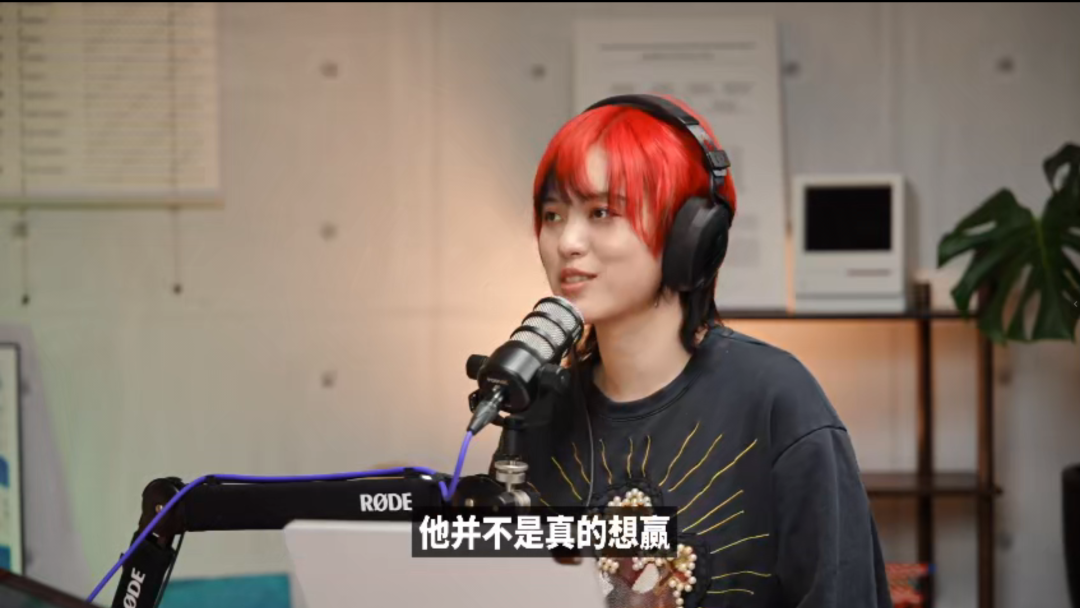
How do you make someone want to win? They need something they desperately want to do. I'm grateful my parents encouraged independent thinking from an early age, to find what I truly loved.
If a person has enough love and passion, the drive to insist on doing that thing, they won't be in a state of fearing loss — they'll always be in a state of wanting to win.
Koji
Not in a state of fearing loss, but in a state of wanting to win. That's really enlightening. It feels like a lot of people's choices are based on fear of losing something, rather than genuinely wanting to fight for something — leaning conservative rather than adventurous.
Roi
Right. Another thing that deeply influenced me was going to NYU for grad school. It was an arts school, so I met all kinds of people living lifestyles you'd never see in a Chinese tech company workplace.
Koji
The meritocratic trap of East Asian society. And you realized it's just one of many possible worlds.
Roi
We are indeed playing a simulator, but it's not a fun one.
There are so many other simulated games to play out there. Why not play a different one? Why insist on this finite game instead of an infinite one?
Koji
So what was the biggest change that experience brought you? Because you later dropped out.
Roi
I dropped out because of COVID — couldn't get a visa after returning to China. But the biggest change was realizing I could see so many possibilities, and also see what the floor of messing around looked like. I found I could completely accept that floor. Once I could accept the floor, I dared to pursue the ceiling.
Koji
What's that floor?
Roi
Nothing more than living a very ordinary life — not much material wealth, but not starving either. I think as long as you don't mess around with the wrong things, don't touch what you shouldn't, it's incredibly easy in today's society to eat well, drink well, and die a natural death.
What people fear may not be that life itself, but "loss." This is also a way to live a full life — why does reaching that state feel unacceptable? Maybe it's because you already have so much; you can't accept "losing," not that you can't accept living an ordinary life.
Koji
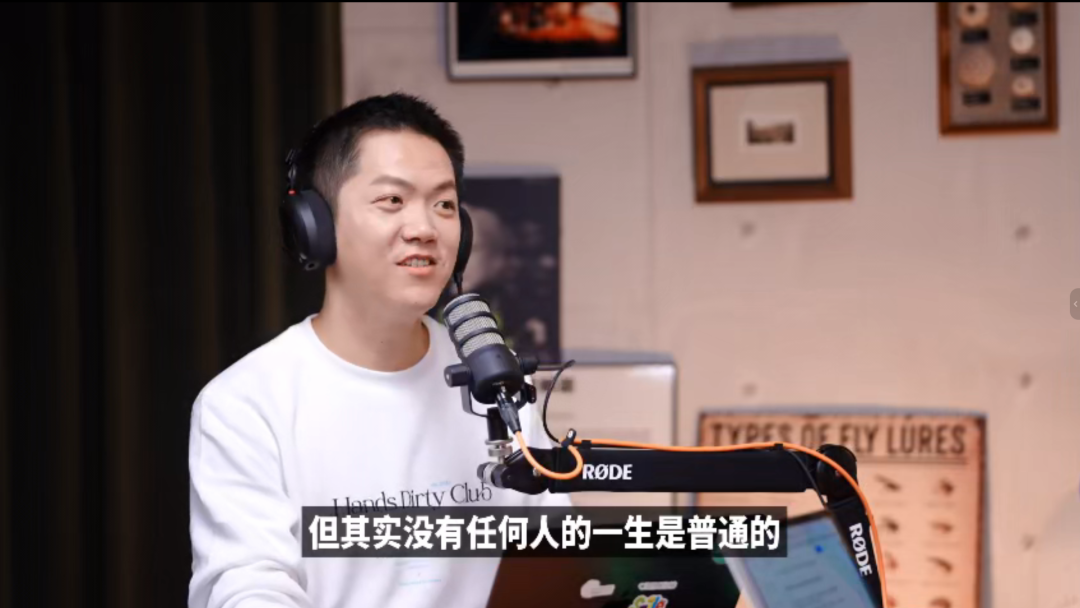
But actually no one's life is truly ordinary — that's another perspective.
Roi
Right. From that angle, whatever your circumstances, you have your own experiences and encounters — every way of living is interesting. So from that perspective, just choose the path with the scenery you like best, the one most likely to lead to the most exciting parts. Even if that path doesn't work out, you can switch to another. There are so many paths to choose from, so many to switch to.
Koji
So do you regret any choices you've made in life?
Roi
Not really. I particularly don't care about sunk costs. What's past is past — move on, next.
Koji
That's impressive. How do you develop that ability?
Roi
I think it comes down to rational judgment at the core. You can't change what's already happened; investing more in it is a waste of energy, it won't make my life better. The only way to make my life better is to invest energy in future things.
I think that's what you might call "maximizing returns" — I'm always striving for the next thing I'm pursuing. That way, as long as I try enough times, I'll definitely get some of what I want, rather than dwelling on what I've lost.
Koji
Are there any role models, works of art, or quotes that particularly give you strength?
Roi
For artistic works, there are a few books I quite like. One is Haruki Murakami's Dance Dance Dance.
Koji
Dance! Dance! Dance!
Roi
Right. I think everyone gets different inspiration from reading. For me, the takeaway was: you have to keep dancing, keep building connections with people around you — always be in motion, active, constantly moving on. The male protagonist starts out quite passive, and the whole story pushes him to connect with more people, which leads to all kinds of adventures and wonderful experiences. That's a perspective that's inspired my life.
The second book I really like is a feminist novel called The Hours.
Koji
Also adapted into a film, with three Oscar-winning actresses — The Hours.
Roi
Right. What it gave me was: "Happiness is a particular moment" — your happiness lives in these hours. The inspiration for me was: you still have to love specific people and specific life. This connects to the first book too — as long as you keep moving on, building connections with all kinds of people, you have a greater probability of generating those happy moments.
You can't guarantee every moment of life will be happy, but you'll be more likely to encounter them. To experience those, I can endure the unhappy moments. Of course, from a game design perspective, we'd definitely try to amplify those good moments.
Koji
These artistic works seem to share a similar through-line — they're all about active engagement, allying yourself with life?
Roi
Right, you could say that. I hope people can live actively, find some good and beautiful things in that life, then transform them into valuable works, condense them into some output, and share them with more people. That way everyone can harvest more beautiful moments and have a better spiritual life.
Koji
Do you think that when people consume spiritual works, from novels to films, it will inevitably evolve into interactive entertainment represented by Mujian? Is this an inevitable path?
Roi
I think they're progressive in terms of technology, but coexist in terms of human needs. I also wonder about this — interactive things naturally have higher barriers to entry. Passive-consumption products like Douyin will still have a larger audience than interactive products. I think that's an unavoidable issue. But the upside is, Douyin won't make too many heavy-interaction products — that's also our entrepreneurial opportunity.
But there will always be people who don't just want to be spectators, who want to jump into that world and do things more actively, make changes, get stronger feedback. The investment is indeed more tiring, but the feedback is stronger too. This kind of experience may not be for 100% of people, but look at the proportion of people in the world who've played games, played interactive products — it's still very high. If I say 50% of people would like this kind of thing, that's already a massive market.
World Models
Koji
Today, a lot of people are throwing themselves into the big track of AI interactive entertainment. Facing this big赛道 and命题, is there any view that most people agree with today but you don't?
Roi
There's one. Maybe because I've made quite a few creator tools — this is actually a view I've held since my Liblib days. I think a lot of people say: my goal in making tools is extreme low barrier, no barrier at all.
I can't say this view is completely wrong, but I think there are some priority issues here.
I believe the first priority of a tool should be "powerful," not "low barrier." Low barrier is second. You need to be deep yet accessible, but you're not making something "shallow." Because shallow things lead to very low ceilings for works and very little differentiation. And excellent creators — they always want to pursue the ceiling.

My own philosophy on building tools is: I'll first reach for that ceiling, then I'll spend time fixing the parts that waste people's time, the unnecessary steps in the process. One is solving workflow friction. Two is, like a game's tutorial system, making the onboarding simple, then gradually unfolding the richer, editable, more complex stuff behind it. Rather than chasing low barrier right out of the gate.
👦🏻 Koji
What are some tools that touched the ceiling first, then gradually got more user-friendly?
👩🏻 Roi
I actually think most tools are like this. People might raise counterexamples — CapCut as a simpler Premiere, Figma as a simpler Photoshop. "I definitely want to make something simpler than Figma." But Figma wouldn't exist without Photoshop. CapCut also evolved step by step from Premiere.
When I'm iterating on an already mature tool, of course we're pursuing extreme low barrier and ease of use. But with AI, I think many AI tools are still at a very early stage of product definition. If you pursue extreme low barrier at this stage, you're probably abandoning a lot of what the thing could actually do.
And eventually you find that creators can't make anything good. So I think, at least on a completely new track that needs defining, it shouldn't be this way.
👦🏻 Koji
So among today's AI tools, who do you see as taking the absolute low-barrier route?
👩🏻 Roi
I think the earliest batch of CAI products had creation ends that were extremely low barrier — I input a prompt, content gets created. A huge wave of products did this, and what they found was that everything users made was highly homogeneous, more or less the same, you couldn't play with anything new.
Including some newer interactive products now, also saying "it's so simple, one sentence and you're done." But if it's one sentence for you and one sentence for me, how different can our sentences really be?
👦🏻 Koji
I heard a take the other day: now you can make Snake with one sentence.
But the reason Snake Off became the definitive Snake game was these subtle feels — even whether the delay is 0.1 or 0.2 seconds makes a huge difference.
👩🏻 Roi
Actually the biggest reason Snake Off blew up was that all those players you thought you were competing against were bots.
It was the first to take IO games in that direction, so everyone got maximum positive feedback inside a virtual system. Isn't this exactly the kind of simulator experience we idealize? But this design was the critical point, and I don't think it came from a couple sentences. And creators with ideas like this — I don't think they get filtered in through very low-barrier tools.
👦🏻 Koji
There's another view today: that in the future, the Douyin we see will likely be real-time generated, that it'll generate every frame, every second based on your needs. Do you think that's a real future?
👩🏻 Roi
I think Douyin content needs categorization. There's content that records reality, fictional content, and the interactive content we just mentioned. Setting interactive aside, for pure video — stuff documenting reality — the appeal isn't just watching a clip, people have needs for social connection, all kinds of social needs. This part won't be easily replaced by generative stuff. Generative, I think, fundamentally serves fictional needs.
So the view that all of Douyin will be virtually generated — I'm not really buying that. The real part will definitely exist. But short dramas, fun little videos — those could be generated. Whether they're real-time generated, that's another question. Because some things, I shoot it, watch that fixed clip, the experience is already great — why does everything have to be real-time generated?
The eventual ratio might be: real recordings, pre-produced, and real-time generated — all coexisting.
👦🏻 Koji
I've been thinking, people need social connection, they pursue shared memories. Like Faye Wong going on Spring Festival Gala to sing a song — if you generated 1 billion different Faye Wong songs for 1 billion people, the consumption pleasure immediately drops. But if everyone's listening together to 2026, Year of the Horse, Faye Wong singing some song at this historical moment, with all the discussion that spins off from that — this collective consumption of shared content, it'll definitely persist long-term.
Like we'll still watch NBA together, Olympics together, Eileen Gu together — that stuff can't really be generated.
👩🏻 Roi
But people can generate 100 million Faye Wong singing remixes, repeatedly consuming one thing.
👦🏻 Koji
In 2026, there are massive changes happening — whether foundation models, world models, lots of people exploring different startups. In the AI interactive entertainment track, are there changes you predict will definitely happen this year?
👩🏻 Roi
I'm still relatively bullish on world model-related stuff — building virtual worlds, interacting inside them. This connects to what we were doing with images. Like in 2023 when we just started, Midjourney was still drawing weird nightmare images, pretty but lots of nightmare fuel, five fingers never right, people thought it was useless. A year later, I think it became very productizable.
Back then video models were pretty bad, people thought video models sucked, too janky, all kinds of weird shapes, couldn't even do a clean somersault. But another year later, Seedance's level — this was unimaginable a year or two ago.
Now world models you think are so dumb, ugly and slow, high cost, don't know how to play with them. But at the previous pace, I think a year from now it'll become something quite promising, something that can work at application and consumer levels. This is definitely a technical exploration direction we'll integrate.
👦🏻 Koji
Do you think a fully AI-generated game becoming a massive mainstream hit is possible? If so, what are the key factors?
👩🏻 Roi
First, partly infrastructure capability. All these AI-driven worlds, they still have some relation to language models underneath.
Because the logic, we still use language or code, it's still text-form expression. How do you guarantee that in a real-time output state, this system is stable? This technical capability, and its speed — because you need real-time generation, high latency is hard to tolerate. Once there's high latency, this thing can't break out of niche circles. These two infrastructure capabilities I think are quite important, maybe even the hardest in some sense. The ceiling looks high-return, people will explore quickly, but going back to build infrastructure — maybe not something solved that fast.
Second, I'd say real-time multimedia rendering. Because if it's a text-based medium that's not sensorially appealing, it's also hard to break out. It needs to be stable enough, dazzling enough.
Third, low enough interaction barrier, simple enough to play. I think this can be solved through design, lots of people are working on it now, so not something I see as very hard. Solving the first two might be prerequisites for making this thing, then giving creators some time.
👦🏻 Koji
The native moat is three layers of capability stacked together.
👦🏻 Koji
Could such a work ultimately emerge on the Mujian platform?
👩🏻 Roi
As entrepreneurs, we certainly hope it happens on Mujian.
👦🏻 Koji
Then how, or what would make it more likely to happen on Mujian?
👩🏻 Roi
I actually think, first, this kind of work will definitely be AI-native, core-driven by AI. So it needs a solid AI kernel, including the infrastructure capabilities I mentioned. I'm not saying whether it's on Mujian, but I believe it has to be an AI-centric company and business that can incubate such a product. Because a platform like Steam — are they doing any AI-related infrastructure? Probably not.
And I think AI-based interaction itself has a data snowball effect — the later you enter, the harder it is to do this. So AI-native is very important.
Second, you need very deep understanding of how to define "fun." This is where platforms like Steam have advantage, not platforms like Douyin. So I think you need to combine both, a platform that satisfies both, to have this opportunity. And we obviously want to become that platform.
👦🏻 Koji
When we say AI-native, what are we talking about? Like Steam isn't building AI capabilities, and when Mujian builds AI capabilities, what specifically is that? Can it be broken into parts?
👩🏻 Roi
On one hand, I've mentioned infrastructure capabilities quite a bit. Because when you call models, ensuring stable, fast model output — this itself requires a huge chunk of engineering capability. This needs accumulation, needs this kind of talent, there's a generational time gap. That's one piece.
Second, I think it's understanding of AI-native gaming experiences. When something is real-time generated, and user input freedom — even though I've talked a lot about control — but its freedom is still far higher than traditional products with fixed options. And the content it generates is also free, personalized. Under this experience, how do I make it good? The insight, understanding, and methodology here — right now the whole industry still finds this quite abstract.
I know gaming companies have lots of discussions, but I think currently many people don't really get what's fun about this, or how it can be fun. This is a cognition-level thing.
Third piece is actually user accumulation itself. The people who are already core audiences, and the gradually generalizing people around them. Because they love playing with AI the most, so they'll have lots of demands: I want AI to be more fun this way, I think AI could be more interesting that way.
I think AI is very much a "from the masses, to the masses" thing — very human-dependent, very user-dependent. You need to get user feedback very early, because it's so personalized. I'm not providing one optimal solution, you buy it or you don't.
Everyone's experience is different, how do you satisfy their different personalized needs? This needs to be built up through people, accumulating these users. Those three things.
👦🏻 Koji
Have you built up any concrete understanding around points two and three? Any specific examples you could share?
👩🏻 Roi
Point two might be a bit abstract. I've talked about this many times before — how to make something that's freely generated actually interesting.
I have a summary: your system should be convergent, but your experience should be open. You shouldn't chase a very convergent, very definitive "good ending." You just need to think about how to give users enough surprise in their next step, enough of that "Aha Moment." As long as I keep having a next time, that's enough.
Even if at some point in the interaction, they feel there's no more exciting next step, that doesn't matter. They can drop the experience right there and switch to another one — another world, another simulator — and I can still keep delivering those Aha Moments.
Short dramas are like this: I don't need them to have a beginning and end. Many short dramas get less interesting the further you go, but that doesn't matter, right? As long as the process feels good, as long as it's satisfying. Just like in life, not every experience is a complete story with a start and finish. This is actually completely opposite to the old design thinking around fixed, scripted interactive experiences. Very counterintuitive.
The overall trend in entertainment right now is that people care less and less about completeness — I only care whether each segment in the middle gives me strong enough positive feedback.
👦🏻 Koji
Do you think humans have always been this way? Or is it because short dramas and short videos are so dominant today that they've reshaped consumption habits?
👩🏻 Roi
Maybe fundamentally, humans are still animals. When something can provide you with unlimited physiological stimulation, you'll just keep getting hooked, addicted, keep going down the rabbit hole. Maybe it didn't exist before because the conditions weren't there to make it happen. Once they are, people just get captured by the system.
But I still think this needs some restraint. I'm buy-in on constantly having fragmented, interesting experiences and moments.
Actually, compared to Douyin, I prefer the experience on Xiaohongshu. It feels less invasive, gives me more personal space, still leaves me with some choice. Otherwise I feel like I'm purely an NPC, controlled by various systems rather than being in control of myself.
I probably couldn't build a product like Douyin, to be honest.
AI Will First Amplify Super-Individuals
👦🏻 Koji
When building Mujian, I'm sure you had certain hypotheses, and those hypotheses must have their own probabilities of success and failure. What are some of your most important hypotheses right now?
👩🏻 Roi
Right now the most important hypothesis for me, or the judgment I wrestled with most at the start but ultimately committed to, is PGC versus UGC.
I myself come from a PGC background. I'm a creator too. Honestly, I often get that uncontrollable urge to just go create something. But I ultimately chose to bet on UGC. One key hypothesis is that I think AI's biggest impact is empowering super-individuals and super-creators.
It democratizes, to some extent, what used to only be possible for organizations. But this democratization isn't 100% — it's the people with ideas and taste who can become a one-person army. And I think that can happen at real scale. So many people like that, the creativity and fun they can generate, far exceeds what a few teams or organizations could produce.
👦🏻 Koji
I thought your hypotheses would be more foundational — like how a platform gets established, or how to make my simulators richer, more fun, more widely adopted. It seems like you treat those as certainties rather than hypotheses?
👩🏻 Roi
Why do I think this is more important than whether simulators or interactive formats succeed? In a sense, if you're doing AI, you must believe AI can bring new, different experiences.
So I don't think it's a hypothesis — it's conviction, it's faith. You have to believe this to do this work. It's not at the hypothesis level.
👦🏻 Koji
Mission must be accomplished, full of confidence?
👩🏻 Roi
You have to be fully confident.
👦🏻 Koji
Should we do a final plug? If listeners of this podcast wanted to try Mujian, how would you pitch it to them?
👩🏻 Roi
I'd probably tailor it differently for different people. Because there are many different life fragments on there. Depending on what someone likes, I'd target it — say you like birdwatching, I'd tell you there's this amazing birdwatching simulator with birds that might not even exist in the real world, and you can observe them. And you can create your own interesting birds and put them in for others to play with. That's probably how I'd pitch it to you.
For someone else, say they like romance, I'd talk about the romance ones; if they like stock trading, I'd get them to try the stock trading simulator.
👦🏻 Koji
So when it spreads, if there's a viral tipping point, do you think it's more likely to be one specific simulator that blows up, or Mujian as a platform itself?
👩🏻 Roi
I think first it would definitely be a cluster of these things blowing up. So actually we're also thinking about running some competitions lately, getting people from different backgrounds to build simulations of things they find interesting in their own lives, so everyone can find their own fantasy of a beautiful life and world inside.
👦🏻 Koji
If you had $3 million today to do angel investing, three people at $1 million each. Whether they're someone who hasn't started a company yet or already has, and you don't need to worry about whether you can actually get in — if you want to invest, you definitely can. Which three names come to mind?
👩🏻 Roi
Does it have to be three people? Can't it be 300 people at $10,000 each?
👦🏻 Koji
Oh, 300 people. That's for your own super-creators?
👩🏻 Roi
Not just ours, actually. I still quite trust my own judgment about individual output in the AI era. So compared to investing in fully-formed companies, I'd rather invest in interesting individuals. I think some of them could get really, really big, and right now it's incredibly cheap to invest in them.
The ROI feels pretty high, and it's also a pretty interesting experiment. After all, $3 million is just a drop in the bucket for most big startups.
👦🏻 Koji
So if you did $3 million across 300 people, 300 super-individuals or super-creators — can you think of one or two names?
👩🏻 Roi
For example, those creators making simulated little phones that I mentioned. I've found that what they're building is quite productized, and their abilities to run social media and monetize are quite strong. They're gradually forming something like small studios, individual studios. This type would be one category I'd want to invest in.
Crossing is looking for independent writers to produce AI product and model reviews.
If you've written similar articles: Hands-on with PixVerse C1, Hands-on with LibTV, please contact zeo0811@gmail.com. Your email should include: ① personal introduction, ② AI review articles you've written.
We offer competitive compensation. Looking forward to observing and documenting the AI era with you 🎪