Let AI Build Cars: AIVA's Experiment in AI-Era Auto Manufacturing

To be is to do.
To be is to do.
🙍♀️ Author: Ms. Yi
🥷 Editor: Crossing
🧑🎨 Layout: Zeoooo

What happens when a car is deeply integrated with AI from the very moment of its creation?
On June 9, at Yanqi Lake in Beijing, an unusual auto launch event offered its answer.
No splashy zero-to-100 acceleration figures. No range specs filling the screen. No PPT comparison charts benchmarking against Tesla. In their place, a new car brand called "AIVA" made its debut.
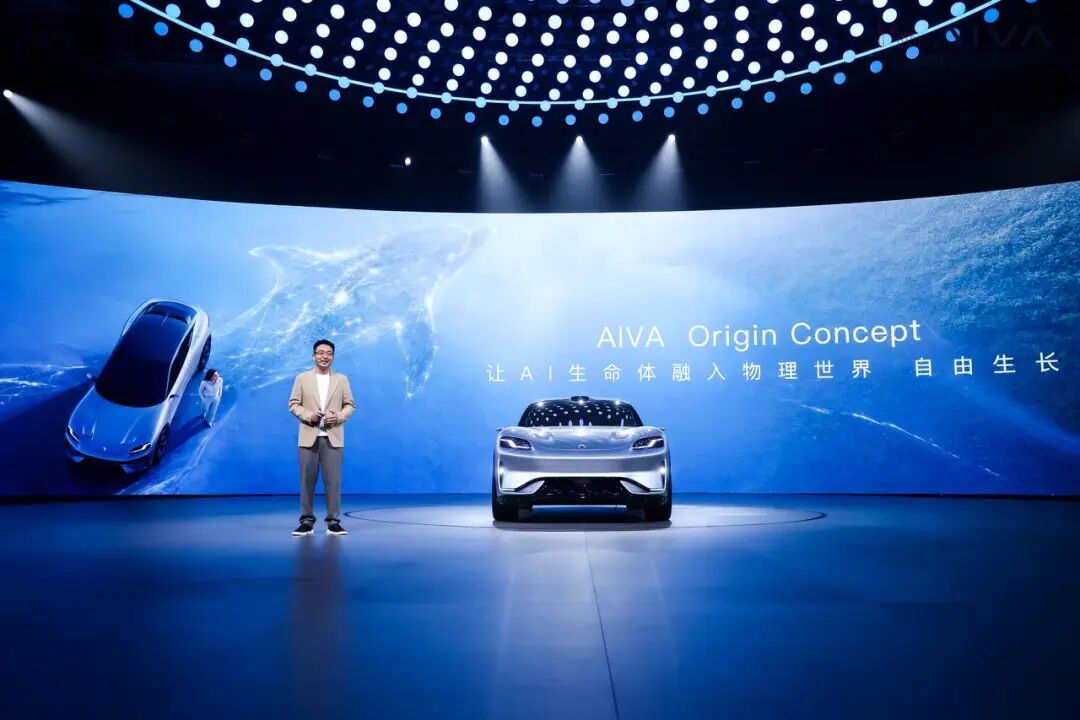
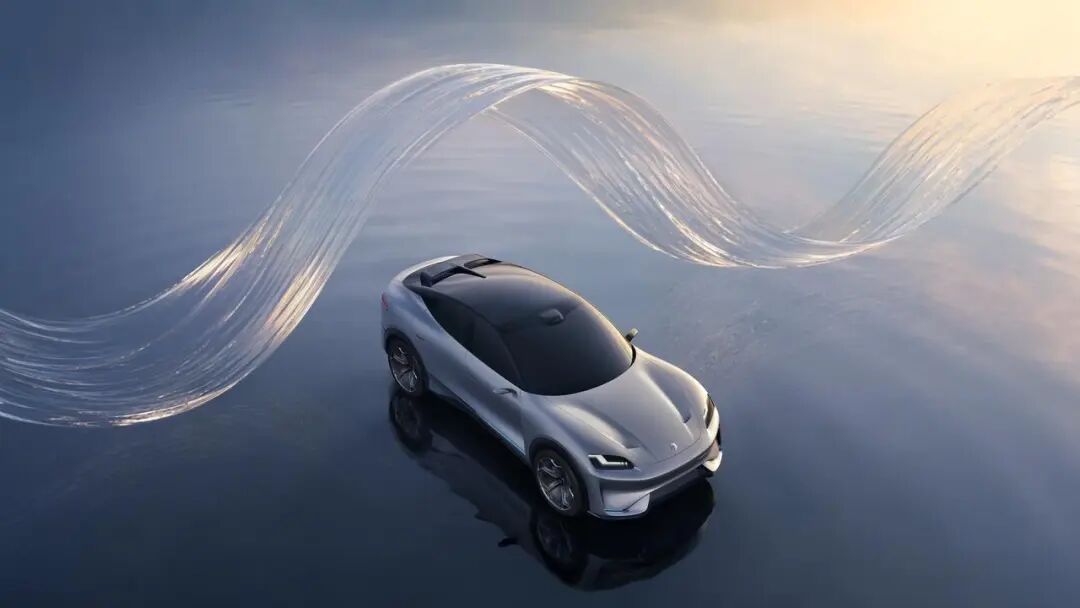
This is a brand-new AI-native automotive brand under Saidou Technology. Unveiled alongside it was its first concept vehicle, the AIVA Origin Concept.
But the most noteworthy aspect of the entire launch wasn't the vehicle itself — it was the phrase that Li Bo, AIVA's president and product manager, kept returning to: "AI-defined car: AI first, then the car" — putting AI "upstream" at the very origin of vehicle creation.
This isn't just a slogan. Behind it lies a fresh attempt by the auto industry to move from "car plus AI" toward truly "using AI to define the car" — reinventing the automobile with AI.
AI-Native, From the Origin
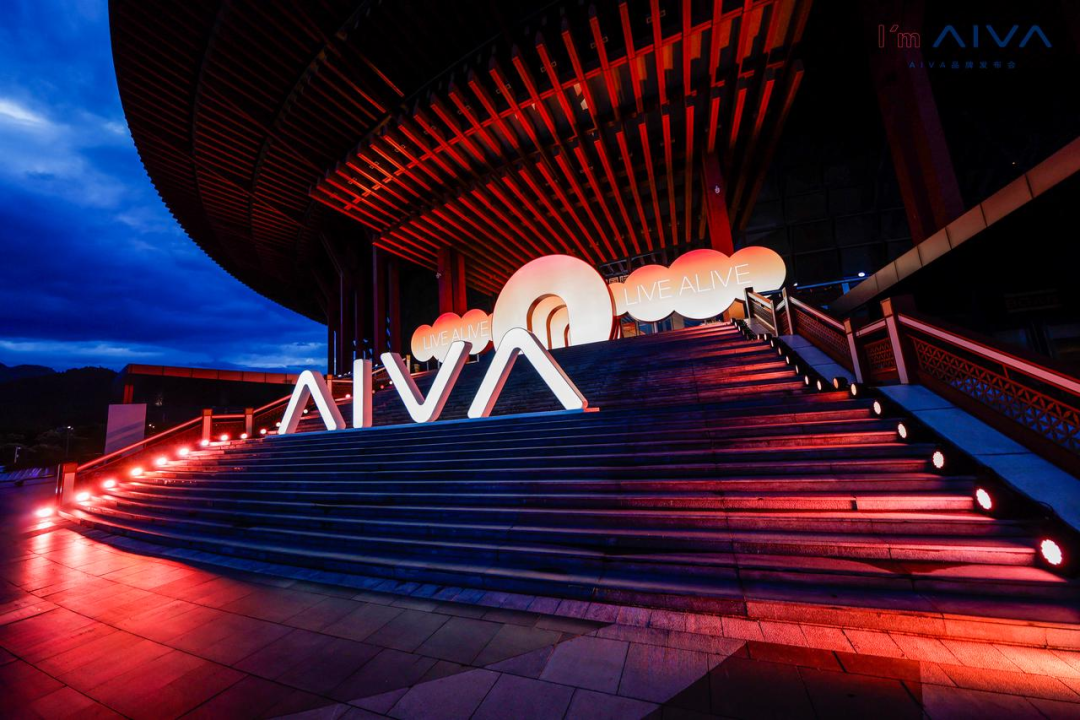
AIVA stands for Artificial Intelligence Voyage Ahead, signifying "AI accompanying users forward, joyfully embracing what lies ahead."
Its pronunciation naturally evokes the Chinese phrase for "love me" (ai wo), reflecting the brand's original intention to respond to every user's genuine needs with "warm AI technology."
AIVA's ambition extends beyond merely building cars. It aims to create an embodied AI entity with vivid vitality. The vehicle is simply a vessel.
Its brand proposition is "Live Alive — Love Grants Freedom," targeting users who are "explorers of vibrant living."
AIVA hopes to give users back their time through AI, respond to their feelings with emotional companionship, and uphold "safety as the highest form of care" as a core principle.
At the start of the launch, Li Bo opened with a story about having AI write a product proposal.
"Early last year, I asked my AI assistant to draft a vehicle project proposal. In twenty minutes, it gave me nearly seventy pages of high-quality content," he said. "In that moment, I suddenly realized that AI was already capable of proactively solving problems for people."
If you put AI into the body of a car, the vehicle ceases to be merely a transportation tool and becomes a companion that responds to your emotions and grows alongside you.
Based on this, AIVA proposed its vehicle-creation path of "AI-defined car: AI first, then the car." The first concept vehicle, the AIVA Origin Concept, also starts from large AI models, adopting a vehicle form reinterpreted through biomechanics. It has no harsh edges; its headlights are "eyes" capable of expressing emotion.
It is an AI entity that steps out from the digital world into the physical — visible, tangible, perceptive, and responsive.
From "Car Plus AI" to "AI-Defined Car"
In recent years, the mainstream approach to smart vehicles has been: first determine the platform, electric powertrain, chassis, and body structure, then "install" AI voice assistants, smart cockpit apps, and assisted driving functions. In this model, AI is merely a functional module, constrained by existing hardware interfaces and data silos.
AIVA's approach is fundamentally different: AI participates at the source of product definition.
Li Bo used an analogy: "Before, humans were digging in front and panning for gold behind. Now, AI is digging in front, and humans are panning for gold behind." Specifically, AIVA's vehicle-creation process unfolds in three steps:
First, AI conducts user needs insights first.
Through massive volumes of real-world mobility data, it analyzes genuine pain points across different scenarios — commuting, family trips, long-distance driving, rest and relaxation.
Second, AI performs scenario simulation and capability mapping.
It simulates which vehicle capabilities AI would need to deploy to address these pain points.
Third, hardware and architecture are defined in reverse.
The vehicle reserves space for AI coordination from the bottom up, rather than adapting AI after hardware specs are finalized.
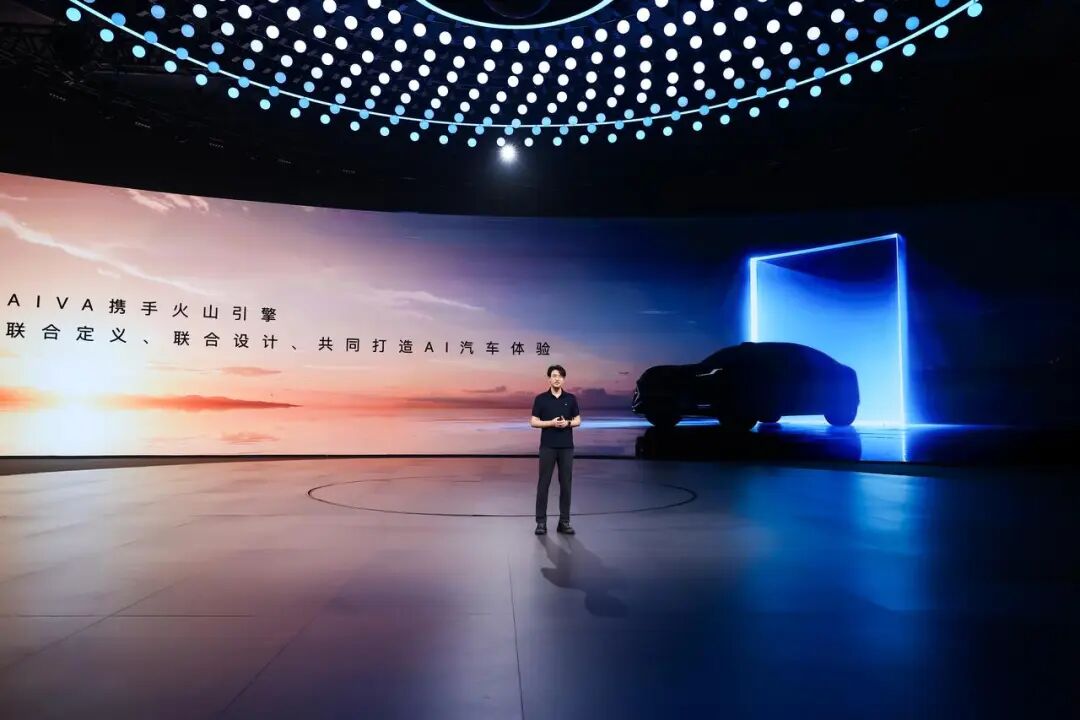
Realizing this logic requires a sufficiently powerful AI technology foundation. Saidou Technology brought in Volcano Engine.
At the launch, Yang Liwei, vice president of Volcano Engine, elaborated on this logic: "The AI car we envision isn't just putting AI into a vehicle — it's making the car a new species of physical AI. If a car is defined around AI from day one, its interaction patterns, intelligence ceiling, and user experience will all undergo fundamental transformation." Volcano Engine will provide AIVA with Doubao large models, smart cockpit infrastructure, and embodied intelligence technology support. The two parties will engage in "joint definition, joint design, and co-creation of the AI car experience."
When AI Starts to Understand You: From Micro-Scenarios to "Vitality"
Traditional automotive feature lists are designed by product managers and engineers in offices based on experience. AIVA's logic: let AI mine genuine user needs at scale from massive driving data.
At the launch, Li Bo offered the most everyday example possible: air conditioning temperature.
His description was vivid:
"22°C in summer when you're wearing a T-shirt is not the same 22°C as in winter when you've taken off your down jacket and put on a wool sweater. 22°C when you're drenched in sweat after playing basketball is not the same 22°C as when you're in a suit about to meet a client. And 22°C for an active child is definitely not the same 22°C as when they've fallen asleep."
Moreover, in a traditional car, users typically adjust this manually. But in AIVA, the AI remembers your habits, preferences, daily scenarios, even your physical condition that day — automatically adapting to "the most comfortable 22°C for you."
Commuting is another highly representative scenario. Li Bo emphasized this AI car's attention to time management.
He said that if a user leaves home five minutes late, AIVA will find ways to "make up" those five minutes — rerouting, adjusting driving modes. During rush-hour gridlock, it knows you hate being cut off and will automatically close the following distance; on the highway, it will automatically widen the gap for safety.
More granular still is privacy protection. When a stranger gets in the car, the onboard assistant automatically isolates the user's private memories — home address, frequent destinations, playlist preferences. As time together grows, AIVA understands you more and more, becoming an AI companion uniquely yours.
AIVA's pursuit is to create "a beautiful mutual journey between carbon-based and silicon-based life."

Delivery Is Not the End, But the Beginning
Traditional OTA updates involve manufacturers pushing patches or new features. AIVA's vision is different: over long-term use, the AI continuously learns user habits and autonomously iterates the experience.
In other words, delivery is not the endpoint, but the starting point of this "AI car's" growth.
In terms of experience, AI is no longer passively awaiting commands. It can switch to more relaxing music and lighting on a tiring evening, coordinate routes, charging, and scheduling before you head out, or reduce interruptions and provide quiet companionship when you need stillness.
Of course, AI proactive intervention must not become "overreach." AIVA will also operate within safety boundaries — for instance, automatically widening following distance on highways based on safety-first principles.
Meanwhile, under AIVA's vision, future AI cars should also possess explainability. When it suggests changing routes, it will tell you why — "accident ahead, detour saves 12 minutes" — gradually building user trust.
For example, headlights "making a heart" in interaction, automatic temperature and noise reduction in child sleep mode, playing your favorite podcast on the commute home... AIVA wants to push user experience metrics beyond hard parameters like range and acceleration, truly landing on the emotional dimension of "this car understands me" through more nuanced scenario design.
A New Industrial Paradigm of Multi-Party Collaboration
AIVA's exploration is not a solo attempt by a single entity, but a new paradigm enabled by coordinated industrial resources from multiple parties.
At the launch, Saidou Auto disclosed a clear division of labor:
- AIVA brand operates independently, responsible for brand, product, and business execution;
- SERES, as a major shareholder and industrial resource partner, provides support in vehicle manufacturing, supply chain, quality systems, and engineering experience;
- CATL provides systematic energy solutions in battery technology, battery safety, and power battery charging/swapping infrastructure;
- State-owned capital platforms provide industrial resource support;
- Volcano Engine provides Doubao large models, smart cockpit, and other technology services.
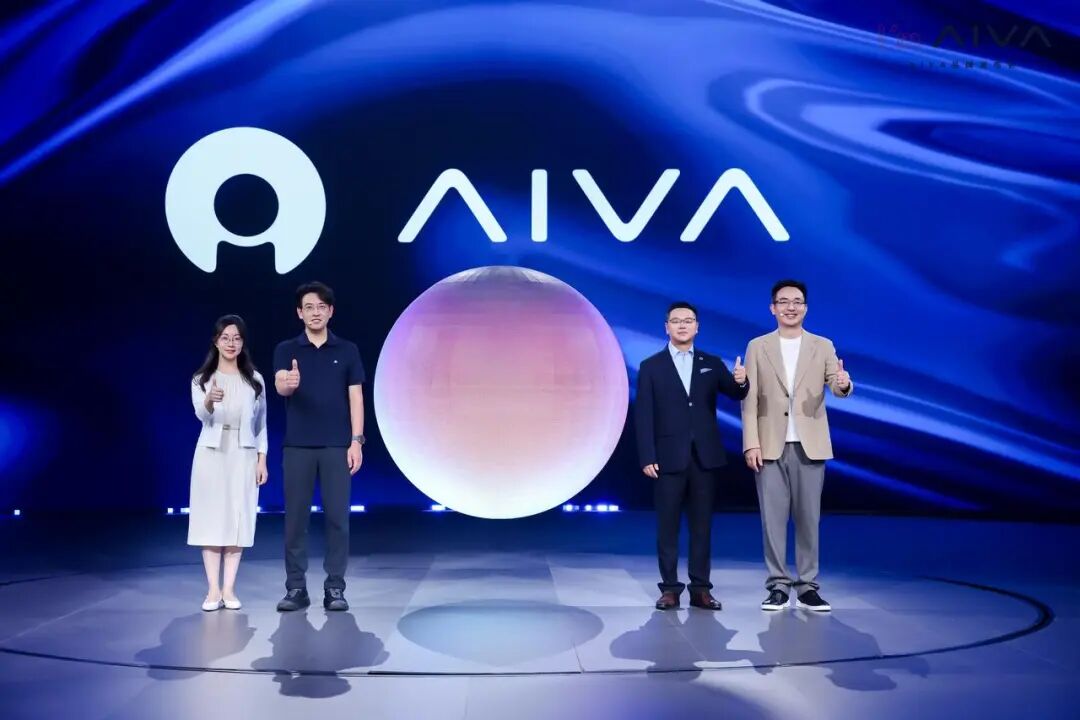
This AI-native automotive competition is, behind the product upgrades, also a competition in industrial organizational capability. At the launch, Yang Liwei, vice president of Volcano Engine, stated: "2026 is regarded as the inaugural year of physical AI. The automobile, as the largest-scale and most complete industrial-chain vehicle, is facing a major leap in the human-machine relationship."
AI-Native Cars: The Competition Begins
AIVA's first mass-production vehicle, the AIVA ME7, is expected to debut later this year, positioned above 200,000 RMB.
Today, the above-200,000 RMB market is already a bloody red ocean: Tesla Model 3/Y, Xpeng Motors P7/G6, ZEEKR 007, BYD Seal... The competition facing the AIVA ME7 is exceptionally fierce.
AIVA's bet is on the AI-native experience.
When AI truly transforms from "feature" into "soul," will users choose a new brand simply because it "understands me"?
Ultimately, the greatest significance of AIVA's brand launch is not the unveiling of a concept car or a mass-production plan, but that for the first time, a brand has loudly declared: "AI-defined car: AI first, then the car."
From brand philosophy, product definition logic, human-vehicle relationship design, and user experience granularity, to Volcano Engine's joint co-creation, to new explorations in multi-party industrial collaboration — AIVA has taken the first step beyond convention.
If AI participates in defining the car from the very beginning, what will it ultimately grow into? How will the first AI-native car on the road actually differ?
The answers remain far from revealed.
But what is certain is that the "AI-native" competition in the auto industry has already begun.
As more and more brands start "from AI, defining the car in reverse," whoever can truly build a "mobility companion" with soul, warmth, and deeper understanding of you may seize the advantage in the coming decade.
As Li Bo said at the launch:
"To be is to do. For what you truly believe in, rather than discuss, create."

Crossing is seeking independent writers to cover AI product and model reviews.
If you've written articles like: "Hands-on with PixVerse C1", "Hands-on with LibTV", please contact zeo0811@gmail.com. Your email should include: ① personal introduction, ② AI review articles you've written.
We offer competitive rates. Looking forward to observing and documenting the AI era together 🎪