Testing Real AI with a Fake Product: How Far Can the Kimi Agent Go with K2.6?

How Does Moonshot AI's "Agent" Perform With K2.6?
How Does Moonshot AI's "Agent" Perform with K2.6?
👦🏻 Author: Jingshan
🥷 Editor: Koji
🧑🎨 Layout: NCon

Over the past two months, OpenClaw and Hermes Agent have blown up in quick succession.
OpenClaw took off in late February, racking up over 230,000 GitHub stars in 60 days. On March 3, it surpassed React to become the most-starred open-source project on GitHub.
Hermes Agent followed close behind. Open-sourced in late February, it hit 22,000 stars in its first month and currently sits at 100,000 stars.
The biggest difference between this wave of viral Agent products and previous generations is the consistency of user feedback: they can actually complete everyday office tasks end-to-end, not just look good in demos. This layer of capability is something benchmark scores don't easily capture.
Attention has therefore shifted increasingly toward the foundation model, because if the base capabilities can't keep up, even the best Agent experience has a ceiling.
On April 20, K2.6 was released. This generation's upgrades focused on coding, instruction following, and error correction — with significant improvements in reliability for complex software engineering tasks. For Agent products like OpenClaw and Hermes Agent that call foundation models directly, these updates translate to immediate benefits.
After the K2.6 launch, Moonshot AI's "Agent" was among the first to adopt the new base model, rolling out a round of product capability updates around it: web building, Office-to-Skill conversion, multi-format simultaneous delivery via Agent clusters, and more.
By the way, we noticed that Moonshot AI recently changed its Agent product name from the romantically charged "OK Computer" to the more plain and direct Moonshot AI "Agent."
🚥
We ran several real-world tasks to test what the upgraded Moonshot AI "Agent" can actually do.
Here's what we found.
Generating a Full Set of Marketing Materials for "Crossing × Apple — iShout"
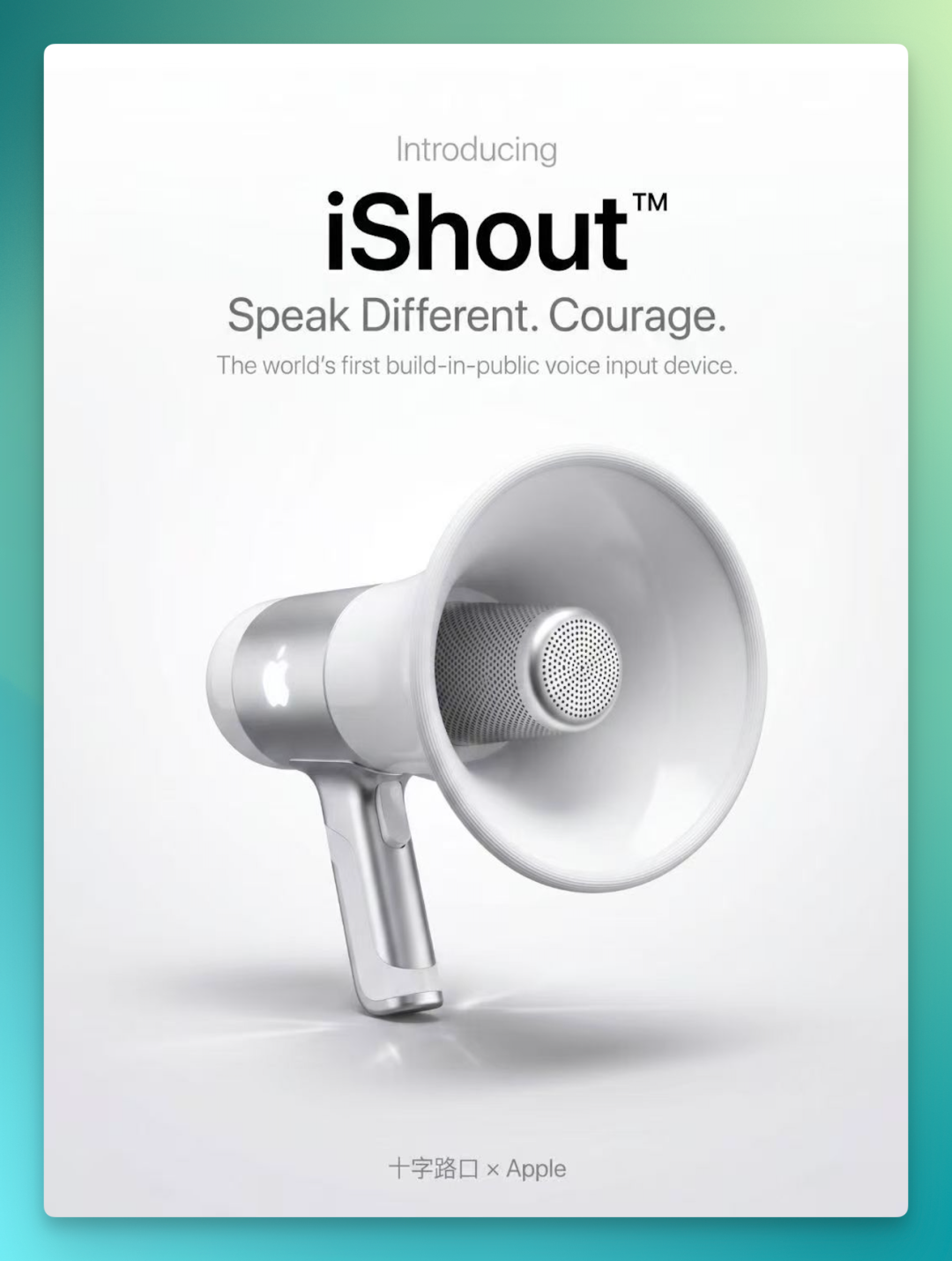
This time, we're testing with a real case — iShout, a new product (not really) from the Crossing team in collaboration with Apple.
The starting point was an observation Koji made about a collective "shame" in the Vibe Coding community:
Everyone's secretly using voice input, keeping their voice down to a whisper, terrified that colleagues might overhear them talking to AI.
But the spirit of build in public shouldn't be like this. True build in public (emphasis: PUBLIC) means grabbing a megaphone and shouting:
"Make me a landing page, make it look good, make it fast, thanks!"
So Crossing and Apple co-launched a new product concept: iShout™. Minimal aluminum alloy shell, Apple logo on the side, plug into your Mac and go.
The tagline is just one word:
Courage.
Whatever you're building, the entire office has a right to know:
Case 1 | Identifying iShout's First Wave of Overseas Markets
One upgrade to Moonshot AI "Agent": it can now directly connect to authoritative data sources like the World Bank, financial market data, and academic paper databases. The Agent can query these libraries on its own, with every cited number linked to its source that you can click through to the original data — and K2.6 serves as the foundation model.
Combined with the Agent cluster's multi-format delivery capability, a single input can simultaneously produce reports, presentations, and Excel files.
I picked a scenario that follows the iShout narrative. After establishing iShout domestically, the next step is overseas expansion. The global market is too vast to tackle all at once, so priority markets need to be identified first. This judgment relies on data: per capita GDP, smartphone penetration, content creator ecosystem size, consumer electronics purchasing power.
The task prompt was:
Based on World Bank, financial, and academic data sources, help iShout identify which overseas markets to enter first. Consider per capita GDP, internet and smartphone penetration, content creator ecosystem size, and portable audio device consumer electronics market volume. Provide **Top** 5 recommended markets with data justification for each.
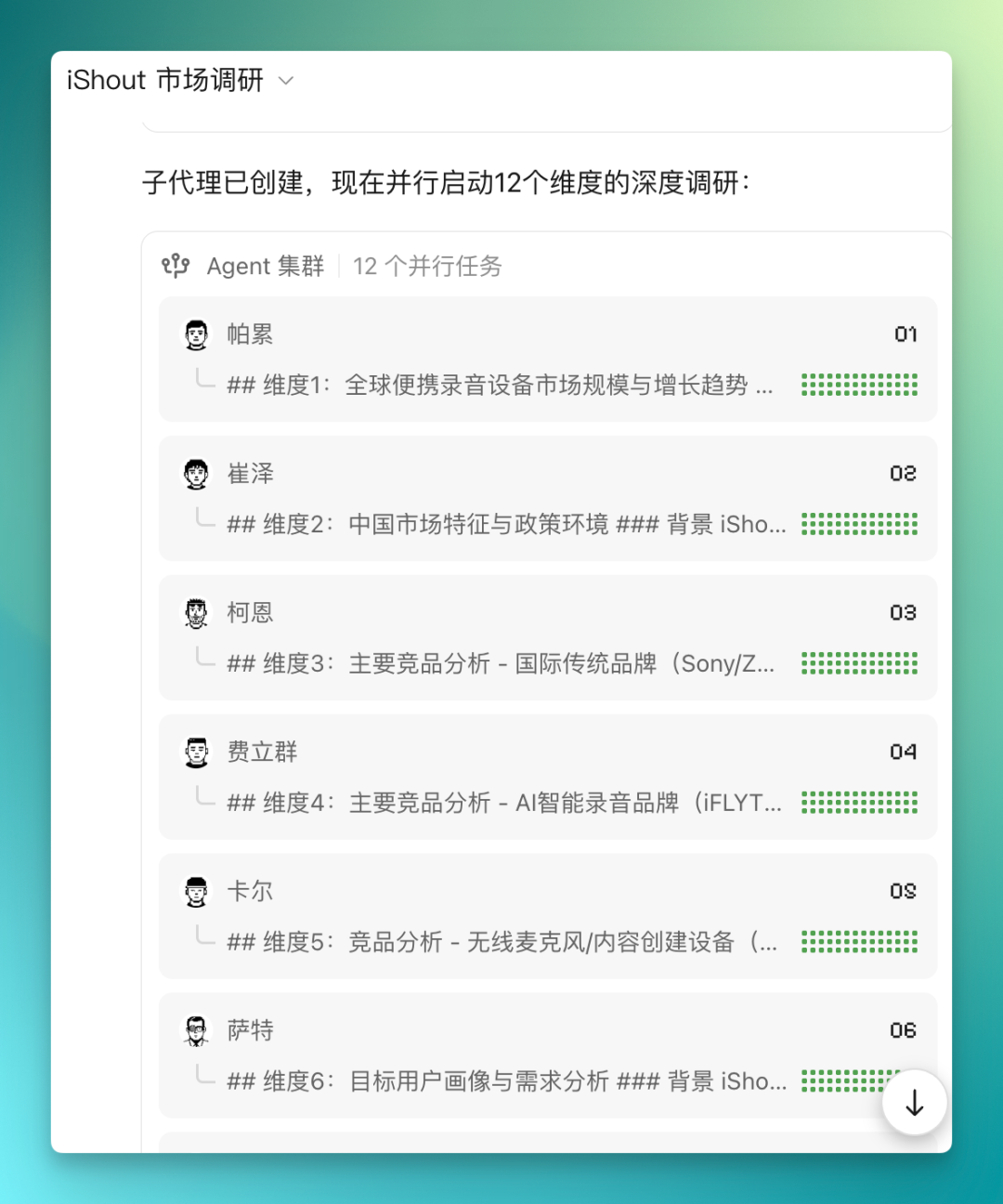
In this research task, the Agent cluster orchestration scales up significantly from the previous round. This time it spun up 12 experts in parallel, each responsible for decomposing one dimension, then aggregating the results.
You can see roles including data analyst, user persona researcher, content ecosystem analyst, and competitive research — all working from sub-problems derived from the same task:
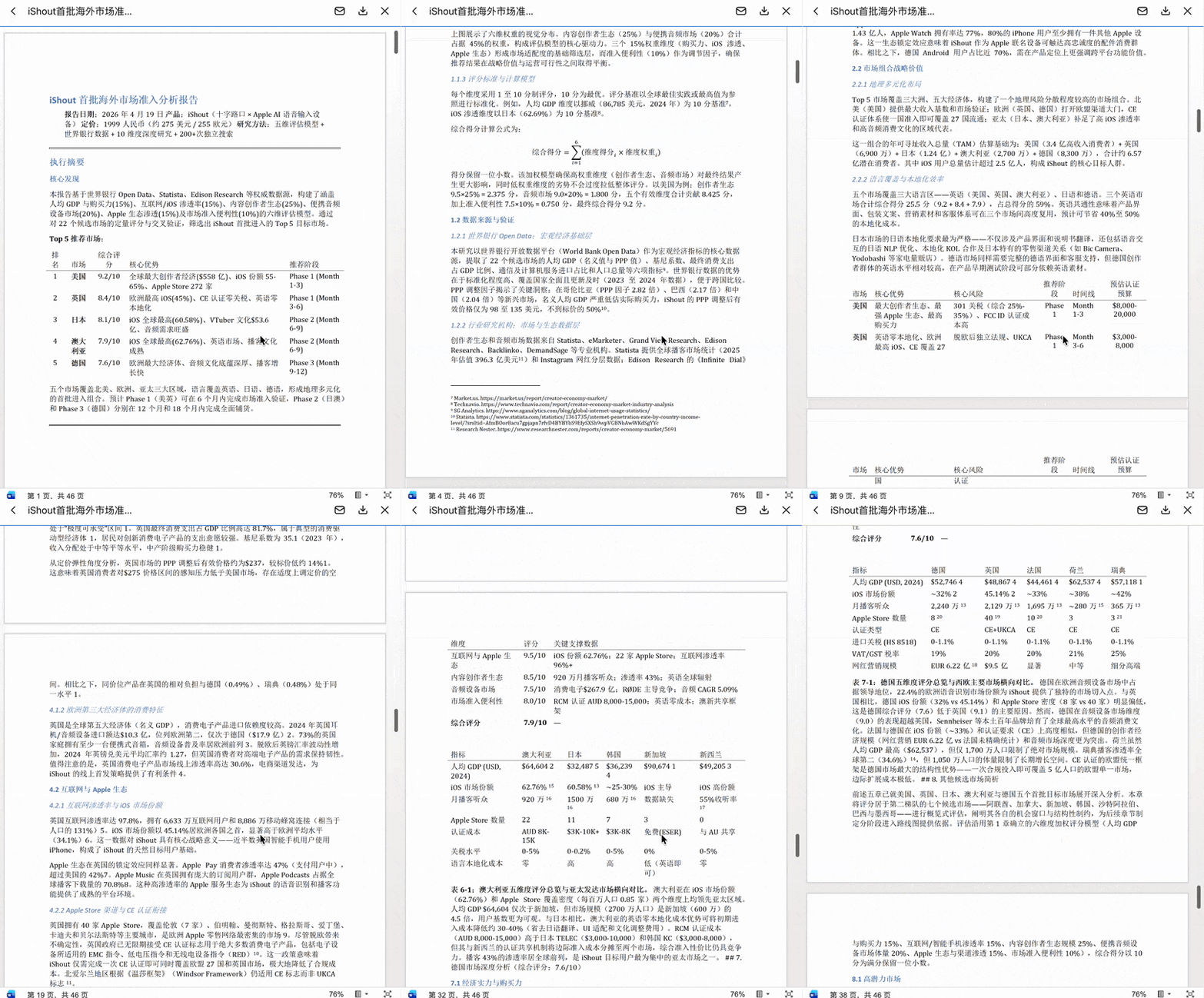
When it finished, it delivered a 46-page research report of roughly 30,000–40,000 words. The table of contents roughly covered: global portable audio market status, multi-dimensional scans of key target markets, content creator ecosystem comparisons, pricing and channel analysis, iShout differentiation points, and first-wave overseas market recommendations.
First, the formatting. Every page carried citation formatting at the bottom, with each data point marked by superscript references traceable to original sources. The chart types were varied — radar charts, matrix line charts, CAGR growth curves — the kind you'd expect in a market research report:
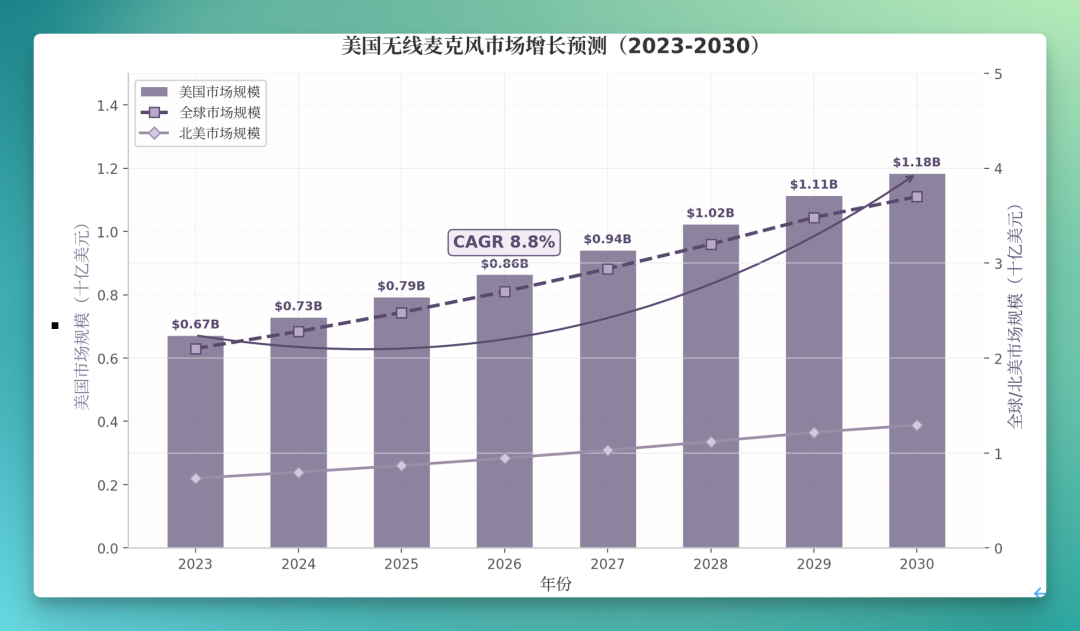
One chart worth highlighting: growth projections for the US wireless microphone market.
It mapped market size across US, global, and North America dimensions, with CAGR growth rates displayed. No hallucinations visible anywhere on the chart. Charts of this caliber run throughout the entire DOC, not just one or two:
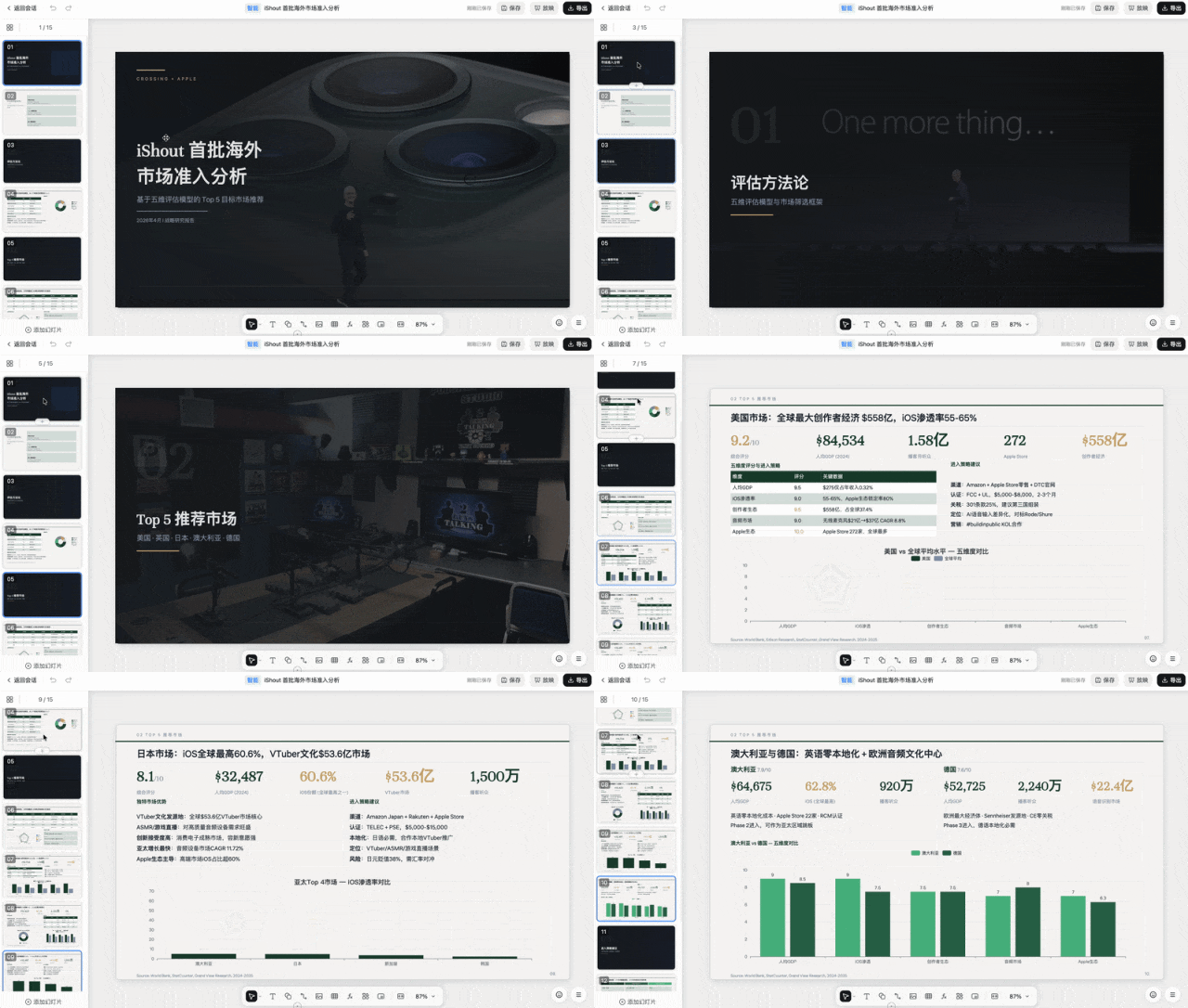
Beyond the report, the Agent also produced a presentation deck from the same research materials. One new change: the PPT charts include animation effects. Ring charts, radar charts, and bar charts all animate in, and the title slide background has fade transitions:
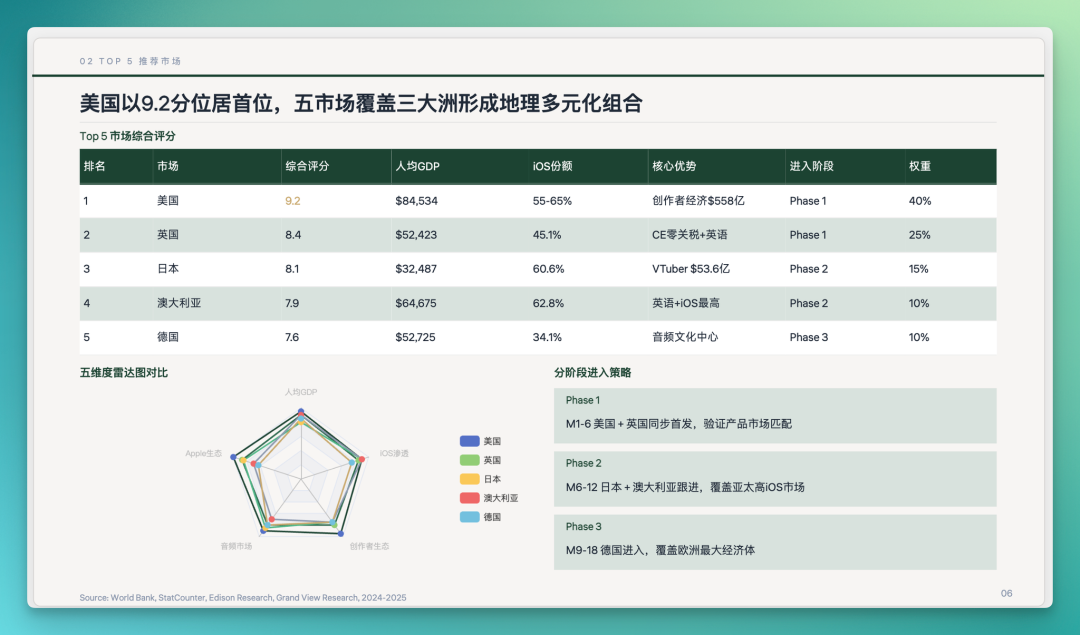
A quick note on a common problem with traditional AI-generated presentations: when a single page needs to fit title, page number, multi-dimensional tables, images, and stage annotations all at once, the information density can cause misalignment or data mismatches.
This time, Moonshot AI "Agent" didn't have this issue. The page below is fairly typical: plenty of elements, but spatial relationships and data labels all check out, no hallucinations visible:
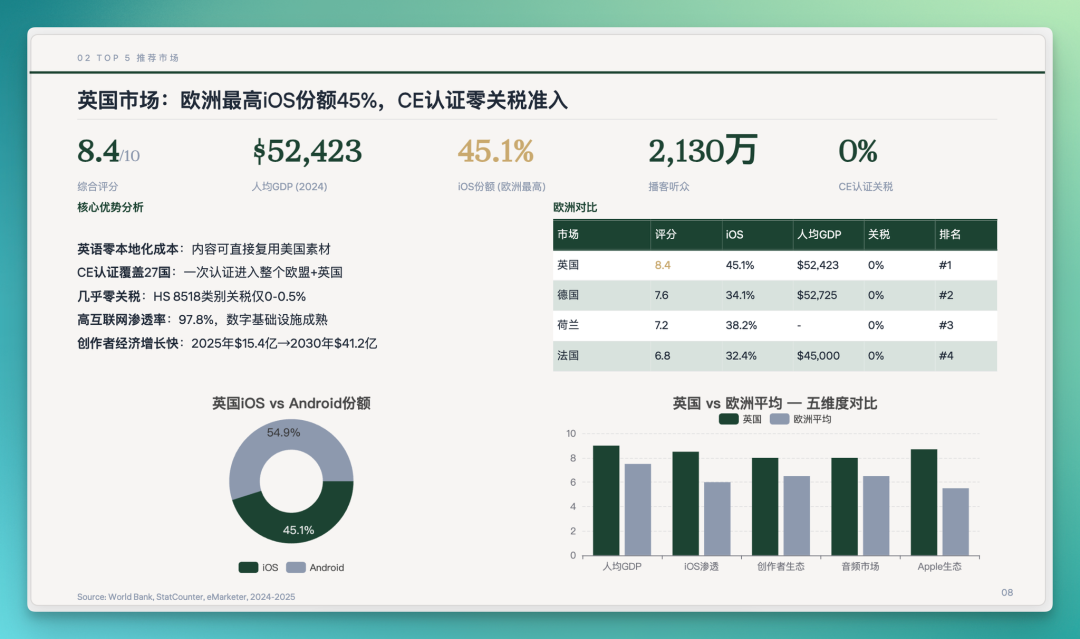
Another example: this UK market iOS share chart, with number formats, ring charts, bar charts, and tables mixed on one page — no misalignment, and the data is dynamic:
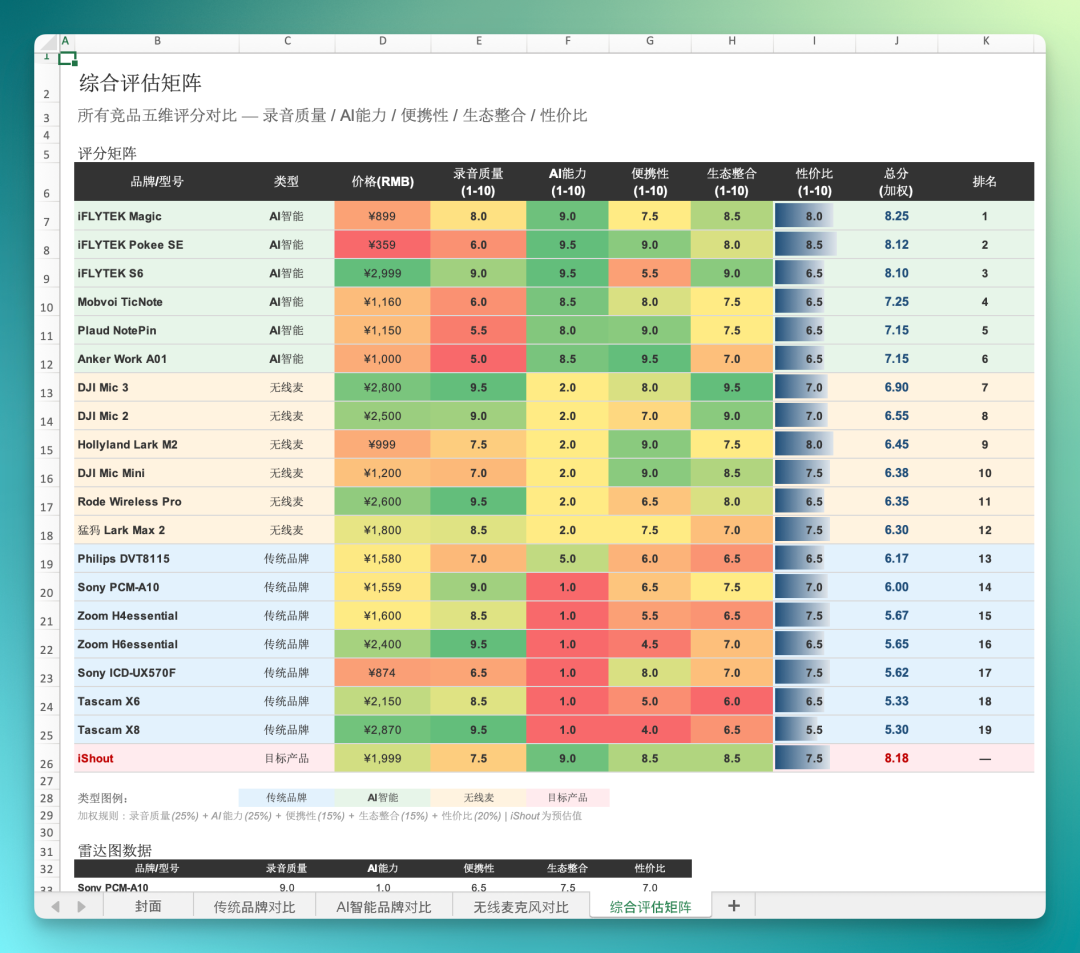
Finally, I had it research competitors too. The Agent produced a five-dimensional scoring comparison Excel (recording quality, AI capabilities, portability, ecosystem integration, value for money), with scores and justifications for each dimension. The table included basic parameters for 8 competitors: brand, model, price range, key selling points, and target users — ready for direct side-by-side comparison:
Case 2 | Turning Brand Documents into Skills, Batch-Generating Product Pages
Another point: with K2.6 now serving as the foundation model for Moonshot AI "Agent", the improvement in Vibe Coding website-building capability is noticeable.
This upgrade added a small capability on top: Document-to-Skill conversion.
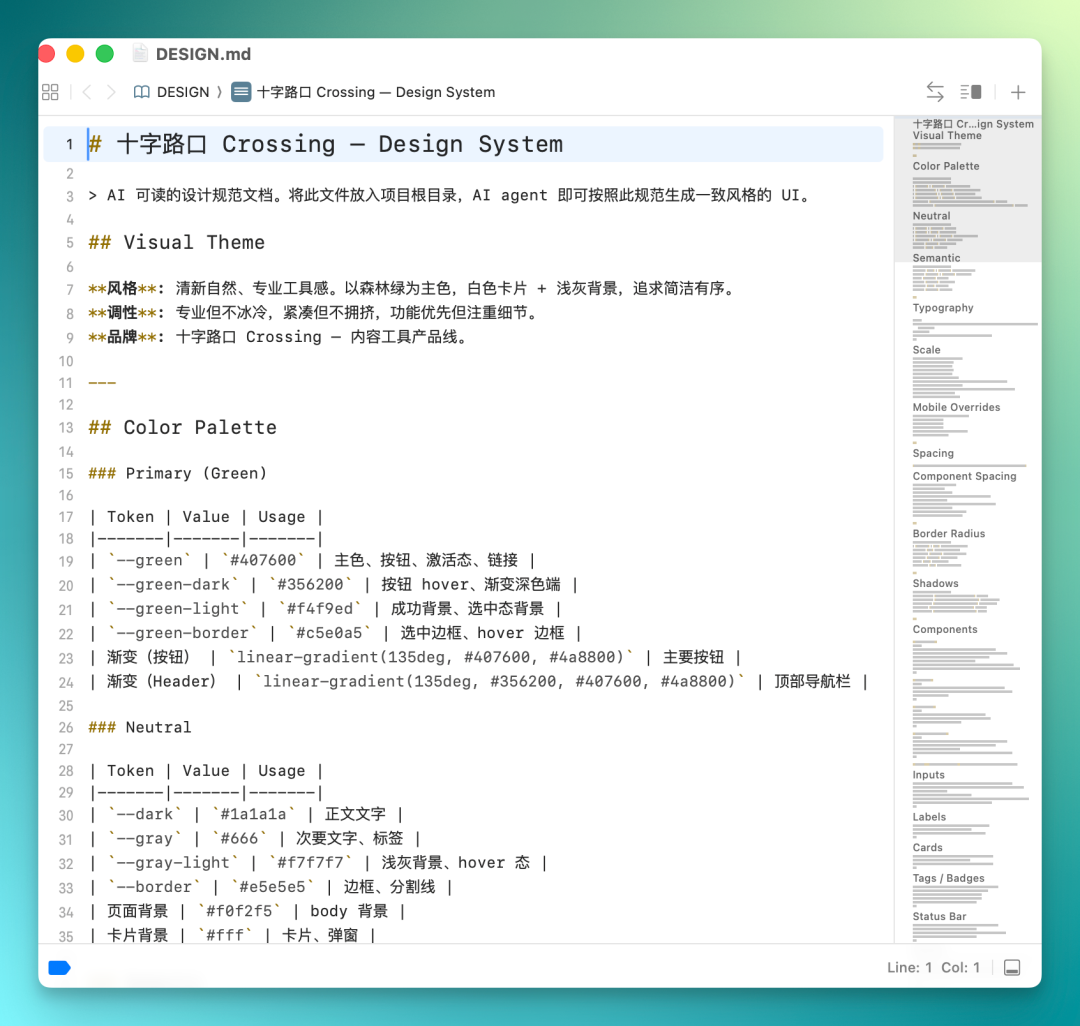
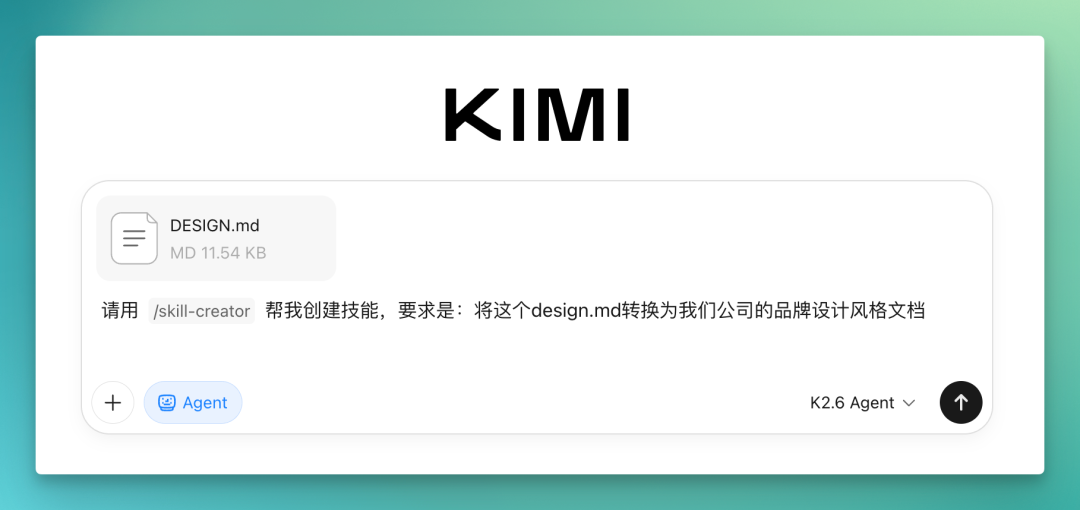
You feed Moonshot AI "Agent" existing Office documents from your company — like a product introduction template or brand guidelines — and it can distill the style and rules into a reusable Skill. For future similar content, just call this Skill directly instead of teaching it from scratch every time.
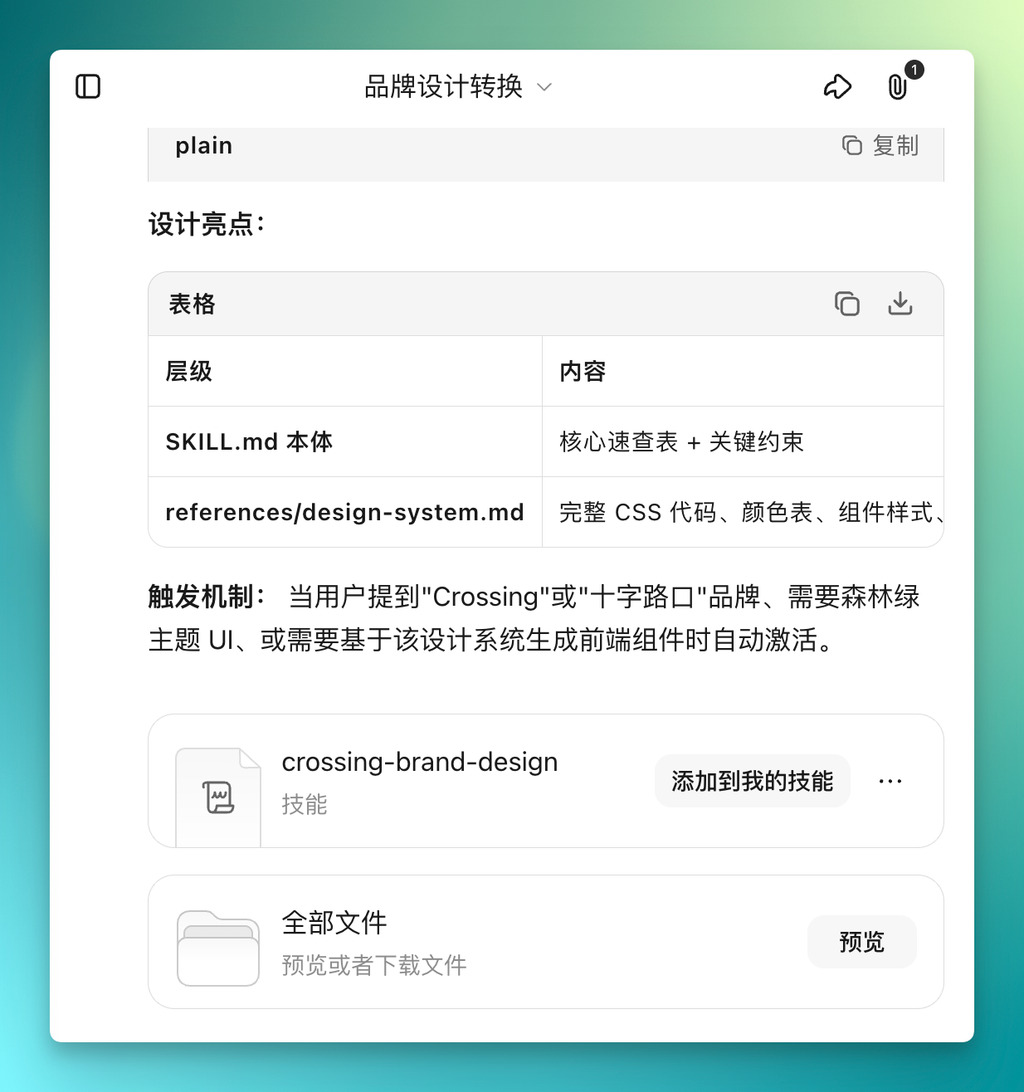
This Skill comes packaged with visual elements, copy frameworks, and page modules extracted from the document. On future calls, the Agent follows this specification first instead of starting from zero.
We had an iShout brand guidelines document on hand, covering visual style, product positioning, copy tone, and page structure. I gave it to Moonshot AI "Agent" — first to distill the Skill, then use that Skill to batch-generate iShout product pages.
After upload, the Agent began parsing, pulling out visual style, color specifications, copy tone, product selling point structure — packaging them into a standalone Skill. During parsing, you could see it extracting primary color values, font hierarchies, whitespace ratios, and recurring tone words and structural patterns from the copy.
One point worth noting: the Agent isn't just reading text — it incorporates visual information like layout structure, image style, and color coordination from the document into its reasoning.
With the Skill ready, I gave it a task:
Help me build a complete iShout website with login system and database, using the product images I provided.
Once running, here are a few details I logged.
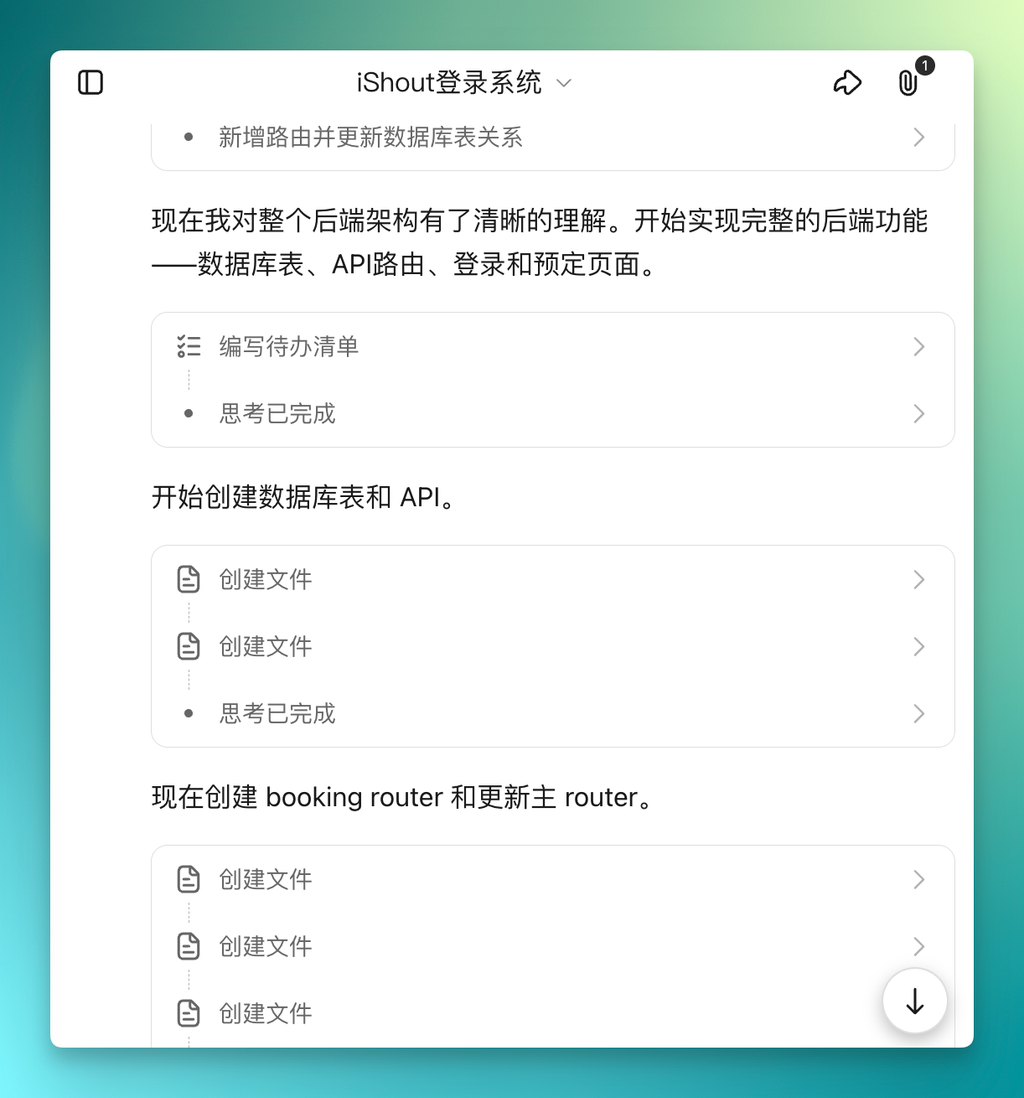
First, in the workflow, Moonshot AI "Agent" starts with a Plan phase, achieving comprehensive understanding of the entire backend architecture and implementing full backend functionality including database tables, API routes, login and reservation pages:
Afterward, Moonshot AI "Agent" built out the complete iShout website. The Agent proactively used the asset images I uploaded. It first cut out the product images, then embedded them into the landing page. Product details like "iShout is an AI voice engine" and various simulated parameters were filled in following the selling point structure from the brand document.
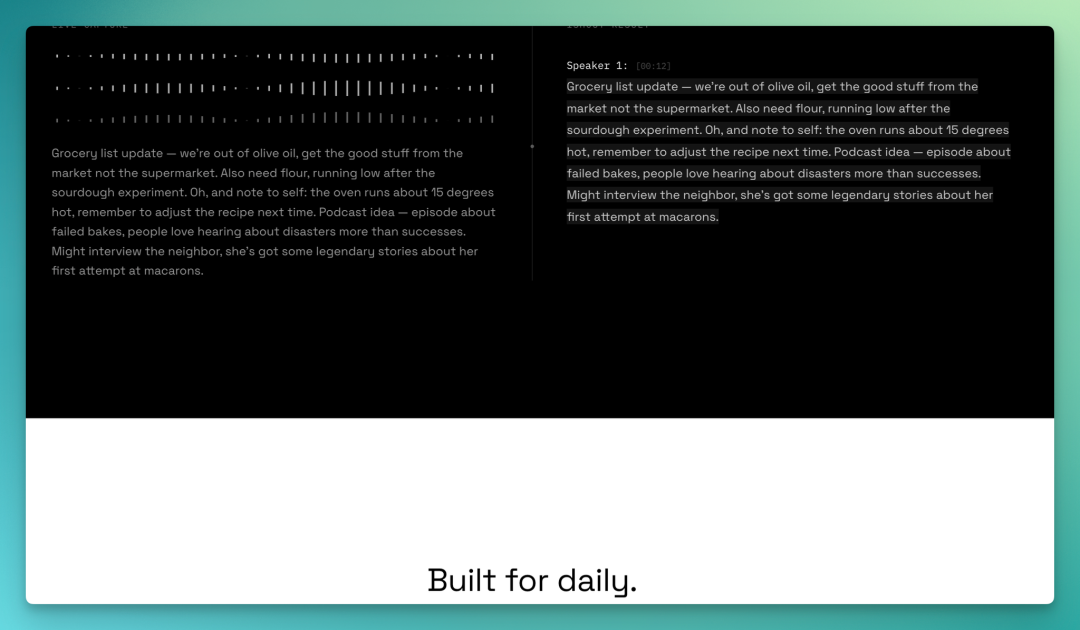
The background features dynamic sound wave effects matching iShout's branding:
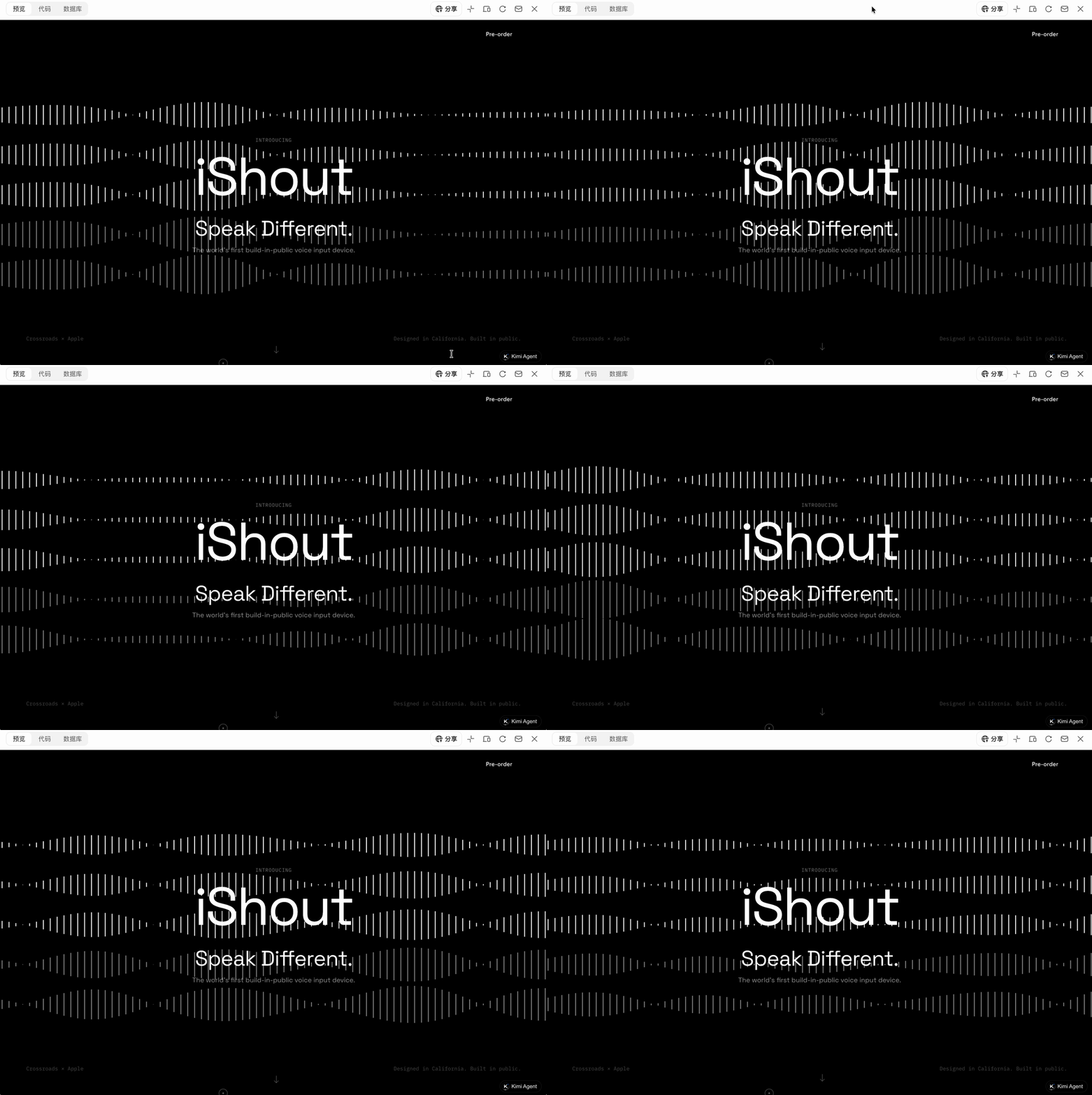
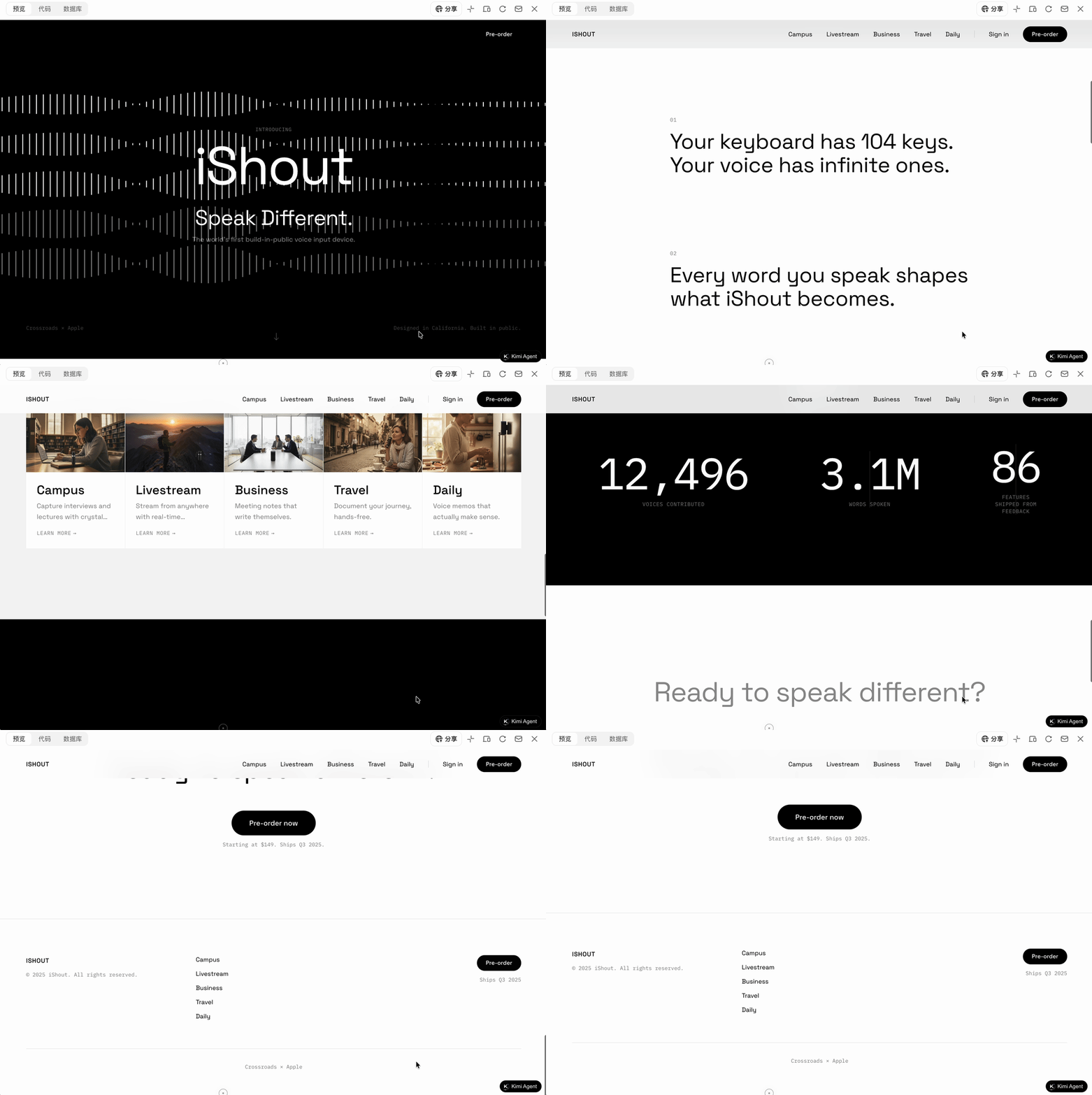
The homepage includes basically all the modules a complete landing page should have, with the entire page largely scroll-driven:
Additionally, the 5 scenarios are 5 independent landing pages, not just copy swaps. Campus, outdoor, business, travel, and daily use — each has separate asset images, copy emphasis, and visual atmosphere. The overall sound wave effects are quite polished:
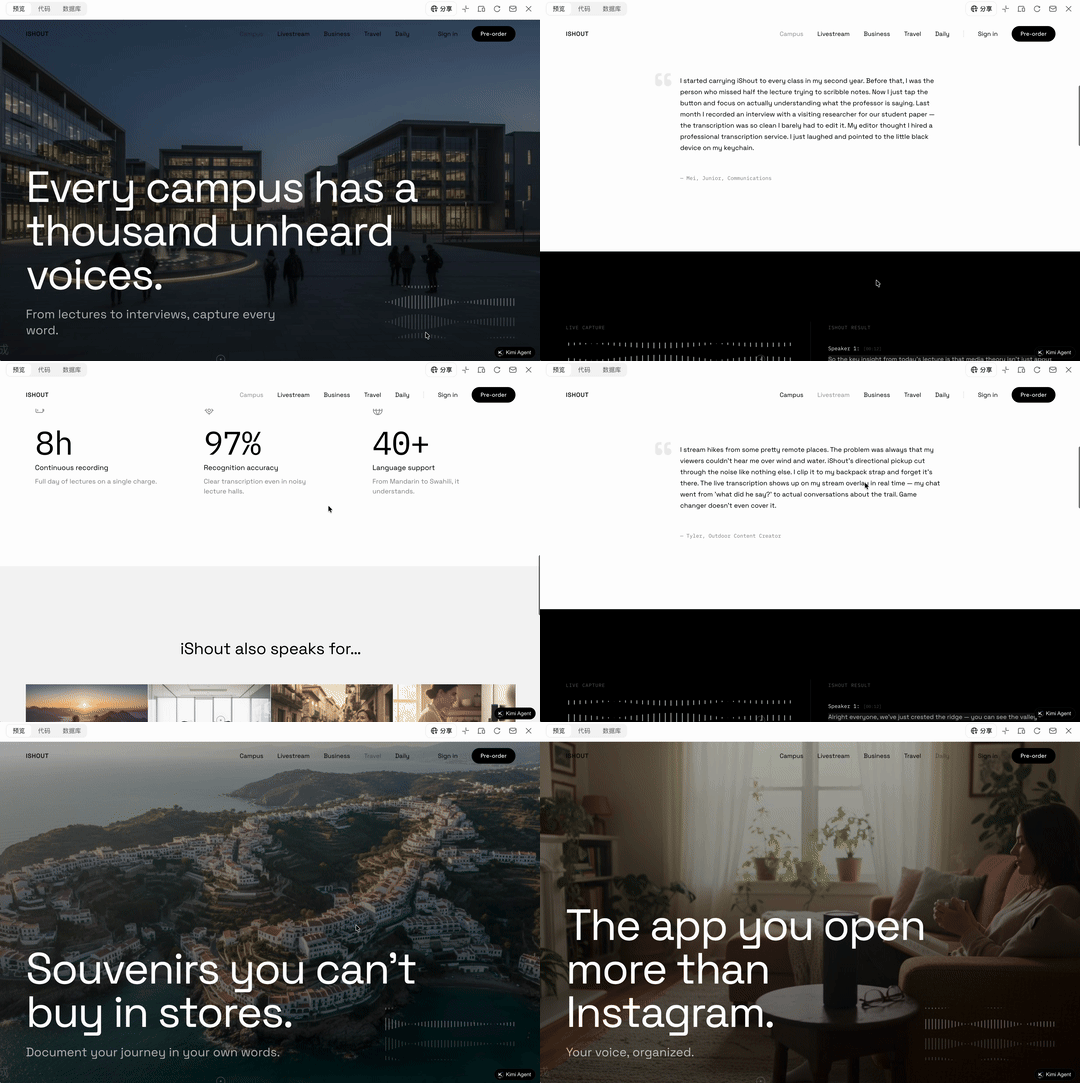
For example, the campus interview page uses classroom and student interview scene images, with copy focused on recording distance and classroom noise reduction. The outdoor livestream page switches to portable usage visuals in windy environments, emphasizing battery life and noise resistance. The business meeting page shows a conference table with multi-person recording, highlighting clarity and directionality.
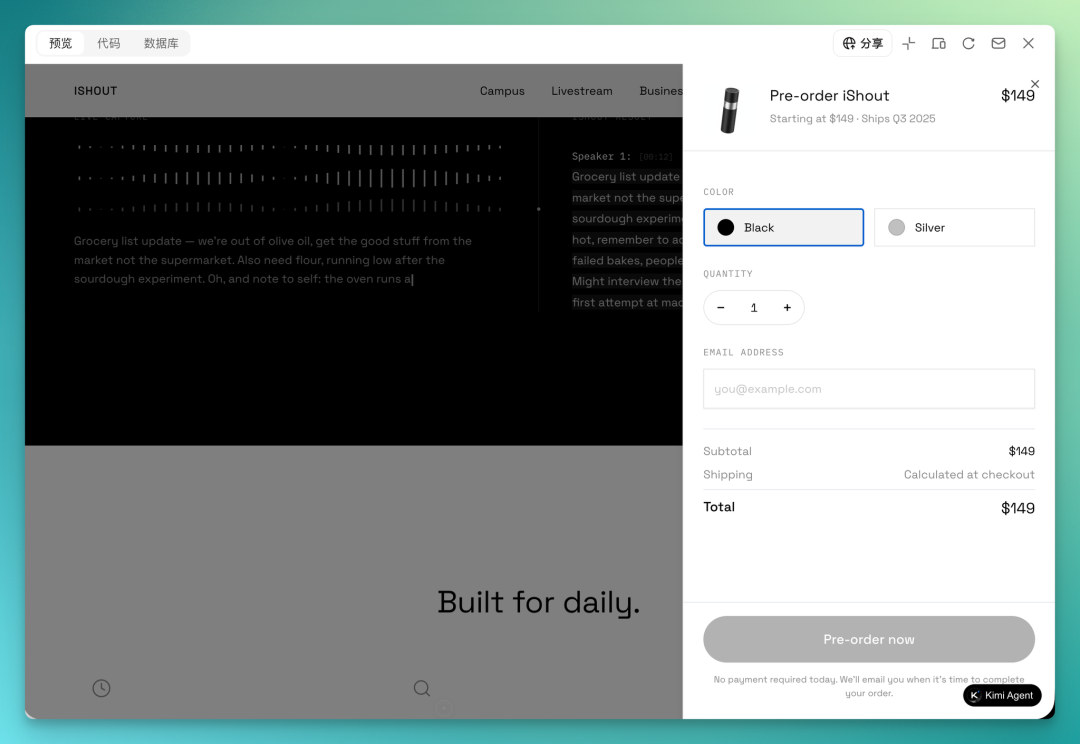
From the start, I had Moonshot AI "Agent" build me a backend database. On the frontend, this corresponds to reservation, contact us, and login entry points.
Taking "Reserve" as an example, I set up a customizable usage scenario. Users fill in basic info like name and email, then submit directly. The entire flow is fairly standard without overly complex design.
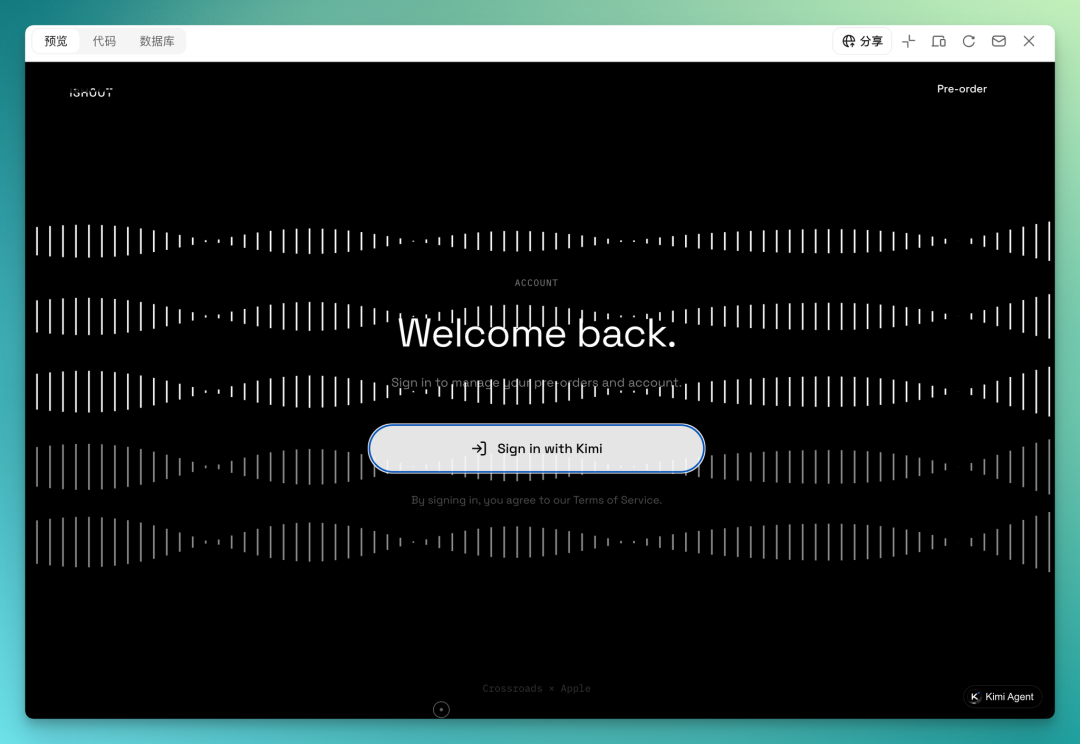
The login section follows a similar approach. You can now quickly build a login page with Moonshot AI "Agent" without writing authentication logic from scratch.
And it supports direct login with your Moonshot AI account:
If issues arise in between, I also had it build a simulated backend ticket system. The entry point is under "Contact Us" — users fill out a form to submit.
After submission, a ticket is automatically generated with data going directly to the backend. The backend team can then follow up on tickets and reach out to users.
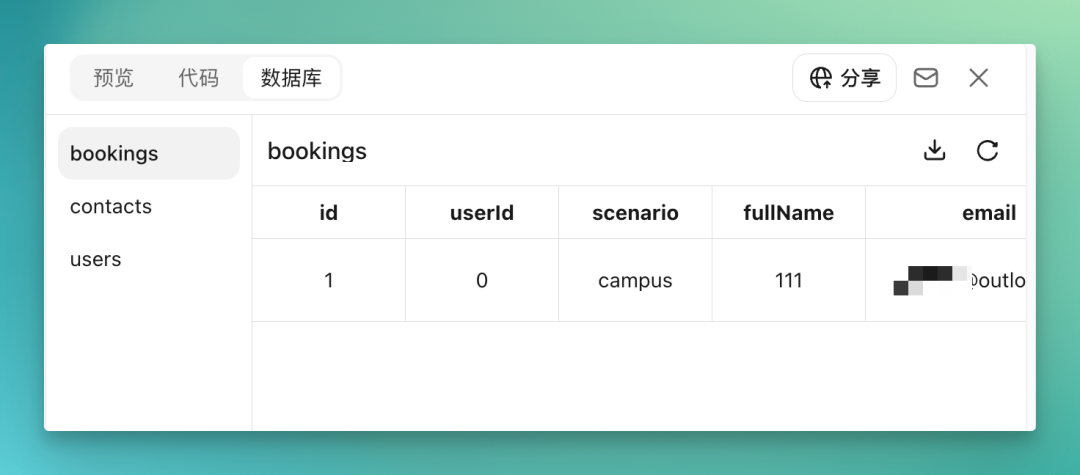
Data from these three sections all writes to the database uniformly. For instance, I actually filled in one reservation entry, and the data went straight to the database after submission:
Finally, code and source files for all pages can be directly packaged and downloaded:
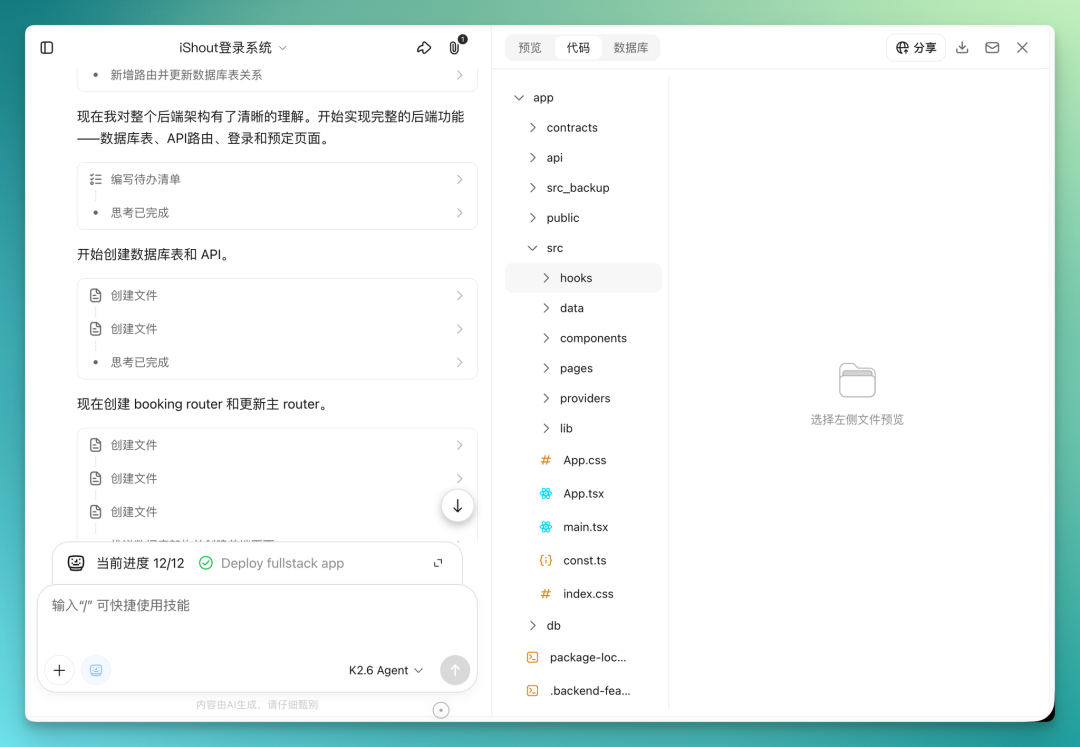
After running through the entire flow, brand tone, style, and selling point structure — the "tacit knowledge" that previously required repeated verbal transmission — became a reusable tool, and could very quickly be turned into a simple website with a backend database.
For content teams, this means being able to batch-produce customized content that adheres to brand guidelines, without having to re-teach the Agent what your brand looks like each time.
Overall, Moonshot AI "Agent's" demonstrated capabilities in this upgrade can be summarized as three things.
【1】First: Moonshot AI "Agent" is more adept with Skills now, able to directly create Skills that encapsulate your corporate brand, tone, visual guidelines, copy structure, and selling point framework.
【2】Research capabilities now connect to extensive professional data sources.
【3】Multi-Agent parallelism combined with multi-format synchronous delivery — it can spin up over a dozen sub-Agents to execute tasks in parallel, generating multiple content formats from a single input.
Of course, all these capabilities are still iterating rapidly.
When Agents run complex tasks, intermediate execution details still require human oversight, and final output quality depends on how precisely the task is defined.
Every upgrade to the foundation model pushes this "waterline" higher.
🚥
One fairly certain thing over the next one to two years is that foundation models' office capabilities will continue climbing, and Agent products, as the upper-layer outlet for this capability, the degree to which they can "actually get work done" will determine how deeply they penetrate everyday office scenarios.
But the more interesting question is: when every team has this toolkit, what actually creates distance between them?
Crossing is looking for freelance writers to cover AI product and model reviews.
If you've written articles like: "Hands-on with PixVerse C1", "Hands-on with LibTV", please contact zeo0811@gmail.com. Your email should include: ① personal introduction, ② AI review articles you've written.
We offer competitive compensation. Looking forward to observing and documenting the AI era together with you 🎪