Another Kind of Business in AI Social

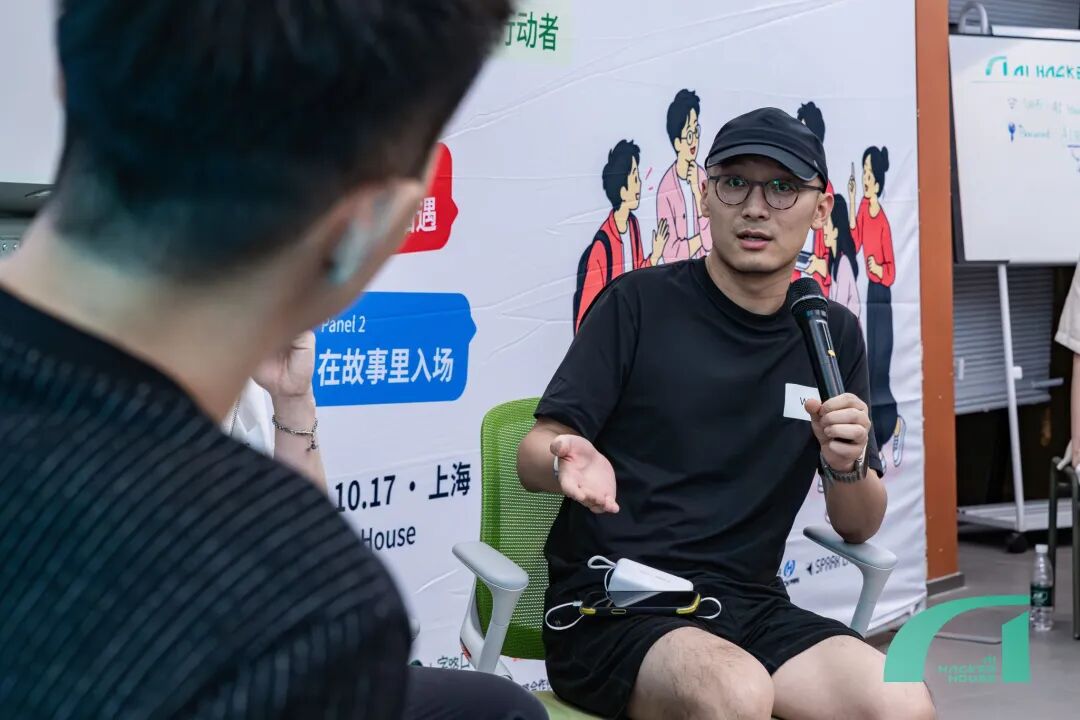
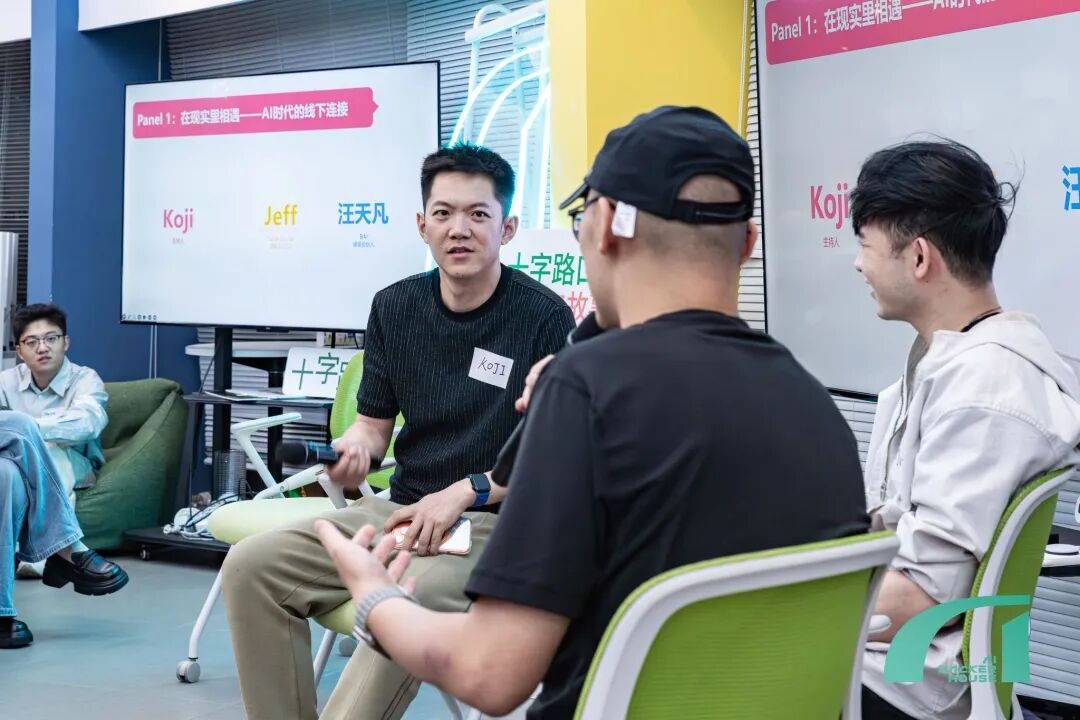
Last Saturday, October 17, at the After Party of the Crossing × Table for Six co-branded event, we invited Table for Six founder Jeff and investor Wang Tianfan Will to a roundtable discussion at AI Hacker House.
Table for Six[1] is an offline social product that uses AI to facilitate real-life meetups. After users sign up, the platform matches six strangers to the same table at a bar or other offline venue based on each person's background, interests, and social preferences, providing conversation cards to help break the ice. AI handles the matching, interactive content, and feedback optimization behind the scenes, while users pay for the authentic experience of meeting new people.

Roundtable guests:
- Jeff|Founder / CEO, Table for Six[1]
- Wang Tianfan Will|Senior Partner, BAI Capital[2]
Roundtable moderator:
- Koji | Founder, Crossing; Investment Partner, ZhenFund
The following is adapted from the live conversation[3], edited for length. Some longer responses have been broken into Q&A format with transitional questions added; the speakers' original views are preserved.
Making It Comfortable for Introverts Too
👦🏻 Koji
Will, why did you pay attention to and invest in an offline social product like Table for Six?
👨🏻💻 Will
If you recall, Koji and I did a podcast episode before. When talking about AI applications, I mentioned Table for Six as a little Easter egg (laughs).
We've invested in quite a few online social and community products before — Douban, Tantan[4], Keep, and others — and have looked at social needs across mainstream and subcultures. But in the AI era, online communication, social networking, communities, and media are already saturated. Offline, on the other hand, has opened up.
On another note, everyone is looking at models and frontier tech startups. But if you're a VC firm investing in consumer-facing applications, this stage is actually quite awkward. There aren't that many independent AI applications with real user scale and sustained growth.
Then a friend introduced me to Table for Six, saying they were doing offline social. I was curious at first, and excited after hearing more: here was a team actually combining AI and social in a somewhat counterintuitive way, but users loved it, were willing to pay, and kept coming back. Growth was also very fast.
👦🏻 Koji
What specific detail made you feel it was different from previous social products?
👨🏻💻 Will
Apparently, a large portion of participants are "i-girls" — introverted female users.
When we invested in online social before, attracting female users was considered very difficult. Yet this product somehow helped many introverted women find a place where they could socialize comfortably. That's very unusual.
Meeting the two founders, I found them extremely hands-on with user experience, constantly focused on experiential innovation, and very emphatic about mechanism design and user protection. It reminded me of investing in Mobile Internet entrepreneurs over a decade ago — the focus, the obsession, the word-of-mouth, the speed.
What I saw was something very straightforward: real users liked it and paid for it. At the time, Table for Six had only launched in Beijing and Shanghai, but you could see the potential to expand to other cities, and not necessarily just in China.
And it was just two people at the time. We'd talked so much about "one-person companies" — I hadn't found an OPC yet, but found a two-person company first. That's good too.
Meeting user needs, growing, using AI without being held hostage by it, a young and efficient team. Those were our reasons for investing.
The Most Successful Moment Is When You Toss the Cards Aside
👦🏻 Koji
Table for Six barely markets itself as an AI product. But I know AI plays an important role in your work. What exactly does it do?
🧑🏻🚀 Jeff
From day one, we asked ourselves: our selling point isn't how impressive our AI is, but how to make encounters between people better, to help you build a stronger connection with the person sitting across from you.
We are an AI company — we just hide a lot of the AI work in the back, and avoid mentioning it in marketing when possible.
It mainly does three things: help you meet people you actually want to meet; make conversation flow more naturally after you meet; and learn more about you through feedback to improve the next experience.
👦🏻 Koji
Let's start with matching. What kinds of people does the AI put at the same table?
🧑🏻🚀 Jeff
A lot of past matching relied on shared tags. You're an AI investor, so you get matched with five other AI investors. Then everyone sits down and realizes: we've all met each other before.
But in non-professional, non-purpose-driven scenarios, people don't necessarily want to meet others just like themselves.
For example, I work in consulting, surrounded by consultants, always talking about which hotel I stayed at last week, what I ate, what time I finished work. I might actually want to meet a stand-up comedian, someone who trained in sports from childhood, or someone who quit their job and hiked in the United States for five months.
So who you are, who you want to meet, and what you want to talk about are three different dimensions. They're not the same thing.
We want to use AI to understand these distinctions from limited information, then match accordingly. Today's special co-branded event has a fairly similar crowd; if you get a chance to attend a regular session, you might meet a very different group of people.
👦🏻 Koji
Once people are matched, will they definitely hit it off?
🧑🏻🚀 Jeff
Not necessarily. Even two people who could have become great friends might miss their chance because the situation isn't right.
Maybe it was raining that day, one person just got off a stressful phone call, both are somewhat introverted, and neither knows how to start.
We create interactive content to set a floor for conversation. What you see now are conversation cards; there will be other formats later. They help you break the ice and get the dialogue started.
👦🏻 Koji
What if users don't use the conversation cards you prepared?
🧑🏻🚀 Jeff
That's actually what I most hope to see. Some friends tell me: "We didn't really use the cards, we just talked really well on our own." I feel like that was a success.
The most successful moment for a box of conversation cards is when you toss them aside. It means you don't need them anymore to keep talking.
Finally, there's feedback. We continue to learn who people clicked with, whether they stayed in touch, whether they had fun — then use that information to improve matching and content.

From One Table to Sunrise at West Lake
👦🏻 Koji
Let's talk about something lighter. Since starting Table for Six, what stories have surprised you?
🧑🏻🚀 Jeff
Let me start with a feeling. I used to work at McKinsey & Company, doing many projects that seemed to have huge impact — billions in the model. But sometimes that impact felt distant from myself.
This is different. Every Wednesday evening, I ride my scooter to several bars, ask people at the events: "I'm the founder of Table for Six, could I sit down and hear your feedback?"
Seeing people who might never have met otherwise actually get to know each other and become friends — that gives me a lot of energy.
One story happened when we first launched in Hangzhou. I went to check it out that day. One table had five young people in their early twenties, plus a friend who had just arrived from Taiwan.
It was his first time in mainland China. He had just gotten off the plane and reserved his first evening for Table for Six. He discovered the event on Xiaohongshu and didn't know a single person in Hangzhou.
Without this event, he probably would have just walked around West Lake, followed the tourist route. But that day, everyone talked from 8:30 p.m. until 4 a.m.
The Hangzhou friends were curious about Taiwan, and he was curious about local life in Hangzhou. Around 1 a.m., someone started reading fortunes for everyone, going through them one by one, and it was 4 a.m. before they knew it.
Later, the Hangzhou people asked him: "Have you ever seen sunrise at West Lake?" So they all went to watch the sunrise together.
👦🏻 Koji
For someone who just arrived in an unfamiliar city, that's very different from visiting a tourist spot.
🧑🏻🚀 Jeff
I was quite moved. It created a possibility that wouldn't have existed before.
I hope that in the future, when people travel to a city — whether for business or vacation — beyond tourist attractions, they can more easily connect with local people and understand what their daily lives are really like.
In the past, you might only chat with your driver, or you'd have to be extroverted enough to walk into a bar and strike up conversations, risking rejection. In the future, maybe attending an event like this can provide a more natural entry point.
👦🏻 Koji
You mentioned you had two stories prepared. What's the other one?
🧑🏻🚀 Jeff
Later, during user interviews, we met a group of friends. They had a group chat of about twelve or thirteen people, all of whom had attended Table for Six, but hadn't met at the same table.
Maybe two or three from this table became friends, another two or three from that table, then connected with each other. Later they started singing and hiking together every week, and a new social circle spun into motion. I thought that was pretty cool too.
👦🏻 Koji
Then let's look ahead a bit: How else might AI change social life?
👨🏻💻 Will
Why are we back on AI (laughs)? I still wanted to tell two stories.
My being a user myself doesn't mean much. What matters is how many people around me have given surprisingly positive feedback.
One colleague attended a Beijing session and told me afterward that for less than a hundred yuan, he met people he probably wouldn't encounter in his usual social circles. He felt the investment was incredibly worthwhile and quickly supported the investment decision.
There's also a CEO working on AI entertainment innovation. When we were chatting with the founder about social, we recommended Table for Six. Their CTO had apparently just gone through a rough patch in his relationship, then attended an event and met the person who would become the one in his life.
Afterward, the CEO kept telling me how worthwhile this was: once the CTO found his soulmate, he started working furiously every day, output improved, and the whole team's project timeline accelerated.
This isn't actually an outcome Table for Six promises, but perhaps it captures the essence of gaining without seeking.
👦🏻 Koji
Hahaha, it's like this became part of your post-investment services? Helping entrepreneurs solve their personal emotional problems first.
👨🏻💻 Will
But there are still too many stories of "seeking" in these examples. What I like most about their slogan is actually six characters: "Seek nothing, gain something."
This was also an important line I wrote in my investment memo. It was the first time I saw such a pure value proposition: not approaching with a specific goal in mind, but ending up with something anyway. This is what makes for a truly mass-market, all-ages need.
Today's Table for Six × Crossing co-branded event is of course great, but AI practitioners are sometimes too "seeking," and may end up with nothing.
So I encourage everyone to try a regular session and experience the feeling of purely meeting new friends. I think that might be the essence of this model.
Making AI a Shared Experience Engine
👦🏻 Koji
Haha, then let's return to that "seeking" question just now: How will AI change social interaction in the future? And what new entrepreneurial opportunities will it bring?
👨🏻💻 Will
Our conviction in offline entertainment is growing stronger. Actually, offline isn't the root — what I'm increasingly confident in is the most authentic encounters between people. Though this is an era of infinite virtualization, we invest in scarcity, not oversupply.
Many people ask, do you still dare to invest in anything consumption-related? Everyone thinks consumption is depressing. I think one reason is that the supply hasn't changed. When something truly interesting and new appears, people will naturally be willing to spend.
So when everyone thinks there's no opportunity in consumption, and a new model emerges with good growth that people want to try, we actually find it worth looking at.
Of course, if we're just talking about how AI changes social, I've observed that user engagement with chat companion products is indeed increasing. As interaction methods become richer, some people spend a lot of time and are willing to pay.
But I still feel that when you face screens for so many hours every day, you might still want to return offline and meet people you genuinely want to know.
👦🏻 Koji
Besides AI chat companions, what other fresh attempts have caught your attention?
👨🏻💻 Will
Recently I've seen some Agent projects that envision not a fully service-oriented assistant, but an independent entity in an equal relationship with you.
You raise it, but it doesn't necessarily obey you or do work for you. It might socialize with other Agents, socialize with people, even try to go out and earn money to support itself.
These are some new themes we're seeing. I think they might change some social relationships. But today you're forcing me to talk about AI (laughs) — I myself still value offline more.
👦🏻 Koji
What about you, Jeff? What do you think?
🧑🏻🚀 Jeff
On one side, there's online AI companions, AI companionship; on the other, genuine offline connection. I think both have value.
But I'm someone who loves to have fun and meet new people. We partners discussed before: if AI could take over more work in the future, giving everyone more free time, what would we want to do?
Our answer was: go out, breathe fresh air, engage with the bigger world, meet more friends. So we chose this path: how to make offline meetings and engaging with the world better.
Then comes the question: what counts as social success?
Is it successfully recommending someone you might want to know, adding them on WeChat, exchanging a few messages? Or is it actually meeting after chatting, even meeting repeatedly, that counts as success?
👦🏻 Koji
So adding someone on WeChat is just the beginning. You want to push the relationship further?
🧑🏻🚀 Jeff
Yes. We've been pushing ourselves to think: can we make relationships continue?
What does relationship continuation require? Usually, it needs something worth experiencing together. People who have shared experiences together are more likely to become better friends.
So the metric we want to pursue isn't how many WeChat connections are established, but how many authentic experiences people have shared together.
Future AI social might not just be a matching engine, a recommendation engine. Internally, we call it a "shared experience engine."
👦🏻 Koji
What would this "shared experience engine" specifically do?
🧑🏻🚀 Jeff
It could plan what you do together in the future, what you talk about, how to create interesting shared experiences.
For example, it discovers that two people both like metaphysics. Previously, an app might just say, you both have the "metaphysics" tag, you should meet.
We want to go one step further: these people like metaphysics and have other common topics, so can we arrange for them to meet at the right time, in the right place — say, a metaphysics-themed bar? Let them actually meet, have topics to discuss, and then continue generating new activities and exchanges afterward.
👦🏻 Koji
Is metaphysics particularly effective at extending user session time, from your observation?
👨🏻💻 Will
Yes, one reading and it's 4 a.m. (laughs).
🧑🏻🚀 Jeff
Of course there are many other themes. Returning to why we don't emphasize AI — I've also been thinking: how do people actually perceive AI's value?
The common feeling now is: I used a tool today, it's so useful, so human-like, so good at responding.
But there's another possibility: you have no idea what AI did behind the scenes, you just feel like you had a really good day.
Lying in bed at night, thinking about the good friends you met today, the interesting topics you discussed. Maybe you won't see them again, but today was genuinely good.
Gradually, you realize that so many coincidences, so many natural things that happened, might have had a little help from AI behind the scenes. I think that's also a very subtle way of perceiving value.
👦🏻 Koji
Like how we no longer say "because of Mobile Internet, I can order food delivery" — we just say it's a food delivery service.
Does relationship-building need higher efficiency? 👦🏻 Koji
I'm a bit surprised. When people talk about how AI helps social, they usually think about improving efficiency in job-hunting, or efficiency in finding a partner. Neither of you mentioned these. Why not?
👨🏻💻 Will
There are attempts in this direction.
Stranger social products have proposed some ideas: if two people chat well in a Tantan-like product, AI could separately ask each whether they're willing to exchange WeChat.
If both tell the AI yes, it can remind one of them that now's the time to ask for the other's WeChat.
There are also some serious or even marriage-oriented social products in the AI era. I understand one approach is to have people write very comprehensive profiles, including lots of content that can't be captured in a few tags; after matching, the emphasis is on focused, dedicated getting-to-know-you.
So in dating and stranger matching, people have been trying these things.
👦🏻 Koji
Then why didn't you lead with this seemingly obvious direction?
👨🏻💻 Will
We're still identifying what is truly disruptive.
Actually, I recently heard about an AI people-search team called Articuler[5] that found a more specific scenario: partnering with large event organizers.
For example, at a conference with many registrants, people have filled in some information. AI can help you identify which attendees are most worth talking to at this event, then help match people up.
It can also help organizers find people who might be willing to buy tickets, by understanding information on LinkedIn to identify potential attendees.
This is also matching, but it found a specific use case and business model.
👦🏻 Koji
Jeff, what does the word "efficiency" mean to you?
🧑🏻🚀 Jeff
I think efficiency in social contexts is a word with both benefits and drawbacks.
The benefit is, you can quickly meet fifteen or twenty people. The higher the efficiency, the more people you meet. But the cost might be that your exchange with each person becomes shallower.
Especially when you're always focused on efficiency, switching to a new person each time, you're also affecting the other person. In switching people, you're also giving up the possibility of that relationship.
So Table for Six doesn't plan to do speed-dating either: finish with these six, immediately switch tables, meet another batch.
From our philosophy, compared to matching efficiency, we value genuine connection more.
👦🏻 Koji
Then would you do higher-threshold, even asset-verified versions of Table for Six (laughs)? Because there seem to be two directions for expansion: one is making matching faster, the other is raising the bar.
🧑🏻🚀 Jeff
That's a dangerous question (laughs).
We might eventually use different dimensions to bring certain people together, and what you mentioned could be one of those dimensions.
But that's also why, early on, we don't want to do too much segmentation. Because when you slice the population very finely, the pool of available matches in each category becomes very small, and match quality actually drops rapidly.
👨🏻💻 Will
Don't forget: "Seek nothing, gain something" (laughs).
References
[1] Table for Six: https://apps.apple.com/cn/app/table-for-six-t46/id6759137014
[2] BAI Capital: https://www.bai-cap.com/team.html
[3] Live conversation: https://zhenfund.feishu.cn/minutes/obcnoq91y32q33qwz3t69i24
[4] Tantan: https://tantanapp.com/mob/zh_sy.html
[5] Articuler: https://www.articuler.ai/events/
Join membership group  Comment to win prizes