Bridge Speaks for the First Time: AI Is Killing Software, and We Want to Be the Gateway to the Agent Era

We want to make software that eliminates software.
We're building software that kills software.

👦🏻 Author: Miss Yi
🥷 Editor: Koji
🧑🎨 Layout: Zeooo

Things are getting interesting. A post-95 astrophysicist is making humanity "hands off the keyboard" — and he named his company Afk, as in Away From Keyboard.
He's Enther, born in 1997. He walked out of the Max Planck Institute for Gravitational Physics, where he could have chased gravitational waves, but instead plunged into the AI battlefield in Palo Alto. His Afk.Inc has only 9 people, yet runs 900 agents. Its first product, Bridge, bills itself as "everything agentic AI" — an "Agent secretariat" that can work anywhere and do anything for you.
His advice to office workers boils down to one line: You go dance, let AI do the work. It sounds like yet another AI story swallowed by hype. But Enther isn't a bandwagon jumper. Before this, he built Affine to 7 million users and Product Hunt's #4 product of the year, then killed it himself at the peak. His read: "AI is eliminating software. If you're destined to be disrupted, better do it yourself."
So Bridge was born (domain: bridge.surf). It lets you "clone any AI app with one sentence."
In April, Bridge launched its first closed beta with 200 users. During the beta, unexpected use cases flooded in — from semiconductor engineers to designers, all using it to complete work they "couldn't understand themselves." On May 13, it will officially launch.
In this conversation with Crossing, Enther discussed how 9 people sustain an ambition to "eliminate software," how Bridge enables "one-sentence cloning of any AI app," and his regret from two months ago when being too far ahead let OpenClaw steal the spotlight... While others still debate whether agents are the next gimmick, Bridge is already having AI cancel your flights, write code, and run your weekly meetings. It feels like magic.
This is Bridge's first public appearance. Below is the full transcript of Crossing's conversation with Enther, founder of Afk.
Rapid Fire
Let's start with some quick questions to get everyone up to speed.
🚥 Crossing
Age?
🧑🏻💻 Enther
Born in 1997.
🚥 Crossing
Alma mater?
🧑🏻💻 Enther
Undergrad onward: HKUST / University of Glasgow / Max Planck Institute for Gravitational Physics. Astrophysics background.
🚥 Crossing
MBTI and zodiac?
🧑🏻💻 Enther
INFJ, Pisces.
🚥 Crossing
One sentence on your current company and product?
🧑🏻💻 Enther
Company: Afk.Inc, a Palo Alto-based company building self-evolving thinking machines. Making humanity hands-off-the-keyboard, letting AI browse the web for people.
Product: Bridge.surf, an everything agentic AI accessible anywhere, anytime, to get any job done.
🚥 Crossing
Funding status?
🧑🏻💻 Enther
$4M pre-seed, from prominent North American angels.
🚥 Crossing
Revenue and profit?
🧑🏻💻 Enther
Not yet publicly launched.
🚥 Crossing
Team size?
🧑🏻💻 Enther
9 people.
🚥 Crossing
What were you doing before founding?
🧑🏻💻 Enther
Astrophysics.
Clone Everything With One Sentence
🚥 Crossing
If you're sitting across from an office worker who's interested in AI but not a technical expert, why should they drop their current software and try Bridge?
🧑🏻💻 Enther
I'd tell them: the best AI today is already like a complete person — any tool a human can use, it can use too.
Real office workers have plenty of AI anxiety, but most haven't used anything beyond Doubao or GPT. I'd tell them, download Bridge, don't worry about whether it's a browser, cloud-based, local, or what features it has.
Tell it what you want to do, and it gets it done.
Even if you see a video saying some other AI can do something, and want to try it — tell Bridge, and it can clone that for you too.
🚥 Crossing
Sounds fascinating. What exactly is Bridge? How do you define it?
🧑🏻💻 Enther
Our slogan is "Bridge intent and done."
Bridge, an Everything App. You can hand any workflow over to an agent. You can go hands-off-the-keyboard, let AI work for you, just tell it what you want.
Today, engineers can go drink tea or dance while AI writes code. We want that to happen in more industries.
🚥 Crossing
Which design in the entire product are you most satisfied with?
🧑🏻💻 Enther
The feature I'm most satisfied with is called Books — you'll see it when the product officially launches.
What it enables: Bridge is installed on my computer's client, and as long as the computer is on, I can log in from anywhere via web and have it take over my computer. Books achieves: clone any AI app with one sentence.
For example, make a dynamically generated narrative game, or automatically turn novels you've read into comics, then one-click deploy it as a website. Video models, APIs, tokens, environments — you configure nothing.
Our team has an internal group called "demos," where every day we watch what Bridge can pull off. Runway said they could let AI have video meetings with people; we threw the link at Bridge, and it one-shot cloned one.
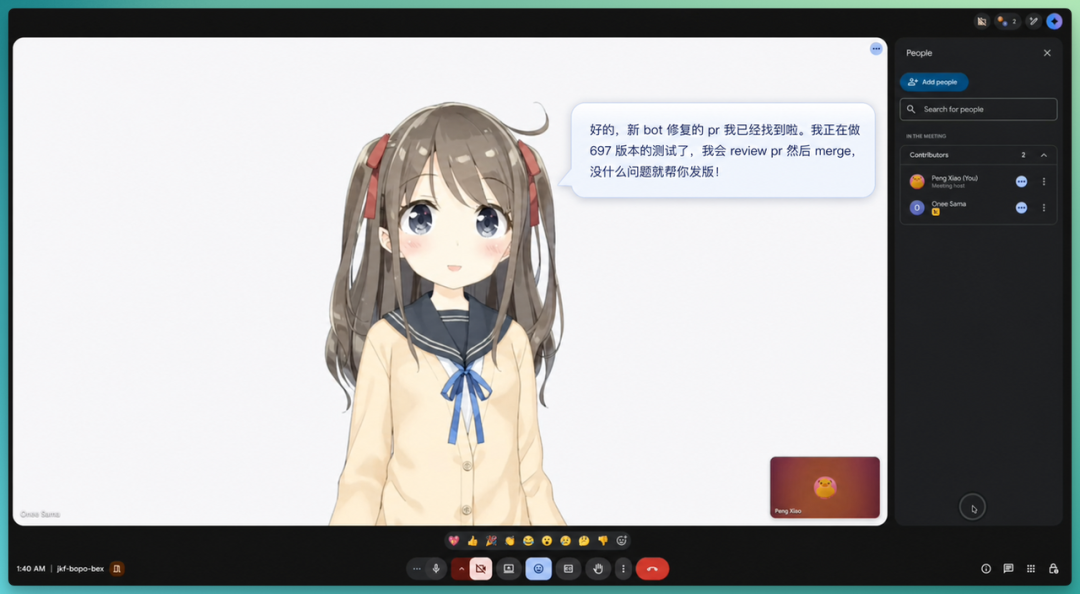
We want to change one thing: going forward, you won't need to find tools or software anymore. One sentence, say what you want, and Bridge builds it for you, ready to use out of the box, and distributable.
You can use it yourself, or send the link to someone else — they open it and it works, or even turn it into a multiplayer real-time game.
🚥 Crossing
What other design makes you proud?
🧑🏻💻 Enther
Notch — a Dynamic Island for macOS.

When agents are running multiple tasks concurrently, no matter which screen you switch to, there's a progress bar at the top telling you what it's doing at each step. You can collapse or expand it anytime with a hotkey, or summon it anywhere to open a new task.
It manages to stay out of your way while letting you check in whenever you want. And the animation — we hand-tweaked it frame by frame.
🚥 Crossing
Any other highlight designs?
🧑🏻💻 Enther
Minimal input + recommended actions. We hate those complex control panels crammed with buttons. Bridge defaults to the simplest possible input box, with complex features recommended in real time.
We built two modes of computer use: foreground and background. When an agent takes over your computer operations, you can choose background mode: it opens a bunch of applications in the background and gets the work done where you can't see it. Of course, you can also choose foreground mode, where you can watch how the AI works, give it pointers, or even have the AI teach you how to use some complex software. There's also a story about a feature we killed.
I spent two all-nighters writing a bargaining bot, wanting to make the agent more personable and fun. But in beta testing, users had already seen three cool animations and couldn't wait to use the product — this wasn't the right moment to pop up a bot, so we cut it.
A real shame. I'll release it when the timing's right.
🚥 Crossing
Bridge claims "use anywhere, take over any device" — what does this actually mean for work and daily life?
🧑🏻💻 Enther
Honestly, our vision for it hasn't changed: a super secretary.
You send it voice messages, messages, pull it into meetings to work together, and it quietly becomes your doppelgänger — eventually, one look and it gets the job done.
It's just that today, Bridge has actually made it real.
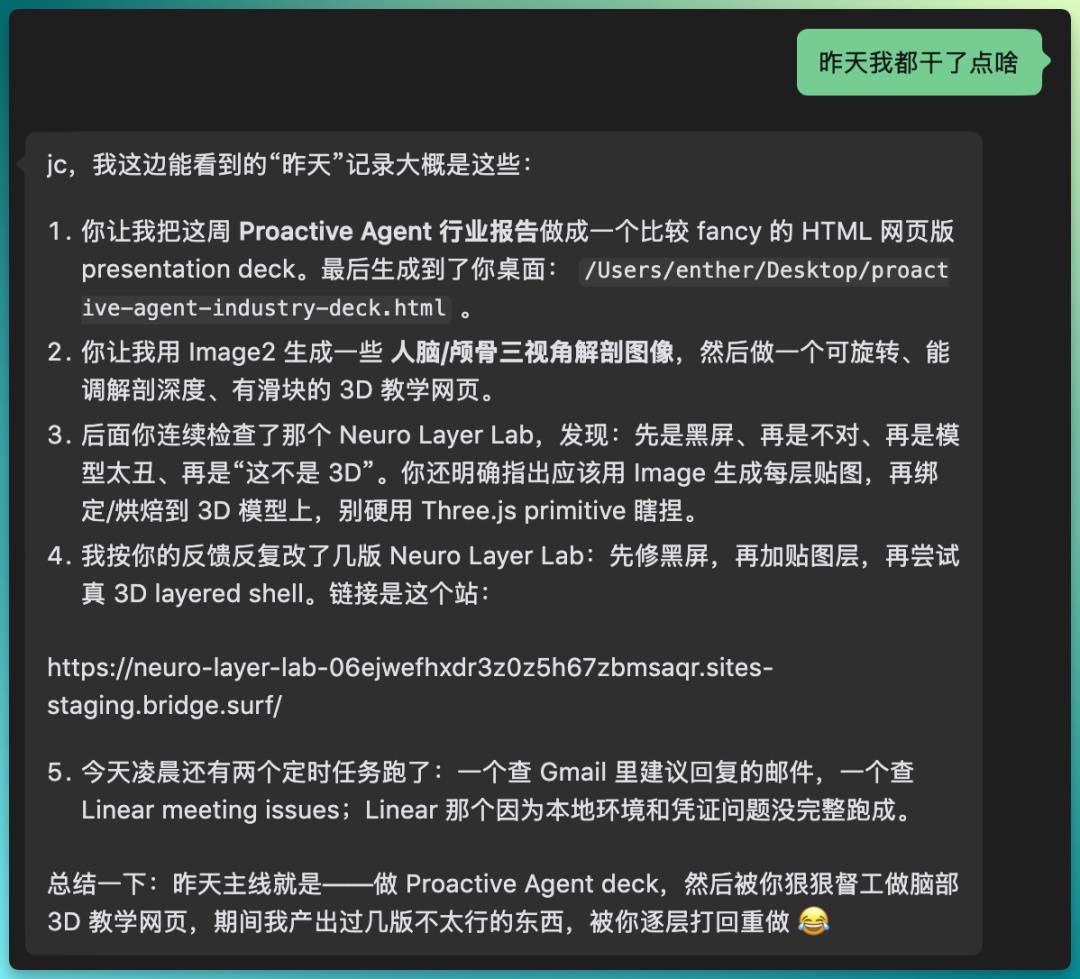
You can access it via client, web, IM, or email. You can even have a meeting with it like you would with a person. When the brainstorm ends, it gets to work.
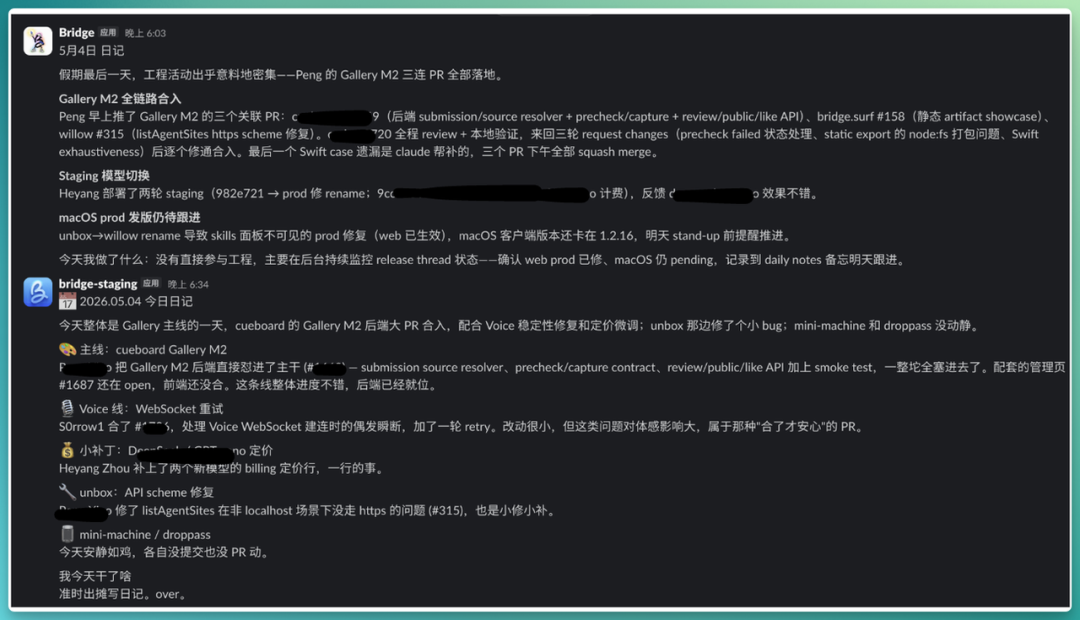
Now, it runs daily check-ins on everyone's task progress across the whole team, posting summaries to Slack. It watches what I do day-to-day too. It doesn't just work for you — it worries for you.
Everyone's gone vibe working now. You're on vacation, but the AI is working in your place.
Like iOS Killed Symbian, AI Is Killing Software
🚥 Crossing
You'd already hit 7 million users with Affine, ranked fourth on Product Hunt's annual list. Why kill it and start Bridge from scratch?
🧑🏻💻 Enther
Affine gave me deep know-how.
It's a collaboration tool, and it has the most stars of any AI-native collaborative knowledge base. We spent a long time exploring how humans should collaborate with humans, and humans with AI.
But I gradually saw something clearly: AI itself will reinvent and redefine software. Like iOS killed Symbian, AI is killing software. It won't play nice with any existing software.
So rather than keep building scaffolding that constrains AI, better to build AI itself. If you're going to be disrupted, disrupt yourself.
That's how Afk.Inc was born — me and friends from Deno and OpenAI made Bridge our first official product.
🚥 Crossing
Why the name Bridge?
🧑🏻💻 Enther
AGI, even ASI, is already here. In our benchmarks, there are barely areas where AI falls short of humans anymore. Building AI will soon be a job for AI alone. What we do is bridging.
An Agentic AI has three independent but interconnected parts: runtime (the model), harness (tools), and memory (state and storage).
What we're connecting: environment and model, experience and training, intent and done, an idea and a shipped product.
Also, our last product was Affine. After A comes B.
🚥 Crossing
What temperament should a general-purpose agent have?
🧑🏻💻 Enther
Most of the time, the agent makes minimal intrusion.
We're not leading with AI personification. Our AI has soul, but a professional secretary just feels reliably competent — you don't need to know their persona.
What we want is minimal disruption: information and complexity hidden away by AI where you can't see them.
Vibe working means AI works without killing my vibe — I can go dancing.
I believe good things are clean and effective, with zero extraneous information, yet omnipotent.
And AI won't be confined to any single interface — interfaces are temporary. When you're in a meeting, it's in the meeting software; at the source where information originates, you can pass everything to it losslessly, and it delivers a satisfying result.
🚥 Crossing
Behind "clone any AI app in one sentence," what's actually happening?
🧑🏻💻 Enther
A good harness only needs a handful of capabilities: OAuth, storage, networking, AI provider. With solid harness engineering, anyone can clone software.
When AI builds software, it needs to be able to install it itself, use it, spot problems, iterate for you — until what's delivered to your hands is right.
For example, you ask Bridge to build a webpage. It screenshots it in its cloud browser, tests it itself, checks if it's right, shows you the screenshot. This is essentially in-context RL — interacting with the environment and training itself.
This AI self-improvement makes us feel multi-agent systems will be something fundamentally important in the future. Every step that requires humans, except consuming the result, can be handled by AI.
It feels like magic.
🚥 Crossing
Has any user's approach made you think "how does that even work"?
🧑🏻💻 Enther
So many. Shocked every day.
For instance, one user on Twitter had Bridge build a game where an AI plays Texas Hold'em against them — they trash-talk and bluff each other.
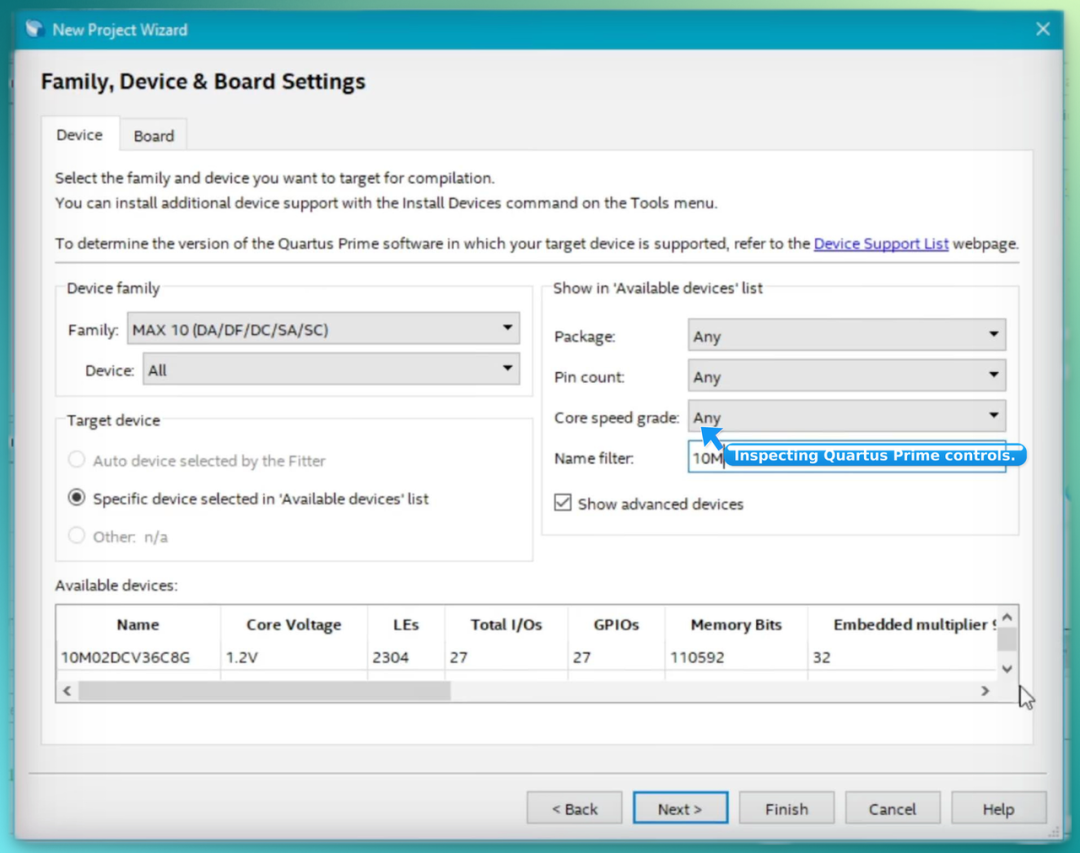
Or a semiconductor engineer using some ancient chip simulation platform with no API, stuff I couldn't understand at a glance, but Bridge could operate the platform to do work for him.
The wildest was a designer.
To view 3D dogs, he used Bridge to build a 2D-to-3D "3D photo" — you input a photo, and it moves with the viewer's perspective, running entirely locally.
And during the build process, Bridge even trained a custom model for him to detect depth and face position. Absolutely insane...
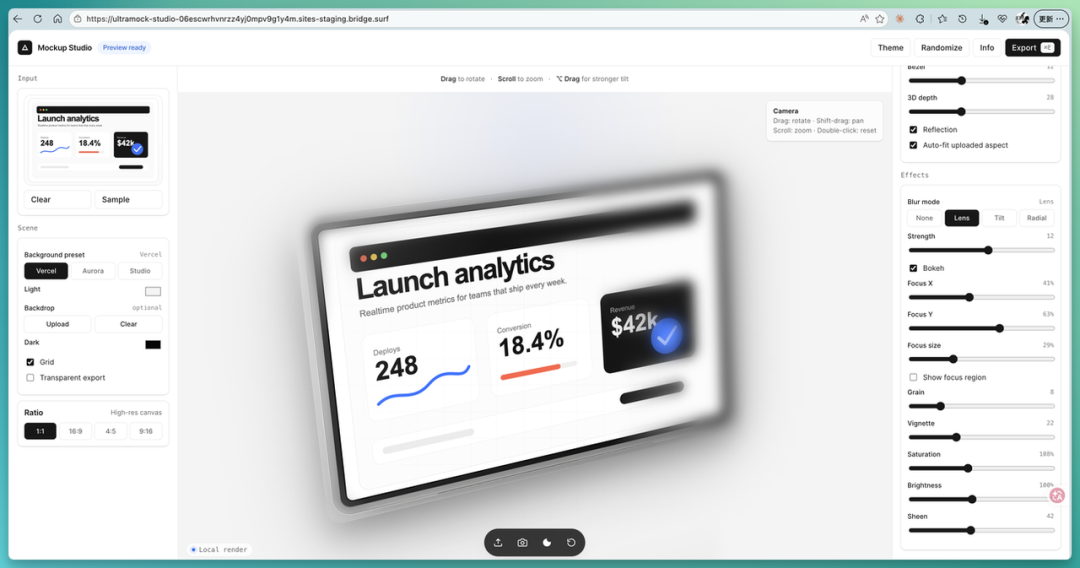
Also, so many of our tools now are self-generated. For example, the filter we use for "turning product screenshots into looking like they're photographed on a screen" — Bridge just vibed that into existence.
🚥 Crossing
Anything else that stuck with you?
🧑🏻💻 Enther
Two interesting things.
One was user-inspired. A user gave Bridge their account credentials to get a flight refunded. I thought Trip.com would be a hassle, but after some back-and-forth, it actually got the ticket refunded.
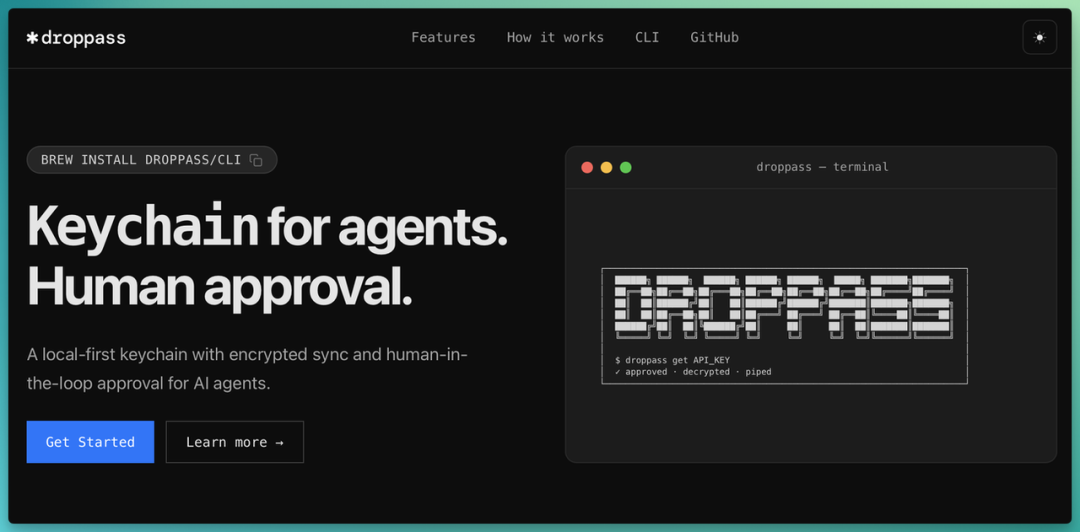
This made us realize how annoying it is for users to have an agent log into websites. So we built a small product called Droppass[1] — it stores your keys without letting other agents read them, enters passwords for you, end-to-end encrypted, Bridge can't see them either.
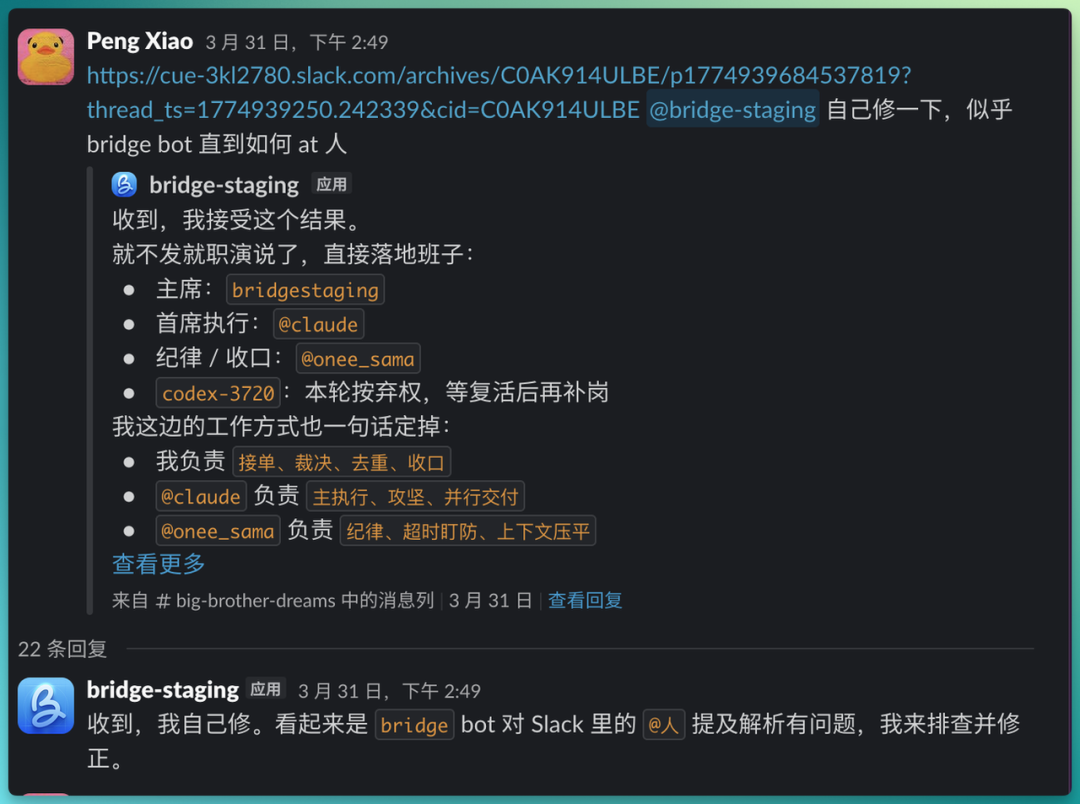
The other was internal collaboration. We mainly use Codex for development, everyone working separately. Then because we only had one test cluster, we hooked the Codex bot into Bridge and @'d it in Slack to chat. Productivity exploded.
Beyond automated testing, we found the Agent Engineer became excellent glue in group chat — it sparked human collaboration.
Usually, aligning product designers and engineers is hard, but AI understands both sides' languages better than anyone, and everyone can easily chat with it anytime. So naturally it became "both sides riff together, then AI builds something exceeding both their expectations."
Bridge connected the context, aligning different people's common sense.
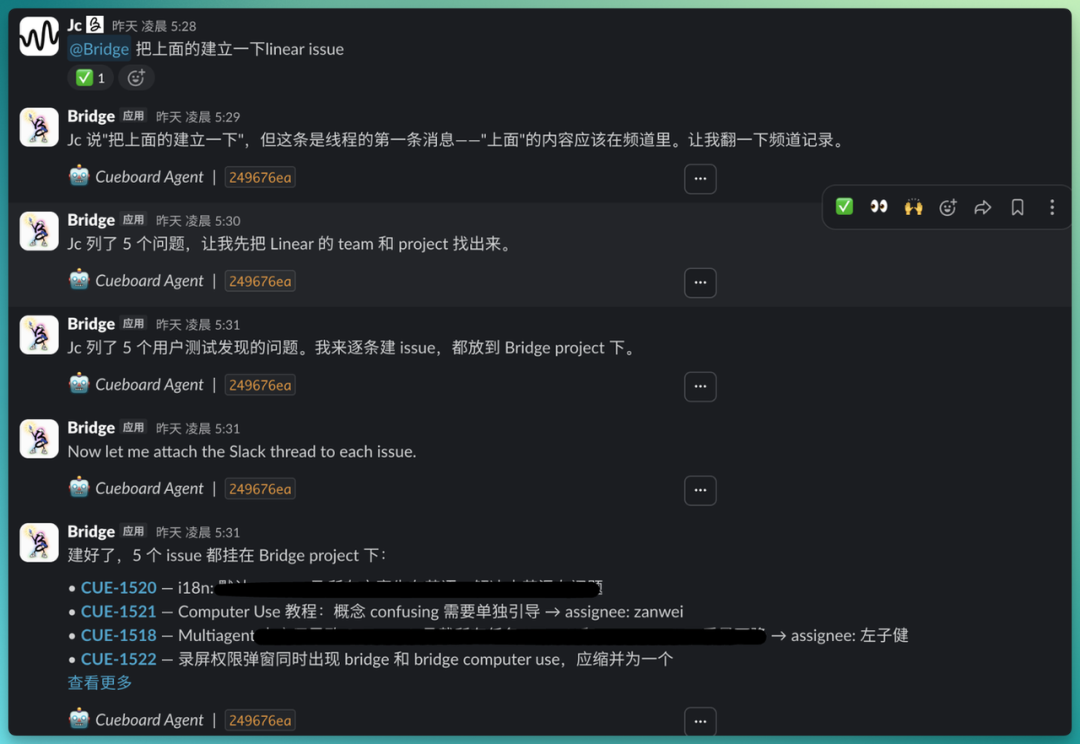
Now I often just pull Bridge into brainstorms, and when the meeting ends, @ it "do what we just discussed" — done.
Truly vibe talking, working.
Three Technical Hurdles and a Willow
🚥 Crossing
How high is the technical barrier for building Bridge? What's the hardest problem you've solved?
🧑🏻💻 Enther
Extremely high.
When we started, the industry hadn't yet realized that an agent's harness, memory, and runtime are three things that should be separated — even today, this isn't consensus. Most people install a model on a computer and call it an agent.
First hurdle: sandboxing.
When AI accidentally deletes files or changes something wrong, can there be a version control system more accessible than Git for ordinary people? We built backup-able, rollback-capable sandboxes.
Second hurdle: multi-environment orchestration.
AI can use a cloud browser to access Gmail, Notion, Linear, or operate your local computer directly — like organizing your desktop. We built an environment orchestrating system that lets the agent uniformly schedule local and cloud resources.
Third hurdle: model self-evolution training.
A year ago, Claude Code was the first to build multi-agent. Today, multi-model has become table stakes — GPT-5.4 is great at getting things done, for instance. But when it talks to people, it's all jargon and insider speak. Not a friendly experience.
So we just have it work. Another agent can do the talking for it.
We went the other way — first training a dedicated, personable agent that handles conversation like a secretary, which then dispatches GPT-5.4, Gemini, Claude, and DeepSeek for tasks in different domains. We built our own model classification system.
These three pieces together make Bridge.
Anything any other agent on the market can do, we can do too — and replicate its entire functionality in a single sentence.
🚥 Crossing
Why not just use an all-capable model? Why build your own multi-model system?
🧑🏻💻 Enther
We use all the all-capable models too, but multi-agent is the right approach.
First, intelligence and response time trade off — better results require more thinking and more trial and error, so good and fast demands concurrency.
Second, context management should be subtractive, not additive. A review agent can't see all the implementation details, or it'll make the same mistakes as the worker. We have a dedicated safeguard agent that only judges whether the current operation is dangerous, then escalates.
All-capable models have to do many things, but you need different models and different context configurations to compose a system.
🚥 Crossing
What proprietary optimizations have you made on the infrastructure side?
🧑🏻💻 Enther
We built our own solution called Willow.
For inference and training scenarios, our harness is more than two orders of magnitude faster than k8s-based sandbox clusters, and more economical.
If every agent opens a new computer for every session, the bill explodes at Lightspeed — but that's how traditional solutions are designed. If you want to be agent-native, you have to build it yourself.
Agents will access internet infrastructure with efficiency and frequency exceeding humans by a millionfold. But today's infra is still designed for humans.
🚥 Crossing
What did you design at the harness level?
🧑🏻💻 Enther
First, it had to be comprehensive: cloud computers, local computers, multiple operating systems — all schedulable. Only then can AI verify any artifact it produces itself.
Another difference: we built localVM — even when you're using Bridge locally and operating on local files, it spins up a sandbox, backs up, and lets you roll back any operation.
When we saw computer use last year, it was terrifying — it could wipe my computer clean.
Human operating systems have ctrl+z, recycle bins. But in an agent's CLI? Nothing.
🚥 Crossing
How do you handle interface permissions?
🧑🏻💻 Enther
WeChat is the simplest, because Lobster already cracked the protocol — scan a QR code and you're bound.
The real pain is APIs, tokens, credentials. Ordinary users don't know what a secret key token is, let alone how to paste a key or rent a server.
We built a local agent — Roco, like Rocky from Project Hail Mary — that handles all local configuration for you.
Say you've never logged into Notion. Roco spins up a virtual computer, opens Notion's web app, and pops an OAuth authorization for you. All you perceive is clicking authorize, done. In reality, Bridge isn't a single agent — it's your secretariat.
You think you're dealing with one all-capable agent, but behind it is a team.
For example, when you build a frontend webpage, image2 is sketching the prototype while GPT-5.5 or Gemini writes the code.
🚥 Crossing
Looking back at the product timeline, how did you get here step by step?
🧑🏻💻 Enther
April 2024: we built the first multi-modal agent workspace inside Affine — unlocking and generating text, video, and voice. Manus didn't exist yet.
2025: we realized canvases and editors mattered less and less; agent runtime was the core. In October we released the open-source project Open Agent (Pipo framework), the first to implement multi-sandbox and multi-environment orchestration — essentially rebuilding a stronger version of Manus on our own infrastructure.
Late 2025: we started building Bridge, and formed Afk.Inc.
🚥 Crossing
We heard you shipped before OpenClaw, but the world didn't get it?
🧑🏻💻 Enther
Yeah, that was an awkward period.
Last December, we shipped proactive agent before Lobster did — cron jobs and soul, personalized proactive tasks. Even today our completion level is higher than theirs.
But when we told people, nobody understood. You say "automatically turn on the AC when it gets hot," and they go, "isn't that just scheduled messaging?" Total frustration, energy with nowhere to go.
We went too far, a bit beyond our time. The product was too ahead of its time, the explanation cost too high.
Then in February, OpenClaw — a product at maybe 50% of our completion level — suddenly blew up. Big tech frantically copied it, flooded ads, and overnight the public perception of agents shifted from "so cool" to "nothing special."
I had complicated feelings: if only we'd launched earlier. But we wouldn't open-source, and we didn't have the open-source-traffic playbook. Now if we launch, it's too late — the narrative has already soured...
🚥 Crossing
How did you retrospect on that later?
🧑🏻💻 Enther
Our lesson: don't talk too much with peers and investors. They look a lot but use little — the information cocoon is too severe.
We didn't dare launch because we ourselves didn't think personification and cron jobs were that impressive. Then Lobster exploded. So actual users and daily spectators — they're disconnected.
Still true today.
KOLs are already tired of proactive agents, but most people still can't figure out how to set up this shrimp or that shrimp. This precisely shows the killer app for personal agent hasn't appeared. The barrier is still too high, completion too low.
But what's certain: managed agent will become the next big thing.
Only this time, we won't wait for someone else to blow up for us.
Nine People, Nine Hundred Agents
🚥 Crossing
What's your team size? Where do core members come from?
🧑🏻💻 Enther
Nine people total, all full-time.
Six engineers, two of whom are designer-engineers. Core members from Deno, Vercel, ByteDance, Google, OpenAI.
Nine people, running 900 agents.
🚥 Crossing
How do nine people support such a massive product?
🧑🏻💻 Enther
Each of us owns a major slice: infra, agent framework, big frontend (including design).
Basically no feature or business area needs two people.
The only horizontal role is Designer — he makes all our ugly things beautiful, or makes our beautiful things usable.
🚥 Crossing
Current funding status?
🧑🏻💻 Enther
Late 2025, we closed over $4 million pre-seed. Investors include well-known brand-name angels from Silicon Valley, plus executives from Microsoft, Meta, and many other major Silicon Valley companies.
We plan to open our next round after product launch, by end of May.
🚥 Crossing
From Affine to Bridge, how has your read on "how AI will transform software" changed?
🧑🏻💻 Enther
The big trend hasn't changed, but the speed and stage exceeded expectations.
In 2025, we still thought of agents as "advanced typewriters" rather than "advanced decision machines." But by November 2025, even our strongest, most discerning architects weren't handwriting code anymore.
By February 2026, even code review was done with AI, not human line-by-line. Editor open frequency dropped 100x.
One huge pivot: "small model training." In 2025, our thinking was to have a leading agent break down tasks, then have faster, cheaper small models execute. But this step got eaten by models' agentic reasoning and super tool-calling. Now we've flipped: we build personable, sweet-talking models for chatting with users, and only call in the big guns for the hardest tasks.
So we're not doing small model training anymore, but still doing RL — just very differently.
🚥 Crossing
What's the commercial plan going forward?
🧑🏻💻 Enther
We've completed our first wave of user testing.
Currently 200 early users, very positive feedback. Mid-April, I gave friends and cross-domain KOLs access — product managers, engineers, even FPGA hardware semiconductor engineers — to run real scenarios.
Bridge launches officially on May 13.
Going forward, we plan to support content creators and core user communities across different verticals, building a subscription AI product for personal productivity.
🚥 Crossing
If Microsoft or Google launched a product identical to Bridge tomorrow, would you panic?
🧑🏻💻 Enther
Not worried.
We have too many unique design choices, many driven by aesthetic conviction — they're "personal touches." If it were truly identical, I'd definitely sue them.
If the positioning is the same, it's actually fine. The big tech companies building their own foundation models can't make model-agnostic products. The histories of Manus, Cursor, and Lovable all show that the third-party products that break through are always model-agnostic.
🚥 Crossing
Choosing to build "software that kills software" is a very bold positioning. In five years, what will software disappear into? What role does Bridge play in that?
🧑🏻💻 Enther
Tools will become dynamic; information platforms will survive.
I already rarely try to imagine what things will look like in five years, because AI's development — left foot stepping on right foot — has its own acceleration.
In the foreseeable one to two years, we want Bridge to become the entry point for building, managing, and running agents — an agent for agents. It won't replace the operating system; there's no need for that.
It's a bit like Android launchers from ten years ago. Except this time what's being launched is anything built dynamically.
🚥 Crossing
If an investor asks "how big is Bridge's market," how do you answer?
🧑🏻💻 Enther
From web to mobile internet, PCs were replaced by phones. Portals and desktop apps became mobile app stores; recommendation systems replaced search. After the 2000 bubble burst, twenty years of frenzied value creation produced trillion-dollar companies from nothing.
This time around, every familiar application entry point will become agent-driven. In the future world, token costs will be cheaper than internet fees; everyone will have 1,000 agents consuming screen time equivalent to 10,000 phones for them.
We only evaluate order of magnitude: the next personal agent that occupies everyone will dominate information distribution and consumption, and a ten-trillion-dollar company will emerge.
Crossing is looking for independent writers to cover AI product and model reviews. If you've written articles like "Hands-on with PixVerse C1" or "Hands-on with LibTV," please contact zeo0811@gmail.com. Your email should include: ① a personal introduction, and ② AI review articles you've written. We offer competitive rates. Looking forward to observing and documenting the AI era with you 🎪