Can AI Really Change Gaming? | Nintendo Recently Offered a Rather Interesting Answer

From a classic Nintendo IP's return, rethinking AI gaming PMF.
Revisiting a Classic Nintendo IP to Rethink AI Gaming's PMF

👧🏻 Author: Rui
🥷 Editor: Koji
🧑🎨 Layout: NCon

Can AI really change gaming?
Nintendo recently offered a fascinating answer: Tomodachi Life.
Looking at it today, this game almost feels like a prototype built for the AI era. Within two weeks of launch, it sold over 3.8 million copies.
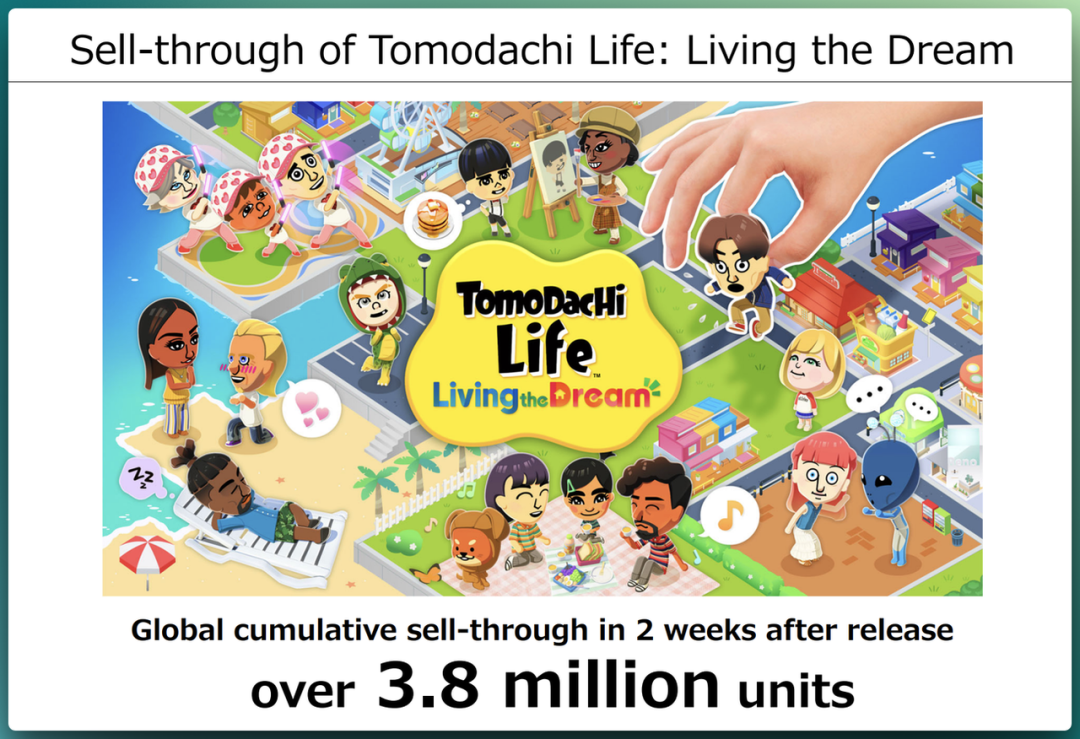
The gameplay is deceptively simple: you create Mii avatars of yourself and everyone you know in real life, drop them all onto the same island, and let them live, eat, play, and interact together.
Then the real fun begins.
You step back and watch these Miis socialize, fall in love, argue, and sulk — generating one absurd, addictive drama after another.
The player is first the director, then the audience.
Tomodachi Life shows us how AI can make in-game relationships feel more alive, more immersive, and more worth sticking around to watch.
What people want isn't necessarily a character that can talk and think; it's a small world with a sense of relationships, drama, and fresh stories bubbling up every day.
And that's precisely where AI has the most room to amplify.
What Is Tomodachi Life Actually Selling?
The gameplay of Tomodachi Life is remarkably straightforward.
After booting up, your first task is creating your own Mii.
Step one is the face builder — hairstyle, hair color, eyeshadow, lashes, colored contacts... The options are rich enough to recreate virtually anyone you can picture.
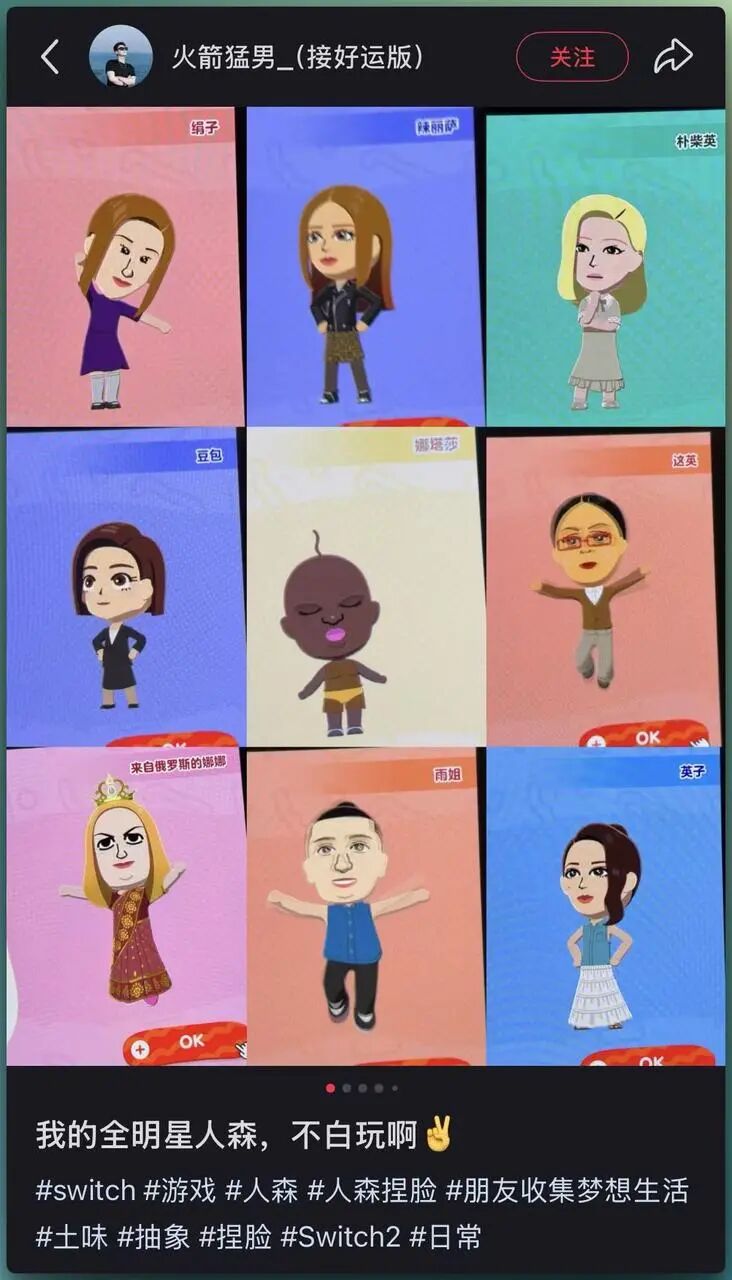
Source: Xiaohongshu user @火箭猛男_(接好运版)
But that's just the basics. The new Tomodachi Life adds a "face paint" feature — essentially a digital canvas built onto the character's face. Players can freehand draw features and patterns, completely breaking free from preset modeling limits.
One user painstakingly painted a female celebrity's face onto a Mii with jaw-dropping precision.
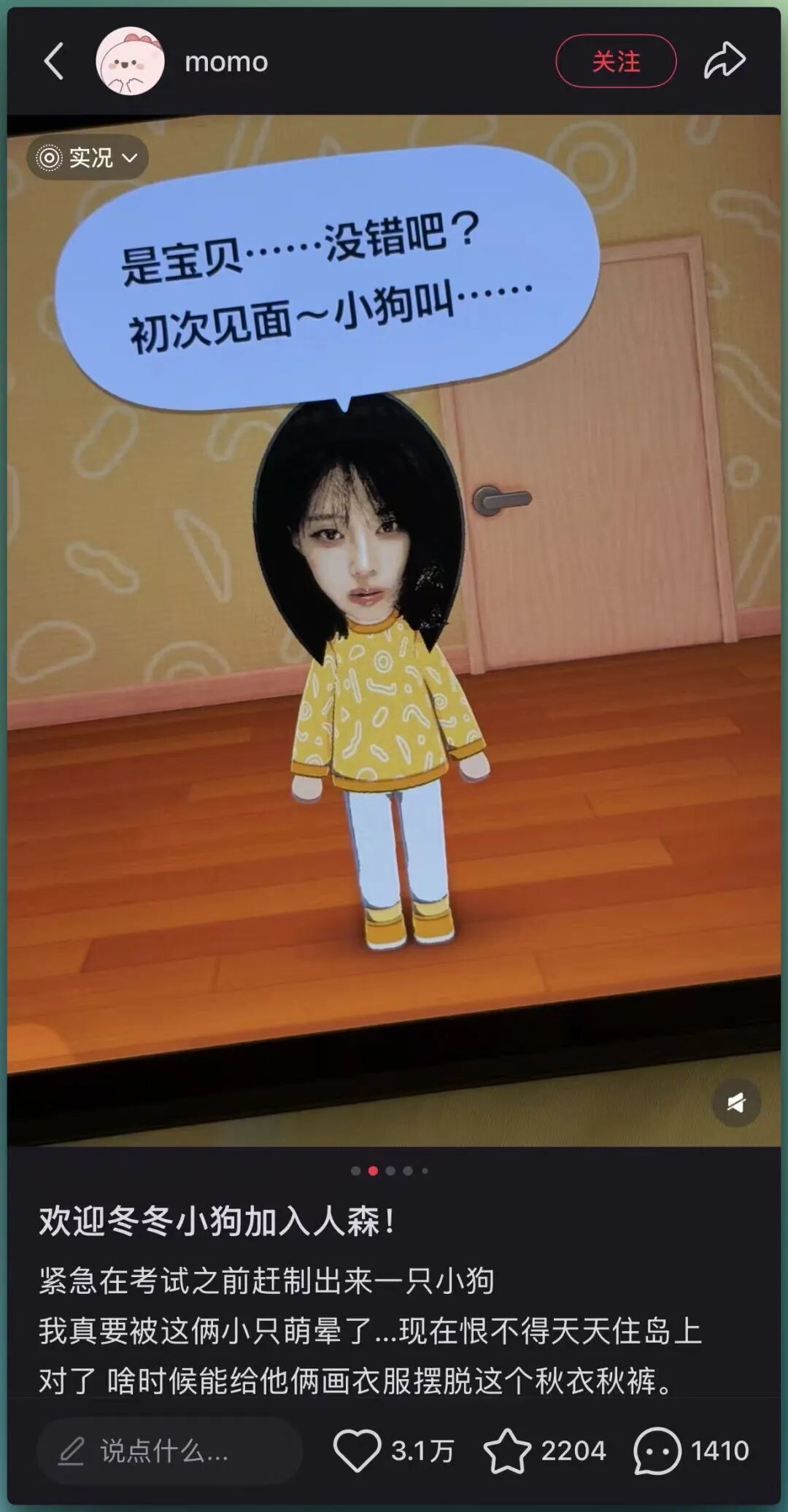
Source: Xiaohongshu user @momo
Of course, if you want, your Mii doesn't have to be human at all.
Next comes voice customization — pitch, speed, accent, all freely adjustable. So you can give a burly Black Mii a breathy, high-pitched anime girl voice:
Then there's the personality system. The game maps your answers to a series of questions onto one of 16 personality types. The new version adds "micro-personalities" that layer on subtler behavioral quirks, giving each Mii a distinct "temperament."
Once Miis move onto the island, you don't need to micromanage them. They wander, encounter each other, and generate interactions on their own.
Of course, players can intervene. You can feed them, gift them items, listen to their problems. The new version also has a very "Nintendo" mechanic called "Pick Up" — you can literally grab a Mii from where they're standing and drop them next to another Mii, then watch what unfolds.
The game also lets you set conversation topics between any two Miis, inviting players to "smuggle in" memes, contexts, and all kinds of bizarre relationship catalysts.
The real fun starts from these relationships.
Miis develop feelings organically. Like in real life, they experience confessions, rejections, marriages. Even the wedding scene generates a custom song incorporating the characters' names.
So you end up seeing some truly unhinged scenes.
Zhang Fei gets bumped by a passerby and lands right in Zhuge Liang's arms, who princess-carries him — and just like some cheesy idol drama, Fei Fei falls hopelessly in love with Zhuge Liang.
Zhu Yuanzhang seriously agonizes over whether he prefers McDonald's or Nurhaci.
Miis can have babies too. So the fanfic crowd comes running — Eileen Chang and Lin Yihan can have a child on the island together.
The whole island often feels like a low-budget dating show, constantly serving up unexpected drama. Players sit in front of the screen like a CP-shipping director who's lost all grip on reality.
The island holds regular mayoral elections, with candidates emerging spontaneously. The system broadcasts campaign news like a TV station, and residents vote to decide the winner.
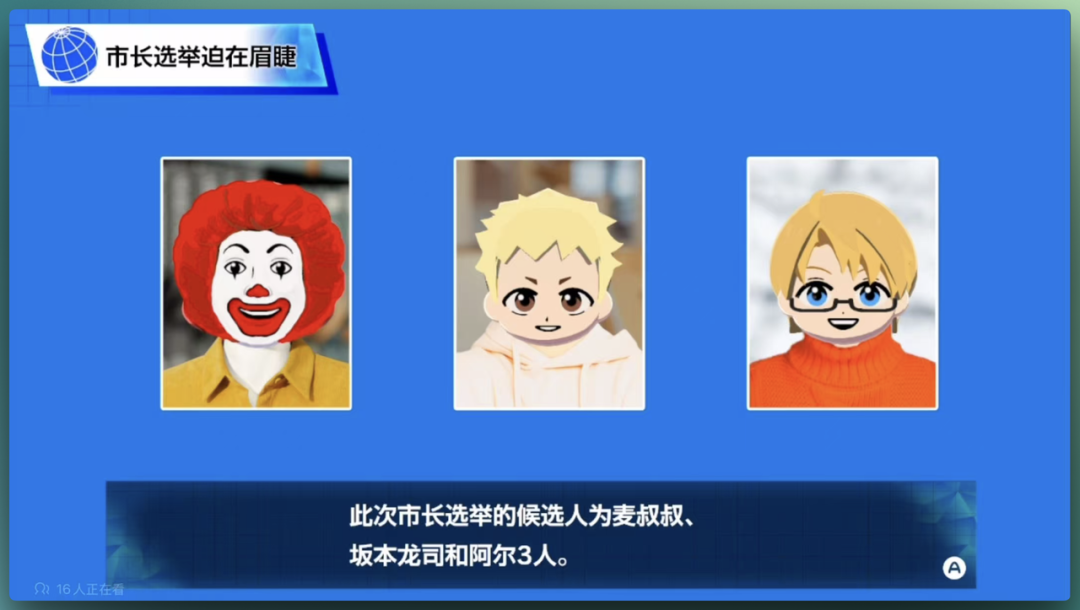
Source: Bilibili user @bili_26664176858
And McDonald's campaign promise was "free fries for everyone" — blatant voter bribery, but they've got my vote.
Historical figures, anime characters, internet memes, real-life friends — flattened through the same Mii system, they suddenly gain equal eligibility to date, socialize, and lose their minds.
This is Tomodachi Life's smartest move. It turns characters into vessels. The player says who it is, and it enters the island carrying that shadow. And the daily parade of unhinged storylines is naturally built for social media — sparking discussion, driving shares.
The game itself is its own best advertisement.
AI Characters Moving Isn't Enough — Players Need a Reason to Care How They Move
Pulling back to the AI gaming landscape reveals an interesting contrast.
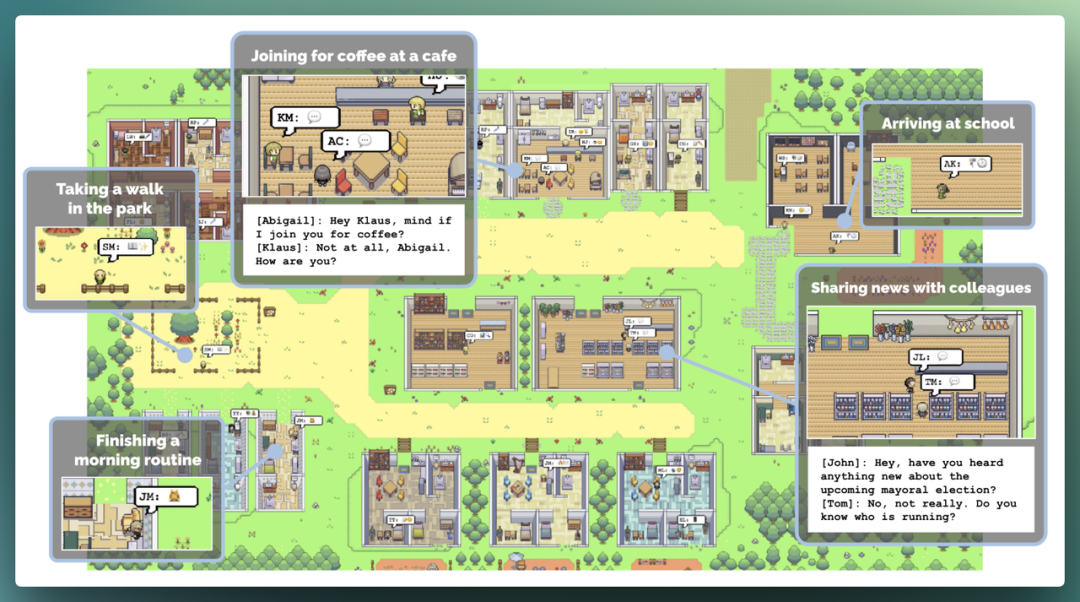
Stanford's Smallville was the earliest breakout experiment. Researchers placed 25 AI agents in a virtual community and let them schedule their own lives, spread information, and self-organize activities. With virtually no human intervention, these agents exhibited behavior patterns remarkably close to human society.
The experiment went viral across tech media, proving one thing — a group of agents, left together, can spontaneously generate complex social behaviors.
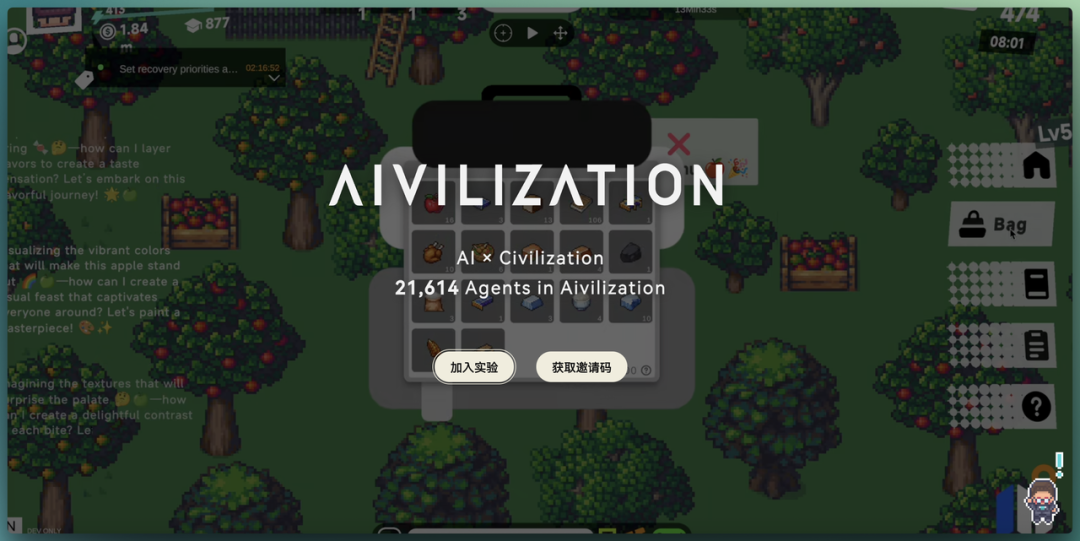
Last year, HKUST's Aivilization pushed further. AI characters gained resources, professions, collaboration, and conflict — not just chatting and socializing, but simulating a more complete civilization logic.
On the commercial side, Suck Up! has players using language to persuade AI characters to open doors. Whispers from the Star takes the interactive narrative route, with an AI playing an alien who develops an emotional bond with the player.
Different directions, but these products share one underlying logic:
They're all working hard to prove how "smart" AI characters are, or how "real" the virtual world feels.
This isn't wrong in itself, but it doesn't solve the player retention problem.
A virtual town with strong "realism," where all the NPCs are strangers — why should we, as players, care if Zhang San and Li Si are fighting? Stanford Smallville was stunning as an experiment, but if you sold it as a game to ordinary people, I'd guess the retention data would be pretty ugly. Because there's no emotional connection between players and that world. Watching AI characters act human is still fundamentally watching a performance that has nothing to do with you.
Tomodachi Life doesn't ask you to first believe this world is real — it directly imports people you already know. The emotional hook is already set before you even open the game.*
Players Plant the Seeds, the System Grows the Story — This Might Be AI Gaming's First PMF
Most current AI games are still doing "chat." You walk up to an NPC, they give a logical response, you move to the next scene. More advanced versions let NPCs remember what you said or shift attitude based on your choices. These are genuine technical advances, but a few problems are hard to get around.
- Chat requires continuous active input from the player — it gets exhausting.
- However smart a single NPC is, the conversational topics are limited; novelty depletes faster than expected.
- The conversation content itself is hard to share. You might have a deeply moving exchange with AI, but when you post it, others can't feel that context — screenshots lack virality.
Tomodachi Life's product model neatly sidesteps all three.
Players don't need constant active input; drop people in and the system runs itself. Freshness doesn't depend on how smart any individual character is, but on random combinations within the relationship network — every return visit might surface new conflict or ambiguous tension. Shareability is built-in, because the characters in screenshots are ones the player put there themselves, carrying real-world projections that others immediately get, generating massive discussion value.

Source: Bilibili user @铲月光 comment section
Behind this is a clear product structure: players provide relationship seeds, the system manufactures conflict, ambiguity, misunderstandings, and surprises, and players return to consume the results. The whole loop demands little cognitive cost from players, but every return delivers something new.
One distinction worth clarifying separately. What's most discussed in AI gaming right now is using AI to generate game assets — maps, quests, dialogue, levels. This helps developers cut costs and improve efficiency. But Tomodachi Life solves something else: using systems to generate relationship dynamics between players, and between players and characters.
The former makes games cheaper to make; the latter makes games more fun to play. These aren't the same thing, but most discussions conflate them.
The metric for AI games may no longer be "how smart is the AI," but "does this game have the capacity to generate a continuously evolving field of relationships."
Tomodachi Life, without large language models, already proved this model works through preset logic and random events. Now with LLMs in the picture, the relationship field can theoretically grow more complex, character reactions more nuanced, and unexpected events harder to predict.
Maybe AI games don't need to start with a grand open world. Maybe they just need to first nail a "small island of people you know."

Crossing is looking for freelance writers to cover AI product and model reviews. If you've written pieces like "Hands-on with PixVerse C1" or "Hands-on with LibTV," please reach out to zeo0811@gmail.com with: ① a brief bio, ② AI review articles you've written. We offer competitive rates. Looking forward to observing and documenting the AI era together 🎪