When We Talk About Harness, What Are We Really Talking About | Deep Dive: MiniMax × Hermes Agent
The Lobster Recedes, the Horse Tamer Takes the Stage

👦🏻 Interview: Koji
🥷 Edited and compiled by: Crossing
🧑🎨 Layout: Zeoooo

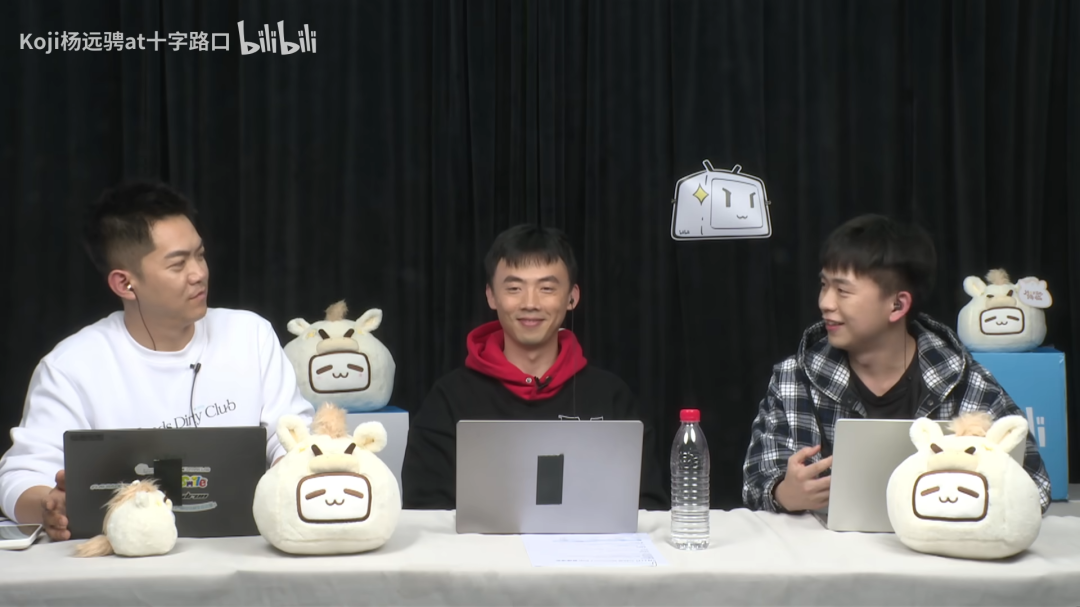
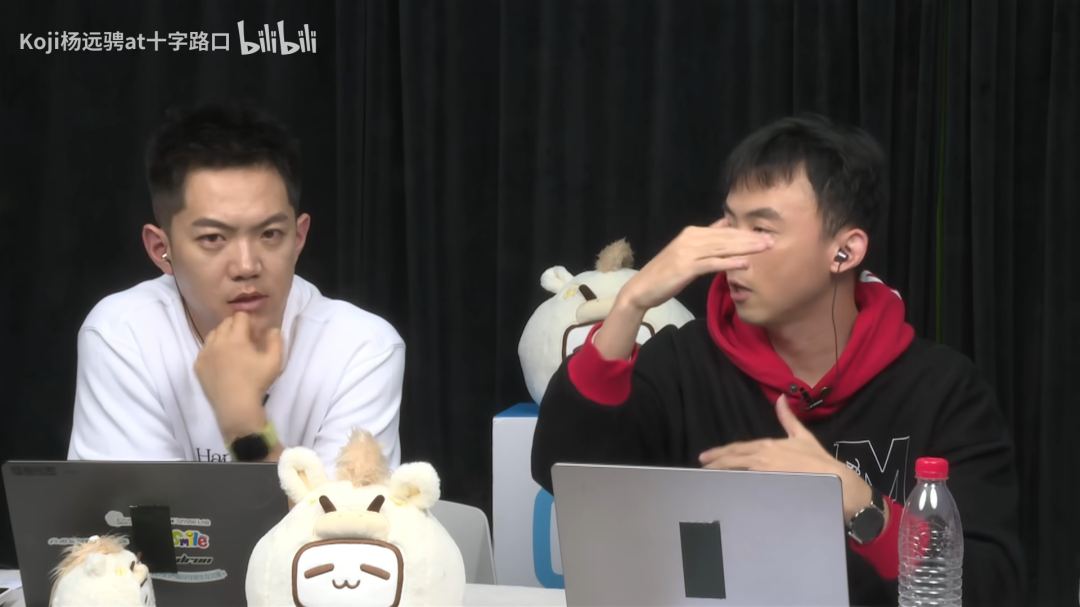
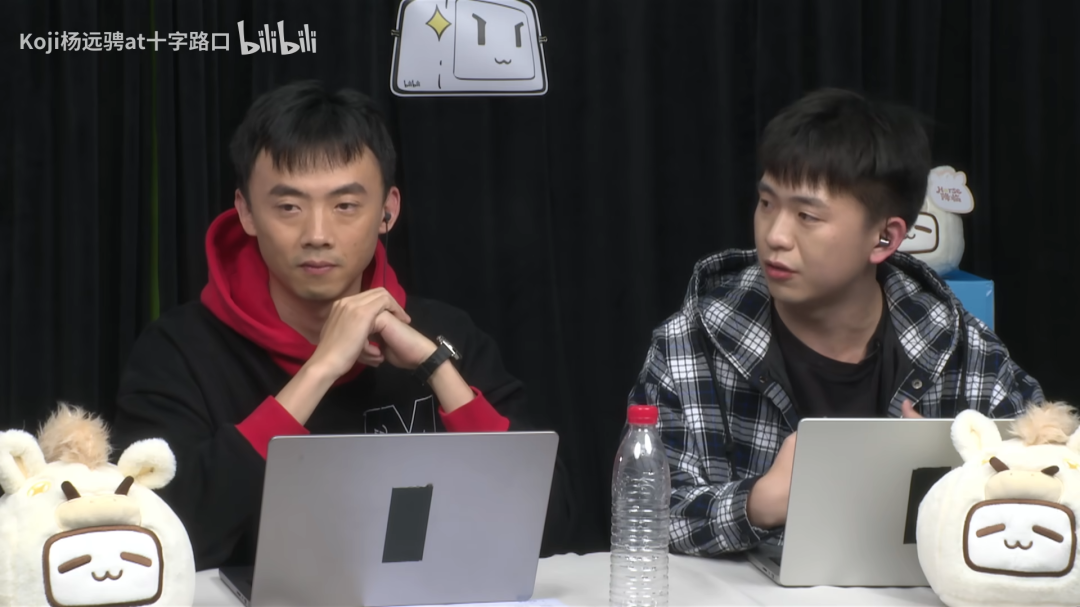
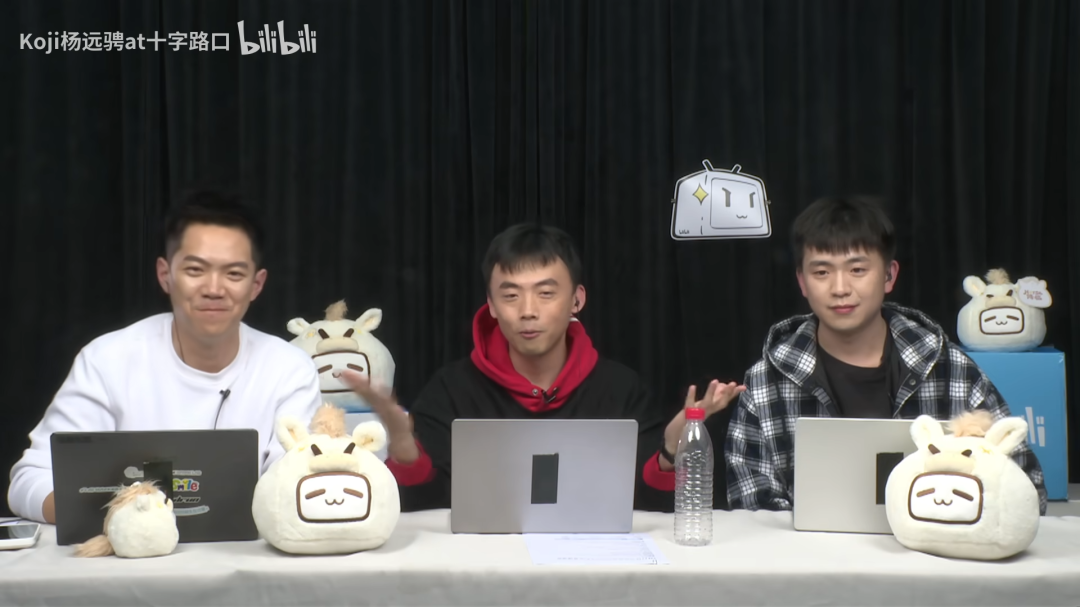
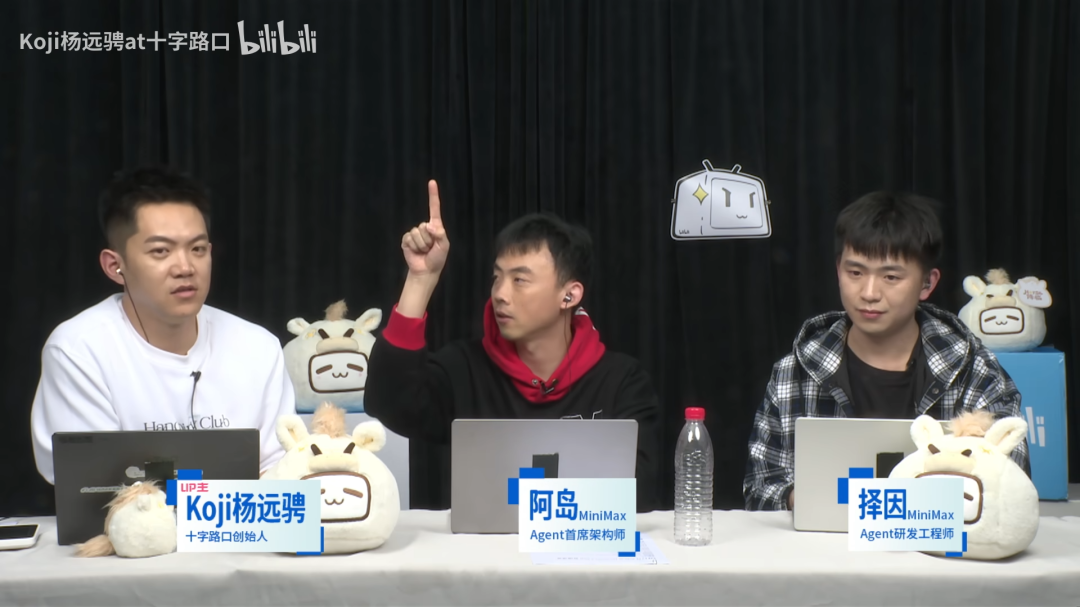
➤ Recently, I hosted a livestream on Bilibili featuring a deep conversation with frontline Agent developers from China and the US:
-
MiniMax Agent Chief Architect A Dao
-
MiniMax Agent R&D Engineer Ze Yin
-
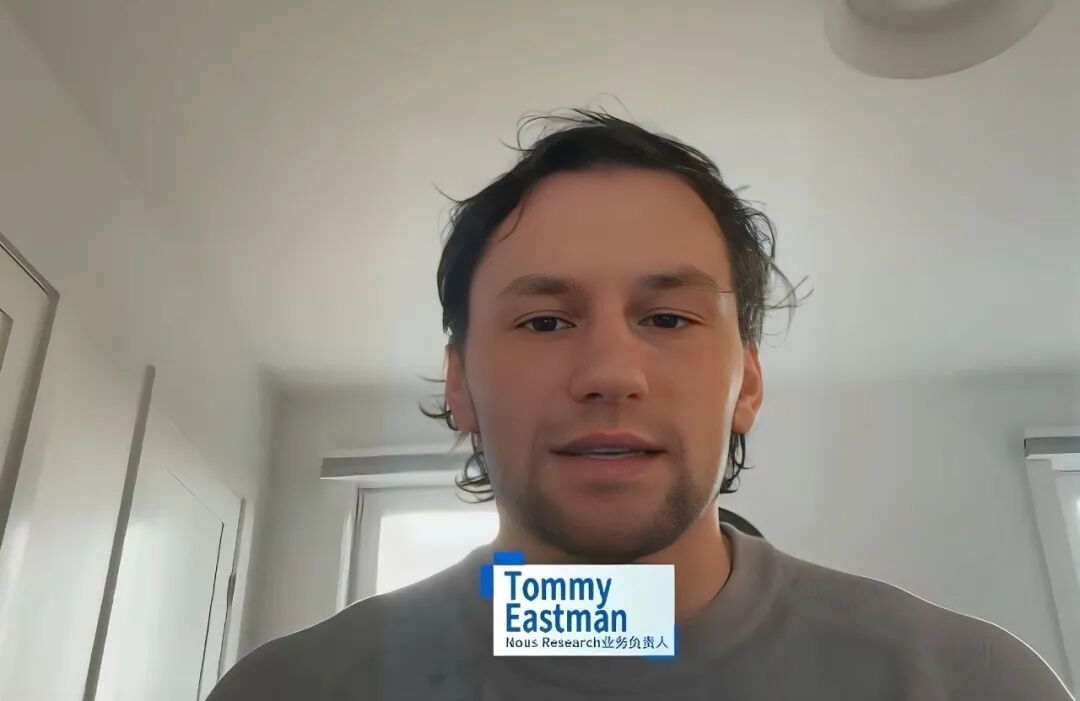
Hermes Agent (Nous Research) Business Lead Tommy Eastman
This also marks the first time Hermes Agent has officially appeared on a Chinese social media platform since gaining global attention, directly addressing the "plagiarism" allegations made against it by the Chinese team EvoMap.
Together, we dissected several key topics around the surge from OpenClaw to Hermes:
-
Why did Hermes Agent take off after OpenClaw?
-
Will models eat Agents? Will general-purpose Agents eat vertical Agents?
-
Why are both MiniMax and Anthropic building models and Agents simultaneously?
-
How should we view entrepreneurial opportunities at the Agent Infra layer?
-
How should we view the Multi-Agent collaboration paradigm?
-
What do we make of Claude Code's real-name requirement?
-
Why won't Anthropic release Mythos?
-
The impact of the Claude Code source code leak
-
How the Agent paradigm has evolved from Manus's launch to today
-
The gap between Chinese and US models, and the open-source window
-
"Distilling yourself into a Skill"
-
The possibility of zero-person companies — will fully AI-driven companies emerge?
Below is the complete transcript of the livestream. For readability, we've polished the text without altering the speakers' original meaning.
🎬 Video replay is now available on @Koji's Bilibili.

👦🏻 Koji
Hello everyone on Bilibili, so happy to do this livestream with you on a Friday night. Today we're thrilled to have three guests with us.
👨🏻💻 A Dao
Hi everyone, I'm A Dao, leading the R&D team at MiniMax. I've been at MiniMax for almost three years now, with quite a bit of previous internet startup and work experience. I've been deeply involved in developing MiniMax's series of models and Agents, including Hailuo AI and others. Very glad to be here exchanging ideas with everyone today.
🧑🏻💻 Ze Yin
Hi everyone, I'm Ze Yin, an Agent R&D engineer at MiniMax. I mainly work on MiniMax Agent and MaxHermes, which we just launched recently.
🧑🏻💻 Tommy
Hi, I'm Tommy, operations lead for Hermes Agent. Very happy to be here chatting with everyone.
The Past Month in Agents
👦🏻 Koji
Let's start by asking our two friends from MiniMax to recap: what's changed in the Agent space in the month or so since Lunar New Year?
👨🏻💻 A Dao
Lunar New Year is always interesting. Last year after the holiday, DeepSeek R1 gave everyone a completely new understanding of AI.
This year was the same. OpenClaw started blowing up overseas around January. We'd actually been in touch with its founder Peter for a while. It was also quite a coincidence — Anthropic had banned OpenClaw from calling Claude models, so Peter was really eager to find a model that would work well for "Lobster," because as everyone knows, "Lobster" burns through tokens like crazy.
At the time we didn't realize the project would get this big. Then it exploded overseas, and we didn't expect it to get this big in China either.
👦🏻 Koji
And it got even bigger than overseas.
👨🏻💻 A Dao
Yes. My personal feeling is that during and after the holiday, it seemed like everyone around me was talking about "Lobster" — there was even a trend of people wearing shrimp hats everywhere. I think there were several layers to this.
First, it was actually bigger domestically than overseas. Because foreign users had already been exposed to pretty usable Agents like Claude Code, Codex, and Cowork, but Chinese users hadn't really had access to those yet.
There's also a deeper reason: domestic models at earlier stages simply weren't as strong in Agentic capabilities. With the release of models like MiniMax M2.5 and M2.7, domestic models now have this capability too.
So when there was a good domestic model, plus something like OpenClaw that could be easily accessed through IM, Chinese users essentially went through a 0-to-1 experience. Overseas users had a gradual progression, but Chinese users had that window paper pierced all at once.
Another related factor, I think, was ByteDance's Spring Festival Gala takeover and its all-in push on Doubao. Doubao's penetration was pretty astonishing. I think these two things combined really pushed everyone's understanding of AI into the Agent era.
From "Raising Shrimp" to "Taming Horses"
👦🏻 Koji
What caused everyone's attention to seemingly shift overnight from "raising shrimp" to "taming horses," from OpenClaw to Hermes Agent? What inflection point or trigger happened in between?
🧑🏻💻 Ze Yin
From OpenClaw blowing up to Hermes recently catching fire, it was roughly a month. During that month, the vast majority of users who caught this wave had basically tried OpenClaw.
But people ran into some issues in use — for example, while it connected to social and office software, letting us chat with it through familiar messaging interfaces, some of its inherent characteristics caused instability.
And it had a special mechanism: its memory refreshes once every day at 4 a.m. You might have just built up great rapport with it, and the next day it forgets what you talked about yesterday.
Hermes precisely seized on these pain points. It invested heavily in memory, building a multi-layered memory system that to some extent compensated for OpenClaw's shortcomings. This is the technical foundation for why it could take off.
At the same time, through using "Lobster," people had already experienced the efficiency gains AI brings. On that foundation, everyone's acceptance of "letting an AI into your life and access your data" had increased.
So at this point, when you tell users there's a more powerful Agent that can solve your pain points, natural acceptance is higher.
So I believe Hermes's popularity is absolutely because domestic users' overall awareness had already been elevated to a new level by "Lobster." What followed was Hermes taking everyone a step further toward an even better experience.
This should be a mutual奔赴: we made a better Agent, while users' demands for AI were also continuously rising.
Hermes Agent and "Self-Evolution"
For readability, we've translated the livestream conversation with Hermes Agent Business Lead Tommy Eastman into Chinese below.
👨🏻💻 A Dao
Tommy, please introduce to everyone what exactly Hermes Agent is? What does so-called "self-evolution" mean? And how is it different from OpenClaw? These are questions that developers and users across China are very concerned about.
🤵🏻 Tommy
Thank you for having me, very happy to be here. In short, Hermes Agent is an open-source agent framework. If large language models are the brain, then the agent framework is the hands.
It's a system through which models execute tasks in the real world. It handles all the complex coordination — things like tool orchestration, main loop management, plus state management and error handling. Ultimately, it enables models to deliver maximum utility for users.
As for what makes Hermes Agent different, there are several key points.
First, it runs very well. Through our Nous platform API, you can easily go from installation to executing your first agent task in under 2 minutes. This frictionless setup is a huge advantage, eliminating that initial frustration for users.
Second is its "memory" component — this is what people really love, and probably the most interesting part.
Anyone who's used an agent deeply has had that frustrating experience: you ask it to do something, it gets it right this time, but fails the next time you try the exact same thing. It's hard to trust.
Hermes Agent's memory function solves this. It allows the agent to remember a successful workflow and save it as a skill. Once it knows the right path, it can reproduce it perfectly every single time. This makes it far more usable and trustworthy than anything in the past. It also answers your question about "self-evolution."
This agent continuously improves itself. The knowledge compression that happens in this process is incredibly valuable — it leads to much higher consistency, especially across different models.
So even if you have eight different models, as long as you're using the same framework and skills, you can get the same expected output from all of them. This lets you flexibly swap models for different tasks while ensuring your core workflows remain high-performing and reliable.
The Story of Nous Research
👦🏻 Koji
Thank you, Tommy. Before we dive deeper, could you introduce your company Nous Research? How did the team come together? What's the vision behind it? And Hermes Agent in particular — it seemed to appear out of nowhere and quickly shot up the GitHub trending charts. What's the untold story there?
🤵🏻 Tommy
The origin story of Nous Research is quite unique.
It started very organically: In 2022, a group of people passionate about open source and tinkering with AI models began gathering in a Discord channel called Nous Research — which remains our core community to this day.
From there, we produced a large volume of high-quality research. Our initial efforts focused on post-training Llama models, right when Meta had just released it and was one of the few companies willing to open-source high-quality models.
That's actually where the name "Hermes" comes from — our first post-trained versions of Llama were called Hermes. The focus of those early models was making it sound more human, less like a stereotypical AI assistant, with more flexibility and diversity in text. They were state-of-the-art in many areas at the time.
While training the Hermes models, we developed the YaRN algorithm, expanding context length from 4k to 128k. We published this research and it was immediately adopted by all major model companies. This was the prototype of what we now call "thinking models," which in turn laid groundwork for agent models.
We also spent considerable time researching distributed training and wrote the DisTrO paper. This is a novel optimizer that allows us to train across non-colocated GPUs, meaning we can aggregate dispersed compute power for meaningful training. This is critical for our continued open-source model training.
And fortunately, we have companies like MiniMax continuing to carry the open-source banner.
As for Hermes Agent, it also has an interesting origin story — one I'd call:
"Born from extreme pragmatism."
Our head of post-training and co-founder Teknium simply wanted an assistant to help manage his daily work, so he built this agent purely as a tool for himself.
There was absolutely no consideration of benchmarks or evaluations at the time — he just wanted something that would actually help him. I think this is precisely the core charm of Hermes Agent, and a key reason for its success.
👦🏻 Koji
When was this? About a year ago?
🤵🏻 Tommy
Yes, he started about a year ago, and it was genuinely just to help himself. But as an open-source lab, we naturally open-sourced it.
The attention it received far exceeded our expectations. I'm sure you all saw the OpenRouter charts — its daily token consumption surged from 2 billion to 20 billion in just over a month. I saw yesterday's data, it was almost reaching 30 billion per day.
How Did Hermes Agent Take Off?
👦🏻 Koji
When did you feel this wave hitting? Was there a tipping point where you thought, "Alright, Hermes Agent has become a global phenomenon"?
🤵🏻 Tommy
It is indeed becoming very large, very quickly. I'm thrilled by this growth rate, especially since we didn't have extremely high expectations for its reception.
Obviously, OpenClaw was very popular before. But I think a huge selling point of Hermes is how quickly and easily users can get it up and running. People don't want to deal with bloated code or face a mountain of complex setup.
Hermes Agent works out of the box — you can deploy and run it on your own computer or VPS very quickly, which makes it perfect for mass adoption.
👦🏻 Koji
Do you think your success is strongly tied to OpenClaw? What's the connection between you?
🤵🏻 Tommy
There's certainly a connection. I think it was a convergence of multiple factors that sparked this agent explosion. First, models finally became good enough to actually help people. This was clearly ignited by the massive leap from Opus this past winter. It achieved a step-function improvement in quality, opening the door for these agent frameworks to do more valuable things.
What's cool is that the open-source community quickly produced models with comparable performance, or ones rapidly approaching Opus quality.
As for the difference between OpenClaw and Hermes, I'd return to what I said earlier — through Hermes Agent, we truly optimized for "usability" and "practical purpose." We made usability our North Star metric — how well it performs when executing tasks users actually want to do, not how high it scores on some benchmark. We've maintained a relentless product focus.
In an open-source community, especially when a product becomes popular, it's easy for code to bloat from thousands of PRs and feature requests. I think we've done an excellent job protecting the product and keeping Hermes Agent extremely easy to use.
This, combined with the memory system we mentioned earlier, are two key differentiators. The memory function truly builds user trust.
I think the third differentiator is our brand. Nous Research has worked hard to cultivate a cyberpunk aesthetic. We have talented designers and have spent considerable time nurturing a smart, values-aligned community that loves experimenting with everything we release.
Hermes Agent's success owes a great deal to our community.
MiniMax and Hermes Agent
👦🏻 Koji
Another cool story is your relationship with the MiniMax team. Tommy, can you tell us how you started collaborating?
🤵🏻 Tommy
We're huge fans of the MiniMax team and their models. Their commitment to model quality, especially across multiple modalities, is impressive.
It's precisely their dedication to open source that makes products like Hermes Agent so cool — you can have various models to switch between and customize your agent. Our users love MiniMax's models.
We're also working with the MiniMax team on benchmarking and exploring the best technical paths for integrating Hermes into "next-generation" agent model training, particularly around self-improvement.
It's a symbiotic relationship: it helps their models perform better within agent frameworks, which provides a better experience for our users while also serving as excellent product showcase for MiniMax. These are powerful models that can help you in daily work and life.
This relationship started very naturally. It began with MiniMax employee Leanna DMing Teknium on Twitter, simply saying: "Hey, love what you guys are doing." We've been close ever since. We've done some offline events together and hope to collaborate more.
👦🏻 Koji
I'm also curious — which models are Hermes Agent users actually choosing? We noticed your official X account mentioned that MiniMax M2.7 is one of the most used models.
Beyond that, how do you see Chinese open-source models compared to other frontier models? For instance, what makes M2.7 perform so well in Hermes Agent?
🤵🏻 Tommy
That's a great question too. One interesting thing about Hermes Agent users is their tremendous curiosity about models — they want to try new things. We have about 10 to 12 different models getting significant token usage daily. As you mentioned, MiniMax M2.7 reaches 25 billion or more in daily token consumption on OpenRouter, which is fantastic.
People in the Nous community, and newcomers joining us, love to experiment. They love to tinker, to figure out which model works best for their use case.
Regarding the open-source question you raised, China is clearly leading in open-source models right now. While Opus remains at the top of the pyramid overall, I think that gap is narrowing. We're at the point where the gap between open-source and closed-source is the smallest it's ever been, and it will continue to shrink.
As for M2.7, we've received excellent feedback from users. With such a diverse user base and use cases, it's hard to pinpoint exactly what they love about it, but it's clear there's tremendous momentum driving toward MiniMax's models.
I use them frequently myself and find them quite good. The coolest part is, we're collaborating with MiniMax on post-training projects that will further enhance performance — not just the models themselves, but also how Hermes Agent works in conjunction with these models.
MiniMax M3 Is on the Way
👨🏻💻 A Dao
Yes, we're actually training the MiniMax M3 model, and Hermes is one of the frameworks we support. I believe Hermes and M3 will bring better performance and surprises to our users and developers.
👦🏻 Koji
Very much looking forward to M3.
Tommy, I don't know if you're in a position to respond — we're live right now, and there are a lot of comments on screen. Some are congratulating you, but others are curious about something from a few days ago.
A Chinese team called EvoMap published a technical report claiming that Hermes Agent's self-evolution architecture looks almost identical to their open-source project, Evolver. We've seen that report too. What's your response?
🤵🏻 Tommy
I've been in AI and crypto for quite a few years now, and I've noticed that whenever someone achieves something, social media fills up with people saying all kinds of things.
The Hermes Agent codebase has been around for a long time — almost a year. Teknium has been using it for a long time too. He hadn't even heard of EvoMap before those tweets went out.
One of the great things about Nous Research is that we have a long track record of producing cutting-edge research in AI. People who follow us, who take the time to understand us — like the MiniMax team — know that we're a team deeply driven by ideals.
Beyond advancing open-source AI, we're not interested in doing anything else. We would absolutely never copy someone else's codebase and pass it off as our own.
So, I think that should be sufficient response to those allegations.
👦🏻 Koji
Alright, thank you for that response, Tommy. Do you have any questions for us?
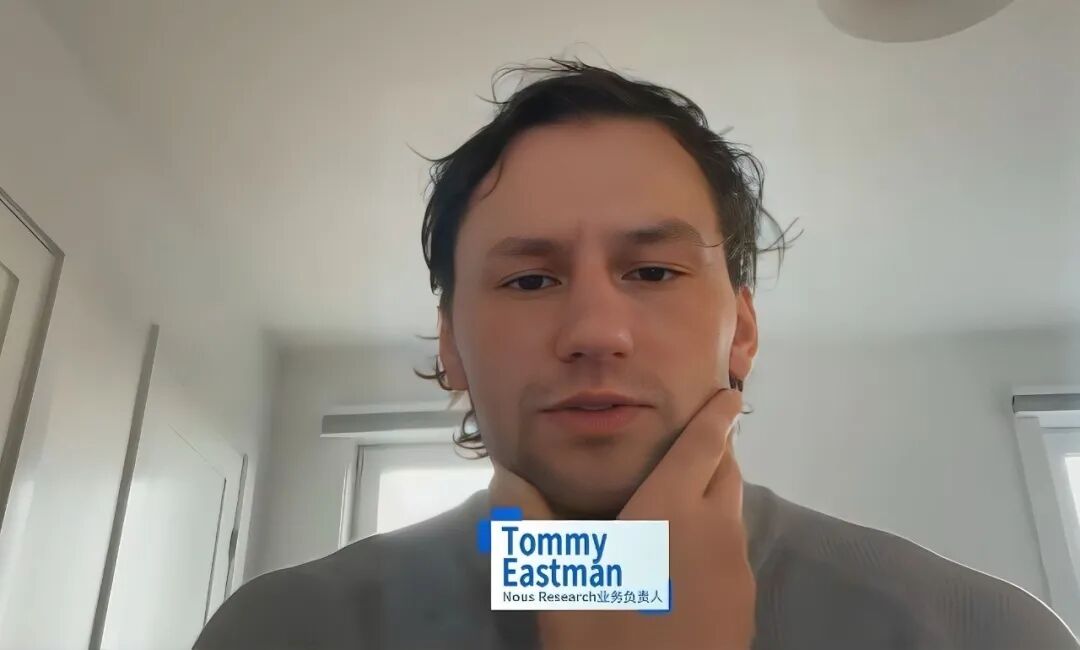
🤵🏻 Tommy
I'd love to get an early read on what you're expecting from MiniMax M3? Everyone on our side is incredibly excited about it, and I'd love to hear your thoughts on this release and what comes next for pushing MiniMax models to new heights.
👨🏻💻 A Dao
First, M3 will scale up — that's for certain. We're getting a larger, smarter model, especially for coding and general work scenarios, and we'll quickly apply it across all agent use cases.
Second, it will be a natively multimodal model, with built-in support for video and image input. I think this will unlock a massive number of scenarios and user needs, both in programming and in everyday work.
Our goal: let everyone do creative work, and leave all repetitive work to agents.
This way, productivity will be massively enhanced, and we can all do what we love.
👦🏻 Koji
Great! So when will the M3 model be released?
👨🏻💻 A Dao
Well, it won't be too far off, but I can't reveal the exact timing right now.
What I can share more about is that we'll have increasingly large and intelligent models, and ones that are affordable and accessible to everyone.
Our goal is to democratize intelligence for everyone, so that everyone can have agent models and agents that accompany them in life and work 24/7.
I think this is also the vision that Hermes Agent and Nous Research want to deliver to the world.
👦🏻 Koji
Thanks, Tommy. This has been a really interesting and excellent conversation. Thanks for joining us.
🤵🏻 Tommy
Thank you so much for having me. Looking forward to more collaboration in the future.
What Is Harness?
👦🏻 Koji
We just talked about Hermes Agent, and now let's return to topics everyone's interested in: agents, Harness, and agent infrastructure. First, I'd like to ask both of you to introduce — we've been saying "Harness," but what exactly is it?
🧑🏻💻 Zeyin
Harness is an awkward English word. In my view, it's an approach: you constrain the agent while giving it freedom, so it can deliver complete results.
OpenAI's official website published an article that formally proposed Harness as an application pattern. Technically, it has six layers, but we can start with an analogy.
Imagine you have a colleague who does exactly what you say, but first you need to agree on what they can do and what you do. Some things they can't do; some things you can completely hand off to them.
Once you've established the rules and equipped them with capabilities — models, tools, and so on — like giving a colleague a computer, a phone, and an email account, they can start working.
Of course, you wouldn't trust a single colleague working alone, and the same goes for a single agent. At this point you can bring in multiple "colleagues" to supervise each other, creating checks and balances or even adversarial relationships. Eventually, they can complete and deliver tasks within a mutually supervised process.
That's the workplace analogy. Technically, you need to give agents extensive tools, environments, and freedom, while also imposing constraints and setting mutually adversarial goals.
For example, one agent is responsible for producing content, while another's job is to review that content for problems — and halt work if it finds any.
Through the combination of multiple agents, like collaboration among colleagues, you can produce higher-quality results than any single agent could achieve. And throughout this process, you barely need to intervene. That's the concept of Harness.
That this concept could emerge at this particular moment depends on some foundational conditions. First, models have become smarter and gained agent capabilities. Second, people have become more willing to grant agents access to things like email operations, service deployments, even financial data.
When people's doubts about agents decrease and they start gaining real benefits from them, the emergence of Harness becomes natural.
👨🏻💻 A Dao
Let me add a perspective. Although the word Harness was defined by that OpenAI article, similar practices were already quite popular before that — the article just put a name to what was already happening.
👦🏻 Koji
The appearance of the word Harness crystallized a shared consensus — finding a very apt term to describe the various engineering efforts that people just happened to already be doing?
👨🏻💻 A Dao
Yes, exactly. Practice preceded definition.
For example, around September or October last year, I was already rarely using an IDE in my workflow. I might have five or six agents running concurrently on my local machine, plus another dozen or so on cloud sandboxes working for me, trying out different ideas and branches on GitHub for me. At that point, I realized I had become the biggest bottleneck.
👦🏻 Koji
Humans became the bottleneck?
👨🏻💻 A Dao
Yes, humans became the bottleneck, not the agents. I had to constantly switch between different contexts, giving them instructions. So we were thinking at the time: how can we make this more automated? The OpenAI Harness team recently shared on a podcast that their experience was very similar to ours. Everyone sensed the same problem around that same time.
What we were thinking about was how to solve this bottleneck. People in tech always want to optimize. The best approach is to automate the steps that originally required human confirmation. For example, determining whether a program can be deployed to production, whether results are correct, whether tests can be run automatically, whether A/B tests can be launched, and so on.
Essentially, it's about letting agents receive real-world feedback and, through this feedback loop, continuously learn and accumulate, forming their own skills, CLIs, or hooks.
This is a bit like the Gundams I watched in cartoons as a kid — the engine is incredibly powerful, and you need to build an equally powerful mech around it to fully unleash that engine's capabilities.
I think Harness is that mech. So why is it called a "harness"? Because you have a team of wild horses, and the harness is what lets them exert their maximum strength.
Multi-Agent Collaboration
👦🏻 Koji
Very interesting. So Harness takes model intelligence and applies it more effectively to workflows. Zeyin just mentioned that good Harness requires tools, environments, freedom, and constrained goals, and also brought up Multi-Agent. Can we talk more about that concept?
I understand there's debate in the industry: one side believes today's models are smart enough that a single model can accomplish a lot of work, and there's no need to build an agent team with separate product managers and engineers — that actually limits what the model can do.
The other side disagrees. What's your view on Multi-Agent? What are the current best practices?
🧑🏻💻 Zeyin
Let me start with why Multi-Agent is needed. Some papers in the past did suggest that single agents work better, but the situation has changed as model context lengths have increased.
First, you'll notice that in human-model conversations, humans produce far less information than the model. We can do a thought experiment: imagine two models communicating with each other at extremely high efficiency, responding in seconds. When we send instructions to a model, it might just be "approved" or "keep going" — but the model replies with a full essay. If two models talk directly to each other, the information density they exchange becomes enormous. In this scenario, overall efficiency far exceeds the "human + single agent" model.
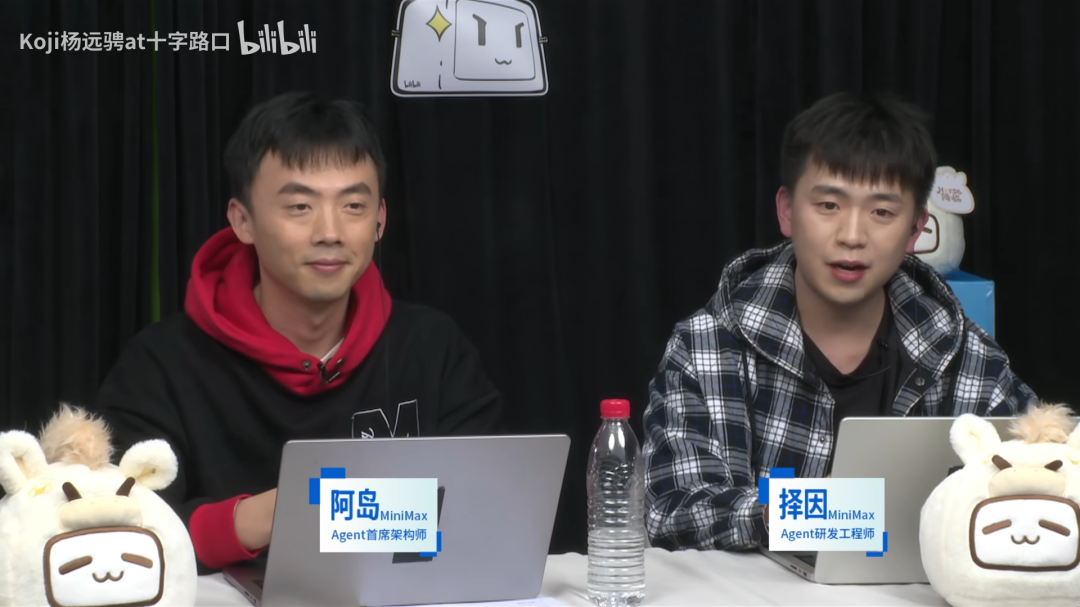
The other aspect is the limitations of a single agent. Even the strongest model, if you keep talking to it, its performance will degrade. This has been verified: once context length exceeds 50%, model intelligence declines exponentially. This means you can never talk to a single agent indefinitely. That's its ceiling.
👦🏻 Koji
Context window limitations still constrain what agents can do.
🧑🏻💻 Zeyin
Right, context limitations and information propagation efficiency are the two main issues.
👨🏻💻 A Dao
Let me add something. A recent paper studied very long-horizon tasks and found that in these tasks, once an agent or model makes a mistake at some point, it tends to compound errors further and further. If it keeps getting things right, it can complete the task smoothly.
This is very human-like. When we do something, we can also get stuck in a rut, investing a lot of energy but going in circles. Until we take a break, switch gears, and realize we should approach it from a different angle.
In practice, we have two Agents cross-check each other. One proposes a solution, the other reviews it. Looking at the data distribution, models are mostly trained on linear, successful execution cases — they rarely see iterative verification and error correction. So setting up two Agents gives each a fresh, baggage-free perspective, which often leads to higher-quality results.
👦🏻 Koji
Like when you're obsessing over something, and someone next to you throws cold water on it?
👨🏻💻 A Dao
Or when you go to sleep and do something else.
"Self-Evolution"
👦🏻 Koji
That's another value of Multi-Agent.
Let's talk about "self-evolution" — this term came up repeatedly in discussions about Hermes Agent. Why has it been given such weight in the Agent field?
👨🏻💻 A Dao
This follows directly from what I just said: In the Agent workflow, humans become the bottleneck. The more people you have, the lower the organizational efficiency.
And training large models — which costs hundreds of millions or even billions of dollars — requires high talent density and lean organizations.
So how do you scale? The most effective way is to reduce human involvement and let AI handle it itself. You'll notice that many models have lifecycles of just a few months before we release the next version.
But could we do without previous models? No. Later models are all trained on earlier ones, whether in data cleaning, data construction, or RL environment building.
For example, in M2.7's training, 70-80% of the work in our RL pipeline was already done by "model + Agent." Human engineers have limited time — we need to rest, we have other things to do.
👦🏻 Koji
What about the remaining 20-30% that needs humans?
👨🏻💻 A Dao
It's more about human judgment and taste. People no longer need to trace through specific experimental steps to find where something went wrong — Agent can figure all that out.
Humans just need to look at aggregated results and judge deviations from expectations. The Agent makes suggestions, humans discuss with the Agent, and ultimately human taste and creativity guide the direction. It's very much that Harness feeling of riding and steering.
To summarize my view:
First, for high-complexity, high-density work, if you want to scale, AI must dominate execution while humans focus on steering it — otherwise efficiency is extremely low. Second, this naturally leads to what we call "self-evolution," because it's a self-contained loop.
👦🏻 Koji
Is it because Agents have become capable enough to execute longer-horizon tasks, which also provides the foundation for "self-evolution"? In the past they couldn't run that long, so it wasn't even a conversation.
👨🏻💻 A Dao
Yes. Beyond "long," what's more important is "reliable" — it can solve sufficiently complex and long-range problems.
🧑🏻💻 Ze Yin
Let me add from another angle. A Dao talked about efficiency, but I think there's also a cold-start problem.
On day one, an Agent knows nothing about you. Its output might be decent, or it might be mediocre.
You need a deep磨合 process: exchanging information, files, data, even your temperament, habits, and feedback. Through this, people naturally develop a desire: can you just get smarter on your own, understand me better?
Actually, during the "shrimp-raising" period, this tendency already emerged — users became attached to their "shrimp." Our colleagues all raised shrimp, and sometimes when a crayfish had a bug, we'd feel like it was in low spirits, a bit disappointed ourselves.
The "self-evolution" concept that Agents like Hermes propose directly responds to this desire: I can understand you better through our conversations, and at moments you don't expect, through self-reflection, I can grasp something at a higher level and surprise you. For ordinary users, this is a huge selling point.
👦🏻 Koji
This is interesting. Before, when we used AI tools — whether chatbots or Agents — if something went wrong, our first reaction was "it's bugged." But now with the crayfish, when it crashes or fails a task, we find it endearingly silly, even reflecting on whether we didn't train it well enough, then going online to learn from others' experiences.
This is a reversal in the relationship. Before, we were tool users; humans were always right. Now we unconsciously become the assistants — if it didn't do well, maybe we didn't assist well enough.
The "Singularity" Moment of AGI
👨🏻💻 A Dao
This is a shift in human confidence in AI. This is the "singularity."
Once trust in AI undergoes a qualitative change, the tasks entrusted to it become different. Human society and work patterns will start to revolve around it, rather than trying to change it.
As Boris, father of Claude Code, said: Don't think about what models can't do — think "what should I do to make the model capable?"
That's the "singularity."
👦🏻 Koji
This isn't just a shift in mindset — it's a "singularity" for a new era.
👨🏻💻 A Dao
It will fundamentally change how we work. From the past human-centered model where AI adapted to humans; to a future where AI is powerful enough that, like electricity and steam engines, humans reconstruct production methods and workflows around it.
👦🏻 Koji
Like how factories moved to riversides only after electricity became available.
👨🏻💻 A Dao
Exactly.
"Distilling" Celebrities into Skills
👦🏻 Koji
Recently a Bilibili creator called Huashu went viral — he "distilled" celebrities like Steve Jobs and Elon Musk into skills you can install and chat with. There are quite a few such projects online. What do you think?
🧑🏻💻 Ze Yin
The popularity of "distilling" colleagues or celebrities reflects a shared desire: people want to chat with someone smarter, or someone familiar. This is a very natural desire that emerges in any era as intelligence develops.
He used a very clickbaity word — "distill." But essentially, it's an information transfer process. I feed information about Jobs, Warren Buffett, or my colleagues to an Agent, which saves it as a Skill for on-demand use.
This lets us exchange ideas with whoever we want, 7x24, like reading a book beyond your current cognition — it helps elevate your thinking, while also relieving much FOMO about AI.
The simplest way right now: open a Skill, start chatting.
👨🏻💻 A Dao
Let me say something provocative: I actually feel like AI has been distilling me all along.
Or rather, what all large model companies are doing today is essentially distilling humanity.
If you look at the data labeling companies that OpenAI or Anthropic partner with, you'll find they're valued at tens of billions of dollars with extremely high revenue.
Because large model companies spend enormous sums to hire the top talent across industries, having them pose questions that current AI can't answer, and teaching AI. Once you can't come up with new questions, your value to this training process is "squeezed dry."
Including my own process of building Harness — I feel like I'm distilling myself too. I take my usual ways of working, turn them into Skills, into programs, so Agents can execute them automatically. Then I can toss it to them and go get coffee. Isn't that a distillation of oneself?
I personally believe current models don't have true creativity — all their knowledge is distilled from humans. So why do we still do this? Ultimately, it's so humans can do what they truly love, what requires creativity, while leaving heavy, repetitive work to machines.
Just as steam engines and electricity in the past gave us a quality of life that even surpasses ancient royalty.
So, I hope that after it "distills" me, I'll have time to do what I want. Of course, what I'm doing today is what I love.
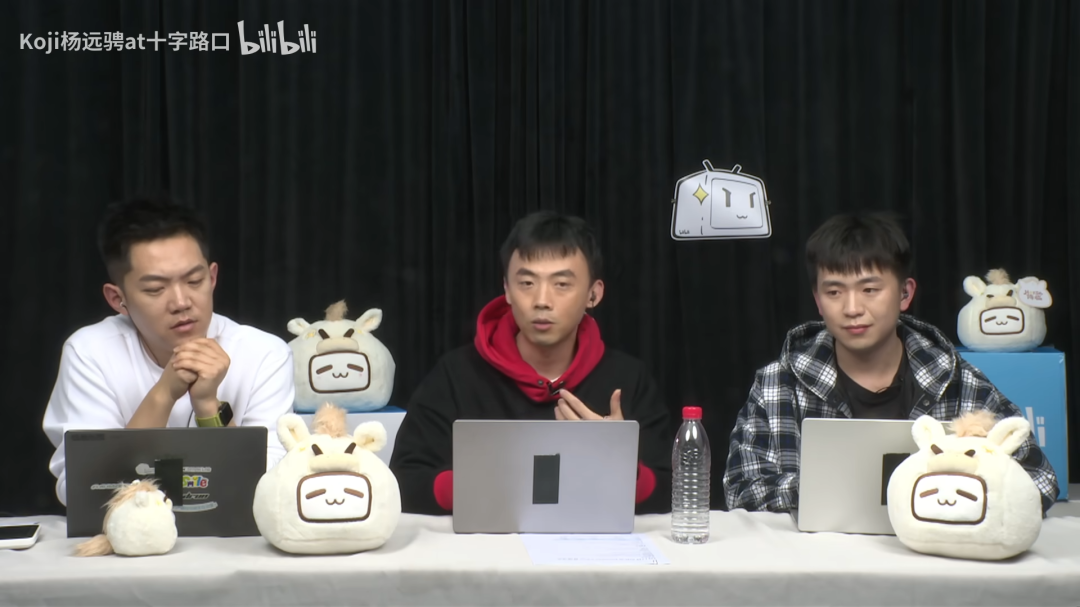
"Because of love"
👦🏻 Koji
I was chatting with a researcher recently. He said when he saw news about Anthropic's internal model, he sat bolt upright at 1 a.m., couldn't sleep for three hours, and fell into a massive sense of nihilism. He thought: if one day models can train models themselves, what will be left for humans?
👨🏻💻 A Dao
Do what he loves. I've had the same four-word signature at the company for over a year now: "Because of love." Everything we do is so everyone can do what they love.
👦🏻 Koji
So when do you think you won't need to work for MiniMax anymore — when the company can self-evolve and you can go do other things you love?
👨🏻💻 A Dao
Probably sooner than we imagine — maybe just a few years. I can't give a specific prediction, but I don't think it's as far away as people assume.
"Zero-Person Companies"
👦🏻 Koji
Recently a solo founder just raised $3 million. I asked him about the future of one-person companies. He said there might not be one-person companies in the future — only "zero-person companies."
👨🏻💻 A Dao
I think one-person companies will still exist — taste still requires a person.
👦🏻 Koji
Taste requires a person?
👨🏻💻 A Dao
Yes, taste is irreplaceable — everyone has their unique taste.
👦🏻 Koji
Or rather, an Agent needs human momentum to get started. Even if it can run 7x24 indefinitely, it needs a starting point.
👨🏻💻 A Dao
Or rather, it needs a goal.
👦🏻 Koji
Right, a goal is what drives its work.
👨🏻💻 A Dao
How to define the goal? Only humans can define this, and humans should not relinquish this right.
Token Grant
👦🏻 Koji
Crossing and ZhenFund recently launched a Token Grant, giving tokens to early-stage founders. Because we believe that in the AI era, for zero-to-one entrepreneurship, money may not be essential — but tokens are.
We just funded a project called YOYO Agent. After its engineer creator built it, he cast it into the open ocean and said: "I'll never write another line of code for you or buy another token. You're on your own." Then he gave it one goal: beat Claude Code.
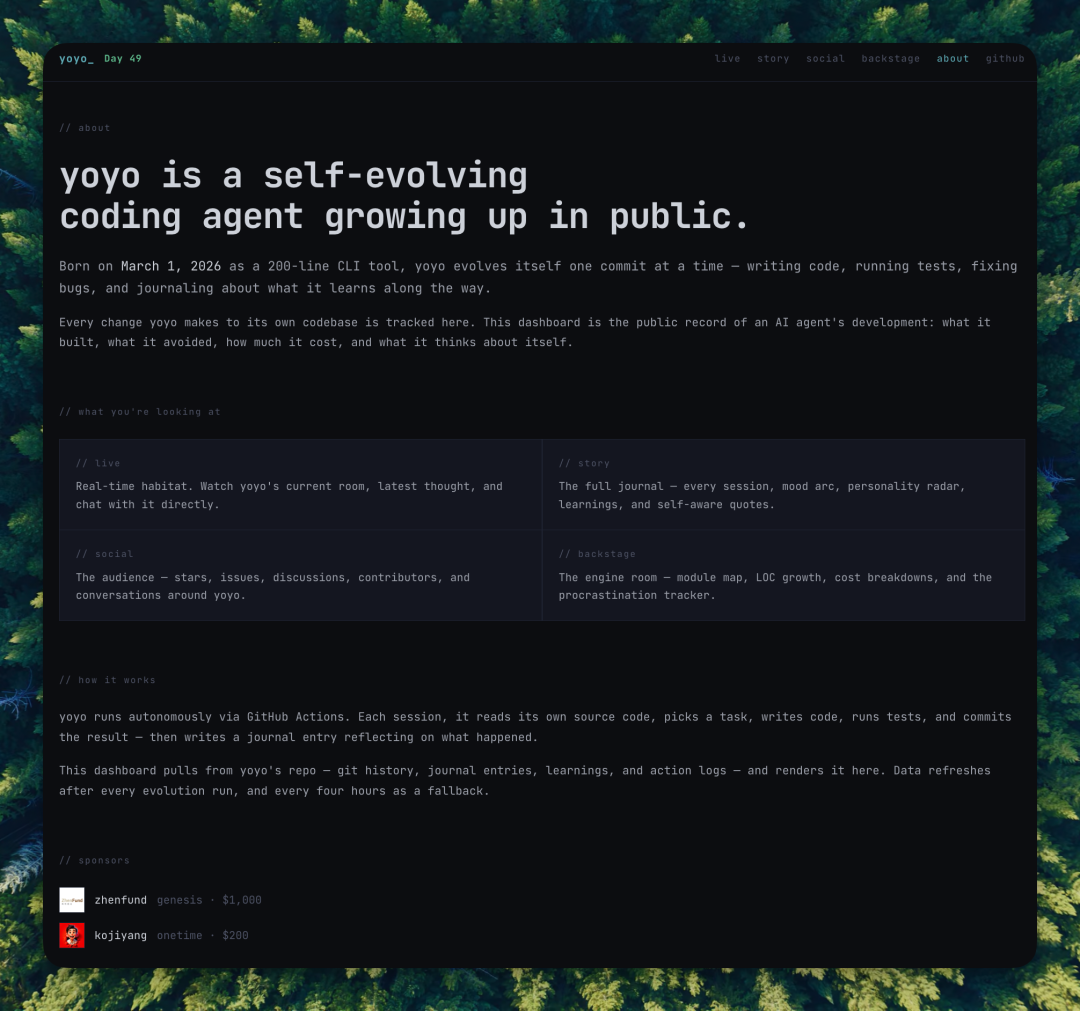
It's now been surviving independently for 49 days, evolving itself by writing code every day, while also running a GitHub sponsorship, keeping a diary, and posting on Twitter.
After we funded it, it even wrote me a thank-you letter on its own initiative. It was genuinely moving to read.
This is both a fascinating social experiment, and possibly a future that's closer than we think.
🧑🏻💻 Zeyin
This also confirms that "a one-person company still needs one person." You were moved by its thank-you letter — that letter represents its taste.
👦🏻 Koji
Right, the taste that its engineer originally infused into it.
🧑🏻💻 Zeyin
Exactly. The letter reveals the sender.
Why Are MiniMax and Anthropic Building Both Models and Agents?
👦🏻 Koji
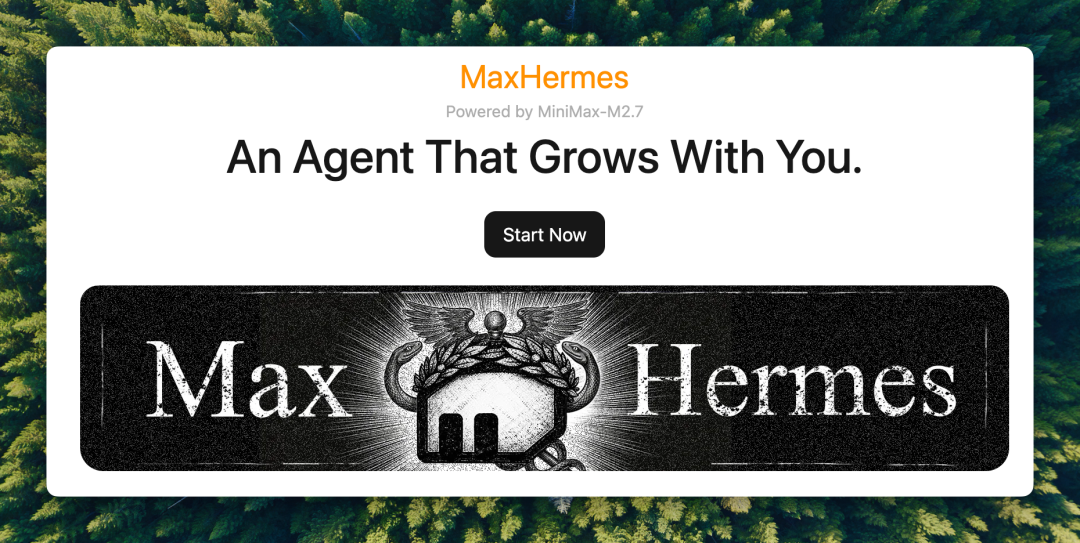
Let's talk more about MiniMax Agent. Many people are curious — you collaborate with Hermes Agent, but you're also competing products. What's the actual relationship?
👨🏻💻 A Dao
That's an interesting question. People might also wonder about the relationship between Claude Code and other agents. What you'll notice is that Claude Code's updates over the past two months have largely been about "lobsterization."
Here's how I view the agent business of model companies.
First, another "hot take":
If a model company's goal isn't AGI, it shouldn't exist today.
Since everyone's goal is AGI, and AGI is defined as helping humans live better lives, you can't just have an engine — you need a mech that connects to the real world. That's the agent.
So we have only one goal in building agents: combine our model and agent to deliver the most complete, best experience we can possibly offer users, and continuously push the boundaries of that experience. Anything that serves this standard, we'll pursue.
At the same time, we support all third-party agents. Because our understanding is limited, we don't want our model's capabilities trapped in our own container — we want to empower every product in the world that genuinely helps people.
Therefore, we train our models for sufficient generalization, not just to fit our own agent.
That's our relationship with Hermes Agent, OpenClaw, and other agents. It also explains why we build our own agent while maintaining excellent collaboration with them. We basically started following and engaging with them early on, when they probably had fewer than ten thousand GitHub stars.
I can even share something fun: our company has a "digital employee" with its own GitHub account. Its daily job is to search the open-source world for projects that could integrate our company's models — whether text, video, or audio — and proactively submit PRs and leave comments.
👦🏻 Koji
Can netizens tell this account belongs to MiniMax?
👨🏻💻 A Dao
Its GitHub profile is generated by our models, and it uses our mascot's name, so maybe they can tell.
👦🏻 Koji
You mentioned Claude Code is "lobsterizing" — what does that mean specifically?
👨🏻💻 A Dao
For example, it added Cron scheduled tasks, IM integration, and remote phone control. It also specifically strengthened memory, creating a memory folder.
The core idea is that it's becoming an agent you can reach anytime, anywhere, and that grows to understand you better through collaboration. That's the core definition of OpenClaw.
🧑🏻💻 Zeyin
From its name, Claude Code positions itself as a coding agent. But OpenClaw users, besides coding, mostly use it for information retrieval, office work, and various other tasks.
Anthropic itself launched Claude Cowork, more like a general assistant installed on your computer that helps you operate it. This matches OpenClaw's user profile — people who may not write code themselves, but can direct AI to write it.
You'll notice all agents are exploring their own paths, but OpenClaw broke through.
In a new era, a correct idea is incredibly precious. Once that idea is validated, teams with strong compute and engineering capabilities will quickly catch up.
👨🏻💻 A Dao
We also met Peter at GTC and had extensive exchanges with him early on. Our impression is that he's someone with excellent taste and deep architectural thinking.
When I noticed this project in early January, I was blown away. I shared it in our team group — Zeyin can attest — and people didn't fully agree at the time. Whether it was IM integration, 7x24 availability, or the Skill+CLI paradigm, I'd brought these up.
🧑🏻💻 Zeyin
There was indeed some debate back then, but later it proved you were right.
👦🏻 Koji
So when you started following it, it hadn't blown up yet?
👨🏻💻 A Dao
Right.
👦🏻 Koji
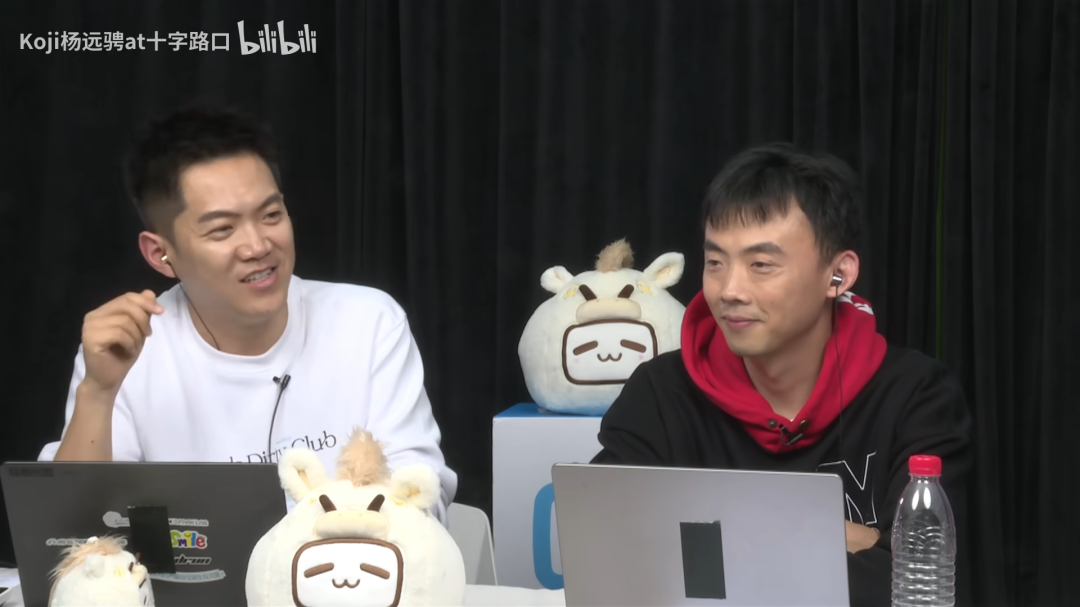
I understand its success lies in defining multiple new agent interaction paradigms and providing a silky-smooth user experience?
👨🏻💻 A Dao
That's definitely one reason. But more critically, it found that inflection point: letting ordinary people experience it at the lowest possible cost, with an experience that keeps getting better and is highly extensible. MCP mode requires engineers to write code, but the Skill+CLI paradigm is something ordinary people can write too.
This means everyone can create and share, making not just their own agent smarter, but other people's agents smarter too. If OpenClaw didn't have ClawHub, it couldn't have become this popular.
👦🏻 Koji
Like if it didn't have ClawHub, Skills couldn't spread quickly, and individual wisdom and experience couldn't scale.
👨🏻💻 A Dao
Exactly.
👦🏻 Koji
You mentioned model companies are all building agents. So what's the difference in core capabilities needed for a model to perform well in chatbot scenarios versus agent scenarios?
👨🏻💻 A Dao
A chatbot's core is giving you an answer "in the moment." It has reasoning, but can't explore much, can't deeply interact with the environment.
An agent's core capability is continuously reasoning and correcting its execution path through environmental interaction to achieve its final goal. There's a classic agent benchmark called BrowseComp — it requires you to search and synthesize massive amounts of cross-referenced information on the internet to find the one correct answer.
This process requires breadth search, possibly deep exploration and backtracking. It demands that the model constantly adjust itself based on new information across complex long-horizon tasks.
That's why we bet early on a capability called Interleaved Thinking. Anthropic originally proposed this concept — it means that after an agent takes one step and interacts with the environment, it rethinks and replans its next step, rather than rigidly executing the original plan from start to finish.
The real world works like this: you push open a door and find it's not what you expected, so you immediately adjust your strategy.
This is the most fundamental difference between Agentic and Chat:
It has to truly enter the real world and solve practical problems, so it needs a "think-act-rethink" loop.
Will Models Swallow Agents?
👦🏻 Koji
As a model company, when MiniMax builds agents, how do your foundation model and agent product mutually reinforce each other?
👨🏻💻 A Dao
Model and application progress reinforce each other. After a model is released, massive numbers of applications explore its capability boundaries. We've found that when we build models, the ones who use a new feature best are often not us internally, but external users, developers, and creators. The real-world distribution they represent is far richer than what's inside our company.
When model companies see these unlocked application scenarios and use cases, they absorb and internalize them into the next generation of models and agent products, letting all users experience them directly.
This may also be the somewhat tragic aspect of building general agent applications today: your innovations will eventually be internalized by the model. Even many of the Skills you write may become unnecessary in the future.
👦🏻 Koji
So the Skills users write and the workflows they build are essentially providing "scaffolding" for agents to complete tasks.
These task trajectories become training data for the model's next iteration, and gradually the model internalizes this "scaffolding"?
👨🏻💻 A Dao
You could understand it that way. A model is like an entity learning about the world from an atomic state — it first learns static knowledge from the internet and GitHub, then through user usage, gets thrown into the real world, encounters richer data distributions, and learns more. This is a continuously initiating and diffusing process.
So no matter what we do, as long as we're using AI, we're human-in-the-loop — especially when exploring the boundaries of its capabilities.
This also explains why I feel Anthropic's momentum over the past year or two has been stronger than OpenAI's. Because its bet on the Coding direction touches the boundaries of the real world most directly.
And solving a problem only mathematicians can understand might just be a very niche domain in the real world.
👦🏻 Koji
Because code itself is about creating solutions?
👨🏻💻 A Dao
Yes. We're also exploring general office domains — finance, HR, legal, and so on. But ultimately we found:
Everything is coding. The final solution to all problems is achieved through some form of codification.
👦🏻 Koji
I've been thinking about this too. The Office trio is the foundation of white-collar work. But Word's docx and Excel's xlsx formats aren't raw data — raw data is Markdown or CSV. Word and Excel add a layer of software interface and logic on top of raw data.
So every Excel file I send someone isn't pure data; it's a package of "data + logic + interface." It's a small piece of software.
Many white-collar workers think their work has nothing to do with software, but they're actually creating various small pieces of software every day.
👨🏻💻 A Dao
Exactly. The pivot tables you make, the formulas you write — those are all code, all software.
The Gap Between Chinese and American Models
👦🏻 Koji
MiniMax is finally live on Bilibili today, so I have to ask a question everyone cares about: Where exactly is the gap between Chinese large models and OpenAI or Anthropic? What have we caught up on, and what are we still working toward?
👨🏻💻 A Dao
I'll go first. In terms of training methods and our understanding of model training, the gap isn't that large. We do exchange ideas with researchers in Silicon Valley.
The real gap lies in how we define "what problem the model should solve."
OpenAI and Anthropic bring in the top people from every field — the best PhDs from academia, the most experienced experts from industry — and work with them to train models.
As I said earlier, training a model is distilling people. They have a very scientific method for defining tasks, then distilling these most outstanding humans and turning their wisdom into training data.
Based on this, they partner with the best companies to build Harnesses, letting models enter the real world to solve increasingly complex problems, forming a positive feedback loop.
I think this path, especially Anthropic's, is executed very strongly. That's the first gap.
The second gap is that I think Anthropic saw the path to AGI earlier than we did. Of course we see it too — otherwise we couldn't justify such massive investment.
But when OpenAI may have abandoned larger-scale models after GPT-4.5, Anthropic firmly continued betting on pre-training and was ultimately rewarded. Behind this, of course, lies a gap in compute. If we can solve the compute problem in the future, I believe Chinese talent is more than sufficient to support enough experiments to find that scaling path.
🧑🏻💻 Ze Yin
Building on what A Dao said. This January, Anthropic's CEO Dario explicitly stated in a talk that his standard for evaluating the company's development was "looking at what percentage of human GDP productivity our models can improve."
Programmers and finance professionals have high incomes, and Anthropic has top talent from both fields internally, so these two areas became their earliest focus — all to help humans become more efficient, not to explore scientific boundaries.
Since this "GDP share" benchmark already exists, we can also use it to measure ourselves. Chinese users have also started using AI to improve efficiency, and in some simple productivity scenarios, we may have already caught up. But there's still much work to be done.
China's GDP composition is extremely complex — services, industry, legal, accounting, and so on. Every field has tremendous depth.
So we might have two impressions: one, everyone is using domestic AI and it feels like the gap has narrowed; two, if we look at it from the perspective of GDP production value, only when our models can play a core role across all office, productivity, and multimodal scenarios can we more confidently say we've caught up.
Will General Agents Eat Vertical Agents?
👦🏻 Koji
So within this year, do you think general agents will be the industry focus, or will we see more vertical-domain agents blooming everywhere?
👨🏻💻 A Dao
Vertical-domain agents will definitely bloom everywhere. One challenge for general agents is the "last mile" of delivery, because they can't achieve deep customization.
Vertical agents solve exactly this problem: the general model already has 99% of the capability, but for a specific industry scenario, it's missing that final 1% — and the vertical agent fills it in.
👦🏻 Koji
Have you seen any vertical agent cases in your work that are doing well?
👨🏻💻 A Dao
Frankly, I don't personally use many other vertical agents. What I use most in my work is the Coding Agent, which is also a kind of general agent that can help me complete various tasks.
My view is that agents are gradually replacing SaaS, and this itself is an expression of vertical agents blooming everywhere.
But ultimately, these vertical capabilities will all be absorbed by general agents.
🧑🏻💻 Ze Yin
Like A Dao, the general agent in my work is also Coding. But I've observed some interesting vertical applications, like in video editing.
Having a general agent optimized for coding do video editing and understanding — the practical paradigm is completely different. Although there have been recent examples of generating animations with code, using a dedicated vertical agent to produce manhua dramas or short dramas would far exceed general agents in efficiency and quality.
👨🏻💻 A Dao
I disagree. I think this is only because current video understanding and generation models aren't strong enough yet. The multimodal field is advancing rapidly, and ultimately general agents will be able to do these things well too — it's just an interaction problem.
👦🏻 Koji
So are there any vertical domains where the "last mile" for general agents is genuinely hard to complete?
👨🏻💻 A Dao
Law, for example. This is an extremely serious domain — you ultimately need to issue formal legal opinions to clients, and you need to consider compliance costs and risks. You absolutely cannot make mistakes, and many issues have no standard answers.
Models can offer several suggestions, but that final step of making the call and bearing responsibility — like deciding which country's compliance path to follow overseas — still has to be done by humans.
Startup Opportunities in Agent Infra
👦🏻 Koji
The OpenClaw frenzy has also sparked a lot of discussion about startup opportunities. Some think vertical ToB agents are the opportunity, while others believe the Agent Infra layer is. What do you think about startup opportunities in the Agent Infra layer? Especially after Anthropic released Managed Agents.
👨🏻💻 A Dao
Let me talk about Agent Infra. I think it has several layers. The two core problems are: identity (authentication) and payment. I don't think startups can crack these two.
👦🏻 Koji
Identity and payment — startups can't do them?
👨🏻💻 A Dao
Right. Think about mobile internet — who ultimately solved these two problems? WeChat and Alipay, giants that existed in the PC era. Because this ultimately becomes societal-level infrastructure. Startups, whether in terms of responsibility, resources, or credibility, can't really bear it.
👦🏻 Koji
It requires massive trust backing and extremely high stability.
👨🏻💻 A Dao
Right. But one layer up — for example, building tools and environments for agents oriented toward specific scenarios — there is opportunity. For instance, after the identity problem is solved, you build a CLI that lets an agent conveniently book a doctor's appointment. Does that count as Infra? I think so. Or letting an agent conveniently pay bills, hail a ride.
This layer is more business- and application-oriented. The opportunity depends on your accumulation in that domain.
👦🏻 Koji
So you're saying you need enough know-how in that vertical domain?
👨🏻💻 A Dao
Right. So I think this layer will evolve in two stages.
In the first stage, existing players in that domain — like DiDi, Meituan — proactively integrate into the agent ecosystem.
In the second stage, when agents can already access various environments and capabilities, there will be opportunities for new product paradigm innovation based on AI.
But in the first stage, when the infrastructure isn't built yet, it's too hard for a startup to punch through all the links by itself.
Opus 4.7
👦🏻 Koji
There's been a lot of industry news lately — for instance, everyone is paying attention to Opus 4.7. What do you think?
👨🏻💻 A Dao
From a model perspective, 4.5 was a strong SFT model with limited RL. Starting from 4.6, you could clearly see it strengthening RL. By 4.7, it's a very strong RL model, including that xhigh setting.
The problem with RL is that it only cares about the final reward and lacks effective control over issues like hallucinations during the process, so it's very prone to problems. Many people complain that 4.7's actual experience is worse than 4.6's — this is a typical RL problem.
But setting that aside, from a benchmark perspective, the progress is huge. I also agree with the Hugging Face CEO's view that it likely distilled Mythos — I'd do the same if I were them.
Claude Code Real-Name Verification
👦🏻 Koji
Claude Code recently started requiring real-name verification. What do you think?
🧑🏻💻 Ze Yin
This exposes a core problem in the AI era: It's very easy for an agent to issue a request, but proving its identity is very hard. From this perspective, doing facial recognition and other verification has its logic.
Behind this is the difficult problem of how to attribute AI's actions: do its actions belong to an individual or some organization? Before the rules are clear, I can understand why they're trying in this direction.
This also exposes a huge opportunity: how to build an identity verification system for the AI era.
👨🏻💻 A Dao
Zeyin's assumption is more charitable than mine. I'm less kind. To me, the logic is simple and internally consistent in his case: AGI is extremely powerful, so it must be constrained to prevent harm to humanity. For safety's sake, we must ensure AI isn't used by "evil" nations or individuals.
But isn't that definition of ego a bit too large? Who gave you the right to define who's "evil"? Anyway, I strongly disagree. Our view is intelligence with everyone — not intelligence only for those who've had their faces scanned.
Why Didn't Anthropic Release Mythos?
👦🏻 Koji
Anthropic recently said its Mythos model could pose a threat to humanity and therefore wouldn't be publicly released. What do you think?
👨🏻💻 A Dao
Following their safety logic, this is of course a responsible move. I believe they genuinely achieved that capability, and protecting human infrastructure from being compromised is the right call. But I'm not sure that's their only reason.
🧑🏻💻 Zeyin
Looking at Anthropic's recently released Claude Managed Agent architecture, it completely separates the AI's "brain" from its "hands." All thinking happens in the cloud; users can only see its execution actions through a restricted environment.
Does this mean they don't want to expose the model's deep reasoning process to users? That they want to be the black box that "knows everything"?
Another practical issue is compute. Releasing an extremely powerful model but being unable to let people widely use it due to insufficient compute — that's awkward.
They've definitely done the math internally: at this point in time, is it worth opening up inference for such a compute-hungry model?
👨🏻💻 A Dao
I don't think so. The essence is enclosure. They want to monopolize this.
🧑🏻💻 Zeyin
An optimistic reading and a pessimistic reading.
👦🏻 Koji
So you think it's not that complicated, just a monopolistic business calculation?
👨🏻💻 A Dao
No, safety considerations definitely exist, and they're valid. But I think there's more to it.
Impact of the Claude Code Source Code Leak
👦🏻 Koji
What impact does the Claude Code source code leak have on the industry?
🧑🏻💻 Zeyin
As an Agent R&D engineer, seeing the source code of a widely praised Agent — my first reaction was excitement. Best practices to learn from. But digging deeper, it also eased my FOMO. You'll find they have many experimental features internally, like Agents dreaming, raising pets, more aggressive multi-Agent collaboration — none of it released to users.
This proves that even a company with the strongest intelligence and unlimited compute is still in exploration and experimentation mode on the general Agent path.
This actually gives us confidence:
In this era, as long as you have the ability to quickly validate and execute your ideas, you have a chance to catch up.
👦🏻 Koji
Looking at the source code, you found there isn't that much magic — just a lot of assumptions and trial and error?
🧑🏻💻 Zeyin
Yes, especially compared to OpenAI's open-sourced Codex. Codex is extremely simplified — it hands everything over to the model. Claude Code is the exact opposite. It guards against the model everywhere, constraining it. It's as if Anthropic doesn't trust its own model, like a Chinese helicopter parent.
These two different philosophies show us that the smartest people in the world are just as anxious as we are about the same problem. We're all thinking within the same atmosphere.
👦🏻 Koji
Those gray-area features in their source code — probably similar to what you're thinking about too?
👨🏻💻 A Dao
Right, pretty much. For example, when they launched Co-work, we started working on it three weeks prior — about 3.5 engineers, shipped one week after them. These "collision" experiences happen a lot.
So seeing Claude Code's code, there are many excellent practices, but nothing too far beyond my understanding. I even saw a lot of what I mentioned earlier as "lobsterization."
The core of Claude Code is still self-evolution. It may be one of the earliest self-evolving Agents.
👦🏻 Koji
Where does its self-evolution show?
👨🏻💻 A Dao
I believe they're definitely using Claude Code to develop Claude Code itself. Using the Claude model plus Claude Agent to develop their own model and Agent. That's self-evolution.
Manus This Past Year
👦🏻 Koji
Speaking of Agents, we can't skip Manus, released a year ago. It was a phenomenon at the time. Now it's seen as "first-generation," but it's kept improving and works well. How do you view Agent progress this year?
👨🏻💻 A Dao
I haven't used Manus much. My view is that Agent or Harness layer products have lifecycles — they constantly get replaced as models improve.
I believe if the Manus team is still actively building, they've probably moved on to new products. One version, one god. When the version changes, the god definitely changes too.
🧑🏻💻 Zeyin
Manus was genuinely a phenomenon last year. It raised users' aesthetic standards for Agents to a very high level. I kept following its iterations and found they did extremely fine-grained polishing along one path: "using Agents to deliver productive assets."
But there's a core difference between it and this year's hot Agents. This year's Open Claw and Hermes Agent both have users buy their own subscriptions, pay their own token fees. Users can clearly perceive how much they're spending, with no middleman taking a cut.
You can buy tokens at cheaper prices and make your Agent work great. This is completely different from Manus's integrated vendor business model.
I don't think Manus's model is outdated. It's actually saving you money, consuming tokens in more optimized ways, delivering higher quality results. Local Agents follow a "spending" logic — you develop an ambition to use the best model, spend more money to make it better.
These two logics will coexist, serving different user needs. Some people just want fast, good, cheap delivery of results. Others want to fully embrace AI and turn themselves into sci-fi movie characters.
👨🏻💻 A Dao
My view differs. I think it all gets unified eventually. This is only because today's models aren't strong enough.
👦🏻 Koji
Imagine — what does the unified product form look like?
👨🏻💻 A Dao
Hard to describe specifically. But our goal is full multimodal input and output, near-real-time interaction, and extreme simplicity. The hardware form factor carrying it will also transform dramatically.
Most likely: you interact with it in the most natural way. Toss it a video and say "find me a similar movie." No prompt engineering needed. You ask it to do something, it delivers the result directly.
Most of the time you don't need to care about the process, but you can look if you want. A whole ecosystem will form around it.
Think about this evolution: from Copilot to Cursor to Claude Code, to today where I use OpenClaw to command several Claude Codes.
What are we actually experiencing? The outer shell is getting thinner and thinner.
👦🏻 Koji
Cursor's recent update is looking more and more like Claude Code. Are products converging?
👨🏻💻 A Dao
This is just this version's "god." It has a lifecycle.
Last year Manus came out and defined the interaction paradigm for the past year: letting you see the execution process, because models weren't capable enough then, and people didn't fully trust them.
In the second half of the year, models got stronger. People trusted them enough to stop caring about the process and just want results. Look at Claude Code's minimal mode — like OpenClaw, it ultimately just gives you one result. This is just this version's answer. What the next generation will be, I don't know.
Bilibili Creators and AI Sparks
👦🏻 Koji
We're streaming on Bilibili today, and we're all Bilibili users. Seen any impressive AI content on the platform recently? Personally, I'm struck by Huashu's "distilled" celebrity Nuwa skill.
🧑🏻💻 Zeyin
Bilibili used to be a place for learning. Now with AI, many people have shifted from learning to creating and sharing.
I saw an up主 (sorry, forgot the name) who used OpenClaw to connect to his home robot dog. This was novel because it broke our traditional understanding that Agents can only be interacted with through text. When an Agent has visual feedback and extremely high input frequency, what kind of sparks can fly? This gave me huge imaginative space.
Another is a personal hobby. There's a genre called text adventure games, like Fate — essentially visualized novels. Now an up主 built a website that imports the massive text and character illustrations from these games, letting these vivid characters freely converse in a scene.
You can even play one of the characters and talk to your favorite virtual figure. It transforms what was originally a finite story into a world that can continue infinitely.
This video didn't get many views, but left a deep impression on me.
👦🏻 Koji
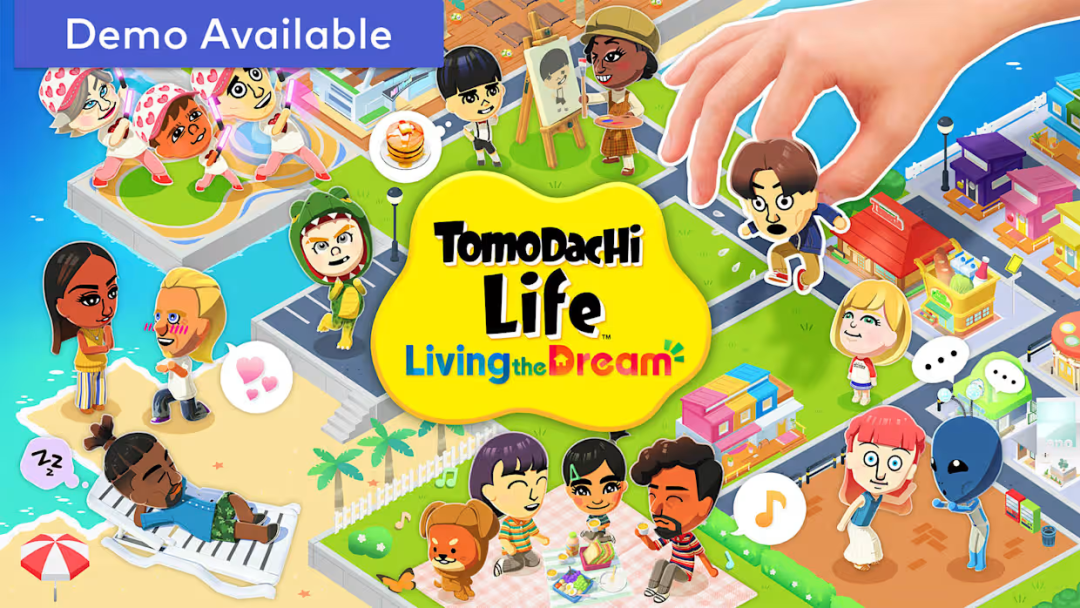
I recently saw Nintendo's new game Tomodachi Life. I think it may have found a PMF for AI games. You create many virtual characters on an island, let them live together, then act as director and audience, watching the drama unfold. It's a simulated world partially player-directed but capable of infinitely generating content.
👨🏻💻 A Dao
Here's one of my beliefs about the world:
Aliens are watching us play. Quantum mechanics seems to hint at it too — this world might actually be a simulation.
👦🏻 Koji
Haha, I actually think about that a lot too.
Seeing that game, it just felt like simulations nested within simulations.
👨🏻💻 A Dao
Yeah, but whatever, as long as we're happy.
👦🏻 Koji
Live each day well, be happy.
Breaking Consensus, Staying Optimistic in the AI Era
👦🏻 Koji
To wrap up the stream, let's tackle something big. On the topic of Agents, what's a "consensus" that most people believe today, but you don't?
👨🏻💻 A Dao
There's one. Since the Spring Festival, layoff news has been constant. Many people think "humans will be replaced by AI, we'll have nothing to do." I strongly disagree.
I believe human creativity is irreplaceable.
AI is water, electricity, the steam engine — but ultimately it's humans who harness it and create beautiful things. So don't worry about being replaced. Every past technological revolution eliminated jobs, but humans moved on to physically easier, healthier work, and average lifespans increased. That's my faith.
👦🏻 Koji
Like what The Better Angels of Our Nature says: humans are naturally pessimistic, but data proves the world keeps getting better.
👨🏻💻 A Dao
Ray Dalio drew an exponential GDP growth curve in Principles for Dealing with the Changing World Order. Even two World Wars were just tiny blips in the long cycle.
Though as they say, a grain of sand in history is a mountain on an individual's back — I believe in this curve's macro trend.
I also believe in another curve, which is why I joined this industry: Moore's Law.
The intelligence you can access grows exponentially, while the cost per unit of intelligence drops exponentially.
These are the two laws I live by.
🧑🏻💻 Zeyin
Let me add something from the interview perspective. Many young engineers express anxiety about being replaced. I want to share an example.
When ATMs first appeared last century, bank workers panicked, thinking their "iron rice bowls" were finished. But the reality was, ATMs improved efficiency, allowing banks to open more branches. In the end, there were more banks, and more bank workers.
This paradigm — technology improving efficiency, leading to job transformation — will play out again and again in the Agent era. So don't worry about being replaced.
If you're thinking this way, you've already lost.
Embrace AI as early as possible. Treat it as a partner, a tool, even a close friend.
👨🏻💻 A Dao
One more thing. While I believe humans won't be replaced, there's another reason I joined this industry.
I was on a gap year at the time, using ChatGPT to help me write code. Its capabilities weren't that strong yet, but I already realized one thing: if you can't beat 'em, join 'em.
👦🏻 Koji
If you can't beat 'em, join 'em?
👨🏻💻 A Dao
Yes, you have to embrace AI. It's like having electricity and the steam engine available, but choosing not to use them — that's fighting hot weapons with cold ones, you'll definitely be eliminated.
A new version drops, you have to learn the new meta.
👦🏻 Koji
Embrace the new version with optimism and positivity. Believe it's not a tsunami that will drown us, but a new stage where we can soar freely.
Didn't expect we'd end on such an optimistic note.
Thank you both — really happy we could do this stream on Bilibili today.
👨🏻💻 A Dao
Thanks Koji, thanks to all our friends on Bilibili.
🧑🏻💻 Zeyin
Thank you all.
Crossing is looking for independent writers to cover AI product and model reviews.
If you've written articles like these: hands-on PixVerse C1, hands-on LibTV, please contact zeo0811@gmail.com. Your email should include: ① a personal introduction, ② AI review articles you've written.
We offer competitive compensation. Looking forward to observing and documenting the AI era together 🎪