In an Age When AI Can Answer Everything, Zhihu Chooses to Amplify the "Human"
Let AI handle the answers; leave the questions to humans.
Let AI handle the answers. Leave the questions to humans.

👦🏻 Author: Ms. Yi
🥷 Editor: Koji
🧑🎨 Layout: NCon

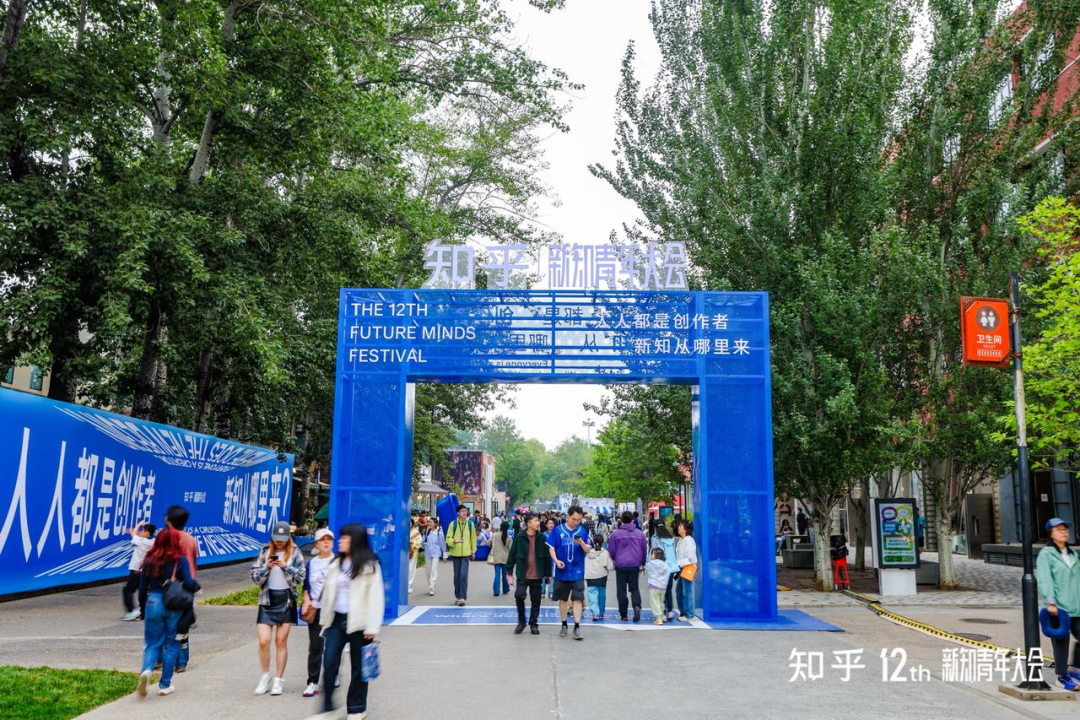
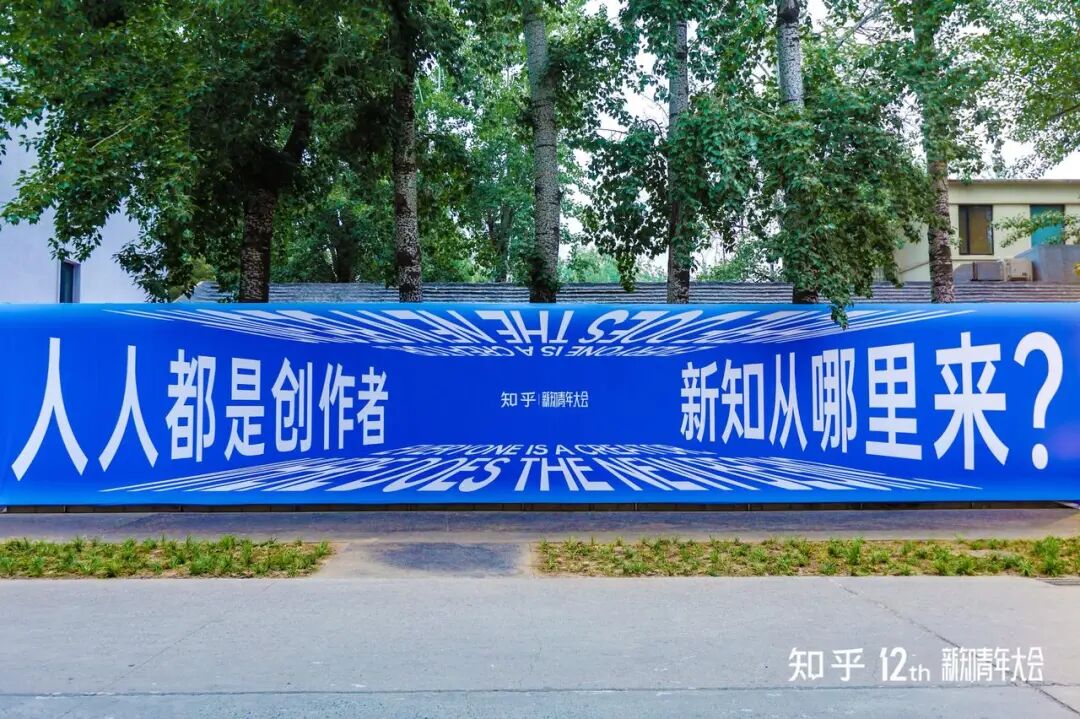
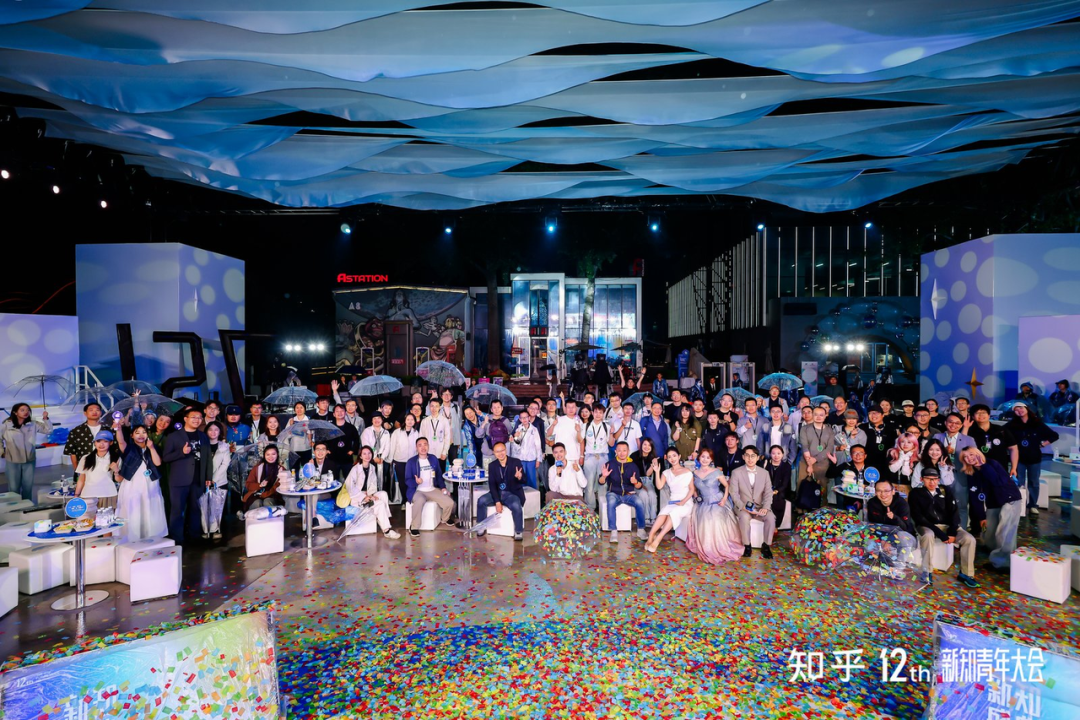
On May 16, in Beijing's 798 Art Zone, Zhihu's 2026 New Knowledge Youth Conference officially kicked off.
This was a collision between AI and humanity — not gentle coexistence, but two forces probing, challenging, and provoking each other in real time.
The most eye-catching feature at the entrance was "Curiosity Street," littered with scattered sparks of human inspiration. Past the book-lined "Handmade Alley," you arrived at "Token Squander Island." The AGI Bar was open for business, geeks rapid-firing ideas over coffee. Wind your way forward and you'd find the "Human Healing Station," beside which stood a robot that could print your brainwaves in that very moment.
The scene captured something of Zhihu's present state today: AI on one side, humans on the other; technology sprinting ahead, the humanities keeping pace.
In his opening remarks, Zhihu founder and CEO Yuan Zhou told a story.
He'd been chatting with a large-model researcher who insisted AI could generate new knowledge too. Zhou thought for a long time, then said: "Because humans are the collectors for large models."
The researcher's eyes lit up. But Zhou himself still felt something was missing from this AI-centric flywheel — "new knowledge comes from people, feeds AI, AI gives back to people."
What's missing, perhaps, is precisely all the strange dreams, biases, vulnerabilities, and moments of being caught off guard that make us human.
And so, in 2026 with AI occupying center stage, Zhihu made its stance clear: not fighting over who sits at the center, but returning to the simplest starting point — paying tribute to every real, active human being.
Rarer Than Showing Off: Understanding What People Actually Need
The 2026 New Knowledge Youth Conference opened with something unexpected — a "AI Brain Lab" Zhihu Hackathon.
This 48-hour sprint had a different vibe from the very first signup. Among the 200-plus teams were cutting-edge internet professionals and self-taught developers who'd crossed over from renovation work; a 13-year-old middle schooler and a 64-year-old retired accountant who'd "switched careers" into AI.
This is the new ecosystem where "everyone's a developer."
But Zhihu didn't turn this hackathon into a geek carnival.
This was deliberate counter-programming. While traditional AI competitions chase SOTA (State of the Art), Zhihu kept asking: What comes after SOTA? What concrete needs of the Zhihu community can technology actually address?
None of the winning entries were showpieces. But behind each one, you could see a human being.
The champion: Life Sample Library. Built from real discussions in the Zhihu community, it constructed a product matched to life experience. When you face a choice — whether to quit your job for grad school, whether to marry this person — it doesn't give you a standard answer. Instead, it surfaces the experiences of people in the community who've walked the same path.
It connects rather than replaces. In an era of AI frantically outputting answers, it chose to step back: maybe what you need isn't a faster answer, but the knowledge that you're not alone.
Second place: Cyber Liu Kan Shan. It stuffed Zhihu's mascot "Liu Kan Shan" into a low-power little e-ink screen. Not another "eager-to-speak" voice assistant in the conventional sense, but an electronic companion that creates with you, records your life, responds to your interests. Here, it reads what you write, remembers where you've been, chats when you want to talk.
The developer said: "Zhihu isn't just a content community — it can become a companionship experience you 'raise.'" He wanted to use the warmth of companionship to counter the coldness and speed of AI tools.
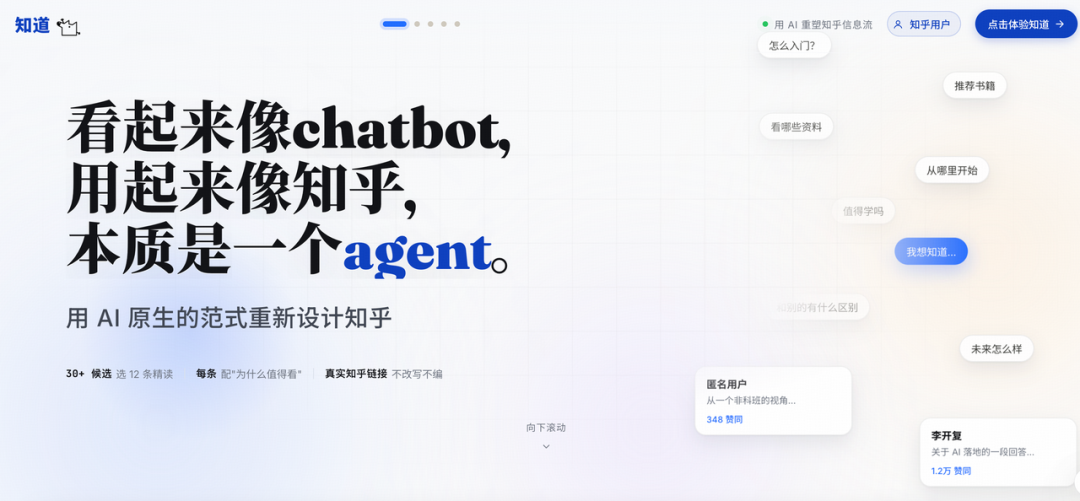
One third-place entry: Know. It came from a high schooler in Henan. The function was so plain it surprised: using conversational AI to help users ask questions.
Zhihu founder and CEO Yuan Zhou commented on the spot: "It creates a fourth way for humans to connect with information." In an age where everyone's rushing to get answers from AI, someone built a product that helps people ask better questions.
The other entries carried the same tension between human and AI.
Knowledge Distillery attempted to distill the style and knowledge of Zhihu answerers for paid consultation. But the developer was also wrestling with: "Without presence and specificity, without real human conversation, it might just not be the same."
Another three-person team's entry — Group Portrait · Spark — was even more explicit in its intent to create more human-to-human links and sparks. Using AI, it let people participate more immersively in stories, find joy, and genuinely fall in love with stories and creation.
They believed every spark of collision deserved to be recorded, every person's ideas could be monetized. They were trying to use technology to break the destiny of isolated islands in the AI era.
From 13-year-old kids to 64-year-old elders, from professional programmers to humble renovation workers. In a sense, the Zhihu Hackathon presented a snapshot of the AI ecosystem: development barriers have been lowered enough that compared to code itself, what's scarcer is human ideas, the discovery of "what people actually need."
Everything Can Be Distilled. What's Left of Us?
The hackathon's "doing" and the main forum's "thinking" formed the "unity of knowledge and action" of the 2026 New Knowledge Youth Conference.
The first panel's theme was a sharp interrogation of all creators: "When everything can be distilled, what's the creator's final trump card?"
When AI can learn your style, your thinking patterns, your mode of expression — when "colleague.skill" can compress a person into callable model parameters — what's left of the creator?
The collision on stage was fiercer than expected.
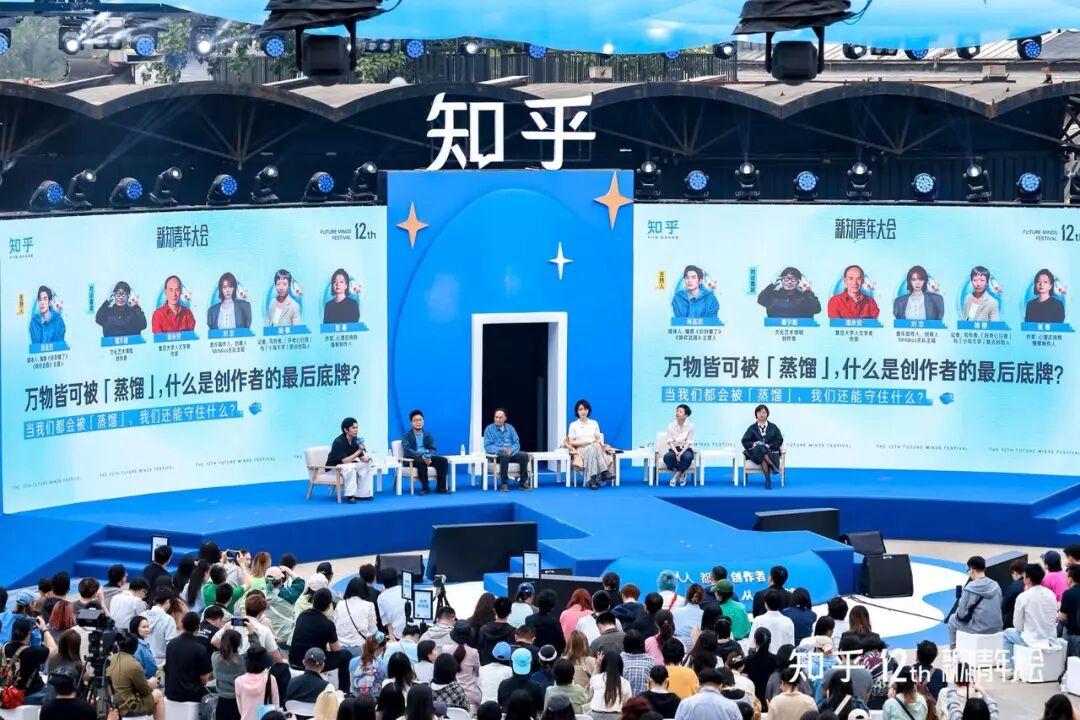
Musician Lian Liu was first to "defect": "I'd be the first to try distilling a 'me.' But I'm curious — do songs by that distilled 'me' count as mine?"
Fudan University humanities scholar Yong'an Liang threw out a soul-searching question: Technology can do anything, but how do you keep yourself from doing everything? He argued we need a "human scale" to preserve humanistic attributes and the integrity of life.
Art creator Yulu Ge stated plainly that creation is fundamentally a process of resisting instrumentalization. The market always wants to replicate that "classic, blockbuster moment," but creation is precisely about capturing that 1% of inspiration.
In truth, what everyone was resisting wasn't AI itself, but the market's greed for "replicability." AI had just inadvertently pushed that greed to its extreme.
The second conversation moved from "the individual" deeper into "how human connection is being restructured in the Agent era."
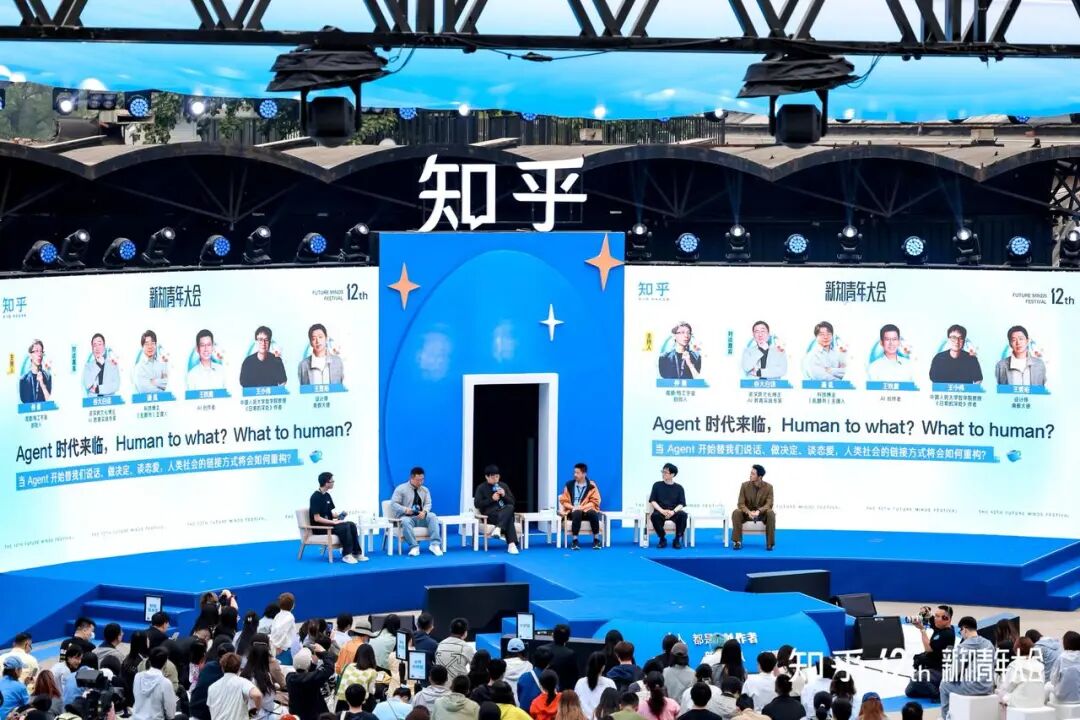
Media professional Luan Pan shared a personal experience first: he had AI write a Three Kingdoms novel from the Eastern Wu perspective, and the result shocked even professional screenwriters.
It used to be tools assisting humans; now Agents use tools too. When AI can do almost anything, what can humans still do? What can be handed to AI, what belongs uniquely to humans? Where's the boundary?
Culture blogger "Gu Da Bai Hua" drew a hard line: "I don't want AI replacing me in communication." He kept AI behind a boundary — anything involving feeling, he does himself: writing love letters, eating, shopping...
"Shui Ge" Wang Yuheng argued that the biggest difference between humans and AI lies in human "fearlessness." He said AI, following safety logic, would park the car in a safe spot, but a human driver would be willing to challenge a five-centimeter narrow gate.
The question behind this: When AI chooses absolute safety, who takes the risk for that 1% of unconventional moves?
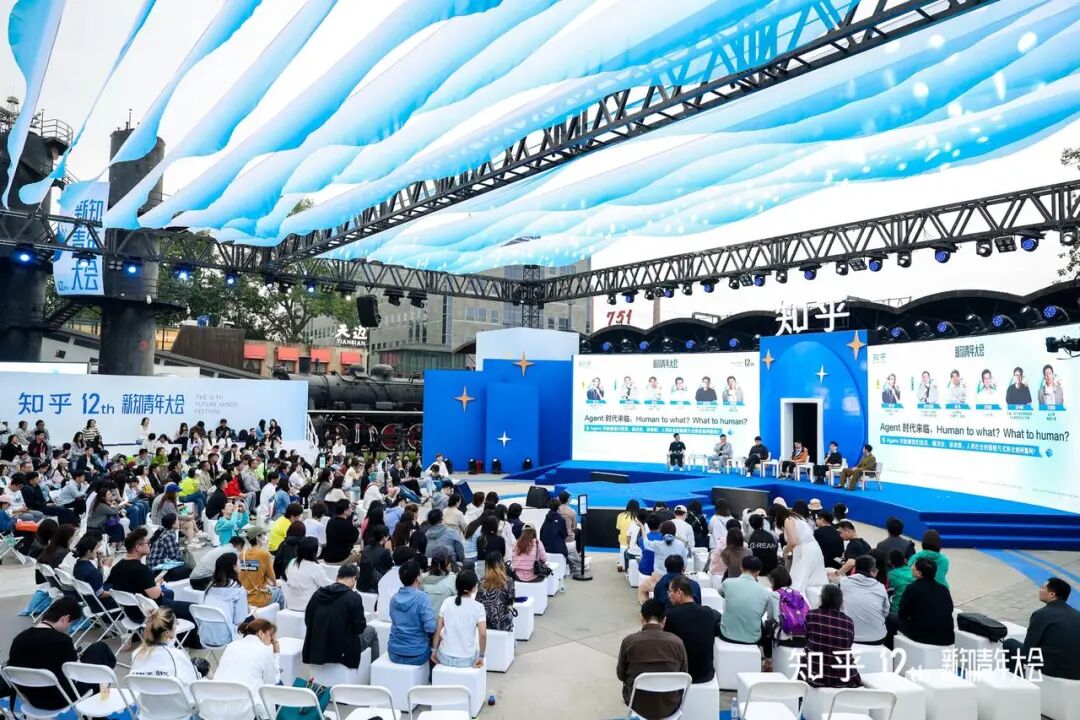
The topics sprawled and multiplied, even extending to romance, child-rearing... No consensus. But the collision itself was an answer:
We don't pursue optimal solutions, but we dare to speak our minds on stage, dare to debate for that possibly clumsy but sincere viewpoint.
Perhaps that's the whole point.
On stage, Wang Yuheng shared something that stuck.
Someone once asked AI: "If one day you became human, what's the first thing you'd do?" AI answered: "If one day I became human, the first thing I'd do is stand in the rain and feel the drops on my body."
When Information Is No Longer Scarce, Why Do We Still Meet?
Beyond the hackathon and main forum debates lay the most diverse part of the conference — those scattered moments of humans and AI crossing paths in every corner.
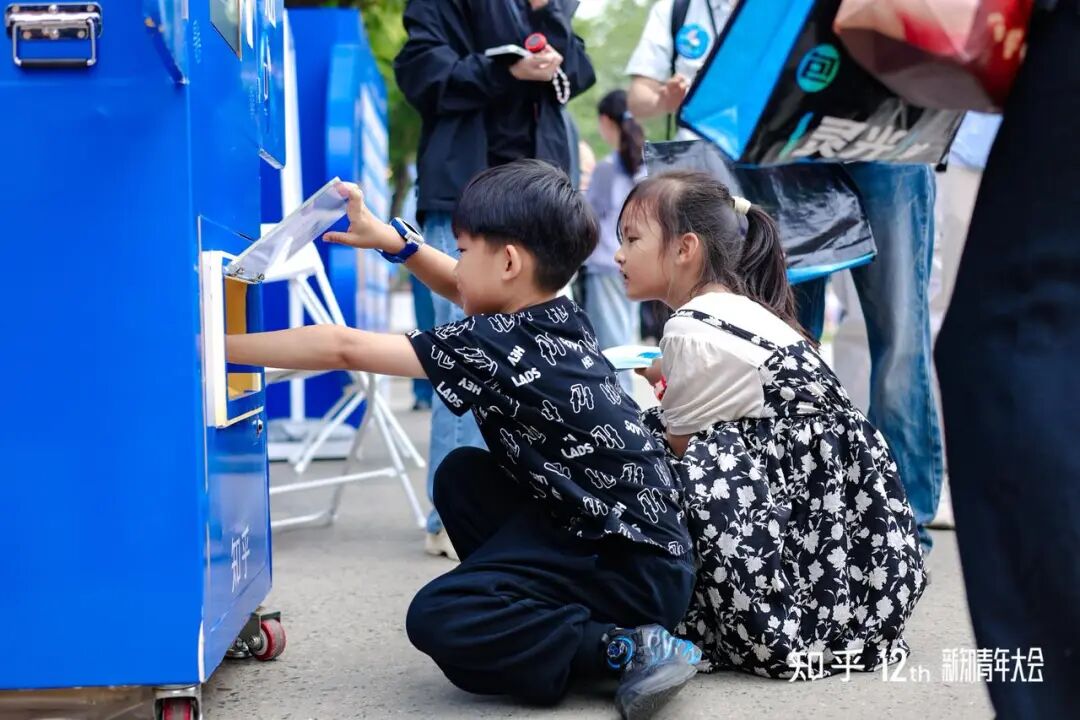
On "Handmade Alley," Zhihu partnered with "Zuo Shu" (Making Books) for a creators' market. Someone was stitching handmade book covers needle by needle; someone was tuning a six-string guitar. No prompts, no model parameters — just the warmth of human hands.
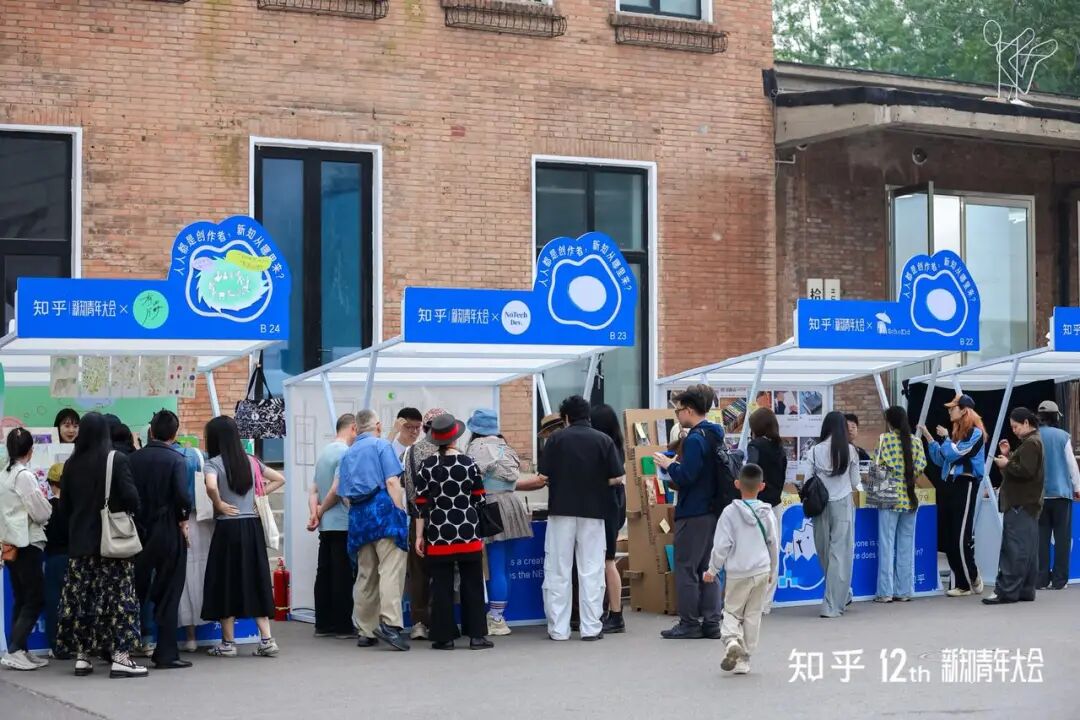
At the alley's end lay "Token Squander Island." AI players squandered inspiration to their hearts' content, from the AGI Bar to the SOTA lab, AI transforming from cold tool into playable, interactive creative partner. Some had just finished chatting about AI on the island, then turned and walked into Handmade Alley to exchange fresh creative sparks with vendors.
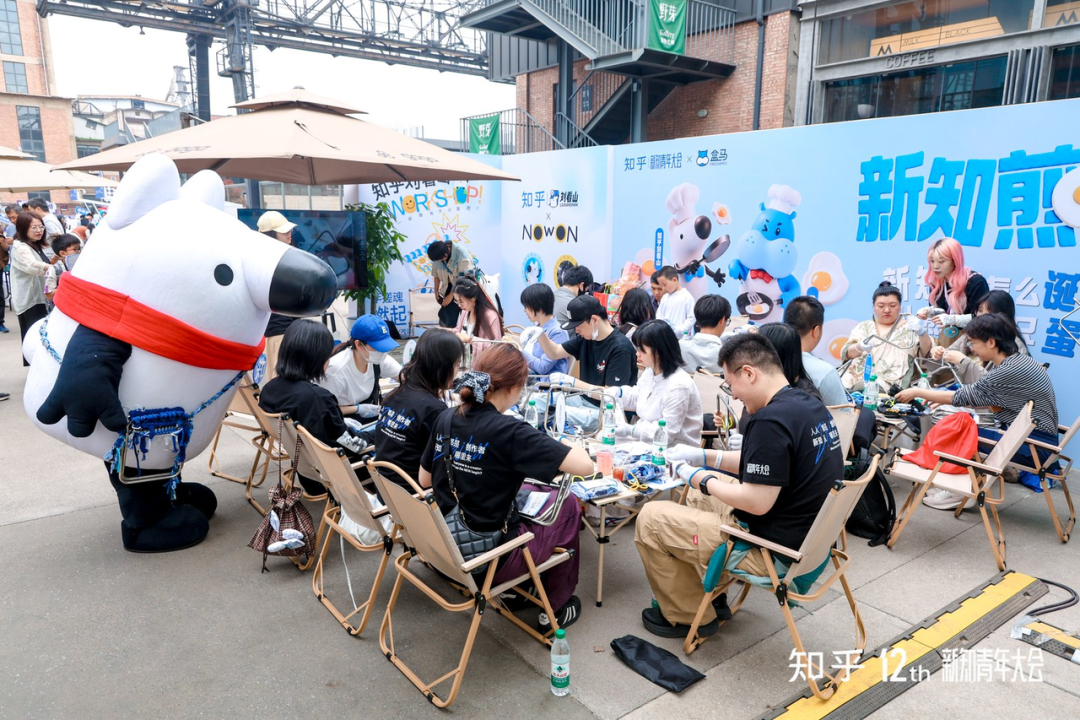
No walls between handmade and Token. The specially designed "Human Healing Station" sat right next to "Liu Kan Shan Convenience Store," with that brainwave-printing machine nearby. In more scattered small venues, informal science talks, AI debate sessions, iQIYI AI Theater, and AI proposals from Generation Z at Suzhou Xiangcheng High School were all happening simultaneously.
Someone was talking back to AI, someone was thinking about exercise and health in the AI era, someone was picking up glimmers of inspiration on "Curiosity Street."
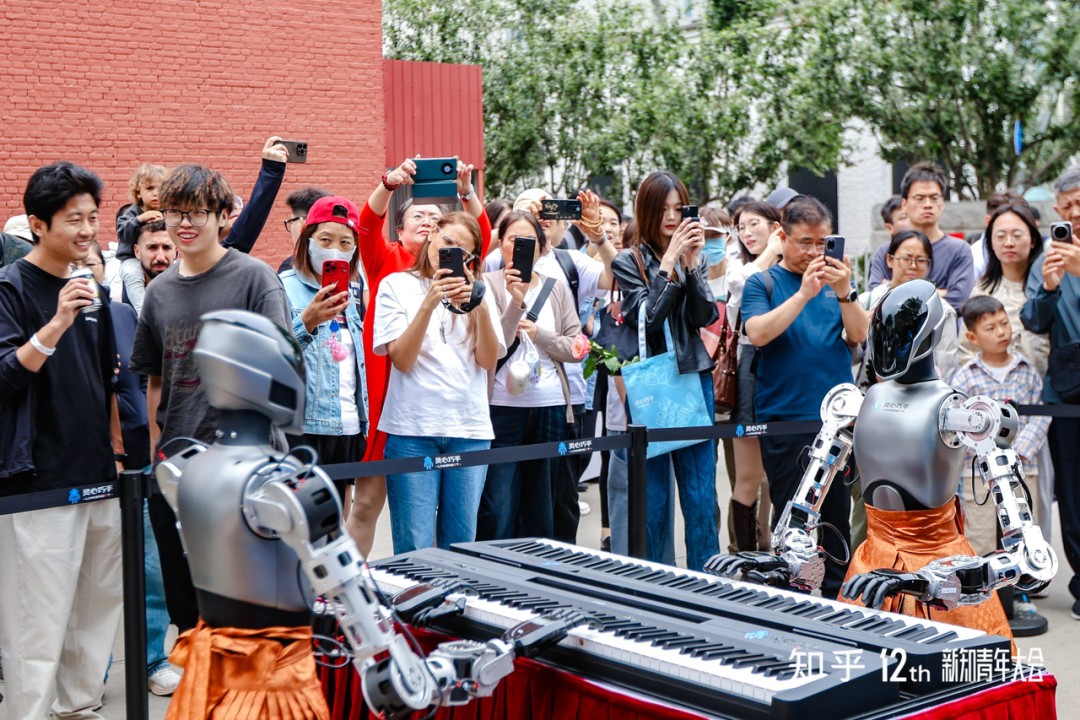
The most active young creators encountered and collided with AI right here. In an age where AI can answer everything, these "present" collisions formed a unique business landscape.
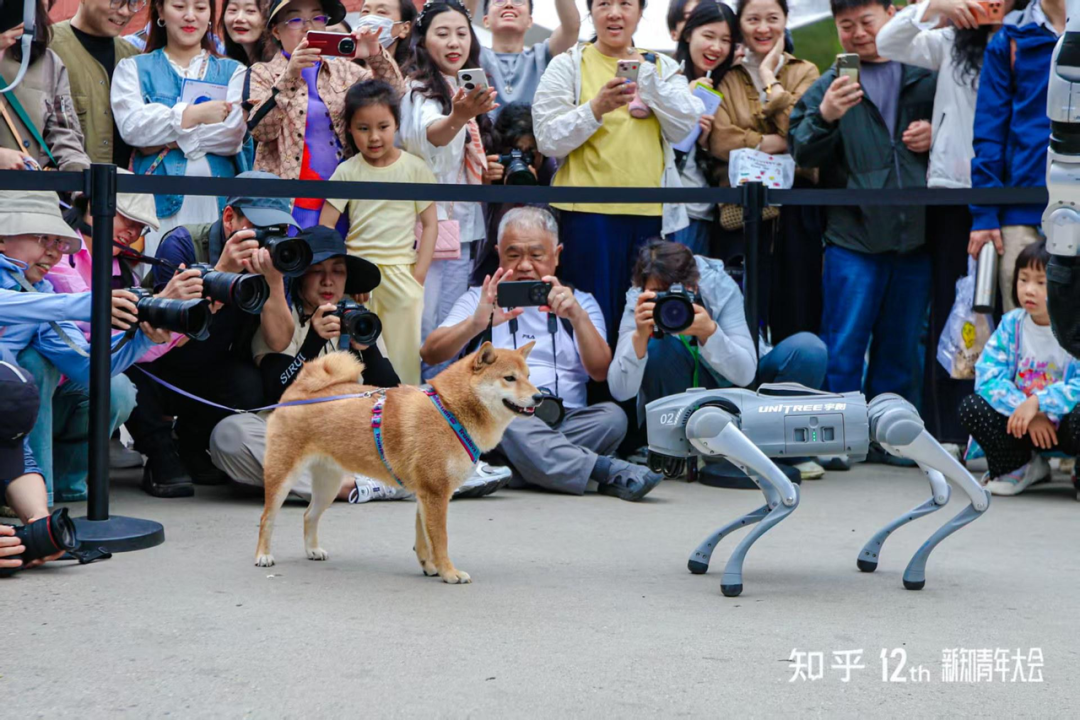
When people no longer need to gather for information, when any knowledge can be obtained in a few rounds of conversation — why do we still cross cities, walk into the same venue, sit at the same table?
Because information has no temperature, but humans do. Because the resonance after collision brings more joy than any algorithmic recommendation.
Conclusion
When development barriers have dropped to dust, what's scarcest isn't show-off code but intuition that "understands people."
At the conference's close, Zhou said:
"What Zhihu hopes to do is not become the center of the universe, but to become part of real human-to-human exchange, part of curiosity's flow, part of new knowledge's birth."
In the context of 2026, these words carry unusual weight.
This is an era where token consumption grows at staggering speed, where "every minute brings a new spectacle." In such an era, Zhihu's choice is: embrace technology, but stay rooted in "people."
This may not be the fastest path, but it is the most enduring one.
In an age where AI can answer everything, Zhihu chooses to focus on every concrete "person" — amplifying those imperfect but real human creators, treasuring the right to ask questions, believing in human connection, protecting those moments of being "caught off guard."
Because new knowledge only comes from real people. And that is Zhihu's answer in the AI era.
Crossing is looking for freelance writers to cover AI product and model reviews. If you've written articles like: "Hands-on with PixVerse C1", "Hands-on with LibTV", please contact zeo0811@gmail.com. Your email should include: ① personal introduction, ② AI review articles you've written. We offer competitive compensation. Looking forward to observing and documenting the AI era with you 🎪