The Car Maker Goes to Sell Glasses | A Li Auto Owner's Real-World Report After Two Months With Livis AI Glasses

The phone makers are building cars, and the car makers have started making glasses too.
**
The phone makers are building cars, and the car makers are building glasses.
 👦🏻 Author: Jingshan
🥷 Editor: Koji
🧑🎨 Layout: NCon
 Something interesting has been happening in tech lately: the phone makers are building cars, and the car makers are building glasses.
Everyone seems to be developing "out of position."
On December 3, the Crossing team was invited to Li Auto's online launch event. The star of the show was Li Auto's newly released AI hardware:
The Livis AI smart glasses.
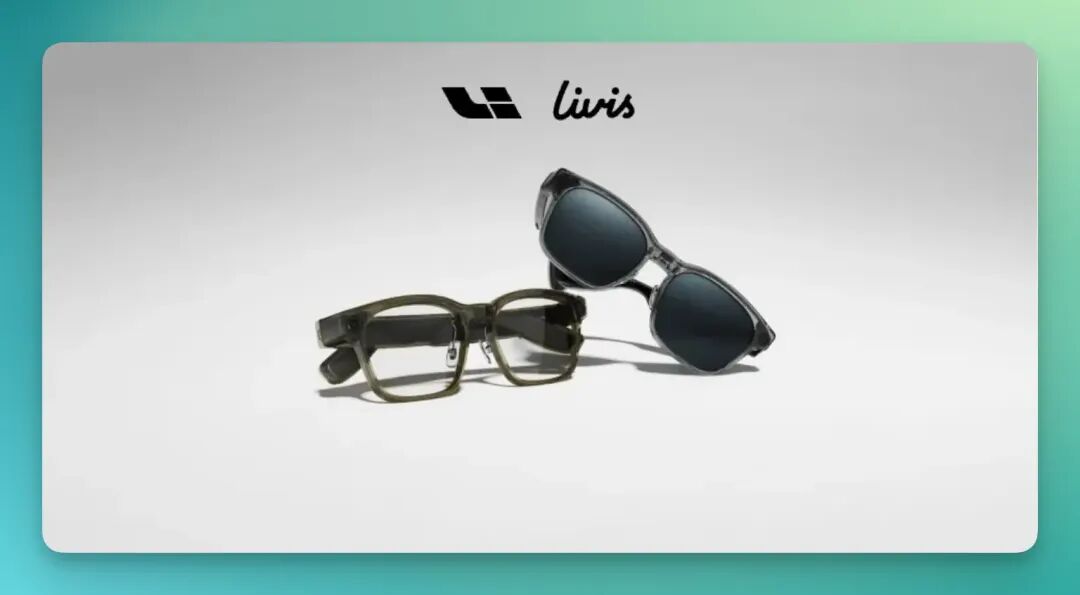
There's none of the "intrusiveness" people typically expect from AI hardware — no exaggerated camera bump, no bulky temple arms. They look pretty much like the glasses we wear every day. The idea is to slip into the lives of Li Auto owners, tech enthusiasts, and everyday users through a form factor as close to ordinary glasses as possible.
Of course, this kind of "off-brand" crossover has naturally sparked some controversy.
Some people complained:
Li Auto can't focus on making cars and now they're doing glasses?
Others said:
Li Auto's AI glasses are pretty solid. If they integrate with the car's system, I'm actually excited.
This week, Li Auto Senior VP Fan Haoyu recorded an episode of the "Crossing" video podcast with Koji: "Obsession, Ambition, and a Pair of AI Glasses: The Raw Fuel of a Top Product Manager | A Conversation with Li Auto SVP Fan Haoyu".
In the podcast, Haoyu gave a rather emotional response:
We built a pretty decent smart experience inside the car, but the moment you step out, it's instantly gone. Why not bring it with you?
To see how these AI glasses from a "new force" carmaker actually perform, we bought a pair ourselves and did a very real unboxing review.
For two months, I wore them on the subway, at the mall, while writing, working, spacing out...
🚥
After using them throughout, this product did give me some unexpected answers. Here's our hands-on experience and takeaways.
Livis AI Glasses Unboxing and Review
First, let's talk about the hardware side.
Li Auto's smart glasses are priced at 1,999 yuan — pretty reasonable, largely because they come standard with Zeiss lenses.
But as a "smart" device, how do they actually perform? Since I also drive a Li Auto, I'll pair them with the car and describe the real-world experience.
1) Hardware
My first impression out of the box: lighter than I expected. Li Auto did a good job on weight control — despite packing in lots of features, the whole thing weighs just 36g.
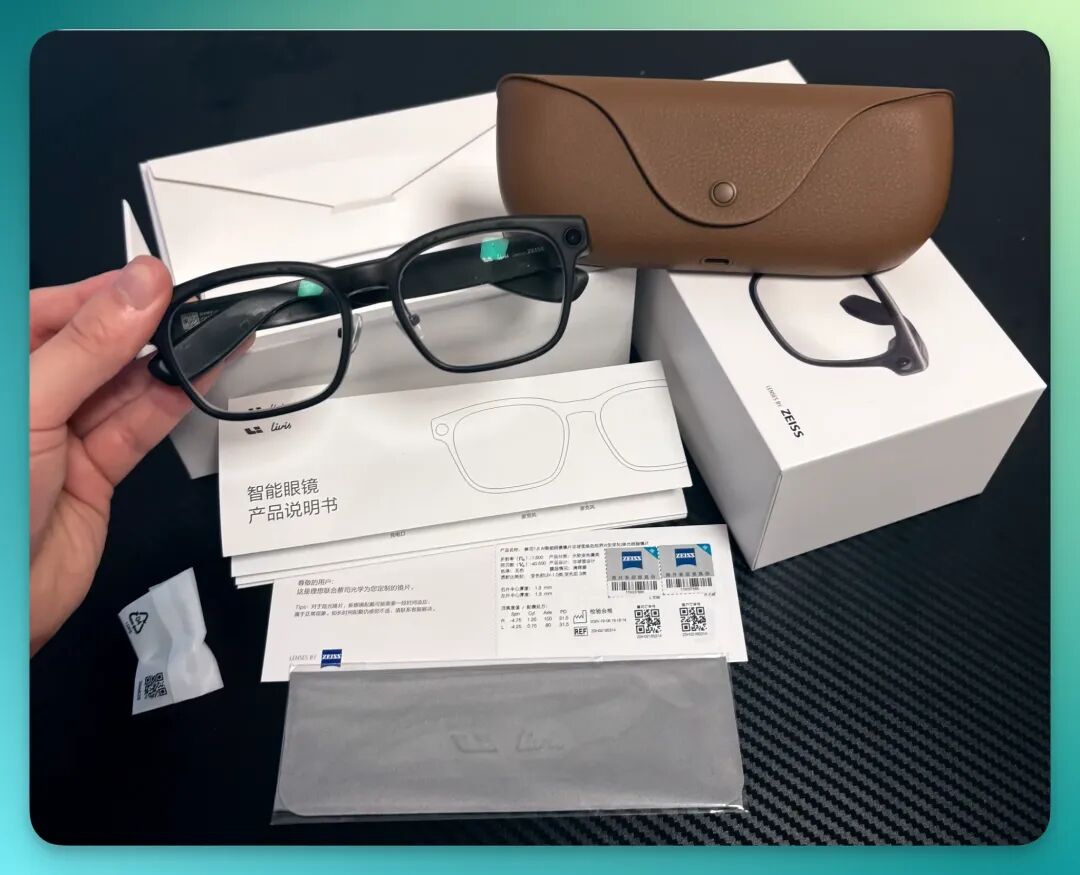
On the temples, to avoid harsh external sound, Livis installed 2 speakers at different positions. On the right temple near the front, there's a record button for interacting with the AI glasses, plus a slide touchpad for easy control, along with a microphone.
The front of the frame houses a camera and a privacy indicator light:
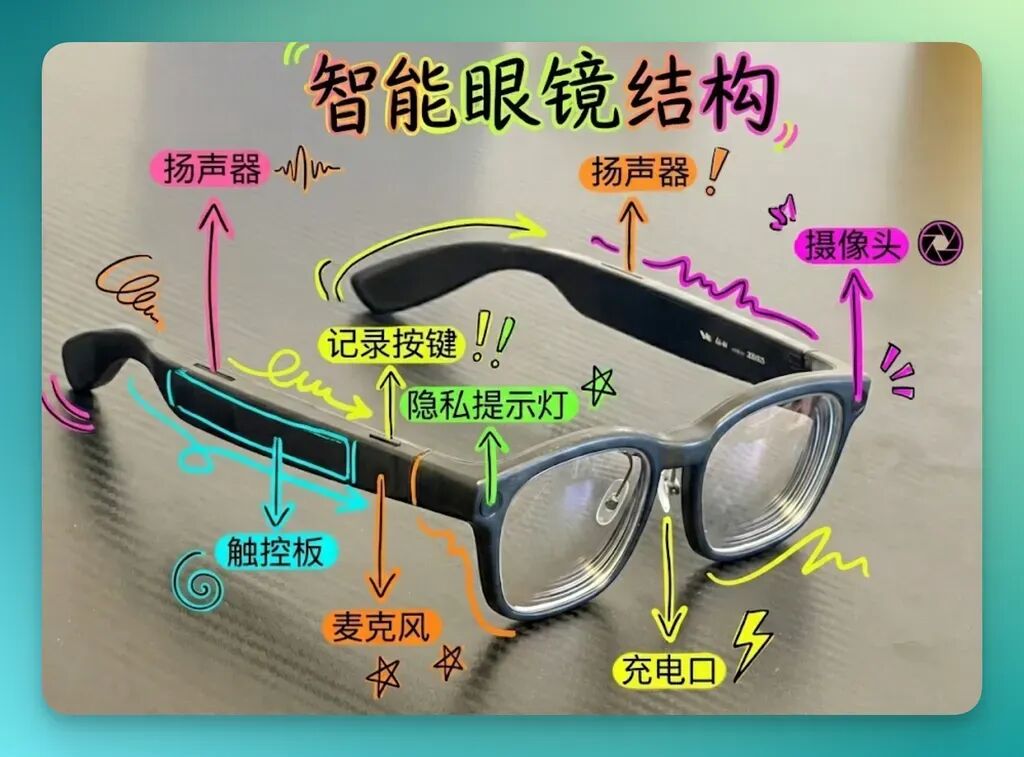
Wearing them all day, there's no obvious pressure on the nose bridge or ears. The frame design is fairly restrained — the rims and adjustable nose pads make them look not much different from regular glasses.
The finish is also quite premium, with 3 colors (Classic Black, Tech Gray, Olive Green) and 2 finishes (glossy, matte) to choose from.
For lenses, you can get plain glass, prescription, or photochromic (check the official site or stores for specifics).
My pair is the "black matte photochromic" version (nice texture).
Charging follows a TWS earbud-style solution. The included glasses case has its own battery (USB-C charging) — just put the glasses in and they charge through contact points.
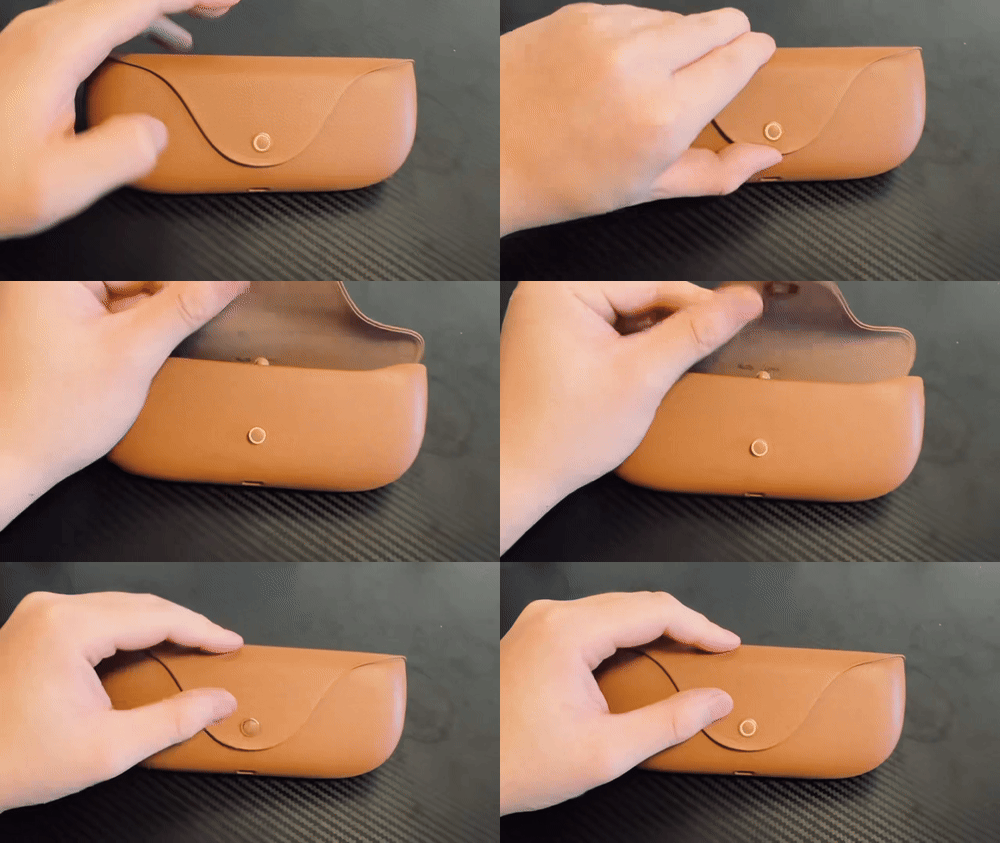
And the Livis case pairs nicely with Li Auto vehicles — place it on the charging pad and it wirelessly charges. Here's our live demo:

At full charge, the glasses themselves last about 18 hours. With the charging case (good for 3-4 charges), that's enough to cover daily commutes.
The backend app for Livis is "Li Tongxue" (Li Classmate). All your operations and feedback through the AI glasses show up in real time on the app. Pairing is simple, basically like connecting Bluetooth earbuds — no complicated steps:

The core logic of these glasses is to serve as an extension of your phone and car system, solving pain points in scenarios where pulling out your phone is inconvenient.
2) Daily Scenarios
In everyday use, Livis mainly supports these functions:
[1] AI real-time conversation
[2] Photography
[3] Video recording
[4] Music playback
Let's go through each — how the features work, how the hardware interaction feels, and what they can actually do.
Livis runs on Li Auto's core multimodal large model, MindGPT-4o, which supports various types of tasks.
AI Real-Time Conversation
Let me walk you through my day.
Beijing just had its first snow, and tonight I'm heading to the nearby Tiantou mall. I just put on my Livis:
How do I get to Lize Tiantou?

Livis can't yet pull live data from map apps to give you turn-by-turn directions from scratch, but it searches various online sources to tell you where the place is and how to get there from the subway exit:

What I really care about here is the "stutter" in Livis's response. Second, its tone and voice track — whether it sounds genuinely human. That matters more to me because it directly affects how it feels to interact with it daily.
To give you a more intuitive sense, I recorded an audio clip of my conversation with Livis.
Have a listen — the recording is unedited. I have to say, after I give a command, the interaction with Livis feels very smooth, without obvious stuttering.
And the tone is quite humanized, it sounds natural.
All conversation logs are recorded in the mobile app backend:

I actually checked on Dianping, and the info does match up:

Beyond simple AI chat, Livis even lets you ask it to generate a deep research report on the spot. In daily scenarios, this is genuinely convenient.
Say you suddenly have an idea — you want to research Li Auto's AI investment in 2024. You can just say it out loud, ask Li Tongxue to look it up, and it'll immediately run a deep research report in the background.
(PS: For convenience, all following conversations are voice-based, shown via screenshots. All images in this section were taken by Livis.)

A Livis deep research report runs about 7,000-8,000 words with 50-60 cited sources, and supports convenient PDF export:

Since your conversations with Livis are automatically logged in the Li Tongxue app backend, you can also use some of its smaller features, like asking it to remember things for you directly.
It records these in a tab called "Notes" and parses them intelligently.
Everything gets organized under this tab for easy future reference and review.

Photography
Just using "AI conversation" for text-based chat isn't particularly fun. So my personal favorite is using Livis's camera for visual recognition — and the results are pretty decent.
The right temple has a touch area and physical button; press the button once to take a photo.
Livis uses the Sony IMX681, 12 megapixels — basically adequate, though don't expect too much on image quality. Here are a few real scenarios where I even felt a sense of "emotional companionship" from Livis...
For example, at MUJI I asked Livis:
Which of these clothes in front of us would look more coordinated as an outfit?

Here's Livis's response — it can indeed use visual recognition to pick out an outfit and explain why. Note that it's actually doing visual recognition.
Because every time Livis calls the visual recognition function, after you talk to it, you'll hear a "ding" sound, then it automatically takes a photo, thinks and reasons, and finally gives its answer.

Why do I say Livis is really doing visual recognition? Besides the shutter sound, I also had it calculate what discount this outfit is currently at...

Beyond those two uses, I also ask Livis to look at The Ordinary products in front of me at Sephora, or ask it to check online for reviews of a product.
An important point here: you can totally talk to it like a friend, say whatever comes to mind, and it'll respond genuinely with productive answers.
So this kind of interactive experience is actually quite nice.

Here's Livis's response:

After leaving Sephora, I naturally asked: which floor is Freshippo on at Lize Tiantou? It can give fairly accurate answers to this kind of question too.
Of course, since it doesn't actually connect to apps like Dianping, the info it pulls mainly comes from online sources.
In such cases, some store locations may not be resolvable. However, Freshippo is probably too well-known — Livis still accurately told me it's on B2.
Video Recording
Double-press the button to start recording. Supports 1080P resolution, with aspect ratio options of 16:9, 4:3, or others. While recording, a white indicator light flashes on the temple arm; max recording time is 1 minute.
I actually think Livis is especially suited for one particular scenario with video recording.
Often, we're not too willing to pull out our phones specifically to record a video — it feels like too much attention overhead. You don't have strong enough motivation to deliberately take out your phone and film.
But with glasses, the dynamic changes.
For example, on a taxi ride home at night, say you're already exhausted but still want to capture the view outside the window because it feels more atmospheric, more vibes. Livis is especially convenient here.
And as you can see, even at night, its video recording quality is pretty decent.
If you listen carefully, you'll find Livis's audio recording is actually quite good.
So there's another very practical scenario.
For instance, in meetings, you can directly use Livis to record audio — no need to pull out your phone or other AI recording devices. Livis greatly simplifies these audio recording scenarios.
This is actually a very important functional point for AI glasses. One major reason many manufacturers are launching AI glasses is that wearing them barely looks conspicuous at all.
Many people already wear prescription glasses or plain lenses — glasses are already a very high-frequency accessory. So using glasses to accomplish these tasks feels completely natural to you, and practically invisible to others around you.
It can "silently" complete many tasks, and crucially, it hardly distracts your attention. This matters a lot in long-term daily use — it doesn't make you feel like "ugh, yet another piece of hardware I need to pay attention to."
Music Playback
These glasses also function somewhat like headphones.
You can connect via Bluetooth to play from your phone, or simply say "Li Tongxue, play music" to listen.
Livis also supports linking with NetEase CloudMusic — after authorizing NetEase, you can search for songs by voice, since basic playback controls work across any music platform.
The temple arms support touch controls: single tap to play/pause, double tap for next track, triple tap for previous track. It's open-ear though — you hear both the music and ambient surroundings.

Some friends worry: won't glasses playing music bother people around you, letting others hear your music, which feels awkward?
I specifically recorded a video — listen carefully, when music volume is controlled at 15%, the phone recording the video was only about 20cm from Livis, and it barely picked up any sound at all, yet I could hear the music quite clearly:
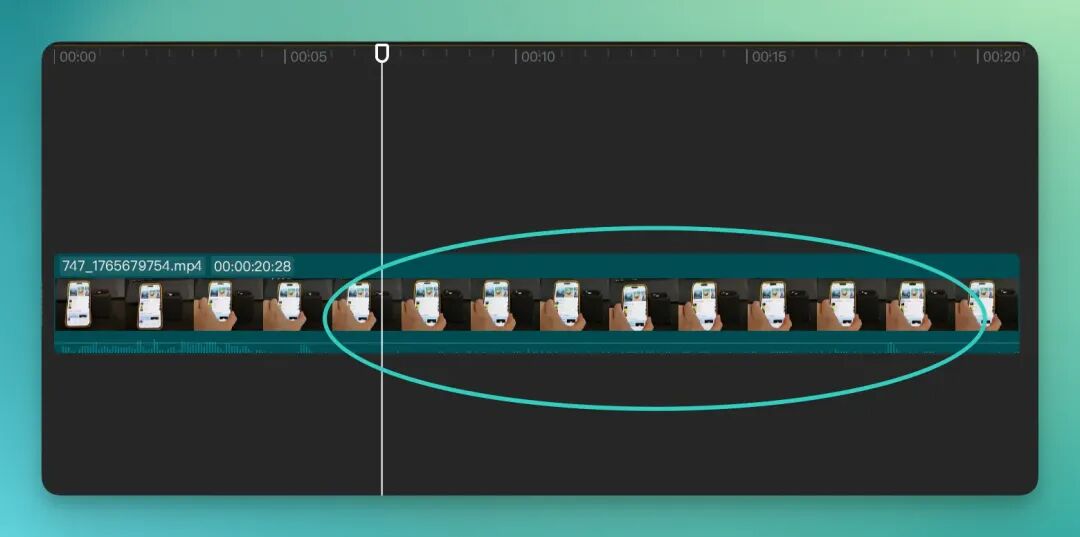
The audio track barely captures any sound from Livis
So if you're running or exercising outdoors, I think using Livis for music is a pretty nice experience.
If you normally use AirPods or similar earbuds, there's no need to switch to Livis for music — in absolute sound quality terms, open-ear definitely can't compete with in-ear headphones.
Of course, as AI glasses from a carmaker, the integration with Li Auto vehicles is the big draw, and the car connectivity experience draws lots of attention.
Next, paired with a Li Auto vehicle, we tested several key highlights to share with you.
3) Car Control
First, pairing Livis with the Li Auto vehicle system is smooth — just get in the car wearing the glasses and they pair automatically:
Let's start with the most intuitive, most natural use case: "glasses controlling the car."
Actually, I'm not particularly focused on how well Livis executes prompt tasks (after all, getting AI glasses to do these tasks isn't technically that difficult). What I care more about is how fast the Li Auto vehicle system responds when I say "Li Tongxue."
Simply put, I care more about that "stutter."
First, in the scenario of "using Livis glasses to open the Li Auto trunk," the whole flow is smooth, and what's interesting is that after I give the command, Livis responds very quickly, then asks me to confirm: is there enough space behind the car, is it safe — rather than just blindly opening the trunk regardless:
There are many more smooth car-glasses pairing scenarios like this, such as "unlocking the car":
"Opening windows":
None of the videos above are sped up or edited — you can clearly feel how smooth the interaction between the vehicle system and Livis glasses is.
And I also found that all wake-ups don't need "hey" — just say "Li Tongxue" directly. For the second round, just say "confirm" directly, no need to say as much as I did.
The future potential of this kind of interaction is huge, especially in specific scenarios like when your hands are full, or it's raining and inconvenient to pull out your phone — Livis provides great convenience.
Beyond these "big" features of "glasses controlling the car," many friends around me and I ourselves pay close attention to one detail: when I wear Livis AI glasses into a Li Auto and call out "Li Tongxue," does the car respond first or do the glasses respond? Do the two conflict?
Have these small details been worked out? Which is the primary "brain"?
I thought it through carefully. When you say "Li Tongxue," the vehicle system responds first.
For example, when you say:
Li Tongxue, record a video
The logic is: during use, the Li Auto vehicle system responds to the user's command first, then hands off to the Livis AI glasses to capture video. This arrangement avoids conflicts between devices and makes the operation more intuitive, matching ordinary usage habits.
Users are accustomed to voice commands being responded to by the vehicle system first (for example, when operating in the car, most people expect the in-car system to respond first). This priority setting matches user expectations, so users don't feel disoriented.
This kind of "seamless" experience is actually a major selling point of Livis AI glasses. Though still fairly basic now, the thinking is right.
Now we can circle back to battery life.
As mentioned earlier, the official claim is 18 hours of battery life. But based on my actual testing, if you don't frequently use high-intensity functions like photography, video recording, music playback, and AI conversation, battery life is actually longer.
For example, most of my usage is light — I barely use these functions in the office. With just some use during my commute, the glasses actually last far longer than 18 hours.
So battery life isn't much of an issue for me.
Finally, here's a summary of my real feelings after wearing them for several days.
First, genuinely light. Once you get used to wearing them, you forget they're an electronic product.
Second, battery life is decent. Wear them all day, take them off and put them in the case at night, full charge the next morning — almost no charging anxiety.
Third, the ecosystem is pretty smooth. The conversation flow after calling out to Li Tongxue is fluid, and that feeling of not needing to pull out your phone is somewhat addictive.
Here we'd like to quote something Fan Haoyu said on the "Crossing" podcast:
A product isn't a simple concept. A product is a mountain built from countless details.
During my time using Livis, though it's not yet perfect (for example, I also encountered customer service response issues and some small bugs), it does achieve what Fan Haoyu hoped for — letting that "Li Tongxue" everyone loves in the car step out and become a companion that's always there.
If you've already purchased Livis, or are interested in buying, whether you have fresh experiences or questions and thoughts, feel free to leave a comment and exchange ideas~