MiniMax Drops Major Version Upgrade: M2 Hits the Benchmarks with Free Access — Here's Our First Look

Smart is the starting point; capable is what gets things done.
Being smart is the starting point; being capable is what drives productivity
 👦🏻 Author: Jingshan
🥷 Editor: Koji
🧑🎨 Layout: NCon
 On October 27, China's "good model" camp gained another member. MiniMax released its new major version model M2, continuing the open-source strategy from the M1 era.
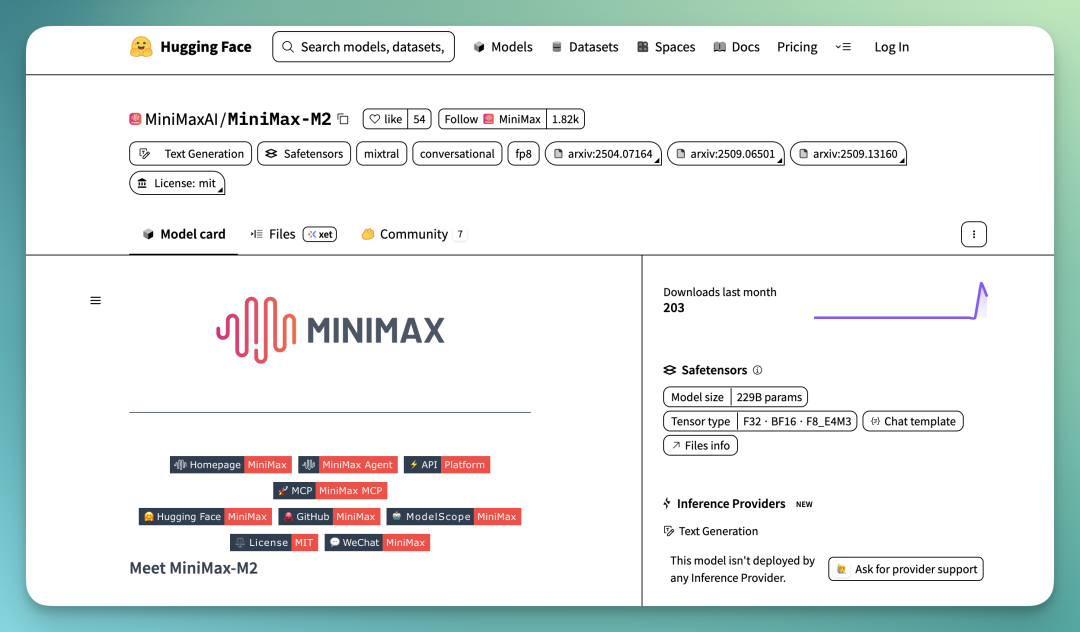
It not only inherits M1's strengths in coding and agent capabilities, but also takes a big step forward on three key metrics: cost efficiency, intelligence level, and response latency.
This update has also sparked a deeper discussion:
What kind of model can truly support real business operations? Can the model run stably? Is the response agile? Can it actually embed into business workflows and continuously create value?
In other words, the criteria for judging models is moving toward a new "production benchmark": smart, cheap, and smooth to use.
Whether you're a startup team running B2B operations or a solo builder creating products with AI, everyone is searching through a pile of SOTA models for that "productivity model" — one that feels clever in use and runs reliably in production.
And MiniMax M2 was launched precisely against this backdrop.
🚥
Next, we'll share our understanding of the technical logic behind this model and our hands-on testing experience. Let's see where MiniMax M2 stands in the "productivity model" landscape.
Among SOTA Models, What Kind of "Productivity Model" Do We Actually Need?
In the second half of the AI application era, what kind of "productivity model" do we actually need?
【1】The first obvious factor is "cost."
A very buzzy term lately — the token economy. As AI agents become more widespread, the total cost per task often exceeds millions or even tens of millions of tokens. For example, in our article "Between a World of Temptations and Going All-In, Nami AI's Choice Is...", we hit that level with a casual task.
Token costs matter more and more.
【2】The second factor is "experience."
For B2B and solo developer users, there's another pain point: latency. In interactive consumer applications, TTFT (Time to First Token) plays a huge role in elevating user experience.
There's a great example here too. In our article "Don't Underestimate This Totoro", we experienced firsthand how Meituan's Totoro large model delivered a great experience in vertical scenarios through its "first-token speed."
So, all things considered, current AI application deployment is often trapped in a triangle of intelligence, cost, and experience. Users crave a solution that "wants top-tier intelligence, wants low prices, and wants a smooth experience — all at once."
And after reading MiniMax M2's model card, we found that it advances on all three fronts simultaneously, achieving beyond-expected results.
Breaking Down MiniMax M2
1) The Triangle of Intelligence, Cost, and Experience
In the past, our assumption was "intelligence = expensive." M2's arrival shakes that assumption once again.
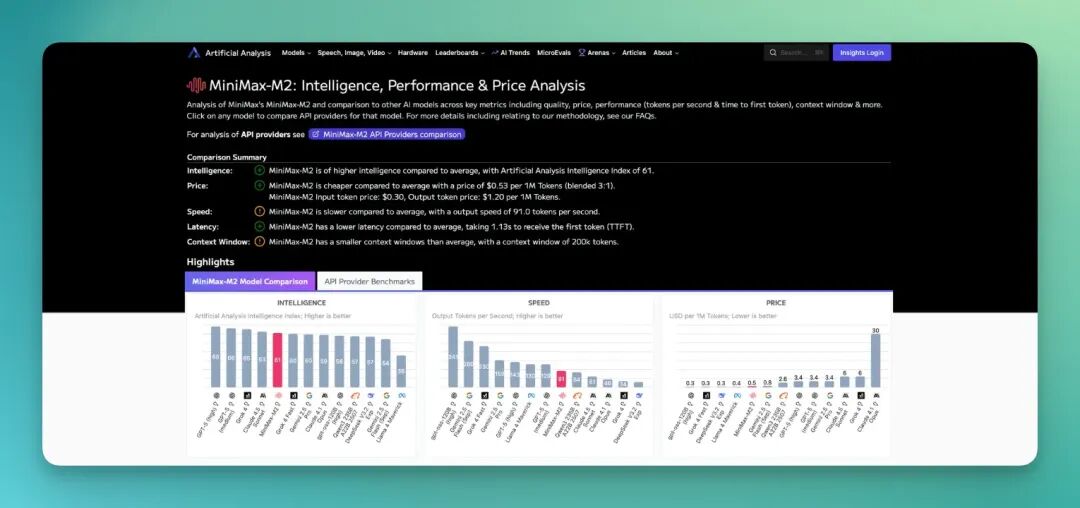
First, the hard numbers: MiniMax M2 debuted with strong performance on the authoritative global benchmark Artificial Analysis (AA), ranking in the global top 5 and #1 domestically by overall score.
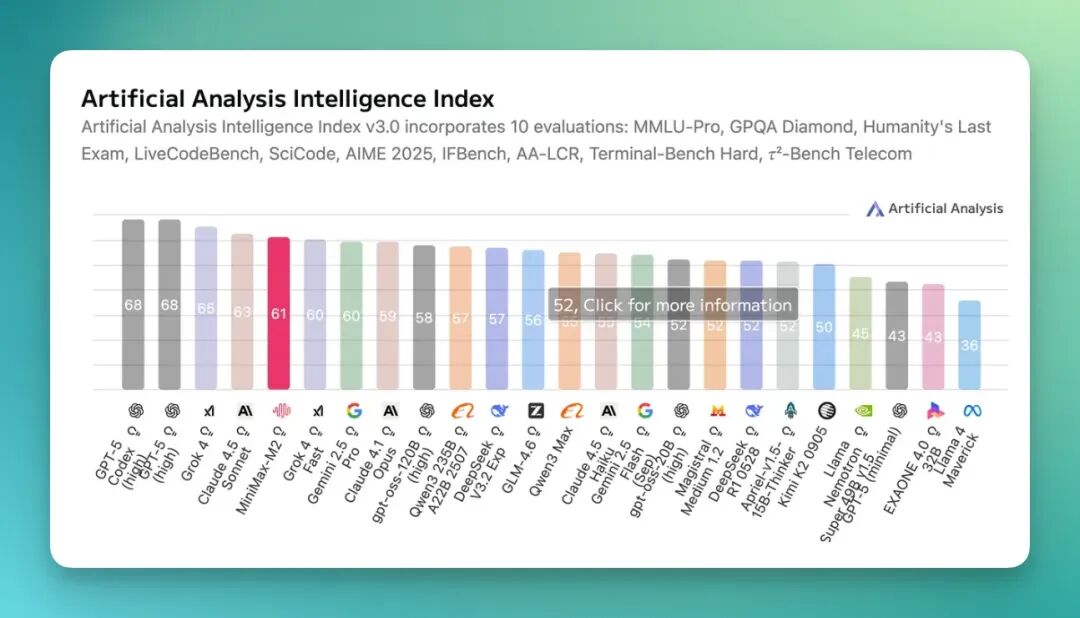
This evaluation system comprehensively covers model capabilities across mathematics, science, coding, and other core domains.
Notably, M2's score surpassed Google's Gemini 2.5 Pro, Anthropic's Claude 4.1, and other latest SOTA models.
This proves its intelligence level is firmly in the "first tier."
Meanwhile, a classic advantage of domestic models is pricing. While achieving top-tier intelligence, M2's price carries significant advantage ($0.53/M tokens). API pricing is set at $0.30 / ¥2.1 per million tokens (input), $1.20 / ¥8.4 (output).
What does this mean? Its total cost is less than one-sixth of GPT-5 (high), and less than one-tenth of Claude 4.5 Sonnet (roughly 8%).
Second, while maintaining extremely low cost, M2 achieves highly fluid user experience — its inference speed is nearly 2x that of Claude Sonnet.
This comes down to two key figures I noticed: 1.10-second TTFT (Time to First Token), and 100 TPS (Tokens Per Second):
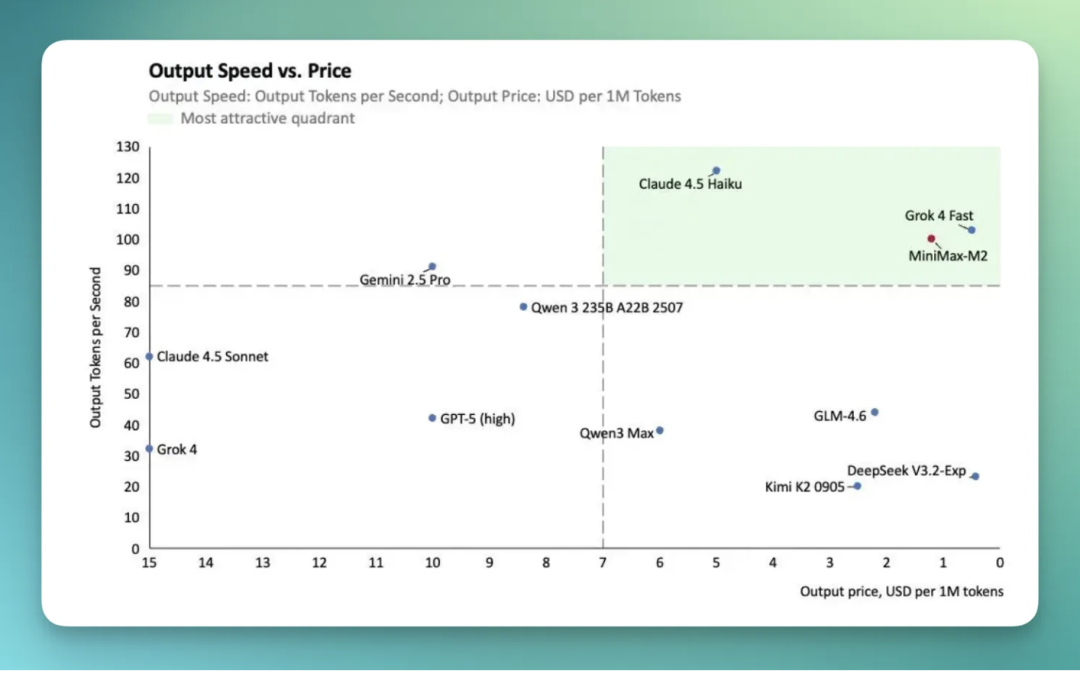
TTFT and TPS are commonly used to measure interactive AI experience — they determine whether users "feel" lag. M2's low latency ensures smooth application performance (especially for conversational and coding apps), and this is achieved at extremely low operating cost.
2) Coding, Agentic, and Deep Search Capabilities Further Strengthened
If "overall capability" is M2's ticket into the first tier, then its "specialization" in specific domains is the real highlight of this release.
This M2 is deeply optimized for three core productivity scenarios: Coding, Agentic, and DeepSearch.
Let's look at each.
Coding Coding capability is currently the most essential productivity tool for developers and one of the most valued benchmark tests.
M2 performs well on programming ability (LiveCodeBench) too — 83%, ranking 4th — approaching SOTA model levels.
M2 also achieved strong results across four important benchmarks for software engineering and automation tasks, especially on ArtifactsBench, which measures "project artifacts":
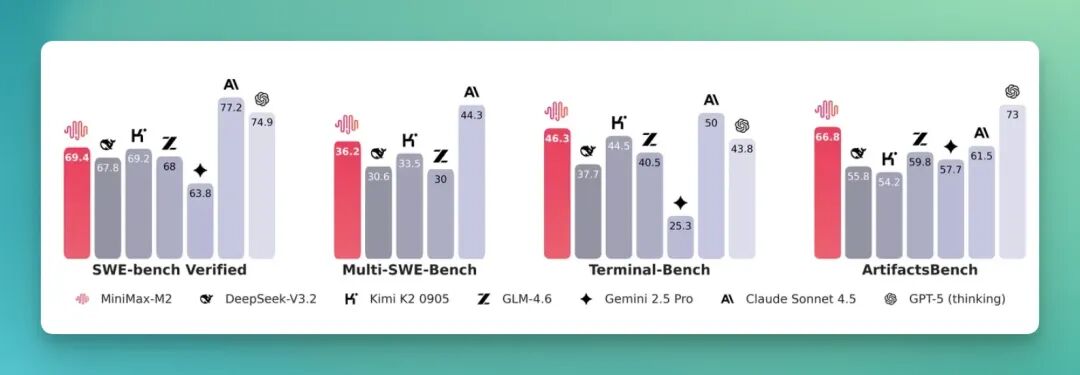
For enterprise developers and solo builders, combined with its low latency and low cost, developers can integrate it into their workflow without pressure to boost coding efficiency.
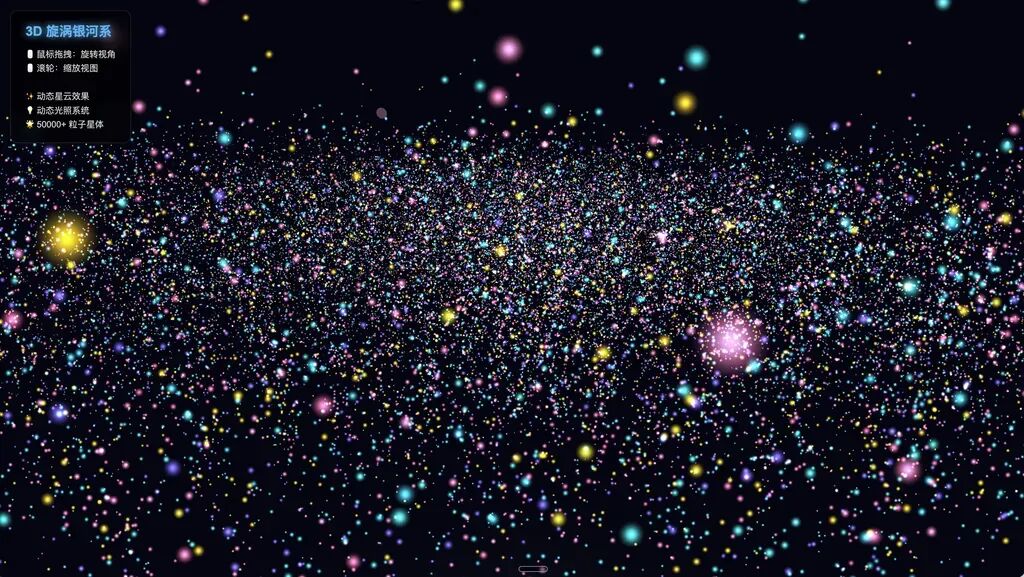
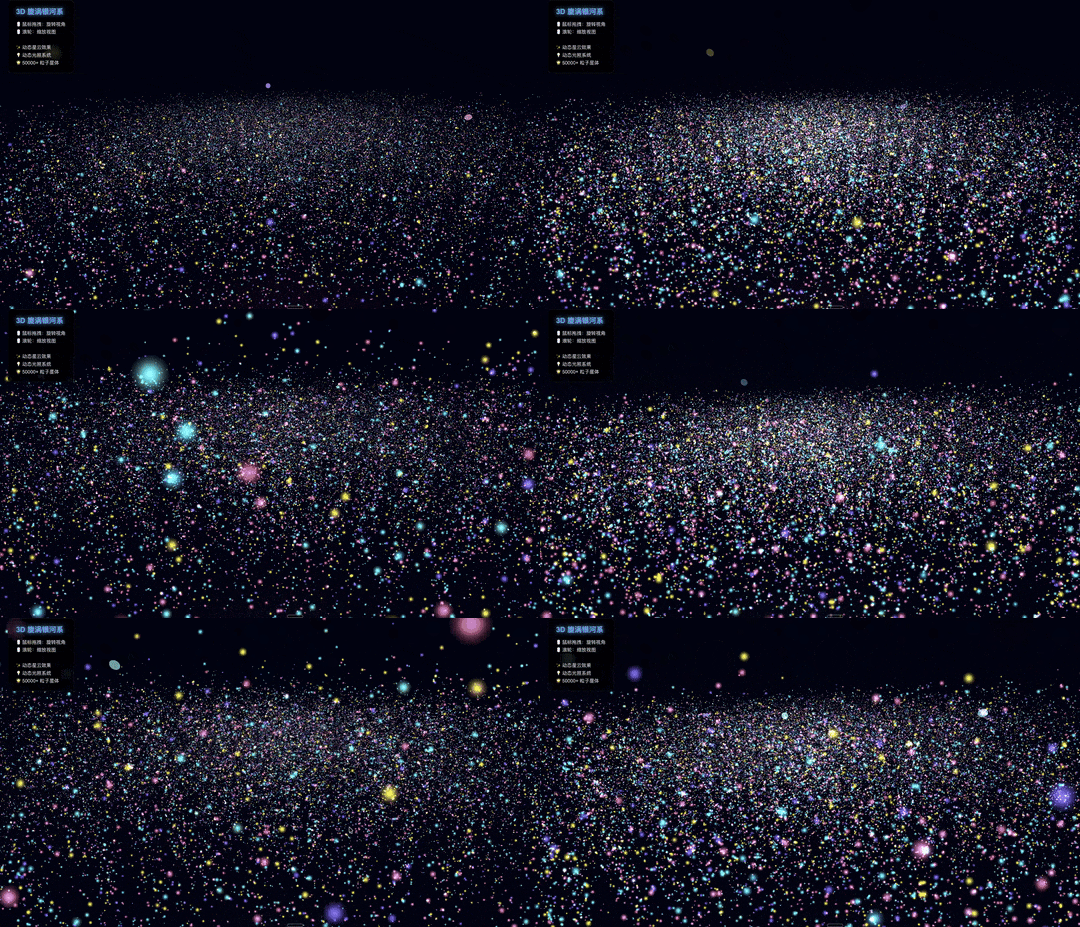
Here I tested a small case — a classic scenario developers love using to verify a new model's generative power: a 3D particle galaxy effect.
Prompt:
Create an immersive three-dimensional particle galaxy with rotating nebulae and dynamically shifting light effects. The scene should contain millions of luminous particles forming slowly rotating, pulsating spiral arms, creating an illusion of cosmic motion. Add volumetric fog and spatial depth effects to present a vast interstellar space filled with dust, gas, and energy. Use gradients of violet, cyan, magenta, and gold to simulate turbulent nebula variations. The camera should move slowly through the scene, revealing star clusters, twinkling starlight, and subtle lens flares. Lighting should dynamically change with camera movement to reinforce the sense of scale and depth. Optionally add soft ambient music or procedural background hum to enhance immersion. Overall should be optimized for real-time rendering, using Three.js from a CDN, implemented in a standalone, directly runnable HTML file.
M2's first attempt turned out pretty good:
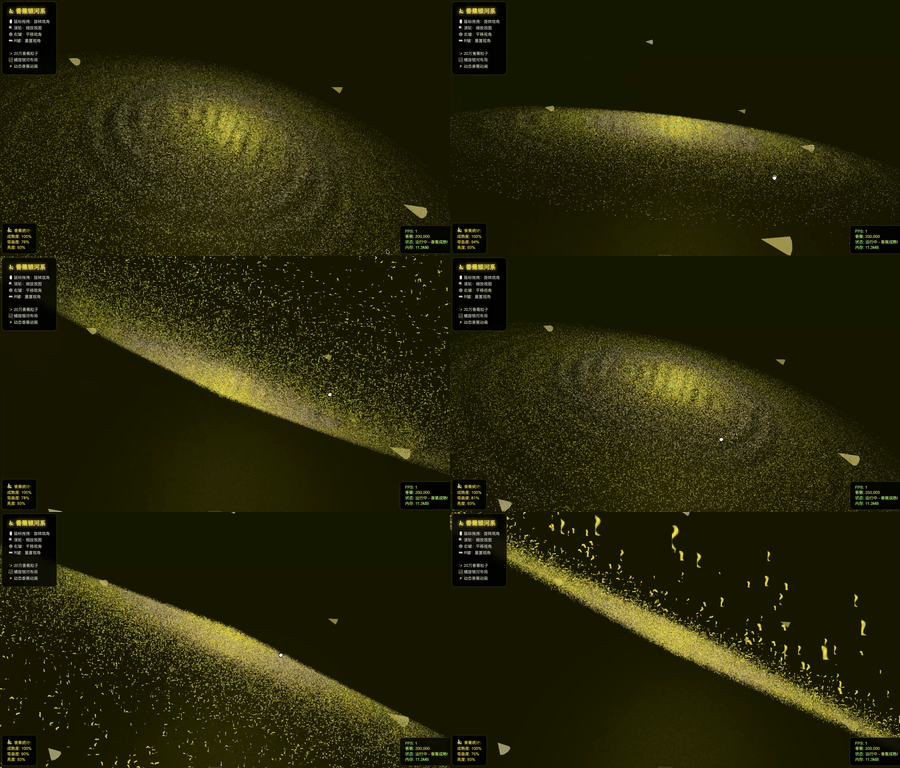
Adding some complexity, I changed the particle count to 200,000 and made all particles display as bananas:
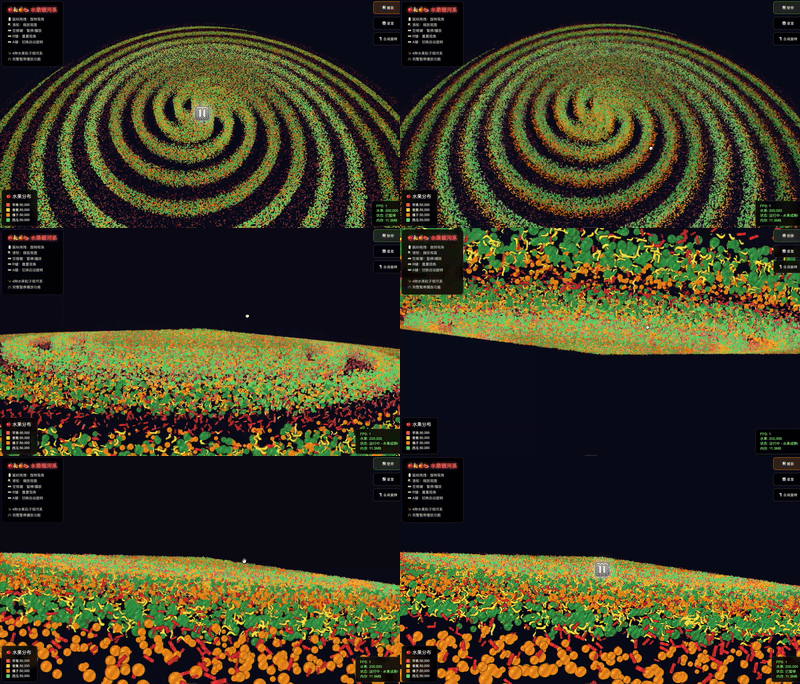
Or even more complex — a fruit galaxy composed of bananas, oranges, watermelons, and apples:
Agentic Model agentic capabilities are increasingly valued by foundation model providers — they determine a model's ability to understand complex instructions, call tools, and execute multi-step tasks.
And this is exactly where M2 focused its upgrades this time.
On the (τ²-Bench Telecom) leaderboard, M2's agent tool-use capability scored 87%, ranking 2nd globally — tied with GPT-5, just slightly below GPT-5 Codex.
On τ²-Bench and GAIA (Text Only) tests, M2 essentially reached "big three" levels:
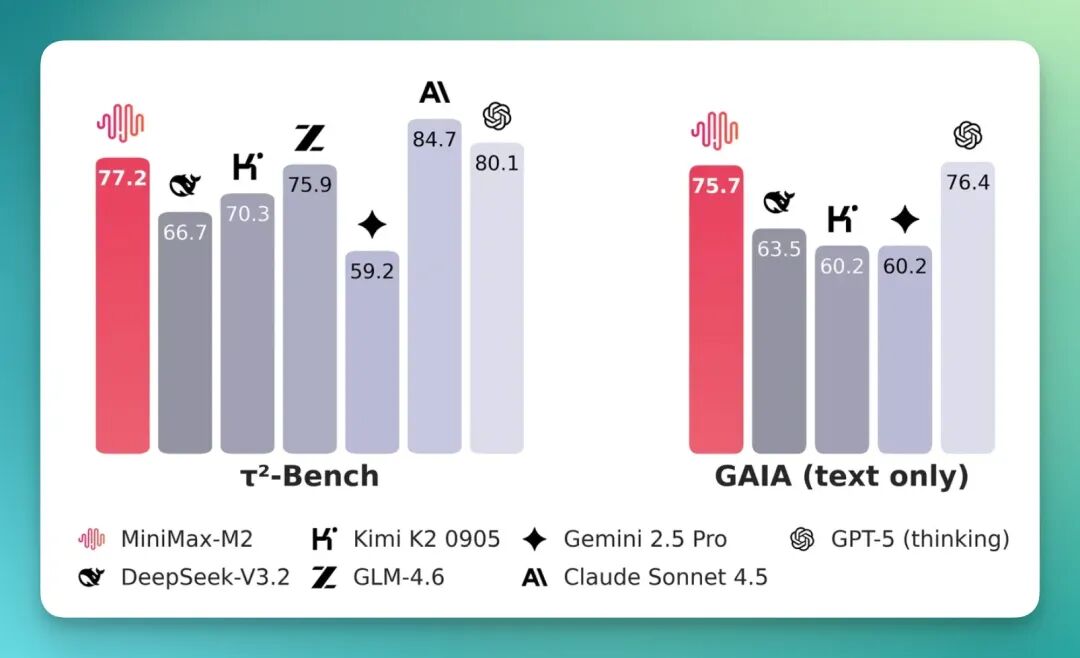
The τ²-Bench benchmark score is important, though many readers may not be familiar with it. τ²-Bench mainly tests a model's reasoning capabilities in multi-dimensional reasoning, temporal reasoning, and thematic coherence.
Put simply, it's about how well the model "simulates human thought processes" — for example, when inferring causality, sequence, parallel logic, and implicit conditions.
M2's score of 77.2 is already quite impressive.
Combined with its high score on instruction-following capability (IFBench) — 72%, ranking 3rd — this means M2 not only "understands human language" but also "uses tools well." After all, understanding user prompts and workflow node meanings makes it foundational for building complex AI workflows.
Here we tested M2's visualized agentic capabilities with this prompt:
MiniMax M2 information visualization: Generate an HTML webpage to visualize content about the MiniMax M2 model, particularly regarding its Agentic, Coding, and Deep Search capabilities. Article content includes: M2 model's deep optimization for three core productivity scenarios: Coding, Agentic, DeepSearch; specific capability performance data; benchmark test score comparisons. Create a visually appealing HTML page to display this information, including: modern design, data visualization (charts, progress bars, etc.), responsive layout, beautiful UI, possibly including charts to show test scores. Create a professional technical report-style page with various visualization elements. I recorded a video — M2's output was very cohesive.
Note, this was M2's result in a single pass:
Deep Search Finally, Deep Search capability. This is often overlooked, but it's the foundation supporting agent performance in complex long-horizon tasks.
Simply put, Deep Search capability concerns how a model autonomously conducts deep information retrieval, filtering, reasoning, and synthesis when facing open-ended questions.
It requires the model to perform "purposeful" exploration within massive information (such as the 1M ultra-long context already supported by MiniMax-M1), rather than simple information matching.
On Deep Search-related benchmarks, I saw MiniMax disclose three task benchmarks: BrowseComp (web browsing comprehension), xBench-DeepSearch (deep retrieval reasoning), and FinSearchComp-global (financial retrieval analysis).
On these three benchmarks, M2 essentially tied with or surpassed GPT-5:
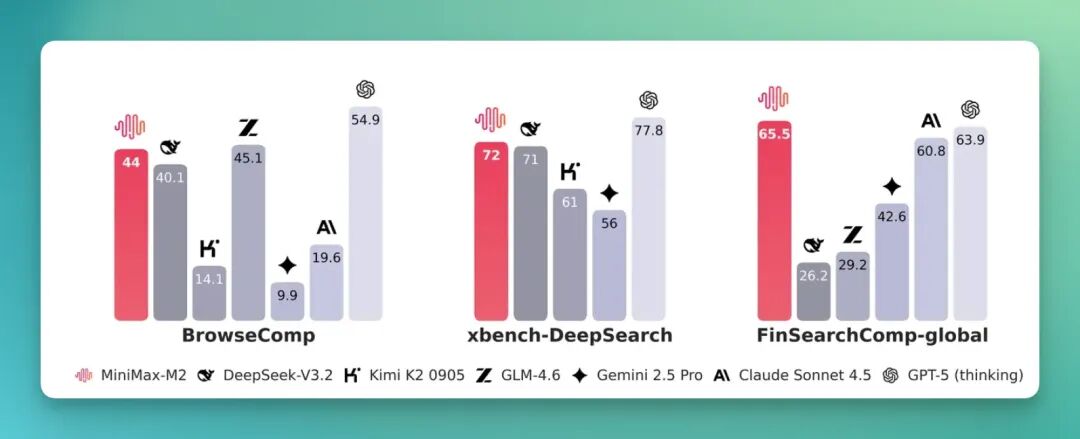
You could say M2 has basically entered the first tier in Deep Search capability. In the past, domestic models mostly competed on text generation; now MiniMax can stand alongside SOTA models like GPT-5 and Claude in "complex information retrieval and reasoning," showing that reinforcement learning (RL) and reasoning optimization strategies are working.
Looking deeper at M2's Deep Search capability, I thought of a good test case: self-directed information lookup, then integration and presentation as a PPT:
Use the Search function to query and organize usage methods and example code for mainstream open-source AI video generation models on GitHub, and present it as an HTML format PPT.
M2's result looked like this:
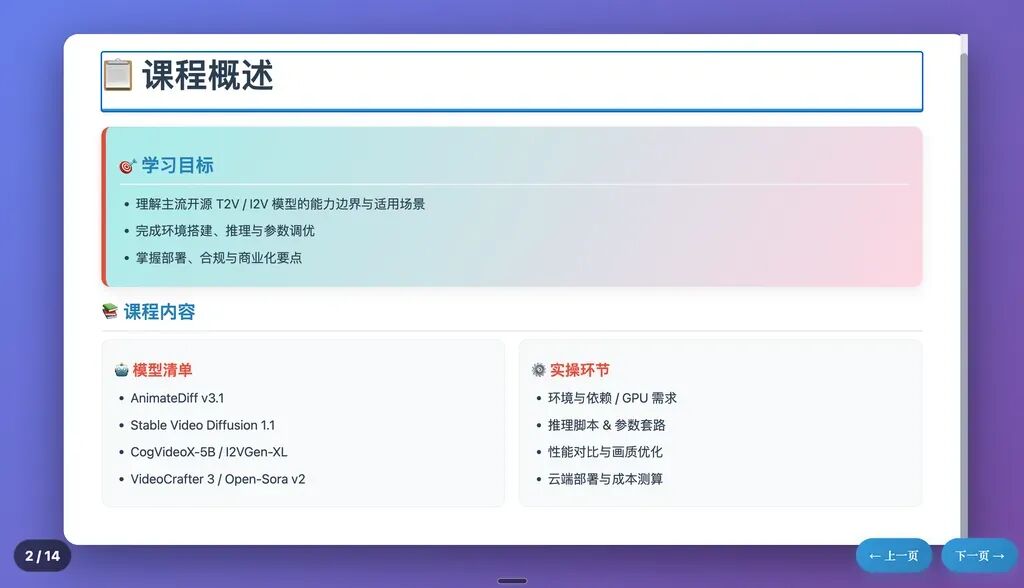
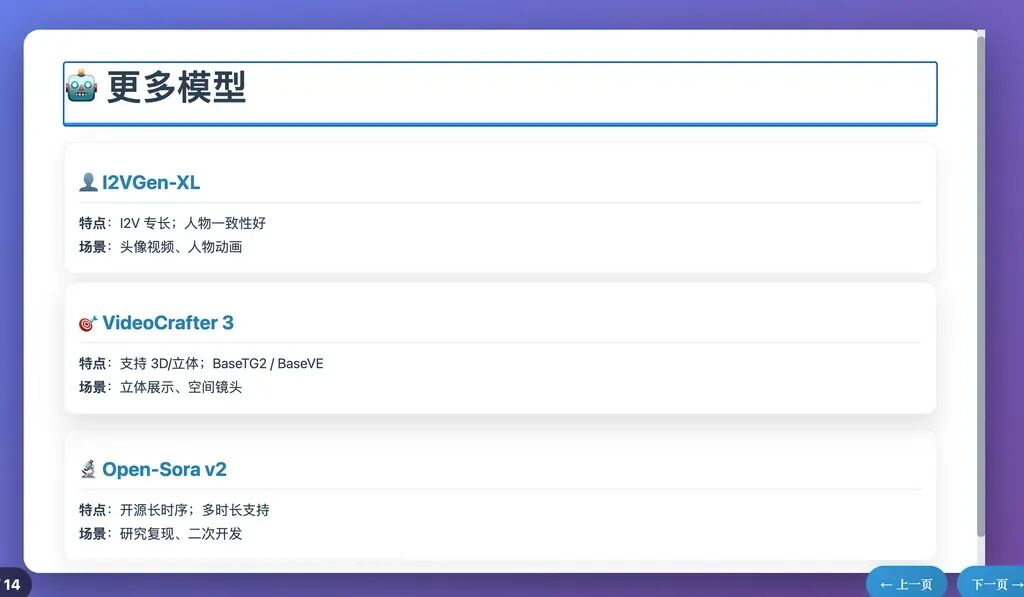
It automatically retrieved and summarized current mainstream AI video generation model materials on GitHub, including model introductions, open-source licenses, application scenarios, and feature highlights — the page structure was very clear.
For the example code section, M2 organized it like this:
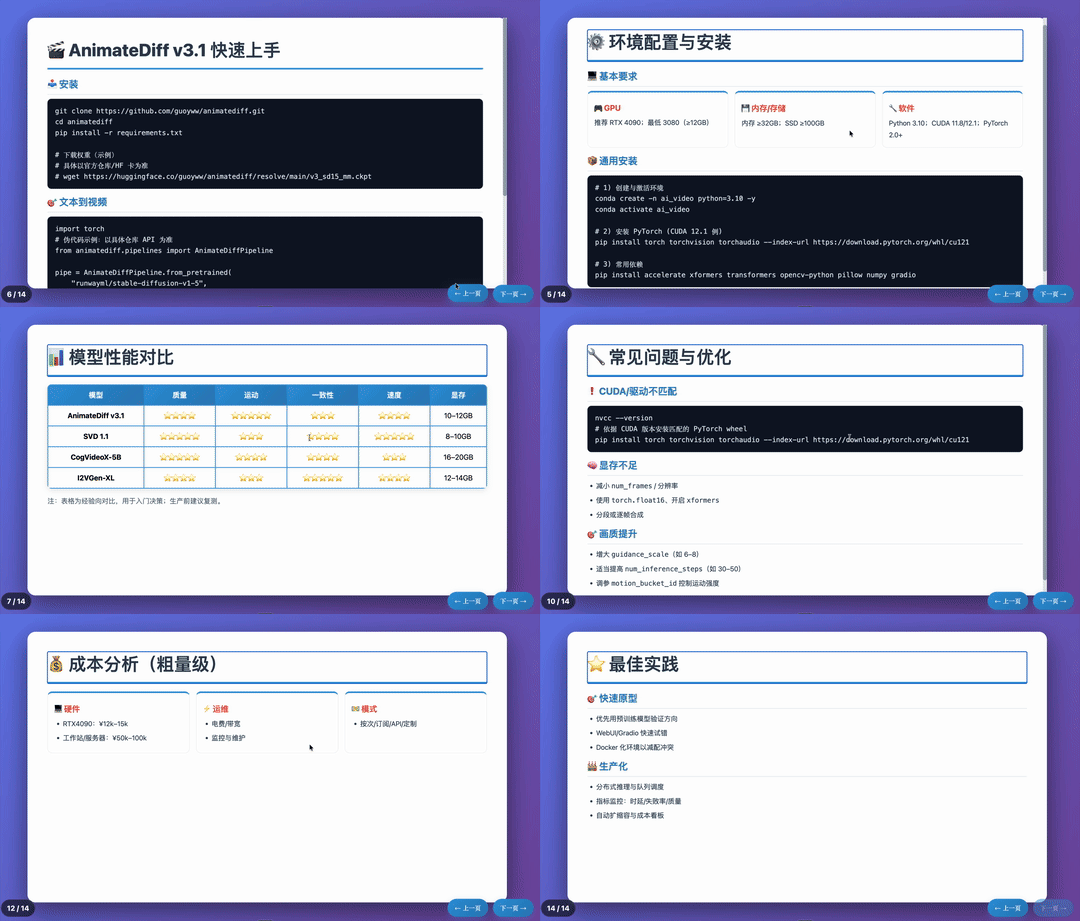
It generated independent code blocks for each model, with runtime environment notes (Python version, dependencies, GPU requirements). Overall, M2's output resembles a "directly presentable technical report template."
Beyond playing with the model directly, when I visited the MiniMax website, I noticed M2 has already launched on MiniMax Agent.

Currently, MiniMax Agent has two modes: Efficient and Professional — both are free for now.
I casually ran a case I'd been wanting to try: a Tantan-style AI talent matching platform. Here's the prompt:
Design an "AI Talent Matching Platform" with UI inspiration from Tantan/Tinder-style card swiping. Users swipe horizontally to browse candidate profile cards, each displaying AI scores (capability, match percentage, experience level, etc.); clicking a card triggers a 3D animation flip to reveal the candidate's full resume, including education background, skill tags, portfolio links, etc. Visual style: futuristic tech UI, semi-transparent glassmorphism, blue-purple gradient background, subtle depth-of-field blur. Interaction design: smooth elastic transition animations, card swipe trajectories, bottom action buttons (skip / save / contact). Detail enhancements: top bar showing logo + "AI Match Index" dashboard; each card contains candidate avatar, position, AI composite score; card back shows detailed resume structure; AI recommendation phrases float at screen edges, such as "This candidate is highly matched with your company's algorithm position"; add light music, swipe sound effects, or AI voice narration (optional).
The M2-powered MiniMax Agent shows very intuitive workflow experience improvements — the entire execution process is smoother, especially with almost no noticeable lag when interacting with me.
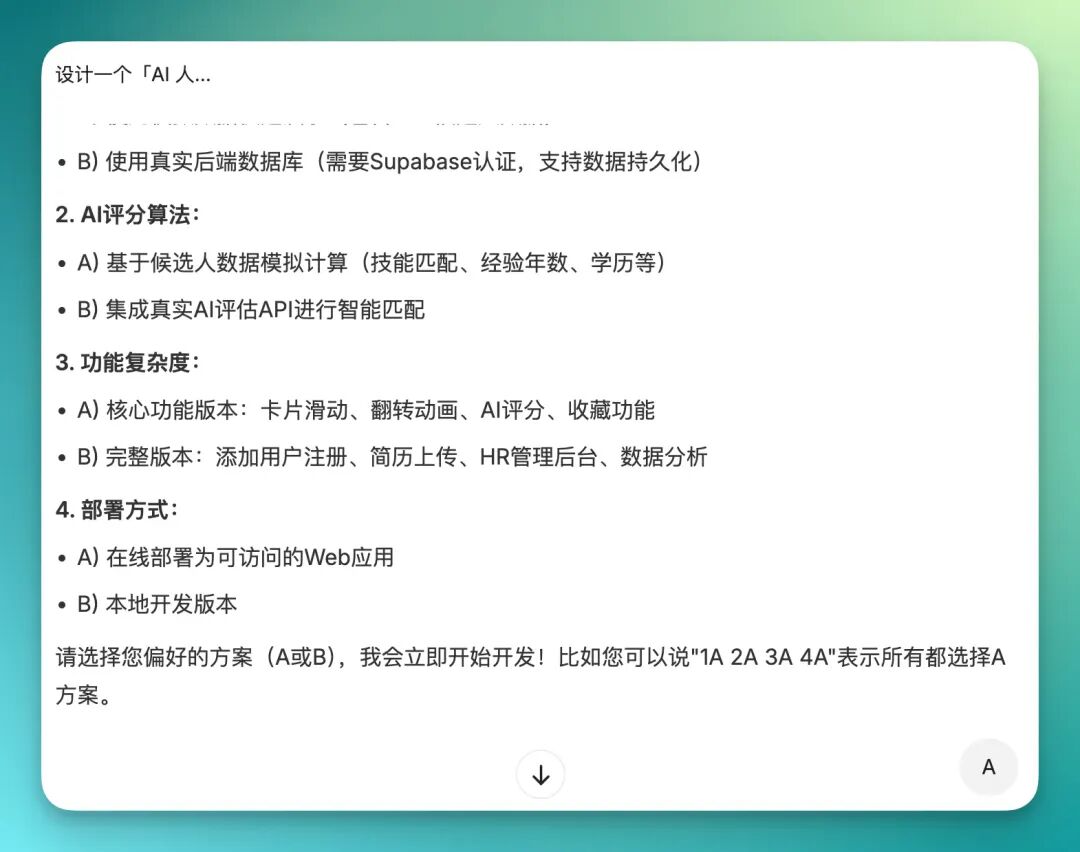
Overall end-to-end task completion speed is noticeably faster.
The AI talent matching Tantan prototype runs in about 5 to 10 minutes, and the page looks quite polished. Each talent card displays an avatar, name, position, and AI composite score, plus a few representative skill keywords.

When I click these cards, they gently flip to present the candidate's full resume.
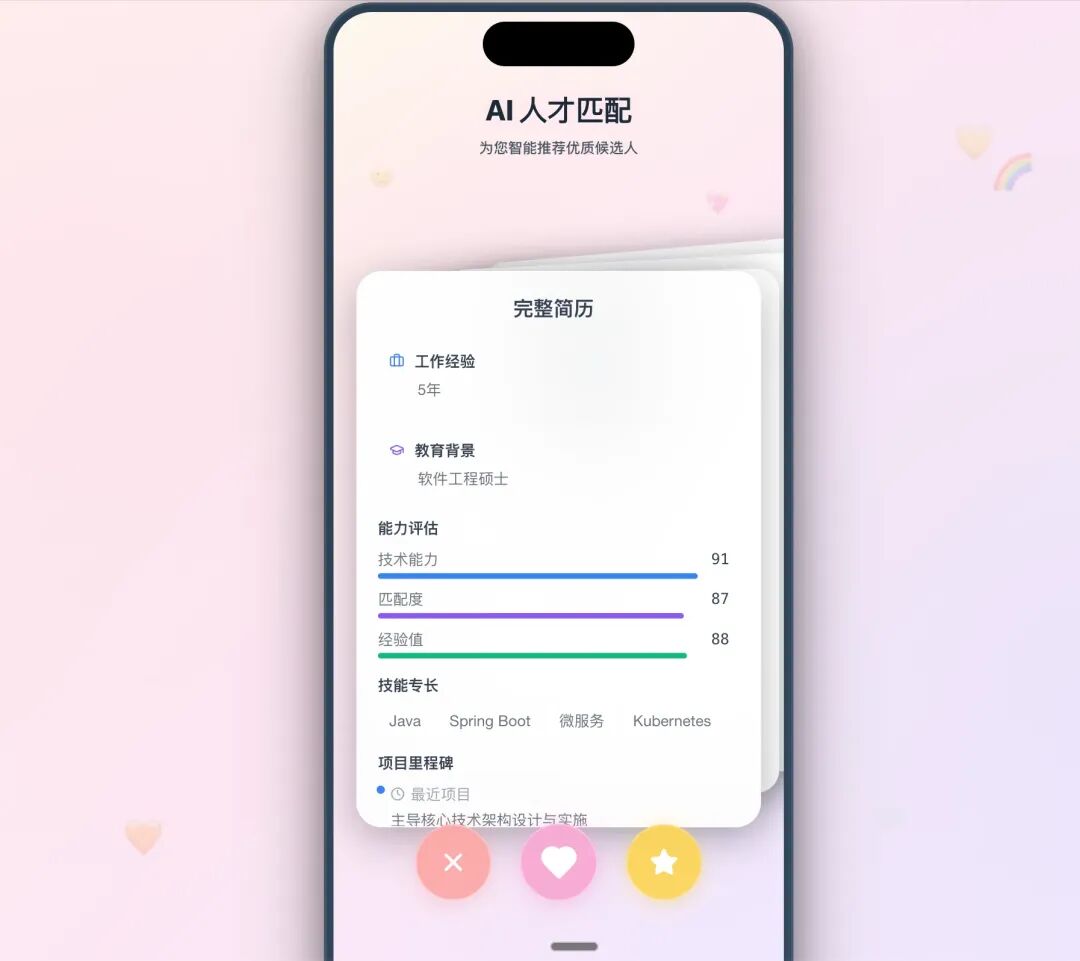
Of course, after reading through the resume, this prototype provides three interaction options: I can skip, dislike, or indicate I really like it, or directly save it.
And within the resume, you can see a complete portfolio with direct click-through links. I also recorded a full video demonstrating this process.
This kind of "high cost-performance" wasn't achieved by sacrificing original technology. In fact, days before M2's release, we already saw related information "leaking" across tech communities.
Many developers mentioned the same paper: from Silicon Valley giant Meta, The Art of Scaling Reinforcement Learning Compute for LLMs.
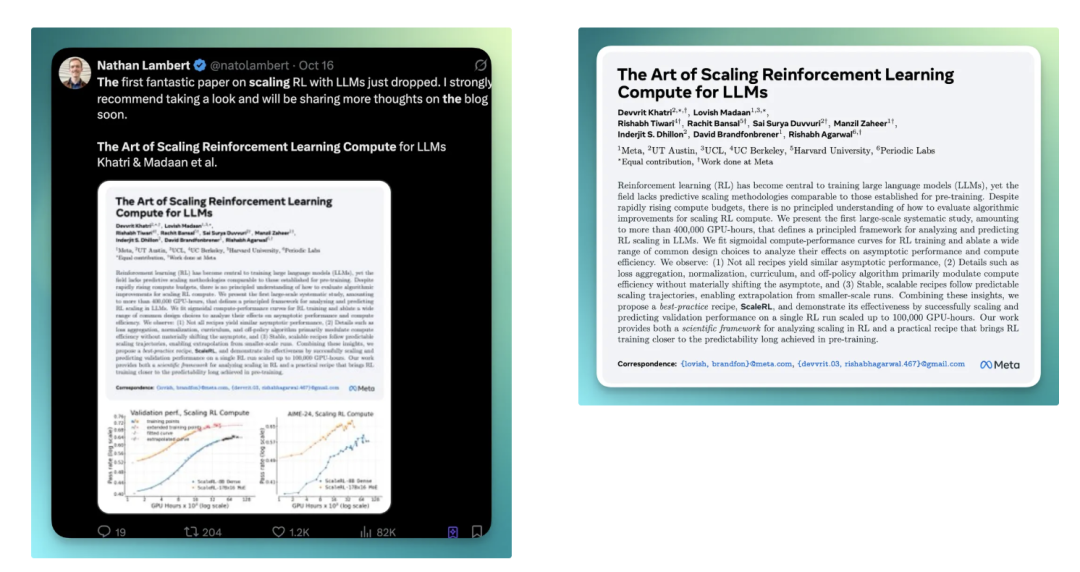
In this paper, Meta directly mentions in the introduction: MiniMax's research is one of the representative recent breakthroughs in reinforcement learning (RL):
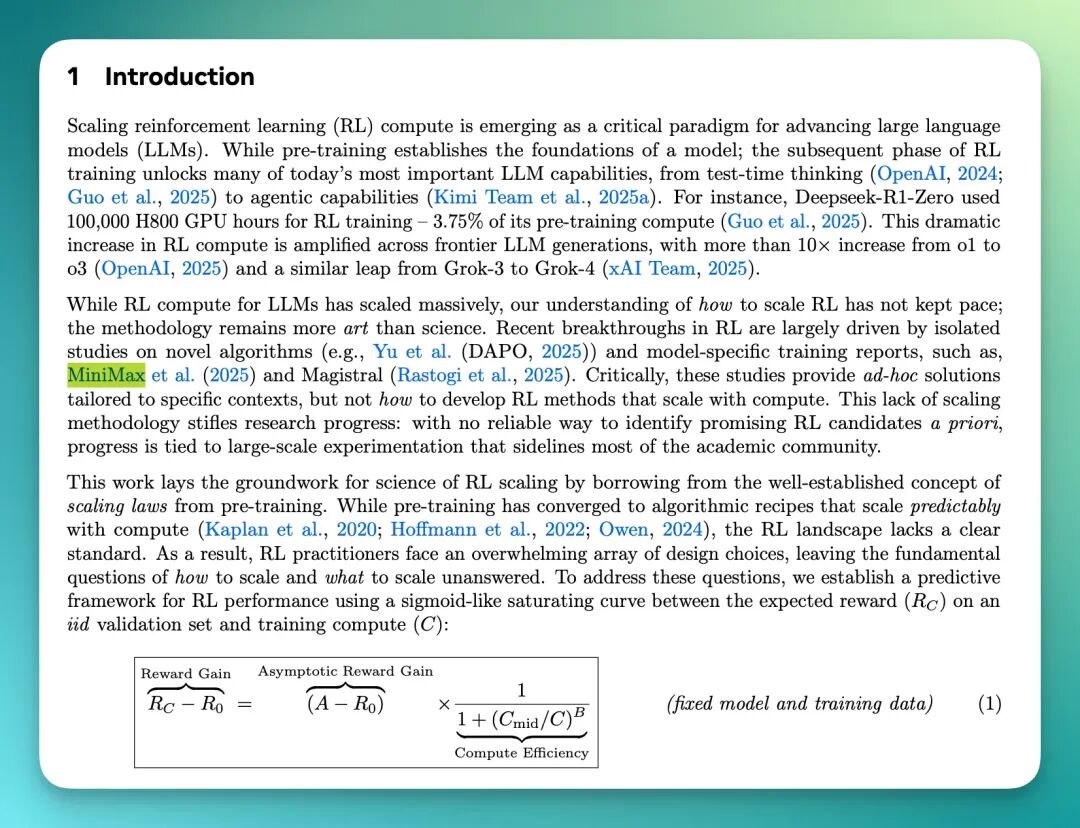
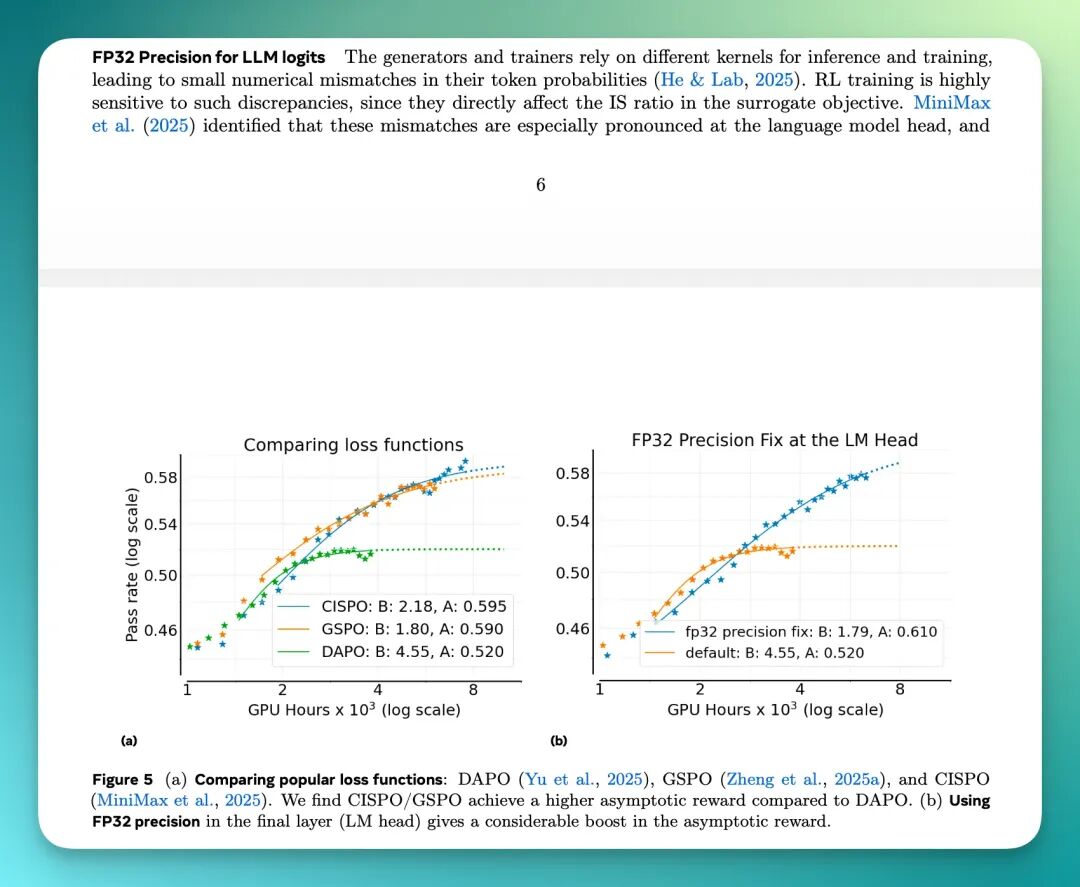
Moreover, Meta mentions that in their experiments exceeding 400,000 GPU hours, they adopted the CISPO loss function and FP32 Head technique proposed by MiniMax.
These two techniques (CISPO loss function and FP32 Head technique) are actually key innovations MiniMax proposed during the reinforcement learning (RL) phase, aiming to make models more stable, accurate, and generalizable during "large-scale training."
Simply put: these two techniques allow MiniMax M2 to "run more stably, learn more deeply, and perform more smoothly" under equivalent compute.
In the paper, Meta explicitly identifies FP32 Head as "one of the most critical experimental decisions," and calls CISPO "the most suitable approach for large-scale training." This shows that MiniMax's innovations are being absorbed and validated by top global research institutions.
Although Meta's recent performance in AI has been somewhat "lackluster," its technical instincts remain sharp.
From the results of repeated hands-on tests and paper analysis, M2 is not merely a "cost-effective" model — it represents a new paradigm for entering the second half of the AI application era:
Stable, fast, context-aware, and executable.
This is perhaps the underlying logic of what belongs to a "productivity model."
🚥
Finally, we strongly recommend trying M2 yourself in development environments like Claude Code and Cursor.
All the M2 hands-on content above was actually completed by me using Cherry Studio with M2's API, after seeing MiniMax-M2 API's global limited-time free access on the MiniMax open platform. The entire process was very smooth, with almost no compatibility issues.
And MiniMax Agent is also available for free for a limited time.
If you're working on real businesses involving Agent, Coding, or Deep Search, go give them a spin!