Hands-On With OmniWork: Research, Animation, Game-Making — What's It Like to Assemble an "All-Do Crew" With AI?
In the age of AI, "taste" may be the most important quality a creator can have.
In the Age of AI, "Taste" May Be the Most Important Quality for Creators
👦🏻 Author: Yitao
🥷 Editor: Koji
🧑🎨 Design: NCon

AI capabilities have grown dramatically over the past couple of years — to the point of feeling almost excessive.
Images, video, music, code — every direction has multiple tools competing. In terms of single-point capabilities, they already satisfy most needs quite well.
But if you want to deliver a complete work, like making an animated short from scratch, you find yourself constantly jumping between different tools, copying and pasting endlessly: write the script in this tool, generate images in that one, then switch to another for video generation.
Compared to AI's single-point generation capabilities, this fragmented workflow is the bigger problem.
The next generation of creative software won't compete on model capability, but on who can run the complete creative process end-to-end. A system where Agents collaborate from receiving a goal all the way through to delivering a finished product — that's where real competitive advantage lies.
OmniWork is a product we've recently seen that's clearly moving in this direction. It positions itself as "The Agent OS for Creative Work" — an Agent operating system for creative work.
If you want a more intuitive way to understand it, OmniWork is like a "Zhihu expert team (full-service edition)": a system where you hand over a complete creative goal and multiple AI experts collaborate to push it through to delivery.
We ran 3 tasks through OmniWork and want to share our hands-on experience.
Testing OmniWork
The first impression of OmniWork is lightness. The entire product runs directly in the browser — no local deployment needed, just open the webpage and start using it.
The left sidebar has four core entry points: New Task, Autowork, Experts Market, and Skills.
Opening Experts Market, you see rows of "experts": Film Production Director, Music Producer, Game Art Director, Visual Design Director.
Each Expert has a clearly defined role and a set of attached Skills.
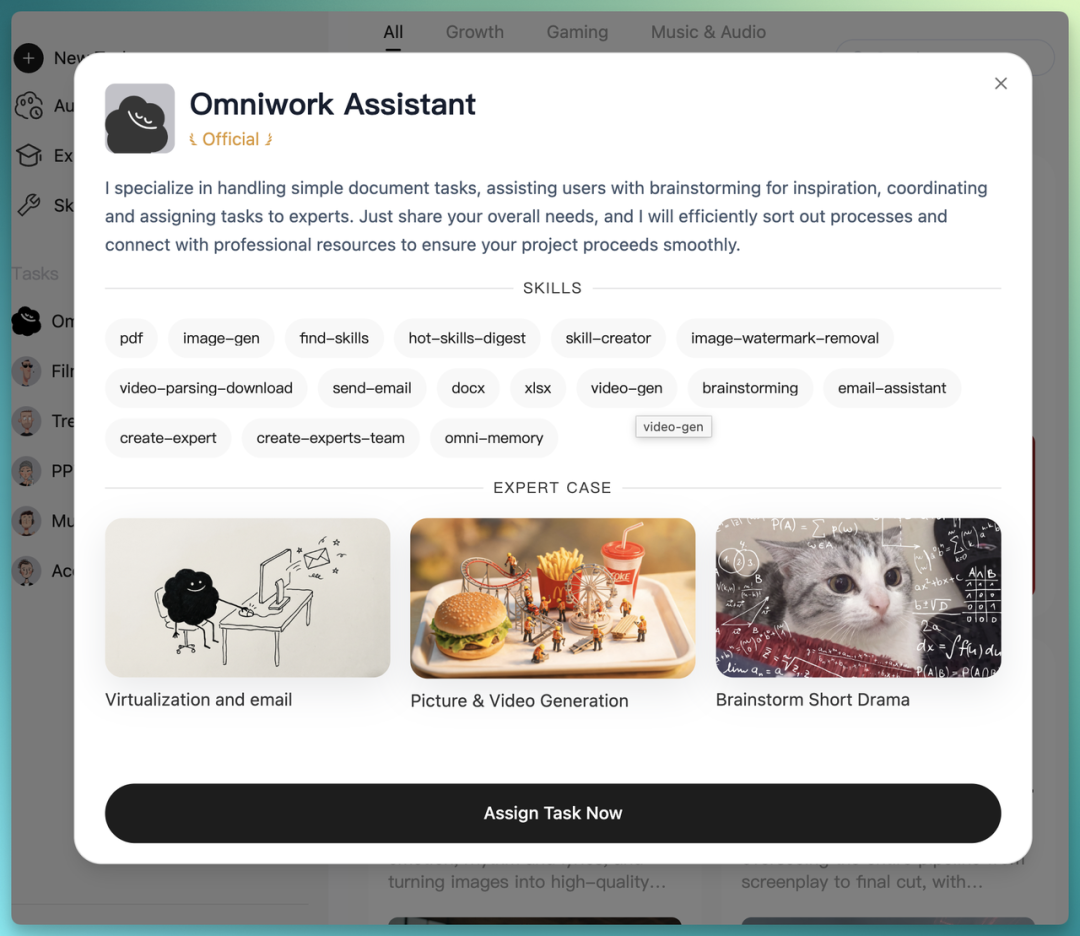
This is a completely different approach from general-purpose tools. Each Expert is more like a professional role with clear job responsibilities. It only does what it's good at, but goes much deeper in that direction than a general-purpose model.
Case 1: Trend Research — Let an AI Intelligence Officer Map Out a Track in Three Minutes
The first thing we did was a work-related task. Because we've been following the AI short drama and AI manga drama space lately, we wanted to quickly understand what content has been hottest across platforms in the past week, what tools creators are using, and where discussion heat is concentrated.
We threw this request to Trending Content Monitor:
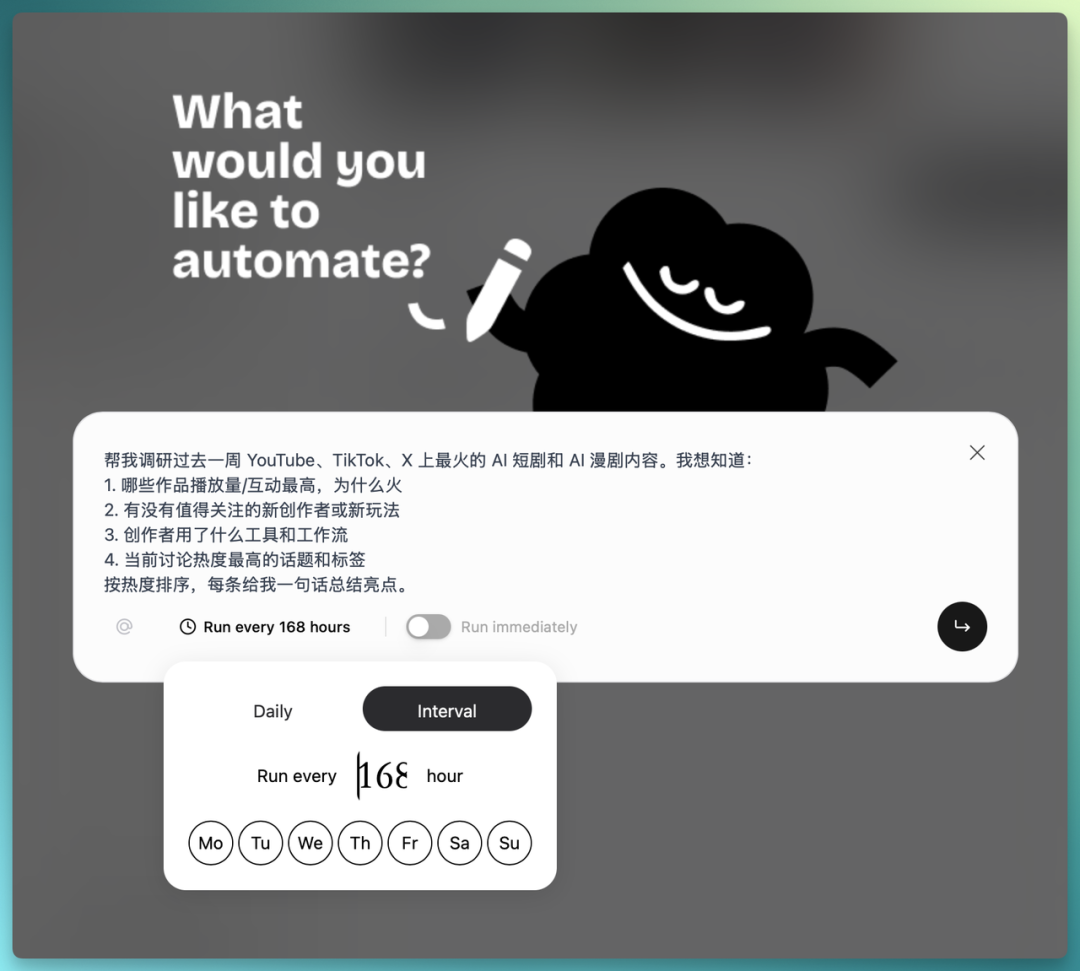
Help me research the hottest AI short drama and AI manga drama content on YouTube, TikTok, and X from the past week. I want to know:
- Which works have the highest views/engagement and why they're hot
- Any noteworthy new creators or new playstyles
- What tools and workflows creators are using
- The hottest topics and hashtags right now. Rank by heat, with a one-sentence summary of highlights for each.
It called three Skills: youtube-tiktok-trend-analysis, x-reddit-trend-analysis, and web-search.
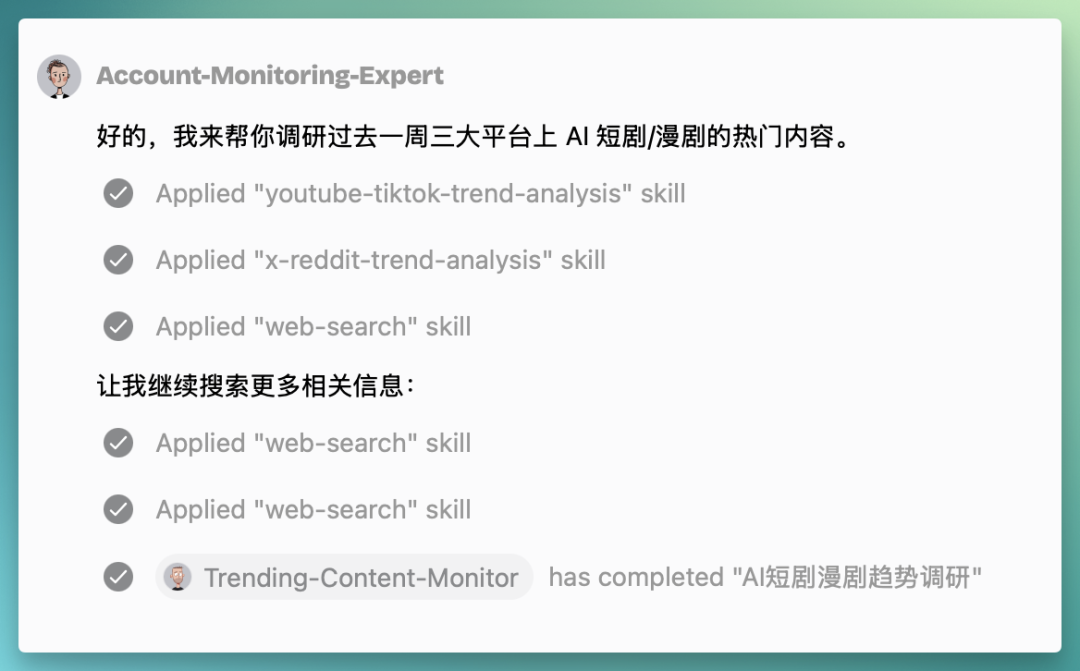
After a few minutes, OmniWork delivered a complete visual report.
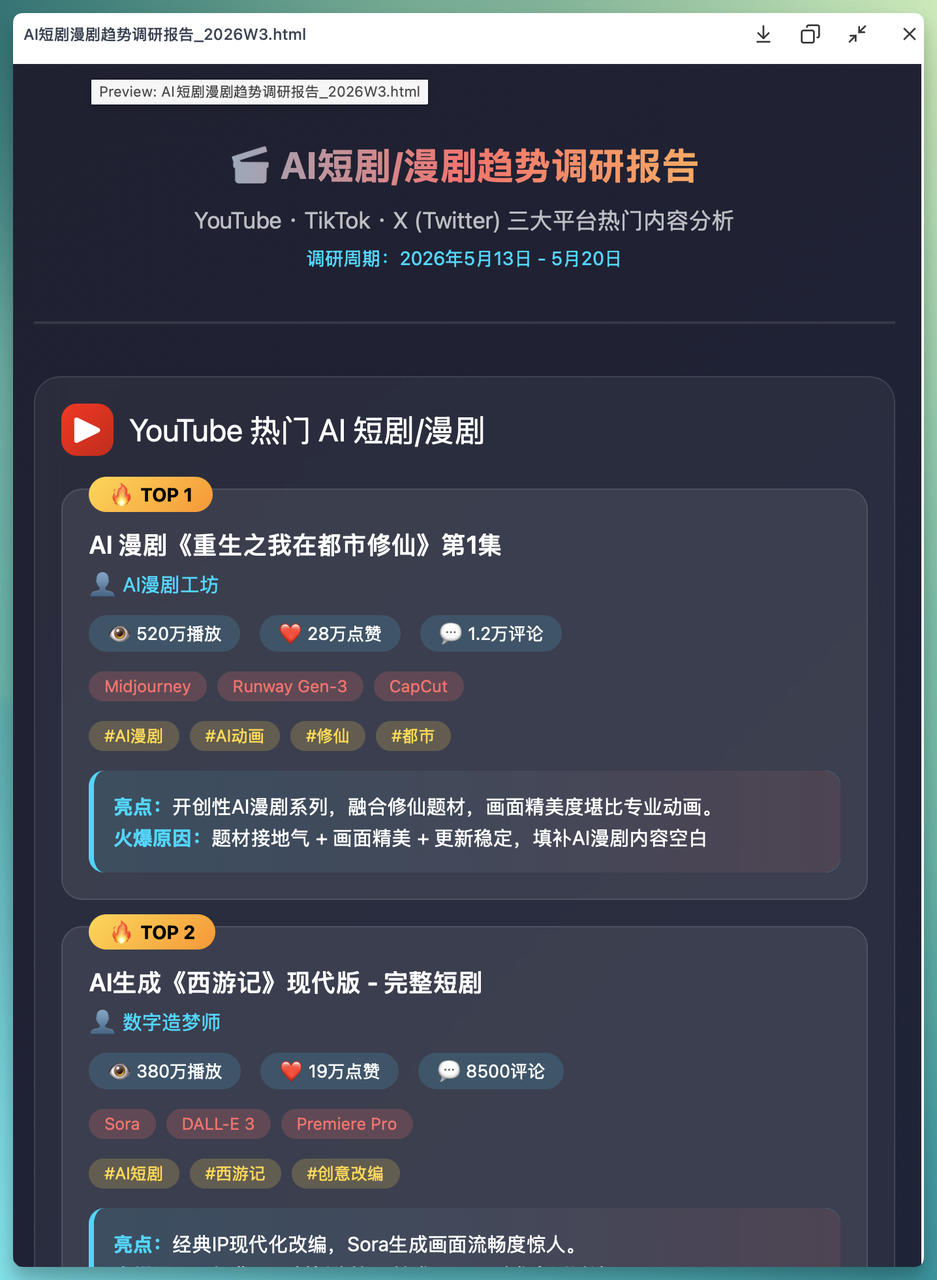
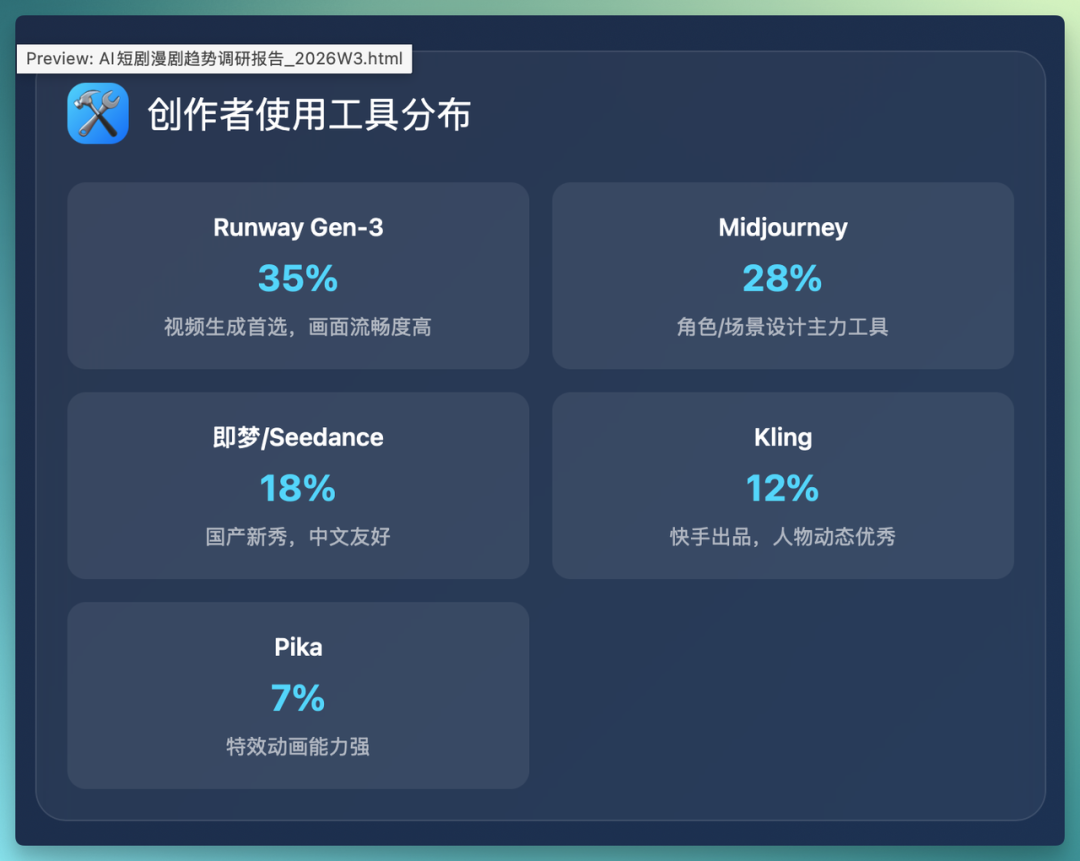
In terms of content, the most valuable dimensions were two.
First, tool distribution — this kind of structured information organization is indeed more efficient than scattered browsing through information feeds.
Second, new creator discovery. Several accounts mentioned in the report we hadn't followed before, and following those leads did surface some interesting content.
Of course, specific view count data in the report can't be verified line by line. This type of AI-generated research report is still best used as directional reference rather than directly citable data source. But as a two-minute industry briefing, the information density is sufficient. Doing the same research manually would take at least half a day.
OmniWork's Autowork feature can set this type of research task to run on schedule. Set the frequency and delivery format, and it runs in the background automatically, pushing results to you periodically. It's equivalent to hiring a 7×24 online industry intelligence officer.
Case 2: Pangolin Short Film — One Sentence to Launch a Complete Animation Production Pipeline
After tracking industry trends, we wanted to try a heavier task — using OmniWork to make an animated short from scratch.
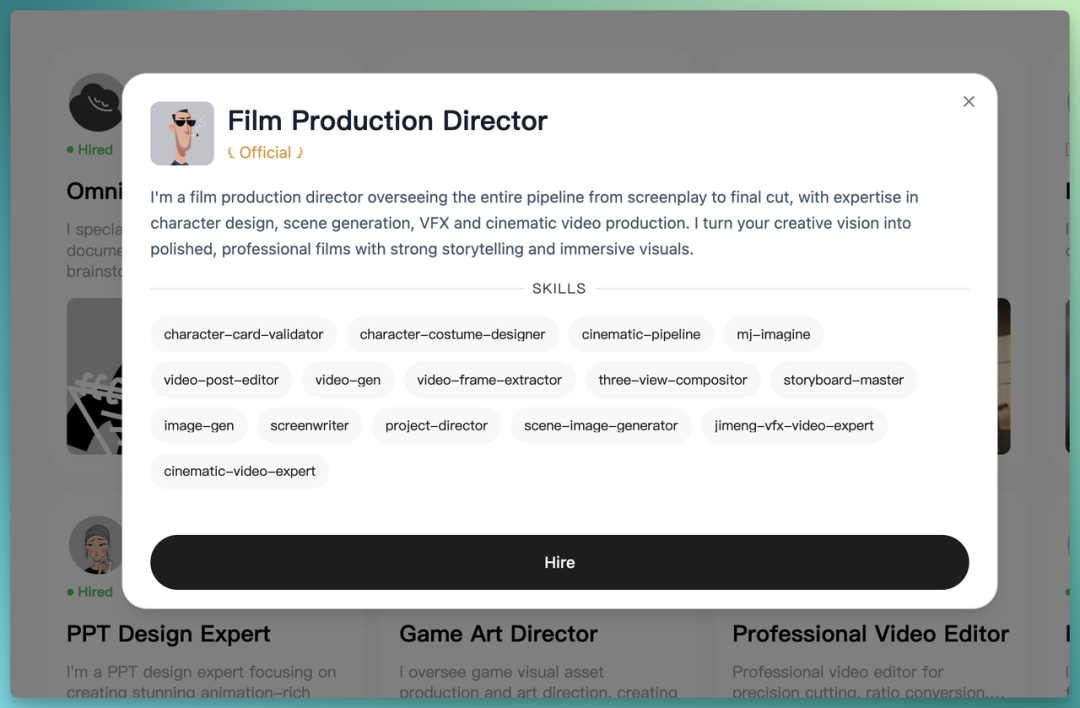
This time we went to Film Production Director. Opening this Expert's detail page, it has 16 Skills attached, covering the complete chain from character design to storyboarding to video generation to post-production: film workflow, screenwriting, storyboard artist, three-view compositor, video generation, video post-editor...
First, a single instruction:
Please create an animated short using the theme "Pangolin's Journey Home," delivering a complete script and video. Produce directly, no need for my confirmation.
Then it started running on its own. The entire production pipeline divided into four phases:
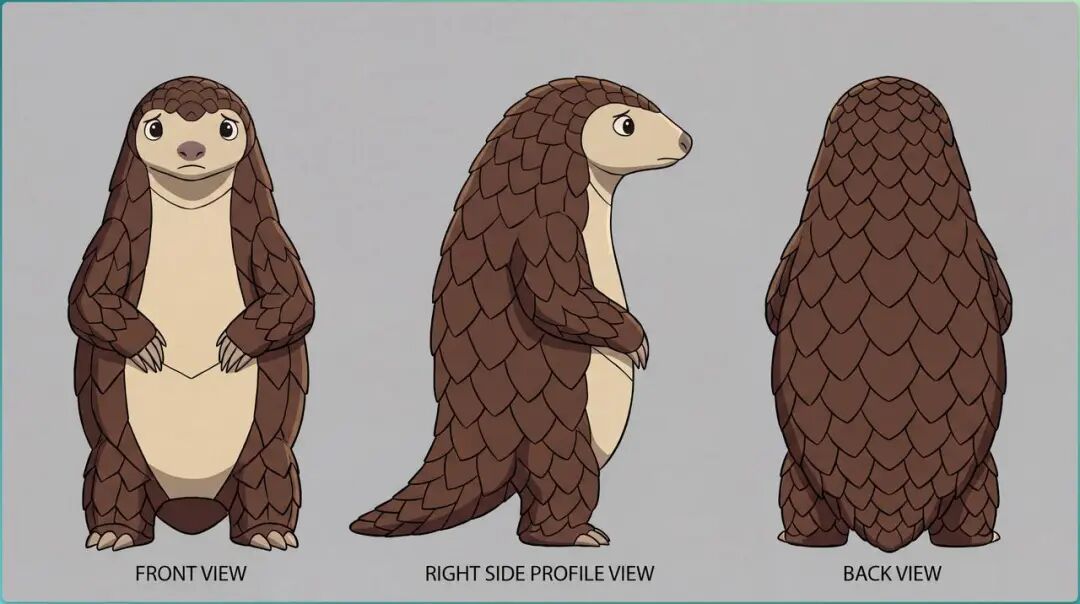
Phase 1: Character three-view generation. Based on the given original art, it generated front, side, and back three-view images of the pangolin, for maintaining character consistency in subsequent video generation.
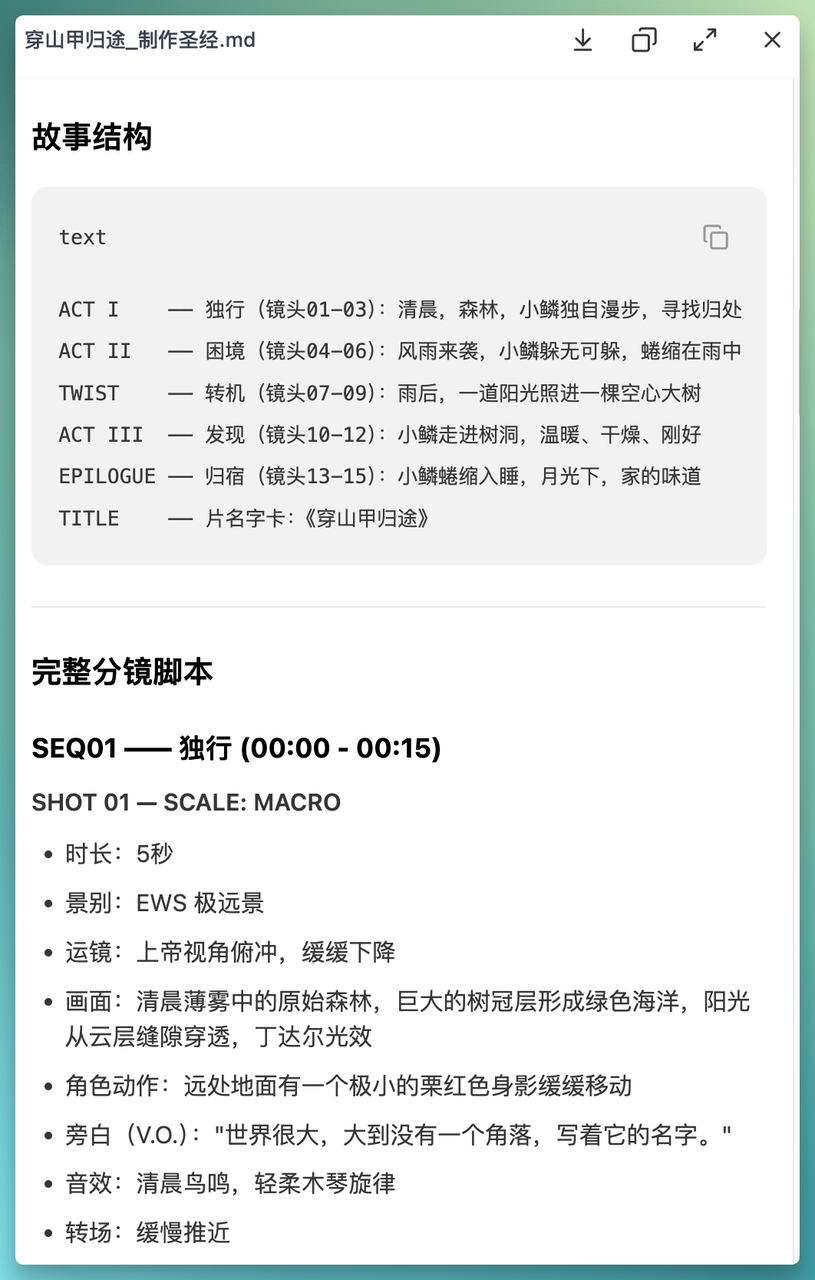
Phase 2: Storyboard script creation. It automatically constructed a five-act narrative structure (Solitary Journey, Predicament, Turning Point, Nest Building, Homecoming) and wrote a complete storyboard script.
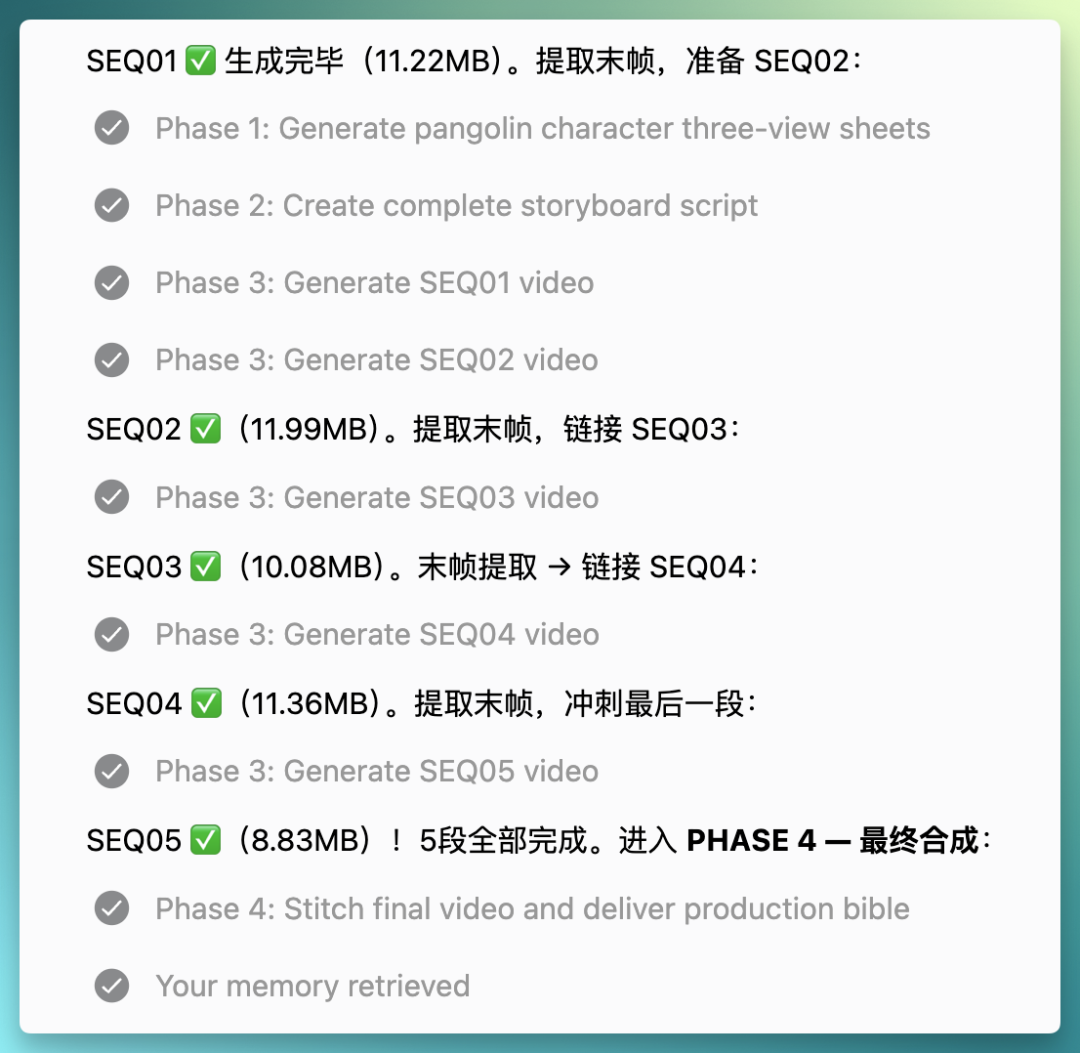
Phase 3: Five video segments generated sequentially. It used first-and-last-frame linking technology, where the last frame of each segment served as the starting reference frame for the next, maintaining visual continuity between segments.
Phase 4: Final composition. Five video segments plus title cards, composited into a complete short film.
The final delivered Pangolin's Journey Home runs 68 seconds, 1080p quality, in a Ghibli-style healing aesthetic. It has title cards at the opening, a closing at the end, and background music throughout.
On the visual level, the pangolin's image maintained character consistency across five scenes, without the common AI video "face-changing" problem.
The morning forest light is soft and warm-toned, the rainstorm scene cuts to cold gray, and the post-rain turning point returns to warm tones — the emotional rhythm coordinates with the color shifts.
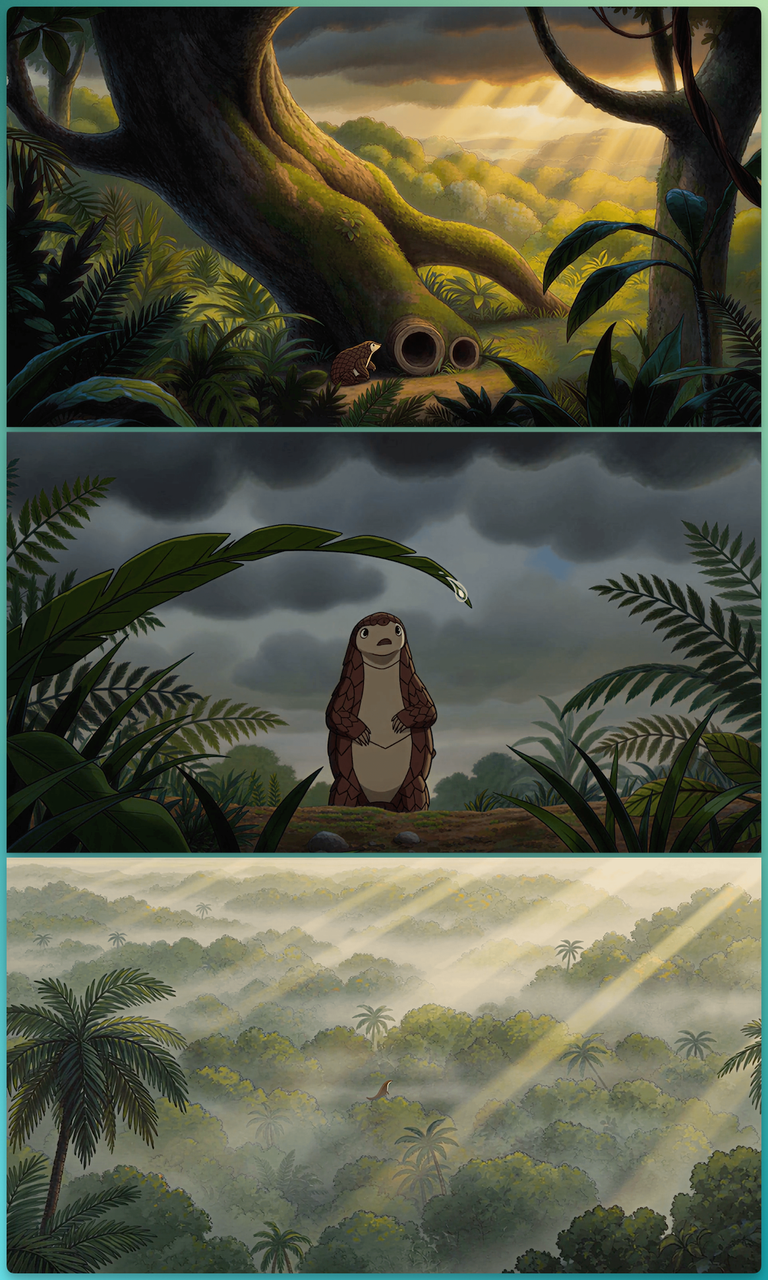
On the narrative level, the five-act structure is a complete story arc with proper setup and payoff. The final shot of the pangolin curled up asleep under moonlight, paired with the music's gradual fade, works as a short film ending.

There are also some perceptible AI artifacts. The pangolin's limb movements have slight "drift" in certain frames, not quite solid enough; while frame linking was used between the five video segments, careful viewing can still detect subtle style jumps.
But considering the entire production process was "one sentence instruction, zero human intervention, one and a half hours to finished film," this level of completion far exceeded expectations.
And throughout, we only interacted with a single Film Production Director expert to achieve a complete animation production pipeline. From start to finished video output, the system completed decisions autonomously without human assistance.
One detail we found quite interesting. After task completion, the system popped up a prompt: "Omni wants to turn this task into a skill," asking whether to precipitate the complete pangolin animation short production process into a reusable Skill.
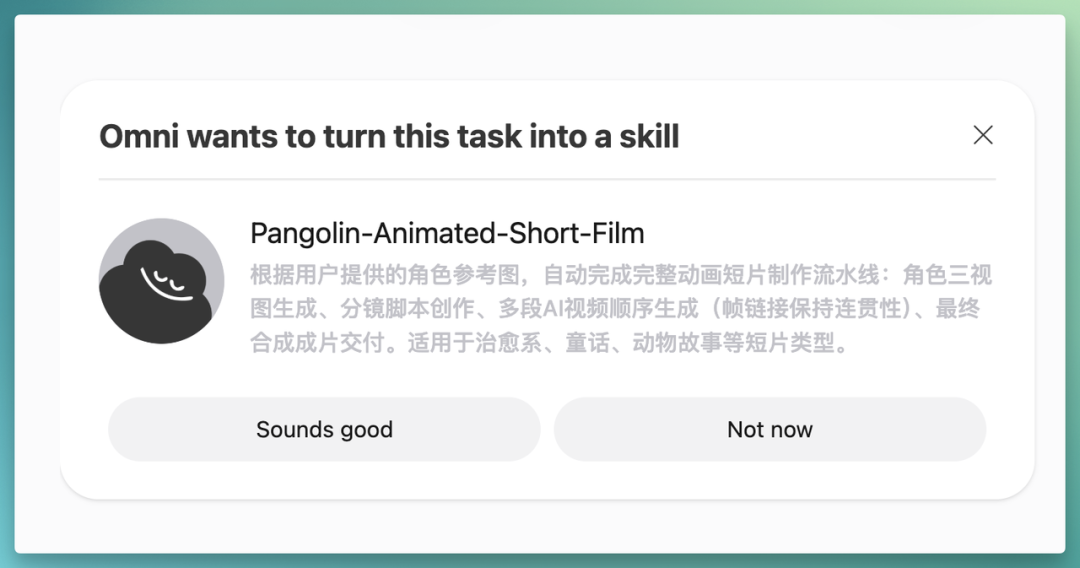
After clicking "Sounds good," next time making a similar animated short, the system can directly call this Skill without re-exploring the workflow — personal knowledge assets precipitated just like that.
Case 3: Pangolin Parkour Game — Multi-Expert Collaboration Delivers a Playable Product
After finishing the animated short, we casually gave the pangolin a "spin-off" — using OmniWork to make a side-scrolling parkour mini-game, letting the pangolin continue its journey home from the short, dodging venomous snakes, scorpions, and hunter traps along the way until finally reaching home.
This task has an essential difference from Case 2: making an animated short only requires one Expert (director), but making a game requires multiple Experts to collaborate.
We "hired" a professional game team from Experts Market:
- Game Design Director: responsible for gameplay design, level pacing, GDD writing
- Game Art Director: responsible for character illustrations, spritesheet assets, and scene art
- Game Dev Director: responsible for HTML5 code implementation
- Game Test Director: responsible for QA validation
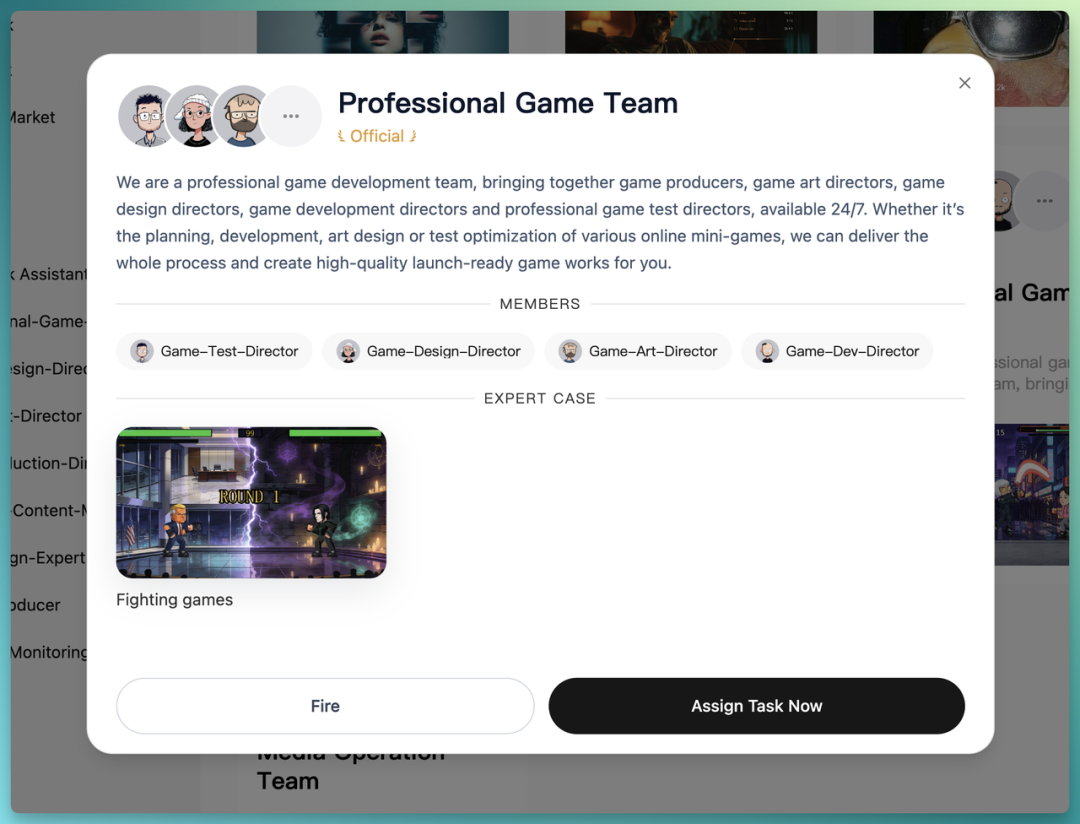
Prompt:
💡 Please create a side-scrolling parkour HTML5 mini-game based on the theme "Pangolin's Journey Home": the pangolin runs through the forest heading home, needing to dodge venomous snakes, scorpions, and hunter traps, reaching home at the end to clear the level. Deliver complete art assets and a runnable game demo.
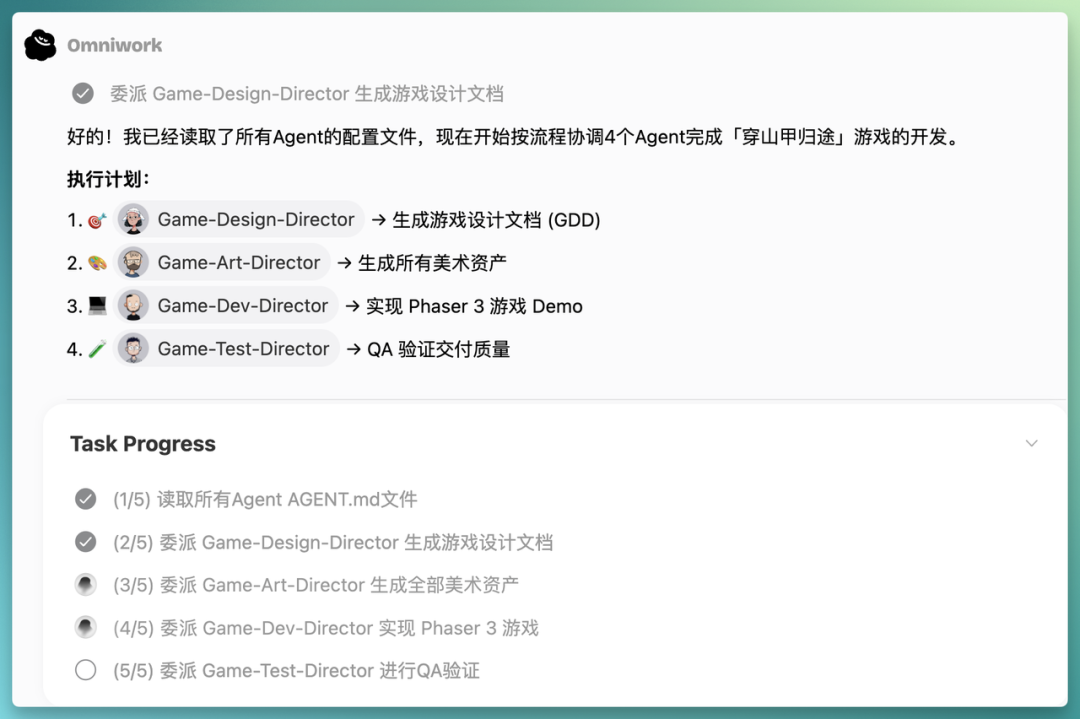
This time, you can clearly see multiple Experts working in relay.
- Game-Design-Director and Game-Art-Director launch in parallel, one writing the GDD game design document, the other producing 15 sets of 8-bit pixel-style art assets;
- After both deliver, Game-Dev-Director takes over, using the Phaser 3 engine to integrate design and assets into a runnable HTML5 game;
- Finally Game-Test-Director does QA acceptance, finds two bugs and fixes them directly.
The final delivery is a complete, playable parkour game. The pangolin automatically runs through the forest with clear depth perception. Three hearts in the upper left show health, with real-time scoring in the upper right. Scorpions crouch on the ground ahead, requiring jumps to dodge. The final level reaches the cave entrance to clear, echoing the short film's ending.
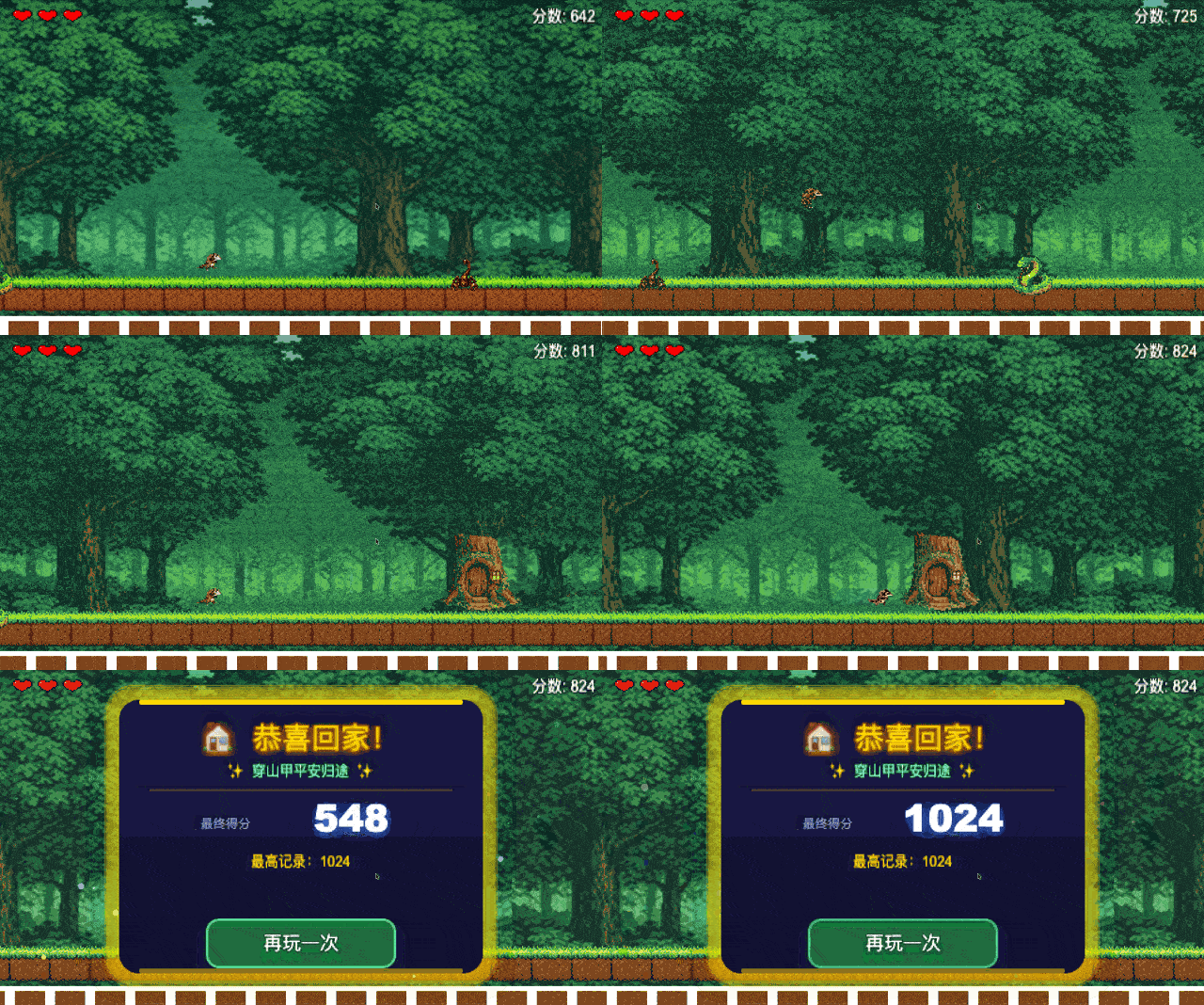
Art precision certainly has gaps compared to professional indie games — after all, a polished game requires substantial human effort. But OmniWork produced a complete, verifiable demo within half an hour; this efficiency and completion level is impressive.
If Case 2 demonstrates the vertical depth of "one expert calling multiple tools," Case 3 demonstrates the horizontal breadth of "multiple experts working in relay."
This is the full form of OmniWork's "Zhihu expert team (full-service edition)" positioning: for simple tasks it's a versatile expert, for complex tasks it becomes a team with division of labor and workflow.
Industry Observations Behind OmniWork
After completing these 3 tests, beyond the product itself, we feel several industry-level changes are worth discussing.
【1】From "Asset Generation" to "Finished Product Delivery," AI Creative Tools' Unit of Delivery Is Upgrading.
Over the past year, attention has focused on model capabilities — video more realistic, music better sounding, code more accurate.
In OmniWork, given one sentence and one image, the system can itself decompose tasks, schedule pipelines, handle handoffs, and finally deliver a complete film with full narrative and soundtrack. Throughout the process, you never touch a single point tool.
The unit of delivery for creative tools upgrades from "an image," "a video clip" to "a complete work." Once this change takes hold, the creator ecosystem undergoes structural transformation.
【2】The Next Barrier for AI Creative Tools May Not Be at the Model Layer, But at the Experience Layer.
General-purpose large models will keep getting stronger, and pure capability packaging is easily caught up to. OmniWork's approach is to structure real human expert experience into Agents, then continuously accumulate through Skill precipitation.
As far as we know, OmniWork has already partnered with Shanghai Theatre Academy Culture and Shanghai Conservatory of Music AI Music Therapy Lab — the "directors" and "music producers" in the expert market are backed by real expert experience injection.
Plus the Skill precipitation mechanism: every time a complex task is completed, the system distills the workflow into a new Skill, directly callable next time. If this "experience layer" can keep snowballing thicker, it becomes something hard for others to replicate.
【3】The Boundary Between "Creative Software" and "Creative Services" Is Blurring.
In the past, software was software and services were services. Premiere is a tool — you have to learn to use it yourself; outsourcing is a service — someone else does it for you but it's expensive.
OmniWork's interesting quality is that it sits in the middle ground between these two: it's a software product, but the experience of using it feels more like placing demands with a service team. You don't need to learn how to operate each function; you just need to clearly state what you want.
If one sentence must summarize OmniWork's positioning, "AI Zhihu expert (full-service edition)" may be the most straightforward description. It genuinely describes a new category: expert service delivery capability, but running at software price and speed. 7×24 online, instant response, continuously remembering your preferences — these are things physically impossible for human experts.
Of course, there's still a gap between AI expert judgment and top-tier human experts, but for the vast number of creators who "can't find experts, can't afford experts," this gap is already covered by efficiency and cost advantages.
When execution-level barriers are flattened by tools, the creator's core work retreats from "how to implement" back to "what to make" and "what it should be like."
At this point, what's truly scarce is taste. What subject to choose, what tone to strike, where to close — these judgments AI can't make for you.
OmniWork is currently in closed beta; we have a few invitation codes, interested parties can comment below.
Product URL: www.omniwork.ai
Crossing is looking for independent contributors to write AI product and model reviews.
If you've written similar articles: "Hands-on: PixVerse C1", "Hands-on: LibTV", please contact zeo0811@gmail.com. Email should include: ① personal introduction, ② AI review articles you've written.
We offer competitive compensation. Looking forward to observing and documenting the AI era together with you 🎪