OpenAI and Anthropic Both Back FDE: A New Role Emerges in the AI Era, Old Divisions Loosen | A Rolling AI Conversation

FDE: AI Is Labor, Not Software
FDE: AI Is Labor, Not Software
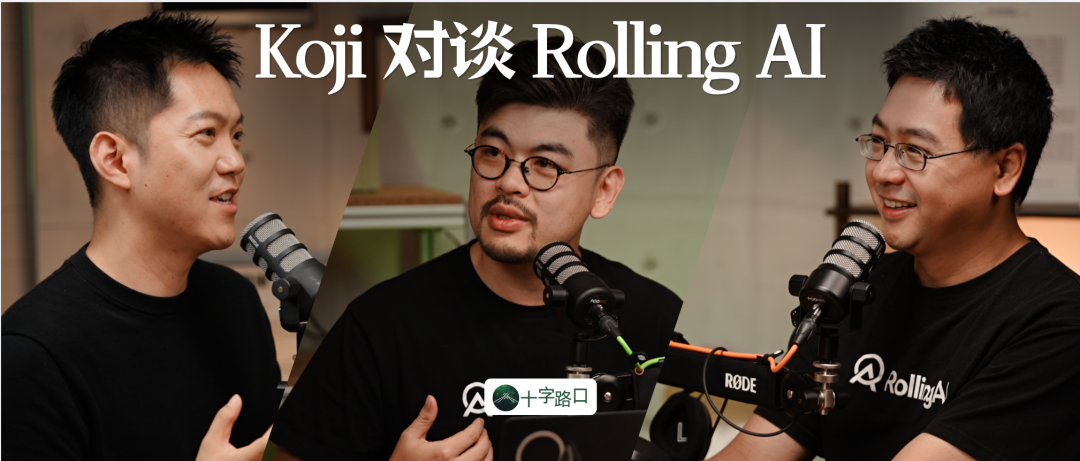
👦🏻 Podcast interview: Koji
🥷 Edited by: Crossing
🧑🎨 Layout: Zeoooo

🚥 On May 4, Anthropic and OpenAI each announced billion-dollar enterprise AI joint ventures on the same day — and both described what they're doing as FDE (Forward-Deployed Engineer). The goal: helping AI enter the enterprise, moving from "functional" to "operational," from "demonstrating capability" to "delivering results."
This week on Crossing, we're discussing FDE — this role and division of labor being redefined in real time. Is it simply a rebranded "pre-sales/delivery" function, or does it represent a new organizational structure and commercial boundary for the ToB AI era? As models grow more powerful, why is the last mile still the hardest? What do enterprises actually lack — stronger models, or people who can bring AI into workflows, integrate it with systems, govern knowledge, iterate continuously, and take responsibility for outcomes?
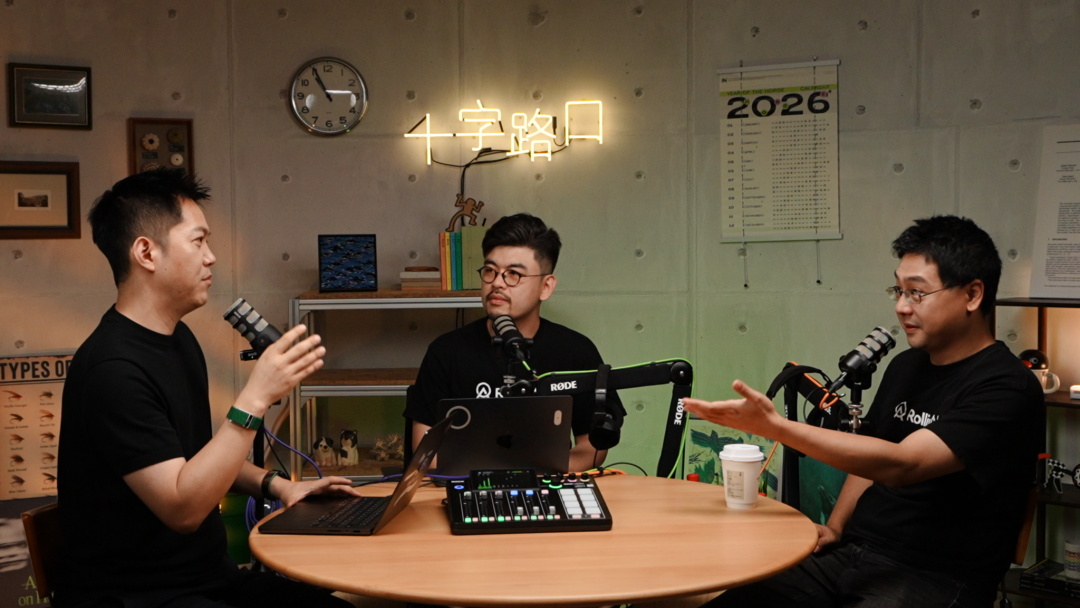
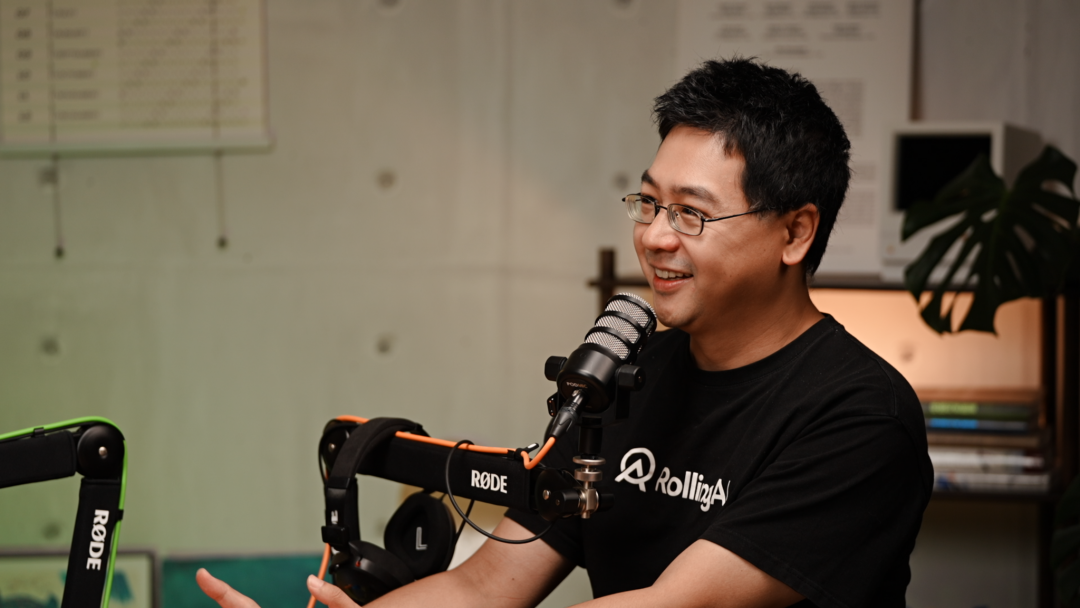
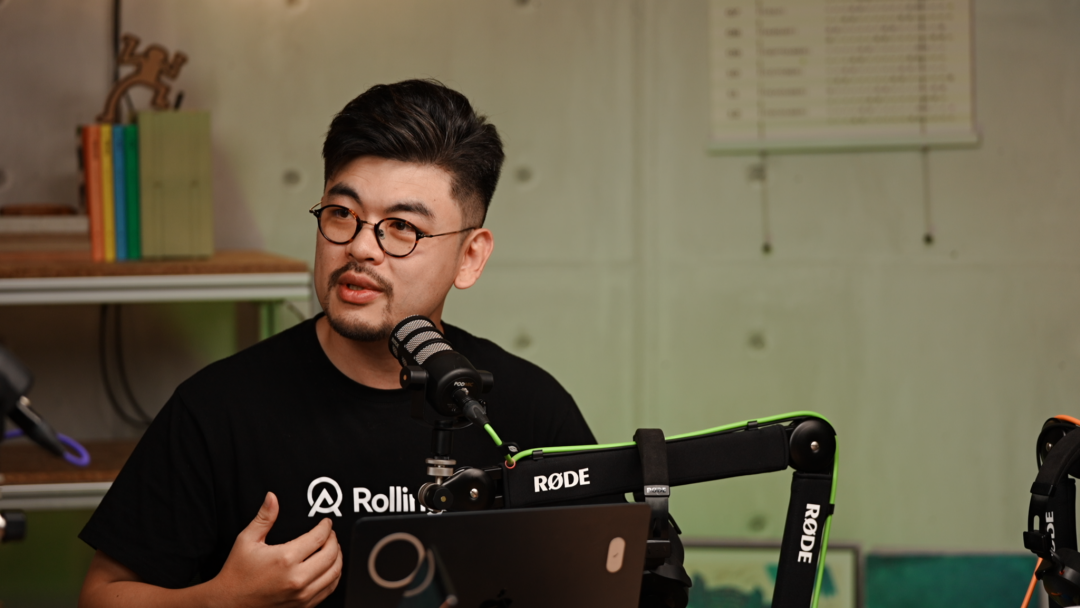
Our guests are A'gan and Liu Kai, two partners at Rolling AI — among the most deeply practiced and representative teams in China for enterprise AI implementation and "productized delivery capability."
If you're looking for the next wave of AI opportunity, this episode offers an actionable perspective: old divisions of labor are loosening, new roles are emerging, and new entrepreneurial opportunities often grow from these very gaps.
Listen on WeChat:
Listen on Xiaoyuzhou:

🎬 Video podcast now live on Koji's WeChat Channels, Xiaohongshu, Bilibili, YouTube, and other platforms

Lightning Round
👦🏻 Koji
Let's start with a lightning round. How old are you both?
🧑🏻💻 A'gan
37 this year.
👨🏻💻 Liu Kai
I'm a '83 baby.
👦🏻 Koji
Where did you study?
🧑🏻💻 A'gan
Politecnico di Milano and Tongji.
👨🏻💻 Liu Kai
Beijing Jiaotong University for grad school.
👦🏻 Koji
MBTI and zodiac sign?
🧑🏻💻 A'gan
I used to be ENFP, now ENFJ. Libra.
👨🏻💻 Liu Kai
I'm ENTJ. Aquarius.
👦🏻 Koji
Describe Rolling AI in one sentence.
🧑🏻💻 A'gan
Rolling AI literally means "rolling with AI." We roll with AI, not with people. Essentially, we're an AI business consulting firm.
👦🏻 Koji
Can you share revenue and profit figures?
🧑🏻💻 A'gan
When industry friends ask, the answer is always "under 100 billion."
👦🏻 Koji
Team size?
🧑🏻💻 A'gan
Currently 60-plus people.
👦🏻 Koji
What were you both doing before Rolling AI?
🧑🏻💻 A'gan
Liu Kai and I are both serial entrepreneurs. We met at BCG. I previously did IP incubation and built an overseas investment platform.
👨🏻💻 Liu Kai
I first started a company in 2007, doing social media monitoring. Sold it in 2015 to Europe's largest social media analytics firm. Then entered this godforsaken consulting industry, met A'gan at BCG, and left to start something together.
FDE: AI Is Not Software, It's Labor
OpenAI and Anthropic announced billion-dollar enterprise AI joint ventures on the same day, both calling what they do "FDE" — what exactly are they describing?
👦🏻 Koji
So you were colleagues at BCG.
Everyone's curious: in your view, what exactly are OpenAI and Anthropic talking about with FDE? Why did this term suddenly emerge in the AI context?
🧑🏻💻 A'gan
We have a fundamental conviction: AI is fundamentally different from traditional software. Traditional software is a tool that must be operated by people; AI itself is labor.
In many cases, what an FDE does closely resembles an HRBP — I place a digital employee into your company, help train them, and watch them take the role, rather than delivering a traditional tool or piece of software.
👨🏻💻 Liu Kai
Don't think of today's enterprise AI as software, or as an IT solution. You have to see it as a new employee starting their job.
As its capabilities approach human levels, it needs onboarding just like a person — mentors to prepare its workspace materials, walk it through processes. Of course, some underlying system integration is also needed.
The biggest difference is this: to make an AI truly integrate into a company and create value, you must give it the company's context and provide a functional workspace. That's what FDE does.
👦🏻 Koji
I find this fascinating. Before, we sold software, and our service was teaching the client's employees how to use it. Now it's more like directly selling a "digital employee" to the client, and the FDE's role is helping that digital employee integrate better into the enterprise and get up to speed smoothly.
Did you used to call yourselves FDEs? Did this role exist before?
🧑🏻💻 A'gan
We didn't really call ourselves FDE. We positioned ourselves more as builders — Business Builders.
👨🏻💻 Liu Kai
But the work we do is essentially FDE work. I've watched videos of Palantir's FDEs working in enterprises — they do exactly the same things we do.
👦🏻 Koji
Whether you call it FDE or Business Builder, how long have you been doing enterprise AI implementation services? How many companies have you served? What's your typical contract value?
🧑🏻💻 A'gan
We started in 2022. That was when GPT-3.5's DaVinci model first opened its API, and we happened to have clients with relevant needs. It's been almost four years since then — we were among the earliest to help enterprises with AI transformation.
To date, we've served nearly 100 companies. Our current engagements are basically all annual contracts, and every client is a major account. Our average contract value is in the millions to tens of millions of RMB.
👦🏻 Koji
We'll dive into case studies, stories, and pitfalls from serving these clients in a bit.
Before that, I want to talk about your BCG background. We have many MBB folks in our audience, or former alumni, who may be facing their own career "crossroads."
So I'd love to hear what led you both to leave BCG and start Rolling AI?
👨🏻💻 Liu Kai
We clearly saw that MBB-type foreign consultancies face difficulties serving Chinese domestic enterprises. Whether in pricing models or in actual means to help Chinese entrepreneurs execute.
There's a massive difference between China and overseas: Chinese private enterprise leaders are basically first or second generation, rarely professional managers. First and second generation decision-makers are fundamentally driven by profit, sustainable development, and long-term stability. They don't care how good a阶段性 presentation deck looks — they only care whether it can be implemented, whether it produces results, whether it drives organizational-level change.
This is something MBB struggles to go deep on, because their cost structure and positioning prevent them from sinking to the lowest operational level.
👦🏻 Koji
What's the most expensive project you worked on at BCG?
🧑🏻💻 A'gan
Let's just say very expensive — approaching 9 figures, nearly 100 million RMB.
👦🏻 Koji
You did consulting at BCG, and now do consulting at Rolling AI. How are the clients and projects different then versus now?
🧑🏻💻 A'gan
The biggest difference in client types is that we used to mainly serve multinationals, and now we mainly serve private domestic companies. But the essence of the business is the same — solving specific business problems. The difference is that today, the form it takes is: helping clients rebuild their business from the ground up.
👦🏻 Koji
When you say "rebuild their business," how has that rebuilding process changed with AI?
👨🏻💻 Liu Kai
The impact is enormous. In traditional consulting, your deliverable was a 200-page PowerPoint. Today when we finish a consulting engagement, we deliver an "agent." Because the best ways of working, collaborating, and moving information that you used to put in a PowerPoint — now you can actually implement them directly inside the agent.
In the past, if a company wanted to launch a new business model, it needed six months or even a year of IT build-out. Now building an agent might take just a few weeks.
We have a written rule inside our company: every agent must go live within 15 days. Because when you hire a new employee, you don't send them to school for three months before they start work. You give them maybe 15 days of training, and then they need to start producing.
First Case Study: One Person Managing 50 Bots, Serving 6 Million Users
👦🏻 Koji
Share a case that best represents this kind of efficiency?
🧑🏻💻 A'gan
In 2022, we helped a dairy company transform its second growth curve. Because of declining birth rates, the entire dairy industry was shrinking. Many dairy companies wanted to move into premium products — protein drinks, probiotics. But their existing distribution channels simply couldn't sell premium products. They needed entirely new online sales channels.
We looked at whether there were enough nutritionists in the market to provide online service. We did the math: there are only 400,000 registered nutritionists in all of China, but the target customer base was 80 million. The supply-demand gap was 10x. If you used human service, the cost per interaction was about 16 RMB.
👨🏻💻 Liu Kai
Right around then, at the end of 2022, GPT-3.5 opened its API. We fine-tuned a nutrition and health model, and dropped the cost per service from 16 RMB directly down to something like 0.10 or 0.04 RMB.
In the end, this platform carried 6 million online users for that company. The operations team was just one young woman, managing 50+ agents with clearly divided roles: some did assessments, some wrote posts, some provided nutrition consultations.
👦🏻 Koji
Without AI, this would genuinely be impossible.
👨🏻💻 Liu Kai
Yes, unimaginable without AI.
🧑🏻💻 A'gan
There's a detail here. If you ask a general AI assistant "I want to lose weight," it'll just give you a plan. But a real weight-loss coach would say: "You're not even overweight, why do you want to lose weight?" That's emotional value. Only in step two would they ask about your eating habits, exercise habits, and weight-loss goals.
The entire user guidance and conversion process requires giving emotional value first, then guiding the user to provide input.
To get an AI digital employee to this level, you have to find it a good mentor inside the company.
👨🏻💻 Liu Kai
Yes — let a good mentor pass on their professional service process and thinking details to the AI.
👦🏻 Koji
In offline chain retail, who is this mentor?
👨🏻💻 Liu Kai
It's the best store managers.
👦🏻 Koji
How does FDE extract top store managers' experience for the AI?
👨🏻💻 Liu Kai
Before 2025, we would bring in top salespeople and elite trainers for interviews, do top-down experience synthesis, and feed the scripts into the AI. But starting in the second half of 2025, we gradually stopped doing this.
Because we discovered that best practices in business often don't have an authoritative, top-down "correct answer." In a store selling milk tea or merchandise, there are thousands of ways to succeed. So we've shifted from top-down to bottom-up.
We put AI assistants in chain stores that do daily debriefs with store managers after closing: "What did you do today? What went well and what didn't? Why?" Through these debriefs, we capture the best practices around store managers, top consultants, and gold-medal salespeople.
This assistant is like an observer at a consulting firm — a shadow trainee, quietly watching from the side. In this process, it gets smarter and smarter.
👦🏻 Koji
Does this meet resistance? For example, do veteran employees worry that once the AI learns and distills their experience, they'll lose their value to the company?
🧑🏻💻 A'gan
If you want to learn from someone, you first have to deliver value to them. When any of our AI apprentices enters a workplace, it always starts by helping the veteran employee with their work. It can do daily shift scheduling suggestions, revenue forecasts. Only when the veteran feels this apprentice is useful, that it saves them effort, will they be willing to teach it.
We never think AI is better than people. What we've found is: the strongest is "AI + human," second is "human," and last is "AI" alone. Those frontline employees who continuously generate debriefs and experience are a company's most valuable asset — they shouldn't be abandoned.
AI can help you prepare many contingency plans, but it cannot replace you in making decisions.
👨🏻💻 Liu Kai
In this process, the value of gold-medal employees is also amplified. Before, if you were a gold-medal salesperson, maybe you sold 3x what others sold, or you led a team — that was your ceiling.
But today, the experience and methodology you extract can be directly replicated through AI to 1,000 or 10,000 salespeople nationwide. That means your value to the company is infinitely amplified. This amplification of value must be matched with corresponding incentive rewards.
This is also what we advise entrepreneurs to do: heavily incentivize those frontline employees who can train good capabilities into AI.
👦🏻 Koji
Can you share a specific case?
🧑🏻💻 A'gan
In chain retail, one core task is forecasting next-day revenue, then scheduling staff and placing orders based on that forecast. Before, this was done by a headquarters algorithm, and it was often extremely inaccurate because every store's operating context is completely different.
We dismantled the headquarters' one-size-fits-all forecasting system and gave each store manager an AI co-manager. It prompts the manager: "There will be heavy rain tomorrow afternoon," "A competitor nearby is running a promotion." Ultimately the store manager decides how much to order and how many people to schedule.
After this change, revenue forecast accuracy improved dramatically. AI has systemic book smarts, but China has too many offline scenarios that depend on frontline street smarts. Empowering the front line, letting book smarts and street smarts combine — that's something especially worth doing.
👦🏻 Koji
Can you give another example of street smarts?
🧑🏻💻 A'gan
Still retail. If a sudden heavy storm hits and store traffic drops off a cliff, scheduled part-time staff become wasted labor. Across 1,000 stores, annual waste could reach several million RMB.
A smart store manager, if warned by the AI co-manager that heavy rain is likely tomorrow, will proactively reach out to part-timers: "It might rain tomorrow, so we may need to cancel your shift last-minute — please be mentally prepared." With advance warning, staff don't feel blindsided or upset. Once this seemingly tiny action is standardized by AI, it can save a company millions per year.
👨🏻💻 Liu Kai
Another time, our AI co-manager was doing a cold storage inventory check with a store manager.
The AI asked: "The large-format Chenguang yogurt sells well at seven or eight nearby community stores. Why isn't it moving here?"
The manager said: "Because 5 meters from my store there's a supermarket twice my size. Whatever large-format Chenguang yogurt they also carry, they sell cheaper than me, so I can't compete. But Kowloon Dairy premium yogurt — they don't carry it, so I sell it very well."
The AI immediately suggested: "Then let's adjust our assortment — don't order the mass-market large-format yogurt that the big supermarket carries. Only stock exclusive-distribution and premium hard-to-compare items." After the adjustment, sales jumped 40-50%.
If you relied on AI alone to judge, it would very likely reach the wrong conclusion that "the customer base here is more premium, so only expensive yogurt works." You need the store manager's frontline business intuition combined with AI to reach the right commercial decision.
👦🏻 Koji
This reminds me of the 7-Eleven story. Its turnaround and explosive growth inflection point came from giving frontline store managers enormous ordering authority. In the past, frontline managers couldn't wield this power well because their energy and analytical capacity were limited. But now with a 24/7 AI co-manager assisting, fully decentralizing decision-making to the front line has finally become possible.
👨🏻💻 Liu Kai
Exactly. AI's biggest dividend isn't letting headquarters do top-down micro-strategy — it's giving every ordinary clerk and salesperson a digital advisor at their side. Before, you couldn't afford to hire 10,000 professional coaching trainers to personally mentor 10,000 store managers. Now that bottleneck is broken.
What Role Does FDE Play?
A foreman leading a crew of "Tsinghua-Peking University graduates" to work at convenience stores.
👦🏻 Koji
This is very much like the general-purpose agents that are popular now. For AI to get smart, it needs extremely rich context. So we let it watch screens, record meetings. For retail stores it's the same — the more familiar the AI is with this specific store and the real-time information within two kilometers, the more accurate its decisions.
In this reconstruction process, what role does FDE play?
👨🏻💻 Liu Kai
FDE plays several roles. Essentially, it's like a "foreman" leading a team — leading a group of incredibly smart "digital top graduates" (from Tsinghua, Peking University, or Stanford — these "graduates" are the AI). But these top graduates, when they go to convenience stores, marketing departments, or HR departments, can't directly get to work.
For example, with AI interviewing, we need massive internal alignment: What counts as professional questioning? What approaches would be disrespectful or unfriendly to candidates? All of this requires FDE to do extensive on-site debugging.
Today we're very much like an AI staffing agency, and FDE is the foreman. He brings this group of high-quality digital employees into a company, but he has to ensure they can produce high-quality work before he can exit.
On-site, he has to solve three major problems: integration with business workflows, governance of proprietary knowledge, and integration with underlying IT systems.
👦🏻 Koji
The "foreman" metaphor is vivid. You currently have 60+ employees. In your view, what core qualities does a qualified FDE need?
👨🏻💻 Liu Kai
First, strategic consulting ability. The capacity to see through to the root of a business pain point at a glance. Is the pain point a shortage of people, a shortage of knowledge, or a breakdown in collaboration and communication mechanisms? If the problem is communication, throwing IT systems at it solves nothing.
Second, native thinking in human-machine collaboration. No job can be fully closed-loop by robots alone. An excellent FDE needs to decompose workflows rationally, placing human employees at the most decisive junctions — responsible for review, judgment, and planning — while letting digital employees handle high-repetition, heavy-lifting intellectual labor.
Third, extremely strong engineering execution. An excellent FDE must be able to pull out AI-native development tools and rapidly prototype agents and orchestrate systems within half a day or a single day.
So an FDE is neither a pure programmer nor a pure pre-sales salesperson.
👦🏻 Koji
The barrier is extremely high. Can such people be systematically trained?
🧑🏻💻 A Gan
It's difficult to cultivate them in the short term. This touches on the ultimate question of what kind of talent the AI era demands.
Excellent business judgment is essentially a highly personal form of taste — after AI generates endless redundant data and harvests back massive amounts of information, which direction should you head next? What's the sexiest solution? This requires extraordinarily sharp commercial intuition and feel. It carries a somewhat mystical quality, not something ordinary training can easily produce.
SOP Represents Backwardness — The End of Standardization
👦🏻 Koji
This is completely different from how you used to work at BCG — the methods, tools, and talent profiles?
👨🏻💻 Liu Kai
Yes. Traditional consulting logic comes from the previous industrial era. When the AI era arrives, much conventional wisdom is overturned at the foundation.
For example, one of the core functions of middle and senior management used to be "information transmission." Now, the friction and inefficiency of information transmission can be completely erased by technology.
What traditional consulting and IT systems used to help companies do was "standardization" — ensuring operational baselines by establishing SOPs. But today we react to the word "standardization" with aversion, even resistance — because standardization kills flexibility. We believe that in a rapidly changing market, every store and every region should be self-driven based on its own "context."
Here's a deliberately provocative statement: we believe SOP represents backwardness, represents slowness. Because so-called standardization is essentially dragging the entire operation down to a passing grade, only achieving 60 out of 100. Today the value of AI on the front lines is providing sufficiently powerful intellectual tools, empowering every storefront to achieve 85 or even 90 points based on the actual conditions of their local area. This mindset of dynamic empowerment is something that only gets forced out in China's hyper-competitive, high-frequency-iteration market.
In the future, the next generation of revolutionary business management wisdom will, with very high probability, be led by Chinese entrepreneurs and Chinese enterprises.
👦🏻 Koji
If next-generation management wisdom will be led by Chinese enterprises, what will it specifically look like?
👨🏻💻 Liu Kai
Previous standardized management was essentially about protecting the baseline. In the future, management wisdom will make a leap — from "using standardization to protect baselines" to "using democratized intelligence to deliver optimal solutions on the front lines."
This paradigm shift will completely reconstruct headquarters' responsibilities. In traditional organizational structures, headquarters establishes countless standardization departments, internal audit departments, informatization departments, and intermediary management networks. The existence of these layers is fundamentally about monitoring, managing, and constraining the front lines, ensuring every outpost doesn't make mistakes.
In the future, this heavy-control architecture will gradually recede. Headquarters will transform from a "control center" to an "enablement center." Headquarters shouldn't spend all day crafting tedious rules and regulations. Instead, it needs to equip every store with digital coaches and digital advisors, supporting them to capture more revenue when they need to charge. This isn't just a shift in management model — it will fundamentally overturn the organizational structure, hierarchy, and departmental divisions of the entire modern large corporation.
👦🏻 Koji
Why couldn't this management paradigm reform be achieved before?
👨🏻💻 Liu Kai
The reason it couldn't be done before is that within large corporate organizations, human "intellectual" resources were severely scarce. Those excellent store managers who both understood frontline operational details, could explain things simply and clearly, and had the energy and willingness to cultivate and mentor new people over the long term — they were simply too rare within organizations.
But now, this bottleneck has been broken. Once computing power is switched on and intelligence starts flowing, enterprises possess endless intellectual productivity.
🧑🏻💻 A Gan
Yes, and the underlying logic of Chinese versus Western enterprises is also different. Multinational corporations often pursue procedural justice to an extreme, spending massive amounts of time ensuring compliance and approvals. Domestic entrepreneurs are highly pragmatic — as long as the outcome is just, any path can be encouraged and accepted.
Another key point is that Chinese entrepreneurs often possess an extremely strong "hands-on" trait, which in the AI era becomes an unparalleled first-mover advantage — many private enterprise founders personally build agents, research Claude Code.
The underlying logic is that Chinese enterprise owners mostly remain on the frontline battlefield, whereas in Europe and America too many mature enterprises are run by professional managers. Their objective functions are fundamentally different.
Those Disappearing Enterprises — Where Did They Truly Lose?
The Lancashire textile industry connected electricity, but electricity didn't save them — because they only wired it to the original steam engine's main shaft, and the entire production method remained steam-era.
👦🏻 Koji
In the process of enterprises implementing AI and reconstructing business, what proportion does the technology itself account for?
👨🏻💻 Liu Kai
Personally, I believe technology accounts for no more than one-third of the entire implementation effort.
This wave of AI is not a wave limited to the technical level. It is a magnificent productivity revolution, and its reshaping of business and society will even completely surpass the internet.
This resembles the electrical revolution 100 years ago. At that time, Britain's Lancashire textile industry originally held 70% of global market share, but in the wave of electrification it was completely left behind. Did they refuse to use electricity? They too connected generators. But they continued using the traditional logic of main shafts and transmission belts inherited from the steam era.
Meanwhile, the United States, Germany, and Japan adopted completely native electrical designs from the start, reconstructing entire factory buildings and production processes, and in one blow crushed the traditional textile empire.
So, those who merely plug in a model or slap on a wrapper without changing core production relations will ultimately be eliminated by history.
The real heavy lifting in AI implementation lies in organizational restructuring, business model reshaping, and the distribution of stakeholder interests.
👦🏻 Koji
This is indeed a process of reconstructing production relations. Where do the remaining two-thirds lie?
🧑🏻💻 A Gan
In organizational structure, business relationships, and the supporting performance evaluation systems.
Take the sales function, for example. They are extremely results-oriented. As long as large model intervention has no direct, positive connection to their personal interests and commission structure, no matter how flashy or sophisticated a tool you hand them, they won't touch it at all.
So when we enter an organization, we often partner directly with the business unit leader to surgically modify their performance evaluation system. For example, adjusting from 100% commission tied to closed-deal outcomes to 80% based on closed deals, with the remaining 20% based on data accumulation during the process, customer profile completion, and follow-up quality. Only when the supporting incentives are aligned can new productivity possibly survive within that organization.
AI Implementation Failure Rate Exceeds 50%: Three Fatal Patterns
👦🏻 Koji
When helping enterprises with AI transformation, what failure rate do you observe? What other fatal pitfalls need to be avoided?

👨🏻💻 Liu Kai
Currently, the real success rate of AI transformation projects may not even reach 50%. There are massive amounts of failure.
The main causes of failure, I can summarize as three key points:
First, CEOs harbor extremely unrealistic fantasies about the current technical capabilities of AI, believing that no matter how chaotically their company operates, as soon as they buy a large model, the company will immediately take off. It absolutely doesn't work that way.
Second, never hand over large model implementation projects entirely to IT or R&D departments to build. Sidelining business departments and letting IT lead gives the project a greater than 90% probability of complete failure. Because those who truly understand the business are always the business line leaders — IT teams cannot provide the experience of business experts.
Third, at the foundation, there is no corresponding change in incentives for business teams and the organization to match this paradigm shift. When large models enter, it's a process of digital labor joining the enterprise and reshuffling production relations. If underlying evaluation and human-machine collaboration relationships don't evolve fundamentally, large models are merely decorative.
👦🏻 Koji
Can you share specific examples here? Especially lessons where IT team involvement caused AI projects to abort.
🧑🏻💻 A Gan
We engage with many massive multinational corporations, and upon entry, the hardest bone to chew is often not algorithmic difficulties but the extremely stringent system compliance of IT departments.
In their deeply ingrained mental models, ensuring procedural justice and data security supersedes everything. This in itself isn't wrong. But in the extremely early stages of business reconstruction, if compliance and absolute security are elevated to the highest priority, with every approval taking three months, any lightweight frontline exploration gets strangled.
👨🏻💻 Liu Kai
The chairman of Bloomage Biotech gave a truly stunning speech internally during an AI workshop we organized.
He said: "If you're pursuing AI efficiency gains merely for 50% improvement, then this kind of不痛不痒的事情你根本就不要碰. You should be seeking breakthroughs that deliver 3x, 5x, even 10x leaps."
The significance of large models lies in providing low-cost intellectual productivity. You should be reconstructing entire workflows, not squeezing toothpaste.
👦🏻 Koji
Are there specific cases achieving several-fold leaps?
🧑🏻💻 A Gan
We served a large rental intermediary platform. Platforms like this all have an indispensable yet utterly exhausted role — the rental house manager. Managers handle tenants' endless trivial matters: neighborhood disputes, air conditioner leaks, rent collection reminders, saturated with negative emotions.
When we came in, their initial instinct was: can we develop a tool to help managers type automatically and reply quickly? This is typical tactical efficiency thinking.
When we stepped back, we discovered two more fundamental pain points: first, against the backdrop of peaking urbanization in major and mid-sized cities, traditional rental intermediary business was continuously shrinking, and they urgently needed to sell tenants higher-margin lifestyle value-added services, such as on-demand cleaning, pet-sitting.
But because the managers were mired in petty complaints and negative emotions every day, they had no time or energy left to sell these services.
We helped them restructure workflows and responsibilities: replies involving negative emotions, trivial matters, or process lookups were handed off entirely to AI agents; human managers were freed up completely to deliver warmer, more human care that could defuse tensions.
By this year, our goal is for one manager to oversee and maintain a massive tenant base of up to 2,000 people. And that sole manager's daily workload hasn't increased — it's actually decreased.
👨🏻💻 Liu Kai
At the same time, we launched a "sales lead detection agent." As AI assists managers in conversations, if it catches certain details — like a tenant mentioning "my cat hasn't been eating lately" or "I'm going back to my hometown next week" — it immediately alerts the human manager: detected that this tenant has a pet and will be traveling, recommend pushing pet-sitting and whole-home cat hair removal services.
We didn't help them lay off staff. But by reorganizing production relationships, we dramatically improved customer renewal rates and conversion on rental value-added services.
During this transformation, the head of the rental platform once said to us with genuine feeling: the moment large models went live, our criteria for measuring good employees were completely demolished and rebuilt.
In the past, people who typed fast and remembered accurately were our good employees. Today, those who can deliver empathy intensely on the front lines, keenly provide emotional value, and make customers feel warmth — those are the truly irreplaceable good employees.
👦🏻 Koji
Gan mentioned on another occasion: the essence of business consulting is often doing high-level "psychological counseling" for chairmen and CEOs. Could you expand on that?
🧑🏻💻 Gan
In traditional consulting, we often faced professional managers at large multinational corporations. They needed to introduce external information and macro perspectives to relieve their own management anxiety.
Today, we want to explore the underlying logic of management — the essence of management is to inspire and unleash goodwill.
In the AI era, intelligent agents can deliver several times the efficiency of the past. If your intent is control, constraint, limitation, its energy is 10x. If your intent is empowerment, goodwill, helping every salesperson earn more money, it may also be 10x. We ourselves tend to believe that empowering the front lines will definitely succeed in the future. Because if it's about control, you might as well replace everyone with robots.
So when we serve enterprises, the first psychological counseling we do is meeting with the top leader: where is your own intent to empower? Where is your goodwill? What kind of growth do you hope to see from them? Then we'll embed this into, say, assistant store managers, or some kind of intelligent agent — I think this is also a form of psychological counseling.
Second, the bigger psychological relief work is actually aimed at frontline employees. Large numbers of grassroots workers, facing AI's entry, are filled with panic and hostility about being replaced.
We need to have deep conversations with them, tell them: what gets eliminated by the times is never specific people, but those positions that were designed from the start to be backward and rigid.
You shouldn't seek better development within that backward position anymore — instead, look at what new positions will emerge, and which ones match you better.
👦🏻 Koji
In your view, which positions will most likely face rapid extinction?
🧑🏻💻 Gan
First to fall are those middle management layers that only serve as "information relay." In traditional sales networks, from headquarters to provincial heads, regional supervisors, sub-districts — there might be 2 to 3 layers of people doing nothing but passing information up and down. In the AI era, this middle layer has no reason to exist.
👦🏻 Koji
Why doesn't relaying information up and down need middlemen?
👨🏻💻 Liu Kai
Because in the past, even with digitization and SOPs, you still needed middle layers to govern and clean information.
For example, you ask a junior frontline salesperson: "How was the client you met today?" The salesperson won't give you a structured, standardized business report. They might vent: "That client was such a pain, I talked at him forever and he wasn't even listening."
Previously, the core value of middle management was converting these noisy, emotional oral stories into structured, standardized business reports for headquarters decision-making. Meanwhile, they needed to aggregate and distill information from 100 salespeople across multiple layers.
But now, this information cleaning, clustering, and unstructured distillation — large language models can do extremely well.
👦🏻 Koji
Do you have clients you absolutely won't take? What's the biggest deal you've turned down?
🧑🏻💻 Gan
Like or dislike, the core essence is actually about genetic match. Our mission is to help clients rebuild their business. If what the other party wants to buy isn't this, no matter how high the budget, we absolutely won't cooperate.
The fatal commonality in cases that don't work out is an extremely lengthy internal decision chain.
Our current collaborations are often very clean and direct — we usually talk directly with the client's "top leader," and generally finalize cooperation within 3 meetings. Because everyone is an extremely pragmatic comrade-in-arms. The value I can provide is definitely not developing a piece of software for you, but helping you re-examine your business. The top leader picks out the most headache-inducing, anxiety-causing pain points, we help him solve them with some logic, he recognizes this approach, and we can cooperate.
The projects we don't like are often the ones that go back and forth with particularly troublesome decision chains. Earlier this year, we decisively rejected several enterprise deals worth 6 to 8 million yuan.
👨🏻💻 Liu Kai
Yes, mostly those "buy software" projects. Whether initiated by the IT department, or the chairman or owner, they'll think: "I don't want to change my business, I just want to buy some software to improve efficiency." We don't provide such software services.
👦🏻 Koji
Rolling AI currently has over 60 employees. What kind of organizational form and working mode do you have internally?
🧑🏻💻 Gan
Our internal structure is extremely flat. Liu Kai and I ourselves still routinely get our hands dirty debugging and writing core code.
Organizationally, our employees are like "Navy SEALs." They form extremely rapid cross-functional temporary teams based on specific project campaigns and business reconstruction targets. Because FDE's most precious assets exist at the most vivid front lines, we strongly encourage everyone to stay rooted year-round in customers' most tedious, vibrant store and business front lines.
What can fresh graduates do in the AI era?
👦🏻 Koji
If today there's a top university graduate who still aspires to do consulting after graduation. Before them are both temple-level traditional platforms like MBB, and new FDE teams like Rolling AI. What advice would you give them?
👨🏻💻 Liu Kai
I'd actually advise excellent young people to first go through more systematic traditional platforms like MBB, to desperately absorb and cultivate their business sense and judgment — this is extremely important early on.
Not long ago I was interviewing an exceptionally strong new graduate candidate. He asked me very sincerely: "Kai, if I join the company, how do I amplify my personal advantages, what value can I provide the company?"
At the time I told him very frankly: "With your complete lack of industry background as a fresh graduate, in the current technology wave, I've racked my brains and can't think of a single thing you can do that large models can't."
He was somewhat stunned on the spot, and asked what he should do then.
I jokingly gave him an idea: "How about this — for the first two years you pay me, as tuition; for the next three years, once your business intuition has grown, I'll pay you back double, triple the high salary."
Though this was a quip, it also reflects the brutal fault line currently running through the entire traditional consulting industry: all those basic desk research, deck-drawing PPT, literature and archive lookup jobs that young associates used to rely on — the training scenarios and entry positions have been compressed extremely flat.
We keep emphasizing that in the AI era, what we most want are people with natural business sense. This frontline acuity often has partly innate qualities — some young people come from small business merchant families, exposed to it from childhood; others, even starting from scratch with no background, are born with extremely keen curiosity, liking to squat at the front lines to observe.
In actual business, young people with this kind of frontline business sense are as useful as, or even more useful than, middle-aged consultants. Because large models can handle the foundational data and solutions for you, while young people just need to contribute a steady stream of street smarts.
In this era, age and seniority are becoming less and less important. The core moat is a person's mental sharpness, personality, and the self-driven spark in their eyes when facing challenges.
Our youngest intern is still in 11th grade, but in actual combat their maturity of thinking and problem-solving is no less than the vast majority of mediocre consultants.
Why OpenAI and Anthropic Both Suddenly Entered FDE
👦🏻 Koji
The origin of our topic today is that OpenAI and Anthropic, coincidentally on the same day, proposed the FDE concept and established a massive joint venture at the multi-billion-dollar level. In your view, why are these large model giants suddenly betting on this kind of heavy, muddy frontline implementation service?
🧑🏻💻 Gan
First is the exhaustion of public internet data resources. When general-purpose model foundations want to dig deeper and penetrate further, they inevitably hit a wall — data shortcomings and lack of industry-specific knowledge. Rather than spending big money in greenhouses buying expert data, better to airdrop top engineering and technical forces directly into the muddiest frontline commercial quagmires, to solve real industry problems.
Second, ToB has never at its foundation been a self-contained scenario that runs purely on writing a few algorithms and selling some API interfaces or SaaS accounts. ToB is essentially an extremely heavy service industry.
To cross the deepest chasm of large model implementation in government and large enterprises, the resistance is fundamentally not about "can't connect to the interface" — it's about how to rewrite their original workflows, break existing interest structures, and reconstruct organizational talent gradients. At this point, FDE must go deep into industry frontlines for transformation to actually land.
👨🏻💻 Liu Kai
What's particularly interesting is that OpenAI and Anthropic's joint FDE venture this time is almost underwritten by top private equity (PE) capital forces.
They've sniffed out excellent premium space in large models: the thorough transformation of traditional commercial chains by large models, the profit pools created and released are astonishingly massive. For this portion of profits, the large model giants are absolutely not satisfied with merely being underlying compute suppliers, getting a pittance of token interface fees. They want to completely claim for themselves the huge incremental gains brought by this round of massive efficiency improvement.
We charge our clients 6 million RMB a year for our embedded consulting services. For a retail empire that we're helping save or earn back tens of millions in net profit, 6 million is dirt cheap — practically giving it away. But under the old commercial rules, as an outside vendor, a consulting firm would find it nearly impossible to collect a direct "profit share."
So the only solution is for large model giants and top-tier PE giants to enter side by side, using capital instruments to take operational control of the entire post-investment industrial chain, thereby capturing the capital premium that accompanies explosive growth in enterprise value and profits.
Over the next 10 to 15 years, any PE or VC giant that wants to keep generating outsized returns must transform its formerly anemic post-investment services division into a technology-native, frontline-heavy AI empowerment center that fundamentally reconstructs operations.
An FDE company shouldn't be "invested in" by VCs — it should be "owned" by them.
"We charge 6 million a year for embedded consulting, but we're saving clients tens of millions and helping them earn tens of millions more — so where does that delta go?"
👦🏻 Koji
So you believe this type of FDE service provider is worth betting on for VC investment?
👨🏻💻 Liu Kai
It's not just worth VC investment — it's worth being directly and exclusively owned by top-tier capital.
Because as digital transformation accelerates, competition in retail or any traditional industry ultimately comes down to two things: first, extremely optimized supply chains; second, AI + informatization.
If a PE giant is backing an offline retailer with 100 stores and ambitions to scale to 10,000, then to ensure its competitiveness, beyond capital, the core imperative is helping it build extreme supply chain optimization and AI-native management moats.
The elite FDE service providers who can deliver these moats must possess exclusive, proprietary capabilities — you absolutely cannot allow them to turn around and serve competitors.
🧑🏻💻 A Gan
Exactly. But in every vertical, our partnerships with PE and VC firms must carry strong exclusivity clauses. Because offline competitors in homogeneous sectors are fighting zero-sum battles in close combat. Once we've deeply reconstructed one player, there's no way we'd go serve their mortal rival.
👦🏻 Koji
How is this different from traditional strategy consulting?
👨🏻💻 Liu Kai
The core difference lies in certainty of execution.
In the past, no matter how dazzling the strategic plan a consulting firm produced, it remained essentially on paper. Because in the steam and internet eras, headquarters executives had no refined physical touchpoints capable of reaching down to 10,000 frontline store managers and salespeople nationwide to provide daily, relentless coaching and empowerment.
Today with AI agents, you can genuinely pound your chest and promise the boss: "I will deliver real growth to your core business flows and final performance." Because of this deterministic efficacy, we even have the guts to make genuine performance-based wagers with enterprises — putting real money on the line.
I believe the legacy consulting giants are anxious and plotting around this very thing today: if you can take responsibility for a company's ultimate operating growth and deliver results, you'll no longer be satisfied collecting traditional advisory fees of a few thousand dollars per day.
👦🏻 Koji
Paper growth in PowerPoint versus real incremental gains from digital employees grinding around the clock — the gap is indeed vast. This is truly Results as a Service.
In consulting history, after MBB established dominance, no fourth firm ever emerged as a peer super-giant. Will the future give rise to a new consulting giant that rivals or even completely disrupts MBB's scale?
🧑🏻💻 A Gan
In the last industrial era, beyond management consulting, there were actually many vertical-focused consulting behemoths — like Accenture.
MBB commanded discourse because they addressed problems closest to the core pain points of the CEO — strategic choices and revenue at scale. Secondly, they held themselves to brutally rigorous standards on industry norms and methodology in execution outcomes.
👨🏻💻 Liu Kai
I believe in China, the true golden age of management consulting hasn't even arrived yet.
Because consulting-friendly soil requires a business society that's highly standardized and regulated, where decision-making power in large enterprises rests firmly with "professional managers." That day may still be 30 years away. But I believe within this massive interregnum, driven by the AI wave, either MBB will self-disrupt and grow even larger — or there will certainly emerge a homegrown Chinese consulting star, highly intelligence-native and novel, that grows to a scale capable of challenging them.
Investor heavyweights often ask us: "I know you definitely aren't a traditional management consulting firm. But if I call you a SaaS company — well, in investment circles these days, calling someone SaaS sounds almost like an insult. So what exactly are you?"
Our answer: we are Service as a Software.
What we deliver and deploy for clients is indeed AI agents, digital assistant store manager software — but what powers this software to consistently deliver outstanding performance in the muddy frontlines is the underlying operational reconstruction service we provide.
👦🏻 Koji
Today's conversation has been incredibly stimulating. Previously when we discussed AI, we focused more on model advances, entrepreneurial opportunities, AI applications, and infrastructure. But today, we've pulled the lens back to the frontlines of real Chinese commercial scenarios.
Through the FDE concept, we've seen the vitality and exploration of Chinese enterprises at the cutting edge of the frontlines — and we thank the two of you from Rolling AI for bringing such deep practice and compelling stories.
🧑🏻💻 A Gan
Thank you Koji, thank you everyone.
👨🏻💻 Liu Kai
Thank you.

Crossing is looking for independent contributors to write AI product and model reviews.
If you've written articles like: Hands-on with PixVerse C1, Hands-on with LibTV, please contact zeo0811@gmail.com. Your email should include: ① personal introduction, ② AI review articles you've written.
We offer competitive compensation. We look forward to observing and documenting the AI era together 🎪