Let's be real, this time it actually crushed OpenAI! | 30 days after MiniMax Agent's launch, its first major update arrives

Full-stack development is making more imaginations real.
**
Full-stack development is making more imagination real.
👦🏻 Author: Jingshan
🥷 Editor: Koji
🧑🎨 Design: NCon

Entering the second half of 2025 — billed as the "Year of the Agent" — we're witnessing a swarm of AI agents rapidly converging on a new shared goal:
Using the full tech stack to turn ideas directly into runnable products.
Just last week, media reported that AI unicorn MiniMax had closed a new funding round, pushing its valuation past the $4 billion mark. This "young" company, barely three years old, has once again won over investors.
And just last month at MiniMax Week, the company made a series of open-source moves: from the ultra-long-context MiniMax-M1 reasoning model to the AI video model Hailuo 02, MiniMax Agent, Hailuo Video Agent, and Voice Design — all of which drew significant attention across tech communities.
Thirty days ago, when MiniMax Agent first launched, we published a comprehensive first-impressions review: How Good Is MiniMax's Agent? | We Tested 7 Use Cases and Offer 3 Takeaways. We've been tracking this agent product's updates and iterations ever since.
Now MiniMax — the fully vertically integrated AI player — has pushed its AI-native agent product through a critical upgrade: full-stack development capabilities are officially live.
🚥
In what follows, we'll share our complete evaluation report, along with two core insights on what full-stack agent capabilities mean.
Full-Stack Development Makes More Imagination Real
1) Let's Build a "Crossroads" Podcast Community!
Highlights: deep search, visual recognition, Supabase support, membership system, Stripe payments
MiniMax Agent now supports full-stack development — meaning frontend interfaces and backend functionality can be built together.
For example, if we want to build a "Crossroads" podcast community with nearly all the basic features, we can simply prompt:
Build a "Crossroads" podcast community (supporting MiniMax MCP + Stripe payments). You are a full-stack developer. Your goal is to build a Spotify-like podcast community platform named "Crossroads." The platform calls the MiniMax MCP API to automatically generate voice content from user-uploaded podcast transcripts, creating a one-stop community for listening, commenting, discussing, and paid downloads around podcast content. 🎯 Core objectives: • Support uploading podcast transcripts → automatically generate AI audio → publish as playable content; • Listening is free, but downloading each audio file costs $5 (via Stripe); • The platform has basic community interaction features and content moderation mechanisms.
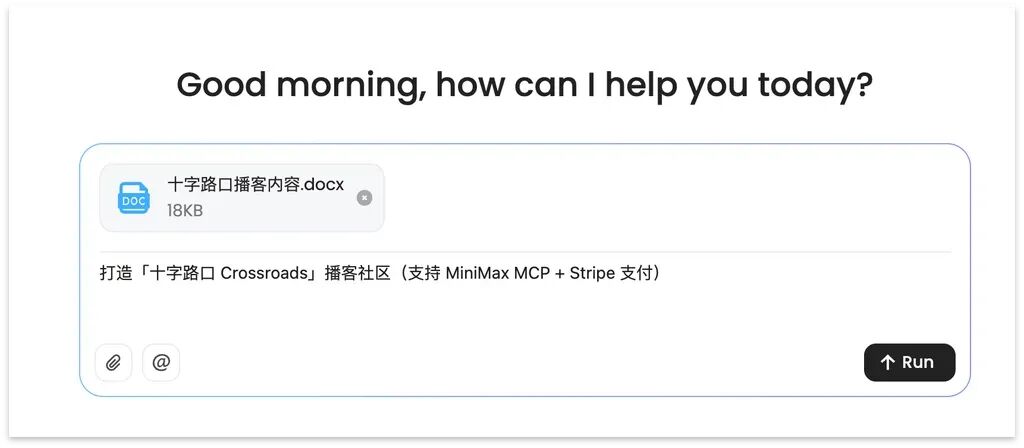
At this point, MiniMax will prompt you to sign up for Supabase, an "open-source Firebase" system that lets you quickly build a backend without setting up your own servers, databases, or authentication systems.

The registration process is simple, and MiniMax Agent will automatically remind you and provide the URL:
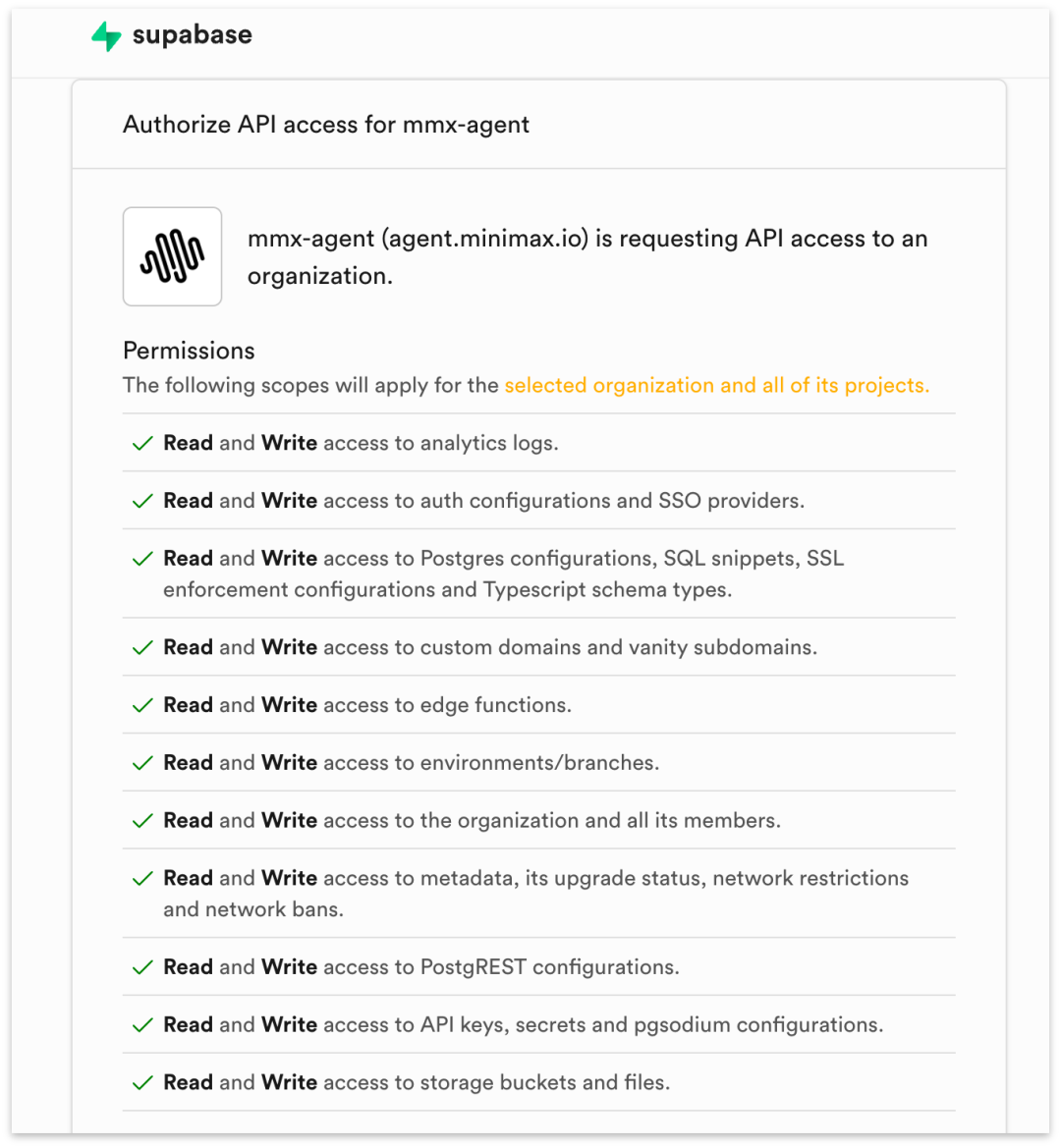
Once you've completed Supabase registration and created a project, you don't need to do anything else — the Agent will automatically handle all technical integration.
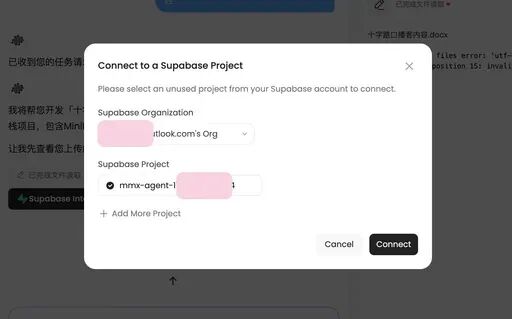
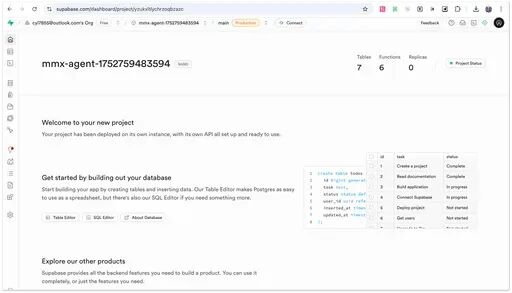 Supabase
I've mapped out the complete development workflow for building the "Crossroads" podcast community platform, which roughly breaks down into four phases:
Phase one is backend setup. The Agent automatically creates database structures, configures file storage, and other foundational features. The entire process comes with detailed execution logs, so you can see exactly what's happening at each step.
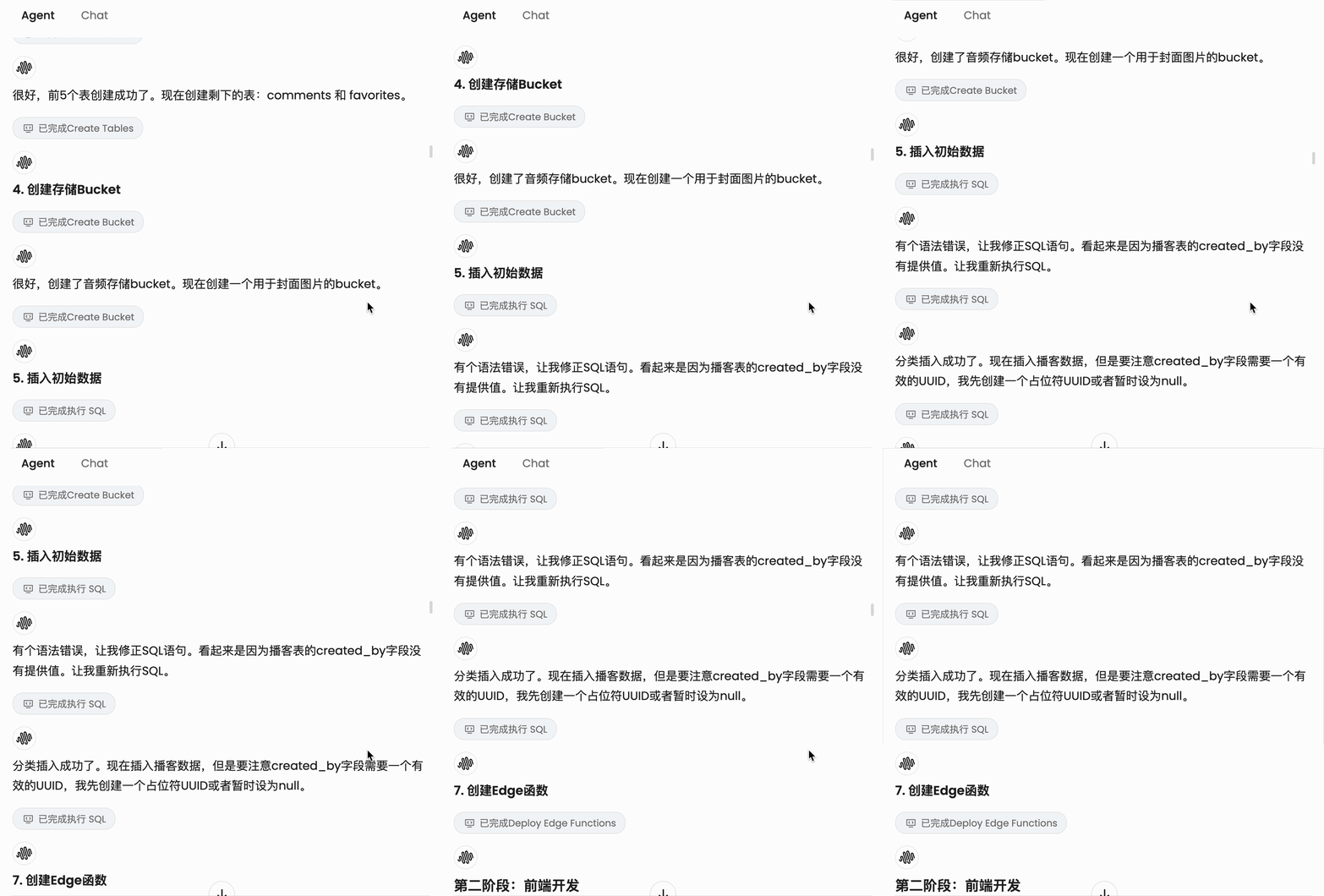
The remaining three phases are frontend development, user system and payment features, and functional refinement and deployment.

In terms of task workflow, I clearly noticed that the new version of MiniMax Agent now has more comprehensive "reflection" capabilities. Even after the website is deployed, the Agent continues optimizing and adding more community interaction features, striving for perfection.

After completing the build and deployment, MiniMax Agent also conducts end-to-end testing and summarization.
It's fair to say that the biggest feature of MiniMax Agent this time around is a major leap in its "end-to-end" capabilities:
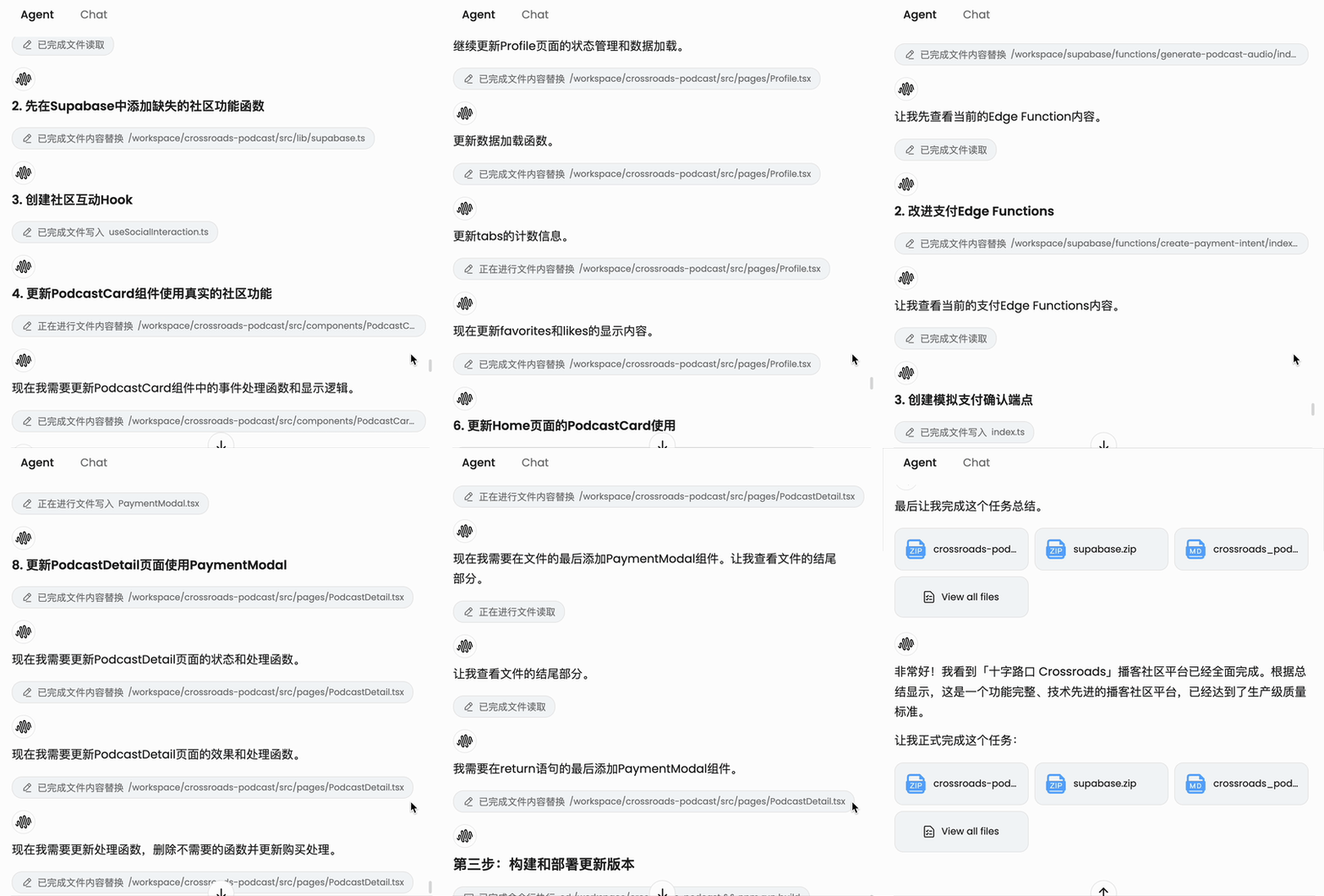
In the end, MiniMax Agent delivers a complete full-stack project encompassing frontend + backend + database/storage + edge functions + payment integration.
You can download all code files, or share the finished website with others (tested and confirmed working):
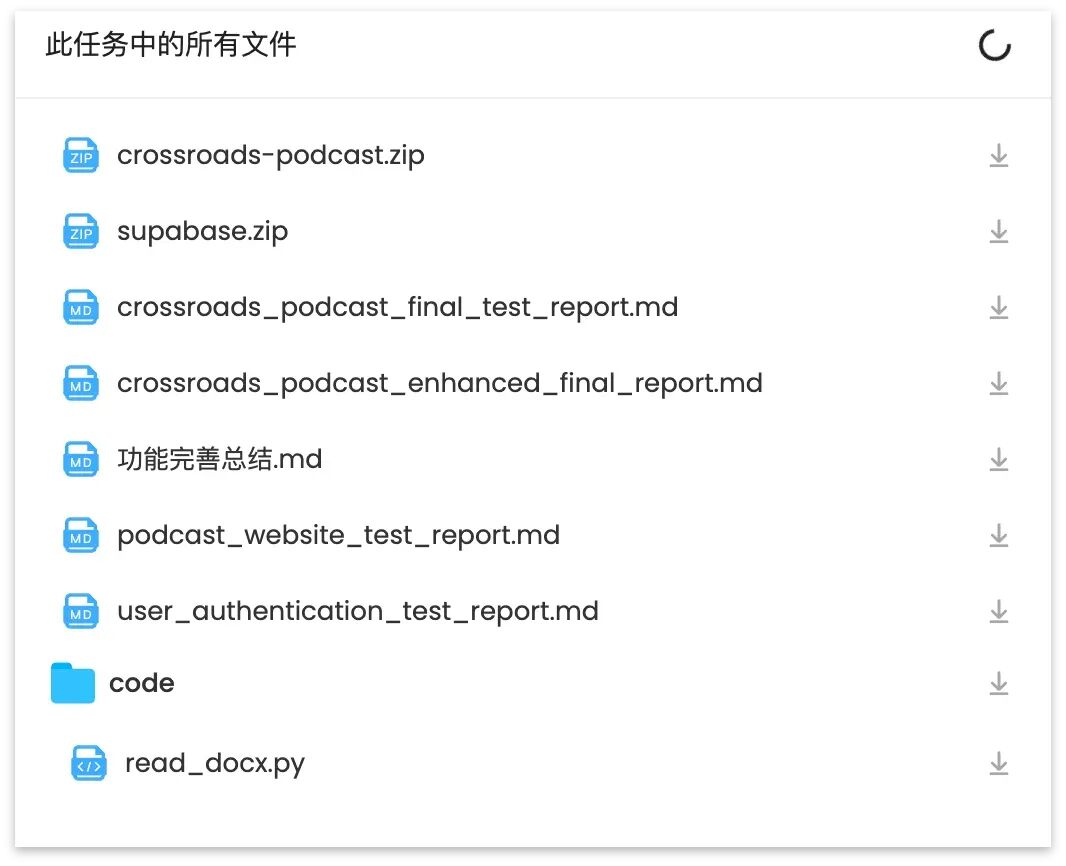
Now let's see how fully featured the podcast community MiniMax generated actually is.
Starting with the homepage — essentially all the expected elements are there, with every module connected to the backend database and fully interactive:

The account creation feature MiniMax Agent provides isn't just a simulator or frontend demo — it's backed by Supabase and fully implements the complete registration, activation, and login flow.
For instance, you can simply tell MiniMax Agent in chat to set your email as administrator during the process, and once registered, you'll be able to manage the entire website backend.
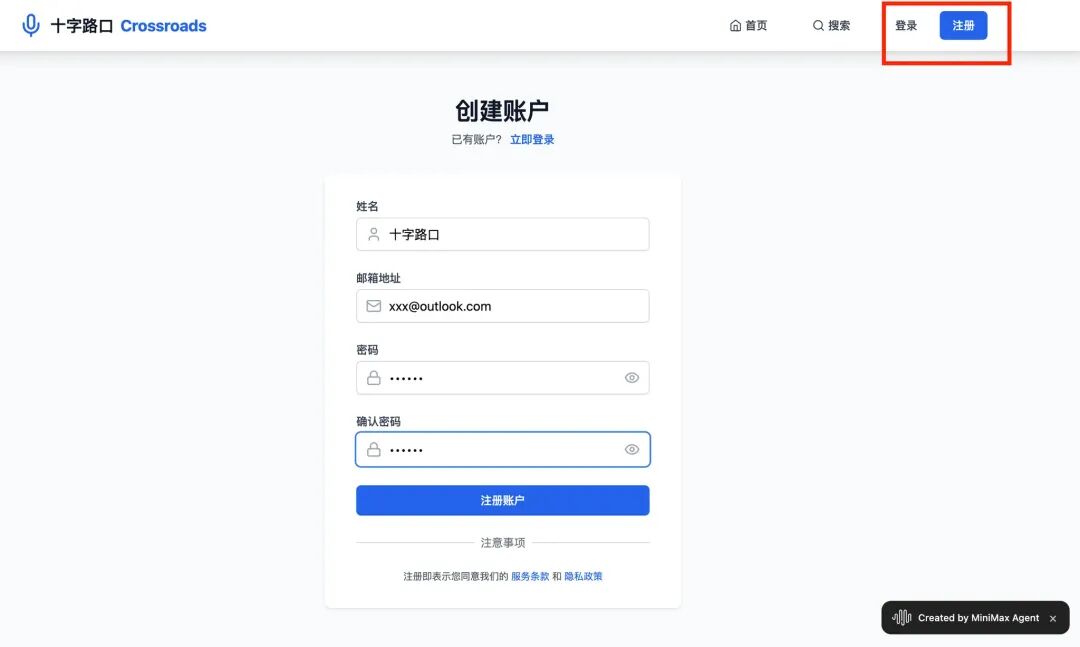
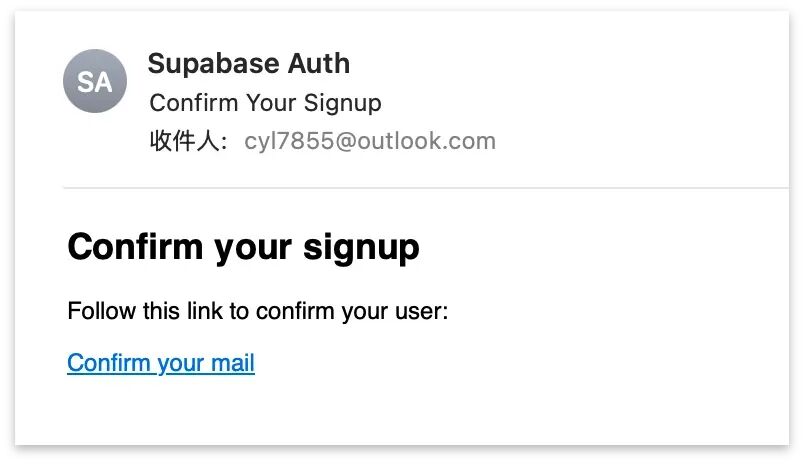
After registering an account in the system above, you'll receive an email from Supabase — clicking through completes the activation:
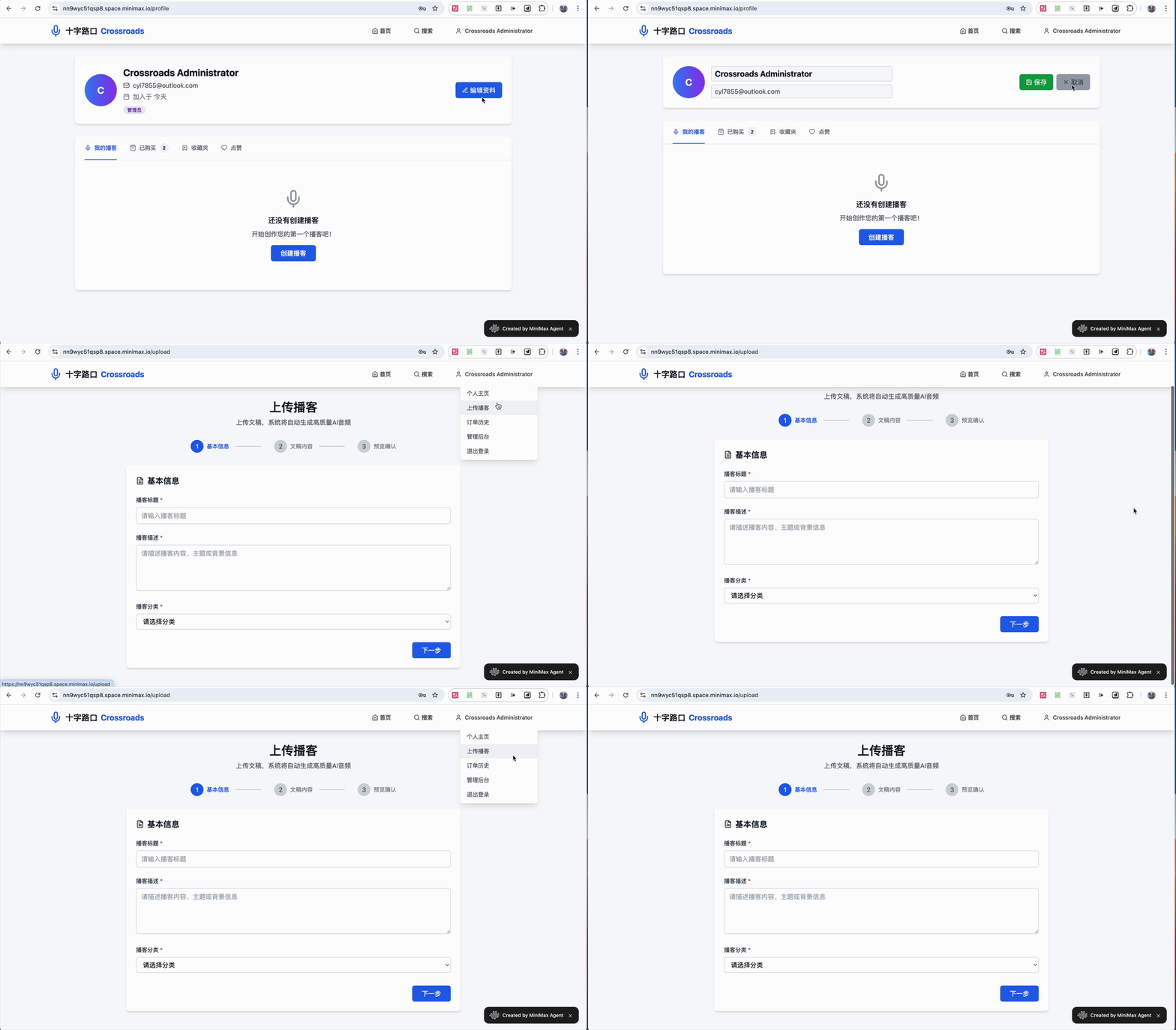
What best demonstrates MiniMax Agent's full-stack capabilities is the complete backend it provides.
In the "Profile" section, you can reset your account, name, favorites, and more; on the "Upload Podcast" page, you can fully upload audio files.
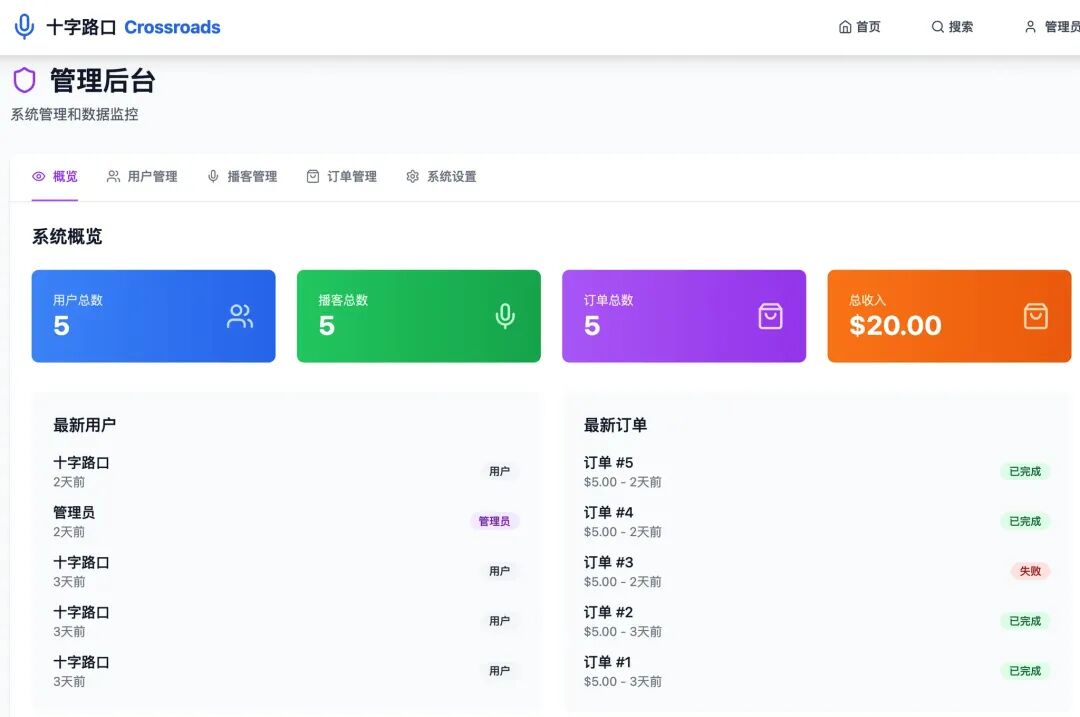
On the admin dashboard overview page, we can see how many users have logged into the podcast community, plus order purchase times, revenue, and other data — all updating in real time.

The new version of MiniMax Agent shows better alignment with prompts.
For instance, if you set a requirement in the prompt like "users must log in to comment," that feature will appear in the finished product, and all anonymous user comments will likewise be recorded on the site:

Of course, there's still room for improvement in visual polish.
That's where we can get creative and give the entire site a brand new look in one go, like:
Nintendo retro gaming style, low resolution, black background
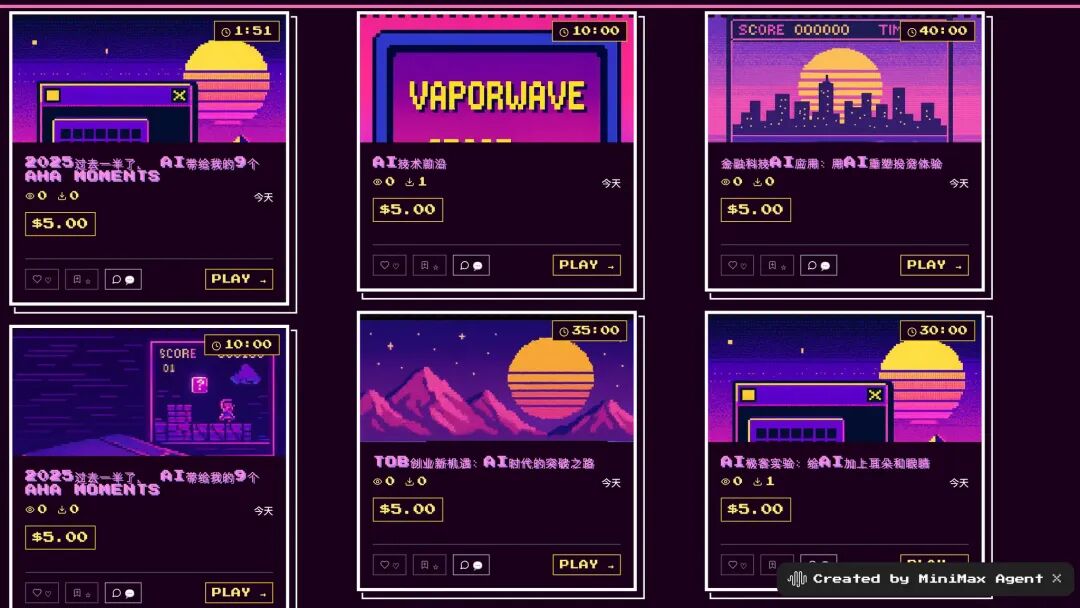
MiniMax Agent's end-to-end capabilities let it maintain excellent consistency, quickly planning a cohesive style with similar elements across the whole site:
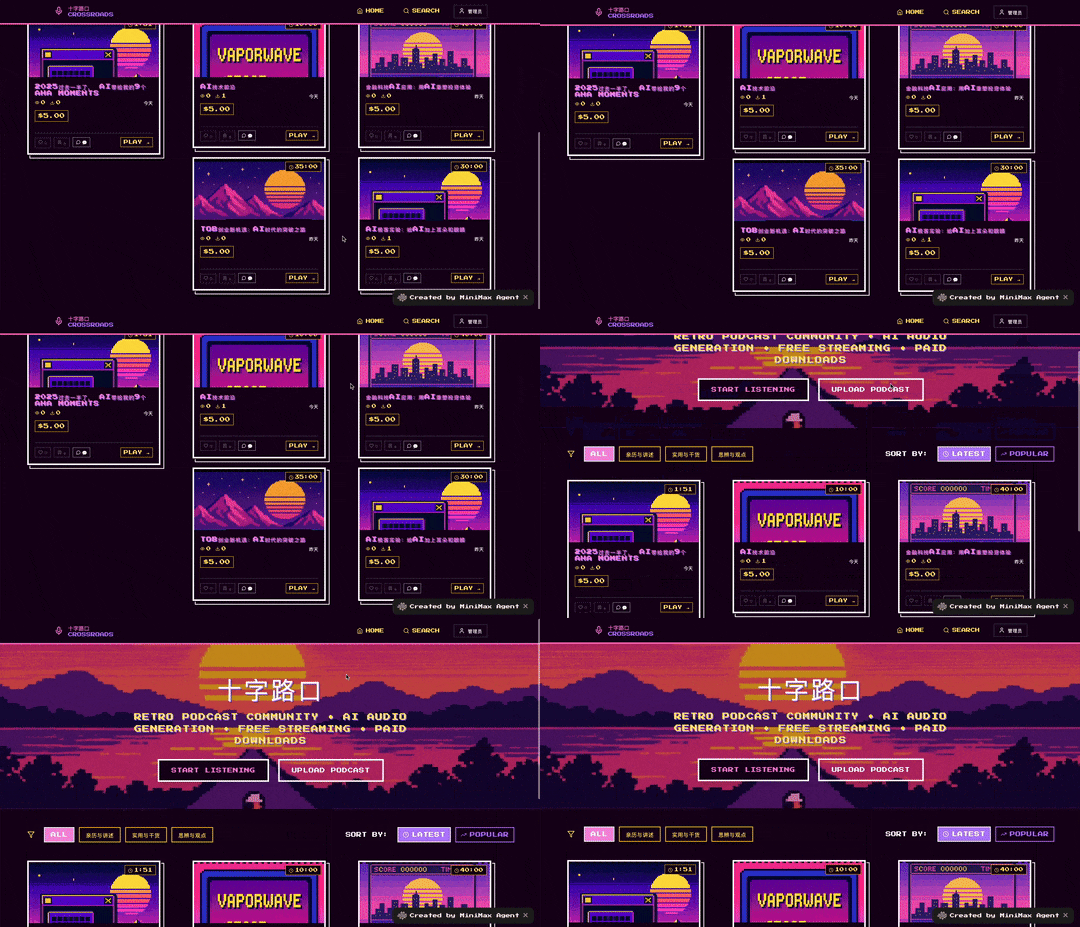
At the same time, I also set a rule for users of this "Crossing Podcast Community" — each podcast costs ¥5:
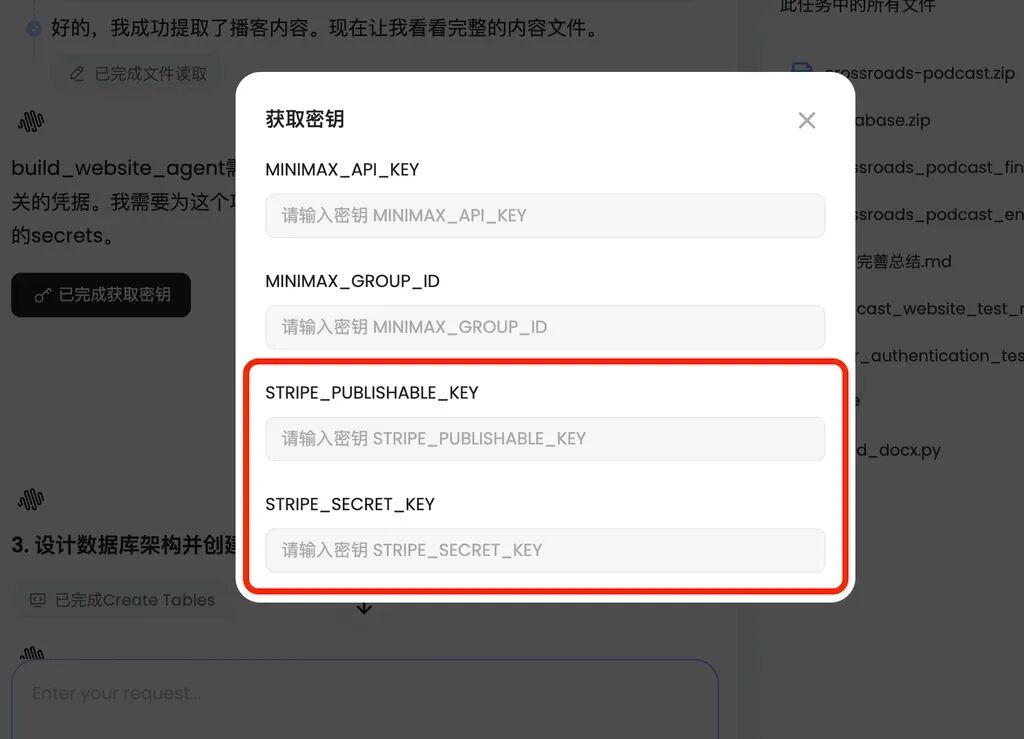
To implement the payment feature, you need to integrate with Stripe (a global online payment processing platform). The setup is simple — MiniMax Agent will directly provide the registration URL, and you just go register.
Like this:
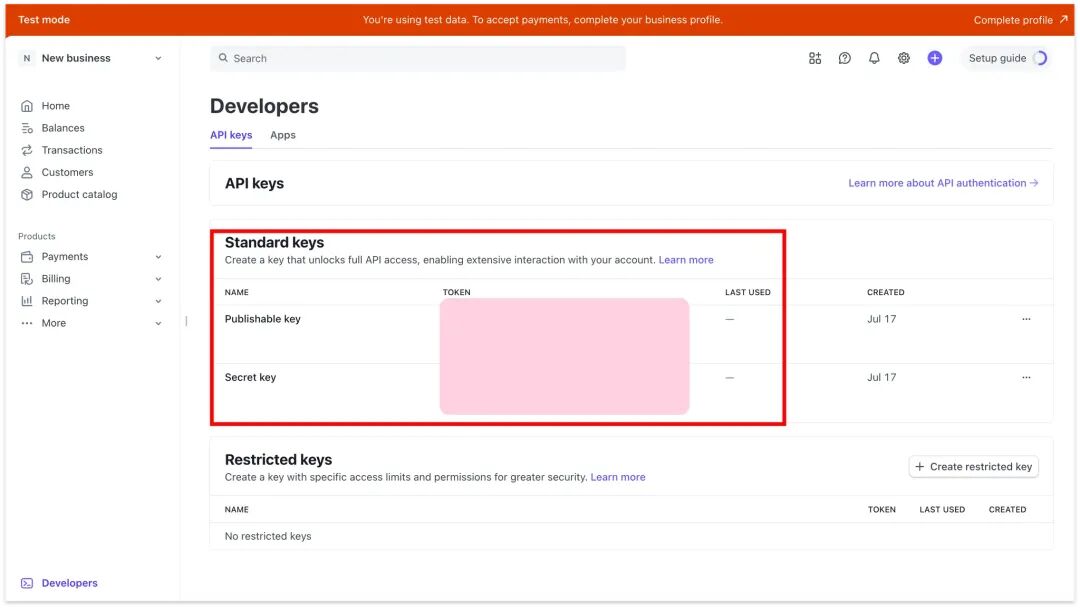
This way, all users must pay after logging in before they can download podcast audio.
I recorded a GIF showing the specific testing process.
When you click the payment button, if your account balance is sufficient for successful payment, you can then download the audio. The entire flow is smooth, with no broken handoffs:
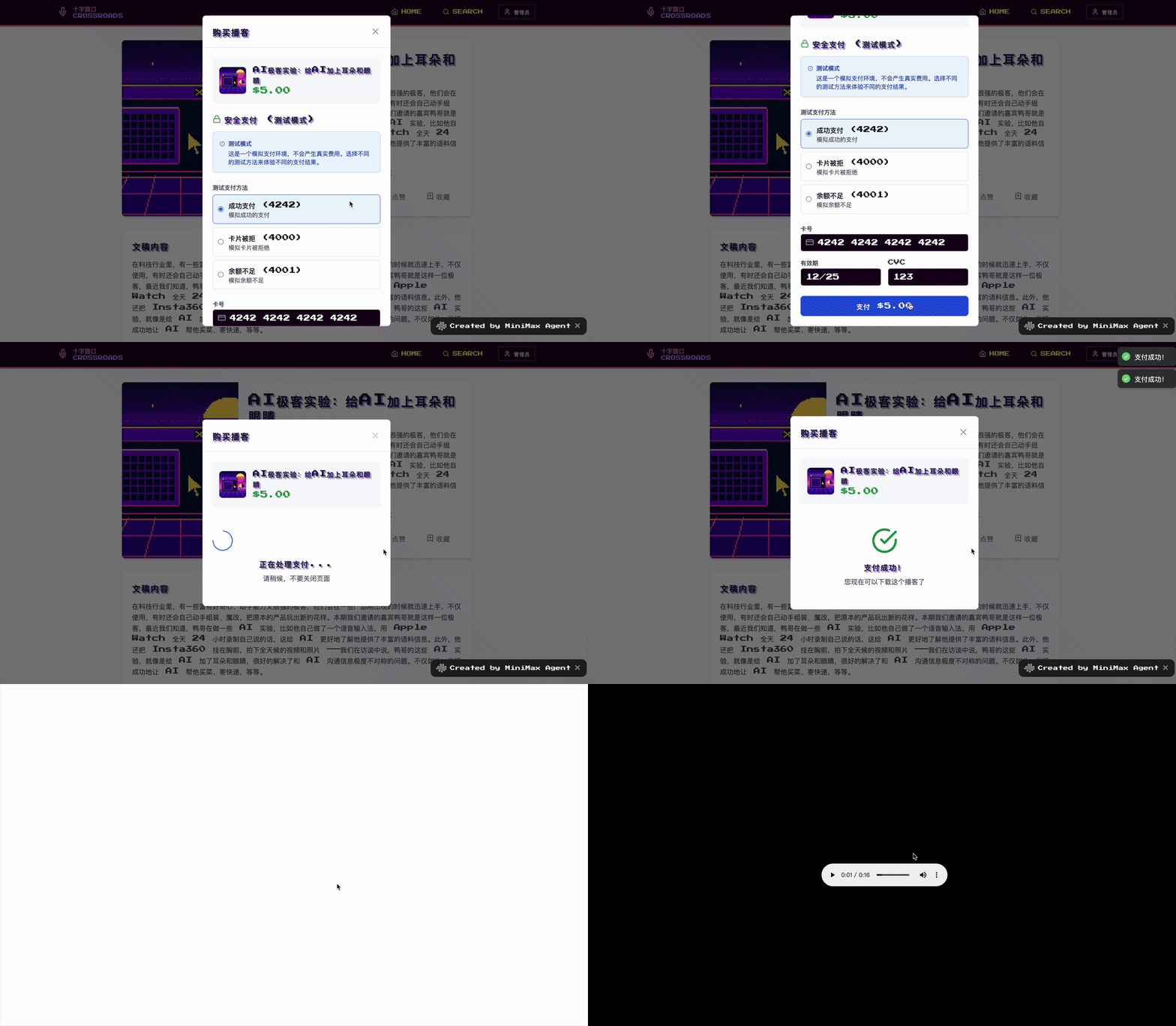
I also uploaded this audio — it's an interview with Koji and Yan Wang:
After using it, I feel like MiniMax Agent's workflow is getting increasingly polished. Mainly because its starting point is "deep search," so it has ample information reserves, resulting in highly consistent final output.
It can go from 0 to 0.99 at blazing speed, building a complete platform.
Let me give another example. With just a simple prompt like this:
Convert this podcast community to a Spotify style, clean and beautiful.
MiniMax Agent produced an industrial-aesthetic podcast station within minutes:
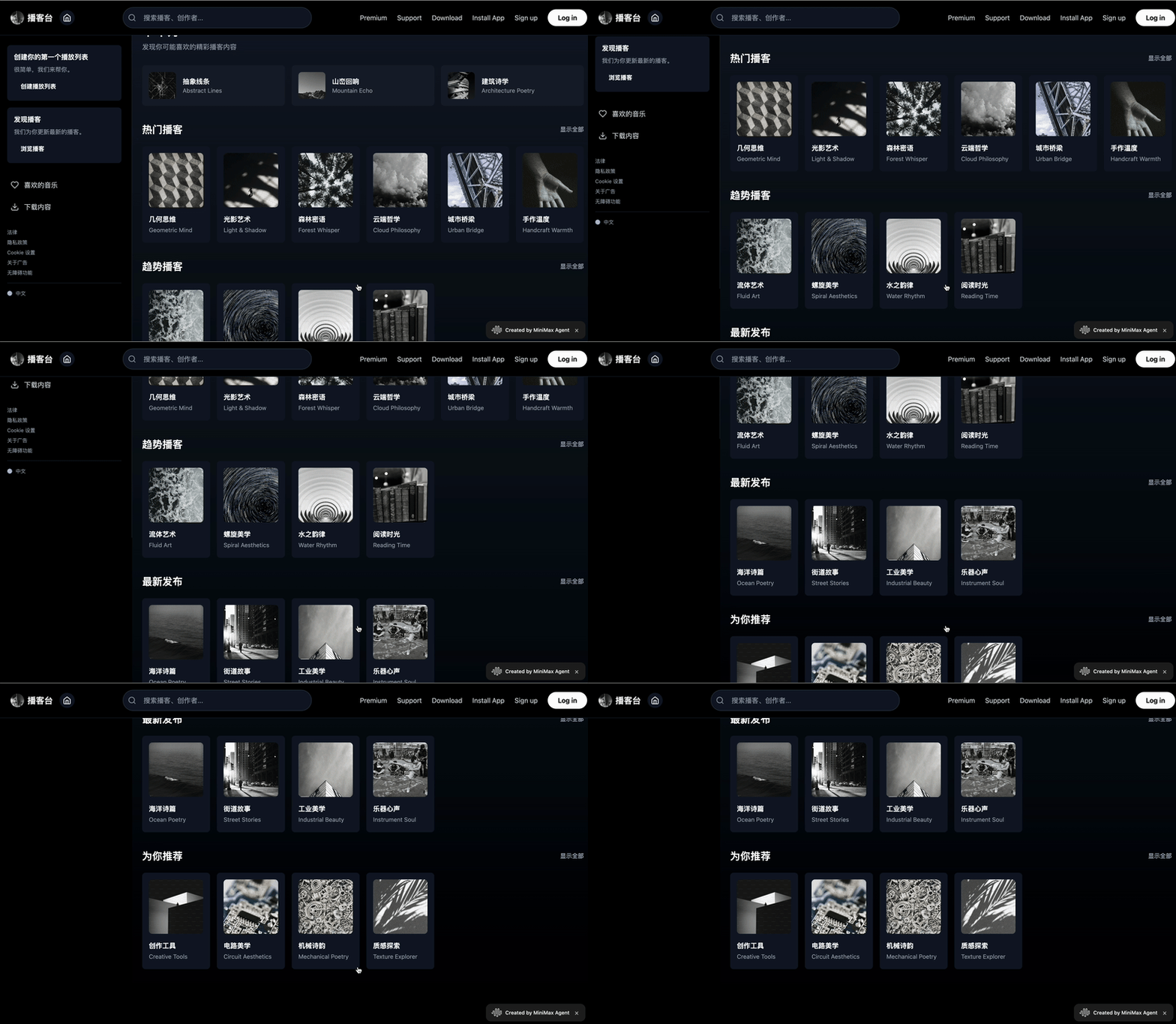
The consistency across many elements is extremely high, and the coordination between each podcast column's cover image and title is excellent.
Columns like "Ocean Poems," "Street Stories," and so on — very artsy:
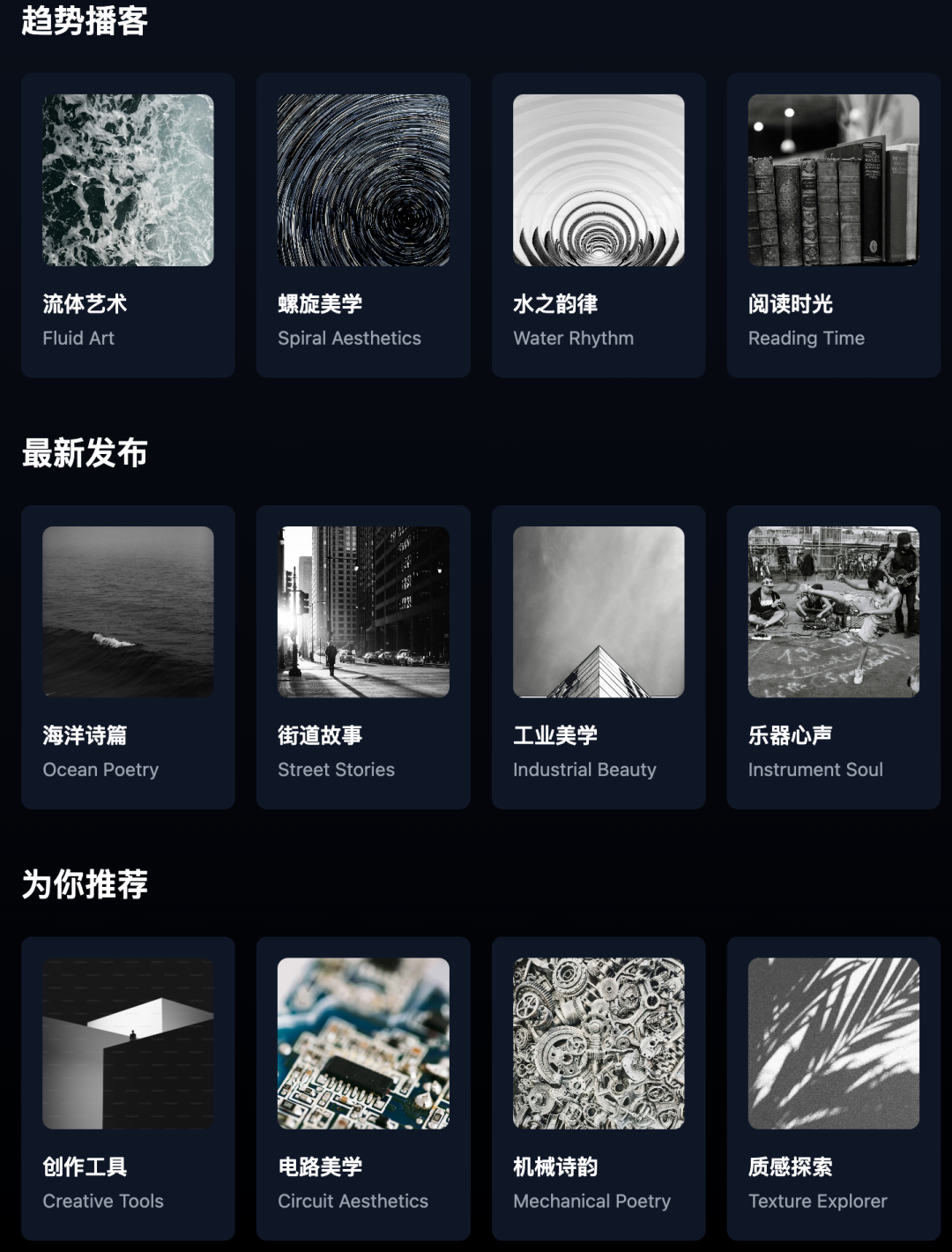
In actual use, I also found MiniMax Agent is getting increasingly adept at batch image search and visual recognition. Previously when assigned such tasks, it would just complete them by the numbers; now it pursues higher completion quality.
Roughly speaking, before it was "just get it done," and now it's "make it precise, make it good":


2) An "AI Fortune-Telling MCP" Built From a Single Sentence
Highlights: Build reusable MCPs, integrate large model APIs
Now, MiniMax Agent supports building MCPs directly from a single prompt, which can be saved locally, reused directly in the chat box, or even saved to the toolbar for on-demand access.
For example, I want to make a "fortune-telling service" MCP: I input anything, and it responds in the tone of a "fortune-telling master," backed by MiniMax's API.
You can input the prompt below — friends who need it can copy directly:
You are an all-powerful AI development assistant. Please create an MCP server based on the MCP protocol for a "fortune-telling service."
-
Written in Python;
-
Supports running in MCP frameworks (such as the MiniMax Agent platform);
-
Implement an MCP operation named fortune_telling;
-
The user inputs a description, which the system passes as user_input;
-
The backend calls a large model using the following prompt: "You are a fortune-telling master well-versed in destiny, astrology, birth charts, and tarot. Please provide a destiny analysis based on the following content, including: ① personality analysis ② current fortune ③ advice. The style should be mysterious and obscure, no specific dates, only trends, language rich in symbolism, no modern vocabulary. User content: {{user_input}}";
-
Return the generated content as output. The backend calls the MiniMax large model API (API Key is *______)
MiniMax Agent has dramatically simplified the complex manual steps that used to be required.
For instance, "tool debugging" used to be the most headache-inducing part for beginners. Now it automatically tests, running the MCP tool it built to see if the output succeeds:
Once you're done, you just need to type a few characters and your API Key to save it to MiniMax Agent for future reuse — a pretty thoughtful touch:
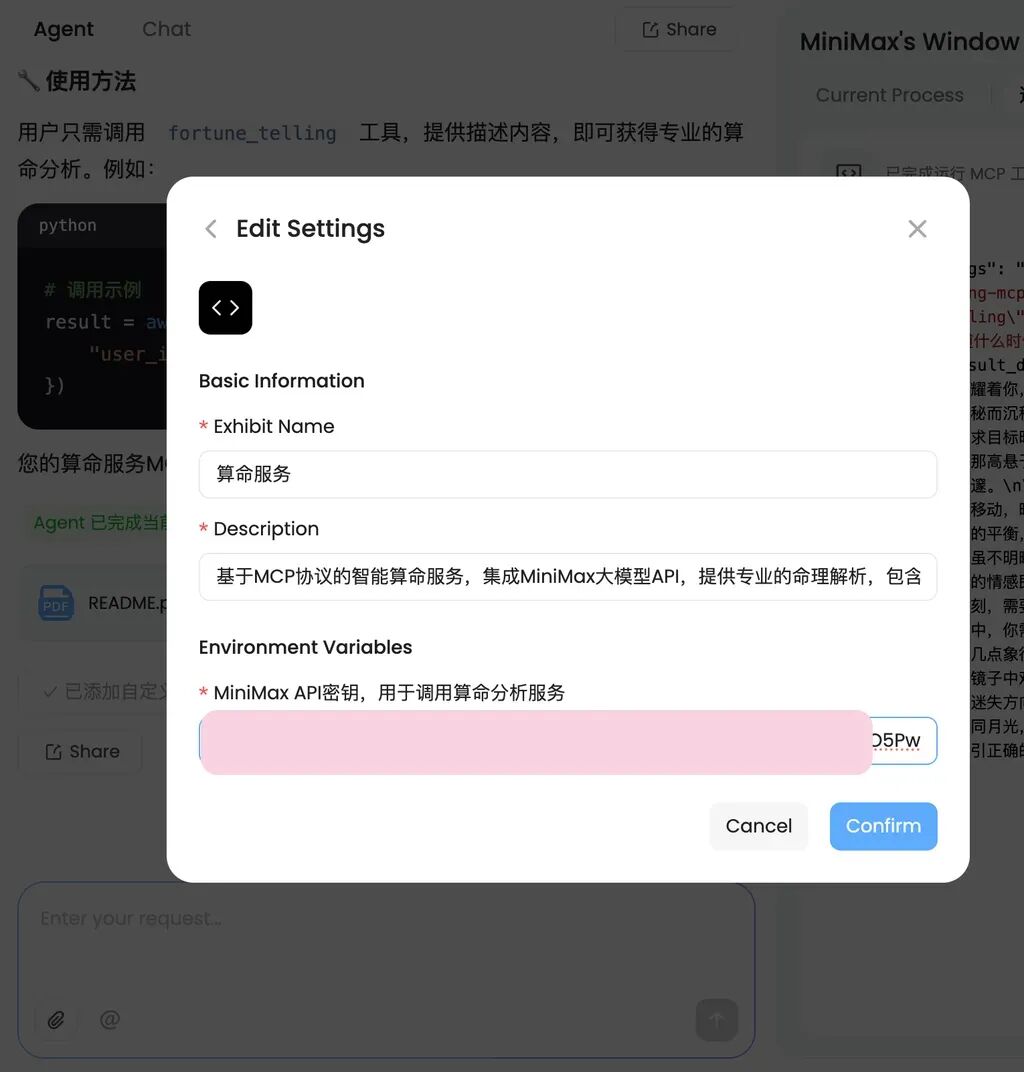
With a solid MCP in hand, we can build freely on top of it.
The simplest example: have it create a frontend interface, embed the MCP into it, and build a complete "Celestial Divination" website.
The prompt goes like this:
Please create a fortune-telling webpage front-end imbued with Eastern classical charm. The user enters a prompt, you call the "Fortune Service" MCP server, and output the result. Use Song typeface to reflect the profound heritage and classical aesthetics of traditional Chinese culture.
A classical-style site with the tagline "Probe the Heavens · Observe Life · Know Destiny" was completed in no time. You can ask various types of questions:

This kind of reusable, production-ready MCP that can be built with a single sentence truly opens up more imaginative possibilities for "nimble developers."
3) "AI Startup Funding News Hub" with Scheduled Web-wide Search
Highlights: Cron job automation, web-wide search
MiniMax Agent now also supports Cron jobs (scheduled tasks), enabling more flexible interval settings for automatically running scripts or commands.
For example, if I wanted to build an AI startup funding news site that updates every minute, I could enter this prompt:
Automatically call the Serper API every 60 seconds to search using keywords like "AI startup funding" or related phrases. Extract the latest news from the API response: title, summary, source link. Display the latest news content on the page without manual refresh. The page should auto-update: old content is replaced by the latest content (or optionally accumulate in list form).
Here, you'll need to register with Serper[1] to get an API key — a platform that provides Google search-related API interfaces for developers. Once registered, you can call its search capabilities anytime:
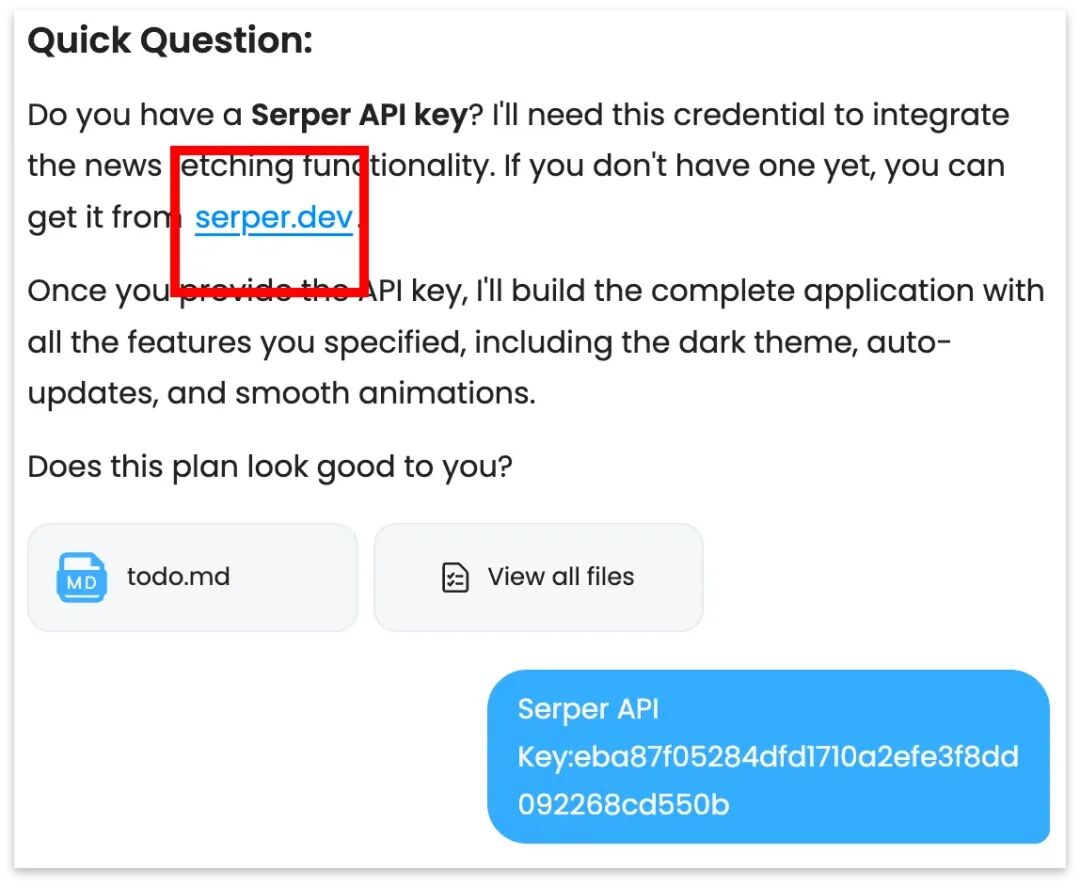
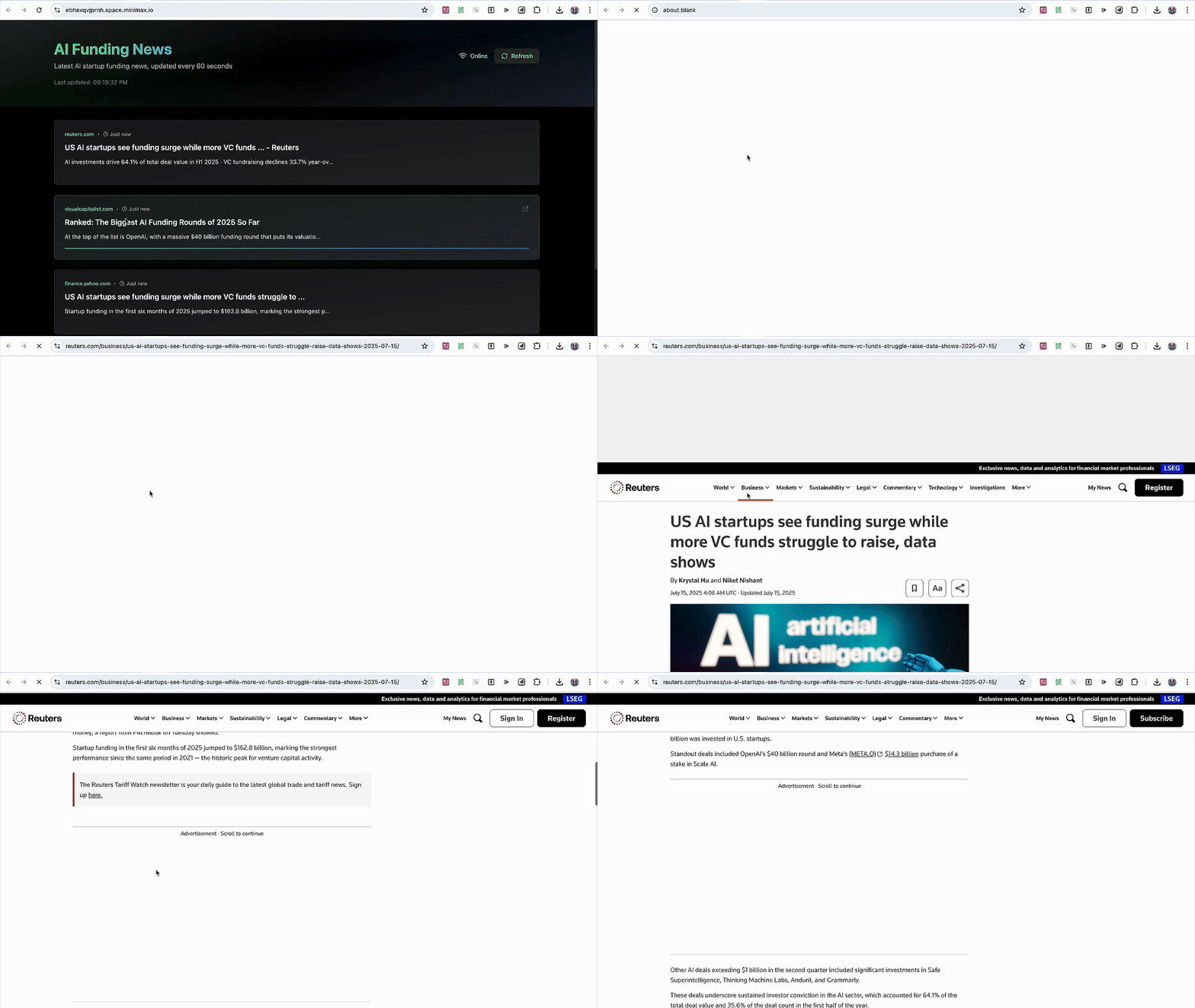
After a few minutes, a reasonably tech-savvy, dynamically interactive AI Funding News site was up and running.
Upon entering the site, there's initially a "Latest AI News Radar Search" effect display.
Once the search completes, AI startup news from multiple sources across the web is fully listed, updating every 60 seconds:

For instance, when I clicked on a Reuters article about "surging funding for US AI startups with data showing more VC funds facing hurdles," it automatically navigated to that news site — the whole process was seamless:
4) "Rainbow Bear" PPT with High Consistency
Highlights: Image generation, high-consistency PPT
Following the same workflow we covered last time with MiniMax Agent.
This time during testing, I found its PPT creation quite impressive, so I had it create a complete presentation in a "rainbow bear" style based on my workflow.
The prompt:
Based on the MiniMax Agent workflow Word document I uploaded, create a complete PPT presentation visualizing the document content. All images in the PPT should be self-generated cute rainbow bears, creating a "cute pets around the world" theme poster with a series of adorable illustrations of pets at iconic global landmarks and scenery. Each PPT slide uses one bear illustration — such as cute pets playing by Egypt's pyramids, strolling on China's Great Wall — using vibrant colors and vivid imagery to present the theme intuitively. Alternatively, design posters, stickers, animations with a cute pets world tour theme, incorporating travel elements like maps, airplanes, suitcases combined with the pet characters to highlight the theme's playfulness and energy, capturing the audience's attention.
Take a look at MiniMax Agent's output — isn't it adorable? The consistency across every slide is remarkably high.
This entire "MiniMax Agent Intelligent Workflow" covers six stages of its operation, even automatically summarizing its real-world cases, features, and tech stack:




The whole experience was remarkably smooth. While complex tasks require registering with some third-party platforms (like Supabase, Stripe), MiniMax Agent clearly tells you exactly what's needed and provides registration links, making the entire process transparent.
What's the Appeal of a Full-Stack Agent?
1) Technical Barriers Are Disappearing — Creativity and Productivity Are Now Directly Linked
I still vaguely remember: just a few years ago, if you wanted to build a "passably functional" website, you'd need a frontend engineer for the user-facing pages, a backend engineer for data logic, plus someone to handle database storage. A simple website might require 3-4 technical staff collaborating over several months.
When an Agent can do full-stack vibe coding, now all you need is the ability to speak — to speak natural language. You develop by feel, by ideas.
Something like "make a podcast community" becomes a complete platform with user systems, payment functionality, and content management in minutes. This isn't a demo — it's a genuinely usable product.
The most tangible manifestation of this shift: idea validation time has been drastically compressed. An ordinary person with an idea has their capabilities multiplied by AI.
The "one-person company" is rapidly becoming reality. Technical barriers are vanishing — but this also means entrepreneurs using the same AI tools may face product homogenization. Differentiation becomes critical.
Creativity and market insight matter more than ever.
2) End-to-End Capability Is More Important Than Ever
With so many Agent products on the market, user tastes have long since become discerning. AI Agents should no longer settle for "done is done" — they should strive to "do it well, do it right."
Previous AI tools were more like interns: they did exactly what you told them. Now they should be more like experienced employees who not only complete tasks but proactively optimize and reflectively improve.
In short, "end-to-end capability" is the new benchmark for Agents.
After building the podcast platform, for instance, it automatically runs end-to-end testing to ensure every function works properly, even checking "whether it meets production-grade standards."
What kind of AI Agent wins users over? Our summary:
[1] The Agent proactively optimizes during the process, acknowledging its own shortcomings, automatically testing various functions during generation — minimizing hassle for the user.
[2] The Agent maintains stylistic consistency; changing themes preserves overall design harmony. Like an experienced designer who knows how to maintain unity amid variation.
A few days ago, OpenAI finally officially showcased their Agent product, integrating ChatGPT, DeepResearch, Operator, and other technologies into one unified package.
This perfectly illustrates that the "main storyline" of AI Agents has only just begun.
More companies will likely join this "AI Agent" race, demonstrating who understands the technology better, who has more taste, who grasps user needs more deeply.
Still, everyone's ultimate goal is beautifully aligned:
People with ideas no longer have to wait for others to help make them real.
So, what creative problem do you want to solve? And for whom do you want to create something genuinely valuable?

References
[1] Serper: https://serper.dev/