The Night SpaceX Went Public: 18 Stories Behind the Miracle

A raging fire cooking oil — behind the scenes of a grand feast.
Furious flames, boiling oil — behind the feast.
🙍♀️ Author: Ms. Yi
🥷 Editor: koji
🧑🎨 Layout: Zeoooo

On the evening of June 12, the "trillion-dollar money guzzler" SpaceX stormed onto the Nasdaq. It opened 29% above its IPO price, its valuation briefly breaching $2.28 trillion, and investors worldwide were ablaze... Some went wild; others saw a massive bubble.
On stage, Elon Musk admitted frankly: at its founding, SpaceX's odds of success were "less than 10%." But he went for it anyway. In a sense, this is a story about miracles. About dreams, about belief. Because you believe, you see.
Standing at this milestone — the largest IPO in history to date — we look back at the 24 years since SpaceX's founding, at those moments along the way. They are the scattered starlight of the path traveled, and the lighthouses that illuminated the dream.
On the occasion of SpaceX's listing, we've compiled 18 stories about how miracles happen. From an insider's perspective, we seek to understand SpaceX's organizational management, talent strategy, decision-making mechanisms, iteration culture, CEO DNA, and supply chain revolution. To see what this company actually did, and some of the less-discussed costs beneath the halo.
If you're a founder, a manager, a commercial space practitioner, or simply someone interested in "how to make a group of geniuses operate efficiently," this article may offer some inspiration.
01 Born in the Old World's Nadir
November 14, 2011, was a low point in American human space exploration.
At the time, American astronaut Daniel Burbank had to hitch a ride on a Russian Soyuz rocket to the International Space Station. Because the United States could no longer put its own astronauts into orbit.
It wasn't until May 30, 2020, that SpaceX's Falcon 9 carried American astronauts to the ISS. This marked the first time in nearly a decade that the United States had conducted its own crewed space mission.
In between lay SpaceX's long journey of failure. And failure meant explosions. Each explosion was met with a deluge of media mockery...
Today, this company founded in 2002, which slowly emerged from the rubble of the dot-com bubble, has outrun the entire old world of aerospace with 22,000 employees. As of May 2026, Falcon 9's reusability rate reached 85%; SpaceX has driven per-kilogram launch costs to low Earth orbit from roughly $10,000 traditionally down to as low as $700; rocket recoveries have exceeded 607, with net cost savings of approximately $16.8 billion.
It has fundamentally transformed the economics of spaceflight. From one-time consumption to high-frequency, reusable infrastructure.
02 Working Shoulder-to-Shoulder with Rockets
This is a group of young people who would rather build rockets in a grimy garage than wear suits and serve as cogs at NASA or Boeing.
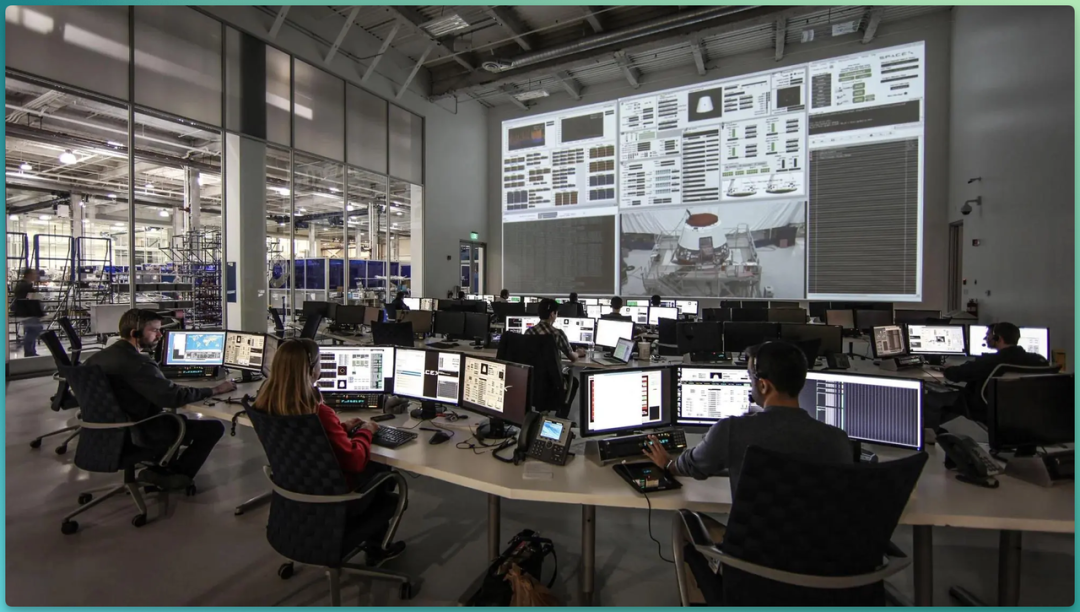
At SpaceX's Hawthorne headquarters, apart from a few departments like HR and finance that have separate offices, everyone else sits in the same open floor plan, their desks pressed right up against the rocket production line.
In Musk's view: "Too many doors increase communication costs."
This flatness also shows in decision speed. While legacy aerospace companies are still battling suppliers for three weeks over a valve modification, going back and forth in meetings, SpaceX can make the change and have it on the test stand the same day.
03 0.2% Admission Rate
SpaceX's acceptance rate is just 0.2%.
Musk once said: "Getting into SpaceX is harder than getting into Harvard University." Millions of applications each year; only a few thousand ultimately hired.
SpaceX interviews are notorious for "stress tests," "Musk dropping in unannounced," and "extremely tricky technical grilling." The entire interview process typically lasts 7-9 rounds, spanning 5-8 weeks, sometimes stretching to six months.
In 2023, SpaceX made an exception to hire a 14-year-old Starlink software engineer — Kairan Quazi.
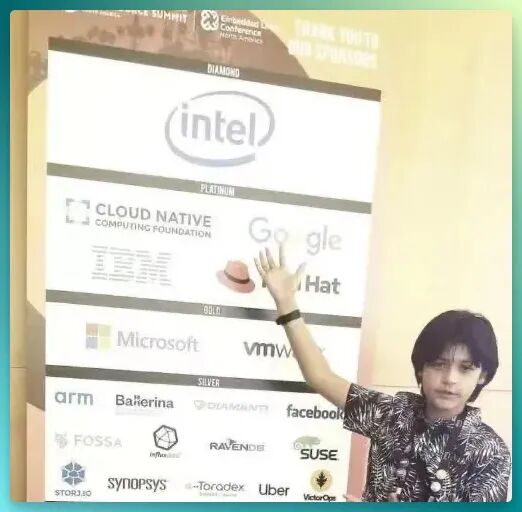
He is the youngest employee in SpaceX history.
During his interview, Quazi pulled out a complete set of satellite communications code he had written himself. "Only work with the most talented people in the industry." This is one of SpaceX's hiring principles.
04 A Special Forces Unit
When recruiting, SpaceX is upfront with candidates: "This isn't the regular army. This is special forces. Are you ready?"
In Musk Returns to Space, one passage records:
At one point, Musk was urgently pushing to accelerate Starship development, even installing cameras at the Texas factory to monitor the site around the clock.
"This place needs to look like a 'damn' busy beehive, 24/7, seven days a week!" one early employee complained.
Facing extreme situations, there was even an incident where a SpaceX engineer was trapped overnight on a barge filled with potentially explosive gases.
SpaceX was not a job; it was a lifestyle. This isn't a job. It's a way of life. If you seek stability and balance, you will absolutely hate it here.
05 "Musk Time"
The startup SpaceX faced an industry dominated by deeply entrenched giants.
In this landscape, "spend less, do more, and do it fast" was Musk's method.
He would regularly set overly aggressive launch timelines — later dubbed by outsiders as "Musk Time." Tom Mueller, one of SpaceX's earliest veterans, recalled: "We had already shattered historical records, but Elon still wasn't satisfied. The business was advancing by leaps and bounds, and he took it in stride."
This is the reality SpaceX employees face daily. Musk is always locked onto the next target, never pausing.
-
When Falcon 1 launched successfully, he immediately turned his attention to Falcon 9, with its cluster of nine Merlin engines;
-
When Falcon 9 succeeded, he immediately began thinking about how to recover the first stage;
-
When Falcon Heavy — three Falcon 9s strapped together — made its debut, Musk's first reaction was: it doesn't look big enough...
06 A Company-Wide Email
When an important project faces a deadline, or when Musk shifts his attention to a new priority, you might wake up one morning to an email from him to all staff.
Extremely brief. Just one sentence:
Please note that from this moment forward, everyone's top priority at this company is: ____. — Elon
07 He Will Know Who You Are, What You Did
Marc Andreessen, co-founder of venture capital firm a16z, speaking about Musk:
To find a founder comparable to Elon Musk, you'd have to go back to the industrialists of the late 19th and early 20th centuries — Henry Ford, Andrew Carnegie, Thomas Watson, Andrew Mellon, Cornelius Vanderbilt... Their operating style was similar to Musk's: comprehensive, deep knowledge of their companies, mastery of every link, insight into every layer of problems — they were the "chief problem solvers" of their organizations.
Andreessen said:
The reason Musk can attract such incredible talent is that "he really will know who you are, what you did." When he identifies a bottleneck, he personally finds the engineer who truly understands the matter, then sits in a room with them working through the problem, sometimes staying up all night at the keyboard or on the production line...
Musk is one of the few CEOs who can engage with engineers as a peer, diving deep to solve complex technical problems together.
08 He Knows Every Detail of the Rocket
The SpaceX story began with a trip to Moscow.
Before deciding to build rockets, Musk made a special trip to Moscow to buy three intercontinental ballistic missiles from the Russian company Kosmotras.
But the asking price was too high: $8 million per missile converted to a rocket, and no reusability.
At the time, Musk did the math: the raw materials needed to build a rocket cost roughly 3% of the market price at the time. And if reusability could be achieved, unit costs would drop even further. So Musk, who had never worked a day at Boeing, founded SpaceX.
He spent over two years reading and learning about rockets. He said:
I know every detail of the rocket, and all of its history. I can tell you the heat treatment process of the surface material, where it changed, why we chose this material, even the forging technique. "I know my rocket inside out and backward."
09 Question Every Rule
The corporate culture Musk instilled at SpaceX:
Question every rule. Presume every requirement is stupid until you can prove otherwise.
He believed that demands from so-called "smart people" and "successful people" were often the most dangerous. Because people likely wouldn't question them sufficiently, and yet everyone makes mistakes.
Without questioning, the risk is "treating the foot for a headache" — banging your head against the wrong problem while ignoring what actually matters.
He has a classic line: "The most common mistake of smart engineers is optimizing things that shouldn't exist in the first place."
SpaceX once had a typical internal example.
Engineers spent enormous effort reducing rocket engine weight, racking their brains to optimize every component — but what actually needed optimization was how to reduce payload weight. This is what Musk meant by: "If you're digging a grave, don't dig faster."
Don't accelerate in the wrong direction.
10 If You Didn't Add Back 10%, You Didn't Cut Enough
SpaceX resembles Tesla making cars more than Boeing making planes.
In Elon Musk, there's a passage: when Musk walks the SpaceX assembly line, he stops at every station, stares quietly, debates with the team, removes or streamlines parts.
This is no different from his behavior on Tesla's production line. He even invited Tesla executives to tour the SpaceX production line, proposing simplifications using automotive manufacturing thinking.
SpaceX habitually simplifies and eliminates non-essential components or processes, keeping only what truly adds value.
One question Musk frequently asks:
Is there a way to do this 2x (or 10x) less expensively?
He even set an extremely demanding metric:
If, at the end, you haven't added back at least 10% of what you cut, then you didn't cut hard enough. The Raptor engine is a classic case.
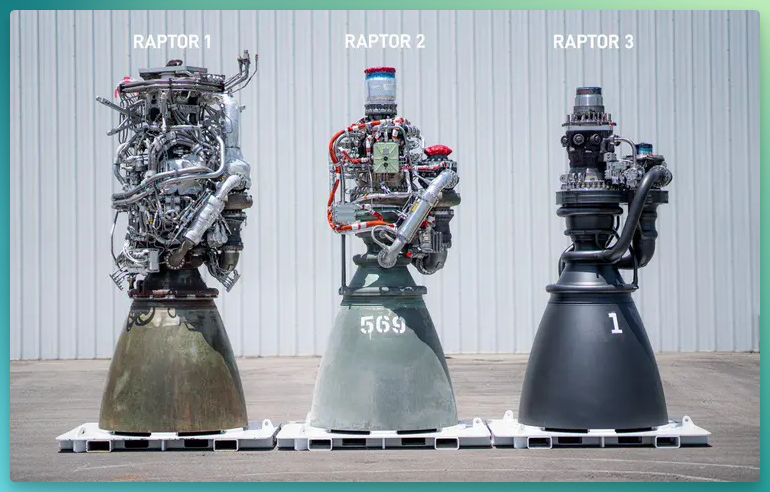
From 2019 to 2024, over five years, it went through three generations. The first-generation Raptor "looked like a messy Christmas tree"; the third-generation "slimmed-down" model saw dramatic speed and performance gains.
11 A Supply Chain Overhaul
In 2008, after the third Falcon 1 launch failure, SpaceX had enough cash for just one more attempt.
Musk decided: bring key engine components in-house instead of outsourcing, building a $12,000 actuator for $5,000.
He realized: you don't necessarily need specialized aerospace suppliers. The iPhone in his hand outperformed the electronics used in the aviation industry.
Musk did the math: factoring in subcontractor management fees and profit margins, every dollar the company paid out actually cost $3-5. So SpaceX launched vertical supply chain integration, and costs plummeted.
-
Take door latches. NASA quoted $1,500 for a space station door latch. SpaceX adapted a bathroom stall bolt: $30.
-
Take air cooling systems. Falcon 9's payload fairing air cooling system would have cost over $3 million to procure. SpaceX adapted residential AC equipment: roughly $6,000.
-
Take Dragon's freezer door latch clasp. Aerospace-grade parts were quoted at over $1,000. SpaceX used a NASCAR safety belt supplier, cutting costs by 90%.
By 2025, 70%-80% of core components for SpaceX launch vehicles were produced in-house: engines, airframe structures, avionics systems, flight software, even spacesuits — all self-developed, self-produced.
12 Scrutinize Every Dollar, Down to the Absurd
At SpaceX, Musk scrutinizes every dollar.
For the first Dragon capsule recovery, the return vehicle would splash down at sea, but SpaceX had no aircraft carrier, no naval vessels to deploy. Musk's final call: charter two modified civilian boats, about $100,000 per day.
Reportedly, even this expense pained Musk; he only reluctantly approved it at two in the morning.
Another time, they needed to transport a rocket from the Texas R&D base to the Florida launch site. Legacy aerospace companies would either use specially modified cargo planes or go by sea. To save both money and time, Musk chose overland — a modified truck.
1,100 miles, ten days, average speed of 10 miles per hour. At the time, a pilot car led the way with a long pole; when encountering low-hanging wires, someone had to manually clear the obstacle so the truck could pass...
These antics were almost unimaginable to traditional rocket engineers.
Because under cost-plus contracting, you just find the best supplier and someone else picks up the tab.
13 Growing Through Explosions
NASA's tolerance for failure is low; they struggle to accept any potential risk from launch failures.
SpaceX's attitude is fundamentally different.
Take Starship. SpaceX didn't design the entire rocket from the start; they designed the engine and tested it first. Building on multiple Starhopper test rounds, they constructed the first true Starship prototype.
Before success, two prototypes failed and were destroyed in testing.
Musk emphasized: "If our goal is zero failures, then our progress will be zero." One veteran employee also recalled that when developing Dragon's thermal protection system early on, the team's only requirement was: the system must support spacecraft returning to Earth from both Earth orbit and the Moon. Beyond that, no other structured requirements.
SpaceX's principle: Testing cannot replace flight. No matter how many simulations you run on the ground, you can never fully replicate the real flight environment.
The only truly effective test is to fly.
14 Failure is an option here
Since the Apollo program, NASA gradually developed a "failure is not an option" culture.
But at SpaceX, explosions aren't disasters; they're part of the experiment. After early rocket launch failures in 2008, Musk sent an all-staff email. He wrote:
"Failure is an option here. If things are not failing, you are not innovating enough."
Unlike legacy aerospace company accountability, SpaceX reviews, doesn't blame.
No one gets fired because a rocket blew up — unless you spotted the problem before the explosion and didn't report it.
But at NASA, project failure often means congressional hearings, budget cuts, program cancellation...
15 Burning Hundreds of Millions for "Pretty Fireworks"
From 2006 to August 2008, Falcon 1 launched three times. All failed.
The first launch in March 2006: fuel leak, engine fire, loss of control about 30 seconds after liftoff — caused by a $5 aluminum bolt that had corroded...
During this period, SpaceX faced severe financial crisis.
At a congressional hearing, someone mocked Musk for burning hundreds of millions of dollars in exchange for a few "pretty fireworks." The bigger blow came in 2016.
A Falcon 9 exploded during a static fire test.
A crisis of confidence swept in quickly.
SpaceX's valuation plummeted. Musk's personal net worth evaporated by $800 million overnight; Musk had to pledge stock for loans... Reportedly, at the time SpaceX didn't even have money to print logos on coffee mugs.
16 The Other Side of the Coin
SpaceX's hardcore sprint has pushed against the boundaries of physics and engineering.
The supply chain and quality control systems have been stretched to their limits. And behind the speed lies the physical burnout of young people.
Here, core engineers work 60-90 hours per week; when projects rush, it breaks 100 hours. During密集 launch periods, employees may work 15-20 days straight...
Behind this is a powerful leadership role.
SpaceX's equity structure happens to ensure Musk can never be ousted — Musk holds 12.3% of Class A shares and 93.6% of Class B shares, for combined voting control of 85.1%.
Facing Financial Times criticism of SpaceX's authoritarian model, Musk's response was equally hardline.
17 Inspectors and Doers
There are two kinds of people in aerospace: inspectors and doers.
Inspectors attend meetings, write reports, do analysis. Since the Apollo program, NASA gradually evolved into an institution filled with inspectors; "failure is not an option" is its core philosophy.
As early as 2003, NASA was researching rocket recovery technology; it was later suspended due to funding issues.
In Musk's view, NASA was entirely capable of funding, researching, and solving this itself — but "it only wanted government contracts, waiting for appropriations."
And so, the gap for SpaceX to grow into emerged.
18 The Chasers: China's Commercial Space "Five Little Dragons"
Today, SpaceX's success is being replicated globally; the most serious chaser is China.
As of early 2026, China's first-tier private rocket companies have produced five standouts: LandSpace, Space Pioneer (Tianbing Technology), CAS Space, i-Space, and Galactic Energy.
Known collectively in the industry as the "Five Little Dragons," their combined valuation has surpassed 100 billion RMB, and they're queuing up for IPOs.
Looking back from 2026, SpaceX has, in less than a quarter-century, turned the impossible into reality bit by bit. So much so that today, more people are willing to believe: this really can happen.
After altitude restrictions, after countless explosions, SpaceX transformed aerospace — an expensive, slow, monopolized, budget-encased, cumbersome niche industry — into a marketized mass soil. Behind this lies the rise of the entire commercial space industry chain.
And all of this is just beginning.

Crossing is seeking independent contributors to write AI product and model reviews.
If you've written articles like: "Hands-on with PixVerse C1", "Hands-on with LibTV", please contact zeo0811@gmail.com. Your email should include: ① personal introduction, ② AI review articles you've written.
We offer competitive compensation. Looking forward to observing and documenting the AI era with you 🎪 **