From Token Maxxing to Token Minimizing: Enterprise AI Starts Counting Costs

Token maxxing will be over within six months.
Within six months, Token Maxxing was over.

👩 Author: Shirley
🥷 Editor: Koji
🧑🎨 Design: NCon

In March this year, Token Maxxing took off. Some companies grew so worried that engineers weren't using AI enough that they started running internal leaderboards ranking employees by Token consumption.
By June, those same companies had rolled out budget caps, dynamic quotas, and approval workflows, pivoting hard to Token Minimizing. Within just a few months, Token usage that didn't produce ROI had become a red flag in financial systems.
This sharp U-turn neatly confirmed what Crossing discussed with Yusen Dai, managing partner at ZhenFund, in our year-opening podcast — he framed 2026 as The Year of R, putting Return first. Companies would start demanding Return on their AI investments.

Tokenmaxxing: When consumption became proof of being AI-native
On March 16, NVIDIA described data centers as "AI factories" producing Tokens at GTC. Three days later, Jensen Huang appeared on the All-In podcast, extending this Token economics to engineers themselves. He said he'd be deeply unsettled if a $500,000-a-year engineer consumed less than $250,000 in Tokens annually. To him, it would be like a chip designer using only paper and pencil while CAD sat unused.
Inside Meta, this race got a real scoreboard.
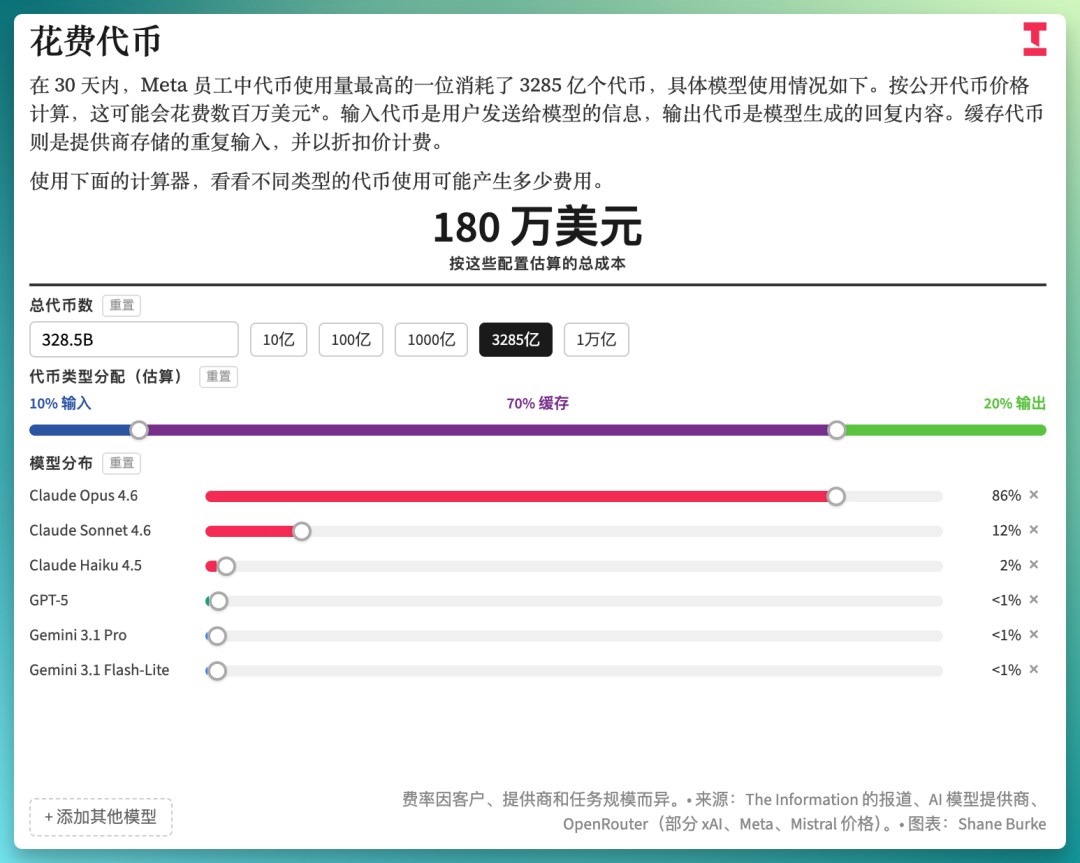
A Meta employee built Claudeonomics on their own initiative, aggregating usage across 85,000 internal accounts into a Top 250 leaderboard. The board didn't show whether code shipped or products launched — it simply granted titles like "Token Legend," "Cache Wizard," and "Session Immortal" based on Token volume. The Information's calculation page showed the top employee consumed 328.5 billion Tokens in 30 days, roughly $1.8 million at default model blends and public pricing — seven times Huang's stated annual benchmark.
The leaderboard turned AI adoption into an absurdist productivity theater.
A Microsoft employee told Pragmatic Engineer they'd have AI re-read existing documents and draft prototypes that would never ship, just to avoid looking like they "used too little." Salesforce brought this invisible pressure right to the desktop. A Mac widget updated personal Token spending every 15 minutes, showing minimum spend targets for Claude Code and Cursor, with employees able to check how much colleagues had spent.
The same incentives appeared in China. This March, employees leaked on Maimai that Tencent had allocated annual Token resources worth roughly 220,000 yuan per employee. By late March, some business units began tracking and ranking Token usage. Worried about falling behind, employees started building meaningless workflows, having Agents run tasks on loop, even taking on side projects — all to keep their numbers up.

Token Minimizing: The bill takes over
While leaderboards encouraged consumption, another table in the financial system had already raised the alarm.
Traditional SaaS charges per seat, making budgets roughly headcount times unit price. Agents turned this relatively fixed licensing cost into volatile usage-based spending: a single task might trigger multiple model calls, carry ever-growing context, and cycle through planning, generation, checking, and rewriting. Bills now fluctuated with task complexity, model choice, context length, and retry frequency — no longer tied to headcount alone.
From overspend to limits
In mid-April, Uber CTO Praveen Neppalli Naga revealed publicly that the company had burned through its full-year AI budget in just four months, with some heavy users generating AI bills as high as $2,000 per month.
A month later, Uber COO Andrew Macdonald admitted on the Rapid Response podcast that about 25% of Uber's code commits last quarter came from Claude Code, but that didn't mean 25% more useful consumer features shipped. Output may have increased, he added, though that connection hadn't been established. When he asked senior engineering leaders how many previously shelved projects had entered development thanks to productivity gains, they couldn't answer.
On June 2, Uber hit the brakes due to budget exhaustion, setting monthly limits of $1,500 per person per tool for AI coding tools like Claude Code and Cursor.
From engineering to company-wide
Two days later, this pivot appeared outside tech.
Retail giant Walmart changed its internal AI tool Code Puppy from unlimited use to fixed Token quotas. Per Business Insider, this tool lets employees develop software through natural language. Over the past year, users grew from roughly 1,000 to 75,000 — procurement, supply chain, store managers, and even hourly part-time workers were using it, with non-engineers now matching engineers in numbers. Token governance had moved from software engineering budgets into the daily operations of a massive enterprise.
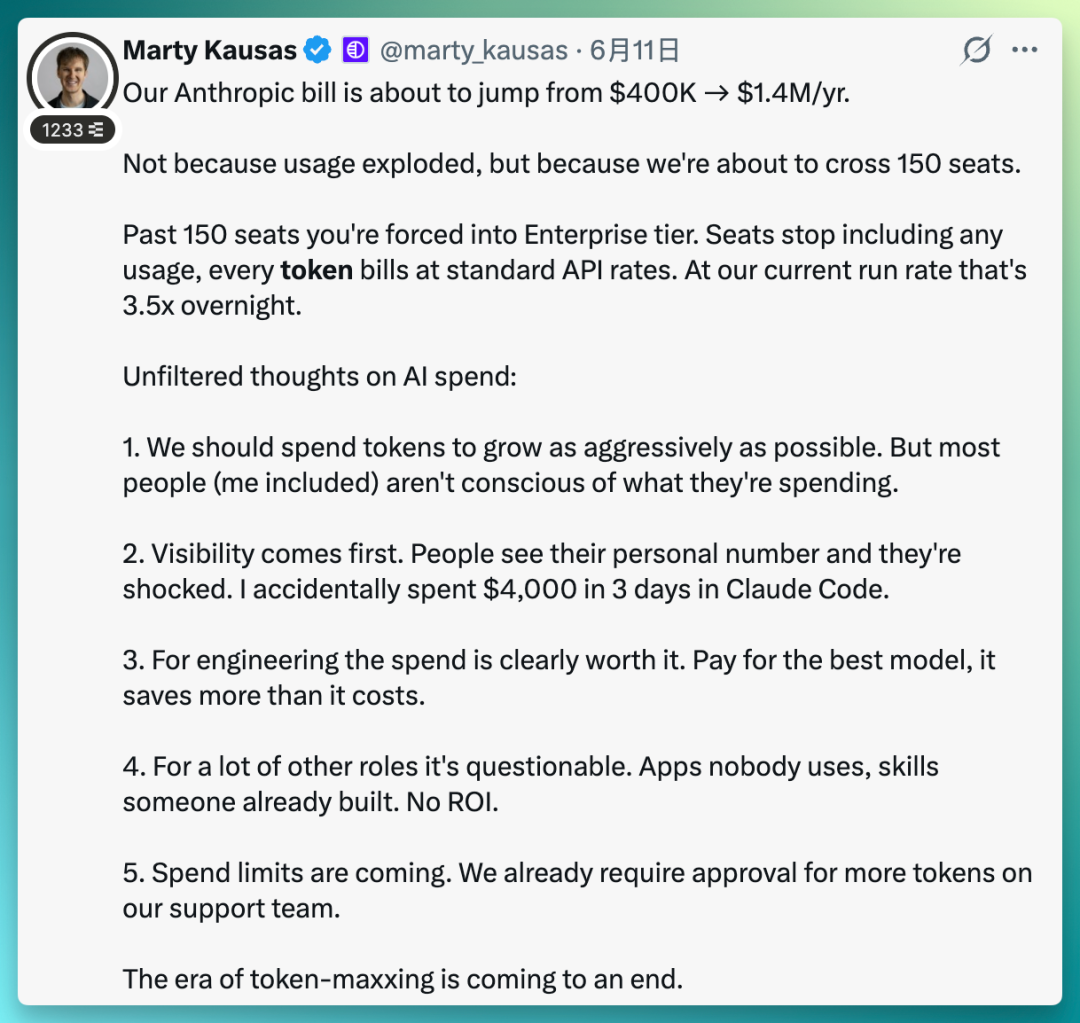
Bill shock can strike even without usage growth. Also in June, B2B customer service startup Pylon crossed Anthropic Team's 150-seat threshold and needed to migrate to Enterprise, with Tokens billed separately at standard API rates. CEO Marty Kausas said this would spike their Anthropic annual bill from $400,000 to $1.4 million — an overnight 3.5x increase. Pylon then required customer service teams to get approval for additional Tokens. Engineering's use of the strongest models was "obviously worth it," he felt, but returns for other roles were unclear:
"People build apps nobody uses, redevelop Skills others already made — there's no actual ROI."
Chinese tech giants adjusted in the same direction. Per The Economic Observer, in June, Tencent employees across multiple business lines saw their Token quotas reduced. Hunyuan large model team members got roughly 7,000 yuan monthly, YouTu Lab about 5,250 yuan, and one Tencent Entertainment outsourced employee revealed their monthly quota was just 1,000 yuan. Quotas first went into department pools, then managers dynamically allocated based on business needs, with employees able to "raise their hand" to request more.
After the cuts, one employee joked, "Before, the only thing I did at work every day was whip Workbuddy hard; now I nervously check the Token dashboard every day, afraid of wearing it out." Another lamented, "From luxury to frugality is hard — I can't go back to old-school coding anymore"...
Limits can stop the bill, but can't answer where the money should go. Companies need to trace that bill further, to tasks and deliverables.
Token ROI: How companies measure AI returns
In July, Business Insider cited a UBS analyst report: in recent conversations with dozens of enterprise IT executives, roughly 60% of surveyed companies had implemented varying degrees of controls to tighten AI spending. The analyst described this as a "healthy problem" — companies weren't halting AI deployment, and Token optimization was evolving from a reactive measure after budget overruns into sustained engineering discipline.
Ideally, the formula runs something like: Token ROI = verifiable business increment ÷ (model cost + human review + retry/rework + engineering governance cost). But so far, no standard has been adopted across multiple companies in public practice. The numerator depends on each company's business metrics, making unified algorithms difficult, though some firms are pushing in this direction; the denominator is more tractable, and most companies start here, accounting at the task and workflow level.
First, see the spend: who and what tasks
Some companies are building their own accounting mechanisms; vendors are also productizing similar capabilities.
Shopify uses a unified LLM call gateway, usage dashboards, and anomaly alerts to aggregate spending by team, project, and individual. A single user exceeding $250 in daily Token spend triggers human review, but high usage only initiates investigation — it isn't automatically deemed waste.
GitHub and Amazon try to observe AI use alongside engineering delivery.
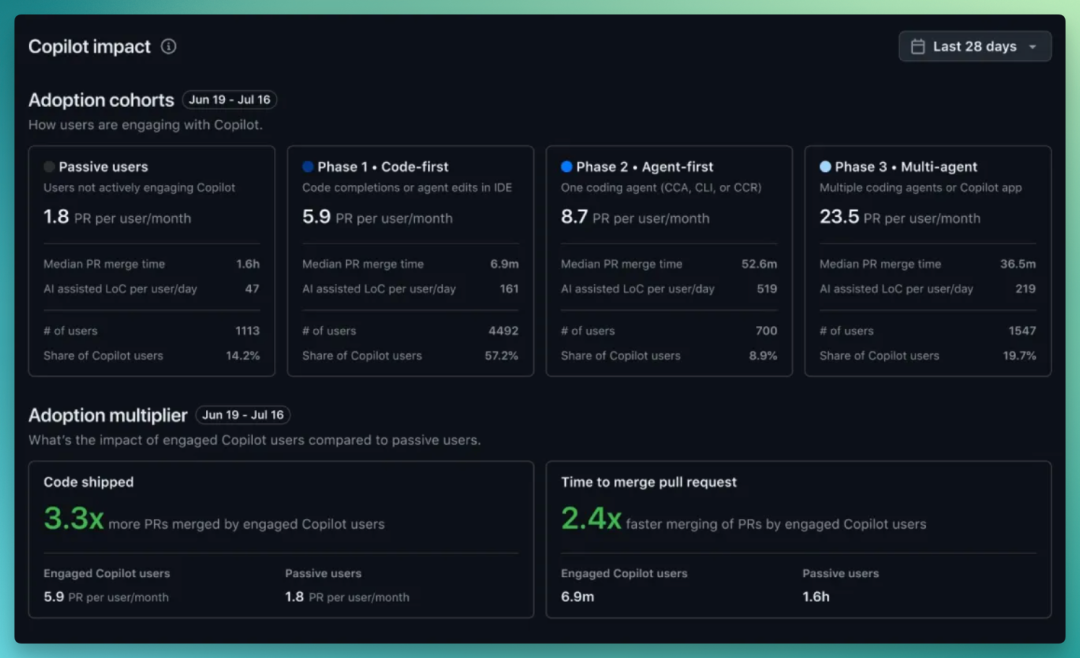
GitHub's July launch of the Copilot Usage Metrics Impact Panel groups users by AI adoption level, comparing merged pull request count, merge speed, and daily code output.
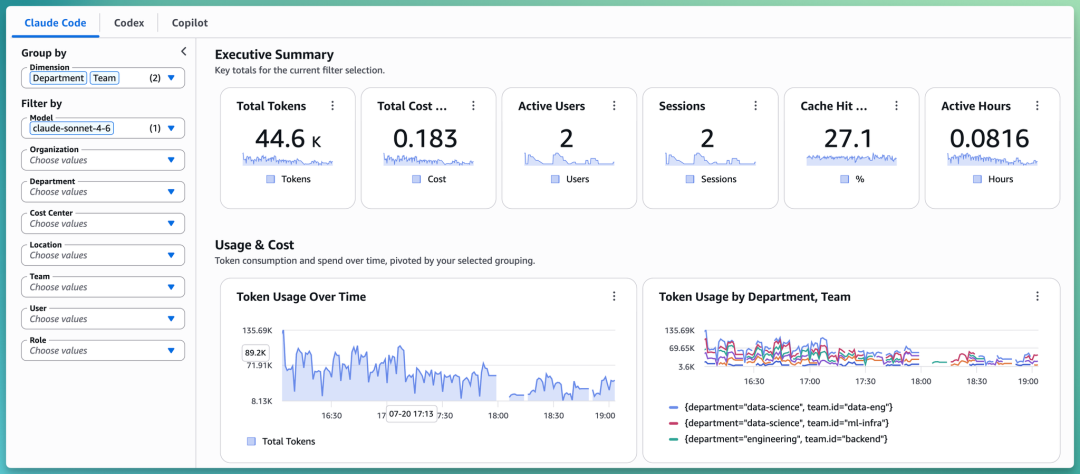
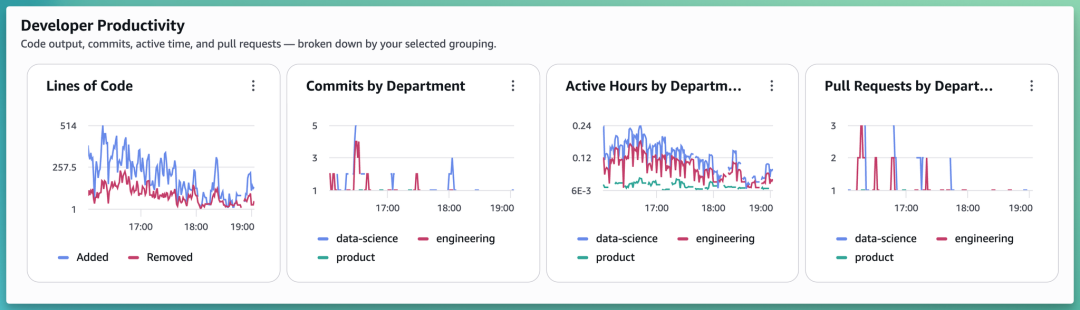
Amazon CloudWatch's Coding Agent Insights goes further, aggregating Token usage and costs by model, department, team, and individual alongside code commits, active coding time, and suggestion acceptance rate in the same panel.
Then verify results: what AI actually left behind
Dashboards can answer who spent how many Tokens, but not what that bought. Lines of code, commit counts, merge speeds, and suggestion acceptance rates remain at the level of engineering activity. Companies must push further: whether AI-generated code reached production, whether it stayed in the codebase, and how much human work it truly replaced.
One metric Amazon uses to evaluate AI coding tools is normalized deployments — deployment volume after standardization. It analyzes AI adoption alongside team deployment velocity, while observing rollbacks and human intervention. Token consumption and code generation volume don't count as output directly; code entering the deployment pipeline and surviving production quality checks counts as valid delivery.
Cursor watches keep rate: how much Agent-generated code remains in the codebase after a period of time. A generation being accepted by a developer only means it was temporarily usable; if it's quickly deleted or rewritten, that spend hardly counts as stable return. Over the past nine months, Cursor has used code retention rate and user satisfaction to evaluate model updates and Agent workflow adjustments.
Cognition goes further. Devin evaluates whether each completed task produced valid results, then estimates how long the same work would take a human engineer. Unmerged pull requests or tasks judged invalid don't count toward valid output. Saved engineering time is then converted to dollar amounts and compared against actual company spending.
These three metrics still don't fully represent business ROI. Code shipping doesn't equal revenue generation; time saved doesn't mean that time gets reinvested into high-value work. But they advance the observation target from "how much AI ran" to "what ultimately remained" — whether it shipped, whether it stuck around, whether it saved real human effort.
With this results lens, companies can decide which requests go to lightweight models and which merit the strongest model, based on task quality requirements, failure costs, and expected value.
Matching models to tasks
In Artificial Analysis's latest comprehensive evaluation, Chinese models Moonshot AI K3 and Qwen 3.8 have entered the intelligence range near frontier models, but with meaningfully lower average costs on benchmark tasks than premium models like Claude Opus 5 and GPT-5.6 Sol; DeepSeek V4 Flash sits at an even lower cost tier, offering cheaper options for routine tasks that pass internal quality validation.
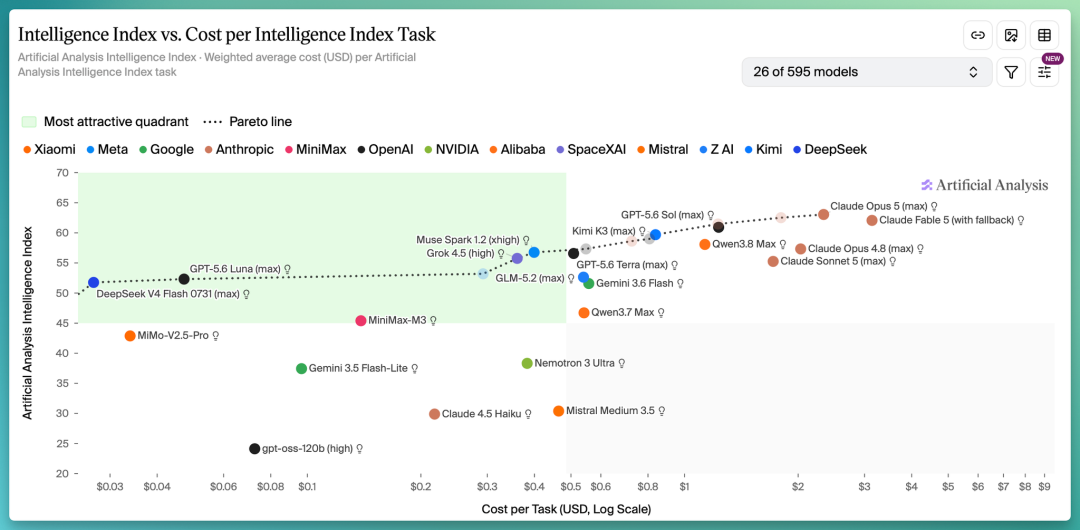
More model choices make allocation itself a new management problem. Without automatic routing, the most familiar or strongest model still becomes an expensive default.
Tencent Cloud's AI gateway provides an intuitive diagram. After user requests enter the gateway, the system identifies whether they involve code, math, translation, simple Q&A, or complex reasoning, then routes tasks to specialized models, lightweight models, or flagship models. When identification is unreliable or models fail, requests fall back to default service.
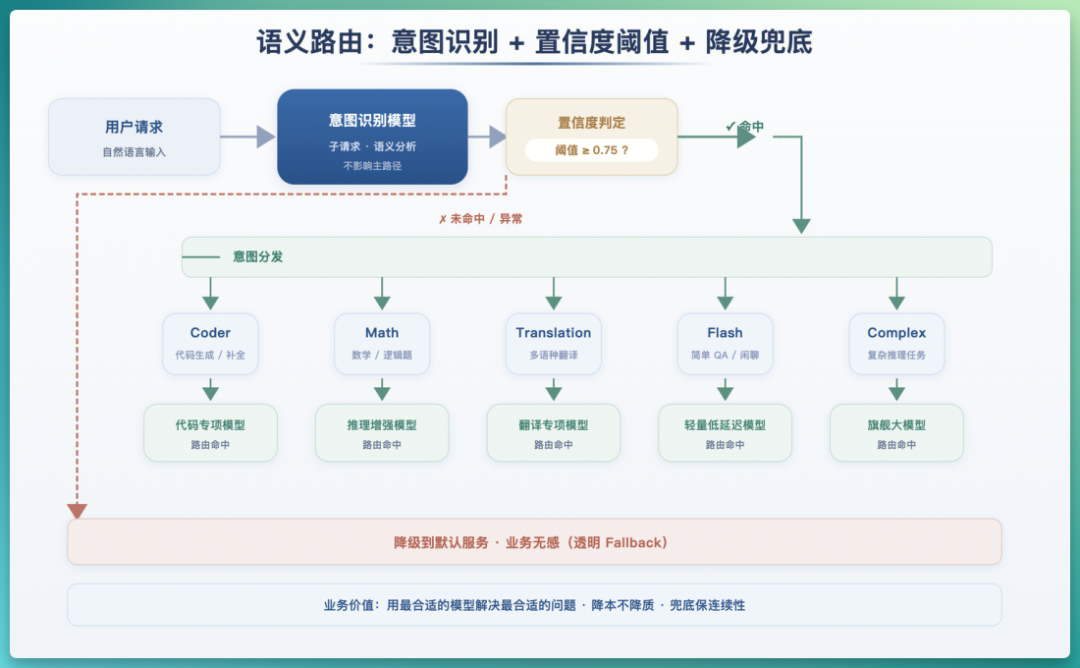
This routing logic is also becoming standard on cloud platforms. Amazon Bedrock, Microsoft Foundry, and Google Vertex AI all let enterprises dynamically allocate requests between quality and cost based on task characteristics.
At the coding tool layer, Cursor also launched Router on July 22. It combines request content, context, task complexity, and domain to select models across Intelligence, Balance, and Cost modes. Per Cursor's official disclosure, in online A/B tests covering millions of requests, Router maintained frontier-level quality while cutting costs by roughly 60%.
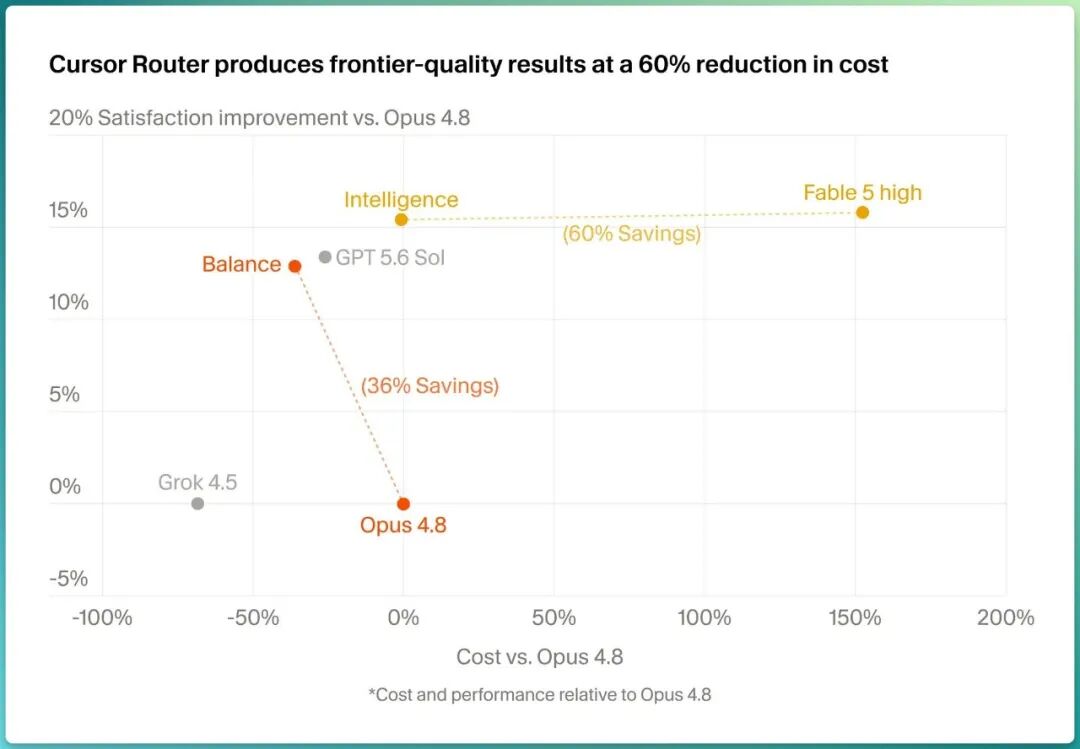
Model routing decides which model handles a task; workflow design affects how much context must be carried, how many tools invoked, and how many cycles required to complete it. Together they determine final Token spend.
Engineering governance: Patch or discipline?
As models grow more capable, one question becomes concrete: are these constraints patches for capability limitations, or engineering discipline independent of capability?
On July 25, Claude Code team core engineer Thariq Shihipar published a striking figure:
For the latest models like Opus 5 and Fable 5, we deleted over 80% of Claude Code's system prompts, with no measurable performance loss in final coding evaluations.
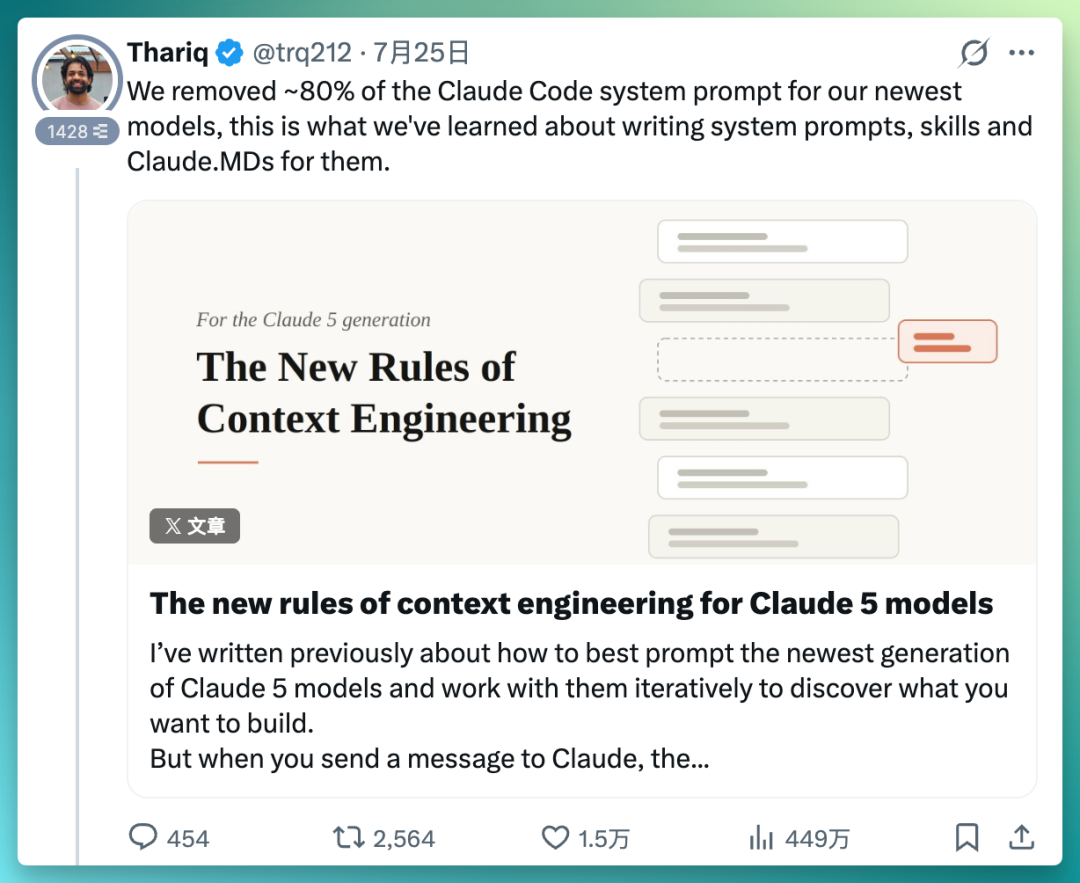
His explanation was "over-constraint." Reading internal transcripts of Claude Code usage, they found multiple conflicting instructions in a single request — like "add documentation as appropriate" versus "never add docstrings or multi-line comment blocks" — forcing Claude to first resolve these contradictions before deciding what to do.
These limits had been necessary to prevent worst-case scenarios, but the team now found models could rely on surrounding context and judgment to make decisions. He summarized this round of adjustments as the following before-and-after comparisons.
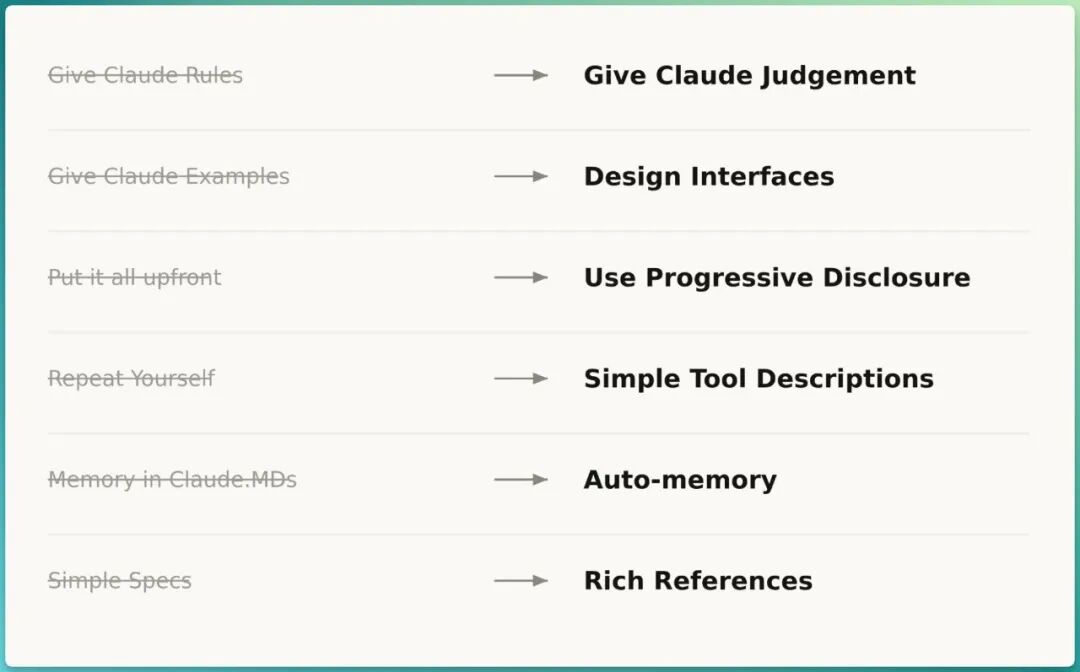
One shift was from "setting rules for Claude" to "letting Claude judge": where system prompts once specified "default to no comments, never write multi-paragraph docstrings or multi-line comment blocks," now only "make it read like the surrounding code: match its comment density, naming style, and idiomatic expression" remained.
Another was from "front-loading everything" to "progressive disclosure": code review and validation were moved into their own Skills, called by Claude as needed; some tools switched to lazy loading, with Agents required to search full definitions via ToolSearch before use.
Progressive disclosure isn't limited to model vendors. Matt Pocock's Skill library, which exploded in the GitHub community with over 200,000 stars, includes The Main Flow — a primary workflow breaking the path from idea to delivery into five phases, each with its own Skill.
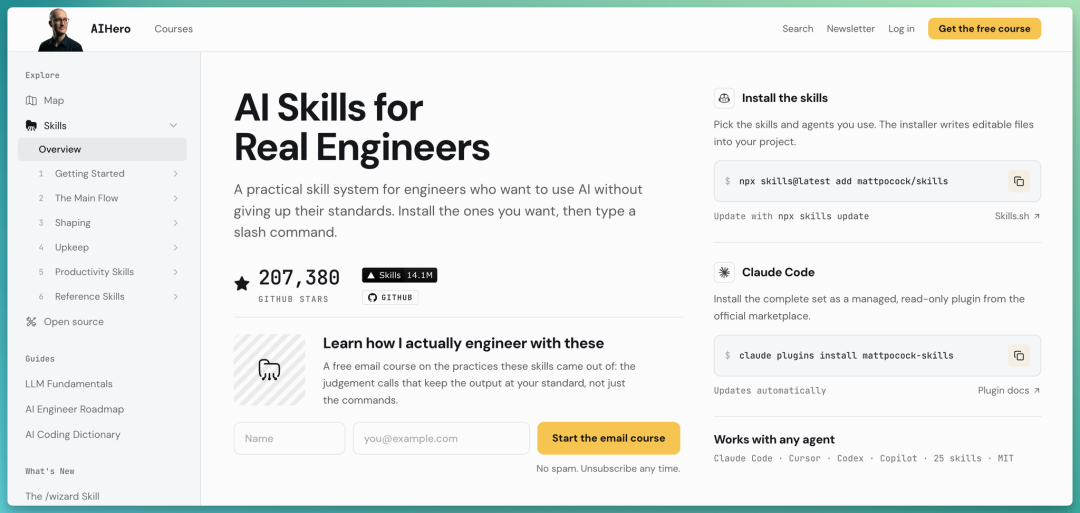
When ideas are still fuzzy, start with /grill-with-docs to accept probing questions, recording confirmed decisions in documentation; once aligned with the Agent, use /to-spec to turn the conversation into a written specification; ready to build, hand off to /to-tickets to break into small modules the Agent can complete independently; for coding, use /implement to turn specifications into code test-first; after changes, /code-review checks diffs against team standards and specification documents.
Each of the five Skills is only invoked in its own phase — exactly Thariq's progressive disclosure: context needn't be laid out all at once, loaded only when needed. The two agree on this point; the divergence is on constraints themselves.
Pocock's chain still sets hard rules for the model: /implement requires test-first, /to-tickets requires vertical slicing by user-facing functionality, explicitly prohibiting building out the database before writing the backend. The rationale: models habitually proceed by technical layer, or take shortcuts during implementation.
Neither approach is superior. For Thariq, constraints are patches for capability gaps, to be removed as models strengthen; for Pocock, they're discipline independent of capability, already written into a workflow in active use.
From Token to Return
From rewarding consumption to capping budgets, companies completed a round of AI cost calibration in mere months.
Returning to that formula: Token ROI = verifiable business increment ÷ (model cost + human review + retry/rework + engineering governance cost).
Model costs are clearest — call and output prices are listed on every vendor's official page; human review is hard to measure precisely but theoretically declines with well-designed workflows; retries and rework similarly decrease with proper constraints, and how much exactly is being established through unified gateways and usage dashboards; engineering governance cost is where Thariq and Pocock are each making their case.
The Return we keep pressing for isn't only business growth; how to reduce model costs, human review, retry/rework, and governance costs is equally worth optimizing.
Enterprise AI is shifting from Tokenmaxxing to Token ROI maxxing.