No Need to Eat the Bitterness of Coding First | Four SuanDa Users on Their Real Vibe Coding Stories
Earlier this year, we recorded a podcast episode with Zhu Guanglu, product GM of Baidu's Miaoda [Vibe Coding, Act Two: The Big Four and Those Who Want to Win | A Conversation with Zhu Guangxiang: Baidu Miaoda Product GM](https://mp.weixin.qq.com/s?__biz=MzAxMDMxOTI2NA==&mid=2649104495&idx=1&sn=211fbb5
"Drop the perfectionism, just start using it."

👦🏻 Interview: Koji
🥷 Editor: Crossing
🧑🎨 Layout: NCon

Earlier this year, we recorded a podcast with Zhu Guanglu, product GM of Baidu's Miaoda Vibe Coding, Act II: The Big Four, and Those Who Want to Win | A Conversation with Zhu Guangxiang: Baidu Miaoda Product GM, where he shared how Chinese users are putting their own local spin on Vibe Coding.
So we also found four Miaoda users and invited them to share their stories of discovering Vibe Coding, falling in love with it, and even making money from it.
Four guests, four completely different backgrounds: a 12-year-old student who found creative joy on Miaoda after being brutalized by C++; a mother exploring AI with her kids who also runs a nonprofit; one of the first developers to monetize through Miaoda; and an entrepreneur who crossed over from e-commerce and can now deliver projects on the subway.
We hope their stories inspire you.
👦🏻 Koji
I'm Koji. Today we have a very special roundtable with four real users to talk about AI Coding and Baidu's "Miaoda" product. Let's get straight to it with the first question.
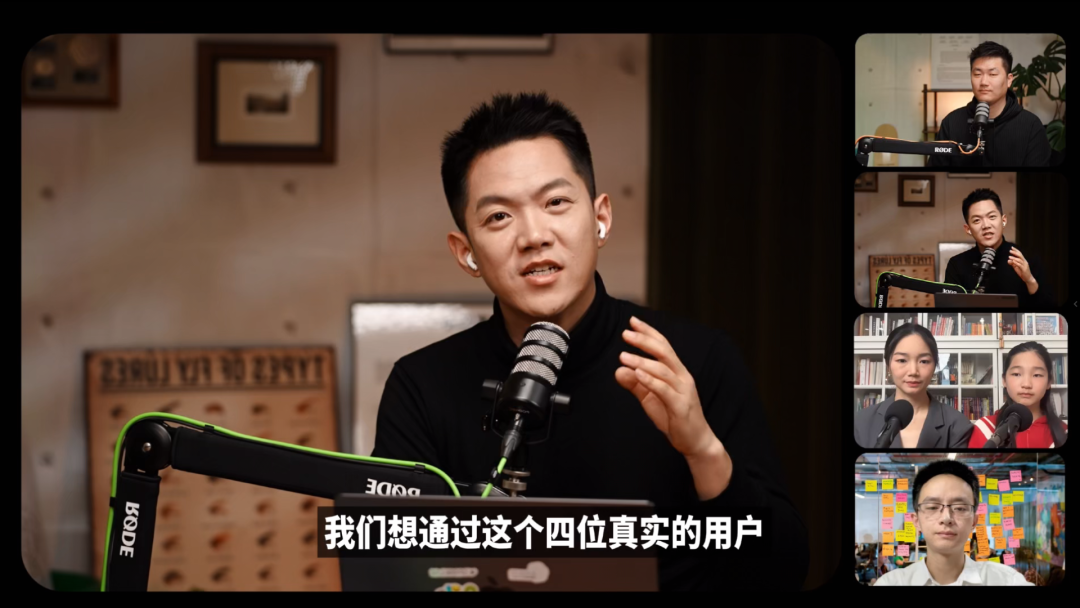
We're three months into 2026, and there's been a lot of new developments in the industry, especially with OpenClaw's release. What are some things that used to be impossible but suddenly are? Let's start with Wang Han and Guoguo.
From "Conversation" to "Execution": Ideas Straight to Apps
👧🏻 Guoguo
Now, a lot of my ideas can directly become real apps. Before, the team would have one tool for this, another tool for that, and they never connected — I felt more like a messenger running between them.
Now it's different. I tell the AI what I want to do, and it searches for information, does research, and builds it itself.
For example, I wanted to make a small app about English "melon-eating" [gossip culture]. I just told it the requirements, and it researched what "melon-eating" means, how to make it fun, how to design it so it's not too hard but still helps users learn English.
In the end, it not only built the app but handled the design too.
👦🏻 Koji
Guoguo is indeed an outstanding student who started Vibe Coding at a very young age — we'll hear more from her shortly. What about you, Wang Han?
👩🏻 Wang Han
I'd approach this from two angles. First, as a parent, AI has really been a huge help.
We're just an ordinary family with an average kid — in the traditional evaluation system, grades probably come first. So the biggest thing AI does is massively boost children's confidence.
Through AI Coding, a child has an idea and can immediately make it real, turn it into a project. Like Guoguo — she made several apps, won some awards, and participated in hackathons. Now she's very confident at school and says things like "I'm the best at AI in our whole school."
From this angle, I'm genuinely thrilled, because it can quickly give children positive feedback.
From a work perspective, I run a nonprofit and normally need to manage a lot of volunteers. In the past, organizational communication efficiency was actually pretty low. With AI, the organization's management efficiency has grown exponentially.
👦🏻 Koji
Huang Ama was probably among the earliest users to monetize through Miaoda. Besides Miaoda, I'm sure you're following AI developments across the board.
In your view, what's happened in these few months of 2026 that couldn't be done before?
👨🏻💻 Huang Ama
The biggest change in 2026 is Lobster — I'm sure more or less everyone has used it. Before, I felt like AI was breaking through human cognitive boundaries, and we were just having conversations with large models. But now it's different. When we ask AI, when we ask Lobster to execute tasks, it can actually execute them properly.
For example, you ask it to write an email — it not only writes it but can directly send it for you. That wasn't possible before.
From 2025 to 2026, the concept of OPC (One-Person Company) became huge. Why can one person become a company? It's because with AI assistance, each of us can be an all-rounder.
👦🏻 Koji
What about you, Eason? What new AI application scenarios do you see in 2026?
🧑🏻💻 Eason
For ordinary people, because of this wave of Crayfish [smaller AI agents], more people have installed and used it. A lot of people's chat messages can now be internalized into skills. AI can, through repeated conversations, read chat records and turn them into industry know-how.
There was a popular joke recently saying that many of your employees are becoming individual skills for your Agent. I think this is already happening.
From a Coding perspective, before we mostly needed to develop on local computers. But with the arrival of Crayfish, and the opening up of various communication interfaces and APIs, we developers can more conveniently complete development tasks remotely.
No More C++ Torture, From "Messenger" to Super-Individual
👦🏻 Koji
Next question: when did you first encounter AI Coding, and what was the story? Anyone want to start?
👧🏻 Guoguo
I first encountered AI Coding at last year's Baidu Cloud Intelligence Conference, where I came across Miaoda and thought it was a really interesting application. Around that time I was being pretty thoroughly brutalized by C++, so when I saw it advertised as "make an app with one sentence," I was especially curious and tried it out.
When I made my first app that belonged to me, I was really, really happy. Because before, I'd have to write very, very long code and still might not be able to make an app, and now one sentence was enough. I was so excited I practically turned into a monkey.
👦🏻 Koji
"Excited into a monkey" — that's a very vivid metaphor.
🧑🏻💻 Eason
My story is pretty fun. My parents are photographers and have always wanted to turn their work into a 3D photography exhibition so more people could see it online. To fulfill their wish, they'd been thinking about it for a long time.
Around October the year before last, I came across Vibe Coding tools and immediately wanted to help them realize this wish.
👦🏻 Koji
Fulfilling your parents' wish?
🧑🏻💻 Eason
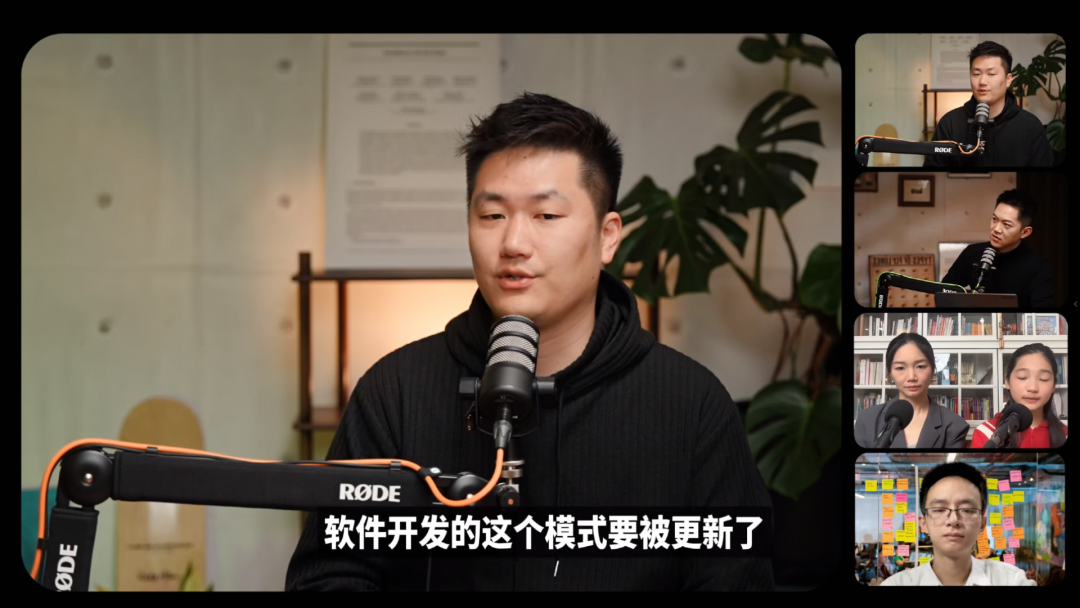
Yes. At the time I also considered finding an open-source project to adapt, but I'm probably a bit of a geek and wanted to try fresh tools and approaches. That was still the Cursor era. I used Cursor from start to finish, spent two months, and completely built a 3D photography gallery project, then deployed it online for everyone to visit.
The moment I finished, I felt truly amazed — that I could actually complete something this complex. For me, this was originally a very complicated thing. I feel like future work models, especially product and software development models, are going to be completely transformed.
👦🏻 Koji
Were you doing software development before?
🧑🏻💻 Eason
I was mainly doing e-commerce trading. Though when I was doing e-commerce, I leaned more technical.
👦🏻 Koji
Wang Han and Huang Ama, share your stories of discovering AI Coding too.
👩🏻 Wang Han
Like Guoguo just said, before discovering Vibe Coding, I took some detours trying to get her to learn AI. When AI first came out, I was anxious as a parent, afraid that what she was learning would get replaced, and kept thinking about how to get her to better learn AI.
Very coincidentally, shortly after school started last year, her school had an information technology club that admitted her. I was so happy, thinking now she could learn something advanced.
Then she came home from the first day looking unhappy. I asked why, and she said they were learning C++.
I immediately thought, in this day and age they're still learning C++? I majored in computer science in college and had long forgotten it all, feeling like I never used it in daily life. By the second or third class, she completely broke down, saying she didn't want to go anymore, she wanted to quit the club.
Later I was very lost — my child didn't want to learn C++, but I wanted her to learn AI, what should I do? I took her around to AI-related exhibitions, and happened to be at the Baidu Cloud Intelligence Conference last August, where we came across Miaoda at a booth.
"Make an app with one sentence" — it sounded interesting. She immediately took out her computer and started typing, and on the spot made a flying chess mini-game. In that moment, she was stunned beside me, and I was stunned too. I realized this thing was so much fun.
Later we went to participate in some hackathon competitions and discovered that children's creativity is really surprising. Quite by chance, we even won a championship, and from there it was unstoppable. After she won, her baseball team friends, her childhood best friends, all followed along to learn.
Actually, in between we also tried many different tools, but for kids, simple and easy to pick up, being able to quickly see results — this is crucial. So in the end we still chose Miaoda as essential software for our AI Coding classes.
What Skills Are Irreplaceable in the AI Era?
👦🏻 Koji
Everyone just mentioned Miaoda, a zero-code Vibe Coding tool. I'm sure beyond that, you've all used other tools too. What made your first impression of Miaoda a good one, and what kept you using it? Let's start with Guoguo again.
👧🏻 Guoguo
Sure. For me, Miaoda's biggest advantage is how easy it is to get started. When I first used it, I just told it "make a small game," and it quickly produced one, and the result was pretty good.
It's just especially easy to pick up, very simple, and the interface looks nice. There are also lots of fun examples in its community, which I think is great, so I use it often.
And it's always updating. I don't spend that much time on the computer, but every time I log on, I can see it has something new. It feels like I'm growing and getting stronger together with Miaoda.
👩🏻 Wang Han
Before you used Miaoda, didn't you use another platform?
👧🏻 Guoguo
Yeah, I used a workflow app, but that was exhausting. I followed the teacher step by step and kept making mistakes — like how do I fill in this node? Did I get that part wrong? Every time, it left me mentally and physically drained.
When I finally finished, I'd look at that dense, tangled workflow and not understand the logic behind it at all, or why things had to be done that way.
👦🏻 Koji
I actually wanted to ask Wang Han — in today's AI era, what do you think students most need to learn?
👩🏻 Wang Han
I don't think it's the ability to learn any particular AI tool. Because learning AI isn't hard now — anything you don't understand, just ask AI. You no longer need to hire a dedicated teacher. My first instinct used to be to find a teacher for her, but that's not necessary anymore.
Any question, AI can give you the answer. So looking at it the other way around, we should be cultivating abilities in children that can't be replaced in the AI era. What are these abilities?
Personally, I believe first is aesthetic sense — this is uniquely human, nothing can replace it.
Additionally, creativity, teamwork, communication and presentation skills, and business thinking.
Finally, and only finally, comes proficiency with advanced AI tools. Only when these six abilities come together will you be irreplaceable, in any era.
To sum up, human capabilities themselves are what matter most. We don't need to feel anxious about rapidly evolving technology, thinking "there's something new today, I have to learn it." Many parents are anxious, telling me there's too much information — this updated today, that large model upgraded tomorrow, impossible to keep up.
Later I told them, when cars first appeared over 100 years ago in the industrial age, did you constantly care about what model the engine pipes were? No. You only cared about driving well. AI is the same — as long as kids can use it in line with their own interests, that's enough.
For example, kids who love music can try making songs with MiniMax; kids into anime, like ours, might make little videos for their virtual idols.
AI is a tool that can amplify a child's interests and passions tenfold, a hundredfold — but the prerequisite is, what are that child's own passions and interests? That's what matters most.
Good Tools Make Creative People Happier
👦🏻 Koji
I'd like to invite Eason to share — in your view, what kind of users is Miaoda best suited for?
🧑🏻💻 Eason
The first time I used Miaoda for a real commercial project, I was surprised by how smoothly it performed. At the time, a client had an urgent need to build an education-focused SaaS platform. The client themselves couldn't really articulate what they wanted — I needed to quickly put together a demo to show them.
I prepared two approaches: running a Vibe Coding tool locally on one side, and putting the same requirements into Miaoda online on the other. Fifteen minutes later, Miaoda had results. The local tool was still running — it ended up taking two hours. When I came back to check, I found Miaoda's output was better than I'd imagined, and more practical.
I immediately sent this demo to the client. Once they saw something concrete, communication became extremely efficient, and we closed the deal quickly.
I work with quite a few B2B clients, and I've concluded there's one group particularly well-suited to Miaoda: they have their own business, clear needs and ideas, but lack a technical CTO.
Miaoda can quickly become their CTO, giving them technical execution capabilities and turning them into a super individual. After two or three conversations, they can rapidly validate their original ideas.
Another group, I think, is humanities majors. They tend to have an aversion to programming and technology. I have a friend — the first time I invited him to a Miaoda event, saying it could be done in 10 minutes, he didn't come. Later, at an offline event, I practically dragged him there and said: "Haven't you always wanted to build a pet supplies store? Let's make it today."
It ended up taking just five minutes. He said: "Wow, Eason, this is way more useful than I imagined." It completely exceeded his expectations. So I think humanities majors are full of creativity and ideas to begin with — they're especially suited to using Miaoda to quickly realize what's in their heads.
👦🏻 Koji
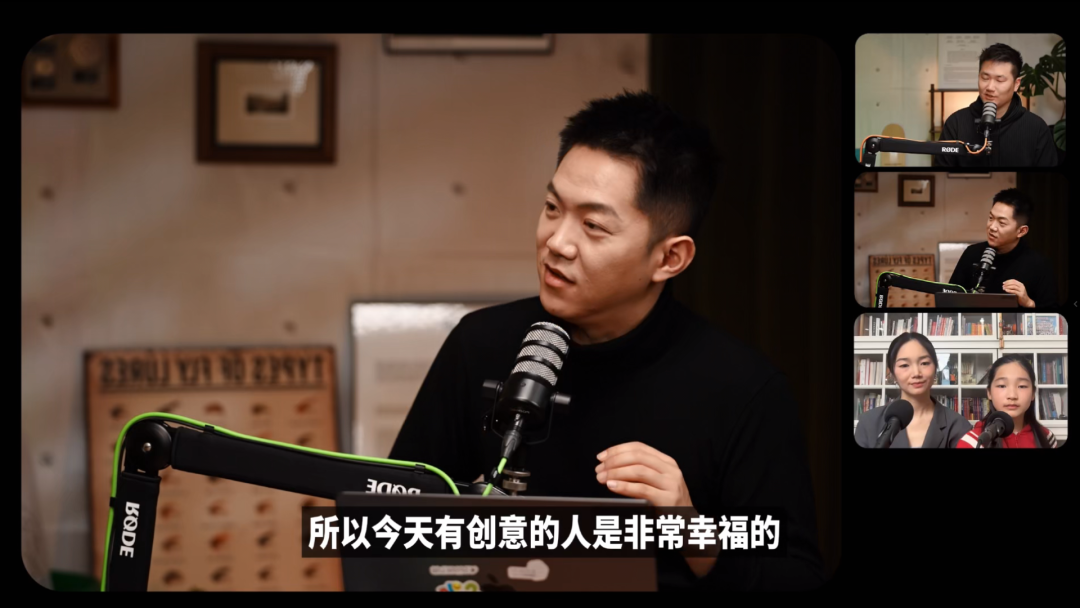
So today, creative people are incredibly fortunate — they can quickly turn ideas into reality. Guoguo, you've made so many projects. If you could only share one today, which would you choose?
👧🏻 Guoguo
The one I most want to share is a card battle game. Since I haven't built multiplayer mode yet, the opponent has always been AI. The inspiration came from a novel I read — it had this mind-related ability that I thought was especially powerful, and I wanted to use that as the basis for a game.
👦🏻 Koji
Where did the inspiration come from? Why did you want to make this game?
👧🏻 Guoguo
I really love reading novels. In that novel, there was this ability to manipulate minds. It felt eerie, but also sounded incredibly powerful — controlling others invisibly, without them knowing. That's pretty awesome. I thought such a powerful ability, if made into a game, would be really fun.
👦🏻 Koji
What was the hardest part of the production process?
👧🏻 Guoguo
The hardest part was probably during testing after I finished. I found that the AI opponent simply wouldn't play cards no matter what. Normally, in a card battle game, I play one, you play one. But with this one, I'd play one, and it just wouldn't play one.
I kept emphasizing to it: this is a card game, we should each play one card, you can't just watch me play without moving. I went back and forth "bombarding" it for a long time before it finally understood that it needed to play cards too, not just watch me the whole time. Only then was that bug finally fixed.
👦🏻 Koji
After you finished it, did you share it with friends? What are you most satisfied with?
👧🏻 Guoguo
I posted it online. None of my friends had read that novel, so I went online to find fellow fans. Everyone thought the concept was really interesting, and I got lots of positive comments, likes, and saves.
Many people commented "waiting" in the comments, wanting to try it. After I sent them the link, they'd give me improvement suggestions, and I slowly revised several versions based on the feedback.
👩🏻 Wang Han
She was on cloud nine during that period. She'd come home from school, do her homework first, then immediately start fixing bugs.
👧🏻 Guoguo
I was basically living a three-point life: school, home, then fixing bugs, reading comments, and replying to messages.
👩🏻 Wang Han
She was especially good about replying to DMs — she'd leave comments for fans one by one and send them the links.
👦🏻 Koji
It's true — when someone has something they're genuinely interested in, whether it's studying or working, they have tremendous motivation.
👩🏻 Wang Han
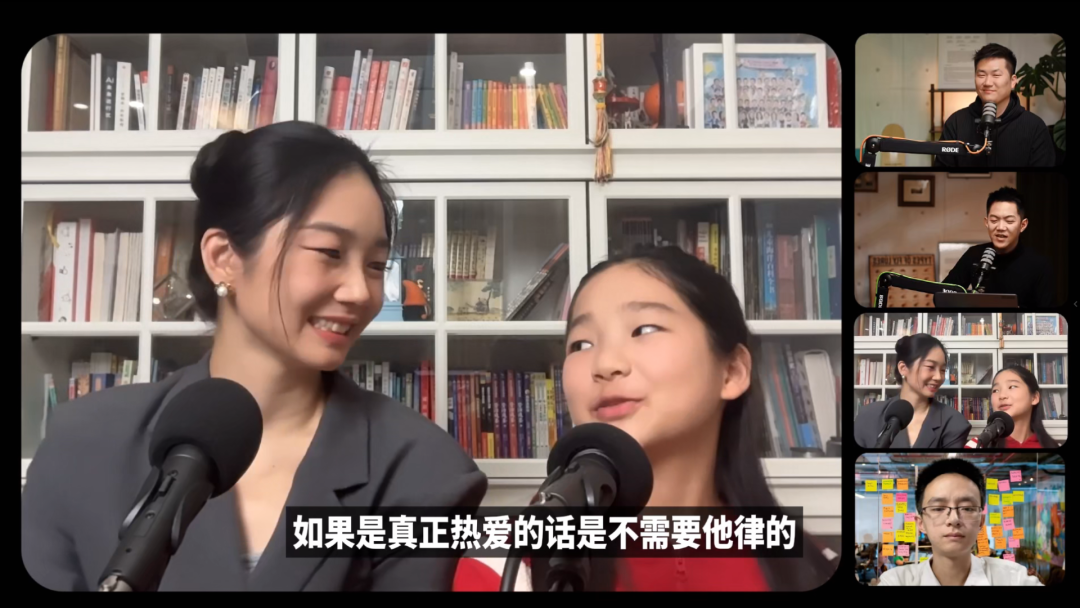
Yes. Self-discipline is actually very hard for kids.
👧🏻 Guoguo
But if it's something they truly love, external discipline isn't needed at all.
👦🏻 Koji
I'd like to ask Huang Ama — as one of the first users to monetize on Miaoda, what's the most representative monetization case you've seen? It could be your own or someone else's.
👨🏻💻 Huang Ama
Let me give two examples.
The first is a patient escort — someone who accompanies people to medical appointments. He started as an individual operator, acquiring clients through Douyin, Xiaohongshu, and other social media. But lacking brand credibility, he wanted to build a mini-program platform.
He had absolutely no coding background. I recommended Miaoda to him and had him build it himself. Then one day, bam — he sent me a mini-program asking what I thought. I was shocked. I opened it and found he'd gotten the entire patient escort workflow running, even WeChat Pay integration. He'd organized his service requirements into diagrams and fed them to Miaoda, using AI to clarify development needs, then completed his mini-program through multiple rounds of testing and revisions. He's already made over 20,000 RMB from it, and is currently working on version 2.0, planning to add service packages and group-buying features.
The second is a product manager, also a typical OPC. He'd built many product case studies, and every time he met clients, he'd have to open his laptop and walk through them one by one — a very tedious process.
Later he thought, could he turn these cases into a mini-program where clients could browse like shopping, seeing which ones matched their needs?
In less than two weeks, he built this mini-program. Through it, he's landed orders worth about 150,000 RMB.
👦🏻 Koji
Where did their money come from?
👨🏻💻 Huang Ama
They build custom AI agents for clients. Since using Miaoda, he's discovered he also has the ability to quickly develop good applications at low cost.
👦🏻 Koji
Huang Ama is in a developer community where many people build custom AI agents for clients. What's the average charge for building an AI agent now?
👨🏻💻 Huang Ama
That depends on the client's needs. Technically speaking, an AI agent is a workflow, and we price by workflow steps.
Pricing for each AI agent ranges from a few thousand to tens of thousands of RMB. For more advanced agents — what we often call Agents — prices are higher, around 100,000 RMB is normal.
👦🏻 Koji
Earlier Eason mentioned you built a photography portfolio website for your parents. Beyond that, are there other projects you're proud of and willing to share?
🧑🏻💻 Eason
I have two other fun little products. One is called "Inspiration Leap." I have lots of ideas — reading a WeChat article or Xiaohongshu post might suddenly spark an inspiration. But these inspirations are fleeting and hard to integrate into my long-term business thinking.
So I built a tool that records these inspirations and uses AI to quickly connect them with other inspirations. This way, when I want to explore a direction, I can search keywords and see what related inspirations come up, helping me extend my thinking.
Another is a plant care mini-program I built. You can take a photo to identify what plant it is, and it'll give you care advice — like weeding and watering on a weekly schedule — and log those tasks on a calendar to help users take better care of their plants.
👦🏻 Koji
I also heard you often do Vibe Coding on the subway?
🧑🏻💻 Eason
Yeah. I have a client who lives pretty far from me — the subway ride one way takes an hour and a half, which is pretty dull. One night, the client suddenly sent over a revision request, but I was already asleep.
The next morning, on the subway to their office, I saw the message and just made the changes and published them right from my tablet. An hour and a half later, I walked into their office, and they were shocked: "You already finished it?"
👦🏻 Koji
Guoguo, where do you usually get your creative inspiration?
👧🏻 Guoguo
Sometimes it just pops up out of nowhere. Other times it comes from chatting with AI.
For example, I was talking with Xiaolongxia once and said I wanted to build an app to help me learn English, but it couldn't be too hard or I wouldn't want to play it. As we kept talking, we ended up designing an English gossip game.
Other times inspiration strikes when I'm reading or watching something. Like when I'm reading a book, I'll think: what if I turned this part into a game? What about that part? And just like that, these random ideas are born.
Breaking Perfectionism: Start Using It First, Then Aim to Surpass
👦🏻 Koji
Wang Han, as a parent with lots of educational experience, what advice would you give to other parents who want their kids to start exploring Vibe Coding?
👩🏻 Wang Han
The earlier the better. I feel lucky to live in this era, where we can so easily access tools with such low barriers to entry, quickly turning kids' ideas into reality.
I see lots of examples around me. Guoguo has a childhood friend named Sanmiao who's really into astronomy — he's in his school's astronomy club. Last year he joined us in our first wave of AI experimentation. Later we entered a hackathon, and he built a stargazing agent.
This kid used to be terrified of public speaking. It was an adults' hackathon, and he didn't dare go up. I encouraged him: "So many aunties and uncles want to see — go up and share." So he summoned his courage.
His voice was pretty quiet, but he was the youngest person there by far — Guoguo was 12, and he was 10.
Everyone was really encouraging. When the competition ended, his project won third prize, and that just ignited his passion. His mom later told me he became like a completely different person, raising his hand everywhere. A tiny bit of positive feedback has a huge impact on a child.
On the surface he was learning AI, but through that process, his communication skills, teamwork ability, and confidence all improved dramatically. He became much more confident at school too. Later, when his teacher found out, she specially issued him an appointment letter naming him "Head of AI Department, Astronomy Club."
When his mom showed me that letter, I was so moved. The kid was pretty honest about it — he said: "There aren't many people at our school who understand this, and even the teachers don't know what an agent is." Can you imagine that sense of pride?
👦🏻 Koji
Very interesting. Sometimes giving a kid a little nudge, letting them get that positive feedback, and they'll start running on their own?
👩🏻 Wang Han
Exactly. You can see the transformation in a child after they learn AI. I often say, to judge whether a child is happy, look at whether there's light in their eyes. When they talk about something they love, their eyes really do light up — that shining feeling.
👦🏻 Koji
Yes, highly recommend it — not just for kids, but for all of us. We should all do more Vibe Coding, more creating. If your friends haven't tried Vibe Coding or Miaoda yet, what would you tell them?
🧑🏻💻 Eason
My advice is definitely the earlier the better. But more importantly, don't keep thinking "should I sign up for a class first" or "should I learn some basics first." AI itself is our best teacher — we should improve our abilities through use, gradually exploring our own boundaries, then supplement knowledge in a targeted way.
Also, we need to accept AI's initial imperfections. Don't assume that because AI is all-powerful, you should depend on it for everything.
Sometimes the problem isn't with AI at all — it's with our own way of expressing or articulating things. We need to examine ourselves in reverse, and that process actually improves our own communication skills.
👦🏻 Koji
Huang Ama, anything to add?
👨🏻💻 Huang Ama
I'd suggest starting from needs. Whatever you need, have Miaoda do it. Everything requires positive feedback — once you get Miaoda to complete one thing, you'll feel its capabilities, and then you'll naturally increase the difficulty, cultivating it step by step.
It's like training an intern: you teach them one skill, they master it, then you immediately give them harder tasks, and gradually they grow into a full-fledged employee.
I think the easiest pitfall is wanting to build a large-scale application before you've clearly thought through your needs. Like coming in wanting to build a Taobao-style marketplace, then rattling off a bunch of requirements to Miaoda — the end result will definitely be a mess.
👦🏻 Koji
We've talked a lot about kids using Miaoda. What about other groups? For example, elderly people — do you have seniors around you using Miaoda or Vibe Coding?
👩🏻 Wang Han
Yes. I regularly do some AI public education events. Once, a 77-year-old auntie signed up with such enthusiasm — I was a bit worried she wouldn't keep up.
When she arrived, she told me she used to be a teacher, and after retiring she loved learning new things. She'd already taught herself to edit videos for her Moments.
At the event, she made something really interesting with Miaoda. Her online name was "Lion King," so she designed a whole IP product line using the Lion King image — hats, T-shirts, pillows.
We'd also talked about the concept of IP, and she said "Then I want to build my own IP." She was planning to make these into physical products, one set for each family member, as their exclusive family IP. I found that auntie so delightful.
👦🏻 Koji
Talking with all of you, I realize today's four guests are all "super individuals" — a pretty trendy term lately. Taking this opportunity, I'd love to hear your thoughts on the "super individual" concept.
🧑🏻💻 Eason
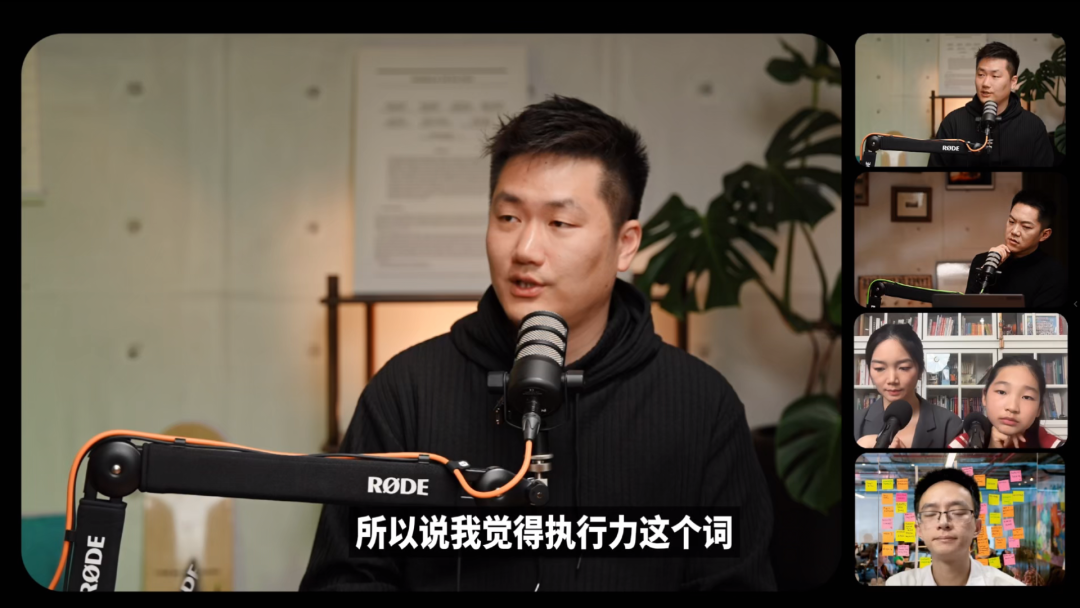
In the AI era, each of us can break through our original capability boundaries. But I believe there's one thing that can never be replaced: execution.
With or without AI, everyone has all kinds of ideas, but those who ultimately succeed and gain returns are always the ones who put their ideas into action.
So execution remains incredibly valuable in today's era.
👨🏻💻 Huang Ama
Many people misunderstand AI as something for STEM folks, but it's not. Humanities students are actually better at expression. If your execution is strong enough and your ability to articulate needs is solid, then with AI's assistance, you'll shine even brighter in other areas.
AI Coding and Miaoda give ordinary people a chance to break through their own capability boundaries. At the current OPC stage, I think people who can use tools and know their own needs clearly will have the advantage.
👦🏻 Koji
Wang Han, any thoughts?
👩🏻 Wang Han
I'll share our own concept: "In every trio, there is AI." Which three people?
First, the super individual themselves — an independent, creative person.
Second, our AI tool, which can amplify our capabilities tenfold or even a hundredfold.
What's the third person? I'd say it's the super mentor of the industry.
I've started my own business too, and I know how many pitfalls you hit in the early stages. If I'd had a seasoned expert giving me guidance back then, whether for a new entrepreneur or for a child, it would have saved so much detour.
So I've always valued teamwork highly — that's also a very important meaning of our existence as humans in the future world.
👦🏻 Koji
Final question. We're just past Q1 2026, and I'd love for everyone to share some encouraging words for our readers. Let's start with Guoguo, okay?
👧🏻 Guoguo
I think by the end of this year, AI will definitely become really smart. Maybe you just give it one requirement and it immediately generates a rough draft, then gives you a few options to choose from.
You might just need to input a number to confirm, and it'll understand what you mean and start building. The final product will probably look great and polished, and take hardly any time.
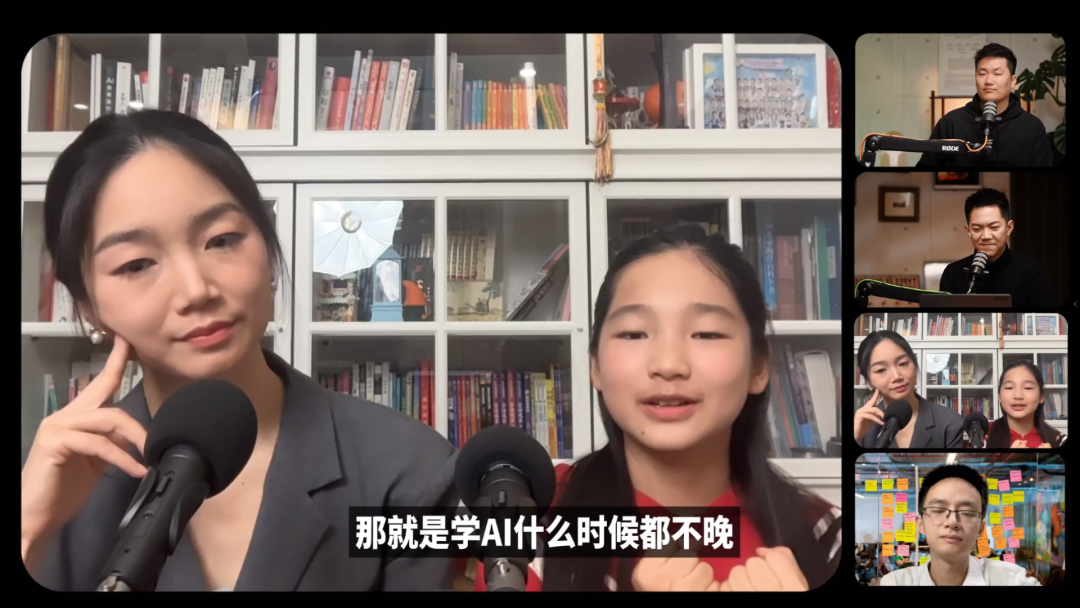
If I had to encourage everyone: it's never too late to learn AI.
And honestly, it's really not that hard.
👦🏻 Koji
Very well said. Wang Han, please.
👩🏻 Wang Han
First, drop perfectionism — you absolutely must start using it. How? Start by solving one small problem around you.
Don't think you need to build something earth-shattering right away. Let's just start by solving one tiny problem.
👦🏻 Koji
Excellent. Huang Ama?
👨🏻💻 Huang Ama
Since ChatGPT first came out in 2023, those of us in tech have barely had a night without staying up late, because AI has been developing so fast. I think the future will likely prove out Miaoda's slogan — "generate an app in one sentence."
If I could give readers one piece of advice: just start using it. Don't get caught up in all those messy questions, like whether AI will replace our jobs or replace humans. Just start using it first.
🧑🏻💻 Eason
The two before me have already shared a lot. My thought is: whatever you do, just start learning. No matter what, first master one tool thoroughly — whether it's a chatbot, Vibe Coding, or Miaoda.
Get really good at one thing first, then consider trying other tools and expanding your possibilities.
👦🏻 Koji
Alright, let's wrap up here. Thank you all so much for joining us.
Crossing is looking for independent writers to review AI products and models.
If you've written articles like Hands-On: PixVerse C1 or Hands-On: LibTV, please contact zeo0811@gmail.com. Your email should include: ① a brief bio, and ② AI review articles you've written.
We offer competitive rates. Looking forward to observing and documenting the AI era with you 🎪