Why Are China's New Generation of AI Entrepreneurs "Growing Wild" on Xiaohongshu?

In 2025, we've noticed an intriguing phenomenon: Xiaohongshu is becoming the "minimum viable testing ground" for AI entrepreneurship.
In 2025, we noticed an intriguing phenomenon: Xiaohongshu is becoming the "minimum viable testbed" for AI entrepreneurship.

When Manus went viral overnight across platforms with Xiaohongshu at the center. When Flowith was spontaneously recommended by thousands of users. When StressWatch became white-collar workers' "digital stress-relief corner" by tracking emotional pressure...
These seemingly niche products all completed their cold-start from zero to one on Xiaohongshu, quietly catching fire.

Crossing has interviewed multiple indie developers, including Chunxiang Zhao, who broke through on Xiaohongshu with his app Laplace. It was his first in-depth interview, and he spoke with unusual candor. Many listeners said they found it deeply inspiring.
Recently, Chunxiang Zhao launched his second AI product. Though its function is completely different from the first, one thing remains remarkably consistent — he still chose Xiaohongshu as his primary marketing battlefield.
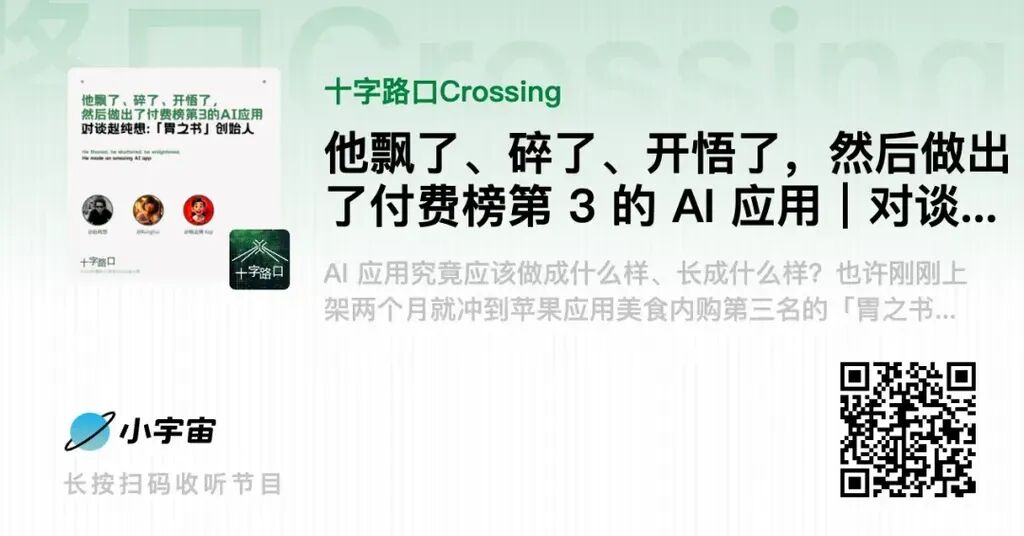
Article link: "Laplace" Developer Chunxiang Zhao: Create Like You're Writing a Novel; the "Create" in Creation, Not the "Start" in Startup
Last week, at Shanghai's AI Hacker House, we met Haiwei, founder of the app Soul Journey. As he shared his creative story and development experience, we realized that indie developers' experiences and stories might help more AI practitioners and those looking to enter the field.
We've previously discussed Xiaohongshu's distribution power in AI (If You Don't Use Xiaohongshu, Will You Really Fall Behind in AI?), focusing mainly on how it helps promote AI products — users spontaneously sharing stories of "dating" ChatGPT, or creating tutorials for AI software.
But recently we discovered something new: a new generation of AI entrepreneurs is going "lightweight" on Xiaohongshu!
They build in public (showing their development process from zero to one), inviting Xiaohongshu users into beta testing, gaining their first wave of heat and downloads.
This naturally sparks curiosity: What magic does Xiaohongshu hold, that new-generation AI products treat it as their main battlefield?
The answer likely lies in those success stories.
Today, we'll examine Stranger Alarm Clock, Soul Journey, and Flowith to see how founders are building "small but beautiful" businesses through Xiaohongshu.
1. Product as Content: Chunxiang Zhao's "Stranger Alarm Clock"
Chunxiang Zhao's second app — Stranger Alarm Clock — is a textbook case of "product as content." Its core function uses voice interaction between strangers to help users overcome sleeping in.
As before, Chunxiang Zhao didn't use traditional advertising. Instead, he launched directly on Xiaohongshu, showcasing usage scenarios and methods.
- Feature demonstrations: Through Xiaohongshu posts, Chunxiang Zhao detailed how to set alarms, how to interact with strangers, even sharing amusing user feedback. This intuitive content format not only lowered the barrier to understanding but also sparked user enthusiasm to participate.
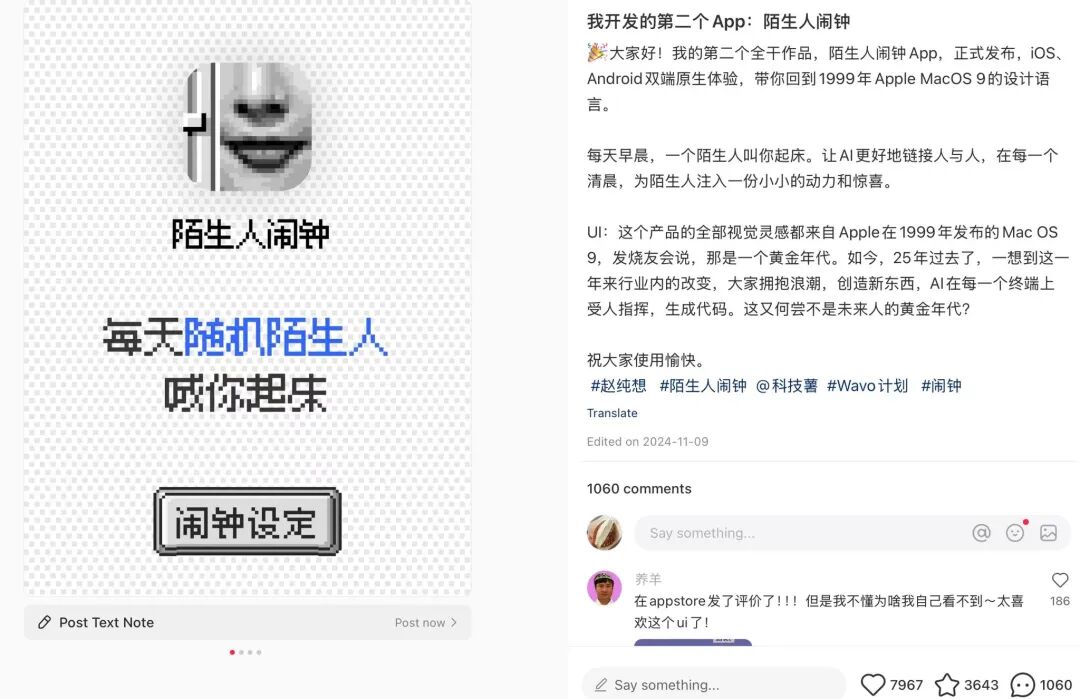
Chunxiang Zhao's product "debut" post on Xiaohongshu
- Comments as demand pools: In post comments, users offered numerous improvement suggestions — adding alarm tone choices, optimizing voice-matching algorithms, and more. This feedback directly became important input for product iteration, forming a closed loop of "content → demand → product."

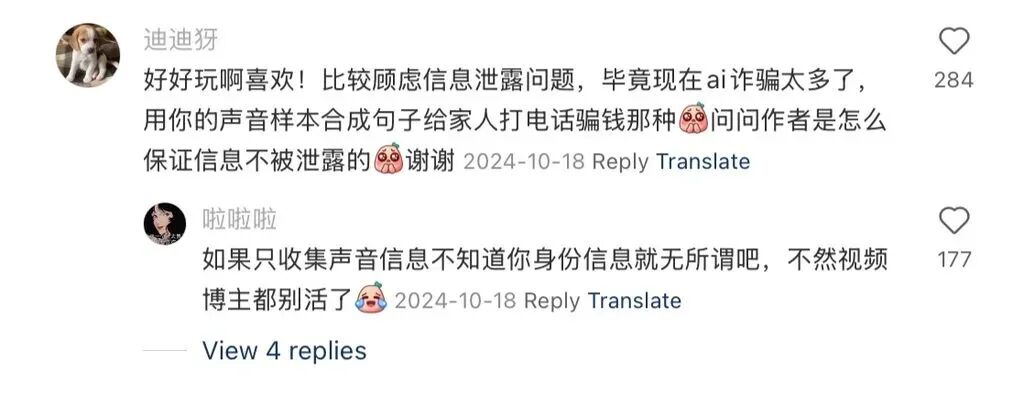
Users sharing their experience in comments
2. Co-Creation Development: Soul Journey's Travel Planning Tool
"Soul Journey" is an AI travel radio app whose development process similarly embodies the philosophy of "feedback as iteration."

Soul Journey developer's UI design final draft shared on Xiaohongshu
-
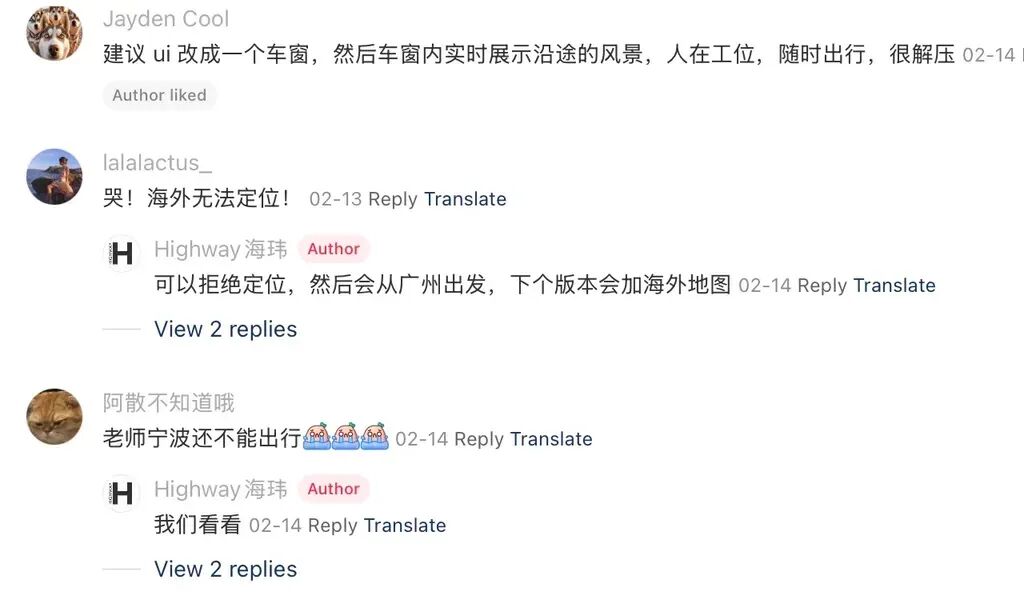
Minimal first version, rapid testing: Soul Journey's first version offered only core functionality. Users simply input a destination, chose a travel vehicle (RV, motorcycle, etc.), and could summon a "soul avatar" to travel on their behalf while they remained at work. This minimalist design lowered development costs while rapidly validating market demand.
-
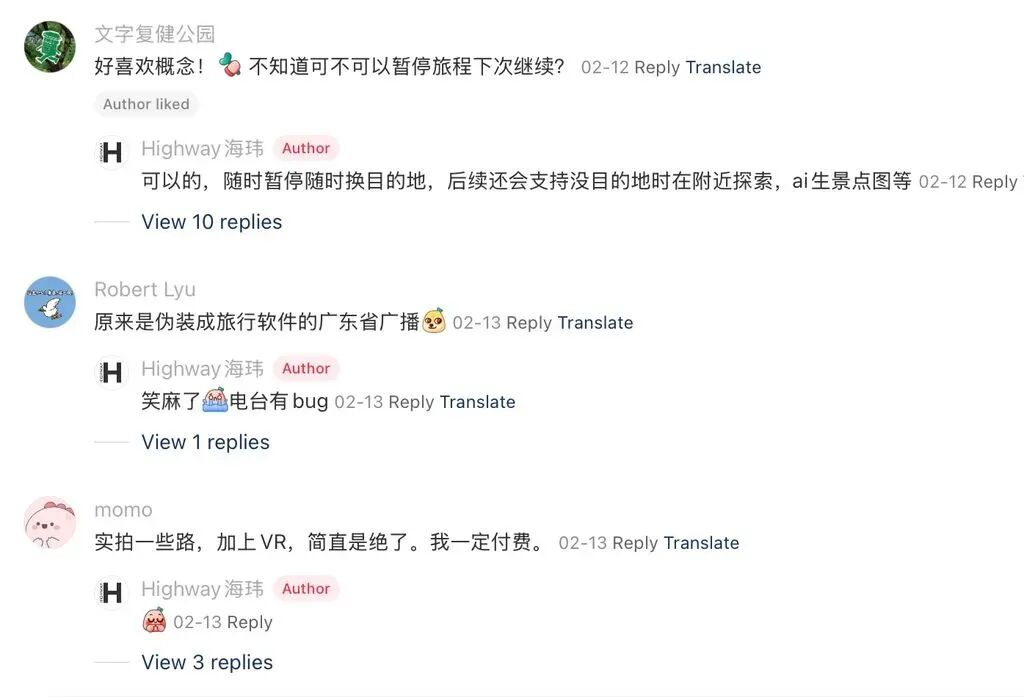
User feedback driving product evolution: On Xiaohongshu, users suggested improvements through comments or private messages — features like listening to local FM radio, generating travel logs. Based on this feedback, the Soul Journey developer gradually refined the product, forming a positive cycle of "user demand → product iteration → user satisfaction."

3. Community as Market: Flowith's Precise User Attraction
Flowith is a canvas-and-node-based AI content generation tool. It breaks from traditional chat-based AI's linear interaction model, adopting multi-threaded, divergent node-based interaction, with team collaboration and joint editing capabilities.
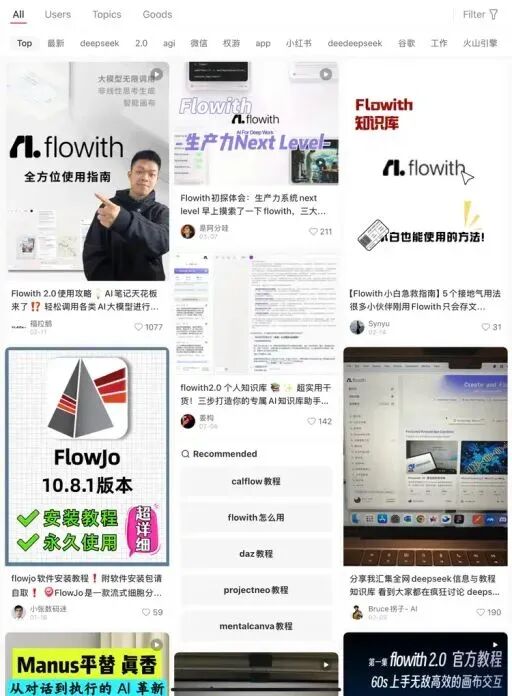
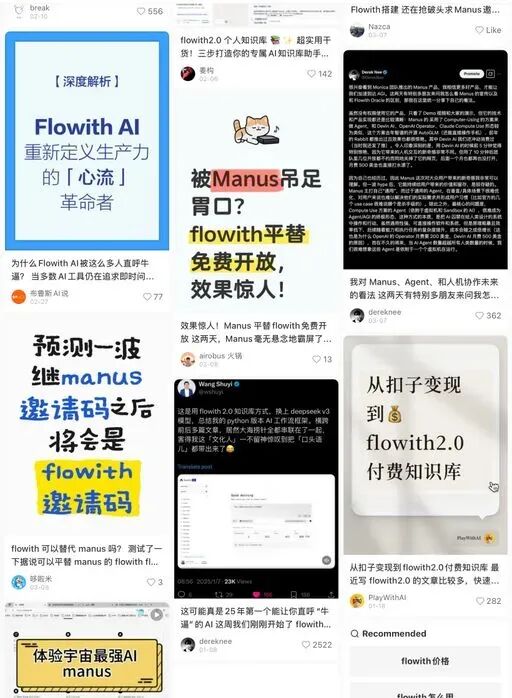
- Official and personal accounts in deep engagement: Flowith's design team opened an official Xiaohongshu account to share product highlights, tutorials, and user cases. Team members also used personal accounts to interact with users, responding to usage experiences, answering questions, and collecting feedback. Dual operation achieved broad distribution of product information alongside deep user engagement.
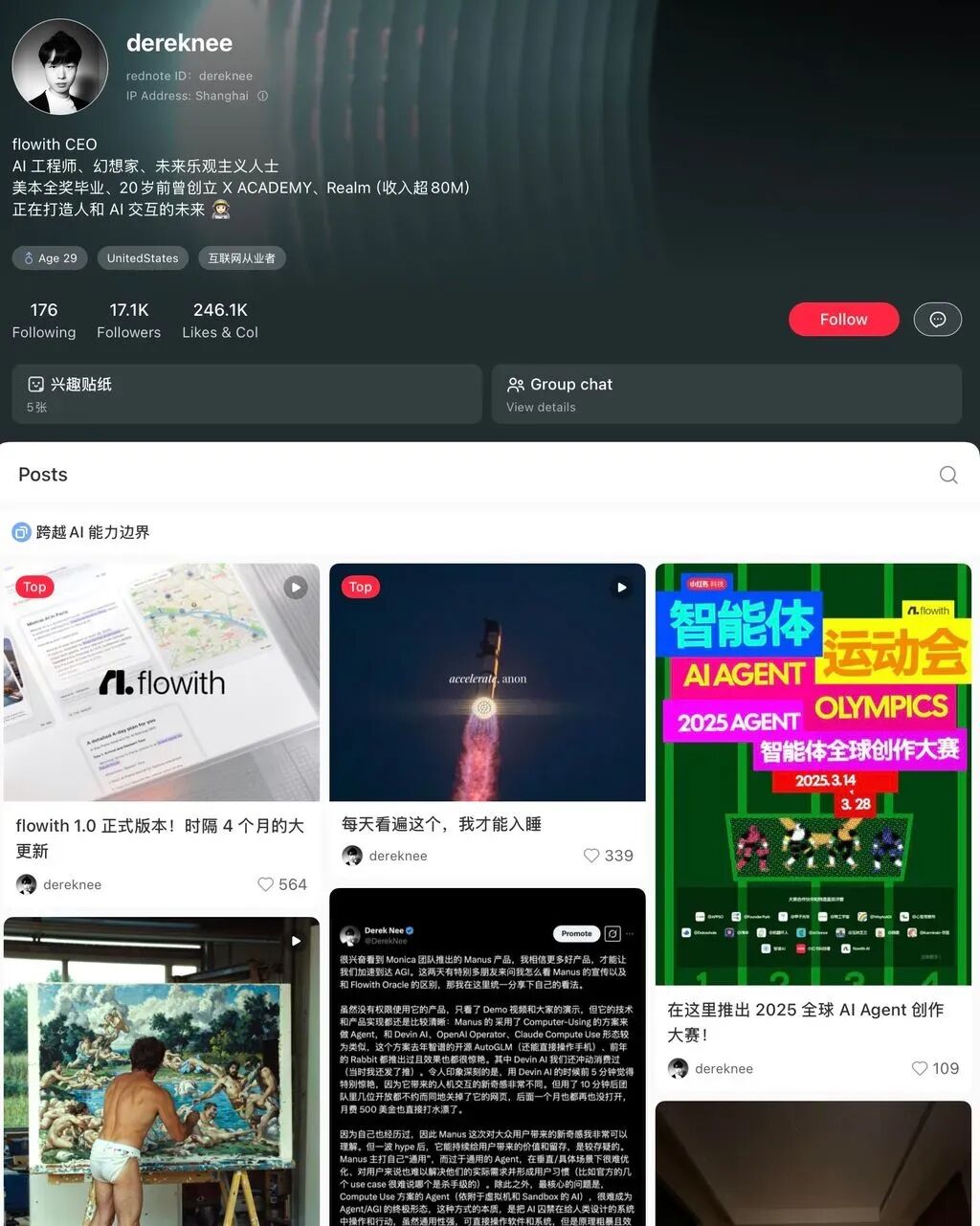
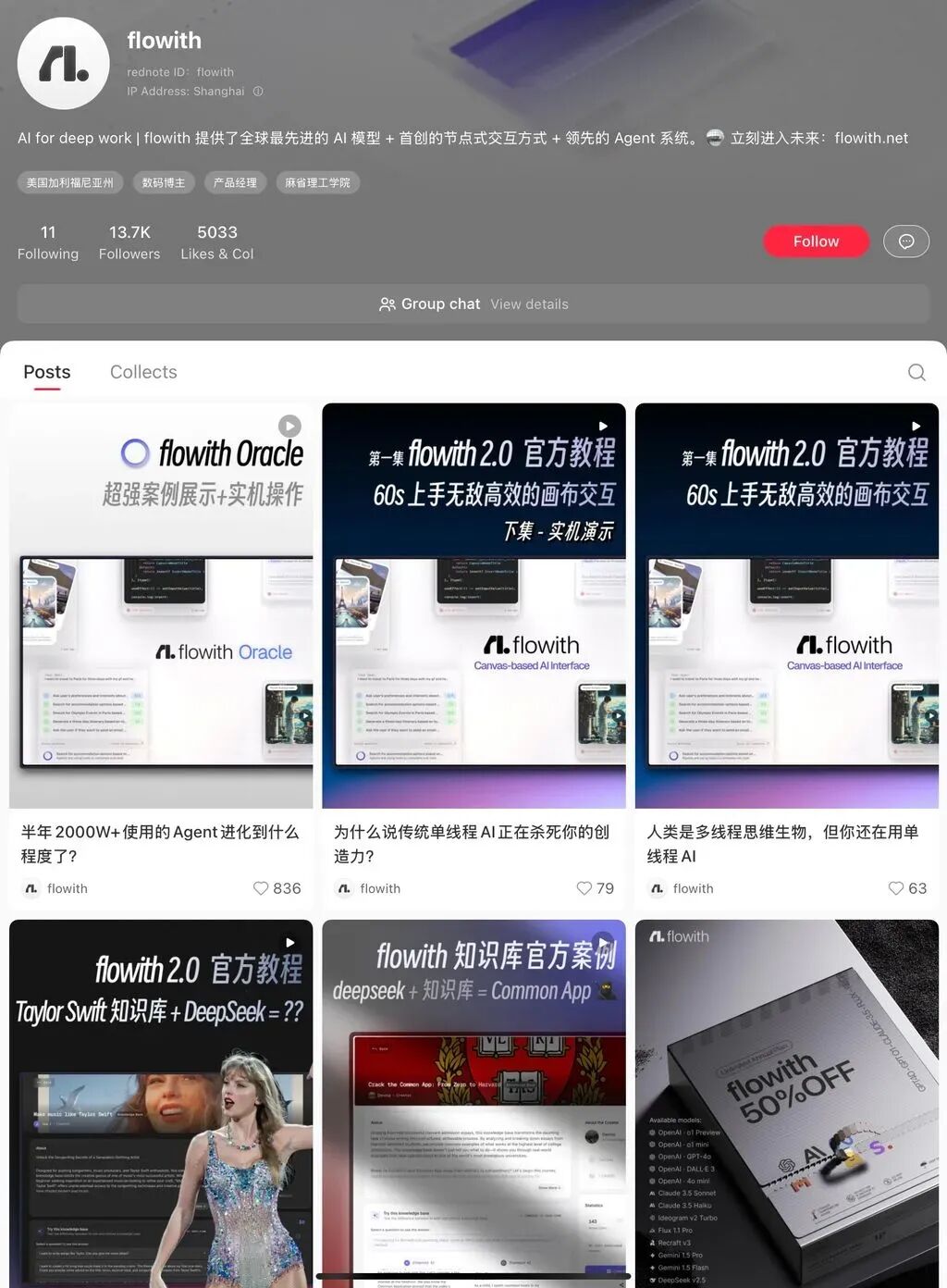
CEO's personal Xiaohongshu account and Flowith's official Xiaohongshu account
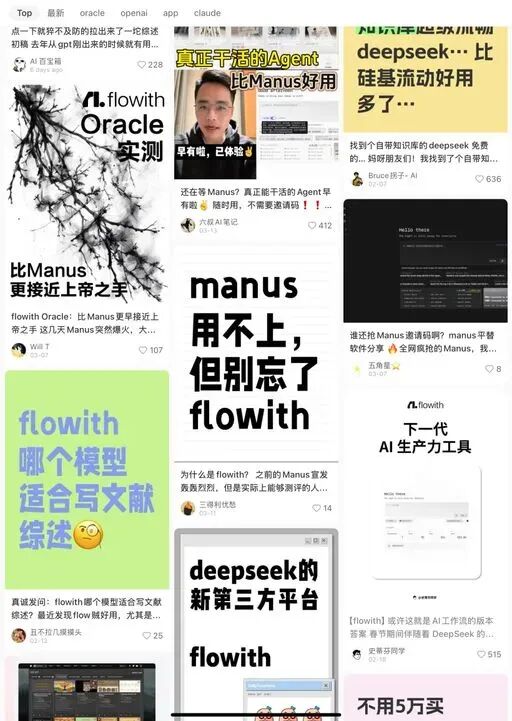
- UGC's exceptionally high credibility: Users spontaneously posted experiences and tutorials on Xiaohongshu — how Flowith helped them write rigorously structured literature reviews, even complete complex project tasks. These authentic user stories became Flowith's most powerful promotional material.
From Chunxiang Zhao's "Stranger Alarm Clock" to "Soul Journey" to Flowith, these cases all confirm one trend: AI entrepreneurship is shifting from "technology-driven" to "scenario-driven."
And Xiaohongshu, with its unique community ecosystem, has become the shortest path connecting creativity with users.
This "lightweight" model not only lets AI entrepreneurs rapidly validate market demand but also, through deep community interaction, builds vibrant user ecosystems.
AI + Xiaohongshu: How Is It Reshaping Entrepreneurial Logic?
1. Technical Democratization: From "Code Monopoly" to "Anyone Can Develop"
The emergence of AI coding tools like Cursor lets indie developers implement core functionality even without knowing how to code.
As tool barriers lower, the identities of "creative" and "developer" begin to overlap. In many Xiaohongshu cases, the leaders are designers, content creators, and other non-technical backgrounds — not traditional programmers.
2. Demand Explosion: China's "Hyper-Segmentation Era"
The consumption demands of China's 1.4 billion people are being sliced by AI into countless extremely niche scenarios:
- Vertical to "obsessions": Planning software designed specifically for P-types (perceiving personalities in MBTI), or social apps built for niche music enthusiasts;
- Specific to "actions": Tracking refrigerator inventory, recording psychological states minute by minute, even stranger voice alarm clock wake-up services...
Long-tail demands that traditional enterprises struggle to cover are being captured by AI + indie developers at extremely low cost.
No single product can satisfy everyone, but these niche products can meet different users' "obsessions" and "action" needs, thereby driving diversified market supply.
3. Xiaohongshu Ecosystem: Low-Cost Validation and User-Driven Innovation Cycles
-
Low-cost brand building: As technical barriers for AI tools decrease, brand competition shifts from technology to content. Xiaohongshu's algorithm-friendly mechanism benefits smaller creators, letting the "100 true fans" theory reappear in AI — niche brands can achieve sustainable development through precise reach. This decentralized distribution model not only lowers customer acquisition costs but opens new possibilities for precision marketing.
-
User co-creation culture: Comments sections are filled with "please add XX feature" and "if only XX" messages. Developers use this to quickly adjust direction, forming a positive cycle of "passion project → user payment →反哺 development";
4. Capital Logic Evolution: From "Scale Worship" to "Agile Investment" Primary markets are beginning to pay attention to "small but beautiful" projects.
Traditional VCs look at DAU, retention rates. But AI micro-products, through hyper-segmented scenarios, might achieve substantial profits with just 100,000 users, forming flywheels and earning a seat at the table.
In the past, VCs bet on the next DiDi. Now some VCs think: invest in 100 "Soul Journeys," and perhaps one will grow into the next Manus.
In Summary
Xiaohongshu's magic lies in making entrepreneurship lightweight.
From "Stranger Alarm Clock" to "Soul Journey" to Flowith, developers start from specific needs and find their first "users" on Xiaohongshu (perhaps better called: product co-creators). This "small but beautiful" model lowers barriers and keeps innovation closer to life.
The future of AI entrepreneurship may no longer be just a contest of technology, but of deep understanding of life scenarios and keen capture of user needs.
Xiaohongshu, like a small testbed, lets ideas land, grow, and eventually bear fruit.
Every story born here tells us: Innovation can stay close to people's hearts.