At the AI Art Hackathon, I Failed to Make My Grand Entrance
I like good things, and I like the people who huddle in corners making them.
@Guo Yunxiao
This past weekend, I went to the AI Art Hackathon hosted by @Super Power Station.
Not just because the organizer Antony is a good friend, but also because the theme was AI art.
Over the past six months or so, models and coding agents have finally advanced to the point where I can build pretty much anything — which gave me a serious illusion about my vibe coding abilities. Before the tokens run out, I often feel like I can do anything. The result: I got lost in increasingly complex tasks, ambitiously taking on bigger projects, but almost forgetting that powerful tools should also help with expression.
Expression — that's what Antony kept coming back to in our conversations throughout this whole process. For most participants, simply realizing their initial idea is a dream come true; completing the work is completing self-expression. I think I'm gradually starting to understand what hackathon participants feel.
As for me, I built a real-time interactive game for this hackathon. Players take on the role of a bartender, serving several guests whose fates are intertwined, listening to their stories, and responding through free-form input to explore and engage.
It's adapted from Juno Mak and Kay Tse's concept album trilogy The Album.
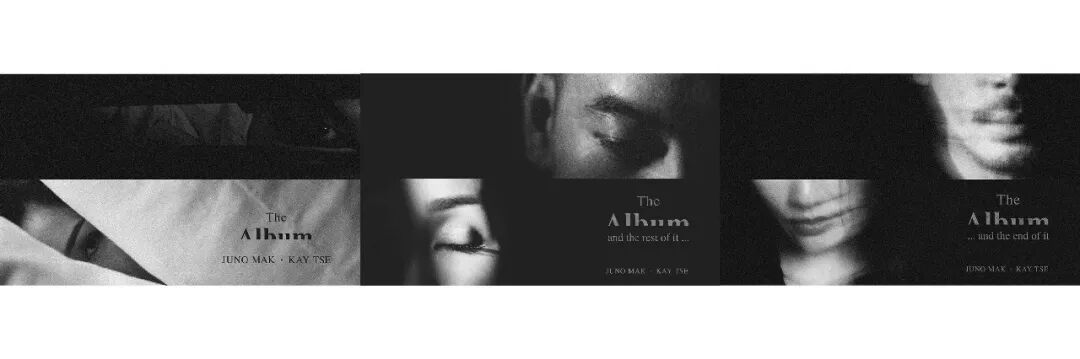
Juno Mak & Kay Tse, The Album trilogy, 2018–2021
The original tells the story of a man and woman who fall in love as teenagers, break apart in middle age through marriage, rebuild their lives separately for years, then meet again. In an era when Hong Kong pop music has grown increasingly formulaic, The Album is produced with a luxury that borders on excessive. For example: across more than thirty songs, nearly all lyrics were written by three hall-of-fame lyricists — Lin Xi, Huang Wei, and Chow Yiu Fai.
My most-played track every year comes from this series, so I do have a very personal attachment to it. But deciding to adapt it wasn't just about that attachment.
I really wanted to step into the story and participate somehow: Could I witness or change how things unfold? Could I save someone, clear up a misunderstanding? Could I hold the characters in a particular moment? I had so many unresolved feelings.
I imagined what it would be like if interactive film-games like Bandersnatch or The Invisible Guardian could break free of preset options and pre-rendered video assets, developing freely along narrative threads. In recent months, video models and real-time interactive models have been moving in this direction, but in my testing, video-centric model capabilities still aren't sufficient for high-quality drama to happen in real time.
The technical solution I landed on was 2.5D isometric real-time interaction — it looks like a free-input version of Disco Elysium.
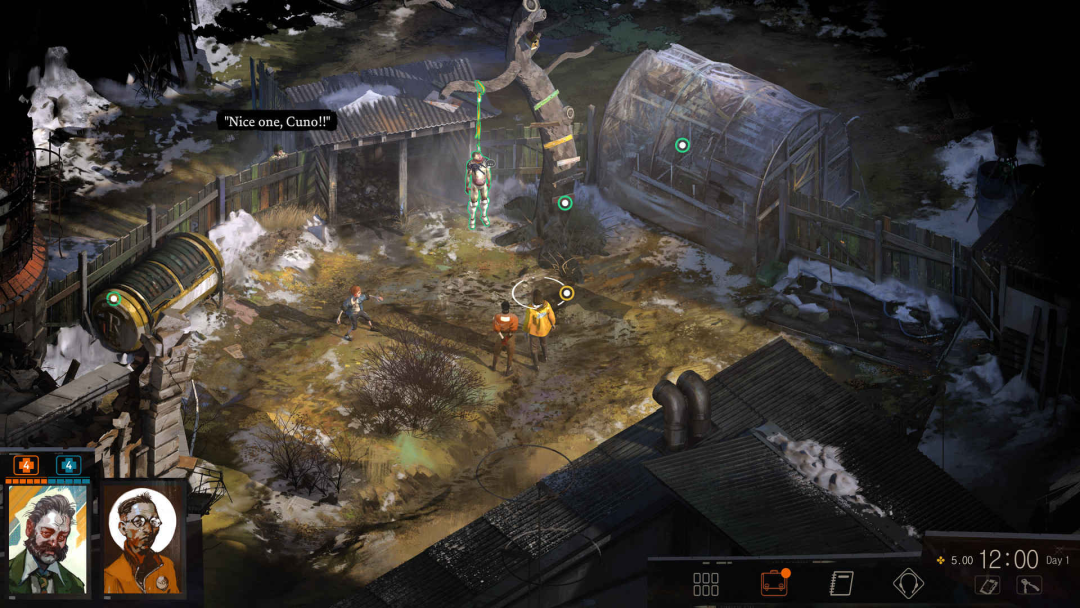
ZA/UM, Disco Elysium, 2019
It's built from the following layers:
-
Script: First, research the original work's characters, story, visuals, audio, etc., to form a complete world view; then condense the story into a fictional night within the original narrative — what might happen on this stage.
-
Actors: Based on the script, write character cards for each role; each actor is an independent subagent with their own output rules, character settings, initial motivations, deeper intentions, etc.; actors are driven by a language model for dialogue writing and instruction output, with a TTS model reading lines in appropriate voices.
-
Director: The director is a program responsible for tracking current actor, object, and scene states, and scheduling performances based on set conditions.
-
Visuals: Prepare sufficient pre-made visual and audio assets for performances; when the director program schedules a performance, the visuals switch to different pre-made assets.
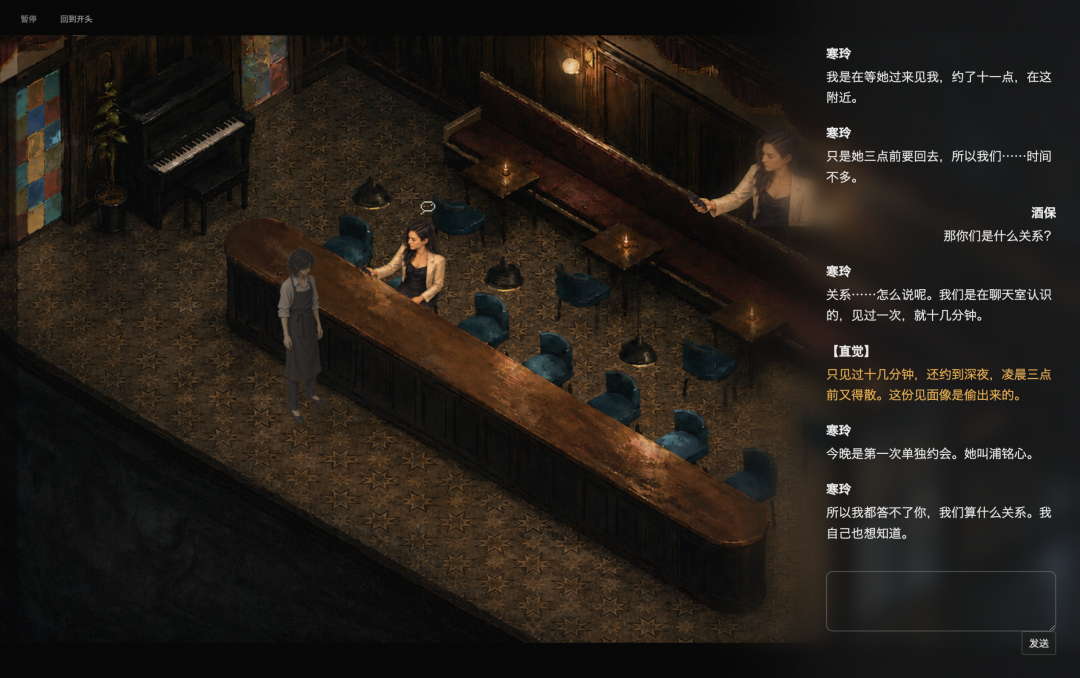
The adaptation I built at the hackathon
The final effect is that players can freely move, interact, and speak within the game, while actors perform the main narrative through their interactions with you — somewhat like immersive theater. Each playthrough genuinely pushes the story in different directions, guiding characters toward different futures. This is close to what I understand as an AI game — it should be deeply model-driven, offering unprecedented interactivity.
Even better than this is that advancing model capabilities are giving everyone the chance to master creative tools. Creation is a deeply personal thing. If you know the controversy this original work sparked in Hong Kong's music scene, you'll understand that the creators' process was as willful as the characters in the work itself. Before AI matured, personalized creation was always difficult — cost, quality, and expression formed an impossible triangle.
AI has changed that equation to some degree. At this AI Art Hackathon, I saw many works infused with private emotion and expression.
I've deployed this demo at https://elsewhere.news/the-album. Of course, related rights belong to the original copyright holders; the demo version completed during the hackathon isn't very polished and still has many rough edges in the experience; due to token and server limitations, it's currently only open on a limited basis.
Feel free to reach out for an invite code if you'd like to try it.
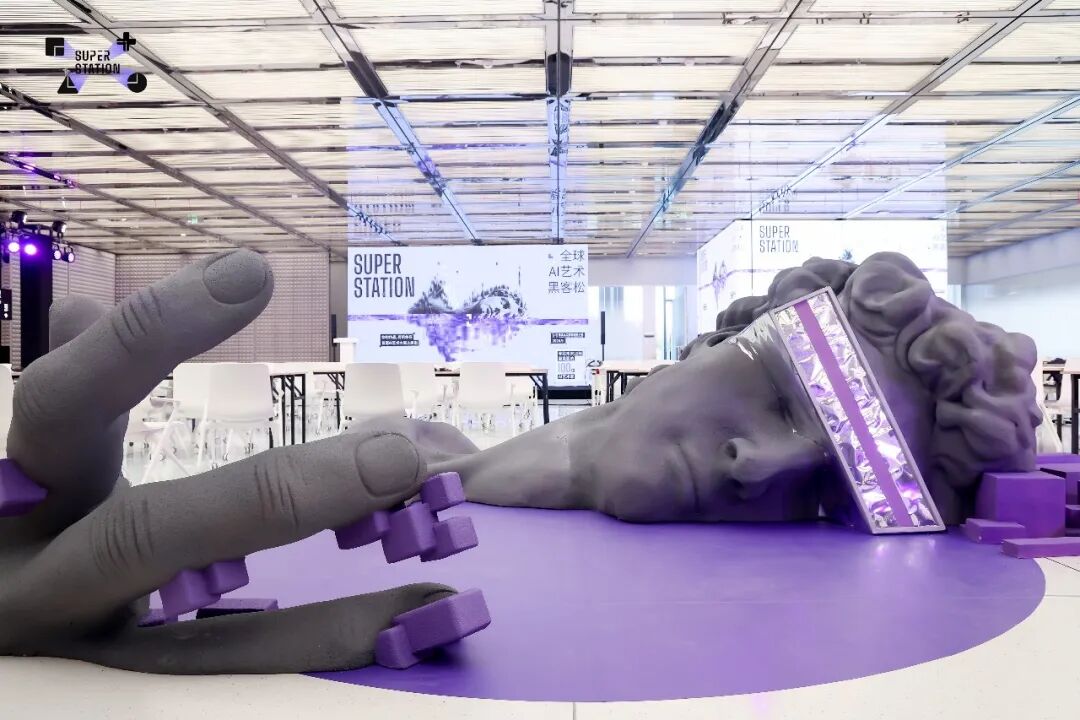
AI Art Hackathon @Super Power Station
About participating, I also have some very personal reflections.
Since it's Antony's event, and she's both a senior figure and a good friend, I can speak honestly.
Hackathons have proliferated these past few years. In just the past year alone, we've received numerous media partnership invitations for hackathons, and have attended some in various capacities. Frankly, I previously found it hard to genuinely empathize with participants' state of immersion. Most of the time, I don't have the youthful passion that gets easily stirred by creation-related copy.
Having participated as a contestant once, I think I understand hackathons better now. They were originally supposed to be about inspiration and creation, but hackathons of all sizes today are more about the act of showing itself — more like the Super Girl / Super Boy era of talent shows, filled with longing to be chosen by judges, by capital, by the times.
Attention is all you need.
It seems not just hackathons — this is an era of peacocking. Sometimes we become part of this performance too. Competing for traffic, competing for narrative, competing for agenda. I don't know what technique would let someone make good work in a low-key, grounded way. I don't know what resolve it takes to resist this evaluation system, to calmly face every possible outcome after completing a piece.
At the hackathon, I made something very personally biased. I told friends I crammed everything I loved into one world. The one-liner I wrote when registering was: I like this, hope you like it too.
Afterward, I seemed to have more feelings. What distinguishes AI from humans is that it doesn't have obvious preferences the way people do; going further, it seems to have no "dislike" at all.
But humans definitely have dislikes.
And I've never quite understood why hackathons necessarily have to be youthful, throbbing with excitement. At Antony's hackathon, I unexpectedly saw some not-so-young faces, quietly creating.
I suppose that's the primary value of this AI Art Hackathon.
Cover image: Vincent van Gogh, Le Café de nuit, 1888, Yale University Art Gallery