Moonshot AI Ushers In the Era of Large-Scale Model Outsourcing

Stitching Together a Future
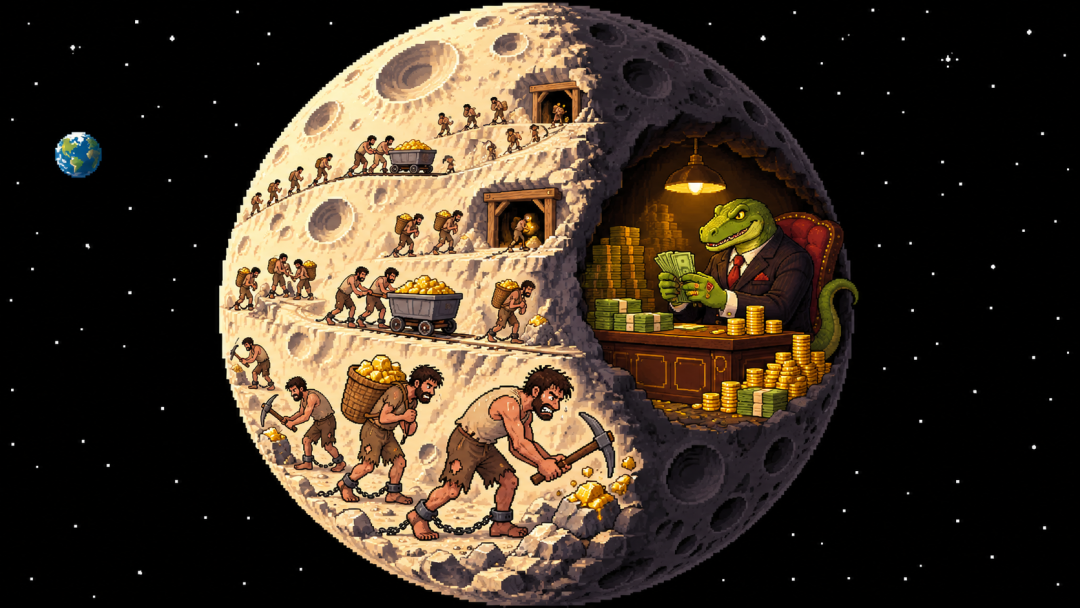 "Stitching Together a Slice of Heaven" Kimi recently shipped a new version, and the promo video they cut for it — I don't know what people in the game industry make of it, but it scared the hell out of me.

This is what the promo looks like
Kimi's probably thinking: Anthropic, you keep researching Indian generics; OpenAI, you keep solving your linear equations in two variables. Watch our domestic model generate full 3D masterpieces and deliver a dimensional strike right to your doorstep.
The message is clear: they intend to crown themselves king of 3D generation and game production.
Meanwhile, though, a guy on Reddit watched Kimi's god-tier promo and got itchy to try it himself — only to spend ages generating with Kimi and find he couldn't produce anything close to the AAA masterpiece in the promo. Buyer's photo loses to seller's photo, straight up.
He also noticed Kimi appears to call Tripo when generating 3D models — the high-poly models aren't even made by Kimi itself. So you're Moonshot AI, but the one doing the actual work has slipped off to the bright side of the moon.
To be fair, Kimi 3.1 Pro does have native 3D capability; it's just that in Kimi Work/3D make mode, character/animal modeling requests get routed to Tripo.
Kimi isn't hiding it either, be like:

Last time we said Tripo is best at whacking little guys and struggles a bit with game production. Kimi disagrees — instead it's teaming up with Tripo for a powerhouse alliance. Truly a big-picture move 👍
And Qiu Mu says he thinks 3D is purely a tool for hacking people's minds, with no real use, and he doesn't get what the point is of calling Tripo in Kimi Work to generate a bunch of shells?
Regardless, I put Kimi 3.1 Pro through heavy use, running several test cases side by side against ChatGPT 6 Astra ⬇️
01 No Lid on the Pacific
First up, an overseas-expansion game. The setup: the protagonist sets out from a Fujian port on various vehicles, bound for a distant unknown island, with all sorts of obstacles blocking the way. First to land wins.
For realism, I used a photo of the Fujian native Qiu Mu as an image reference. At the same time, I required that all game characters have limbs capable of flexible movement.
Here's ChatGPT's masterpiece, with a comparison shot:
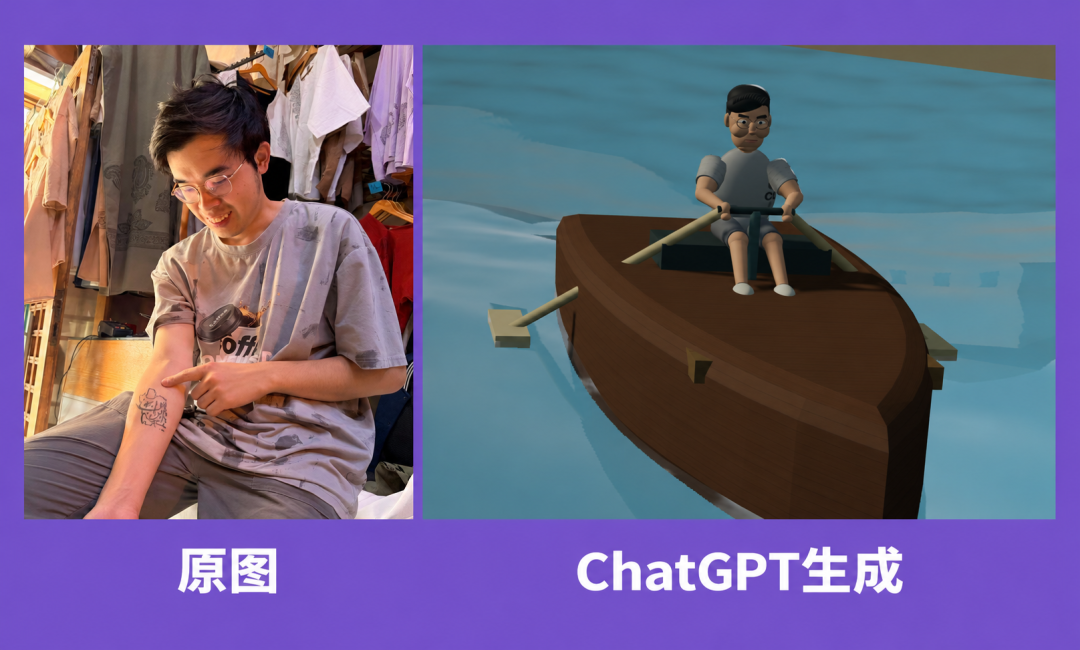
I'll say this much: the hair and clothes are reproduced decently, but you genuinely can't tell it's a person.
As I mentioned in the Tripo piece before, normal large language models generate 3D models mainly via Blender scripts — essentially geometry assembly, and that's the ceiling.
So what's Kimi's masterpiece like? Comparison shot again:
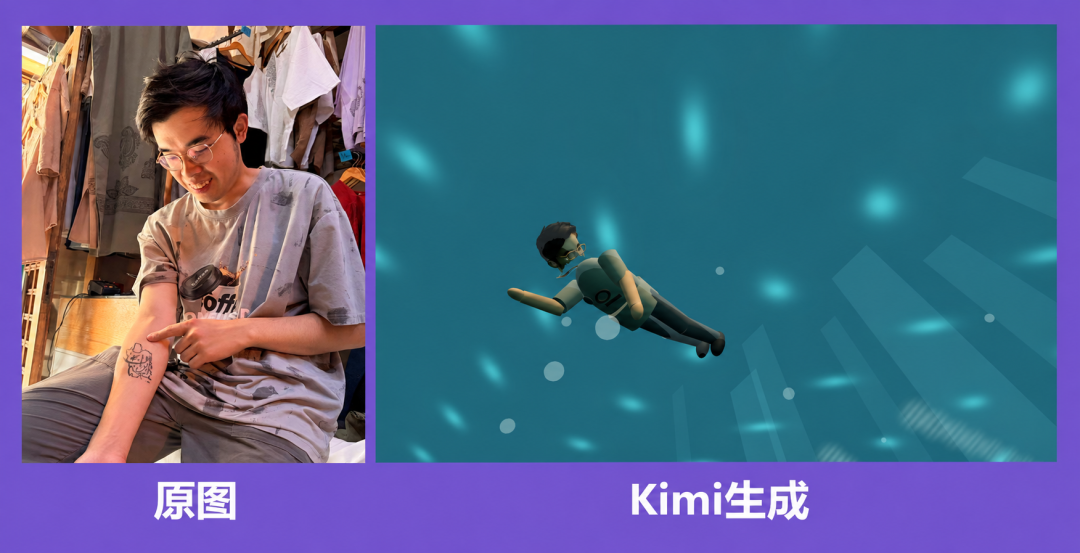
Right — Kimi first calls Tripo and reproduces Qiu Mu's likeness 1:1 from the reference image.
Then, to satisfy "all game characters have limbs capable of flexible movement," Kimi launched a decapitation strike on Qiu Mu, grafting the guy's realist head onto a structuralist body.
Let me drop a gameplay comparison so you can feel just how hilarious this is ⬇️
First, both models produced games that are playable enough, no fatal bugs.
Environment-wise, ChatGPT's boat has some interaction with the water, though not much. Kimi's boat basically doesn't interact with the water at all — it looks like it's hovering in midair.
Probably because Chinese people can fly, so Kimi only makes flying boats.
But the wild part is Kimi only called Tripo for the character model, so the only high-poly thing in the whole scene is the protagonist's face — the boat, island, reefs, and even other characters are all geometry.
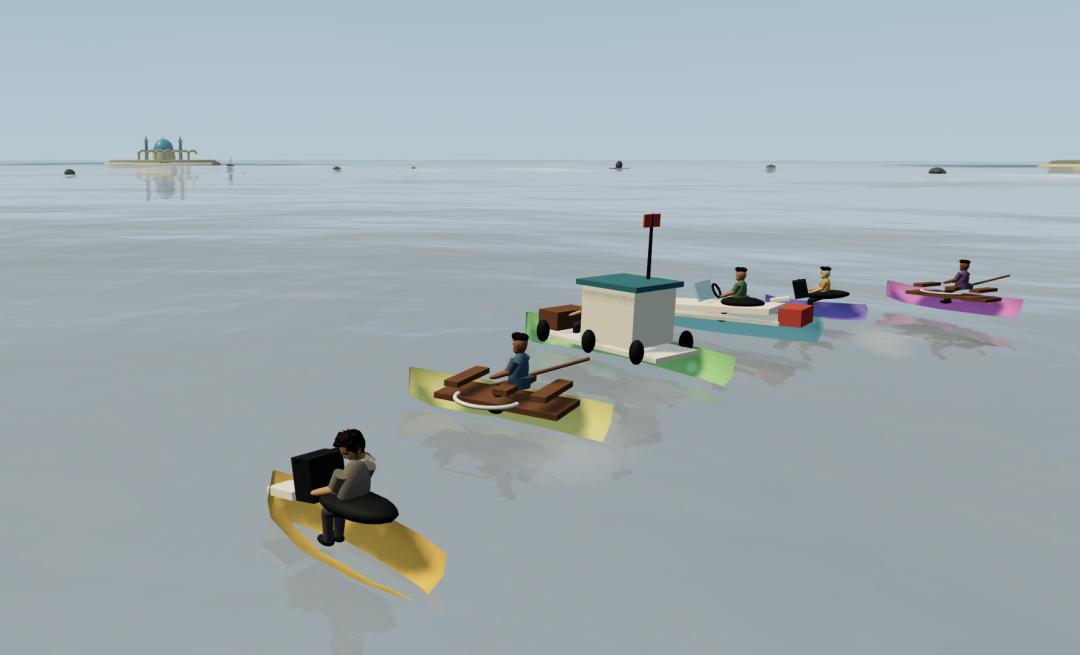
Kimi's approach here is like writing an essay as a kid: the whole thing is plain unadorned language, then suddenly one gorgeously ornate sentence appears.
First, you can tell at a glance it's copied. Second, it doesn't match the rest at all.
Which is understandable — Tripo credits don't fall from the sky, so only giving key characters high-poly models is a thrifty virtue.
Kimi itself has admitted this: at launch it noted that fine modeling of human and animal characters, statues, monsters, and complex props isn't its strength yet, so when it gets tasks better suited to networked modeling — humans, animals, etc. — Kimi organizes the prompts and reference images itself and calls on model tools like Tripo to finish the job.
The great model outsourcing play.
Looking back at that Kimi promo, every blade of grass, every flower, every tree is lifelike — hard to imagine how much effort went into crafting it.
Kimi, you shouldn't have 🫶
02 Shanghai GTA
For the second test, I decided Kimi wasn't allowed to call Tripo — it had to grind out the 3D models itself.
And recently a Taiwanese developer spent $10,000 in tokens hand-building a Taipei GTA, which was awesome, so I figured I'd make a Shanghai version.
Since it's GTA Shanghai, in such a bourgeois, positive-energy city, the core gameplay definitely can't be carjacking and drug dealing — it has to be riding folding bikes, sipping pour-over coffee, doing yoga on the sidewalk, and taking selfies at check-in spots.
So I sent the same prompts to ChatGPT 6 Astra and Kimi 3.1 Pro respectively.
This is a big project. Both models took about the same time — 40 minutes each to build a prototype, then about 30 minutes per subsequent feature addition, roughly 3 hours total.
How'd they turn out? I had each model's protagonist stand in front of the Wukang Mansion that the same model generated, and strike a selfie pose.
Here's what ChatGPT 6 Astra produced ⬇️
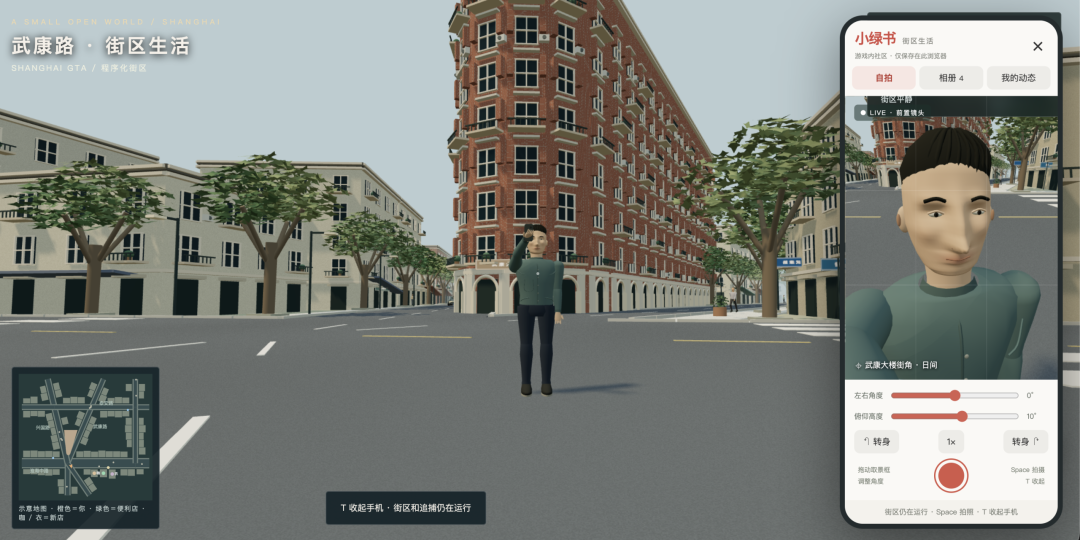
The Wukang Mansion structure is quite true to reality, and the selfie system works as expected.
As for the character model — you can tell it's better than the last round, but it's still too scary.
But after seeing what Kimi 3.1 Pro produced, I felt at peace ⬇️
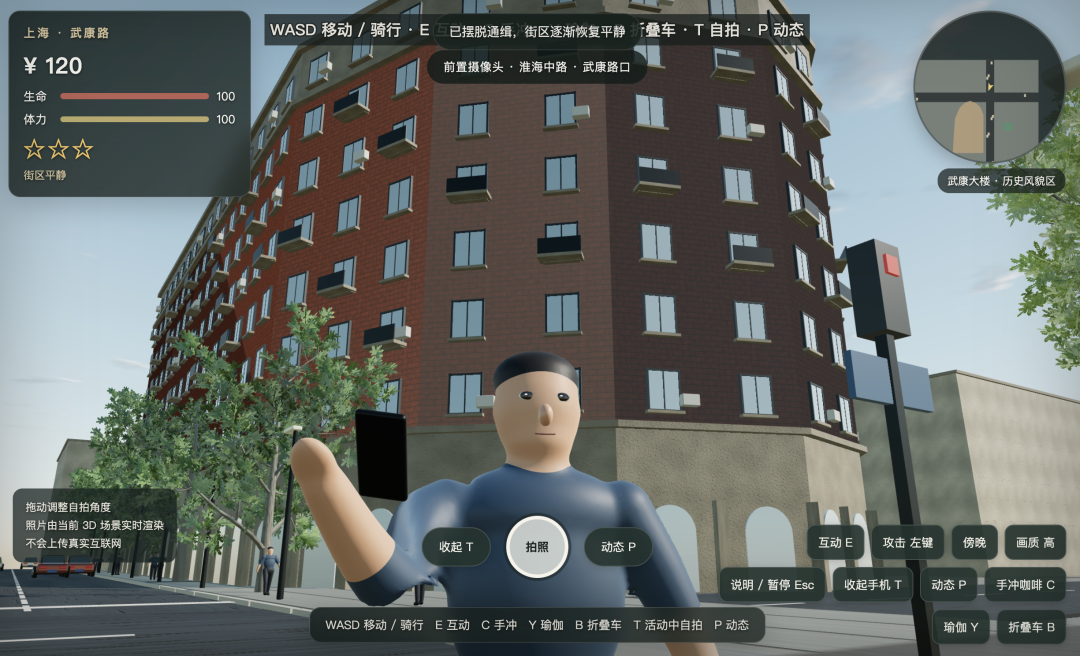
The character is honestly about the same as ChatGPT's — one has a nose, the other has eyes, nothing to compare.
But the Wukang Mansion behind it has clearly been through an old-neighborhood renovation: the facade is smooth, the windows sparkle, the whole thing is marching toward fourth-generation housing.
In Kimi's game, the most finely detailed thing is the leaves on the trees — the leaf veins look like they're on a different layer from everything else.
So I asked Kimi, and it said it had called Kimi Work's internal 3D Editor plugin.
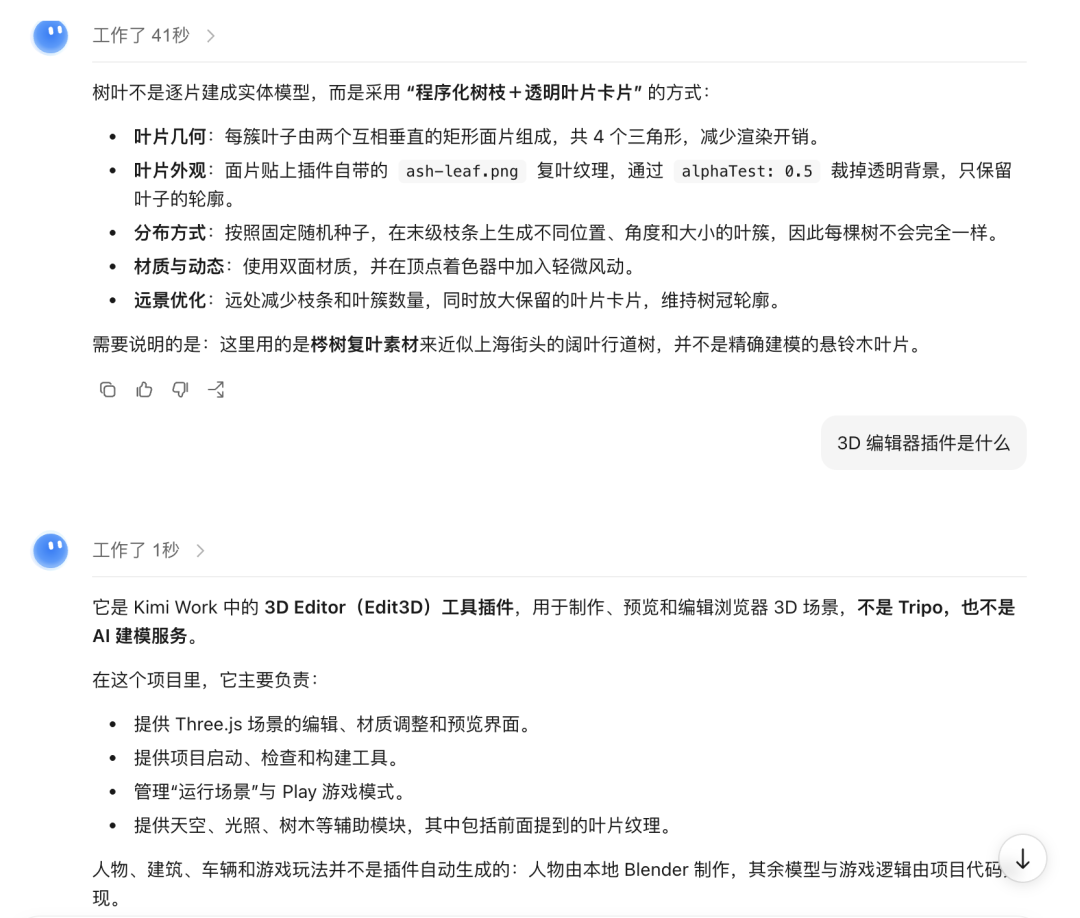
Building in a plugin ahead of time just to make more polished 3D games — Kimi, you shouldn't have 🫶
Besides the selfie bit above, the game also has riding folding bikes, sipping pour-over coffee, doing yoga on the sidewalk, and so on. Let me drop a gameplay comparison so you can feel it ⬇️
In the pour-over coffee stage, ChatGPT overcomplicated the gameplay, making it a mess to play.
Kimi's design is simpler, so the experience is slightly better.
But ChatGPT has more sense of place: to drink coffee you go to a café, to ride a bike you first find a bike.
Kimi turns the protagonist into Doraemon — whenever they want coffee, they pull a full pour-over set out of their pocket; whenever they want to ride, a folding bike sprouts from their crotch. Bourgeois on demand.
Both games have clipping issues.
ChatGPT frequently lets cars pass through the character, and a few clips later you're dead — preserving GTA's core gameplay.
Kimi lets cars pass through anything, completely unrestricted, treating walls as if they don't exist — very free.
As I said: Chinese people can fly, Chinese cars can phase through. Kimi did the right thing 👍
Honestly both are pretty abstract, but ChatGPT's is a bit more polished, so I'm planning to keep refining the ChatGPT version and launch it. Make Shanghai Great Again.
03 Chongqing Delivery
The first two cases were outdoor, so for the last one I tested an indoor scene.
I sent this photo of the Chongqing Haitangxi cylindrical apartment block to ChatGPT 6 Astra and Kimi 3.1 Pro respectively, and asked them to make a game whose core gameplay is food delivery.

First, the modeling. Kimi doesn't even pretend anymore — it just summons a Meituan rider out of thin air ⬇️
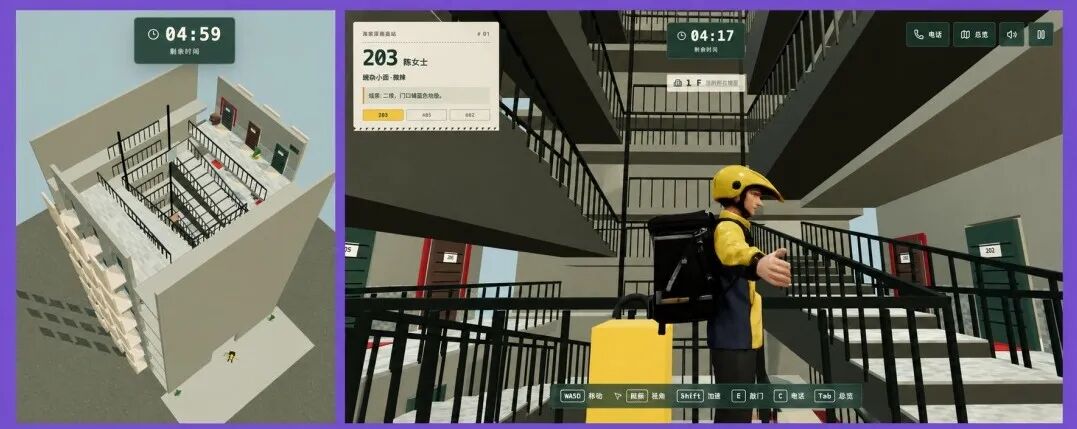
But ChatGPT is even more unbeatable: after generating all these 3D models, the guy seems to have realized there's no need to lift a finger himself.
Oh, you Kimi can call Tripo? I'll just search the web for free assets, done.
So ChatGPT's output looks like this ⬇️
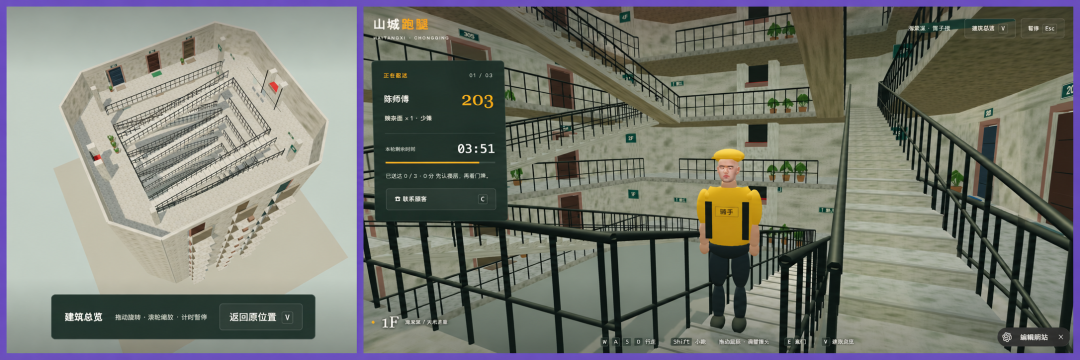
On building structure, ChatGPT is more faithful than Kimi — it gave every floor two staircases.
But on closer look, I realized the asset ChatGPT found isn't a Meituan rider — it's an American rider ⬇️
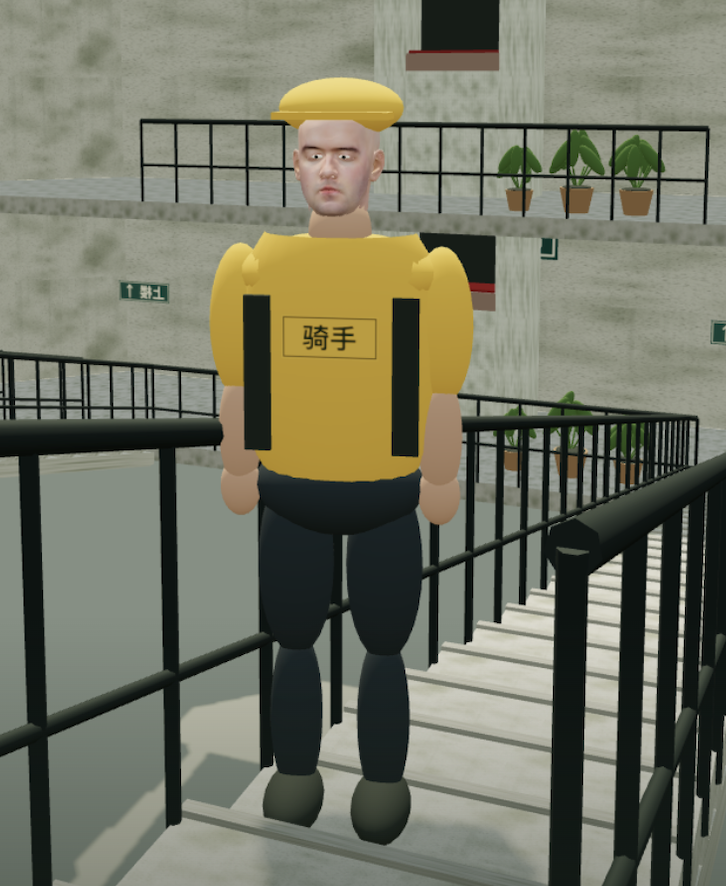
I asked ChatGPT, and it said some overseas artist had scanned his own head and open-sourced it, so it swiped it.
But to make the character move properly, it still made separate limbs and clothing.
So the end result is a white Western guy fallen so low he's delivering food in a Chongqing cylindrical apartment block to make a living —疑似 Sam Altman's subtle revenge on Wall Street.
Same as before, let me drop a gameplay comparison so you can feel it ⬇️
This time Kimi completely let loose — not a single bone rigged; the character's four limbs are fused into one, drifting around the whole time with feet never leaving the ground.
But I have to say, this design sends the difficulty through the roof — maybe Kimi was trying to make a Souls-like?
Regardless, Kimi, you shouldn't have 🫶
Last thing I want to say: this round of domestic models hyping up 3D generation and game production gives me flashbacks to the post-Great Ravine era of the Crisis Era in The Three-Body Problem.
Human tech was locked down by the sophons, fundamental physics was unresearchable, but the Trisolarans hadn't attacked yet, so everyone frantically invented things off existing theory — underground cities, virtual reality, flashy fleets batch after batch.
Now Anthropic and OpenAI are banning accounts and fighting distillation, data is scarce, top-tier GPUs are unobtainable, so when infrastructure falls short, applications make up for it.
So Kimi moving into 3D game generation was inevitable. Hot on its heels is Hy4 led by Shunyu Yao — though Kimi moved a bit faster.
And Kimi partnering with Tripo turns cold model training directly into a warm sales business — saving manpower and resources, and at the very least the promo it shot delivers a dimensional strike against other vendors. So, are you convinced or not?
Whether you are or not, I am 🫡
That said, outside of 3D, there's no denying that compared to K3, Kimi 3.1 Pro has improved in financial scenarios and long-horizon tasks. But like K3, Kimi 3.1 Pro is currently almost unusable for consumer users.
Short on money, short on GPUs... a startup isn't a big tech company, after all — not much to be done.
But Kimi's big 3D hype blitz gave me confidence. As a liberal-arts major who knows nothing about tech, I'm now itching to release a large model of my own:
First, find an open-source model and change the name;
For 3D generation, talk partnerships with Tripo, Meshy, or Rodin;
For image generation, find an art student from a second-tier college on Idle Fish to draw them;
For task execution, set up an outsourcing team in Africa for manual handoffs;
For emotional companionship, rely mainly on the scam services of the post-training park;
……
Everyone can be a large model manager! ✌️
⬇️
Welcome to subscribe to our Substack funeralai.substack.com