Technology-Powered New Consumer Brands: It's Only Just Begun | Source Code Capital 2019

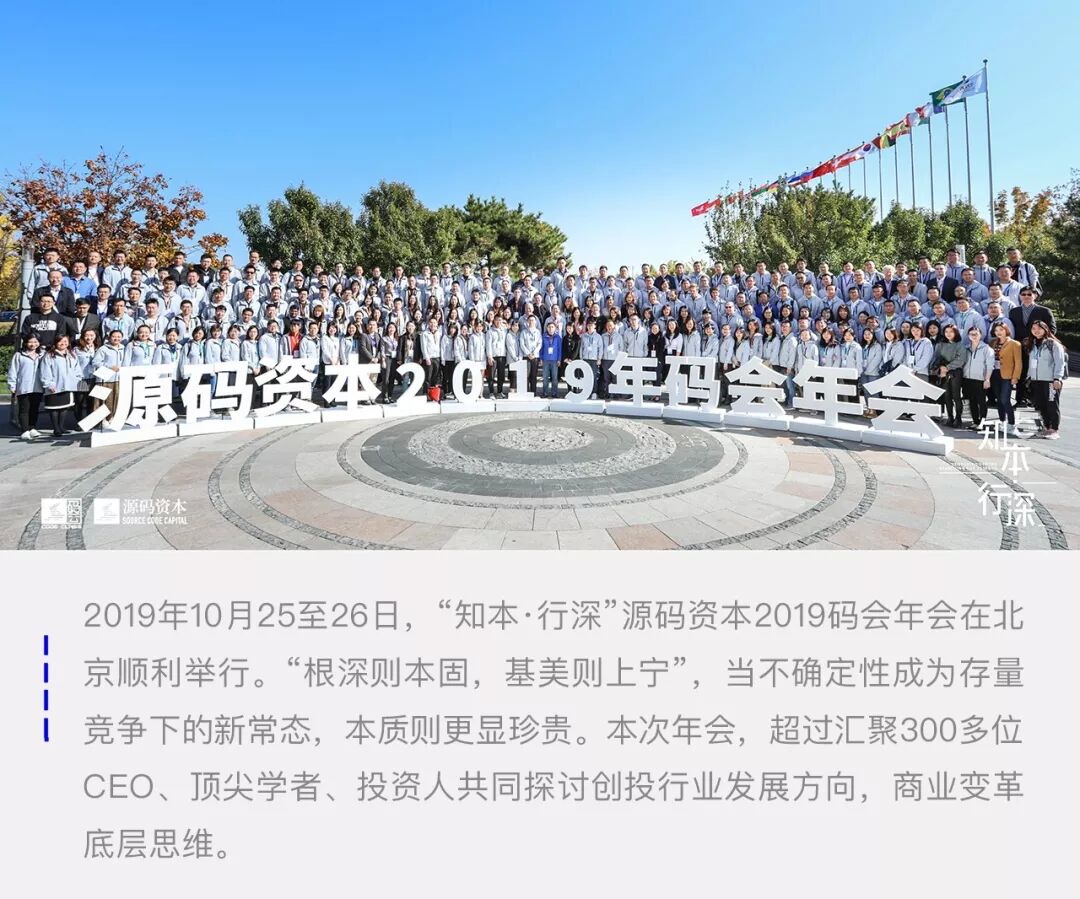
"Knowledge Capital, Deep Practice" — Source Code Capital's 2019 Ma Hui annual conference brought together the founders and CEOs of Linji Convenience Store, WeiMai, Juli Xinfang, RELX, and Qingzhu Hotel to explore how technology empowers new consumption.
—Introduction—
Consumer spending is a perpetual theme in the market. After years of development and the integration of online and offline traffic, consumer companies as a whole have entered deeper waters — traffic growth has hit a bottleneck.
In the coming years, innovation in China's consumer sector will venture even further into these deeper waters. How to extend management reach, strengthen scientific operations, reduce costs and energy consumption, and even create new business models through technological innovation will become increasingly critical.
Source Code Capital has conducted in-depth research on technology empowerment in the new consumer sector and has continued to double down. In 2016, it led Juli Xinfang's Series A and B rounds, and continued to invest through Series C. It led WeiMai's Series A and continued through Series C. In 2018, it led and sole-invested in Linji Convenience Store's Series A, and added to its Series B. In 2018, it led RELX's angel round and continued into its Series A. In 2019, it led and sole-invested in Qingzhu Hotel's angel round, and continued through its Series A and A+ rounds.
To this end, the Ma Hui annual conference invited five representative companies from their respective sub-sectors — Linji Convenience Store, WeiMai, Juli Xinfang, RELX, and Qingzhu Hotel — to hold a roundtable discussion on "Technology Empowering New Consumption." Together with fellow entrepreneurs, they explored the tremendous power these companies' technological innovations have unleashed in business models, operations management, and product iteration.

Founder Quotes
- The internet has an inner court and an outer court. For the outer court, we're already in the second half. But for the inner court, everything is just beginning.
- The transaction path will fundamentally change, from the traditional model where both initiation and service happen offline, to one where initiation happens online and the service process combines online and offline.
- The next technological transformation in hotels should be in cleaning technology and management, combining cleaning tech with IoT to create a closed loop for solving hotel hygiene issues.
- In healthcare, the next three years will be more about policy dividends.
- China's real estate transactions will increasingly concentrate in core city clusters, with demand shifting more toward owner-occupied housing. This makes customer matching exponentially more complex, increasing the value that data can deliver.
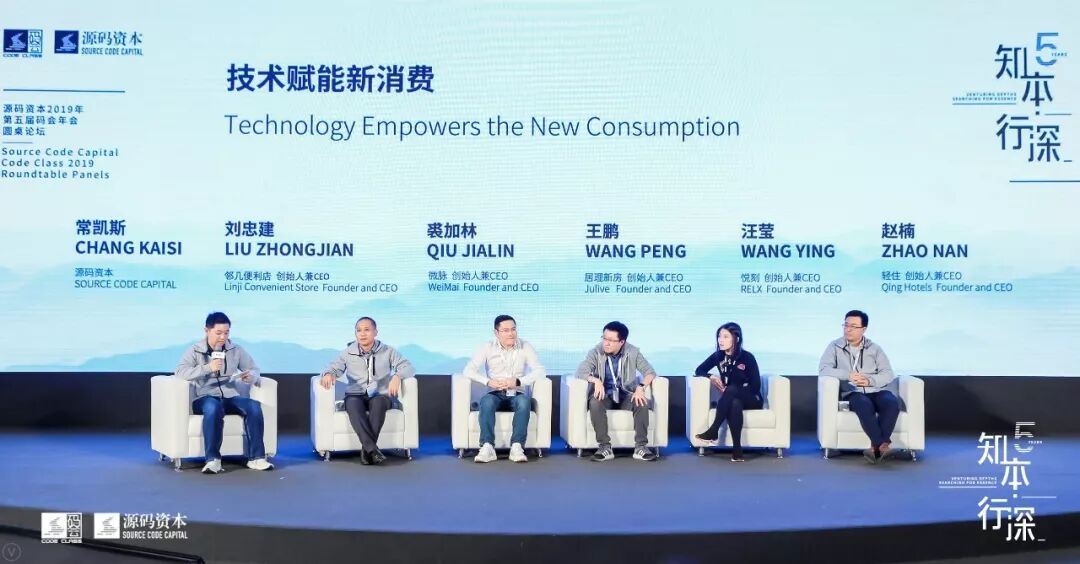
From left: Kaishi Chang of Source Code Capital, Zhongjian Liu of Linji Convenience Store, Jialin Qiu of WeiMai, Peng Wang of Juli Xinfang, Kate Wang of RELX, Nan Zhao of Qingzhu Hotel
Digitizing control over the entire business process through technology, sweating the details, and improving efficiency is an important reference path for using technology to boost efficiency and reduce energy consumption. At the same time, we must also consider the ability to embrace regulation and innovate in heavily regulated fields like healthcare.
Technology-driven empowerment, efficiency gains through tech, and innovative business and resource-matching models will be the new changes facing entrepreneurship in the consumer sector. But what remains unchanged is the eternal pursuit of business excellence and original mission. Source Code Capital is committed to working alongside resilient, bold entrepreneurs to use technology to better transform the consumer industry and make life better.
Selected Transcript
Q1 Kaishi Chang, Source Code Capital: First, please introduce your business and background.
Zhongjian Liu, Linji Convenience Store: Hello everyone! I'm Zhongjian Liu from Linji. I've been in the convenience store business for 20 years. I started my second venture in 2017, beginning in Hefei. We've now opened 300 convenience stores in the Hefei area, making us the largest convenience store company in Anhui Province. In recent years, offline retail convenience stores have been one of the fastest-growing segments, with sustained growth of nearly 20% from 2012 to 2018 — quite remarkable for the entire industry.
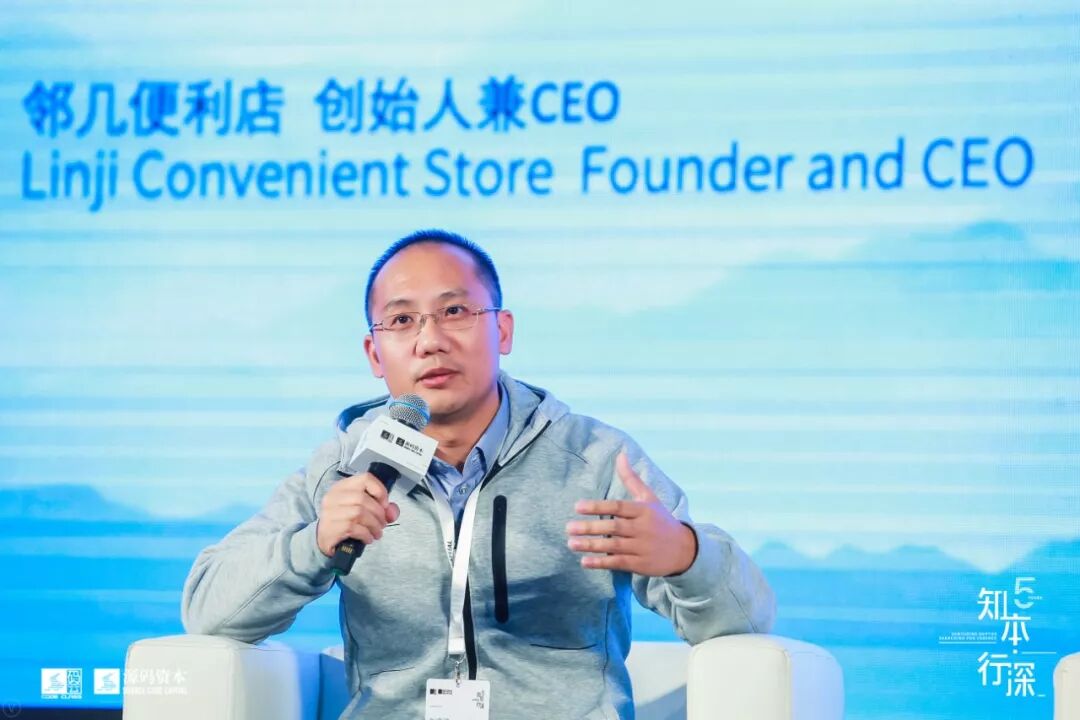
Zhongjian Liu, Founder & CEO, Linji Convenience Store
Jialin Qiu, WeiMai: Hello everyone! I'm Jialin Qiu, CEO of WeiMai. The 19th National Congress pointed out that the principal contradiction in Chinese society has evolved — it is now the contradiction between unbalanced and inadequate development and the people's ever-growing needs for a better life. While our lives are very convenient now, there's still one backward, unbalanced area: healthcare. Seeing a doctor is extremely difficult. WeiMai focuses on this — "see a doctor, use WeiMai" — hoping to use new technologies and organizational forms to improve the unbalanced and inadequate development of healthcare. That's what WeiMai does.
Peng Wang, Juli Xinfang: Juli Xinfang also addresses people's aspirations for a better life. New home transactions represent a market of over 10 trillion RMB annually, the largest track in China's real estate sector and indeed in most Chinese industries. Traditional solutions in this space are highly inefficient — information gathering is cumbersome, and the entire service experience is poor. At Juli, you can use an app to hire a highly educated consultant who provides free shuttle service for property viewings, access to the most comprehensive listings at the lowest prices, and various post-transaction protections.
Kate Wang, RELX: Hello everyone! My name is Kate Wang. Our product brand is RELX. We help adult smokers who enjoy smoking transition from horse-drawn carriages and diesel vehicles to electric vehicles, or from no electric lights to electric lights. RELX is consumer-grade atomization technology. The current product form is commonly called e-cigarettes.

Kate Wang, Founder & CEO, RELX
Nan Zhao, Qingzhu Hotel: Hello everyone, I'm Nan Zhao from Qingzhu Hotel. We work on the chain integration of independent hotels in China. There are roughly 400,000 hotels in China, with about 360,000 operating as independent properties or small regional chains. Their overall operational standards and efficiency are still quite low. What Qingzhu aims to do is help them improve their operations while presenting consumers with a better stay experience. That's our core mission. Thank you!
Q2 Kaishi Chang, Source Code Capital: How do you use technology to transform your industry and thereby drive growth and improve efficiency?
Zhongjian Liu, Linji Convenience Store: Convenience stores may seem traditional, but there's actually a lot of technology behind them, especially in IT and logistics. We've only been around for a little over two years, but we've already upgraded our logistics three times. After our August tech upgrade, we introduced electronic sorting, conveyor belts, and flow racks. Our fastest speed is now close to 90 seconds per store dispatch, with high accuracy and much reduced labor intensity for employees. This can support a scale of 1,200 stores.
Jialin Qiu, WeiMai: Xing Wang said the internet has entered its second half. My understanding is that the internet also has an inner court and an outer court. For the outer court, we're already in the second half. But for the inner court, everything is just beginning. For example, nationwide there are 22 million daily hospital visits. Adding online consultations and information searches, the figure likely exceeds 30 million. This is already comparable to ride-hailing and food delivery, with even higher unit prices. Yet internet penetration in this field is less than 10-15% — completely still in the first half. The difficulty is that 90% of outpatient visits and spending occur in the public system, which isn't accessible to internet companies. Starting with the State Council's Document No. 26 in April 2018, the entire healthcare system began opening its doors to entrepreneurs for internet + healthcare initiatives. Technically, big data, AI, and the internet are no longer bottlenecks. The key issues are barriers and resource access. The only difficulty in internet + healthcare is securing supply-side resources.
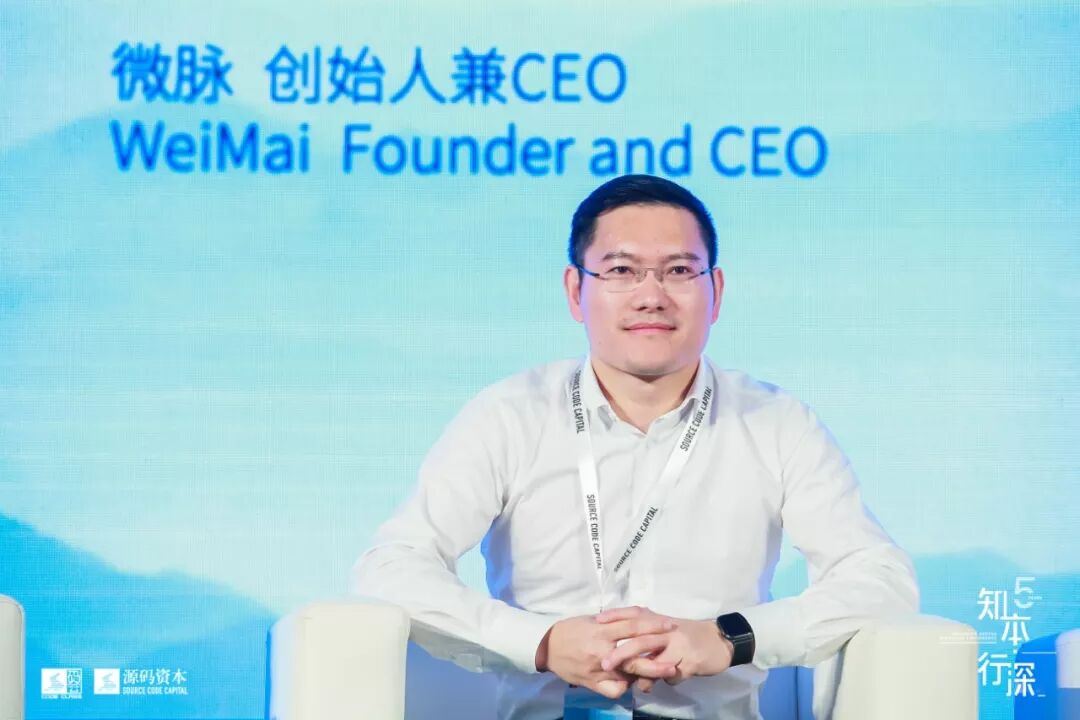
Jialin Qiu, Founder & CEO, WeiMai
Peng Wang, Juli Xinfang: We do quite well in data acquisition and application technology for real estate. Under traditional service models, each agent averages just over two transactions per year, spending the rest of their time serving invalid clients. At Juli, our system identifies and directly assigns the most suitable clients to each consultant, so consultants no longer waste enormous energy on customer acquisition, and clients don't need to agonize over comparisons. Our consultants average about two transactions per month — several times the efficiency of traditional agents. Another example: site launches. Traditionally, launching a website to collect property information requires a massive ground information collection team, costing tens of millions or even over 100 million RMB annually. Juli recently launched dozens of city sites with zero editors, no ground collection needed. This is a typical example of using technology for comprehensive online information collection, followed by comparison and cleansing. And so on. There are countless scenarios in this industry where using data well improves overall corporate efficiency and thereby enhances customer experience.
Kate Wang, RELX: RELX's current tech team primarily meets basic business needs, and our technical approach is preparing to transition from outsourced procurement to integration. Current focus areas for empowerment include: retail scenarios, underage protection in hardware usage scenarios, consumer anti-counterfeiting protection, consumer service and communication, agent and retailer service and communication, internal process digitization, and internal organizational communication and collaboration.
Nan Zhao, Qingzhu Hotel: The vast majority of independent hotels on the market currently aren't profitable. There are two fundamental reasons behind this: 1. overall market oversupply; 2. relatively high labor costs. Getting to the essence, how do we solve this?
We focus on two core points: 1. help them earn more money; 2. help them save money. Our logic is simple — through integration of the existing market, help some hotels operate better in the future. This requires telling them how to do revenue management, inventory allocation, and intelligent pricing. We primarily make this into a tool, and behind the productized tool, based on industry and competitive district data we control, we then do pricing. Essentially, we're solving the problems of earning more and spending less through systems and tools.
Q3 Kaishi Chang, Source Code Capital: Can you share what specific challenges you've encountered in your business and technology use?
Zhongjian Liu, Linji Convenience Store: We serve nearly 150,000 people daily. This year we wanted to push our membership program, so we used tea eggs to attract users to join — 2 million tea eggs total for 500,000 members. These 500,000 members are an extremely valuable resource, high quality and very active. But we still lack the capability to do membership interaction and monetization well. This is a current problem we're facing.
Jialin Qiu, WeiMai: The 2019 Nobel laureates in Economics, the Banerjees, wrote in Poor Economics: "From vaccines to bed nets, these are low-cost things that can save lives, yet few people take such preventive measures." Many people in our country often think this way too. First, they're usually reluctant to spend money day-to-day, but when faced with life, aging, sickness, or death, they'll irrationally spend huge amounts on treatment. Second, many people believe IV drips into the bloodstream are better than oral medication. A major problem with healthcare mindsets is that our "souls can't keep up with our bodies." 90% of China's medical service supply is public hospitals, where patients have no choice, while private healthcare's share is too small, with irrational competition and over-treatment. So WeiMai focuses on integrating resources within public hospitals, bringing private healthcare's service system into public healthcare — giving public hospitals services, giving ordinary people dignity, and giving doctors incentives.
Peng Wang, Juli Xinfang: When we first started, no one on our team had a technical background. Real estate is a traditional industry that itself lacks a supply of excellent technical talent. As a founder with a business background, I didn't understand technology, couldn't judge good technical people, couldn't effectively attract them, and couldn't effectively manage them. How to build a strong technical team and keep them consistently productive within the company's overall strategy? This was a huge challenge in the first two or three years of entrepreneurship. In my view, the solution requires self-learning and candid communication. Every time a problem arises, you need to review why the solution wasn't suitable. What kind of person do you need to solve this problem? Technical experts tend to be somewhat proud and may feel you don't understand technology, but they're also relatively straightforward. If you can convince them something is right, they'll quickly implement it, and implementation yields true knowledge. This requires some磨合 time, but as long as you're willing to spend time learning and communicating, things get smoother. Now Juli Xinfang's technical team, in terms of both talent capability and technical level, is among the industry's best.
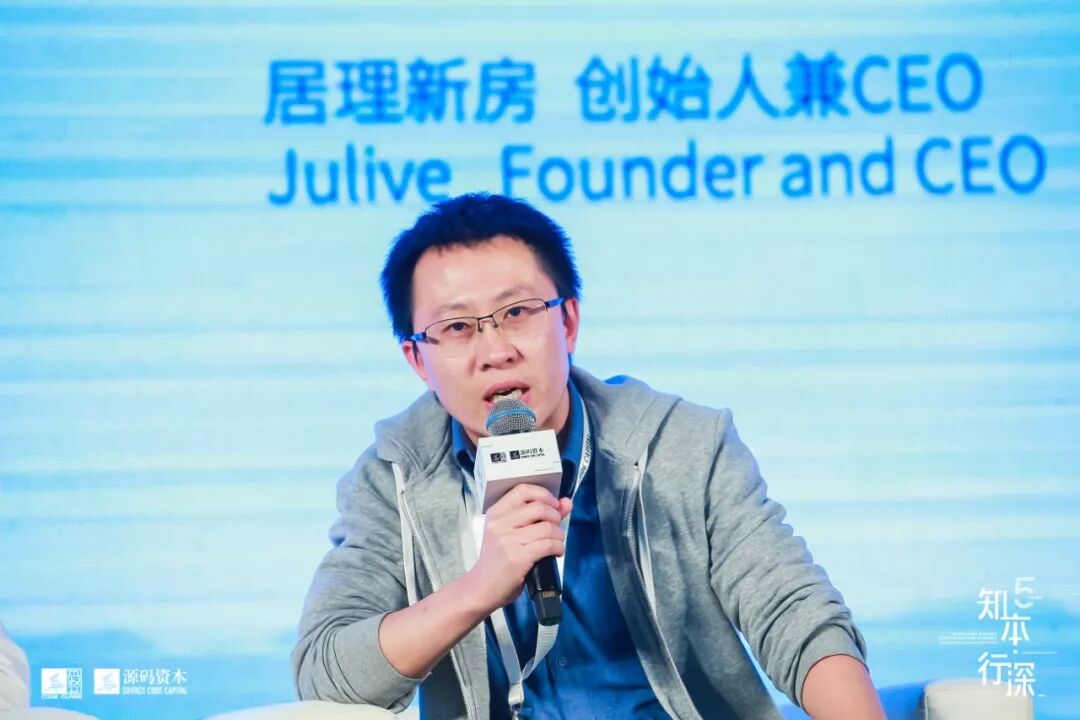
Peng Wang, Founder & CEO, Juli Xinfang
Kate Wang, RELX: Let me share an example of technology empowering corporate social responsibility. In China's retail environment, how do you verify purchaser age at the point of sale? This is a completely new challenge. Currently, neither online nor offline retail scenarios have established industry practices for age verification. When buying cigarettes or alcohol, you don't need to show ID — the infrastructure needs to be built from scratch. Technology becomes the most effective way we can seek help, converting facial recognition identity verification into age verification solutions that can help retail outlets identify whether purchasers are adults, with verification also possible during hardware activation. This way, we can use technology to leapfrog, making underage protection comprehensive and without blind spots in China — more thorough than current national protections in countries that rely on ID card presentation for age verification.
Nan Zhao, Qingzhu Hotel: Let me share two pitfalls I've encountered. The first — we fell in and climbed back out. The second, we almost fell into. At one point we built an internal CRM ourselves, working on it continuously for two to three months, investing significant R&D resources. But we found we couldn't even launch the most basic functions because it had to consider too many issues, too much "preparing for rain before it falls." After recognizing the problem, we promptly adjusted direction, using a faster, more agile approach. We scrapped the original plan and launched an immediately usable product in just three weeks. The lesson learned: startups should prioritize short-term usability over pursuing perfection all at once.
The second is the integration challenge between tech internet talent and original industry talent. Our product and R&D teams all came from top-tier internet companies. Research showed that existing IT systems in the hotel industry were technologically backward. The team was very confident, making a pledge to build a better product in three months. When I proposed hiring a consultant with ten years of hotel IT system experience, the team felt it was unnecessary, that it wouldn't help us much. But after discussion, I insisted on hiring such a person, because I understood that in any industry, many things aren't obstacles you can skip just by being smart and hardworking. Many business details require experience and accumulation. The result: this person was indeed the right hire. This was a major realization for me — how to fuse technological advancement with inherited industry experience.
Q4 Kaishi Chang, Source Code Capital: Looking ahead, what do you think will be the biggest change technology brings to your industry in the next three years?
Zhongjian Liu, Linji Convenience Store: For the convenience store industry, I believe it's automation and self-service — no cashiers, no lines, no waiting for coffee. People can order from their phones at the office and pick up directly at the store. Many convenience stores are already trying this, and most will achieve it in the future. Also, store location selection through big data — looking at WeChat and Douyin usage in surrounding business districts, or heat maps, or shared bike, power bank, and food delivery data to choose where to open. This also includes automatic ordering and product selection, looking at age distribution in the area, products browsed online or in-store. Technology will bring huge changes to convenience stores, for both customers and employees. I believe these changes will be significant and will happen soon.
Jialin Qiu, WeiMai: For healthcare, I personally feel the next three years will be more about policy dividends.
Peng Wang, Juli Xinfang: For real estate, I believe both of these will happen in the next three years: 1. The transaction path will fundamentally change, from the traditional model where both initiation and service happen offline, to one where initiation happens online and the service process combines online and offline; 2. In data circulation, big data including AI in property information verification, customer demand mining, and transaction efficiency improvement, will see more and deeper applications.
Kate Wang, RELX: Across various business processes, key elements, retailers, users, channels, supply chains, and factories — first connect the data. After connection, under secure conditions, gradually support decentralization and simplification and intelligentization of decision-making. Use consumer behavior data to judge usage habits and preferences, guiding innovation in new technologies and products. Whether on the consumer side, employee side, retailers, specialty stores, or convenience stores — all kinds of data ultimately need to be connected, analyzable, and predictable.
Nan Zhao, Qingzhu Hotel: Everyone has talked a lot about IT technology and data value. I want to offer another angle. Hotel hygiene and cleaning technology — we hope to see some changes in the next three years. A major concern for economy hotel guests is whether the hotel is clean, but whether the linens were actually changed or whether the cups were properly cleaned — consumers can't really perceive this. They just assume a five-star hotel probably does better than a 100-RMB hotel.
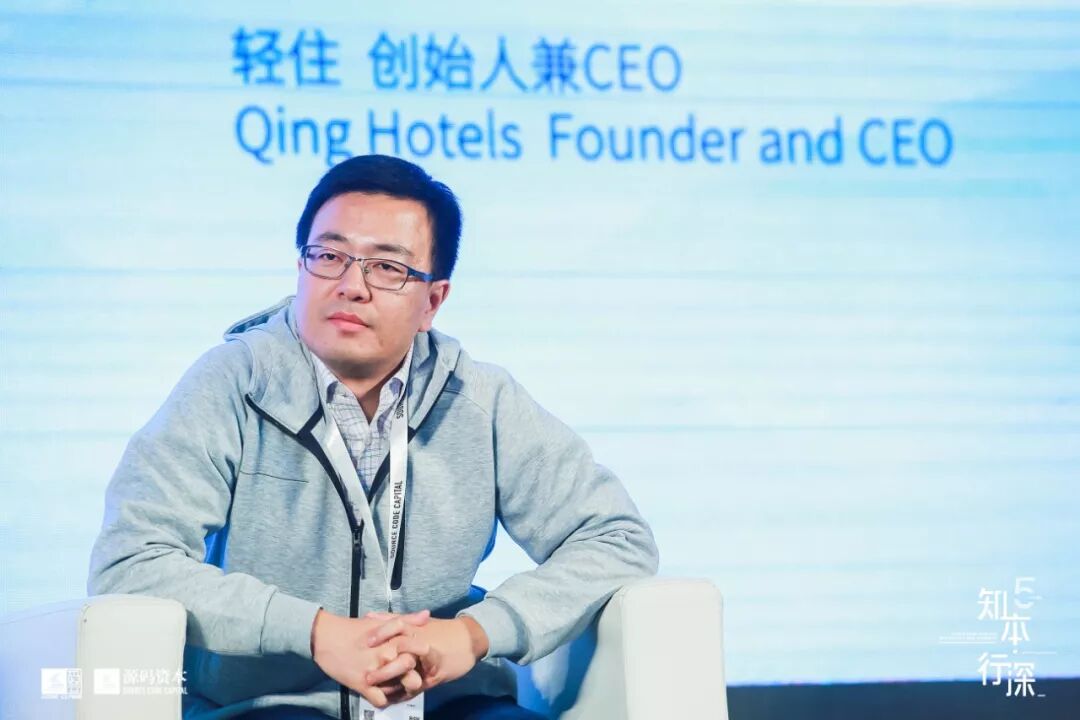
Nan Zhao, Founder & CEO, Qingzhu Hotel
How to solve this? In my view, this isn't just about IT technology anymore. It needs to combine with cleaning technology and IoT to form a closed loop around hygiene. Economy hotel guests' real pain point is whether the hotel is clean — they won't pay 50 RMB more just because you have smart speakers. We'll invest more in hygiene going forward, hoping to make some changes in this industry.
Q5 Kaishi Chang, Source Code Capital: Please share what you think will remain unchanged in your industry over the next five or even ten years.
Zhongjian Liu, Linji Convenience Store: First, let me project what China's convenience store industry will look like in ten years. I've been in this industry for 20 years, and the next 10 years will be the golden period for convenience store development. China now has 1.4 billion people, but only 100,000-120,000 standardized convenience stores. Japan, with 120 million people, supports 60,000 convenience stores. Taiwan also has over 10,000. I believe China may see 3-5 convenience store companies in the next decade, each with over 30,000 stores, over 200,000 employees, and annual sales exceeding 100 billion RMB. I firmly believe that doing retail and commerce well is the greatest charity, something that aligns with government needs and people's daily lives. I firmly believe that for retail enterprises, the only constants are adapting to customer changes, continuously meeting customer needs, and respecting employees. No matter how technology changes, these two core principles won't change.
Jialin Qiu, WeiMai: It's 2019 now. I recall 2009, ten years ago — I was also in Beijing then, doing roadshows for the first batch of ChiNext listings. Looking back ten years later at our first batch of 28 companies, the one that developed best was Aier Eye Hospital, from its initial listing to now over 120 billion RMB market cap, up dozens of times. The past ten years taught me one thing: you must do healthcare, and you must focus on one thing. Diversification generally doesn't work well. I summarize WeiMai's entrepreneurship in one sentence: climb one high mountain. The industry must be a high mountain, exactly one, and you must climb it arduously. So for the next ten years, we'll persist with WeiMai. No matter how hard, this is what we'll do!
Peng Wang, Juli Xinfang: Things that won't change in real estate are something we particularly like to discuss internally, and we've long had fairly consensus answers — trends that won't change in the coming years. First, it's quite certain that China's real estate transactions will increasingly concentrate in core city clusters, because population is flowing to core city clusters. Both property listings and clients will continue to expand, making choices increasingly difficult and increasingly requiring more efficient transaction platforms. Second, the total volume of new home transactions will remain stable. The implication of concentrating in core city clusters is that these clusters will steadily have incremental population, creating steady demand for incremental housing. Third, this demand will increasingly shift toward owner-occupied housing. Over past decades there were more investors — investment is a multiple-choice question, you pick whoever has higher returns. Owner-occupation is a matching exercise, requiring two-way matching between needs and property value. Owner-occupation increases the complexity of real estate transaction matching and increases the value of doing this well. Everyone's preferences differ, so data can deliver greater value. Fourth, the quality of industry service personnel will improve. Changes in population structure and incomes mean fewer young, cheap workers, while technological changes improve human efficiency. So industry service personnel will certainly shift from labor-intensive to professional service-oriented. These are judgments we made five years ago, and we've been continuously positioning along this direction in recent years.
Kate Wang, RELX: There are four things in our industry that shouldn't change: 1. Compliance; 2. Product safety; 3. Brand loyalty; 4. Experience innovation. Continuously use technology to empower these areas — from nothing to something, and from good to great.
Nan Zhao, Qingzhu Hotel: What I believe won't change in ten years is customer value. Customers include both hotel owners and consumers. From the hotel owner's perspective, the essence is asset preservation and appreciation. We can boldly imagine that in the future, a hotel owner might just provide the land and an investment, and we directly provide a guaranteed annualized return — you don't need to manage anything else. For consumers, the core value is a "good" stay experience. But "good" stay experiences need to be stratified — consumers at different levels have different experience expectations. Person A staying at a 1,000-RMB hotel and Person B staying at a 200-RMB hotel have different expectations of what makes a hotel "good." In the future, we need to provide products and stay experiences that different levels and scenarios of consumers consider good. This won't change.


More from Ma Hui 2019 • Where Are the Boundaries of Industrial Internet?