MaHui Founder | Post-90s Entrepreneur Zhang Junbin: Building Transformative Products, Pursuing Zero-to-One Value

#MaHui Entrepreneurs — Resilient, Bold, and Relentlessly Exploring
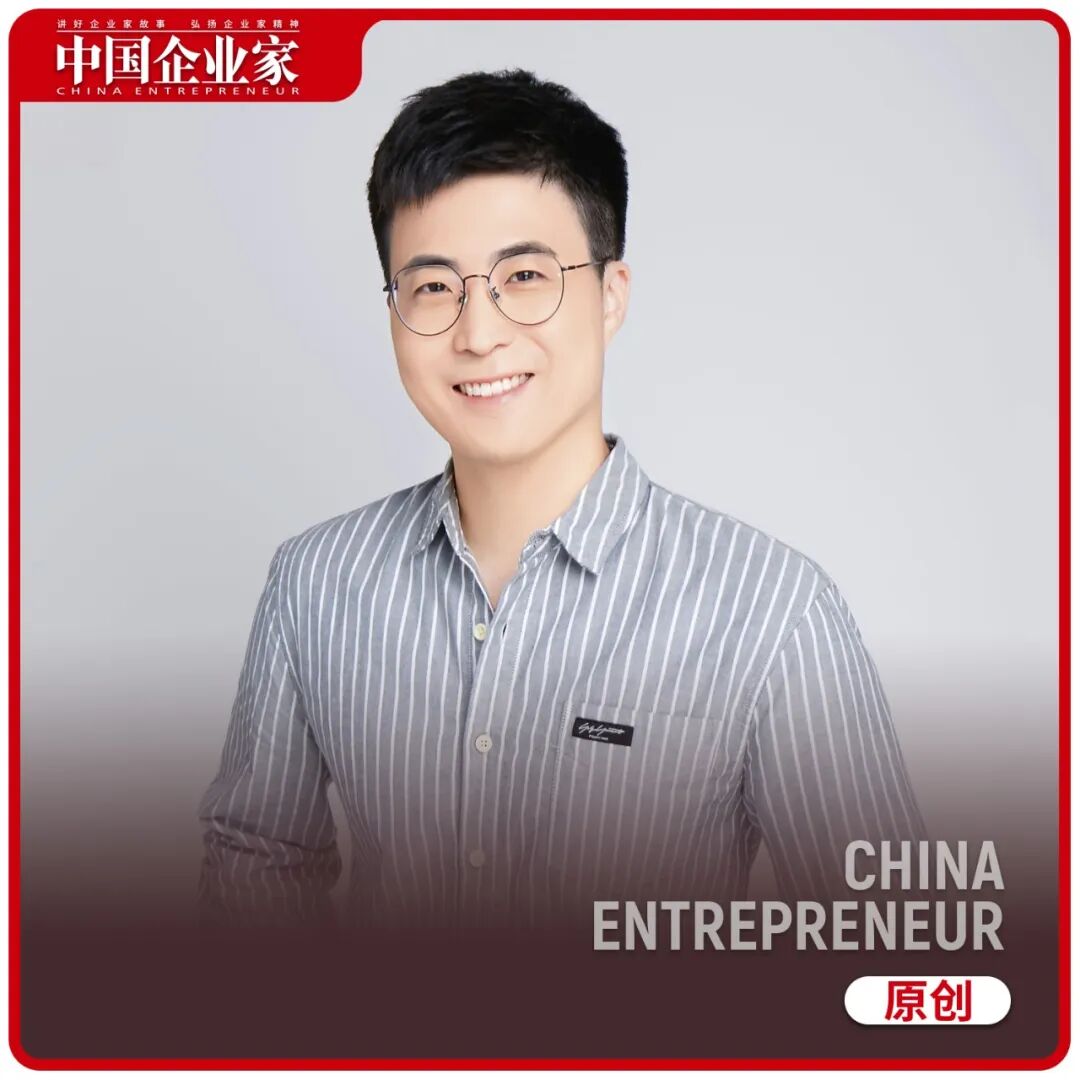
On July 6, China Entrepreneur magazine released its 2022 "Future Stars" and "Rising 100" lists. MaHui member Cloud Whale was selected as one of 21 high-growth innovative companies, making the "Future Stars" list. Recently, Cloud Whale founder Junbin Zhang and Source Code Capital partner Kaisi Chang sat down with China Entrepreneur to reflect on their entrepreneurial journey.
Additionally, fellow MaHui members Biren Technology, HAI ROBOTICS, and XSKY were named among the 21 high-growth innovative companies on the "Future Stars" list.
METiS Pharmaceuticals, WeiMai, Silicon Integrated, ONES, North Ocean Photonics, and Daily Black were recognized as 100 outstanding innovative enterprises on the "Rising 100" list.
Between April and June 2020, in just two months, Cloud Whale closed its Series B and Series C rounds. Investors that came calling included top-tier funds like HSG, Source Code Capital, Hillhouse, and Future Capital.
Six months earlier, during the 2019 Double 11 shopping festival, Junbin Zhang had led his team to a major victory. The company's newly launched "self-washing mop" robot vacuum — a combined sweeping and mopping device — generated over 10 million yuan in sales on that single day, shooting to the top of the market. Before this, almost no one outside the industry had heard of Zhang or Cloud Whale.
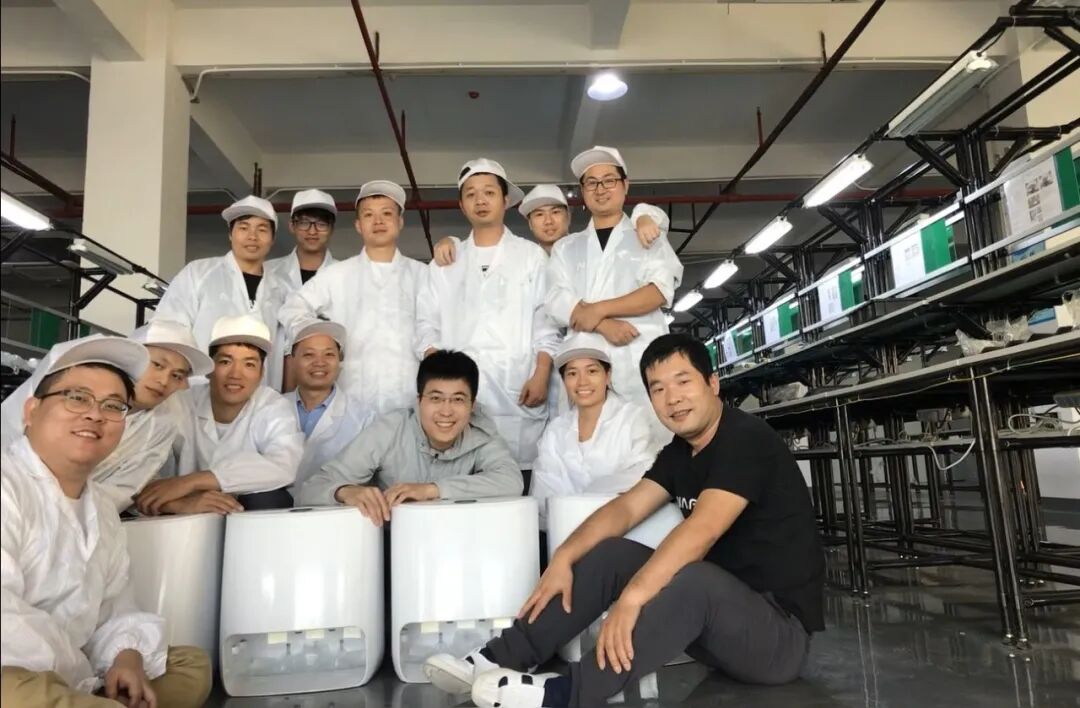
In 2016, fresh out of graduate school at Shanghai Jiao Tong University, Zhang began his entrepreneurial journey at Zexiang Li's Songshan Lake incubator in Dongguan. His sole conviction at the time was to build a transformative product, not something that merely tweaked parameters year after year. So after three years of intensive R&D, Cloud Whale only released its first product in the second half of 2019. A year later, the second-generation product sold over 100 million yuan within the first minute of Double 11, and surpassed 200 million yuan in just seven minutes.
Six years since founding, Cloud Whale has only two products. Yet in the two-plus years since launching, it briefly rose to become the second-largest player in the market. According to the 2021 China Household Service Robot Industry Report, Cloud Whale held the second-largest market share in 2021, behind only ECOVACS.
To date, Cloud Whale has completed its Series E round. Past investors include Clear Water Bay Startup Fund, Future Capital, Dami Ventures, Infore Capital, ByteDance, Source Code Capital, Sequoia Capital, and Hillhouse.
Behind the capital frenzy and surging sales lies Zhang's six-year odyssey of exploration with his team — driven by a founder's commitment to fundamental technology innovation, the team's long-term patience, and repeated technical setbacks and iterations.
The Beginning
Zhang's entrepreneurial spark came during a family gathering. Relatives were complaining about how poorly robot vacuums worked and what a hassle it was to manually wash the mops. Zhang had just finished graduate school and was actively looking for a startup opportunity.
From middle school through university and graduate studies, Zhang had been fascinated by robotics. During grad school, he had even done automation upgrades for an assembly line project. So when he decided to start a company, he immediately zeroed in on automation, robotics, and AI.
That family conversation gave him his insight. After some research, Zhang discovered that most household cleaning robots on the market only solved the "sweeping" problem, not the "mopping" one. He decided to build a robot that could both sweep and mop while automatically washing its own mop.
Mingming Huang, founding partner of Future Capital, still remembers first meeting Zhang in 2015 at the Songshan Lake base. At the time, Zhang told him he wanted to build a mopping robot better suited to Chinese households. But American brand iRobot was already hugely popular in China, with plenty of local imitators. Huang asked Zhang: "Why a mopping robot instead of a vacuum robot?"
Zhang explained: "Chinese homes are completely different from American ones. Seventy-five percent of Chinese households don't have carpets — they have wood floors, tile, or marble. So American families may need vacuuming more, but Chinese families need mopping more, and that need isn't really being met."
Huang pressed further: "What if giants like ECOVACS or Xiaomi enter this market? How does a fresh graduate with no hardware experience compete? You don't have supply chains, production lines, or marketing capabilities."
Zhang's response put Huang at ease: "We definitely won't compete on price. We'll win through proprietary technology and product design, delivering such a great user experience that people buy because they genuinely love the product."
Looking at this green SJTU junior, Huang felt something move him: "Never mind whether he can pull it off — we want to back founders who dare to pursue non-consensus ideas, who see what most people miss. He truly wants to build a technology-driven smart product company, not a consumer electronics company."
In 2017, Cloud Whale raised a multi-million-yuan Pre-A round from Future Capital and Clear Water Bay Startup Fund. Prior to that, in 2016, Zhang had received angel funding from Clear Water Bay Startup Fund, a venture fund co-founded by professors Zexiang Li, Bingqiang Gao, and Jie Gan alongside Sequoia Capital and Hillhouse.
Overcoming Challenges
From 2016 to 2019, Zhang poured nearly all his energy into R&D, often eating and sleeping at the office.
Before Zhang's attempt, the market had seen products claiming to mop automatically. But they weren't smart enough, delivered poor user experiences, and never gained traction.
At the time, Zhang's R&D team numbered just over ten people. To achieve results that satisfied both the team and users, they faced significant challenges:
First, to enable self-cleaning mops, the robot needed to know its location to determine where it hadn't mopped yet and where it had — avoiding re-contamination of clean areas. Existing mopping robots moved outward from the base station, inevitably dirtying already-cleaned spots. Zhang's team had to design an entirely new algorithmic path from scratch.
Second, to ensure clean mops, the robot needed to return to its base station mid-cycle, making indoor positioning accuracy critical. The team developed technology for long-term map maintenance and updates.
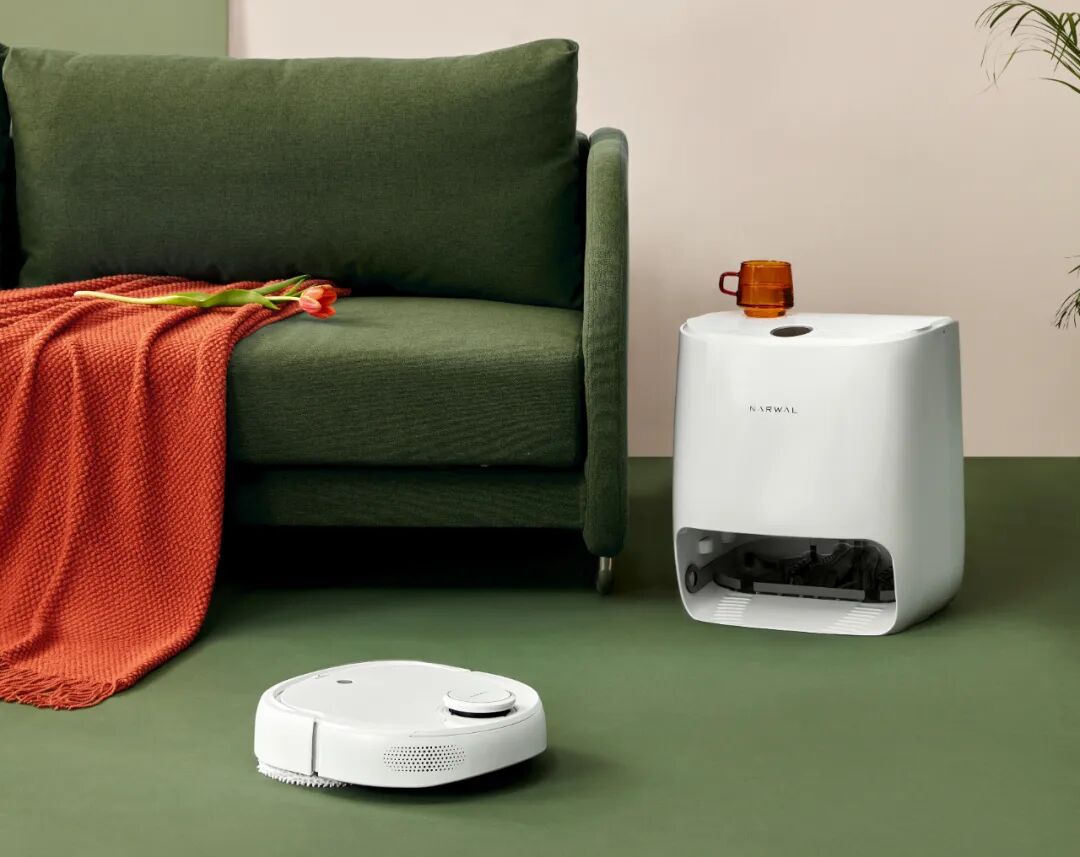
Third, unlike vacuum robots, mopping robots involve water — which means water safety and sealing challenges. Their appearance would necessarily differ from other robot vacuums, requiring breakthroughs in engineering and industrial design. Moreover, before Cloud Whale, most robot vacuum bases were crude charging docks. Cloud Whale boldly introduced water into the base station, creating clean and dirty water tanks to form a "large base station" that supported mop rewashing.
During those three years, Zhang led his team through over 30 product iterations. Spending three years on R&D before launching a product stood in stark contrast to internet startups raising three rounds in a year. It tested not only the team's patience but their investors' as well.
In 2019, as Cloud Whale's first product neared launch, Zhang suddenly delayed it again. He had discovered a product detail he couldn't tolerate: the two circular mop pads left a gap between them, meaning a strip of floor might never get mopped.
Zhang insisted on fixing it, but this meant delaying launch by at least three more months — and the company's cash was already extremely tight. Meanwhile, the team had silently persevered for three years, everyone eagerly awaiting the product launch.
In the end, Zhang personally borrowed several million yuan from a bank, changed the circular mops to triangular ones, and pushed the launch back three months.
Breakthrough
Zhang's persistence was not in vain. This was the market's first self-washing robot vacuum, giving Cloud Whale clear differentiation from competitors. First-day sales exceeded 10 million yuan.
Zhang still vividly remembers that night. As the 2019 Double 11 sale approached — the team's first market test after three years of R&D — a sudden traffic surge crashed the system in the opening seconds. Zhang saw zeros on the backend dashboard and thought they hadn't sold a single unit. Only when the system recovered and real sales data appeared did his heart finally settle.
Sitting at his computer late into the night, Zhang reflected on the past three years. It felt like a high-stakes gamble. Fortunately, those stubborn choices had been right.
After the first product exploded, Cloud Whale drew massive attention from both users and investors. In 2020, even as COVID-19 raged, Cloud Whale defied the downturn to close two funding rounds in just two months. During 2020 Double 11, Cloud Whale sold over 200 million yuan in a single day on Tmall alone, ranking first in the lifestyle appliances category.
Source Code Capital partner Kaisi Chang first discovered Cloud Whale on Douyin. The automatic mop-washing feature caught his eye. "This is fundamentally original innovation from first principles, not micro-innovation copying foreign product forms." Chang immediately decided to order one to try. Cloud Whale had just begun mass production and was frequently sold out due to surging demand. Chang had to buy one at a markup on Idle Fish.
Shortly after the 2019 Double 11, Chang flew to the Songshan Lake base to meet Zhang. It was a morning meeting, and Zhang's team clearly had worked late into the previous night — hair disheveled. But when they talked product and technology, Zhang became unusually animated.
What surprised Chang was how deeply Zhang had already thought through the technical roadmap. Meanwhile, Cloud Whale had built its own production line immediately upon starting mass production — Zhang insisted on keeping manufacturing in-house. He had even built the production line's ERP system himself.
After that meeting, Chang felt Zhang's team possessed exceptional capabilities in technology innovation, product development, hands-on execution, and engineering — a genius product-manager founder. The following week, Source Code Capital invested in Cloud Whale. Chang believed Cloud Whale's technical boundaries would gradually expand, growing from roughly 15% market penetration toward the 90% penetration seen with washing machines.
In April 2020, Source Code Capital and ByteDance co-led Cloud Whale's Series B. As production scaled, more investors took notice. In June 2020, HSG, Hillhouse, and other institutions came calling with investments reaching the hundreds of millions of yuan.
Innovation
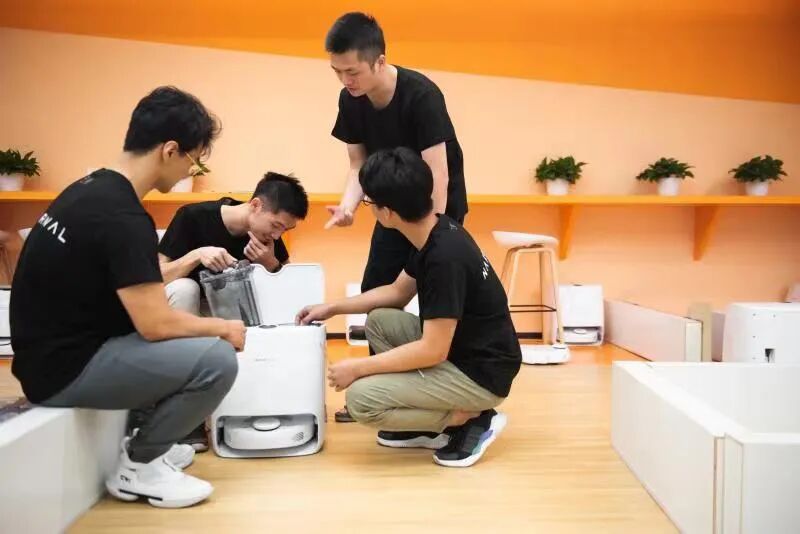
For Zhang, the primary logic of innovation is solving urgent user needs.
After the first product launched, Zhang noticed through user reviews that some customers were buying automatic water-exchange modification kits on Taobao and Idle Fish. Despite complicated installation, exposed water pipes, and aesthetic compromises to their homes, users were willing to pay 800 yuan for them. Zhang realized: "When the market spontaneously does something, that feature must be a real need."
During product development, Zhang set a requirement for his team: innovations must be "user-perceptible" — for example, evolving from the robot washing its own mops to fully automated water supply and drainage.
In September 2021, Cloud Whale launched its second-generation product, the J2. Building on its predecessor, Cloud Whale achieved something users hadn't even imagined: they no longer needed to change the water themselves. The product featured automatic mop rewashing, mop drying, automatic water supply and drainage, automatic cleaning solution dispensing, and scheduled cleaning — delivering a truly fully automated experience. On the first day of 2021 Double 11, Cloud Whale sold over 100 million yuan in one minute and surpassed 200 million yuan in seven minutes.
Before the 2021 Double 11, Cloud Whale raised two more rounds. Investors shared a consensus: innovation is an extremely difficult endeavor that only a few undertake, while imitation is fast and hard to prevent. In nearly every investor meeting, Zhang was asked the same question: What if competitors copy your features?
Zhang told them: "When we design products, we focus on whether something exists at all, not whether it's incrementally better. So what we want to give users isn't just value from 1 to 2 to 3, but value from 0 to 1 — truly saving them one more step, then one more step after that."
Indeed, the patent and technology barriers Zhang's team accumulated made it difficult for rivals to catch up quickly. After the J1 hit the market, Cloud Whale capitalized on a roughly one-year commercial window to grow rapidly.
When launching the J2 with automatic water supply and drainage, Cloud Whale began offering on-site installation services, providing free first-time installation. For a hard-tech innovation company to build out offline local services seemed heavy, costly, and rare in the industry.
But Zhang told China Entrepreneur: "Cloud Whale wants to provide users with a complete product solution, and service is part of the product. Professional on-site service is actually about building a deep user connection system — not just for current robot vacuum products, but for categories we may expand into in the future. We want to reach users not only through great products, but also through great service from our local team."
Currently, Cloud Whale operates both self-run and third-party local services. Its self-run "Whale Joy" service covers core areas in nearly 30 cities, while third-party "Whale Craft" extends to nearly 300 cities nationwide.
Zhang has been interested in "creating great value through technology" since childhood. He still often thinks back to middle school, when he built a smart reader for visually impaired people. "When I could help them live better and access a broader world, it felt deeply meaningful."

- MaHui Entrepreneurs | Two 29-Year-Old Genius Scientists and Their "Moon and Sixpence"
- MaHui Entrepreneurs | Tianlan Shao of Mech-Mind: Some of My "Grassroots" Experience
- MaHui Entrepreneurs | Fan Shunhao of IrisView: What Kind of Operating System Does the XR Era Need?
- MaHui Entrepreneurs | When the Founder of a "Software-Defined Storage" Company Is Also a Race Car Driver
- MaHui Entrepreneurs | Academician Weinan E Proposes a "New Dawn" for Applied Mathematics: AI for Science Deeply Integrates AI with Fundamental Science
- MaHui Entrepreneurs | From 0 to 1 to 23.4 Reading Week — "Happy Reading Day"
- MaHui Entrepreneurs | From 0 to 1 to 23.4 Reading Week — "The Beauty of Reading"
- MaHui Entrepreneurs | Exploration Never "Extinguished" — Saluting the Spirit of Aerospace
Click "Read Original" to view more MaHui members