Code Brain 'Standing Together Against COVID-19' Series Session Two: Pandemic's Impact on the Financing Environment and Corporate Response Recommendations

Guest: Ruyi Guo, Managing Partner, Taihe Capital
As the pandemic deepened, every sector of the national economy faced enormous pressure. On one hand, medical systems and logistics supply chains urgently needed expanded capacity; on the other, online education and remote work became essential needs. Market demands and business models were quietly shifting — new opportunities were emerging from the crisis. To address this new landscape, Source Code Capital's portfolio services team designed the Code Brain "Standing Together Against COVID-19" webinar series. From February 3 to 11, we invited experts and industry leaders to share insights online on topics including employee leave and return-to-work policies, startup financing, remote collaboration, cash flow management, and leveraging government policies. We hoped to provide intellectual support to Ma Hui members from multiple angles, easing anxieties and facing challenges together.
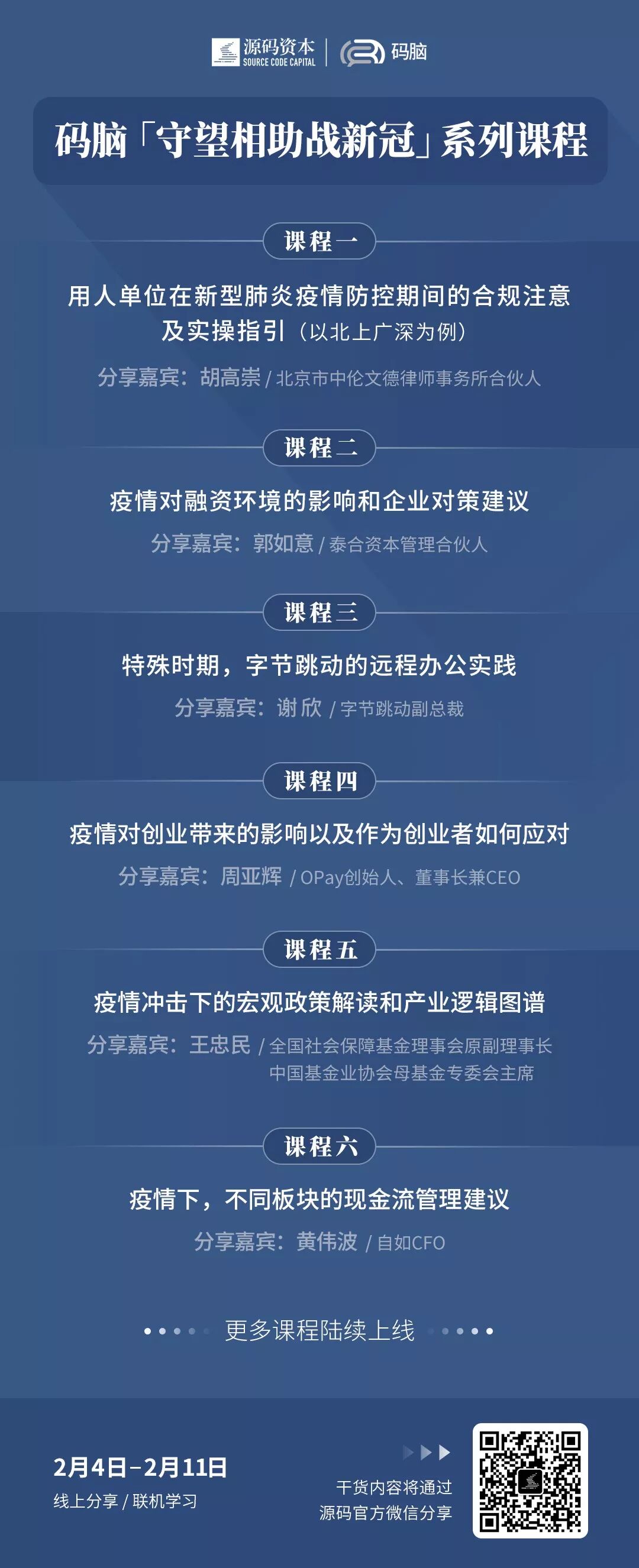
On the evening of February 5, Ruyi Guo, Managing Partner at Taihe Capital, joined the Code Brain "Standing Together Against COVID-19" financing session. He shared in-depth perspectives with Ma Hui entrepreneurs on the market impact, investment strategies and pacing, and 2020 business and financing considerations that were top of mind for everyone.


A graduate of Fudan University's School of Economics, Ruyi Guo currently leads Taihe Capital's major transactions in technology, mobility, logistics, and enterprise services. Before founding Taihe Capital, he worked at Hina Group on TMT financing and M&A; at KPMG's transaction advisory practice, participating in multiple investment and acquisition deals by international funds and large foreign enterprises in China; and at Accenture, providing commercial and strategic consulting to Fortune 500 companies both domestic and international.

-
The fundamental shift in the market environment happened in the previous two years; the pandemic merely accelerated this trend. That's the baseline assessment.
-
Our post-Spring Festival survey of 40 top-tier investment institutions showed that 50% will adopt contraction strategies compared to 2019.
-
We remain long-term bullish on China's economic trajectory — otherwise none of us would be here building companies or investing. The economic performance after numerous major pandemics in history, both domestically and abroad, has already provided the answer.
-
The pandemic's impact on industries is severely polarized: online sectors benefit significantly, offline faces major challenges, technology's value becomes further pronounced, and the transformation of certain industries may even be fundamental.
-
The "369 Rule" for survival: assume at least three months of below-expectation performance, allow at least six months for fundraising, and maintain at least nine months of cash flow. Entrepreneurs must plan for the worst — this isn't alarmism — only then can you fight for the best outcome.
-
The greater the disaster, the greater the adversity, the more entrepreneurs need a mindset of "borrowing the false to cultivate the real." Mission, vision, and values must be elevated to critical importance; otherwise you'll be paralyzed when black swan events strike.
-
Flexibly deploy various financing instruments — equity, M&A, convertible bonds, venture debt, etc. — arrange early and secure the cash.
-
Cut cash-burning businesses, eliminate non-performing employees, stop inefficient experiments. Count the money, count the money, count the money again.

Thank you to Source Code Capital for the invitation. Today I'd like to share thoughts on the short-term impact of the pandemic and long-term endgame considerations for the fundamental landscape. We hope to view the crisis dialectically, objectively discuss the challenges that exist, and more importantly provide practical and effective responses.
Three Perspectives Comparing SARS: Looking Further Ahead
This pandemic differs from SARS in its macroeconomic environment — this is where the real challenge lies. Why do I say this? Consider the following comparisons:
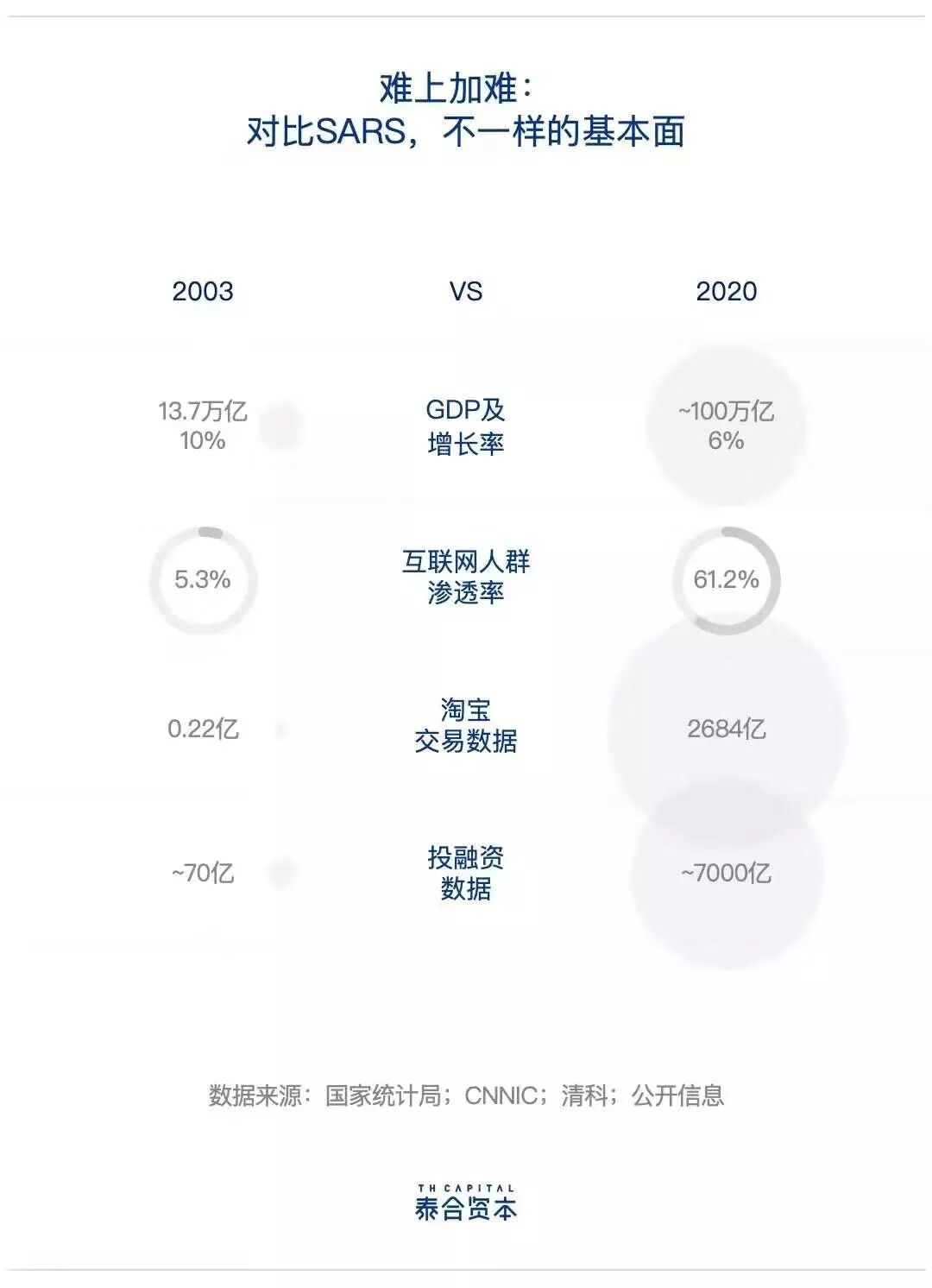
First, GDP. In 2003, China's GDP base was still relatively low, maintaining 10% growth. Compare this to 2019: barring surprises, GDP growth was around 6%, with total output approaching 100 trillion RMB. Pursuing high growth rates from this base is extremely difficult.
Second, internet penetration. In 2003 it was 5.3%; as of June 2019 it reached 61.2%, and current figures are even higher. This indicates that internet growth dividends have largely peaked.
Third, Taobao transaction data. Taobao emerged precisely during the SARS period. Its 2003 GMV was 22.71 million RMB; by 2019, "Singles' Day" on Tmall reached 268.4 billion RMB. The comparison between a full year and a single day shows nearly ten-thousand-fold growth. This stems from infrastructure upgrades, internet penetration, and changes in online shopping behavior and demographics — meaning the broad environmental dividends have largely been harvested.
Fourth, investment and financing data. 2003 marked the launch of the golden age for VC and PE investment. Total financing that year was 7 billion RMB; by the 2018 peak it approached 700 billion, a hundredfold increase.
So existing dividends have all surfaced, but new opportunities aren't yet visible. If we must compare to SARS, we need to recognize the context has changed. The market environment fundamentally shifted in the previous two years; the pandemic merely accelerated this trend. That's the baseline assessment.
Crisis Contains Opportunity: Recovery Inevitably Follows Pandemic
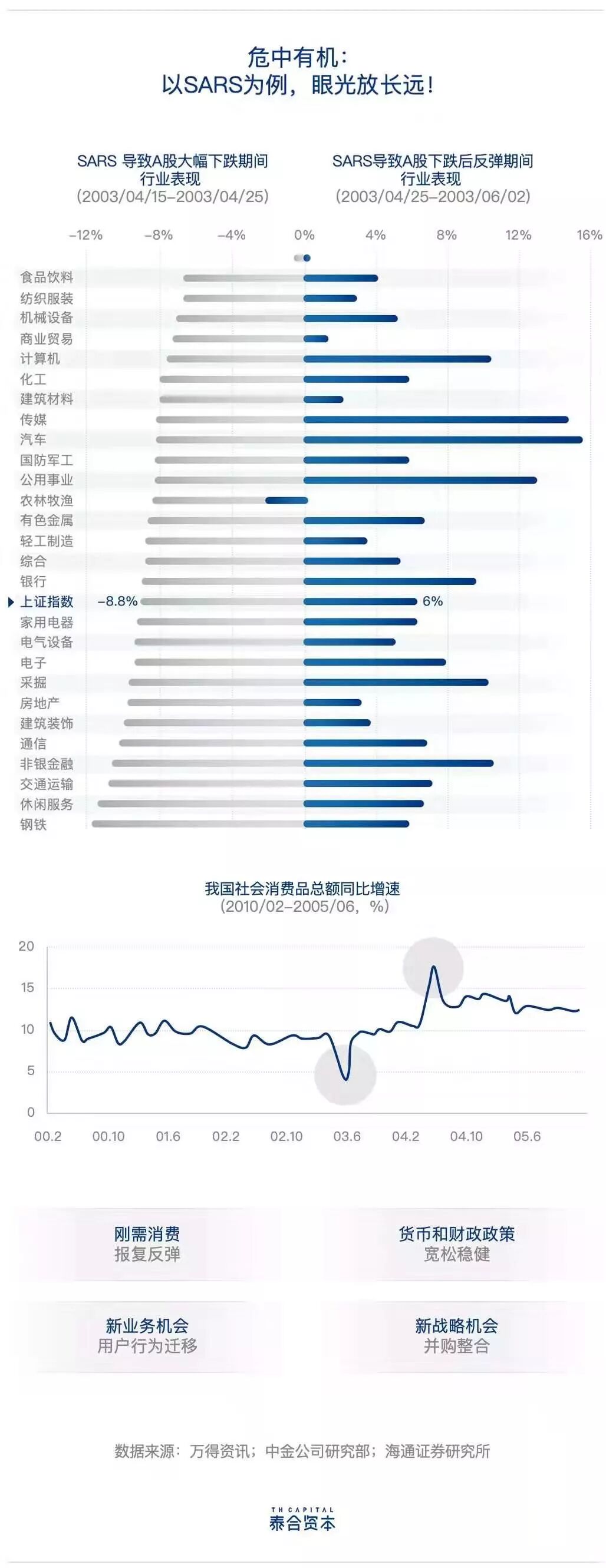
Even so, we should recognize that every crisis contains opportunity. CICC's report shows the overall performance of the Shanghai Composite Index around SARS:
Healthcare ranked at the top — least impacted, smallest decline, and modest recovery — indicating healthcare stability is fundamentally driven; media and automotive fell 8% but recovered over 12%, making them sectors that could bounce back relatively quickly; sectors like real estate saw slower short-term recovery but benefited from macroeconomic growth and ultimately achieved better growth.
Another interesting data point: total retail sales of consumer goods. During SARS, retail growth dropped to 3.6%, with April and May seeing the steepest declines. But after SARS ended in July, it rebounded to the normal 8-9% range. A massive revenge rebound appeared by Q1 2004.
Whether this year will see the same dramatic V-shape as 2003 requires careful analysis by specific industry. A few points to note:
First, any industry serving consumer necessities has potential for revenge rebound — prepare accordingly;
Second, whenever major epidemics or events related to national welfare and people's livelihoods occur, the government will inevitably introduce corresponding monetary and fiscal policies to stimulate growth. Optimistically speaking, if the pandemic ends in Q1, policy adjustments will allow more time for implementation;
Third, isolation drives migration of user behavior, creating opportunities for new businesses. Taobao's rise, for example, resulted from user behavior migrating online at that time. Ctrip, the only company to IPO in 2003, also related to new business opportunities from user behavior migration;
Fourth, new strategic opportunities emerge — consider whether M&A and consolidation possibilities exist in your industry. Back then, Joyo and 3721 both had opportunities to go public in 2003-2004, but due to SARS's impact — narrowed Hong Kong IPO channels, diminished investor confidence, and affected business performance — 3721 was ultimately acquired by Yahoo and Joyo by Amazon. Yet this proved a viable exit path.
Historical Impact of Major Pandemics on Economies Worldwide
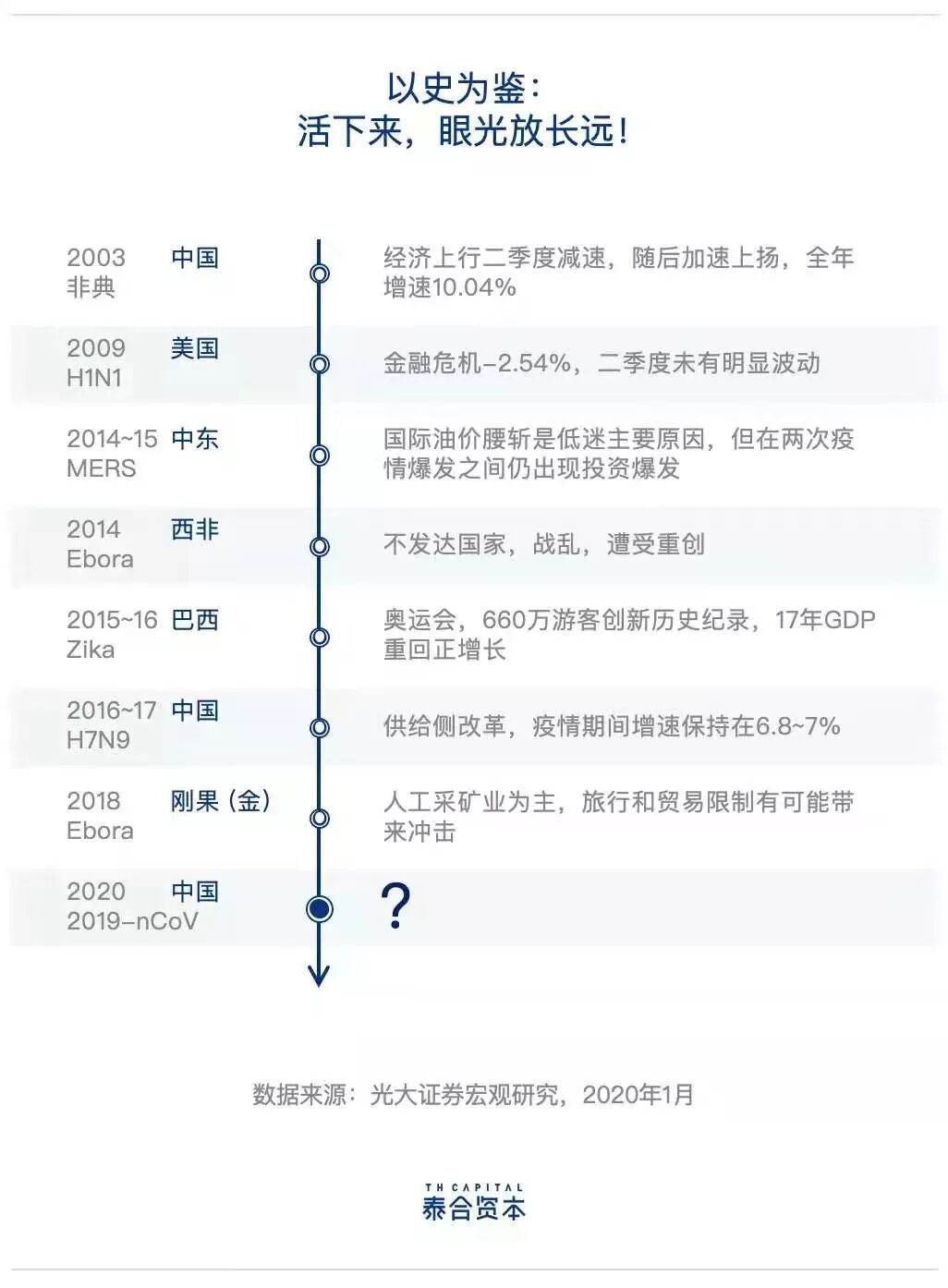
Looking further back, let's examine how major 21st-century pandemics affected various countries and regions.
Globally, only three West African nations truly suffered severe national economic damage from Ebola. The crucial reason wasn't the virus itself — these countries' institutional and economic frameworks were insufficiently robust and complete, making them more fragile when facing shocks.
Whether China's SARS, the United States' H1N1, MERS in the Middle East, or Zika in Brazil — all initially impacted regional economic development for roughly 1-2 months, with recovery actually proving quite rapid. One critical point: in extraordinary times, how to better maintain your health — survive first, then from a longer-term perspective, how to re-grow and thrive. Looking back at history, we see encouraging cases; there's no need for excessive panic. Our long-term bullishness on China's economy is also our baseline assessment — otherwise we'd have no reason to be here building and investing.
Capital Markets Under Cycles Plus Pandemic
Returning to the micro perspective, let's set aside pandemic impact and examine the financing environment itself. In 2019, fundraising difficulties and GP shakeouts made investment institutions more cautious and increasingly selective about targets.
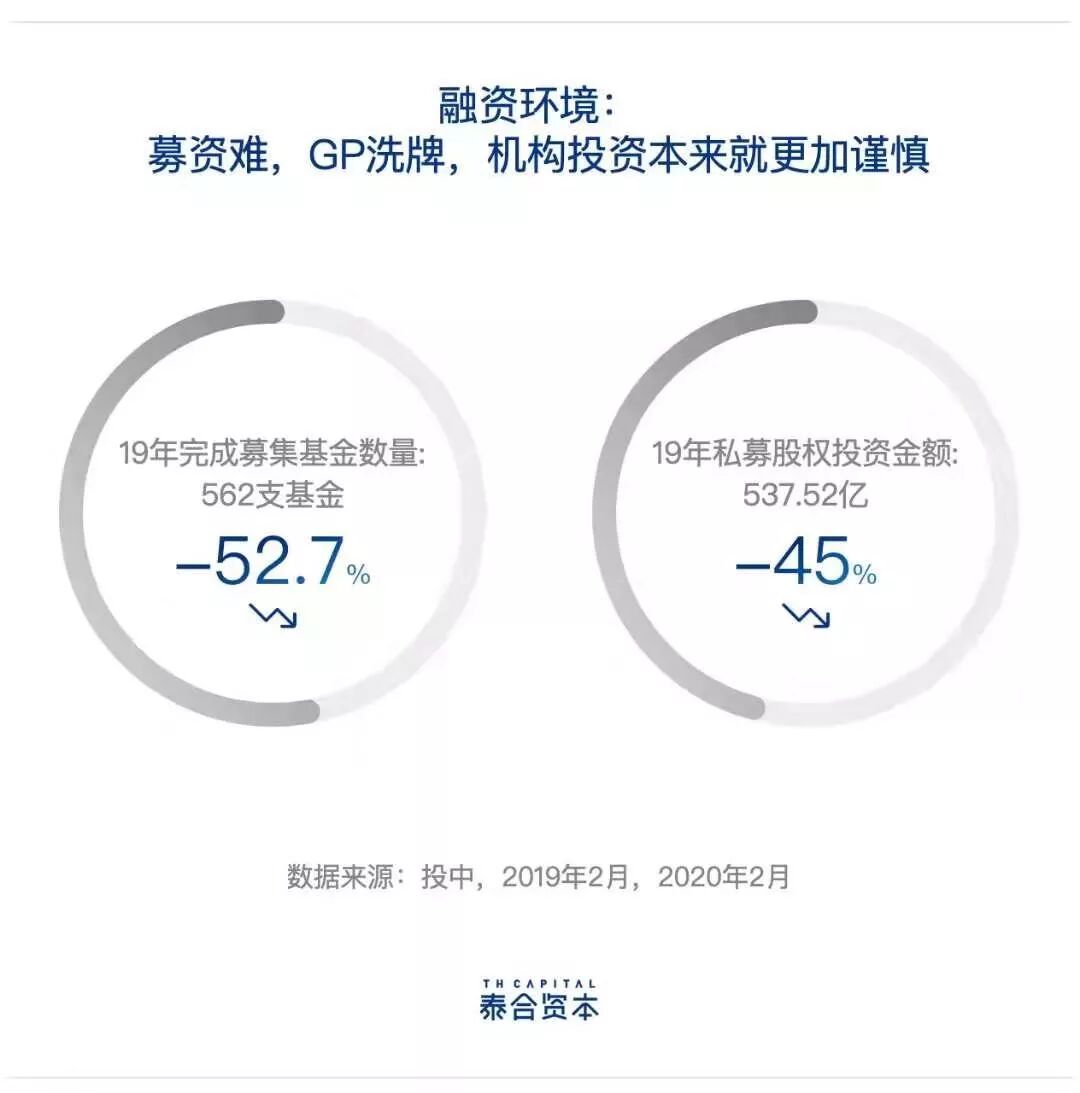
The data in the chart above shows that whether from the fundraising side or investment side, the overall financing environment itself wasn't optimistic. So how have investors changed during the pandemic?
Half of Investment Institutions' Pacing Will Be Affected in 2020
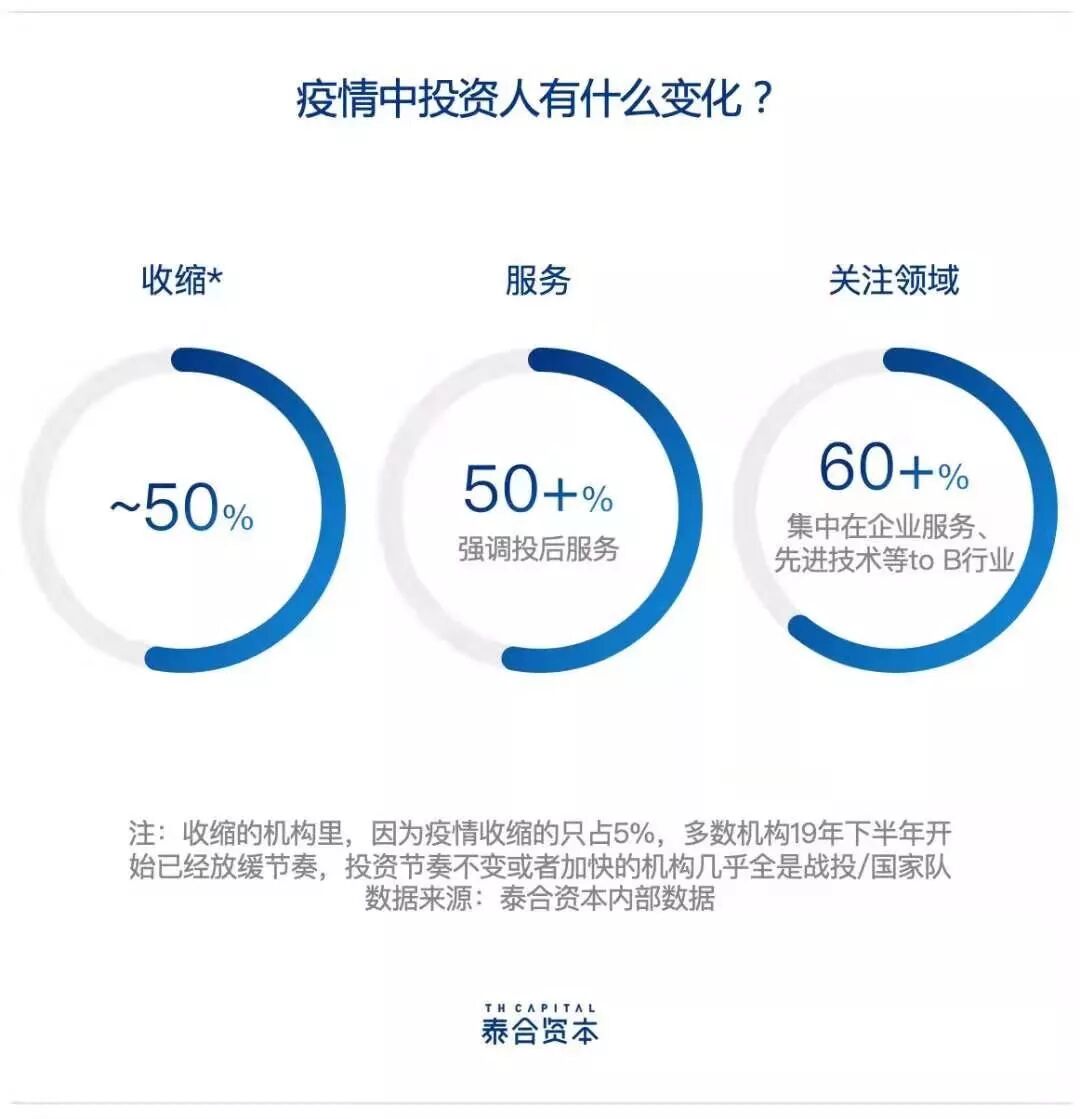
We conducted a brief survey of 40 investment institutions we regularly work with. How has the pandemic affected investor sentiment? About 50% of investors indicated they would continue contraction strategies from 2019; pressed further, only about 5% attributed this specifically to the pandemic, mainly due to travel inconveniences affecting project evaluation and due diligence.
However, some institutions maintain unchanged or accelerated pacing — typically strategic investors like BAT, ByteDance, and Meituan. Short-term pandemic effects may disrupt work rhythms, but overall investment strategy won't fundamentally shift.
Another figure: since H2 2019, over 50% of investment institutions have increasingly emphasized portfolio post-investment services. More granular services like resource matching and recruitment assistance are becoming more common. Institutions are devoting more energy to protecting their invested projects — this is also an emerging trend.
From institutions' feedback on focus areas: previously, individual institutions maintained dedication to single sectors like consumer, education, or healthcare. But enterprise services, advanced technology, and other B2B industries related to the industrial internet direction are increasingly drawing concentrated capital attention and favor.
Healthcare, Online Education, Enterprise Services, Entertainment See Tailwinds
Offline Dining, Logistics, Mobility Face Headwinds
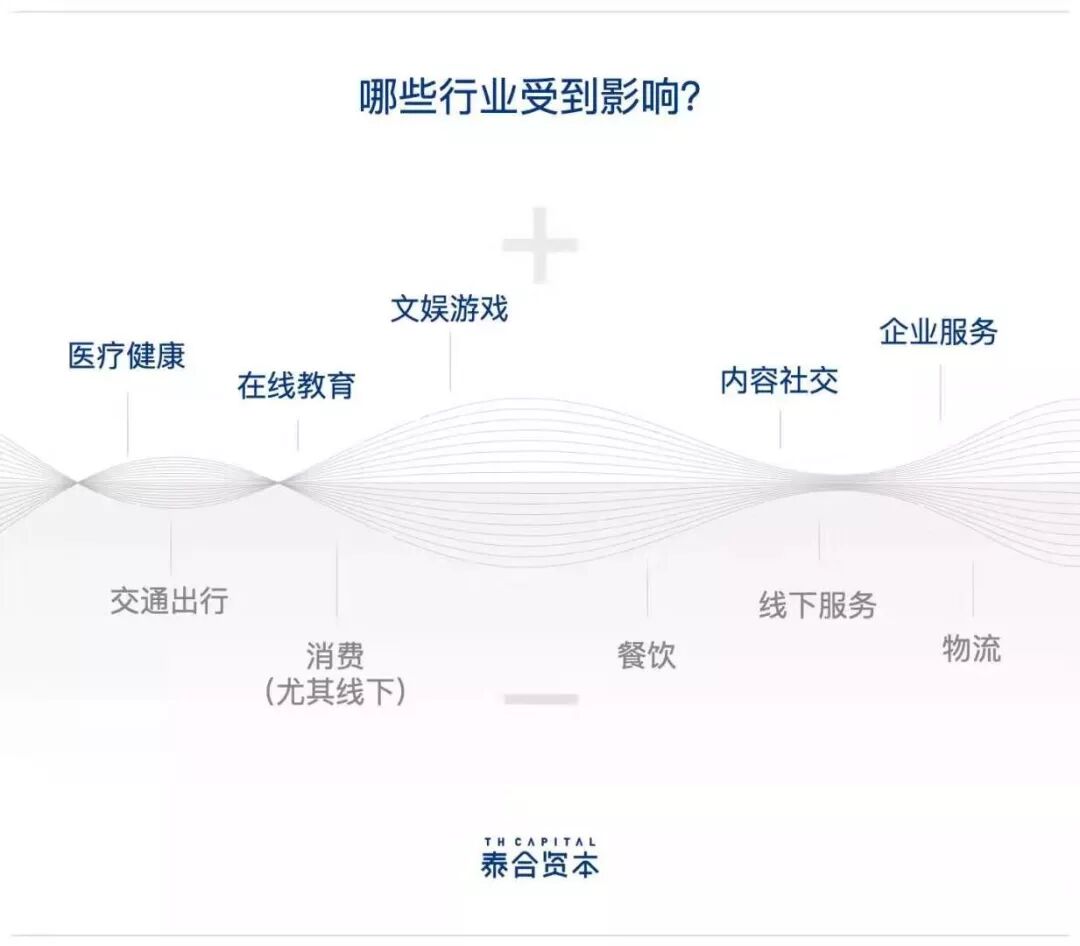
As you've likely perceived, industries showing relative tailwinds under the pandemic include healthcare, online education, entertainment (gaming, content, social), enterprise services, and more. Each industry has different underlying drivers.
For healthcare, tailwinds stem from heightened pandemic fear increasing health awareness. Investor circles have elevated attention to healthcare directions, but investors who've consistently focused on healthcare maintain relatively steady, style-specific investment philosophies and logic. So while attention is rising, building industry cognition and understanding requires a certain cycle.
Online education benefits from massive user behavior migration due to the pandemic. With schools unable to open normally, they've exhausted channels and third-party tools to help parents and children continue learning online. Online education is likely the biggest beneficiary in this wave — in today's environment, customer acquisition costs are relatively lowest. Entrepreneurs should seize this opportunity and decisively invest in infrastructure, content production, and supply fundamentals.
Gaming, content, and social entertainment are also relatively favored. One example: with cinemas closed during Spring Festival, everyone began watching new year films online, suggesting potential user habit migration. Of course, for these "stay-at-home economy" micro-booms, we need more objective assessment of long-term impact. After this pandemic wave, when normal life rhythms resume, will there be better ways to retain users who had extra time for platforms during this special period? Thus subsequent product and user operations become critical. It's quite possible that interesting new targets will emerge during this special period — acquiring user bases, capturing traffic, and leveraging this to develop certain self-sustaining capabilities. Simultaneously, they may also become attractive M&A targets due to product and traffic challenges.
In enterprise services, we see a tale of two cities. Providers persistently serving large enterprise clients may benefit from a new wave of client behavior migration post-pandemic, with enterprises more willing to pay for quality products and services. As online collaboration and data management internetization gain importance, enterprises serving large clients — from cloud services to various SaaS offerings — may benefit. On the other hand, enterprise service companies long serving small clients, if their clients face major revenue pressure and cash flow difficulties, may suffer significant collateral impact.
Negatively affected industries also divide into short-term and long-term impacts. Transportation and logistics, being relatively essential needs, may face relatively short-term impact; but offline consumption scenarios like dining, or other services requiring offline delivery, may need longer recovery times. The key commonality: these are all cash-flow-sensitive industries. These enterprises must consider how to better manage cash flow and stabilize existing customer sentiment to ensure cash flow doesn't break due to pandemic panic.
Transportation rebounded relatively quickly after SARS, being an essential industry. Logistics is similar — short-term impacts may come from national policies, emergency management, and restrictions on personnel gathering for operations, preventing logistics companies from fully leveraging their expertise. But this pandemic has made clear that logistics is an indispensable essential link — whether for overseas materials transport and customs clearance, nationwide material allocation and support, or same-city delivery, logistics enterprise support is needed everywhere.
Long-term, logistics has strong infrastructure attributes that can better support economic development. Despite short-term impacts, longer-term prospects are positive. Here, I'd remind many logistics companies: can current resources be invested in technology or automation-related areas, making it critical to ensure efficiency and capacity during emergencies and gain advantage over competitors?
The "369 Rule" for Brutal 2020
Whether changes come from the pandemic or the broader environment, how to respond? We've summarized the "369 Rule" — assume at least three months of below-expectation performance, allow at least six months for fundraising, and maintain at least nine months of cash flow. Entrepreneurs must plan for the worst to fight for the best outcome.
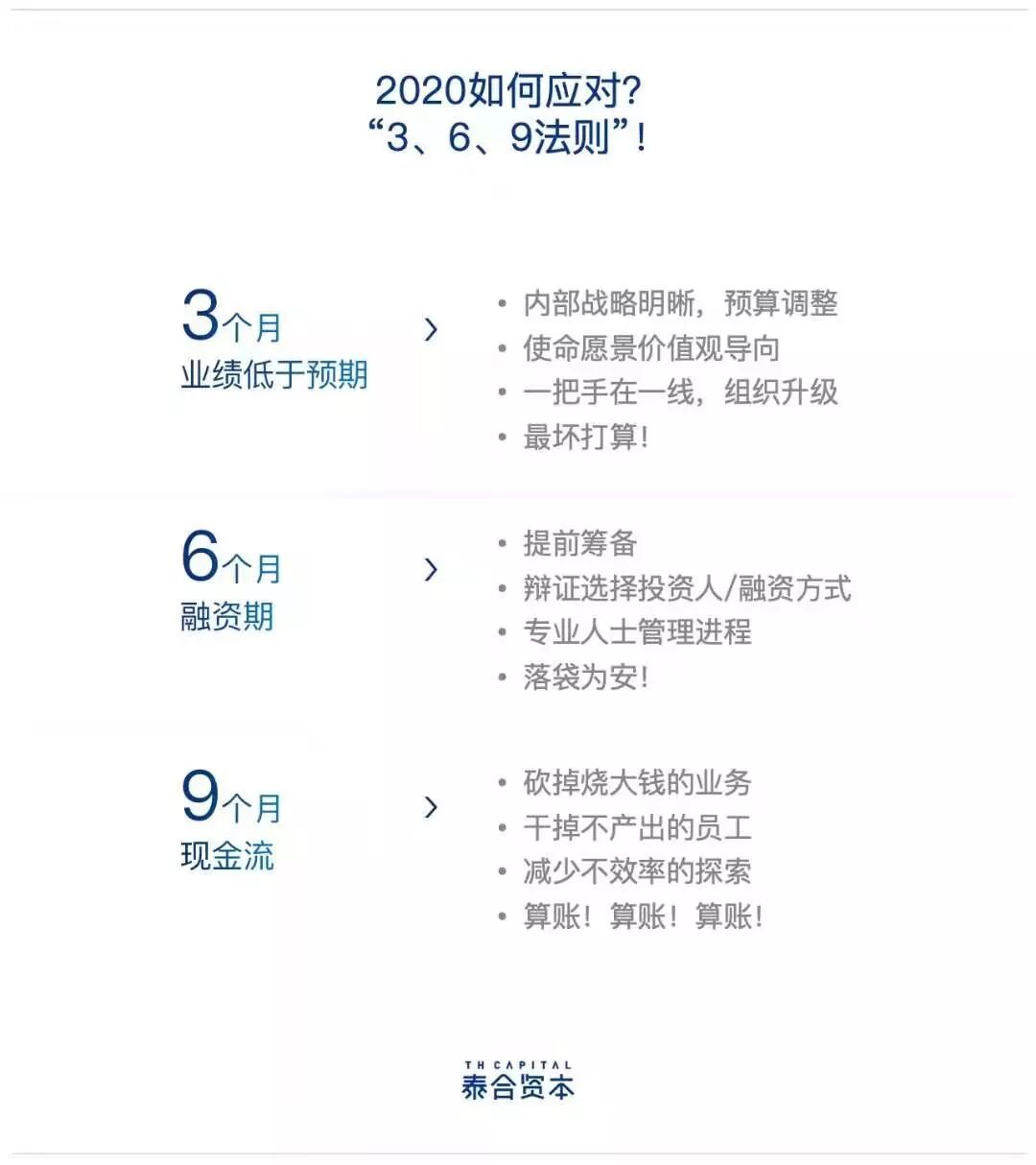
Assume at least 3 months of below-expectation performance
Theoretically, Q1's weak performance isn't too damaging for many companies — most see Q1 as off-season anyway, with limited effective work time around the February Spring Festival holiday. But this year is different, with various factors creating new changes. Take Spring Festival home appliance sales and revenue: this year every category dropped 50% year-over-year, with air conditioning worst hit at over 70% decline. With such significant year-over-year drops, the pressure to recover lost volume later is immense. Hence our assumption that under pandemic impact, conservatively at least three months of performance will fall below expectations.
Under this assumption, what should companies do?
First, re-examine strategy. Immediately adjust short-term budgets downward based on actual conditions, then project two to three quarters further, even adjusting full-year budgets. Next, consider if full-year performance falls short, which quarters to make up ground in, and control the rhythm for the entire year in advance.
Second, maintain mission, vision, and values orientation. This is the behavioral standard guiding everyone to do the right thing when clear SOPs don't exist. If a company lacks this, it risks paralysis during black swan events. Consider: when others have begun adjusting and responding while you're still in analysis, you've already lost half a position's advantage in this battle. This is extremely dangerous. So when formulating strategy and adjusting targets, entrepreneurs must elevate mission, vision, and values to critical importance, clarifying longer-term goals and pursuits to make decisions benefiting the company's long-term interests.
Third, leadership must be on the front lines. Today, the top leader must personally get their hands dirty and sense the market alongside everyone. Because market conditions change daily — how to better respond, understand frontline challenges or needs, and provide timely support? Only when the number-one leader personally engages can this be done well. Additionally, the top leader must personally lead core management in organizational upgrades to address potential changes, avoiding delayed risk perception and wrong decisions due to rigid hierarchy or organizational sclerosis.
Fourth, plan for the worst. Unless you're the absolute market share leader, you shouldn't suffer major volatility from market or macro environment fluctuations — instead, better respond to macro changes with timely adjustments. So three months of below-expectation performance is the baseline assumption; build worst-case scenarios on top of this for personnel, capital, cash flow, etc. Consider how long the company can survive under worst-case assumptions. If already in relatively dangerous territory, immediately seek solutions and make important financing deployments.
Allow at least 6 months for fundraising
In today's market environment, even without pandemic impact, average fundraising cycles already exceed six months. So think clearly: if your target is to secure funding by October, start preparing now — including fundraising materials, new year budgets, even advance communication with key investment institutions. Early preparation is critical.
Second, dialectically select investors and financing methods. We've seen many entrepreneurs reluctant to be controlled by strategic investors. But many strategic investors now focus more on ecosystem layout and don't necessarily seek control. Especially in today's market environment, strategic and industry investors maintaining original investment pacing and relative activity constitute the majority. We suggest actively engaging with them, clarifying needs and bottom lines, and exploring potential synergies.
Taking a longer view, examining what your industry's endgame might look like and your position within it, consider planning early. Communicate with shareholders in advance to make judgments most valuable to the company, employees, co-founding brothers, and shareholders — being acquired at the right time is also a viable option. History shows multiple cases where failure to see the industry endgame ultimately harmed both the company and shareholder interests.
Dialectically selecting financing methods means that for some larger companies still heavily using equity financing, this may not be cost-effective. When the company's direction is basically set and business relatively stable, but valuation is dragged down by market environment and investors won't pay high premiums, founders' stakes get heavily diluted. At this point, consider more diversified financing methods — venture debt, growth debt, convertible bonds, etc. For companies with strong asset attributes, consider methods like financial leasing. Don't reject these because they're unfamiliar, poorly understood, or sound too expensive. Any cash flow introduced helps.
No one knows what the future holds. Any assumptions made today may not be fair to any party. So we suggest maintaining relatively open communication, understanding others' needs, matching them with company funding requirements, and determining the most reasonable approach for the company.
Third, and very importantly, engage professionals to help — such as financial advisors or lawyers. Because knowing what terms are reasonable and what may be onerous is critical. Not to advertise for ourselves, but in today's environment, whether experienced professionals are managing the process makes a huge difference to fundraising progress. This particularly shows in how to interpret any investor action — for example, when pacing slows, how to better distinguish whether an investor's disinterest stems from strategic contraction or genuine pandemic-related work constraints. Having professionals mediating communication is crucial for understanding both parties' needs and real situations.
Finally, emphasize securing the cash — don't trust any verbal commitments without timelines or to-do items. Clearly see that getting确定性 money at a specific time point is what matters most. Especially in today's environment, securing cash is more important than ever. If you have 8 term sheets and 2-3 want to invest quickly, don't wait for the other 5 to get ready. By any means, once fundraising begins, complete it well and get the money secured.
Maintain at least 9 months of cash reserves
Nine months of cash flow is an absolute, most conservative estimate. In fact, if you don't have 10-12 months of cash reserves, we suggest immediately considering fundraising. During this period, ensuring normal operations and stable cash flow is critical.
First, cutting cash-burning businesses is top priority. If you have one or two businesses burning tens of millions or more monthly, immediately consider whether to stop them, even if they might generate huge revenue in the future. If the core business itself is cash-burning, reconsider whether the business model design has problems, and whether model adjustments could improve core business cash flow.
Second, eliminate non-performing employees. We suggest entrepreneurs consider this from a higher perspective. As company leader, you're responsible for the organization's survival. If some employees' continued consumption doesn't provide better demonstration effects but instead may cause more talented people to leave, ultimately collapsing the entire company — if the whole company collapses because of non-performing employees, that's more irresponsible to everyone. Thinking this through clearly, execute ruthless淘汰 culture more firmly.
Third, reduce inefficient exploration. In good markets, entrepreneurs exploring new things and models is positive. But when fundraising becomes harder and corporate survival demands more urgent cash flow, it's difficult to attempt inefficient explorations. We suggest all entrepreneurs don't just look at market prospects — more importantly, examine how exploration business gross margins compare to existing business gross margins to determine optimal choices.
Finally: count the money, count the money, count the money again. As mentioned, good accounting enables good fighting. Always measure from the smallest unit economics — every dollar invested, what splash it makes, what effect it generates; every person hired, what output they bring; every link can be decided and judged through accounting. At this time, be more meticulous than ever.
What we've discussed above are concrete, visible actions that can begin now. Today we needn't overthink what impact the pandemic will bring — more importantly, look further ahead at where survival opportunities may lie.
Today's moment is do or die. This isn't alarmism. We hope you truly feel urgency, seeing not just short-term pandemic impact but broader environmental pressures and urgency, and immediately act — go to the front lines, participate in upgrades and transformation, survive, and thrive.
Comments & Discussion
This session also welcomes entrepreneurs to interact with us in the comments section. Leave questions about current market impact, investment strategies and pacing, and 2020 business and financing considerations. We'll select representative questions for Ruyi Guo to answer subsequently.

Code Brain "Standing Together Against COVID-19" Series Content