Fruit Retail Giant Pagoda Announces Completion of Series B Financing, Source Code Capital Helps Accelerate Growth

Opening up its entire supply chain and franchise partnerships, Pagoda grows together with the fruit industry.
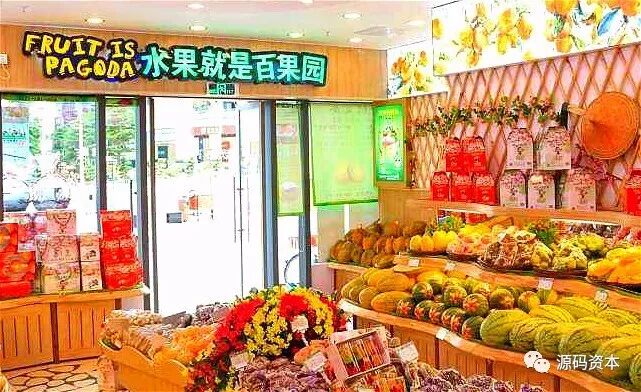
January 11 — Pagoda, China's leading fruit retailer, has raised over 1.5 billion yuan in its Series B round. The funding was led by CICC Capital's Zhongjin Zhide and Zhongjin HuiRong, alongside Cornerstone Capital, Source Code Capital, Yuexiu Industrial Investment Fund, Shenzhen Capital Group, and other institutional investors. This marks Pagoda's return to the capital markets following its Series A in 2015 and Pre-B round in 2016.
According to Jiao Yue, Pagoda's VP, the fresh capital will go toward fruit R&D and category brand building, developing an advanced fruit industry supply chain and ecosystem, and continued investment in industrial internet infrastructure. Another notable development: by fully exporting its standards and systems, Pagoda is finally opening its long-anticipated franchise business to the public.
Pagoda pioneered China's fruit chain-store format, opening the country's first franchised fruit specialty store back in 2001. From 2002 to 2009, it methodically built just 115 stores, using that period to develop a replicable operating model before accelerating nationwide expansion. To date, Pagoda operates over 2,800 stores across more than 40 cities. As reported by Eurofresh, it has become the world's largest fruit retail chain.
Beyond its offline footprint, Pagoda's online business has surged in the past two years. 2017 marked the inaugural year of "new retail," and while players flooded the space, the core battleground was singular: fresh grocery new retail — where Pagoda stands as the clear frontrunner.
As early as 2014, Pagoda internally proposed "online-offline integration." With online sales surpassing 100 million yuan in July 2017, the company achieved meaningful fusion of its physical and digital channels. Leveraging its base of over 28 million quality members, Pagoda is now accelerating its membership system upgrade, creating seamless online-offline linkages to build a full-channel service experience, strengthen scenario-based and精细化 operations, and ultimately improve per-store profitability.
During the recent Double Twelve shopping festival, Pagoda logged 52.2 million yuan in sales, ranking first in the fresh grocery category on Koubei-Alipay's Double Twelve leaderboard. Notably, Koubei-Alipay data shows Pagoda's customer base is trending younger, with the post-95s consumer segment expanding.
Discussing new retail inevitably brings up the "people, goods, place" framework — and the "goods" element in particular. As Pagoda founder and chairman Yu Huiyong puts it: "No matter how business models or technology evolve, the essence of commerce doesn't change — the pursuit of good products at fair prices. The core of customer experience always comes down to product, and product is Pagoda's core." To deliver more premium, high-value fruit, Pagoda has established over 230 fruit bases globally and aims to reach 60% direct sourcing from overseas bases by 2020.
At the press conference, Yu stated that Pagoda will continue tackling the hardest challenges, deepening its fresh supply chain infrastructure and capabilities, and fully advancing its "two carriages, three pillars" strategy to let franchisees focus on running their stores.
Reading the tea leaves, Pagoda may look like a retailer on the surface, but the company is working backward from a bigger vision. On the front end, it connects with and serves individual consumers through consumer internet; on the back end, it upgrades and transforms every company across each industry link through industrial internet. In between, Pagoda shares R&D, procurement, IT, logistics, and supply chain finance. Today it increasingly resembles an ecosystem — a platform-style public retail company.
As a platform retailer, it naturally possesses the ability to empower other retailers. Take this franchise opening: previously, a fruit shop owner simply sold what they had and that was that. Under Pagoda's empowerment model, they're taught how to merchandise, manage customers, operate community groups, leverage big data, and improve sales per square meter — pushing every capability of a single store to its limit, likely yielding profitability well above that of mom-and-pop or street-corner competitors.
On the franchise decision, Pagoda executive VP Yuan Feng explained that earlier on, neither the brand itself nor its management and standardization systems were mature enough — there was simply no precedent for fruit retail chains before Pagoda. At the time, many prospective franchisees lacked operational awareness, and the franchise model itself was unfamiliar to investors. Now, with sufficient accumulated expertise in product standardization, merchandise management, member marketing, and operational support, opening franchises is a natural next step.
Beyond brand-level backing, Pagoda provides systematic training across all positions to get staff up to speed quickly and safeguard franchisee outcomes. A dedicated team also delivers comprehensive operational support — for instance, tailoring online and offline, full-channel, diversified operations and sales solutions to the specific characteristics of different regions and franchisees, boosting their business performance while ensuring simple, efficient, low-cost front-end operations.
By exporting its platform capabilities, Pagoda aims not only to elevate franchisee management standards but to advance the entire fruit industry. Beyond letting franchisees profit through this "orchard for everyone," Pagoda requires each to adhere strictly to company principles, including its "no-questions-asked return for bad fruit" service guarantee.
Pagoda's Series B investors noted that compared to other retail formats, community fruit and fresh grocery stands out for high purchase frequency, stable quality customer bases, and relatively high average ticket sizes — Pagoda logged nearly 200 million transactions in 2017 alone. The broader fruit retail market generates roughly 700 billion yuan in annual sales, and Pagoda currently holds just 1% market share. With its undisputed leadership position, it has at least 5-10x growth runway ahead. The investors also expressed strong alignment with Pagoda's long-term orientation and a commitment to growing alongside the company.
Lu Fangxiao, president of the China Fruit Marketing Association, observed that China is both the world's largest fruit producer and consumer. The fruit industry faces unprecedented opportunities but also significant challenges, particularly around standardization and supply chain management. He believes Pagoda's ecosystem approach, with a leading enterprise demonstrating and driving upgrades across upstream and downstream industry links, can effectively address these pain points.
Su Shuang, director of investment and franchise at the China Chain Store & Franchise Association, noted that since Pagoda pioneered the fruit specialty chain format, fruit stores of all sizes have proliferated across China. As the only fruit retailer to make the "China Chain Store Top 100" for two consecutive years, Pagoda's franchise system is now mature and robust — earning it a 4A rating in commercial franchising alongside brands like McDonald's, KFC, and Home Inn. Beyond its upstream deep cultivation, Pagoda is working to elevate service standards across retail, and this franchise opening will bring more quality, delicious fruit to more consumers.
At the event, reporters also experienced Pagoda's unmanned retail format, dubbed "Baiguo Box." The company has established an unmanned retail division internally. Through a network of physical stores plus unmanned retail with open supply chain, Pagoda aims to achieve channel scale that further reduces costs, enhances channel brand value and efficiency, and incubates and supports fruit category brands within the channel — capturing brand and production margin and strengthening its competitive position.
More Recent Funding News

Zhangshang Fucai Raises 20 Million Yuan Angel Round from Source Code Capital, Buhuo Ventures

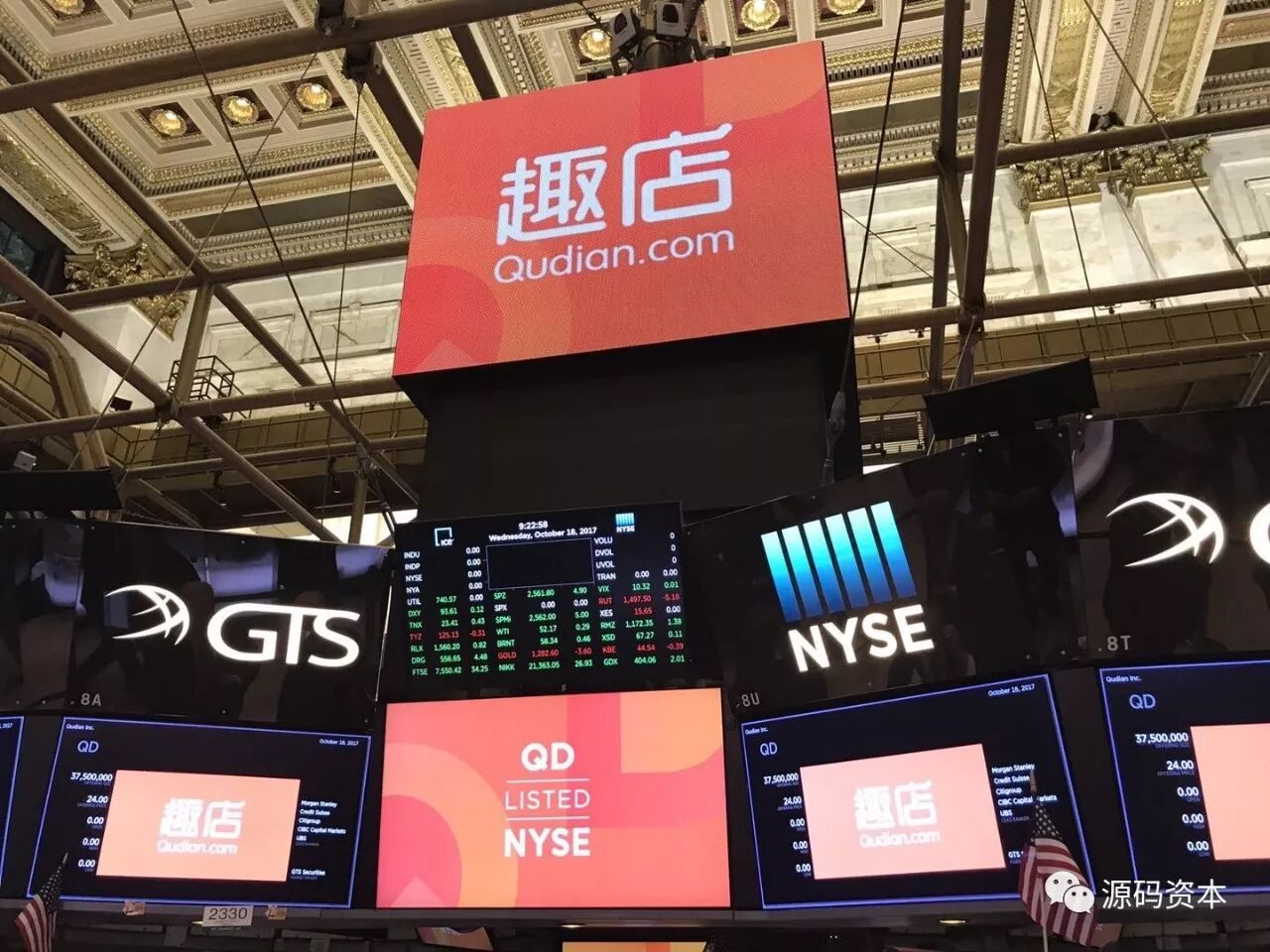
Source Code Capital Portfolio Company Qudian Successfully Lists on NYSE

Juli Xinfang Closes $10 Million Series B; Existing Investor Source Code Capital Increases Stake

ErGeng Closes 100 Million Yuan Series B+; Source Code Capital Backs Short-Video Leader

Yongqianbao Announces 466 Million Yuan Series C; Existing Investor Source Code Capital Follows On

Cijinrong Announces 65 Million Yuan Series A Led by Source Code Capital


Source Code Capital
Creating Lasting, Real Value

WeChat ID: sourcecodecapital
More professional content
Follow our official WeChat