MaHui Entrepreneurs | Biren Technology's Wen Zhang: The Story of China's Chip Companies Is Just Beginning

If there's a real chance to transform an industry, you have to try it — even if you lose everything.
#MaHui Entrepreneurs Resilient and Bold, Exploring Without End
On July 6, China Entrepreneur magazine released its 2022 "Future Stars" list of 21 high-growth innovative companies. MaHui member Biren Technology made the cut. Founder Wen Zhang recently sat down with China Entrepreneur to reflect on China's journey to ignite its own chips.
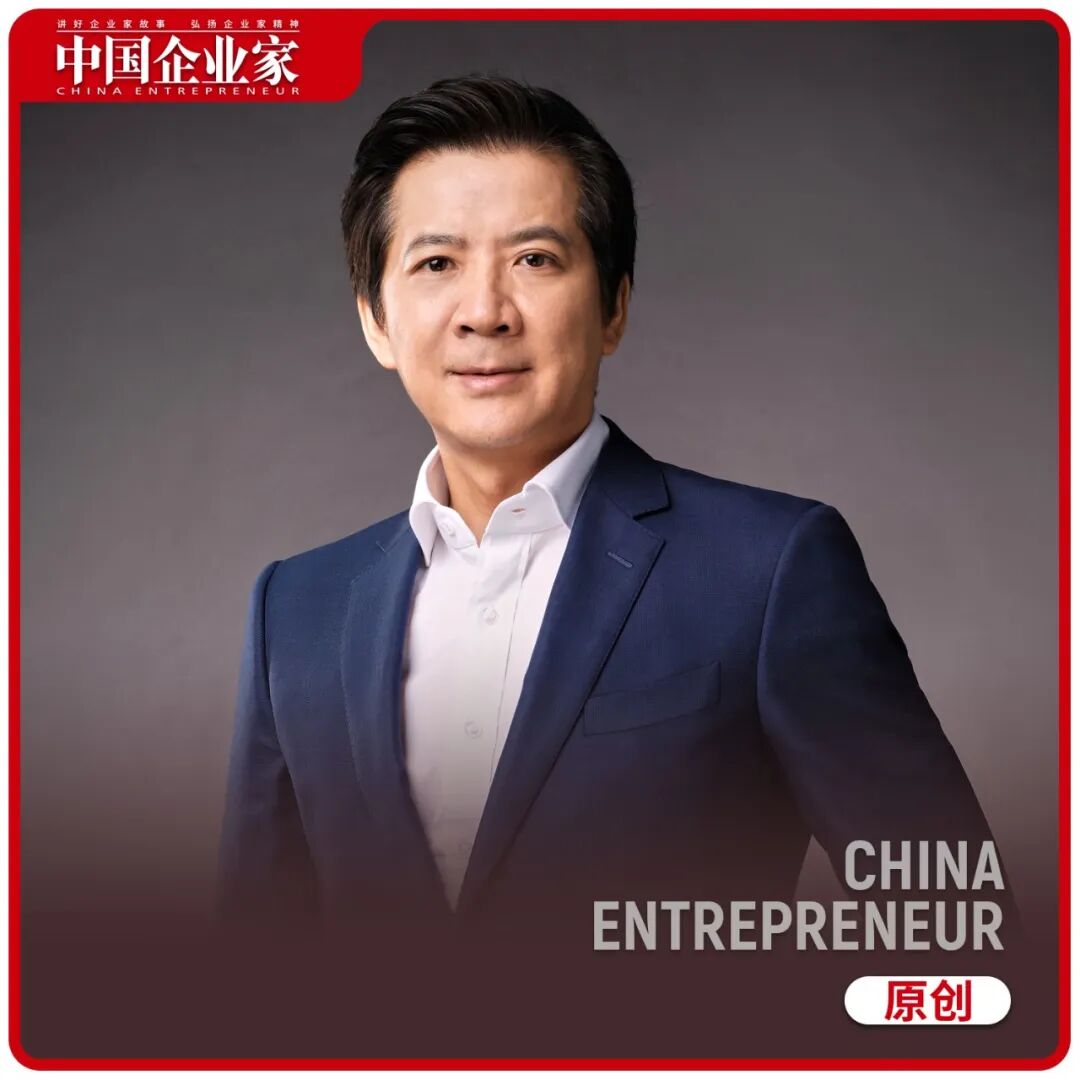
If a founder with no industry background told you he wanted to build a GPU chip to rival NVIDIA's — with nothing but a five-slide deck — how would you respond as an investor?
Wen Zhang is exactly that kind of outsider founder. He holds a JD from Harvard University and brings deep management experience. Early in his career, he was a seasoned investor in Wall Street's pan-Asian markets. In 2011, when SMIC founder Richard Chang launched Enraytek, Wen was tapped as CEO. In 2018, he became president of SenseTime, steering the company's headquarters to Shanghai. Yet when he decided to found Biren Technology in 2019, he was still widely seen as a complete outsider to the GPU space.
On May 16, 2019, the United States added Huawei to the Entity List, cutting off multiple American chip suppliers. This triggered China's first wave of chip startup fever. Wen felt his own entrepreneurial spark ignite. He saw a massive domestic AI chip market — over 90% dependent on foreign products. And AI chips presented a distinct opportunity for China: first, the theoretical architectures were still being broken through; second, China's data advantage, since AI chips most need real-world scenarios and iterative data.
GPU stands for graphics processing unit, a microprocessor specialized in image and graphics computation. In the post-Moore's Law era, GPU capabilities have increasingly stretched beyond graphics rendering into general-purpose computing. As AI applications heated up, a crop of GPU-focused startups emerged.
Still, GPUs are a tough nut to crack — any opportunity meant scraping by in NVIDIA's empire. Everyone around Wen voted against his new dream. From an investor's standpoint, he himself would have opposed it: no deal.
"At the time, I was the only founder in the 'big chip' race who didn't understand the technology, and I didn't even know a single GPU expert," Wen later told early investors. "If I were in your shoes back then, I wouldn't have invested in Wen Zhang either."
Things took an unexpected turn. Biren Technology not only raised money — it set records. From its registration on September 9, 2019 to its Series B in March 2021, the company raised over 4.7 billion yuan in just 18 months. Investors helped Biren set a domestic fundraising record for chip startups.
Alex Zhou, partner at early investor Qiming Venture Partners, was unequivocal: "When we met Wen Zhang and the Biren founding team, the people were right, the thinking was right, and the market need they identified was right."
On the evening of March 31, 2022, Biren proved Zhou's judgment correct: its first general-purpose GPU chip, the BR100 series, successfully powered on. With Shanghai under lockdown, Wen and nearly one hundred core employees spent over 60 days together at the company, witnessing Biren's first milestone.
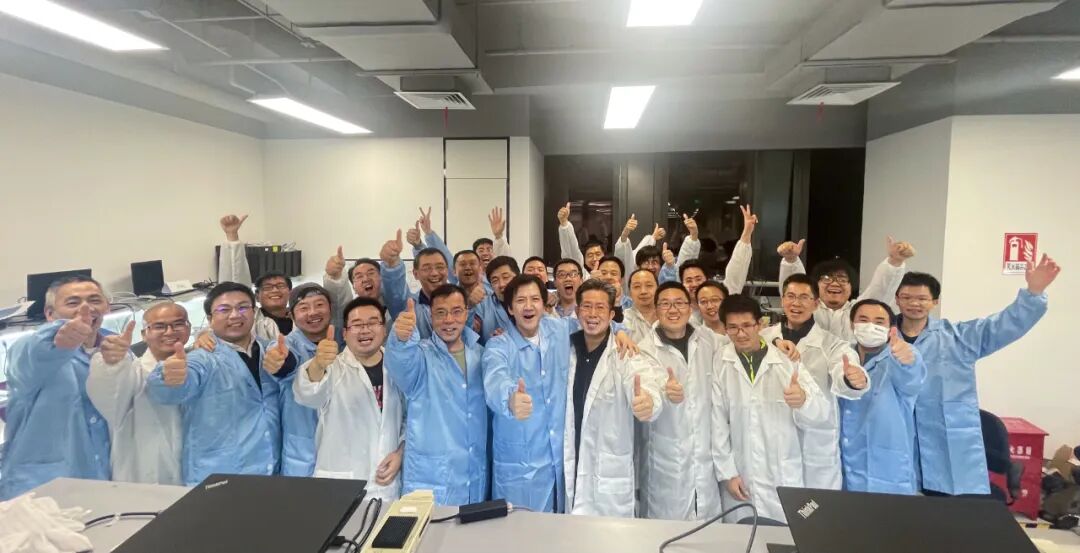
China's highest-compute general-purpose GPU chip powered on in a single try at Biren Technology
For Wen, this was merely a new starting point: "From tape-out to mass production, the team went all-in and got it done in just two to three months. Our co-CEO Xinrong Li, previously AMD's global vice president, told me that in his 35 years in chips, he'd rarely seen a general-purpose GPU of such massive compute and complexity power on in one go and reach production so smoothly — that speed is extremely rare across the entire industry."
In a wide-moat, high-barrier, long-cycle industry, uncertainty abounds. Across the sweeping tide of technological progress, some heavily hyped tech stars have flamed out and vanished; other startups have survived against the odds and overtaken on the curve.
"From day one of this venture, investors have trusted me deeply. One told me, 'I absolutely believe you're doing this with conviction and ideals. Even if this goes to zero, I'll invest in you next time.' That meant everything to me. There's only one path up this mountain — I have to make it happen." Wen's ambition is palpable.
His WeChat signature reads: An entrepreneur is someone who dares to dream the dreams. Biren Technology and Wen Zhang are embarking on a bold journey of dreams.
China's Top Headhunter
Though he didn't grasp the technical details, Wen knew his strengths: "My previous entrepreneurial experience had proven my ability to integrate capital, talent, and resources." If he didn't know the technology, he'd bring in those who did. He reached out to a Harvard friend, who compiled a list of GPU luminaries. The friend warned: assemble even half of them and you'd succeed — after all, suitable talent was nearly impossible to find domestically.
Of the two major international GPU companies, NVIDIA had no core R&D team in China, and AMD only maintained a small Shanghai team. The only domestic groups working from GPU底层架构 were the former Zhaoxin team and the current HiSilicon team. Wen's first target was Hong Zhou from HiSilicon, who led the self-developed GPU team.
At the 2019 Shanghai World Artificial Intelligence Conference, Hong and Wen met for the first time. Perhaps sensing the subtle shifts in the broader environment, Hong was looking to try something different — the two clicked immediately. After two meetings, Hong agreed to join Biren as CTO.
Wen was direct: "A startup can't afford salaries in the tens of millions. Brother, if you're going to leave, leave early — don't quit halfway through." Hong replied: "I wouldn't do this for money. I just want to get this done."
In late 2019, Hong bid farewell to his family and boarded one of the last flights back to China before the pandemic. To prevent potential transmission, he deliberately wore two extra plastic bags. For two years, this CTO arrived at 7:30 AM and left at 10:00 PM, day after day.
Beyond Hong, Biren quickly assembled a formidable technical roster: Guofang Jiao, who had built Qualcomm's Snapdragon GPU team and led five generations of Adreno GPU architecture development; Lingjie Xu, former head of Alibaba Cloud's AI infrastructure; Linglan Zhang, former overseas GPU division VP at Hygon; Shan Tang, former AI Lab lead at EDA giant Synopsys; Xinrong Li, former AMD global VP and China R&D center GM; and Chaoyuan Yang, former NVIDIA Shanghai GM.
Speaking of his recruiting speed, Wen was pleased with his results: "They all call me China's top headhunter."
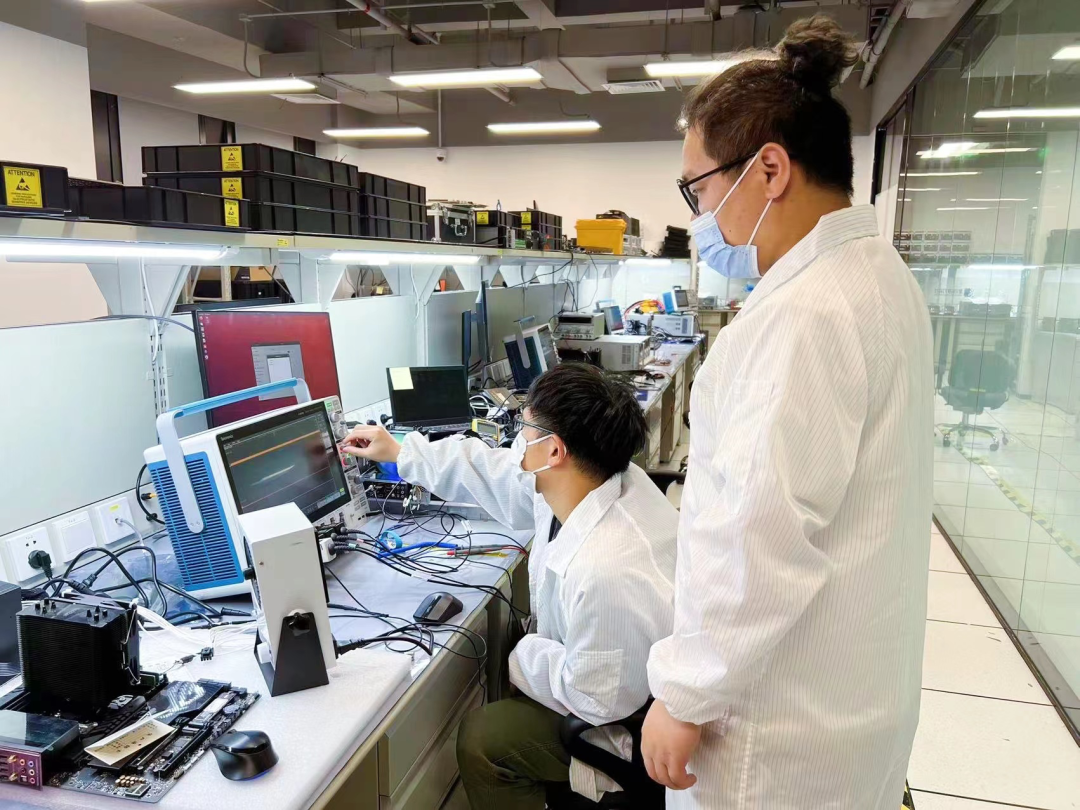
Biren Technology's R&D team conducting chip testing and optimization
Not only did they have core technical talent — more importantly, Biren built a "complete" team. "Most teams are assembled from former directors and VPs at big companies, using a master-apprentice model within a small circle. That creates obvious weaknesses. But for 'big chips' — from architecture design to hardware, SoC, engineering, software ecosystem, to fundraising and recruiting — you can't have weaknesses. At the time, we saw that Wen's team was the most complete," said Zhou.
With the team in place came the second mission: capital.
Investors asked Wen if $100 million would suffice. Wen named a figure ten times higher: $1 billion. He'd done the math: chip companies start at roughly $200 million, post-tape-out requires software teams of over a thousand — another nine-figure expense — and building out the full ecosystem would need at least $1 billion, if not more.
Zhou wasn't fazed. He actually agreed with Wen's thinking: "Big chip" companies typically have hardware-to-software engineer ratios of 1:3 or even 1:5, while most other chip companies run 1:0.5 or even 1:0.2.
"Chips require three elements: capital intensity, talent intensity, plus resource intensity — it's an extremely capital-intensive industry. Second, from product launch to meaningful cash flow takes at least two to three years. Finally, from my entrepreneurial experience, startups must allow for trial and error — and that costs money." These three points made Wen acutely aware that Biren needed to "store ample grain."
It was a high-stakes gamble, and Wen had his moments of hesitation: play it safe with a conventional product, or swing for the fences with something truly industry-changing? Though the latter might end in total loss, investors and Wen stood on the same side: if there's a real chance to transform an industry, even total loss was worth trying.
The Obsessive Entrepreneur
With more money came more controversy. Outsiders branded Wen a capital maniac, and Biren's "sky-high" fundraising drew criticism.
Indeed, in the overheated GPU赛道, newly minted startups casually demanded valuations in the tens of billions. The parallels to BOE's development were striking — since entering the panel industry in 2002, BOE had expanded at breakneck speed through debt-financed, leveraged M&A, raising over 70 billion yuan to date, nearly the maximum any industrial enterprise could extract from capital markets. One media outlet once praised its "fundraising" artistry as exceptionally polished, its capital operations "top-tier" in the industry.
"Having a clear conscience gives you greater strength. Because from day one, many people didn't understand me." At Biren, Wen insists on taking a symbolic one-yuan salary — he didn't want personal interests entangled with the company's. Early on he'd read the commentary; now he ignores the misunderstanding. He knows that whether the reviews are praise or doubt, what matters is shipping the product.
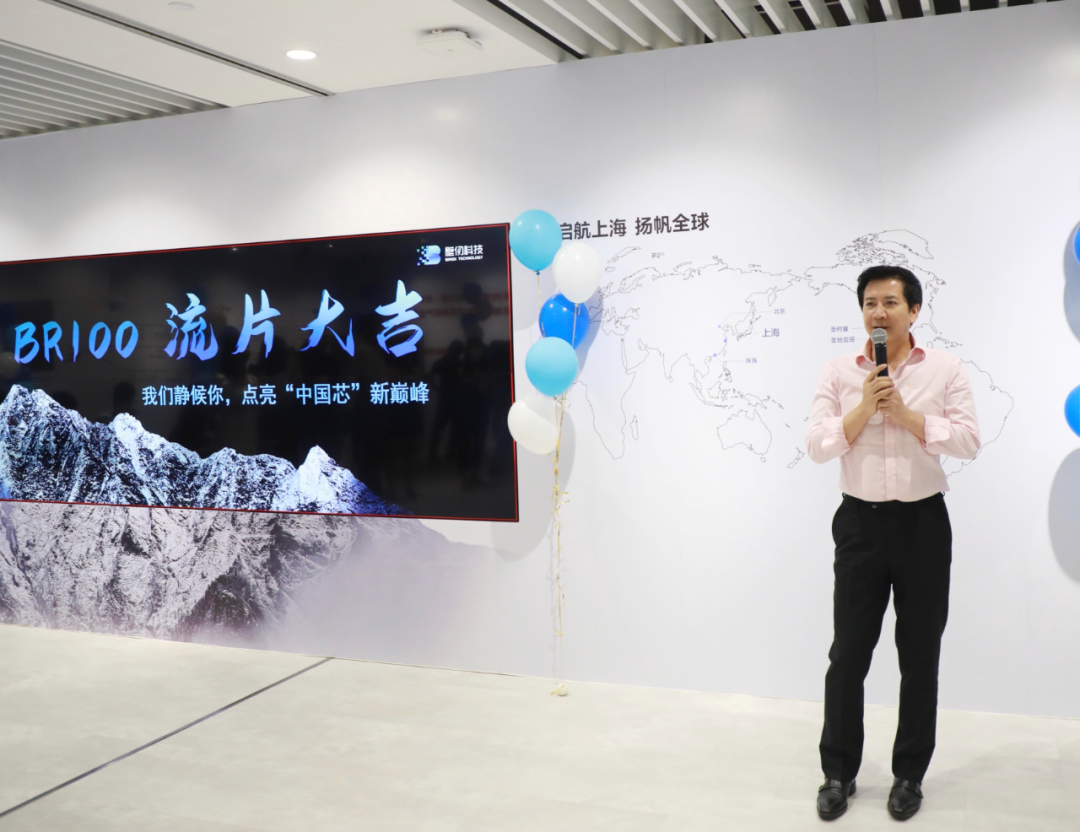
Wen Zhang, Founder, Chairman, and CEO of Biren Technology
On October 8, 2021, Biren sent a signal: the BR100 series would hit the market "next year." Products powered by the BR100 would focus on AI training and inference, general computing, and other compute-intensive scenarios.
The promise was kept. On March 28, 2022, amid pandemic lockdowns, Wen and nearly one hundred core employees chose to stay at the company together for the most critical juncture. Three days later, on the evening of March 31, Biren's first general-purpose GPU chip, the BR100 series, successfully powered on. In that commemorative group photo, engineers couldn't hide their excitement.
According to Biren, the BR100 series is built on an original self-developed chip architecture, using 7nm process technology and incorporating multiple cutting-edge design, manufacturing, and packaging techniques including Chiplet. This August, the BR100 series will represent domestic chips at HOT CHIPS, the industry's premier gathering, competing on the same stage as NVIDIA, AMD, and Intel. HOT CHIPS is a key bellwether for the global high-performance chip industry, especially for original chip architectures.
Wen is somewhat obsessive — he demands that this chip compete with top-tier vendors. Perhaps it's a habit formed in childhood.
"When I was young, my mother told me, 'Whatever you do, do it seriously and do it best. Even wiping a table — wipe it the cleanest, or don't do it at all.'" Wen says. Since then, he's felt that if you're going to do something, either don't do it, or do it the best.
After returning to China in 2011, to improve LED chip yield from 70% to over 95%, Wen spent four years in the barren Lingang district of Shanghai. Before joining, Richard Chang asked if he had any requests. He said: just let me drink Starbucks. That wish went unfulfilled until he left Lingang.
"People who succeed at entrepreneurship are basically all a bit obsessive." Wen doesn't shy from the label. "My logic is different from others. If 90% of people agree something should be done, I won't do it. If 90% oppose it, I'll do it." His GPU赛道 choice followed this logic.
Wen's decision sent ripples far and wide. In 2020, former NVIDIA global VP Jianzhong Zhang founded Moore Threads, raising billions of yuan in 100 days; around the same time, MetaX was established, founder Weiliang Chen previously an AMD director, and MetaX secured four funding rounds within a year.
More and more people converged on the same consensus: this赛道 has real room to run. Per IDC data, the global chip market will reach $35.2 billion in 2022, with GPU share growing fastest — expected to hit 57% by 2025. IDC also projects China's server shipments reaching 5.252 million units by 2025, with a $35 billion market.
"This is a market of hundreds of billions. Honestly, none of our so-called competitors are real competitors — we should all nurture this industry together, not 'involute' it." Wen says Biren has already secured orders from major customers.
On November 15, 1971, Intel wrote a bold proclamation for a fingernail-sized chip: A new era of integrated circuits. That year, Intel defined the CPU; in 1999, NVIDIA defined the GPU. Now, the story of China's chip companies is just beginning.

- MaKe | MaHui Member "Biren Technology" and Ping An Technology Reach Strategic Partnership to Build a Domestic High-Compute Chip Industry Benchmark
- MaKe | Biren Technology Powers On China's Highest-Compute General-Purpose GPU Chip
- MaHui Entrepreneurs | Post-90s Founder Junbin Zhang: Building Transformational Products, Pursuing 0-to-1 Value
- MaHui Entrepreneurs | Two 29-Year-Old Genius Scientists' "Moon and Sixpence"
- MaHui Entrepreneurs | Mech-Mind's Tianlan Shao: Some of My "Grassroots" Experience
- MaHui Entrepreneurs | IrisView's Shunhao Fan: What Kind of Operating System Does the XR Era Need?
- MaHui Entrepreneurs | When a "Software-Defined Storage" Founder Is Also a Race Car Driver
- MaHui Entrepreneurs | Academician Weinan E Proposes a "New Dawn" for Applied Mathematics: AI for Science Deeply Integrates AI with Fundamental Science
- MaHui Entrepreneurs | Exploration Never "Extinguished," Saluting the Spirit of Aerospace
Click "Read More" to view more MaHui members