MaHui Entrepreneurs | How a Graduation Project Became a $2 Billion Logistics Robot Leader

#MaHui Entrepreneurs — Resilient, Bold, and Ever-Exploring
On July 6, China Entrepreneur magazine released its 2022 "Future Stars" list of 21 high-growth innovative companies. MaHui member HAI ROBOTICS made the cut. Recently, HAI ROBOTICS founder and CEO Yuqi Chen sat down with China Entrepreneur to discuss the future of logistics and warehousing robotics.
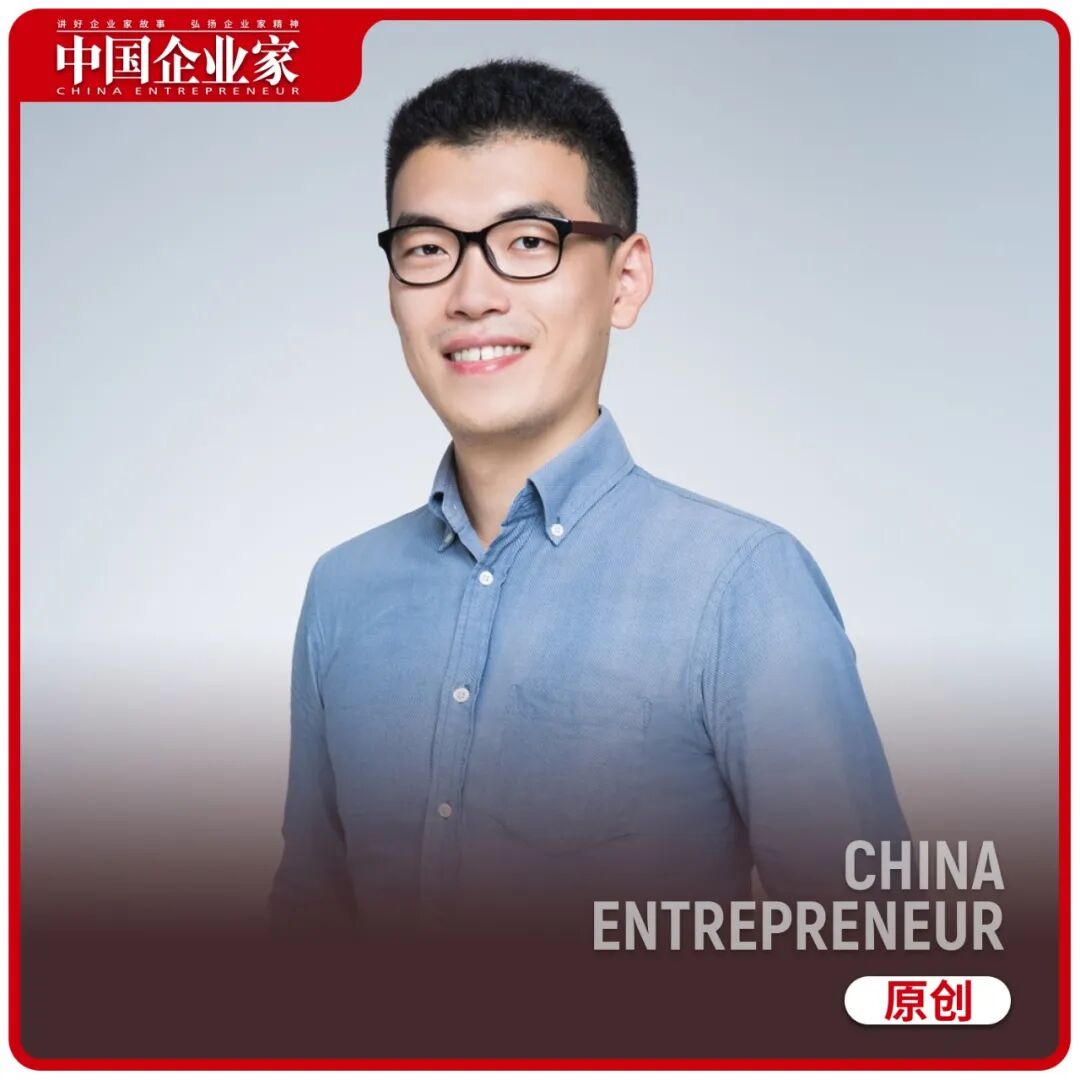
When robotics meets traditional logistics, what kind of sparks fly? Yuqi Chen probably never imagined that a graduation project from six years ago would spawn an entirely new product category and build a leading company in a niche sector.
Warehousing has never been more strategically important in the supply chain. As automation shifts toward intelligence, the logistics robotics industry has hit the fast lane, with global expansion accelerating. The signs are everywhere: capital pouring in, e-commerce giants doubling down, and a wave of startups rising fast.
This arena is only going to get more crowded.
"Currently, overseas business accounts for 30% of our revenue. Over the next three years, we plan to push that to 50%," Yuqi Chen said in a recent interview with China Entrepreneur. Headquartered in Shenzhen, HAI ROBOTICS has subsidiaries in Japan, the United States, Singapore, the Netherlands, the UK, Australia, and Hong Kong, with operational capabilities in over 30 countries and regions.
Time and technical first-mover advantage seem to give Chen his composure. HAI ROBOTICS was founded at the end of 2016 by three post-'88ers. CEO Yuqi Chen, born in 1989, and co-founder/CTO Shengdong Xu both hold master's degrees in robotics from ETH Zurich. The third co-founder, Bing Fang, graduated from the electronic engineering department of The Hong Kong Polytechnic University.
Integrating robotics and AI into warehousing and logistics is HAI ROBOTICS's mission right now. As the creator of the ACR (Autonomous Case-handling Robot) category, the company is playing a significant role in this wave of digital-intelligent logistics transformation. To date, HAI ROBOTICS employs over 1,600 people globally, more than half in R&D, and holds or has applied for over 1,100 intellectual property rights worldwide.
Its robot hardware and supporting equipment manufacturing facility is located in Dongguan, Guangdong, with an annual production capacity of 10,000 robots. Its business spans footwear and apparel, 3C manufacturing, e-commerce and express delivery, third-party logistics, retail, and healthcare — with clients including SF Express Supply Chain, Philips, Li & Fung, ANTA Group, Bosideng, and Sinopharm Group, across more than 500 implemented projects.
Building on roughly 10x revenue growth in 2020, HAI ROBOTICS achieved nearly 5x growth in 2021.
Pandemic disruptions and a cooling global investment climate have introduced more commercial uncertainty, yet logistics robotics remains one of the few sectors still on an upward trajectory. With hard-tech innovation and explosive market growth, young HAI ROBOTICS has drawn considerable investor attention. In 2021 alone, it raised two rounds — Series C and D — totaling over $200 million.
On June 14 this year, HAI ROBOTICS announced its D+ round. According to media reports, its post-money valuation approached $2 billion.
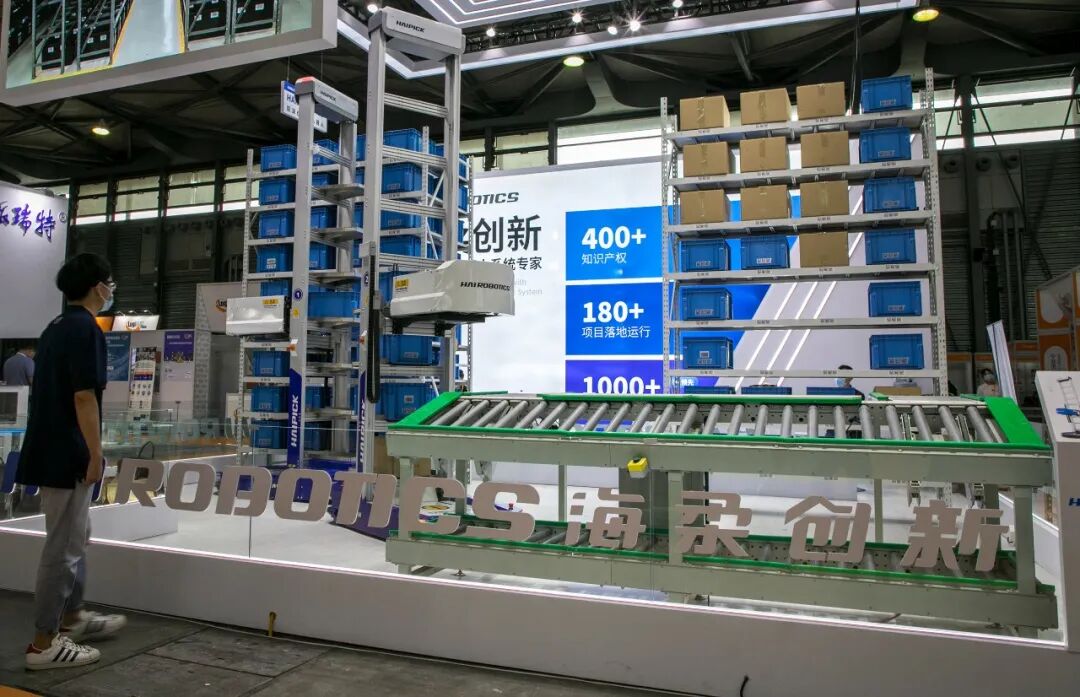
Source: Visual China Group
Innovation Model: "Tote-to-Person"
At Zhongzhi Pharmacy's new warehousing and distribution center, picking has evolved from "person-to-goods" to "goods-to-person." HAI ROBOTICS provided over 13,000 storage locations, equipped with 4.2-meter-high shelving, multiple HAIPICK A42 robots, and HAIPORT automatic loading/unloading machines. Zhongzhi reports that storage density has increased 80% compared to their previous manual warehouse.
Improving pharmaceutical warehousing and distribution efficiency is a major trend in medical logistics. Robotic systems' precise navigation, recognition, and picking capabilities dramatically boost both efficiency and accuracy. Even in cool storage facilities (0°C to 20°C, no direct sunlight), robot performance remains unaffected. Zhongzhi Pharmacy has now achieved shared inventory management for both B2B and B2C operations, with drug circulation and capital turnover steadily improving.
Pharmaceutical logistics is just the tip of the iceberg for HAI ROBOTICS's efforts to transform traditional industries through robotics. "We can help the entire supply chain in several ways: one, improve human efficiency; two, increase warehouse storage density; three, enable warehouse visualization; four, achieve higher accuracy. It used to be two nines — 99%. Now it's four nines — 99.99%," Chen said.
With its ACR "secret weapon," HAI ROBOTICS landed its first commercial project in 2018 with BEST Inc. In 2020–2021, it secured major clients including SF Express Supply Chain, Philips, ANTA Group, and Bosideng, with single-warehouse deployments for leading enterprises reaching hundreds of units.
According to Chen, the HAI ROBOTICS team began developing warehousing robots as early as 2015, successfully creating the world's first ACR system — Autonomous Case-handling Robot — for commercial use. Unlike the dominant "shelf-to-person" approach using AMRs (autonomous mobile robots), ACR focuses on "tote-to-person."
Totes, or cases, are standard containers in logistics. Products of different batches and specifications are packed in plastic or cardboard totes and placed on shelves. HAI ROBOTICS's robots replace manual labor, precisely moving totes from shelves to packing and shipping zones, where warehouse workers simply pick required items from the totes at workstations.
ACR robots operate on a tote/carton basis, with higher hit rates. They're suited for industries with small item volumes, small batch sizes, and diverse SKUs. Deployment requirements are low, capital investment is moderate, and implementation typically takes less than a month. The system can also be flexibly modified and expanded as business needs change, significantly reducing the cost and complexity of warehouse automation upgrades.
In the second half of 2021, Li & Fung Supply Chain and HAI ROBOTICS launched their first smart warehousing and logistics center in Shenzhen's Qianhai district.
After more than six months of operation, Li & Fung Supply Chain General Manager Wendong Wang assessed the results: HAI ROBOTICS's ACR solution helped their B2B operations achieve 2.9x picking efficiency gains, while B2C e-commerce improved 2x, with warehouse storage density up roughly 30%. "This outcome has been enormously helpful for us."
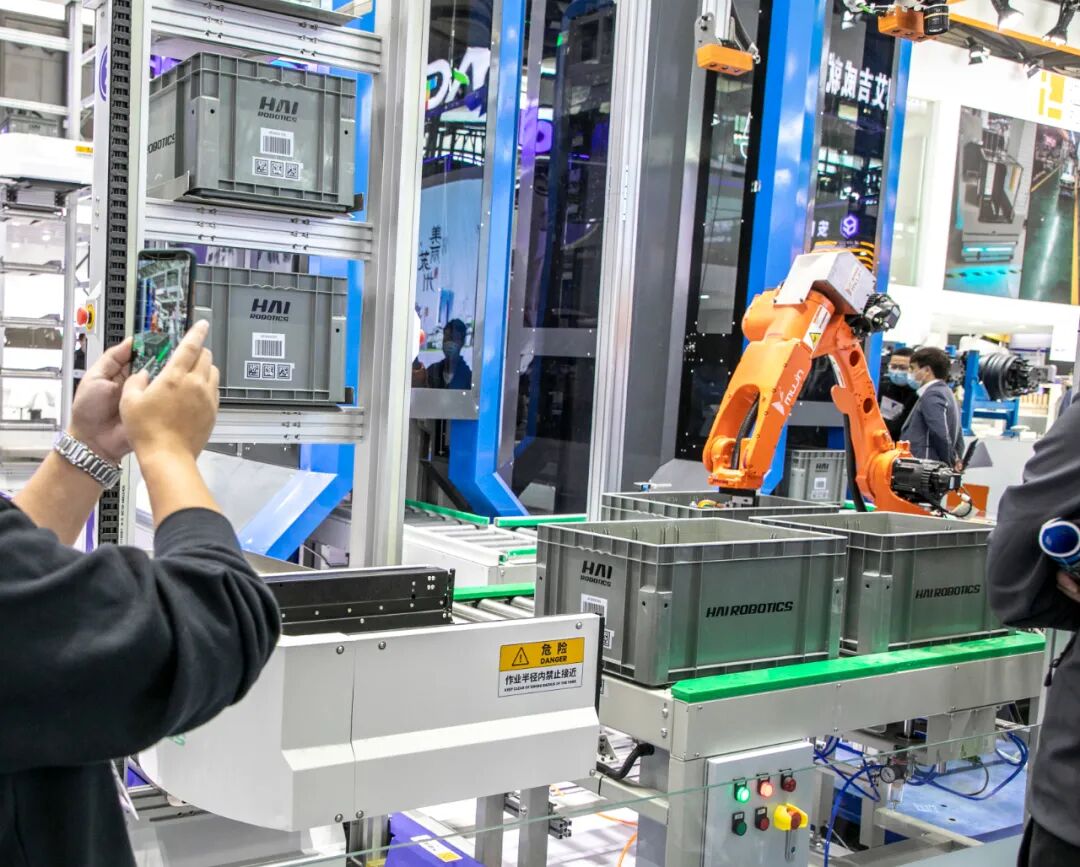
Source: Visual China Group
Three Years in Stealth, Finding the Path
In 2017, HAI ROBOTICS pioneered the clamping single-tote robot. In 2018, it released a multi-layer tote-handling robot with a maximum picking height of 3.1 meters. Since then, individual robots can store and move more totes, tote weight capacity has increased, and maximum picking height has risen to 10 meters — dramatically improving both warehouse storage density and picking/handling efficiency.
HAI ROBOTICS's "warehousing logistics robot" product has been around for nearly six years now. But from the first robot's birth to bringing products to market, the company spent almost three years in stealth mode. In Chen's words, "From 2016 to 2018, we were constantly refining the product. We only started selling in 2019."
To this day, Chen vividly remembers the moment the first robot came to life.
At the end of 2015, based on his graduation project and his understanding of warehousing logistics, the team built their first prototype. By September 2017, they had their first system. "We tested it at a warehouse in Beijing — a two-meter-tall robot that could only move one tote at a time." The result was clearly insufficient. "Because warehouse operations come down to two metrics: handling efficiency and storage density."
Frustration spread through the entire team. "At the time, everyone thought this thing was useless. Half the R&D team left. I was devastated too," Chen recalled. But he believed there had to be a way forward. "Every time we reached a milestone before, we found a path to keep going. If the goal is right, you push through the obstacles."
As for how he battled that despair? "No special method. You just endure. Get through it." In 2018, their robot system began commercial deployment.
In the eyes of Capital Today founder Kathy Xu, Yuqi Chen is the type to obsessively hammer away at something until it works. "He spent four full years refining the product until it was truly good. Chen is exceptionally good to his customers — no matter how difficult the project, he maintains strict control and achieves 100% delivery. Not a single project has been abandoned." Xu made this assessment after HAI ROBOTICS's Series D close.
Before founding HAI ROBOTICS, Chen had one prior entrepreneurial experience.
In 2014, fresh out of school, Chen founded Hong Kong Pugu Precision Systems, focusing on voltage control modules for optical communications — the same direction as his 2012 undergraduate graduation project.
During that venture, he and his team spent nearly three years developing the world's smallest and highest-performing bias controller, selling it to NASA, Bell Labs, Huawei, and others. It was through this project that Chen got to know post-'90s Bing Fang, and together they embarked on their second startup.
In Hong Kong, Chen, Xu, and Fang met Zexiang Li, a professor at HKUST and founding shareholder of DJI. After learning about the trio's technical backgrounds, Li suggested they consider machinery and automation. When the company was founded, Li also served as its chief advisor.
After exploring medical robotics and other directions, the founding team ultimately locked in on logistics automation. Chen came to Beijing and spent nearly three months intensively researching over 30 warehouses. When he saw warehouses still relying on manual picking and moving, he was convinced that tote robots had value — and chose to enter the field.
Focused on a Niche
Human-robot collaboration — how far can it go? Will machines replace humans? Such questions have always accompanied technological development.
"Our goal isn't to eliminate people, but to improve efficiency," Chen said. "For at least the next decade, one of society's biggest challenges will likely be aging. Robotics can maximally address labor shortages." "There may be new unemployment problems in the future, but we need to solve the problems in front of us first."
In his view, on one hand, virtually all enterprises now face supply chain and labor shortage challenges; the demographic dividend is fading and labor costs rising inevitably. On the other hand, the pandemic has accelerated demand for warehousing automation. Touching on his original motivation for starting the company: "HAI ROBOTICS hopes to use robotics technology to help solve social problems."
"I also ask myself, why am I alive?" Chen said. "Creating value is what gives life meaning."
From day one, Chen positioned HAI ROBOTICS as a global company. Currently, it has achieved independent R&D coverage of core elements including robot bodies, underlying positioning algorithms, control systems, robot scheduling, and intelligent warehouse management systems. While pushing technological innovation, it has also built a global patent portfolio, holding or having applied for over 1,100 intellectual property rights worldwide.
"At the R&D level, we invested 300 million yuan last year and plan to invest 500 million annually going forward," Chen said. In his view, "technology is just a tool — what matters more is product value. So HAI ROBOTICS's organizational layers are partly technology-related, and partly product and service systems."
In 2022, HAI ROBOTICS has been active overseas. In dealing with international clients, Chen has noticed significant differences in demands. "Domestic clients just want results. Overseas clients demand not only perfect results but perfect processes too. International clients expect high investment early on, with higher delivery costs. On the flip side, the gross margins we get are higher than domestically."
Compared to overseas warehousing robotics companies, HAI ROBOTICS holds substantial advantages in project costs, technology, and customization capabilities. Chen stated that overseas market expansion and localization will be future development priorities. But in the near term, HAI ROBOTICS won't expand into additional product lines or grow headcount.
"We're staying focused on our original product line — and aiming to be the best in the world at it," Chen revealed. Earlier this year, HAI ROBOTICS concentrated on organizational and supply chain development, seeking to strengthen operational efficiency. Team size will remain at the current 1,600-person level. "That won't change short-term. Instead, we're focused on improving the productivity of existing staff."
Chen believes this strategy connects to HAI ROBOTICS's culture. "We have Shenzhen company DNA — very pragmatic. We don't have the capacity to expand across multiple product lines while maintaining consistent quality. Our purpose is to better serve customers."
If he could redo the company's journey, Chen would want to build the organization better and earlier. "I didn't have a concept of organization before, and I'd never worked at another company. Frankly, I was unclear about organizational development at HAI ROBOTICS initially — for example, how to set targets for product lines? Only later did I understand that an organization is actually a very precise, organic system."
Second, Chen wishes he had handled patents better from the start. "Some of our earliest robot designs were very creative. Our first-generation robots remain competitive today. Though they didn't sell, there was real demand — we just hadn't protected ourselves adequately with patents, which left us with less confidence." Additionally, product capabilities: "If we had this capability two years ago, our product-market fit would have been even stronger."
Right now, economic downward pressure is palpable, uncertainty is prominent, and entrepreneurs face intensifying survival pressure.
Chen describes HAI ROBOTICS's environment as "bittersweet." The bitter: the funding environment is no longer as hot as before. The sweet: HAI ROBOTICS, rooted in its niche track, continues to deliver solid results. "When external conditions are good, people get more restless — everyone's rushing to grab business without caring about profits. Now we can actually calm down and think about what real enterprise value means."
HAI ROBOTICS has designated this year as the company's "Year of Quality." "Whether hardware or software, our product quality was already the best in our niche. Now we're pushing to make it even better and reduce rework," Chen said. Additionally, the company is maintaining healthier cash flow, "striving to make every link better."
On next-stage goals, Chen said: "In the next two years, make the company profitable."


- MaHui Entrepreneurs | Exploring the Known Unknowns and Unknown Unknowns
- MaHui Entrepreneurs | The Shenzhen Agri-Tech Entrepreneur Featured on CCTV, Taking AI Photos of Every Piece of Fruit
- MaHui Entrepreneurs | Biren Technology's Wen Zhang: The Story of China's Chip Companies Is Just Beginning
- MaHui Entrepreneurs | Post-'90s Entrepreneur Junbin Zhang: Building Transformational Products, Pursuing 0-to-1 Value
- MaHui Entrepreneurs | Two 29-Year-Old Genius Scientists and Their "Moon and Sixpence"
- MaHui Entrepreneurs | Mech-Mind's Tianlan Shao: Some of My "Grassroots" Experience
- MaHui Entrepreneurs | Exploration Never "Extinguished," Saluting the Spirit of Aerospace
Click "Read More" to view more MaHui members