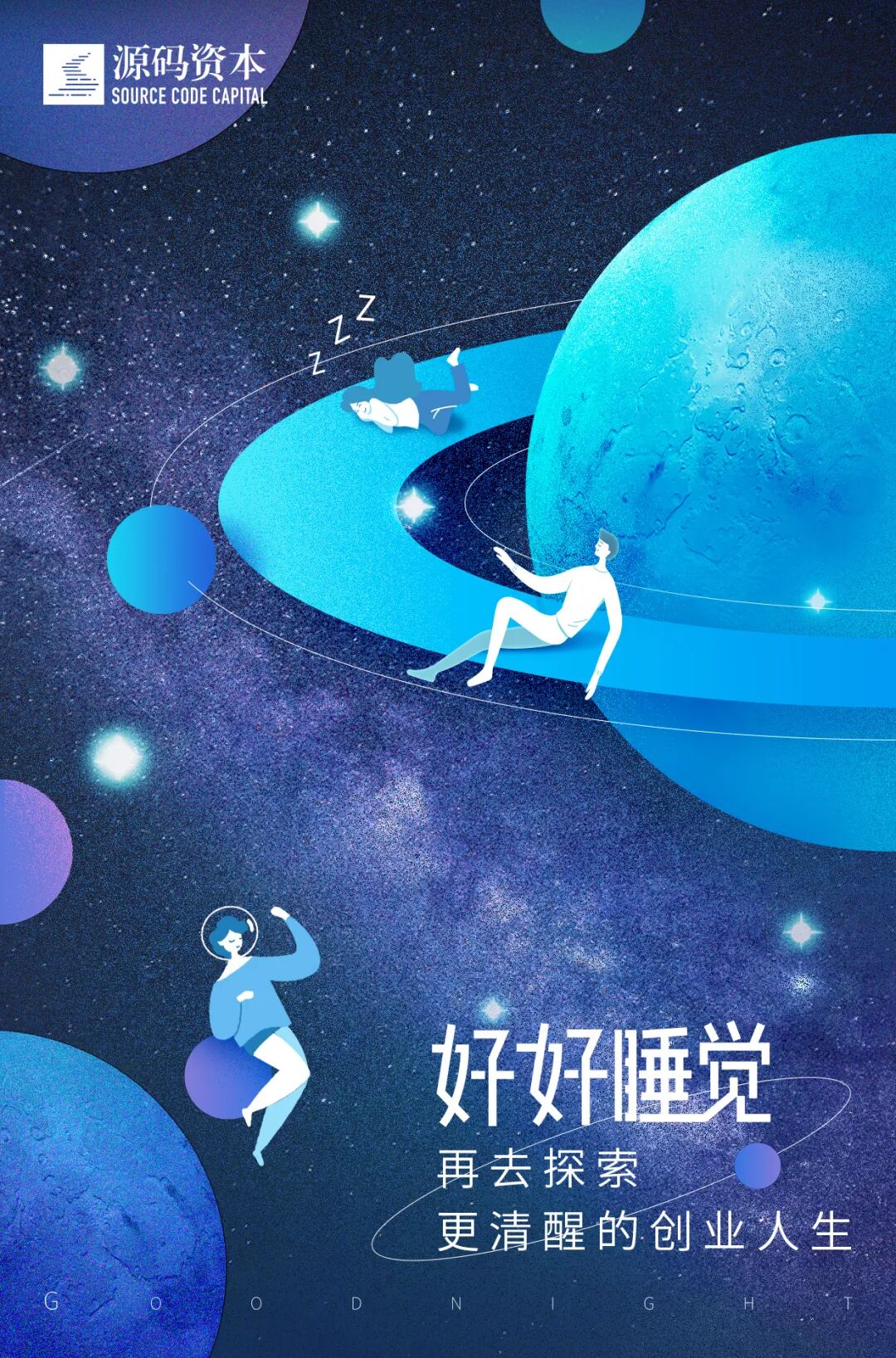
MaHui Entrepreneur | Sleep Well, Then Explore a More Lucid Entrepreneurial Life

Better Inward Exploration
#MaHui Entrepreneurs — Resilient and Bold, Exploring Without End
In ancient times, sleep was a dangerous proposition for humans. The cold of night, predator attacks, stolen food — all posed threats to life and property for those who slept. Sleep hardly seemed like a "worthwhile" arrangement. Yet through millions of years of evolution, humans stubbornly preserved this instinct. Do we truly understand why sleep is necessary?
Today, we sleep less and less. Ever since the agrarian rhythm of rising with the sun and resting at dusk was replaced by the industrial nine-to-five and habitual overtime, human sleep time has been steadily compressed, and sleep quality increasingly compromised.
March 21, 2022, is World Sleep Day. This year's theme in China is "Good Sleep, Healthy Together," and we hope to explore everything about sleep.
Perhaps sleep is what allows us to complete better inward and outward exploration without even realizing it, paving the way for a more lucid entrepreneurial journey.
Self-Healing Completed Unconsciously
Sleep is not actually static. Inside your brain, things are active and busy: preventing disease, cleaning the brain, and repairing DNA.
If you've ever worn a smart device to monitor sleep, you'll notice sleep time is divided into deep sleep (slow-wave sleep), light sleep (fast-wave sleep), and REM (rapid eye movement sleep), with longer deep sleep seemingly yielding higher sleep quality scores. Scientific research confirms this. Deep sleep, also known as slow-wave sleep, is characterized by high-amplitude, low-frequency brain waves. This peaceful sleep period is closely tied to brain health. Researchers at the University of Zurich in Switzerland published a study in Science Translational Medicine showing that deep sleep could become an effective treatment for brain diseases. Their paper, titled "Slow-wave sleep affects synucleinopathy and regulates proteostatic processes in mouse models of Parkinson's disease," explored clues linking sleep pattern disruption to Parkinson's disease development, finding that deep sleep can slow Parkinson's progression by limiting the accumulation of toxic proteins in the brain. So sleep well — it really can "cure" disease.
Don't worry about toxins already present — they too may be "carried away" during sleep. A paper in Science titled "Sleep: The Brain's Housekeeper?" found that during sleep, the brain uses the glymphatic system composed of glial cells to transport cerebrospinal fluid containing harmful toxins out of the brain, thereby "clearing space" so the brain can process information more efficiently when awake. Contrary to previous understanding that the brain handled cellular waste through decomposition and recycling within individual cells, harmful toxins are actually daily metabolic byproducts that cannot self-clean. Continuous accumulation makes us slower, sick, and can even cause brain damage. A research team from the University of Rochester in New York found that during sleep, the glymphatic system's efficiency in transporting cerebrospinal fluid increased by 60%, "like a dishwasher" cleaning the brain. Unconsciously, the sleeping brain has already completed its "decluttering."
Every day we wake up, work, think, meet challenges, and gradually grow tired. A voice urges us to bed, even if it's not nighttime — this drowsiness and urging can strike at any time. The puppet master behind this voice is actually damaged neuronal DNA. Researchers at Israel's Bar-Ilan University published a paper in Cell's subsidiary Molecular Cell explaining the necessity of sleep at the single-cell level — during wakefulness, accumulation of DNA damage in neurons increases sleep pressure. "Exhausted" DNA molecules gather to "protest," releasing a protein called Parp1 that continuously emits sleep signals, urging you to "lie flat." When you fall asleep, Rad52 and Ku80 repair proteins in neurons get busy, working together to repair damaged DNA. When you wake again, your DNA has been "renewed," ready to accompany you through a new day of exploration.
Seen this way, from the moment you lie down and close your eyes, through sleep, until you wake and open them again, your body has accomplished much in not very long. The human body heals itself during sleep, preparing for the "battle" of wakefulness.
Good Sleep Enables a More Lucid "Battle"
What outward power does good sleep bring? On the entrepreneurial path, Source Code Capital often says you need "heart power, brain power, and physical power" all present. We explore here physical health, positive heart energy, and good memory in brain power.
Sleep's restorative effect on physical strength needs little explanation. During the recently concluded Winter Olympics, "Gu Ailing sleeps 10 hours a day" briefly trended on social media. Gu Ailing has publicly stated, "My secret weapon for outperforming older, more professional athletes is sleeping 10 hours a day." Gao Tingyu, who won gold in the men's 500m speed skating at the Beijing Winter Olympics, also revealed in interviews that he normally sleeps 10 to 12 hours.
While "sleeping well" is largely a subjective judgment, the consequences of "poor sleep" are quite objective. Over a century ago, research explored the relationship between depression and sleep. More recently, a study from the University of Michigan's academic medical center found that poor sleep significantly affects next-day mood. Specifically, sleeping too little, staying up late, or waking too early all had harmful effects on volunteers' emotions, manifesting as depression.
A research team from Harvard University and MIT published a paper in JAMA Psychiatry titled "Genetically Proxied Diurnal Preference, Sleep Timing, and Risk of Major Depressive Disorder," proving that "early to bed, early to rise, less depression." Analysis of genetic data from up to 850,000 people showed that those who prefer earlier bedtimes — in other words, less late-night activity — have 23% lower depression risk.
Good sleep relates not only to mental health but also plays an important role in memory formation and consolidation. Research from the psychology departments of Ludwig Maximilian University of Munich and the University of Birmingham shows that during sleep, the brain produces specific activation patterns. When two patterns — slow-wave oscillations and sleep spindles — interact, prior experiences are reactivated. The stronger this reactivation, the clearer our memories of past events become.
A Book Recommendation for Exploring High-Quality Sleep Together
Good sleep is especially precious today.
The China Sleep Research Report (2022) notes that over the past 10 years, Chinese people's bedtime has moved later by more than two hours, and only about 35% get eight hours of sleep. Additionally, the 2022 China National Health and Sleep White Paper shows that up to 75% of respondents reported sleep difficulties, insomnia, and vivid dreams causing sleep problems — clearly, most people are not sleeping well.
Among this group of poor sleepers, there are likely many entrepreneurs carrying pressure forward. Since sleep is so important, how can we achieve high-quality sleep?
On World Sleep Day, we who are always "fully coding for you" want to recommend a book: UC Berkeley professor of neuroscience and psychology, founder of the Center for Human Sleep Science, Matthew Walker's new work "Why We Sleep?"
In this book, Walker summarizes various research findings on sleep and cutting-edge scientific breakthroughs, covering sleep's operating mechanisms, the harms of sleep deprivation, the beneficial functions of sleep and dreaming, and sleep's astonishing impact on professionals' personal capabilities.
He calls on people to value sleep, as its significance even exceeds diet and exercise. "Despite what you may have heard or read in the popular media, there is no scientific evidence that any drug, device, or amount of psychological willpower can replace sleep," he emphasizes. "Naps and caffeine cannot rescue the more complex functions of the brain, including learning, memory, emotional stability, complex reasoning, or decision-making."
At the book's conclusion, the author proposes twelve rules for healthy sleep, which we excerpt here as potential reference:
- Stick to a sleep schedule. Go to bed and wake up at the same time every day. If you can only follow one of these twelve rules, make it this one.
- Exercise is great, but not too late in the day. Try to exercise at least 30 minutes daily, but finish two to three hours before bedtime.
- Avoid caffeine and nicotine.
- Avoid alcoholic drinks before bed. Heavy drinking may also cause breathing difficulties at night. As alcohol's effects wear off, you're more likely to wake during the night.
- Avoid large meals and beverages late at night.
- If possible, avoid medications that delay or disrupt sleep.
- Don't take naps after 3 p.m. Naps can supplement insufficient sleep, but napping too late can make falling asleep at night harder.
- Relax before bed. Don't pack your schedule so full that you have no chance to unwind before sleep.
- Take a hot bath before bed. After bathing, your body temperature drops, which can help you feel sleepy. Bathing also helps your body and mind relax, making sleep easier.
- Keep your bedroom dark, cool, and gadget-free. Remove anything that might disturb your sleep — noise, bright light, an uncomfortable bed, excessive heat. A cooler bedroom helps you sleep better. TVs, mobile phones, and computers all cause interference and rob you of sleep. A comfortable mattress and pillow help you sleep well. People who have trouble sleeping often stare at clocks, so keep clocks out of sight to avoid worrying about time while trying to fall asleep.
- Get proper sunlight exposure. Daylight is key to regulating daily sleep patterns.
- Don't lie in bed awake. If you're still awake after 20 minutes in bed, or start feeling worried or anxious, it's best to get up and do something relaxing until sleepiness returns. Anxiety about being unable to sleep makes falling asleep even harder.
Sleep well
References [1] Daghlas, I., Lane, J., Saxena, R., & Vetter, C, 'Genetically Proxied Diurnal Preference, Sleep Timing, and Risk of Major Depressive Disorder', JAMA Psychiatry, Volune 78, Issue 8, 2021. DOI: 10.1001/jamapsychiatry.2021.0959
[2] Fang, Y., Forger, D., Frank, E., Sen, S., & Goldstein, C, 'Day-to-day variability in sleep parameters and depression risk: a prospective cohort study of training physicians', npj Digit. Med, Volume 4, Issue 28, 2021. https://doi.org/10.1038/s41746-021-00400-z
[3] Morawska, M., Moreira, C., Ginde, V., Valko, P., Weiss, T., Büchele, F., & Imbach, L. et al, 'Slow-wave sleep affects synucleinopathy and regulates proteostatic processes in mouse models of Parkinson's disease', Science Translational Medicine, Volume 13, Issue 623, 2021, pp.1-13. DOI:10.1126/scitranslmed.abe7099.
[4] Underwood, E., 'Sleep: The Brain's Housekeeper?', Science, Volume 342, Issue 6156, 2013, p.301. DOI: 10.1126/science.342.6156.301.
[5] Zada, D., Sela, Y., Matosevich, N., Monsonego, A., Lerer-Goldshtein, T., Nir, Y., & Appelbaum, L, 'Parp1 promotes sleep, which enhances DNA repair in neurons', Molecular Cell, Volume 81, Issue 24, 2021, pp.4979-4993.e7. DOI: 10.1016/j.molcel.2021.10.026.
[6] Matthew Walker, Why We Sleep: Unlocking the Power of Sleep and Dreams [M], Beijing United Publishing Company, 2021.
[7] Wang Junxiu, Zhang Yan, Liu Yangyang, Xilinmen Sleep Research Institute, China Sleep Research Report [OL], Guangming Online, 2022-03-18.
[8] Chinese Academy of Social Sciences Institute of Sociology, Social Sciences Academic Press, China Sleep Research Report (2022) [OL], The Paper, 2022-03-18.

- When Entrepreneurship Becomes Their Lifestyle
- James Webb Space Telescope Launches, Exploring Infinity
- Source Code Capital's Hongjiang Zhang Elected Foreign Member of US National Academy of Engineering
- GalaxySpace Launches Seven Satellites on Single Rocket
- The Crossover of "Tech + Biomedical": New Investment Consensus on Integrated Innovation
- Source Code Capital Closes Fifth RMB Fund to Drive Tech Innovation, Support SMEs
- 2021: Original Aspiration Is the Future