2021: Original Aspiration Is the Future

Be the investment firm with the most entrepreneurial spirit.
In less than 24 hours, we'll say goodbye to 2020. For entrepreneurs, 2020 might have meant a quiet exit, a rollercoaster ride, a narrow escape, or — for the brave — charging ahead against all odds... But no matter how the story unfolded, the fire in their hearts and the light in their eyes never went out. That is the power of passion, of obsession, of purity.
With the entrepreneurial spirit in our hearts, Source Code Capital sets out with you. In 2021, let's create our future together!
At the 2020 Code Society Investor Conference and Intelligent Manufacturing Summit, Yi Cao, Founding Partner of Source Code Capital, shared his reflections on Six Years of Building Source Code Capital: Thoughts on Equity Investment with the audience. He distilled the lessons and insights from building an investment firm with the strongest entrepreneurial spirit, dedicating these thoughts to the resilient, bold founders who have traveled this road alongside them.
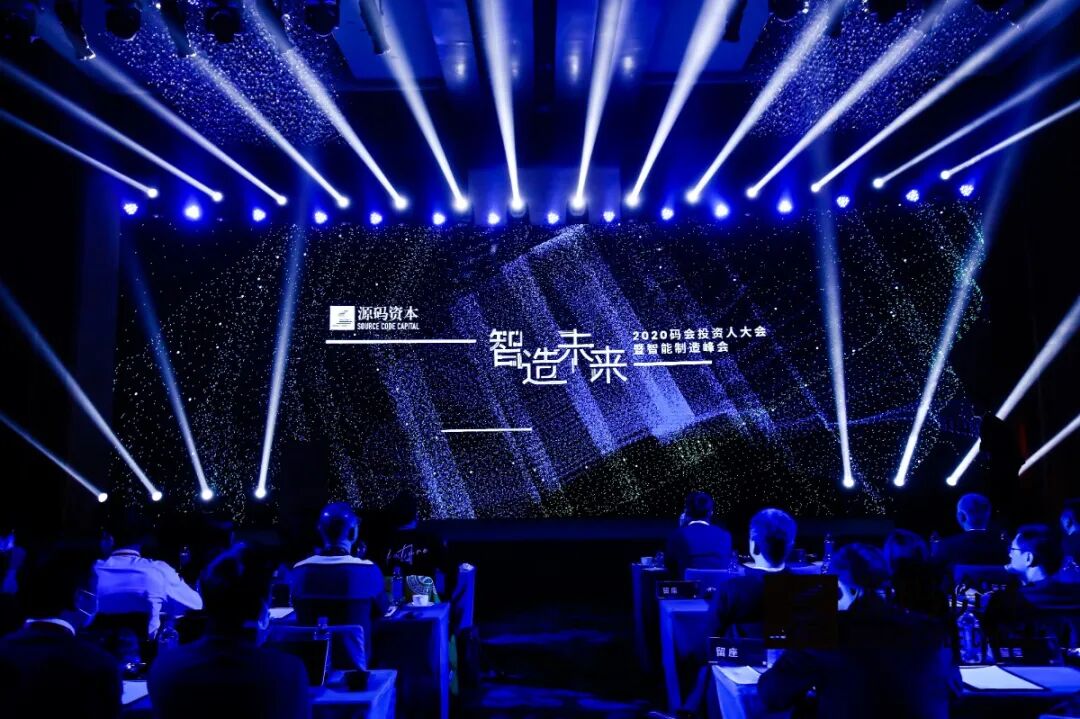

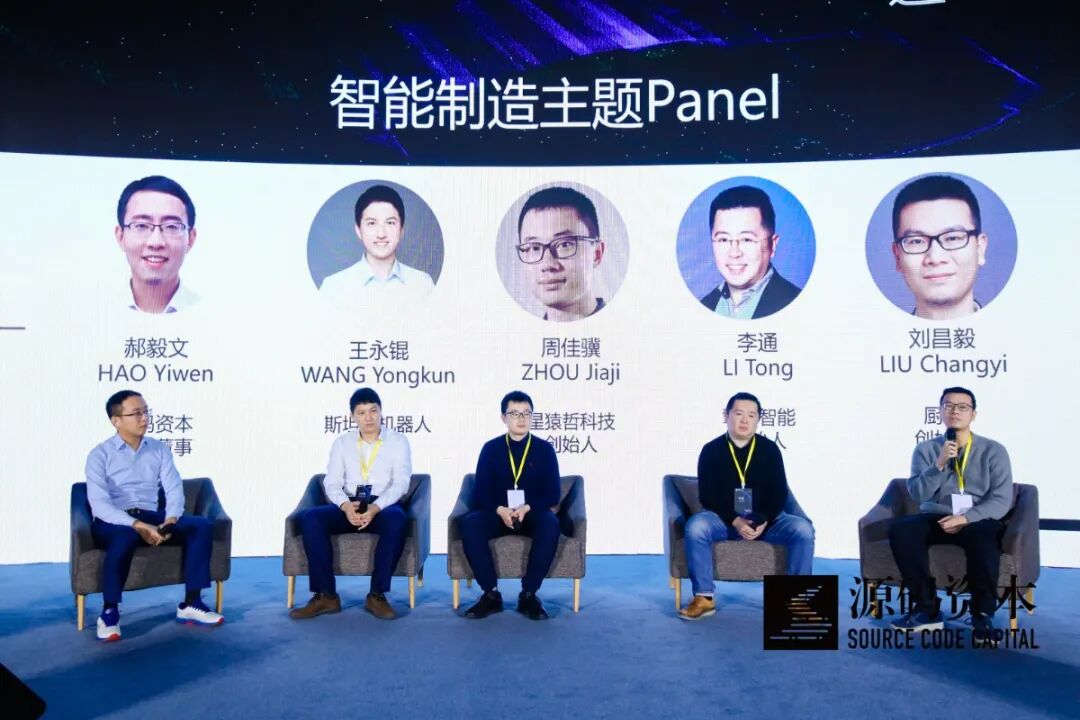
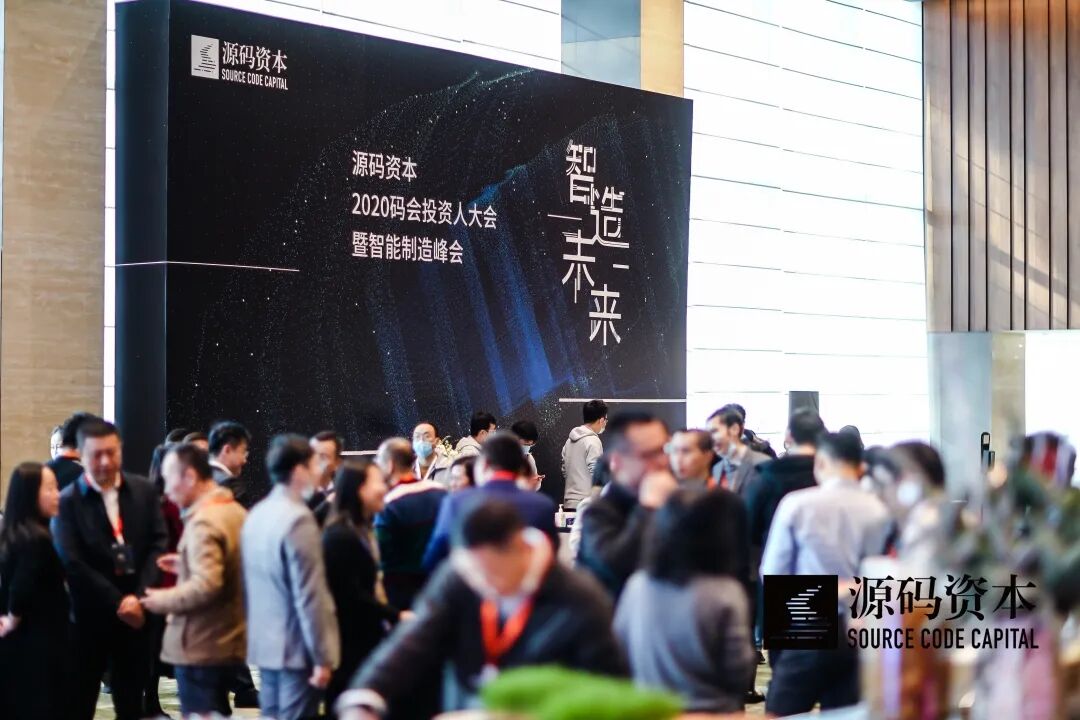
Swipe to see highlights from the summit
Looking back on Source Code Capital's six-year journey, Cao sees it as "six years of investing, but also six years of entrepreneurial exploration in new-economy equity investment." He himself underwent a transformation during this period: "From sniper to company commander, from a pure investor to an entrepreneur in the asset management industry." Meanwhile, Source Code Capital evolved from a small team at its founding to a cross-regional organization of nearly 80 people with offices in Beijing, Shanghai, and Shenzhen. In terms of internal organization building and innovation, Source Code Capital has stayed committed to institutionalization. Its front-end "special forces" — comprising early-stage and growth-stage investment teams — now work in real-time, multi-dimensional collaboration with its "arsenal" of post-investment and platform professionals, dramatically boosting organizational capacity. The firm has also been honored multiple times on domestic and international venture capital award lists, all thanks to the steadfast trust of entrepreneurs and the strong support of its investors.
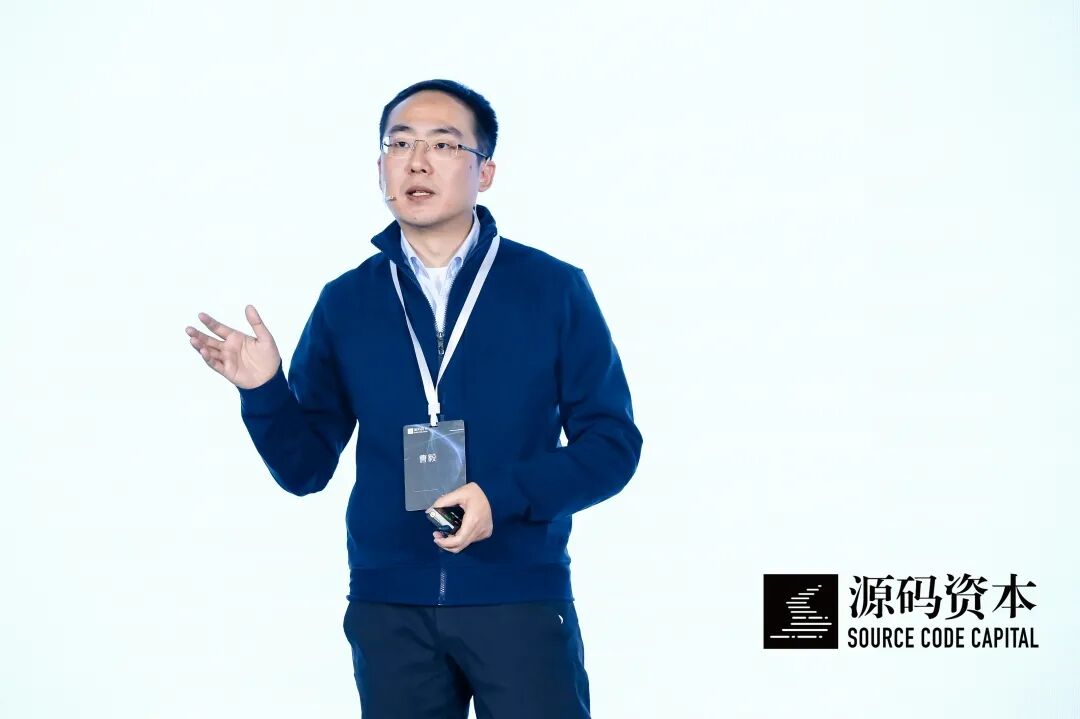
Yi Cao, Founding Partner of Source Code Capital
The Pyramid Model of Investment Firms
Since its founding in 2014, Source Code Capital has grown to manage $1.5 billion and RMB 8.8 billion in assets. Among its portfolio companies, a new generation of forces including ByteDance, Meituan, KE Holdings, and Li Auto are now leading the wave of China's new economy. In Cao's view, summarizing the past six years requires looking beyond individual investment cases to first answer three questions: "why we do this," "what we do," and "how we do it" — in other words, "how we think about our own why, what, and how."
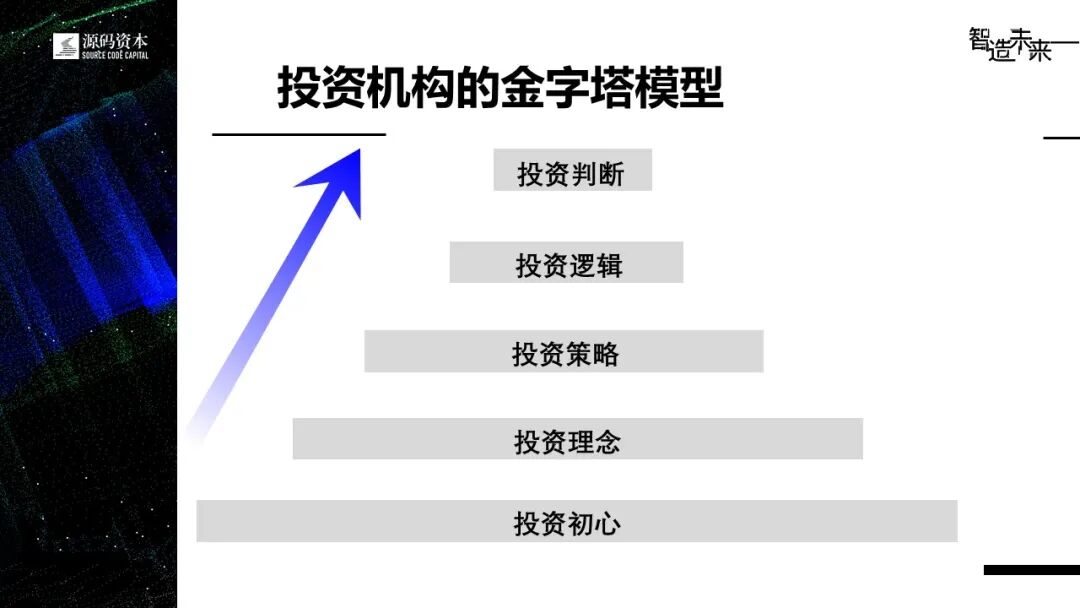
Image: Source Code Capital
Defining a firm's why, what, and how from an investment perspective yields an ordered pyramid model. The foundation is investment purpose — this both answers the originating "why" and lays the groundwork for everything above. Cao believes that "if an investment firm's purpose isn't pure and resolute, achieving consistently strong returns in China's competitive landscape becomes very difficult, and you'll end up exhausted and anxious."
"Investment purpose" gives rise to "investment philosophy, investment strategy, investment logic, and investment judgment" in a derivative, progressive relationship. Among these, "investment strategy, investment logic, and investment judgment" answer how a firm operates. For example, Source Code Capital established its "Three Horizontals, Nine Verticals" investment map from day one, with "Internet+," "AI+," and "Global+" as its core investment themes — this is what the outside world perceives most easily.
To understand a firm's deeper "what," one must look to the middle layer of this pyramid: its investment philosophy. Investment philosophy can be understood as a value proposition, analogous to a person's values. "A gentleman knows what to do and what not to do" — investment firms must make choices. Compared to specific strategies, logic, and judgment, a firm's value proposition is more generalized, more abstract, and more fundamental.
In Cao's words, "There are too many opportunities in this world. You need a relatively foundational philosophy: what do I believe in, what do I believe has value."
Source Code Capital's Investment Philosophy and Value Proposition
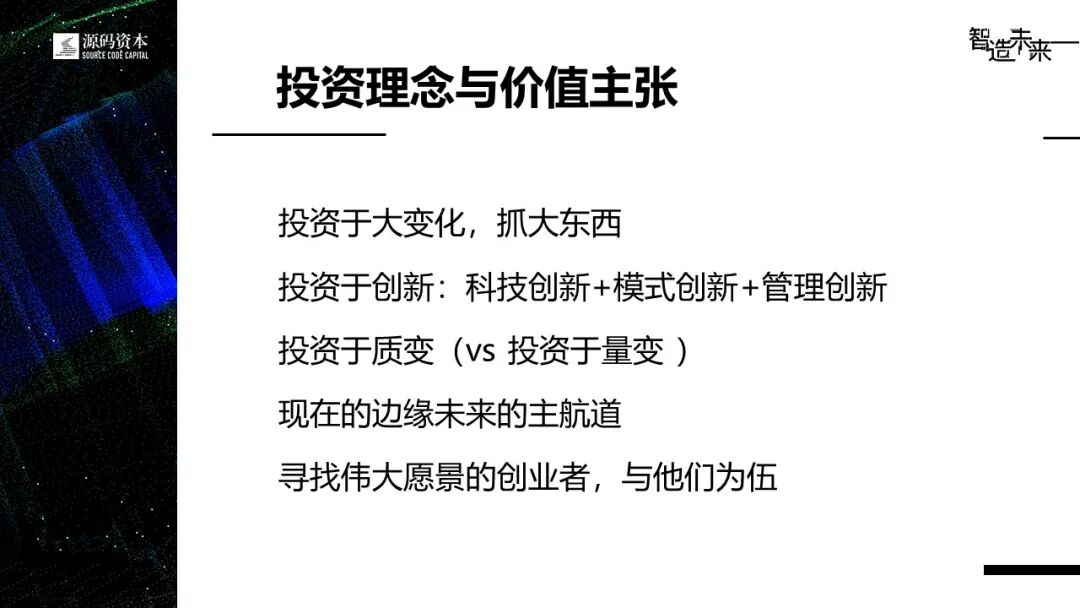
Image: Source Code Capital
1. Focus on Big Changes
Before founding Source Code Capital in 2014, Cao had spent years at top-tier domestic VC firms, making multiple trips abroad especially to Silicon Valley for exchange and learning. The investment philosophy of focusing on big changes gradually took root, naturally becoming one of Source Code Capital's core value propositions.
From its inception, Source Code Capital has viewed information technology as the most fundamental big change — technological innovation is the enduring force driving commercial and social transformation. This encompasses many evolutions: "Internet+," "AI+," and the fusion of various industries with information technology.
Investing in big changes allows limited time to be concentrated on the biggest opportunities, freeing oneself from medium and small changes. In this regard, Source Code hopes to "waste" its limited time, its best years, on the growth of the greatest companies and the most transformative technological shifts.
Since reform and opening up, China has seized the wave of the information technology revolution. During the transition from PC internet to mobile internet, a large cohort of new-economy enterprises achieved leapfrog development. The domestic VC institutions that accompanied this growth likewise focused on "the middleware and application-layer changes brought by these infrastructure shifts," enabling their rapid development in recent years.
"Investing in big changes is very challenging," Cao elaborated. "You could choose to invest in small changes, or micro changes — that's also a valid investment logic. Small changes tend to offer higher certainty, potentially shorter return cycles, and may be easier to judge." Investing in big changes means longer time horizons, more uncertainty, and unknown directions and velocities for each change. Capturing big changes thus requires firms to possess greater capabilities, among which a crucial one is resolute conviction: believing in big changes while also accepting the challenges and pressures they bring.
2. Emphasize Innovation
Cao's explanation reveals that Source Code Capital understands innovation through multiple dimensions.
First, choosing technological innovation. For a period, the market saw copying mature Western business models to China and leveraging cost advantages and demographic dividends for competitive pricing — products that often required little technological innovation. Take chip investing: currently two hot directions are domestic substitution and chip R&D for new scenarios. Source Code firmly chooses the latter. Even when chip giants' new products can cover new use cases, there will at least be overlap — both innovative breakthroughs and domestic substitution — and this is the technological innovation Source Code wants to uphold.
Beyond technological innovation, Source Code also emphasizes the fusion of technological and business model innovation. "Innovative companies must also have good business model innovation to unleash the power of technological innovation, and through sound business models accumulate resources, generate profits, and in turn invest more deeply and longer-term in underlying technology." When business model innovation and technological innovation form a positive cycle, the flywheel of growth begins to spin.
Another dimension is management innovation, or organizational innovation — especially critical now that demographic dividend growth has disappeared and competition intensifies both domestically and globally. In Cao's view, China's leading internet companies have already begun to pioneer organizational management innovations globally, ByteDance being a prime example. ByteDance currently manages a global team of roughly 100,000 people, making organizational development particularly complex, compounded by globalization challenges. "How to foster top-down and bottom-up internal innovation, how to maintain both strategic direction and flexibility — these organizational tests for ByteDance are enormous." To meet these challenges, ByteDance established a management research institute, while Lark serves not only as an efficiency-boosting communication tool but also plays an important role in the transition from hierarchical to networked organizations.
Facing these three types of innovation — technological, business model, and management — both investment firms and startups need an open mindset, willing to experiment and even actively embrace uncertainty. In Cao's eyes, "There's never been a domain where you can just enjoy peaceful times. If such a domain exists, it's only short-term and local. On a larger scale and longer time horizon, innovation comes in wave after wave, and no one can rest on their laurels relying on brand effects or network effects." Just as every major company today carries tremendous anxiety, this destined innovation iteration is unavoidable. What investment firms can do is invest in innovative enterprises, thereby finding their position amid change.
3. Choose Qualitative Change
In the investment world, investing in quantitative change, or even investing in stasis, represents a fairly mainstream camp. Stasis means relatively certain massive demand and relatively certain supply methods; quantitative change exists in certain linear changes, such as leading companies achieving dual improvements in market share and profit margins through somewhat better business models. At root, this investment philosophy believes that certain parts of the world are continuous.
Cao stated that "Source Code invests in qualitative change because we believe certain regions or stages of the world are discontinuous, non-linear, and require qualitative change to transform or evolve." Source Code Capital hopes to identify relatively long-term, certain mega-trends earlier. Such trends often contain qualitative-change investment opportunities with considerable potential returns and room for growth.
At the crossroads of investing in quantitative versus qualitative change, Source Code Capital tends toward qualitative change, toward the 0-to-1 and 1-to-10 stages. Even in its current growth-stage investing, the firm believes these companies may still have certain new businesses with qualitative-change potential amid their quantitative business growth — from Lianjia to KE Holdings, from Toutiao to Douyin, each involved both quantitative and qualitative change in intersecting ways.
4. Today's Margins, Tomorrow's Mainstream
In the market, many industries easily become "fashionable schools of thought," quickly reaching consensus, attracting the vast majority of capital, attention, and time. Source Code Capital internally emphasizes resisting the slide into "short, flat, fast" inertial channels. "Short" means always tending toward short-term results; "flat" means mediocrity — doing what others do, leading to the mediocratization of the investment industry; and "fast" means constantly seeking quick in-and-out opportunities. Cao elaborated: "Human nature is subject to downward gravitational pull. Without some philosophical and principled persistence, it's easy to get caught in the industry's inertial torrent, unable to extricate oneself."
Source Code's approach is to invest time earlier, even when an industry lacks consensus, even when short-term investment opportunities may not exist, even when very few people are paying attention. What Source Code Capital does is to be among the one or two out of ten when an apparently marginal industry faces widespread skepticism, so that when margins become mainstream, it becomes the best-prepared player in the industry.
In emphasizing belief in the margins, Cao believes this requires some romanticism, some idealism — trying to view the world through a future science-fiction lens. And indeed, today's autonomous driving, AR/VR, brain-computer interfaces, and various robots were all envisioned in previous science fiction films. "Remember in Iron Man, at some point the biggest company was a robotics company. Right now the biggest companies are phone companies, but someday the biggest company may well be a robotics company. For things that may emerge in the future, some romanticism is needed."
Seeking innovation in marginal domains brings a clear advantage: being one step ahead. Within this time window, concentrating all investment resources, research resources, post-investment resources, and network resources makes it easy to gain first-mover advantage, largely avoiding the head-on clashes increasingly common among VC firms today. Such clashes may be unavoidable, but on a larger scale, Source Code Capital hopes to fight positional warfare or ambush warfare, laying groundwork in certain domains early. When this ambush battlefield eventually becomes the main battlefield, it can respond from a strong position.
5. Stand with Founders of Great Vision
As the old saying goes, "A man fears choosing the wrong profession, a woman fears marrying the wrong man" — the investment industry should fear both. Standing with the best entrepreneurs of the era, every investor may face the pressure of struggling to keep pace, but it is precisely such pressure that drives greater growth.
Through years of refinement, Cao and Source Code believe the best entrepreneurs typically embody multiple contradictions, capable of fusing and maximizing these contradictions — being both pragmatic and romantic, for instance. In Source Code's eyes:
Great entrepreneurs can both attack from the highest heavens and defend from the deepest earth. Attacking from the highest heavens means being able to compete fiercely when competition demands it; defending from the deepest earth means growing inwardly with self-driven momentum like a great tree, becoming a towering giant.
Great entrepreneurs are both infinitely outward and infinitely inward. Infinitely outward means having no boundaries, engaging broadly to form visible business, scale, numbers, and market cap; simultaneously infinitely inward, improving their inner selves at rapid speed. In Cao's view, "Great entrepreneurs building a company connect more broadly with social development and create value, while also walking a path of self-cultivation — the two become one, reaching a very high inner realm. So they are both infinitely outward and infinitely inward."
Great entrepreneurs are both emotional and rational. Many internet and tech company founders can analyze things with great logic and systematic rigor. Yet they are highly sensitive to human nature. "For things that can't quite be described by logic and rationality, they don't conclude such things don't exist. Instead, they approach them with emotional perspective and strong empathy."
"Today's entrepreneurs are like contemporary rock stars — you can see in them the power of passion, the power of ideals, the power of obsession, the power of going it alone, the power of purity," Cao reflected with feeling.
Purpose Is the Future
Investment strategy, logic, and judgment rest upon investment philosophy; investment philosophy rests upon investment purpose. Returning to Source Code's investment purpose, Cao concluded his speech by stating that Source Code's purpose is to become the investment firm with the strongest entrepreneurial spirit, creating enduring real value, helping entrepreneurs realize their dreams, helping them transform industries, and thereby changing the world.
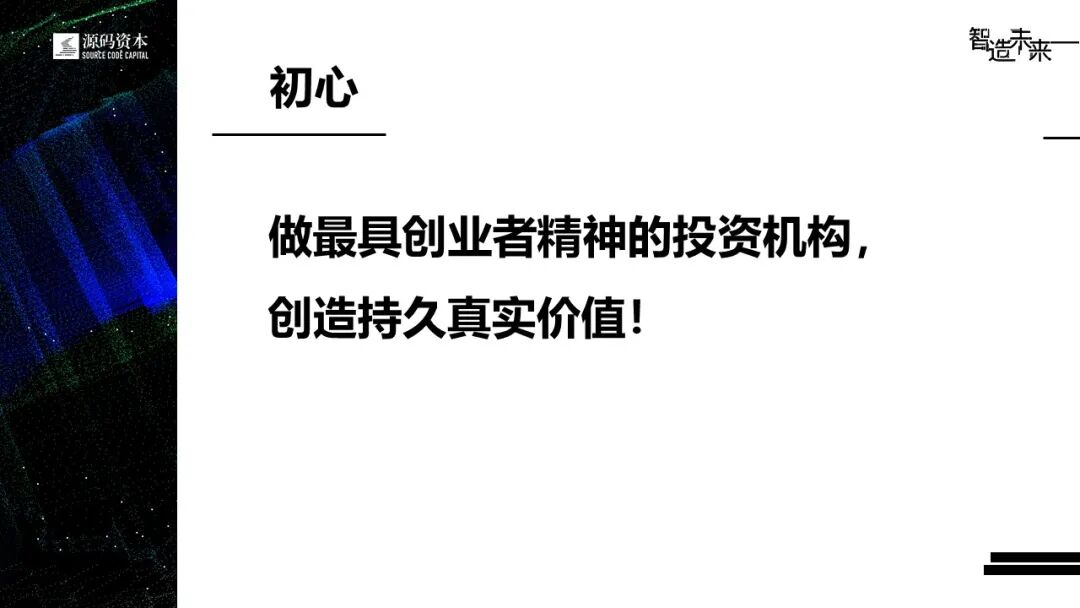 Image: Source Code Capital
Currently Source Code Capital's assets under management have reached a new stage, its internal organization continues to innovate and iterate, its post-investment service capabilities steadily improve, its IT data value begins to show its edge, and its external "Code Society" ecosystem cycles healthily — these optimizations and growth across different dimensions all stem from Source Code's clear self-definition.
Six years on, Source Code Capital's portfolio approaches 200 companies, covering all aspects of China's new economy. Together with its portfolio companies, Source Code is becoming an emerging force driving China's rise. "To C companies make people's lives better; To B companies make business smarter." Source Code Capital will continue alongside founders of great vision, staying true to its original purpose, joining hands to create enduring real value.


- Forbes Releases Major List: Source Code Capital's Yi Cao and Yungang Huang Named
- Source Code Capital's Yi Cao: "Four-Haves Youth" — Good Companies in the Second Half
- Source Code Capital's Yi Cao: Value Discovery and Creation in Industrial Internet