Today, how can brands become "family" with 300 million "laotie" on Kuaishou?

Source Code Capital Consumer Portfolio Companies × Kuaishou E-Commerce Private Session
Since Kuaishou began building out its e-commerce business in 2018, it has been setting new records and has become the company's fastest-growing segment. Livestream commerce isn't just Kuaishou's most rapidly expanding business — it's also the new engine driving e-commerce development. At Kuaishou's recent e-commerce service provider conference, Xiao Gu, head of Kuaishou E-commerce, laid out the theme for 2021: the "Three Big Bets" — a major push for brands, service providers, and trust-based e-commerce. Through these three initiatives, Kuaishou will work with service providers to deliver more professional and refined services tailored to the livestream needs of different industries, helping merchants, hosts, and creators gain deeper insights into consumer demand and achieve precise, effective user reach and conversion.
Specifically, how does Kuaishou — now with nearly 380 million daily active users — approach e-commerce? And how can entrepreneurs seize opportunities in this new e-commerce ecosystem?
For this event, Source Code Capital partnered with the Kuaishou E-commerce team to create a customized private session for consumer sector portfolio companies: "Source Code Capital Consumer Brands x Kuaishou E-commerce." CEOs and executives from brands including Blokees, Lan, Lanshi Technology, Daily Black Chocolate, moody, Pang Dang Jia, PWD, SMU Shilv, Tao Youye, Wanwudezhi, Yuanbao Inc., and Youwei Biology joined Kuaishou's e-commerce team, top Kuaishou hosts, and leading brand service providers for a closed-door discussion on "Exploring Kuaishou, Brand Symbiosis" — breaking down the opportunities and challenges of building brands on Kuaishou from platform ecosystem and practical operations perspectives.

Below is a transcript of the live sharing session:
The Foundation of "Betting Big on Brands" Is "Betting Big on Trust"
Speaker: Xiao Gu, Head of Kuaishou E-commerce
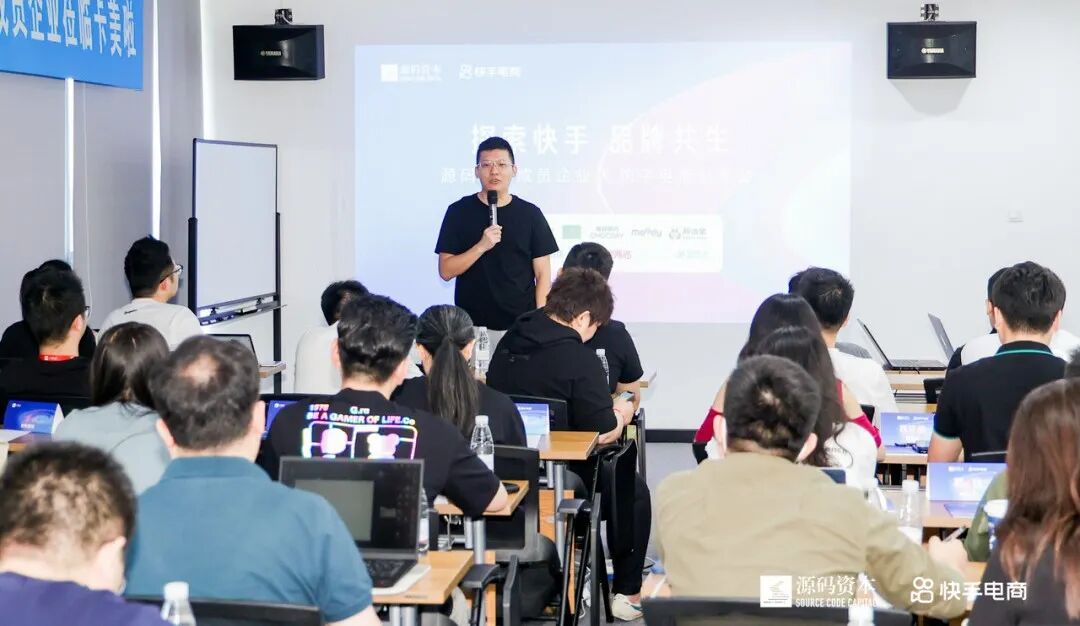
Kuaishou started exploring e-commerce in 2018 and officially launched in 2019. For years, people have been asking what our e-commerce strategy is. That's a great question, because frankly, we don't have one. What I'm sharing today isn't strategy either — it's all at the tactics and execution level.
On the B2B side, we built our e-commerce on industrial supply chains, wholesale starting from single-item orders. To this day, many hosts' livestream rooms still operate this way — it's where we came from. But over time, Kuaishou's user base has grown from tens of millions to over 300 million. As a platform of this scale, can industrial supply chains alone satisfy all user needs? Definitely not. So this year we introduced our first tactic: "Betting big on brands."
Today, we're building brands with two legs: distribution and livestreaming. Open Kuaishou's hourly rankings and you'll already see many brands on the rising stars list. Beyond traditional brands, we want new brands to emerge and more brands to join us in meeting the needs of Kuaishou's 300 million "lao tie" [core users].
Our second tactic is "betting big on service providers." Building brands isn't something we can do alone — we need many service providers. Why do people say Kuaishou is hard to reach? Because we don't have enough service providers. Our department has 1,000 people; if each knows 100 people, that's only 100,000 connections. Is China's e-commerce industry only 100,000 people? But if each of our 1,000 people connects with 100 service providers, then through 10,000 service providers we can reach millions or even hundreds of millions of people. That's why we're building out service providers — to expand the e-commerce ecosystem.
Our third tactic is C2C-focused: continuing to "bet big on trust." Trust is something very unique to Kuaishou. In our service system, every time a user buys something from a host, if the product isn't a brand they recognize but they buy it because this host recommended it, they're spending a unit of trust. If the product is good, their trust deepens; if it's bad, that trust is gone, and it becomes harder for the host to sell next time. The gap between expectation and reality is what constitutes trust. That's why over the past two years, some hosts have done increasingly well while others have declined.
The "Three Big Bets" were formally announced as development keywords at Kuaishou's service provider conference on July 22, but Kuaishou E-commerce had already been doing substantial work around them. To summarize, our focus this year is "betting big on brands," and the results so far have been quite good. In building brands and service providers, the underlying foundation is building trust — we want consumers to trust brands.
Identifying Core Competencies of Kuaishou Service Providers: The "Five Capabilities Model"
Speaker: Li Congshan, Head of Kuaishou E-commerce Service Providers
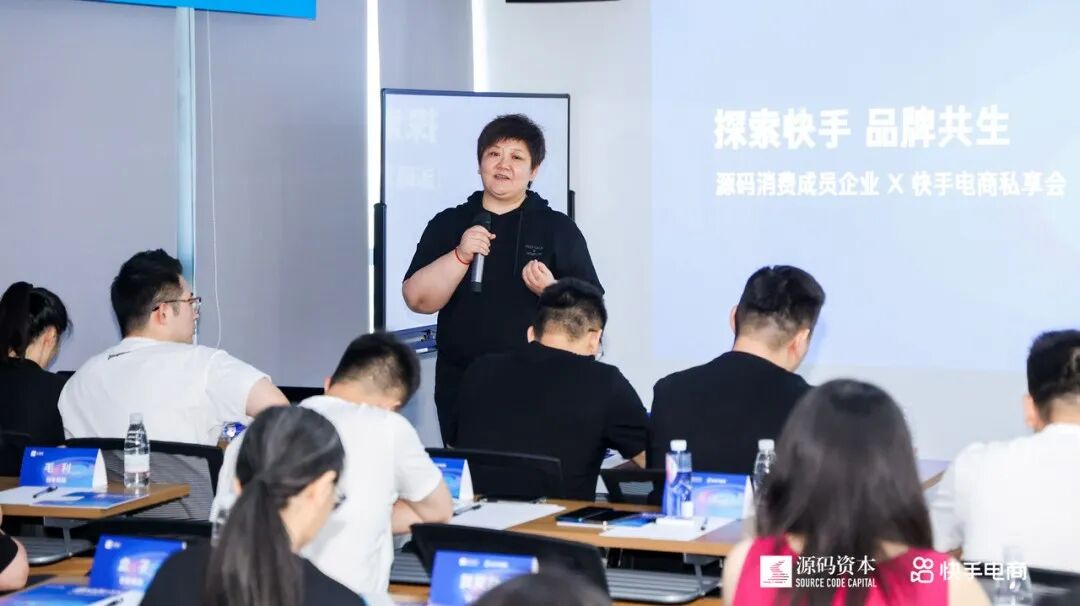
Kuaishou E-commerce operates in a decentralized ecosystem. Unlike traditional e-commerce, Kuaishou's e-commerce ecosystem is driven by dual supply — both product supply and host supply. This dual-drive model means the platform needs more service providers to help merchants and hosts deliver better service to consumers.
At the same time, platform service providers must grow and develop five core capabilities: livestream operations, host incubation, service fulfillment, supply chain, and traffic marketing. Superior fulfillment and experience, better traffic management, more refined product selection, and more professional host services should create a value flywheel effect. Through self-renewal and self-circulation, service providers continuously optimize their capabilities for healthy, sustainable development.
The livestream room format is highly real-time. Of course, we do all kinds of planning before going live, including product scheduling and host preparation. But with human participation, varying products, and traffic-boosting timing, livestream operations experts need to make rapid real-time judgments — what's the data showing now, are we attracting more new buyers or repeat customers, what's the next product move? We've seen outstanding livestream operations experts who, 30 minutes into a planned 6-hour livestream, can already calculate how much revenue that session will generate. The future standard configuration for livestream e-commerce is, first, the host, and second, the livestream operations expert — neither can be missing. Of course, having your own supply chain is even better.
From an institutional perspective, host incubation capability is also particularly important for service providers. With so many emerging brands appearing today, and traditional brands constantly launching new products, all of these need professional hosts. Previously, there were many "wild" hosts on the platform. After wild hosts develop to a certain level, their professionalization and career capabilities also need upgrading. Today, in our service provider system, we hope to see more capability in cultivating hosts.
Beyond this, livestream e-commerce of course also requires supply chain capability and fulfillment capability. For brands, their accumulated strengths in these two areas are generally quite good.
We hope everyone can better understand what the e-commerce ecosystem looks like and how to grow their business bigger. Next, let's have our business experts share some practical experience.
Trust Between Kuaishou Hosts and Fans Is "Pre-established"
Speaker: He Haoxun, E-commerce Director, Kuaishou Content Creative Center

People generally assume the platform is like a "God's hand" — that if the platform gives traffic to A, B's traffic must necessarily decrease. But our logic isn't like that. Kuaishou isn't a God's hand. When we distribute traffic, we deeply respect every host's private domain — this is a very clear distinction from other platforms.
We encourage and respect everyone in building private domain traffic. Private domain is traffic you can use without paying the platform much. You're my fan, you trust me, when I go live you can see me and buy my products — this private domain is extremely important for business, and it's relatively inclusive. Inclusiveness is etched into Kuaishou's ten-year DNA. For small and medium players and newcomers, the Kuaishou platform is relatively friendly.
Heavy emphasis on private domain and inclusiveness — these are very distinctive features. Authentic, diverse, warm, useful — these are the characteristics we've identified for the Kuaishou platform.
After the Henan floods, we had large numbers of e-commerce hosts on our platform with goods in hand, and large numbers of hosts with transportation capacity — some drove trucks, some pickups, some large freight vehicles. What we're doing is matching e-commerce hosts who donate goods with nearby truck drivers and Kuaishou users to deliver these goods to Henan. The goods and transportation capacity all came from Kuaishou users. We organized four or five batches of shipments. There are many stories like this. This warmth, authenticity, and realness are the foundation of the entire platform. Building the warmest and most trustworthy online community has always been our vision. Warmth and trust are our understanding of the Kuaishou community, and also the highest pursuit of Kuaishou E-commerce.
Large numbers of ordinary, imperfect people sincerely recording their lives — this is our brand character.
There are several misunderstandings about Kuaishou. The first is that it's "low-class" — this is a deeply rooted perception label from outsiders. Much of the work we've done in recent years has been to address this label and help people understand what kind of community Kuaishou is. We think the answer is simple: "authentic." In any case, a product covering 379.2 million daily active users necessarily encompasses a very diverse user ecosystem. Authenticity doesn't equal low-class. Don't let such prejudices and your own sense of superiority cause you to miss out on such a massive market.
The second widely circulated rumor is that Kuaishou's traffic and GMV are monopolized by the "Six Great Families." What people call the Six Great Families is really just this: because Kuaishou is a community that values human connection, in order to gain more traffic, people build complex relationship networks between individuals. For Chinese people, relationships between people are more understandable, so they use this family-style format to organize these networks. You can think of it as the Kuaishou version of the Kardashian family — six Kardashian families putting on reality shows for everyone every day. But their share of platform traffic and GMV is far from monopolistic. For all of 2020, the Six Great Families combined accounted for less than 6%, and this year it will be even lower because more and more professional e-commerce hosts, professional content, and professional people are joining. Our platform's overall user structure is very friendly to mid-tier and腰部 hosts. We have many cases of hosts with just over 100,000 fans achieving annual GMV of several million or even tens of millions.
The third misunderstanding is that people think Kuaishou only sells "white-label goods," the 9.9 RMB free shipping kind. Actually, products priced in the hundreds of thousands or even millions are snapped up easily on our platform. One of our industrial belt hosts shared with us that jewelry and jade transactions have reached as high as 25 million, though the final transactions happened offline. But the buyer and seller getting to know each other and building trust all happened on Kuaishou. This isn't a particularly typical story, but I want to tell everyone: we have plenty of users with money and leisure time — it's just a matter of whether you can use your content to let the algorithm know your user group is these people, and help you filter them out.
The fourth misunderstanding is that you need a huge follower count to make money. Many people come to us for cooperation and immediately ask how to grow their follower count, whether the official platform can give traffic support — this is a very incorrect mindset. The traditional thinking is that your traffic base must be large, multiplied by a relatively small conversion rate, and what remains is your effective customer base. So the larger your base, the higher your natural transaction volume. But Kuaishou's logic isn't like this. Our fans are extremely valuable. One effective fan is worth more than a thousand or ten thousand fans who just watch you but never spend money.
The fifth misunderstanding is that only "hanging on the leaderboard" [paying for placement on popular hosts' streams] can get you traffic. Everyone must understand: hanging on the leaderboard is essentially advertising in someone else's private domain. Someone else's private domain is public domain to you. The background of leaderboard advertising was that early on, Kuaishou didn't have much commercial ambition and didn't have advertising tools — we didn't make money from ads. So when large numbers of merchants wanted to do business, there was no legitimate official channel, and they could only go to big hosts to hang on their leaderboards as a way to advertise. Now we have better ways to measure ROI, with data measurement and fulfillment guarantee tools, such as using public leaderboard traffic to solve cold start problems.
The final point is security. Many brands worry: today I have traffic, tomorrow I don't, or my traffic keeps getting more expensive — what do I do? Traffic getting more expensive is unquestionable, because more and more people are coming to do business. But on this foundation, Kuaishou still deeply respects everyone's private domain. We hope our users can all live a little better, and more ordinary people can benefit from Kuaishou's commercial ecosystem.
What we hope to achieve is: those with perseverance will have lasting assets; those with lasting assets will have perseverance. Lasting assets are your fans, your private domain. Building your transaction logic from content logic, then forming your private domain fan pool — this is the top-level transaction logic for Kuaishou host e-commerce.
Breaking it down, if you want to do more GMV, you can improve in these two areas:
-
UV, meaning how many people come to you. You can invest in public domain traffic acquisition. Private domain is more stable — once you have your private domain fan base, your business becomes very stable. With a private domain foundation plus public domain traffic, your business takes off rapidly.
-
Content consumption duration. Our data very clearly shows: the longer a user stays in your livestream room, the more money they undoubtedly spend on you. In business logic, trust between Kuaishou hosts and Kuaishou fans and users is pre-established. Our "lao tie" are truly simple — they don't care if your product isn't that great, but they really care whether you're lying to them. This is a very important principle for doing business on Kuaishou: you must be sincere.
Regarding how brands should do business on Kuaishou, we have some very specific suggestions. Brands have three drivers: marketing, channels, and product. From a marketing perspective, we strongly encourage brands to do more livestreams on Kuaishou, and not to treat Kuaishou as purely a sales channel — you should treat your brand as content to build.
Channels are easier to understand. Kuaishou is a very good channel, particularly for relatively下沉 markets. We believe Kuaishou E-commerce's contribution to the industry lies in bringing new增量 to the industry. Many of our users buying things on Kuaishou may be making their first-ever online purchase. On the seller side, we also provide增量 — very ordinary people can directly take out their phones, film their family orchards, film their family factories, and immediately have many people wanting to buy from them. But the era of reckless, overnight riches is over, because professional institutions have already entered.
From a product perspective, every brand can carve out its own small private domain and do very well. This may seem complicated, but it's actually very simple: now our user demands can be directly communicated to brands and can反向 influence brands' production. C2M is gradually being realized on the Kuaishou platform.
Before the first half of this year, Kuaishou's focus wasn't on brands. But from now on, we will treat brands as our second growth curve. So now is a relatively suitable time for brands to come in and do business. Specifically how to do it? Very simple, five keywords: public domain, private domain, distribution, self-broadcasting, and reverse customization.
Chen Jianghong, founder of beauty brand韩熙贞, put it well: "In the past everyone treated people as traffic, but on Kuaishou you must treat traffic as people. Speak human language, do human things, interact like person to person." This is the core of what we emphasize when we talk about brands needing to build persona.
Many brand parties have concerns, believing brand assets should be沉淀 at the IP and company level, not at the individual level. What if this person leaves? What we want to say is: don't narrow your understanding of "persona." When we talk about persona, we mean you must treat traffic as people. You yourself are a person; you're speaking to people. At this point, brands must use human form to communicate with users, not as a cold, impersonal brand. Because you're doing social and community — since you want to enjoy the stickiness of social, the high conversion rate of social, you must pay the price, you must be a person. Don't simply post an ad, post a product, say today's price is reduced so come buy — this won't be particularly successful on our platform.
Today Every Brand Must Learn to Be Family with Kuaishou's "Lao Tie"
Speaker: Gong Haoyuan, Head of Kuaishou E-commerce Beauty
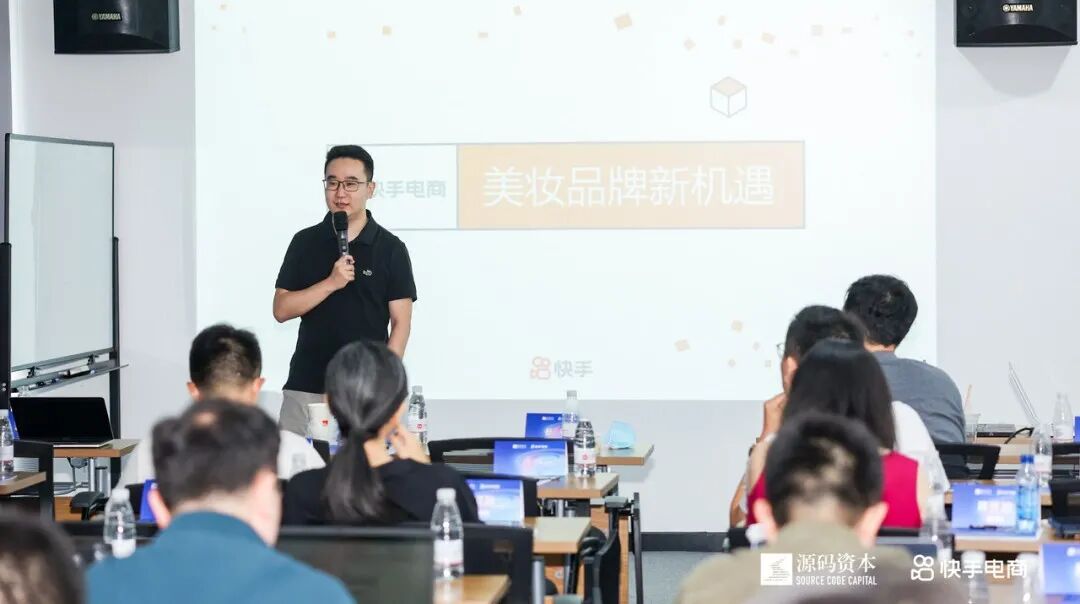
Kuaishou Beauty grew 5,000% in 2020. Now there are very many newcomers doing beauty on Kuaishou. There are roughly 5,000 hosts who make a career of beauty distribution, with cumulative buyers exceeding 50 million. There's enormous opportunity here. If any beauty brands are present today, you must come to Kuaishou to capture this traffic dividend and livestream dividend.
Among domestic brands, the entire industry's Top 300 have already joined. In the first half of the year, 200 brands broke 10 million, and 20 brands broke 100 million. On the other hand, international brands are still blue ocean — international brands account for only 5% of GMV on Kuaishou. But Kuaishou users' attention to international brands has reached 35%, which is a huge opportunity for suppliers. Looking at细分 markets, the fastest growing is hair care, including hair nourishment and restoration, hair transplants, etc. When the colored contact lens market opened in April, there was a major wave of growth. Men's skincare also has relatively large demand.
Speaking of tactics, today every brand must learn to be family with Kuaishou's "lao tie."
If a brand only does distribution on Kuaishou, it has no沉淀, because a brand's core is its users. All your users are on the host side, all your投放 goes to hosts, and in the end the brand is just left as a goods supplier — that's not a brand.
How to do brand self-broadcasting? You can try a curve approach — first find shopping guides or some agency to get your store broadcast up and running. Everyone should be able to get their wife to try it out. The essence of this is actually to train the algorithm's logic, so that whether you later do distribution or self-broadcasting, you can沉淀 more users.
Today it still has certain costs for a brand to abruptly build a team to communicate with hosts. The platform's "product testing" mechanism can help brands get to know hosts, help you penetrate your goods to hosts, and simultaneously complete scripts during livestreams and handle subsequent livestream fulfillment matters.
Also regarding platform price-breaking: the platform is now strictly cracking down on this. Some friends have said that when cooperating with Kuaishou hosts, everything was negotiated well the night before, but the next day when going live, they'd directly call that person over to bargain down the price. Some of this is acting, some is real. But now, no host can use their scale to coerce brands into breaking prices, because in private domain scenarios, once price-breaking occurs, only the price-breaking host can sell that product anymore, which is actually damage to the brand.
The platform cannot individually support any single brand in marketing — we support scenarios, such as the current "Gold Rush Special Sale Season," and upcoming Qixi Festival activities. The service provider related to brands is called KP service provider — Taobao calls them TP, Douyin calls them DP, we call them KP. Their value is connecting brands and hosts. Beyond doing场次 distribution, they also handle the brand's full-chain composition on Kuaishou, content投放, distribution data, including brand store broadcasting.
Q&A: On Emerging Brands, Host Cultivation, Distribution...
Q1: How can Kuaishou's commercial side better empower the brand势能 of these emerging brands?
Gong Haoyuan, Head of Kuaishou E-commerce Beauty: Brand势能, I think self-broadcasting as mentioned just now is definitely a阵地. Today there will be more traffic support for more self-broadcasting. Self-broadcasting is today a high-frequency interaction scene between brands and users on Kuaishou. As for势能 itself, take brands like Proya and OSM — their monthly distribution GMV on Kuaishou is tens of millions. How do they maintain their势能? It should be done across different channels together. Kuaishou's advantage today is that it can combine more content. Our content may be more brand-integrated. Today it's advertising; later when you talk about势能, I think you can do long-term content and brand building on Kuaishou, with related达人 empowerment and some PR empowerment — these are all possible.
Q2: In the process of building a brand from 0 to 1, how can you quickly build trust with distribution hosts where trust hasn't yet been established?
Host Can Ye: From 0 to 1, what you're building is trust with users. We don't do distribution, we do our own brand, which is brand self-broadcasting. To gain user trust is very simple — it depends on your own determination and capability.
Q3: Any suggestions for cultivating hosts?
Host Can Ye: At the time I decided to do it myself because I considered that doing it myself would grow faster. First, I understand this industry very well, I understand products, operations, marketing, users — my mouth isn't particularly stupid, I'm not particularly ugly, some people like me, so I'll just do it. You need to invest massive amounts of time to broadcast more. The best thing about Kuaishou users is that they communicate with you in real-time. During broadcasting, chat with them, talk家常, anything can be discussed. When you get over the fear of the camera, broadcast more.
In this process, you can acquire more user needs and know what to do next. If you can't broadcast yourself and you find hosts to broadcast, I suggest brands can do some matrix — you can open several accounts, using public domain traffic-boosting tactics to do some relatively favorable deals. For example, make one particular style especially cheap in the livestream room, while maintaining normal shelf pricing in other channels. Maybe lose a little money, no problem, small losses, but you can acquire users. For hosts, gradually add some话术 that brings you closer to users. Like Kuaishou Shop has a host called Kuaishou Guanfang — she broadcasts every day. That girl's name is literally Guanfang [official], and she keeps saying in her livestream that we're the Kuaishou official shop, my name is Guanfang. So users develop recognition of her and say, "Guanfang, give me some福利!"
Q4: For low unit-price products like eyebrow pencils, eyeliners, mascara — how to increase sales volume in the brand-building process?
Gong Haoyuan, Head of Kuaishou E-commerce Beauty: I actually don't think this is related to unit price. Our platform users have a continuous consumption upgrading cycle. As I mentioned earlier, many beauty users initially bought white-label on Kuaishou — 10 RMB for several boxes of face masks. As their income increased, they found these products no longer satisfied them, so domestic brands brought new growth. Next, emerging brands and international brands will also bring growth. Unit price is really your product positioning issue — it's hard for me to address from the platform perspective. But I can say which hosts are willing to distribute low unit-price goods? They may prefer to use them as福利 items. Position your product as a福利 type, acquire customers, then use high-margin or high unit-price items to build the brand.

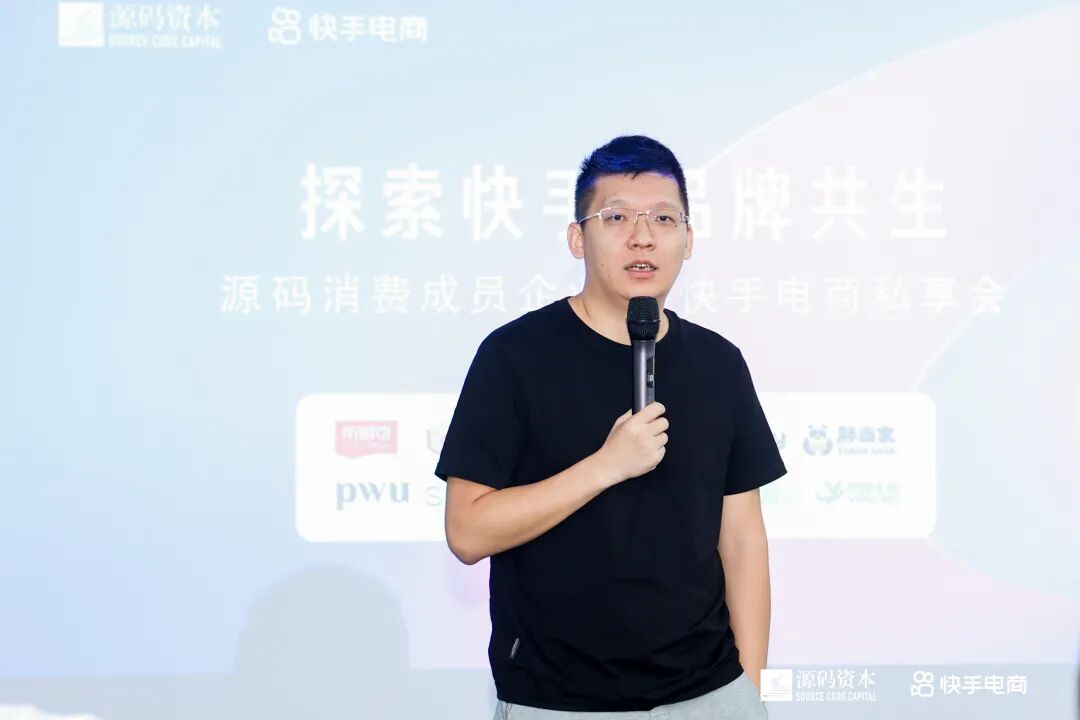

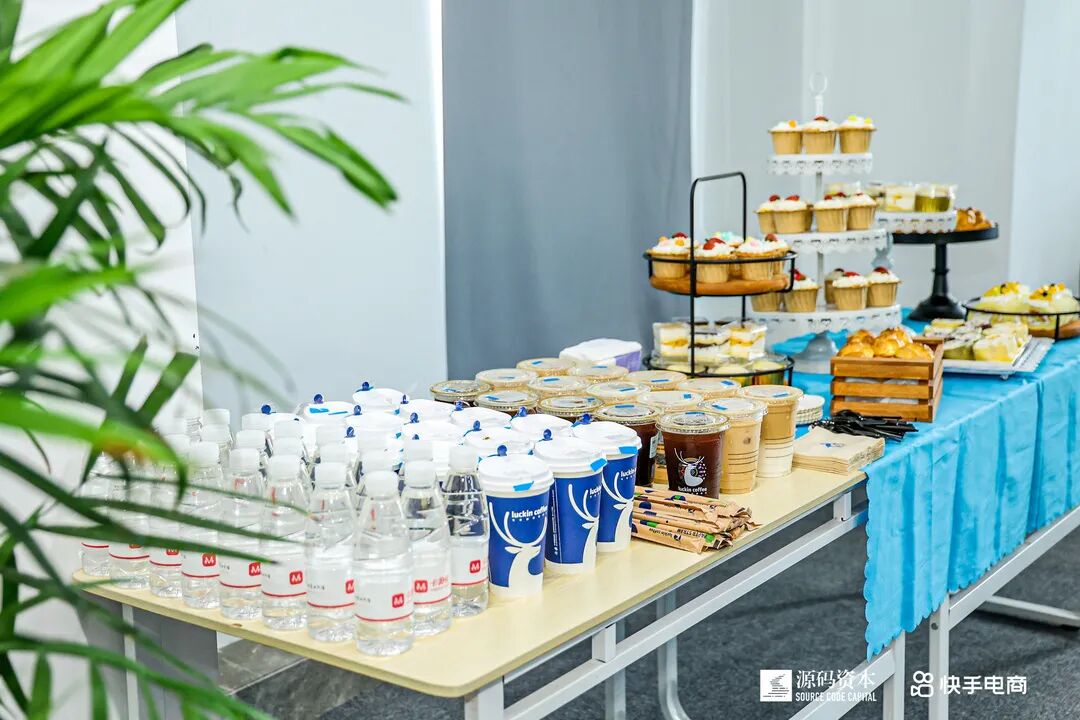

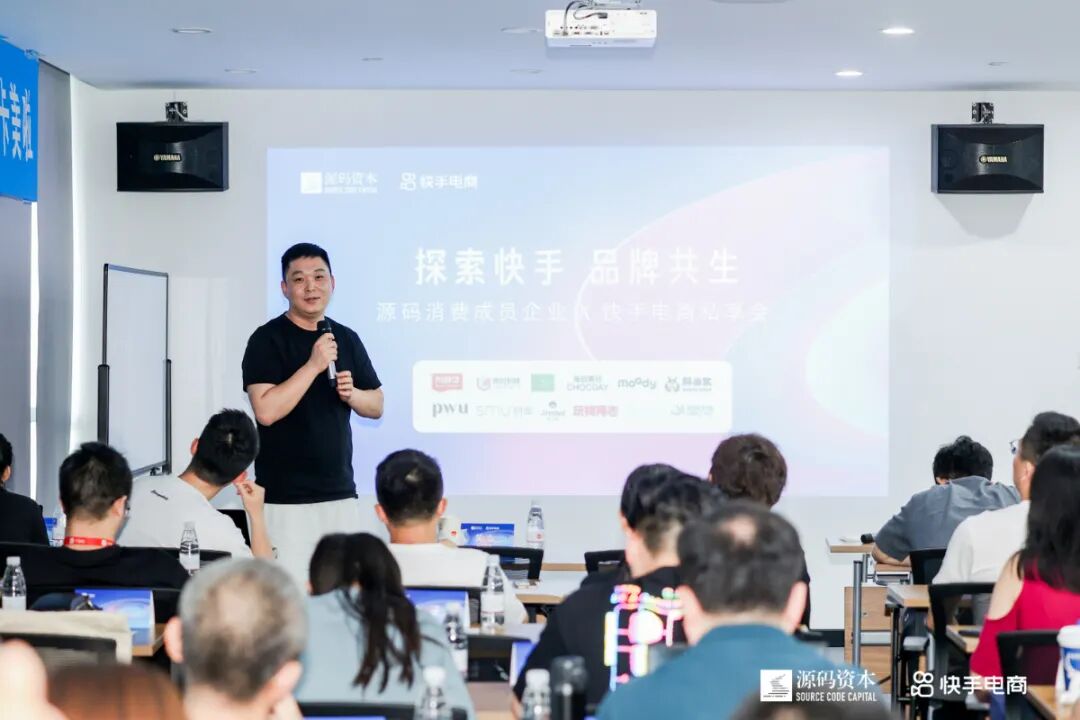
Swipe left/right to see more highlights from the event

Source Code Capital Consumer Portfolio Companies Visit Xiaohongshu: Three Steps to Building Brand Moats

197 million monthly active users — how can brands build stickiness with Bilibili users?

600 million DAU, how can new consumer brands master Douyin and prepare for Double 11?

[
](/en/sourcecodecapital/6dau11)