MaHui Entrepreneurs | Little Giant XSKY, the "Chongming Bird Initiative" Innovating to Transform an Ancient Industry

The only way to escape the rat race is to stay one step ahead of everyone else.
#MaHui Entrepreneurs — Resilient, Bold, and Ever Exploring
On July 6, China Entrepreneur magazine released its 2022 "Future Stars" list of 21 high-growth innovative companies. MaHui member XSKY was selected. XSKY founder and CEO Xin Xu recently sat down with China Entrepreneur to discuss how the company plans to deploy its newly raised capital and at what pace.
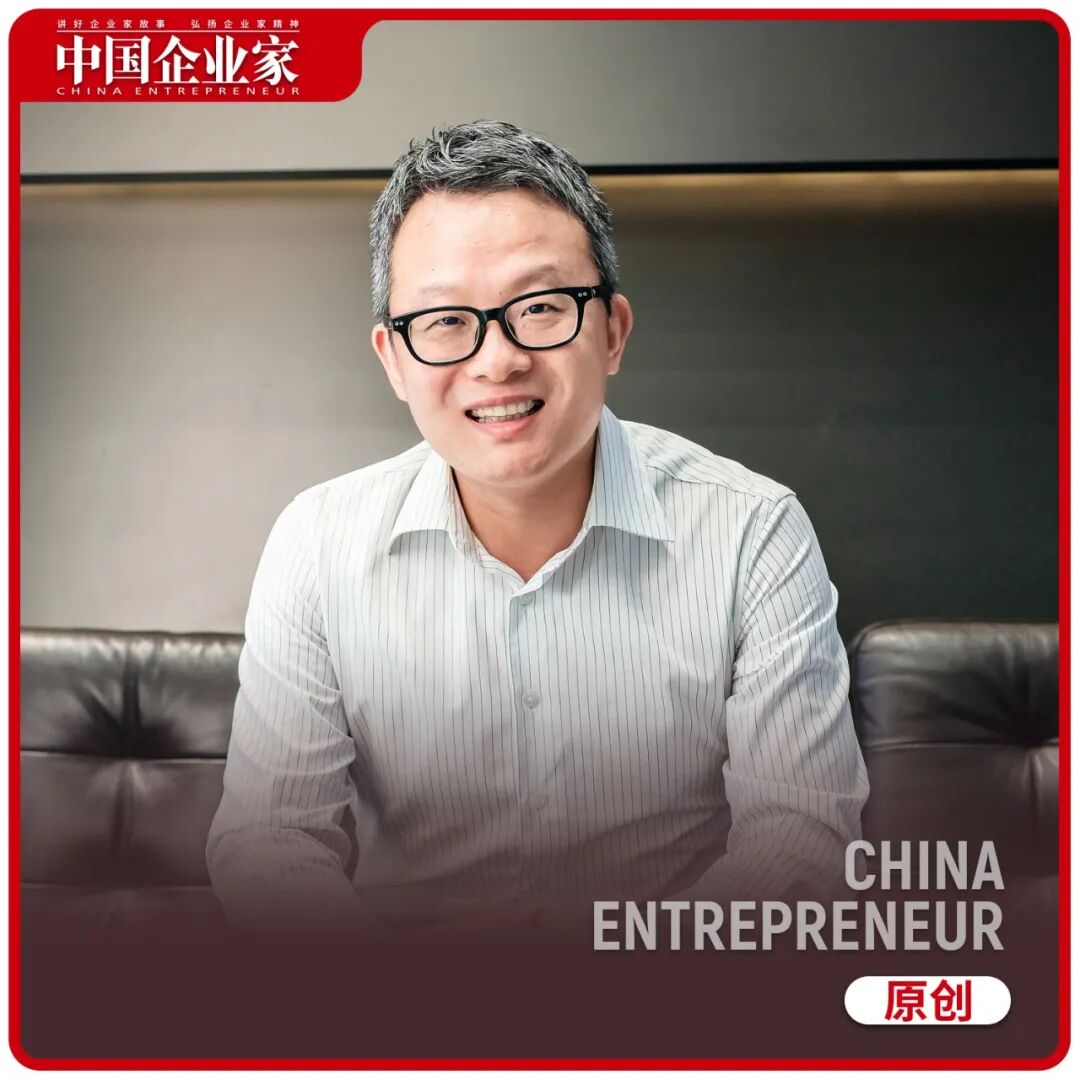
This March, XSKY moved its headquarters from Jinyuan Tower in the heart of Beijing's Haidian district to Yongfeng Science Park, out near the city's 5.5th Ring Road. The company now occupies its own standalone office building. Nearby IC Park is home to many of China's tech heavyweights, including Horizon Robotics and Bitmain.
XSKY, which describes itself as "living in a jungle of giants," had a smooth 2021. It was named a national-level "Little Giant" specialized and innovative enterprise, and expanded its headcount by more than 100 despite a challenging environment. What surprised founder and CEO Xin Xu even more was investors' growing enthusiasm for the sector. "We raised money from more well-known institutions in a single year than ever before." In just four months, the company closed a 710 million yuan round followed by a 400 million yuan round.
"Having raised over a billion yuan, I actually feel more anxious than ever," Xu said. Which businesses most deserve investment? At what pace should this capital be deployed? Aggressive expansion or focusing on fundamentals? And if fundamentals, what exactly are they?
As the company grew and revenue crossed 100 million yuan, Xu's concerns evolved from simply how to build a valuable product to a much broader set of challenges.
"Chongming Bird Project"
Consider this hypothetical: An iPhone and a crocodile-skin, diamond-encrusted phone that only makes calls and texts both cost 10,000 yuan. Which would you buy?
"For users who care about the experience, you might think the latter is overpriced even at 100 yuan — it can't do anything," Xu said. The same logic applies to storage. If storage only reads and writes data, merely ensuring it doesn't get lost, "don't even mention 1 million yuan — I'd find 10,000 yuan too expensive." Storage must store well, manage well, and use well. "If it's just storing and reading, that's a Nokia 'feature phone.' Our only way out of involution is to stay one step ahead of everyone else."
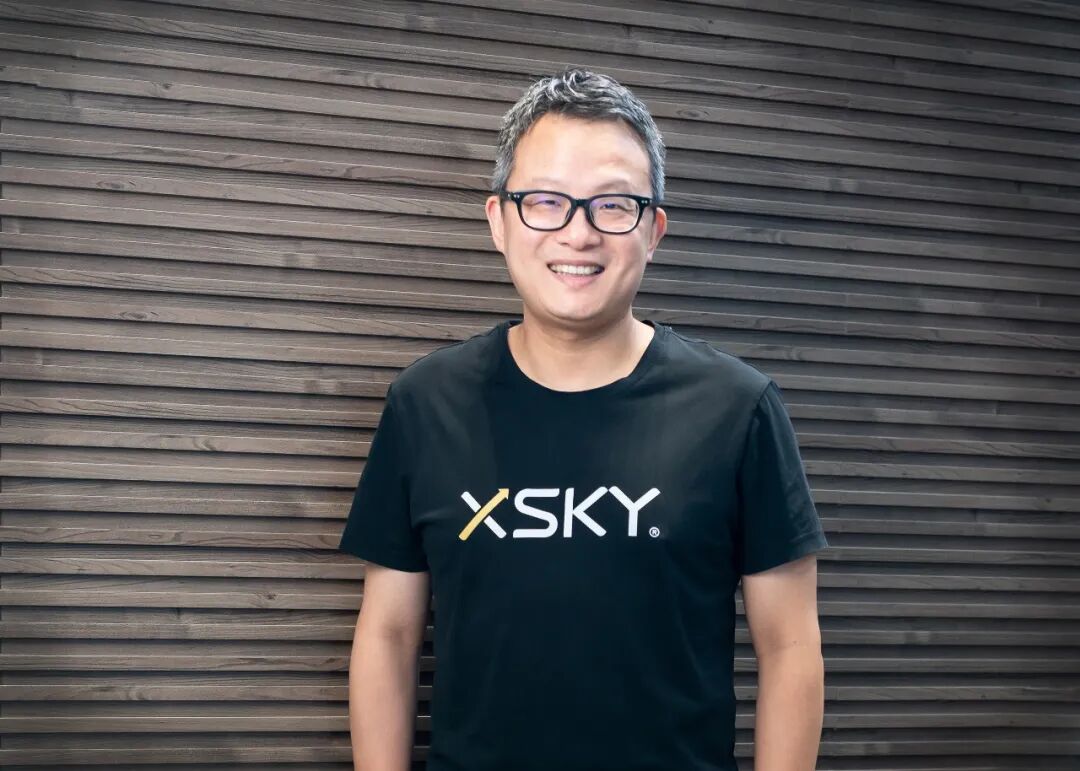
As a post-90s entrepreneur, Xu sleeps less than six hours a night, yet never feels tired. In his years of building the company, he's had fewer opportunities to write code hands-on but has visited more customers than ever. He's been to nearly every province in China — the only way to understand their real needs and experiences.
In July, XSKY will officially release its next-generation object storage system, nearly three years in development, internally codenamed "Chongming Bird." Object storage, roughly speaking, handles massive aggregated storage of images, audio, and video. Since March this year, select XSKY customers have been testing the system in controlled production environments.
In this segment, according to IDC data, XSKY has ranked first multiple times over the past five years. A 2021 IDC report showed XSKY leading with 19.7% market share, just ahead of Huawei's 19.4%. Established players H3C and Inspur held smaller shares but grew 68.8% and 273.8% respectively in 2021. Competition in storage remains fierce.
The Chongming Bird Project was not without setbacks. During R&D, the team underestimated the pace of innovation. Two or three years ago, they ambitiously planned for a single bucket to hold 100 million files, but customers quickly surpassed that. Before the plan was even complete, by 2021 they realized 1 billion files wouldn't suffice — customers might need 20 billion. The team raised the target to 100 billion, and by the official Chongming Bird launch, a single bucket will likely exceed 100 billion files. "The pace of business innovation on the customer side has far exceeded our imagination these past two years," Xu said.
Storage is an ancient industry, born alongside computing itself. It fundamentally concerns data efficiency and cost. "If a competitor needs to deploy 2 or 3 PB of capacity to accomplish something, and you can do it with 1.5 PB, you've saved costs — that's your advantage."
Clearly, the industries most hungry for data efficiency and cost optimization have shifted over the past year. For XSKY, healthcare, semiconductors, autonomous driving, and finance now account for over half of revenue. As recently as mid-2021, the top four sectors were government, finance, telecom carriers, and technology. Xu noted that absolute revenue from government and carrier clients continues to grow year-over-year, but healthcare, semiconductors, and autonomous driving are growing faster.
This sectoral shift means that as an upstream supplier, XSKY must understand the technical roadmaps of its healthcare, semiconductor, autonomous driving, and financial clients, "and align our technical roadmap with theirs."
Autonomous driving is an industry that generates text while accumulating images and video from sensors at massive scale — Xu considers it "a proving ground for storage." A car enthusiast himself, he's thrilled by autonomous driving's rapid development. He once debated with CTO Haomai Wang: Is lidar an essential component of future cars? "Not saying which approach will ultimately win, but at least today, whether it's the NIO ET7, Li Auto's L9, Arcfox, Jidu, or even Lotus — the legendary sports and racing car manufacturer — they're all standardizing on lidar."
In his research, Xu found that automakers and autonomous driving companies face higher technical demands when recording sensor data, routes, and passenger behavior during testing and operations. "For example, within 30 minutes, you might need to handle 100 million process data records." "You used to talk in milliseconds — 5, 10, 20 milliseconds to handle a task. Today it's microseconds. One millisecond equals 1,000 microseconds. Change the unit, and you need to improve your capability a thousandfold."
Autonomous driving represents "innovation at the pinnacle." Given the fierce competition among Chinese autonomous driving companies, XSKY has signed strict NDAs with all clients. Xu said XSKY is a storage company serving all industries. "In any given year or two, some industries may be in a stable phase while others explode. So we continuously accelerate our innovation to match the cyclical development needs of different industries."
If serving autonomous driving represents XSKY's commitment to cutting-edge innovation, then its approach to serving numerous hospitals represents uncompromising R&D investment to make the entire technology more affordable. That's innovation too. Behind this lies the reality that "what top-tier tertiary hospitals did before 2015, what Peking Union Medical College Hospital did, county hospitals are doing today."
Philosophy of Survival
In 2021, as consumer preferences shifted and chip supply constraints intensified, primary market investors lifted their heads from consumer deals and turned to底层创新 (底层创新) investment opportunities. Almost overnight, nearly every investor was looking at B2B.
Xu said, "Every previous round was under 300 million yuan, and I had a clear idea of how to spend it — I didn't have the capital to burn on aggressive expansion." But when XSKY raised 710 million yuan and then 400 million yuan within four months, he grew more cautious and tense instead.
If you look closely, XSKY historically added only one new investor per round. This ensured new shareholders held meaningful stakes, paid sufficient attention to the company, and were willing to roll up their sleeves to help recruit executives and refine strategy. On top of that, "with luck, you might lock in a like-minded partner with shared values, someone who'll sit in your office for 10 hours and offer candid advice at critical moments."
This was XSKY's distinctive fundraising approach. Round one: Northern Light Venture Capital. Round two: Redpoint. Round three: Qiming Venture Partners. Round four: NEA. Round five: China State-owned Capital Venture Investment Fund. The sixth round marked a turning point.
At that point, Xu worried that hand-picking similar investors would create an echo chamber. So in round six, XSKY brought in five or six new shareholders at once. "When your company reaches several hundred million in revenue, even pushing toward a billion, you realize it's no longer just about whether your product is good." Organizational capability, sales management, financial management and forecasting, and compliance over the long run all become increasingly important. "You need later-stage funds to truly broaden your perspective."
After closing the 710 million yuan Series E last year, XSKY held a sixth-anniversary company gathering during a relatively calm pandemic summer, with over 360 people attending. At this event, Xu spoke of "returning to fundamentals."
In his view, fundamentals mean the true value your product delivers to customers — what percentage of their innovation costs you account for, and how much you drive their innovation returns. Fundamentals mean management teams can't focus solely on sales targets, because by the time sales fall short and you react, it's already too late. As a supplement, XSKY expanded its coverage metrics: "It's unacceptable to have a customer we don't know, haven't spoken with."
Fundamentals also mean company-wide consensus — the hardest thing to achieve, and the company's biggest cost. When China Entrepreneur interviewed him, XSKY had just onboarded a domestic internet giant's office software and was rolling out OKRs internally. Xu adopted "Nothing not on the calendar will happen" as his signature in the software, a line he picked up from a sales manager.
Subsequently, XSKY completed a 400 million yuan Series F with investments from Source Code Capital and Yunhui Capital. Source Code Capital's entry into XSKY came at a relatively late stage with considerable competition. A key reason Xu chose Source Code was that navigating cycles requires like-minded partners. Source Code's understanding of entrepreneurial spirit — "infinitely outward, infinitely inward" — deeply resonated with him.
To date, XSKY serves nearly 2,000 enterprise clients large and small. Capital market volatility and shifting international conditions haven't had much impact — new clients and business opportunities keep growing, and the company keeps expanding its innovation. Xu said he can't find a reason to refuse growth. Rather, "we don't have enough people" — headcount grew by over 100 in the past year.
But as numbers approached 500, he found the company easily loses focus. "You relax your standards on many things — financial model profitability, per-capita efficiency, even hiring more freely." He reminds himself that many companies suffer setbacks precisely when they let their guard down.
Yet even amid recurring pandemic conditions, XSKY isn't rushing toward profitability. Xu cited Tesla, which posted massive losses for years, in his company's defense. A former Volkswagen Group executive once told then-Chancellor Angela Merkel: Tesla is not worth mentioning. Volkswagen posts tens of billions of euros in annual net profit — what can Tesla do? Besides losing money, nothing. "Today, Tesla's net margin has reached 20%, rivaling any internet company."
"Looking back at Musk five years ago, he wouldn't say profitability was his goal. But deep down, he definitely had a profitability plan five years ago." Xu's point: He cares about profitability. Profitability is the key metric proving commercial value and organizational efficiency. Innovation is no excuse for failing to profit.
"Before scale arrives, your investment is non-negotiable," he said. "We will become profitable one day. Maybe next year, maybe in three to five years."

- MaHui Entrepreneurs | How a Graduation Project Became a $2 Billion Logistics Robotics Leader
- MaHui Entrepreneurs | Exploring Known Unknowns, Unknown Unknowns
- MaHui Entrepreneurs | The Shenzhen Agri-Tech Entrepreneur Featured on CCTV, Taking AI Photos of Every Piece of Fruit
- MaHui Entrepreneurs | Biren Technology's Wen Zhang: The Story of Chinese Chip Companies Has Just Begun
- MaHui Entrepreneurs | Post-90s Entrepreneur Junbin Zhang: Building Transformational Products, Pursuing 0-to-1 Value
- MaHui Entrepreneurs | Two 29-Year-Old Genius Scientists' "Moon and Sixpence"
- MaHui Entrepreneurs | Mech-Mind's Tianlan Shao: Some of My "Grassroots" Experience
- MaHui Entrepreneurs | Exploration Never "Extinguished," Honoring the Spirit of Aerospace
For more MaHui members, click "Read Original" to view