‘Qingyun’ Light Oil Sells Over One Million Bottles, State Capital Bets Big to Drive 100 Million Yuan Plus Funding Round | Unity Ventures Portfolio News

First to achieve large-scale mass production of diacylglycerol (DAG) oil with over 95% purity
"
Unity Ventures portfolio company Lipid-Replacement Technology (脂代科技) announced the completion of an A-round financing exceeding RMB 100 million, led by Shenzhen Capital Group, with follow-on investments from Jianhua Fund, Changzhou Red Clay Healthcare Industry Investment Fund, Changzhou Weiqi Investment, and Anyu Capital.
Lipid-Replacement Technology is a high-tech biotechnology enterprise focused on low-burden fat replacement R&D. Its main product categories include high-purity diacylglycerol (DAG) cooking oil and a globally leading patented low-calorie fat product line.
With its proprietary enzyme formulation and patented non-powered heterogeneous continuous reactor, Lipid-Replacement Technology became the first company in the world to achieve mass production of DAG products with over 95% purity. In 2024, the company's brand "Qingyun" (Light Cloud) reduced-burden oil sold over 1 million bottles.
Unity Ventures was Lipid-Replacement Technology's angel round investor and has continued to increase its stake in subsequent rounds. Lipid-Replacement Technology uses biotechnology to transform the molecular structure of cooking oil, reducing triglyceride intake at the source and lowering health risks from lipid metabolism disorders. From independent R&D to production line deployment, we have witnessed Lipid-Replacement Technology's rapid development throughout. We look forward to Lipid-Replacement Technology driving an "oil revolution" and contributing to Healthy China through "biological intelligent manufacturing."
"

From the "Pressing Era" to the "Biomanufacturing Era": The Trillion-RMB Oil Track Is Entering the Healthy Oil Revolution
VBData recently learned that Lipid-Replacement Technology (脂代科技), a high-tech biotechnology enterprise focused on low-burden fat replacement, has completed an A-round financing exceeding RMB 100 million, led by Shenzhen Capital Group, with follow-on investments from Jianhua Fund, Changzhou Red Clay Healthcare Industry Investment Fund, Changzhou Weiqi Investment, and Anyu Capital. Anyu Capital also served as financial advisor for this round.
Since its founding in 2021, Lipid-Replacement Technology has received consecutive investments from former Procter & Gamble Greater China VP and former Xpeng Motors CMO Xiong Qingyun, Unity Ventures, and Eight Roads. This financing marks the company's further recognition by professional healthcare investors and mainstream state-owned capital in its development direction of functional reduced-burden oils. The proceeds will be used for constructing Lipid-Replacement Technology's globally leading low-fat, low-calorie edible oil R&D base; building a second mass production factory for its star product Qingyun reduced-burden oil; conducting efficacy clinical research; and expanding marketing and sales channels.
Founded in Beijing in August 2021, Lipid-Replacement Technology is a high-tech biotechnology enterprise focused on low-burden fat replacement R&D. Its current main product categories include high-purity diacylglycerol (DAG) cooking oil (which can reduce triglyceride burden by up to 95%) and a globally leading patented low-calorie fat product line.
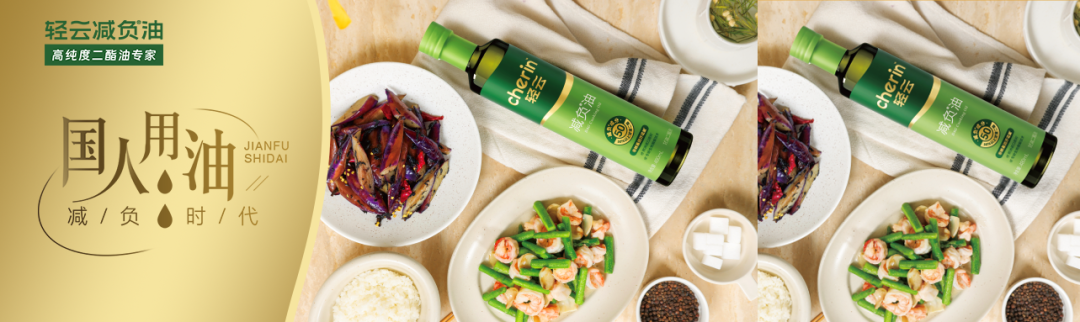
Founder Cui Liming has extensive experience in the fast-moving consumer goods and health food industries, having served as brand manager at Procter & Gamble China and general manager of Mengniu's Telunsu brand. Over the past two years, under the leadership of CTO Dr. He Lin (a core founding member of the former Yihai Kerry China Oil & Fats Chemical R&D Center), the company has used its proprietary enzyme formulation and patented non-powered heterogeneous continuous reactor to become the first company globally to achieve mass production of DAG products with over 95% purity. In 2024, the company's Qingyun reduced-burden oil product sold over 1 million bottles, ranking first in online sales for this category (as certified by Shangpu Consulting Group: Qingyun reduced-burden oil ranked first in online sales of DAG oil in China). With this, Lipid-Replacement Technology has achieved a full-chain closed loop from proprietary R&D platform to mass production factory to B2B and branded B2C sales.
China's annual cooking oil consumption exceeds 40 million tons, ranking first globally. In 2024, China's total edible oil market size surpassed RMB 600 billion, and the demand side, supply side, and policy side of the edible oil track are undergoing significant industry transformation. On the demand side, China's cooking oil market shows a "polarization" characteristic: basic oil varieties are seeing consumption downgrading, while demand for premium oils is exploding, with market structure showing regional and consumer group differences. This contradiction of "cutthroat competition at the low end, absence at the high end" is forcing companies to accelerate innovation breakthroughs. Traditional oil varieties are still dominated by the "iron triangle" of soybean oil, rapeseed oil, and peanut oil, while premium oils are rapidly rising on the wave of health-conscious consumption.
According to Boyan Consulting, in 2025 China's functional oil market size will exceed RMB 15 billion, maintaining a 10%-15% annual compound growth rate. As a representative of functional oils, DAG oil's category share has approached 25%, far higher than 8% in 2020. Functional foods are already part of the national health strategy, and as an essential in East Asian food culture, the entire cooking oil industry is transitioning from basic consumer goods to more functional big health products.
Why has DAG, as a representative functional cooking oil, risen rapidly in the past two years?
Founder Cui Liming explains: Whether vegetable oil, animal oil, or premium healthy oils widely perceived as high-end like coconut oil, olive oil, and camellia oil, ordinary cooking oils are 98% or more composed of triglycerides — the very thing on our medical reports. Excessive intake affects health. The remaining 2% of rare natural component DAG, as a "non-hoarding fat," enters the body through a completely different metabolic pathway from triglycerides, quickly metabolizing for energy without easy storage as fat. Japanese nutritionists were the first to call DAG a "fat bomb," emphasizing its fat-burning effect. Japanese company Kao has commercially produced high-purity DAG oil since 1999, and it was approved by the Ministry of Health, Labour and Welfare as a "Food for Specified Health Uses" (FOSHU), promoted for its effects in reducing visceral fat and suppressing weight gain.
Chinese average daily consumption of cooking oil reaches 80.27 grams, three times the 25-30 grams per person per day recommended by the World Health Organization and Chinese Dietary Guidelines. Cui Liming notes that Chinese cuisine emphasizes color, aroma, and taste, with a preference for stir-frying — this unique cooking method creates high demand for cooking oil. Therefore, under Chinese dietary habits, it's very difficult for ordinary people to drastically reduce daily cooking oil consumption. China's incidence of chronic diseases caused by abnormal lipid metabolism leads the world, with one core trigger being the extremely high dependence on oil in Chinese cooking habits where "no oil means no dish."
According to 2024 statistics, among Chinese adults over 18, the prevalence rates of hypertension, hyperlipidemia, and hyperglycemia are 27.9%, 40.4%, and 12.4% respectively. This March, National Health Commission Director Lei Haichao announced during the Two Sessions the official launch of a three-year "Weight Management Year" action plan, elevating obesity prevention to national strategic height, marking China's health management transformation from "treating disease" to "preventing disease."
Therefore, using healthier cooking oil has become a more feasible dietary health solution. Compared to ordinary cooking oil with triglycerides as the main component, DAG, which can significantly reduce fat accumulation, has become the new风口 (trend) in the cooking oil industry. Numerous scientific studies have found that DAG oil has certain benefits in fat reduction and regulating blood lipids, blood sugar, and uric acid levels. Large-scale clinical studies show that long-term consumption can reduce visceral fat and suppress weight gain.
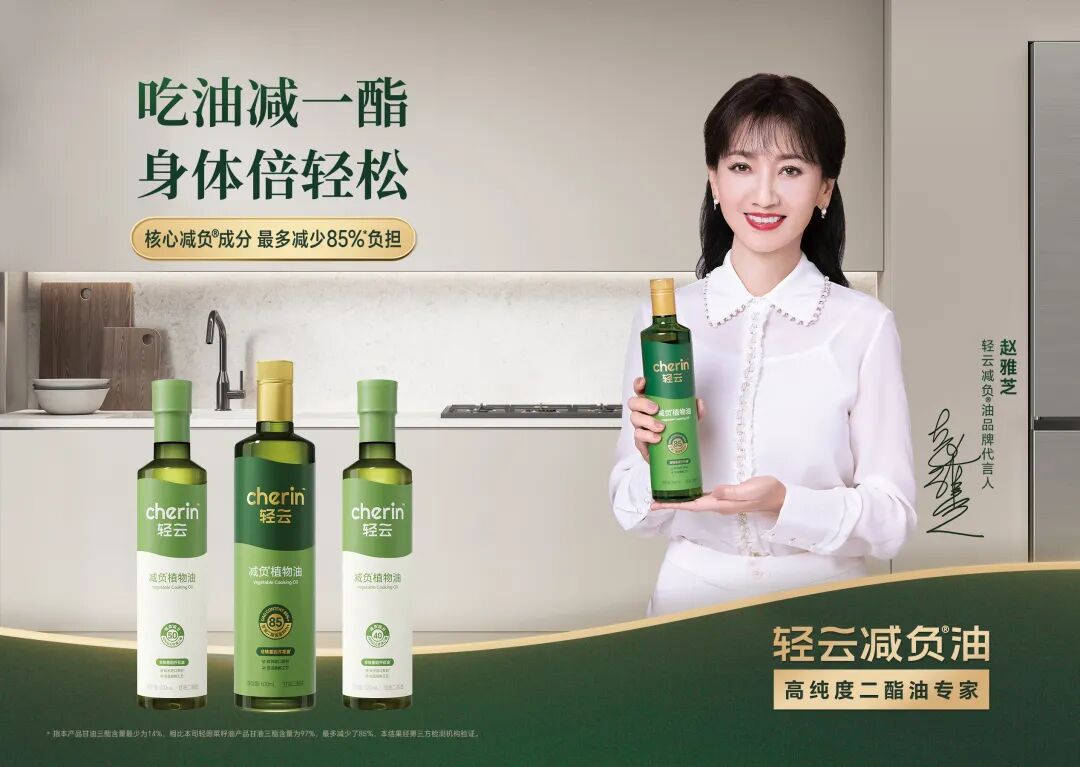
To verify DAG's efficacy and find the core answer to reducing Chinese people's three-meal oil burden, Lipid-Replacement Technology has consistently collaborated with top medical institutions on science-based evidence. After a year-long systematic study, Lipid-Replacement Technology jointly completed China's largest-scale DAG oil human double-blind study with a Peking University Medical School expert team. Through rigorous double-blind controlled experiments, it confirmed that high-purity DAG oil achieved clinically significant improvements in six health indicators including blood lipids, fatty liver, and body fat compared to ordinary vegetable oil.
After receiving US FDA safety certification at the end of 2000, DAG technology entered global public view, achieved industrial production breakthroughs between 2000-2005, and rapidly became an internationally best-selling healthy oil. In China, in 2009, the former Ministry of Health's Announcement No. 18 listed DAG oil as a new resource food (later revised to new food raw material), accelerating market standardization. By 2021, DAG oil was included in the National Health Commission's new food raw material termination review catalog, allowing use as a food raw material. According to regulations, DAG content in DAG oil must be ≥40%. The year 2024 was undoubtedly a milestone for China's DAG oil industry, with over 20 leading companies including Yihai Kerry and Louis Dreyfus intensively releasing enterprise standards for "Diacylglycerol Oil," marking the industry's entry into a new phase of technical standardization.
What is the core competitiveness of China's current DAG oil R&D and mass production technology?
Unlike the United States, Europe, Japan and other countries that approve chemical methods for DAG oil preparation, China's current regulatory requirements mandate that DAG oil production must use biological enzymatic methods. The enzymatic method operates under mild conditions, avoiding chemical residues and meeting food safety standards. However, while ensuring food safety and efficacy, the pure biological enzymatic method poses high requirements for preparation工艺 (process) and production costs.
DAG oil must contain ≥40% DAG, and higher DAG content means greater fat-reducing effects and higher prices. Currently in the Chinese market, 500ml sells for RMB 100 to 800 per bottle. Due to high prices, DAG oil struggled to open the market for a long time, which is one reason major oil companies initially chose not to heavily布局 (deploy) related products.
To bring prices down, Lipid-Replacement Technology spent considerable time developing proprietary biological enzyme technology and DAG purification technology, and recruited former Yihai Kerry R&D expert Dr. He Lin as CTO to lead research. Unlike traditional oil pressing extraction processes, DAG oil production is pure biological manufacturing, requiring R&D and production teams with comprehensive industry experience spanning oil science, food safety, fine chemical engineering, medical nutrition, and bioengineering. After three years of R&D and production line construction, Lipid-Replacement Technology finally achieved industry-leading product performance, cost, and flavor on its first large-scale mass production line.
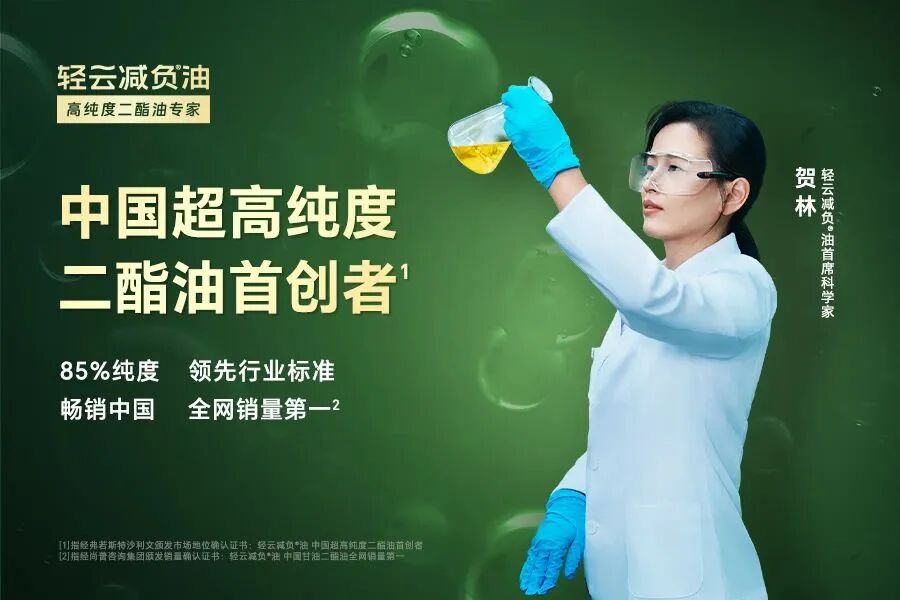
Currently, Lipid-Replacement Technology is the first domestic enterprise to break through mass production of DAG oil products with over 95% purity. On the cost side, Lipid-Replacement's brand Qingyun reduced-burden oil's full line of DAG oil products has leading quality-price advantages in the same content series.
This stems from the company's proprietary process breaking through the imported enzyme preparation technology bottleneck that had long constrained Chinese enterprises, using self-developed compound enzyme preparations (costing over 70% less than imported enzymes), combined with China's first non-powered heterogeneous continuous reactor to achieve complete domestic production of high-quality DAG oil. This technology not only dramatically improves DAG conversion and purification efficiency but also retains natural nutrients in cooking oil such as unsaturated fatty acids, vitamin E, and plant sterols, while ensuring Lipid-Replacement Technology's DAG oil "reduces burden without reducing flavor" — matching traditional triglyceride oil in smoke point, taste, flavor, and color.
Benefiting from the team's deep experience in food and oil sectors, the company has an extreme pursuit of consumer experience. "As a Chinese food brand with social mission and responsibility, first, we pursue food safety to the extreme — our product ingredient list contains nothing but base cooking oil; second, we want to extremely satisfy users' established taste expectations for this category, so Qingyun reduced-burden oil has strived from day one to make our DAG oil completely consistent with traditional triglyceride oil in taste, or even more fragrant," Cui Liming said. "We welcome all partners to come to our R&D center's sensory lab for blind taste tests comparing Qingyun reduced-burden oil with all DAG oils on the market under any cooking method."
Currently, Qingyun reduced-burden oil's regular purity product pricing has already approached olive oil, attracting a loyal consumer base pursuing health and concerned about lipid metabolism issues.
What lies ahead for the new generation of functional foods?
Winds are gradually shifting, and major oil companies have begun noticing this niche track. This May, Arawana launched its DAG oil brand "Fengyi Tangxin Qingyi" DAG oil, initiating a healthy food strategy. Facing giants' entry, Cui Liming shows excitement rather than panic. Cui Liming said: "This precisely proves our four-year strategic vision was correct — functional healthy oils are an inevitable development trend. If no giants are interested in your track, you should reflect on whether your direction is a伪需求 (false demand) or ultra-niche demand."
Regarding Qingyun reduced-burden oil's competition against industry giants and various players, Cui Liming believes the DAG oil industry's development序幕 (prologue) has just begun, with industry penetration far below 1%. Currently all players cannot be called competitors but rather friends in the business — together educating this market can accelerate bringing this category to mass visibility. Today, with metabolic health problems exploding globally, as over 3 billion people are shrouded in the shadow of chronic diseases caused by obesity and abnormal lipid metabolism, the cooking oil market exceeding RMB 500 billion stands at a critical point of transformation.
Against this backdrop, Lipid-Replacement Technology's Qingyun reduced-burden oil, relying on independent innovation patent technology systems, scaled industrial落地 (deployment) capabilities, and biological technology innovation leadership advantages, is opening a new era of dimensional upgrading competition in the functional oil market with disruptive posture.
Cui Liming also said, "Lipid-Replacement Technology" as the name suggests, is short for "fat replacement technology." This means the company's mission is to focus on only one thing: vertically and deeply specializing in R&D of low-burden healthy oil technology and related products. He believes that unlike past oil companies'单纯 (pure) pursuit of scale advantages and traditional supermarket channel coverage, as a new generation functional oil enterprise, the new focus for long-term development should be globally leading R&D technical strength, clinical evidence-based research, professional and in-depth user education, and precise brand positioning.
Source: VBData