The Power of Faith-Based Spending: A Chat with LimX Dynamics on GTC and Humanoid Robot Progress | Oasis Vitality

Advisor on Vitality or Counselor for Life Force or Consultant on Life Vitality (Without additional context, this brief phrase could refer to a role or title in various contexts — traditional Chinese medicine, wellness, organizational consulting, or even a literary/metaphorical usage. The most natural English rendering depends on the specific domain.)

LatePost Talks invited Chen Hua, co-founder of LimX Dynamics, an Oasis Capital portfolio company. The company built a humanoid robot by the end of last year. Interaction with the physical world is a crucial path for learning and intelligence evolution beyond language, and embodied intelligence can greatly expand the scope of what AI can accomplish. Enjoy.

Chen Hua received his bachelor's degree in automation from Zhejiang University's College of Control Science and Engineering and an honors degree from the Chu Kochen Honors College in 2012. He earned his Ph.D. in electrical and computer engineering from Ohio State University in 2018, followed by postdoctoral research at the same institution, before returning to China in June 2019.
In 2022, Chen founded LimX Dynamics alongside his doctoral advisor, renowned robotics scholar Wei Zhang.
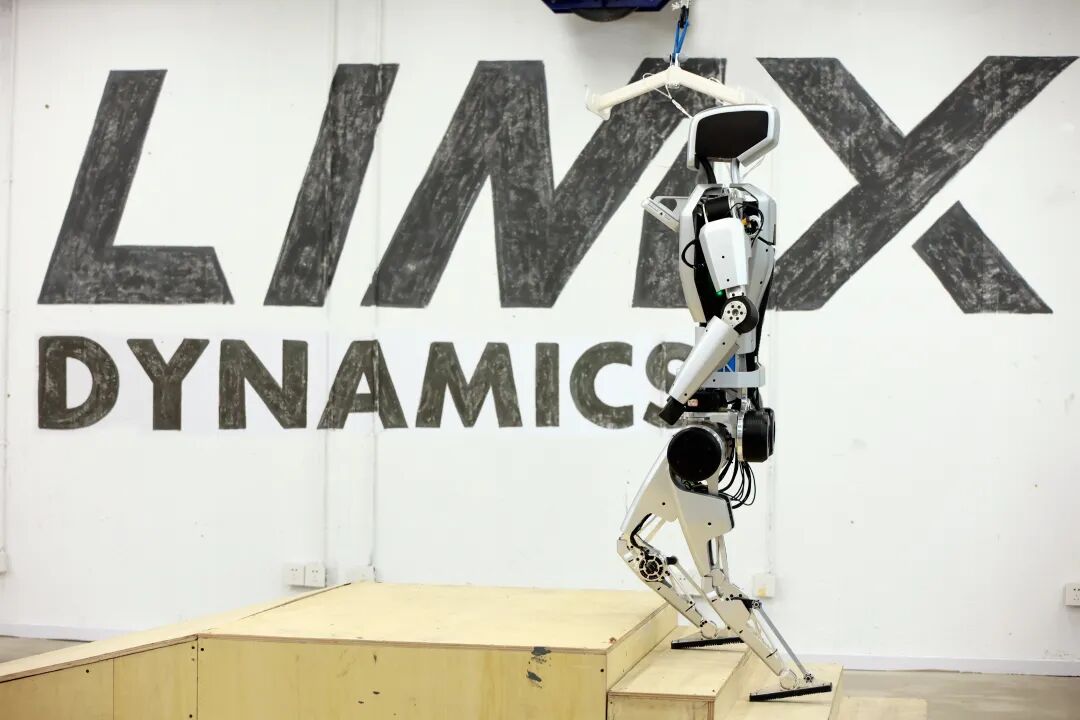
LimX Dynamics humanoid robot CL-1
In just the first three months of this year, we've already seen numerous developments in this space: Figure AI raised $675 million from OpenAI, Microsoft, NVIDIA, and Jeff Bezos, integrating OpenAI's large models; NVIDIA launched its GR00T robotics foundation platform at GTC, with Jensen Huang sharing the stage with a real-life version of WALL-E, the sci-fi animated film protagonist; Tesla released a new Optimus demo; and Physical Intelligence (PI), which builds robot "brains," secured investment from OpenAI, Sequoia Capital, and others.

LimX Dynamics wheeled quadruped robot W1
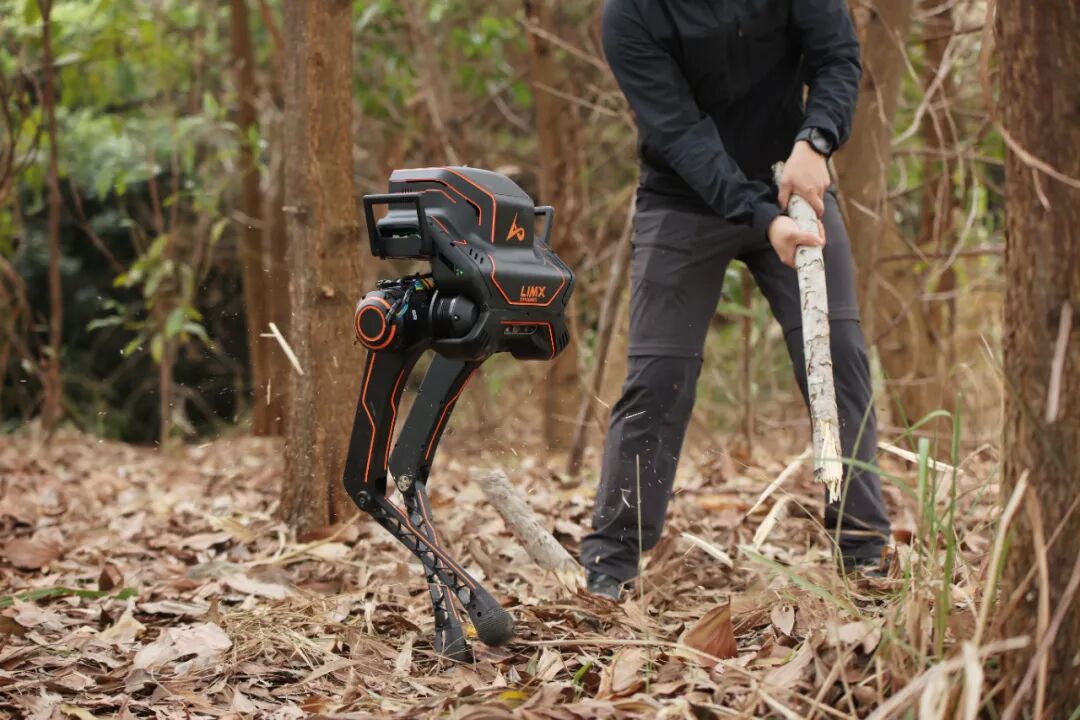
LimX Dynamics point-foot bipedal robot P1 demonstrating strong anti-interference capabilities under violent strikes
In this episode, starting from recent industry highlights like GTC, Chen shares the technical progress he's witnessed since his doctoral studies and his entrepreneurial journey, as well as current bottlenecks in the humanoid robot tech stack. We also compare the differences between Chinese and American humanoid robot startups. He believes that GPT has dramatically accelerated the development of robot "brains," while the "cerebellum" — the part that connects brain decisions to physical execution — still has much room for breakthroughs, which is also what excites him most.
Episode Summary
· GTC and Recent Developments: Bullish on Robotics, but Jensen Huang's Conversation with the Transformer Eight Didn't Touch on Robots
- 01:20 The cerebellum is already lagging behind the brain; more focus on the cerebellum
- 05:12 The new technology behind Figure AI and Aloha: Diffusion Policy, using diffusion models to generate robot actions
- 06:44 The relationship between Diffusion Policy and diffusion models
- 09:04 The key improvement lies in generalization: robots can now wash dishes like humans, without requiring precise placement
- 09:47 Why did the GTC forum with Jensen Huang and the Transformer eight completely skip robots?
· Education and Entrepreneurship: When Software Meets Hardware, Opportunity Signals Emerge
- 12:56 During doctoral studies in 2016-2017, Boston Dynamics demos were impressive; conversations with their scientists revealed similar approaches
- 14:29 What Boston Dynamics demonstrated was "legged locomotion capability," which runs on a separate track from "manipulation capability"
- 15:00 Why is legged locomotion difficult to control? — An "underactuated" system
- 18:08 Legged locomotion capability, abstracted, was the subject of Chen's doctoral research: optimal control of hybrid systems
- 20:08 MIT's open-source hardware scheme was a significant boost to the industry
- 21:26 MIT used planetary reducers originally developed for other fields, and also provided theoretical explanations
- 24:10 Large companies vs. small companies: for a direction not yet fully ready, exploratory flexibility matters more
- 26:30 LimX has built three products — why so many?
· Market Observations: Why Did Humanoid Robots Take Off First in China? What Has the AGI Faith Premium Brought?
- 27:43 Why did China see so many more humanoid robots last year? — The Elon Musk effect
- 29:50 Walking like a human demonstrates technical capability, but perhaps it's not that important
- 31:43 LimX's wheeled quadruped and point-foot bipedal robots: where are they used? What do they do?
- 34:29 The superior locomotion and balance of point-foot bipedal robots — coming from the application of reinforcement learning in robot control over the past two years
- 35:00 This has no direct connection to Transformer, but the faith premium across the field has made everyone realize that data-driven approaches to control are viable
- 36:43 Why do Chinese humanoid robot companies appear "less focused" than their American counterparts?
- 40:53 Why did large models take off first in the US, while humanoid robots took off first in China?
- 42:45 Boston Dynamics is actually over 30 years old! It still uses hydraulic actuation, making commercialization nearly impossible
- 45:19 A phenomenon: tech companies that started too early may adopt new technologies more slowly due to deep accumulation in legacy tech stacks
- 47:10 This time, will this not happen? Why?
- 48:54 More certain: the humanoid robot direction; developing slower than expected: hardware
- 52:26 Robot data is also coupled with hardware: how should touch be represented? This is constrained by sensors
- 54:56 On-robot computing power: NVIDIA Jetson takes another step ahead
- 57:23 Humanoid robots are an interdisciplinary field; people with both software and hardware capabilities may become dominant
- 59:25 Cautiously optimistic about robots "rebelling" against humans
Related Links
LimX Dynamics Bipedal Robot P1 Hiking in the Wild