Spirit AI's Lingyin Zheng: Stay Professionally Alert, Let Everything Happen | Oasis Capital Vitality

Maintaining a delicate balance is, in itself, the greatest value.

As a seed-round investor in Spirit AI, Oasis Capital has witnessed the company's rapid growth driven by relentless iteration in technology and business strategy, and seen the resilience and adaptability this young team has shown throughout their entrepreneurial journey.
Among Spirit AI's "founding iron triangle," co-founder Lingyin Zheng plays an indispensable and pivotal role. She not only led the company's financing path and global talent strategy from 0 to 1, but also serves as the "reward function" that enables systemic convergence — bridging Fengtao Han's "engineering intuition" and Yang Gao's "technical idealism."
On March 8, 2026, TMTpost Venture Capital conducted an in-depth interview with Lingyin Zheng. Through her deep reflections on growth, judgment, and trade-offs, more people have come to recognize the unique female leadership in the embodied intelligence industry. Coincidentally, the early team and investor group photo featured below also includes two outstanding women from Oasis Capital: partner Ivy and investor Chelsea.
We recommend and republish this article. Enjoy.

It's hard to deny that the red-hot embodied intelligence industry looks more like a man's game. According to Zhaopin's 2025 Robot Industry Talent Development Report, in the embodied intelligence sector — a cross-disciplinary field spanning robotics and AI — women account for roughly 23% of the workforce, with technical positions seeing even lower female representation at about 12%. Female founders and co-founders are rarer still. Among the handful of female founders, Lingyin Zheng of Spirit AI appears to be a particularly unique presence.
Earlier this year, Spirit AI announced the completion of two funding rounds totaling nearly 2 billion RMB, officially joining the ranks of "embodied intelligence decacorns." On the technical front, its open-sourced Spirit v1.5 model became China's first embodied model to surpass the performance of the US-based PI0.5. Commercially, the world's first humanoid robot production line has already been deployed at CATL, with a new retail partnership with JD.com set to launch soon. Meanwhile, Spirit AI's IPO preparations are also underway.
The spotlight attracted by this string of victories has fallen squarely on Fengtao Han — the robotics veteran who abandoned the Robostar IPO to go all-in on embodied intelligence (far right in photo below) — and Yang Gao, the young UC Berkeley-trained scientist steering the Spirit v1.5 model (center in photo below). Yet Lingyin Zheng, the third member of this "founding iron triangle" (far left in photo below), only appears in scattered mentions during interviews with her two male partners.
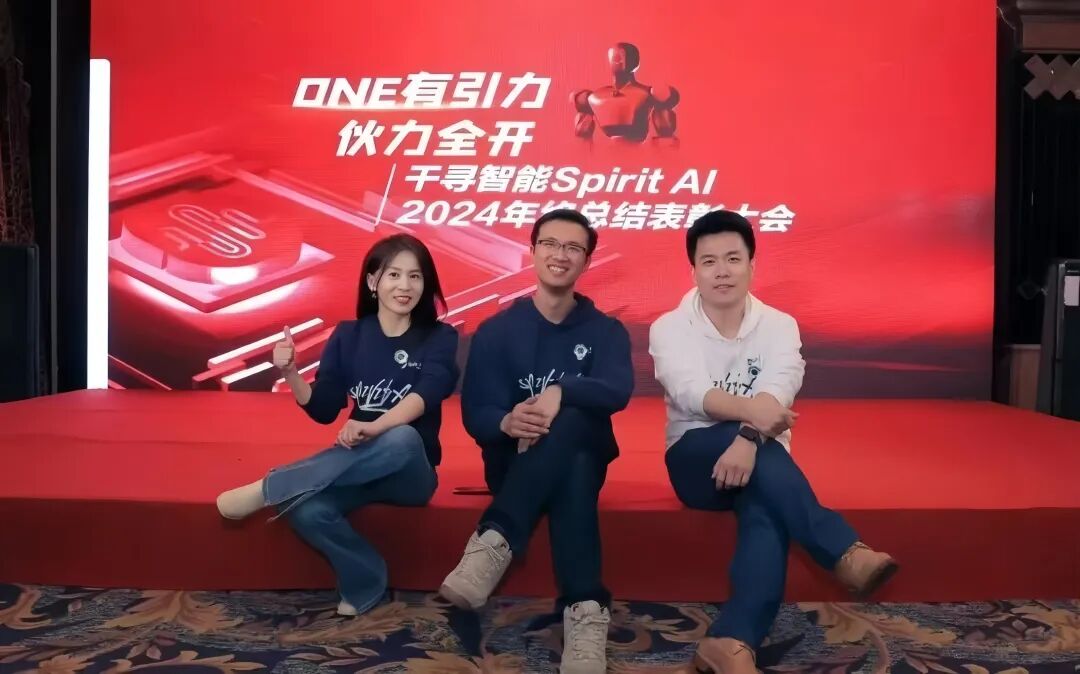
This isn't unfair treatment — it more closely reflects Lingyin Zheng's consistent way of operating. If you try to look up her background, you'll find it remarkably low-profile: no columns, no interviews, not even a single complete personal profile. What we know is that Zheng previously worked with Han at Robostar Robotics, where she built the international division from scratch and led market expansion across Europe, Russia, and other regions, quickly achieving commercial results.
But this brief resume alone seems insufficient to secure her place in the "founding iron triangle" of a newly minted decacorn like Spirit AI. And it's precisely this lack of detailed background information, combined with her enduring low profile, that has kept Zheng shrouded in an air of mystery.
We learned from Spirit AI's early investors that Zheng was among the first people Han invited to join when he started the company. And throughout the startup's early days, particularly during the process of assembling Han and Gao into a team, she played a pivotal role.
In fact, the name "Qianxun" (Spirit) itself came from Zheng.
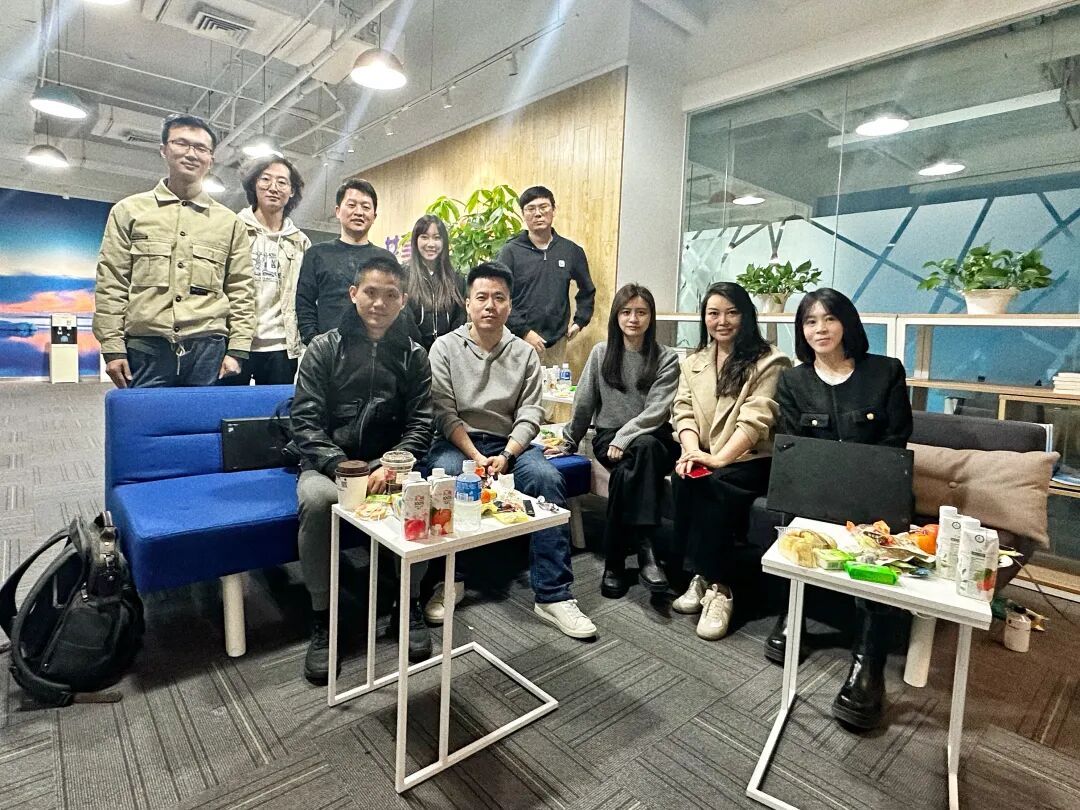
First group photo of Spirit AI's early founding team and investors. Zheng is far right.
Top left fourth and bottom right third are two investors from Oasis Capital
Currently, Zheng's responsibilities at the company cover nearly every department outside of R&D. From internal administration to talent development, from brand and marketing to finance and fundraising, she has become Spirit AI's indispensable management core.
One insider also revealed: the reserved Gao once expressed heartfelt thanks to Zheng at Spirit AI's first annual meeting, calling her his "reward function." Han, too, has publicly emphasized on multiple occasions — both inside and outside the company — the importance of this female role in a male-dominated founding team, also calling her the company's "reward function."
From outside Spirit AI, few may realize: this woman with virtually no online presence is the one maintaining the delicate equilibrium of the "founding iron triangle" and the company's overall stable operation.
In the first week of March, we finally met this mysterious female founder in Beijing's Haidian district.
She had just finished hosting two groups of investors, apologizing as she rapidly responded to unread messages on her phone.
"Embodied intelligence is just too hot right now," she said, rubbing her temples with a hint of apology, speaking rapidly. "Sorry, I didn't expect investors to show up unannounced on top of our scheduled meetings." Her words carried both conviction and pride in the industry.
And so we formally began an in-depth conversation with Lingyin Zheng — about Spirit AI, the embodied intelligence industry, the "founding iron triangle," and female founders.
(The following is the complete interview with Zheng, slightly edited for length)

Capital Frenzy and Spirit AI
Venture Capitalist: We know you've been primarily responsible for Spirit AI's fundraising. How do you view this wave of capital frenzy in embodied intelligence from late 2025 to early 2026?
Lingyin Zheng: I think enthusiasm became clearly visible around November 2025. There are two reasons: first, Spirit AI and several leading US embodied intelligence companies all achieved similar breakthroughs and strong results during this period. Everyone simultaneously anticipated the arrival of Scaling Law.
For a long time, the industry remained in a state of "non-consensus" — people held different views, and investors were overwhelmed. It wasn't until late 2025 that consensus gradually converged. Everyone realized: you can't keep betting solely on commercialization and hardware bodies. To unlock massive scenarios, you need brain upgrades — model evolution.
Another factor is the strong post-IPO performance of Zhipu AI and MiniMax last year, which gave the entire embodied intelligence industry and primary market investors confidence. The industry finally seemed to see a clear and viable exit path and business model. Embodied intelligence may not be 100% the endgame of AI, but it's certainly the closest to the endgame — the closest current carrier to the physical world.
Venture Capitalist: Han mentioned in a previous interview that the core keyword for 2026 is models, and that the core data problem has been solved. How did you solve the data problem? Is this the breakthrough you mentioned?
Lingyin Zheng: Whether through teleoperation data collection or deploying robots in factories for real-world data gathering, the industry has historically relied on what we call cold-start data. The diversity and scale of this data was far from sufficient. We were among the first in China to propose the solution of "wearing" robots on the body — collecting data synchronously during normal daily work.
Our self-developed "full-body UMI" solution integrates UMI (fine hand manipulation), exoskeletons (full-body movement), and motion capture technology. Since starting last September, we've iterated through four major versions and dozens of minor versions, reaching a point where it basically doesn't interfere with daily work. It's fully isomorphic with our robots — worn by humans, it doesn't impede work while collecting data. Data usability has increased from an initial 30% to 95%, at just 1/10 the cost of traditional teleoperation.
This solution is also what we're counting on to accumulate 1 million hours of data this year. We're currently about 3-6 months ahead of the market with this data collection approach, and we have various channels and methods to ensure this data gathering.
Venture Capitalist: Spirit AI grew from its March 2024 founding to a 10-billion-RMB embodied intelligence unicorn by March 2026 — just two years. What did Spirit AI do right?
Lingyin Zheng: Talent and team are at the core of everything. The most important thing Spirit AI did right was Han's decision from day one to assemble a core founding team around Professor Gao, and the subsequent continuous building and refinement of a complete talent pipeline.
Second, Spirit AI's consistent and committed "heavy bet on the embodied brain" strategic choice. Drawing on Han's years of experience in industrial and medical robotics, we firmly believed from day one that only the embodied brain could transform the robotics industry. Some embodied intelligence companies, for survival and fundraising purposes, are neglecting the critical period of rapid performance improvement for embodied large models, rushing into premature over-commercialization. That's not what we want to do.
Venture Capitalist: Do primary market investors currently place heavy emphasis on actual order fulfillment? What's Spirit AI's commercialization strategy?
Lingyin Zheng: Different investors think differently. I can only say that our shareholder institutions, those who chose to invest in us, don't overly fixate on short-term order growth. They tend to focus more on what the company's core logic is and what supports that logic. Investing in us also represents their bet on embodied brain capabilities. We have a clear主线 and predictions for model growth, so our investors aren't particularly anxious about short-term commercialization.
Spirit AI has bet heavily on the embodied brain from day one, so we haven't been overly aggressive on commercialization paths. Our cooperation with CATL is more about validating how far our models can go in serious production environments.
At the same time, we'll also deploy the "full-body UMI" data collection solution I mentioned on CATL's production lines to achieve scaled data collection and raise the model ceiling.
In new retail, we've completed real-world scenario deployment with JD.com. We're actively exploring other industries as well. This year we've set a revenue target of 100 million RMB.
Many people say Spirit AI's commercialization push seems conservative, but I keep coming back to our logic. We focus more on how to rapidly raise the model ceiling, how to break through data bottlenecks, validating through high-quality scenarios along the way to truly form a data flywheel. Once the model ceiling breaks through, revenue is just a number.
Venture Capitalist: You've raised such massive funding — where do you plan to spend it? What's currently the most capital-intensive area?
Lingyin Zheng: First priority is spending on "collecting 1 million hours of data." This includes costs for talent, hardware, data collection, data cleaning, models, and compute. We've actually already recruited an intact data collection team from the market. The spending across this entire closed-loop chain will be our main cost this year and our currently most capital-intensive area.
Another area is organizational iteration and upgrading. We have clear IPO plans and need to bring in more specialized talent to expand and strengthen our team.
Venture Capitalist: We know you also oversee Spirit AI's overall brand and marketing. We'd like to hear your thoughts on why Spirit AI didn't participate in this year's "Robot Spring Festival Gala"?
Lingyin Zheng: The Spring Festival Gala greatly increased national exposure for robots, bringing a novel experience, demonstrating solid hardware quality and strong cerebellar control capabilities — certainly beneficial for the industry as a whole. And C-end users are willing to pay for novel experiences and emotional value, which has objective commercial value.
But coming back to our company's development logic, this short-term gain isn't on the same主线 as what we ultimately want to do, so we're not pursuing this for now.
Venture Capitalist: What will the relationship be between companies focused on cerebellum R&D and embodied brain companies in the future?
Lingyin Zheng: Everyone in the industry knows that embodied hardware is currently non-decoupled. But as models get stronger, Gao has said that embodied hardware will inevitably decouple in the future. When the brain can generalize across all hardware platforms, we embodied brain companies can simply support them.
This really depends on each company's strategic choices. Ultimately, leading embodied intelligence companies will definitely do both brain and body. For the industry's endgame, we can reference the market structure of Android/iOS/HarmonyOS. Going forward, while launching integrated hardware-software products, Spirit AI will also open model capabilities to hardware partners and vertical industry partners who need them.
Venture Capitalist: You had strong robotics export expertise at Robostar. What's Spirit AI's current overseas layout?
Lingyin Zheng: Our overseas strategy is actually quite clear: Spirit AI will definitely become a global company, and we take overseas markets very seriously. But in terms of timing, we must first solidify our domestic position before steadily expanding abroad.
We maintain that we should first mature and stabilize our products domestically, gain real market recognition, before systematically expanding overseas. After all, overseas market expansion costs are high — logistics, service, operations — all require mature products and systems to support.
We already have dedicated teams conducting in-depth research on overseas application scenarios, customer pain points, and real needs, preparing targeted products and solutions. Meanwhile, for overseas talent, brand, and early business layout, we've already hired several specialized colleagues to build capabilities in advance. We expect to rapidly advance overseas deployment in the second half of this year, once products mature.
The value of overseas markets is clear: first, higher gross margins — when I worked in industrial robotics, overseas margins were significantly higher than domestic; second, overseas customers have stronger payment willingness and higher acceptance of good products — if your product is solid, word-of-mouth comes easily; third, overseas labor costs have long been high, with more prominent labor gaps and efficiency issues, making demand for robots more rigid and urgent.

The Story of Spirit AI's Founding Iron Triangle
Venture Capitalist: We know you and Fengtao Han worked together at Robostar Robotics. Tell us why you chose to follow him into entrepreneurship?
Lingyin Zheng: Actually, I left Robostar before Han did.
At the time, as a business frontline in industrial robotics, I was too close to customers and real scenarios. Frankly, I saw the ceiling and limitations of industrial robots — they remained very restricted in many operational scenarios. Though not yet fully articulate about it, I had realized that if the robotics industry didn't change, it would sink into a vicious cycle of low margins and low valuations. Han, too, saw the opportunity and grand vision of embodied intelligence, which is why he resolutely left to start a company.
Actually, when Han first invited me to join, I was quite hesitant.
On one hand, after leaving Robostar I was preparing for exams, wanting to continue my studies; on the other, I did have lingering doubts about the uncertainty of entrepreneurship. But I was quite impressed by Han's ability to quickly attract excellent talent — people who would follow him without hesitation.
Also, to be honest, my relationship with Han at Robostar was "just okay" (laughs).
Because Han has a very strong technical ego and sense of "superiority." In R&D, he's always had the final say, and few people dared to tell him no.
But I come from a military family. I've had strong goal orientation since childhood, and my personality is straightforward and fiery. To achieve my goals, I rarely have reservations.
You could say I was the person who argued with Fengtao Han the most in past work, and even now at the company, I'm still the one who argues with him the most (laughs). Later, Han told me that what he values most in me is my "drive" — he felt entrepreneurship absolutely needed someone with my kind of "pioneering capability."
Venture Capitalist: We heard you came up with the name Spirit AI?
Lingyin Zheng: Yes, at the time I still hadn't decided whether to join. Han said to me: You've read so many books; even if you haven't decided, help name the company first. I said sure, I can do that (laughs). I thought of many names. Looking around then, all embodied intelligence companies had cosmic names — all seemed to be in the sky. I thought, let me be different and ground it. I felt the embodied intelligence industry was so new, and this entrepreneurial journey would definitely be a process of "searching a thousand times" — searching for talent, technology, data, money, scenarios, the window to embodied intelligence's future. So why not name our company "Qianxun" (Spirit/Thousand Searches)?
Venture Capitalist: What ultimately dispelled your concerns and made you decide to join Spirit AI?
Lingyin Zheng: Honestly, Han is very strong on hardware. But as some once questioned, "Can he really do the 'robot brain' well?" I had my doubts too, initially.
My complete decision to join Spirit AI actually came at the true turning point when I met Yang Gao. Only at that moment did I feel this was 100% reliable.
Venture Capitalist: Then tell us about your first meeting with Gao.
Lingyin Zheng: I first met Gao at Tsinghua University. That day he came out to open the door for us, and I said: "Excuse me, could you call Professor Gao for us?"
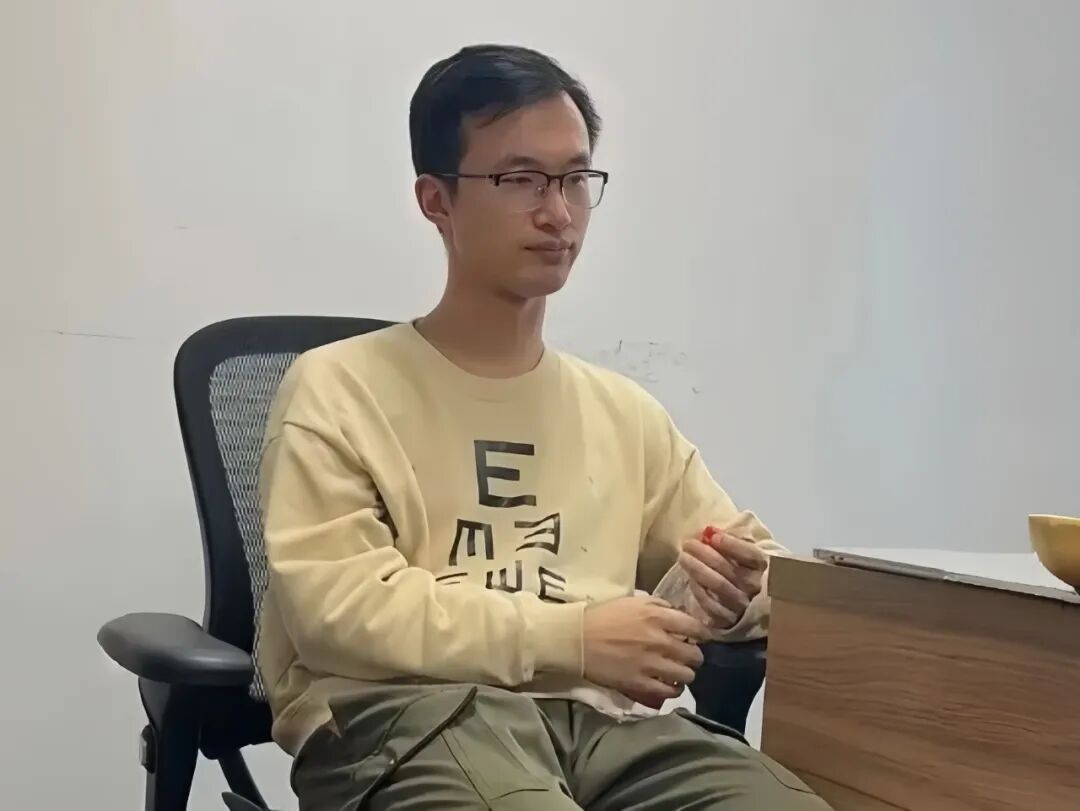
First meeting with Yang Gao
Yes, Gao looks young — he often surprises investors: "Professor Gao is so young!" My first impression was also "young and accomplished." Before I first met Gao, Han had already talked with him many times and introduced me to several scientists. But even upon meeting Gao, I was amazed that someone so "clear" and "pure" could exist in this world.
Many brilliant scientists can't hide their inherent sense of superiority — their expression of credentials clearly signals "humblebragging." But Gao completely doesn't.
During small talk, I teased him: "Did you have uneven subject scores on the college entrance exam?"
Gao said, "Never took it, don't know if they would have been uneven."
"Oh, so you were recommended for admission. Could you keep up at a place like Tsinghua?"
"I think those top-scoring examinees might struggle a bit. I'm okay."
"Then you've never taken a single national exam in your life — any regrets?"
"Luckily I didn't. If I took it myself, I might not have gotten in, haha."
He said all this without any particular emotion, yet you never sense any affected boasting or false modesty. This is probably the "human-AI-like" quality that outsiders attribute to Professor Gao.
Later we talked extensively about his technical understanding and judgments, his research direction choices at UC Berkeley, and his various considerations for returning to China. Through this conversation, I was deeply moved by Gao's pure character and extreme technical idealism.
Coming out, I said to Han: "If you can really get Gao to join, Spirit AI will definitely succeed."
Venture Capitalist: While we're at it, tell us about your view of Fengtao Han?
Lingyin Zheng: What I particularly admire about Han is: he knows what kind of people he needs to realize his grand vision, and he's supremely confident he can find them.
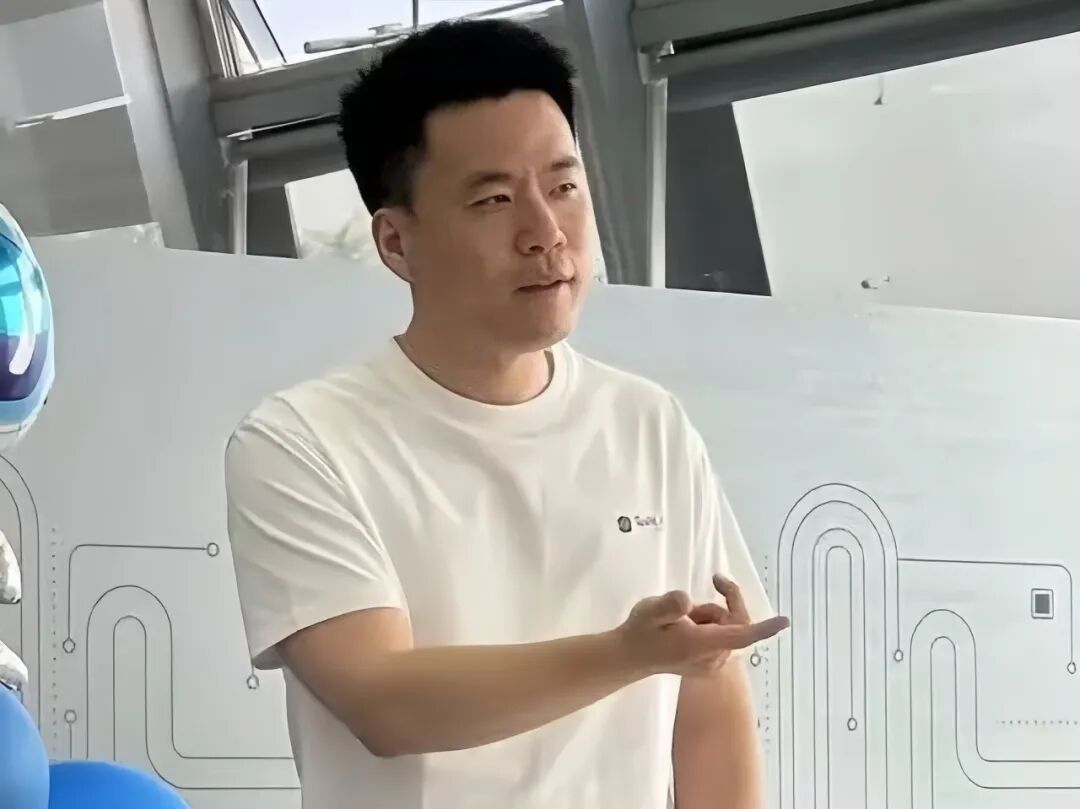
Fengtao Han in early entrepreneurship
Internally, we often call him "extremely optimistic." When we encounter various problems, his response isn't to comfort you that things will be fine — it's that he genuinely, from the bottom of his heart, doesn't see these as problems. In a sense, Han is also a very "pure" person — "purely optimistic," never experiencing internal friction. This is similar to Gao. Also, both are people who pursue extremes — Gao pursues extreme model performance, while Han pursues building an extremely great company.
One incident very much illustrates Han's character. When Spirit AI was just founded, I would periodically collect investor feedback from roadshows for the two of them. The first time I collected feedback, one investor expressed their reason for not investing in Spirit AI: Fengtao Han doesn't understand AI.
This affected him quite a bit, because in his industrial robotics era he used to write 10,000-word essays on Zhihu and once considered himself the person who understood AI best. Though this investor's evaluation was a major blow at the time, the next day his desk was piled with printed top conference papers and books, and he buried himself in that mountain of books for a full two months. From then on, we indeed never heard any质疑 about him not understanding AI.
Venture Capitalist: As a renowned scientist, Gao must have had many teams approach him before. Why didn't he choose any of them, but chose Han specifically?
Lingyin Zheng: Later, Gao and I actually discussed this. Initially he thought Han seemed like a "businessman," but as communication deepened, he was pleasantly surprised to discover this "businessman" actually understood technology — and his directional judgment and strategic thinking for the embodied intelligence industry aligned with Gao's own. This formed the foundation of Gao's recognition.
But the key point that moved Gao, I believe, was after he personally conducted "background checks" and recognized Fengtao Han's character — this person wouldn't screw him over.
Han has expressed wanting to be an entrepreneur like Ren Zhengfei. He doesn't want to hold many shares himself, and is very generous in distributing benefits to brothers who fight alongside him.
Venture Capitalist: So are the online rumors about you two not getting along, frequently slamming tables — are they true? Why did Han comment: "If you believe this is true, you definitely don't know Gao"? How do you understand this statement?
Lingyin Zheng: I think these rumors aren't even based on nothing — they're completely fabricated out of thin air.
Han previously said externally, "If someone thinks Gao and I argue and slam tables, that person definitely doesn't know Gao." This is so true. Han does have moments of explosive anger, but more often with me. Gao is truly the most emotionally stable person I've ever met — you simply can't argue with him, and communicating with him really has a calming effect on people. I really admire that about him.
Venture Capitalist: Even if you don't argue, disagreements must exist. When their ideas don't align, as the third member of the iron triangle, how do you handle it?
Lingyin Zheng: In most cases, we can rationally determine whose domain the disagreement falls into, then trust that person's expertise and follow their lead.
If we truly can't reach consensus, in those situations I do need to make the call and cast the deciding vote. Honestly, most of the time, I side with Gao (laughs), because Gao's thinking in AI does have stronger insight and foresight, and he makes decisions more based on first principles — returning to the essence of the matter. So I also find his decisions, in most cases, sound more reasonable.

Women in Embodied Intelligence
Venture Capitalist: What's the female representation at your company? Data shows that women account for only 12% of embodied intelligence R&D teams. What do you think causes this?
Lingyin Zheng: Currently, female employees at Spirit AI comprise less than one-third, concentrated mainly in marketing, finance, and HR functions. The R&D team is indeed still male-dominated, which is a widespread phenomenon across hard tech and robotics.
I don't think this is any single company's problem, but rather a structural phenomenon formed over time in the industry. From university major selection onward, there are already fewer women in STEM, robotics, and AI fields. Combined with the industry's fast pace and high technical barriers, this objectively leads to persistently low female representation on the R&D front lines.
Internally, we've actually always emphasized team diversity. Going forward, we'll also create more female-friendly and inclusive growth environments for women in technical roles through recruitment, training, and corporate culture, hoping to gradually bring some change to the industry.
Venture Capitalist: There are very few female executives in embodied intelligence, let alone female co-founders. As a female co-founder in this industry, have you faced质疑?
Lingyin Zheng: When a woman reaches a high position, there will always be people behind her back saying she comes from a good family, has backing, has good brothers, has a good father — as if we must rely on something, anything but ourselves. Even when we first started fundraising, people would质疑 my relationship with Han.
These things also confused me at the time. I'm very grateful to some of our early investors who helped me when I was迷茫. For example, Jinjian Zhang of Oasis Capital — beyond in-person conversations, I really enjoyed listening to his sharing. He wrote an article about investment signal-to-noise ratio ("Signals and Noise in Investing"), arguing that in any industry or company's development, the key is distinguishing signal from noise.
For example, current industry hype and PR are noise; real model and technical capabilities, commercialization and actual delivery, whether organizational and talent density keeps rising — these are the true long-term signals. There will always be noise in your growth process. Once you understand that societal prejudices and baseless speculation are just noise, you can learn to develop your钝感力. Like my current motto: allow everything to happen.
When you learn to accept all these things, you won't experience internal friction at all — instead, you'll move closer to your goals. Ignoring some杂音 gives you tremendous achievement.
Venture Capitalist: This article is a Women's Day special. In the rapidly changing and硬核 embodied intelligence industry, what advice do you have for women seeking long-term development?
Lingyin Zheng: As I just said, you must be钝感.
Sensitivity, emotional intelligence, and empathy — these are originally women's strengths. Having a woman on the team makes people feel warmth. But these are also double-edged swords; women feel more and stronger杂音. My advice to women is: preserve your sensitivity in your professional domain, and allow everything to happen.

Final Words
As the interview ended, Lingyin Zheng politely thanked us and quickly disappeared back into her office — reportedly with three more meetings ahead.
Only then did we truly understand why both Fengtao Han and Yang Gao call her the "reward function."
In machine learning terminology, the reward function is the compass for model optimization — it defines what is right, what is good, the core that enables the entire system to converge. And in Spirit AI's high-speed operating machine, Lingyin Zheng is the person who defines direction, calibrates course, and ensures stable system convergence.
She admittedly doesn't understand technology as well as Gao, or engineering as well as Han. But she understands when these two engineering-minded men need to be held back and when they need to be pushed forward; she understands when the company should spend and when it should exercise restraint; she understands what investors want to hear, what the team needs, and what the market expects.
In this male-dominated embodied intelligence track, Lingyin Zheng proves one thing: women don't need to stand at center stage to move the needle. Sometimes, maintaining that delicate balance — enabling two geniuses to charge forward without distractions — is the greatest value in itself.